Ask ChatGPT

 Big Shot
12 Nov 2026 · 1h 15m · 29 chapters
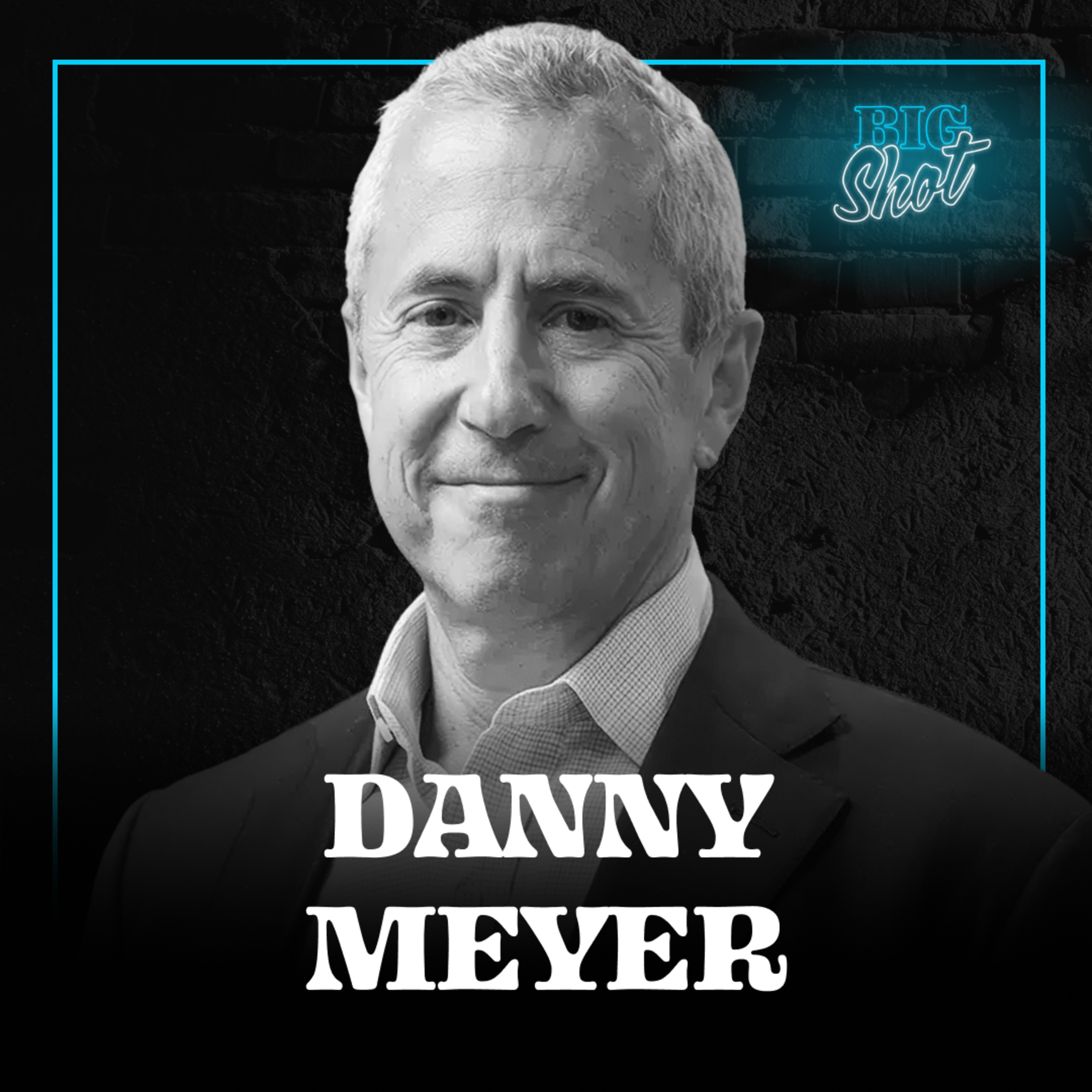
Danny Meyer (Union Square Hospitality Group) explains how American dining was reshaped through “hospitality” and “give-a-shit quotient,” blending strategy with obsessive execution. He traces his philosophy from family food-and-ethics roots to building iconic NYC restaurants (Union Square Cafe, Gramercy Tavern, 11 Madison Park) and the origin story of Shake Shack. He also discusses leadership as “supporting and pushing,” hiring culture, and why restaurants must iterate daily.
Danny Meyer, restaurateur and author; described as “Mr. Hospitality” and “king of restaurants.” No other guests are named in the provided transcript.
Hospitality (making guests feel welcome, personalized care) is distinct from service (meeting technical expectations). Perfect food can’t overcome poor hospitality. Culture is what happens when nobody is watching. Excellence is subjective; restaurants should aim for “excellent,” not merely “very good,” and iterate constantly.
Union Square Cafe opening (1985) and its early success; 11 Madison Park’s transformation via chef Daniel Humm and GM Will Guidara; Gramercy Tavern’s “tavern” concept and authentic details (hand-cut bricks); Shake Shack’s first hot dog cart created for rejuvenating a park in front of 11 Madison Park.
Written by AI. May contain mistakes.
Discussion on how the book influenced the host's approach to business and hospitality.
“And a couple years later, I got a chance to spend time with this person.”
Danny Meyer shares his philosophical approach to leadership and hospitality.
“I think you know this through Gold Belly.”
Exploration of Danny Meyer's family background and upbringing.
“what were the conversations around the dinner table?”
Danny discusses the conversations about food in his family and their impact.
“was two things, Jewish ethics and Jewish cooking.”
Danny discusses his family's entrepreneurial history and its influence on him.
“had been part of a loosely formed organization then called Relata Compagna.”
Danny explains his cautious approach to restaurant expansion and business.
“Do you remember talking to him about business?”
Danny reflects on his father's bankruptcies and the lessons learned.
“Because I had watched very, very carefully.”
Explore how Danny Meyer's family's experiences shaped his approach to restaurants.
“Well, that's antithetical to opening a second restaurant.”
Learn about Danny's journey from politics to the restaurant industry.
“I took my LSAT, but I'm not applying to any law school.”
Discover the inspiration behind Union Square Cafe and its unique concept.
“You raise, I don't know, 700 grand or so from anyone, I guess, that will give you money because you're unknown.”
Understand the transformation of 11 Madison Park into a top-rated restaurant.
“But I think today there's like thousands of restaurants that are similar to Uniswap.”
Danny discusses the significance of restaurant ratings and what they entail.
“And it took us, you know, maybe two years or so to turn 11 Madison Park into a three-star restaurant.”
Learn about the complexities of investing in restaurants and leadership challenges.
“But it was at that point that Will and Daniel started getting all kinds of offers to open a restaurant with hotels and developers, etc.”
Discover the intricacies and subjective nature of restaurant ratings by critics.
“It's the most subjective thing I've ever heard of my life.”
Explore how restaurants serve as social spaces and their evolving significance.
“And like Seth Godin always writes about marketing, people like us do things like this.”
Learn about the historical significance and design philosophy of Gramercy Tavern.
“No, no, but tell me, what does your vintage say about the word cafe?”
Understand the ambition to create restaurants that leave a lasting impression on guests.
“Those are the hand-me-downs from my great-grandparents.”
Discover how to foster a meaningful culture within restaurant teams.
“And I haven't Always succeeded with that, but that's the ambition.”
Learn about the importance of hiring exceptional people in the restaurant industry.
Explore the distinction between service and hospitality in the restaurant industry.
“And you will never see Cabernet Sauvignon growing in Burgundy.”
Learn how leadership in the restaurant industry requires balancing reality and hope.
“Let's go into some of those terms, right?”
Discover how optimism and a community focus led to the creation of Shake Shack.
“Unlike the restaurant business where we can tweak it a little bit every day.”
Learn about the origins of Shake Shack and Danny Meyer's community-driven vision.
“Entrepreneurship generally, there's all these…if you basically plot it out on a very objective, honest level, any business venture, you're always going to say there's more reasons not to do it than to do it.”
Discover how dedicated fans reroute travel plans just to visit Shake Shack.
“because on the way out they can grab a Shake Shack.”
Explore the challenges and strategies of scaling hospitality from a cart to a chain.
“As a matter of fact, it took me five years to open a second Shake Shack.”
Learn the critical lessons from Danny Meyer's journey in scaling his restaurant empire.
“Did you have any trepidation about that?”
Learn about the changing dining trends and the importance of experience in restaurants.
“And that's what I've both struggled with and been fascinated by for the last 20 years.”
Discover Danny Meyer’s unexpected beginnings in the restaurant industry and the role of luck in his success.
“It reminded me of the scene, Bugsy Siegel, when he walks in the house he wants to buy.”
Reflect on the conversation and the impactful insights shared, emphasizing gratitude and personal connections.
“A lot of the stuff, the small things, the way the coffee machines are kind of very convenient.”

Get the gist, explore an idea or ask about something said.
 Claude
On Big Shot, what are the key points of this episode?
Searching your listeningAutomatic transcript. May contain errors.
0:00So in the very early days of building Shopify, a dear friend of mine, Steven Bechta, gave me a book. It was called Setting the Table. And it was a book written by this guy. And it was a book about a restaurateur. It was a restaurant sort of guidebook to creating wonderful experiences and hospitality. And I didn't fully understand why I was being given this book as I was trying to build, you know, this big tech company. And I read the book and I was blown away by it, even though it was in the context of a restaurant. So many of the lessons about the give a shit quotient, deep empathy, culture, which to me is now about what do you do when no one, how does someone act when no one's watching?
0:41I was able to pull all these things out of the book and bring it into my own company. And a couple years later, I got a chance to spend time with this person. We were on a board of directors together of an amazing company called Gold Belly. And I was consistently blown away by his sort of, I guess what I'd call kind of high-low. He kind of thinks very large strategy, big picture, but then also goes into the weeds. He knows exactly at his restaurants how many forks there are at one particular waiter station, but he also knows how to build a small hot dog cart from one cart to 700 restaurants. Yeah, this is one of my favorite interviews.
1:21This guest is not only enormously inspiring, but he's philosophical in his approach almost, where he takes both the art and the science of business and he breaks it down in very, very clear guidelines that I don't know, I don't care what type of work you're in, you can apply it to your life. It's almost, it's business principles and it's frankly life principles as well. He talks about sort of leadership as being lifting up and pushing. Yeah. And he sort of gets the L from it. But he goes into details about how he built places like Ramershue Tavern, Union Square Cafe. 11 Madison Park, one of the restaurants he built, has been I think the number one restaurant for 10 years.
2:00He walks us through what he thinks about when he sits down to plan a restaurant, how he thinks about hiring. What about the creation of Shake Shack? He went to, he decided he wanted to go and make sure a particular park in front of 11 Madison Park was rejuvenated, had energy. And then an artist from Thailand says, I'm going to do this thing where we're going to do these New York cabs on stilts and underneath it we need a hot dog cart. And that hot dog cart turns out to be the very first Shake Shack. My favorite was his philosophy on how to think about hard things. Yeah. And he also has an interesting family story because he's got a grandfather who made a ton of money.
2:34And then a father who, living in that shadow of his grandfather, went bankrupt multiple times. And so there is this wonderful mix of being thoughtful and careful, but also being incredibly ambitious. Ladies and gentlemen, Mr. Hospitality, the king of restaurants, Danny Meyer.
3:10First of all, I got a chance to meet Danny. I think you know this through Gold Belly. It's been amazing. But actually, even before that, I've been hearing stories of Danny Meyer from Steve Becta since I was, I don't know, like since I was 21 years old. I moved to Ottawa for law school. Steve Becta is such a thoroughbred. He really is a thoroughbred. Yeah. And he counts you as truly one of his great inspirations and mentors. But I want to start way back. So you're born 1958 in Missouri, reformed Jewish family, Roxanne and Morton, what'd you call them, Morty? Roxy and Morty. Roxy and Morty, even better than Roxanne and Morton.
3:46Your dad was the first American agent for R 'Ole and Chateau. That's right. And I'm curious about how that, like growing up in that house, what were the conversations around the dinner table? Was it about hotels and restaurants? Was it about entrepreneurship? Like what was that like? No, no. The conversations around our family were food, politics, and community. Okay. And sometimes art. Interesting. And my mom and her family are from St. Paul, Minnesota. They moved down through Chicago. My dad and his family are all from St. Louis. Were there Jews there? There were. They were sort of Waspirant Jews.
4:30And it's an interesting story for me because we celebrated Passover. We went to the High Holy Days. But here's what you have to understand. My dad's family, the Meyer family, were German Jews. My grandfather had been born in Pittsburgh. My grandmother had been born in Carthage, Missouri. And a lot of the German Jews of that generation were that close to being anti-Semitic because they were so hell-bent on assimilating. yeah and so as far as my judaism was concerned my dad it turned out my parents went to israel for the first time when my mom was pregnant with me so i actually went to israel as a fetus yeah my dad found religion even though his own parents had been that close to being anti-semitic and he came back and helped to co-found one of the first reform synagogues in St.
5:37Louis called Temple Emanuel. And that's where we went to Sunday school. Didn't say Saturday. We had Sunday school. We were confirmed. We had no bar mitzvahs. We might have learned a little bit of Hebrew, but not much. But what we did learn was two things, Jewish ethics and Jewish cooking. And therein lies my whole career. It's pretty amazing. Ethics and cooking. It's pretty amazing. Trying to put it all together. And what was Jewish cooking for that for you? Was that like classic matzo ball soup or was it? No, no. What was it? It was whatever we were learning, you know, hamantaschen. Yes, or latkes.
6:21Or latkes. That was basically it. Got it. And that wasn't like what we did every single Sunday. Interesting. But I loved food. What we did talk about a lot at the table was food because my dad's business was designing driving tours through mostly the French countryside. And that's because Raleigh and Chateau wanted people to visit their hotels, almost like what Michelin Guide did for restaurants? They did. Well, what happened is my parents had lived in France on the border of Germany and France for the first two years of their marriage. My dad was a counterintelligence officer in the U.S. Army.
7:01He had a real gift for foreign languages, and the U.S. Army sent him to Monterey to the language school. And I guess during the two years they were there, it was kind of like a protracted honeymoon because I guess there wasn't a whole lot of stuff that he had to be dealing with with counterintelligence. And so they spent their entire time driving around to these little inns, most of which had restaurants. And the innkeepers adopted them as children. My mom was 19 when she was married. My dad was 21. And then my dad came back to St. Louis as a 23-year-old. He's an entrepreneur. And he kept telling all of his friends about where they had driven in France.
7:50And his friends would say, design a trip for us. So he started a travel agency. And it was then that a lot of these innkeepers who they had met had been part of a loosely formed organization then called Relata Compagna. And in the next year or two, Relay de Campania merged with Chateau de France to become Relay and Chateau. Wow. And so that's when my dad became the first American agent for Relay and Chateau. And he would have these French kids of the parents living in our home, working for him by day as translators and working for us by night as au pairs. amazing and so you know it was without even knowing it I was getting an education in food there was always a bottle of wine on the table culture language culture the language they would speak French when they didn't want us to understand which only made me want to learn French all the more of course I could understand what they were talking about was that did that bring a level of excitement for you as a kid the food did and then of course I got to go to France for the first time when I was seven on the SS France.
9:07In fact, my parents made me keep a diary on that trip. At seven years old. I mean, that's... At seven years old, I just found the diary. And I'm writing about how I've tasted fraise de bois. Wow. And creme fraiche. Wow. And baguettes and quiche Lorraine. Not chicken fingers and fries. No, no, it wasn't that. It was pretty, I mean... It's amazing. It's a little weird. It's a little weird, but... We had a dog at home, a pet dog named Ratatouille. Perfect. It's perfect. It all actually made very on brand. But, you know, we actually, before you walked in, we had this interesting conversation. You actually come from a line of entrepreneurs.
9:40Right. Your maternal grandfather was quite the entrepreneur. Yeah, tell us about him. He was a pretty cool guy. Yeah, sounds like that. Irving Harris, born in St. Paul, went to Yale, lived in a number of different places, worked for the government as well, started a few companies. Sold a few companies, too, I think. Sold a few companies. He and his brother started something called the Tony Home Permanent Company. And they sold that to Gillette for some huge amount of money in the 1940s. We read it. We actually had a discussion about the inflation-adjusted amount. I think it was like$20 million.
10:17But inflation-adjusted. Like, you know, that was a lot of money back then. They did very well. And then they started a company and they kept investing in other people's businesses. And they kept getting big hit after big hit. One was a burglar alarm company. One was a smoke detector company. One was the little cap that you see on the top of aerosol cans. And when aerosol became verboten, that company, no pun intended, flipped into making all the flip tops for every plastic product, consumer product you ever see. And... Do you remember talking to him about business? Was it... Oh, all the time. He did.
11:01All the time. I mean, that must have been an amazing influence. But back in those days, my goal, I wasn't thinking about going into business. Once I learned I couldn't be a baseball player, I wanted to be a baseball announcer. And my grandfather had this tape recorder, like way before people had tape recorders. And he would allow me to call a baseball game and then play it back to see how my voice sounded. My voice was like that of a nine-year-old. but it was still so much fun. So cool. And you love baseball always? Always loved baseball. What was it about it? It's a longer game. It's not as fast paced.
11:39No, because growing up in St. Louis, there wasn't a huge amount going on besides the St. Louis Cardinals. By the time I was 10 years old, we had been in the World Series three times. So I figured we'd just win. And I went to bed every night with the KMOX radio in my ear. Amazing. I woke up every morning at 6 o 'clock, timed to when the newspaper guy was going to throw the newspaper in our driveway. And I didn't care how cold it was. I ran outside without my slippers down the driveway to go get the newspaper to see how we had done the night before. And Danny, I read that you're actually quite conservative, which I found a juxtaposition from the inherent risk in restaurants.
12:23Where does that conservative element come from? Tell me what you mean when you say conservative. Like you're a little bit, you're careful, you're risk averse. Like you spent nine years between your first restaurant, Union Square, to Grammish, to Tavern. Yeah, I think I'm not entirely risk averse, but I am careful. And you wouldn't know that. I make multi-million dollar bets. Every one of the businesses we've ever started, we started. We haven't bought other businesses. We start businesses. That's a big risk to do that. But you're right. It took me 10 years to open a second restaurant. And the reason for that is probably threefold.
13:05Number one is that I was so proud of what we had done with Union Square Cafe, my first restaurant, which I opened at the age of 27. Which is now your namesake of your main business. It's Union Square Hospitality Group. And I did not want to screw that up. And I was pretty certain that the best way to screw it up was to have a second restaurant. Because I had watched very, very carefully. You have to understand, we didn't have a whole lot of fine dining restaurant groups back then. You had fine dining restaurants, or on the other hand, you had chains. And we did not want to be known as a chain.
13:41We wanted to be known as really good at what we did. So much so that in the early years of Union Square Cafe, I wanted to be seen like the fancy French restaurants. I didn't want to be fancy, but the restaurants that were considered the best in New York either started with Le, La, or Il back in the 1980s. And 100 % of them would close for two weeks every summer to take a vacation. Well, that's antithetical to opening a second restaurant. What that implies is if you want to be taken seriously, you, the owner, must be there for every single service. Every single service. So that was a big part of why it took me 10 years to open a second restaurant.
14:23The other part was I did not want to end up bankrupt as I'd seen my own dad go through twice. And in each one of those bankruptcies, without really understanding the real reason that he went bankrupt, my assumption was he had expanded. He expanded more quickly than he should have. And so I always associated expansion with bankruptcy and I said wow I'm not gonna do that and how did your father take those was it was that hard in the family those bankruptcies or what did he sort of brush it off and say all right we're gonna have ourselves back up and keep going yeah he didn't brush it off he didn't we would have lived it well the first one happened when my parents were still married and I remember a family meeting in our den and I I didn't even really understand what bankruptcy meant i didn't understand what the word creditor meant and he was telling us about all the money that he owed and or his company owed and he was crying and um it was he didn't just brush it off that's for sure but he he was he loved to gamble and he literally loved to gamble like both like like gaming and also with the business or both All the above.
15:43He was a real risk taker. And I think a big part of the issue for him, and I've spent a lot of time studying this, but studying myself, is that my mom's father, Irving Harris, had been so incredibly successful. And in a weird, really unhealthy dynamic kind of way my mom was never fully able to to decide that she was married to my dad and not to her own dad yeah yeah and so my he's part of that family not exactly and so my father who couldn't possibly the only way he could make as much money as my mom's father had made would be to like let's throw it all on the red and roulette yeah let's throw it all in the black and roulette so and he loved the joy of gambling as well.
16:35Now he, you know, I want to be really clear. He was, he's the reason that I fell in love with food. He's the reason that I fell in love with travel. He's the reason that I fell in love with discovery of the world. And he's the reason that I became an entrepreneur, there's no question. And he came up with a lot of really, really good ideas. He's also the reason I fell in love with writing. I'm really proud. I've got two best-selling books. It's amazing. We've read both your books. They're incredible. And I still don't consider myself to be an author. Well, he was the managing editor of the Daily Princetonian when he was there.
17:12And throughout my entire school career, even after I opened Union Square Cafe, where I was writing a quarterly newsletter to send out to 50 ,000 people by mail, I would ask him to edit them for me. And he was great at it. And this is before social media or blogs. I mean you sending out a newsletter about the restaurant and the food there that is because I love writing. You would call it content marketing today but there was no content marketing. It was you sharing your passions and your joie de vivre and your love for this stuff with 15 ,000 people. I mean that's like that was so unique. You also did something interesting and I want to get to how you started the first restaurant but you also it wasn't just about the restaurant.
17:55It was Danny and the restaurant and I think you sort of came from back of house and very much played a front of house role. The only reason that you might say that I came from back of house is because the only way I gathered the courage to tell my parents, you know, I have a poli-sci degree and I know I've told you all that I'm hoping to be a lawyer, but I'm not. I'm not going to do that. I took my LSAT, but I'm not applying to any law school. Yeah, I think your uncle helped you decide that. He did. And, you know, the day I told my parents I'm actually going to go into the restaurant business for some convoluted reason it occurred to me that it would be safer to tell them i was going to be a chef than to say i'm going to be a restaurateur what that logic was i have no idea yeah it almost feels like maybe that was more of like a blue collar i know i can make money here and it's not the high risk thing i don't know i think that if you go back to the year that i'm talking about which was probably 83 84 when i was having these conversations we had started for the first time to see some really highly educated people become chefs uh primarily on the west coast you had jeremiah tower who had stars and he'd gone to harvard joyce goldstein who had square one she gone to Smith.
19:17Alice Waters in Berkeley had gone to Berkeley. Wow. I'm trying to think. I can't help but think of like you know it's I'm picturing myself telling another especially Jewish parents I'm going in the restaurant business the next thing they say is it's a hard business right you always hear that but what do people get wrong why do they always say the restaurant's a hard business and what do they get wrong about it? Well what they get wrong is that they're right it is a hard business. What they get wrong is that every business is hard. And this was a great lesson that my grandfather, Irving Harris, taught me early on when he heard me complaining about how hard something was.
19:55And by the way, he totally tried to convince me not to go into the restaurant business. And to his grave, he apologized for that. He said, I couldn't have given you worse advice. He wanted me to go into his investment business in Chicago. And he said, it's a horrible business, it's filthy, unsavory people work in it. But every business is hard. And the advice he gave me early on when he heard me complaining about something that was hard was he said, you need to understand that the definition of business is problems. And the people who are great at business are not the people who don't have problems to solve, they're the people who solve problems better than everybody else solves them, more generously, more imaginatively, and more consistently.
20:39And I think about that all the time. And, you know, I take it a step further in the way that he said the definition of business is problems. Definition of baseball is pitches. Show me a great batter that complains about how hard the pitches are. You just hit them better. You just do it. I mean, that's the journey. Definition of surfing is waves. Show me a champion surfer who complains about the waves. If you don't like them, go live in a bathtub. I mean, speaking of problems, you know, you start your first restaurant in 1985, October. Union Square Cafe opens. You raise, I don't know, 700 grand or so from anyone, I guess, that will give you money because you're unknown.
21:21Somehow, I mean, I'm curious how, but nine number one finishes on the most popular restaurant list from Zagat, five James Beard awards. Is that crazy? Like, how does that happen? How does a first-time restaurateur create something so unique and so special that, I know it's not all about the external accolades, but it does sort of help you keep score. I often think we were, you know, there's a great line from a Paul Simon song, Born at the Right Time. I think we were born at the right time. I think that the field was wide open for a restaurant like Union Square Cafe in New York in 1985. because there were lots of fancy French restaurants there.
22:07There were even a handful of fancy Italian restaurants. And people equated fancy with what was the best. But meanwhile, I had been both cooking in Italy and in France. I had traveled to the West Coast and seen what was happening in San Francisco and Berkeley and Los Angeles. and whether I was going to a wonderful bistro in France or a family-run trattoria in Italy, it wasn't about fancy. It was about good. And having grown up in St. Louis where people, our restaurants had hospitality oozing out their pores, maybe the food wasn't as great. It's gotten really good these days in St. Louis, but it really wasn't that great.
22:52All I did was to say, why can't a New York restaurant treat you the way they treated me growing up in St. Louis? And why can't the food be as straightforward as in all these restaurants that I've loved in France and Italy and California? Why does it have to be such a big deal? And lo and behold, that became Union Square Cafe and it hit. But I think today there's like thousands of restaurants that are similar to Uniswap. Well, I think they've sort of cargo culted that. And unfortunately, not all of them have sort of the same heart, but they sort of have the same facade. Although sort of paradoxically, years later, you ended up doing 11 Madison Park, which is a little bit more fussy, a little more fancy.
23:39It became that. It wasn't like that initially? Nope, nope. As a matter of fact, when I first saw the space that was 11 Madison Park, my goal, This goes back, I saw the space in 1996. So about two years after opening Gramercy Tavern. And I saw this magnificent volume of space that at that time was the construction office for the whole redo of that building, the 29-story building. And at that point it already had sort of the double ceiling, the height? It had everything. Yeah, that was built in 1929. right before the Great Depression. And it's a fascinating building, and I studied it a lot. The building was supposed to be 100 stories tall.
24:30Wow. And they ran out of money because of the Depression. So the base of the building was meant to be the base of a 100-story building, and they capped it out at about 29 or 30 stories. Wow. But when I saw the space that became 11 Madison Park and then next door would be Tabla. I said to myself, aha, this is a brasserie. Let's do the French version of Union Square Cafe. Union Square Cafe being the Italian version of Union Square Cafe. And we built the restaurant. It turned out to be dramatically more gorgeous and grand than anything I had understood when I saw it as a construction office with the windows plastered over.
25:23And instead of having a brasserie with the best food you've ever had in a brasserie, we had a grand restaurant with the most middling food you had ever had at a grand restaurant. It was really good food, but it wasn't living up to the expectations of... Yeah, sort of out of proportion with the design of the space. Yeah, so if you look, the space was the frame and we had painted the wrong piece of art for that frame. Wow. That piece of art was terrific in a different context. So I never anticipated it. On the other hand, I got in my own way because the restaurant was doing pretty well. We had worked our way up to 13th most favorite restaurant in New York City.
26:09This was before you were number one. Well, 11 Madison Park. was never New York's favorite restaurant. We got in the top three, I think. But when it was about 13 and we got our second consecutive two-star review from the New York Times, and I said, nope, I want three stars. We had three stars at Union Square Cafe, three stars at Gramercy Tavern. We had three stars at Tabla. Three stars meant excellent. And I was really aspiring for excellent, not for very good. And that's when I went out and recruited a new chef for the restaurant, Daniel Holm. He was in San Francisco at that time. And I got more than I bargained for.
26:53He's an exceptional chef. And it took us, you know, maybe two years or so to turn 11 Madison Park into a three-star restaurant. But he wasn't done. And our general manager, Will Gadara, was also not done. And it was those guys that really, really wanted to turn this into a four-star restaurant, into a three Michelin star restaurant. At that point, did you know they wanted to be the owners? Was that sort of always the plan? I don't think so. I think what happened with that was that once we did achieve our fourth star and our third Michelin star and a grand award from the Wine Spectator and becoming members of Relaine Chateau.
27:38Which is so interesting, right, to go back to your father's first thing. I know, I know. When we got inducted in 2011 in Vienna, it was really a beautiful moment. I'm pretty sure I cried on stage just thinking that my dad was watching this. How are you? It was a pretty moving thing. But it was at that point that Will and Daniel started getting all kinds of offers to open a restaurant with hotels and developers, etc. And that was the point at which I said, I can't invest with you guys somewhere else because I'm not going to invest in a competitive way with my own company. They really wanted to do their own thing.
28:25and I also didn't want to fire them because the restaurant had become the restaurant that they really wanted it to be. And I had wisely not stood in their way. There's no way as a leader I'm going to say park your ambitions at the door. Even though it's not a restaurant, I would have opened in the first place. What is the difference between a three-star restaurant and a two-star restaurant? Or a four. Yeah. What are the difference makers? Well, I'll tell you what the words mean. So the New York Times says one is good, two is very good, three is excellent, and four is extraordinary. It's the most subjective thing I've ever heard of my life.
29:05Well, there's a way that I saw when the Daily News used to review restaurants. They had a great way, as far as I'm concerned. One meant it's worth going to if it's in your neighborhood. Two was, it's a good restaurant to go to if it's in your borough. It's worth going. It's so good that if it's within your borough, I'd go there. Three means, I would go there citywide. I'd go all the way to the Bronx for this meal, even if I don't live in the Bronx. It's so good. And four meant, it's so good, I would go there from anywhere. They drop everything. From anywhere. Yeah. But what makes, I mean, so much goes into that meal, right?
29:46Like, how do you think about excellence? Well, there's another way that one of the New York Times critics who ended up, he was one of the people that gave Union Square Cafe a three-star review. He said that he wasn't so worried about the atmosphere. He was really into the food. And he said, as far as I'm concerned, one-star food means that I keep eating while I'm having my conversation with my friends. Two star food means I might actually pause and offer a friend a taste. You should try this. Three star food is you really need to try this. It is so good. It's great. And four star means my jaw just drops.
30:36Our conversation stops. I can't even talk right now. Wow. That was an interesting way. Where I think we've gotten to in terms of these stars is that the social place that a restaurant occupies within society is what I see more and more restaurant writers writing about. Because we used to need an authoritative restaurant critic to tell us that a place existed because we didn't have the internet for that. then we needed an authoritative restaurant writer to tell us what we should and shouldn't order we don't need that anymore because someone's already instagrammed every blogger in the world or instagrammer is going to do it with the recipe i might add if that's really what you want yeah and so increasingly i think it's about the role that restaurants play in society as this is a place maker that people say it's worth getting out of my apartment or my home and taking the trouble to go there so I can be with other people in this place doing this thing.
31:47And like Seth Godin always writes about marketing, people like us do things like this. And that's what I think most restaurant writing has come to. Will they say something about the food? Yep. Will they say something about the wine list? Almost never. This drives me crazy. Yeah. Unless they hate the wine list because it's all natural wine or something like that. Yeah. You know, it gets me. But I would actually say, you know, you talk about a place in the culture and the community. We sort of skipped over Grand Mercy Tavern, which to me is, in my experience, I'm, you know, I love restaurants. I love great restaurants.
32:20Not actually fancy, but I love great dining and I love great experience. And Grand Mercy Tavern to me is very special. And what I love about Grand Mercy Tavern is there's almost two restaurants in that restaurant and I remember trying to order a burger in the dining room and then saying no that's not here that's there and I remember like I was ordering I don't know I think I was already really expensive bottles like you know we're doing a lot of wine here like no that goes there this goes here grammar street tavern as a concept first of all it's iconic it's amazing but there's a timelessness to it in a way that I don't see other restaurants Yeah, well, I think that was baked into it in the first place.
32:58I conjured up this idea that, first of all, I felt like I said what I wanted to say about cafes with Union Square Cafe. And the word cafe connotes something not nearly as excellent as Union Square Cafe is. You know, we're of different vintages, and I think for my vintage, it is totally different than what it is for your vintage. I'm not trying to age you here. I'm just saying. No, no, but tell me, what does your vintage say about the word cafe? Honestly, it's a place for me to go get caffeinated. Yeah, a coffee shop. It's a coffee shop. Exactly right. And that's not what it was for you. Yeah, so for me, what I really loved in the game I love to play is exceeding expectations.
33:37I want the place to be better than even you thought it was going to be. So by calling it Union Square Cafe, I wanted you to say it's the best cafe I've ever been to. Interesting. They say there's a delight formula which is expectation minus reality and that nails is it although you also you may sacrifice someone booking a reservation there because they're like well I want to go for a nice dinner tonight. That's okay we've got plenty of reservations so it worked out. I love how you said that. But I was doing the same thing with Tavern. Yeah. But the way you said it I said what I wanted to say about this restaurant.
34:08When you sit down to create a restaurant you're talking about it almost as a language. Walk us through your thought process. I'll write a story so let's talk about Gramercy Tavern. I want to now explore the word tavern. And for me growing up, tavern meant there's a Pabst Blue Ribbon sign, or I'll speak your language, there's a Molson sign, you know, right outside. And, you know, the Montreal Canadiens on TV in the background, that's what tavern meant. And then I went deeply into the word tavern and started reading a lot about it. And every culture has a tavern and the tavern you know going back into the 1600s in this country 1700s I should have said the 1700s in this country 15 1600s in England you even have in Italy taverna in Greece I don't even know how you pronounce it I think as well or something like that and what the tavern was was the best restaurant in town it was usually the only restaurant in town and it was the place people came for their social life, for their business life, for their political life.
35:22It was the gathering place. And furthermore, I learned that there was always in this country a hearth right at the Senate, the belly button of the tavern. And I really went deeply into it. And also at this point, my wife and I, Audrey and I were, she's from Bucks County, Pennsylvania originally, and we would spend our weekends before we had kids going to bed and breakfast and antiquing and going to taverns. And so I said to myself, Gramercy Tavern, that is, that's the place that has been in this location for 200 years. It's always been in my family and I'm nothing but a steward for these next few decades but I am going to sustain it I'm going to make it better and I'm going to modernize the things that should be modernized and retain the things that should be retained and so when you go to Gramercy Tavern you will see that there even though it was actually born in 1994 not in 1794 you will see that there are a number of authentic American antiques.
36:40Those are the hand-me-downs from my great-grandparents. There's also a lot of new furniture. There's old art. There's new art. And what's amazing about it, and I feel so lucky. Oh, by the way, I'll give you a detail that I don't talk about much, but I wanted this to be so authentic that we researched and found that But there was one foundry left in America, pretty sure it was South Carolina, that continued to hand cut its bricks as opposed to machine cut. And that's where we bought the bricks that line the back of the fireplace at Gramercy Tavern. Wow. I just wanted to get this thing right. If that's sort of like the back of the, you know, Steve Jobs is talking about the back of the bookcase.
37:27No one saw it but you know it. His father actually taught him about this. that you wanted the back of the bookcase that no one saw to still have beautiful wood. Because you knew that the attention to detail was there, even if no one noticed. That's the brick. No one really knows. When some person goes to their first or second time to Grammar Street Tavern, they don't know that that brick was getting cut. No, it's fine. But you know that. I know that. And that's part of your story for the place. What it showed me is that this matters. Yeah. And I think that's something that I wrote about in What Could Possibly Go Right.
37:59the word I use is essentiality. I think that I want for each one of our places to matter. I want them to last. I want them to endure. I want them to make people's lives better, the people who work there, the people who dine there. And if they close for whatever reason, I want people to miss them. I want people to say, that place, that was good. And I haven't Always succeeded with that, but that's the ambition. As far as Gramercy Tavern is concerned, I wish I could bottle something we did, which I wish I could figure out how to do it again. The older that place gets, the better it looks. That's the antithesis of most restaurants.
38:42It's incredible because there's a term for it usually in watches, for example, which is patina, that some things over time actually get better. Antifragility, there's different terms for it. But Gramercy Tavern is like that. And obviously, we'll have to talk about Shake Shack at some point. But even before that, there is something else, whether it's Union Square or 11 Madison or Grand Ressier Tavern. The relationship you have with the staff there and the staffs, I'm not sure agency is the right terminology, but there is a connection the staff have. People don't just work there. And it's not a line in their resume.
39:14The people that I've met, and I've had a chance to meet quite a few people that have worked for you, Danny. The people that work at your restaurants, it's an episode in their life. and I'm curious how you cultivate that. I mean, tech companies often cultivate that with a mission statement or, you know, vesting schedules on equity. But how do you cultivate that? How have you done such a great job of that? I'll start by saying thank you. I mean, you're welcome. And I think there's some truth to that and I've noticed that as I've been on book tour for what could possibly go right, the number of people who are showing up across the country who have said to me or written me notes saying what their time meant working at Tabla or Gramercy Tavern or The Modern or Blue Smoke or Maialino Union Square Cafe or Shake Shack, whatever.
40:12It's really blowing my mind. And so I'm trying to think about your question because it's a really good question. What is that thing. If I could say, if I could just kind of wage a guess, I think that being in service to other people is not easy because you have to take your own ego and put it off to the side and trust that when you give more to people you will end up getting more yourself. And I think that And we've been very resolute forever about hiring really special people who are not only really good at what they do, but they're really remarkable for who they are. And so if you work for us, you get a chance to work next to high-performance people, not just for what they know how to do, but for their heart.
41:12So that's ridiculously hard to do in general, but especially in the restaurant business. how you know the very reason your grandfather is telling you all it's it's it's seedier people it's all the reasons he had for you not to go into restaurants how have you how do you hire one of my favorite chapters in the book is called think like a winemaker and it's all about how we hire and the analogy that i'm making with with a winemaker i love wine is that the the soil you call it the terroir terroir is more than just soil but there's there's no grape no matter how good the grape is that is ever going to taste any better than the soil in which it was grown and in fact bad grapes actually on good soil often you can mask it almost yeah burgundy just has the terroir i mean it's just it's different that's exactly right yeah every place yeah i mean there's a reason that the best pinot noir in the world in my opinion grows in burgundy and And you will never see Pinot Noir growing in Bordeaux.
42:16And you will never see Cabernet Sauvignon growing in Burgundy. And you'll never see Syrah. You'll see that in the Rhone Valley. But you won't see that in Bordeaux, right? So just as the Etruscans knew which grapes grow in which soil, what I've learned is I've learned a lot about our soil. And each one of our restaurants is like a different single vineyard, but pretty similar but different. So enlightened hospitality matters in all of our restaurants. And yet each one is a different microclimate. So before I go crazy with this analogy, we have to pick the right grapes that are going to thrive in that soil.
43:00So we have to know the soil. We have to take care of the soil. Soil does not take care of itself. Culture does not take care of itself. The culture has to be really, really healthy. Then we've got to get the right grapes. Then we've got to train them like crazy. And winemakers know they have to train the vines. You can't just let them be unruly. We've got to hope for a good vintage, right? Sometimes we have to prune the vines. And great winemakers, actually, they're not looking for the greatest quantity of grapes. They will take three bunches off one vine in order to make sure that the remaining bunches get the most possible nutrients from the soil and from the sun.
43:44And we have to do that too and it's taken me a long time to figure that out. But I'll tell you what, I am so proud of the people who work in our company, who have worked in our company. I'm so proud of what so many of the alum have gone on to do afterwards and... But the fact that there is alum, that is not, I mean, you live in this world so maybe you don't, you know, it's easy for us to kind of be observers of it because it's your day-to-day life but an alum, I mean, you know, David owns a dozen salad restaurants in Canada. Think about it like a Mad Radish alum. It's not really, you wouldn't really hear that, right?
44:23Most restaurants, you don't hear alum. Almost everyone I've met that's worked for you calls it that. There was this great story, I think it was in Setting the Table where I think I may be getting this wrong but it may have actually been Bekta who did it but he walked into, he was working at 11 Madison Park and he overheard a table say, we've been, we're not from here, we're in New York, we've gone to Katz's Deli and we've, you know, we've done a party group grass, we've done, now we're at 11, we've done everything. The only thing we didn't do is we didn't get a New York hot dog. And immediately without skipping a beat, Steve, I think it was Steve, walked outside the back door, went to a hot dog cart, came in and brought them…
45:01Hopefully it was Shake Shack. I hope… This is a long time ago so I don't even know if… But brought them a hot dog. And these people, I mean, they couldn't believe it. First of all, they're in this fine restaurant and someone is thinking about that. That is culture. I've heard the term culture is what happens when nobody is watching. And I think that's what ultimately you've done so exceptionally well that even I remember reading, you know, reading, setting the table when I was just the beginning of Shopify and taking so many lessons from a restauranteur's playbook into our company that how do we, you know, how do we help our customers when no one is asked?
45:37How do you go above and beyond? Let's go into some of those terms, right? Because they get thrown around a lot. Like, you know, you're known as Mr. Hospitality and you're describing a special moment with a customer. but what is service versus hospitality? That's the easiest question I've had all day. Great. We need them both. Okay. Service is what you expected when you came to spend money with us. It means that technically we delivered on the promise, right? You ordered a cup of coffee. We gave you the cup of coffee. You wanted it in X amount of time. We gave it to you in X amount of time. You wanted it hot.
46:17it came hot. Gotta have it. But for me, that's table stakes. You will never come back if the coffee is not hot, if it took too long to get to you. You'll never come back. Why do that? But you'll never fall in love with the place unless we have hospitality, which is, how did we make you feel while we serve that cup of coffee? Did we make you feel welcome? Did we make you feel like you belong here? Did we do anything over and beyond what you expected? And by the way, sometimes that over and beyond is as simple as looking you in the eye and smiling or saying, welcome back. Because I remember I saw you here last week.
47:00It doesn't necessarily have to be a big grand gesture. It doesn't have to be, let me froth your coffee six different ways and and write David out of the phone, right? Hospitality is often in the small things. I had a great question from someone recently on my book tour from the audience, and she said, what is the smallest act of hospitality that has made the biggest impact on you? What a great question. Yeah. And because so often I think that hospitality, the services, did we get the right food to the right person at the right table at the right time? Right. Hospitality doesn't have to be. Did we, you know, decorate your table with whipped cream?
47:50And, you know, it doesn't have to be all kinds of bells and whistles. It's, I see you, I'm customizing the experience for what you want, and what you may want is very different than what Harley may want. Harley may want to be left the hill alone. You may want the sommelier to come tell you everything they know about Burgundy. And so hospitality is really one size fits one. Has nothing to do with service. They're so different. We need them both. And I always say I want to get 100 on my test. 49 of those points are for how consistently we do things for everybody all the time. That's service. And 51 of those points are for the hospitality.
48:37Either one of those on their own is a failing grade. But the reason that I always say hospitality is a couple points higher than service is that throughout my entire career, I've seen so many restaurants where they got the technical stuff perfectly, and I don't love the restaurant. Totally. And it's because they didn't do the hospitality. And you actually don't know why sometimes. You're not sure. It's just, it's a feeling. You're like, something was off there. You're right, the food was perfect. Yeah. But something was off about, actually, you mentioned the example of the Somme, for example, coming over and talking to you about Burgundy.
49:11There are some times where, I haven't seen a friend in a very long time and I just want to spend time with them. And you can see how if I lean in and we're having this amazing conversation, you can see the cues. I think you call it hospitality quotient. Is that right? Yeah. So actually we use a different term which is the give a shit quotient. But it's the same sort of thing. Are they paying attention to it? And it's interesting that a restaurant will go out of business and you'll talk to the owner and he'll say, I don't know what we got wrong. We hired the best chef. We had the best wine list.
49:44What they were missing really was hospitality, which is different than all these other things. Yeah. And so hospitality can actually overcome an imperfect experience every single time. Meaning food even. Well, you could fail on service. Yeah. But perfect food can never overcome poor hospitality. Right. Have you ever got it wrong? When have you gotten it wrong? Oh, how about yesterday? How about the day before? How about every single day? Yeah, it happens all the time. Is every day a new day in the restaurant business? Yes. In fact, one of the things, I haven't written a book for 20 years. Setting the Table came out in 2006.
50:24And I'm now reminded of one of the really, really hard things for me about a book, publishing a book. Unlike the restaurant business where we can tweak it a little bit every day. And we can honor the work we did yesterday, even though we made mistakes. but we can also find five or six things we could do a little bit better today. I love that game. It's iterive. It is, and that's why a restaurant like Union Square Cafe is about to turn 41 years old, and it's busier and better than ever. That's why Gramercy Tavern just turned 32 years old. It's busier and better than ever. That's why the Modern and Shake Shack are both 22.
51:06And that's because every single day we tweak it, and we stay with it. As you would say, we give a shit. The thing with a book is I've got to suffer through the fact that it's done. And if I get a bad review, which knock on wood, we haven't so far, but I can't do a constructive thing with that except feel bad. Yeah, for 20 years until the next book. I may ask myself, why did you write that thing? You shouldn't have. Or I may say, why did you not write that thing? You should have. But I can't do anything with that. So it's a different game. I've never heard anyone describe restaurants as forgiving in that sense, where on the one hand, it's hard to maintain consistency, but on the other, you have a new shot at it every day.
51:55What do you do? I'm listening to you talk about hospitality, and obviously this is your life's work, but you've clearly had difficult times in your life like anyone else. how do you show up for others in moments where it's critical to your business and it's hard enough to show up for yourself because what you're going through is so difficult? Well, I realize that, you know, as a leader, I'm the oxygen that people are breathing. I'm the example that people are, you know, feeding off of. So I've got to feed myself first. That weird thing, you know, when the oxygen mask drops, put it on your face before your kid.
52:34I always thought that was really weird. Now I get it. If I go down, the whole ship goes down. So I've got to take care of myself. But then I think if I've learned one thing, it's letting the staff, letting my team always have a combination of reality and hope. I'm making an L, like the L of leadership. And, you know, as my old partner, Paul, used to tell me, that's all you really need to know about leadership. It's one part supporting and one part pushing. Supporting and pushing and understanding that at any given moment, you're going to do those things in perhaps some different proportion. But the reality and hope is to just be really clean and clear with people.
53:21Here's really how bad it is right now, or here's really how good it is. Just here's how it is. And the hope is, and here's how we're going to make the best of it. And that's where what could possibly go right as an ethos really, really works for me. Because as an entrepreneur, anything that's really worked well, anything that I've done that's worked well, always started with that question. I never had an idea for an entrepreneurial idea where I said, let me think about what could go wrong with this. It's just like that's not how I start ever. and even when bad stuff happens and I was really really clear with myself I was going to tell all the bad stuff too in this book it's not that everything does go right there's no business where that's the case but I want to be like a championship card player there's people who beat me every single time when we play cards and I don't believe they're getting all the good cards I think they're better at playing the bad cards than I am they get dealt bad cards just like I do and I think that optimistic approach of what could possibly go right is what I really try to set an example of.
54:38I set it for myself. And yet you're careful though. I mean, you say, I don't think about what could go wrong, but someone called that downside protection. How do you maintain what could possibly go right and also bring in the element of... By having people on my team who are great at that. I don't really love surrounding myself with skeptics. I don't like, it saps my energy to have someone at the table saying, I hear your idea, it'll never work. I don't like that. On the other hand, I need people to say, I like your idea. Let me give you, let's put a couple watch outs on the table so that we can win at this thing.
55:22Like here's what we should really be careful of so that we do win. That's a whole lot different than it'll never work. And you know what? Let's take a real simple example. You guys are getting on an airplane pretty soon. I presume you want there to be someone who's actually making sure that this thing works. Be nice. Right? But I don't think they're looking at this as what could go wrong as much as what do we need to do to make this work? And that's who I want to surround myself with. It's a little bit like…so the optimism thing I think is really important. I think entrepreneurship requires that because otherwise there's no way you're going to do this thing.
56:05Entrepreneurship generally, there's all these…if you basically plot it out on a very objective, honest level, any business venture, you're always going to say there's more reasons not to do it than to do it. And so there has to be a certain optimism to it. I want to talk about the story of Shake Shack because I think it's super important and And the way that it started to me exemplifies your optimism. I think it started by you actually working not to look for a restaurant, but actually to take this park and make it better. That's all it was. Can you talk about that? I think it was 25 years ago at this point.
56:37Yeah, this was... 2000 or so? Well, I started negotiating my lease for 11 Madison Park in Taubel in 1996. Opened both restaurants in 1998. okay and the very first conversation i had when i was negotiating the lease with met life was even before we started talking about lease terms i said i really want to do this but i need to know that you would join me in restoring this park why was that important because it just was if there was one thing that both my parents had in common even though their their marriage went down the tubes after 25 years it was something that they had gotten from their families which is caring for your community.
57:20The community is what we have in common. Both sides of the family. And look, the park was going to be our front yard with these two restaurants. And so MetLife and some others said, we'll join you, but you're going to have to take the lead because we're tired. The city always renegs on its promises to us. So anyway, we raised$11 million to restore the park. and wow that's real money and then had to give people a reason to use the park and my idea was let's turn this park into an outdoor sculpture park i'd seen my mom be on the board of one of those inst louis i'd seen storm king up in wherever that is halfway up to the hudson valley and and i said we could do that here in madison square park and we partnered with the public art fund they brought in a a an artist from thailand whose piece of art was going to be four taxi cabs on stilts with a working hot dog cart below it and he said i need i need someone to operate this hot dog so that was the sorry i never knew this it was the thai artist yeah who said i need this as part of my exhibits yeah i never in a million years would have said hey let's do a hot dog cart in Madison Square Park.
58:45Okay. No, this is luck, but luck connected to passion. And my passion was to care for the park. And the reason I said, yes, we will operate this hot dog cart, even though all my partners said, you got to be kidding. We're trying to make 11 Madison Park be a better restaurant. I said, guys, we have capacity in the private dining room. We can do this. But I wanted to prove that hospitality could be as potent in something like a hot dog cart as it was in a fancy restaurant. And that by remembering what people's favorite toppings were on the Chicago-style hot dog we were doing, that we could actually make a difference.
59:25And when that line turned into 100 people at least every single day, I said, we have something here. It's working. And I also wanted to show that taking care of our own people first, which is why we hired our out-of-season code checkers to work the hot dog cart, that even that works at a hot dog cart. I mean, again, back to your caring for your people. This is an opportunity for you to do something amazing for the community and your staff who don't necessarily need to check coats in June. They can't. There are no coats. They otherwise don't have a job until mid-October. Now they can go do that.
1:00:01Now I want to kind of talk about the journey of the growth of Shea Sheik, but I actually want to start at the end because something I recently heard, which I thought was fascinating, was it was someone that works with me at Shopify, actually flies through LGA, through LaGuardia, specifically from Canada to LaGuardia because on the way out they can grab a Shake Shack. You talked about that three-star or four-star where I'll go there if it's in my community, in my borough, in my city, I'll travel for it. The fact that people are rerouting trips through a particular airport to go to a Shake Shack, I think that is one of the most coolest things I've ever heard.
1:00:41Yeah, it's a great feeling. It is a great feeling. And so, I mean... It reminds me of when we opened the cafes at the Museum of Modern Art, and people said, we're now going to get a membership to MoMA just so we can eat in Cafe 2. Whoa. Or we're going to go to a Mets game just so we can get Shake Shack. That's right. And so do you know right now? Did you know Shake Shack would become what it is now? I mean, it's a publicly charade company. You didn't know. Of course not. No, as a matter of fact... Because that's actually the... I mean, you've done a lot of things, but that's the first thing, in my view, that has true capital S scale.
1:01:16Yeah, that's true. It just had not, it was totally uninteresting to me. As a matter of fact, it took me five years to open a second Shake Shack. It just wasn't something, it was not born to be a chain. How do you go from cart to burgers and what we know of a Shake Shack? So after three years of doing the hot dog cart, and the lines would just get longer every year, I said, let's turn this into a permanent kiosk. And we were able to persuade the city, starting with Mayor Bloomberg and then his parks commissioner, Adrian Benebee, if we create a kiosk here, my mom and I will gift the kiosk philanthropically to the park, so the park will become the landlord.
1:02:02We will own the business. but a percentage of every dollar we sell, burgers, shakes, fries, hot dogs, will go right back into this park. It'll attract people. That'll keep the park safe. It'll create a revenue stream to keep the park beautiful, programmed, safe. It was just a great idea. And it took the mayor, that mayor, to agree to do it. because usually if you had a concession in a public park, the rent would just go to the whole city coffers. It wouldn't go right back into that park. And yeah, so my mom and I pretty much together contributed this thing philanthropically, and that became a Shake Shack.
1:02:48And learned the business. It was very different from anything I had ever done. Not like the modern, not like Gramercy Tavern, not like a living in Madison Park. No waiters, no waitresses, no chef in the kitchen. And we learned the business for five years and then… What did you have to unlearn? That's such a good question. I don't really think we had to unlearn anything. I think we really had to learn that you can scale hospitality. Yeah. But how… On the surface, you'd think very different professional restaurant, either chefs, or front of house versus 19 year old kid. Well actually it's even more sort of deliberate than that because everyone that's worked at all your restaurants has spent time with you before that.
1:03:40This is the first time where not everyone that works for you has spent time with you. Well except that's not true. Tell me. Why isn't it? I'll tell you why because going back to that first shack all the managers came from our fine dining restaurants. So, you know, the head of culinary came from Gramercy Tavern. The head of purchasing came from the modern. The head of operations had been our head of operations. Oh, so you used your alumni. We had several people who had worked for us at the cafes at MoMA. We had a general manager who came from Blue Smoke. So we stocked the pot with the mother yeast, if you want to call it that.
1:04:23Yes, yeah, yeah. And that was really, really important. For sure. And was that able to…did that sort of create kind of a flywheel of culture meaning they taught other people… 100 % Yeah. That I understand. That is a fascinating way to do it because you wouldn't expect to pull someone…I don't know if you actually did this but like someone out of…I don't know…like 11 Madison Park and put them into a hot dog stand but I guess you did do that. No, you think you'd recruit a fast food exec from…right? From McDonald's. We didn't do that probably until we had about, I don't know, 500 Shake Shacks. Although some of our early managers, when we started to grow around the country, had come from places like P.F.
1:05:06Chang's, Chipotle. I'm trying to remember all the ones, but in terms of very, very senior leadership, we were inventing the wheel every single day. because every day we were running a bigger company than any of us had ever led before. And so we really had to, this is why I say we weren't unlearning that much. We were really learning how to apply systems of scale to a culture of excellence and hospitality that we had grown up with in the fine dining restaurant business. David and I both ran public companies. It's different to run a public company. Did you have any trepidation about that? Of course.
1:05:47with the IPO in the public? Yeah, I was kind of the last one on the team convinced that it was a good idea to do that. And I had been on public company boards before that. I had been on OpenTable. I was a seed investor in OpenTable until they became public. Was it a good idea? Absolutely. There are days when you go like, like, what a waste of time. It's annoying some days, yeah. And just think about what, So a lot of times we ask ourselves, what would we do if this were a private company? Because if the answer is dramatically different than what we are doing as a public company, it shows us where we may need to get back to the basics.
1:06:31But the reason that I'm absolutely convinced we did the right thing is that if our currency is how well did we take care of our people, the amount of wealth created for people way beyond anything I ever could have done leading a private company is staggering. And it feels great when I hear people who would say, I paid off my school loans. I paid off my car. I bought a new house. Right? On and on and on. I think part of it is also, I've often said that I don't just want to run a public company. I want to run a trusted public company. not just trusted by investors or Wall Street or analysts, but just by my customers.
1:07:13And I want them to feel like the larger we get, the more we can help them. What a great aspiration. Which is a wonderful sort of version of it. On a personal level, did your dad get to see all the success? Did he? Did he get to see all your success? My dad died at the age of 59. He saw Union Square Cafe. Yeah. He did not come to the opening night of Union Square Cafe, which is very painful. Okay. But he did come there a few times. Okay. He died before there was a second restaurant, Gramercy Tavern. Wow. And to this day, he became a trustee at the Hebrew Union College. Wow. Bringing it back to your topic right here.
1:07:59And to this day, I have people who were on that board with him who tell me, you should just know how proud your dad was. That's amazing. Yep. Danny, between your first book, Setting the Table, to 20 odd years later, what could possibly go right? What are the biggest lessons between the two that you've taken away? The biggest lesson of Setting the Table was that when you put hospitality at the forefront of your organization, and everyone in the organization understands what that means. When I say hospitality, I don't mean food and beverage or hotels. I mean the way you make your stakeholders feel.
1:08:44That was the biggest lesson for me with setting the table. When you put that in the forefront, you will most likely succeed. And in fact, we have and we will always continue to use setting the table as our foundational business principle with all of my businesses. That said, what happens when you do grow? Setting the table paved the way for all this growth, but it didn't instruct me, now what? Now what do you do so that you don't lose that special thing? Because I'm a long way from the guy who for the first quarter of my career had one restaurant, and you would always see me on the front door resetting tables, looking at every line of the menu for typos, every single thing.
1:09:34I knew how many forks were in the waiter station. If I had an idea, I just pushed the button and it got done. Now there's two restaurants. Now I have two buttons I have to push. Now there's four restaurants. Now there's over 700 Shake Shacks in 22 countries. how do you scale that thing called culture? How do you scale a feeling? How do you scale relationships? And that's what I've both struggled with and been fascinated by for the last 20 years. And that's why I wanted to write what could possibly go right because I've learned a lot. And if people can make new mistakes but not the same old ones I've already made, I'll feel like it was successful.
1:10:18Do you think the trends play a big role here? I mean, there was a point where everyone I knew that wanted to go to something really extravagant to celebrate an IPO or something, it was 11 Madison. And now actually I think it's a little different. Dave and I have like restaurant ADD, like we can't sit for three hours, which is not going to work for us. So that's not a restaurant we would go to. Even some Omikase restaurants is a little bit, you know, it's too long for us. But it does feel like there was a point where when you went out for a great dinner to celebrate, you put on a jacket. I'm a t-shirt guy, I wear a t-shirt and sneakers every day.
1:10:50is that do you think like what do you think about sort of these trends do you think they're still you know Gramercy is always a place where I want to go no matter what so there's like again timelessness and Gramercy gives you as you said earlier two different options you can do it so is that how you think about it that like you always have yeah I think I think for people who can afford to eat three meals a day they're going to eat three meals a day and our job is to figure out today how can we be there for the most possible people the way the most possible people want it. And sometimes today it's, I really want it to be convenient.
1:11:24And sometimes it's today, I really want it to be all about the experience. And sometimes today it's, I want it to be a convenient experience. And so our job is always going to be to try to figure out where on the spectrum people are. I don't think a restaurant should change its own personality, but I think one of the fun things about having a stable or collection of restaurants is that, you know, you can go to Daily Provisions when you want to get a roast chicken and just take it home and not cook. Or a breakfast sandwich. Danny, name of the show is Big Shot. You're obviously up there with the Big Shot of Big Shots.
1:12:03But there's one story in particular. I was like, this is a really gutsy move he pulled. Your first restaurant, you walk in. It reminded me of the scene, Bugsy Siegel, when he walks in the house he wants to buy. you know it's your first restaurant you walk into this building and you're like I want to buy it tell us that story I don't think I was a big shot I think it was just I was ignorant the job the job I had had before that was being a salesman selling electronic tags to stop shoplifters and I'd gotten really good at making cold calls where I would go into the the store it was always a retailer and I would ask to speak to the owner I was just got really good at that and so I went into this restaurant and I asked to speak to the owner.
1:12:46What do you want to talk to him about? I just want to see if he wants, might want to sell the restaurant at some point. I mean, ignorant. I had no idea. I had no idea about what I was doing. And I got the owner's business card and called him and he said, your timing is actually very good because I've been doing this for 49 years. I've got bad asthma and I might want to retire. So it's kind of lucky. It's definitely lucky. I mean, luck plays a huge role in all this. In everything. You know, like I told David earlier, I've got a chance to spend some time with you the last couple of years through some of the work we do.
1:13:21And, you know, you're noting as this incredible restaurateur, but in my eyes, and I think anyone that's watching, you're truly one of the greatest entrepreneurs I've ever met. And Setting the Table was given to me by Stephen Bechtel, one of my closest friends, many, many years ago at the very early stages of Shopify. And as you walk around these offices, even the way we serve food and coffee here. A lot of the stuff, the small things, the way the coffee machines are kind of very convenient. You have to walk across the office and the way the floorboards are a certain way and the chairs feel a certain way.
1:13:51I took a lot of inspiration in building our company from things I've learned from you. And I'm grateful to call you a friend and I'm really grateful that you came on the show today, Danny. You guys, what a pleasure. Danny, thank you so much. Thank you for making this such a fun conversation. That was great. Amazing. Thank you. And I like your sneakers. Those are cool, man. I wish I had some new ones. Oh, those are great. Cool. They're like graffiti. It says, that's positivity and optimism. Is that? That's amazing. They're Gary Vee. Those are Gary Vee. If I took off this shoe, the insole says positivity.
1:14:24If I took off this one, it says optimism. That's perfect. And if that doesn't work for me on this book tour. No, it's amazing. It's amazing.
Danny Meyer grew up in a Jewish family in St. Louis with two competing lessons about business: his father’s entrepreneurial spirit taught him to dream big, while his bankruptcies taught him the risks of growing too fast.
With an early love of food, travel, and hospitality, Danny opened Union Square Cafe at 27. He went on to build Union Square Hospitality Group, behind celebrated restaurants like Gramercy Tavern and The Modern, and founded Shake Shack, turning a project to revitalize Madison Square Park into a global restaurant chain.
In this episode of Big Shot, Harley Finkelstein and David Segal explore how Danny’s upbringing shaped his approach to entrepreneurship, his deliberate expansion, and the stories behind his iconic restaurants. They also discuss the difference between service and hospitality, building enduring teams and cultures, and the optimism that keeps Danny asking, “What could possibly go right?”
—
In This Episode We Cover:
(00:00) Intro
(03:13) Growing up Jewish in St. Louis
(06:33) How Danny's parents got into the tour business
(09:43) Danny's entrepreneurial grandfather, Irving Harris
(12:16) How his father's bankruptcies shaped Danny's approach to risk
(17:52) Going into the restaurant business
(21:08) Why Danny credits Union Square Cafe's success to good timing
(23:32) The story of Eleven Madison Park
(28:46) What restaurant stars really mean
(32:15) Gramercy Tavern and the meaning of a tavern
(39:01) Building strong teams through hiring, training, and culture
(45:43) The difference between service and hospitality, and why both matter
(51:56) Danny's relentless optimism and "what could possibly go right" approach
(56:17) How Shake Shack began as a project to revitalize Madison Square Park
(1:03:46) Building Shake Shack's culture with alumni from Danny's other restaurants
(1:05:44) Taking Shake Shack public
(1:08:11) Key lessons from Setting the Table and What Could Possibly Go Right
(1:12:00) The story behind buying his first restaurant
—
Where To Find Danny Meyer:
• Instagram: https://www.instagram.com/dhmeyer
• LinkedIn: linkedin.com/in/dhmeyer
• Website: https://www.ushg.com
—
Where To Find Big Shot:
• Website: https://www.bigshot.show/
• YouTube: https://www.youtube.com/@bigshotpodcast
• TikTok: https://www.tiktok.com/@bigshotshow
• Instagram: https://www.instagram.com/bigshotshow/
• Harley Finkelstein: https://twitter.com/harleyf
• David Segal: https://twitter.com/tea_maverick
• Production and Marketing: https://penname.co