Ask ChatGPT

 Big Take
11 Nov 2026 · 15m · 9 chapters
The episode analyzes President Trump’s effort to lock in a foreign-policy legacy during his final two years, and how Democrats—poised to control the House and Senate—plan to unwind or limit it. It focuses on Iran, Israel, Ukraine, tariffs/trade, and Trump’s China/Russia diplomacy at APEC.
Nick Wadams, U.S. National Security Editor at Bloomberg News; Jennifer Welch, Chief Geoeconomics Analyst at Bloomberg Economics.
Trump’s distancing from the Iran war is partly political positioning but also reflects long-standing skepticism; Democrats’ ability to end Iran war and reverse tariffs is constrained; Israel policy may shift in tone but not core security alignment; Ukraine aid will be debated internally over affordability; tariffs will likely persist and U.S. overseas commitments are harder to reverse.
Trump calling the Iran war “effectively over”; Democrats seeking to end Iran war and unwind tariff programs; Netanyahu’s challenger Gadi Eisenkot potentially ending Netanyahu’s era; Democrats pushing to ensure already-authorized Ukraine funds are spent; Trump’s APEC China meeting with Xi and trilateral nuclear arms limitation discussions with Xi and Putin.
Written by AI. May contain mistakes.
Explore Trump's distancing from the war in Iran post-midterms.
“National Security Editor for Bloomberg News, and Jennifer Welch.”
Discuss the limited levers Democrats have to affect Trump's policies.
“They've downplayed the likelihood of resumed fighting, which is, of course, on pause.”
Analyze the potential changes in U.S.-Israel relations with new leadership.
“midterms were, I think means that he's even less likely to be driven by domestic politics on this.”
Examine the internal conflicts within the Democratic Party regarding Israel.
“When Democrats come in, I think that this is going to be one of the most divisive issues in the party.”
Understand how Democrats plan to approach Ukraine amid aid discussions.
“But clearly, the United States is taking a step back from that relationship, or at least reevaluating it, which was essentially unthinkable three or four years ago.”
Discuss expected Democratic efforts to manage Trump's trade policies.
“But I think that this could be a dividing issue within the party, especially among perhaps more progressive candidates who are so focused on that affordability issue and on investing more at home.”
Anticipate outcomes of Trump's upcoming meeting with Xi and Putin.
“see this situation where in some cases they actually like having those tariffs.”
Reflect on the lasting changes Trump made to U.S. foreign policy.
“I'm going to ask you lastly here just about the legacy of President Trump's foreign policy, which of course represents such a break from the way that foreign policy was conducted for so many years.”
Explore how the U.S. foreign policy has changed and its implications.
“overseas commitments, both in terms of direct military commitments, but even in terms of assistance.”

Get the gist, explore an idea or ask about something said.
 Claude
On Big Take, what are the key points of this episode?
Searching your listeningAutomatic transcript. May contain errors.
0:00When you're a business owner interested in expanding to new markets, there's a lot to consider and countless questions to answer before making the call. The most important one being, are you ready? That's where ChachiPT comes in. Give it a goal, add your files, and ask chat to help you map out different scenarios for the future of your business. So when growth is on the table, you've got an expansion plan ready to implement. Get started at ChachiPT.com. The world of business is constantly evolving and Comcast Business keeps you totally in step with secure AI-backed networking in more than 100 countries.
0:35They're powering over 90 % of the Fortune 500 and millions of small businesses. That's a lot of muscle. And behind it all, thousands of experts answering your call at 2 a.m. like it's 2 p.m. One partner powering how business gets done for companies around the globe. When you add it all up, no one does business like Comcast Business. Small businesses are the pulse of every community. They bring people together, create opportunities, and drive growth. Chase for Business helps business owners like you with personalized guidance and convenient digital tools all in one place. With that guidance and your determination, you can take your business farther and help build a brighter future for your community.
1:15Learn more at chase.com slash business. Chase for Business. Make more of what's yours. The Chase mobile app is available for select mobile devices. Message and data rates may apply. JPMorgan Chase Bank, N.A., member FDIC. Copyright 2026, JPMorgan Chase and Company.
1:35Bloomberg Audio Studios, podcasts, radio, news. I think what Democrats are going to be most focused on, and this is what Democratic leaders have said, too, is trying to end the war in Iran and trying to end Trump's tariff program. Now, there are levers to actually do that, I think, are actually going to be quite limited.
2:03I'm David Gura, and this is The Big Take from Bloomberg News. Today on the show, I'm joined by Nick Wadams, U.S. National Security Editor for Bloomberg News, and Jennifer Welch. She's the Chief Geoeconomics Analyst for Bloomberg Economics. We dig into the foreign policy legacy President Trump is trying to cement in his final two years in office as Democrats prepare to take control of both the House and the Senate.
2:31In the day since the election, we've seen members of the Trump administration distance themselves from the war in Iran. They've downplayed the likelihood of resumed fighting, which is, of course, on pause. Even President Trump called the war with Iran effectively over in recent days. Jenny, my first question to you here is, what's behind this repositioning? Is it fair to say this is because of the way that the midterms turned out? I think to a certain extent, yes, especially when you look at Vice President J.D. Vance. He's clearly responding to voter behavior in the midterms and trying to position himself for 2028.
3:01But I think it's important to recall that President Trump has in some way been distancing himself from this war for some time. Recall it was earlier this fall that he said he was low-keying it on the war. And at many points in the conflict, he's kind of questioned whether or not it even is a real war or not. So I think to a certain extent is a continuation of that trend. I also think it's really important to bear in mind that the decisions he will be making on this are going to be driven by his priorities and his calculus. And even though Democrats are very focused on trying to bring an end to the war, their levers to do so are limited.
3:36And I think the politics of it are also apparently having a limited effect on President Trump's calculus here. It didn't seem to sway his opinion before the midterms. And now, if anything, the impetus, the political cost to continuing the war, given that he's not facing another election or one that he's directly implicated in the way the midterms were, I think means that he's even less likely to be driven by domestic politics on this. I think the Iran war is a fascinating case because in some ways, yes, the war is deeply unpopular, but in a lot of ways, it wasn't so much the war itself as it was its effect on gas prices and the fact that, you know, President Trump had for so long billed himself as a leader who was against doing this sort of thing.
4:21And then he went ahead and did it. Jenny, we're in this lame duck period here waiting for the start of the next congressional term. And the U.S. is grappling with the results from the midterm elections. We've seen Israel all the while grappling with the results from its most recent elections as well. Benjamin Netanyahu's challenger, Gadi Eisenkot, seemingly has put together here a majority in the Knesset. Looks like the Netanyahu era is going to come to an end. How do you expect Israel's relationship with the U.S. to change as a result of that now that Democrats have this majority in Congress and given that that relationship between Trump and Netanyahu is no longer going to be in place?
4:54I'm forecasting that there probably won't be a significant shift based on developments in Israel. You know, the new government, if it does take shape, shares many of the same kind of core security interests as Prime Minister Netanyahu. Obviously, there's a difference in tone. But, you know, for example, there is alignment on the idea that Iran continues to pose a threat to Israel. There is alignment on most of the major parties in Israel, with the exception of, for example, the Arab Party coalition, not really focusing on a future for Palestine at this point, and instead focusing on what they perceive as ongoing security threats there.
5:33So I don't think that we're going to see a major shift in Israel's foreign policy position on the issues that matter, especially to Democrats, but I think increasingly to a large number of Americans. When Democrats come in, I think that this is going to be one of the most divisive issues in the party. It has been since the outbreak of war, and it continues to be one that really divides the party. Now, I think President Trump has tried to sort of get ahead of that with his announcement that he's going to cut off assistance to Israel. But that doesn't mean that he is cutting off the U.S.-Israel military relationship.
6:10And in fact, there's indications that there's going to just be a shift towards focusing on regular arms sales to Israel, which is more removing the power from Congress to have a say on that. To me, the most fascinating element of the discourse around Israel right now is that the notion that the U.S.-Israel relationship was this sort of unshakable given that people took for granted on both sides of the aisle. I mean, that was essentially taken for granted for decades. And it's only in the last few years since the Gaza War, you've even started to be able to have that discourse in a really open way.
6:47It was really, in a lot of ways, limited to the fringes of the two parties. But it's now at the very, very center of what both parties are talking about in terms of their own foreign policies. So, you know, Jenny's right. It's a very live debate between the two. I don't think any president beyond Donald Trump would have as warm and direct a relationship with whoever the next Israeli leader is going to be, whether it's Netanyahu or Eisenhower, in part because of the suspicion that it was Netanyahu who dragged the U.S. into this war. So there's really no telling where it's going to go from here.
7:27But clearly, the United States is taking a step back from that relationship, or at least reevaluating it, which was essentially unthinkable three or four years ago. So sticking with kind of changing relationships, Jenny, let me turn to you on Ukraine, if I could. And we've seen that change underway as advanced by President Trump in recent weeks. Again, his frustration with the war in Ukraine continuing palpable. How do you expect Democrats to approach the war and deal with their kind of fundamental disagreement with President Trump about how it should be addressed in the term to come? Well, and we're seeing even under the lame duck Congress, a growing focus on making sure that money that Congress has already authorized to go to Ukraine in the form of military assistance actually gets used.
8:10I think the question going forward really for Democrats is how much additional aid would they want to authorize and appropriate, especially in this moment where so many Americans are concerned about affordability, cost of living, and U.S. overseas commitments. The vast majority of Americans support Ukraine morally and the vast majority of Democrats as well. But I think that this could be a dividing issue within the party, especially among perhaps more progressive candidates who are so focused on that affordability issue and on investing more at home.
8:51Let's talk a bit about trade policy. President Trump has put tariffs in place that were found to be unlawful. Nick, do you expect Democrats in Congress are going to attempt to rein in the president's trade policies? Yes. But again, we get back to this issue of how much there is that they can actually do, given that what you've seen in terms of limits on the president's trade policies in the first couple of years of his second term have really come from the courts and not so much from Congress, but also the fact which I find to be fascinating, you know, you had a huge hue and cry in the first Trump administration about tariffs on China.
9:26But then when Democrats came in, a lot of those tariffs, they actually left in place, they sort of decided, okay, well, two things. One, we kind of like these tariffs, they're a useful tool. And two, in some ways, they become hostage to them, because lifting those tariffs would have been seen, I think, by the hawks in Washington as being too pro-China. So they were in a bit of a bind there. So it'll be really fascinating to me. I do expect Democrats to talk a lot about the effect that these tariffs have had on the U.S. economy, but I'll be very curious to see how much time and effort they actually spend on trying to revoke them both now and if a Democrat wins in 2028, because you do see this situation where in some cases they actually like having those tariffs.
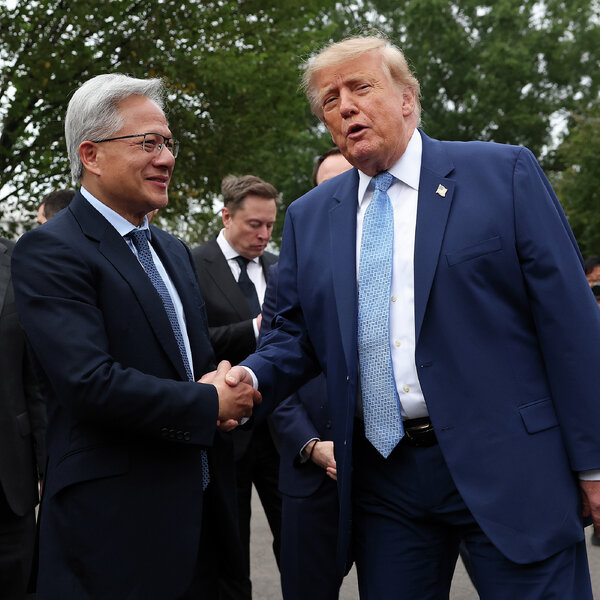
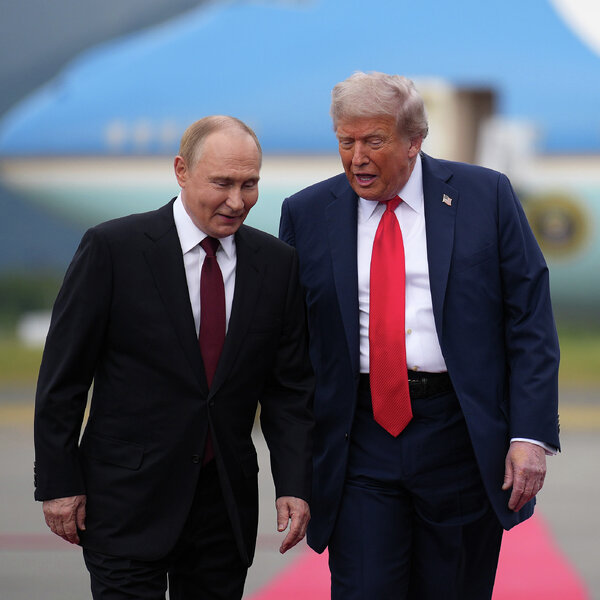
10:21You both have such significant experience on U.S.-China relations. Nick, you covered the country. Jenny, you've been working on it in government before you came to Bloomberg. Let's talk a bit about the president's trip to APEC next week. He's going to China, expected to meet with China's president Xi Jinping while he's there. Jenny, let me start with you. What do you expect President Trump to try to accomplish when it comes to competition trade with China? The focus, as Nick and his team have been reporting on, is really on this big trilat that he's trying to organize with Chinese President Xi Jinping and Russian President Vladimir Putin.
10:53And in particular, President Trump is interested in talking about nuclear arms limitations. And now that's something that the U.S. and Russia have a long history of working together on. But China has been extremely resistant to those conversations. And so So there seems to be quite a tussle still going on about what that meeting will look like and to what extent will they have a real substantive conversation. But I think for President Trump, you know, this is a moment to get outside the United States to kind of change the conversation away from the midterms in domestic politics and take it into a terrain where he is going to get the opportunity to kind of mix on the global stage with two other world powers, Russia and China, that he sees as kind of great power peers.
11:35Nick, how are you thinking about the importance of this meeting? I was struck by something that the Treasury Secretary said this week, that the meetings between President Trump and President Xi are, as he put it, historic in their frequency. They were looking at having four of them over the course of this year. I mean, that to me says it all because it's like they're historic in their frequency, but I guess not in their substance, which to me is really the underlying issue. One of the things that's just such a notable feature of this administration is what we don't really see is the sort of diplomatic spade work that would go into the preparation for a meeting like this, where they would even tee up some of those agreements, you know, maybe more aircraft being sold by Boeing or a financing deal or a mining agreement, or even a nominal commitment for a greater partnership on combating fentanyl or something like that.
12:26I mean, these meetings, these conversations, that diplomatic work in the shadows, out of the spotlight just is not happening. I mean, we've spoken to Chinese officials, for example, who were pulling their hair out because they were saying, listen, this meet these meetings usually get set in stone six months in advance. And three weeks beforehand, we can't even get an answer out of the State Department about how many people you're going to let in. So there's a lot of chaos around these, which really makes you think it's sort of Trump sees it as a potent symbol, but not much beyond that. J.D. I'm going to ask you lastly here just about the legacy of President Trump's foreign policy, which of course represents such a break from the way that foreign policy was conducted for so many years.
13:09We've been talking about his approach to trade. We've seen the way that he's kind of centered focus on the Western Hemisphere, what happened with Venezuela, his approach to the Middle East, the U.S. still dealing with the fallout from that. What do you think is going to live on past President Trump's term in terms of approach to foreign policy? What changes has he made that you think aren't going to go away or return to the way they were before? I think tariffs are going to stay in some way, shape or form, or at least be a tool that takes on, you know, continued usage in some way, shape or form.
13:43It's possible Democrats, if they win the White House in 2028, will say this is great leverage to, you know, get our allies to do other things. but it's going to be hard for them to take them all away. I think the second thing that will be actually more reversal caused by the Trump administration is the extent of U.S. overseas commitments, both in terms of direct military commitments, but even in terms of assistance. This narrative of the U.S. having borne so much of the global security burden for so long is one that I think resonates with many Americans who are concerned about the cost of living here.
14:18And I could see that being another tough battle, even if Democrats internally disagree with it. It's a tough case to make to a very tired American public. Nick, you agree with that? Are we going to go back to a more traditional foreign policy approach under the next president, do you think? I think there is absolutely no going back. The U.S. role in the world is just fundamentally changed because, you know, foreign governments could have made the argument after the first Trump administration that, OK, American voters didn't know what they were getting. He pushed the U.S. into a place, a much more confrontational approach to the rest of the world and also withdrawing the U.S.
14:59from a lot of international institutions and things like that. But then when he won the popular vote in term two, I think foreign governments, as one analyst put it to me, realized suddenly that American voters knew in large part exactly what they were getting in terms of the U.S. approach to the world. And so it wasn't just a Trump issue. It was an America issue. And I think you're going to see it's going to be very difficult for a lot of these countries to trust the United States again if they do get someone they like, like Joe Biden. It's going to be that same question that Macron asked Joe Biden in 2021 when he said America's back.
15:36And Macron said, well, for how long? It's also worth mentioning Macron won't be there, right? Mertz may not be there. Burnham might not be there. A lot of the traditional U.S. allies are also experiencing their own major domestic political shifts that could lead them to take a very different approach to their role in the world and their relationship with the United States.
15:59This is The Big Take from Bloomberg News. I'm David Gura. To get more from The Big Take and unlimited access to all of Bloomberg.com, subscribe today at Bloomberg.com slash podcast offer. Thanks for listening. We'll be back tomorrow.
16:41out. So you can ask, what did we agree to last Tuesday? Free to try on Mac and Windows at whisperflow.ai. That's W-I-S-P-R flow dot A-I. If you listen to financial news, you know a lot of time is spent thinking about what's next. The next opportunity. The next investment. The next move. But sometimes what matters most is being ready for what you never saw coming. For more than 75 years, Cincinnati Insurance has worked with independent agents to help protect businesses, homes, valuables, and more. Because planning for the future isn't only about knowing what's next. It's about making sure you're ready for what you can't predict.
17:23Let Cincinnati Insurance make your bad day better. Find an independent agent at CINFIN.com. For big business, AI opened up a world of promise, but that world of promise turned into a world of pain. Cost spiraling, data trapped, security and governance risks multiplying, and ROI out of reach. That's why enterprises turned to Boomi to connect data, apps, and AI, helping them operate securely, efficiently, and at scale. Boomi turns a world of AI pain into a world of AI gain. As Boomi says, we got you. Head to Boomi.com. That's B-O-O-M-I dot com.
As President Trump aims to cement his legacy in his final two years in office, congressional Democrats are taking aim at signature pieces of his foreign policy.
On today’s Big Take podcast, David Gura sits down with US National Security editor Nick Wadhams and Bloomberg Economics Chief Geoeconomics Analyst Jennifer Welch to discuss how congressional Democrats will try to rein Trump in on trade and foreign intervention.
Find our special series of timely and urgent conversations on the US midterm elections wherever you listen to podcasts. We have a special Bloomberg subscription offer for podcast listeners at Bloomberg.com/podcastoffer.
Host: David Gura; Guests: Nick Wadhams, Jennifer Welch; Produced by David Fox; Edited by Naomi Shavin, Patrick Hirsch; Engineering by Alex Sugiura.
See omnystudio.com/listener for privacy information.