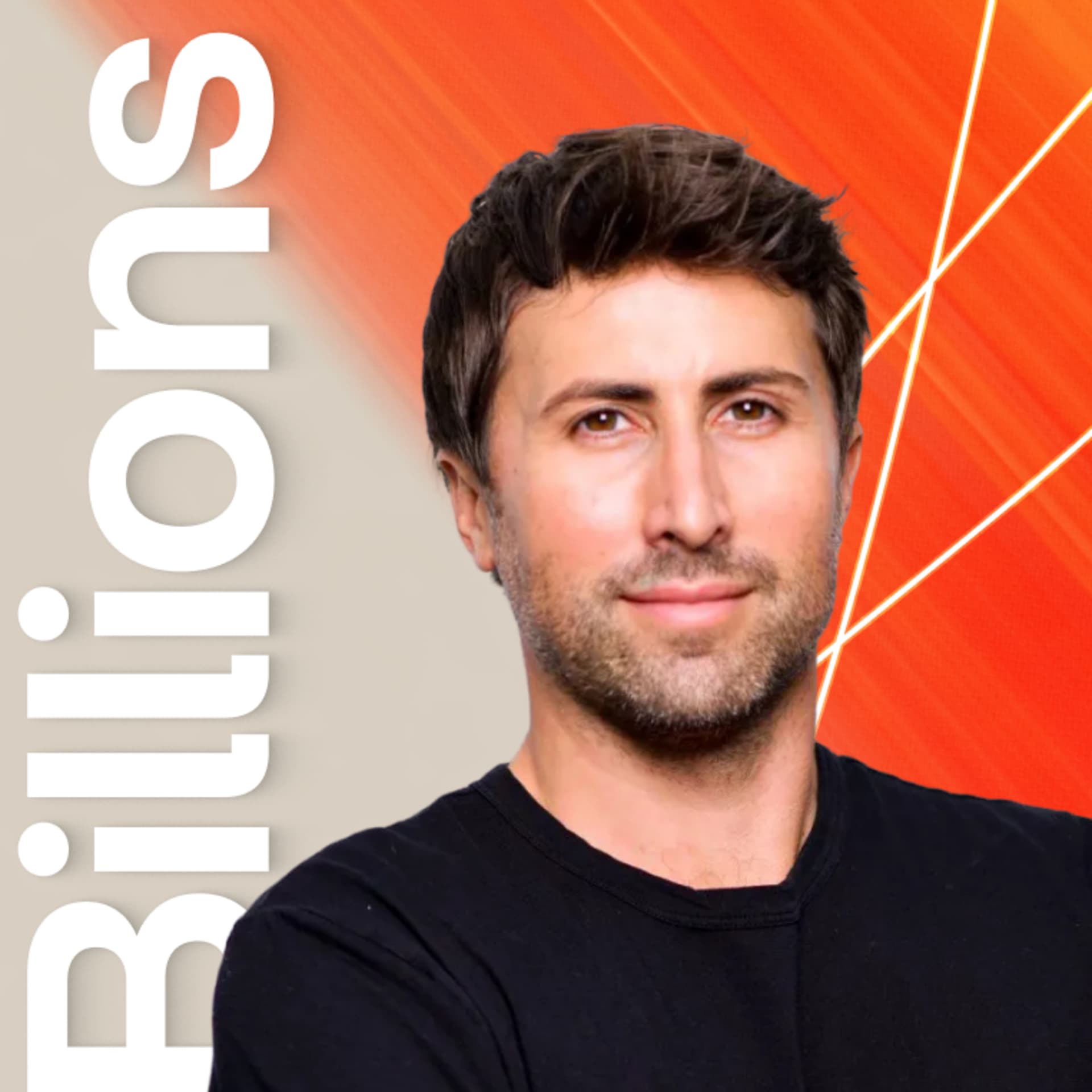

In short
Episode topic: Jason Wilk, Dave’s CEO and four-time founder, explains how Dave attacks predatory U.S. banking fees—especially overdraft charges—using cash-flow underwriting instead of credit scores, and how the company navigated funding, an SPAC-style IPO, a 98% stock collapse, and a path back to profitability.
Guest background
Jason Wilk previously founded Go Club (dorm-room startup) and an ad-tech company backed by Y Combinator that sold for $85M. He later built Dave, a fintech focused on short-term “micro-mending” loans.
Key claims
Over half the country faces overdraft/short-term credit pain; overdraft fees quietly bleed ~$30B/year. Dave’s first product offered a ~$75 micro-loan based on connected checking cash-flow data. Dave delayed full banking until 2021, reached close to 1M users, and became profitable by scaling to ~2.1M paying members. After IPO in Jan 2022, market conditions cut valuation from ~$5B to ~$50M, but growth and margin improvements carried the turnaround.
Notable examples
$34 overdraft “cup of coffee” pain point; underwriting via cash-flow (FICO deemed irrelevant for short duration); gross spreads >5%, ~8–10 day capital turnover, and ~1% 120-day loss rate; new AI-based credit card built on the same underwriting differentiation.
Written by AI. May contain mistakes. Listen to the episode to check what was said.
Chapters
Tap a time to open that second in VOThe Birth of Dave: Solving Overdraft Fees
1:00 to 2:34
Jason discusses his motivation for founding Dave and the issue of overdraft fees.
“Can you maybe explain to people why you decided to start Dave in the first place?”
Innovative Banking Solutions: Cash Flow Data
2:35 to 4:07
Exploration of how Dave uses cash flow data to provide micro loans instead of traditional overdrafts.
“I said, yeah, that's really interesting.”
Raising Funds: The Seed Round Journey
4:08 to 5:24
Jason shares his experience raising funds for Dave, including seed round details and investor relationships.
“And we really followed along that journey.”
Challenges of Series A Funding
5:25 to 7:51
Discussion on the difficulties faced during Series A funding and the importance of product market fit.
“had no credibility with private credit and certainly no bank was going to be willing to lend this money with no experience.”
Preparing for IPO: The Road to Public Company
7:52 to 9:40
Insights into how Dave prepared for its IPO and the transition from private to public company.
“And when do you decide like if you're ready or not?”
Navigating Market Challenges Post-IPO
9:41 to 11:49
Jason explains the impact of market fluctuations on Dave's operations and stock performance after going public.
“You know, we actually were marching our way there.”
Defending Against Acquisitions: Control Votes
11:50 to 14:00
Exploration of how Jason's control vote structure protects Dave from hostile takeovers post-IPO.
“Because you still have your customers, you still have like, I mean, you're still generating cash.”
Navigating IPO Challenges
14:00 to 17:13
Explore how the speaker navigated IPO challenges and the impact of investors during the process.
“It would have been very easy to build a position in our company and, you know, try and acquire it.”
Understanding SPACs
17:14 to 19:18
Learn about SPACs, their advantages, and the reasons behind their negative perception.
“Can you explain to people what it is and like how concretely does that work?”
Path to Profitability
19:19 to 21:45
Discuss how the company planned for profitability while managing growth and expenses.
“which we believe Dave was one of them, then SPACs would still have a great name, and I think it'd still be a very popular way to go public.”
Show all 24 chapters
Company Culture and Funding
21:46 to 24:01
Explore how funding rounds and profitability affected company culture and growth strategy.
“and a lot of our work went around just margin improvement, renegotiating contracts, adding more users, driving more CAC efficiencies, improving onboarding conversion and underwriting efficacy.”
Product Development and Customer Focus
24:02 to 28:01
Discover how customer insights drive product development and strategic decisions.
“we took the business to running at a loss to build the platform of which we believe was needed to build for the long term.”
Disrupting Traditional Banking Fees
28:01 to 28:50
Learn about the impact of high bank fees and how a new product aims to disrupt them.
“And it is these expensive fee streams from banks and credit card companies.”
Navigating Economic Challenges
28:51 to 29:53
Understand how macroeconomic factors influence short-term lending and business strategies.
“Because you're essentially offering like short term loans.”
Short Duration Credit Insights
29:54 to 31:09
Discover how a unique credit model allows for rapid learning and risk assessment.
“Well, I think we just talked about our last earnings call, our gross spreads on every credit transaction are over 5%.”
Team Management in a Lean Organization
31:10 to 33:04
Gain insights into managing a small, effective team in a high-pressure environment.
“like who you're going to pay, where you can, where you can loan like money.”
Transitioning to a Public Company
33:05 to 35:19
Explore the complexities of a company’s transition from private to public status.
“I mean, like for helping people grow also within the company?”
Future of the Company and Leadership
35:20 to 36:51
Learn about long-term visions and leadership strategies in a growing company.
“And And yeah, so for you, like, I mean, I think now it's been a bit more than 10 years since you built Dave.”
Balancing Internal and External Focus
36:52 to 37:58
Understand the dual focus on internal management and external investor relations.
“like how much time do you spend I don't know like on hiring, managing the team like how exactly is it split?”
Structuring a Strong Board
37:59 to 41:26
Discover key elements in building a functional and effective company board.
“And they both comment on the earnings call, but also we have private conversations with them following.”
Hiring Board Members and Growth Considerations
41:27 to 42:00
Explore strategies for recruiting board members and driving company growth.
“We have a capital markets guy who can help us understand how to talk to analysts and recruit different new shareholders.”
Balancing Growth and Sustainability
42:00 to 46:09
Learn how to manage growth while maintaining sustainability in a business.
“Do you give them shares or is it like a yearly package?”
Key Advice for Aspiring Entrepreneurs
46:09 to 46:57
Discover essential advice for anyone looking to build a successful company.
“So that's going to be the final question.”
Connecting with Jason Wilk
46:57 to 47:21
Find out how to connect with Jason Wilk and follow the updates on his company.
“Where can people follow you and follow Dave's update?”
Transcript
Automatic transcript. May contain errors.0:00Every great company starts with somebody having a bone to pick with some big problem. In the pain of the$34 overdraft charge on a cup of coffee, we look at your cash flow data, not your credit score, to offer you a$75 micro month. And we went from being a$5 billion company to a$50 million market cap company within a matter of nine months. Today on Billions, I'm sitting down with Jason Wilk, four-time founder and a CEO who took a 98 % stock collapse and turned it into one of the greatest comeback history in fintech. His first company, Go Club for a dorm room. His second, an ad tech play-out of white combinator that sold for$85 million.
0:39He used that money to start a war against one of the most predatory fees in American banking, the$38 overtrapped charge that quietly bleeds$30 billion a year from the people who can least afford it. He called his company Dave, as in David vs Goliath. Jason, welcome to Billions. Thanks so much. Can you maybe explain to people why you decided to start Dave in the first place? Personal pain point. I think every great company starts with somebody having a bone to pick with some big problem. And for me, that was going through high school, college, starting my first business. And the pain of the$34 overdraft charge on a cup of coffee or a tank of gas was just incredibly punitive.
1:22in a time in your life where you need every penny counts to make it through. And I knew if I had that problem, there were lots of other people that might be having the same issue. And it turns out it's over half the country is dealing with things like overdraft fees, not having enough credit score to afford mainstream credit products. And ultimately, just the banking system is too expensive for the everyday American. So how do you attack such problem? Because, you know, it looks like a banking system is huge. How do you get started with it? How do you create your new bank? I think the way we started actually led to a lot of our success in the sense that I knew we always wanted to offer a full suite of banking services, but to offer that back in 2016, it would have been a tremendous amount of work to either get a bank charter or go through the bank partner process.
2:13At the time that Dave was launching, there had been several neobanks around previously that had not really seen a lot of traction. And so I had in the back of my mind that people's excitement to open up a checking account was really not there, but their pain point around short-term credit was. And so we decided to start with that part of the spectrum first. And so a company launched in 2015 called Plaid, which was the conduit between fintechs and large banks. And there was only one interesting company that was using the service that I had seen so far, which was a business called Acorns, which was connecting to your primary checking account, looking at your transactions and rounding up your purchases to put into the stock market.
2:57I said, yeah, that's really interesting. If we could use that same cash flow data to underwrite people for effectively a micro loan in the U.S., that should eradicate the need for traditional overdraft. And so Dave's first product was a app where you connect your checking account. We look at your cashflow data, not your credit score to offer you a$75 micro-mend, smallest mode in the country. And this model had worked in places like India and Africa where micro-mending was a real thing, but no one had really tried it in America as a way to solve sort of short-term gaps. and the real vision there was that short-term credit of this small dollar amount, FICO is an irrelevant score because that's based on long-duration credit, your ability to pay a mortgage or an auto loan, and we've really proven out that your cash flow data in your account is very, very valuable.
3:54And I knew that to be true because I always knew my paycheck was coming in. I was a great customer for my bank, but why charge me such a high rate when they know that I'm good for the money? And so that was really the foundation of the business. Start with the credit, migrate to banking later. And we really followed along that journey. We didn't launch banking really until 2021 where people could make Dave their primary account should they choose. And can you maybe like walk us through the equity story? Like did you have to raise funds in the early days? Like who were your investors? Like was it easy?
4:26The seat round was fairly easy because I utilized most of my investors from my previous company. One of our investors, I had a deal with that whatever they made in the previous company, they would automatically write me a check for the next company, sight unseen, for 50 % of whatever their profit was. So that check was real easy. It turned out really great for that guy because he never would have written that large of a seed check usually. And I think that stake's worth over$150 million now. So he's done quite well. and then two of my other lead investors from that last business also participated.
5:04We rounded out the group with Ron Conway and SV Angel amongst some other people in the seed round, but that was a$3 million round, which we used basically to buy the domain name, give us some capital to hire the early team. And also we needed some principal capital to actually lend out to users because we didn't, at that point, had no credibility with private credit and certainly no bank was going to be willing to lend this money with no experience. And the second round, how exactly did it go? Did you feel like you had to work a lot harder? The second round was really difficult because we clearly had product market fit.
5:47Customers were loving the product. We were scaling. Our CAC was really low, but our loss rates were really high. They were like 20%. And so it wasn't quite clear that this customer profile that we were underwriting was going to be able to lend to profitably. And so we had that going against us. And also every venture capitalist, at least that I spoke to, had never really even heard of over-jot fees. So they didn't recognize it as a major problem. And the third was that neobanks historically had not gained a ton of traction. The most successful exit thus far was, I think, Bank Simple, which sold, I think, for$150 million.
6:25So, you know, not great comps, not great loss rates, problem that investors don't really understand. And it took me about 120 meetings to get the Series A done. And ultimately, it was with an investor that wasn't even writing checks into fintech. It was just a connection with one of our board members who said, trust me, it's a smart team. And Jason's hardworking, he'll figure it out as he always does. And so that really was the catalyst of getting the check there. We had a tremendous performance from that$10 million check. We got loss rates down to a few percent. We were scaling users. We got to close to a million users in the first couple of years.
7:07And we didn't raise our next round of funding until we reached a billion dollar valuation in 2019. and that was a big deal because there weren't that many unicorn businesses back then. We weren't in a hurry for raising more capital and so to be more patient. But the traction we had at that point was sort of irrefutable at that point in time. And so raising the round was a little bit more competitive and we brought on a great investor of Norwest Venture Partners who led that round entirely. And that$50 million equity check lasted us all the way to the IPO. So I was incredibly capital efficient.
7:44I think around 63 million of total primary capital raised. And yeah, the next round was our public transaction. How exactly do you like prepare for an IPO? And when do you decide like if you're ready or not? Well, we were really quick towards an IPO, more so than most. I think as of January next year, we'll have been a public company longer than being a private company, which is really interesting. And so it's almost like we've forgotten life as a private business and don't miss it that much. And to be honest, we like the rigor of the quarterly reporting. We sort of got ourselves in this quarterly reporting mindset leading up to the IPO.
8:24And fortunately, what gave us a lot of confidence is our business is very forecastable. We have a lot of cohorts that have been with us for a long amount of time. We have very heavy repeat users. And we thought the business was ready, even though we were early on to become a public company. As of January, we'll be in a public company longer than being a private company. And don't really miss it that much because our business is a lot of repeat customers. And so we feel like we can forecast the business really, really well. I think that's the key for a public company. And investors want to be able to build models they can rely on.
9:00And given we have 98 % of our customers every month are our repeat users, we just felt very confidence, a lot of confidence in the core model. So aside from that, just building up the management team, getting the public board ready, and then going on the roadshow process to find our lead investors is not too dissimilar from a private capital raise, other than you have to convince 50 people to validate your valuation as opposed to one. And I think that's a major difference in public versus private. It's just your valuation in the public is more consensus versus private is literally can be just the opinion of one person.
9:40And how long did it take you from, okay, I think we should IPO to let's ring the bell? Like, what was the timeline? Well, the market was ripe for IPOs. You know, we actually were marching our way there. We thought we had a great opportunity to go public, decided to wait a little longer to see how the market was going to continue to play out and ultimately decided to go public in January 2022. The market looked a little soft when we went out, but we had a great IPO. I think we were the best performing stock of the first couple of months when we went out. Valuation got to over$5 billion, and then the market fell apart.
10:22and the interest rates went up, which led to FinTech being a bad name, anything being in lending, being a bad name. And then with growth capital effectively coming to a halt, if you were a company that was losing money with the expectation you had to possibly raise some more, people just underwrote your valuation effectively to zero. And we went from being a$5 billion company to a$50 million market cap company within a matter of nine months. And we were trading for less than our cash value for a good amount of time. It was a really challenging place to be. But ultimately, we loved our business.
10:59We knew that all we had to do was grow our way out of this, which was not a really great narrative at the time. But our plan was to keep burning capital until we could actually cross the user threshold required for us to reach profitability. And to us, as an already mean business, that was really our only pathway to success because we couldn't cut our way there like most businesses could do that. We were a very lean team. We're still a very lean team with only 300 people at the company today, actually a little bit less than that. And just we kept our heads down and got there. And here we are today, nearly four going to our market cap and teams happy.
11:39Investors seem to be pretty happy and we think there's a lot of room to run from here. Yeah, I mean, I've looked at the stock. I think it's quite insane to see like the growth you guys are doing. So congrats. And I'm actually like curious to understand, like when your stock start like tanking, like how exactly does that affect the company from day to day operation? Because you still have your customers, you still have like, I mean, you're still generating cash. It's just basically like a valuation that the public market is giving. But does that affect you like from a day to day basis, like in bad ways or?
12:17Well, the only way it would really affect us if we needed to raise capital, we were dead in the water. I mean, imagine trying to raise$50 million when your valuation is$50 million. That wouldn't be a really great place to be. And so fortunately for us, we didn't need more capital. We knew we didn't need more capital, but that would have been a really tough place to sit should we needed that. But look, taking a step back, you want to be a public company because you have public currency. You can give away to employees for valuable stock options. You want currency for M &A. And then you want the ability to tap what is an easier way to raise equity capital.
12:54And the challenge we have being a public company with such a low market cap, you can't take advantage of any of those things. It really was like a waste of time and money. cost at least a couple of years ago close to 10 million dollars just to maintain being a public company and so you want to have those benefits otherwise there's not really much of a point and um from like uh from your side like because when the when the valuation of the company is like at a certain like is getting like lower and lower does does it um does it make the company like a target for acquisition potentially? Or like, you know, because if you see a company that's actually like valuable and you see like their stock going, their stock price going down, you might want to acquire it, you know, at a much lower price.
13:42Like, is it something that, you know, when we talk about hostile IPO or this kind of thing? I'd say that's the one, you know, big benefit from going public was that my shareholders gave me a different share class. And so my stock converted into, you know, controlling vote, which when you have that, it keeps a lot of the activist shareholders away or any hostile takeovers. It would have been very easy to build a position in our company and, you know, try and acquire it. But the fact that I had the ability to approve any M &A through my control vote kept a lot of people, you know, on the sidelines.
14:17And so that was a big benefit of going public and, you know, would recommend that for other founders who or going out, you know, it's in many ways in the best interest of the company. That's super interesting. And I think like Tiger at some point was part of the one, you know, like helping you to go public and investing when you started the IPO. But usually these investors, they have some sort of like lockup period and they have to kind of like keep their shares for a long time. That's right. And in their case, I think they decided to sell at some point. Can you explain a bit how does this work and how can an investor who has a lockup period is actually able to do these kind of things?
15:00Yeah, so generally you have your private investors leading up to an IPO all agree to a sort of a standstill mockup provision, generally six months. But the investors through the IPO process do not have any sort of standstill, at least through the process we want to go public. And so Tiger and others were free to sell from day one. That didn't help us because, you know, Tiger had their own issues through April with a lot of people redeeming in their fund due to the market crashing. And so it was nothing against our business independently, but they just sold everything that was in growth. and to lose your anchor investor that quickly prior to a mock-up when your valuation still has a lot of value appreciation from early people, which also puts selling pressure on, it just made it a perfect storm of disaster for us.
15:52And fortunately for us, it had nothing to do with our business. But from a just timing market landscape perspective, we were in the worst of every storm. And as the company was, when it was at the very bottom and you knew that it has tremendous potential. As a founder, did you acquire more shares at that time? Or is there a way to benefit from it in some way? Yeah, it's hugely beneficial, actually. So we couldn't afford, because the valuation was so cheap, to just give people better stock packages at today's price. But we did structure this performance stock unit structure where people actually would get more shares at certain prices, all the way up to, I think the stock price got as low as about$5 post split.
16:44And the needy for a lot of our employees was that the stock could reach$100,$200 worth of value. And that's like 20X return. But it's amazing to see that everyone that stuck around and got those performance units have fully realized that. And we made more millionaires post IPO because of that drop than we did pre IPO just for the amount of people that we hired and that stuck around. That's insane. And for the for the IPO, I think you did like a SPAC. Yeah. Can you explain to people what it is and like how concretely does that work? Well, SPAC versus traditional IPO, you are effectively merging with an existing public shell whose sole mission is to go find a company to combine with.
17:33That public shell has no operating business. They have capital that they have committed from investors to go find a target. And the benefit of going public that way is that the shell is already public and you're able to negotiate your valuation and how much capital you're going to raise through your investor syndicate well before your IPO date. Whereas in a traditional IPO, you don't really know what the value of the company is going to be until you start to build your book right before the IPO process. So there's a lot to like about this spat. And just there's a lot more certainty, especially for a young company.
18:10You want to be able to count on the proceeds if you're going to go through the process that you want to be sure is going to succeed, not fail at the end. There's a lot of IPOs that go through testing the waters at the end and don't like what they see, so they pull back or they wait. You've seen that before with others. And so the big, I'd say that the downfall of the SPAC came from the types of quality of companies that went public, because a lot of them went out of business. Valuations were not based in reality. So SPAC's got kind of a bad name, but they're still a perfectly viable vehicle based on the reason I just explained.
18:46And why do you think it got like a bad press at some point, like the SPAC? Well, too many companies that never should have been public went public through that process. And that was just the environment of interest rates were nearly 0%. The market was super hot and the appetite for underwriting companies losing significant amounts of money with negative unit economics was at an all-time high. And so just the challenge of all these companies that weren't great is what put pressure on the SPAC process. Had we only kept it to high-quality businesses, which we believe Dave was one of them, then SPACs would still have a great name, and I think it'd still be a very popular way to go public.
19:27But unfortunately, I think the negative stigma is there. And what was your revenue whenever you did your SPAC IPO? I want to say it was around a couple hundred million of a run rate at the time of the IPO. And I believe in 2022, we burned a hundred million. We raised two ten of total proceeds. We had a decent amount of capital left. But if you were to just take a run rate of our burn rate at the peak, I can see why some investors would say this company is not going to actually make it through to the end. But we always knew that there was this pretty clear line. And once we started to get cleared towards that line, it could really clearly communicate to investors that once we reached 2.1 million paying members, every incremental user was going to be contributing to profitability because they don't need a bigger team to grow the user base by the next 100 ,000, 200 ,000 members.
20:28And now it's just amazing to see. I mean, our guidance for 2026 is over 700 million of revenue at the midpoint and over 300 million of EBITDA. That's just a$400 million swing on earnings in just a few short years. And the investors that believed in us have made just tremendous amounts of return. And how do you like plan for it as a founder? because we see a lot of people, you know, raising like a lot of money and saying like, hey, we're going to reach that point where, you know, like things become like profitable and we have a great business. Like, I mean, you hear this story a lot. The truth is like very few people manage to do it.
21:09So how exactly did you plan for it? And how did you manage to really succeed? Plan for what specifically? Absolutely. Planning for the profitability points that you would get to? Well, I think we knew what we needed to build our platform that could scale. And to us, that was the 300 people we needed to build the core systems. It would be hard to think we could do that with significantly less people than that. And so we sort of drew our line in the sand that this is the amount of people we have. We did a hiring freeze. We didn't do any layoffs. We just said, we're going to keep it steady here, only do backfills of people that leave, and just really kept our heads down, avoided all distractions, any new products that weren't core to achieving profitability, went on the back burner.
22:02and a lot of our work went around just margin improvement, renegotiating contracts, adding more users, driving more CAC efficiencies, improving onboarding conversion and underwriting efficacy. And it was just a real big push across the company to turn profitable. I even got my CFO a hat that says EBITDA on it for his birthday. And he was really driven, kudos to him, because he was really the driver of all the profitability initiatives within the company. And we succeeded in it even more so than we could have expected at this time four years ago. And as a company, like, and as a CEO, you know, like whenever you raise funds and you're like non-profitable and you're spending a lot on, I don't know, like hiring, on acquisition, on all of these things, like the vibe in the company is a bit different versus when you're bootstrapped and you're looking at like how much you should spend.
22:58So you're always like profitable. And for you, like you also went from, okay, we have money, we spend it to we're profitable and we need to stay profitable. So how exactly did the company like culture kind of change with that change? Well, it's tough depending on what stage of the business you are at. I'd say in our potential later rounds, the fact that we were a profitably growing company meant that we didn't need to raise more capital. But also, had we raised a lot more, we probably could have grown quite a bit faster. And so to attract some of the best and biggest venture capital investors in the world, they like seeing the heavy burn, right?
23:47Because they want to put more capital to work. And so we lost that on a couple of funding rounds to competitors who were burning three or four times as much as we were to chase user growth faster. But ultimately, that wasn't the kind of business we wanted to run. We had really healthy growth while maintaining profitability early on. we took the business to running at a loss to build the platform of which we believe was needed to build for the long term. But it's really a matter of preference on the founder. You know, do you want to raise a lot of capital and raise a bunch of pref? I never liked sitting behind a lot of pref personally because it just becomes a dangerous game of having to clear that pref stack in an M &A transaction could be quite challenging.
24:30We still see a lot of our smaller competitors who thought they were worth a billion dollars. They raised several hundred million of venture capital and it becomes a curse in the end. And so I think for businesses that really need it, like these AI hyperscalers, there's no other choice. But I say for some founders, you've got to really look at this VC money you're raising is like very high APR debt. I think about the effective APR we paid our series A investor. It's worse than any loan shark in the world when you really take a step back. I mean, if I had that much confidence in the business that early on, I wish I did that$10 million round as venture debt in the business, not giving away very valuable equity in the company, which is worth so much now.
25:14And what's like, would you say, is the biggest challenges for you in the coming years? Biggest challenge for us, we are becoming a multi-product company. We just announced our new credit card. We're excited to scale that. And it's always ever easy for companies to build multiple go-to-market leading business units. And we're just really excited about that as the future of the company. And I think that's our maybe biggest challenge is proving out our ability to have multiple things working at scale. And on your side, how do you decide to launch a new product when you have something that's already working, already growing?
25:57Is it because you want to get like more growth? Is it because you want to get better retention? Is it a bit of both? Well, it just comes back to what our customers want. And we have the benefit of having millions of customers we can talk to them. And going back to my days at Y Combinator, the number one lesson from Paul Graham was always to talk to users. And we do that all the time through user research. Really important to understand what they want. We also have the benefit of having a connection to our customer's primary checking account. and so we can actually see all the products that they're using and so that's amazing market intelligence for us to go decide what else we need to be doing but in the end yeah it's you know building customer happiness and if we do well there that's going to lead to better lifetime value through you know either more arpu or better better retention or both and that's sort of the name of the game and is it like uh like how exactly do you do you decide like uh about a new product I know you're going to talk to customers, etc., but why did you choose a new credit card and not something else?
27:00We wanted to lean in on where we thought our differentiation was versus our scale neobank competitors. And to us, that is our AI-based underwriting of cash flow information. And it was working incredibly well for our extra cash product, which is giving people up to$500 between paychecks. The beauty of that product is the payback is very short. The downside is that the customer's willingness to use that for multiple different purchases is quite low. You tend to use our core product for gas, grocery, and rent, all these sort of non-discretionary expenses. But we aspire and we can see through the cash flow data that our customers are using things like BNPL and SunPribe credit card for discretionary purchases, of which we have 0 % market share.
27:45And so when I think about areas where we think we have the right to win, our customers love us for credit. We think we can expand the credit and give them a different use case of how to use the company made a lot of sense. And so it felt very clear to us as to what to build. We just had to go back to sort of the core principles of the business of what we want to disrupt. And it is these expensive fee streams from banks and credit card companies. and just like overdraft fees are really hurting Americans, revolving credit card APRs and credit card late fees are over 100 billion a year. And so I like the idea of eating other people's margin through better products.
28:24And we're going to do the exact same thing with this product. Yeah, and you have already like the user base and you know, like the, so it's whenever you deploy, like you know, you're going to have like a large addressable market from the start. So it's quite smart. And I was wondering, because earlier you mentioned, you know, that the interest rates started to kind of change and it affected like your company. So how exactly do you plan? Because you're essentially offering like short term loans. So obviously you are a bit dependent on the macroeconomics. So how exactly do you plan on things that are a bit outside of your control?
Read the full transcript
29:06That's hard because the market just tends to swing naturally from things that are out of your control every day. You know, things like the war impact the stock, even though that should actually be a tailwind for our business because things are getting more expensive, more people turn to our products. But it's hard in a world where the stock market is largely traded automatically at this point. It's nearly impossible to avoid being pulled by the macro. With respect to interest rates, though, because our capital turns over so quickly, even with our new credit card product, which is a pay-in-for-duration, we're not really reliant at all on private credit markets or the cost at which it takes to borrow because we're not taking long duration risk.
29:50and that's one of the theses we think that investors should really pay attention to in our story is that we don't have that risk whatsoever because our average duration of credit is about eight days and the return profile we get on our credit transactions far exceeds even the highest of interest rates to borrow over the last 25 years So what's kind of the default rate you try to focus on what's the highest default rates you can go to in order to have like a business that works? Well, I think we just talked about our last earnings call, our gross spreads on every credit transaction are over 5%.
30:30And we return that capital every eight to 10 days. So, you know, that's arguably our ceiling of what we could go to on credit. And if you look at our 120 day loss rate at this point, it's nearly 1%. So the spreads are there. We've, we originate millions of these micro credit transactions per course. So it's very, you know, we've got a lot of visibility into performance and don't expect that to erode in any kind of cycle. And with the new like AI models, because you mentioned that you were leveraging AI like to, and machine learning, I assume to like kind of predict, you know, like the default of one customer.
31:09So therefore you can know like who you're going to pay, where you can, where you can loan like money. So how, How does the new model affect your company? Is it in a positive manner? Do you see your algorithm getting better every single month? Or do you see no real impact because you already had something that was working? It's all incremental. There's two things going on with our business. One, because the duration of these credit transactions were so short, the models weren't really quickly as to what actually works. in comparison to like an installment lending business that's lending capital for a couple of years.
31:48So hard to use AI or CAFO data to predict performance because so many things could happen. The economy can shift. There could be changes in the customer's employment. But with such short duration credit, we're able to learn so quickly on what actually works to full maturity of the entire book. And that is so valuable. And so every time we launch a new version of our models, we're inputting another 100 or 200 features that we can test to see if it's incremental to credit and know within a matter of weeks or a few months, the performance outcomes. And so it's just a really powerful place to sit.
32:25You combine that with the fact that almost 98 % of our originations per quarter are going to repeat users. We can always start to increase credit per user just by the fact we start to know our members more. So with both those dynamics happening at the same time leads to a really stellar financial performance. Yeah, really interesting. And from the team management perspective, because now I think you have like a team that is quite lean, like with 300 people and a high valuation, you know, and a public company, like how exactly like do you manage like a lean team? Maybe you could give like, I don't know, like some tips of the things that you've seen working well for retention, for talent retention?
33:08I mean, like for helping people grow also within the company? Well, one, we focus on having a high quality team to start. Some people that really inspire others to want to work there. I'd say two, we have a lot of great rituals at the business. We have a recurring quarterly business review where we bring our management team together, plus key directors to go over the quarterly performance and look at what's ahead. We have a very rigorous weekly business review where we're going through all of our key KPIs in the business, total ourselves accountable there. And we work on having a very clear mission, vision, strategy that we communicate to the team to make sure everyone's sort of rolling in the same direction.
33:53And lastly, we use OKRs as well so that there's just really a lot of clarity around what we want to build and how that maps back to the mission of the business. So I think that's a great foundation. The fact that we're a virtual first company as well, I think really helps, especially in FinTech. We've got a great team that lives in various parts of the country. And there's a lot to like about that model. I know a lot of people are trying to go back to the office, but we feel like there's a differentiated way to recruit key talent. The people that want to be virtual first absolutely love it. And so I'm not a CEO that's out there promoting, virtual first as the as the model but company dependent you know it works well for us and like what what what is changing you know like uh as an employee when you go from it's a private company to it's a public company like are these things you're allowed to say not allowed to say like do people who work you know have like a specific like agreement that states clearly like what this can say what they cannot say like can you maybe like walk us through the the different changes that the company has to undergone?
35:03Mostly just the sensitive information. You've got to trust your team's not going to go trade on that. We have our standard quarterly blackout periods where people can't trade the stock. But ultimately, we need to have a lot of rigor around compliance as a business being a public company. Okay. Okay. Okay. Super, super cool. And And yeah, so for you, like, I mean, I think now it's been a bit more than 10 years since you built Dave. So how do you see like the future? Like, do you see yourself as like a lifetime company? Like this is going to be your one project and continue forever? Or do you think that eventually in a time of a business when it's public, you might want to have like a CEO join or like someone else?
35:51Like, how do you see it? Yeah, it's too early to tell. I've been doing this for 10 years at this point, which is, you never know how long you're going to be running these things for. I think any great company takes at least 10 years just to get it to what is a success. I think for me, it's really hard to think about building another company like Dave of this size and scale. I think to achieve a business that does nearly a billion dollars of revenue, those don't come along every day to build a really amazing team that you like to work with that's hyper-forming. I don't really want to go back through that process of building the team at the end and going through all the different cycles of the types of teams you build because it was so different, the early team versus the team you have at IPO and beyond.
36:37So I'm definitely not in a hurry to go start another one. If anything, maybe we'll become an investor or something at some point. But I don't envision starting a new company. And I hope I'm working at Dave for many more years to come. And how is your time split at the moment? like how much time do you spend I don't know like on hiring, managing the team like how exactly is it split? It depends. We're trying to hire an executive. I'll spend a lot of time on that. I'm also up with hiring board members as well. So I spend a lot of time thinking about the quality of our team, the quality of our board, the quality of our teams beneath our leaders of the company.
37:14I spend a lot of time thinking about company engagement across the board as everyone, what can we do to improve the company and the management. And it depends on the time of the quarter, but host earnings has been a lot of my time after the print, going to speak to investors, go to at least a couple of conferences, get on the road, go speak to shareholders, some new, some existing. And then obviously spending time with your analysts too, which we have over 12 analysts. So making sure they're understanding the story and the models. Your time really shifts. I'd say two, three weeks post earnings it's very outside focused the rest of the time is the internal quarterly business review thinking about everything going on internally the company so it's kind of maybe like 70 30 internal versus external at this point and can you explain maybe like uh how does that work with analysts and you know like uh when it's like post earning like what's gonna happen like how exactly does you know like uh the the whole situation and stock price work well stock price We can't predict, but you do have your analyst of which we catch up with afterwards.
38:22And they both comment on the earnings call, but also we have private conversations with them following. And they have their key questions because each of them have built their own financial model. And so after the quarter, we sort of look at how our model compared to theirs and discuss what they got wrong, what potentially we got wrong or more right than we thought. and then they go to the next quarter and they update their numbers, update their price guide. Hopefully it's always increasing and they update their buy, sell, overweight rating. That tends to be how it works with the public analysts.
39:00A lot of the buy side investors though, our hedge funds or long onlys, they all have their own models too. So they'll talk to some of the bank analysts, but largely they're very reliant on the internal models that they built. And the same thing, we'll catch up with them to see who got what right, and they go from there. Okay. And, yeah, I'm wondering, you know, like whenever you have like this kind of like earning calls and how exactly like, I mean, you've seen in some companies where the stock is basically like moving a lot and it's not really tight to the company's performance. so we can see companies you know who are like still growing still generating a lot of cash flow and getting you know like a very different valuation versus what their earning shows so how exactly do you like how do you maintain you know like the vision and the long-term vision as like a public company CEO when you know you you also need to think from a quarter to quarter basis?
40:09Because I think you mentioned structuring your board, so maybe this applies a little bit with it. Well, one, I think you have to have a really strong core business of which you can really see strong growth within that. And that allows you the ability to have some freedom for thinking long-term about future roadmap items. I'll take the credit card, for example. We don't need that credit card to work for many, many years to support our longer-term growth algorithm. And that's thanks to having a great core business. And I would recommend no company go public unless they have a lot of confidence in the forecast for their core.
40:46Okay. Okay. Okay. And you mentioned, you know, like structuring your boards and potentially like having different people. So how exactly do you structure a board? Like who do you look for? And can you maybe share like tips on how to structure like a great board? It really depends on the business, right? And so for us, well, every public company needs a great person in sort of audit. That's fairly standard. That's going to be somebody who is a former CFO, most likely. And we've got a great one on our team. And then you sort of fill around the board of people you think are going to be helpful to your industry, your business.
41:24You know, one of our credit investors is on our board. We have a capital markets guy who can help us understand how to talk to analysts and recruit different new shareholders. We had a regulatory lawyer that understands all the regulatory complexities. And also you want to have people that when you spend the time to get together for these quarterly board meetings of which last three to four hours, want to make sure it's useful. And so people you think that you can rely on for input on strategy, making sure the company is following all the rules, but it's going to be added to the business, not detracting.
42:03And how exactly does that work? Do you give them shares or is it like a yearly package? It's a yearly package. There's some equity and some cash. Okay. And recruitment sort of starts. You either find people that you know, or oftentimes people will use recruiting agencies specifically for executive board recruitment. And so we've done a little bit of both. Okay. And what do you prefer? Do you see hiring agencies working well on this side? I think it's always best to use internal if you can go that route. But one, not everyone wants to be on a public company board. And two, finding people with the experience, it's not always within your network.
42:46And so I found that we've had a lot of success, though, using recruiters for board roles. Okay. Okay, okay. And is it like from like a pure, like growth perspective, you mentioned earlier, you know, that eventually if you had raised more cash, you could have gone a little bit faster. Now you're at a stage where you're like profitable. So how exactly do you balance, you know, that speed versus sustainable growth? and how do you envision the future? Like, do you want to keep, you know, this very lean team and growth that is, you know, like kind of like mastered or do you see things like in a different way?
43:29Yeah, we're not trying to constrain the team to 300 just to do so. I mean, we really do believe we've built a highly scalable platform. We are adding to the team this year. We're going to go from 300 to 320, 325-ish. So, you know, we are doing that because we believe that the investments we're going to make there are going to lead to significant multiples of revenue once we deploy the products that they're working on. I'd say for us, we've had quarters where we've grown the business 60 plus percent and have not seen our multiple expand as a public company. And so that tells us a little bit that we're not really being rewarded for growth.
44:06So to us, we really try to communicate a very sustainable growth algorithm to grow users single mid double digits and revenue per user by low double digits. And if you believe in the combined effect of both of those metrics, it's going to be a 30 % plus growing type company for many years to come. And we're totally fine with that. And if the multiple trade-off is what it is, that gives us an ability to launch new products at which we think can ultimately do multiple expansion from there when people realize that we can generate revenue from more than just a couple of units. I'd love to pick your brain on something.
44:49So what you're seeing is like the high growth is not always like rewarded from public markets. So from your side, if you had, let's say like two companies, one company that year one is growing, let's say 10%, year two, they're growing 200%. Year three, they go back to like 20%. Year four, like it's always changed like this. And there is another one, company B, that's growing, let's say, like 35 % every single year for like five years. Do you think that company A will not get like a higher stock than company B just because it's not as predictable? Well, it depends because the company that grew 200 % may have some insane revenue multiple.
45:35And so I know CFOs of companies like that, and they tend to envy our position because we trade at a very modest multiple with every opportunity to try and do things to expand that versus they're thinking of every way they can preserve this potentially unrealistic multiple. And so I'd rather be in the more conservative world where we have a great core business growing at a rate we feel very competent in with a model profitability and flexibility to launch new things that can get investors excited about for future growth. Yeah, I agree. And I know we're almost running out of time. So that's going to be the final question.
46:14What would be an advice you could give to anyone who wants to build a company and IPO? Well, I'd say these things take a long time. They take a lot of effort. And so you really better love the idea you're working on. I've seen a lot of companies that start as sort of copycat businesses because it's a great place to be or interesting space. But you've got to love what you do, feel like you have an edge, a reason for a right to win. And everyone we've seen that tries to have copied Dave in the past, most of you has sold our company or Flutter because the founder wasn't in it for the mission. they were in it just to try and capture what was, you know, the hot company idea at the moment.
46:56Great advice. Jason, thanks a lot for being here. Where can people follow you and follow Dave's update? You can follow Dave on X or on LinkedIn, and you can follow me on LinkedIn. I'm not super active on Twitter, but LinkedIn, I post sometimes. Awesome. Thanks a lot, Jason. Thanks so much.
47:20you
From the publisher
On this episode of BILLIONS, I'm sitting down with Jason Wilk, four-time founder and CEO of Dave, the neobank built to take on the predatory overdraft fees that quietly bleed billions a year from the Americans who can least afford them.
Jason's story is one of the wildest comebacks in fintech. After going public via SPAC in January 2022, Dave hit a $5 billion valuation, then the macro turned.
Rates spiked, growth capital dried up, and within nine months the stock had collapsed 98%, dragging the company's market cap down to roughly $50 million, less than the cash sitting on its own balance sheet.Most teams would have panicked, slashed headcount, or sold cheap.
Jason did the opposite: he froze hiring, refused layoffs, killed every non-core product, and put the entire company behind one number, unit economics.
Today Dave is back to a nearly $4 billion market cap, with 2026 guidance of over $700M in revenue and over $300M in EBITDA, a ~$400M earnings swing in just a few years.
In this masterclass, we break down:
- The $75 microloan bet : how Dave used cash-flow data instead of FICO to underwrite the smallest loan in the country, importing a model that worked in India and Africa but no one had cracked in the US.
- 120 meetings for a Series A : why traditional VCs had never even heard of overdraft fees, and what it took to finally get the check.
- Surviving a 98% wipeout : the operational playbook Jason ran when growth capital ground to a halt and raising more was off the table.
- Making millionaires at the bottom : how a Performance Stock Unit structure turned the crash into the biggest wealth-creation event in the company's history.
- "VC money is just very high-APR debt" : why Jason wishes he'd taken his $10M Series A as venture debt and kept the equity.
- Eating other people's margin : Dave's new credit card and multi-product roadmap, aimed at the $100B+ a year Americans pay in credit card APRs and late fees.
TIMELINE :
00:00 – Why he declared war on the $34 overdraft fee
01:55 – The $75 microloan that ignores your credit score
04:26 – 120 investor meetings to close the Series A
09:48 – Going public via SPAC at a $5B valuation
11:15 – How the stock crashed 98% in 9 months
16:19 – Making employees millionaires at rock bottom
19:38 – From burning $100M to $300M in EBITDA
23:17 – Why VC money is worse than a loan shark
27:00 – The new credit card attacking a $100B market
43:29 – Running a $4B company with 300 people

