Ask ChatGPT

 Blamo!
9 Jul 2026 · 1h 2m · 27 chapters
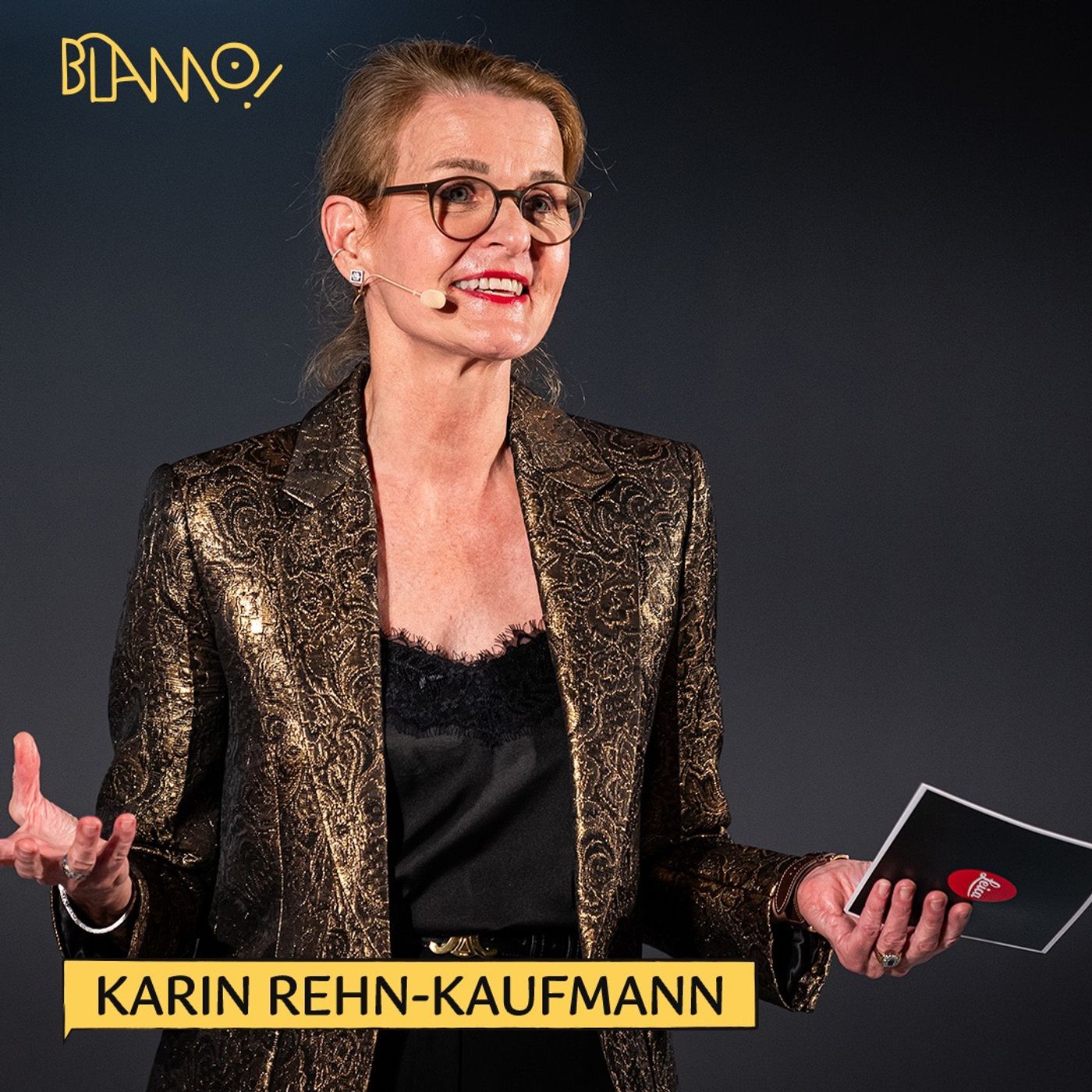
Karin Rehn-Kaufmann (Leica) discusses what makes photography last—emotional storytelling over technical perfection—plus how Leica galleries and awards cultivate a global photography community. She also addresses mobile/social media, AI, and why physical prints and in-person gallery experiences matter.
Karin Rehn-Kaufmann studied philosophy (German) at Freiburg; she played violin and was active in art and exhibitions. She became involved with Leica after the Kaufman family took over in 2004. In 2008, she and her husband opened an independent Leica gallery/boutique in Salzburg, later growing to 28 Leica galleries worldwide. She helps lead Leica’s Oskar Barnack Award (LOBA) and related programming through the Ernst Leitz Museum/campus.
A photograph endures when it has a story and moves people; “perfect” can lack emotion. Social media democratizes visibility but can flatten attention. Leica galleries should be meeting points, not “white tubes,” and photographers should be free to sell elsewhere. Prints (“a picture is a picture when it’s printed out”) create a different, lasting human connection.
Steve McCurry’s “Afghanistan Girl”; her daughter’s daily flower photos on film; the LOBA award moving from a small photo-festival corner to Berlin churches and then the Wetzlar campus; photographers she cites include Sebastião Salgado, René Burri, Jane Evelyn Atwood; she mentions Faber-Graf Castell’s aerial China work and Joel Brodsky’s Howlin’ Wolf portrait.
Written by AI. May contain mistakes.
Karin Rehn-Kaufmann shares her background and early experiences with photography.
“That's a good question because, I mean, I always, I'm telling about my former life and then my Leica life afterwards.”
Discussion on the establishment and growth of independent Leica galleries.
“Normally, we won't do that because Salzburg is really, it's a wonderful art city, but it's very small.”
Exploration of how impactful photography can evoke emotions and tell stories.
“So each month, 12 different exhibitions per year.”
A conversation about the human aspect of photography and the learning process involved.
“I mean, I'm a person who, I'm a very casual photographer where, you know, I try to take pictures.”
Karin discusses her responsibilities at Leica and the cultural significance of the brand.
“And on the topic of Laika, I think many people who are not even familiar with photography, they know Leica as an object.”
Learn about the Leica Woman Award and the company's involvement in various art exhibitions.
“And this year, for the first time, I just came back yesterday night from this year's LOBA jury in Wetzlar.”
Explore what makes a photograph memorable, emphasizing emotional connections over technical skill.
“And we also, two weeks ago, we were at Photo London downstairs in all the other galleries.”
Discuss the freedom in capturing moments without being hindered by strict photography rules.
“I can't stay if they stay in this worldwide iconic photographic archive.”
Analyze how social media affects the recognition of photographers and the quality of photography.
“I don't want to say that rules don't matter at all.”
Examine how mobile devices have changed photography practices and the value of images taken.
“and the just massive amount of people who are continuing to get into photography, you know, I'm curious, most of them have started out with their mobile devices.”
Learn how limited shots can enhance the photography experience.
“You know, I love that my daughter is learning more about photography on essentially a film camera, right?”
Discover surprising experiences from a life surrounded by artists.
“and it's made me be like, oh, why did she feel that was a special moment to use her film?”
Understand the importance of photojournalists and their responsibilities.
“I met his daughter in Munich and we looked at the archive and there were images from above from the old China.”
Explore the value of authenticity in photography over digital perfection.
“I do use AI to help my grammar and my punctuation because I'm quite a poor physical writer, which is why I have a podcast.”
Discuss how younger generations perceive social media and human connection.
“And I, you know, but I do think I get to talk to a lot of younger students in different universities and stuff.”
Learn why physical galleries and stores are vital for community interaction.
“You know, it's their observations, things that happen.”
Discover the significance of establishing strong physical retail locations.
“And I think this is more and more important for the future.”
Discover the unique elements of retail experiences in Japan.
“We have to take in our own hands, the people, the service, how it looks like, and so on and so forth.”
Learn about the upcoming exhibitions and their artistic significance.
“it's the love and the detail I don't know if you I'm sure you saw the movie from Vin Vendus Perfect Days yeah yeah Yeah.”
Explore how photography programs are selected and curated.
“I mean, for the Ernst Leitz Museum, of course, we have only three exhibitions per year.”
Discuss the concept of appreciating art without the need to own it.
“is there any photograph that you've seen that you wish you owned?”
Hear about the surprising quality of the Leica camera app on iOS.
“Because the law photographers, of course, they give me their book.”
Understand why printing photos is crucial for memory retention.
“But these are exactly the people around the world.”
Discover the value of printed photo books in preserving memories.
“Otherwise, we don't look at the images anymore.”
Learn about the heritage of Leica and the significance of customer feedback.
“we're starting to wrap up before we close though is there anything you want to add or mention discuss that I didn't bring up?”
Explore the unique photography experiences available at Leica's headquarters.
“Of course, I invite all the people to the Leica headquarter because there you can experience photography on so many different levels.”
Explore the unique design and usability of Leica cameras as creative instruments.
“of this stuff, because I mean, the last thing I'll say that to me, that at first I was like, Leica seems like just something that's expensive.”

Get the gist, explore an idea or ask about something said.
 Claude
On Blamo!, what are the key points of this episode?
Searching your listeningAutomatic transcript. May contain errors.
0:02Blamo! Host: Thank you so much for joining us. I'm very, very pleased to meet you. I will say that as we were chatting earlier, Leica is a very big thing in our house. Especially, I know Leica, there's phones and there's watches and stuff now, but the joy and the concept of photography has really started to seep in to my family as well as my kids. and it's been very cool to see things how they see it and to see the things that are important to them, especially nature right now. My daughter is obsessed with taking pictures of flowers. She takes a picture of a flower almost every day and she's taking the pictures and putting them on her door and so she can show how the flower changes.
0:49And I was like, where did you get that?
0:52Blamo! Host: So to kind of kick things off, I'm curious about what was photography like for you growing up? That's a good question because, I mean, I always, I'm telling about my former life and then my Leica life afterwards. Yeah. I did something totally different before. I mean, I studied philosophy in German and at Freiburg and then I did something totally different again. and of course my father had like this I don't know this Minolta you get the very small one you just go inside and then you go out again yeah special model but that was just and we had this long evenings you know with the dia shows and everyone was ah how long and how many more and so and then started also the first little little filming but it was shaking like hell And that was my first experience with photography.
1:53And of course, I was always interested in art. I played the violin. I went to all the interesting exhibitions. I was interested in the art history, also in painting, paintings. And then, as you know, the Kaufman family took over Leica in 2004. and I mean my kids were still all in school and very young during that time but in 2008 there were a CFO and he said okay I think we don't need the Leica galleries anymore it only costs money so let's close them all and that was the moment when my husband and I said okay, let's open an own independent Leica gallery with a little boutique in Salzburg. Normally, we won't do that because Salzburg is really, it's a wonderful art city, but it's very small.
2:58So, yeah, and there in a way, the journey restarted. And today we have 28 Leica galleries around the world. and of course also a lot of other culture activities. And that was learning by doing because I was not at all on the art market or in galleries or whatever. And I said, okay, if I would like to do this, I should start my own business to know how it really works. And so that was the opening in 2008 with the Leica Gallery here in Salzburg. And, yeah, and I think this commitment, which started 50 years ago in 1976, I mean, you have to imagine in 1976, there were some galleries in New York, by the way, were really dedicated to only exhibiting photography.
3:56The rest was like contemporary art and perhaps sometimes they also showed some photography. But in Europe, photography was exhibited in museums, in art spaces, but not really in photo galleries. They didn't exist. And then a camera, a company which was really dedicated only to optics, mechanic and technology, decided, okay, we will open a gallery. In Pesla, in Germany. And there the journey started. And they exhibited 12 times. So each month, 12 different exhibitions per year. And photographers like Sebastiao Salgado, René Burri, Jane Evelyn Atwood, they exhibited in this gallery. And they had not these big names.
4:50I mean, they were already starting to start a good career in photography. And of course, also like we also do now, emerging talents, photographers from Germany. But I mean, this was really, really, when I look backwards in this time, innovative. Yeah.
5:12Blamo! Host: Like, do you remember the first photograph you saw that emotionally affected you? I think that was one of the first ones. This is, of course, because I also was very early involved in the history behind the story, was Afghanistan Girl by Steve McCary. Oh, yeah. Of course, I know Steve since also quite a long time now. And when I heard about the story that he, after years, tried to find this girl again. And so he built also a foundation for this girl. for these women. So to have these stories behind, this is what also very often impresses me and touches me. Yeah, I agree. I mean, I'm a person who, I'm a very casual photographer where, you know, I try to take pictures.
6:08Blamo! Host: I know some of the fundamentals, the rule of thirds and stuff, but I, you know, the amount of times I've continued to try to educate myself, I've always felt like I hit a wall because I see photos. Yeah. Like the Steve McCurry photo. And let me be clear. I don't think that I can do it. I do believe that there's a talent to it. Right. But, um, I'm like, Oh, there's something there. There's, there was something in that photo. There's an emotional aspect of that photo. And, you know, I'm curious for you, you know, you've been around tons of photographers and obviously Leica represents such an important part of the world of photography and how it's furthered the entire medium.
6:52Blamo! Host: But do you believe that like taste in photography is something that you learn or do you think that it's instinctual? There are two different parts. One part is, as you mentioned, I think I'm not really, I can't copy it or whatever but I mean there's always a way of learning yeah and for example also I think really good photographers can be always a role model also for people who are using only the lights phone or another phone of course yeah so the mobile because in a way everyone today is let's not say a photographer but a shooter and taking pictures so um this is one part and the The other part is, of course, you learn sometimes there is structure, light and shadow, and so on and so forth.
7:45But for me, the most important point is that a picture has a story and that it touches you, that it moves you, and that a story is behind. There are some pictures I just feel nothing. it's and sometimes also i mean there are a lot of experimental photography around today i'm quite often asking myself what the hell would the photographer tell me i don't understand it and i mean you know the photo festival in all the oldest biggest blah blah blah i was there three years ago and normally i go there of course each year and i went to a lot of exhibitions and always I first look at the exhibition. I try to understand the visual language and then if not, I read the text and very often I did both and I did not understand what is really going on because everything is in their head.
8:46They have long stories, what they would like to express in their pictures, but I can't see it. So this is the emotional point in a picture. And even if it's not, if it's not correct, or if it's not perfect, it's not about perfect. It's for me about the human approach. Very, very important for me.
9:09Blamo! Host: Yeah, I agree. And I thank you for the, uh, the candor there because I oftentimes as a, you know, I feel like in my age now, I've really tried to embrace the arts in a way that I maybe overlooked in the past. When I was younger, my parents would take me to museums. And like most kids, I'd get, yeah, I'd get a little bored. You know, I remember we went to an Elliot Erwitt exhibition. And for listeners, Elliot Erwitt's incredible photographer. I'll put a link in the show notes. But I saw these and I was like, these pictures are dumb. Like, I don't get it. They look like a bunch of grandmas. Like, what's this thing in the pool?
9:52Blamo! Host: What's this? And I remember my dad was like, well, you know, this is a moment in time. You should look at this. You should understand it. And I felt so stupid because people were there standing and staring. And I remember a woman got emotional and there was a Kleenex box. So you could, you know, if you were emotional, you know, you could look at these photos and I don't think I'd ever been so humbled by my own like ignorance. And, you know, I mean, I'm 15 at the time. And so I was like, I, I completely, uh, was like, I got angry that I couldn't understand it. And so I, I love that you were also like, look, there's a human aspect.
10:35Blamo! Host: There's something that is not always easily translated from that experience. And I think that that's great because there's a lot of comfort in knowing that you're not the only one who feels this way. So thank you for that. And on the topic of Laika, I think many people who are not even familiar with photography, they know Leica as an object. They know the red dot. But I think fewer people understand Leica as, for me, what is more of a cultural institution. And so, you know, I'm curious when you all started to work more with the brand and be more involved with the brand, outside of the photo exhibitions, what were the responsibilities that you felt to really shepherd the institution?
11:35I mean, there are different stories. One story is because I'm working already also or being involved in the Leica Oscar Barnack Award. And when I started, the award was shown at the photo festival, but it was a little corner outside and this is Bas Van Gogh and we only were able to show this for five days and I mean I don't know if you know Aachen but there's a lot a lot a lot of things going on and this was a little drop in the huge ocean of Aachen and then I said okay uh sorry but I think we have to remove it we we have to go somewhere else and then I said okay Oskar Barnack was born near Berlin.
12:25And then we moved to Berlin. And we rented. That was really great. It was four times we had a church. And we had a huge event in the church. And nearby the church or the photo school. And we had an exhibition there for six weeks. And then, of course, the third part of the Leica campus in Wetzlar was ready with the museum. with a hotel, with everything. And then I said, okay, dear Oscar, now it's time to go home. And that was for the 40th birthday. And in connection with the 40th birthday, I also changed the award from an open admission to a nominated award. That was a huge step, a lot of work.
13:13But that's still, since then, the award got a lot more and gets a lot more recognition because of all our 120 international nominations around the world. They are, of course, all in a way connected with photography. Yeah, and then we have each year now since 2020, for the 40th birthday, we have now the 46th edition this year. We have the celebration of photography. So this is not Leica photography or the Leica Oscar Barnag Award. It's celebration of photography. And we have the opening and the award ceremony in our museum with two winners and 10 finalists. And this year, for the first time, I just came back yesterday night from this year's LOBA jury in Wetzlar.
14:08And we have the Leica Woman Award as well now under the umbrella of the LOBA. So this is one step for the Leica galleries. And I'm very proud. No, I'm not proud. I'm never proud. But I'm very glad that we reached that we were part of iPad this year. Yeah. And not as a sponsor, but that was before also for Paris, Port Photo or for Photo London, we were a sponsor because we are a company. And they accepted us as independent Leica galleries who are dealing with art. And so we were accepted at iPad. And we also, two weeks ago, we were at Photo London downstairs in all the other galleries. and it was a success.
15:00And it was also that a lot of people said, wow, you have 28 Leica galleries. We have a folder with all information inside. Nice to know that and blah, blah, blah. So this is my goal for the future that we really achieve to be more seen than what you mentioned as a really a cultural hub.
15:24Blamo! Host: Yeah, I mean, I feel like that also is just growing the entire medium as a whole. I mean, you had said yourself, it's not like that the rules are that, oh, it has to be on the Leica. You know, I mean, this is more about pushing and growing photography, you know, as a whole. And I'm curious, when you look at the submissions and, you know, even some of the photos and stuff that are hung behind you, what do you think separates a photograph that lasts 50 years, you know, from one that trends on the internet for like 24 hours? Good question. Yeah. I mean, of course, it's also about taste sometimes in art, in photography.
16:06Blamo! Host: Yeah, sure. But coming back to what I said before, I think a photo matters and stays, and especially also in your own or my personal photographic archive, you have a totally different than I have. when you as a person are connected emotionally with the image if the image tells a story if that moves you then it stays in your mind otherwise you i mean we look at a lot of images or i look at a lot yesterday it was also forgot a lot but some they are now in my in my personal archive And this is because I said, wow, this people shows me a story and connects me with someone on the picture or with a situation on the picture.
16:57And I'm emotionally combined with it. And I think these pictures stay. I can't stay if they stay in this worldwide iconic photographic archive. but especially for each one I think this is the main reason why we have a remembrance of some pictures and others not
17:21Blamo! Host: yeah I think I'm comforted by the fact you didn't say oh because they exhibit blank like this specific rule you know I mean what you were tugging at is the emotional connection and especially as a person who, you know, I don't have any art degree or anything like that, but I'm still infatuated and obsessed with art and photography. You don't need it. This is my point. I think when you love something or like something and you are emotionally inside, so then you have your own degree. Yeah, I, you know, that's a good point. I don't think I thought about that. That would be my degree. Yeah, I think sometimes I become, am I qualified to like something is a question I'll often ask myself.
18:16Blamo! Host: And I wince even when I admit it to you right now. But I'll look at certain photos. There's a photo I keep on my desk, which I'll put up. There's nothing special about this photo except that this... I just can see someone singing and raising. It's this perhaps your daughter. No. Well, funny you mention it, but this person singing is one of my best friends. His name is Brian Davis. Yeah. And he's a vintage buyer and seller, but he was in a band called Encrypt Manuscript. And this was a show that we went to in New York. And I saw his show. And I don't know who took this photo, but the photo has my head before it was bald.
19:05Blamo! Host: to put an asterisk on it and you know we were there and we were like screaming and we loved the show but it was this tiny moment in time of pure bliss and joy and happiness and being around yeah you can i'll put the image in the show notes because yeah it's it's something it's this emotional quality from it. But, you know, I don't think there's anything correctly, I'm air quoting now, that are like artistic about this. Oh, I don't think the exposure was correct. Or, you know, oh, was the ISO, you know, reading correctly? Anything. It's just a moment. It was emotional. It was special. And it's something I keep on my desk to remind me of my friends, you know and that i have that and i think to tie this back to leica one of my favorite things honestly is you know uh you know my my daughter has the the sofa you know and then i have a uh i have a q2 and uh for listeners you can we'll put a link to it but the q2 is it's uh essentially it's a point and shoot you can do automatic but it is it's my favorite camera uh it is not a range finder, which for some people they would say, you know, a Leica is a range finder, but it's essentially this wonderful point and shoot.
20:30Blamo! Host: And, you know, I don't really go crazy on the settings. I turn it on, I take a picture and I, you know, and I put it away. Or in most cases, I keep it hung around my neck. But knowing that I'm not, I don't have to be plagued by the rules of the photography and I can just exist and capture the moment as I experience it is so freeing. It really, really is. And I think I say this because I know there are a lot of other people who listen who want to get more into the medium of photography, but feel constrained by potential rules, you know, and I'm not, let me be clear as I'm rambling a tiny bit. I don't want to say that rules don't matter at all.
21:14Blamo! Host: But I think when, you know, you and I were discussing the emotional connection of what makes something special that emotion is not bound by rules so exactly this is the main point and and i think of course when you would like to to to have some rules or to learn more you would do it but if you love what you're doing because you love the decisive moment emotionally for your images then it's okay and others they will perhaps be more perfect in their images so then they can do workshops we also offer workshops of course as you know yeah so um and i that's what i very often said um say and also said um in the house of god are many doors leave them open so that means also and i think this is for me personally important regarding the concept of the Leica galleries.
22:10Of course, the name is Leica, but I often say, okay, dear galleries, when you see really good series, and it's not shot on Leica, it's perhaps Canon, Nikon, or whatever, give the photographer a chance if the images are good. And of course, sometimes, and I experience in my own gallery quite often, that photographers then change to Leica, not because, of course, they have the best lenses, but because they feel there is a home for them in the Leica world. And the Leica people take care not only of the camera, but of the product of the product. And this is the picture. And the second point of the concept is normal galleries they represent let's say like some some 12 to 15 or 20 photographers that's it and they push them when i look back i started in 2008 with my gallery here in salzburg i only exhibited the same photographers twice two photographers i exhibited twice that means Jeremy, that all our galleries, we have always new photographers.
23:29I also have no contract with them that I have the right to exhibit them and sell them exclusively. I will give them the freedom they can sell wherever, whatever they want because they need it. And of course, I have the right to sell their images as well in my gallery, but they can also sell in some other galleries. It's good. I love it. It's important for the photographers. And this is a totally different concept.
23:57Blamo! Host: Yeah, it's highly unusual. I mean, I love that. But that's yeah, definitely. I'm glad you're calling that because that's not normal for most galleries. No, I mean, we don't have these like 10 to 15 photographers. We only exhibited them, exhibit them. And also when you think about, let's say, 150, approximately, exhibitions per year, through our galleries, through the Ernst Leitz Museum, and so on and so forth. So that means at least 150 different photographers. They have the chance to tell their stories. And this is very important for me. Yeah, I mean, you know, I think to talk a bit about the additional storytelling and the just massive amount of people who are continuing to get into photography, you know, I'm curious, most of them have started out with their mobile devices.
24:47Blamo! Host: And, you know, with the astonishing growth of things like Instagram and just social media, you know, I'm curious, like, do you think social media democratized photography or flattened it? I think both. That's fair. Yeah, OK. I think both. I mean, I know a lot of photographers, not a lot, but at least some, they really get a lot of awareness via Instagram. And then also, of course, gallerists or other people said, wow, these are really good images. And also the other way around. I mean, we see a lot of really bad things on Instagram in photography. True. And I mean, so it's both. From my perspective, it's both.
25:34It's, of course, a great possibility. But what I also very often say when we have this advertising, we have to be on every channel and we have to push blah, blah, blah. I said, what does it really mean how many followers someone has? What does it mean? Sorry.
25:51Blamo! Host: Yeah, no, you're right. It doesn't mean anything, especially now knowing where. Yeah, but he or she has a million followers. I say, yeah. And when you look at people liking something, they like it. And the next moment, it's already forgotten. You're right. You know, and it's even with followers, and I say this as a polite criticism of Instagram, it doesn't mean that all your air quote followers actually see what you publish. You know, I mean, it's there's almost a bit of a digital rent, which I've talked about in the past that sometimes people be like, oh, well, if I need everyone to see it, I got to boost it.
26:33Blamo! Host: Yeah, I got to put$100 behind this post or, you know, and that's. And that's fine, I guess. But yeah, you're right. The follower stuff doesn't really matter. If the content that the people are making is good. Exactly. And less is more. I agree. Yeah. I mean, do you think that because of mobile devices that sometimes we might be taking too many photos to value them? Yeah. I mean, when you look at journalists without mobile phone, without the internet, and so on and so forth, so they came back from a long journey or trip or a case they were about to shoot with, I don't know how many film roles. Yeah.
27:24Yeah. And then in older times, of course, they gave them one or two film rows to the magazine and said, okay, you can choose whatever you want. So nowadays they come back with thousands of images. They have to sit down. They have to select. They have to work on the color, whatever, blah, blah, blah. So it's a lot of more work for them. and also there i think and this is what what i like with leica that when you have this viewfinder and you use leica in a way the camera educates to take less images yeah because when you know you just press the shutter blah blah blah one of hundreds will be perhaps good perhaps yeah yeah and then they have to look at hundreds and then perhaps they will find one of course we also have the contact sheets this is sometimes interesting from the past that also they have like 10 images 12 and then you see wow that's it and he or she then decided this is the right picture for this special situation there but um i say a lot of people when you go out for shooting, have something in mind, or of course, you also can stroll around the city, but reduce it.
28:48Blamo! Host: Yeah, I agree. You know, I love that my daughter is learning more about photography on essentially a film camera, right? Exactly. Then you think about film, 36 images. Yeah, yeah, yeah. You know, and she'll be like, oh, dad, I only have, you know, six shots left for eight shots. And so she really prioritizes what is important. And it's, you know, and with that in mind, I see the thing she does take a picture of and it's made me be like, oh, why did she feel that was a special moment to use her film? You know, what, maybe there was something I'm missing in, you know, these photos of flowers and things like that, that she does.
29:27Blamo! Host: Because she also knows, you know, I mean, this sounds a little silly, but she buys her own film because she gets a little allowance from her chores. And so she'll put that money towards her film. And so she knows that it is not infinite. Yeah. Give my best greetings to your daughter and say her things on the right way. Yeah, we're trying. We're trying here. You know, with the amount of time you've spent around other artists, you know, is there something that you feel has changed you or surprised you about spending so much of your life around artists? No, I can't. I mean, there's also often the question, do you have a special picture or do you have a special photographer?
30:07I know I don't have a special picture. I don't have a special photographer because there are so many also good ones and also contemporary photographers. And so, which really, I mean, one thing really surprised me that was that Faber-Graf Castell, He was the first one who explored in China the Lufthansa Airlines. So that was, he was sitting alone in an airplane. And because that was on the left side for Leica, he was able to do both, flying and shooting. And there, and he was, I mean, he experienced extremely interesting and also dangerous and adventurous things because a lot of people never have seen a white man.
31:03Or they were thinking, wow, this is a bird flying when he had some accidents. So we found this. I met his daughter in Munich and we looked at the archive and there were images from above from the old China.
31:19Blamo! Host: Wow. And we did a huge exhibition in Berlin, but also in China. So that was something where I said, wow, the Leica worked already so good. And I did huge wallpapers and the quality was good. So this is one of perhaps other surprises. But of course, each year, and that was yesterday, as I mentioned, the jury, I'm always surprised by all these photographers around the world. And they're really involved in this not easy situation and dangerous situation. And they are there and they shoot and they're doing their work there and they take responsibility. as photographers, as photojournalists. And this is what really impresses me.
32:09And I think even today we need these people more and more to tell the truth.
32:17Blamo! Host: I wholeheartedly agree. And I think that's, especially now, I'm one of the people who, look, I'm aware of AI. Look, that's the elephant in the room. and I will use AI to help me with my commas on my writing. I do use AI to help my grammar and my punctuation because I'm quite a poor physical writer, which is why I have a podcast. It's okay for using it for these things. Yeah, I really dislike the computer creation of images. But from that, I think a tiny silver lining that I've experienced is finding joy in the imperfection of real images. Because I don't want to see, if there's a loose thread on a shirt, right?
33:17Blamo! Host: Let it be a loose thread. That's what happened. That's what happened in that moment. You know, I don't need things to be, you know, it's one thing to be retouched. You don't need this. But this is what I'm sorry to interrupt you. No, please. But this is the point I mentioned before. It's not about the perfect picture. It's about the human approach and that it is vivid, that it tells a story. It's not about perfect image. Sometimes a perfect image is without emotion. It's perfect. Yeah. But we are not perfect. No human being is perfect. It's not the human approach. This is very true. And I, you know, but I do think I get to talk to a lot of younger students in different universities and stuff.
34:07Blamo! Host: And I will say the kids are all right because there is a bit of a whiplash effect against things like AI and even social media. I'll be honest. I spoke at a school and I noticed, of course, you know, everyone had laptops and a couple of people had their phones and phones out. And I talked about social media and they were like, yeah. And they raised their hand. And I was like, oh, yeah, sure. They're like, yeah, like social media, that's not really something we're using as much. And if so, we kind of just have it kind of like we have to have it. And another person framed Instagram as LinkedIn in the sense that they have it because they feel they have to, but they don't really want to spend time on it because it's just kind of empty to them.
35:00Blamo! Host: And I was like, oh, yeah, of course. And I was like, well, how do you share images? And what are other ways that you're sharing your work? and one of them had talked about they're in a letter writing club. And I was like, what's the letter writing club? And they're like, oh, we write letters. Wow. I was like. Amazing. I mean, you know the story, Jeremy, about Australia, that this is until 16. It's forbidden. Social media, it's done. And the families, they are so happy. They play, they talk. it's it is great right yeah i'm i'm uh trying to do everything i can to to to preserve that innocence because too i mean it's look there are wonderful things about social media sure fine fine you know that makes both side in life so not only one side yeah yeah and i'm just like oh like there's but there's so much joy in human connection i i um you know i was inspired by this letter writing club.
36:08Blamo! Host: And so what I started doing is once a week, I'll write a letter to just a friend. And I'll be honest, most of the letters are really, they're nothing significant. You know, it's their observations, things that happen. But I've, I've really, really enjoyed that. And it's kind of pushed me back to taking things at a slower pace, you know. And I will take one, sentence what you just said or two words which i think really belongs to leica this is the human connection because i always say having this leica galleries around the world and of course also the store and stores and the journey will go on so yeah we will open next galleries and new stores Because I mean, at least after COVID, we all experience, we are social human beings.
37:07We need each other. Not only are always online, in real. And I think these also, I very often said the galleries, there are not white tubes where we exhibit images and that's it. It's a meeting point for people to talk, to experience, also to slow down. there is no music in the galleries. I really will that they concentrate on, perhaps it's only one image they take with them when they go out. And to be in a talk, we have all these talks there with photographers. We have book signings. So it's really an exchange meeting point. And I think this is more and more important for the future. So having this possibility, And I mean, I very often have my quote, a picture is a picture when it's printed out, the rest is data.
38:04Yeah, that means when it's not printed out, I can do everything with a picture, everything. But when it's a fact on the wall, it's a fact. I can't change it anymore. And also, I think the relationship when you look on a screen on a picture, I mean, I do it very often, of course, but also I do it very often, the printed picture on the wall. So, of course, there's a difference. I can go back. I can go near. I can decide, oh, I don't want to see that one, but I will concentrate on that one, and so on and so forth. So this human connection is, and therefore I also say very often we have this Leica family around the world.
38:47And I feel this really. I was just one week ago in London for Photo London. We have this Leica Society International, these crazy people. I mean, there are also since more than 50 years, they have that. We do nothing for this club. But they know everything about Leica. and they have annual meetings and they're talking about Leica and I don't know what. And so having this crazy, I really sometimes say these people are crazy. I mean, it's only about the camera, but it's not only about a camera. Right? Yeah.
39:25Blamo! Host: And I think that's the thing too, where it's like, you know, you just opened the space in Chicago and I mean, you mentioned earlier about like a community, you know, and I think for me too, and this is especially post-COVID, I still shop as much as ever. But now I'm like, you know, I feel like I could wait and I'm just going to do this in person. And now when I'm trying to do more of the shopping in person, whether it's clothes or, you know, look, especially cameras, I don't believe anyone respectfully should buy a camera just online. Go feel it, go touch it. Absolutely. I agree. And so having that space to be around that, but also being in a place where other people exist and you can talk to them and you can get their opinion and you might even learn something about it.
40:16Blamo! Host: You know, it's, but, you know, this, uh, uh, in, in the Chicago space, you know, having this place where everyone can sit and gather and exist. It's, it's funny that I'm speaking about this as it's such a novel concept, but it goes to show how far we've, we've strayed. Absolutely. Yeah. That is, is not self-evident that we have that. We, we, we create that to go back, of course, in another way forward as well. Yeah. Yeah. But we need it. We deserve it. Yeah. You know, with that being said, like, do you think, because I believe that retail stores now are more important than ever, especially as an extension of the brand.
40:59Blamo! Host: But, you know, with how difficult do you feel that that has been maybe internally at really communicating the importance of investing in a strong physical location? It's understood. I mean, when we came to the company, we were able to invest in a strong physical location. came in to Leica in 2004, we had no, no own retail business, only dealers around the world, a lot of them. And some in the corner somewhere, there were some Leica, nobody could see it or whatever. And then we also celebrate this year, 20 years only of Leica's own retail business. Yeah. And we started not in Germany with our first retail, we started in Ginza in Tokyo.
41:46This was our first store also with a gallery still looking wonderful. We just had a celebration there a month ago for Celebrate this 20 years. And the journey goes on because we see, and that's why we decided to take over the own retail business. We can't build up a brand with dealers. We can't do that. We have to take in our own hands, the people, the service, how it looks like, and so on and so forth.
42:14Blamo! Host: Yeah, I agree. and you know i'm i'm not surprised that the first store was in japan i i go to japan a couple times a year and i always come home with this renewed love and obsession with retail specifically unbelievable we can learn so so many things from them yeah love in the detail it's great yeah you know this one paper store i think they have like i don't know the name they have seven levels yeah yeah wonderful and you also know the store they only sell white t-shirts yeah it's it's it's so it's so good and you know there are things too that i've picked up on where yeah and i'm sure you've seen this you know you'll go to a retail store and you make your purchase and they'll spend a lot of time wrapping up what you purchased.
43:13But then the bag itself,
43:16Blamo! Host: because I'm like, man, I worked in retail in New York and other places. And when someone would leave, sure, we would walk them to the door, we would hand them their bag. But a lot of times I was like, you know, did we do anything to protect their bag from the elements? Because I was in Japan and they put a plastic sheath on top of my paper bag and then they used one singular piece of tape to keep it closed so if there was rain my bag was you know it was protected and I was just like that tiny little touch really impacted my whole stay it's the love and the detail I don't know if you I'm sure you saw the movie from Vin Vendus Perfect Days yeah yeah Yeah.
44:03I mean, this is Japan. No one would ask well-known architects to build restrooms. If it was. That's true. I mean, this is, and also the, but the whole movie was amazing. By the way, we will have an exhibition on the 10th of June, the Ernst Leitz Museum with Donata and Wim Wenders. I mean, they met already, I think in Japan, one exhibition together. but not with their icon images. So this is a visual dialogue between Donata and Vim, and they are totally different in their picture language because Vim has this huge five-meter large film setup images and Donata, the small black and white, always people inside and life.
44:57So this will be also very interesting on the 10th of June at the Leitzpark at the museum there.
45:04Blamo! Host: Oh, wow. When you look at the types of programming from stores and galleries, what are certain things that you look for for other programming? I mean, for the Ernst Leitz Museum, of course, we have only three exhibitions per year. And the last one in October is always dedicated, as I mentioned, to the finalists and winners of the Leica Oskar Barnag Award. So, for example, now we still have on Ragnar Axelsson as one of the Leica photographers. He's shooting since 40 years, 40 years, the artist and changing and amazing only black and white images. He also produced and published a lot of books. so um the variety of of the program that a lot of people also i did an exhibition with ranking for example i don't know if you know this british he's totally on advertising but he because he is well known here because we have a tv show germans next top top model it's it's terrible but he was He was a photographer inside.
46:18Oh, sorry if someone is... So he was a photographer several times inside. So in German, everyone knows Rankin. So I said, okay, I need a blockbuster. So let's do something with Rankin. And we did it really also Leica-like. In a way, he's also using Leica. So yeah, changing this. And for the galleries, I mean, each gallerist, I have a wonderful network of gallerists worldwide. Also, Lucas in Chicago is a great person, really connected to photography in Chicago. And they present me their program for the next year. And very, very seldom I have some changes because I think, oh, this is perhaps not the right setup or you have to follow other exhibitions.
47:08um it's on one point of course it's also iconic photographers on the other hand it's very important to look at the photographers in your country and also for emerging find the iconic photographers for tomorrow so support and exhibit the young emerging talents as well so this is a little bit And of course, they also should not every year, but every second year, exhibit the Loba winners or finalists or whatever.
47:42Blamo! Host: Yeah. You know, being around so many of these photographers in your career at all, is there any photograph that you've seen that you wish you owned? Oof. I think there are a lot, but I don't want to own them. No, no, no. Can you elaborate on that? Because I'm very curious about, I'm trying to do this thing where I appreciate but not own. What does that look like for you? I mean, I have, I don't connect really. I have some images of, I mean, I have only images from women on pictures, also shot from, but also shot from men, from women. So like writers or painters or also other interesting portraits.
48:28and with my husband together, of course, we collect pictures from well-known photographers with a Leica.
48:37Blamo! Host: Yeah. But no, because sometimes I also have paintings at home because when you look at so many pictures and are surrounded in your life, it's sometimes also good to look at a painting. Yeah, yeah, I agree. many, many years ago, I worked at the Apple Store. And this is like 2004 in Soho. And there we would do these events in the Apple Store theater. And there was a photographer that came through and I was one of the people who is like, I'd have to work with these photographers and help them put everything together. And this photographer came in and his name was Joel Brodsky. And he was probably the most famous I don't know if you were ever a fan of the doors but the you know Jim Morrison with the arms outstretched and you know like that classic and I helped him put together his you know his little presentation and he was you know he was not doing as well in his health and and I could tell he was wrestling with a lot of stuff and he was like hey you know I just wanted to thank you for helping me out he's like if there's ever any pictures of mine that you want let me know and I'll make you an artist you know an artist proof and I was like well I was like I don't I can't really accept anything like I that's kind of you and he's like no no you know he's like you earlier you mentioned and I have continued to have an obsession with uh just blues singers and I he took a photo of Howlin' Wolf and um I was like you know I love Howlin' Wolf I was like you know maybe I could come and look at it sometime and he's like no And one day he comes in and he hands me this picture and it's just Howlin' Wolf's head.
50:28Blamo! Host: And I keep it hung up. It's, well, it's on the other side of my office here because my wife is not as much of a fan of it as I am. But I will find myself just sitting and staring and looking at it. And yeah, I mean, and so I love to just like sit and gaze upon these things and they just feel so real. um yeah jeremy but this is the point because i have no more space i don't want to be the collector who has the pictures somewhere stored i don't like this oh man to look at the images because i know of course collecting means to have all the storage and blah blah blah that's not my cup of coffee or tea or whatever i really would like to look at them and therefore um of course I have already some images, but what I really have, and I just look at it, I have, I don't know how many books.
51:27Because the law photographers, of course, they give me their book. And also when they would like to exit, please have a look at the books. And they sign the book. And so this is also very nice because then I can take the book out and I can look at the images.
51:43Blamo! Host: Yeah, I do think that's a very freeing attitude, though, too. I'm trying to enjoy but not own so much. Because a lot of times I'm like, oh man, I got to buy that. I'm like, well, that's steeper. I don't have to tell this as a gallerist. Yeah. Because of course, we are, I mean, we also need to sell. I mean, yeah. But of course, we also need collectors. Yeah. just collect photography because they believe in photography and they believe that will be perhaps one day more uh valuable um but of course i also appreciate the people who said okay i would like to have this in my living room or wherever yeah and it's i mean also yeah it's great i mean i have a bunch of beetles pictures i mean there's one behind me which is from an apple records thing Yeah, but I, yeah, I've always been obsessed with the Beatles and I feel like, I don't know, that time may never happen again.
52:46No, unfortunately not. But Mary McCartney, by the way, is also, she's a photographer, daughter of Paul. And yeah, we also, she's using Leica and she's also already was exhibited in one of our galleries. Yeah.
53:04Blamo! Host: Yeah. The last thing I want to mention is one of the things that Leica has done for me that I honestly kind of never really thought I would use, but there is a Leica iOS camera app. I'm sure you're familiar with this. And it is astonishingly good. Like I have used a handful of camera apps on my phone. and I'm also a person who's kind of like a little anti-phone camera but uh I was in Scotland not too long ago with my best friend and I brought my cameras but a lot of times there were things that were happening so quick that I didn't even know what my camera was or whatever but I used this the Leica camera app and it's so good and I don't know whoever your developers are or the other people that are working there, but they're definitely on top of it.
54:02I would tell them. Thank you so much.
54:04Blamo! Host: Yeah, because I'll be honest, I'm probably the biggest elitist snob punk at times over things, but that camera app is amazing. And I'll say this too for the record, you can take pictures with these different style Leica lenses and after you took the photo, you're like, ah, you know what? I shot it at a 50. I kind of wish it would have been a 28. And you're like, boop, and change it. It's so good. I will say, yes, I pay for it. Know that Leica did not give it to me for free. It'd be very clear. I bought it. It's fine. I love it. But these are exactly the people around the world. Yeah. They're telling stories about Leica where I said, I mean, Ralph Gibson said, I never touched something else after I touched Leica.
54:55I mean, boof. I don't need to touch something else because when I once touched a Leica, that's it. I have to experience or feel something else or test something else. So this is, yeah.
55:09Blamo! Host: Yeah. And I did get the privilege to borrow. I borrowed an M11. And, you know, I had a 35. What was it? It was 1.8, I think, lens. And I got it when my son was born. And I got to use it to take pictures of him when he was born. And I still have them. It is. I also only I chose to only shoot in black and white of the ones that I saved. And they're so good. And one of them we printed. And also, I'm kind of a person, too, who's like, really, you're going to save a baby photo and you're going to print it? Like, I don't know. That seems a little weird. No, it's so good. Not at all. And I think this is also something which I experienced with my own kids, that they do a lot of photo books because they experience.
56:07Otherwise, we don't look at the images anymore. It's wrong. And so this is also what I said. A picture is a picture. When it's printed out, you look at it. I mean, when I had my three kids, I had this photo books, you know, to print out everything and then to pick it inside and write something down. So this is gone. But the next step is really to print a book or a photo book. When you also do, you sit down and you just look at it. You don't do this sitting together, looking at the screens of pictures from your child.
56:43Blamo! Host: Yeah, it's been great. You know, and it's, yeah, it's funny because, you know, we have a bunch of those printed out and my mother-in-law has all of them printed out. And so whenever the kids go over to, you know, to grandma's, whatever, they sit and they look through these books. And it's pretty funny, though, because the book has a mixture of photos in it. And when you come to the photos that were taken on the Leica, I mean, it is a night and day difference. You're like, wow. It's like this was shot on, I don't know, whatever. and then you're like oh wow look at how clear it is there's that that sheen or that sort of i don't know the like a look for lack of better term which i'm sure yeah and god it's good so it's i yeah so you're doing great stuff over there we're starting to wrap up before we close though is there anything you want to add or mention discuss that I didn't bring up?
57:40The most important point for me is that you are so enthusiastic about Leica because this is what I really love. And when I would see you, I will hug you. Yeah, this is, it's not at all self-evident for us. We are so grateful what our customers are doing for us. Of course, we also try our best for our customers, but the feedback is very often so overwhelming that this is this is for me the magic of the brand and this is my dot this is the heritage this is the history and of course we have to go in the future but this is also what my husband and i say we know we did we took the the leica over in 2004 There's a huge history behind.
58:30And we really take care of this whole history and try to bring this in the future. But we always take care of it, of the Ernst Leitz family, all what they did. And so I don't know what I can tell you more. I mean, I have a lot of long stories about all our culture activities. Of course, I invite all the people to the Leica headquarter because there you can experience photography on so many different levels. We have outdoor exhibitions. We have a huge gallery. We have a lights cafe with wonderful Leica cakes.
59:09Blamo! Host: We have a hotel. We have this huge Ernst Leitz Museum with a huge print exhibition downstairs. we have but also the second level is with seven interactive stations for example with a digital darkroom we also have a real darkroom but we also have a digital darkroom because i said in this museum also kids with 10 or 8 they have to experience where photography really comes from yeah we have of course the whole history of the company inside and so on you can look have a look in the production of the lenses. So you can send there in the archive. So it's really, yeah. I think it's also unique in the world, this space.
59:57Blamo! Host: It is. And I think getting the physical hands-on of this stuff, because I mean, the last thing I'll say that to me, that at first I was like, Leica seems like just something that's expensive. This is, and I'm like, but when I got to start using things more and understanding it, One, you feel the quality and you get it. But also the design of it is just enough that I feel like I can control how much I want to get into it versus, you know, even other cameras I've picked up, the UI, the design. I'm overwhelmed by the options that I kind of like rescind and pull away from it versus this. I feel like I've always been able, you know, I mean, the fact that my daughter carries a Soford around and she's able to, you know, connect and print pictures and choose stuff and change whatever filter she wants is, I don't know, it's pretty impressive.
1:00:53Yeah. But I mean, regarding the M, I very often said it's not a camera, it's an instrument and you have to learn to play with it. There are so many different options to play with it. So it's a kind of instrument. Yeah.
1:01:07Blamo! Host: Yeah, for sure. well Karen thank you so so much for your time today it was a pleasure and an honor to meet you and I'll see you soon thank you for your interest Jeremy bye thanks so much for listening you've been listening to Blammo our show is produced by Blammo Media we're edited by Amarlal and our theme music by the mysterious Brickmaster Cylinder by the way if you like what you heard leave us a review on Apple Podcasts or Spotify or whatever Dingledorp thing is that you're listening to us on if you really love the show which hopefully you do subscribe to us on Patreon where you can jeez there's so much good stuff on there but we have our members only Slack group we also have exclusive shows from Dye Workwear hosted by Derek Guy and Peter Zatolo as well as the Triple J Show and there's even some solo pods and stuff in there there's all sorts of good stuff but if you want to really lock in just join us over on Patreon so thanks so much everybody we will see you soon Oh
BONUS EPISODE!
Leica is much more than cameras.
This week I’m joined by Karin Rehn-Kaufmann, Art Director and Chief Representative of Leica Galleries International, for a conversation about photography, memory, art, and why certain images stay with us.
We talk about the emotional side of photography, why perfection isn’t the goal, how Leica thinks about galleries as places for community, what social media has changed (and what it hasn’t), collecting versus appreciating art, and why printing your photographs still matters.
A fun little bonus episode for anyone who loves photography—or has ever wondered what makes Leica, well… Leica.
Hosted by Simplecast, an AdsWizz company. See pcm.adswizz.com for information about our collection and use of personal data for advertising.