 Ask ChatGPT

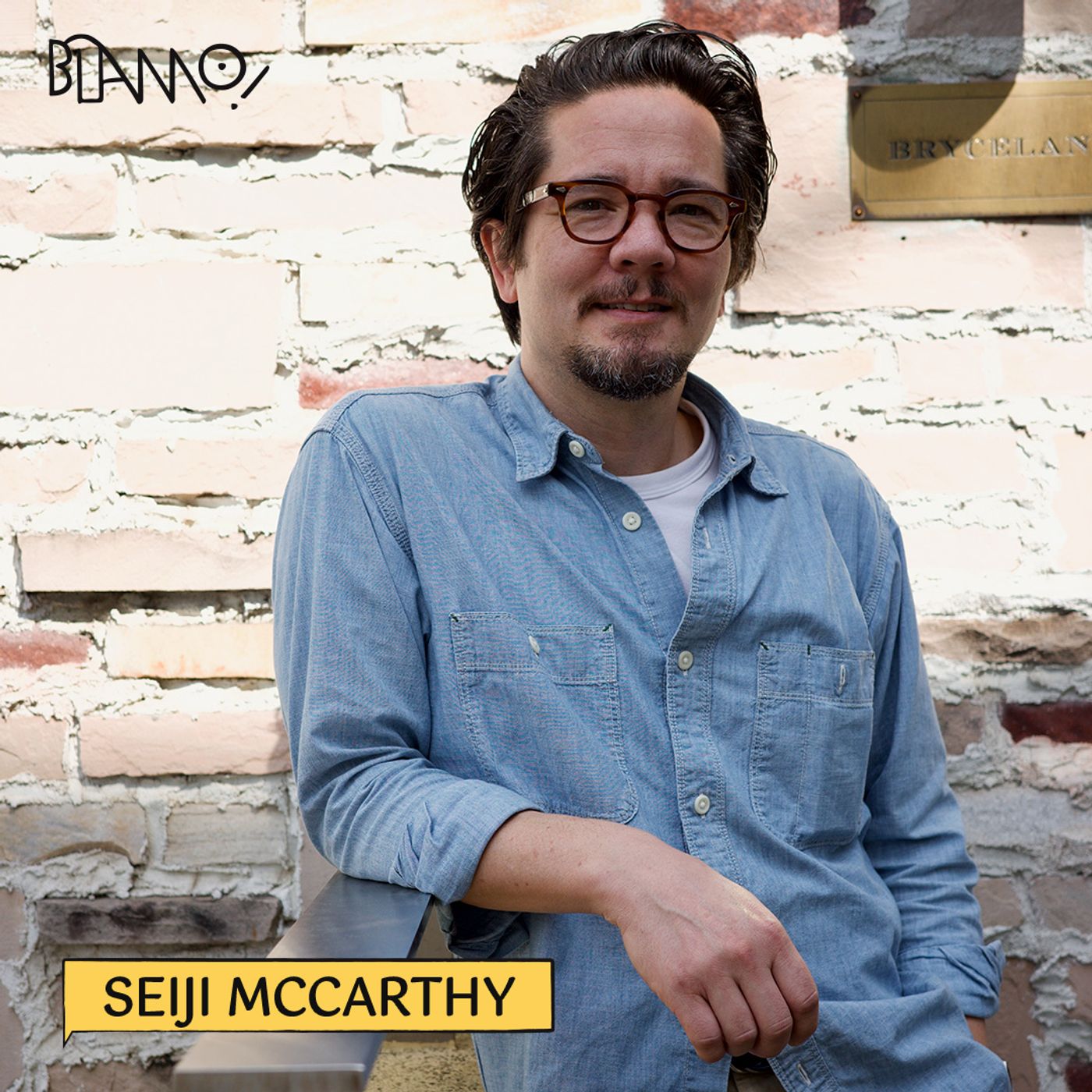
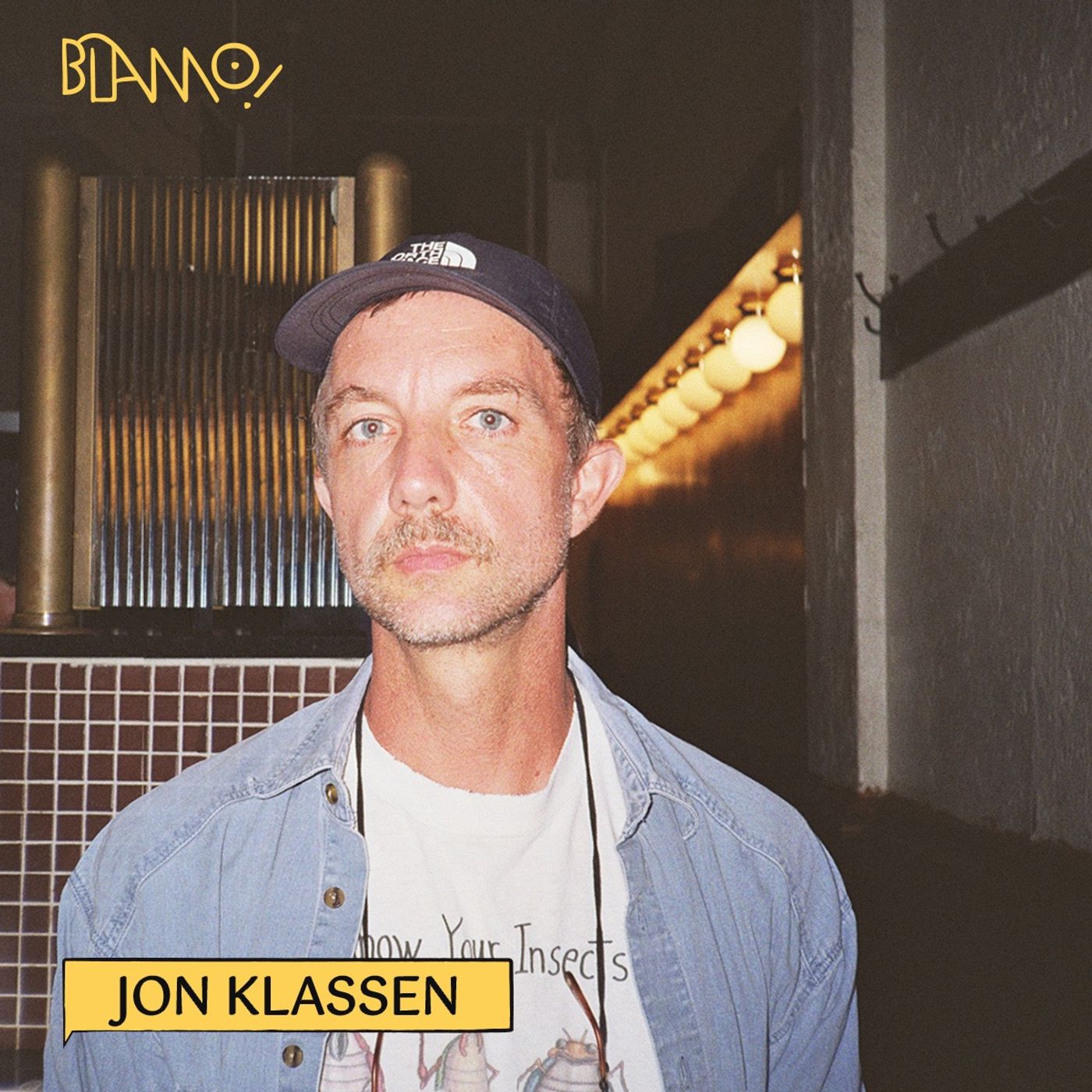
Jon Klassen (children’s author/illustrator) discusses why kids deserve stories that don’t explain everything, the role of ambiguity and negative space, and how his creative process favors “what happens” over tidy morals. He also connects these ideas to humor, relationships, and even menswear/clothes and running.
Jon Klassen is an illustrator and author known for minimalist, slightly mysterious picture books. He recently received the Astrid Lindgren Memorial Award (Swedish Arts Council/government/royal family), and previously worked in animation/set and prop design on films including Coraline (DreamWorks/Leica).
Kids can sense when the maker is truly into the work. Klassen leaves gaps because he either can’t/don’t want to say more, and because honest limits of language create space for readers to inhabit the moment. He prefers stories where characters react to life’s uncertainty rather than where everything is resolved.
The Rock from the Sky (aliens; “weird friend fights”; confusion/limited control), Circle Triangle Square (adult reread; unanswered waterfall question), and his Shapes/triangle-style books where love is shown through pranks rather than stated.
Written by AI. May contain mistakes.
Jeremy shares his experiences meeting Jon Klassen and discusses his impactful work in children's literature.
“And you've heard me talk about, oh, this is a good episode.”
Jon discusses the significance of receiving the Astrid Lindgren Memorial Award and the surreal experience surrounding it.
“So you went and won this like huge, huge award.”
Jon reflects on his approach to storytelling and the importance of leaving space for children's imagination.
“I think that's, I had books that was the banana learning to share when I was younger and I loved some of them.”
Jon explains how his sensitivity as a reader influences his storytelling and connects with young audiences.
“a lot of these situations happen more because of circumstance versus an intentional deliberate decision to leave that vagueness in there.”
Explore how fear and confusion influence creative expression and storytelling.
“I don't even, it could have been anything.”
Discuss the complexity of children's books and the nature of characters and plots.
“And the trick is to see if you can make it feel like one.”
Examine how humor is derived from mundane situations and personal emotions.
“And just, there's no more explanations, but that is kind of how it feels.”
Delve into how constraints shape creativity and the importance of writing for oneself.
“And I mean, when did you start to realize that while primarily people are viewing you as a, quote, children's book author and illustrator, that what you put out wasn't just for kids?”
Jon Klassen discusses his early struggles and inspirations in pursuing a creative career.
“I think that's the thing is I never felt like I deserved any of this stuff or someone's time just because I did some things that some people liked.”
Jon reflects on his distinctive character designs and the creative process involved.
“Yeah, and I think you also, you've created very distinguished characters from the challenges that you've put upon yourself, right?”
The conversation shifts to the depth and emotionality in children's storytelling.
“And so it does turn it, it turned into, unless the stakes are literally love, he doesn't move.”
Explore how literature provides emotional safety and understanding in troubling times.
“But just acknowledging the phenomenon of that feeling or of that kind of a day or of that kind of a relationship, just describing it is the same thing.”
Discuss childhood experiences with books and the impact of literature on personal growth.
“Yeah, I think you are always insecure about that.”
Learn how running can serve as a mental reset and emotional release.
“And you know, when you, I've never directed anything, but you do hear about actors or directors talking about like, how did you get there?”
Delve into the complexities of clothing choices and the emotions behind them.
“Where we talk about the perfect sport coat.”
Explore the complexities of feeling ashamed about loving nice clothes.
“Because as soon as it's correct, you're like, well, that's not right.”
Discuss how family backgrounds shape our perceptions of clothing and self-image.
“been buying and ordering suits for well over a decade now and I'll look at, you know, I'll go and I'll try on some of the stuff I had.”
Exploring the role of personal style and clothing as a form of comfort and identity.
“But like, yeah, there was another piece I just remembered when you said that about things you've been wearing for years.”

Get the gist, explore an idea or ask about something said.
 Claude
On Blamo!, what are the key points of this episode?
Searching your listeningAutomatic transcript. May contain errors.
0:03Jon Klassen: Hey, it's Jeremy Kirkland. You're listening to Blamma. How are you doing? How are we all doing? We hanging in there? We doing all right? Did everyone have a very interesting holiday weekend? Hopefully nobody ate too many hot dogs or blew off their hand with fireworks. I mean, I don't know. Maybe you're the person who does fireworks. Maybe you're the person who watches it. Maybe you do both. We did little fireworks with the kids, you know, put a ginormous rocket in my kid's hand, lit it on fire. No, I'm totally kidding. But it was good. It was good. I was in Kansas City, brought the kids out there, had a little holiday weekend with the fam.
0:47Jon Klassen: It was great. I will say it was a little bit of a kind of a whiplash effect because I had just gotten back from Paris like a couple days before from the men's shows. By the way, if you want to hear about that stuff, I did a solo pod on it on the Patreon. Also, there's a new Triple J episode where we talk about the Paris Fashion Week stuff there. Highly, highly recommend it. Dig into that. But let's get into it. Because this week, look, this is... I talk about this a lot. And you've heard me talk about, oh, this is a good episode. This is a really good episode. Okay? It's good. I like it a lot.
1:27Jon Klassen: It's John Clausen, who is, well, he's an illustrator. He's an author. He's kind of like, oh, man, this is almost, I'm almost cringing as I say this. Okay? But he's kind of like a philosopher in a way. So I met him years ago through Mac Barnett. and um um weirdly enough actually i was in copenhagen on a trip and he was there too um just a total coincidence and so we got to hang out and spend some time together and go to museums and i it was a ton of fun but it's also interesting when you get to be around a person uh especially like a person that you like like an artist and then watch the artist look at art and it first off i like i feel like that needs to be a tv show or it's just like watch this artist look at art and then try to see the things that they're interested in and it was a cool way to get to know him because you know we were in copenhagen i think we went to the design museum so we're like looking at chairs and stuff and it was just the stuff that he gravitated to you know look I love art I love artists even more but it was very eye-opening to me but we talk about that sort of stuff on here because look when people talk about children's books they usually talk about what they teach and John is more interested in what they've left unsaid if that makes sense right I mean I had this bullet point in my head of like how how do I summarize a person of this magnitude but he's become one of the most celebrated authors and illustrators working today He recently received the Astrid Lindgren Memorial Award, which is the world's largest prize for children's literature.
3:12Jon Klassen: But our conversation doesn't hang on books and art too long. We talk about why kids deserve stories. We talk about why you shouldn't explain everything, the role of ambiguity in art. And yeah, yeah, of course we freaking talk about clothes. We get into running and menswear, creative insecurity. Hello. It's all in there. This was just a great pod. I'm so excited to bring this to you. So here's my chat with John Kloss. So you went and won this like huge, huge award. I mean, this was a huge deal.
3:46Jackie DeLeón: It was, yeah, it got huger the more I went, the more I found out about it. I knew it was big, but it was one of those, it was for children's books. It's called the Astrid Lindgren Memorial Award. And it's given out by the Swedish Arts Council and the government and the royal family over there. like all in it's just like a national award it is just it was so distant when they when they called me to tell me i'd gotten it it was at the bologna book festival but i wasn't there i was home in bed in los angeles and apparently it was like it they all had all these digital screens that had my face on them all of a sudden at the festival and the whole thing just seemed like a dream it seemed like that's that didn't happen none of that happened and then we got on a plane the whole family and went to Stockholm to receive it.
4:30Jackie DeLeón: And again, it felt like it was so surreal as to, you know, my brain was like, this may not be happening. Like, that's the best way we have a processing this is that like the part of my brain that kind of checks out, you know, when things get a little bit too surreal, checked out like immediately after we got on the plane.
4:45Jon Klassen: Yeah.
4:46Jackie DeLeón: And any sort of experience I have with like literary awards ceremonies and stuff like that have been, you know, that they give out things to a lot of people on the night of the thing. And this was just my stuff. This was just my name on the stage. And it was like, I couldn't, I don't know. It was a very surreal thing. This job is very, not lonely, but you spend a lot of time by yourself. You're in your little cave working on your books and the swing between that and the ultra social stuff, even if it's book tour, but especially something like that, where you are, you're in a suit and you're up on stage and you're talking about yourself.
5:17Jackie DeLeón: And there's the, literally the crown princess of Sweden sitting there. You're just like, I don't know how these two things connect. I don't understand how drawing bears and hats connects with this. It doesn't make sense. But it was a very nice not making sense. As long as things aren't going to make sense, that's the way to do it.
5:34Jon Klassen: I mean, for listeners, there is a video of your speech on their site. And I watched your speech a couple times. And it's really good because I think, I mean, I'm not going to put words in your mouth. But to kind of paraphrase some of the stuff you talked about, you talked about the importance and your friend Mac discusses this as well, who's also, you know, our mutual friend. You talk about the importance of challenging kids and challenging people within your writing and creating opportunities for people to think more about the stuff that you're putting out. And I say this too, because, you know, I go to my son's parents reading thing every, I don't know, every few months or so.
6:21Jon Klassen: And I usually bring books to read in Russ's class. He's three. And I've seen other parents there and they'll bring, you know, this book and it's like, hey, the banana got into a fight and the banana knew that it was important to be kind and everybody should be a banana. you know, and then I read circle triangle square. And for listeners, you should also read it as an adult, you should read it. In each of the book, it doesn't really explain everything. And it relies on kids imagination. And, you know, for example, there's a scene in the book, one of the characters goes behind a waterfall, and you don't know who they see behind the waterfall.
7:03Jon Klassen: But you you pose the question to the kids. And I saw all of the kids when I'm reading it to them, they're guessing and they're shouting out, well, maybe it's this or maybe it's this. And there's also things that happen in the book that are like, oh, well, that didn't really resolve. So you create these big environments for kids in your book that I think is much more similar to what real life is than these like tightly wrapped bows of, you know, these parables of kindness that may not land the plane so much as helping people learn how to think. I will step off my soapbox now.
7:39Jackie DeLeón: No, no. I think that's, I had books that was the banana learning to share when I was younger and I loved some of them. So I don't think that there's a, there's, you know, that that's necessarily the wrong approach for people who find creative opportunity there. I think that for people who do that well, who can make books like that, be engaging and entertaining. I think there's tons of room for that stuff. I think that my approach, I don't know how to do that. I'm not interested in it creatively. And so I think that if there's one thing we've noticed, Mac and I, and me and my own noticed about books for kids or books that kids seem to love.
8:15Jackie DeLeón: There are books that kids love that I know that they love or that like a lot of them love anyway, but I don't like, I don't, you know, I'm not interested in them, but you can usually tell that the person who made that book was into it. Whether the topic or the approach, or if there's a moral, or whether that was interesting to them is the main thing, is that the kids can tell when the person who made the thing was into it, making it, the act of making it. And so whatever that leads to, I think is the thing to watch out for. If it turns out it leads to you making a sharing banana, if you can do that, and if you are literally, if you're into that as the person making it and challenging yourself and reaching the end of whatever it is you're able to do um that seems to be what kids are mainly looking looking to to connect with it feels like my stuff it turns out i i feel like so much of the air in my stuff whatever's left or the negative space that i don't say or don't draw it wasn't necessarily calculated for um inference for the audience or some sort of you know what i mean like there's those words that people use for kids things where they're like oh well this leaves so much it's stuff I can't either I don't know how to draw or write or stuff I can't bear to write or draw.
9:25Jackie DeLeón: I'm too sensitive to actually get it down. And so I stop short of saying the thing. And so it's all on my end. It's not calculated to be like, oh, well, the audience is really going to run with this. I literally either can't or don't want to. I'm just a stubborn, I'm stubborn that way. And the result luckily has been that it leaves space for the audience to inhabit and to bring their own thing to it. But if I find myself calculating that too hard to be like, oh, I'm going to let the audience run with this conclusion, there's something a little too calculated in it, where if I come by it honestly, if I'm like, I can't bear to go any further, I have to leave it here.
10:03Jackie DeLeón: And then hopefully we'll understand where this moment was. And the rest of it that's too hard for me to say, everyone's been there. It's just that they can fill that part in themselves. but it'll be the same thing. I never want to leave it so that it's ambiguous what I am trying to say or what I almost want it to say but the actual language of it or how it is the audience might say that to themselves ought to be or at least it turns out it works to leave it to be themselves talking to themselves about that last moment.
10:31Jon Klassen: Yeah, I mean it sounds like you're saying a lot of these situations happen more because of circumstance versus an intentional deliberate decision to leave that vagueness in there.
10:43Jackie DeLeón: Yeah, you just, you thought you could write it or you just, there's not even a plan. I think my favorite stuff comes when there wasn't quite a plan. You had a premise, but you weren't quite sure where it was going to go. And you have characters that you kind of begin to believe in or they're breathing on their own. But you, in the better times, you get to the moment where you're not quite sure how to put it and you're not quite sure what even you're trying to say. And so you either leave it silent and have them do something visually, or even if you can't show that, you move the camera altogether.
11:11Jackie DeLeón: Or you do it over a page turn where you didn't have to draw it. The moment happened between page three and four or page 47 and 48 or whatever moment that is. And it just happened in between. It wasn't in you to show it. And I think that even kids recognize that. There's an acknowledgement somehow of the limits of language or the limits of your ability to draw it, the limits of our own way of expressing ourselves that I really relate to when I see it. And I'm not, you know, kids don't necessarily put it this way, but hopefully that's what's coming across is that the connection is actually in the admission that you can't say any more than that.
11:47Jackie DeLeón: And hopefully there's an understanding there.
11:49Jon Klassen: Where did that sort of characteristic come from? because I mean, I think the other thing, the thread that we're kind of pulling out a bit here is, you know, when you go to school and you go to, you learn how to become a storyteller or an artist. So much of the storytelling is about connecting all these dots and showing, you know, the hero's journey, for example, right? You know, so things where it's like, okay, there's person wants something, person sees problem, person changes, person, you know, gets the thing. and they're, I'm not saying all your stories are like this, but it's almost like against what most people will learn when they're going to school, learning how to write stories by just not saying everything.
12:33Jon Klassen: And I think there's a, there, you know, for me, that was one of the things when I first read some of your books, because, you know, for the record, you primarily write books for children, but they're books that me as an adult will go back and reread like alone because there's something there that I'm like, I want to understand this better. And there's, you know.
12:54Jackie DeLeón: Well, that means a lot to hear that you do that. And I don't know where it started. I think that I was always a super sensitive reader and watcher of things, movies and shows and stuff like that. My bar was very low for wanting to walk out of the room or turn it off. And it wasn't necessarily for being scared or for, I put it this way to somebody a little while ago, and she was surprised to hear this way of saying it was, I remember talking about scary movies when I was a kid, which we weren't allowed to watch very often. So that was part of it too, is that your limited exposure suddenly when you do get to watch something scary or something a little ahead of where you thought you were at.
13:30Jackie DeLeón: But I remember even very young, I remember being angry and mystified that someone had made the thing I was watching. It wasn't the thing itself. I was really depressed and I felt lonely that someone had taken the time to create the thing that was supposed to do what it was doing to me. There was something about humanity or people or what the world was going to be like as I got older, because I was a kid when this was starting to happen. And it was depressing me that way. It was like, is this what we're all like? Who wants to do this? Who made this? Who took the time? What was it? I don't even, it could have been anything.
14:03Jackie DeLeón: It could have been, it was anything I disagreed, you know, anything that scared me. That was the process was that first it would scare you quickly or just bum you out or mystify you by its, I don't know, by something. And it could have been something that was actually, I was taking too seriously, you know, and I just hadn't had enough exposure. But I remember it wasn't the thing itself. It was always like, who did this? Like, what are, what's, why? And like, I wanted the motive. And so I think that so much of what I can't do now or what I refuse to go any further with, you just don't want to, you just don't want You want to show them an example of someone who didn't do that or who didn't, I don't know.
14:40Jackie DeLeón: There's a strange promise that you're trying to keep intact to the kids about what it is you can retain or what it is you're trying to retain as an adult and remember about the things you used to value or the things that scared you too badly or the things that confused you. And it's not that you have to ignore that those things exist. It's just that you don't have to own them. You don't have to make a structure that agrees with them somehow. You can just stand there and look at them and you don't even know how to put it. That's, I think, where it seems to end is that like, you don't have words for them, but I don't even want to give them words.
15:14Jackie DeLeón: They don't deserve words. Some of the things that scare us or some of the things that, you know, are mystifying to us. We don't have to internalize them that way. They do exist. We have, it's important that we don't ignore them, but I don't know, giving them language and giving them words and names, it just feels offensive somehow. And so you stop short of that. But you still try to imply that they exist. That's the thing. Is that you're not making a book where none of this happens. But the motivations and the reasons why and how you get there and how you find yourself there sometimes, they're not really understandable a lot of the time.
15:44Jackie DeLeón: And that's a big part of my books too, is that the lack of understanding about how even the main characters themselves or you yourself come to find yourself doing something. Why does that happen? It's not my business to know. I don't have the answer to that, but it happens. and even just the acknowledgement that it happens, just to say that it does, is enough of a reason, especially for a shorter book. That's why I think I like children's books so much or at least one of the reasons is that they're allowed to be that short. In something longer, you'd have time to get into it. But I love the size of a children's book to be like, it happens.
16:12Jackie DeLeón: Yeah. Page 32. And then you close the book. And that to me feels like an ending and it feels like a reason enough to make something is that just to say it happens and we're out. I don't know. And I'm not sure. I'm surprised to find that it works because it, you know, doesn't, you say it like that, it doesn't really sound like it could lead to a complete thought. And the trick is to see if you can make it feel like one.
16:32Jon Klassen: Yeah. I mean, you have this book, The Rock from the Sky, and I've read it, I don't know, probably close to a hundred times because it's my son's favorite book. He loves to read it. But, you know, for listeners, first off, you have to read the book. And it's also, you know, this is separate from the fact that the books themselves are designed exceptionally well, that it's worth owning. But that's, I don't want to go down that road this second. But in the book, weird stuff happens. Yeah. And, you know, my son was like, oh, are the people that come, you know, for spoiler,
17:10Jackie DeLeón: there's like aliens, essentially. There's an alien. Well, there's something. Yeah. Yeah.
17:15Jon Klassen: And he's like, are they good? Are they bad? And I was like, well, I don't know. I was like, I mean, it depends. I was like, it looks like they're just trying to figure things out. I was like, oh, this was destroyed. I don't know. And he's like, oh. He's like, well, maybe they're bad. And I was like, oh, okay. And he's like, well, but maybe they're good to themselves. And I'm like, what the fuck?
17:35Jackie DeLeón: My kids putting this stuff together. Nice. Yeah.
17:38Jon Klassen: Yeah.
17:38Jackie DeLeón: Yeah. We just watched, we just this weekend went to see Princess Mononoke. And they had a screening of it at the theater. And we'd seen it before, but the kids were, my kids are seven and nine. And they'd watched it once before. And we went to see it again because it was on this big screen. And I hadn't seen it in a little while, not since they saw it. And they were, you know, eons older than they were before. And we left. And my nine-year-old said, I don't know who was good. And I said, I know. I did the same thing. Like, your allegiances, at best, change like seven times. You're trying so hard to organize this.
18:13Jackie DeLeón: Because we want to, I guess. And I was going back and forth on this. His movies, Miyazaki's movies, are so interesting for this because they are so murky that way, even when they purport to be cleaner than that. There is often, if you dig down on them, a real gray area about who's actually, if you are asked to organize them that way, it's hard to do. And that one is super overt being like, who are we meant to agree with here? I'm being sent so many signals. And I love that. I'm not sure dramatically how satisfying it is. It's two different questions, right? Like, what is the, can you get dramatic satisfaction out of never taking a side?
18:49Jackie DeLeón: I'm so interested in that question. I think I've always been. I think that you can it's just hard or at least for me it's hard but it's I'm much more interested in that than setting up a good and a bad and letting the good win or letting the bad win and calling it a tragedy or whatever it is like that seems I don't know what to do with that I don't know what I bring to that whereas just I'm much more confused with the world than that also and so just somehow rock from the sky is about being confused and being like kind of acknowledging the lack of control that we have but still having weird friend fights even though you've got no control over your external circumstance, or at least very little, right?
19:25Jackie DeLeón: I don't know. The more, the older I get, the more it's like, I'm mainly in the business of reacting here. And that ought to be the baseline feeling is that like, let's not pretend I'm in charge. I can do my best to react to what we're handed. But that book is sort of about that feeling is that like, you have these back and forth exchanges that I really wanted to write. I love writing these weird, dumb conversations between characters, but at any moment, a giant rock might fall on you. And what does that do to your day? Can you allow it to change your day? Is it supposed to? Once one rock has fallen, what then?
19:58Jackie DeLeón: What do you know? How do we know to move forward? Can you? And then you do. And just, there's no more explanations, but that is kind of how it feels. Especially for kids too, who are largely in the business of reacting just the same, right? We talk about stories for kids about being friends and stuff, but like putting my kids into school, it was like, well, they have friends because of, you know, the choices that they have here. There's 30 kids in the class. They didn't choose any of them, but they're going to make the best of it. They're going to find a couple ones that are better than the other ones for them.
20:26Jackie DeLeón: And that's just reaction. You know, the shapes books that you mentioned, we went out of our way never to say that they were friends because as far as our conception goes, they're just these three creatures who just live in pretty close proximity to each other. They do enjoy hanging out, but our interest was much more in like, how does a neighbor conversation feel? Much more than like friends who you've chosen to spend the evening with. You know, that's a different conversation over the fence or down the street or like even parents whose kids happen to be in the same class. What's that conversation like?
20:57Jackie DeLeón: Versus like, oh, I really want to see you again. Let's have a drink, right? Like, I don't want to hear that conversation. I'm sure you do like each other, but how do I negotiate but how do I negotiate the guy next door? Right? Like, what is that? That's much more fun to write. And kids know those conversations. They know those, they're putting rooms with other kids they don't know all the time. They're aware of this like weird distant relationship where they're like, what's your name? My name's Brandon. You know, that's cool. Like, where'd you get those shoes? Like, what are you supposed to talk about?
21:24Jackie DeLeón: What are you supposed to do? Like play with these guys for an hour. We're going to go over here. Like those conversations should be so funny or they could be. And so, and this just is, you know, you're not in control. You just have to deal with Brandon now.
21:35Jon Klassen: Yeah. Well, you know, you tackle humor in a way that I think is very, very highbrow now. Let's be honest. I mean, it's, it is, you know, it's like you and Tim Robinson and how you guys explore humor in the sense that like, first off, it never looks like it's trying to be funny. You know, like I don't look at your books and I'm like, oh, this is a comedy. But you see the situations that occur and also from getting to know you i'm like oh dude john is
22:04Jackie DeLeón: fucking hilarious i don't know if we should bill it that way and then have me listen to talk for
22:10Jon Klassen: an hour i'm not gonna i'm not gonna live up to that kind of no no but i think you you point out the humor and the things that we is can be can feel mundane i think that well yeah and i think
22:22Jackie DeLeón: maybe that some of that is canadian too um i think a lot of humor that i grew up with and that i still see coming from Canada feels like it's tackling mundane mundanity. What's the, what's the, what's the noun mundanity? I don't know. I don't know. Um, but there is that kind of feeling of, of like staring at a, at a, at a snowy horizon and making a joke of it rather than being, you know, terrified by the abyss. Um, you're just, you're just on the, I don't know. There's something about the space up there that, that lends itself to a certain kind of straight, straight faced humor, but there is, I, I find I'm funniest, or at least in the writing, I'm, I'm happy with it when I'm a little bit angry at something and when that anger is clarified even a little bit at something in particular.
23:03Jackie DeLeón: And it doesn't mean it comes out in the books. I don't want the books to feel angry. I don't want the children to feel like I'm angry. But I do feel like it's back there somewhere where you're like, I'm mad at something. So let's make fun of it or let's explore it and say how ridiculous it is. And it's like a defense mechanism too. Your limits with language and your limits with understanding the world. It's funny as well as everything else.
23:23Jon Klassen: Yeah, I mean, you have quite a few books that you've published. And I mean, when did you start to realize that while primarily people are viewing you as a, quote, children's book author and illustrator, that what you put out wasn't just for kids?
23:40Jackie DeLeón: I don't know that I have. I think that I really love the constraints that writing for children gives you creatively. I really get a kick out of making sure that whether or not they understand my aesthetic or like what I'm trying to do, you know, creatively, I like it if a two-year-old can understand the plot or the problem, right? And that's a challenge. That's a creative challenge of its own to be like, how do I make this so clear that even a pre-verbal kid could be like, that's the problem. He wants his hat back. This book better end with someone wearing a hat. And keeping that as clean as possible.
24:15Jackie DeLeón: And so once you're inside that, but it's a good safety mechanism for me too, because then you've satisfied this very, which is hard to do, communicate something visually so cleanly, right? And once I have that to fall back on, then I can get a little weird with it or do my own stuff that I'm not even sure is working, but you can move around. But you're like, but the bear's wearing a hat on page 32. We do know that. We got to get there somehow. And like, but that's such a great, so I think, I don't know what I would do if I didn't have that in the background to be like a two-year-old's got to get it.
24:46Jackie DeLeón: And so they are for kids, I think. And they're for me as a kid and they are for, but I don't think about children specifically. You can't, it's like thinking about people anyway. That's what you learn is that like, all these kids are so different. Some of them are going to like the book, but you can't think about kids in a general way when you're making it. You can kind of guess at what is simple enough for a two-year-old to get, But I don't find myself thinking about children a ton. I think about how to make it as simple as possible and clean as possible. And then you have to just kind of trust that you are the kind of person that is going to make something that kids are going to enjoy, hopefully, and not be scared of or weirded out by.
25:21Jon Klassen: Well, so with that being said, when you're writing, are you writing for yourself?
25:26Jackie DeLeón: Yeah, yeah. Whatever that means. Yeah, for sure. I think that, again, kids notice that, I think. You got to do it for yourself. If you do it for them, they smell it and they walk away. And so it's like, you have to be writing for yourself. I don't know all the layers, you know, because of course, you know, that it's going to be a children's book. You have that in your head as a form. And so you're writing to that too. You're writing for the form.
25:47Jon Klassen: Right.
25:48Jackie DeLeón: But you are, you're trying to do your best inside that form, I guess. Yeah. Does that make sense?
25:53Jon Klassen: It makes perfect sense. I think, you know, I think oftentimes for me, when I think of the work that I'm doing, I'm like, okay. And this is something I just wrestle with as a person who makes stuff that people consume. Oftentimes, I really run out of gas to make things for myself or to find joy or simple pleasures for myself.
26:13Jackie DeLeón: I've almost never done it. I've almost never made things for myself. I'm only starting to figure out now in the last couple of years what that even looks like to begin. And it feels so strange to do it. I always needed a brief or a job. I always needed a job. I wanted this to be a job. I'd much rather be a professional with a job than someone who's viewed as an artist or someone who has something to say or express. I just want to be really good at my job. I've always wanted that angle on it. And that's why I don't think I have many ideas. It's a formal exercise. You are given a form, which is, in this case, the children's book or the board book or chapter book or whatever it happens to be.
26:51Jackie DeLeón: And you do your best inside that particular set of constraints that it presents. And you find you have lots to say as soon as you begin to open that up and analyze it. Then those things come out. But I don't go into it being like, gosh, I wish I could analyze what it feels like to be whatever it is. I wouldn't know where to start. I think it starts with the form. And then whatever you're thinking about or being angry at or whatever it is comes out. For me, it does.
27:13Jon Klassen: Who taught you that? Because I don't think that's natural.
27:15Jackie DeLeón: What? To start with the form?
27:17Jon Klassen: Yeah. But I think also, you know, I mean, you talk about how you just want to have a job. Yeah. But if you just want to have a job, there's about 500 billion other things you could do in something as niche as this.
27:30Jackie DeLeón: I can't. I think that was the tricky bit is that I felt like I don't think I could. That's the scary part is that I couldn't fix cars or make chairs, maybe, if I'd learned how. But I knew it didn't come naturally. This came naturally, I guess. Drawing and writing felt familiar. I just felt like I knew where the levers were and stuff. And not in a way where I was owed anything. I think that's where it gets tricky too, is that like, you know, the world doesn't owe you an outlet then once you figured out you can draw or like to write. And so you want to, you want to earn it. I think that's the thing is I never felt like I deserved any of this stuff or someone's time just because I did some things that some people liked.
28:06Jackie DeLeón: It's like, you want to earn that time. You want to like, all right, you've given me a space on the shelf and these 10 minutes it takes to read this. I'll do the best I can. I don't know where that came from. I think that I didn't grow up knowing people who did creative work or certainly not like artist types. We didn't have any of those people around. And so we were surrounded by people with jobs. And I just wanted to fit in with a job. And I was so scared that I wasn't finding anything that was going to do that until I remember seeing the Disney stuff. When we were kids in the 90s, they were making Little Mermaid and Beauty and the Beast and stuff.
28:38Jon Klassen: And they came with all this extra footage of animators at desks flipping paper and looking
28:42Jackie DeLeón: at references and making faces into mirrors and stuff. But I was so excited because suddenly here was a person with a desk who looked like they had a job and a parking space. And I was like, oh, good, great. So this thing that I'm doing, I don't have to find myself at all. I don't have to be an artist and live in Paris. I can go to Toronto and draw on paper, but still have a job and an apartment and a chair. And like, you know what I mean? Like just that. I just wanted a house with a job and I could back this into that.
29:10Jon Klassen: Yeah. And then you, in a way you got that, right? Because you worked with Henry Selick early on.
29:14Jackie DeLeón: I went to animation school. I went to a college to learn how to animate. And it turned out I was a terrible animator, which I was really sad about to find that out. I'd worked so hard to get into this school and everything. And then I knew right away, oh no, I'm bad at this. And I don't even like to do it. It's a different thing animating than drawing, it turns out. But I really like designing around it. I like set design and I like prop design and being in the background of all those things. And so that's what I did. I worked at DreamWorks and I did work at Leica. I worked on Coraline for three years as a set and prop guy.
29:42Jackie DeLeón: And then I started to get into books a little bit, but it was concerning because books, you can't do a book about chairs and rocks that you draw. I love drawing sedentary sets and things that don't move. But that doesn't make a book. I tried. I tried a couple times and it doesn't work. And so my characters that I ended up being able to draw look like rocks and stuff. They just, they're standing there staring at you, wondering what you're going to do with them. And then you don't do much with them. But it was a reaction to not knowing how to like, not knowing what to do with characters because my job had been sets and props and immovable objects.
30:12Jackie DeLeón: And so my characters kind of look like that. They're just standing in a field wondering like, what the heck am I doing here? What are you, what did I, what did I show up for? And that is my feeling with them. I don't know. We're going to find out in the next couple of pages, but I've got no idea. I wanted to draw a chair. You're just here because I wasn't allowed to draw a chair. So it was a strange evolution, but it like, I never expected to be on my own with it. I always thought I was going to be on a big team working on something that I didn't conceive of. I'm shocked to find myself more in charge than that.
30:40Jon Klassen: Okay, wait a second. Look, sometimes I got to hit that pause button in here to tell you something. As you know, I've been collecting watches for 15 plus years now, even more than I've been doing this podcast. I got Mickey Mouse watches. I got Snoopy. I even got some heavy hitters in there, including my prized Seikos. And you're like, Jeremy, I know, but I'm always nervous about buying watches. It's kind of weird out there on the internet. Well, that's why your boy uses bezel bezel is an incredible trusted marketplace to find and buy your next dream watch or even that new daily driver they even have their own auctions all backed and vetted by their incredible team of authenticators and experts by the way they're real people it's not some tacky ai that's super easy you can contact their concierge team and say hey i'm looking for this or i'm looking for that and they'll find it for you.
31:34Jon Klassen: And next thing you know, you'll receive that perfect watch. You can rest easy knowing it's authentic, correct, and now in the perfect spot on your wrist. So if you're looking for a new Speedmaster, Datejust, or you just want something fun and weird, visit getbezel.com and find your next watch at getbezel.com. Wait, wait, what? Oh, you already did this? Oh, you just want to make sure that your new toy now stays safe. Look, I get it. Because now Bezel offers insurance for your collection, even if you didn't purchase from them. So find it, buy it, or bid on your next watch at GetBezel.com. And insure it while you're at it at GetBezel.com.
32:20Jon Klassen: Yeah, and I think you also, you've created very distinguished characters from the challenges that you've put upon yourself, right? I mean, I think in a great way, there are things that look John Clawson, you know, and so you have this visual language from design features that you've done on your characters. Do you have you felt pressure to remain in that sort of style when you make things?
32:47Jackie DeLeón: A little. I feel like just in the last little while, it's become more conscious than I would have liked. And then you kind of react and roar back on something else and try to do it. Or, yeah, I think there's contradictions, right? You do that and you're like, don't know what I'm going to do. I'll turn left here instead. But then also you want to refine what it is you've been up to and it is yours and you know that it's yours to a certain extent and you've built something. And so what else is in that thing that you've built, even if you didn't mean to build it? And so you want to do both. And here you've got this great audience who likes this stuff.
33:20Jackie DeLeón: And so what business is it of yours to turn left? If they like it, your job is to, as I said, kind of entertain them and be good at this or try your best. And so I have both in me somewhere where there's a reaction to break it for the sake of it because it worked. And then also to try it again because, oh God, you like that? Okay, I'll try and do it again. I think that's where it comes in is I can't do it again. I don't know how. There's this way of making the pictures I have lately where there's all these kind of shapes on a white background and there'll be like trees and rocks and trucks and stuff.
33:51Jackie DeLeón: And how I draw them is I'll make like 15 of each and then just circle the best one because I'm not totally in control. And I'm like, well, number seven turned out the best, I guess. I didn't, those other ones, I didn't know, you know, I just, and so you're reacting again. You're like, there's an admission there. And so when a book goes well, or when a certain formula seems to go well, or, you know, the way you've drawn characters goes well, even if you wanted to, you can't do it again. Not really. And so you have to plan for that. You have to figure out, well, then what can I do without falling on my face or making, you know, wasting their time?
34:23Jackie DeLeón: And so it's always a little bit of that. But it's heartening to find that even when you think you're turning left and going hard off into the distance and trying something completely new, for me anyway, it seems to come back to the same five colors and the same look. I don't know how that happens. You just circle back somehow and you thought you did something different until the book even comes out. And you're like, oh, wait till they, you know, this is going to be different. And then it's like, no, you did it again. You're like the same thing in a good way. maybe people like it again but you're like oh i guess i really i'm pretty particular it turns out like i thought i walked away but i didn't walk away at all here i am back in this clearing that
34:55Jon Klassen: i thought i left behind yeah i mean it's it's true and i think you i don't know i love it i mean i love how your characters look i like doing them i think yeah it's fun to do it it's just that you
35:07Jackie DeLeón: you know what is the creative conversation there you're like how long you know what your own style and your own stuff that you make i think you're almost the worst person to analyze it right because it ought to come from a very confusing place, probably. As soon as you begin to realize its actual components, you've probably broken it somehow. You can't use those anymore because you understand it too well.
35:25Jon Klassen: Yeah. I feel like the thread that connects all artists is that, at least in my experience and from talking to other artists, there's always a point in any artist's life where they're not happy with their work or they make something and they're just unsatisfied with it.
35:42Jackie DeLeón: Does that happen to you? Oh, all the time. Yeah. I get lucky, because I only have to show the ones that I think work. You know, you get 30 books that didn't work, but you only have to show number 31 that you thought actually worked. But there's tons of drafts that don't work and ideas that you even thought could work. And then you try them for a month and then they crash into a wall somehow. And it's hard too, because the books come out like maybe a year or sometimes longer than that after you finish them. And hopefully in that space of a year, you've gotten better or at least you've changed. And so this thing comes out and you're like, oh yeah that oh man look at that one page like i totally forgot about that tuesday afternoon where i just had to get out of the studio a little earlier and just whiffed it like it's such a it's such a hard thing to stare down and then you have to go to gymnasiums in texas and read them to children and you're like and you have to show look at it and you have to look at your own drawing from that tuesday afternoon and be like there it is there's that drawing again and here here you guys are and like that part's hard because you're never satisfied very rarely are you satisfied with the stuff.
36:43Jackie DeLeón: I think I'm finding more and more that the less I do in a book, the better I like it. And that's not just because I'm scared of my own work, but I think that there's something in there that like the less marks I've made, the more satisfied I am with the work.
36:55Jon Klassen: Yeah. I think also just as you get older and mature, I think that you want not to hold on to things. I mean, it's like perfection becomes the enemy of progress, right? Yeah. I think that one, you know, you're a phenomenal, phenomenal storyteller and you exist in a medium where people aren't really looking to be challenged by kids books. You know, I think the average adult, you know, it just doesn't interact with children's books the way in like, I didn't even realize it until I had kids. And then I was like, oh my God. Cause like, look, The Rock from the Sky is a love story.
37:31Jackie DeLeón: I think most of them are love stories. I do think that The Rock from the Sky, I didn't have that first story, The Rock from the Sky. There's five stories in that book. And the first one was the titular story where there's a rock falling somewhere above these two characters who are arguing about where to stand in a field, not knowing there's a rock falling above them. And so the job became, I thought, how to get them out of the way. The rock can hit the ground, but it shouldn't hit them. That's my goal. How do I believably get that guy out of the way? And I tried all of these technical ways that a character might cross the stage, motivated to cross the stage when he didn't want to.
38:08Jackie DeLeón: And none of it was believable. And then I brought in a third character and made the first character jealous. And then he moved. Then he moved and I was like, I buy that. I believe it now. And suddenly it was like, oh, this isn't just this story. What we've established now is these guys love each other and they're not talking about it. And like, then you got a book. Now we're off. And that's how this stuff happens. But they just weren't breathing on their own until then. And I think even with children's books, you know, with all of that stuff, you just got to believe it. It just, you know, if you don't believe it and you know when you don't believe it and kids have the same sensitivity, I think often, or at least it seems to be sometimes that they're like, well, kids will believe a lot less than I, you know what I mean?
38:47Jackie DeLeón: Their bar for belief is maybe lower because they don't, they haven't been around as long. I don't know what the calculation is there, but no, if you don't believe it, they won't believe it. It's just people. And so you got to believe it yourself. Why would he move? Why would he move away from his favorite spot? Why would he do it? I got to believe it too. And so it does turn it, it turned into, unless the stakes are literally love, he doesn't move. And yeah, then it turned into, and they never, they never admitted to the, to each other, how much they, they just kind of hurt each other in small minor ways.
39:17Jackie DeLeón: You know, and I have had relationships like that, where it's like, I'm not going to tell you how much I like you. Instead, I'm just going to like shove you emotionally every now and then. Like it's not a healthy relationship. It's not a good way to go about it, but they exist. And kids have these too. You watch kids in schoolyards and stuff, and there are so many variations of a relationship. You say that to your kids sometimes. It's like, well, they threw a rock at my head. And it's like, he's probably just trying to get your attention because he likes you. That's a version of a kid's relationship.
39:46Yeah.
39:47Jackie DeLeón: And so it's not just like, if you're friends, you'll share. It's like, sometimes if you want to be friends, you throw an eraser at their head, and you don't know what else to do to follow up. That's the best you had. And that's a book. That's at least a chapter, right? is just that move. Triangle is about that. The Shapes book you talked about is that he wakes up in the morning wanting to play a trick on square. And that's the whole book is he crosses this massive landscape to do it. But why do you do that? Why do you wake up being like, oh, I got such a good one to play on square this morning?
40:14Jackie DeLeón: It's because you want to see him. You're finding reasons to call, right? And like, that's just how they love each other. Of course they do, but we're not going to say it. That's the least interesting way to say it. We're going to show it. We're going to spend 30 pages showing him crossing a massive landscape to scare him by making a snake sound. The worse the prank in that book, the worse the reason for him to go over there, actually, the greater the expression of love, I think, is that he needed next to nothing to walk all day. He just needed the smallest of reasons to finally go over there and see him.
40:44Jackie DeLeón: It's a love story. Most of them are. It's, yeah. Yeah.
40:48Jon Klassen: And it's, I think, because I'm also a person who, I don't really read fiction. I don't think I'm too cool for it. There's nothing like that. But, you know, I didn't have the more traditional higher academic experience. You know, I basically jumped into books as a way to protect myself initially because of just, I need to learn the things I don't know. So therefore, I'm going to read all of this nonfiction because, oh, shoot, I don't know about the history of this. I'm not familiar with this. I'm not, you know, and it wasn't until maybe the past 10 or 15 years that I became more comfortable reading fiction because of what it could do to me emotionally.
41:24Jon Klassen: Right. Because otherwise I looked at books as like food in a way. And it's like, oh, well, I really need to understand World War II more. So I'm going to read these 10 books. And then I feel I can talk from this perspective and this perspective. And then I know about A, B, and C. And now, okay, now I feel safe. I can, you know, exist throughout the world because I know that book they're talking about.
41:43Jackie DeLeón: Yeah, I think that you can do the same thing. It's not quite the same thing. But there is, the word safe, though, comes into this too. in that, like, you know, the thing we were talking about where you're like, this is a day that happens sometimes, or this is a feeling that you get sometimes without passing judgment on it or without saying, and when that happens, you know, this is how you're supposed to act. But just acknowledging the phenomenon of that feeling or of that kind of a day or of that kind of a relationship, just describing it is the same thing. Is that like, you've had these relationships.
42:13Jackie DeLeón: Are you weird for having had them or for having felt that way? The book is telling you, no, they exist and there's a safety there too. And if the more empathetic and the more gently you can put it, or the more grace that's in that expression, the greater the education where you're like, again, you're now I'm safe. Okay. That then someone else has been here too, or something like this is a thing that happens. Um, and so I think it is all just looking for safety. You're just, you know, that's just a different version of it, but I'd never heard it put that way about reading nonfiction where now there's a safety in it where now I I'm safe for a while anyway.
42:44Jackie DeLeón: Right.
42:44Jon Klassen: Well, yeah. I mean, even in, you know, I'm not trying to get political in any way where like things have felt weird. And so I, as a way to protect myself, I was like, okay, I'm going to basically really try to study every single instance of where things that look like they've never happened before have happened in a way or have existed. That's yeah.
43:07Jackie DeLeón: The reassurance of that to find out that these arcs have happened.
43:10Jon Klassen: Yeah. And I think that there's, there's a tiny bit of comfort in there. there's less comfort when you see that they haven't ever but but there is a bit of comfort in knowing that like oh okay like I'll just make this up where you know Senator Huey Long who is very much against the New Deal you know when FDR was going crazy and you know and then you had like Father Tom Coughlin who was like you know the Rush Limbaugh before Rush Limbaugh existed you know this priest that had a radio show and he reached everyone Like, you're like, oh, there has been different types of people who have felt emboldened by this or this that existed, you know, 100 years ago.
43:53Jackie DeLeón: Yeah, yeah. And these aren't necessarily new events. They aren't unknowable, or at least people aren't as mysterious as that, right? Like, this is, we can kind of track this stuff, even though it might not go that way this time. Yeah, I definitely get that.
44:07Jon Klassen: I don't know. So anyway, I mean, I digress, but I think that's initially where most of my time spent reading was, was in this way to also, you know, and I didn't go to college at all. I just studied music and, you know, lived in New York and was trying to do all that. And so there was also a part of me that felt like I had to overcompensate for things. You know, I'm like hanging out with my buddy who went to Harvard and knows all this and this. And I'm like, oh, shit, I need to, if he's going to mention, you know, chaos theory, whatever I don't know I need to fucking get my I need to get my ducks in a row here you know
44:41Jackie DeLeón: I have that for sure I was going to go to university for I applied for English lit and for writing and for just like literature courses and stuff and I went to school for animation instead and like we just sat there arguing about whether you know Wolverine could beat Spider-Man or something like it what there weren't big discussions happening um I promised myself when I didn't go to school for that stuff for literature that I would read on my own and I did I read as much as the schedule would allow, or at least as much as I could get interested in doing it. But I'm very limited. I'm not as well read as a lot of folk.
45:14Jackie DeLeón: And you hang out and, you know, you go to book conferences, you hang out with authors. These people have read. And so you're winging it a little bit through there. But I found people that really influenced the writing, and I felt lucky for that. But I think it was just like, I wonder all the time what else would have happened to my work if I had actually read as well as a lot of folks I know. the ones I did read changed me. So what would have happened if I'd gotten a lot more of that done? I don't know. Yeah, I think you are always insecure about that. I don't feel competitive about it. I just feel kind of sad about doors in my own brain that didn't get opened.
45:48Jackie DeLeón: Well, what do you read now? I'm all over the place now. I'm constantly in the business of catching up, you know, as you are, like, you just kind of go back and you're like, oh, I never read that big one. So let's go back and read it. I do like nonfiction. I think it's an interesting time for nonfiction. Like you're saying, there's lots to try and untangle or at least understand. And so I toggle, I usually have, I've recently gotten back into short stories a lot. I think if I ever write anything that isn't illustrated or necessarily for children, it would be a short, it would be a bunch of short stories.
46:15Jackie DeLeón: I've always been super into short stories, which I guess tracks from writing, you know, short books. But I've rediscovered it again. I don't know what, I think it was the last book that Dennis Johnson wrote before he died, the Largesse of the Sea Maiden, which was a collection of short stories. I reread it again. he died only a couple years ago I guess I can't remember how many now and I'd read all of his other stuff but that one I go back to the most for some reason I like so many of his books but that collection of short stories there's a sound in it it's so often a sound it's so often a voice it's like I can't even tell you what happened in the stories that I really like but I'm just so into when an author just sounds great you just want to sit in the sound and it can go anywhere it doesn't even really matter what happens you just want to hang out in this beautiful yeah sound that they've found
47:00Jon Klassen: Was there ever an artist or author that you struggled to understand?
47:05Jackie DeLeón: When I was a kid, I didn't like Maurice Sundack very much. And it comes up these days because he spends time in children's books. And there's a lot of, and he's, I think about him a lot. He was unbelievable and like technically, and just what he was breaking through emotionally and stuff. But I was scared to death of him when I was a kid. I remember that book. I remember seeing where the wild things are and in the night kitchen and thinking it's so heavy. There's something super heavy about this. And I don't want to put myself through it almost. Like I was much more into the lighter, go dog, go.
47:38Jackie DeLeón: And like those kinds of books that were just kind of jokey. I love joke books and I like that lighter stuff. And when I saw Sendak, I remember seeing him in like third grade. They had him, you know how books are like on top of the shelves in like a display way in the library? They had the Sendak stuff like that. And I remember looking at the cover, standing, looking at it of where the wild things are, being like, something's up. I can't go in there yet. I can't do it. And I know I've never been, you know, you spend so much time in children's literature and you analyzing this stuff, but I know he's never been my guy.
48:05Jackie DeLeón: And I've always felt bad about it because he's like one of the greats. And I know that I know it intellectually and I know it even artistically. And it's just, I've always felt bad that like he wasn't, he was too scary for me. I was too, I was too much of a delicate flower because he was really pouring it out. He was like, he was laying it bare in those books somehow. And it was just too much for little John to, to hold. I try to do that a little bit. I try to take care of that kid when I'm making stuff too, is that you want to be edgy and ride the edges of what, you know, might be interesting, but I never want to hand them too much.
48:37Jackie DeLeón: I always err. Like, I think that again, that's why you stop. I don't want to bleed out too much for them to the audience. And that's not because I think, that's not necessarily a comment on what I think children can hold. It's what I want any audience to be able to hold. It's what I want the characters to hold. We were talking earlier about character and it was like, I think of them a lot as actors. And you know, when you, I've never directed anything, but you do hear about actors or directors talking about like, how did you get there? How did you cry in that scene? And like, well, I just thought about my dog getting hit by a car or something.
49:07Jackie DeLeón: And like, you hear, you picture those conversations where the director's like, you got to cry today. You got to cry all day today, actually. Like, so get there, try to get there. And I've never wanted to ask my audience or my drawings or myself to get there. Like why? It just feels, it feels bad to ask them to do that. You can get them there dramatically and be like, this did happen. There was a horrible day, but I'm not going to ask you to go there. I'm not going to draw you there. And I'm not going to put myself there. I've been there. We've been there. You get there, but I don't want to, I don't want to sit in it.
49:36Jackie DeLeón: We can imply that it happened and then move on. Um, like I do think of them that way.
49:41Jon Klassen: So, you know, I'm the, the things that, uh, you do to kind of recharge you. You're quite the runner now. When, when did you get into running?
49:48Jackie DeLeón: Only a couple of years ago. Um, I'd tried for years to be a runner. I always wanted to be one. I just liked the elegance of it. I biked for a long time. All of my exercise and like anything active I did for through high school, through college was always, I would get on my bike. I loved my bike. Um, and I would go on long, long rides and I thought I was a bike guy and I am a bike guy. I can't break up with it, but living in Los Angeles, um, it's not a great bike town on the outskirts. It is that you take your life in your hands too often. And I was getting so bummed by putting my bike in my car to then drive it to a trail.
50:20Jackie DeLeón: And, uh, and so we live pretty close to a reservoir here and i was just and i was i can't remember what finally did it i think it was one of those programs right one of those um 5k programs and it just caught one time oh yeah it finally i finally kind of broke through you know whatever it is that gets you off one too many times off the couch and um uh i liked it finally and i finally found out it's different than i thought all of the stuff that i do physically like i wasn't a physical kid i don't think i was always told i wasn't because i don't know if other kids went through this but if you can draw, they kind of tell you, well, then you don't need to.
50:53Jackie DeLeón: And it's, you know, actually you're bad at this by definition, the physical stuff. And so I was never a sporty kid. You're an art kid.
51:00Jon Klassen: You're not an athlete. Yeah.
51:02Jackie DeLeón: You don't have to, or at least whatever the excuses. And so your idea of yourself is just like, well, I don't then. And so it took a while, but I found it was, so running was different than I thought it was. It wasn't the same. I thought it was just like an hour of like maximum exertion. That's what I always pick. Like, that's what it feels like when you start, you're like, this is just trying hard for 20 minutes, like all the time. And until you get through where it's not that way, or when you learn how to do it a little better, and it's not that way, it's different. And I also found that I was working stuff out, you know, I felt better.
51:32Jackie DeLeón: I felt mentally better. I was doing, it was doing work that I didn't know how to do for myself in any other way. Wait, let's talk about that. I don't even know what more to say about it. You just like, I remember I hurt myself in January. I hurt my knee. I was running downhills when I didn't know about that. You shouldn't do that. turns out. And so I got runner's knee or whatever they call it. And I had to stop running for like a month. And I found like, oh no, I'd been, I didn't even know how much like stuff I'd been offloading to running, just anxiety stuff or like, I just dealing with things which are, you know, it's just the buildup.
52:03Jackie DeLeón: It's nothing massive. It's just the usual stuff. And I think it was doing a lot more house cleaning running. And I wasn't out there thinking about stuff. I don't know if you are when you go running, I'm not out there actively, you know, doing equations on whatever's going on, but you come back feeling like you did something, like something's a little better than it was. And I think it feels good to do that and to know it so definitively that you are a little better than you were when you left. You've done something objectively positive for yourself. It's not often you can say that, right? How many things can you say that about?
52:34Jackie DeLeón: And I think doing that over and over again as a habit just helps with everything. And so when I wasn't doing it, I was bummed out more than I expected to be. And I didn't know how much I'd I'd been offloading to that until I stopped for a bit.
52:46Jon Klassen: I'm in a group chat with you. Yeah. Where we talk about the perfect sport coat. Oh, yeah. I'm curious if we could elaborate a little bit this to listeners. Because I know you've been in search. And, you know, especially as... And I'll say this for listeners. You know, I've known John for a bit. And as you're hearing, how he approaches and thinks of, you know, problems, opportunities, per se, is very different than other people I know. And seeing how you get into menswear and how you're trying to find the best jacket and how, you know, it's fascinating to me. So I'm curious if you could explain.
53:25Jon Klassen: It's a moving target, I think, isn't it? Or maybe it's not, maybe it's not.
53:29Jackie DeLeón: No, this is great. Everybody, isn't this everyone's relationship with clothes? If you're interested in clothes, you're searching, but you're searching for so many things at once, right? You're searching for your idea of yourself. And there are moments when you find something that you like or a fabric that you like even where you're like, that's me. It's just a picture of my face. That's what it is. And you don't know why you feel that way about it. And there's probably lots of interesting threads as to, you know, tying to why it is you emotionally respond to that stuff. And so you're like, oh, and there is an interesting thing, I think, going on as you get older too, where as there's this George Saunders book that I talk about a lot about writing Russian short stories, actually.
54:10Jackie DeLeón: And he analyzes them called Swim in the Pond in the Rain. And he has a bit about writing where he's like, you won't even necessarily, when you really find your voice, you won't even really necessarily be the thing that you wish you could write. You've got guys in your head or authors in your head that you've always wanted to be. And you're not necessarily going to write those kinds of things. You're going to do differently. It's just that's what you're best at. Whatever you produce, just find out what that is. And you might not even agree with it. It might be surprising what works. And I feel like clothes are kind of the same way where you're like, huh, like I wouldn't have picked that off the rack, but like, that is what I'm supposed to wear.
54:43Jackie DeLeón: You know what I mean? Like there is, there's an incongruency there and that's such a tricky relationship too. And so for the jacket, you're like, have I just seen, you know, people who wear jackets who are wearing what they're supposed to wear? And you're like, well, that, that whole thing looks like it's working. But it's very interesting to analyze like what it is you do and don't look for in a jacket. I remember there's a, there's a line in James Bond in, in, in Casino Royale where he's on a train with the girl who's going to be the love interest for the rest of it. And they're sizing each other up about what they're wearing, I think.
55:13Jackie DeLeón: And she's talking about his suit and she goes, I can't remember the line, something along the lines of like, the suit is perfect, but you wear it with such disdain that you can tell you don't come from money or something like that. And I remember lighting up at that line being like, yeah, yeah. I think I wear clothes with disdain. I think Mac would agree with that too, where it's like, I got to beat it up a little bit, or there has to be something almost off of what it was supposed to be. Like I have a very tricky relationship with it where it's, of course you want it to fit and you want it to be nice and all that stuff.
55:43Jackie DeLeón: But also I kind of want to flip the middle finger to it a little bit, to this whole thing, to my need of it, to all of it. And like, what does that mean? What's going on there? And like, that doesn't serve my purpose. Aesthetically, that probably doesn't look as good as it could if it was correct, but it's always a little bit incorrect. I don't know. And so the jacket thing is hard, right? Because as soon as it's correct, you're like, well, that's not right. It's got to be broken somehow. Yeah, I don't know what that is.
56:07Jon Klassen: I think for me, there's always been this weird concept of shame in me liking really nice clothes. Because a part of me is like, well, I didn't necessarily come from money. I mean, it's not even I didn't necessarily. I didn't come from money. And so sometimes if I'm wearing something that's nice, I feel a tiny bit embarrassed by it. Yes. But I got it because I love it. I care about it. it's you know i'm trying to learn about myself and express myself in what i'm wearing but i'm also aware of the signals it might be signaling if i'm you know wearing like a nice sort of bespoke jacket or whatever somewhere um and so i i'm i'm always in battle with it you know basically i'm always in battle with like equipping myself and feeling good about myself but also feeling a tiny bit ashamed that i care this much and i want to look this good there's massive shame in
57:02Jackie DeLeón: I think that, yeah, the negotiation with that is like the whole thing, it feels like. My grandfather, my dad's dad, the more I think about him, the more it clarifies, I think, a certain unified theory to all of this anyway. He was a sewer truck driver. His whole job was that he owned a sewer cleaning truck of his own, and he would go to various towns around Ontario for long stretches and clean the sewers and come back. And they lived in a tiny little house in St. David's, Ontario, which is between Niagara Falls and Niagara-on-the-Lakes. like a one intersection town. And I remember his closet was full.
57:37Jackie DeLeón: He had beautiful, or at least he loved clothes in my memory. He loved clothes, but he, you know, he was a deeply working class guy. They had no money and five kids and he drove a sewer truck and they went to church. There was a church down the road. We used to go to church with them. And I found out after he died that like, I was asking about this because he would sing in the choir box too. He was up there with the robes and everything. And I remember like after, like years after he died, I remember asking somebody about that. Um, and they were like, well, you know, your grandpa didn't necessarily believe in God.
58:08Jackie DeLeón: He loved to sing. He liked to get dressed up and he liked to go sing in front of people. That was why they went to church. And also he loved a suit. He loved getting gussied up or what, I think he said, like getting fancy or something like that. And like, he, he had no problem. There was no, there was no conflict. It didn't feel like in my memory to, you know, the guy who would drive around, but also owning, you know, a bunch of suits and he had bolo ties. He had like 50 bolo ties and he had like, he would comb his hair and keep a mustache. Yeah. And like, he just looked great. He was always very debonair and like, just he, he took care of his appearance.
58:42Jackie DeLeón: He smoked like a chimney and he died at like 65 because he smoked, like he looked like his health was terrible, but all of the superficial stuff, he was of that, you know, he owned a nice pair of shoes and like a couple suits and it was like that he was very thin because he'd had his stomach surgery when he was from the smoking or something and so he looked very drawn and thinner as he got older the kind of the way when i started running i was like oh look at that look at me in there i'm basically like i look a lot like him which is it's helpful to see that happen right but it also was clarifying was like is that how he wore clothes is this the way where it's just like you don't mind getting dressed up and going out to dinner and it's as simple as that like there's no shame in that necessarily right?
59:22Jackie DeLeón: Like you feel good about it. It's fun to put on nice stuff and go out for the evening. And so like, can it be that simple? Why do we have to have this like huge, you know, labyrinth of emotions about clothes and finding ourself in them where it's just like, just want a nice jacket to take my wife out to dinner. And like, I just want to look nice. Like, but whatever that version is, it is so interesting how the subtleties of like the fabric and the cut and like what the lapel is doing and stuff, it speaks to you emotionally. you're reacting to crushes that you have on things and what's going on there and like why um yeah and i think yeah you're full of you've got a couple different people you're thinking about that you'd like to be or i don't know what it is why the search is there um i had a jacket made for that award we were talking about at the top yeah and it's pretty close it's really nice it's a wool one um it's just this beautiful navy jacket that fits just right because it was it was like it was the first made to order jacket i ever had and it was like oh yeah that's how it's supposed to go that was the revelation of it too is that it's not at least in my mind you want to vanish into it you don't want it to look conspicuous or like you like everyone's coming up to be like what a jacket i want to vanish into the wall like just like just don't just make me look like i put a jacket on please like that's what i want yeah yeah i i always look for um what i like to call
1:00:35Jon Klassen: like nice but forgettable style in the sense that like i look nice but i don't really want everyone to know exactly what i wore and not even because i'm worried about like copying or anything but it's like, I don't want to look so nice that people are like, wow, yeah, Jeremy wore this.
1:00:51Jackie DeLeón: Where it's like, I don't know, you had like a nice thing on, I think.
1:00:55Jon Klassen: Yeah, yeah. I'm sure you
1:00:56Jackie DeLeón: look great. Yeah, exactly. Yeah, right. There's this Wendell Berry line in his, he wrote an essay about Amish people, I think. And he has a great quote that applies to so much creative, but also to this, where they were talking about how they were like, it's so funny being Amish in the United States because so much of the American personality is like trying to find yourself. And he goes, we're trying to lose ourselves. And I thought that was great. And I really related to it. I'm from a Mennonite. My background is Mennonite. And so it's not far off aesthetically from all that stuff. But there was something about wearing clothes too, where it's like, I'm not looking to find myself in here, or at least that's not how I'd put it.
1:01:34Jackie DeLeón: You're looking to settle back into it and just, you know, to lose yourself in it. Because you know who you are. That doesn't need proving. So let's just settle in. Let's just, yeah, exactly that. Don't remember. Yeah.
1:01:47Jon Klassen: Well, and now too, I mean, I'll order clothes and it's funny because, you know, I've been buying and ordering suits for well over a decade now and I'll look at, you know, I'll go
1:01:58Jackie DeLeón: and I'll try on some of the stuff I had.
1:01:59Jon Klassen: And apart from it not fitting the way I wanted my body, now I'm like, why did I ever wear clothes so tight? Why was this so slim? What was I thinking? you know or i'll be like yeah you know what that taylor never works for me because they always cut it really tight and i remember i went and saw this taylor recently and he was like well that was what you wanted though and i was like oh shit he was like no no here and he pulls out his measurements he's like here's look jeremy kirkland you know 2012 2013 and uh yeah you wanted it this length you wanted it this you wanted it this and he's like that's fine if you want it different now and because i was like oh i want it longer i want it bigger and he's like but you know he's like what you were wearing at the time was what you wanted.
1:02:42Jon Klassen: And I was like, damn, how can I trust myself?
1:02:45Jackie DeLeón: Yeah, there is a shame in that, right? There is that. You know what it makes me think of? I remember when I was younger, I watched, I loved the Shawshank Redemption. Everyone loves Shawshank Redemption. But I remember thinking that it was such a great idea in that movie, because you go, you span decades, right? In this prison with these two guys, and they don't change very much. They change a little bit, the two main characters. But the warden, who is able, he's the villain of the film, changes a lot. Whenever you see him again, he has adapted to the style of the time outside the prison. His suit's different.
1:03:18Jackie DeLeón: His glasses are different. He is a stylish, of the moment man, or at least as far as he's concerned. And I remember sewing those two things together to be like, there is something evil in it. This is correct. This fits, this villain, that he is vain enough to keep up with this and to be popping in and out of our scenes with these two consistent guys who, you know, have been issued a uniform. And so they're not even allowed to keep up with anything. And here's this guy who has the freedom to do it. And there's something immoral about it, or it fits this villain idea. And that was, I don't know whether it fit it or whether that was just because the movie worked that way.
1:03:57Jackie DeLeón: And it was sewn together in my mind. But there is this thing where you're like, oh man, I'm moving with the times, but like you kind of, what else, what a choice do you have? You have, you know, you are going to change. I do that with studio space here where it took me a long time. I remember the first few rotations where I would work at home for three or four years and then want a studio space outside somewhere that you just rent. It doesn't change the work. You don't need it. But for some reason I would just be like, oh man, I want to get out of the house for a little, for a little bit. And you go rent one.
1:04:21Jackie DeLeón: And for the first few times that would change over, I remember feeling like, I don't know myself. I wish I knew myself better. I didn't have to change this all the time. Like, why can't I figure out what kind of creative person I am? Why can't I just have a setup and know that that's my setup? Why don't I get having to change this? And now I feel like these are just, this is just how it feels. You do this for a while and then you change it and then that exhausts itself and then you change it again. And it's not that you don't know yourself. It's just that, you know, time passes and you are, you're going through it.
1:04:49Jackie DeLeón: And that's, it's as simple as that. But I don't know why it feels different to apply it to close because you do go back and you're like, what was I thinking? But yeah, I don't know. I don't know why those two things can't connect? Why can't I be kinder to myself on the other end of it? Why does it feel vain instead of just, you know, why can't you be nicer to yourself about it?
1:05:05Jon Klassen: Yeah, I know. Are there any pieces of clothing that you've like had that you still see yourself reaching for? Oh man, that's an interesting question.
1:05:15Jackie DeLeón: I wore chucks for the longest time. My feet are really narrow and I still like my feet, it probably conformed my feet. I wore them I wore them since high school. They went with everything. And they're also a bit of that middle finger thing to whatever's going on, right? No matter what you put on, if you're wearing chucks, it felt like, well, I'm going to keep a bit of this to myself. Yeah. I'm the least punk rock guy, so I don't think that would be the term I would put on top of it. But there was something about it. It was like, and I'm just comfortable in them. I knew how to put them on. I also just wore a hat since I was in seventh grade.
1:05:47Jackie DeLeón: Every day, all the time. For the same reasons, I think. But also, there is, you said the word like signal a little while ago, which is a big part of it is that like, if you are in the business of being something of a storyteller or communicating anything at all, which you are too, you are in the business of symbols and signals to your audience or to whoever is going to be receiving what you're putting out. And I remember I started wearing a hat in earnest, like all the time when I moved, we moved from Toronto to Niagara Falls to a school that was a lot rougher than the one I'd grown up in. And I, I was horribly unhappy in this new school.
1:06:19Jackie DeLeón: I didn't fit in at all. And I wasn't up to it. I wasn't tough enough for it. And I didn't know anybody. It was a tiny school anyway. And this guy came up to me like on day five and he, he had a statue of Liberty haircut, which was that he'd shaved his head and spiked the front bangs only that were left. And he was wearing an Aerosmith get a grip t-shirt and ripped up stuff. And he had piercings all over the place. And he came up to me in the schoolyard and I was just kicking rocks by myself day five, not knowing what to do. And he comes up and he goes, he goes, you're John or no, you're Jonathan, which I was, I am.
1:06:50Jackie DeLeón: And I said, yeah. And he goes, I'm Donald. You can call me Don. And it was like, I, it was the most graceful thing that had ever happened to me. I couldn't believe how nice it was that he said that right away to call him Don. It was like at my lowest moment, here was a guy who, it was the smallest gesture, right? Call me Don. And I went by John from there on out after. And I was like, I'm going to do that for whatever capacity I have to do that. And I'm not, you know, Donald, I don't, I'm not this intimidating creature in this world that he fits into. But however I can do that for people to say, call me John, or at least to start it that way.
1:07:23Jackie DeLeón: And I think the hat is part of that too. There's an informality about it. It's not a big deal. I'm still wearing a hat where there's a symbol of that to be like, you know, it's okay. Really that like, and I don't know how that fits in why my brain calculates hat means that, but it has, and it did right away. I started wearing a hat then too, to be like, but it's also protective. It's like what you're talking about. There's a safety in it. It's my little thing and so I get to take it wherever I want but there's it's a there's a dual meaning to it where it's also like let's all just settle down a little bit I've still got a hat on
1:07:55Jon Klassen: yeah I mean I think it's clothing can be very very disarming and I think too where a lot of times you know I'll I have this old yellow hat that I've worn for well over a decade I have maybe like I don't know there's probably like eight over there on my on my shelf and then it's this yellow Ted Drew's frozen custard hat. And it's a really ugly hat. The colors are very, nothing about it makes sense in terms of how it's designed. It's kind of kitschy, but I liked it because it's so kind of weird and obnoxious. It's like just this weird yellow hat and I've worn it for ages. And then, you know, I liked that.
1:08:33Jon Klassen: I was like, oh, I'll wear this with a sport coat. I'll wear it with a suit. And it kind of dressed down what I was wearing. And, you know, for me, I wanted to look like I didn't take myself too seriously. I wanted to look approachable. It's still very crazy to me. It's like how much clothes can be so disarming in a really good way. Where it's like, oh, yeah, okay, there's that guy. Oh, you know what? He doesn't look that intimidating. He's got a little hat on. It looks like an ice cream stand. Like, okay, I'll go talk to this guy. He seems normal.
1:09:06Jackie DeLeón: I feel like this is an old thing, though. This is an old tradition of doing this. is that like, you know, across the desert, two cowboys riding towards each other, you are in the business of symbols before you get close enough to be in firing range. And like, that's what we're doing. We're singling to each other, even in passing, even in just in the street walking by, like what we're up to and what we believe and what we think of ourselves and what we think the world might be. All of that, you're somehow doing it or it gets interesting when you start to anyway. All of that stuff is in there in these micro decisions and your reactions to cuts or fabrics or all that stuff.
1:09:41Jackie DeLeón: It's signals, it's symbols. And you don't even know of what. You couldn't write it down or at least I can't. But like, and so you flail, right? Because those things are murky and you're like, is this what it is? Is it, this feels warmer to the, what I think and what I feel. And so that's why maybe the calculations are murky and you find yourself cutting suits five different ways over the course of 10 years is that you were getting warmer. But like, yeah, there was another piece I just remembered when you said that about things you've been wearing for years. I had a gray sweatshirt, a gray, like old, like, you know, raglan sweatshirt, like, um, that I wore when I, when I moved here and I met my wife.
1:10:18Jackie DeLeón: Um, and it was back, like she, she was a photographer. She likes to take lots of photographs with an old camera. And, um, we, when we got married, we had to go, I'm Canadian and she's American. So I was getting my residency and you have to go to the courthouse or the immigration office to prove that your relationship isn't a sham, that you didn't get married for visa reasons. And the best way they have of doing that is to sit you down and interview you and believe you or not believe you but they also ask you to bring pictures of the length of their relationship so you can prove you've been around each other for as long as you say you have and so they brought in these pictures and i'm wearing that sweatshirt in all of them like it looked like the same day and the guy was like how long have you been together and we're like we've been together like eight years and they're like i don't and she's like he wears the same sweatshirt a lot like it doesn't look correct like it was one of ones where it just showed up in every single picture.
1:11:06Jackie DeLeón: And I didn't, I don't even think of myself as having like a little uniform, but I think that I'm happiest when I do, when I, you know, you get those phases where you're like, oh, I can do this for a year or even more. And I'm happiest when I have my little uniform where there's like, and now what it's turned into, I think with clothes is that I think I'm figuring out the uniform for now anyway, but I'm really interested in small variations in that. So it's like, oh, I like a light blue shirt and I like a Navy jacket and a pair of pants that does this kind of thing, but it doesn't stop you from acquiring new things.
1:11:33Jackie DeLeón: You just want variations on that. You're like, oh, that's a nice light blue shirt. And you have like 50 of them. And like, that's really silly and stupid too. Can't you be the minimalist you'd like to be about all of that? Can't you have the actual closet that looks like you have a uniform?
1:11:48Jon Klassen: I'm in the same boat where I, the amount of oversized Brooks Brothers Oxford shirts I'll get. Yeah. Only to get it and be like, man, you know what? This reminds me of this other one that I have.
1:11:59Jackie DeLeón: Yeah. Oh, I'm going to wear that. And then you hang the other one up.
1:12:02Jon Klassen: And you're just like, it's like I buy things to let them marinate in my closet, you know, only to pull out what I hadn't worn in three months because I was reminded of it by what I just bought.
1:12:13Jackie DeLeón: I love packing for a trip that way because we go on trips a lot for work and stuff. And what you find yourself packing on the day, the impulse where you think like two days ago, my suitcase in my mind looked much different. And what is this new thing I'm throwing in here off the cuff? Like, that's ridiculous. I'm not going to wear that to think. But like just the art of packing for it too. And like, again, yeah, pairing it down to who you are today. What is your little overnight bag look like today? It's different than it will look like next week. And why is that? Why does that feel weaker? Why do you want it to be the same instead?
1:12:43Jackie DeLeón: Mac sent me a picture. I think about all the time when it comes to these kinds of discussions. And it's a picture of a row of sport coats sitting, like hanging on a wooden rack against like a wooden wall. It was a beautiful picture. And he, it was like eight jackets, I think, maybe less. They're beautiful. Like these tweeds and wools and these great looking coats. and he's like, whose rack? This is a writer's jacket, like rack. Whose do you think this is? And I was like, oh, I've got no idea. Like, that's a great question. And I looked at it for a long time and he knew I was reading a lot of Dennis Johnson, but I didn't think Dennis Johnson was, you know, the pictures I'd seen of him, he wasn't wearing jackets like that.
1:13:18Jackie DeLeón: And I was like, is it Dennis Johnson? And he goes, no, it's Cormac McCarthy. And it was in his house or somewhere, like in his, I guess he lived in New Mexico. He lived in the Santa Fe Institute for a long time. I think he actually did live there. He worked there or something. And so this was his rack. And I was like, man, that's so cool. Of course, he had these solid six or seven jackets, and that's such an indicative thing of his personality. And then Max said, you think that, but he actually was a massive hoarder of sport coats. He owned more than 600 of them, and they were all in storage somewhere.
1:13:50Jackie DeLeón: And these were the ones he had on his rack when he died. But he had this massive cache of them somewhere else, and he was obsessed. He would buy them like, like he was in insatiable about these things. And he was searching all the time, I guess, was how I took it. But I remember so clearly my journey, you know, through those facts, right? To be like, oh, here's this minimalist desert writer, you know, the man we all think of and all that kind of stuff. And then my picture of him was so cohesive and set for those first few minutes. And then Mac said, no, he had like a warehouse of him. And then you had to adjust and swing over to this new picture of the guy um and that's just so interesting i found that like i just held on to that story um because it's so true to life it feels like or at least it was i told him it was a very dangerous thing to hear right because like yeah okay now i have permission to be this insane hoarder and directionless in my in my my choosing of this
1:14:43Jon Klassen: stuff too yeah there is a photographer named massimo listry who is really he's a florentine photographer and he's really famous for just doing like you know shoots big medium format you know or large format like just interiors and usually there's there's nothing in there he will shoot like a roof of like an old Florentine building or something but he more or less exclusively always has a navy jacket on in all his images yeah and um he worked with Antonio Liverano who is Florentine Taylor and essentially he's got like three or four dozen of these navy jackets that are all just just one tiny hair off from each other where it's like one is a heavyweight cashmere yeah one is a very lightweight hopsack one is a you know flannel one you know just every variation you can imagine and they're all navy jackets that's where i'm getting to it's hard to
1:15:41Jackie DeLeón: explain to people who don't have that kind of like who haven't settled into that kind of rhythm I have to explain it a lot around the house. Like why, why are there like literally that many Navy jackets? It's just like, well, the jacket has to be Navy. Like that's immovable. And it's like, does it? Is that immovable? And you're like, yes, it's immovable. Um, I, when I got that jacket measured for that award thing earlier, I went back to the place, um, afterwards and walked right in and zeroed in on this. Like, as I said, that was a wool one and there was a cotton that they have hanging on the rack.
1:16:10Jackie DeLeón: And I was like, oh my God, that's such a great fabric. And I was really into, into it. And I was just, you know, responding in that mysterious way you do to some fabrics, I guess. And, um, the guy who measured me was there and we chatted about this stuff and he was like, well, yeah, but that would be another Navy jacket. And I think I looked at him in a way that he was like, okay, that's not what we're talking about. Like another Navy jacket. It is like, that wasn't the discussion. I was like, well, yeah, this is another Navy jacket. What are we talking about? And he, you know, he showed me all these other fabrics and there were these, you know, brown ones and everything else.
1:16:39Jackie DeLeón: But I was like, no, there's no question in my mind that another navy jacket is useful to me.
1:16:44Jon Klassen: You and I both. And I think, yeah, it's like, oh, this one's more of a travel jacket. Oh, this one's a lot more of a, you know, this is a hardier jacket I can beat up. And yeah, it's...
1:16:55Jackie DeLeón: Do you think though that in that, like in all those minor variations, are you looking for the perfect one? Do you suspect that it's out there somewhere? Or are you actually looking for a life where you rotate through 14 navy jackets?
1:17:07Jon Klassen: uh fair question i i'm looking to essentially maybe have three right that's i have maybe i think i've whittled my tailoring down to maybe 12 to 15 sport coats yeah and i think i probably need to buy another five or ten to know that i have like three or four winners right that's the math that's the
1:17:34Jackie DeLeón: That's the indescribable math, right? Yeah. And what are you doing, right? Like, what is it? Is it how you think you look in the jacket? Or is it something about the jacket itself as an objective piece? I guess it's both. But it's so personal. And I think that's why it's kind of like you do feel shame about it. Yeah, you're admitting that you don't quite know yet, right? You don't quite know.
1:17:56Jon Klassen: Yeah. And the only way to know, and this is not me trying to promote consumerism here, but the only way to know is to own it. You cannot, you know, when people are like, oh, I looked at this and I tried it on it, you know, I'm like, no, no, no, no, you got to buy it. You need to buy it and then wear it and then, and then be forced to wear it in different occasions and forced to, you know, okay. You know, cause there's one guy that I used to work with and I used to do like styling and stuff. And he had essentially three copies of his wardrobe, depending on how he wanted it to fit and how his weight was fluctuating.
1:18:27Jon Klassen: And I'll be honest, his weight did, his weight did not fluctuate that much. maybe 10 pounds. But he wanted it like, oh, if I want to wear it a little loose or if I want to wear a sweater underneath or if I want to wear it with a t-shirt, he had it cut that many ways. And I was like, dude, you're doing it wrong.
1:18:48Jackie DeLeón: Yeah, that's not how, I don't even know. That takes more knowing of yourself. Well, is that how you'd put it? Is that like, there's more consciousness there. Like it really is a mood thing. Like you don't know how you're going to feel about it. And like what you do choose to go out that night with, what is the jacket? And like, what are you calculating? What are you doing? Is it your idea of yourself that day? Is it your idea of what you'd like it to be? Like, what is it? What are you doing when you're standing at your closet being like, that's the one for tonight? Like, it's so weird and personal and murky for me.
1:19:19Jon Klassen: Yeah, it's painful.
1:19:22Jackie DeLeón: But the only way out is through. Yeah. Yeah. Yeah. And then how do you like this? The same thing, though. It's like it's this is this is what making creative work is like, is that when you go back and the tailor shows you, you know, you wanted it that way. It's the same thing as like reading your books from like 2012. You're like, I did want it that way. I fought hard for that. And like, I don't like it as much anymore. Like you have to live with those things because they were you then. And like, I don't know, it's probably best to be nicer to yourself than that. But you do feel that way about the work so often.
1:19:58Jackie DeLeón: and that this is the same thing. It's the same stuff. It's the same calculations is that you're just kind of flailing and guessing at who you might be and who you want to be.
1:20:05Jon Klassen: The painful part
1:20:06Jackie DeLeón: is when it begins to make some sense is when you do find the jacket you're talking about and you're like, oh, this actually makes lots of stuff make sense. That's the part where you're like, oh, I think I just signed up again for this whole adventure, right? Where you're like, now I know this actually works. Sometimes every now and then this does make sense of something that I didn't know was even confused for a while. And the work can do that too, where you're like, oh, okay, I didn't even know I had that in me. On your better moments, it surprises you and you're like, oh, okay, yeah, I'm okay, right?
1:20:38Jon Klassen: Yeah. Yeah. I mean, I was going to say, I think that's, you know, at least you kind of realize you're just like everyone else. Thank God. Yeah. Yeah. Well, John, this has been awesome. Thank you so much.
1:20:52Jackie DeLeón: It was good
1:20:55Jon Klassen: All right, see ya.
1:21:25Jon Klassen: where you can, geez, there's so much good stuff on there, but we have our members-only Slack group. We also have exclusive shows from Dye Workwear, hosted by Derek Guy and Peter Zatolo, as well as the Triple J Show. And there's even some solo pods and stuff in there. There's all sorts of good stuff. But if you want to really lock in, just join us over on Patreon. So thanks so much, everybody. We will see you soon.
Jon Klassen makes children’s books, but this isn’t really a conversation about children’s books.
Jon recently won the Astrid Lindgren Memorial Award (one of the biggest honors in children’s literature), and we start there before getting into what makes his work so compelling in the first place.
We talk about why he leaves space for readers instead of explaining everything, how kids are smarter than we often give them credit for, the value of ambiguity, and why making work for yourself is usually the only way to make something honest.
And of course, we get into running, menswear, Studio Ghibli, Maurice Sendak, creative insecurity, and the weird pressure of trying to make good work over and over again.
*
Sponsored by Bezel - the trusted marketplace for buying and selling your next luxury watch
Hosted by Simplecast, an AdsWizz company. See pcm.adswizz.com for information about our collection and use of personal data for advertising.