
 Ask ChatGPT
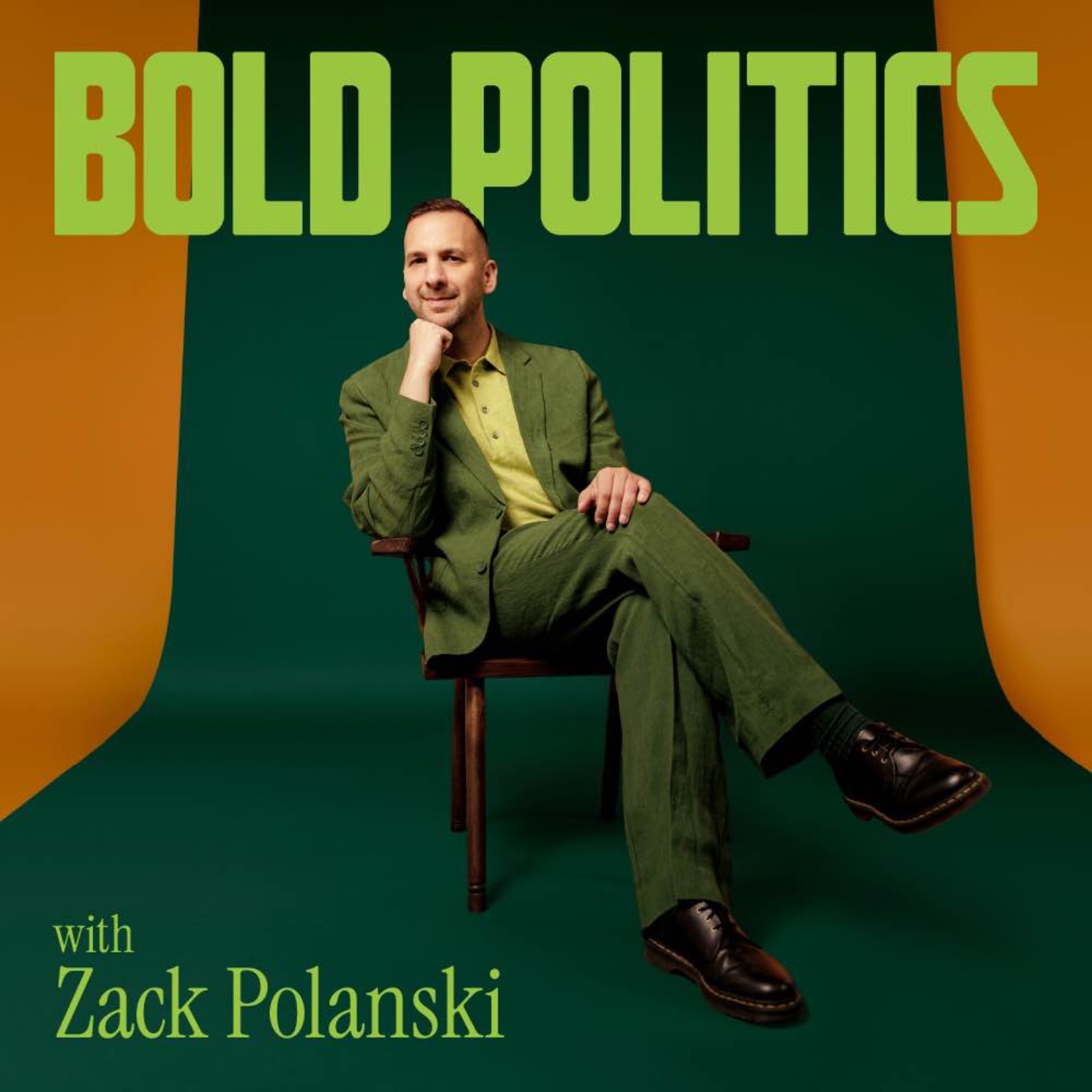

- Podcasts
- Bold Politics with Zack Polanski
- Benjamin Moser and Zack Polanski on the Jewish History of Anti-Zionism
Bold Politics with Zack Polanski11 Nov 2026 · 52m · 21 chapters
Benjamin Moser and Zack Polanski on the Jewish History of Anti-Zionism
In short
Jewish history of anti-Zionism and arguments that Zionism is inherently racist and leads to genocide; also how media/politics conflate anti-Zionism with antisemitism and how to communicate morally and historically.
Guests
Benjamin Moser, author of Anti-Zionism: A Jewish History; Jewish writer and historian with a background influenced by Holocaust-refugee family narratives. He’s visited Hebron with the Palestine Festival of Literature and says he was later banned by the Israeli government. Zack Polanski is mentioned as co-guest (no transcript details provided).
Key claims
Zionism is territorialist and from the beginning sought a Jewish state in Palestine by displacing a largely non-Jewish population; current Israeli actions are not a “divergence” but the fulfillment of that original project. Genocide is described as the ultimate form of racism. Antisemitism is being “overused” to shut down criticism of Israel, weakening the term’s meaning.
Notable examples
Palestinian Jews’ early opposition to Zionists; Jacob Israel de Haan (1919) learning Zionists were anti-religious and trying to take over Jewish representation, taxation, and education. Hebron experience: Palestinians restricted while Moser (with “right skin color and passport”) can walk escorted. References to Edwin Montague and Moses Gaster arguing Zionists can’t be loyal citizens. Mentions specific atrocities and a child sleeping on a mother’s grave.
Written by AI. May contain mistakes.
Chapters
1:03
Understanding Genocide and Racism
Discussion on the Labour government's stance on Gaza and the concept of genocide as racism.
“So recently the Labour government and Andy Burnham have admitted that they got it wrong on Gaza, that so many of us who are speaking out against the genocide were right.”
1:54
Anti-Zionism and Jewish Identity
Exploration of the links between anti-Zionism, Jewish identity, and personal journeys.
“So with all this being said today I want to speak to one of the leading voices in the anti-Zionist movement, that's Benjamin Moser who literally wrote the book on it.”
3:16
Perspectives on Zionism
Benjamin Moser discusses varying perspectives on Zionism and its implications.
“And that's actually why in my book, I try to take as many different perspectives.”
6:41
Emotional Evolution and Reality
The hosts discuss the emotional journey of understanding the realities of Zionism.
“This was sort of people's theories about Zionism.”
9:00
Reclaiming Jewish Tradition
The conversation focuses on reclaiming Jewish anti-Zionism and its historical roots.
“And to realize that the reality is that little girl on that woman's grave, you know, that's just not a pleasant thing.”
11:04
Morality in Political Discourse
Discussion on the need for moral arguments in politics and media regarding Zionism.
“They're excluding people who have been there from the very beginning.”
14:00
Moral Arguments in Politics and Media
Discover the importance of making moral arguments in discussions about political issues.
“I've been at this conference all day where people are talking about journalism and AI and all this kind of stuff.”
15:50
The Ethics of Jewish Identity and Zionism
Explore the ethical implications of Jewish identity in relation to Zionism and its actions.
“And so that's another thing that I think is particularly painful for us to see that suffering is being instrumentalized in order to inflict suffering on others.”
17:40
Understanding Zionism and Its Impact
Gain insights into the historical context and consequences of Zionism on the Palestinian population.
“So, to throw us back onto these discussions of which word are you allowed to use or not, this is when Zionism wins.”
21:50
Citizenship and National Identity
Learn about the relationship between citizenship, national identity, and the implications for Jewish people.
“That's where my family are all from for a long time.”
Show all 21 chapters
24:06
Personal Experiences in Israel-Palestine
Hear about personal experiences in Israel-Palestine and their transformative effects.
“In many cases, you know, kill them, which luckily didn't happen to my family because they were lucky enough to escape.”
27:20
Perspectives of Palestinian Jews
Understand the historical perspectives of Palestinian Jews regarding Zionism.
“Quite early on, though, you talk about Palestinian Jews and in the 1900s, how they felt about the Zionists arriving.”
28:00
Jacob Israel de Haan's Zionist Journey
Learn about Jacob Israel de Haan's transformation from a convinced Zionist to recognizing the complexities of the Arab position in Palestine.
“And this is something that a lot of the early writers on Zionism that I include in my book find very disturbing when they get there.”
29:30
Clash of Cultures in Early Zionism
Explore the cultural clashes between Zionists and Orthodox communities in early 20th-century Palestine.
“And not only did they do that, you could write that off as well, okay, you know, they can do their thing, we can do our thing.”
32:13
Impact of Colonialism on Palestine
Discuss the historical context of British colonialism's role in the creation of the Zionist state and its implications.
“So, there's a Muslim saint that's buried somewhere, and there's a few families that take care of that mosque, and that, you know, they might have a little hotel where they will greet pilgrims.”
33:57
Legacy of Colonialism and Reparations
Delve into the ongoing impact of colonialism and the conversation around reparations for its historical consequences.
“But of course, the British kind of kick this off.”
35:58
Displacement and Responsibility
Examine the responsibilities of Western nations regarding the displacement of people due to their foreign policies.
“We're trying to create a world without these kind of artificial divisions.”
37:54
Israel's Influence on US Elections
Analyze the impact of Israel on recent US elections and the political landscape.
“So I'll give you an example of where I grew up.”
40:09
Principled Politics and Public Perception
Discuss the importance of principled politics in relation to public perception and electoral outcomes.
“Now Marco Rubio himself admitted we got into the war in Iran because of Israel.”
42:01
The Consequences of Zionism
Discussing the implications of Zionism on politics and society.
“And I think that I just want to encourage you to hold the line on this.”
46:58
Anti-Semitism and the Jewish Identity
Exploring the complexities of anti-Semitism and the Jewish experience.
“I was quite astonished by how much actual anti-Semitism there was directed at me, because this word has been so overused and so misused to mean any sort of criticism at all of the Israeli state.”

Ask about this episode
Get the gist, explore an idea or ask about something said.
 Claude
On Bold Politics with Zack Polanski, what are the key points of this episode?
Searching your listeningTranscript
Automatic transcript. May contain errors.
0:00News is broken. And if you're like me, you might care a lot about its future. I'm Andy Pergam with the Knight Center for the Future of News. We've created this show to explore what the future could be. And we're starting by talking with people outside of news, musicians and business leaders and writers and tech folks, because the future will inevitably be shaped by everyone. We're calling it Revision, the quest for the future of news. Join us on the journey. Find it wherever you get your podcasts.
0:56you're ready to go. Switch today at ShipStation.com code audio. So recently the Labour government and Andy Burnham have admitted that they got it wrong on Gaza, that so many of us who are speaking out against the genocide were right. Yet they also are in this weird position now where they can't seem to accept the ideology that underpins the genocide is essentially racism. Genocide is the ultimate form of racism. It's the killing of a whole group, a whole community of people based on an ideology. And what we're also seeing is this constant conflation of an anti-Zionist position and anti-Semitism.
1:35Yet so many of us who are Jewish point out repeatedly that when you create false allegations of anti-Semitism in order to protect the state of Israel, what you're doing is weakening or cheapening actual anti-Semitism. it exists, it's dire for our communities and it should not be a political football, it should be something dealt with sensitivity and care. So with all this being said today I want to speak to one of the leading voices in the anti-Zionist movement, that's Benjamin Moser who literally wrote the book on it. Hey Benjamin thanks so much for joining me, I'm gonna wave your book at the camera, Anti-Zionism a Jewish History has been such a powerful book for me to read and I think that is because well it's quite obvious as a Jewish man who grew up in a Zionist household who has you know it's been fairly recently for me I first had a meeting in 2021 with Breaking the Silence a group of ex-IDF soldiers speaking out against the occupation and now the genocide and all of those things resonated with me now that doesn't mean I haven't been listening to Palestinian voices it doesn't mean I haven't been also reading Palestinian literature I absolutely have and that resonates with me too but I do think there's something different and I think this is my question to see if you agree or not.
2:47When it's someone who comes from within your community who has had a similar but not necessarily the same set of experiences and then they talk from a perspective you absolutely get it does feel like it hits differently. Now I don't think your book is just for Jewish people and nor do I think Palestinian literature around this issue is just for Palestinian people but I do think there's something powerful when someone can speak from a similar set of experiences you've had in a way that hits you emotionally that makes you feel, okay, what more can I do about this? Well, that's absolutely right. And that's actually why in my book, I try to take as many different perspectives.
3:20Of course, they're all Jewish perspectives, but some of them are atheists. Some of them are ultra-Orthodox. Some of them are men. Some of them are women. Some of them are from, they're from five different continents across the world. Because I really do think that there's something powerful about identifying with the people that you're reading about and reflecting on how your experiences are similar or different from other people's. And I think that for all of us, I mean, you mentioned your journey with with breaking the silence. I think for all of us, for Jewish people, it's really important to understand that everybody's been on this journey.
3:49I mean, very few people, I do know a few people who lucked out, you know, and they got the parents who had the perfectly correct views on this from day one, but that's pretty rare. I think a lot of us who grew up in any Western country, and this is not just Jews, this is everybody except for maybe Muslims and Arabs, but we grew up with a story of Israel has a right to exist. Israel is a good thing. We should support Israel. Israel has problems, and we can criticize the problems, but it's basically an okay thing. And I think to go from that, especially if you come out of, as I know you do too, a background of Holocaust refugees and of people who really felt this in their flesh and really were raised with this story, it is a wrenching journey to go through.
4:34And I know I can speak for myself, but I feel like I can also speak for you, that we don't speak flippantly about this. we don't this isn't something that we just read a tweet about and decided that this was the right perspective this was a process for most of us for a long time and we're still undergoing it and i feel like i see things from quite recently just a couple years ago that i said that i would never say now even though even a couple years ago i was totally on board with you know i understood the Palestinian cause. I understood the Jewish obligation to the Palestinian cause. And still, I'm still on a journey.
5:11I suspect you might be a few steps ahead of me on the journey, although I don't necessarily know if that's true. But if I talk about my own very recent journey, I was asked maybe a few months ago on an LBC show, which is a news program in the UK, about Zionism and was it racism. And I found myself, I didn't say anything I don't believe to be untrue. And I don't say anything I don't still believe now. But I felt like I equivocated a little bit, I talked about the fact that the Zionism that we're seeing now by Benjamin Netanyahu was clearly racism. We've called it genocide and genocide is racist.
5:40And I suppose I was still clinging on to the idea that I've been raised with that there were forms of Zionism that might not be racist, or maybe there was forms of Zionism that were still going to be okay. And so that sent me down the journey of Bundism and cultural Zionism and lots more learning and education. And it's only been much more recently that there is still a part of me that is still in a philosophical level, I'm still happy to entertain the conversation that someone might believe in a form of Zionism that ultimately isn't racist. What I'm not prepared to believe is that there is any form of material Zionism that exists in the world right now that is not racist.
6:18And so then it does feel like it becomes this kind of tightrope conversation between do we still have to open the door or open the window for something that might philosophically in the future be okay and not racist? No, let me help you because life becomes easier in a way. You know, I write in the beginning of the book about, you know, you grow up, you grow out of these ideas. Zionism is totally racist. It always was. None of this was actually Zionism. This was sort of people's theories about Zionism. And everybody has a theory about everything. You know, I could have a theory about what the Green Party really thinks and what the, you know, Conservatives really think, well, actually what matters is like when you're in government, what do you actually do?
7:00It's not about like, oh, well, if only in my fantasy, you know, Theresa May had been a great progressive leader. Well, she wasn't. Right. So, you know, this is a kind of conversation that is hard to have because when you have a movement that from the very beginning was exclusive, It was territorialist in the sense of it was trying to go into a territory that was between 95 and 97 percent non-Jewish and create a Jewish state there that boycotted these people that deliberately plotted to ethnically cleanse them and did so on different occasions, even leading up to this genocide. Now, I think it's just easier.
7:39It almost is more relaxing just to say, you know what? This was racist from the beginning. What we're seeing now is not a divergence. It's not a fluke. But this is what it was always about. To me, that does make me feel, even though it's hard to get there, it is hard to get there for me. And what I'm always very clear on is that my door is open to talking to people who aren't exactly where I am. Because I remember, as you said, you're talking about a few months ago. That doesn't sound strange to me. I think we've all, in the last few years, I think the full hideousness of what Zionism actually is, and not what people might have theorized about it, but what it actually is and what it actually does, has become so brutally clear to people that it's almost like a knife being twisted into our souls.
8:33because it's so, I mean, these pictures of these children with no heads and this girl I saw the other day on this, just a picture on Instagram, sleeping on the top of her mother's grave because it was six or seven year old girl. And she was sleeping on top of her mother's grave because her entire family has been killed. She has no house to go back to. The only place she has to live is on top of her dead mother's body. You know, that's the reality that we're talking about. So I can understand that when you grew up with something as we did, as you and I did, and so many of us did, from people that we loved, this was something that was given to us by our parents, by our grandparents, and by our schools.
9:16And to realize that the reality is that little girl on that woman's grave, you know, that's just not a pleasant thing. It's not like a political evolution, although it is. It's not an intellectual evolution, although it is. It's a wrenching emotional evolution. I think that's right. And so I think, as we say, this is a journey in a spectrum. Now, if there are a group of people who I think have no interest whatsoever in Palestinian lives, appealing to their sense of emotional dignity is just not going to work. I think there's a much bigger group of people, though, of which I was certainly in this group of people who do care about Palestinian lives, who do care about equality and dignity.
10:00How do we communicate with those people? And it may be that actually you go, that's not my role, but certainly it's my role as leader of a party that wants to make it clear that Jewish people are welcome, that Jewish people's identity matters as well as Palestinian people and Muslim people and New Weathers' identity. How do we reach people who have been sold a story that is such a lie and they feel so deeply uncomfortable in the cognitive dissonance of going through this and learning the truth. Well, so I think your role as a leader of a party is different from my role as a writer, but in a way it is a similar position in that you're not trying to exclude people, you're trying to bring people in.
10:37You're not trying to damn them for failing this purity test. You're trying to say, listen, I know what you've been told because that's exactly what I was told. And this is the reality that we're looking at. And you can say, please just listen to us. And when you're talking about Jews, you're also, I would also like to be included in that conversation. You should be included in that conversation. Because so often when these people talk about Jews, they're talking about Zionists. They're talking about themselves. They're excluding people who have been there from the very beginning. And as I emphasize in the book, Jewish anti-Zionism is older than Jewish Zionism.
11:15Zionism is a Christian idea. It's not a Jewish idea. It has to do with the resurrection, the second coming of Christ, and all this kind of stuff that's completely foreign to our religion and to our tradition. And so, people from the very beginning said, this is crazy, this is bad, this is anti-Semitic. And those people were systematically excluded from the conversation. And I think now, like what you've been doing and what so many of us have been doing all over the world, really all over the world, are trying to reclaim our own tradition and our own position within just the word Jewish people, the phrase, who are the Jews?
11:49Well, some Jews are Zionists. That's unfortunate, but it's true. However, they don't speak for me. They don't speak for you. They don't speak for so many of us. And it's very frustrating to have to be put in the position of being called. I mean, I saw you, I don't know where it was the other day, trying to talk about how the Jewish guy gets called anti-Semitic by non-Jews. Like, we're in an upside-down world here. Why can you admit that there's diversity among, say, French people or Catholics? You know, that wouldn't be that, like, not every Catholic agrees on everything. Not every Muslim agrees on everything.
12:28So, why do Jews have to be drafted into this ideology, even though so many of us are insisting that it doesn't speak for us. And not only insisting in an intellectual way or like, you know, you might vote for labor and I might vote for whatever. It's not that. It goes to the absolute core of who we are. It goes to the most deep parts of what we took away from the memory of the persecution of our families and our ancestors. The stories that I grew up with of my grandfather fleeing Berlin on the last train out of town, that's not listened to. And when that is repressed, and not just repressed because people are dumb, but because people are actually trying to use our history in order to oppress and kill other people.
13:20It's very hard to explain. I'm sure I don't have to explain to you, but to people who are listening, just how upsetting that is emotionally. And there's an argument that your book makes that I haven't yet made in public, because I don't want to be disingenuous. I'm not particularly religious, but I did go to Hebrew learning school. I was bar mitzvahed and I went to a Jewish school. So I've certainly been brought up within Jewish religiosity. And it just talks about the fact that the Torah, you know, you're not going to kill your neighbor. You're going to love people. You're going to treat people equally.
13:53And this feels like the very opposite of what Zionism is. And that is such an obvious argument, but I very rarely hear it made in public, partly because I think for someone to make it, I think they should be a religious Jew. Well, this is interesting. I've been at this conference all day where people are talking about journalism and AI and all this kind of stuff. And it's interesting because it's very technical. But what I said in one of these meetings is I said, you know what we're missing here is the moral argument. We're talking about all these things, whatever the moral argument is. But I think that in politics and in the media now, and among writers and artists as well, people are afraid of making moral arguments.
14:32People are a bit embarrassed by it. And I think that they shouldn't be. I think that saying that it is morally repellent from whatever religious perspective you take, from whatever ethical viewpoint you come from, this is shocking and should be shocking to every human being. And I think that it's very right for us as Jews, because again, they are talking about us. They are involving us. They're calling themselves the Jewish state. They're saying they're doing this for Jewish safety. So do Jews then have any right to say anything about that? I think we do. And I think that we can say that our entire tradition, religious and ethical traditions, are pacifistic.
15:10They are about, as you said, love your neighbor. The first commandment of the Torah is thou shalt not kill. The rabbis from the very beginning said, we are not a political nation. We are a religious nation. We're a spiritual nation. Our job is not to be, as one rabbi says in the book, has our blood been shed for 18 centuries in order to catch up with Bulgaria. We're not trying to be just another little nasty nation state, that our heritage is something very different. And so I have no shame in making moral arguments because I don't even think I'm making a complex moral argument. I mean, I'm making an argument against genocide and against killing people, which for my whole life, I would have thought everybody agreed with, but particularly Jews.
15:55And so that's another thing that I think is particularly painful for us to see that suffering is being instrumentalized in order to inflict suffering on others. Yeah, someone wrote to me, actually, a member of the public after one of my interviews on TV, and said that they could feel my deep sense of sadness as I was talking about Israel and Zionism. And I thought about it and I was like, I don't know if it was sadness I was feeling. It was more the ludicrousness that we keep having to have this repetitive conversation at the same time as a live stream genocide is happening. And you have all of these people in the media who, whether Zionism is racism is something they can debate.
16:27But, you know, the fact that they're not reporting far too often on what's happening in Gaza every single day. Well, that's very convenient. I mean, that's very convenient. And I think, you know, so about two weeks ago, when was the Green Party resolution? It was three weeks ago, maybe. I landed Heathrow and I basically get off the plane. I've been on this book tour all across the US. I get to the UK and I have barely picked up my bags when people start asking about the Green Party resolution. And I said, well, yeah, I mean, of course it's racism or racist or whatever you want to call it. That's obvious.
17:00It always has been. Why are you trying to litigate something that obvious? To me, it's like litigating is the earth round or flat. Okay. We can have that discussion if you really want to spend two hours of your time talking about this, but actually these are things that are settled truths. And to get involved in that kind of semantic play acting is really, it is upsetting because what we are trying to say is this is something terrible that's happening. We're trying to resist it in all these different ways. We're trying to resist it in politics. We're trying to resist it in media. We're trying to resist it in the art world.
17:37We're trying to resist it in journalism, et cetera, et cetera. So, to throw us back onto these discussions of which word are you allowed to use or not, this is when Zionism wins. Because Zionism doesn't want to say that this country was 97 % non-Jewish and that these people were ethnically cleansed. They were condemned to lives of unbelievable hardship and poverty in exile, millions and millions of people for decade after decade after decade. Is this something that we want our civilization to be defined by? Is this something that we want our countries to be supporting? in a massive, massive way.
18:11I mean, I was here talking last night to some Irish people. And, you know, Ireland is one of these countries that unlike the US or the UK is kind of considered to be okay on this issue. But I said, well, you know, look at how much money is laundered through Ireland. Look how many weapons come through Shannon. You know, this is just an example. All of our so-called Western countries are participating in this genocide. That's what I want to talk about. I don't want to talk about what you want to call it or what you don't want to call it. I want to talk about how we stop. And I want us to think for a moment about someone who's probably not listening to a podcast like this or sadly hasn't read your book.
18:46It makes me think of a friend I saw the day after we passed the motion at Green Party Conference who said to me, can I ask you a silly question? And I said, what? They were like, what is Zionism? Do you think there is like the majority of the public who actually don't have a clue what we're talking about? Yes, because I think that Zionism, which I'll define in a moment, has been very good at erecting a kind of smokescreen around what it actually is. But I think the definition that I offer of Zionism is it is the movement to create a Jewish state in Palestine. And I think that's about as clear cut as I can make it and as uncontroversial as I can make it.
19:23Now, if you want to push it just one little step further, you would say again, Palestine, though, is not an uninhabited place. To have a Jewish state in Palestine, you need to basically displace the native population. And it wasn't out of ignorance that this comes into being. They were perfectly aware of this from the very beginning. Both the Zionists and the Palestinians, who were shocked by it, but who, as all peoples of the colonized world, were very much aware. You know, they had seen what happened to Algeria. They'd seen what happened to South Africa. They'd seen what happened to Zimbabwe, et cetera, et cetera.
20:02And so we're talking about something that is an idea that might sound abstract, but had very, very palpable real world consequences for living actual human beings with a name and a surname and an address and a mattress and a kitchen. You know, we're seeing this in the West Bank. We're seeing these people going into other people's houses. This is just this week. Going into other people's houses, going into their kitchens, using their forks and their knives and their sheets on their beds, taking over somebody else's home. And I just watch this and I think, who would do this? What kind of people would do this anywhere in the world?
20:45And it's so shocking to think about what that really means, that people have been brought to a state of real derangement. I mean, I can't think of anybody who would, at least I don't think I know anybody who who would just walk into somebody else's house and just move in and not think, wait, I'm in somebody else's house. So it's not only an abstraction. It has to do with the forks and the knives and the toilet paper and the pillowcases of living people. And it's not in history. It's not abstract. It's happening now. Yet you do get a lot of people who are Zionists who say for them, Zionism is just about a Jewish homeland without actually specifying where it is.
21:24And so what I'm hearing from you is there's a complete disconnection. I'm not just hearing it from you. It's quite obvious as well. A disconnection between what's actually happening in terms of the displacement, the ethnic cleansing and the murder of innocent people. And an abstract idea that's never materially created itself other than the present day situation. Right. And what is this Jewish homeland? Like, I have a homeland. I am from the United States of America. That is where I was born. That's where my family are all from for a long time. You have a homeland. So it doesn't mean that Jews shouldn't be able to be citizens and be equal members of the societies where they have always lived.
22:03It means that what we oppose is going into somebody else's country and not just into their country as immigrants, but actually going in there and taking their utensils out of their kitchen and making dinner and saying, your house is now my house. That's the thing that we object to. So all these people who have these different definitions of it, I say, okay, sure, fine. But that's the reality of it. And it's also, I don't feel like I need to be un-citizened from my own country simply because I have a different religious or ethnic background. I have always maintained, as have the Jews in Britain, you know, that I write about in Edwin Montague and the people who opposed the Balfour Declaration, that the Jews should be able, just like everybody else, to be the citizens of their own country.
22:50You mentioned Edwin Montague there. And one bit I was fascinated by in the book is he actually was talking about prescribing Zionism at the time that the cabinet was talking about it. I'd just be interested to know if you had any more detail. Well, he said he would willingly remove the citizenship of any British Jew who's a Zionist because he thinks that British citizens should be loyal to their own country. Not only because they should be, because that's a natural identification that everybody, I think, should have. You don't have to be a fanatical nationalist to think that. But because it was an anti-Semitic idea that Jews were not loyal citizens, and this is something that was repeatedly said.
23:33And then there's a guy called Moses Gaster, who's a friend of Weizmann's, who says any Jew who thinks that he can be both an Englishman and a Jew is lying to others and deluding himself. So I think for any Jewish person, whether it's in Britain or any other country, if someone says to me, you can't be American because you're Jewish, my answer is, fuck you. And I don't need to engage with that. I think that's anti-Semitic. I think that's racist. I think that it's also very dangerous because as we saw, this is exactly the argument that was used in Germany to disenfranchise my family, to kick them out of their homes, out of their professions.
24:20In many cases, you know, kill them, which luckily didn't happen to my family because they were lucky enough to escape. But for millions of people, of course, this was that idea. So I think that, yeah, I don't have a lot of time for that. I've never been to Israel or to Palestine. I've now been banned by the Israeli government. So I don't believe I'll be going anytime soon. A medal of honor, I would have to say. Joking aside, though, you did visit. You visited Hebron, which I know sparked off a lot of this journey for you. Yeah, well, I've always said, and maybe this is why you're a bit slower in your evolution than I've been, because, but although, you know, that was 10 years ago.
25:00So that's quite a while, actually. And no matter how awful you think Zionism is and Israel is, you can't actually imagine it. Because we've all read a lot about it. You've seen it on television your whole life and read books about it. It's such a visible part of our culture, unlike some other things. You don't see Sudan as much as you see Israel and Palestine. But you do see this. And going there and actually seeing it from the Palestinian perspective. perspective because I went with the Palestine Festival of Literature, which really takes you through how this looks from the Palestinian perspective.
25:37So I'm allowed to walk down a street that people from that city aren't allowed to walk down because I have the right skin color and the right passport and all this. And I'm even escorted by people who have these giant war weapons. And I talk to these people and lo and behold, these people are from Brooklyn or from California or from New Jersey. they have a right not only to come in there and walk down the street which I think anybody should be able to walk down the street in any country but to forbid the people who are actually from there from having any kind of economic or social or political existence in a completely foreign country the other night I was at SOAS and I was with Adaf Sweef who was the founder of the festival and I wrote in the book that the only way I can describe that experience is that it changed me physically, I looked weird.
26:27You know, I was puffy. My hair was crazy. Like I was, I just looked horrible in these pictures. And it's actually the only time in my life I've ever been happy. There's a really hideous picture of myself in the guardian, which, because they took these pictures from pile fest and it really did illustrate how weird I looked. And she said, cause she didn't know me. She said, well, having seen you afterwards as the way you look normally, I understand what you mean because when I met you I saw this and I thought this is somebody who you know needs help or is in trouble in some way and I really did feel that way it was really upsetting in a way that I can't think of any other experience that's been comparable lots of people who do podcasts pretend that they've read books and I'm going to break that and say I'm still reading your book I'm midway through it so I've got a couple of questions but they're largely from the beginning of the book which is maybe good though because I'm not going to give any spoilers to some of the later people that you examined.
27:21It doesn't end well. Quite early on, though, you talk about Palestinian Jews and in the 1900s, how they felt about the Zionists arriving. And that wasn't really a perspective that I think it's hardly ever discussed at all. And again, I was just, you know, how were the Palestinian Jews feeling about the arrival of the Zionists and the British? Well, this is a really interesting question that no one's asked me. It's very important because the Palestinian Jews lived in Palestine just like Jews lived everywhere else. You know, there were Jews in Algeria, there were Jews in Greece, there were Jews in Ireland.
27:53I mean, you know, these were people that were kind of all over the world. And they understood very quickly how aggressive the Zionists were. And this is something that a lot of the early writers on Zionism that I include in my book find very disturbing when they get there. So, one story I tell is about this Dutch poet, lawyer, journalist named Jacob Israel de Haan, who's most famous in the Netherlands for being the author of the first gay novel in Dutch, 1901. And he gets there in 1919, and he's quite a convinced Zionist, mainly because he's seen the carnage of the First World War. And he thinks this is terrible.
28:31This European civilization, like, we need to get out of here. This is too awful. So he goes to Palestine, but very quickly he understands not only the position of the Arabs, and part of it is because he's gay, actually, and because he has Arab boyfriends, which is really interesting because we all know the best way to learn a foreign language, right, is to have a boyfriend or a girlfriend from another country. You know, that's how you learn French or Italian or whatever. And he understands as well, because he's Orthodox, just how threatening the Orthodox people of Palestine find this. So, it's important to say that the Zionists were very anti-religious.
29:11They weren't secular or anything like that. They did not like Jewish religion. And they said this. And so, they would do things that to religious people were shocking and that didn't really exist before they got there. So, they would break the Sabbath, they would violate the dietary laws, they would do things like this that, you know, for a small and conservative religious community was considered quite shocking. And not only did they do that, you could write that off as well, okay, you know, they can do their thing, we can do our thing. As in most societies, you would just accept that. But the Zionists almost instantly, particularly when the British get there, starting in 1918, 1919, 1920, try to take over the representation of the Jewish community.
29:52So, they try to take over their taxation. That's the main thing at first. And the second thing is they try to take over their education. So, they're taking their money to finance things that they find sacrilegious. And at the same time, they're trying to educate their children into this anti-Judaic, as they see it, doctrine. And so, this clash, they're totally outmatched because they're either Arabic speakers in a lot of cases, or they're, some of them are sort of religious pilgrims, and they might have origins in Eastern Europe or something, but they're sort of people who live near the holy site.
30:29They don't really mix with other people. And if you know Jerusalem, I guess you don't know it because you haven't been there, but I'm sure you imagine.
30:38News is broken. And if you're like me, you might care a lot about its future. I'm Andy Pergam with the Knight Center for the Future of News. We've created this show to explore what the future could be. And we're starting by talking with people outside of news, musicians and business leaders and writers and tech folks, because the future will inevitably be shaped by everyone. We're calling it Revision, the quest for the future of news. Join us on the journey. Find it wherever you get your podcasts. Cash Now, More Later from Opendoor gives you cash up front for your home, plus all the profit later.
31:16That's no chaos now, no cash left behind later. Skip the showings now, pocket extra profit later. This is so simple now. This is so awesome later. Or sell fast now and pop the champagne later. Cash now, more later. Now available nationwide. Start your offer at opendoor.com slash ACAST. Profits calculated after fees and costs, eligibility and offer price may vary. This is the story of the one. As a shipping manager, he's running the dock, stocking supplies, and making sure every order goes out on time. And Grainger helps him stay prepared. From shipping supplies to PPE to hand tools, he counts on Grainger to keep products moving and trucks rolling.
31:57So his operation runs smoothly no matter the shift. Call 1-800-GRAINGER, click grainger.com or just stop by Grainger for the ones who get it done.
32:12Jerusalem is full and the Holy Land is full of religious foundations. So, there's a Muslim saint that's buried somewhere, and there's a few families that take care of that mosque, and that, you know, they might have a little hotel where they will greet pilgrims. There's Christians from all the nations. So, there's the Serbian Orthodox Church, and it's next to the French Catholic Church, which is next to the Ethiopian monastery. And the Jews have these same kinds of things, and it's a very delicate balance that they've kept. And suddenly the Zionists are coming in there and really breaking up this harmony.
32:47It's not always harmonious, but it does work. So they are provoking Muslims at the Kotel, at the Western Wall in Jerusalem, which is governed by very strict rules to keep the peace between all these different religions. And the Palestinian Jews are very, very scared of this. And they say, just like all these other people say, this is going to be a disaster. Another version of this story, I think, was told brilliantly by William Darenpol, who I know is in Thorstia book, the brilliant historian who did a podcast about politics. And he spoke about his series Empire, where he has a 12 part series all about Gaza.
33:22And I went away and listened to it a few months ago. And one of the things he talks about in that podcast is how this was not just a consequence of British Empire, but actually a lot of the people who had been in India had learned the same tactics. They then took to Palestine in the beginnings of the creation of the Zionist state. Well, this is really shocking. And this is something that, so I know, of course, obviously, you're involved in British politics. And I think that a lot of the people who will watch this are people who are interested in British politics and in the role of Britain in the world.
33:50And this is something that I'm always happy to talk because, you know, we Americans often get blamed for everything in Israel and Palestine. But of course, the British kind of kick this off. And what's really similar about it is that you have this settler colonial idea, which is that we're going to import a foreign population into mainly the non-white world, even though in the case of Britain, this actually starts in Ireland. We're going to send, and Sir Ronald Storrs, who's I think the second governor of British Palestine, says we're going to create a loyal Jewish Ulster in the heart of the Arab world.
34:26So this model, which is bringing in these foreign people to stir up trouble, and then when the trouble gets going, what we're going to do is we're going to say the Hindus go over to the left, the Muslims go to the right. The Sinhalese, you know, I'm talking about Sri Lanka, for example, they go this way, the Tamils go that way. The Zulus go here in South Africa. The Afrikaners go over here. The Protestants in Ireland, you know, you people go up here, you people go down here. And what's so disturbing about Palestine is that it's so late in the British imperial history that they have seen the disasters that this brings all over the world.
35:07And it's very similar. And as Willie Dalrymple says, what's even stranger about it, it's not only the same tactic, it's the same guy. So the guy who smashed up the Zulus in South Africa goes off to the Punjab and fires on a bunch of school children there. And then they say, great job, Alistair. You know, off you go to Tel Aviv. and that this mechanism, which is, I think, really important, and I think why I'm such a supporter of the Green Party and of the motion now, is that I think Britain does have a very special responsibility and a special opportunity to really look at this history in its face and to figure out, you know, there's nothing you can do about something that happened in 1919, but we're trying to do something now.
35:57We're trying to create a better world. We're trying to create a world without these kind of artificial divisions. We're trying to create a post-racial world. And I think the first step in that is just really acknowledging where so much of this history comes from. The UK government are currently having a conversation as well around reparations for slavery. And I do wonder how much the backlash has obviously been incredibly intense and just quite absurd in terms of how long it's gone on for and how amplified it's been. do you think maybe it's the same in every single country who has this conversation but i do wonder if there is something here about people not wanting to feel like we've done something wrong or to accept guilt for a situation that we absolutely partly caused yeah and i think there's a different first person plural here right the we caused this okay you say well you know this is trump went down to florida last week before the elections and was ranting about reparations and saying, well, you didn't do this.
36:54Slavery ended in 1865. Okay, sure. However, if you look at structural racism in the United States or in the UK or in any, lots of countries, I mean, of course, lots of countries are involved in the slave trade. And it doesn't mean that you think America or Britain are uniquely terrible. But the fact is, this has a legacy and this has a reality that's existing today. So we're not talking about 1865. We're talking about now. So, you know, people who come from the colonized world, which is the vast majority of humanity, have been disadvantaged in all these horrible ways by these decisions. So when I write in my book about Montague and about his cousin, Sir Herbert Samuel, who was the first British governor of Palestine, this is something that it never ended.
37:40It's still ongoing. And not only is it ongoing in a kind of way that these machines get set in motion, but our countries are still funding this. So what if instead of funding bombs for children, just throwing this out there, what if instead of funding bombs for children, we funded schools in Manchester or Edinburgh who would, you know, take special care to educate the children of people who are often there, they're often in the UK or in the US because our countries deranged their societies to the extent that millions and millions of people have had to flee. So I'll give you an example of where I grew up.
38:21I grew up in Houston, Texas, which is a city that in the 1980s, when I was a kid, was flooded with Central American refugees. El Salvador, Nicaragua, Honduras, a lot of these countries. Now, why were these people in Houston? Well, it was because Ronald Reagan, again, not 1865, was fomenting these wars in these countries and forcing millions of people to flee. Now, of course, when they get there, they get blamed for being there, right? Because people are racist and they don't want them there. And I just think that if we turn the conversation around and we say, listen, let's just be honest. Because if we're honest, we know why these people are here.
39:01And do we owe people anything for having disrupted their entire society and destroyed their countries? I mean, you don't have to go that far back. Like you can, I mean, El Salvador is much older than something like Iraq or Syria. You know, did Britain and America have nothing to do with that? I don't think anybody believes that. You mentioned the United States gets blamed for everything. And I won't say without cause sometimes, but I want to praise the United States for a moment, or at least praise the elections that you just had. Now, you're not a politician, you're a historian and a writer. Do you think it is overplayed to say that a huge part of these elections and the success for the Democrats was that they finally took a bold and principled position with regards to Israel?
39:45Or do you think that that's exaggerated? The Democrat Party did not take a bold and principled position on Israel or on anything else. Let's just be clear. Certain Democratic candidates did. And if you look at the number one, two and three issues in the United States elections, and this was a historic landslide that you can't overestimate, something we haven't seen in almost 50 years. The three issues were, basically Israel. So the first issue was the war in Iran. Now Marco Rubio himself admitted we got into the war in Iran because of Israel. So this is not a conspiracy theory. This is what he himself said.
40:20The number two issue was the cost of living, which has become absolutely exorbitant and unaffordable for so many people. And a lot of that has to do with the price of oil, which is related to the war in Iran, which is, of course, Israel. The third issue, guess what? Israel. In form, just we don't like the amount of money that we are sending to this genocide. So, those are the top three issues. Number fourth issue was corruption, I think, which is also related because, of course, Trump has taken a huge amount of money from Israel. I mean, he took him$100 million, at least, just from Miriam Adelson, from one Israeli.
40:58So, you see that people are, throughout the world absolutely nauseated by this criminal enterprise. And I think that for the Greens, one thing I'm quite proud of, everybody says the Greens are never going to eat lunch in this town again, and it's all over and all this kind of stuff. That's the line, right? But in fact, you see that people do respond to principle. People do appreciate it. I think that it's just very important to enunciate these things clearly and not to try to have it both ways, because the people who tried to have it both ways, they all lost. And, you know, I don't know if Andy Burnham is going to be the 12th, I don't know how many prime ministers, it's like the wives of Henry VIII that the UK is going to go through in the next six months.
41:41But all these people have lost basically because of Israel. You know, you go down the list and there's other reasons, of course, in every society is different. But I think the longing for a principled enunciation of a principle that everybody already shares is extremely important. And I think that I just want to encourage you to hold the line on this. I think that people are going to see through, they see who's manufactured consent for this genocide. They see how the BBC interrupts every single person who says anything, even the word genocide, you get the hand up, you know, you get the plug pulled.
42:22Everybody sees through this. And so I think that, you know, if Andy Burnham wants to wreck his premiership on the shoals of Zionism, you know, I mean, I don't wish him luck. I wish that things like pensioners in wheelchairs getting arrested for saying they support Palestine action was not on the television every single day. That's something that these people could make go away in one second. If they're not going to, I think they've got the same thing coming to them that all these other people have had coming to them in these other elections. I agree with most of that. I feel like I do need to say a couple of days ago, I was at the Cenotaph for our Remembrance Sunday event, and all the former prime ministers that are living all lined up in front of me.
43:03And I just kind of looked at the line and just thought the amount of mistakes, errors, and absolute cock-ups, in fact, not cock-ups, the deliberate inequality and exacerbation of the neoliberal project, which includes the support of the Israeli government at at all costs. I feel like there's a multitude of failures there. I'm amazed I could fit them all in Whitehall. There's so many of them. I mean, you have to, like, get them all the way to Trafalgar Square. It's quite an impressive lineup of people who've failed. And I think that the reason that Palestine is so important, and the reason that this question is so important, is that it really is, when you talk about neoliberalism, it is the thing that takes the mask off of our societies.
43:46It is the thing that says, do we actually believe in democracy and human rights and international law? Do we believe that even little children's kindergartens should not be bombed? Do we believe that universities and hospitals shouldn't be bombed? Because if you don't, I'm not really interested in what you think about the budget. I don't really care about anything else because I will only listen to leaders and to human beings who have those principles as absolutely non-negotiable. Otherwise, goodbye. It's a pretty clear litmus test that if you're comfortable with selling weapons to a country that, I was going to say killing children, killing anyone, killing any innocent person, then why would we believe you on any other policy area?
44:33No. And why should you? A few moments ago, you said it's not a conspiracy theory. And what you said certainly wasn't a conspiracy theory. I do worry. In fact, I don't just worry. I see it happen that sometimes people in their legitimate defense of Palestine and against the genocide do go into conspiracy theory. And my feeling always is there's enough evidence, there's enough data. We don't need to make up new theories or new stories. Just speak the truth. Talk about the history. Talk about what's happening right now. What do you think we do to get people out of when they can fall into conspiracy theory?
45:08And let's face it, actual anti-Semitism. Well, anti-Semitism is a word that's almost lost its meaning. So I went onto Twitter a few days ago for the first time. I got onto Twitter and everybody started, you know, tweeting stuff at me and...
45:24News is broken. And if you're like me, you might care a lot about its future. I'm Andy Pergam with the Knight Center for the Future of News. We've created this show to explore what the future could be. And we're starting by talking with people outside of news, musicians and business leaders and writers and tech folks, because the future will inevitably be shaped by everyone. We're calling it Revision, the quest for the future of news. Join us on the journey. Find it wherever you get your podcasts. Still waiting in line? Again? That's time you will never get back. Save time and money with Stamps.com.
46:03Over 4 million businesses have skipped the line with Stamps.com. Join them to save up to 90 % off carrier rates from your computer or phone right now. Print postage for certified mail, registered mail, and packages in seconds. Get$20 in free postage when you sign up for the pro plan at Stamps.com slash Black Friday 2026. Terms and conditions apply. Grainger knows if you're a procurement manager at an industrial manufacturing facility, You're balancing inventory and budget while sourcing critical supplies across the operation. Too much inventory? Costs climb. Too little? Production slows. Grainger's$2 billion in on-hand inventory helps you get what you need when you need it.
46:43So you can help keep budgets balanced and lines moving. Call 1-800-GRAINGER, click grainger.com, or just stop by. Grainger, for the ones who get it done.
46:58I was quite astonished by how much actual anti-Semitism there was directed at me, because this word has been so overused and so misused to mean any sort of criticism at all of the Israeli state. And I've been out there, I've been very clear for quite a long time, saying that if you care about anti-Semitism, you have to denounce Zionism. because nothing in history has made Jews look worse than the state of Israel. Nothing. I mean, this genocide is so horrific. And it's so logical that if people say we're doing this in the name of the Jews, we're the Jewish state, we have the Jewish star on our flag, we are the defenders of the Jews.
47:44And that's why we're bombing this hospital. And that's why we're murdering this man with Down syndrome and having him eaten alive by dog. This was a man named Mohammed Bar. who couldn't even dress or feed himself or speak, eaten alive and left to bleed to death. That's being done in our name. So if you think that makes us look good, okay, I think a normal person would think that does not make the Jews look good. And so from my perspective, and this is why I'm very supportive of you and of I know all the stuff that gets thrown at you. I mean, it gets thrown at all of us. But I think that people like you, and I really want to commend you for being out there and speaking out so boldly.
48:26I think it's the most powerful message against anti-Semitism that we could possibly be delivering. And I think it's very urgent. I mean, this is why I will go anywhere. I'll talk to anybody because I feel like I'm not ready to let that be the last word on who the Jewish people are. I agree with what you just said. So I'm not pushing back. It's more in the nature of constructive conversation. I do worry, though, about the narrative of the kind of the good Jew and the bad Jew. And almost to be a good Jew, you have to speak out against Zionism, you have to condemn Israel. And so how we avoid having a purity test, though, in terms of if a Jewish person isn't there yet, how we also find grace for that person, as well as still showing absolute solidarity with the Palestinians.
49:10I think that we're talking about two different categories of people, right? Like we're talking about earlier in the conversation, we're talking about people who are troubled, people who are wrestling with this, people who are learning, thinking, evolving. That's one thing. The fact is, though, when we talk about Zionism, we're talking about organizations, we're talking about politicians, we're talking about, you know, what are they called the UK lawyers for Israel? These people who are an organized machine that are promoting, they're not just agnostic, they're actually promoting genocide and ethnic cleansing and murder.
49:43Now, these people are speaking in our names. And so I think that to say good Jew or bad Jew, I'll tell you as a person who came from the background that I mentioned of Holocaust refugees, I can tell you my grandmother was very clear on who was a good Jew and a bad Jew. She did not like Jews who were financially corrupt. That was number one for her because she thought that it threw all of the Jewish community into disrepute and that it confirmed anti-Semitic stereotypes about us. And the second thing that she really hated and felt like was absolutely beyond the fringe was racism of any kind. She thought that Jews that promoted racism were trash.
50:27And she had no patience for them. She had no tolerance for them. And she would say it very loudly and clearly. And I think that that is a role that I think more people need to take up. You know, I grew up in the United States, as I said, and there were always these calls for Black people, particularly, to distance themselves from the bad Black people. You know, there was this whole respectability discourse that had its terrible aspects to it, obviously. But I think that when you're a minority, when you have an awareness of yourself as a minority, you're in a fragile position. And so I think that you do have to probably do more diplomacy than the majority does.
51:12You know, I mean, gay people know that we have to watch our back. Like, we have to present ourselves in a certain way. We have to speak in a certain way. Women know this. You know, if you want to be taken seriously as a woman, you have to do certain things that men do not have to do. Now, is this fair? Is this equal? Of course it's not. But it is the reality, and I think that for Jews to go along with the kinds of crimes that we're talking about, I think that people who support genocide are bad Jews. I'll just say it. I don't think they are good people. I just don't. They appall me in a way that the other day I was on Times Radio in the sky.
51:49I said, well, what about the Uyghurs? Why aren't you speaking out about the Uyghurs? And I was like, well, I'm not Uyghur. I'm not. If I were Uyghur, I would be out there talking about this. But this is a community and a group for which I do feel responsibility and which I do believe has a role. And it's the role that I write about in my book. It's the role of the pariah, the role of the outsider, the role of the person who identifies with the marginalized, with the poor, with the excluded, with the refugee, because that was our experience. And that's something that we have to always cherish and remember.
52:26In the UK, we've got the British Board of Deputies that have spoken for a long time as if they're, you know, the voice of every single Jewish person, despite the fact that they suspended several people from their board for speaking out against the genocide. And then they had the audacity, the chutzpah, one might say, to condemn the Green Party for being racist when you can look at their own record. Absolutely. And, you know, who has been more out front in excluding Jewish people than the Israel lobby? You know, in the United States, we have all these protests that are, you know, the encampments of the universities, for example.
53:00These were not exclusively Jewish kids, but there were a lot of Jewish kids in these things. As you know, you know, as you know from the Green Party, but also from anybody who's ever done anything pro-Palestinian, even in the most vague way, knows that there's a lot of Jews in this movement. And there always has been. And that's my book. You know, that's what it's about. But who was firing these kids, doxing them, putting them on these websites like Canary Mission? All these kinds of things were being done to Jewish people. And so when they talk about that they're defending Jews, like they're only defending, they've got a pretty clear definition of who they think that good Jews are.
53:41And so I'm trying to counter that with my definition of that, which is basically people who took seriously the legacy of the Nazi Holocaust and the people who opposed racism and genocide everywhere and under every circumstance. I think you've summed that up nicely. Just to finish our conversation, and thank you so much, it's been incredibly insightful. The kind of backlash that you've experienced from the book, how do you kind of make sure that you keep locked in and make sure that you keep in sight of what's important? Because I really don't care what people think about me if those people are supporting ethnic cleansing and genocide.
54:16I mean, it's like getting up in the morning thinking, oh, gosh, the Ku Klux Klan doesn't like me. You know, like, I mean, this is not something that is a big concern of mine. And I'm very sorry to the people who think that they can bully me in this way. They can't. They can't bully any of us. And I think the more of us who stand up and just say, you know what, you have been publishing fraudulent, racist information in your pages for years, and you have created the intellectual and political and moral atmosphere in which this genocide has been possible without, of course, ever apologizing or backtracking or anything.
54:52I don't care what you think of me. And you know what? I mean, I'm at this conference now, which is very interesting to learn about a lot of new media. things like, you know, even like this podcast, here we are talking, this wouldn't have been possible a few years ago. And knowing that the more I talk about this, I don't get less support. I get more support. I get, because people are so sick of being told this lie that, as I say, in the last chapter that you mentioned, it's the Holocaust on our phones. Everybody in the world has a phone. Everybody has seen what's happened to Gaza. Everybody sees what's happening to Palestine.
55:29And yet, you know, you open the Sunday telegraph, are you going to see reflected honestly what you saw on your phone? Of course you're not. So I think people are just over this and they're over being condescended to, they're over being treated in a way that assumes that they're basically stupid. And so I think that if I have to lose my career, if I have to lose money, I don't know, what am I going to lose? Opportunities? Sure, I've lost a lot over this, but I've always said I've gained a lot more. And the main thing is I can look at myself in the mirror in the morning. Thank you so much, Benjamin.
56:11My pleasure. News is broken. And if you're like me, you might care a lot about its future. I'm Andy Pergam with the Knight Center for the Future of News. We've created this show to explore what the future could be. And we're starting by talking with people outside of news, musicians and business leaders and writers and tech folks, because the future will inevitably be shaped by everyone. We're calling it Revision, the quest for the future of news. Join us on the journey. Find it wherever you get your podcasts.
57:15This is the story of the one. As a shipping manager, he's running the dock, stocking supplies, and making sure every order goes out on time. And Grainger helps him stay prepared. From shipping supplies to PPE to hand tools, he counts on Grainger to keep products moving and trucks rolling. So his operation runs smoothly no matter the shift. Call 1-800-GRAINGER, click grainger.com, or just stop by Grainger for the ones who get it done.
From the publisher
Zack Polanski speaks to Pulitzer Prize-winning author and journalist, Benjamin Moser about why Zionism is not an abstract ideology that has no impact on real, human lives, the lesser known story how Palestinian Jews were treated when Zionists colonised their homeland and whether the recent results of the US midterms were a direct rejection of United States relationship with Israel.
We have to invest in our future and that's why we've set up Future Politics. Read the full story and play your part in supporting the next generation of progressive political talent by donating to our Future Politics Crowdfunder.
Email: [email protected]
Hosted on Acast. See acast.com/privacy for more information.
More from Bold Politics with Zack Polanski
All episodesWe use cookies.They keep VO running smoothly and help us improve it. Privacy policy