
 Ask ChatGPT

- Podcasts
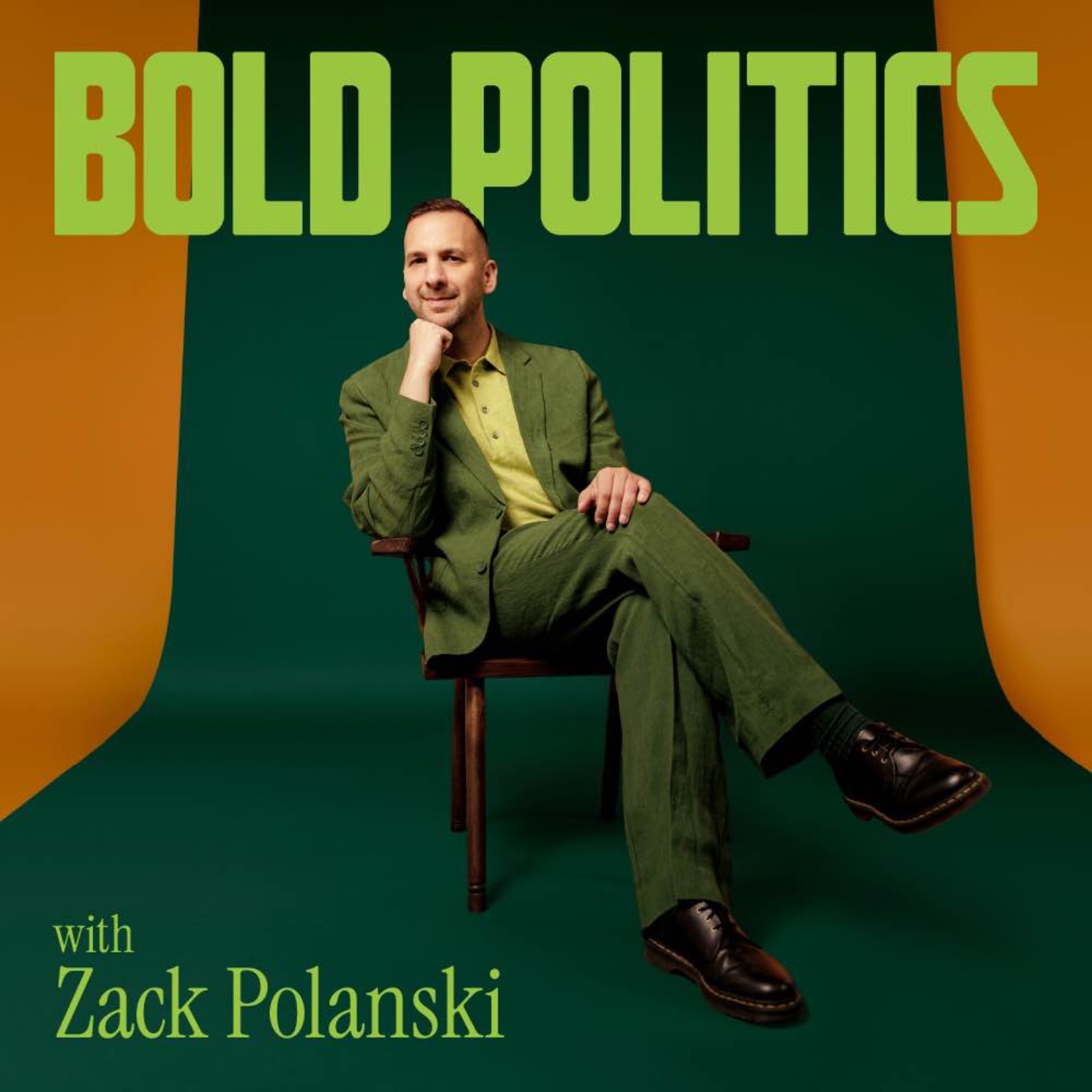
- Bold Politics with Zack Polanski
- What Does It Mean To Be Patriotic?
Bold Politics with Zack Polanski18 Aug 2026 · 59m · 23 chapters
What Does It Mean To Be Patriotic? | Afua Hirsch
In short
What it means to be patriotic in Britain, amid debates over empire, race, media, education, and Israel/Palestine.
Guest
Afua Hirsch is a British journalist and former human rights lawyer known for writing and reporting on race, history, colonialism, and identity. She discusses how her name is often mispronounced, how that affects belonging, and how she navigates public scrutiny when speaking out.
Key claims
Speaking truth about race/colonialism is penalized through career and institutional “rewards and penalties.” Media is driven by extreme, click-based narratives, reinforced by ownership patterns and now by AI summaries that reduce traffic to journalism. Britain’s “patriotism” is often hijacked by narratives of imperial glory; true patriotism would require an honest national story and responsibility, not silence. She argues education is not equipping young people for critical thinking and future realities.
Notable examples
World Cup patriotism and racialized treatment of players; tourists learning colonial history; her reporting on Gaza leading to threats/watchlists; and her critique of Keir Starmer’s shift from human-rights advocacy to rhetoric she links to far-right language.
Written by AI. May contain mistakes.
Chapters
0:46
Introducing Afua Hirsch
Zack introduces Afua Hirsch, emphasizing her expertise and significance in current discourse.
“someone who's going to challenge my ideas and I can challenge theirs.”
1:19
The Meaning of Names
Afua discusses the significance of her name and the complexities of identity.
“I actually, when I was seven, my family never let me forget this.”
2:18
Navigating Otherness
Afua reflects on the challenges of growing up with a name that signifies otherness in society.
“So in our culture, every girl born on Friday has this name, whether it's the main one they use or not, it's part of one of your names.”
4:16
The Costs of Speaking Out
Afua shares her experiences of speaking about race and the consequences faced by those who do.
“It's not like we have a neutral blank slate and we just are curious about each other's identities.”
8:00
Media's Role in Discourse
Afua discusses the relationship between media narratives, political discourse, and societal impact.
“So I don't really criticize individual people who don't speak out.”
11:28
Historical Context and Tourism
Afua explores how historical narratives impact tourism and the understanding of colonialism.
“And how much of it do you think is reinforcing cultural narratives?”
14:01
Critique of British Identity
Exploring the complexities of British identity and the critique of nationalism.
“If you say any of these things, you hate Britain.”
17:26
Patriotism and its Complexities
A discussion on the meaning of patriotism in the context of historical critique.
“more than in any other nation in the UK, people believe Englishness and blackness, for example, are mutually exclusive in a way that they don't, I haven't found the same.”
22:10
The Challenges of Modern Patriotism
Analyzing contemporary challenges to patriotism in light of Britain's colonial past.
“And the people who are stopping that have very vested interests in making that not happen.”
25:15
Education and Political Discourse
Discussing the importance of education in shaping political discourse and critical thinking.
“You know, I was a correspondent in Westminster during Brexit and I interviewed cabinet members about the plan for the AI future, the future of education, for the future of industry.”
Show all 23 chapters
28:00
The Need for Educational Reform
Discussing the shortcomings of the current education system and the need for a radical overhaul to better prepare young people.
“And so you have the kind of debate being framed around it, those who agree and those who disagree, that is now the battleground.”
30:18
Exploring Patriotism and Identity
Afua Hirsch reflects on the complexities of patriotism, national identity, and personal experiences with race and belonging.
“It's more a reaction against the people that I've seen proudly owning it.”
33:12
Historical Context of the Israeli-Palestinian Conflict
Discussing the roots of the Israeli-Palestinian conflict, colonialism, and the implications for national identity.
“But that I can see is complicated because I've just said like I'm British and it's you know it shouldn't be a question but I also because of the way Britain has colonized the world feel very proud.”
35:59
The Intersection of Anti-Zionism and Anti-Semitism
Investigating the delicate balance between critiquing Israeli policies and the historical context of anti-Semitism.
“And you've spoken a lot on Palestine and it comes back, I think, maybe to the conversation we're having at the beginning about people who are allowed to commentate and people who lose their positions from commenting.”
41:20
Reflections on Keir Starmer
Afua Hirsch shares her insights on Keir Starmer's career and her shifting perceptions of his leadership.
“mentioned being a former human rights lawyer there's obviously another very famous former human rights lawyer.”
42:05
Disillusionment with Keir Starmer's Leadership
Exploration of the disconnect between Keir Starmer's past and current political positions.
“And I know people struggle to believe this, but mainly because of his incredible work defending people whose freedom of speech was under threat for protest, for holding those in power accountable.”
45:08
Racism and Political Authenticity
Discussion on the perception of racism within Labour and the need for authenticity in politics.
“I don't know how he went to sleep at night genuinely and like looked at his phone screen and saw pensioners being arrested for holding cardboard signs saying I support.”
47:58
Diversity in Political Parties
Analysis of the lack of diversity in political representation and its implications.
“that it wasn't an option for black people, even though a lot of black people are quite socially conservative.”
50:07
Connecting Climate Crisis and Social Justice
The intersection of environmental issues and social struggles, particularly for marginalized communities.
“And to loop back to our very first conversation that we had today, that's not enough.”
52:31
Populism and Political Disconnection
Debate on the meaning of populism and its relation to political engagement and representation.
“that makes people kind of shirk a little bit.”
55:03
Critique of Political Media Dynamics
Discussion on the shortcomings of political media coverage and its impact on public perception.
“I am from that class, I guess, you know, I went to private school, I went to Oxford, But I'm and I always recognize my privilege and I am in a way a member of like this class that isn't representative.”
56:00
The Role of Journalism in Society
Explore the dynamic between media narratives and ground realities in journalism.
“you have this incredible mind and I would love to sit here and you to ask me some difficult questions.”
1:00:04
Afua Hirsch's Projects
Learn about Afua Hirsch's Substack, podcast, and her take on history and its legacy.

Ask about this episode
Get the gist, explore an idea or ask about something said.
 Claude
On Bold Politics with Zack Polanski, what are the key points of this episode?
Searching your listeningTranscript
Automatic transcript. May contain errors.
0:00Acast powers the world's best podcasts. Here's a show we recommend. Welcome to Acast Classics 2026. Four exceptional limited series handpicked for their journalism, craft and storytelling. Including Sweet Bobby. I'd caught him red-handed. Wes Cork. The trial turned on a single witness's testimony. The witness. I said I didn't do it, so that's why I'm standing here. Carrie Jade does not exist. She offers them exactly that and then just bails. To find out more, head to Acast.com forward slash classics. Acast helps creators launch, grow, and monetize their podcasts everywhere. Acast.com. This podcast works best when I'm sat with a real thinker, someone who's going to challenge my ideas and I can challenge theirs.
0:52People tell me over and over again, they love the live exploration of ideas in real time. And sometimes that can feel dangerous. It can feel a tightrope of, oh, are we about to say the right or the wrong thing? I love those thinkers who are willing to go to the danger zones. And sometimes you get someone who knows history. They know race. They know culture. They know pretty much everything. That's a big introduction, but she is a big thinker. Here is Afua Hirsch.
1:24so afro as we were just about to start i asked you how to pronounce your name which i really appreciate that no that's a pleasure um and it's not how i expected at all and then i hope you don't mind me saying you said oh i just let people say afro or it's one of those really complicated things where when you grow up in this country with a name that is not not only not an english name but also it contains vowels that don't exist in the english language you both internalize the mispronunciation and also comply with this form of accommodation where you just want to make it easier for people around you.
1:57I actually, when I was seven, my family never let me forget this. When I started a new school, age seven, I just tried to change my name to Caroline. I was just like, it would just make my life easier. And my teacher kind of reported me back to my mom and said, your daughter's saying that her name's not her for it, it's Caroline. So my mom kind of had a talking to me. And it's one of those things over time, I really appreciate my name. My name means in my mother's language tree, which is the Akan people in Ghana, it means girl born on Friday. So in our culture, every girl born on Friday has this name, whether it's the main one they use or not, it's part of one of your names.
2:32So it also always makes me laugh when people say, wow, that's such an unusual name. And I'm like, not in Ghana. One in seven women have it. So yes, over time, I just started introducing myself as Afwa, whereas actually the propaganda pronunciation is efwa. I love that. It's like between an A and an E. And I have to say, since I wrote about that in my book, British, and it led to so many people sharing with me that they do the same thing. They internalize the mispronunciation as their name, including the mayor of London, who told me that his name is Sadiq. Yeah, that's right. But at school, they called him Sid.
3:07And so it kind of became Sadiq. And that really affected because I thought his name was Sadiq as well. And the idea that we're all mispronouncing the name of the mayor of London is such a giant example of something I think happens in many small ways. It's interesting you say that because obviously I say his name quite a lot as a London Assembly member. And I found myself wanting to say it properly. But also second guessing a game where I didn't want to kind of create anotherness that other people weren't doing. And so these conversations become quite complex. It's so complex, especially when you, the person who bears the name, almost promote the mispronunciation to make your otherness less visible.
3:45And that's something that I think it's really important to talk about. But I also think we can't police how other people navigate their identity. It's one of the most present ways that you feel othered when you have a name that people can't pronounce and you get very fatigued trying to correct it. But you also, it pushes you, especially when you're young. Now I'm very unapologetic about my heritage. I'm very proud of it. But when you're young, I think it's quite natural that young people want to fit in. They go through a phase of wanting to fit in and wanting to be like their friends and peers.
4:11And then in this country, you're additionally navigating the layers that come with being racially othered. It's not usually a positive experience. It's not like we have a neutral blank slate and we just are curious about each other's identities. If you have a name that's recognizably Asian or African or Muslim, you're likely to attract a level of hostility because of the way the politics of race has played out in this country for centuries. so it seems unfair to expect a child to navigate that especially when we don't equip our children with any knowledge of this history or this dynamic so it's actually been a big part of my lifelong journey self-educating about how this works why this happens what it means and how I can in my own relationship my identity achieve peace and pride in my heritage and that really does start in a name and our parents choose our names deliberately right and I know you've got a A really interesting story about your name, your surname, which is very individual to you, but also part of a bigger story about the way Jewish people have kind of navigated identity and assimilation and safety.
5:11For sure. And actually, I've gone with Polanski, but ever since I found it might have been Polanski. It's a very common Jewish story that because these names were written and often at times where people were fleeing, it can get blurred at exactly what it is. There's so much I want to ask you about today. I also want to tell you that as you arrived at podcast studio there's obviously people in this building who know you and someone said she's amazing she's just one of the most competent human beings i've ever met wow i think that might be one of the best confidence i've ever been paid i wanted to tell you that and i think um you talk about so many different issues obviously the one i think you're probably most known for is speaking about race and history i suppose the place i want to start is when you've been doing that for your whole career we're obviously at a particular moment where it feels to me but i'm interested if this is your experience, where it feels politics and discourse has become so divided and so toxic.
5:59Has it become more difficult to do the speaking out that you do? Or does it feel more urgent and more necessary? Or does it feel all those things at once? Yeah, both. I think I have been speaking out for a long time. So it hasn't become more difficult in the sense that I'm not tempted to stop or be silenced. But what I have noticed is that the penalty has been raised. I really do believe that there is a system, sometimes quite subtle, of rewards and penalties in this country. And if you are a person who's racially minoritized, who speaks out about race and injustice and history and colonialism and identity, you are penalized.
6:37It makes people uncomfortable. You're kind of put in the bad, bad black person category. You know, brands don't want to work with you. Corporates don't want to hire you to do speaking. It's harder to get jobs. It's harder to get promoted. Conversely, if you are a kind of good black person who toes the line, never makes trouble People compliment you, you're not like those other black people And it's made easier for you to be in the establishment, in corporations You get OBEs, you get rewards, you get all of these accolades And I am not interested in that system of reward and approval But I think it's important to acknowledge it because I don't think it's fair to expect people to constantly tell the truth at their own expense, especially when people who are descended from immigration are already in a position of social and economic precarity.
7:28And a lot of people say to me, I really love and admire your work, but I just can't do that. If I did that, I wouldn't be able to get my child into the school I wanted. I wouldn't be able to have the job that I need to pay my bills. I wouldn't be able to be on the board of my local charity, whatever it is, people feel like there would be such a cost that they can't do it. And I find that really difficult because I also know that there's a cost to not speaking, to not saying what you know to be true, to not giving voice to your identity psychologically and even physically that can really take a toll on you over time.
8:04So I don't really criticize individual people who don't speak out. I'm more interested in how our society makes it prohibitive and costly and scary for people to speak and live and act with their conscience and what they know to be true. Our media, for structural reasons that we could also get into, is always looking for the salacious detail. It's the most simplistic narrative that drives the clicks, that can be packaged into something instantly consumable. And what do you think is going on with those structural issues with the media? I know it's a big question. I'm presuming it's not that there's someone kind of overseeing the media who just happens to be racist.
8:44But there are ways of using racist narratives that distract and divide us. Yeah, I think a couple of things. Obviously, it's the attention economy and anything extreme sells and it's a race to the bottom. Once we have become used to extreme narratives on race, it becomes a kind of addictive, salacious feed and really a race bottom to the most extreme story that can cut through an incredibly crowded landscape. But I also think that our politics has normalized ideas that used to be extremely fringe, rightly fringe, because they were so racist and they were so at odds with the values of a supposedly democratic society.
9:22And I think the way that we've moved the Overton window, that we have platformed really extreme voices has allowed media outlets to use language and rhetoric that they probably always would have liked to have used. But now it's like there's no penalty to doing it. And I think there's this symbiotic relationship between the far right and the media, not helped by the fact that so much of our media is owned by high net worth, right wing individuals who have a specific agenda. So I don't think we would have the politics we had if it wasn't for the patterns of media ownership in this country. But I think that the way the attention economy is kind of dumbing down media is really exacerbating it.
10:03And so you have outlets like The Guardian, for example, which I've written for for years, you know, which I'm really happy exists, but also is not behind a paywall because The Guardian believes in content being free and available to everyone. That raises the pressure even higher to compete because all you've got is eyeballs and clicks and reach. And so you have to compete in that landscape, probably more than an organization like the Financial Times, which is lubricated by an incredibly high earning readership who are willing to pay a very hefty subscription fee. So it's not just as simple as right wing media outlets kind of feeding on trash.
10:40It's one of those things. Now we're facing this whole AI change. Nobody ever sat down and asked us what we want as consumers of media. No one even sat down, actually and ask media organizations what they want. For example, Google switching from Google search to Google AI is catastrophic for the media. It's catastrophic for media because no one goes to newspaper homepages anymore. And if you do searches, you don't even get linked through to the individual stories. You just get the Google AI summary. And I know because I know people at Google that when they decided to make that change, they never sat down and consulted stakeholders in the media or civil society or anti-racism groups and thought, what's the impact of this going to be on the quality of our discourse, on media ownership, on the diversity of voices in the media?
11:25It was just a decision made by a tech company. I think that's kind of representative of what's happening, that the things that are affecting us most deeply, as in the hostility that we experience on our own high streets, is being in large part controlled by decisions that big corporates are making without even intending specifically to have this nefarious agenda. They're just casually doing it. And we live with the consequences. It has a real impact for democracy. And that's the gap. And how much of it do you think is reinforcing cultural narratives? So I read an article you wrote a few years ago that talked about when people go away on holiday as tourists, they might want to learn about the colonial past of the places that they're going.
12:04And I think you even said you were having conversations with tourists and actually were surprised how open they were face to face to being like, oh, I didn't know that about this area. But it feels like we wouldn't get those narratives in the media because they often reinforce the cultural narrative that's already out there. It takes quite a big jump to tell an audience, I'm about to tell you something that's odds or counterintuitive to the thing you already believe. Yeah, the good news is I still believe in humanity. I still believe in our humanity. And I think there are a few things that are quite foundational to the human spirit.
12:33And one of those is curiosity. I think we underestimate people's ability to hold multiple truths at once. For example, I've actually just made a travel show in the Caribbean. Amazing. And it's been really interesting and fun to make. And you can go to a Caribbean island and find it beautiful, really beautiful, beautiful beaches, beautiful people, delicious food, incredible culture, a really joyful experience. You can also acknowledge that the people who have created that culture did it out of resilience as a result of an unimaginable centuries-long story of oppression that was largely perpetrated by Britain.
13:10In this case, I was in countries that were former British colonies in the Caribbean, that they are still living with the scars and the intergenerational trauma of enslavement and colonialism. And you can still see the sights of that oppression. You can still see some of the great houses and the ruins of plantations and the sugar mills. And I don't think that we have to choose one. And I think people are perfectly capable of that. You know, if you go to Cambodia, you might go and also visit the museums and exhibitions of the genocide that happened in Cambodia. If you go to Poland, you might visit Auschwitz.
13:43And that doesn't mean that that's the single narrative of the whole trip or experience. But you also want to sit with and understand what has happened historically. And I think we have been encouraged not to apply that same sophistication when it comes to black history. And people like me who offer that nuance are described as divisive. If you say any of these things, you hate Britain. If you don't like it here, why don't you leave? It's just remarkable. And, you know, when my first book British came out, people said that, you know, the right wing media said, you know, she hates it here. Why doesn't she leave?
14:16I just thought it was such a bizarre response because that book was critiquing Britishness as an identity where I believe it's gone wrong, the way I think it's been constructed that makes it very difficult for people like me to feel able to fully participate in Britishness, even though I am fully a British person, never had any other nationality, although I do now have my Ghana citizenship. But, you know, it wasn't an ambiguous question growing up. I had a British citizenship in the past, but that was it. And so you don't critique a country unless you believe in it and its potential to change and improve and be more honest so the idea that you can only be British if you never say anything critical or negative about Britain is strange but also dangerous and I also think it's differentially applied I think some people are allowed to criticise Britain if you look like me you're supposed to be over performing your gratitude to be here at all times in order to be accepted so ironically that's one of the best examples of racism works i had this conversation actually with the brilliant zakiya seoul um where i talked about i'm someone who believes that if scotland wants to go independent they should do and the same with wales i've heard you talk about that yeah i mean it's up to them but then there's a question about what is englishness yeah and actually someone from black lives matter reached out to me and said love the conversation you're having i also think we need to be really mindful here that if we don't make sure we're telling a story right now of what englishness is and also tell it with the story of empire and colonialism, there is a dangerous vacuum for people to try and create their own narratives about what Englishness is.
15:50Yeah. Englishness is, I think, the most problematic identity in the United Kingdom. And let's be clear, all the nations have played a role in colonialism and slavery. So if you go to Jamaica, you'll see people with Scottish surnames, land named after places in Scotland. I mean, the Scots, the Welsh and the Irish were all involved in colonialism. but they were also on the receiving end of British colonial behaviour and ideas and I think partly because of that they have more accessible identities and if you go to Scotland people can tell you what they think Scottishness is and they can do that with reference to oral history, folklore, culture, clothes, food, language I think English people have a harder time of articulating what Englishness is And in that void, I think the rallying cry has become dislike of foreigners, dislike of immigrants and a suspicion of others trying to commit some kind of racial dilution.
16:48And I think that Englishness has been the biggest victim of the colonial mindset, as in England has been so bolstered by colonialism that it's more vulnerable to feeling nostalgia for empire, for wanting to feel superior to others. that I think Englishness as an identity has been fed more on this narrative of superiority, which makes it very difficult to accept the reality that it's a small nation, currently in decline, no thanks to Brexit, facing obviously devolution, but potentially the succession of other nations within the UK. I don't think it's a coincidence that in my experience in England, more than in any other nation in the UK, people believe Englishness and blackness, for example, are mutually exclusive in a way that they don't, I haven't found the same.
17:36In Scotland, you can be black and Scottish without having to hyphenate your identity. But it's very difficult to be black and call yourself English without some kind of hyphenation. And you're not a politician. So in some ways, it's an unfair question. I'm interested in your thoughts about where we go from here. Because obviously, last year, we had the explosion of St. George's flags, the kind of conversation about patriotism. Yeah, I don't think that conversation has gone away. It just feels less present this year. Yeah. I wanted to ask you about that, actually, because I've heard you saying that you're patriotic and that makes complete sense.
18:06You know, as a political as a leader of political party, I think you need to embody a sense of pride and belief in the country in a way that's easier for me to kind of have a more complicated relation. it there. But I almost kind of had a visceral reaction when I heard you say that because it kind of jarred slightly. I think because people who have the kind of progressive ideas that you have and the honesty and intellectual integrity to critique empire, to critique our foreign policy, to talk about the class divisions and the class system and the injustice of that, about how racially minoritized people are demonized.
18:40I'm just not used to hearing that packaged in somebody who considers themselves patriotic. And I also have like a complicated relationship with patriotism. I was just curious about whether you feel that's something that we could own, because I think it's just so difficult. One of the reasons I do this work is, I guess, in an ideal world, if the UK did all the work it needs to, to be honest about its past, not as an academic exercise, but because it so informs the present, to tell a true story about why we are the multicultural society we are, how much Britain has depended on the bodies of black and brown people and their resources to build itself.
19:19I want that as a foundation so that we can build something more sustainable and honest and inclusive in the future. If we did that, I can imagine a country that I would be able to say I was patriotic about. But I feel like we're so far from that. And sometimes, sadly, right now, moving backwards, it just feels further away. So I'm just really curious about your relationship with patriotism and what that means to you.
19:44And I think you've sparked off three things. One of them is you said earlier on, I believe in humanity. And I think it ultimately comes back to that. I can look around the country. I often talk about rip off Britain and I'm always careful when I couch it that I'm not slagging off the country. We don't live in a country that has to be rip off Britain. We live in a country where people have exploited our wealth and our communities and they're now ripping us off. So the question becomes who's ripping us off for what aim and what do we do about it? And so I feel like in every narrative, I'm always pushing back at that.
20:13Now, the reason why I say that in answer to your question is not just about who's ripping us off. It's about what is the story they're telling about this country who is welcome and who is not welcome and who is that benefiting. And it really makes me reflect actually on a conversation I had in this room with William Darenpole. Yeah, brilliant historian. Amazing. And one of the conversations we had about was the fact that in school, I don't believe I was taught about empire whatsoever. Michael Gove actually replied to that podcast with a piece, I think, in The Spectator saying, I don't know if he called me a liar or whatever he called me, but he basically said, this is nonsense.
20:41We've been teaching empire for a long time. and the amount of people I saw responding going, nope, not in my school. I never knew anything about it. And I enjoyed William so much. I've gone away and I've been listening to his Empire podcast. And so I'm quite deep into the history of India and about the Kohi Noor stories that I kind of had at the back of my mind, but the sheer depravity and grotesqueness of it, even though I obviously, you know, I didn't need to find out that Empire wasn't a good thing, but just to hear the brutality and the kind of often, I wouldn't say, well, in fact, I would say the beginnings of tactics and techniques that are still used throughout the world originated often in British tactics when we're oppressing and displacing people around the world.
21:19And of course, we see this ongoing in Palestine as well. The reason why I say this is because I often talk about immigration as a good thing. And I think it's a brilliant thing. I've also found myself balancing by saying immigration has been an amazing thing for this country. And in the same breath, we need to recognize that colonization and empire means that very often people who have emigrated here, especially if they speak English, come from a history of oppression from the same people that they now live with. There's a very complex conversation about, I don't believe that those of us who live today should necessarily have to live or behave with the guilt of our ancestors.
21:50But I think there's a big gap between having no guilt and having no responsibility or awareness whatsoever. And I think something in the middle is about what would patriotism look like if we said this is our country's history. It's had some great moments and it's had some horrific moments. How do we work together in communities to make sure that the future is much brighter? And we're not in that moment right now, but we can be in that moment. And the people who are stopping that have very vested interests in making that not happen. But that's not the country's fault. The country is a concept, is an idea.
22:19And so who are the people who live in this country? What is our collective story? And more importantly, what's our collective future? And I think that's patriotism. Yeah, I would probably go further than that. I think, forgive me, it sounds a bit woo, But there's like a spiritual dimension to this that for me, the work of acknowledging the history of empire is almost exercising a demon. And the demon is that it's made Britishness as an identity addicted to a narrative of glory, having always been on the right side of history, of being racially and culturally superior. And that is harming all of us.
22:54It's not only harmful for people who are descended from the enslaved or indentured labourers. it's harmful for every single person who lives in Britain because it is preventing us from creating a nation that can compete in this globalized world. It's preventing us from creating an identity that's inclusive, that can allow our children and young people to thrive. It's preventing us from understanding each other, like really being able to connect with each other's stories because we don't understand them. We don't understand why each other are literally in the country. And it's creating, I think, movements like Brexit, which was, to me, very, very closely linked to a deluded belief that we don't need Europe because we have the empire slash the commonwealth for sure and that is deluded because it's not true and as we're seeing we're now in economic decline since Brexit's been catastrophic for our politics I kind of see the contemporary population of Britain all of us as victims of this failure to tell a true story that we can genuinely believe in and build something positive and meanwhile like other countries are doing that And they are thriving.
23:56And because I do care about Britain, I know we'll be left behind. We won't be able to play to our strengths. We won't be able to harness our potential if we don't start to build a truer version. So I think that we all stand to benefit from doing this work. But the problem is it's a vicious circle because that narrative of glory and superiority makes it harder for people who feel proud of empire to see any incentive to to participate in this work. Although I would say on the positive, when my book came out, I was very much writing about my experience and my perspective. And it absolutely shocked me and it continues to shock me today.
24:33The people who have responded to that, who have connected to it from all backgrounds and backgrounds that I wouldn't think have a personal connection to it. I think that a lot more people are aware of this. They just didn't have a language or a way that felt safe of exploring it. And I think there's a huge appetite for that. And I think we see that in the response to you as a political leader, that people have been hungry for someone who'll just tell the truth, who'll just tell the truth and offer some solutions. And our politics at the moment is mainly distraction. It's politicians who don't have any answers, don't have a plan or a blueprint.
25:05So instead, they're just trying to distract people by blaming someone else. And I can see the appeal of the short term fix. It's that person's problem because they came on a small boat rather than we don't have a plan for you. And they don't. You know, I was a correspondent in Westminster during Brexit and I interviewed cabinet members about the plan for the AI future, the future of education, for the future of industry. And they sometimes didn't understand the question. It was unbelievable to me. It wasn't that, you know, they're working on the plan and it's too slow. They didn't even understand the framework of the fact that the jobs we are training young people to do won't exist by the time they graduate.
25:44It's that serious. There's so much you're saying that's interesting. I know, sorry, I'm chucking everything out of here. Yeah, and I want to jump on the last thing, which in some ways is not the most important thing in my brain, which is about, I hadn't appreciated that you were in Westminster during Brexit, actually, so you've had so many questions. One thing that's interesting, so I did a pool interview yesterday, which you'll know, but the audience might not know, is where all the different broadcasters all send as many questions as they can. And on a media outlet. Exactly, and one journalist asks you, and then they go everywhere.
26:08And I really had to run the gauntlet of talking about EHRC and same-sex spaces, about Jason Arday, about the climate crisis. and then what resulted was absolutely nothing not a single clip made it anywhere onto a media anything outrageous and I didn't get gotcha'd and a member of my team was with me and I wanted to check I hadn't been boring and I'd been clear and they weren't no you were great and this is happening more and more whereas in kind of the early days of my leadership they just put everything out there yeah it feels like they've changed technique now which is unless it's a gotcha moment yeah they don't broadcast it which leaves me in this opposition of answering like 50 questions a day that are all various traps, kind of jumping through those traps and speaking the truth.
26:46But then unless you say something that works with their narrative, kind of goes backwards. Has it always felt like that? Or do you think that's kind of the advent of social media? It might be difficult for you to know because I guess different media outlets work in different ways. I do think our capacity for nuance and sophistication is decreasing. And I think because we're being fed more simplistic soundbites and clips, there's this perception that that's what people want. I don't know. It's impossible to know how much it's based on what people want or how much it's what they're being fed and what they're becoming used to.
27:15People used to read newspapers. They used to read long form pieces. They used to listen to the radio. I'm not nostalgic for those days. There was so much else that was wrong, but there was a way people used to engage in a more detailed version of the discourse that I really don't think we do now. And I think we can see that in our politics. Politicians who are thriving are the ones who have the simplest, often most dishonest message. So Farage is the perfect example. Send them back. That's it. That's the problem. That's the solution. It's not engaging. I've never heard Farage say anything remotely sophisticated about the redistribution of wealth or about AI or about reforming education.
27:52It's all about blaming immigrants for everything. But that's very easy to sell as a story, whether you agree with it or not. And so you have the kind of debate being framed around it, those who agree and those who disagree, that is now the battleground. I do think that is difficult. But I, you know, I think a lot about education because young people are a captive audience. We have them for basically the first 18 years of their life. How are we not equipping them in that time to understand all the things they need to know? I mean, not just politics, but financial intelligence, climate, how to manage our resources, how to make choices, how to plan, how to think critically, how to engage with political ideas, how to connect contemporary politics with our history.
28:39It's just kind of remarkable. I don't think anyone would advocate if you were to have a blank slate to design our education system, this is what you would build. I think even people who defend it would agree that it's kind of, they would say maybe they're doing the best they can with what we have. But I do think we need something more radical. And I also, by the way, look at countries that do have really successful education systems. And what they do have is cross-party consensus on big pieces of education policy so that it's not changing every time there's a new government. In this country, it's not even changing every time there's a new government.
29:12It changes every time there's a new education minister, kind of rewrite the curriculum and change the exams. And it makes life for teachers hell. And it means what young people need? It's like no one starting from the premise. What do our young people need? How do we equip them to understand each other, themselves, navigate the society, contribute innovation to a future that's going to save us, not just make it better, but at this point also save us? That should be the priority. And I can't understand why it doesn't even seem to be on the list of ideas.
29:46Thumbtack presents Tile Trouble. Every single time I use my sink, I make eye contact with the uneven grout on my kitchen backsplash. The crooked corners eye me and I'm haunted by more tiling questions than I thought possible. What kind of pro can fix a backsplash? Can I replace one cracked tile or should I replace them all? What? What if I just use Thumbtack? I can hire top rated pros, read reviews and compare prices with a tap all on the app. Thumbtack knows homes. Download the app today.
30:18can i link the conversations together because i don't want you to feel like i've um dodged the word patriotism yeah yeah what you're saying to me sounds quite patriotic yeah like an education system where we're quite proud of our young people i think that's what i'm getting at when i ask you about patriotism is i'm trying to work out what it means right and i think like a lot of symbols of national identity it's been hijacked by people that i feel no affinity with so So I think my reaction against patriotism is probably not a reaction to the content of the idea. It's more a reaction against the people that I've seen proudly owning it.
30:51And they tend to be people who are quite hostile to the very presence of someone like me in the country, refuse to acknowledge the story of the kind of family I come from. So it's very difficult to feel part of any brand that they've created or any club that they're in. There's two things. Is it helpful to reclaim patriotism? And what would that mean? But two, in a world where nationalist populism is the dominant political force in so many countries, is it actually a healthy idea? Is patriotism a net positive? Because I also, when you see it turn into this kind of native nationalism, it's really dangerous and scary.
31:29And we both are descended from histories where that can turn into something genocidal. I think it also links, I don't know if you're a football fan, but when Jude Bellingham scored the final goal, I think it was in the third and fourth teams were playing against each other. So I think we're against France. Just felt this huge swell of patriotism. But also being really aware of the narratives, though, of you shouldn't have to score a goal and be black for someone to celebrate your identity. But again, it can be nuanced. And actually, I was just really proud that someone of colour was scoring that goal.
32:02World Cup was the perfect encapsulation of all the complexity. There's a really simple level in which so many people just felt so happy that England was doing well. And the people that were scoring so many goals were people descended from these stories of empire. And they were part of the team in a way that brought people together, genuinely, and that was beautiful. Then there's the layer underneath that of if they mess up, they get treated differently. Like if they were to miss a penalty, what happened in the Euros where suddenly now they get targeted in a way that's clearly very racially loaded.
32:38And then there's another layer about split loyalties and identity where I, for example, if it had been England versus Ghana in the final, would have been really torn. I don't even know if I'd have been torn. I actually I don't think I would have been torn. I would have supported Ghana because Ghana to me is the underdog. Ghana was colonized by Britain. it's still suffering the economic and social consequences of the aftermath of colonialism. So for it to beat its former colonial oppressor would have felt like such a symbolic overcoming of historic oppression that I think I would have been quite unequivocally allied with it.
33:12But that I can see is complicated because I've just said like I'm British and it's you know it shouldn't be a question but I also because of the way Britain has colonized the world feel very proud. And it feels like a form of resilience that I'm proud to be Ghanaian. And in my case, it's also because I feel I grew up in a world that messaged, if I try and hide my association with an African country, I'll do better. I was encouraged to assimilate. I was offered rewards for becoming as white as possible. And so that's also an act of resistance and rebellion for me that I refuse to do that. And so all those complexities still exist underneath and I feel they all played out during the World Cup and I think the only way forward is just to be honest about them to talk about them and to have more like for us all to have more understanding about how this works.
34:02And I think this can get very complex to not compare Ghana and Israel for instance for our ancestry that Israel you know I see as an apartheid state that's undergoing this genocide and I can understand that Jewish people have been raised with really strong links to that country, links I don't feel like I have. But there is a very, very complex kind of quite deep in people's ancestry connection to country, which is both what have they done historically and what are they doing now? There is a connection because at the founding of the state of Israel, many still colonized African nations felt a great solidarity with the idea of Israel because it represented their aspiration for self-determination.
34:43this narrative of we've been oppressed by Europeans and now we get to have our own nation that we control was something that was very appealing to many Africans. And as an idea, it is a really appealing idea. But obviously the way it's played out in Israel is it's been at the cost of oppressing others. And that's, I think, why we both critique Israel. And it is complicated, you know, whether that is, you know, Ghana is the home of the Ghanaian people in a way that is much more complicated for European Jews immigrating to Israel. It's a different kind of connection. When I look back at that moment in time and what people thought Israel would be and the promise of it, which I don't, I've never seen an African leader say, I think this is great if it comes at the expense of Arab lives or if it displaces Palestinians.
35:25They were just thinking about ideas of self-determination and being safe from European oppression. And so, you know, I think I critique Israel with the nuance that I understand why Jewish people wanted and needed that. But I also come from a family of Jewish people whose main lesson from those events of the 1930s and 40s was never again to anyone. Never again demonize someone because of their race. Never dehumanize someone to justify oppressing them. Never subject innocent people to violence. and that is what I just find so hard to swear about Israel's actions, that people who lived that could now be using it to advocate something that resembles in ways that are horrific the suffering they themselves went through.
36:12And you've spoken a lot on Palestine and it comes back, I think, maybe to the conversation we're having at the beginning about people who are allowed to commentate and people who lose their positions from commenting. I almost don't want to say difficult because I imagine the first thing you'll say is more difficult to be Palestinian. But how aware do you have to be in kind of a public space of what you're allowed to say and what you're not allowed to say? Yeah, I think it's changed. One thing that has changed since October 7th and since the genocide in Gaza has been people being so shocked and horrified by what's happening to Palestinians that they have broken through their fear of speaking out.
36:51For most of my career in journalism, it was just seen as a no-go area because there was a real cost. if you ever criticize Israel, you would have the Israeli embassy or the Israeli government or the IDF on your back. And I reported for The Guardian in 2011, 2012. There were Israeli operations that targeted schools in the West Bank and Gaza. And there were human rights missions, there were findings, there were condemnations from the international human rights community that Israel had violated rules of collective punishment, of targeting civilians. And as a legal correspondent, I reported in a very matter of fact, newsy way about those findings.
37:30And I would be, letters would be sent to the editor about me. I would wash up on watch lists of self-hating Jews. I mean, it was, I was totally unprepared for it because it was like every story I do where I report what's happening and I give the other side a right to reply, but I contextualize it. But it was like in a category of its own in terms of how much scrutiny you come under as a journalist, if you cover that, and the kind of effectiveness and the power of Israel to reply, to put out statements, to have access to editors, to influence decisions. I felt it. And I think you have to be a pretty brave journalist to want that kind of scrutiny and personal.
38:12It was personal. There was also another idea that you kind of have to be like PhD level knowledgeable about the history of everything that's ever happened since 1946 to be able to comment on Israel and Palestine. And that also intimidated people who were seeing things quite clearly, like these fact-finding missions that found that this has been happening to civilians in Palestine. This has been happening to children. This is what's going on with aid and health and development and GDP. I mean, all these things that are just questions of fact. But there was this idea that you're not really competent to share those facts unless you have a huge amount of knowledge.
38:48I'd go back even further in time, so I've been reading a lot recently. In 1914, there were two Jewish people in the cabinet, Edward Montague and Herbert Samuel. And Edward Montague was essentially saying that the idea of displacing the Palestinians to put people, as in to put Jews in Israel, was actually deeply anti-Semitic. Because there was a lot of anti-Semitism in the UK at the time, and there was a sense of they were getting rid of the problem. And putting them into Israel, Herbert Samuel, also Jewish, felt the opposite. it. But it's made me reflect that I'm in these conversations constantly on the media.
39:19These are not new conversations that have been going for over 100 years. Yeah. Antisemitism is real here and it's real in Europe. And actually, the history of European antisemitism, it's just unbelievable. I mean, just millennia of persecution, of atrocities, of horror. And that's another thing that makes this hard to reconcile that, you know, the problem here is European antisemitism, Neo-nationalist politics, nativist, far-right Christian politicians have inflicted repeated violence against Jewish people for generations. And yet the people who are being demonized are Palestinians and Muslims in general.
39:56It's just so divorced from any reality, from any reason. And, you know, seeing some individual pro-Israeli Zionist people ally with the neo-Nazi far-right. Right. It's just really difficult to make sense of for me. And I get it in the sense of the common enemy is perceived as Islam and Muslim people. So it's, from a historic perspective, completely unimaginable to me. So, yeah, I do. I mean, I used to be a human rights lawyer before I was a journalist. On every level of my identity and my professional life, don't feel that I have a choice but to speak up on Palestine. But I also recognize that it's difficult.
40:37And I mean, there are people in my own family who aren't comfortable when I speak about it. I have lost friends over speaking about it. Again, you know, I don't want friendships that people that don't care about humanity, that don't believe in the equality of human life. But I can see why people are nervous about it. And I do think this whole experience has helped us become more articulate about the difference between anti-Semitism and anti-Zionism. And that was, I think, very cynically conflated for a long time with great effect because no one wants to be called anti-Semitic and they would just steer clear of anything that could lead to that allegation even if they knew what they were critiquing was Israeli policy not perpetuating hate against Jewish people.
41:19Well said and you mentioned being a former human rights lawyer there's obviously another very famous former human rights lawyer. Yes I know what you're going to say. He was prime minister who I believe you knew before. Yes. I'd kick myself for not asking what your impressions of him were and if those have changed. Yes. And I'm going to ask you the same because I know you knew Keir before he was Prime Minister. Yeah. So when I went to the bar, my dream chambers was the chambers that Keir Starmer was at called Doughty Street. It's an incredible chambers founded by quite radical human rights lawyers.
41:48It was one of the first to break away from the very old traditions of the bar. And the bar is by any measure, one of the most traditional institutions in the establishment of England and Wales. And it was all centred around human rights, only did work that was on behalf of people suffering human rights abuses. And Keir was a star at that chambers. And I know people struggle to believe this, but mainly because of his incredible work defending people whose freedom of speech was under threat for protest, for holding those in power accountable. That was his reputation. And he also did amazing work on war crimes, on human rights abuses around the world, death penalty work.
42:28So I really looked up to him and he is an incredible barrister. And anyone who's worked with him will tell you his track record is amazing. He's incredibly diligent. He's very talented. He also did a lot of pro bono work for no money or fame or recognition, just did the work because, well, I thought because he believed in it. So when it was clear he was going to get the Labour leadership, I thought it was going to be great. I just couldn't see why it wouldn't be great. And yeah, I don't feel that way now. I guess I've learned a few things that being talented professional doesn't translate into political leadership.
43:05That I think if you don't have an instinct for politics, you become vulnerable to advisors and the people around politics, whether that's advisors, special advisors, lobbyists, who in the vacuum you create by not having a strong political personality and strong instinct will start to fill that with their own agendas and their own input. I think that is what happened to Kier, but not letting him off the hook, because I also think I can't work out how you can have a lifetime of building integrity and defending human rights. And then as a political leader, say things and make decisions that basically support those who hate human rights.
43:40And, you know, I think it's hard to say. There are a few rock bottoms for me failing to call what was happening in Gaza a genocide. I was shocked by the justification of what was clearly collective punishment by Israel, blockades that were causing starvation. That's kind of Human Rights 101. So that was shocking. There was another moment, though, where he made this speech about Britain drowning in an island of strangers. And it sounded to me like Enoch Powell. And that for me was a real moment. This person I know who I'd long admired, who I'd worked with, was echoing the language of a far right racist politician who who kind of lives in our imagination as the kind of villain of a former generation.
44:22I remember a few years ago, the BBC made what I still think was a bad decision to perform his famous speech, Rivers of Blood, on air, because it was the anniversary of that speech. And it was so controversial. It was so controversial that the idea that we would give airtime to that, it would subject people who are still alive who heard it the first time and found it so traumatic. It was right that that was criticised. But now we're living through a Labour politician essentially reproducing those ideas live, not as some dramatic reenactment, but was real policy and intent. And that to me was, I mean, a jaw dropping moment that I can never forgive.
44:57And I think he did apologize for that speech. But to me, the damage was done. It was it was labor embodying the racist far right as something I never thought I'd see in my lifetime. And I'm definitely not over. As I'm listening to all of that, part of me was thinking, I don't know how he went to sleep at night genuinely and like looked at his phone screen and saw pensioners being arrested for holding cardboard signs saying I support. I don't either. And like, I think about Andy Burnham, if I'm honest, and I think he still has Siobhan and Mahmood as Home Secretary. There's still some deeply regressive, let's call them racist policies.
45:30And it's all shrouded in the language of hope and the language of change. And so then I go, my only answer is that vested interests have taken over and they're more worried about the people who donate to the party or to them personally than they are about doing the right thing. But it doesn't tally with Keir Starmer. I don't think it's that. I think that's a factor. But my opinion about Keir is that he's got such a strong, that's going to sound weird, he's got such a strong track record in human rights. And, you know, I mentioned some of the areas, but also, you know, defending asylum seekers, that I think that the party was scared that that would be electorally toxic.
46:07That they think that the British people are racist and hate immigrants, and that the only way you can win an election is by sounding more like Nigel Farage and that they were overcompensating for his genuine track record in human rights by playing up his kind of more right-wing credentials. I think that's unforgivable for a few reasons. One, because it's dishonest. It's not who he actually is. Two, because it's stupid. Because what I think we relate to as citizens, as voters, is authenticity. And I think one of the reasons people like you, Zach, is not even because they necessarily agree with everything you say, but because they get a sense of who you are and that you speak with conviction and that you have values that are discernible, partly like we hear them.
46:48But also I think there's an intuition that you feel like somebody who is willing to say things that even aren't ideal to say, but just because they're true. I've heard you say things that most politicians wouldn't say. For example, last year I heard you say, you know, if I were to win tomorrow, I don't have my plan fully formed yet, but I'm working on it. Most people would pretend they know exactly what they're doing when clearly they don't. And so it's that. It's not that people vote for you because you didn't have your plan fully formed. It's that they feel like you're honest and they can trust you.
47:16And I think that, you know, when you try to hide who you are and say what you think people want to hear, you lose everyone. You're not going to convince anyone that you're reform. You're a poor imitation of the far right, but you're going to lose everyone on the progressive left because you're clearly violating everything that we stand for. You know, I think it's hard for a lot of us who voted Labour, who felt like the Labour Party, for all its flaws, was still our voice. I still have lots of friends in Labour, individual MPs, who I think are really important, credible voices who do have integrity, but they'll probably never make the front bench because of that integrity.
47:50It's sad and it's painful. And then I also think that Labour has taken for granted the black vote for years, because for so much of the 20th century, the Conservatives were just so rabidly racist. that it wasn't an option for black people, even though a lot of black people are quite socially conservative. You know, they really prioritize family. There are a lot of people of faith, a lot of small business owners who, you know, are economically aspirational. That's something that has not been well understood in our politics. I think that there's an assumption that minoritized communities who may be less well off economically don't have huge aspirational values, who want wealth, who aspire to wealth, who work hard because they want a more comfortable life.
48:33And I think that they have been voting Labour because Labour was less racist rather than because Labour necessarily saw them. And it's not a surprise because all our parties have not had Black representation at the core of working out who we are as a country and what we need. So they haven't been well informed. And so I think there's a lot of receptiveness to new ideas in the Black community, certainly. I have got my own story about the Greens. I covered the Greens when I was at, well, for years, when I was at The Guardian and Sky. And I'm going to be really honest with you. Going to Green Party conference was quite hard.
49:08It was so white. It was so white. This is like 2015, for example, and before. And I remember thinking, I really care about the climate. I care about the climate crisis. there aren't that many ideas here I disagree with but it just didn't feel like social justice was at the center of the party I didn't see anyone who looked like me it felt like there was a lot of privilege and a bit disconnect in the party with the reality of people especially from minoritized communities what our day-to-day is and so that I think is one of the only reasons to explain why the Greens weren't more popular before so I think that's one of the reasons everyone's been excited about you that it feels like a breath of fresh air um and that you are more deeply from those struggles i guess i want to respond with first of all thank you and second we've still got a lot more work to do i think uh polling shows that actually when we're becoming even more diverse than the other parties but also the truth is that there just isn't enough diversity in politics yeah i was gonna say that's a low bar because the other parties exactly and i can point to examples like the amazing dylan law who's now the deputy mayor of hackney young black man a zico in brixton like We've got these amazing people of color who are now in positions of power.
50:18And to loop back to our very first conversation that we had today, that's not enough. We need to have decision makers and people at all structures of a party who are there. I also think what's the opposite of a vicious circle? I guess a virtuous circle. There's more and more people see themselves represented in the Green Party. I think that attracts even more people. And so we have a diversity. Of course, Moffin Ali being our deputy leader as well. Someone that the billionaire press often go after. But actually, he's one of the most gentle, thoughtful souls when you meet him and you go, the way he's presented in the press is so different to who this this amazing human being is i also think about um so i was on the last leg with judy love the comedian and it was during weather hurricanes in the caribbean and i spoke about jamaica and in the commercial break i'm sure she won't mind me saying she turned to me she said thank you for talking about jamaica and it just really made me think both in that moment but lots of times that like the climate crisis is predominantly a crisis right now for people of color particularly in the global south and there's been a failure of the environmental movement of the left more broadly to connect our climate struggles with people's social struggles and international struggles and i also think of the anti-war movement as well like the war is one of the most devastating things obviously for human life but also the climate crisis and i feel like those dots haven't always been joined yeah well they have but maybe not in the attention economy they've been joined in very like academic way i was at a um so i'm doing uh i think nearly like 10 festivals this summer every weekend about festival.
51:41But I was at one last weekend and a former speaker of the Green Party put their hand up so they used to have before leaders speakers because they didn't want leaders. And he said to me, I think he said, I love what you've done for the party, but you never talk about political ecology. Why are you not talking about political ecology? And I just delivered like a 45 minute speech about environmental, social, racial and economic justice. And I was like, I've been talking about political ecology this whole time. And he's like, yeah, but you're not naming it as that. And I was like, I think it's because no one knows what it means so i'm trying to find ways of the academics terms we're using talking about it without alienating people with language they don't understand and i also said to him i acknowledge your point though it's also important to recognize where we've come from and if you think it's important to name sometimes what i'm talking about is political ecology then i will do so there we go i'm doing it now but i think it's like to take away the academic terms and go actually what is meaningful to people and um i don't know how you feel about the word populist but this often also that makes people kind of shirk a little bit.
52:37But it felt really important to me that the original word of the populist, and some of this comes from Chantal Mou, a French commentator, is about the many versus the elite. And to see Farage and Trump call themselves populists, I was like, it's just a bastardization of a word. And actually, if we allow these words and their meaning to be distorted, we're losing the sense of who we are. And I think people often misunderstand populist as meaning like simple, easy solutions. Yeah. And I don't believe that's anything to do with me or the Green Party or indeed the left. In fact, as we've spoken about repeatedly in this conversation, we have quite nuanced thought around things that is sometimes counterintuitive and not like the popular thing to say, but can still be populist.
53:18Yeah. If you're pointing out what is unpopular right now, but actually will unite people once we kind of get our heads around it. Yeah, I think by populist, people mean you're communicating directly with people in language they can understand. I think the negative perceptions that it's jingoistic, it's slogans, it's kind of oversimplified or it's being distorted to easily reach people. But obviously, if you reclaim that, like the idea that it's bad to reach people in a language they understand is crazy. As a Westminster correspondent, I was constantly shocked at the things that we would obsess over.
53:53I mean, hours of airtime over the minutiae of not even a cabinet reshuffle, but like a kind of... Rumor of one. Rumor of a cabinet reshuffle. And I just kept thinking, nobody cares. This isn't what matters. And it's no wonder that people feel alienated by politics. because unless you're a politics nerd who is really fascinated by the ins and outs of kind of what's happening in the room, this is irrelevant to your life. And it feels so out of touch. Politics is affecting people in the most existential way. We're in the middle of the third heat wave as we thought it was getting hot in here. Like it's hot.
54:31I think it's 35 degrees outside today. We're all experiencing unprecedented climatic conditions, the rising costs of everything. People are really feeling it. And everyone's talking about politics in a way because it feels so raw, but it still feels completely disconnected with Westminster and the way that's consumed and distributed. And it's not even the pretense of it being something that's for ordinary people. It's kind of for this class of people that feed on that psychodrama. And much as I am from that class, I guess, you know, I went to private school, I went to Oxford, But I'm and I always recognize my privilege and I am in a way a member of like this class that isn't representative.
55:13Maybe it's because of the way I grew up or because of the community I'm in or because of the struggle. I feel part of all the work I do. I just see it from that lens of how disconnected and irrelevant it is. And that feels outrageous to me because we cannot afford to be distracted or to have so much meaningless emphasis on things that don't connect with the urgent things. we're really struggling with right now. It's unforgivable. I often feel this for journalists because I sit down with brilliant people like Victoria Derbyshire, who I think is amazing, Sophie Ridge, Christian Gurra-Murphy. And we have these conversations where they're scrutinizing me and obviously sometimes the questions are difficult and so they should be.
55:51That's part of politics. And sometimes they're asking me about absolute minutiae, which I know has probably been written for them or the channel is expecting them to. And I just think, you have this incredible mind and I would love to sit here and you to ask me some difficult questions. And even, this wouldn't be appropriate in an interview, but outside of interview for me to ask you some questions like to utilize your brain and spirit for these amazing challenges we have but we're just talking about nonsense yeah and as a politician you often can't say that because it sounds like you're evading the question yeah so you engage with the nonsense at its level because you go well i just have to answer it yeah but i just go surely you're sitting here dying inside going i've got these amazing thoughts about the world and i don't know what their politics are which demonstrates that they're good at their job like i don't know what they think about things.
56:34One of the things that really frustrated me when I first became a reporter, I had had this naive belief that reporters' job is to go out into the world and find out what's happening and kind of bring it back to the news desk. It's actually the news desk telling you what they think is going or what the story is and sending you out to kind of gather material on it so that they can run it. And it's completely upside down. And that's, I think, why you get this kind of gatekeeping of the narrative. And there's no conspiracy of people sitting in a room it's cultural it's people who socialize in a certain class determining what they think is interesting and then using the resources of the media to go and justify it to collect content that speaks to it instead of allowing the people that are really on the ground to inform the whole news agenda as to what people care about what the questions they're asking the struggles they're facing and that is I think one of the reasons why social media has in a problematic way filled that gap because we're able to hear from people on the ground now.
57:35Some of them aren't journalists and don't have the credibility of journalism and have questionable techniques. And that's the problem. I still think there is a real role for professional journalism, the skills that we have, the ability to verify information, to do our research properly, to conduct interviews ethically. That's what journalism is supposed to be. I teach journalism, so I'm trying to raise a new generation of journalists with these values. But we need it more than ever. But I think there's a lot we can learn from the way that people are consuming content directly from people in the culture, in communities, in the struggles that we face.
58:09And instead of feeling threatened by that, I think that we should learn from it. And I know you weren't doing this on purpose, but it's a natural segue to say you're joining Zatea UK, right? I am. I'm very excited about Zatea UK. I am too. And I think I will see you at the launch event. That's right. I think what Mehdi Hasan's doing is brilliant. And I think I feel really positive about the potential for us to use the more fragmented media landscape to create something new. I don't celebrate the demise of legacy media in the same way that some other people do, because I know I've been a foreign correspondent.
58:44I know how hard it is to tell certain stories without resources and infrastructure around. You know, when I was covering the war in Mali, for example, I couldn't have done it safely if I hadn't had a news desk and insurance and evacuation plan. And so if I was just a freelancer going off and doing that, I'd be putting myself at great risk. And I still think there is a role for professional journalists alongside people and citizens and people experiencing those things to also share their stories. So, you know, without that, I worry that individual people trying to tell stories will have to put themselves at risk.
59:16That's a big fear I have. But at the same time, one of the things I am excited about is the way we can control our own platforms and we can platform voices that have always been excluded and we can reach an audience with stories that people want that have been gatekept away from them. And I do that with Substack. I think that's what Mehdi's doing with Zateo. I think it's what you're doing with this podcast as well, like nuanced conversations with people who know what they're talking about. I sometimes listen to your podcast and I think, why have I never heard this before this is what radio 4 was supposed to be doing and also journalists of color minoritized people we've never been given opportunities um in any representative way in those media institutions and now i think we're seeing that people want to hear from us so that's really positive yeah i think it's great there is a million other questions i want to ask you but it's very warm in here um if people want to find out more about you though where should they go yes um follow my sub stack it's called more british than ever or just my name afro hirsch i also have a podcast called legacy um where we look at we look at history through the lens of its contemporary legacy and that's really my interest in history how can it inform the way we navigate society today what can we learn i do that with the historian peter frankapan and my books are all on my website afrohirsch.com amazing thank you very much it's been a pleasure talking to you thank you
1:00:43A-Cast powers the world's best podcasts. Here's a show we recommend.
1:01:13Listen to T-Board, the best one yet. It'll be the brightest part of your day. And if this podcast lasts longer than 20 minutes, call your doctor. Acast helps creators launch, grow, and monetize their podcasts everywhere. Acast.com.
From the publisher
What are the British media’s key structural issues? Is it more difficult to have a voice in the current political climate? How do we talk about complex topics without alienating people? What does it mean to be patriotic?
Is this week’s episode, Zack Polanski speaks to writer and broadcaster, Afua Hirsch.
Bold Politics Live is at Crossed Wires Festival in Sheffield on July 5th.
Pre-order the new book, Hope Is Here now.
Email: [email protected]
Hosted on Acast. See acast.com/privacy for more information.
More from Bold Politics with Zack Polanski
All episodesWe use cookies.They keep VO running smoothly and help us improve it. Privacy policy