
 Ask ChatGPT

- Podcasts
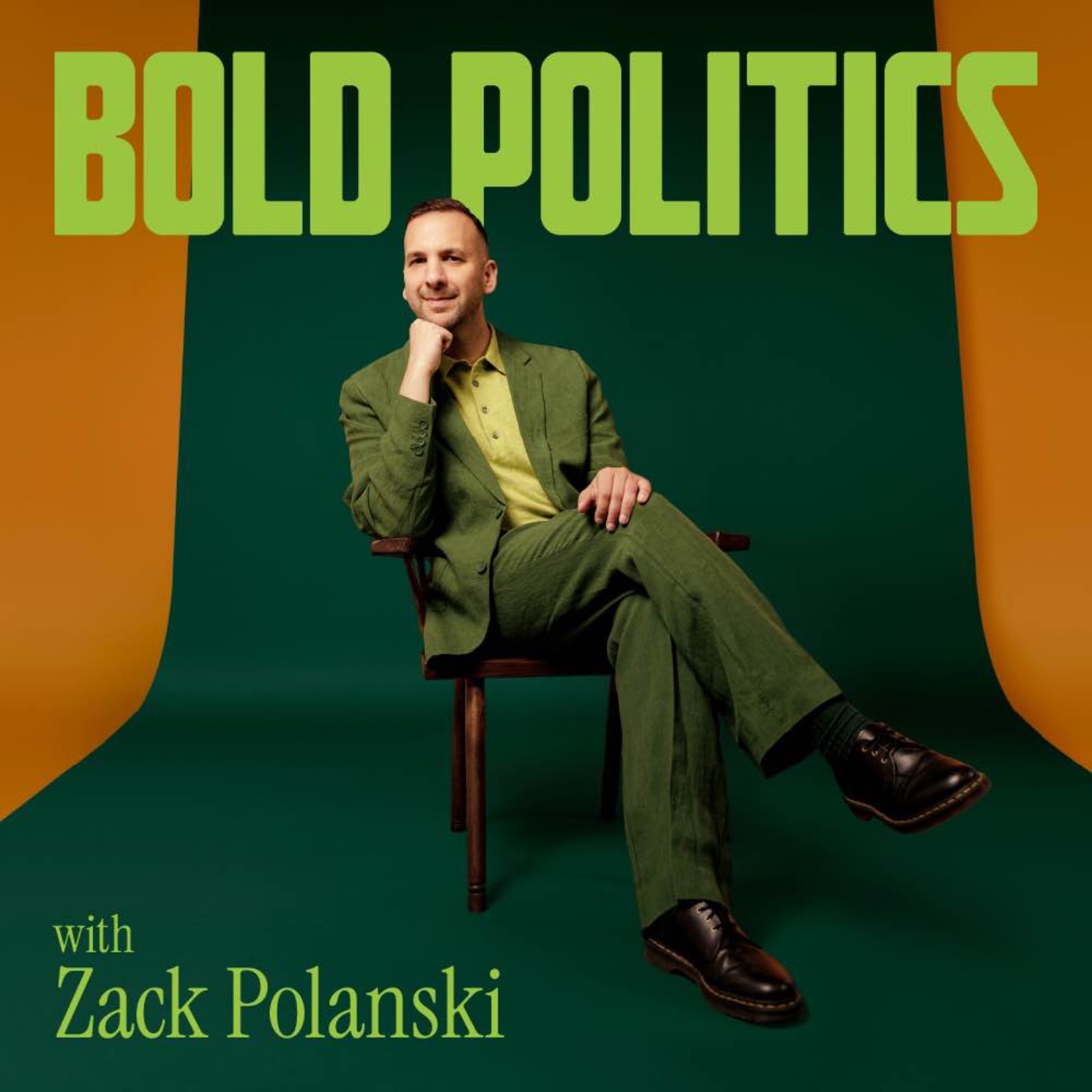
- Bold Politics with Zack Polanski
- Greta Thunberg and Zack Polanski talk Zionism is Racism, Smears and Autism.
Bold Politics with Zack Polanski4 Nov 2026 · 48m · 24 chapters
Greta Thunberg and Zack Polanski talk Zionism is Racism, Smears and Autism.
In short
Greta Thunberg and Zack Polanski discuss why electoral politics can’t solve climate and human-rights crises alone, how media and politicians enable “greenwashing” and pro-occupation/pro-genocide policies, and why Zionism is racism. They argue for narrative change, community organizing, and linking climate justice with anti-imperialism and solidarity movements.
Guests (backgrounds)
- Greta Thunberg: Swedish climate activist known for school strikes; also speaks on Palestine, Congo, and Western Sahara; autistic and bipolar; says she can’t “pretend” everything is fine.
- Zack Polanski: UK-based interviewer/activist voice (host), involved in politics/media commentary in the episode.
Key claims
- Politicians are constrained by corporate/billionaire interests and often ignore science.
- Media selectively slanders activists who connect climate with Palestine and other human-rights issues.
- Public support for stronger climate policy is higher than assumed (cites 89%).
- “Zionism is racism” passed as a motion; Gaza coverage shifted after ceasefire/genocide claims.
Notable examples
- UK approval talk for Jackdaw and Rosebank gas fields.
- 2019 school strikes; activists later spread thin across Palestine/genocide and other crises.
- Gaza ceasefire/genocide calls; Green Party early genocide stance.
- Western Sahara: Morocco occupation, repression, refugee camps, and greenwashing.
Written by AI. May contain mistakes.
Chapters
1:17
Greta's View on Politicians
Greta discusses her wariness of politicians and the systemic issues affecting climate action.
“I am unemployed, doing a more or less half-hearted attempt to being a student.”
2:21
The Disconnect of Politicians
An exploration of the gap between political rhetoric and reality in climate action.
“but it is a direct result of the structures that we have in place.”
3:38
The Influence of Corporations
Greta highlights the influence of corporate interests on political decisions and climate policy.
4:53
Youth Climate Anxiety
A discussion about the pressures and anxieties young people face regarding climate change.
“I could write so many like I don't know books or essays just from the conversations I have had with politicians where they have admitted things that are just like the stuff from nightmares.”
6:10
The Politics of Climate Action
Greta critiques political priorities and the need for genuine climate policies.
“They do not have the situation under control, especially the higher up you get in these international politics.”
7:20
The Need for a New Narrative
The importance of changing the narrative around climate action and public opinion.
8:41
Government Priorities and Climate
An examination of government actions that contradict climate commitments.
“There is a general trend, studies are showing that people care more than they are likely to admit.”
10:13
Repression and Activism
Greta discusses the repression faced by activists and the interconnectedness of crises.
“No, either we care about trees and workers or we care about more money in the pockets of billionaires.”
11:28
Future of Environmental Activism
The potential of environmental activism in a world of multiple crises.
“Like that's frankly the reality we are in.”
14:00
Understanding Interconnected Crises
Explore how interconnected crises impact activism and burnout.
“I think more and more people are starting to understand that these crises are interconnected.”
Show all 24 chapters
15:00
Challenges of Modern Activism
Discuss the obstacles faced by young activists today.
“And of course, this is a very, very effective method to get all of us burnt out, tired, spread way too thin.”
16:40
Political Compromises in Activism
Analyze the balance between political victories and compromises.
“But what it sounded like was happening was communities were generally coming together and going, actually, this is an opportunity to start to change things.”
18:20
Media Coverage and Activism
Examine the changing media landscape and its effect on activists.
“Local collective organizing is one of the main do's that we need to do more of.”
20:00
Values and Activism
Reflect on how basic human values shape activism.
“The first demonstrations I went to was to welcome refugees to Sweden.”
21:40
The Connection Between Climate and Human Rights
Delve into the relationship between climate change and human rights.
“And I would be invited to events where they would say, you can talk about climate, but you can't talk about politics.”
23:20
Racism and Dehumanization in Activism
Discuss the impact of racism on activism and public perception.
“and having this media tunnel vision, wanting to generate clickbaits and it's just so ingrained in that profession.”
25:00
Inequality and Climate Crisis
Explore how wealth inequality intersects with the climate crisis.
“despite the fact that it doesn't matter what your politics, everyone's going to be affected by wildfires and floods.”
26:40
Call to Action: The Urgency of the Crisis
Highlight the urgent need for action in response to global crises.
28:43
Zionism and Media Reactions
Discussion on Zionism, media responses, and societal implications.
“If you're a procurement manager at an industrial manufacturing facility, you're balancing inventory and budget while sourcing critical supplies across the operation.”
38:05
Urgency in Action
The need for collective action and realistic perspectives on crises.
“Gives you cash up front for your home, plus all the profit later.”
38:38
Autism and Activism
Exploration of autism's impact on activism and personal experiences.
42:02
The Role of Community in Activism
Learn about the importance of community action and personal motivation in activism.
“You shouldn't look to the young people and say, oh, they're doing something.”
44:35
Understanding Global Movements
Explore the complexities of global movements for rights and the challenge of awareness.
“I mean the only thing that helps with feeling anxious about the state of the world is to get involved.”
48:23
Finding Hope as an Activist
Discuss how engagement in activism can provide purpose and community.
“and I'm sure you've had this a million times, what gives you hope, Greta?”

Ask about this episode
Get the gist, explore an idea or ask about something said.
 Claude
On Bold Politics with Zack Polanski, what are the key points of this episode?
Searching your listeningTranscript
Automatic transcript. May contain errors.
0:00Cash Now, More Later from Opendoor gives you cash up front for your home, plus all the profit later. That's no chaos now, no cash left behind later. Skip the showings now, pocket extra profit later. This is so simple now, this is so awesome later. Or sell fast now and pop the champagne later. Cash Now, More Later, now available nationwide. Start your offer at opendoor.com slash ACAST. Profits calculated after fees and costs, eligibility and offer price may vary. Shipping, billing, admin, payroll, marketing. You're managing all the things. So why waste time sending important documents the old-fashioned way?
0:38Mail and ship when you want, how you want with Stamps.com. Print postage on demand 24-7 and schedule pickups from your office or home. Save up to 90 % with automated rate shopping. That's why over 1 million small businesses trust Stamps.com. Go to Stamps.com and use code PODCAST to try Stamps.com risk-free for 60 days. Hey Bob Politics, we are back. And for our first guest, we thought we'd start small, introduce you to someone you might not know yet. She's doing things in the environmental movement and the social justice movement. I'm incredibly excited about this conversation. I'm here with, I was going to say Greta Thunberg, but it's actually Greta Thunberg.
1:21Greta Thunberg. I am unemployed, doing a more or less half-hearted attempt to being a student. I'm interested in societal issues. That's how I introduce myself. And I'm also...
1:43Greta. Hello. This is pretty amazing. I'm very glad to be here. I think the reason why it's amazing to me is when I look at the amazing things you've done and the experiences you've had. I also, and you can correct me if I'm wrong, I think you're understandably slightly wary of politicians.
2:02That's an understatement. Right. And so I do feel incredibly honoured and privileged that you've sat down to have this conversation. But what is it about politicians that makes you wary? Where do I start? Like, well, I mean, first of all, we are living in an existential crisis, which is not because of a flaw in a system, but it is a direct result of the structures that we have in place. We have now political and economic systems that are, I would say, incompatible with human life and in the long run life on Earth as we know it and our civilization as we know it if we continue the current trends of climate catastrophe and complete destabilization of our biosphere.
2:48And of course, these are within the system that we work. and the politicians are working within these systems, within these structures. So by default, electoral politics alone will not be able to solve the crises that we are facing. That does not mean that politics isn't absolutely necessary. We need everything. It's not like, do we need activists or politicians? We need both. Of course, we need people from the inside who are pushing in every way they can in the right direction And probably even more importantly, we need people from the outside who also are able to shift the overtone window and the sort of field play which politicians are able to act within, because that's ultimately what democracy is.
3:34throughout my whole life in the years I've been doing activism, I cannot even count how many times I've been sitting in meetings with politicians who have their monologue and it looks like they're reading from a teleprompter or they're not really there, they're just reading up the script that was prepared by their assistant some weeks ago or something and if you actually listen to what they say and compare that to the reality that we are living in and compare it to what the current best available science is saying it's like you are living completely out of touch with reality like do you understand what you're saying if we if we translate this into practice and then you say that like to them and they just sit and blankly like smile and nods and then they go can we take a picture now and it's just like they're not there and it's I don't know it's not a secret that most politicians are bought up by big corporations and are being supported by billionaires and they're all kind of part in without sounding like a conspiracy theories they were part of this kind of like circle of people who all are benefiting from this very destructive system that the global majority are not actually being protected by um it's just this gap between what politicians are talking about what they are spending their time doing who they're mostly are meeting with which are mostly lobbyists in my experience um and also the discourses that are happening in media and if you compare that to what is actually happening If you zoom out where we are now as a, I would say as a civilization, from a historical perspective, also like from a geological perspective, like we are in the Anthropocene and compare these two realities, the gap between these are just unfathomable.
5:38I could write so many like I don't know books or essays just from the conversations I have had with politicians where they have admitted things that are just like the stuff from nightmares. people saying that oh we didn't actually know what we signed up for when we signed the Paris agreement oh actually we we're kind of waiting for a big catastrophe to happen so that people will understand that maybe then we can do something because otherwise we're not going to do anything and things like that and and when I've tried to talk like science with them they're like actually I'm not very read into the science of any of this and it's like these are the people whose hands we are in and when I was growing up I was having this big climate anxiety and anxiety about all the injustices in the world and the crises we're all facing and all I received from adults around me was like a pat on the shoulder saying like don't worry like the politicians and the people in power they have the situation under control don't worry and then you grow up and you see firsthand how that is the biggest lie, one of the biggest lies ever told.
6:50They do not have the situation under control, especially the higher up you get in these international politics. And it's very scary. And it's like every chance politicians who are in power get to actually prioritize people and planet over short-term economic profit for a few and maximizing geopolitical power, every chance they get they choose to protect these economic interests and do you think that's because in order for someone to get to that place of power they need to have been supported by people who ultimately will take them down unless they uh protect material interests the material interests of a wealthy rather than people on the planet that is definitely one of the major factors i would say i mean what do you what do you think well i'm listening to you and i'm well first of all i'm not taking it personally because genuinely as you're describing things I'm I'm I'm seeing that exact picture too and those are the politicians that I meet in other parties and all the time and have the kind of daily experience of and I suppose I have the self-doubt because I'm not someone who's been in power and you go I'm pretty sure to my core that would not be me and I would be going in to protect communities and protecting the planet but then you go throughout history there's almost no examples of politicians getting in and doing the right thing yeah I've so many times I've had people like going up to me say you should go into politics you should engage in party politics and I did try to do that when I was like really young like these youth groups of political parties several of them just to try and see what it was like and I just I just did not fit in there probably because I was too socially awkward to function in these big groups no but um you'd be fire politicians but it's like of course that's an individual choice but as i said i think what is most important now is to change the narrative and to to push um what we can actually achieve because when you talk to people there are studies showing that 89 percent of the population actually want much stronger climate policy and that we largely underestimate how much others care.
9:06There is a general trend, studies are showing that people care more than they are likely to admit. There's this kind of stigma where it's like, oh, it's embarrassing to care about the climate. It's not cool and it's uncomfortable. It makes people feel uncomfortable, whether it's Palestine, social injustice or climate. we don't really talk about it that much. And I think right now one of the most important things to do is to expose that and see that actually we are a lot of people who do care. And to get out these greenwash lies that politicians mainly are spending their time doing, making it sound like they're doing something when they're actually not in most cases, and many direct lies that need to be exposed, but mainly to push this narrative that this is actually what people want we want to protect the humanity that is the thing that actually binds us together and to shift the narrative around that and i think i think that that's where i want to put my focus on and to to sort of sort of shift public opinion because if we don't do that we're not going to be able to do much in politics because even if you are a super ambitious politician going up saying like this is what science says of course you're not going to be re-elected because that's not the narrative in the media because right now apparently it's more radical to say like actually we should be listening to what the current best available science is saying we should do in order to protect all of us because everything and everyone we love is at stake and that transformation the more we delay it the harder it will get it's not like we are choosing between either we continue like now or we're gonna have a really painful transition it's like either we try to make as many changes we can now as much as possible within our own control or we're waiting and disaster hits those are the options and that's not at all the narrative that's present in the media because then it's like, okay, either we care about trees or we care about workers.
11:24No, either we care about trees and workers or we care about more money in the pockets of billionaires. Like that's frankly the reality we are in. So I also don't think I would survive as a politician. Well, sitting with you is genuinely feeling like therapy because I'm sure you follow this, but the UK government has just approved the Jackdaw gas field and there's talk that they're going to approve Rosebank. And I don't think I've said this in public before, but I can't quite believe they've done it. And then I can't believe that I don't believe they've done it because you only have to look in history and go, governments always do these things.
12:00But I did think with the amount of information there is out there, like even let's put the climate arguments to a side, which is obviously the most important arguments. If you just look at affordability, it will do nothing to lower bills. It will do nothing to create jobs. And so even on the own terms that they've decided to frame this debate rather than on the climate crisis and the destruction of the planet. It still makes no sense. And I can't believe they have the audacity to know they'll get away with this. It's like, we know you guys don't care at all. I mean, for one reason, because you've been making lots of money during this genocide by killing Palestinians.
12:33So we know you don't care about human lives. But at least could you pretend? It's so easy, even if they were like, actually, we're just going to get this easy win for us to make it look like we care while we actually don't care at all. It's so easy. It's such a low-hanging fruit. And not even that they can do, which says everything about their true motives. Again, every chance they get to prove that they care even the slightest, even if it's performative. It's like we're living in a parody of a really bad parody sketch. Really dark humor, but it's like every day you wake up, you're like, what simulation is this?
13:16And I think it was in 2019 you went to speak to British MPs and you gave a pretty famous speech where you said, you know, is my microphone on? Am I speaking English? Clearly it wasn't on. We need to fire the technician and make sure people actually hear. Literally. I don't know how you feel about that time, but so I was very involved with Extinction Rebellion and it felt like something was really happening as in people were talking about it, people were organizing. And then there was a piece on Sky News last week. You probably didn't see it, but it flashed up on my social media that said, where have all the environmental activists gone?
13:50And my brain, first of all, thought, well, you arrested them all and made it illegal. But second, has the conversation, like have we got distracted from talking about the climate crisis? I don't know. I think more and more people are starting to understand that these crises are interconnected. and so many of the people who were in the climate movement for example 2019 the school strikes are spending so much of their time protesting against like an active genocide going on with our money and it's like I keep going back to this like imagine what we could achieve if we didn't have to spend all our time defending ourselves from repression, the constant ever-increasing repression from state, media, whatever, and didn't have to constantly fight fires like, oh, now we have to protest against data centers.
14:50Oh, now we have to protest against genocide in Palestine. Now we have to protest against human rights violations in Congo or climate crisis. Imagine if we could set the terms. And of course, this is a very, very effective method to get all of us burnt out, tired, spread way too thin. And it's just like a constant never ending, like running around, putting out fires. that also, frankly, like most of my friends and comrades from the school strikes in 2019, there are a few reasons why they are in many ways not able to do that same activism anymore. First of all, most of them got burnt out because we put way too much responsibility on children and the politicians and the people in power refused to step up and the media taking even a bit of that responsibility.
15:46and in general adults have also failed to step up to the necessary to their responsibility and also people grew up from being children and now they're like they have to work several jobs just to be able to afford food which takes up all their time and they're also being told you have to study for a future that you might not even have but that's what you have to do in able in order to be able to survive in the society. So that takes up all the time and resources from these people who want nothing more but to go out and actually translating their concern and climate anxiety into action. So it's a mix of reasons, but at least from people my age, that's a big factor.
16:39How do you feel, I suppose, about Zora Mamdani in New York and Lula in Brazil? like um because i i can see two arguments here one argument is this is relentlessly positive and actually it's very hopeful that the right people are winning but then the second is are they still having to make compromises and ultimately of course every politician has to make compromises that isn't to say we absolutely need it unfortunately we we are in the moment where we are desperate enough that we have to take any win we can get every ton of carbon we can avoid emitting is like worth it I mean if you like broadly but that's the level of crisis we are in the people are not really under understanding that level of crisis but of course these like big political wins are in most cases um something we should be able to be like okay yes this is good but as long as we acknowledge that this is never going to be enough that we also need everyone to mobilize on the streets and everyone whatever role they have in society to take part as long as we don't lose that aspect it's yeah because that's what I took from Brazil is this talk of whatsapp groups and people mobilizing yes and obviously there's two ways to do that and I don't know enough of the detail that if your WhatsApp group is just a broadcast, then you're not really organizing.
18:04But what it sounded like was happening was communities were generally coming together and going, actually, this is an opportunity to start to change things. And as long as people know that's not the end, that's actually just the beginning, then that feels like there is a route that combines activism and electoral politics. Yeah. And we have many do's and many don'ts. Local collective organizing is one of the main do's that we need to do more of. And people like like Flavia Bolsonaro is one of the main don'ts. So like moving in that direction is absolutely necessary as long as we acknowledge that this is...
18:36And you mentioned the media there. And I think back to 2018, 2019, and this is through a British lens mainly, but you were either, often the coverage was positive. Sometimes it was just curious about who you were. And it feels like in the last couple of years, particularly since you started speaking on other issues like Palestine, they either ignore you entirely now or actually that's quite vicious when they talk about you yeah yeah I mean from my point of view like I got into activism because of my basic human values that I was brought up with like if a human is equal and we should we should be kind to each other and like those very basic that anyone would like this is what we need to teach our children this is what people should have as their values and then I grew up and realized that apparently putting those values in practice is seen as radical I don't know why in every children's book you read you're like okay the person who oppresses people the person who destroys nature take any children's story that's obviously the villain and it's like how do we grow up to become like actually this Disney villain he has to make compromises.
19:52What happens in our brains? At what age does that happen? And I just kept sticking to those values. And then I got involved in climate activism. The first demonstrations I went to was to welcome refugees to Sweden. For me, that was all like, this is the same thing. Whether it is about Palestinians being killed or people being killed by carbon emissions, whatever the source of that human suffering is, we have to go to the source. so I didn't really think it would be like something controversial because I was so naive I was growing up in like very white privileged background where I didn't see the reality and didn't experience dehumanization that Palestinians are experiencing so it was really overnight how the sort of establishment turned against me just for saying like yeah genocide is bad um when we were children we were talking about like we'll need a system change in order to combat the climate crisis but media never actually listened to what we were saying they were just like they are angry teenagers screaming at politicians if you would take one second to actually listen to what we were saying or have a conversation with us you would realize that well we are ultimately also anti-imperialist anti-capitalist because those systems are threatening humanity and uh i would go from becoming like invited to all the the like big people in power them wanting to pose next to me take selfies and i was still receiving lots and lots of hate of course but like and then overnight it was like complete slander campaign because they were like oh no she's radicalized um when we actually didn't change any of our messaging which just exposes the racism that's so ingrained.
21:45And I would be invited to events where they would say, you can talk about climate, but you can't talk about politics. And they would physically remove my kefir or physically take my microphone away from me and just things like that. It just really shows the selective solidarity people have especially in the west and like when i like talk a lot more to people in the global majority often referred to as the global south for them it's so much more clear like of course human rights and the climate crisis are connected the climate crisis is a human rights crisis and in in the west people are like how do you connect the palestine to the climate and it's just the fact that we're asking that question says so much about how detached we are from ourselves and from these values of solidarity and also how detached we are from nature um war against nature is also war against humans and it i don't know it just really made that very very clear and because i get asked constantly you know why have you stopped talking about the environment even when i'm talking about exactly and do you think they genuinely don't understand or i guess it's hard to characterize the entire media as one person i suppose different people have different motives yeah i think of course it's a mix of i mean ignorance is part of it for sure and having this media tunnel vision, wanting to generate clickbaits and it's just so ingrained in that profession.
23:36But also, ultimately, racism is of course also a big factor of it and that we have reached the point of dehumanization of Palestinians where it's like speaking up for their basic human rights is seen as controversial um but ultimately like the arguments don't make any sense because if they ever did like we wouldn't be in the place we are like the very same people who before i became more publicly talking about palestine the same people who said like oh she's being controlled by a secret Jewish elite, the same people would then say she's an anti-Semite. And it's like, of course, these arguments don't make any sense because they never did.
24:27These people are not guided by logic. And we've talked about the kind of collectivism of mass movements. I'm interested in, because I suppose different people have different roles in this. And I have no doubt, for instance, when I talk about affordability or wealth inequality, and the need to tax multimillionaires and billionaires, even someone on the right, or especially maybe someone on the right, might actually agree with that. And that feels like, in terms of electoral politics, that's a way to unify people. But as soon as you start to talk about the climate crisis, this has been very divided into a left-right issue, despite the fact that it doesn't matter what your politics, everyone's going to be affected by wildfires and floods.
25:05And it is ultimately an issue of inequality. But it does feel like, if you want to say, quote-unquote, a culture war issue it's a harder issue to win electoral politics on oh yeah for sure for sure um as i was saying earlier people are so bought into this view of like either we are hippies wanting to protect the the forests or we are like wanting to protect the the people on the ground like putting food on the table protecting workers rights and just like that just shows how far we've gone because there's no world in which climate justice doesn't encompass all of those we want to protect forests because we want to protect people because we know that if we don't have those systems we don't have any i mean we don't have a functioning society um and it just shows how desperate how desperate the people are who want us to maintain this extremely violent status quo where we know that people are not benefiting from this is a system that is not actually protecting benefiting everyday people um it's um there's this quote that the the earth is a luxury resort for a few people and the rest are staff and um that's that's the reality we are living in what are your thoughts i think there has to be a way of doing both so uh talking about wealth inequality and connecting with that and then through that lens um connecting the fact that tackling the climate crisis is also a way to reduce bills to to create jobs for people um and i think those arguments are really sound and really credible i think the what i see as the obstacle in uk politics is getting the chance to be able to say those things and be heard because so often just someone shouting over exactly exactly and coming back to Gaza for example if you can see a live streamed genocide on your screen like 24-7 and see parents picking up body parts from their children under the rubble putting them in plastic bags even if you are so selfish that you are not moved to action by that how do you think a system that not only is fueling this but ultimately is allowing this to happen, how do you think that system is going to protect you?
27:37Like, we can see that this...
27:43Still waiting in line? Again? That's time you'll never get back. Save time and money with stamps.com. Over 4 million businesses have skipped the line with stamps.com. Join them to save up to 90 % off carrier rates from your computer or phone right now. Print postage for certified mail, registered mail, and packages in seconds. Then schedule a pickup right from your home or office. For a limited time, go to stamps.com and use code podcast for a free welcome gift. Taxes and fees apply. Cash Now More Later from Opendoor gives you cash up front for your home, plus all the profit later. That's no chaos now, no cash left behind later.
28:23Skip the showings now, pocket extra profit later. This is so simple now. This is so awesome later. Or sell fast now and pop the champagne later. Cash now, more later. Now available nationwide. Start your offer at opendoor.com slash ACAST. Profits calculated after fees and costs, eligibility and offer price may vary. Grainger knows. If you're a procurement manager at an industrial manufacturing facility, you're balancing inventory and budget while sourcing critical supplies across the operation. Too much inventory? Costs climb. Too little? Production slows.
29:15is not something that is protecting human rights. I mean, international law is a graveyard at this point. the trajectory where we're heading I don't even want to think about how do people see themselves living in that kind of society when is it 90 % of the arable soil that we have now is going to be degraded by 2050 how do people expect that we can have functioning societies considering all the parts of the world that are going to become uninhabitable all the conflicts and refugee crises that is going to like worsen how do we think we're going to have functioning societies in that and i suppose because this conversation is necessarily bleak because we're talking about bleak things but i also i really feel like the media is losing their power so if we look at gaza for instance i was one of the first people uh so we'd be calling for a ceasefire in 2023 and the media reacted in the kind of how dare you call for peace kind of way But then I think the public were like, well, we don't want to see people die.
30:26And then the Green Party were the first party to call it a genocide alongside many international scholars, most importantly, genocide scholars. And the media reacted in the way that they did. And obviously, we've just passed our motion around Zionism is racism. And the establishment have reacted in a way that I think I've not seen them react to things in a long time. But actually, we've then got the Israeli elections that are happening kind of at the time of recording. and you see the parties on the right obviously all support the genocide but even the parties on the left pretty much yeah are still pro-occupation and so i think members of the public if they're paying attention and the if is an important bit lots of people sadly aren't paying attention but if they're paying attention we'll look at it and go well that that seems pretty racist yeah exactly exactly how can you not come to that conclusion and i said that key bit um if people are paying attention which it feels so important to me yeah um because we need to make sure that things are based in facts and science yeah um and that the messengers are trustworthy incredible yeah and but it increasingly feels as if that's becoming even more and more polarized yeah um what what do you think it's ridiculous what do you think the ways can you solve world piece please Greta yeah give me two hours yeah I mean this world is fact and empathy resistant at this point um but we know I mean I haven't spoken to a single person who doesn't like deeply like feel that okay something is ultimately wrong they can't put their finger on it but or like point out like exactly what it is that's causing it but more or less everyone knows that okay the situation is deeply flawed and we know that we are heading for catastrophe I'm part of a generation who grew up like seeing the world kind of like rapidly moving towards a point of no return and the people around me often the very same people who claim that they love me saying like every day sacrificing my future for their comfort and it's like this is the ultimate sign of society that has given up that we are mourning things that haven't happened yet but that we all kind of know are going to happen but no one feels like oh well it's too big for us to even try to stop it and it's um i mean we don't have the luxury to give up especially not people like us living in this part of the world because we are not the ones who are going to be hit the worst we are not the ones for even for one second get to say it's too dark let's just give up um so whatever happens we have to fight for whatever there's left to save every fraction of a degree matters every carbon that we can avoid emitting every forest that we can avoid cutting down is going to prevent some suffering and all the suffering we can prevent we have to do and whether or not we are able to like overnight switch to a a different economic system that's of course not going to happen but there will always be things worth saving um and i mean look at the people going through genocide right now they are continuing to create they are continuing to build and to organize to laugh and protect affect each other and um yeah they're still also fighting to preserve what can be saved and that can never disappear i think that's so powerful people often say to me and i'm sure they say it to you all the time um how have you not burned out how do you have so much energy how do you have resilience and actually i go because i'm living a pretty privileged life yeah and i think about the people who don't have those options and actually that that gives me energy and that's not to shame anyone who has burnt out like it's completely understandable when people do yeah and uh i mean it would be too exhausting for me to live a sort of normal life and to go every day pretending that everything is fine might also be because i'm autistic and i physically cannot pretend um but uh hope is something that we are creating hope is actually looking at the situation as it is, being realistic about it to say that if we act, we can accomplish things.
35:10If we don't, it's going to be catastrophe. It's not about being optimist or pessimist. It's about being realistic. Partly for me, that brings the conversation full circle, though, because I think about another thing that gives me energy is just the incredible people I meet all the time, often who aren't working in politics. They're doing a local community project or they're under really difficult circumstances. I'm thinking about villages I've been to in Wales that are incredibly impoverished. people are living in poverty and you have people running these amazing projects with pretty much nothing and and then i immediately go i really want that person to get involved with politics like they have such incredible qualities like no they're better there well they kind of push back at it and go i don't want to get involved with with that nonsense or with that like um with that horrendous world and then it comes back to your first answer though i think because politics has been designed to put off those people because i think they would transform but maybe that's where we're in different places because um i clearly see politics actually no i'm gonna correct myself i was gonna say ultimately it's the solution i don't i'm in the exact same place you are actually i think that we need movements to push politicians to do the right thing but i do ultimately need think we need some sort of political system because at some point not everyone should be involved with every decision all the time like you need some form of democracy and someone to hold the levers of power yeah and no one is claiming to have the solution right of course i mean humanity has never faced a situation like this before we've existed for 200 000 years we've always had crises but this is one that is going to impact all future generations and life on earth as we know it it's anyone who can stand on on like a stage or say that i have the solution it's just like what the fuck have you been smoking like how can you have that level of hubris um it's almost always a white man also um so we have to also be a bit humble and say like okay guys
37:04shipping billing admin payroll marketing you're managing all the things so why waste time sending important documents the old-fashioned way mail and ship when you want how you want with stamps.com Print postage on demand 24-7 and schedule pickups from your office or home. Save up to 90 % with automated rate shopping. That's why over 1 million small businesses trust Stamps.com. Go to Stamps.com and use code PODCAST to try Stamps.com risk-free for 60 days. Grainger knows if you're a procurement manager at an industrial manufacturing facility, you're balancing inventory and budget while sourcing critical supplies across the operation.
37:44Too much inventory? Costs climb. Too little? Production slows. Grainger's$2 billion in on-hand inventory helps you get what you need when you need it. So you can help keep budgets balanced and lines moving. Call 1-800-GRAINGER, click grainger.com, or just stop by. Grainger, for the ones who get it done. Cash Now, More Later from Opendoor. Gives you cash up front for your home, plus all the profit later. That's no chaos now, no cash left behind later. Skip the showings now. Pocket extra profit later. This is so simple now. This is so awesome later. Or sell fast now and pop the champagne later. Cash now more later.
38:26Now available nationwide. Start your offer at opendoor.com slash ACAST. Profits calculated after fees and costs, eligibility and offer price may vary.
38:37We underestimated the situation. We actually don't know. We have some do's and don'ts. let's all organize together and figure out the way forward with science and human rights as our guideline you mentioned a few moments ago about being autistic and I wasn't going to ask you about this but as you said it I thought you're probably one of the most famous autistic people in the world and you didn't like I don't know if you consider yourself an activist for for people with autism or if it's just something that's part of you and but what's that been like so many people like come up to me and say oh thank you for being so open a bit about being autistic and i'm like why should i not be and that's also a very autistic way of seeing it is like there's no shame and that is just who i am like why wouldn't i be i'm also bipolar and have a lot of other diagnoses as well probably um so it's a autism in this extremely i mean severe situation we are in is I would say an advantage because we are in a situation where we need to think outside the box and we need people who think and work differently I would say ultimately the reason why I started school striking is because I was autistic I tried to get others to join and but I was too shy and socially awkward to succeed in doing that and I was like we have to really point out the urgency of the crisis we are facing and I as the nerd I was I prepared like this really huge like flyer with lots of facts and statistics and I was like if we put this out people are going to read it and they're going to be convinced and say like yeah we have to do something because I thought people were guided by logic apparently they are not and and many of the people I spoke to are like yeah but we can't be that alarmist we have to be like inspirational and motivational and maybe invite people for like a picnic where we inspire each other and I was like you guys have clearly not understood the urgency of the crisis this is not something to have a picnic about I'm gonna do this myself you can join me if you if you want or not and I think that's one of the most autistic things I've ever done um it's also what makes you an amazing social media poster for all your wit and intelligence in real life you also just quality on social media particularly in responding to Trump no my social media is horrible no I every day I wake up and I'm like I want to delete social media I'm also managing it by my own that's why it's so terrible no it's horrible but I don't want to be an influencer every time I think about people seeing me as an influencer I'm like I hate it with every fiber of my being and also this celebrity focus I despise it because it's like it goes against everything I stand for like we know that any societal change is with community and we know that any activism that has ever happened has been made possible by people coming together as a collective and with each individual roles and pushing and it's like this celebrity focus is just a symptom of a hyper individualist capitalist system where we're like seeing as a one person can make a change of course not not like one person can do so much but if we want to achieve anything it's with community so that's also why why i really hate it so much yeah and makes total sense and there's brilliant grace blakely an economist in the uk who talks about no one's coming to save us and we've got to stop looking to single politicians or single figures yeah and it i mean it serves as an alibi for people to not do anything i cannot like everyday people come up to me and they're like you young people are going to save us and like you are my hope and sometimes i'm just like if your hope is like resting with some more or less burnt out teenagers.
42:43I don't think there's so much hope. You shouldn't look to the young people and say, oh, they're doing something. I can relax. No, young people are doing this for you to see that, oh, okay, something is wrong. Time for me to get involved. And when you were 15, 16 and you were sat outside the school, if someone could go back then and say to anyone, sitting outside the school will inspire a global movement, I think most people go, that's worth my time. But as far as you knew, you were just going to sit out there. Were you completely alone or like the first one? Yeah, I was. I told this idea and like even my parents were like, yeah, sure, she's never going to actually commit to it.
43:21But then I did. And when I was sitting there, I just kept going because it just felt like I felt a level of satisfaction in myself, which like at least I'm doing something. And if this doesn't work, I'll try something else. but as long as I do something. And was the motivation, I know it's hard to go back 10 years and go, this is exactly why I was doing it. But were you hoping other people would come sit with you? Or was it more about, I'm doing this task for my own well-being and also because I want people to hear? Not necessarily for people to join. I was doing it out of moral duty. Whatever the outcome, I have to do something.
43:59I was just thinking, I was also in depression and I had selective mutism. I didn't talk to people unless I like really, like there was only a select few people I could talk to for many years. And then I found a reason to speak because it was important enough. And I just felt like someone needs to do something. That's what I felt like during these years of depression. Someone needs to do something. And then I was like, wait, I'm someone. Why am I not doing anything? so it was kind of based on a moral obligation I would say. It makes a lot of sense and also very moving which I know is not the point but also I just hope that someone watching or listening this goes actually if I feel a moral duty to do things what are the things I can do in my community and they don't have to inspire global movements they might just help the local community.
44:50I mean the only thing that helps with feeling anxious about the state of the world is to get involved. Talking of the state of the world we've spoken about Palestine a few times, but you've also, you mentioned Congo and I know you've done a lot of work around the Western Sahara as well. I think, I don't know, but I imagine most of the audience watching this know a lot about Palestine, a fair bit about Congo and very little about the Western Sahara. I guess there's two things. One, I'd love for you to talk about Western Sahara, but to a wider point, why do you think it is on the left that we know so much about Palestine, but people haven't necessarily connected to other international movements and solidarity?
45:27Yeah, I mean, Western Sahara is and has been for many decades now been occupied by Morocco. Many people are living in the occupied territories who are facing immense amounts of repression by Morocco. And also many people are living in refugee camps in the Sahara Desert, very much living on the front line of the climate crisis and other humanitarian issues. disasters like being dependent on aid from the UN and it's people are just really being denied their most basic human rights and their rights to self-determination right to return and it's people are not really aware of it of course the situation in Palestine and the oppression people are facing there is not unique to Palestine this is something that is happening in different ways it manifests locally in many different ways but globally it's the same problem of people being oppressed and suffering just for some people to maintain geopolitical power and maximize profit they can make out of it and Morocco are also very good at using greenwashing pretending that they are sustainable and they are investing in green technology while they're also actually violating basic human rights and occupying illegally occupying western sahara this is though something that is not known almost at all there's a huge silencing in the media and journalists aren't also really allowed in the occupied territories.
47:22But within the sort of solidarity movement, it's so selective. And there's just so many things that are happening. Some people claim that we can only care about so much, which is, of course, not true. If we're saying free Palestine, we also have to advocate for the freedom and liberation for all oppressed people. But again, as I was saying, we're constantly putting out fires and we're constantly being bombarded with these catastrophes that we are seeing so it's not easy to keep up especially when we have to so actively search for that information it's not like it's not like media are doing their job and providing us with like okay these are the humanitarian crises happening often because of our elected officials and our companies and like painting a holistic picture of the crisis we are facing which makes it very difficult to know how to get involved and to know where to find information from.
48:21Whenever I finish podcasts, the interviewer always asks me, and I'm sure you've had this a million times, what gives you hope, Greta? And it's just like, it feels like such a like trivial question that like you've talked about serious things and then they go, oh, but still how are you feeling hopeful? I do want to reverse the question around though because if someone's watched or listened to this and just thinks there's so much going on in the world, it's quite overwhelming and there's no obvious route through it right now. What are the things that you'd want them to do you feel who could they connect with like what what can people do about things
48:56yeah i mean we've talked about many negative aspects of being an activist or being politically involved it can be very exhausting but i have not met a single person who is active in in these issues who regret it because the things you gain are so so much more worth it and so much more rewarding you gain community you gain an actual purpose with your life um i don't honestly don't understand how people can function in a society where we've kind of stripped away all sorts of meaning and purpose of our lives and and once we get involved to actually protect humanity we we gain that purpose and which is just which gives obviously like meaning to everything and there is no first step that is small enough whether it is talking to your colleagues talking to your family start changing your lifestyle to a more sustainable way go to a protest you will find ways to increase your engagement together with others like I started very very small I I started turning off lights in the rooms.
50:16I wasn't in to save energy. And then I became vegetarian. And then I stopped flying. And then I became vegan. Then I became an activist. So one thing can also lead to more things. And then you will know what to do. Because, again, there is no one simple answer. This is how we save the world. That is something we have to figure out together. In order to figure out how to do that, everyone is needed. I love that. it was only subtle that you said you'll know what to do yeah because i i'm just to finish off like i'm sat with you and i know you reject celebrity status and i think it's right that you do and i certainly feel that too in terms of i feel uncomfortable when people just want a photo or kind of go you've inspired me so much i must try and always turn it to what are you doing about it at the same time though very few people in the world in history of inspired global movements in the same way that you've done and to hear you say to people you'll know what to do does just feel very incredible that like people when they connect in and when they're in the kind of the lane of what they care about will be able to follow the choices that that mean they're able to do the best thing they can do in their community exactly as long as you don't lose like um your foothold like of your actual values um and principles you'll know what to do and when you find others who have those same values um there are almost no limits to what you can achieve together if you start thinking creative.
51:41It's been an absolute pleasure. Thank you very much, Greta. Of course. Thank you.
52:09you set up and switched over for free. So when peak season hits, you're ready to go. Switch today at ShipStation.com code audio. Cash now more later from Open Door gives you cash up front for your home plus all the profit later. That's no chaos now, no cash left behind later. Skip the showings now, pocket extra profit later. This is so simple now. This is so awesome later. Or sell fast now and pop the champagne later. Cash now, more later. Now available nationwide. Start your offer at opendoor.com slash ACAST. Profits calculated after fees and costs, eligibility and offer price may vary. This is the story of the one.
52:49As a shipping manager, he's running the dock, stocking supplies and making sure every order goes out on time. And Grainger helps him stay prepared. From shipping supplies to PPE to hand tools, he counts on Grainger to keep products moving and trucks rolling. so his operation runs smoothly no matter the shift. Call 1-800-GRAINGER, click grainger.com, or just stop by Grainger for the ones who get it done.
From the publisher
Bold Politics is back and Zack Polanski is joined by internationally renowned climate activist, Greta Thunberg to discuss how the establishment went from wanting pictures with her to trying to bring her down, how the media are selective with their support for human rights issues and why the backlash to protesting on certain issues is more toxic than others.
--------
Bold Politics have launched a new support network for up-and-coming progressive political talent.
Play your part in nurturing the next generation of leaders who will put people and planet first by donating to the Future Politics Crowdfunder: https://www.crowdfunder.co.uk/p/futurepolitics
Bold Politics Live is at Crossed Wires Festival in Sheffield on July 5th.
Pre-order the new book, Hope Is Here now.
Email: [email protected]
Hosted on Acast. See acast.com/privacy for more information.
More from Bold Politics with Zack Polanski
All episodesWe use cookies.They keep VO running smoothly and help us improve it. Privacy policy