
 Ask ChatGPT

- Podcasts
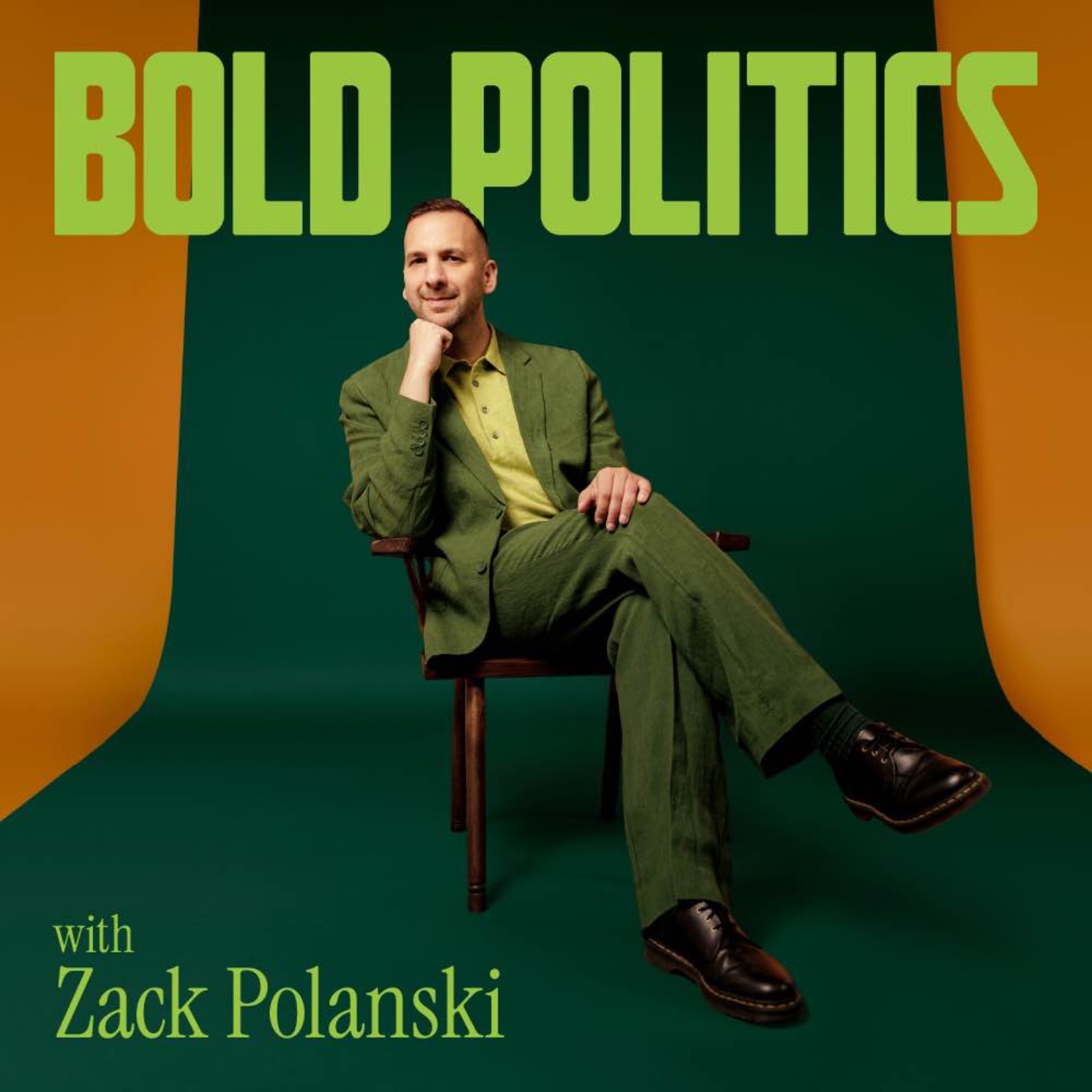
- Bold Politics with Zack Polanski
- How The UK Is Complicit In The Gaza Genocide
Bold Politics with Zack Polanski25 Aug 2026 · 59m · 21 chapters
How The UK Is Complicit In The Gaza Genocide | Jeremy Corbyn
In short
Jeremy Corbyn argues the UK is complicit in Israel’s Gaza genocide, focusing on Britain’s arms/weapons supply, military overflights, and media/political cover. He describes his “Gaza Tribunal” project and calls for a public inquiry with powers like the Chilcot Iraq inquiry.
Guest backgrounds
Jeremy Corbyn is a long-time UK MP and long-standing supporter of Palestinian rights; he helped found/lead the Peace and Justice Project and is involved with Progressive International’s Hague Group supporting ICJ/ICC processes. The episode also references tribunal experts: Prof Niamh Gordon (Queen Mary University legal scholar), Shahad Humiri (Kent University lecturer), and 29 expert witnesses across media, weapons supply, and emergency medicine.
Key claims
Britain enables genocide by allowing weapons manufacture (Orbit Systems), overflying Gaza for years and sharing information with the Israeli Defense Force, and supplying F-35 parts without meaningful sanctions. Corbyn says ICJ genocide findings mean knowingly supplying weapons makes the UK complicit.
Notable examples
the tribunal’s evidence about RAF Akrotiri (Cyprus) surveillance and refusal to release drone/overflight footage to an aid-worker family; Corbyn’s analogy of handing “rocks and bars” to shopbreakers; comparisons to Spain’s port restrictions and to the Russell Vietnam Tribunal.
Written by AI. May contain mistakes.
Chapters
0:30
Understanding the Gaza Tribunal
Corbyn explains the purpose and context of the Gaza Tribunal.
“Mod.com is changing the way people battle excessive fatigue.”
2:03
Understanding the Gaza Tribunal
Corbyn explains the purpose and context of the Gaza Tribunal.
“Everyone wanted to see us in a room chatting.”
3:41
The Role of the Gaza Tribunal in Advocacy
Discussion on the tribunal's findings and the ongoing advocacy efforts.
“And so through the Peace and Justice Project, we said, OK, we're going to set up our own Gaza Tribunal on the model of the Russell Tribunals about the Vietnam War in the 1960s and 70s.”
5:09
Britain's Complicity in Gaza
Corbyn addresses Britain's role and responsibility regarding Gaza.
“The point about it is to provoke and promote a discussion, a public discussion about Britain's complicity because we can't get away with it.”
6:51
Arms Supply to Israel: Ethical Concerns
A discussion on the ethical implications of arms supply to Israel.
“I'll finish on this because otherwise I'm going to go on too long and you're going to tell me off.”
9:48
Changing Political Landscape on Palestine
Corbyn shares insights on shifting public opinion about Palestine.
“Of the European countries, Spain has gone the furthest in a big way and interestingly has gone further and further.”
11:01
Media Influence and Youth Perspectives
Exploration of media narratives and youth attitudes toward Palestine.
“and it's young people in the USA who are going to change things And interestingly, it is young Jewish opinion in the USA that's changed a great deal.”
14:03
Understanding Political Integrity and Media Dynamics
Explore how political figures navigate public opinion and media scrutiny, particularly regarding Palestine.
“And you've got a long history in politics, particularly as an MP.”
16:48
Historical Context of War Crimes and Political Accountability
Discuss the historical parallels between Vietnam and current conflicts, emphasizing accountability in politics.
“There's also the interesting dynamic now of Wes treating the now defense secretary.”
19:35
The Nature of Peaceful Protests and Misrepresentation
Analyze the portrayal of peaceful protests as hate marches and the reality of such demonstrations.
“And why did Keir Starmer, even in opposition, say that Israel's denial of water and food to people in Gaza was a legitimate act of self-defense?”
Show all 21 chapters
22:40
Media Bias and the Impact on Public Perception
Examine the media's role in shaping narratives around protests and public figures, and the consequences of bias.
“That says something about people's ability to look past what the populist mainstream media say and do.”
26:35
The Role of Military and Human Rights in Gaza
Investigate the military's involvement in Gaza and the implications for human rights and justice.
“And so when you were looking into the tribunal and there was a section on media, what was the evidence that you heard?”
28:00
The Gaza Situation and Media Responsibility
Explore the complexities of the Gaza situation, media reporting, and the humanitarian crisis.
“I can only believe that he'd been told that these surveillance flights were really actually passing on security information to Israel, which they constantly denied.”
37:31
Hope and Resilience Amidst Conflict
Discussing hope and resilience in the face of conflicts and the call for change.
“I get hope from the way in which people are so resilient and will come out.”
42:00
Understanding Global Conflict and Climate Issues
Explore how global conflicts and climate issues are interconnected and often mishandled.
“that's part of the movement against the climate crisis.”
45:30
The Importance of Biodiversity and Environmental Efforts
Discuss the significance of biodiversity and ongoing global environmental restoration efforts.
“Are you going to be happy to be optimistic?”
48:00
Geopolitics and Relationships with Global Leaders
Analyze the delicate balance in international relations, particularly with the USA.
“they just want the investment in order to be able to do it.”
50:50
Education and Historical Awareness in Schools
Emphasize the need for effective history and geography education to combat Eurocentrism.
“You know, Keir Starmer will be able to get what he wants from Donald Trump now because he's flattered his ego.”
55:00
Inspiring Future Generations Through Environmental Education
Highlight the impact of engaging young students in environmental discussions and actions.
“And the best question was this kid said, okay, sir, what's the most important animal in the world?”
56:00
Education and Activism in Environmental Issues
Learn how grassroots education can inspire action on environmental issues.
“Like how important is the workers' movement in raising these issues?”
1:01:18
The Gaza Tribunal and Support for Palestine
Discover how to support the Gaza Tribunal and its mission for justice.
“If someone wants to support now, what's the best way for them to support?”

Ask about this episode
Get the gist, explore an idea or ask about something said.
 Claude
On Bold Politics with Zack Polanski, what are the key points of this episode?
Searching your listeningTranscript
Automatic transcript. May contain errors.
0:00When everything is moving all at once, your workforce, your tech stack, your business, you don't need more tools. You need one solution. That's why Paylocity built a single platform to connect HR, finance, and IT with AI-driven insights and automated workflows that simplify the complex and power what's next. Because when everything comes together in one place, growth comes easy. Experience one place for all your HCM needs. Start now at paylocity.com slash one. Mod.com is changing the way people battle excessive fatigue. Ever hit a wall in the middle of the day and a third coffee just doesn't do it anymore?
0:40Here's what's actually happening. Coffee only briefly blocks adenosine, the chemical that tires you out. When it stops working, your system is flooded and you crash. Modafinil is a prescription treatment that works in a completely different way. Modafino works by stimulating multiple receptors in the brain associated with wakefulness, including dopamine, serotonin, norepinephrine, histamine, glutamate, and orexin. It's a more complete solution that gives you 10 to 12 hours of steady focus and energy. To learn more, go to mod.com. Fill out your intake form, meet with a licensed provider, and if approved, ModAlert ships straight to your door.
1:22Go to mod.com to get started. That's M-O-D dot com.
1:56Jeremy, you have been one of our most requested guests ever since we started this podcast. So I'm very excited to have you in the studio. Thanks for joining. Indeed. You sure about that? Everyone wanted to see us in a room chatting. It's very good that we were able to have this conversation. And once I saw that you'd launched the Gaza Tribunal, that seemed like the obvious conversation to have. I guess if we start at the very beginning, because this has been going on for some time now, but if someone doesn't know what is the Gaza Tribunal, what have you been up to? First of all, thank you very much for inviting me to be here.
2:23I'm really pleased to be here. and I'm really pleased we can have a sensible and good discussion about Palestine. As you know, I've been involved in supporting the Palestinian people for a very long time, and that's not going to change. We were worried that the emphasis was getting away from what we're here to do. We're politically active in Britain. Obviously, we've got total solidarity with the victims and the Palestinian people and what's happening to them, but it's also about changing the politics here and what pressure has been put in the British government. So there's a group of us in Parliament from all parties except reform who raise issues about Palestine and justice.
3:04And we keep doing that. And I've been asking for some openness about Britain's involvement over the use of the bases, the weapons supply, etc. etc. And so I introduced a private members bill into the House under the 10-minute rule, which was calling for an open public inquiry in the same way that Sir John Chilcott's inquiry into the Iraq war was actually quite seminal. I wish it had more powers, but nevertheless, the information there was seminal. And so I introduced a bill under 10-minute rule, and that got through its first stage, got blocked at the second stage, which was what I was expecting.
3:41And so through the Peace and Justice Project, we said, OK, we're going to set up our own Gaza Tribunal on the model of the Russell Tribunals about the Vietnam War in the 1960s and 70s. We then held it over two days in Church House Westminster last year. Twenty nine expert witnesses. They were each given a specific area to talk about media, weapon supplies, emergency medicine and so on. and people on it were myself, Professor Niamh Gordon from Queen Mary's University, who is a legal professor, and Shahad Humiri, who is from Kent University and is a lecturer there. Both are obviously incredible experts.
4:26He is a Jewish-American supporter of Palestine and she is Palestinian-Jordanian. And there's me. We took the evidence and a lot of people followed it online and it was very well organized. And we then had the proceedings, which are interesting in themselves, but verbatim accounts are not necessarily a great read. So we decided we'd turn it into a book which summarizes the position taken by each of the witnesses. And they're all listed in the back of the book and published it. And we've been doing book tours with it at the moment. I've been in Edinburgh, I've been in Glasgow, I've been in Bristol and so on, all over the country doing it.
5:07I've got a lot more to come. and it's going very, very well. The point about it is to provoke and promote a discussion, a public discussion about Britain's complicity because we can't get away with it. I was invited to the ICJ hearing in The Hague by South Africa. They asked me if I'd go along to witness and support what they were doing and I said, of course. So I went there and it was a very moving experience. I'm there in the Palace of Peace in The Hague which is an astonishingly beautiful building Carnegie built 1920s wonderful building and I'm there listening to it and the South African presentation was as you would expect very high quality very detailed very legal specific and then I'm looking around thinking wow South Africa South Africa is doing it All those years, they were fighting under apartheid.
6:09In solidarity, lots of us around the world supporting them. And their repayment is Mandela's words. Our liberation will not be complete until the Palestinian people are too afraid. And I just thought, well done, South Africa. What's their reward? Sanctions from the USA. Restraint of trade from the USA. Attacks from the USA. So I've been involved in setting up the Hague Group through Progressive International, which is of countries that have been standing up in support of the ICJ and the ICC opinions. And it's about promoting solidarity. This book demands action by the British government. I'll finish on this because otherwise I'm going to go on too long and you're going to tell me off.
6:55No, no, no. It's all interesting. Trying to monopolize conversation. It is about what Britain does. We allow the manufacture of weapons in Britain by orbit systems. Britain has been overflying Gaza for the last nearly three years and passing that information, I believe, back to the Israeli Defense Force. We have been providing parts for F-35 jets and there are no sanctions against the Israeli military. There are sanctions against some individuals and there are sanctions against settlement goods. But actually, it's almost impossible to separate settlement goods from Israeli goods. And I think Britain's position has been terrible on this.
7:38And whilst Burnham gave some warm words, they don't really add up to very much. So this book is about changing the debate. It makes a lot of sense. I'm really interested in your opinion about Andy Burnham's apology. Obviously, he said that Labour got it wrong on Gaza. but as far as we can see so far there doesn't seem to be any material change what would you want to see the government doing differently getting it wrong fine he admits we've got it wrong good that's a step forward at least they said they got it wrong but what next uh lammy did eventually suspend some arms licenses but i honestly do not know which ones have been suspended i don't think anybody else does either it's all shrouded in mists of obscurity and essentially that relationship has carried on.
8:28And so if Burnham is serious about this, then Britain has got to accept the ICJ opinion and also recognize, this is the hard part for them, they continued supplying arms and weapons to Israel after the ICJ opinion came out. The ICJ opinion is, in their view, acts of genocide are being committed. If you knowingly supply weapons to the perpetrator of acts of genocide, does that make you an innocent bystander or does that make you complicit in this? Put it another way, if you and I were walking down Old Street after we've had our discussion here and we saw some people breaking and entering a shop and they'd run out of equipment to break in and enter and we handed them some rocks and some bars and stuff to help them we'd be complicit obviously yeah same thing it seems odd as well to suspend some arms licenses because Israel are committing violations of human rights but then not to suspend all it feels like either you're committing human rights violations or you're not it doesn't feel like you can be doing a little bit you can't do sort of half a violation you're either violating or you're not absolutely so and And so Britain is, I believe, complicit in this.
9:47Now, other countries have reacted differently to this. Of the European countries, Spain has gone the furthest in a big way and interestingly has gone further and further. It started with them restricting access to the ports for US shipments of weapons. And that was where Progressive International were very involved in monitoring that situation and putting pressure on the Spanish government and others. but they seem to be going, I think, in absolutely the right direction on this and they're getting attacked by Trump all the time. And I think this isn't going to end. And you look at the way Spain is constantly under criticism by Trump.
10:23But then you and I will both know that public opinion in Britain has changed dramatically on Palestine. And in the US, it's changed too. Trump does not command massive support in the USA any longer. US public opinion is moving very much in favour of the victim as opposed to in favour of the aggressor and the main supporter of Israel's appalling behaviour in Gaza and increasingly in the West Bank is Donald Trump now when Trump's no longer there he won't be there in two years time this is where the political process in the USA is so important and it's young people in the USA who are going to change things And interestingly, it is young Jewish opinion in the USA that's changed a great deal.
11:12And that is something that is, I think, highly significant politically in the USA. Democrat candidates supported by AIPAC are not waltzing into office. Yeah. In fact, we have the last week. Yeah, exactly. I want to get back to the tribunal at a moment. But no, you just said something really interesting. So I want to explore that. We're talking about Pedro Sanchez, the prime minister of Spain, who has also said to Donald Trump, no US military on Spanish soil. Yet we know that we're also complicit in the war in Iran at the moment. That's Netanyahu and Trump's war. I don't mean it to be a trite question because obviously it's got a lot of answers, but why does it seem that our government is incapable of standing up to a US president?
11:54Interesting. It's in the psychology of the Ministry of Defense and the Foreign Office and all international thinking and the British, for want of a better word, establishment, a pro-US Atlanticist position. BBC News reports are essentially Atlanticist in their analysis. Likewise, most of the other media, even more so than most of the rest of Western Europe. And there's this assumption that we will always be close to the US and whatever it does. And so when the US comes along with something utterly absurd and bizarre, like the bombing of Iran, well, for what? Why are they bombing Iran? They can't actually give a rational reason why they're bombing Iran.
12:44At one stage, they said to get rid of Iran's nuclear weapons when they knew full well Iran didn't have any nuclear weapons and doesn't have any nuclear weapons and probably will never have any nuclear weapons. So they then said they had to bomb Iran and the British government said, we are not involved in this. Yet, at the same time, allowed the US forces to use British bases. And then more specifically, Trump comes on to Andy Burnham the day after he's been appointed prime minister and says, can we use RAF bases for US planes to take off and bomb Iran. But don't worry, it's only defensive. Well, if, again, to put the example of ourselves, if your or my office or house is bombed, we're going to be pretty upset about it.
13:35But if somebody says, well, don't worry, it was a defensive bombing, does that make it all right? So your family had been killed by defensive bombardment. Utter absurdity and nonsense. What was Burnham doing agreeing to that? And that is where we get dragged into the war in Iran. So as far as people in Iran are concerned, they don't particularly care whether it's called defensive or aggressive bombing. As far as they're concerned, a school has been bombed by planes that took off from Britain. And you've got a long history in politics, particularly as an MP. I can't remember what year you were elected.
14:0783. 83. Not to make you feel anything, but that's a year after I was born. I'm glad you were born by that. You've got this long history in politics. And it's often said a history of being on the right side of the argument, particularly on geopolitics. And in times where your position hasn't always been the popular position, you've stood with integrity and principle and made those arguments, particularly on Palestine. But I think there's a whole range of other oppressions we can talk about. The question I'm trying to get at is it feels like two things are happening. One, it feels like the media in some ways is getting more vicious and in some ways is even narrowing the scope of what is acceptable or an acceptable conversation.
14:40But also, as you pointed out, polling in the United States, for instance, shows that increasingly young Jewish Americans don't support Donald Trump. and I think that's also reflected in the UK amongst young people. Do you think feelings are changing for better or for worse? For the better. I think the media are vicious, absolutely, but they're vicious and they're shallow. They're vicious because they're nasty and because they are not prepared to engage with the argument that we're putting and they're shallow because people have got other sources of information. Now, you and I both have and use social media.
15:14I often get extremely annoyed by stuff on social media. Who doesn't? But it is a form of communication that is open to anybody. Thinking in my life, growing up, opposing the Vietnam War, we had no source of information other than the BBC or newspapers or occasionally some international radio stations that were quite hard to get. You wouldn't even know what it is, I expect, a shortwave radio. Vague recognition. I've seen it in a museum, yeah. And so we had no other source of information. So news about Vietnam leaked out. Jane Fonda's visit to Hanoi leaked out and things like this. So we got our information that way.
15:56We continued opposing the Vietnam War and got a lot of abuse for it. Now you have a plethora of media. They know that people have got alternative sources. They know they can know in real time everything that's happening. And this is what is so unbelievably disgusting about what's happening in Gaza. We could turn on television, make a WhatsApp call to somebody in Gaza, and you'd get a picture of a child suffering. You could get a picture of an operation undertaken with no anesthetic, a child dying of dehydration and starvation. And yet within five, ten kilometers of where that child is, there's all the water, all the medicines, all the electricity and everything possible.
16:39This is a specific human-orientated destruction of life in Gaza. It is unbelievably disgusting. And for those politicians at Westminster that continue to support Israel's policy in Gaza, I simply say in 100 years' time, researchers, historical researchers, are going to be saying, what were you lot doing when you knew this was happening and you gave the wherewithal to do it? There's also the interesting dynamic now of Wes treating the now defense secretary. We know from his exchanges with Peter Mandelson that he recognizes that what's happening in Palestine and in Gaza in particular is war crimes.
17:20Yeah, I suppose that puts him in an interesting predicament as a minister. It must do, because if he recognized in this rather strange WhatsApp information with Peter Mandelson, I find it all a bit odd, actually. But there we are. Okay, we've got the information. He is now Secretary of State for Defense. If he authorizes, as he must have done, the use of RAF bases for the bombing of Iran, it's also a war crime to bomb civilian targets in Iran. That is a war crime in anybody's book. And that's exactly what's happening now by the US. So is he going to find it in himself to do the right thing? Or is he going to do what every defense secretary has done and bow down before what they call the inevitable, which is the power of NATO and the power of the US opinion?
18:08I suspect it's going to be the latter. I think we know the answer to that. But that's why the tribunal is important. So let's come back to that. I was really interested. You said that there was one in Vietnam during the war. How public was that tribunal? It was very public in the end. It was Bertrand Russell established at Russell Tribunal. And the idea was that you would bring together opinion in the US and Europe about the illegality of the Vietnam War, the brutality of it, the use of chemical weapons, the use of biological weapons, and the torture of the Vietnamese people by the US forces and the incredible levels of bombardment that went on over the bombing of North Vietnam, which actually had greater bombing on North Vietnam than the whole of the Second World War.
18:56The destruction of life was absolutely massive. And so what the Russell Tribunal did, it was condemned at the time by all the leading politicians and media as being sort of pro-communist, pro-Vietnam thing and so on. But in reality, it stood the test of time because people were able to speak out. And that's why we did this tribunal, giving people a chance to speak out. but I'm reintroducing my bill for a public inquiry on September the 11th and so it's there again may or may not get debated I don't know what's going to happen in Parliament that day but I'm keeping on with it because we're going to get there and one day one day there will be one and one day I want to see those ministers and others David Lammy Keir Starmer and others brought before a commission that has the power to bring them there to say what decisions did you make on the weapons Why did you make the decisions?
19:51And why did Keir Starmer, even in opposition, say that Israel's denial of water and food to people in Gaza was a legitimate act of self-defense? There is no part of international law where that is an act of self-defense. It is a war crime in anybody's book in any circumstances. And I think there was an excuse at some point that he misspoke, but I think Emily Thornberry that same evening of the next day doubled down on exactly what Keir Starmer had said. So I don't think it's conceivable that it was a mistake. There was no mistake. He made it very, very clear that was his opinion. And he kept then telling us he was a human rights lawyer.
20:26And something that we've both done often, you for decades more than I have, is been on Palestine Solidarity campaign marches. It's only because you're younger. There we go. I'll take that. I think there's a few things I'd want to say, and I'm interested in your reflection. The first is this ridiculous idea that hate marches, where it's actually whenever I've gone, they're incredibly peaceful. As a Jewish man, I know the Jewish bloc is often huge. but also the sense that actually those haven't been diminishing they've actually been growing more and more people are seeing the need to to march and speak out um for for a people who are being oppressed it's absurd to call it a march of hate and pretty patel should know better than that and so should so it's just mad i've been on all of them and um i have seen thousands and thousands of people there.
21:13And the very large Jewish block of people on the march is wholly disproportionate to the size of the Jewish community in Britain. So the most likely person to be there is a Jewish person in support of Palestine, coincident with the size of that community. And the idea of the March of Hate is just so crazy. On the big one, I don't know if you were on that one, the one that went to the US embassy, a very big one. It was not that far off a million there. As we're doing the last stretch towards the embassy, three or four people standing outside an office block, holding up an Israeli flag and saying that we're all bad and wrong and so on and so on.
21:58Nothing happened to them at all. Nobody abused them. Nobody attacked them. Nobody interfered with them, just ignored them and walked on by. Well, if it was meant to be a sort of foaming at the mouth march of hate where we're going to go around marauding around the streets, you'd have thought something would have happened to them, wouldn't you? Now, maybe they were there for a provocation. I don't know. But nothing happened. That's an example of how organized it is and how we will not tolerate any form of racism whatsoever on our marches. And indeed, we don't anybody starts up with that kind of nonsense anti-semitic islamophobic whatever they're off we're just not putting up with it and i want to talk about the media particularly because you mentioned that an aspect of a tribunal it just seems so utterly perverse that a march that is a march of peace about stopping the genocide of people gets called a hate march but the actual violence that's happening in palestine west bank and the illegal it's a great distraction isn't it so home secretary called something a march of hate that's what's going to get the headline not the fact that it was the very opposite because you don't get much of a headline by saying no trouble on a march yeah that's not exactly news i suppose that leads us to a point in the conversation where i could sit almost with anyone opposite me and tell them they have no idea what it's like to have a daily onslaught of media attacks that are unfair disproportionate where they take what you say out of context or you're misquoted i suspect i might be sat with someone who understands what that's like i think i sent you a message saying join the club it was very lovely welcome to the club yeah um you get i've had it for years but um it's rough on the individual of course and you know that as well as i do and it is rough but it's actually worse for immediate friends family and community sure and so my house under siege for years by media to the extent that my wife can't go out nobody can visit nobody can come and you you realize that you're actually in prison under siege by the british media who have no interest in reporting what i think or what i say no interest in reporting what you think or you have to say only in making you into a hate figure but you know what after a while you become very interesting because it was a hang on why do they all hate you i said i don't know do you and so after a while people sort of say well actually let's look past that and i'm forever grateful to the electorate of islington north that um after all that stuff has been thrown out about me for years and the labor party expanding me from membership they still elected me as an independent.
24:46That says something about people's ability to look past what the populist mainstream media say and do. I suspect of some of the attacks that were aimed at you at 2017 and 2019, which I believed at the time by the way and have apologised to you privately, but I'm happy to repeat that. I know you did, yeah. I don't think they work in the same way now, but I don't know how you feel about it. No, they don't work in the same way because it's sort of all been done before. and the idea that you keep on throwing this accusation at people, it just becomes absurd. And the government doesn't realise how absurd it looks at the moment with the ban on Palestine action.
25:23They're worried about prison overcrowding, so am I, yet they propose to put, what is it, 3 ,000 or something? 3 ,000 people in prison for the great crime of holding up a placard, which apparently makes them into being a terrorist. so our prisons are going to be populated by 80 plus year old retired clergy people from the church of england for the great crime of holding up a placard you couldn't make this you couldn't make this stuff up and i know it's a different conversation but nevertheless i know you'll share the sentiment the amount of women were putting in prison for non-violent crimes and so then you have this overcrowded prison population where you're letting out the people who are genuinely dangerous early and you say you have some sort of crisis Wouldn't it be good if instead of this, we had a conversation about our prison system?
26:10There are people who are in prison and should be in prison who are a danger to everybody else. There are other people in prison who are not a danger to anybody else and maybe should be something else. But shouldn't the object of a prison system be about education, rehabilitation, bringing people out in a better state? But what do we have instead? one of the highest rates of re-offending in Europe and amongst youth offenders the re-offending rate is well over 60 % and so we're not doing it right we need a real think about prison, prison systems and how we deal with it yes there are people who've done appalling things crimes of rape, brutality, murder and so on we know that they do need to be taken out of circulation but people holding up placards I don't quite see where the threat comes from.
27:03And so when you were looking into the tribunal and there was a section on media, what was the evidence that you heard? What we heard was the way in which the media are very unkeen on reporting the real truth about it. So we heard from Matt Canard of Palestine Deep Dive, who've done a great deal of work into investigating the supply of arms and the story that's there. and the failure of the media to properly explain what's going on at REF Akrotiri in Cyprus. The base is being used by Britain and, we understand, by Israel. People in Cyprus are monitoring it every day. Are the British media interested in this?
27:45No. Starmer went there and then came out of the base to do a press conference and made a rather bizarre statement. There are things going on in there that I can't tell you about. That's why I've come here. Why say that? It's absolutely no sense. I can only believe that he'd been told that these surveillance flights were really actually passing on security information to Israel, which they constantly denied. What came out of our tribunal was the family of an aid worker who was killed in Gaza City are trying to get justice for the death of their loved one, understandably. The lawyers contacted the RAF and said they gave the time, the date, the place, etc.
28:28Can we have your drone or overflying footage of what was going on in Gaza City at that time, which will help our defense, which is to prove that the Israeli defense forces specifically targeted this individual? They said, absolutely no, we're not releasing it. This is after myself and other MPs have been told in Parliament that the whole purpose of the overflying was humanitarian, to locate the hostages and help them be released. Well, surely if it's humanitarian, then you'd want to know who murdered an aid worker, wouldn't you? Sure. There's definitely an incoherency to it. And I think it speaks to a wider point too that I don't think people always know, that journalists, independent journalists, aren't actually allowed to report.
29:14Hundreds of journalists have been killed in Gaza, probably 400, maybe more. the mainstream media often don't have anyone in gaza in some cases they're prevented from getting people into gaza unless they're embedded with israeli forces and embedded journalism is a very very dangerous practice for obvious reasons of independence but the big channels the global ones also i think try and evade their own responsibility if you are a world news gathering organization and you want to report on a conflict and you send your journalists in to report it, you're obviously putting them at risk. They know that, you know that.
29:53But what they do is try and evade their responsibility by using string of journalists. So the number of Palestinian journalists who have been killed is far greater than the number of journalists from outside. Citizen journalists and others who have no recourse to anybody, they just get killed. And I think we need to stand up for them as well. The channel that's got the most journalists in Gaza and in the West Bank is Al Jazeera. And Al Jazeera have had a disproportionately large number of their journalists killed, not just in Gaza and the West Bank, but also in Iran, previously in Iraq, Afghanistan, and so on.
30:32Al Jazeera journalists are often targeted by US forces. And that is really, really dangerous. Can I ask you about the use of, particularly in the BBC, frankly, any media organization, ceasefire. There's often talk about a ceasefire. But then a sentence later, they'll talk about another bomb that's just been dropped. And it feels like words are truly being distorted out of all proportion. There's been no ceasefire. The claim by Trump that there's going, and Trump seems a very strange way of conducting foreign policy because he seems to make a decision that foreign policy is what he thinks it is and what he thinks it should be rather than what the reality he is.
31:08So he announces there's a ceasefire and he announces there's a board of peace. Two things. One is there is no ceasefire. And secondly, that board has nothing to do with peace. That board is absolutely everything to do with carving up Gaza to make it ready for his mates and his investors and corporations to go in. I mean, I'm sure you know this figure, but I suspect many people that can be watching this podcast wouldn't. Gaza is a very small area. It's very tight. I've been there many times. It's a very small place. It is now 70 % occupied by Israeli forces where there are no Palestinians. So in other words, the Palestinian population that used to occupy the 2 million who occupied 100 % of Gaza now occupy 30 % of Gaza.
31:54lost their homes, lost their land, lost their livelihood. The only way they can survive is on the rational delivery of some items of food and supply sometimes of very polluted water to them. And that is a whole population being destroyed. And I just, I fear for the future of the Palestinian people. And I just remember, I've been, as I said, quite a few times in Palestine. And I was observing the presidential election in Palestine, 2005, I think it was. At the end of the day, which had been disrupted quite a lot by Israel firing on polling stations and all sorts of things, but it sort of took place.
32:37I spent the evening with the Palestine mental health group, Dr. Muna Farrar, who's a good friend of mine. and this was a long time ago 20 years ago and i said mona what is the mental health situation in gaza and she said i think 60 percent of the population are suffering from functional mental health conditions that was then when there wasn't carpet bombing there was semi-functioning minimal economy. Now there is 63 million tons of rubble for 2 million people. Do the maths. 31 and a half tons of rubble for every citizen in Gaza as a result of bombardment. And again, more bombs than were dropped on Iraq.
33:37It's unthinkable. Yet, the Palestinian people are still there, still determined to survive. There's a young man on Instagram in Gaza that I often see come up on my reel who goes out for a run every morning, and he often talks about the devastating environment that he's living in, but also that he's never going to let go of hope and resilience, and he's going to keep working out every day and keep running. And just as a story of resilience, it's absolutely phenomenal. There's so many like that. there is um abdi rahman's story here he was um in gaza young guy footballer wants to study journalism suffered a great deal family suffered a great deal he's in ireland now where he's acting as a sports journalist and writing a great deal and does a lot of stuff on social media and he came and gave us evidence and then he won't mind me saying this after that evening after he'd given his evidence.
34:32I said, thank you very much. I took him out for a meal. He couldn't eat anything because his stomach has been so damaged. And this is a young footballer, young, fit guy. And that's just one person. And he had this sort of feeling, as do many Palestinians, almost of guilt. I'm out. I'm able to go to a meeting, go and take a coffee, whatever, just do normal stuff. and the family can't. And when one day this is all over and you get the sort of one person surviving and the whole family dead, that sort of survivor's guilt, it's going to be there. Why me? Why did I survive? Why did my auntie, my uncle, my brothers, my cousins and all that get killed?
35:19It's just, we're watching all this. That's what makes me so angry. That's why we did this book.
35:30The more you listen to your kids, the closer you'll be. So we asked kids, what do you want your parents to hear? I feel sometimes that I'm not listened to. I would just want you to listen to me more often and evaluate situations with me and lead me towards success. Listening is a form of love. Find resources to help you support your kids and their emotional well-being at SoundItOutTogether.org. That's SoundItOutTogether.org. Brought to you by the Ad Council and Pivotal. Mod.com is changing the way people battle excessive fatigue. Ever hit a wall in the middle of the day and a third coffee just doesn't do it anymore?
36:11Here's what's actually happening. Coffee only briefly blocks adenosine, the chemical that tires you out. When it stops working, your system is flooded and you crash. Modafinil is a prescription treatment that works in a completely different way. Modafino works by stimulating multiple receptors in the brain associated with wakefulness, including dopamine, serotonin, norepinephrine, histamine, glutamate, and orexin. It's a more complete solution that gives you 10 to 12 hours of steady focus and energy. To learn more, go to mod.com. Fill out your intake form, meet with a licensed provider, and if approved, ModAlert ships straight to your door.
36:54Go to mod.com to get started. That's M-O-D dot com.
37:31it's interesting because you said you fear for the future which i totally understand but you also are often determined with hope of what a better vision looks like both on this but frankly on nuclear weapons on geopolitics more widely i get my hope from i think that even though the media organizations have refused to report this properly for years and years more and more people are finding out about it more and more people are disgusted and more and more people are turning to Andy Burnham now and saying, you know, you can cut vape shops, you can stop bookie shops, that's great, but you're still participating in a genocide in God.
38:02I get hope from the way in which people are so resilient and will come out. When we did the first Palestine march in autumn 23, I was the only MP on it. And I went there, obviously, and I spoke at the rally at the end of it and thanked everyone for coming. And what I thanked them for doing was standing up to the media barrage which said they shouldn't be there the media barrage that called them all people filled with hate i thank them all for coming and so it is about supporting people who are under attack and speaking up for all of us and that is what is happening look at it globally we live in this sort of western media bubble whereas around the world the size of palestine demonstrations was absolutely enormous throughout 24, 25, and obviously still now.
38:54Look at them in Malaysia. Look at them in South Africa. Look at them across Latin America and so on. It's in Europe that there seems to be this problem of conception by European governments about it. But again, things are changing. We're doing events for this book, and we're doing them all over. We're doing them all over Europe. And so that's helping because it means that we give people that space to organize and debate. But there are pressures on people, pressures not to show any symbolism for Palestine. Why not? Why shouldn't they? Why shouldn't people wear a Palestine badge if that's what they want to?
39:30Why not? Yeah, absolutely. There's also the proportionality of, you know, Tommy Robinson had his Unite the Kingdom march. There were a lot of people at it. It's definitely worrying. But compared to the marches like the Together Alliance, for instance, which wasn't just about Palestine, but a more wide progressive movement. but it feels like didn't receive nearly as much coverage as sometimes these very divisive movements haven't the palestine marches there become a cipher for something else as well because they are obviously very big and the people have come there out of a conscious rational thought process and discussion they want to do something to support palestine because they're under attack and under occupation they've come there for a positive reason of supporting somebody And that makes them begin to question a whole lot of other things on the world as a whole.
40:17The fact that we now have Burnham's government and Starmer's government before are proposing to increase defense spending to 3 % of GDP going up ultimately to 5%. And it's the only area of government spending that's going up. Every single other department has been cut in some way. Already the fifth biggest spender on defense, I think, or military in the world. Absolutely. And every other area, think about it. Schools underfunded, schools losing teaching assistance. Just think of teaching a mixed ability class of 30 secondary school students. One or two have got behavior difficulties. One or two might have special needs of a different sort.
41:02Others need a bit more help. Others are doing very well and don't need much help. Somehow or other, as a teacher, you've got to navigate that breadth of ability. And they do. But you do it by having a system where there's support, where you've got teaching assistants, where you've got special needs, etc. In any properly funded school. What do you find? So many schools these days. Who's going? The teaching assistants, the special needs, and the SENCOS, the coordinators of special needs. And every child suffers as a result of that. The whole education system suffers. Now, why is that happening? Because government priority is putting into weapons and a new generation of nuclear weapons rather than what is absolutely a priority to me is housing, is social justice and is education.
41:51And it felt the Together Alliance did a really good job of connecting the struggles and connecting the causes, ultimately saying that socialism, yes, is about inequality, but also it's part of the anti-war movement. that's part of the movement against the climate crisis. Why do you think those things have been able to be siloed in the past? I mean, I guess they were connected in the past too. It kind of goes in waves, right? It's very easy for simplistic, quite right-wing media to condemn anybody who wants to spend less on defense and a greater effort into bringing about peace in the world as being sort of defeatists and not prepared to stand up to the enemy and not prepared to rationally look at things.
42:33Look, I hate the war in Ukraine. I hate the war in Sudan. I hate the war in Congo. I hate what's happening to the Palestinian people and the bombing of Iran and so on. I've asked this question in Parliament. You've cut overseas aid. You're underfunding United Nations. You're underfunding OSCE and other organizations. Where is the effort for some kind of diplomatic way forward on any of these conflicts? Leave Palestine one side for a moment. where's the effort being put into that answer there is none and then you ask yourself another question this is the harder part the amount of money going on weapons around the world is this year going to reach around three trillion dollars three trillions a lot of dollars a third of that is by the usa every major industrial and military country around the world is raising arms expenditure Britain, all across Europe, USA, India, Russia, China, underfunding of the UN, underfunding of overseas aid, underfunding of development.
43:40And then you have ethno-nationalistic right blaming the refugees for being refugees. Victims of war, environmental disaster, human rights abuse, lots of things. And so we then end up with a sort of accelerator calculator, which takes us into spending more and more on weapons when actually we should be looking at the issues of social injustice around the world. What's the biggest threat facing the planet? Environmental disaster, obviously. Loss of biodiversity, loss of forests, multiple soil erosion, and in urban areas, the appalling levels of air quality in so many cities around the world. I mean, London is bad, but it's nothing compared to Delhi and other big cities.
44:24and so what's happened to the whole agenda for for peace for regeneration for environmental sustainability all being destroyed on the altar building for war and we're speaking on a day when there's yet another heat wave the government have just had a cobra meeting about the climate crisis and their output was to ban disposable barbecues it just feels like there's a real lack of seeing some of these issues is urgent i'm not really convinced that barbecues make a big difference one way or the other. I think people should be careful about fires for obvious reasons, but come on. Well, it just feels like you're still going to drill for North Sea oil and gas.
45:04Yeah, that's right. Let's get drilling instead. Yeah. And so the real issues are the continuation of a fossil fuel based economy and the growing number of carbon and other emissions, which both contribute to global warming, but also those that contribute very heavily to the destruction of the natural world and biodiversity. But let's be optimistic, can we? Absolutely. That's always. Are you going to be happy to be optimistic? Yes. I'm relieved. Some things make me happy. Do you believe that? Other than your allotment and jam. Well, I already made quite a lot of jam this year, but the fruit's a bit small because it's been so dry.
45:42But there we go. Never mind. It tastes all right. Now, when I hear that the sea eagles are doing well, when I see that beavers are coming back, when I see that red kites are flying, when I see there's more bees, when there's more butterflies around the place, that shows that there are some people around who are genuine about rebuilding our biodiversity. And when you look at the numbers of forests that are being planted around the world, and the best news is what's happened in some parts of India and South Asia, as that is the regeneration of the mangrove swamps. Absolutely brilliant, because they are the best protection against rising sea levels and the dangers from a tsunami.
46:21Now, these are all individual small things, but there's something about people and their love of natural world and environment and nature that they are prepared to contribute to those kind of things. So we do need that to push for a much bigger rethink on agriculture. Now, there's a lot of farmers very concerned, for example, about the increasing cost and the loss of fertilizers coming from the Middle East because of what's happening in the Strait of Hormuz. OK, I get that. But isn't that a sign that perhaps we should be looking a bit more about mixed agriculture, about mixed farming, where you do it on site, so to speak?
47:01In other words, you put the animal muck on the fields to grow the wheat rather than just growing wheat and have nothing else. You know, diversity is actually agricultural as well as natural diversity is something that's very important. So I get encouraged by those kind of things. And since I represent the smallest and most densely populated urban constituency, certainly in the UK, probably in Europe, I'm constantly encouraged by the children in the primary schools who want to grow things in their grow spaces, want their community gardens in the school grounds, and we've got them in every school.
47:39Fantastic. That's what we need and we want. So that we need to bring up the next generation that isn't frightened of bees, isn't frightened of insects, actually realises that a tomato comes from somewhere, you grow it in the soil. And then when you give kids that inspiration, they start thinking about lots of other things as well. The amount of farmers too who want nature-friendly farming, they just want the investment in order to be able to do it. Absolutely. They want to know two things, that they're going to get a reasonable price for their crops, that's fair, and I do believe actually in a state-supported price system to help farmers manage that.
48:16The post-war settlement on farming with the marketing boards wasn't all bad because it meant the farmers knew exactly what they were going to get for milk, for wheat, for potatoes, for anything else. And in a sense, that may well start to come back. I mean, it's surely better that than leaving farmers to the mercy of a price war between the supermarkets, because that's where they are at the moment. Coming back to geopolitics, I want to ask you a question that it could sound like a question that Daily Mail would ask, but hopefully you'll hear it's not in that spirit. I'm sure the Daily Mail are watching and gripped to everything we're saying.
48:48Listen, Daily Mail, you're watching this. How should a prime minister deal with Donald Trump? Because I think both of us would know that ultimately we wouldn't want anything to do with him. But we also know that the reality is we do have to have some relationship with the United States. In fact, we need to leverage that relationship in order to bring peace around the world. How do you balance this tightrope of holding a president to account, but also a president who undoubtedly has disproportionate amounts of power? He's the president of the USA, and you have to have some kind of contact and some kind of relationship.
49:18You can't avoid it. But you can also do it by maintaining your self-respect. Yes. And I think the person that's done that best has been Claudia Scheinbaum, the president of Mexico. She has maintained her dignity. She's maintained her self-respect. And in return, actually, both presidents of Mexico, Andres Manuel Lopez Obrador and Claudia, have been treated with more respect by the president of the USA than most others because they don't take any nonsense. They don't take any nonsense of these joint press conferences, which were sort of ritual humiliation of the guests coming there. And they sort of pointed out that the US economy actually depends on migrant workers, including millions of Mexicans.
50:01Now, Mexico has a very difficult hand to play. But I think fair play to her. She's done really well on that. Yes, of course, you have to have some kind of relationship. But you also have to recognize that Trump regularly exceeds his own power. So he threw all this stuff around about tariffs. Remember the maps and the charts and all this? We're going to put tariffs here, tariffs there, and so on. It turned out he didn't have the power to do it anyway. Why didn't anybody challenge that at the time? What was Congress doing? What was the House and the Senate doing during that period when the president is clearly exceeding his authority?
50:36Aren't the checks and balances of this fabled constitution supposed to come into play at that point? I think it doesn't get talked about enough, but that moment with Keir Starmer when he was Prime Minister of presenting Donald Trump with this state visit, I think it was the second state visit. And a lot of the commentariat, particularly the centrist commentariat, said this is a masterstroke. You know, Keir Starmer will be able to get what he wants from Donald Trump now because he's flattered his ego. That worked well, didn't it? Well, absolutely. And it didn't work at all. And so I'm curious what Andy Burnham's approach to him will be.
51:04And I just really hope that it's a reset in relations and it isn't that same kind of tactic because it doesn't work and it just embarrasses us as a country. One hopes and early signs of Burnham are that he's less interested or involved or obsessed with foreign policy than Starmer was. He'll hand quite a lot over to Ed Miliband. But I just want to give a message to Ed because I hope he's watching this program. Ed, this book's in your office. I hope you get a chance to at least skim through it. I know you're very busy, but also Niamh, Shahad, myself, want to come and talk to you about it. And I hadn't thought to ask you about this, but it's obvious that you know Ed Miliband pretty well.
51:42Do you have an assessment of how he'll be as Foreign Secretary? He's got a lot of knowledge. He's got a lot of experience. He's got some very interesting family pressures on him. His brother David is much more right-wing than he is and much more pro-American than Ed has ever been, as far as I'm aware. His late mother, who I knew very well, was also a wonderful peace activist and very pro-Palestinian. So let's see. I hope we're going to get something better on this. But Britain can't ever get over its imperial legacy, can't ever get over this idea that somehow or other we're very important all around the world because we're Britain.
52:25and somewhere other because very good British lawyers helped to write a lot of the post-war documents, Universal Declaration of Human Rights, European Convention on Human Rights, Geneva Convention, all those things, and not to mention UN Charter, that somewhere other there's no danger of us ever being in violation of them. So when South Africa announced it was taking the genocide case out against Israel, there are a lot of MPs saying well you can't do that how can you possibly criticise Israel for this and then when I get up and say that I think Britain is also guilty of complicity no no we can't be yes we can and we are we have supplied weapons that have committed acts of genocide against Palestinians how much of that do you think is education I think lots of young people don't know a country's history for better or for worse I think teaching history is key to so many things.
53:23I think history in the latter years of secondary school and universities is very well taught, fascinating, very interesting. But that's taught to the students who want to learn it. And so they're the ones who are exploring ideas. So you get a serious study of colonial history, a serious study of black history, a serious study of cultural history going on at those levels. Where history and geography are so important is actually in the primary school. The primary school is the key area. Primary school, do we need to be bringing up our kids to say that every smart invention comes from Europe or North America?
54:01Every industrial progress comes from Europe or North America? Or do we need our children to be brought up understanding that maths from Mesopotamia, architecture from Africa, from what we now call Latin America, so much chemistry and physics from China historically and so on. The whole world process is where things come from. And you can teach geography and history in an interesting and quite exciting way. So you get children wanting to explore. Instead, we have too much of this sort of Eurocentric view of history, which doesn't understand the nature of what empire was about the colonial legacy or the way the colonial legacy affects our lives today and encourages so much of the racist ideology which in his simplistic way tommy robinson company play into straight away so i would look much more at giving children in primary schools particularly the excitement of exploration and they just love it you know when you give kids a chance they want to do things can I give you one story about a primary school I obviously go to the primary schools in my era quite a lot one of them, Newington Green Primary School I went to years ago and I went to speak to year five I think it was and I was asked to talk about the environment and so I did I talked about global warming and biodiversity and so many kids go
55:31they just weren't they didn't get it and I was trying to explain that actually biodiversity was quite important. And the best question was this kid said, okay, sir, what's the most important animal in the world? I said, the earthworm. What? I said, the earthworm. What? I said, why do you say that? I said, well, just imagine what the soil would be like if there was no burrowing animals. I said, well, what would it be like? I said, well, there wouldn't be any soil. It'd be concrete. I mean, slight exaggeration, all of it. But it kind of made them think a bit. anyway fast forward go back to the same school i've been there many times went to the same issue a few years later so i go into year five expected to give them a talk about environment the sort of talk that you and i would give and the kids say um sit down sir okay put me in the front row they said we've got the presentation ready for you they were giving me a presentation amazing they'd explored it all themselves they'd been through global warming they've got the maps up they've got the whiteboard they've got the pictures they've got the videos they'd prepared the whole thing and i just said well done wonderfully done and i said what now they said what are you going to do about it great question so that is what good education in a good local state school can do i love that it also reminds me i was with chris packham last week and he mentioned uh during a speech people say he's obsessed with the birds and the bees and said well i am there are pollinators and if you're not obsessed with them they're a crucial part of our ecosystem and i guess it's a a similar story to the earthworm that sometimes these less kind of um magnificent species are so vital to to our existence on the planet i wrote a poem about a bee on a train actually read it out in glasgow last week and they to begin with the hills slightly then they got a big round of applause for it i love that finishing off i want to come back to a tribunal actually but connect it to some of the things we've just spoken about what is the role of unions here and workers?
57:33Like how important is the workers' movement in raising these issues? I think in Britain we are behind the curve, particularly compared to Europe. I was in Germany last month where I was with IG Metall, which is the biggest union in Germany, which has a lot of membership in the manufacturing industry, roughly speaking equivalent to Unite in its importance and size. And they were having a conference about war and militarism. which I was invited to speak at, obviously to listen to the conference as well, which I did. And they were also very much in solidarity with the people of Palestine and getting a lot of abuse for it, but also mounting a campaign against conscription in Germany, which is being actively talked about at the moment.
58:19And so it is about union membership and union attitudes and union issues. But it's also important to remember, if you've got a job and you're driving a polluting vehicle, you've got a job driving a polluting vehicle. If you've got a job working an aircraft factory, which is making F-35s, you've got a job making F-35s. It could be there was no other job available. It could be you had no choice in that matter. And so when I was trying to develop an arms conversion strategy for the Labour Party, which has historically been done in the past, Lucas, Alternative Plan, and many others over the years, I said, look, actually, this is going to be very complicated and going to be very expensive.
59:07But if we're going to do it, you've got to start from the position of guaranteeing the jobs and the work of those people while you convert those industries. You can't go to somebody who's driving a diesel lorry and say it's all your fault. No, it's not your fault. You happen to be driving a diesel lorry. It's all of our fault that you're driving something that is dangerously polluting for the health of young people in our society. And so you cannot do it by leaving it to the market. Margaret Thatcher's whole idea was that you would solve the problems of environmental sustainability by leaving it all to the market.
59:42and Dennis Skinner used to say something, it was quite witty actually, he said, you can't fix the ozone hole with a man, a bike and an enterprise allowance. Nice. Did you cross over as an MP with Margaret Thatcher? Yes. What was she like? Oh, very formidable, very well informed and very quick and also unlike many of her predecessors and successors, she absolutely believed in what she was doing. She was totally wrong. Totally wrong on industry, totally wrong on society, obviously totally wrong about poll tax and so on, but she totally believed it. I remember Tony Benn once said, well, actually, the thing about Thatcher is she believes in what she's doing, and so you have to confront her with an alternative ideology and an alternative philosophy, and that was not what was done.
1:00:37There was too much demonizing of her as an individual. Well, you can demonize any individual. You, me, anybody can do that. It doesn't actually change anything. It'll just demonize somebody else after that. You've actually got to have a coherent philosophy of the kind of society you want to live in and how you're going to get people to go with you on that journey. And that's where grassroots activism, peace activism, and hopes are so important. my inspiration comes from people around the world who stand up against the greatest adversity in my own community or anywhere around the world and our book the Gaza Tribunal is for the people of Palestine so that they get through this ghastly period of their lives and eventually we come out at the other side because otherwise we are complicit in the genocide of the people of Gaza I'm sure I'll be speaking for anyone who watches or listens this thank you so much for for all your work over the years and particularly with the Gaza Tribunal.
1:01:36If someone wants to support now, what's the best way for them to support? Get the book. It's available online. It's from the Peace and Justice Project. And we're having our Peace and Justice Project conference in September, which will also be including a session with the three of us on the panel. That's September the 19th and 20th at Queen Mary University. And if you want to do an event with the book in a local bookshop or so on, we're very happy to do our best to oblige on that because what we want to do is provoke contribution to the discussion so we put pressure on the british political system to end our complicity with the genocide thank you very much we kind of i didn't expect us to be talking about margaret thatcher and you kind of slightly praising her so it's been an excellent um conversation i know you weren't praising her but praising the i know what you mean yeah in fact our friend janice varifakis when he was on this show um said he admired that she fought for her class which i thought was she was a class warrior that's for sure she absolutely was a class warrior so we discussed margaret thatcher we discussed palestine we've been everywhere thank you so much jeremy my pleasure thank you
1:02:43the more you listen to your kids the closer you'll be so we asked kids what do you want your parents to hear i feel sometimes that i'm not listened to i would just want you to listen to me more often and evaluate situations with me and lead me towards success. Listening is a form of love. Find resources to help you support your kids and their emotional well-being at SoundItOutTogether.org. That's SoundItOutTogether.org. Brought to you by the Ad Council and Pivotal. Your team just added its 67th AI tool and also your 67th security blind spot. The good news? The Vanta agent works like a GRC engineer in the background, finding every app your team uses, scoring the risk, and drafting fixes for you.
1:03:27Vanta is the platform used by over 16 ,000 fast-moving companies like Ramp, Cursor, and Harvey, who are shaping the future with AI and staying ahead of AI risk. Get started at Vanta.com. ACAST powers the world's best podcasts. Here's a show we recommend. Hi, I'm Cara Berry, host of Everyone's Business But Mine. Think of me as your new friend and fellow busybody as I talk about everything under the pop culture sun, from the best way to detect a celebrity breakup or pregnancy, to recapping your favorite reality TV shows from the Housewives cinematic universe, welcome to Plathville Kardashians, and so much more.
1:04:09So check out Everyone's Business But Mine, airing multiple times a week everywhere you listen to podcasts. Acast helps creators launch, grow, and monetize their podcasts everywhere. Acast.com.
From the publisher
What role has the UK played in the genocide in Palestine? Why has the RAF flown so many surveillance flights over Gaza since October 2023? Was Margaret Thatcher a class warrior? Why is the UK incapable of standing up to Trump?
In this week’s episode, Zack Polanski is joined by the MP for Islington North, and former head of the Labour Party, Jeremy Corbyn.
Bold Politics Live is at Crossed Wires Festival in Sheffield on July 5th.
Pre-order the new book, Hope Is Here now.
Email: [email protected]
Hosted on Acast. See acast.com/privacy for more information.
More from Bold Politics with Zack Polanski
All episodesWe use cookies.They keep VO running smoothly and help us improve it. Privacy policy