Ask ChatGPT

 Broken Record with Rick Rubin, Malcolm Gladwell, Bruce Headlam and Justin Richmond
12 Nov 2026 · 58m · 20 chapters
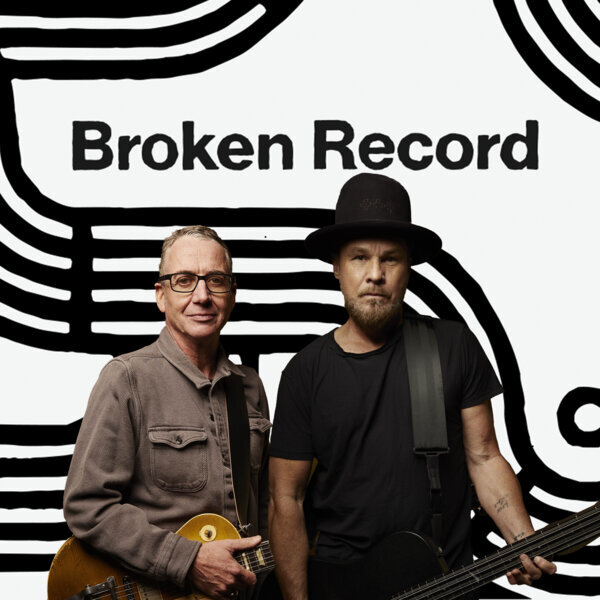
Leah Rose revisits Pearl Jam’s origins and discusses how Stone Gossard and Jeff Ament approached recording the band’s newer album Dark Matter, emphasizing fast, collaborative songwriting, studio settings, and translating songs to live performance.
Stone Gossard (Pearl Jam guitarist; previously Green River, Mother Love Bone) and Jeff Ament (Pearl Jam bassist; previously Green River, Mother Love Bone). Both helped form Pearl Jam after Mother Love Bone’s Andrew Wood died in March 1990. They later worked with Eddie Vedder, Mike McCready, and producer Andrew Watt.
They say they rarely plan recording outcomes; they “fly blind” and trust producer instincts. They describe a group process where ideas are ripped open quickly, squabbles are avoided by moving on, and simplicity helps songs become anthemic live. They credit Andrew Watt for pushing an aggressive, fast, collective approach and for dialing in sounds quickly.
Dark Matter’s “tape-and-loop” origin from Matt Cameron’s beat; “Scared of Fear” intro built around a pool-break vibe recorded at Shine the Law; “Wreckage” using open G tuning; “Won’t Tell” emerging from Jeff’s dream and baritone guitar writing; sessions with Neil Young (three-chord, eight-minute songs) and the band’s early touring experiences with major acts.
Written by AI. May contain mistakes.
Overview of Pearl Jam's history and impact on music.
“Then Matt Cameron quit the group in 2025 after 27 years.”
Discussion on the recording process of their latest album.
“Here's Leah Rose talking to Stone and Jeff about the project.”
Insights into how collaboration shapes their music creation process.
“Do you think the setting had anything to do with like recording at Shangri-La and being near the ocean and being in California?”
How Pearl Jam deals with disagreements and squabbles in songwriting.
“You know, how does the band handle when there's like little squabbles over parts of songs?”
Exploring Andrew Watt's influence on Pearl Jam's latest album.
“So, you know, it's not that different than how we made, you know, the last couple of records with Brendan, really.”
Discussion on each member's contributions and strengths in the band.
“Like, you know, so he had a lot of energy for that.”
Learn how Stone Gossard and Jeff Ament describe the collaborative process behind Pearl Jam's music.
“And I think there's moments on this record that have kind of classic Stone riffage.”
Join the discussion on the creation of the song 'Wreckage' and the songwriting process involving dreams.
“We're back with Stone Gossard and Jeff Amant.”
Discussion about the influence of Joni Mitchell's music and artistry.
“I didn't stare at her, but I sort of felt like I'm in Canada and I'm listening to Blue and I'm sitting across from Joni Mitchell.”
Reflecting on the experience of playing with legendary artists like Neil Young.
“But that was an amazing experience, you know, seeing Neil Young play with Booker T and the MGs.”
Exploring the creative process and joy of working with Neil Young in the studio.
“Neil seems like he's so energized when he's playing with you guys.”
Discussing the nerves and pressures felt during studio sessions with Neil Young.
“How long does it take you guys to get comfortable with somebody like that in the studio?”
Recalling the beginnings of Pearl Jam and the formation of the band.
“So he was, he was just happy to have him turn into something.”
Discussion on navigating the loss of Andy Wood and Pearl Jam's early journey.
“And so the idea that there was going to be a Les Paul and a Marshall.”
Reflecting on the formative moments that shaped the band’s dynamics and music.
“music and having fun with your friends and whatever.”
Discover the challenges and pivotal moments that shaped Pearl Jam's early days.
“I didn't know if I was going to play music anymore.”
Explore the dynamics and early interactions between Eddie and the band members.
“We're back with the rest of Leah Rose's conversation with Jeff Amant and Stone Gossard.”
Learn about the pre-show rituals and routines of the band members before performing.
“our audience is ready to follow us and be part of the journey of whatever we're going to try to do.”
Explore the pre-show rituals of Stone Gossard and Jeff Ament and how mindset affects performance.
“I mean, Ed has a room that he can sort of, that he can go get away from us and sort of craft the, you know, fine tune the set list.”
Stone and Jeff discuss their career milestones and the importance of collaborative interviews.
“Is there a spot in the tour that is ideal to see Pearl Jam?”

Get the gist, explore an idea or ask about something said.
 Claude
On Broken Record with Rick Rubin, Malcolm Gladwell, Bruce Headlam and Justin Richmond, what are the key points of this episode?
Searching your listeningAutomatic transcript. May contain errors.
0:00This is an iHeart Podcast. Guaranteed Human. Small businesses are the pulse of every community. They bring people together, create opportunities, and drive growth. Chase for Business helps business owners like you with personalized guidance and convenient digital tools all in one place. With that guidance and your determination, you can take your business farther and help build a brighter future for your community. Learn more at chase.com slash business. Chase for business. Make more of what's yours. The Chase mobile app is available for select mobile devices. Message and data rates may apply.
0:37JPMorgan Chase Bank. N.A. Member FDIC. Copyright 2026. JPMorgan Chase and Company.
0:52Pushkin. Pearl Jam used to have a drummer. Then Matt Cameron quit the group in 2025 after 27 years. Over a year later, we still don't know who will be joining the group. As we wait, we'll revisit a conversation Leah Rose had with guitarist Stone Gossard and bassist Jeff Amant, two of grunge's most foundational musicians. Stone and Jeff started playing together in 1984 as members of Green River, which eventually dissolved, leading singer Mark Arm to form Mudhoney. Later, Jeff played bass and Stone played guitar in Mother Lovebone, until their lead singer, Andrew Wood, died of an overdose just days before their major label debut in March of 1990.
1:30Reeling from Andy's death, Jeff and Stone started recording with Soundgarden's Chris Cornell on a side project called Temple of the Dog that featured vocals from a then-unknown singer from San Diego named Eddie Vedder. Later that year, Jeff and Stone asked Eddie to join their new band with guitarist Mike McCready. As Pearl Jam, they released their debut album, 10, in August of 91. the album went 13 times platinum and charted on Billboard for nearly five years. Since then, Pearl Jam have released 11 more albums and built a diehard fan base, thanks in part to their outstanding live shows. Their last album, Dark Matter, was warmly received by fans and critics alike.
2:04Here's Leah Rose talking to Stone and Jeff about the project. When you set out to record the new album, did you have a feel in mind that you wanted to, you know, achieve for the new album? something that was completely different from Gigaton, or did it all sort of come together spontaneously? Man, I mean, have we ever had a plan? And has the plan ever been what we actually ended up doing? I think Stone and I have lots of side conversations about what we hope the plan could be, but it's usually never that. No, we didn't know what we were going to do. All of us individually have aspirations for where we think the band can go or how it could kind of be different you know i think all of us are always aiming for trying to expand on what we've done in the past and we have the experience of being in the band and having flashes of like what's possible and those aren't always easy to recreate in different scenarios especially recording scenarios you know but this was a big time flying blind and i think you know with eddie having met andrew and worked with him a little bit, it was sort of like, we're just going to show up in LA and we're, you know, this young kid, he loves Pearl Jam.
3:21He's a, you know, he's a producer. He's, you know, he's, and Eddie had a great experience working with him on his solo record. And so we just all said, well, you know, we'll show up. That sounds fun, easy. And, you know, immediately we were, we were making music and good stuff was happening. So we, we sort of, we got hooked in pretty quick to the process. Do you think the setting had anything to do with like recording at Shangri-La and being near the ocean and being in California? Do you think that influenced the music at all? You know, I mean, we started at Andrew's house the first session. So the second session was sort of like thrown together last minute.
3:58And Rick opened up some time for us at Shangri-La, which was very generous. I love that studio. Me too. Like, I love that there's like no TVs and that it's sort of minimal and there's like really the only thing you can do if you're not playing music is is to shoot pool i love it when like the five of us can get in a room and just be focused and it just feels like when we can do that we always hit a vein in that session there's three days where it's just that spot that you want to be as a band where it's just like it's just going you know and that studio had a lot to do with us making a record really quickly i think i think we got maybe four from the very first session, which was in Beverly Hills at Andrew's old spot.
4:43And that was like a year previous. And we were there for 10 days or something like that, maybe seven or eight. I can't remember, but we hit something that was great, but there was also some stuff that we kind of started to maybe sort of kind of think too much again or get too much in our old process. And I think then we had a year off and it was amazing to go back and then sort of have memories of what we did that first time and then really kind of go in and everyone stayed, you know, pretty focused of, and it's really the focus being whatever you're, you know, bringing in today or however the song starts to go, just be ready for it to kind of get ripped open and rearranged and touched by everyone.
5:25And you have to have some courage when it comes to that kind of stuff, but also that it's just makes it so much more of a band thing. Everyone's invested. Everybody is like writing and thinking about the song at that moment. And I mean, we've done it before like that, but I don't ever want to go back. Honestly, it was like, you know, in terms of that process, I loved it. You know, how does the band handle when there's like little squabbles over parts of songs? Like if somebody brings something and you start playing and somebody wants to take it in a different direction and not everybody's agreeing, what's the communication like and and who ultimately wins.
6:01I mean, I think we were trusting Andrew really in on this record because he's a producer and we're going to make a record with you might as well trust his instincts and, and, and go with it. So I think that having him there was, was helpful in terms of just navigating that stuff. I think if anything gets too squabbly, we just move on to something else and that this gets left behind probably more than anything. So I think all of us, you know, got to see how the group process ended up being a better process for almost everything, you know, at every juncture you'd kind of, you know, and it was all very quick, which would made it better.
6:37It's like, it's sort of ripping the bandaid off quick. You know, it's like, you got an idea, throw it down. It's already changed. It's, you know, it's gone before you, you know, and it was great. And Ed is inspired in those situations too. He writes so quickly when he's in on the process of the writing, as opposed to just getting a demo and like sitting with it in his room for weeks. You know, it's like it's it's much more fruitful for him to be there saying, let's double that. Or I don't like that part. Let me get back to that other thing quicker. You know, I need a chord here. I need a different chord getting me to this, you know, to this next bit.
7:15And then it just becomes kind of a group process that's not the same as an individual kind of writing a song. But it's and that's I think that's what's special about this record is that it really is a lot of reconstructed sort of quickly ideas, you know. And I think we learned a long time ago that if you're fighting too hard for something, it usually even if it ends up on the record, it usually I don't think it ends up being a joyful memory for the rest of the band. And even a joyful memory for you as a writer, I think. So I feel like as I've gotten older, I welcome ripping my thing open. And I think it's far more interesting that way.
7:53I think the collaborative process to me is one of the most interesting things. If you can really trust the other people in the band that you're collaborating with, it will usually come back way more interesting and have a different perspective that you can't have if you just have tunnel vision for your song. So, you know, it's not that different than how we made, you know, the last couple of records with Brendan, really. I mean, moving super fast and, you know, if Ed's not sort of latching on to something, moving on to the next thing. And so I think we're better in those environments. I think Andrew's enthusiasm, his unbridled enthusiasm was an element of it.
8:33He never let us get down on ourselves at all individually for me, like playing in there and sometimes being in there and going, you know. I don't know what I'm doing it's like he would no matter what he would just be like oh that's great no wait go back you know like he would just have this like you're gonna get you're gonna figure this out you're my favorite guitar player you know it's like just you know what I mean but not necessarily that but it's just like he just just infused you with he wasn't gonna let it get you down and he knew that that's not where you're gonna get a good performance so yeah it's manipulative on one hand, but it also works, you know?
9:08And so I think, you know, his knowing the songs and loving Pearl Jam so much and just being a fan, it was a major factor in sort of keeping the thing moving along. And him really, actually, I know how to play all your songs. I can show you where, you know, this should have been a minor chord, but you didn't, which is cool. I'm so glad that you did that. Like, you know, so he had a lot of energy for that. So that was a big factor, I think, in the record. Yeah, and in talking about those times when you're stuck, he could reference old songs. He would be like, yeah, like that thing that you do in Hail, Hail, or he would reference things.
9:44And sometimes that would unstick you because it would pull you out of a pattern that you were stuck in, and it would make you think about it in a different pattern. I never felt stuck for more than a minute when you were working on stuff with him. So I'm fascinated by Andrew Watt because he's now produced albums for Ozzy Osbourne, Iggy Pop. He's working with you guys, the Rolling Stones last record. Yeah, he's just going through his collection of childhood bands and going, I'm going to work with this man and I'm going to work with this man. It's all his reality. We're just, you know, we're just part of his dream right now, which is great.
10:19We'll take a ride with him. It's incredible. And is he like, was there anything since he has such a deep knowledge of Pearl Jam? Was there anything from your catalog that he felt like he wanted to hear more of from a fan perspective? completely but he wouldn't necessarily tell us exactly what that was but i think he wanted us to write more kind of collectively and quickly kind of probably more like our earlier process was where it's like we didn't have any time or we never even realized you could have more time and so we just stuff was just happening quick and nobody had time to think about it too much and they just he wanted to make a heavy record i think he really wanted it to be an aggressive Pearl Jam record and from the get-go so and he he had great sounds right away you know we just went into his studio and he kind of had stuff's kind of set up you could go on and try this amp or try that guitar but it was all kind of dialed in so we were stuff was sounding good like kind of immediately so that was that was good he works fast kept us interested for sure and I I had a lot of conversations after that first session you know like phone conversations with him where he would ask about how did this song get written how did that song get written and so he was i think he was like trying to mine like okay that the whatever the process was on that particular song that's we need to revisit that process not necessarily like a similar riff or a similar sound even but like the creative process i think he was really trying to tap into you know ultimately i think the best way we work with each other i mean i think it's we we talk about it all the time about I think we all have strengths that sometimes, like, if we lean into those strengths, it turns out better.
12:01Can you quickly, like, run down what you feel everyone in the band's strengths are? Like, who does what the best? Man. Well, I mean, we have Ed who can, like, if you have two chords or an interesting repetitive pattern, he can write a melody over that that's, like, memorable. and you can attach words to it that make you feel something deeply, which to me is one of the most incredible things to witness, to be in the room when that's happening and something's coming out of the ether and then all of a sudden a line comes out that's like this, you know, just this beautiful two-line piece of poetry.
12:37Yeah. We have that. We have Matt Cameron in the band who can like, you know, play drums around anything and make it interesting and has such a unique style and such a unique way to accent things in places that you wouldn't expect, which sometimes turns the groove around in a really cool way. We have Mike McCready who fucking rips. And if you're working fast and he's just playing, it's like you tap into that thing that you have a guy that can really take a song over the top. I think Stone and I are sort of the lunch pail guys. I think Stone would come in with a riff and I might say, hey what if we simplify that little part of the riff or he has a really busy riff and i'll just find the three big chords that sort of work over that riff and i think sometimes some of the best stuff that we've done have been in that in that spirit and then you have jeff whose ear and his listening to kind of the whole picture and understanding how where the glue needs to be understanding really listening to the vocal really understanding where how the vocal sits in the track and supporting that and sort of being this ear that has that, you know, that big picture perspective on sonics and music history and, you know, an incredible, you know, audiophile.
13:55Well, let me say one more good thing about Stone, because he just said such nice things. Stone also plays guitar like a drummer, like his right hand is almost like having another drummer in the band, which I think some of the best stuff that we've done are when there's sort of almost those two kind of frenetic rhythmic elements happening, when the drummer and Stone's right hand are sort of battling or, you know, joining up. And I think there's moments on this record that have kind of classic Stone riffage. I was just going to say, I think Dark Matter is a really great example of, and I think that was one of the last songs we wrote, but that's a great example of the sort of mishmash of what is possible.
14:35And it started out with Matt Cameron stepping in the day before and just warming up on his drums, getting ready to record that day and just starts playing this beat, which is the beat that's in Dark Matter. But he was kind of playing it on his snare and it wasn't like as aggressive as that, but it was like that beat was there and we all just looked at each other and went, that's what he does every day. It's amazing. He comes in, he plays that thing. It's like, how is that not a song? And we just rolled tape and we grabbed that beat and we looped it. And Jeff and I took that same loop home that night and both of us wrote different parts that ended up being the verse and kind of the chorus melody parts.
15:11And the next day we had a song that was this weird combination of everybody sort of, you know, being there, but not anybody being in charge of what happened. And I just, I live for that stuff now. It's like, I want to make a whole record where it's just like, don't bring anything in or bring in only bits and pieces. You know, if we need a bit or a piece, be ready for it. But that, that group arrangement is just a, it's brilliant. And it's, I think it's less common now. There's just more individual songwriting efforts and brilliant songwriting efforts. And I love that our place in rock right now might be more of like, hey, we do it in a way that you can't replicate because you can't, you know, five different states of mind are attacking it from a different point of view.
16:01So I think that's a great example of what's possible when you write as a group. Yeah. And then Stone, how would you describe how you and Mike McCready play off each other and how you come up with your parts together? How does that process work? uh you know we just we just kind of feel it out i think the less we talk about it the better it is in general but you know i think you know as you play in a band you kind of look for the spot where nobody's playing or maybe there's a point in the musical phrase where it needs some support or it's something sagging or or you need to so i kind of usually head for that spot and that accent and I'll start just figuring out maybe it's a one note thing, or maybe it's like just a two note climb into that note, or, you know, you just start kind of going through your little process of taking little building blocks and stacking them up and kind of seeing if it feels like it's supports the architecture of the song or whatever.
16:58And I think Mike comes from a place of very much just needs to feel it and then just needs to play and winds his way through, you know, a track and and just finds his melody or his feel that makes him feel good, you know? Jeff, you mentioned that there wasn't anything to do at Shangri-La other than to play pool, you know, in between recording, hanging out. I noticed on the intro of the first song, Scared of Fear, it sounds like it builds to a pool break. Yeah. Was that inspired by Shangri-La? And I'm just curious how you guys have thought traditionally about the album openers, like those little intros to the albums?
17:43Oh, well, that was a piece that I sort of came up with. It sort of felt like the pool break right at the start of the record didn't feel like it, I felt maybe too abrupt. And so, yeah, I recorded most of that in Montana, like just kind of going back and forth with Andrew, like him saying like, yeah, it should be 25, 30 seconds. And so I gave them like a minute with a bunch of ambient loops and a bunch of music. And I love making that sort of stuff. Our very first record, the Master Slave pieces, was sort of a very early sort of version of that kind of piece of music. And some of it was me taking actually the little melody at the end of the record and sort of changing.
18:30I actually took that little three chord melody that Ed's playing on guitar at the end of the record. And I sort of transposed it to fit a key lower than the beginning of the key that Scared of Fear starts. So just to make it feel like there was a little boost when Stone comes in with that riff. Very cool. That is the pool table from Shine the Law. Is it? Yeah, it's recorded there. Was it Sean Penn? A couple of Neumanns. I think it was maybe Sean Penn that broke the... Seems like a solid break. Yeah, it looks like... I bet the balls spread around the table. I can see it. The fanciest mics ever on a pool table.
19:08How many takes did they get, though? It was like two hours of like, let's do it again. Atmos. After a quick break, we'll be back with more from Leah Rose, Stone Gossard, and Jeff Amant. If you're a music fan, I've got a new podcast you have to check out. It's called Before the Moment, a new series hosted by the legendary Niall Rogers. You know him as the producer, songwriter, guitarist, and co-founder of Chic. But in this series, he's hitting the road to sit down with some of today's most fascinating artists. From hitmakers like Miguel to rising stars like Alex Warren, Niall explores the stories behind the careers, the songs, and the moments that changed everything.
19:48Because every artist can point to that turning point. That moment before the breakthrough, before the success, before everything changed. Through candid conversations and personal stories, you'll hear what happened before the moment that made them who they are today. Listen to Before the Moment, a Lincoln original series on the iHeartRadio app, YouTube, or wherever you get your podcasts. Running a small business takes everything you've got, but with Chase for Business, you're not alone. They bring together local support and a broad range of resources to more than 7 million customers. With a deep understanding of your day-to-day needs, they provide products and guidance built to help you thrive.
20:25Right now, earn$500 when you open a new Chase Business Complete Checking account for new business checking customers with qualifying activities. Offer expires January 21st, 2027. Chase Business Complete Checking has the flexible tools you need to accept payments, make deposits, and manage your finances with confidence. Learn more at chase.com slash podcast biz offer. Chase, make more of what's yours. Fees may apply to Chase Business Complete Checking Accounts. The$500 offer is available for new business checking accounts with qualifying activities through January 21st, 2027. Eligibility and qualification requirements must be met.
21:03Additional restrictions may apply. Please speak with the business banker for more information. JPMorgan, Chase Bank, N.A., member FDIC. We're back with Stone Gossard and Jeff Amant. I'm curious about the song Wreckage, which I love so much. It's so pretty. How did that song come about? What do you remember from that session? The main thing I remember is Ed sitting down with the guitar and sort of playing basically the chords to the verse. And then we just kind of moved through that. Ed kind of kept adding parts. I mean, that song, I mean, from my standpoint, it felt like it was getting written on the move, you know, As he was adding chords, then another vocal melody happens.
21:49We got the bulk of that song down, I think, in a few hours. Yeah. And I think that there's an open G tuning, which is Andrew kind of coming along with that sort of a distinctive... It sort of breaks it out of what might be a little bit more of a straightforward song and sort of adds some harmonic and rhythmic variety to it. So I think that's a pretty distinctive part of that track as well, is that sort of open G strum that he's got going on there. And also Upper Hand. That's one of these songs that it sounds like it's going to be so incredible live. Do you think about how the songs are going to translate to the stage when you're recording them or before you go in?
22:33Or is that a consideration? I don't think I do. I think there was something about when they created that piece. I mean, that was Ed and Andrew and Josh that sort of created that pre-instrumental piece. I could imagine when you're creating that, that you're setting a mood and a tone for the song that's about to come. And we sort of got into that yesterday in rehearsal, just trying to recreate the sounds of that piece. It's going to be a fun one just because it's going to create such a mood live, I think. How the outro is, it's sort of a wide-open outro. It's sort of a place where, again, where Mike and Matt can really shine.
23:14Yeah, it's nice that that opening piece really gives it more room to get to that sort of crescendo. Without it, I think it would be, it's almost too short, like you wouldn't be in the song long enough before you're at the crescendo. So this is sort of gives it that nice runway to kind of ease you into it. And it's a beautiful, it's a beautiful piece. It is beautiful. Josh Klinghofer really sort of wrote the chords, I think, to that. When it comes to writing songs that end up being anthemic, are there any like tricks or anything that you can always rely on? Or is that not even a consideration when you're making music.
23:55What do you mean by anthemic? Just like something that'll soar on stage in a live setting. I think, I mean, usually the kinds of things that translate and that are allowed to soar are pretty simple in terms of their presentation. I think the more detail you get, you know, if you're writing a song in your house and you're sort of starting to add on more parts and your acoustic part is getting more complex. All of that stuff tends to not translate when it comes to a room where two big chords and some space and one riff where everybody's kind of playing together at one point and then maybe it opens up and does something else.
24:36But I just think it really is primary colors to start out with and a change that feels good or that has impactful chord change or a rhythmic pulse change or a tempo change or whatever it is. So, yeah, but I think simplicity is probably the key, you know, and I think that's a good place for us to be is not getting too into the detail of all the different ways you can play the same chord. Before we move on from the new album, are there any songs, any stories about recording the songs that you want to talk about? Anything that really stands out? I love the story of how we got Won't Tell, which started out with Jeff Amon having a dream.
25:21And I've been telling this and I'm not sure I've been, I'm not sure I'm telling the story right. yeah i mean without going i mean it's a it's kind of a long story but i but i had a fairly realized dream of a song that i woke up which i occasionally do and you sort of lay down and usually when you listen to it again it's like nonsensical and bad and whatever but this thing actually was like when i listened to it i was like wow there's something in there and even the lyric i think we were like you know probably three quarters of the way through the last session and I was there early and Andrew had said, hey, you got something?
25:57And so I played him and he goes, man, that's awesome. And it was a complete song. And he said, what if we just give Ed the lyrics and the band can learn the music and let Ed sort of interpret the lyrics? And it took a couple of rounds for Ed to sort of like, I think, come up with something that he was super happy about. But he ended up coming up with like almost as like a dream of a dream. You know, it's like me telling him and then him sort of interpreting it in this almost like kind of a psychedelic way, which the dream was pretty psychedelic. So it was just a brand new way to write a song. Yeah.
26:37And the song was written on a baritone guitar. Josh Klinghoffer had bought us all these baritone guitars, and I had it in this open tuning and had kind of written the piece in that because the dream involved an electric dulcimer that sounded kind of like Neil Young, but it was a woman playing this electric dulcimer. Oh, wow. You're not talking about Joni Mitchell. I know. But it's Joni Mitchell's in the dream, isn't she? Is it Joni? Yeah, Joni Mitchell came to him in his sleep. We had a conversation in the dream. Wow, what did you guys talk about? It was about a song that she and Neil wrote together, and this is that song.
27:20Wow. This is the song. But we're not going to share publishing with him about it. Have you guys ever played with Joni? We haven't. We did share an airplane ride with her like in about 93 in Canada. And then when we got on the plane, I was sitting in the aisle seat and she was sitting in the aisle seat right across from me. And I mean, this might come off as stalkerish, but I was listening to a lot of Joni Mitchell at the time. So I reached into my CD wallet, which it was 1993. And I put in blue and I put on my headphones. And during the flight, I would just look over every once in a while and go like, wow.
27:57You just like stare at her and mouth the lipstick. No, I didn't stare at her. I didn't stare at her, but I sort of felt like I'm in Canada and I'm listening to Blue and I'm sitting across from Joni Mitchell. There it is. Crazy reverence. I mean, she's like one of my favorite just artists because she's, I think, as much because she's a great painter as a great musician. I love that. And her feel, her right hand and just how she tells stories, I think it leans on jazz, but it's so her because she's a small town Canadian girl. I think I relate to that part of it too because she sort of grew up not too far from where I grew up, just across the border.
28:39Oh, that's so cool. After 10 took off in the beginning and all of a sudden you guys started playing with other like really huge artists. Was there anybody who you found yourself on stage with where you're just like, what is going on? like everybody i mean i mean i felt that way about the chili peppers right off the bat when the chili peppers took us out just watching john for shanti every night in chat i mean there's the way those guys played it was so much bigger than anything we'd ever heard in terms of like oh that's how you like that's how your stage can sound that's how they play the whole sound and And I think we were still in our, you know, all the vibrations were very fast.
29:23We weren't tuning into each other in the same way that we've learned more now to be able to do. But that was an amazing experience, you know, seeing Neil Young play with Booker T and the MGs. And Jim Keltner, that was like never heard. Yeah, I mean, never heard a pocket like that deep before. It's like everyone was out pocketing each other. It was like, you know what I mean? Like the one was somewhere, you know, incredible. So, I mean, but we've had that over and over again, you know, seeing U2 play and all those early opportunities to see bands go out in smoke. The show we played with Keith Richards and Steve Jordan and Charlie Drayton, that show was also just witnessing bands play with so much space.
30:10I think that's, I do remember on those Neil, Booker T, I remember just sort of listening to a conversation that Keltner and Duck Dunn were having about like, yeah, we keep, Duck would say like, yeah, we keep asking Neil, like, are we playing the groove? It doesn't feel like we're playing the groove in the right place. And because it sort of helped make Neil's songs, they just sounded different. Those Crazy Horse songs sounded different with Booker T and those guys. It just swung differently. But the space, like watching Duck and Keltner play together was like, I mean, there was four or five shows where I remember I was just sort of sitting between them, like 15 feet from them, taking basically a master class and rhythm section, you know, and going like, that's how you play on a mid-tempo song, like right there.
30:56I mean, I think my playing changed overnight from playing in those 10 shows. Neil seems like he's so energized when he's playing with you guys. Has he ever articulated to you like what it is about Pearl Jam that gets him like so pumped? You know, he called me last summer. They were mixing Mirrorball and Atmos and he was just so, he was so generous and so kind, in terms of he just goes, man, your guys' playing on this is so great. I think I move so fast from record to record, I don't really get a chance to listen back, but I'm really listening to how you guys chose to play, and I appreciate it so much, and I hope we get to do it again.
31:38And of course, you're like, oh, can we please do that again? Because we'll give you more space, and we'll be so much better than we were in 1995. After him playing, he plays the song once for us. We learn the chords, and he's like, okay, we're going to record it, and then you record it and it's like done great you know it's like i was just you know warming up mostly we were just trying to remember the chords you know which of course he loves because that's how he is he's like oh that's great you know it's like which is fun but playing with neil is you know that's a such an honor it's just like incredible you know yeah he seems so just like open and connected to whatever it is that sends him information and inspiration yeah and then he just loses his mind and then you get to lose your mind too you know it's just like playing you know three chords which is there's nothing more satisfying than being having transcendence in three chords where it's like it's not you know it's not all the years of your studying music and it's not you know any sort of science or any kind of you know anything that is rigor you know It's just literally joyful play with three notes.
32:49How long does it take you guys to get comfortable with somebody like that in the studio? Do you go in there super nervous? Or is there a period of time where you have to sort of settle in? I remember that session. I remember sweating a lot. And then I got crazy sick the fourth or fifth day. like I think that was the day they recorded uh was it even that many days how many days was it it was it was five days total but it was four days of recording the Neil songs and then the fifth day they went in and they recorded that version of I got id okay which I but I but I had I had the flu like for two days so it might have just been like pushing down the pressure and the anxiety and just trying to you know and the focus and and you're in the studio with like one of your favorite if not your favorite artist ever and not wanting to let him down and let the whole session down none of us are studio musicians i mean there's people that can come in and like chart things out in two seconds like play by ear in such a way that you know lots and lots of people can do that that's never been certainly not ever been my you know so you know you're kind of trying to find the basic chords and then quickly find something that helps those chords and it was nerve-wracking for me for sure i mean half the record i i because i listened to the atmos mix after he said that they mixed it and and half the record i'm like i don't remember playing that at all wow like you know there's places where i'm moving a lot i'm like man i don't remember playing that at all do you like it when you hear it back oh yeah it's probably one of my favorite things that we've ever done and i think it's partly like that it was largely like a dream it felt like a dream because he would come in well he had two songs at the start he had act of love and downtown and then he would go stay on his boat at night and come in and i remember like the second or third day he came in with the ocean and it was like it was like six pieces of paper taped together and it was like just you know like bob Dylan verse you know just like 20 verses and kind of going like oh shit like this is gonna be a lot but it was it was essentially three chords for eight minutes yeah he was just going back to wherever he was staying on his boat is that what you're saying yeah he was just going back to his boat and like you know smoking weed and fucking writing new songs and then he'd come in and go okay here's his next song you know so it was we were just experiencing it with him in the in that moment.
35:19So he was, he was just happy to have him turn into something. And we were just kind of on for the ride. Since I have both you guys together, is it okay if I ask you a little bit about Green River? Sure. How do you feel about like talking about the old stuff in general? Is it a drag? No, no, love it. No. Oh, okay, cool. How did you guys even meet? How did you start playing together? Well, it's, it's, I think it's like almost 40 years to the day, like somewhere March, April, four years ago, we met at the Metropolis, which was a sort of communal punk rock club that Sky Hugo opened up. And I'm not even sure if there was a band playing that night, but I was hanging out with Mark and Stone was with his friend Chris Pepperd.
36:07And Stone and Chris represented a very youthful, sarcastic Pacific Northwestern energy. And I had sort of a farm kid montana not like serious um energy and i think it was like it was like an odd you know it was a little bit of a weird first meeting and then like within a month or two uh mark and steve were like hey we want our friends stone to play and i was like stone the guy that i met like i was like ah not sure you know about that guy and then i remember steve which is which is this is crazy because when you think about the how that band sort of worked and even part of the reason that maybe steve didn't want to be in the band anymore because we got too heavy steve was selling me on stone saying like he's got a marshall and a les paul and and in my mind i was like fantastic like like two good you know two guitars it'll be you know because steve was playing really super clean guitar yeah yeah he had a super twin that was like really loud but just so piercingly clean And so I was like distorting my bass more and more, just trying to like make it into whatever I thought that the band should be.
37:20And so the idea that there was going to be a Les Paul and a Marshall. That convinced you. That won me over. What do you remember, Stone, about your first meeting? Just like a flash of like kind of outside talking, you know, outside the metropolis, you know, having a conversation and, you know. but this is at a time where I probably have been playing guitar for maybe a year and just like kind of you know dinking around on it like I wasn't a guitar player I mean I could play a bar chord maybe at that point so but the idea that you know that that was cool and that and that we all kind of just decided to be in a band together and that it's gone on in this way that it has it's one of the great mysteries and you know phenomenons obviously of our lives but just like it just goes to show that you just you don't know where something's going to go and you have to kind of follow it and jeff's and i's journey with each other i think symbolized by that first encounter that we didn't we haven't always understood each other and we haven't always i i think that we've see the world in different ways.
38:31And I think we're in our like, you know, late honeymoon right now, where we're just like, we, you know, we get to see each other and we're kind of like, wow, this is still going. This is pretty good. How did this work out? You know, because it's, it's really phenomenal, but it, you know, I think us sticking it out with each other in certain ways has been one of the, it's the biggest thing that's happened in my life for sure. In terms of all the things that I've learned from Jeff and that we've learned together just by having our relationship work. The community that's connected to Jeff and I through the years, it's crazy.
39:08It's incredible. Yeah, it's weird. I saw an interview that you guys did in 1990, right after, it seemed like maybe a month or so after Andy Wood had died. Yeah. And you were sort of like stuck with the album, with the Mother Love Bone, with the Apple album. And I guess it was time to promote it. And there's one point, Jeff, where you're like, yeah, like, who knows, like, what we're even going to do next. And it was, I don't know, like, how soon before that was that Pearl Jam came together, but it was just such a crazy moment to see captured on video. Do you remember that time? Well, yeah. And I think about that time a lot because I think how we both reacted to Andy passing, we both handled it really different ways.
39:56Our relationship has been this slow reveal of each other and understanding each other. And I think there's a point when you come from such different backgrounds and have such different sort of chemistry. you know I feel like it probably took 10-15 years into our relationship where I was like where I really like trusted and really respected Stone you know and I think he'd say the same thing but I think that's been the why the journey has lasted this long I think I I think like a part of me feels like why did it take me that long and I think some of it's like you're in your 20s and And I think even moving through Andy passing, like, to be honest, like, I didn't have much of a safety net at that point.
40:43So I was like, I felt a teeny bit of desperation. Like, how am I going to pay my rent? I'm 27 years old. Do I need to go back to school? You know, does lightning only strike once? Is that over? And so it was probably the first time in my life where I felt pressure. I felt real, real pressure on like, I sort of felt like I lost my, my will or my, you know, the strand that I was sort of on that, you know, it was a little bit haphazard and you're sort of living paycheck to paycheck and you're just playing music and having fun with your friends and whatever. But then there's a point you're 27, 28 years old and this thing that you've sort of been working on for, you know, three years with.
41:23Yeah. And you guys had gotten a deal that probably was like super exciting and like felt like you were some real traction. Yeah, I just quit my job. It was the first time in my life I didn't have a job, you know? Yeah. And Stone hit the ground running and wrote a bunch of beautiful tracks that ended up, you know, I mean, Black, you know, I mean, arguably the best song that we've written as a band. And Stone came up with that music that right off the bat, you knew that there was like this beautiful energy behind it and that the melody and the outro that he wrote, Like, you know, that was how he responded to Andy passing.
42:00And whereas I was like, I was scrambling. I didn't know if I was going to play music anymore. I thought maybe I'll go back to school and be a teacher, you know, move back home, work on the farm. I didn't know. So thank God that Stone wrote those songs. And I was hanging out with Mike a bunch. He worked right across the street from me and they were playing together. And so Mike was working me and Mike was working Stone. And it's sort of like we ended up playing together. Luckily, I live with my parents, so I didn't feel the same kind of pressure that Jeff felt as far as I was 24 years old living with my parents.
42:33So that just shows you where I was at. I look back at that summer as being just one of those moments in your life where it's just raw and real. Yeah. The way that things fell into place after that, we started playing together. We recorded with Matt Cameron, which is also just dreamlike. Like we'd all love Matt so much, but we're like, did a couple of rehearsals, went in the studio with him, sort of knocked out these six, seven instrumental tracks. And then, you know, the process of like, you know, Stone had the idea like, hey, let's ask Jack Irons to play with us. We're like, we don't even have a band.
43:08Like that was so bold, you know? And then him suggesting like, he goes, well, I know this guy Crazy Eddie, like, you know, he's not a drummer, but you know, and so. And how fast that all happened and like playing with Dave Kruzan. and Dave Kruzan, like you listen to what he played on 10 and those early songs, like it's, it informs our sound more than I think we thought at the time. Like Dave really brought a really interesting element to the band and the groove. And, but it happens so fast. It's like, it's, it's nuts, you know, less than a year of us meeting Ed, we were touring with the Red Hot Chili Peppers.
43:48I mean, that's like, had a record out. It's nuts. It's nuts. I was dreaming that's like saying dreams can still happen you got to just like see it and like you know take a chance jump off a cliff like you know imagine that there is things conspiring to make things work out you know like believing in that process you know and it's that's a that's something that you get you know you land on your face 80 percent of the time but then you get those 20 percents where oh shit well that worked out you know like and it's it becomes you know it becomes ingrained and and i think we've been like that ever since it's anything could happen i mean we're we've been living a dream for you know for a long time and i think now we really are recognizing how lucky and how fortunate we are to kind of every day like be like we could think of weird art projects or side projects or anything we want you know like i want to go you know paint for a year or whatever.
44:46All of that's possible. You know what I mean? So it's good. We're still in the dream. After our last break, we'll be back with Stone Gossard and Jeff Amons.
45:00If you're a music fan, I've got a new podcast you have to check out. It's called Before the Moment, a new series hosted by the legendary Niall Rogers. You know him as the producer, songwriter, guitarist, and co-founder of Chic. But in this series, he's hitting the road to sit down with some of today's most fascinating artists. From hitmakers like Miguel to rising stars like Alex Warren, Niall explores the stories behind the careers, the songs, and the moments that changed everything. Because every artist can point to that turning point. That moment before the breakthrough, before the success, before everything changed.
45:32Through candid conversations and personal stories, you'll hear what happened before the moment that made them who they are today. Listen to Before the Moment, a Lincoln original series on the iHeartRadio app, YouTube, or wherever you get your podcasts. Running a small business takes everything you've got, but with Chase for Business, you're not alone. They bring together local support and a broad range of resources to more than 7 million customers. With a deep understanding of your day-to-day needs, they provide products and guidance built to help you thrive. Right now, earn$500 when you open a new Chase Business Complete Checking Account for new business checking customers with qualifying activities.
46:11Offer expires January 21st, 2027. Chase Business Complete Checking has the flexible tools you need to accept payments, make deposits, and manage your finances with confidence. Learn more at chase.com slash podcast biz offer. Chase, make more of what's yours. Fees may apply to Chase Business Complete Checking Accounts. The$500 offer is available for new business checking accounts with qualifying activities through January 21st, 2027. Eligibility and qualification requirements must be met. Additional restrictions may apply. Please speak with the business banker for more information. J.P. Morgan Chase Bank, N.A., member FDIC.
46:50We're back with the rest of Leah Rose's conversation with Jeff Amant and Stone Gossard. You talked about when, Jeff, when you and Stone met and you sort of felt like you were coming from two different worlds. when you guys met Eddie and he was from San Diego, did he feel like culturally super different from you guys? And were you guys sort of like, oh, we're music vets in Seattle. And was there like kind of like a hazing period at all when he came into the fold? No, I mean, I remember I remember having four or five phone conversations with him before he came up. And all we were talking about was like not wanting to be in a band with people who were slackers.
47:35Like he I remember him talking about like, I want to hit the ground running. And like, you know, I make T-shirts and I do this. And I was like, I make T-shirts. And like, just sort of like before I even really hung out with him, I sort of felt like, wow, there's going to be another guy in the band that's going to like be as excited about this peripheral stuff as I am. so I think before he you know I mean he we had those three songs that he had sang over at that point but I was as excited about just him talking about how serious he was about it you know like that he that he you know and that was what he said when he flew up he said I don't want to fuck around I want to go straight to the rehearsal and I want to start playing I don't want to go get coffee or I don't want to and so there wasn't a lot of time we like we didn't really sit around and talk about what it was going to be.
48:22I mean, that first week, we rehearsed and wrote for four or five days. We went in the studio on the fifth day. Sixth day, we played a show at the off-ramp. And the seventh day, we went inside the Bulls and the Sonics at the Kingdom. We really didn't talk about what it was. And he even says, when he flew home, he's like, I wonder if I'm in the band. At that point, we just weren't communicating about it. So pretty awesome. I think maybe I picked him up at the airport is that right so I picked him up at the airport and I think the we we said hi or whatever and I think I'd talked to him maybe once or twice on the phone not not as much as Jeff but just a little bit or whatever and I think he he handed me something and I opened it up and it's like he had drawn me a picture and I maybe a little poem or something but I was just like I was totally touched and that was one thing that also was evident about him is he was a he had a very sweet demeanor that was very you know i mean you know we're so used to like the back of the van and just you know fuck you whatever like you know that sort of low grade you know competition meets you know jokes or whatever and he was a serious person who was really thoughtful and very like sensitive and so he was a huge breath of fresh air to kind of just be around somebody who is just very, he just seemed very thoughtful about his process and about people around him and what he was doing and conscientious, you know.
49:50That is so sweet. Yeah. Do you think that because you both went through sort of a tumultuous start with Green River and with Mother Love Bone, that once Pearl Jam was established, did it feel more solid and stable? no i mean i mean it felt i felt like the first three four years or five six years it felt i don't think it ever felt stable it feels stable now yeah yeah pretty stable right now but like literally like so much you know years of moments of greatness moments of like thinking oh this was awesome and had you know always good shows always like transcendent moments and you But also, it's just a lot of stuff and a lot of things coming together that have to kind of...
50:44Everyone's got to be humming together or there's always something to worry about. I think, too, I think the moment that I stopped caring about the importance of me in the context of the band, or that as soon as I gave up that, like I need to get songs on the record or I need to, my vision or whatever, as soon as I gave that up, which was probably 15 years ago or something, that's when it felt stable to me. That's when it felt like this is all icing and like, I'm just going to keep working hard and hopefully I can like have some weird little idea that I can pull the band over into my little weirdness.
51:23And I have had those moments like where you're like, oh my God, I can't believe like the band recorded this idea that I knew was on the edge of what we would want to do. But it's also going into those situations without any expectation. Just going like, it's like, hey, I got a couple of things here if there's anything here that works. Or I got this weird idea to do a couple of shows or this artwork or this, whatever this project is. As soon as you don't put any gravity on it, it's like, and when it happens, it's just like so joyful. And the stability comes with a joy, I think, really. But it's true.
52:00This is a band where you just have to let go of expectations about it. And Ed is our band leader, and he's been an amazing band leader. I mean, given the variety of ways that band leaders can organize a band, I mean, Ed's written, we've written lyrics, all of us individually have written whole songs, lyrics, everything. He's always been this person who's like, I'm open to it. You know, you don't get to do it by right. You know, you don't you don't get to say when you get to do it, but it's all happened, you know, and it's all of us have sort of asserted ourselves at different times and know what that's like and know that that's a it can be satisfying and then kind of a dead end at the same time, you know, like because, you know, there's always a reaction to every action.
52:46You know, I think like Jeff said, the more you let go of expectations, the more stuff kind of just shows up on your plate or somebody says, hey, I know you got something, you know, like, let's do it. Or like this record, like all of us, you know, even though a lot of these songs have been kind of bastardized and kind of reimagined and you had to let go of a lot of stuff. stuff i think all of us individually feel like we're represented on this record better than we have been maybe ever in terms of at least for me when i listen back it's like i can hear parts i didn't write the song but my part that i loved and it figured out i'm hearing it i can hear it in the you know it's making an impact in the song so it's a marathon and uh we're we're we're sort of we're in that spot now where we can really enjoy it more because you once you get used to letting go and seeing why that is satisfactory or why that works, you do it more often, you know, because we could take two years off and be fine.
53:45You know what I mean? Like, you know, whatever. So nice. Yeah. But it's almost like feels like you need that just to kind of reset and live life and come back. And you have this like special thing that you can come back to. Oh my God. That fulfills like the creative itch. Well, and just like seeing your old friends and going, wow, we still have this song, which is like literally three chords and we go into a room and everyone sings it back to us and we just experience that moment of like oh yeah we wrote this song and I like it more now than ever and I never actually knew what it was about but now I do you know 20 years later you know whatever yeah that's interesting how songs can change over time oh my god totally now the new tour I think you've said that you're going to be playing a lot more of the new material.
54:33Is that sort of feel like a challenge where you have to win people over again? You know, we've done such variety and such a collective set list for so long that I think our audience is ready to follow us and be part of the journey of whatever we're going to try to do. And I think the material that we just wrote is really strong. I think that there's not going to be any you know let down between the material and you know that on any given night or any given tour it's like there's always another one so we've had plenty of not great shows we've had plenty of nights where we were flat and you just pick yourself up and do a better job the next day and something good happens so you know at at this point i think we're all confident that we can go out and kind of have fun and we're not out that much we don't play that many shows so it's it stays fresh and it's going to be fun.
55:27Do you have any pre-show rituals? Do you listen to anything before you go on stage? Do you eat something specific? Do you have to like do a certain warmup? Like what are you doing to get yourself psyched up for the night? I mean, I think, I think everybody has a different routine and a different diet. And I certainly do. I certainly feel like I if I kind of you know if I eat before sound check and then I sound check and then if there's some there's usually two or three songs on this on the set list that we haven't played or we maybe we haven't sound checked so then there's like some woodshedding going on and then there's you know a little you work out a little bit a little stretching but we all have different sort of patterns as far as that goes so sometimes that part can be tricky because the the space is tight So you're all together in like one room?
56:19Pretty much, yeah. Pretty much. I mean, Ed has a room that he can sort of, that he can go get away from us and sort of craft the, you know, fine tune the set list. And there's a, you know, there's like a little workout meditation room that we sort of can go in and out of. Yeah, you know, I can't really go on stage with a full stomach. and, you know, it's like I don't want to be, like, burping up onions, like, in the middle of a song or whatever. And I think the older you get, too, like, the, I don't know, the more ritualistic that you are about it. It's like you know it works and you know it doesn't work.
56:58You know, I think I heard, did you interview Duff? Yeah, I did. Yeah, yeah, yeah. I heard you talk about, he was talking about, you know, it's like being an athlete or whatever. Totally. He ices his legs with ice buckets after? Yeah, yeah, yeah. I do. I mean, I've done all that stuff, like ice baths for 20 years or something afterwards or whatever. But also waking up early the next morning, getting to the gym and just moving. And it's like in the days that you don't do that, you kind of pay for it. You end up getting on stage and you can't move the way you want to because you're 50 something years old.
57:32In my case, 61. Yeah. I think Duff just got off doing probably a couple hundred shows in the last three years with Guns N' Roses. It had to be more than that, right? Oh, my God. They worked. Played Missoula, Montana. I mean, that's how the tertiary they got. What about you, Stone? What's your pre-show ritual? I don't really have any pre-show. I think I need one. I need some more pre-show stuff, I think. Yeah, that's right. Jack Black's year one. I'll watch on repeat. me and Mike sort of can't stop watching it I'm not sure it's something about that movie I just can't stop watching it but um I just try to stay light and try to not get too in my head about worrying about it or you know um and I think that's for me the biggest you know uh if I start to kind of think too much or get too inside my own head about it that's when usually things aren't going wrong so just having some lightness and just sort of easygoingness about it and feeling like it's just playing our songs and you know and just go out there and be ready and i'm i'm looking forward to this tour i want to even be lighter about it all you know because i think i've spent a lot of time worrying about it and not feeling kind of worthy of a lot you know like so there's nothing worse than having a you know a place go ballistic when you you and your mind feel like you're sucking or the band is just totally laying there and not really doing anything but the crowd is, you know, to have like all these people pay money and be excited, you know, it's like if you're if you're feeling like you're not really giving them that.
59:08So I feel good about this new material for sure. Is there a spot in the tour that is ideal to see Pearl Jam? Like, should you go see the band in the beginning of the run, middle or near the end? Little Rock, Arkansas. Oh, no, we're not playing Little Rock this year. I was second second markets are always, you know, that to me, it's like that's where kind of where the pressure is off so good things can happen. You don't have any family or friends at the show. It's the best. You never know. It's a natural cycle. We'll have some good nights and some nights that are a little bit whatever, not as good, and you can't predict them.
59:46Yeah. You know the old adage is great soundcheck, terrible show. You ever heard that before? Oh, no. You've got to be careful when you go out there and just smoke a soundcheck and you're just like, oh man, tonight is going to be just so good. It's like, watch it. Just when that happens, it's got to watch out. Is there anything else? I know you guys only have an hour. Is there anything else you want to talk about, about the new album? I know I skipped like 30 years of your career. No, this was great. It was such a nice, it was nice to visit with you. And to visit with you too, Jeff. Yeah, yeah.
1:00:20This is our first interview that we've done together on this album cycle. So it's like, oh, we've done a lot of these. together over the years though but it's it this is my favorite part like when you do the first couple with at least one other person in the band it's it's when you start to understand the record because at this point it's just you listening to your parts and listening to the songs and you you interpreting and so when you do it with somebody else you you just get this other perspective and sometimes your unique perspective is completely wrong so it's nice well i hope you You have a ton of fun on the tour.
1:00:57It sounds like you're super into the album and everyone's re-energized. Yeah. Thanks so much for doing this. I appreciate you. Thank you very, very much. Nice talking to you. Thanks to Stone Gossard and Jeff Amitt for going deep on their legacy in Pearl Jam's new album, Dark Matter. You can hear it along with our favorite Pearl Jam songs on their playlist at brokenrecordpodcast.com. We'll also include some other songs from Stone and Jeff's career. Subscribe to our YouTube channel at youtube.com slash broken record podcast, where you can find all of our new episodes. You can follow us on Twitter at Broken Record.
1:01:33Broken Record is produced and edited by Leah Rose with marketing help from Eric Sandler and Jordan McMillan. Our engineer is Ben Toleday. Broken Record is a production of Pushkin Industries. If you love this show and others from Pushkin, consider subscribing to Pushkin Plus. Pushkin Plus is a podcast subscription that offers bonus content and ad-free listening for$4.99 a month. Look for Pushkin Plus on Apple Podcast subscriptions. And if you like this show, please remember to share, rate, and review us on your podcast app. Our theme music's by Kenny Beats. I'm Justin Richmond.
1:02:13If you love music and great artist interviews, check out Before the Moment, hosted by Niall Rogers. This new series follows Niall as he travels across the country talking with some of today's most fascinating artists about the moments that shaped their lives and careers. From hit makers like Miguel to rising stars like Alex Warren, Niall explores the stories behind the careers, the songs, and the moments that changed everything. Because every musician remembers the point where everything changed, and this podcast tells the stories that came before it. Listen to Before the Moment, a Lincoln Original Series, on the iHeartRadio app, YouTube, or wherever you get your podcasts.
1:02:50for I don't know how long, maybe 12, 13 years, I've worn a Whoop band on my wrist. I started doing it because I met the founder of Whoop at a conference. He heard that I was a runner and he said, oh, you'll love this. It's perfect for athletes. And he was right. I've worn one ever since. Every time I work out, I see how hard I worked, how long I need to recover. I wake up in the morning and I get a complete picture of how my sleep went, which helps me understand the kinds of things that lead to a bad night and the kinds of things that lead to a good night. It's sleek, long-lasting battery, and now with AI looking at all my numbers and coaching me.
1:03:29Whoop is a winner. New members can try Whoop with a 30-day free trial before committing to a membership. That's whoop.com for your free month of Whoop. Hey, it's Kelly Rowland. You may not know this, but I have eczema, so I get how it can steal your time. Why let eczema take over? Flare less with EbbGliss.
1:04:18eye problems can occur. Tell your doctor if you have new or worsening eye problems. You should not receive a live vaccine when treated with EPCLIS. Before starting EPCLIS, tell your doctor if you have a parasitic infection. Paid partnership with Lilly. Respect your time. Ask your doctor about EPCLIS and visit EPCLIS.com or call 1-800-LILLY-RX or 1-800-545-5979. This is an iHeart Podcast. Guaranteed human.
Pearl Jam used to have a drummer. Then Matt Cameron quit the group in 2025 after 27 years. Over a year later, we still don’t know who’ll be joining the group. As we wait, we’ll revisit a conversation Leah Rose had with guitarist Stone Gossard and bassist Jeff Ament, two of Grunge’s most foundational musicians. Stone and Jeff started playing together in 1984 as members of Green River, which eventually dissolved, leading singer Mark Arm to form Mudhoney.
Later, Jeff played bass and Stone played guitar in Mother Love Bone until their lead singer Andrew Wood died of an overdose just days before their major label debut in March of 1990. Reeling from Andy’s death, Jeff and Stone started recording with Soundgarden’s Chris Cornell on a side project called Temple Of The Dog that featured vocals from a then unknown singer from San Diego named Eddie Vedder.
Later that year, Jeff and Stone asked Eddie to join their new band with guitarist Mike McCready. As Pearl Jam, they released their debut album Ten in August of ‘91—the album went 13 times platinum and charted on Billboard for nearly five years.
Since then, Pearl Jam have released 11 more albums and built a die-hard fan base thanks in part to their outstanding live shows. Their last album, Dark Matter, was warmly received by fans and critics alike.
You can hear a playlist of some of our favorite Pearl Jam songs HERE.
See omnystudio.com/listener for privacy information.