Ask ChatGPT
 Broken Record with Rick Rubin, Malcolm Gladwell, Bruce Headlam and Justin Richmond
5 Nov 2026 · 1h 15m · 26 chapters
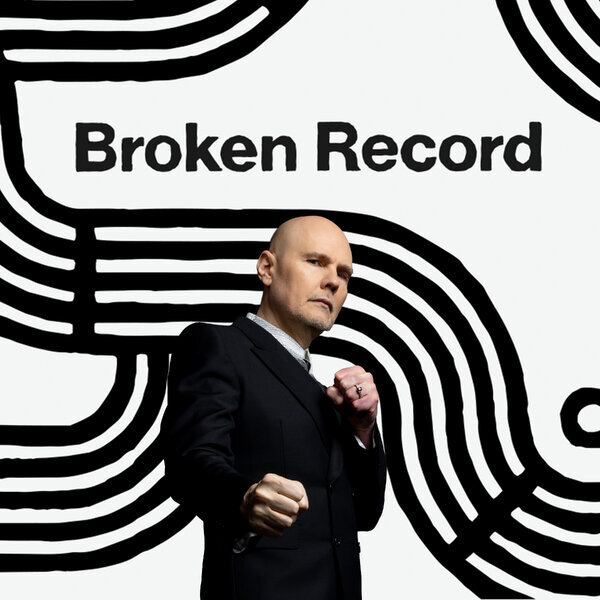
Billy Corgan’s approach to interviewing and podcasting, his “avatar” persona, and how authenticity vs. inauthenticity shaped his career and mental health; also revisits key Pumpkins eras (Siamese Dream, Melancholy, Machina) and his views on the music industry and alternative-scene ethos.
Billy Corgan (Smashing Pumpkins). He’s also discussed owning wrestling promotions (NWA/TNA), appearing on Infowars, Joe Rogan, and Bill Maher, and hosting his podcast The Magnus and Others (Bill Maher’s Club Random network). He has described his upbringing as involving survival pressures (Chicago, drugs and guns) and later public discussions of childhood abuse.
Corgan says interviews should focus on an artist’s “inner life,” not just outward facts, and that he avoids “cheap” viral bait. He argues modern culture rewards performative lying and digital avatars, which can displace real people and contribute to distress. He created a media persona in the late 1980s as a “weapon” to cope with rejection, and says it became hard to escape. He links writing “Today” and “Disarm” to facing suicidal ideation and choosing honesty.
Rolling Stone’s low review of Melancholy at the time; his “avatar” being mistaken for the real person; the Machina/Machina 2 free release and later reissue plan; the “punk ethos” conflict he says alternative snobs imposed on him (citing Kim Gordon).
Written by AI. May contain mistakes.
Discussion on the resurgence of The Smashing Pumpkins and Billy Corgan's ventures.
“Copyright 2026, JPMorgan Chase and Company.”
Billy Corgan shares insights into his approach to interviewing artists on his podcast.
“Here's Leah Rose speaking with Billy Corrigan just over a year ago at the onset of this current Corgan Pumpkins revival.”
Corgan discusses the importance of understanding artists' inner lives in interviews.
“In fact, I'm not very skilled at it at all, but I have an intuitive sense of the way an artist's mind works, even if it's not mine.”
Corgan reflects on the complexity of human and animal personalities and the nature of interviews.
“And as an artist type, I've been told my whole life that my perspective on the world is either wrong, overly dramatic, overwrought, you know, just calm down and just kind of get in line type of stuff.”
Corgan emphasizes the need for deeper conversations in a bifurcated society.
“And I don't want to do that to my guests.”
Explore the complexities of truth and perception in modern society.
“not everything is yes or no, black or white, win, lose.”
Billy Corgan discusses how he developed his public persona and its impact.
“It's not, I do not recommend it for the faint of heart.”
Corgan reflects on his childhood experiences and the challenges of authenticity.
“Including people accusing me of making up my childhood.”
Corgan shares the evolution of his songwriting from character-based to authentic.
“From an artist's perspective, the way that you started writing lyrics, where I imagine when you start out, it's common to take on a character.”
Billy Corgan discusses the pressure of creating a successful record while maintaining authenticity.
“Well, it strangely coincided with the need for us to make a successful record.”
Corgan shares a pivotal moment that led him to write two of his most famous songs after contemplating suicide.
“And out came tumbling this unafraid voice.”
Corgan reflects on the complexities of being himself in public as an artist and the implications it has had on his life.
“You face the final boss at the level or something, you know?”
Corgan discusses the making of the Adore and Machina albums, their initial reception, and the struggles faced during that time.
“Alchemically, like, led into gold stuff.”
Corgan explains his views on selling his music catalog and the emotional attachment he has to it.
“But contextually, I think to your question, I look back on it more fondly now than I did at the time.”
Corgan discusses the ongoing challenges artists face within the music industry and contrasts it with past experiences.
“Yeah, I don't ascribe anything to those things because everybody should make decisions based on what's best for them and their family.”
Exploration of the importance of nurturing artists in the music industry.
“We really got to do everything in our power to nurture and let this artist fly with the biggest wings possible because, by the way, we're going to make more money.”
Billy Corgan shares his experiences and evolution as an artist post-Smashing Pumpkins.
“I think I rationalized that once I was out of it with the Pumpkins, it was like, okay, that was a contrivance of that.”
Discusses the disassociation and expectations faced by public figures.
“So to persist at 57 with this disassociative set of characters, it means on some level, I'm still not getting the love that I would like to get.”
Discussion about the rise of inauthenticity in culture and its potential fallout.
“Do you really think with everything that's going on and how fast things escalate in media, that people will get to a point where authenticity will make a comeback?”
Exploration of how traditional media structures are collapsing and redefining influence.
“But I do feel, and I'll make one last grand prognostication, which is I do think you're going to see the old media system.”
Discussion on the motivations and thoughts behind entering the podcasting realm.
“important it's life it's like read Sanskrit it's like it's there all the way back 4 ,000 years life love ambition you know yeah flew too close to the sun this shit's never gonna get old no you're so right.”
Billy Corgan discusses the importance of free speech in artistic expression and podcasting.
“if we just are willing to have the dialogue.”
Corgan shares insights from his experiences on other podcasts and interactions with hosts.
“So why people persist is beyond me, but they're going to persist.”
Learn about the dynamics of interviews and the trust between interviewer and guest.
“it's not that they're always after the joke, but they're kind of after the bit.”
Explore the challenges of writing a memoir and the author's unique memory.
“The other experience of being held up as clickbait is a weird, weird thing.”
Discover new podcast recommendations and insights into music storytelling.
“Well, thank you so much, Billy, for coming on.”

Get the gist, explore an idea or ask about something said.
 Claude
On Broken Record with Rick Rubin, Malcolm Gladwell, Bruce Headlam and Justin Richmond, what are the key points of this episode?
Searching your listeningAutomatic transcript. May contain errors.
0:00This is an iHeart Podcast. Guaranteed Human. This is Jacob Goldstein. When you're a business owner interested in expanding to new markets, there's a lot to consider and countless questions to answer before making the call. The most important one being, are you ready? That's where ChatGPT comes in. Give it a goal, add your files, and ask Chat to help you map out different scenarios for the future of your business. So when growth is on the table, you've got an expansion plan ready to implement. Get started today at chatgpt.com.
0:58Justin Richmond: The Chase mobile app is available for select mobile devices. Message and data rates may apply. JPMorgan Chase Bank, NA member, FDIC. Copyright 2026, JPMorgan Chase and Company.
1:17Justin Richmond: Pushkin. The Smashing Pumpkins are having a revival of sorts. They're in the middle of their Rats in a Cage tour, commemorating 30 years since the release of their album Melancholy and Infinite Sadness. With no less than four singles, zero, Bullet With Butterfly Wings, Tonight Tonight in 1979, Melancholy was an absolute phenomenon when it was released. 30 years later, and Corgan and the Pumpkins are enjoying a true resurgence of interest from young fans, a rededication from longtime fans, and if not a full critical reassessment of the band's legacy, at least an acceptance from critics that the Pumpkins are banned will always have to contend with when discussing the alternative music surge of the 1990s.
1:55Justin Richmond: As for Corrigan, he's never sat patiently waiting for a new peak. Instead, he's spent the last few decades exploring seemingly any interest, owning the National Wrestling Alliance, NWA, also TNA, an outspoken advocate for free speech through appearances on Infowars, Joe Rogan and Bill Maher's show. He also has his own podcast, The Magnus and Others, that's a part of Bill Maher's Club Random Podcast Network. Here's Leah Rose speaking with Billy Corrigan just over a year ago at the onset of this current Corgan Pumpkins revival. So I was thinking about this is actually a really exciting time to talk to you because I'm super interested about your approach to your podcast.
2:34And it's especially interesting for me because this is actually something I can relate to. And, you know, I feel like when I talk to musicians, I find what they do absolutely extraordinary because I cannot do any of it. But this, I can sort of understand how you might be feeling around these things. So I'm really curious about your approach to interviewing, because you've been interviewed for over 30 years now. So when you decided to take on this project, how did you approach it?
3:09well i think the simplest version is i just try to have the same type of conversation i would have with somebody behind the scenes and of course you're aware there's a camera and you're of course you're aware of the concept of time but i've seen uh in some comments i don't really read comments but people will send me things and you get a sense of what's happening the people who do like the format that the show is in appreciate that it has a deeper dive sort of feel which i would point to that's the kind of conversation i would have with a diane warren if we were sitting privately somewhere i would be asking the same types of questions with the same type of kind of back and forth thing for people who don't understand it they seem to be confused that i'm just after what would be called a normal interview format where someone as erudite as you asks me a question I just bloviate on for four minutes.
4:07And some people take the back and forth patois of the thing as disrespect. It's the complete opposite. I really feel that there's so much that gets lost in the translation of conversation because I've been interviewed for 35 years now that I'm really after something that's almost indefinable. And that's not to say I'm better at it than anybody else. In fact, I'm not very skilled at it at all, but I have an intuitive sense of the way an artist's mind works, even if it's not mine. And that's borne out over now over, I think, 25 interviews. There's a commonality in the sense of an inner and an outer experience.
4:51Most interviews, and it's no disrespect to you or anybody else, they focus on the outer experience because that's the thing that's readily apparent. It's sort of in evidence. The inner life of an artist is oft less explored, but is the thing that I find utterly fascinating. For example, on this interview that I just did with Diane Warren, and for people who don't know, one of the greatest songwriters ever, nine number one hit songs, 33 top 10 songs, and the list of people who've recorded her songs, I mean, it's a who's who of the greatest vocalists of all time. It's really a stunning set of accomplishments.
5:31And yet, if you look at the interview record, there's not a lot about this woman's interior life. Yes, and her interior life is what's fueling her songwriting. It's everything. Because she would tell you as a personality in the world that there's nothing particularly remarkable about her. I think utterly remarkable. But she even sort of downplays who she is. But yet the evidence, which is in plain sight, 1 ,500 songs and counting, and by the way, no sign of letting up. Oh, no. She is pedal to the metal as an artist in residence. Yeah. I'm like, give me even just a kernel of what goes on in there that allows this diamond mind of your spirit to continually produce works that are not only at the top of their particular field, but speak universally in a way that I've rarely approached as an artist.
6:32That's fascinating. I could do 19 hours on that. I mean, it would bore the hell out of the audience, and it would probably bore the hell out of Diane. For me, this is everything. Do you think as an interviewer, I've heard Terry Gross talk about this, that in every interview she does, she's motivated by learning something new about herself. Do you find that through these conversations you're trying to learn about yourself or are you truly trying to learn about that specific person, the person in front of you's inner life and their, you know, their creative process? One of my great weaknesses is I like to be right.
7:16It's probably my greatest weakness. So much of the interview is me trying to confirm of whether my internal assumptions about a set of things is accurate. But the charm there, because I'm okay with being wrong. Because in this case, I have the subject right in front of me to tell me, no, you're wrong. You got that totally wrong. It's like, okay, great. Because I really do want to know. That is the supreme effort, is knowledge. If anybody knows Enneagrams, I'm a five, and fives are all about collecting information. That's how we feel safe in the world. So the more I can kind of confirm my worldview, and in this case with people of world-class talent and ability or a life story, in a weird kind of way, it confirms that my read on the world is actually fairly accurate.
8:06And as an artist type, I've been told my whole life that my perspective on the world is either wrong, overly dramatic, overwrought, you know, just calm down and just kind of get in line type of stuff. But I think as has been borne out over the last 20 or 30 years with social media, that people's interior lives are actually a lot more complex than we would have previously thought in prior societies. I mean, there was always indication of it. And of course, what people would read, whether it would be Hemingway or Dickens or, you know, Jane Austen or something, you know, there's there's obviously rich interior lives, but now it lives on continual display.
8:45and maybe we're entering an age now and maybe it's the age of Aquarius or something but we're entering an age now where maybe there's going to be more introspection on people's actual internal lives or interior lives and how they actually play into their behavior. That would be nice. I would hope because I would... I'm skeptical but that would be nice. Well, God bless but I would like to make the simple argument that the more people's interior lives are readily available to them the less violent a planet we would live on. Yeah. Have you had the experience yet of someone who cannot be drawn out?
9:23Someone who doesn't know how to explain their inner life? Someone who, I know a lot of artists express their inner lives through their art. Have you had, and you're very eloquent, and you're very eloquent about your creative process. Have you sat across from someone who just does not know how to explain it? Yeah, and I think that's totally fine because at the end of the day, their perspective trumps mine. I'm really in service to tell their story. And that's where people misunderstand what I'm after. I asked a friend of mine who knows me pretty well, do you think I'm talking too much or you think I'm talking too much about myself?
10:04And they said, no, no, that's how you are in life. And what you do is you create kind of commonality. And what you're doing is you're sharing because you're trying to say, I think I understand is what I'm sharing relate to what you're saying. That made me feel better about it because at times it does feel to me like I'm talking too much, but I'm really after this interior life. Like I said, I find it utterly fascinating. And let's use Diane Warren as an example. Diane says in the interview, like, I don't really think about a lot of the stuff that you're asking me. Yeah. But there were about two or three instances in the interview, which is about an hour long, where she initially kind of gives me an answer, which says, I don't really think about that, or that's not really.
10:46I say something, and then she goes, oh, and then she'll give me something that wasn't previously there. To me, that's the agape moment of like, okay, that's exactly what I'm after. I'm not asking somebody who doesn't really know me. in the case of Diane, we had met before, but I'm not asking someone to walk into a studio and throw open the door to everything. I don't, I think that's fair, but if they're willing to just crack that door open a little bit here and there, I think I, I know I gained such immense respect for artists that I already admire. Yes. The ability to look and see that beautiful engine.
11:24And I, I, I know not everybody believes in God, but as somebody who does believe in God, I'm oftentimes taken with the magisterial aspect of the human soul and how different every soul on this planet is. And I would include that even into our pets, which is even feels like a, like an unfair word, you know, in our house, we have three cats and a dog and two fish. And if you spend any time with, with animals in your home, of course, you see that they have very different personalities and they're hardwired in really unique ways. people come to our house and they'll say all your cats are like dogs you know it's like so where does that come from anyway i think you understand the point in making totally yeah i was curious so since in your past with press you sort of like fucked with media in the beginning of the pumpkins i've heard you say that it was sort of a performance art project and a lot of times the band would make things up in interviews.
12:25I'm curious where you stand about sort of like digging and creating viral moments to help your show blow up. You know, it's like a very easy thing. It's a cheap thing that you could you could probably do like that. What's your take on that? I can think of about two or three instances where I went down a particular road with an interview subject on my show. And it was like, I played baseball as a kid. It was like they threw me a spinning curveball and all I had to do was hit it. Yeah. And it was instant clickbait. Can you tell us who? I can't remember, honestly. It's just it's just it's an internal feeling of like, oops, there it is.
13:08And all I got to do is ask the follow up question or hit this spinning ball in front of my face. And there's a viral moment. Totally. And it's like in all three instances, I was like, nope, I don't want to be on that type of show. And I don't want to do that to my guests. I'm a firm believer, and of course the numbers are still out on this, but I'm a firm believer that we are capable of creating a new type of dialogue in American culture. I know it won't be for everybody because we're dealing with a mass of people who are dopamine addicted. But I do believe there's a different type of conversation that can be had.
13:44And obviously it's the 21st century version of it. But I remember being entranced by conversations when I was a kid on PBS where they would just go on for hours about really wonky stuff. But if you allow yourself to be drawn in, it's this fecund atmosphere of like, wow, not everything is yes or no, black or white, win, lose. And I think we live in such a bifurcated society right now where that tends to be the common metric. Yes. So-and-so won, so-and-so lost. A moment that really stands out starkly in my mind in American life was I watched one of the presidential debates in the last 20 years. And they went to the roundtable, I don't remember what network, but they went to the roundtable afterwards.
14:31And they were talking about one of the candidates' debate performances. And in the course of the analysis, the person said, I knew they were lying to me, but they did such a good job of lying, I'd have to say they did a great job tonight. And I thought, there's a lightning bolt. I was like, that's it. We live in a society now where you're no longer punished for openly lying. You're rewarded for the artifice of your capability to lie. And in a post-truth world, and we've got tremendous artists who've created these avatars that are world-class avatars. I don't need to name the names. Mostly they tend to reside in pop stars.
15:09But they've created these world-class avatars that sell perfume and shoes and dresses and albums and stadiums full of people. But I also talk to a lot of young kids who are really kind of almost stung by it all. It's not even that they dislike the artist, but they're almost saying to me, to quote the Peggy Lee, is that all there is? Like, is me as I am disqualify me from the thing that I might want to become? And I went through a very similar thing, and that goes back to us messing with the media. I felt very early on, circa 1989, 90, that who I was was not going to work. Yeah. That personality was being rejected.
15:57So I created an avatar of myself, not to become more attractive, actually to become more repulsive. I turned that avatar into a weapon. And what's really sort of interesting is that 57 years old, people are still convinced I'm the avatar, not the person. Yeah. The person is, I'm not saying I'm not a prickly pear, but I'm a well-rounded human being. You know, whether it's family or charity work and a tea house and a wrestling company, there's other sides to me besides this rock contour. No pun intended. But people are really in love with the avatar because it sells stuff, even if it's negative clicks.
16:37Yeah. Does the avatar have anything to do with wrestling? I always saw that as you sort of adopting that same wrestling entertainment ethos where it's just totally over the top. It's shock value. Does it come from that at all? It came later from that. From the late 80s up until the late 90s, I didn't consciously know that that's what I was doing. Got it. And I was at a wrestling show one night, and I talked to a young man before the show who was getting an opportunity, and he was very nervous. And I watched him go out, and sort of in a moment of fealty, I wanted to watch and see how he did. And the crowd was mercilessly mean to him.
17:20Booed and yelled and threw stuff. And so when he came back to the curtain, my Piscean empathy was like, oh, I felt bad for him. And he walked through the curtain. I said, how do you feel? He said, I feel great. And I said, I don't understand. He said, I did my job. They hated me. And it was like this light bulb went off in my head. I said, oh, that's what I do. I'm actually, by engendering a response, because I used to say the opposite of love is not hate, it's apathy. But as someone who feels a lot, But doesn't the hate denigrate you? And I mean, that's got to hurt your soul. Totally toxic. Yeah.
18:01Totally apiric approach. It's not, I do not recommend it for the faint of heart. But I made my point. The problem is, is I've raised my hand in different decades and say, okay, I'm done making my point. I just want to go back to being Bill from Glendale Heights. And they're like, no, no, no, no, no, no. You're in it now. you are this. And so at some point you, you become your avatar, you know, what you want to be or not. And I, I, I always start every sentence involving that with, I created it as my responsibility. I know why I created it. I can blame the media or I can blame the teacher in fourth grade, but I did it.
18:40So I'm okay with that part of it, but it does get toxic when you literally see, and we, of course we live in a hyper politicized society you literally see where people cannot get out of the like no fact will change their opinion there's no you you become kind of part of something that's that's almost inexplicable it's like they need someone to boo yeah and once you're kind of in the in the in the heel section of the booing they don't want you to come out of it because you're a really good heel. They need somebody to be angry at or hate on. Like I told Joe Rogan in this interview that we just did about how at some point I felt like I was being made to pay for the sins of the generational figures that had left the planet.
19:32And he was like, I don't really understand that. And I was like, I'm expected to carry a flag for people who aren't even here for this amorphous concept of Gen X. Yeah. Which, by the way, I didn't even agree with all those values either. Yeah. And I said it at the time. Irrelevant. It's like a judge out of a Pink Floyd movie. Irrelevant. You were there. You were there. You were on MTV. You carry this flag whether you want to or not. You know, and that's... You're like, they didn't even accept me. Oh, no, no. Now I'm the spokesperson. No, I mean, the classic example I always give is the Pumpkins albums got horrible reviews in the decade.
20:09Now they're all considered classics. But at the time, Melancholy, I got two and a half stars in Rolling Stone. Wow. What was the reason? What was the argument? I said it was a piece of shit. An overambitious piece of shit. Overambitious. Yeah, that was a bad thing to be back then. Yes. So speaking of Gen X, I thought it was so interesting. And I saw you sort of have an aha moment during your Tom Morello interview where he was explaining his theory, why there was sort of a rejection of fame during the 90s. And I saw it sort of click for you and I thought it was really interesting and I wanted to hear more from you about it.
20:55But basically he was saying a lot of the artists who ended up getting big in the 90s sort of like came up worshipping two different camps of music. A lot of them were like super into hardcore punk rock. They were into like Bad Brains, Fugazi, Minor Threat. But they were also into Sabbath and Judas Priest. And there's sort of like a conflict in values. Is that something that you and so when some of those artists like Rage, like Nirvana, like Pearl Jam started to get super big, they felt really guilty and horrible about it. Yes. And I think Tom's point was that they projected that discomfort out into the world.
21:35Yeah. In my case. I didn't I wasn't uncomfortable with it. I was uncomfortable with the projection from the alternative community, particularly from snobs like Kim Gordon, that I was supposed to behave a certain way because in the rules of alternative music, you had to have a punk rock ethos, therefore, or you did not belong. I mean, there is a quote in Kim Gordon's book where she literally says, I wasn't punk rocks. Like, what the fuck does that mean? And by the way, Kim Gordon's father was a professor in a university. that is an upper middle class position you know i mean kids who come from actual sewers don't care about ethos they care about survival so i had no problem with being successful i had a problem with people like that projecting on me their ethos of like it's okay to be ambitious as long as you wear the right t-shirt which is all this complete bullshit malarkey to quote biden it's a large photo bullshit again there's that concept of ambition i was too ambitious ambitious for what my my future was working at a record store or being on mtv you choose being on mtv looked a lot more attractive to me because it meant i could do what i want to do and i could go where I want to go.
23:06I didn't have a professor father. My father was in a house in Chicago dealing drugs and guns. So for me, it was survival. It was like the choices were stark and simple. So I agreed with Tom that that was definitely at the heart of a lot of those things. But again, I think those were, in many cases, put upon ethics that I did not care for. Yeah. So when did you start talking about your early childhood? When did that come into your story? When did you start making that public? Because that does sort of change the way that maybe people perceive you. well 93 when the siamese dream album came out because people wanted to understand the subtextual language and then there was this kind of rise of latsky kids who suddenly were interested in what i was saying and part of that lyrical change had a lot to do with courtney because courtney chided me for my hippie lsd inspired lyrics on our first album and she said something and i'm paraphrasing which went like why can't the person i talked to on the phone write the lyrics for the next record or something.
24:16So I was like, OK, I'll take that on as a challenge. But when I opened the door, I found a lot of pain and a lot of denial and a lot of a lot of a lot of stuff in there. And the book The Artist's Way by Julia Cameron really helped me to claim this this voice in there that was sort of screaming to get out. But I was terrified because I knew I would be attacked. And dot, dot, dot, I was. Including people accusing me of making up my childhood. I would routinely be asked in interviews to qualify my abuse, which is insane. Like on a scale of 110, how much were you beaten? You know, it's like, what is it?
24:58Yeah, oh no, I'm not even making, I'm not even close to dramatizing them. I was asked at least 40 or 50 times in the 90s to qualify my abuse. Wow. And I found a line eventually which kind of worked, which was like, am I in the abuse Olympics? Like, do I have to like qualify to have agency to talk about being abused? Meanwhile, behind the scenes, I was being poked on by my family for talking about the family secrets. Oh, yeah. So I was getting it from both ways. On one hand, I wasn't authentic enough. And the other side, the family side, they were mad for me talking about what had happened because you don't talk about that stuff in public.
25:43Yeah.
25:44Justin Richmond: Running a small business takes everything you've got. But with Chase for Business, you're not alone. They bring together local support and a broad range of resources to more than 7 million customers. With a deep understanding of your day-to-day needs, they provide products and guidance built to help you thrive. Right now, earn$500 when you open a new Chase Business Complete Checking account for new business checking customers with qualifying activities. Offer expires January 21st, 2027. Chase Business Complete Checking has the flexible tools you need to accept payments, make deposits, and manage your finances with confidence.
26:19Justin Richmond: Learn more at chase.com slash podcast biz offer. Chase, make more of what's yours. Fees may apply to Chase Business Complete Checking accounts. The$500 offer is available for new business checking accounts with qualifying activities through January 21st, 2027. Eligibility and qualification requirements must be met. Additional restrictions may apply. Please speak with a business banker for more information. JPMorgan Chase Bank, N.A., member FDIC. If you're a music fan, I've got a new podcast you have to check out. It's called Before the Moment, a new series hosted by the legendary Niall Rogers.
26:56Justin Richmond: You know him as the producer, songwriter, guitarist, and co-founder of Chic. But in this series, he's hitting the road to sit down with some of today's most fascinating artists. From hitmakers like Miguel to rising stars like Alex Warren, Niall explores the stories behind the careers, the songs, and the moments that changed everything. Because every artist can point to that turning point. That moment before the breakthrough, before the success, before everything changed. Through candid conversations and personal stories, you'll hear what happened before the moment that made them who they are today.
27:26Justin Richmond: Listen to Before the Moment, a Lincoln original series on the iHeartRadio app, YouTube or wherever you get your podcasts. From an artist's perspective, the way that you started writing lyrics, where I imagine when you start out, it's common to take on a character. And then you hear someone like Courtney say, look, like, I want you to write from your heart. I want you to write from you. That seems like a really, really big jump. How long did that actually take? And Like, how long was that process? How many albums did that last? Well, it strangely coincided with the need for us to make a successful record.
28:09I'm the type of person where I couldn't stand being successful if I wasn't authentic, which sounds strange because we're talking about avatars. But most fans of my work know that the voice in the music is very authentic. All the character stuff all around it is a bunch of smoke. but the voice singing is pretty on point. So yeah, it was like, okay, you've got to make a really successful record. You've got to live up to the success of these new grunge bands, which have sort of exploded on the world scene. It's your major label debut. Oh, by the way, you have to write pop songs, which go on the radio.
28:44Somehow put all those pieces together and get back to me later. The only thing I found that resonated deeply with me that I was willing to kind of die for was to speak with an authentic voice. And it went on for about eight months where I just, you know, would you, I'm painting an analogy, but, you know, you put pen to paper and you're just too afraid to write what you want to say. That went on for eight months, almost killed myself repeatedly, ended up living in a parking garage. I mean, it was a very haunting time. It sounds kind of strangely dramatic in hindsight, but at the time it was like, it was very harrowing.
29:22And I was sober, most of it, too. I was dealing with it full frontal.
29:32I reached a point where I made up my mind that I couldn't deal with the pressure anymore. I was going to kill myself. So I started giving everything away. I started doing all the things you're not supposed to do. I started planning my own suicide. I started envisioning what people would look like standing around my casket. I went through the whole mental ideation. And I got to the point where I made up my mind, okay, I'm going to kill myself on Friday. And I set the date and I counted the days down four, three, two, one. And I got up, I got up the day where I was going to kill myself. And I was like, I really don't want to kill myself, but I kind of made up my mind to do this.
30:08And something broke in me. And I, I, I'm not making this part up. I literally was like, well, if you're not going to kill yourself, then you need to be honest. And within the next 24 to 48 hours, I wrote two of the most famous songs that we ever had, which was Today and Disarm. And out came tumbling this unafraid voice. It was pretty shocking. And I still can't even explain it to this day. It was like the door finally broke and I was like, okay, I'm just going to be me. What do you attribute that to? I think it's like if you face your greatest fear, you become kind of unafraid. Yeah. I don't, I'm not being artful in how I'm explaining it, but it's like you've kind of faced it down.
30:56Yeah. You face the final boss at the level or something, you know? And what I would say, and I'm not a person asked for public empathy, but I will say for the point of illustration, if anybody knows anything about me, that has been a calamitous decision. Being myself in public has not been a joyride. It's been a very complicated, oftentimes confusing to me, way to go through business. But as an artist, I'm fine to stand by it because the work is there. What it's done to my life, what it's done to my personal relationships, what it's done to the band, that's all for books and wonderful podcasts like yours.
31:38But I stand by the artistic version of it because I don't know any other way. That's all I know. And that's without training. Again, not asking for anything. Just illustrate the point. I didn't go to college. I had no artistic training. I had no mentor. I had nobody to sit me down and say, this is how you write a song. This is how you play guitar. I had none of that. Everything is completely self-taught. And if I'm a suicidal personality in terms of how I attack the public sphere, well, I think you can understand where the root of that comes from because that's the way I did it and that's the way I broke through.
32:15So why wouldn't I keep doing it? Because I don't know any other way. Yeah. Have you had any other moments in your life that were that rock bottom? Oh, yeah. Yeah. Early 2000s, there were some periods that were really, really rough. Yeah. Yeah, I mean, that's why I'd be willing to talk publicly about, I guess you would call it suicide prevention. Yeah. Many private conversations with people who are going through it. Because I understand that once you're in it, it's like one of those Star Trek things where they lock on the ship and the ship gets pulled in and there's nothing you can do. Yes. That's how it felt to me.
32:55Like, I just couldn't escape the gravity. But I did. And I did multiple times. and I don't wear like a badge of pride. I'm almost kind of ashamed that I had to get to that point. But I can also talk proudly that I was able to do something with it. Alchemically, like, led into gold stuff. So around the year 2000, that would be the Machina album, which just turned 25 in February, so about a month ago. So is that a period? I know that was a really hard period for the band. And how do you think about that period now that you have some distance? Well, you know, when Jimmy Chamberlain left the Pumpkins in 96 and my mother died, I made the decision to record the Adore album, which was basically career suicide.
33:47And I was told at the time it was career suicide and I persisted. And it basically was career suicide. Now it's considered a really warmly thought of record. machina was the response to the negativity around the door it was like we have one more record on our album contract we signed it together let's reform is for and let's just kind of do a record give our best college effort like the beatles did make one more record and go out on a fiery ball of glory and it didn't work out that way we didn't make it through the entire period without about our bassist Darcy leaving. And then, you know, there were a multitude of problems in making the record and in also promoting the record, including the record company, completely abandoning us.
34:34But the funny part was, towards the end of it, I announced the band was going to break up, which was always part of the plan. We threw on the internet in a moment of, I guess, I was just kind of pissed off at the record company. I threw out another record, which is commonly known as Machina 2. Yeah, for free. Friends and Enemies of Modern Music. And the fans love that record. I went back to the record company and I said, you know, I know this sounds crazy and I know we're leaving, but fans really like this record. Why don't we put the two records together as an intact unit and put it back on the market and I think you'll get your money back and we'll be in a good place.
35:12And they told me to fuck off. But they asked for CD copies that they could hand out. so they still helped market machina 2 behind the scenes but they wanted nothing to do with it publicly or commercially so when i made the reissue deal with what was then emi uh records now our catalog is absorbed into universal but at the time i made a deal i said uh because they wanted all the albums reissued with box sets i said i only make this deal if i'm allowed to put machina 1 and Machina 2 together into an intact unit. So we're prepping that now. Oh, nice. And so Machina 1 and Machina 2 will be reunited as they were written into one crazy...
35:58It's somewhere in the neighborhood of 50 songs. Wow. It's like a Wagner... Box set. No, it's like a Wagner song cycle or something. It's like the ring cycle. It goes on forever, But it really is the story of a band disintegrating. And by extension, my personality disintegrating into some sort of spiritual being trundles on post 2000. So it's hard to talk about that period. But contextually, I think to your question, I look back on it more fondly now than I did at the time. Have you thought about selling the catalog? I've been approached many times and I've said no every time. Do you think it'll ever come to a point where you will?
36:42I don't know. My lawyer, whose name I will leave out of this for his own sense of sanity, but he's one of the top catalog guys in the world. Wow. So I'm lucky in that my guy knows the business. So when we first sat together with the idea that we were going to work together, and he's a huge fan from way back. He talks about buying Siamese Dream the day it came out. So he's a convert. He believes in what I do. So the first time that we really sat down to have a conversation about, okay, we're going to work together. What does this really mean? The first question out of his mouth was, do you want to sell your catalog?
37:24And he was asking more strategically then to encourage me to do that. And I said, no. And he said, why? And I said, because it's undervalued. That I completely agree. so until the catalog is at its true value it's not even worth entertaining it would be very very very hard for me to sell my catalog yeah yeah i hear all the arguments and and there's fiscal arguments and there's hey there's still your songs you know and but for me this has been my ticket to sanity so i have an incredibly close emotional attachment. And as I like to say, for the 30 that people like to listen to, and I'm blessed to even have that many, there's still another 370 sitting there that don't really get listened to much.
38:13So I'm more on the Irving Berlin, Diane Warren tip, which is you're going to hear all my songs eventually and I'm going to do what I got to do. So handing them over to somebody and figuring that they're going to take care of my other children in this euphemistic case is hard for me to believe. Yeah, it's interesting how now it's totally acceptable. People don't bat an eye when they hear, you know, so-and-so institutional artist sold their catalog. It's just sort of, you know, okay. Yeah, I don't ascribe anything to those things because everybody should make decisions based on what's best for them and their family.
38:48But it's hard sometimes when you see people you truly respect and have always been held up as paragons of virtue or independence. Yes. kind of quote unquote sell out to the man. And there may come a day where I too will sell out to the man. But let me add one other thing. And I have thrown this out there and people always look at me with this really puzzled look and then they realize that I'm serious. Both my children have some musical ability, but I would never push them into music if they didn't want it. There's no, this isn't the Brady Bunch or something, right? But I do not rule out that, that the brand of the Smashing Pumpkins will continue not just past me, but it would continue because it's set up as an artistic institution.
39:36I see it as being completely possible that my children would take over the Smashing Pumpkins at one point, but play their own songs and not even necessarily play mine. It's like being in the Flying Will Enders or something. Yeah. It's not a Hank Williams Jr. situation where he had to play his father's songs. Right. I could see a scenario where my children would take over the brand, but not even feel the need to play my music. Are you careful that you're not putting pressure on them? Oh, yeah, very much so. Yeah. My son, totally on his own, has asked for a guitar, a ukulele, and a bass. And he plays the ukulele pretty well for a kid who doesn't practice much.
40:19And my daughter has found some program where you sing along the songs and it analyzes your pitch. Oh, wow. She's only six years old. So the other day, my wife sent me a clip of my daughter in bed singing Sweet Dreams by The Eurythmics. Oh. So both of them show interesting. Little Annie Lennox. Sure, but I would never push them into it. Because the one thing my father said that did resonate over time was he didn't want me to go in the music business because in his estimation, it was a shit business. So I understand what he meant by that. Was he wrong? No, it's a shit business. Yeah. No, but I've said publicly, and I'll say it to you, it's a rapacious business.
41:03It still is anti-artist. Oh, for sure. It's believable after 100 years of business. It's still wholly anti-artist. which which is why you still see those contentious types of relationships between artists and labels or artists and their handlers yeah if you really get behind the scenes and you talk to people who truly run the music business they'll tell you that they're and i think it's a bit of a rationalization but they'll tell you that part of their logic is artists don't last Most are lucky to have three or four years. So they're oriented around a concept, which is, I don't really have to worry about your future because it's not my future.
41:49Right. I find that completely shocking. Because if you have a Billie Eilish or, you know, a Bob Marley, I don't know how you don't go, my goodness, this is such a rare flower. Yeah. We really got to do everything in our power to nurture and let this artist fly with the biggest wings possible because, by the way, we're going to make more money. They go into this other mode, which is like, oh, we better be careful. We're going to lose control. Yeah. Yeah. I thought it was really interesting your conversation with Sharon Osbourne on your podcast, because she has been in the music industry since she started working with her dad when officially working with her dad when she was 15.
42:37And back then, the music industry was so much more upfront about just being ruthless. there were no protections in place for artists so that was just interesting to hear that whole lineage and I was curious in your interview with Sharon you seemed like you were giving her a lot more room to talk whereas the Tom Morello you were so excited you were like you know jumping in and I'm sorry for interrupting you but you had you were like so you know like excited about it because there's just a lot of commonality, I think. But with the interview with Sharon, is there a reason you had a different approach?
43:20Did it have anything to do with your past with Sharon? A little bit, a little bit. Sharon and I made up behind the scenes, I mean, easily over 15 years ago. Yeah. But I think there's a sweetness and an affection there that we have naturally. And I wanted to be careful in getting her to talk about stuff that maybe she would normally talk about in a way that would make her feel safe. And I think part of that was also an understanding that if I wasn't careful, it might come off that I still had a bone to pick. Given our, you know, our very public falling out circa around Maschina, actually. Yeah.
44:02So, I mean, I know that Sharon and I are cool, and she knows that I'm cool with her, but at the same time, I could see where maybe people would be misinterpreting my approach. So if you see any nervousness there, it's not between Sharon and I. It's because I want to make sure that nobody misreads what's going on. Because like I said, this is a long ago healed thing between us. Yeah. How did you end up, well, how did the Avatar eventually break down? And was that in the Machina era?
44:39I think I rationalized that once I was out of it with the Pumpkins, it was like, okay, that was a contrivance of that. I'm 33 years old. I'm going to be on my own now, and I'm going to get a new record deal, and I'm going to soldier on as, quote, unquote, Billy Corgan, whoever that is. and I genuinely tried in the band that followed the pumpkins which was Juan to just be a member of the band yeah and I'll tell you a funny thing that happened Juan was very much put together as a kind of an equal ensemble all front members of the band could sing and two of the male members had sung for their own bands or in their own situations and Paz the bass player could sing well too.
45:22So I was trying to find something that had a little bit more balance to it than say the pumpkins, at least on paper. And I kind of got comfortable with not being the front guy, even though I was the front guy. Yeah. And I read a review of us back when I read reviews that chastised the show as being boring and chastised me for sort of laying back or something. so in a moment of peak i uh if that's the way you pronounce that word i decided the next night um that i was going to go out there and and put on an old-fashioned show in the way that i knew how to do in the pumpkins and so i was jumping all over and i had a great time and the show was great and it was really well received i had no idea none that that night there was a there was a critic for rolling stone in the audience as the only fate would have it i had no idea there was a reviewer there.
46:16Usually somebody will come back and tell you so-and-so was in the house or
46:18Justin Richmond: something. They're on the guest. So imagine that I've done this whole tour where I've really kind of laid back. And then in this one night I decide to be my machine of self or something. And then this review comes out and the reviewer chastises me for making the show about me.
46:39i thought well you know damned if you do damned if you don't so in my in my brain that that equals well if i'm damned if i'm if i do i'm gonna do it i'm gonna make it worse so that's set into motion a whole nother round of various versions of whatever this is and it It gets awfully disassociative at times. Yeah. But I'm interested, I guess, so that's my excuse. Yeah. It's not healthy. It works, though. It does and it doesn't. I mean, I don't know how it, I'm sure personally, emotionally, it's extremely hard. Publicly, entertainment-wise, it works. Let me take a philosophical leap. A child that's abused or a child that feels neglected that changes its personality to gain attention or love ultimately knows, and Alice Miller talks about this in the great book The Drama of the Gift of Child, that the child is aware that it's inauthentic.
47:53So there's a sorrow attached to the personality because the personality is the device by which they're removed from their own, the love that they really want, which is self-acceptance or the acceptance of the parent or whatever. So to persist at 57 with this disassociative set of characters, it means on some level, I'm still not getting the love that I would like to get. There's a sadness to that, you know? And to illustrate this example, again, not asking for any empathy or sympathy. I will be walking through an airport, and that's usually where people can get to me because I'm in the world and I catch a plane.
48:34And I can't tell you how many times people have come up and talked to me as if I'm the agent for the person that wrote all the songs. What do you mean? They talk to me like I'm not Billy Corgan the artist. They talk to me like I'm Billy Corgan the human being. Can Billy Corgan the human being talk to the person they're really interested in? I know it sounds strange, but I'm telling you, this is a common experience. Like, can you have a meeting with that guy? Yes. Because something's going on with him that obviously isn't right. Yes. Like, can you talk to your twin? Because they see you in the world and they see, oh, he's a guy.
49:15But they don't want that guy. They're not interested in that guy. So it's weird because you're constantly in this position of almost being put down. Yeah. But they're putting you down with you. I know it sounds very strange and it's hard to translate, but I've had this experience many, many times. It's like, in my world, we call them Siamese zombies. They're people who are in love with Siamese dream and there's no other record for them in the Pumpkins canon. And that's all they want to talk about. And they'll talk about it for hours. And if you even remotely go off the subject, their eyes glaze over and they get bored.
49:50I call them Siamese zombies, right? Because it's literally talking to a zombie. Yeah. Okay. they will talk to me and say you know it would be really nice if you could talk to the guy who wrote those songs because I would like more of those songs yes you know I'm the guy who wrote those songs and they're like yeah but if you were really the guy who wrote those songs you would write more of them and I'm like no I'm the guy who wrote those songs and I choose not to write more songs like that and they're like no no no no no there's something wrong in this exchange it's like I'm not even there I know it's super bugged out this is real but again I think it's it speaks to the disassociated nature of our culture oh yeah digital avatars real avatars real human beings real human beings in a digital currency culture are inconvenient because they cry they bleed they sigh they yawn they they look away it it's inconvenient to this digital agape that needs to go on And the pop stars have become very skilled at nurturing this digital agape to their best.
50:54So everybody else seems like they're moving slow. That also seems like it's a product of the nature of your job, which is pouring all of your emotional life into something that becomes a product that people consume. I'm okay with that. And that's crazy. It sounds I'm okay with that. What I'm not okay with is, is that's the wrong set of pouring emotions. Can you pour a different set of emotions? Yeah. As if there's a choice. It's a, that's a weird, weird, like it's like saying to your partner, you're loving me wrong. Yeah. Can you love me this other way? And they're like, no, I'm loving you the way I love.
51:37This is all I know. I'm giving you everything I got. Nah, nah, nah. I saw this TV show. Can you love me like that? Yeah. It really is this embrace of an inauthentic world. And what's even more frightening is that nobody seems to care. And when I say nobody, I'm being hyperbolic. But I mean, you don't hear this big hue and cry in the culture. What happened to our authentic culture? I think because people are entertained, bread and circus. So as long as they're entertained with the inauthenticity. And I think the rising suicide rates with young people are some small indication and they're through the roof that something is amiss.
52:18But nobody wants to hit the pause button and even do any kind of deep dive study on how this this associative culture is influencing young people. And again, I go back to the analogy I made. I think they look down the pipe and they say, there's no room for me to be me.
52:35Justin Richmond: Running a small business takes everything you've got. But with Chase for Business, you're not alone. They bring together local support and a broad range of resources to more than 7 million customers. With a deep understanding of your day-to-day needs, they provide products and guidance built to help you thrive. Right now, earn$500 when you open a new Chase Business Complete Checking account for new business checking customers with qualifying activities. Offer expires January 21st, 2027. Chase Business Complete Checking has the flexible tools you need to accept payments, make deposits, and manage your finances with confidence.
53:09Justin Richmond: Learn more at chase.com slash podcast biz offer. Chase, make more of what's yours. Fees may apply to Chase Business Complete Checking Accounts. The$500 offer is available for new business checking accounts with qualifying activities through January 21st, 2027. Eligibility and qualification requirements must be met. Additional restrictions may apply. Please speak with a business banker for more information. J.P. Morgan Chase Bank, N.A., member FDIC. If you're a music fan, I've got a new podcast you have to check out. It's called Before the Moment, a new series hosted by the legendary Niall Rogers.
53:46Justin Richmond: You know him as the producer, songwriter, guitarist, and co-founder of Chic. But in this series, he's hitting the road to sit down with some of today's most fascinating artists. From hitmakers like Miguel to rising stars like Alex Warren, Niall explores the stories behind the careers, the songs, and the moments that changed everything. Because every artist can point to that turning point. That moment before the breakthrough, before the success, before everything changed. Through candid conversations and personal stories, you'll hear what happened before the moment that made them who they are today.
54:16Justin Richmond: Listen to Before the Moment, a Lincoln original series on the iHeartRadio app, YouTube, or wherever you get your podcasts. Do you really think with everything that's going on and how fast things escalate in media, that people will get to a point where authenticity will make a comeback? Do you really think that's possible? I do, but I'm going to paint it in a bleak, cynical way. Yeah. I think you will end up with a culture which is 80 to 90 percent inauthentic in a bifurcated culture which celebrates the 10 or 15 to 20 percent remaining. And they will set up their own economy and celebrate their, for lack of a better word, authenticity.
55:00Yet you're going to get to the point where you're going to have artists say, they will say on their records, there's no auto-tune on this record. You know, like the performance you hear we actually recorded. Yeah. You know, this photo is not airbrushed. And you see little glimmers of that, like when famous actresses will post pictures with no makeup. Yes. There's some. The Pam Anderson no makeup tour. Sure. There's some acknowledgement of it all. But I do think it's going to end up in a bifurcating type of thing. Yeah. Yeah. Crassly, it'll become a business model. It's the thing that the real people will point at the non-real people and say they're not real.
55:42Yeah. And the non-real people will say, we're having a lot more fun over here. Enjoy your no makeup and enjoy your no auto-tune. Totally. We're over here having a great party. And oh, by the way, we're on all the major media platforms because it's all about clicks. So as long as we get clicks, we don't care what you because clicks are the new cast. Yeah. So that's the cynic in me. But I do feel, and I'll make one last grand prognostication, which is I do think you're going to see the old media system. These would be how it interlaces with entertainment. Pick your poison. Grammys, Oscars, Emmys, MTV Awards.
56:22I'm not just talking about ratings. I think that whole system of elites basically picking and choosing winners or losers is about to explode. I'm not saying it's going to vanish, but I think it's about to explode. I think we've reached the tolerance point for the deception of it all. And I'm not saying that people don't win awards. I've won awards. I'm proud to say I've won a couple of Grammys. But that system has become so burdened by the weight of artifice that it can't longer sustain itself. What markers will we use, though, as if you put yourself in a journalist seat, a lot of the times when we write the intros for this show, we'll say, you know, so-and-so artist, three-time Grammy award winner.
57:07Like when you were talking about Diane Warren, you listed off her many awards. If those shows, those old institutions blow up and disappear and they're already, you know, irrelevant, very close to it. And there's no more platinum albums like, you know, Eminem comes out in 2003 and goes like triple platinum on the first day. That's gone. So what what will be the markers of success? I know it's a hard thing because I think you're asking a great question, but I think you'll ultimately, I guess I'm personalizing it. I think you would survey the landscape and you will see who has influence. Using myself as an example, right?
57:53Under the old system, I was told repeatedly for 15 to 20 years of my life, my influence was gone. My value was severely diminished. what value I had was in the past. And so my only value in the present was to reap the past. I was told this repeatedly by some of the most famous and influential people in the music business. No joke. In boardrooms where they just looked at me and said, here's where you are, take it or leave it. I refused. I fought. I stuck my crazy foot in the ground. And I think now you see that I do have more influence than they would have given me credit for. It's hard to quantify what that influence is.
58:36Yeah. In the old guard, it would have been, well, so-and-so mentioned you in an interview where your album, the number four most influential alternative record of 1993. No one gives a shit about any of that anymore. So you almost have to do a daily read of who actually can put their thumb on the scale and move something. And I'll bring it back selfishly to the podcast. My voice in the podcast is important, not because it's me, but because I have the authority to stand there and have these conversations. You don't even have to like my music, buy my music, care about me as an artist, care that I'm a father and an entrepreneur.
59:22But you cannot deny that I've spent 35 years in the game. Yeah. Okay. I know the game really well. And by the way, I'm on the record speaking about the game for 35 years. Yeah. So just the ability to stand in that forest and say, I know what I'm talking about. You can disagree with me. In fact, go ahead. But at least I have a right to stand here. That's a different type of authority. Has nothing to do with record sales. It has nothing to do with whether my song is on the chart. That is the... Yes. What I'm after is this is where the legacy media is so flat-footed because they're so reliant on the New York Times system on down that has existed in our entire lifetimes.
1:00:06The New York Times was like the Pope, and then everything flowed down from the Pope. That shit is gone. And it doesn't matter your political stripe or social stripe. You can easily jump on YouTube or Twitter. I still call it Twitter. Me too. Okay, God bless. You can pretty much figure out who can put their thumb on a scale and actually move stuff. This is a new economy that's very unprecedented. And you can see the legacy media is completely looking around saying, what happened? They burned out all the ist words. They burned out all the cancel culture. They lost that game. And now there's this whole new rise of people and everyone's going, who the hell are these people and why are they eating 300 ,000 views, 60 ,000 views, 300 ,000 views.
1:00:54Who are these people? In that economy, I'm actually quite valuable. So that's weird because, again, I'm speaking again personally. I was told for 20 years, you have no value unless you ring the bell of 1979 into eternity. And to be fair, even people in my personal life that know me, that have known me for 20, 30 years, they don't understand it. because they're told by their family or their friends or their workmates that their assessment of my value. These are people in my, they don't even get it. Yeah. They think I'm crazy because I'm like, no, you don't understand. It's like who can walk in a room and actually say something that has any meaning in a world that has very little meaning anymore because it's all been so game.
1:01:46Yeah. It's like the whole world's Disneyland now, right? it's not funny at some point. It gets a little, it's like, I used to have his drummer, he went to Disneyland one time four days in a row, and I thought, oh my god, I love Disneyland, but four days in a row, I start to lose my mind with It's a Small World. Okay, that's what, to me, it's like, we're all in Disneyland day after day after day. And we can't get out of it. The screaming headlines, the hyper-politization of every facet of our society. It doesn't matter your politics. We're just all sort of hired. So at some point you look around and go, I just want a quiet song and a quiet hymn or a tree to sit under.
1:02:30So of course, in the digital landscape, we're going to find those voices and those people, which is why anachronistically doing a podcast, which feels more like a PBS special from 1972 than 2025 is gaining really good traction because it feels like just a nice quiet poem where two people can have a conversation about stuff that is important and that you know how I know it's important because I know it's important it's life it's like read Sanskrit it's like it's there all the way back 4 ,000 years life love ambition you know yeah flew too close to the sun this shit's never gonna get old no you're so right.
1:03:10For me, it seemed like a big turning point was your 2017 appearance on Rogan. I feel like that really showed all of us this like really thoughtful, eloquent, the elder statesman within the business. It showed us a new side of Billy Corgan. That was my experience. I don't know if everyone had that experience, but like I was watching it with my husband the other night and He's like, damn, this guy's like smart. And I'm like, I know it's crazy. And he's got like these crazy stories. So what was the turning point for you where you were like, I want to do this. I want to get into the whole podcasting thing.
1:03:48I didn't. I didn't. Honestly, I didn't particularly have any yen for it. Right. Yeah. Yeah. And that's a good word.
1:03:57I did a podcast a few years back built around our album Autumn at 33 Songs I did the podcast, nobody cared nobody was ringing me up to do a podcast deal so I thought, okay, that's just not for me although I enjoyed it I was very intrigued with what Ric Fiatto does and he's pivoted a couple times and he's even pivoting again very smart guy, very capable musician and musical mind as well. And both Jimmy and I from the Pumpkins have had the honor of being interviewed by Rick. Yep. But I think what Rick showed is there are a lot of musicians out there who just want to hear about music, not through the prism of the drama and tell us a good tour story, Motley Crue, one more time.
1:04:44Yeah. Like, tell us how you actually recorded that bass sound because people are still talking about that bass sound 40 years later. And I thought, okay, if there's a market there for what Rick's after on the deep dive, kind of let's call it the nerd side of the equation, which I love. There's no distance saying nerd. Then I know there's this other side of the conversation, which more gets into the interior life of a writer. Right. And by extension, the interior life of an actor or a scientist. And so that's my ultimate ambition is to broaden the scope past, even past the arts, where you can talk to anybody, whether they're a successful podcaster, a successful race car driver, because I think that interior life discussion is something that's really fresh.
1:05:25Yeah. If you can do it in a non-click-baity way, then I think we all benefit from that. So that's kind of the whole setup. And then the other part of the story is I had no plans in doing it. And then I was on Bill Maher's show, Club Random. Yeah. I did the appearance. They pulled me aside and said, we'd like you to be a host on his new podcast network he's doing. Wow, that's cool. Yeah. And one thing that struck me right away and I've known Bill for over 25 years, is Bill, you know, is very much a free speech guy. Yes. And I'm a free speech, I'm not a free speech absolutist, but I'm very much a free speech person.
1:06:01I think our society ultimately benefits from open dialogue, however uncomfortable, that we always come out on the better if we just are willing to have the dialogue. Like I hear you and I agree, but I disagree, but we work forward. Anyway, sorry, I'm over explaining. But, and even just as a sidelong illustration of that. You know, I just did the appearance on Rogan and a new one. Yeah. And it's done very, very well, you know, in the economy of podcasting, you know, lots of people have watched it. But within 12 hours of my appearance on there, here come the fans who are mad at me for being on Rogan's podcast.
1:06:39Yes. We didn't talk politics at all in two hours and 45 minutes. And going back to be, you know, why I wanted to work with Bill and Bill's stance on free speech. There's no politics in my podcast. There's no politics at all. I mean, we talk a little bit about it with Tom Morello, but even then, it's more philosophical than pontificating on current events. Yeah. I don't want the artistic sphere, and I'm going to extend that to scientists as well. I don't want the artistic sphere that I'm after to be poisoned by people's polemic need to pick winners and losers. I want us all to win. And that's why I want that's why I called it what it is.
1:07:17I really think these are magnificent people that I want to share with the audience from my perspective. OK, but when you see people trying to go after you because, quote, unquote, you know, I love these buzzwords, disinformation and all this stuff. I mean, it's unbelievable to me. First off, Joe's the number one podcast host in the world for years. For many years. Yeah. Second of all, Joe's been a public person for 30, going on 35 years. So I'm not supposed to go on somebody's podcast because a percentage, it could be 50%, it could be 100, I don't care. A percentage of the U.S. population has an issue with the man's politic.
1:08:01And somehow by being on his podcast and talking about nothing about politics, I'm somehow endorsing his position. Joe doesn't even know what my political position is. He didn't even ask me. There was no qualification of, do you agree with me or you disagree with me? Let's just come on and talk about whatever we're going to talk about. That to me is not a society I want to be part of. And I would say we've had about seven to 10 years of that society and it's not working. It's not working. So why people persist is beyond me, but they're going to persist. I acknowledge that. Let them persist, But I think they're going to find it's a losing strategy.
1:08:43You seem very aware, which I appreciate, of how each outlet, each podcast is different and the host approaches it differently. So for Rick Beato, you sit down and you know you're going to get like a really intense technical conversation about choices you've made artistically. And you seem prepared for that and up for it, too, which is great. with Bill Maher. What's it like being in his little club random? Like he's like smoking blunts, which is so crazy. And like doing shots, like what's it like being right there? Well, you know, my father was a weed smoker and smoked continuously. So it'd been a while since I had a good contact high.
1:09:27So as Bill's smoking away, I start to get a little bit buzzed. Yeah. And then you're thinking like, you know, I'm pretty much a sober person in life. So I'm sitting here thinking, am I about to do something stoned, which I'm not used to being stoned? Am I about to do something that's going to get me, you know, blown up here in public? So there were times where I was kind of like, as long as I was afraid to say something, I was afraid to say it wrong. Yes. But like I said, I've known Bill for a long time. And Bill's a very interesting mind in that, like all great professional comedians, you're never quite sure where they're going to go.
1:10:03it's not that they're always after the joke, but they're kind of after the bit. Yeah. Take me to the bit. So we are talking about Gilligan and masturbation. And it was interesting. Yeah, it got pretty interesting. But it reminded me of about 8 ,000 other stoner conversations I've had. Yeah, which is kind of perfect for a podcast. Sure. I think that that's fun. I think it's pretty brilliant that Bill's got this super serious side on his HBO show. And then there's the other side that wants to have a laugh and be amused and or irritated, which he's really good at being irritated. Totally. And then going on Howard, what's that been like for you?
1:10:42Are you nervous before these appearances or you seem very much at ease, but are you in your head about it to where you're thinking about the audience and you're thinking about the number of people watching? No, not at all. No, if I could give any insight, when you're with the highly skilled interviewer, you learn to just let them lead you where they want to go. Most interviewers are not that skilled. And so you learn in your media years to kind of push it where you want it to go. Yes. Great interviewers have a way of leading you and you just let them lead you. Yeah. You have to trust that they're not going to try to pull a gotcha.
1:11:21So with somebody like Howard, I trust Howard and I'll tell things Howard. I'll tell things to Howard I wouldn't say to anybody. Why? To me, that thinks, okay, he knows how many people are listening and he knows this is going to get a lot of airplay. No, no. I know he's not going to ask me the fucked up follow-up question. Oh, what do you mean? He's not going to ask me the clickbait question that would follow the revelation. Huh. It's just call it a certain type of trust. Yeah. I do remember when I was on Joe's show last time, seven years ago, I told him a story about finding a sawed-off shotgun under my father's bed, which my father heard and had a funny response to.
1:12:03But that's not a story I would ever tell. But I also felt I could tell his show. Yeah, and he laughed. Oh, calculus in my mind, like, oh, this will be good. Yeah. Let me put it this way. If I really wanted attention, just imagine the things that I know that I have never said. Right, which you're saving for the book. I'm talking about things I know about famous people that I've never said. Yeah, that's what I want to know. Well, you got to ask. I want to know all that shit.
1:12:35So are you actually writing a book? Is that something you're actively working on? In fact, just before I came on with you, I was working on my book. I was fixing a whole batch of really poor writing. But yeah, I've been working on my book. My hope is to finish this year a book basically between the ages of zero and 19. Wow. before I would take some time off and then start, you know, 19 onto whatever. How are you remembering things and do you trust your memory? I have an insane memory. I do. I don't know if that's inborn, but I just do. I think part of it was wanting to remember all these things that had been done to me in some sort of need to catalog.
1:13:17I don't know, like the man in the iron mask or something. I felt like I needed to write it all down. Yeah. So I did in my brain and I've kept it. Even my wife recently said, it'll be good if you finish this so you can finally let these things go. Do you think that'll happen? I don't know. I don't know. Because I think it's the act of putting something out in public that creates the alchemy for that. As long as it's private, it sort of remains kind of a secret. And having done it before publicly, like we were talking about with the album Siamese Dream, I do know that there's something that happens.
1:13:52Yeah. It puts an electrical charge in the air. And if it's true, it puts a really interesting electrical charge in the air. Because again, it's authentic. Yeah. I know, I know, well, I don't know, but I assume or I feel that when people do read my book or books, they're going to have a hard time believing a lot of what they'll read. But I know that this stuff happened. So that's all I know. But there are times when I'm writing it and I'll read it back. I'm like, wow, it's hard to believe that this stuff actually happened. Yeah. Because sometimes I'll read my wife passages and I'll kind of get her reaction.
1:14:27And I'm like, it's crazy that this actually happened. She's like, I know you've had a crazy life, but there it is. Yeah. Is there anything else you want to talk about as far as the show, about your process? I really appreciate the depth of this discussion. It's a lot of fun. And yeah, I hope people enjoy the show if they see it. It's a unique entity. And I think very much like my music, it'll win if it's unique and it'll lose because it's too unique or something, you know? And I'm okay with that because I wouldn't want to do it any other way, I think is what I'm after. Yeah, it's fun. Seems like you're having a lot of fun and seems like you're comfortable.
1:15:04I like your cue cards. I'd like to ditch the cue cards if possible. But also, I don't want to take my eyes off the guests. you know just rude about looking away so i don't know i don't know how i haven't figured out how to sort that out it's a lot it's like you know you're balancing a lot because you're trying to like you said expert interviewers can lead the guest in a way that they felt feel held and comfortable yeah yeah and i go back to my own experiences where i would walk out everything that was intense but i enjoyed it you know kind of like this interview it's like it's all good I don't mind walking up to certain lines if I feel like the intention is to get to something fresh.
1:15:50The other experience of being held up as clickbait is a weird, weird thing. And I'll give you one little inside hint on that. I've learned to stop saying people's names. I just don't say people's names because if I say their name, it's going to get clickbaited. Totally. Because they need the name for the clickbait. So I just don't say the name anymore. Yeah. They just made me a better, I don't want to say liar, but they just made me a better evader. You know, I've just become more evasive. Yeah. No, I get that. But it's smart. I would do the same thing. I wouldn't tell anyone anything. I would be private.
1:16:30I kind of like the public running into the wall part of it. It doesn't, that part doesn't bother me. It's when it gets interpreted into something that it isn't. Right. Right. Would you ever have anybody on the show and just like maybe somebody who you had beef with in the past or maybe still have some sort of issue with? Would you ever have them on and just like argue with them? It would depend on the subject. For example, it would be really interesting to have a discussion with Tom Morello about politics. But only if we lived in a society that would welcome the discussion and not penalize either one of us for having the discussion.
1:17:06Yes. We all live in that society. So Tom and I can only have that discussion in private. And I think for somebody who had rolled their eyes and say, why do I want to listen to musicians talk about politics? I think that's a fair point. But musicians understand what it's like to stand behind the wizard's curtain. Musicians have access to a lot of information that most people would not know that musicians have access to. Tom even talks in his interview about how he worked for a sitting U.S. senator. Yeah. That's an uncommon experience. Yeah, that was really interesting. I know some really highly placed people in the political sphere, and I know a lot of stuff that I wouldn't talk about because it's private information.
1:17:42But it certainly gives me a perspective on maybe the political world that most people wouldn't have. But would I ever discuss that in public? No fucking way. Because we don't live in a society that can maturely sit by and listen to two people talk about political perspectives in an open way that you go, OK, I hear you. OK, that's good. Good. I learned something. No, it's like, oh, you're good. You're bad. yeah and again back to the joe rogan thing it's like i mean when i see when i see my own fans writing words like misinformation i mean that's straight out of the cia buddy you know what i mean it's like i do buzzwords for a living you know rat in a cage you know what i mean it's like you can't play meme word games with somebody like me that's what i do for a living this idea that you're going to use words against me.
1:18:30Like the vague word of misinformation. It's like, what does that mean? It's a perfect word because nobody knows what it means, but everybody knows what it means. Yeah.
1:18:44So I would love it. So I would have to be, in the spirit of your question, it would have to be something that has of no consequence. Like arguing over what's the better Judas Priest album or something. That'd be fun. Yeah, sure. Is that a business model? I don't know. Yeah. Well, thank you so much, Billy, for coming on. I love talking to you. Thank you. God bless. And I can't wait for more of your episodes. Can't wait to see where you go as an interviewer. Thank you so much. God bless you. Thank you.
1:19:19Justin Richmond: Thanks for checking out Broken Record on YouTube. If you want to listen to us on the go, be sure to subscribe to Broken Record wherever you listen to podcasts. If you love music and great artist interviews, check out Before the Moment, hosted by Niall Rogers. This new series follows Niall as he travels across the country talking with some of today's most fascinating artists about the moments that shaped their lives and careers. From hitmakers like Miguel to rising stars like Alex Warren, Niall explores the stories behind the careers, the songs, and the moments that changed everything. because every musician remembers the point where everything changed, and this podcast tells the stories that came before it.
1:19:56Justin Richmond: Listen to Before the Moment, a Lincoln Original Series, on the iHeartRadio app, YouTube, or wherever you get your podcasts. Wait! I came in for two things! How is this$47? Alright, we're gonna need a plan here. Just start simple with Bank of America Advantage Safe Balance Banking. No overdraft item fees, no monthly maintenance fee if you're under 25. Oh, that's actually really simple. Safe balance banking. One less thing to figure out. Learn more at bofa.com slash simple banking. Terms and conditions apply Bank of America and a member FDIC. For I don't know how long, maybe 12, 13 years, I've worn a Whoop band on my wrist.
1:20:39I started doing it because I met the founder of Whoop at a conference. He heard that I was a runner and he said, oh, you'll love this. It's perfect for athletes. And he was right. I've worn one ever since. Every time I work out, I see how hard I worked, how long I need to recover. I wake up in the morning and I get a complete picture of how my sleep went, which helps me understand the kinds of things that lead to a bad night and the kinds of things that lead to a good night. It's sleek, long-lasting battery. And now with AI looking at all my numbers and coaching me. Whoop is a winner. New members can try Whoop with a 30-day free trial before committing to a membership.
1:21:19That's Whoop.com for your free month of Whoop. This is an iHeart Podcast. Guaranteed human.
The Smashing Pumpkins are having a revival of sorts. They’re in the middle of their RATS IN A CAGE tour commemorating 30 years since the release of their album Mellon Collie and the Infinite Sadness. With no less than four singles—Zero, Bullet With Butterfly Wings, Tonight Tonight and 1979—Mellon Collie was an absolute phenomenon when it was released. 30 years later and Corgan and the Pumpkins are enjoying a true resurgence of interest from young fans, a rededication from long-time fans and if not a full critical reassessment of the band’s legacy, at least an acceptance that The Pumpkins are a band that we’ll always have to contend with when discussing the alternative music surge of the 1990s.
As for Corgan, he’s never sat patiently waiting for a new peak. Instead he’s spent the last few decades exploring seemingly any interest: owning the National Wrestling Alliance / NWA and a contract with TNA wrestling, an outspoken advocate of free speech through appearances on InfoWars, Joe Rogan and Bill Maher’s show. He also has his own podcast “The Magnificent Others” that’s a part of Bill Maher’s Club Random podcast network.
You can hear a playlist of some of our favorite songs from Billy Corgan HERE.
See omnystudio.com/listener for privacy information.