Ask ChatGPT
 Broken Record with Rick Rubin, Malcolm Gladwell, Bruce Headlam and Justin Richmond
17 Nov 2026 · 56m · 22 chapters
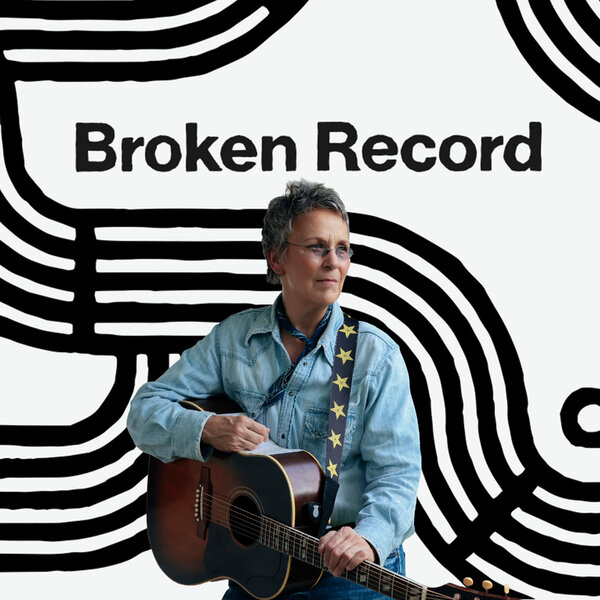
Mary Gauthier discusses her album Reckoning and how it was shaped by recent violence (including Minneapolis and the Covenant School shooting), her character-driven songwriting approach, and the redemptive power of music. She also explains her stripped-down recording process (voice/guitar/harmonica, analog tape via a Tascam recorder), and how trauma shows up in songs, including “Black Ice” as a PTSD metaphor.
Mary Gauthier is a Louisiana-born Catholic-raised singer-songwriter who has written for about 10+ years with veterans through her Songwriting with Soldiers program. She co-wrote songs with artists including Beth Nielsen Chapman, Vince Gill, and Beth Nilsson Chapman (as referenced), and has worked with Nashville and Austin studios.
“Reckoning” is about people at turning points facing consequences; anger becomes story rather than protest. Sad songs offer hope and “we’re not alone.” Faith (as in “Heaven”) can transform how characters face death. “Black Ice” helped her recognize her own PTSD patterns and respond with compassion rather than panic.
“Judgment Day” (a young priest character inspired by a New Hampshire bishop sermon after Renee Goode’s killing); “Soldier of Fortune” (Roman guards/ICE/Gestapo parallels, written with Eliza Gilkison); “Sometimes” (co-written with Vince Gill, tied to the Orange Blossom Special and the Covenant School funeral); “Gone” (loss with hope); “Heaven” (one-word change from “if” to “because”).
Written by AI. May contain mistakes.
Discussion about the album 'Reckoning' and its significance.
Mary Gauthier shares her unique songwriting process and the inspiration behind her album.
“Can you talk a bit about the title and talk a bit about the thinking going into it?”
Exploration of recording techniques used in 'Reckoning' and its sonic influences.
“Almost more so than some of your other albums, they're character-driven stories.”
Discussion on how political themes affect songwriting and personal storytelling.
“And I was just beside myself with joy that they just saw it was for sale on Facebook Marketplace and said, let's give this a try because Mary keeps saying Nebraska.”
Discover how songwriting helps veterans process trauma and find purpose.
“But it was, to me, kind of a catch and release.”
Explore the paradox of why sad songs resonate and provide hope.
“So once they realized their song could be of service, that was a great relief for them.”
Learn about the redemptive and liberating power of music in storytelling.
“So even in songs, I'm thinking of a song like How You Learned to Live Alone.”
Understand how characters emerge in songwriting and storytelling.
“What's interesting in this album is a lot of these songs are about people close to the end of their lives.”
A dive into the collaborative process behind the song 'Sometimes'.
“No, but the Nashville I moved to in 2001 was a pretty small town.”
Mary Gauthier discusses the creative process behind a song inspired by a school shooting.
“which was something she said in the conversation.”
Gauthier reflects on a profound lyric that emerged during the songwriting process.
“And day is up, I go home, and then we start texting each other over the next two weeks with possible ideas.”
The discussion delves into the nature of inspiration and the creative process among songwriters.
“That's one of those lines that I call it a God line.”
Gauthier shares the journey of a song written years ago that evolved through a pivotal change.
“They do sit there at the blank page and they write and write and write and it takes them months.”
Mary discusses how her perspective on faith and mortality has evolved over time.
“Like, you're not religious now particularly.”
Mary shares the creative journey behind her song 'Black Ice' and its personal significance.
“Being in awe of how people make it through another day.”
Mary reflects on her experiences with PTSD and how writing helped her understand it.
“in the corner of the room in my underwear, begging God for the word.”
Mary discusses her childhood trauma and its lasting effects on her life and relationships.
“There's no direction you're going to turn the wheel correctly to stop this thing from going around.”
Mary talks about her struggles with addiction, codependency, and the healing power of music.
“I just sit on my hands, work through it until the camera lens comes back into proper focus.”
Explore how music serves as a therapeutic outlet for personal struggles.
“Vander Kolk, he always said that childhood trauma is the cause of addiction, period.”
Discover the deep symbolism and emotional resonance of trains in songwriting.
“this song, I think, is the right ender for this collection of songs.”
Learn about the realities of touring and performing as a solo musician.
“Well, now we hit the road, go town to town to town to town all over the world And sing these songs for folks Does this mean you're, are you traveling by bus or van?”
Reflect on the conversation and the significance of music in life.
“And I probably, you know, won't unless some weird thing happens.”

Get the gist, explore an idea or ask about something said.
 Claude
On Broken Record with Rick Rubin, Malcolm Gladwell, Bruce Headlam and Justin Richmond, what are the key points of this episode?
Searching your listeningAutomatic transcript. May contain errors.
0:00This is an iHeart Podcast. Guaranteed human. If you love music and great artist interviews, check out Before the Moment, hosted by Niall Rogers. This new series follows Niall as he travels across the country talking with some of today's most fascinating artists about the moments that shaped their lives and careers. From hitmakers like Miguel to rising stars like Alex Warren, Niall explores the stories behind the careers, the songs, and the moments that changed everything. because every musician remembers the point where everything changed, and this podcast tells the stories that came before it.
0:33Listen to Before the Moment, a Lincoln Original Series, on the iHeartRadio app, YouTube, or wherever you get your podcasts. This is Jacob Goldstein. When you're a business owner interested in expanding to new markets, there's a lot to consider and countless questions to answer before making the call. The most important one being, are you ready? That's where ChatGPT comes in. Give it a goal, add your files, and ask Chat to help you map out different scenarios for the future of your business. So when growth is on the table, you've got an expansion plan ready to implement. Get started today at chatgpt.com.
1:09When you own your own business, you need to keep things moving. Need to book a last-minute flight? Earn a$300 travel credit to cover that. Need to take a meeting before takeoff? Do it from the comfort of the Chase Sapphire Lounge by the club. Need to catch your breath before you board? Done. Chase Sapphire Reserve for Business. The business card that gives back all you put in. Visit chase.com slash reserve business to learn more. Cards issued by JPMorgan Chase Bank. Any member of DIC. Subject to credit approval. Terms apply.
1:45Pushkin.
1:50So the new album is called Reckoning. Can you talk a bit about the title and talk a bit about the thinking going into it? Yeah, the process of writing this record for me was quick. I'm a slow writer, a meticulous, think about what I'm writing for a long time kind of writer. So when songs start coming one after the other after the other, for me, that's just highly unusual. And I think I was responding and reacting to what happened in Minneapolis this January when I took over. The City and Killed Renee Good and Alex Pretty. And those songs are a response to what I saw happening there. And I didn't have a title track.
2:35I had all the songs except for a title track and the song Reckoning. And I was just feeling like I needed to keep writing until something comes through that feels like a statement about the whole record. Because I think that's what a title track of a record does. It tells you what the record's about. And I sat down with a young man who I think is extraordinary. His name is Aaron Lee Tashin in Nashville. And we were writing at my writing office. And I found an old song that I never completed called Reckoning. I said, you want to give this a go? I never got anywhere with this. And he came up with a really cool driving guitar part.
3:19And we started going, and about two and a half hours into the co-write, I started thinking this might be the title track. And the further we went, the more I became convinced this is it, this is a summation of what all these songs are saying and doing. And upon reflection, I think the songs and the record are stories of people at a turning point, a place of reckoning. I think it's a bit of an ominous word to most people. They're like, oh, that's heavy. I'm like, well, it can be. It can also be liberating. We reach places in our life where there's consequences, and nations reach places in their history where there's consequences.
4:06It's an individual and societal and national and international phenomenon. And I think that's what reckonings are, is a confrontation with consequences. And these stories are all about that. Now, we're making this sound like a very political album, full of polemic. It's not. These are... No, these are stories. Almost more so than some of your other albums, they're character-driven stories. Yeah, they're character-driven stories in the spirit of Springsteen's Nebraska, really. Voice guitar harmonica stripped down stories. The characters are dealing with what's happening, and there's a political component to their reflection and to the impact on them.
4:50But this is not a collection of protest songs by any means. You mentioned Nebraska. I have a rule when I'm going to interview someone that I listen to their new work without reading anything about it. I don't read the publicity stuff that comes in. I don't read reviews. I want to absorb it first. and when I heard it, I thought Nebraska, but more the sound. And I guess now that I think about it, the character-driven songs as well, which there's a lot in Nebraska. Was that a deliberate choice on your part? Were you thinking Nebraska when you wrote this and recorded it? I started thinking Nebraska about six songs in as I was writing, and I started thinking, I don't want a band on this one.
5:30I don't want a producer, really. I need an engineer, and I need someone to help me get my best vocals, but I don't want complexity around the recording. I want it to be voice guitar harmonica, and that is, to me, Nebraska. And I thought, you know, the best way and the quickest way, and I think the fundamentally right way to do these songs is stripped down. and I think they're strong enough to hold a listener without embellishment and that's how I want to do it. And of course that's, I think Nebraska's, one of Bruce's, if not Bruce's absolute strongest records. And it holds up 50 years later. He could put it out tomorrow and still become a masterpiece and timely.
6:24And I love the way that it captures the intensity of what he was going through. Side note, I'm friends with Warren Zanes, who wrote a book about the making of Nebraska. And I absolutely love the movie that came from that book. It was really, I think, fantastic. How did you record it then? I mean, he recorded that famously on, I think, like an old Tascam Porter studio or some little... He recorded it to cassette. To cassette. Yeah, yeah. How did you record this? Voice Guitar Harmonica in a little studio in Austin. We did it into Pro Tools. I brought it to Nashville. They added a few cinematic things.
7:07Nielsen Hubbard at the studio in Nashville added a few cinematic things. And then they ran it all through a Tascam recorder. They ran it through an analog tape recorder. Really? Uh-huh. And then dumped it down back into digital. And that's what gives it that 1980 sound. It sounds analog. And I was just beside myself with joy that they just saw it was for sale on Facebook Marketplace and said, let's give this a try because Mary keeps saying Nebraska. And that's the way that one was recorded. and they got that quality of, it's bigger, analog. It has a nicer reverb in so many ways. The voices are the best vocal recording I've ever had of my voice because it feels uninterrupted.
7:58There's nothing between me and the listener. It's very exposed in a way and I love that. Sounds like you can hear the room. You can hear the room. That's very cool. It's very cool and the results are undeniable. It sounds great. Everybody's telling me that how they do that. I said, I think that was like a$80 Tascam recorder they found on Facebook Marketplace or something like that. They had to tape their, you know, wire going into it. You mentioned that this in some ways was started off by what was going on politically. And the album is not a political album, but it does bring up an interesting question about politics and music that we want to think mixed, but often really doesn't mix that well.
8:47As much as people talk about Masters of War by Bob Dylan, I'm not sure that's the song most people go to. How do you deal with your angry over political situation? How does that find its way into songs? For me, the most effective way to get to it as a songwriter, for me, is through story. And I'm not trying to argue or convince. I'm just showing through the lens of one person's humanity how their life is impacted by what's going on. You know, there's a song on the record called Judgment Day, and it's written from the perspective of a young priest, a newly ordained priest. I read an article about a bishop in New Hampshire.
9:31His name is Rob Hirschfeld. who gave a sermon, a liturgy, I don't know the correct words for what he did, but after Renee Goode was killed point blank in the head, shot in her driver's seat, he spoke to that in front of his parishioners. And he talked of the long history of Christian martyrdom, of priests putting themselves on the line to stand between abusive power and people who were being abused and assaulted. And the headline was Episcopal Bishop Calls for New Martyrs. And so that just captivated me. And I imagined myself a young priest listening to my boss telling me to get my affairs in order.
10:24And what would that be like? And so I spoke to a Catholic priest that I knew in Houston who married my nephew. And we had a good two-hour conversation helping me get into the psyche of what it would be like to be a young priest at that juncture. So I created this character who has to make a decision. Am I going to do what I'm being asked? Am I brave enough to do that? And so that's political. But it's also deeply personal. Will he do it? And honestly, Bruce, I didn't know what he was going to do until the last line of the song. Is that often the case with your writing? You don't know where it's going?
11:07That is often the case. There's another song which interested me for the same reason, which is Soldier of Fortune, looking at the other side of this, in which you write about the Roman soldiers who killed Christ, and you relate them to the Gestapo and to ICE agents. Can you talk a little about that? I think there's a thread through history of this personality type. This idea came, I was looking at my nephew's wedding. I was looking at the stained glass depictions of the Stations of the Cross and the Roman guards' treatment of Christ on his way to his execution. They're gambling for his clothes.
11:49They're throwing on a crown of thorns. He's fallen to his knees. They're mocking him, mimicking him, and abusing him. It just looks so familiar to me. I went, oh, my God. Roman guards, ICE, these are the same guys. Same personality type. You know, the Roman guards are poorly trained, empowered soldiers working for Pontius Pilate. And I think that the song is an angry song. It sounds like an angry song. I was angry when I wrote that. I wrote that with Eliza. It's like, how dare these people step in front of a car, accuse the driver of running them over, and be allowed to shoot point blank in a person's face.
12:34No accountability, you know? So that definitely was written in anger and outrage more than anger. There's an outrage to these behaviors that just triggers me and to the core of my being. Here's why I struggled with that song. because it was written by you, you have referred to your guitar as an empathy machine, which I think is a lovely play on the old Woody Guthrie, This Machine Kills Fascists. I wonder, did you consider a song where you would have some empathy for the soldiers? Is that possible? I do think it's possible. I could get inside a troubled ICE agent's heart and write from that perspective.
13:22I couldn't find empathy for their rage, but I could find characters that I could write from. That particular song, I called my friend Eliza Gilkison because she's so good at writing these scathing political songs that call people out. And that's what I was in the mood for at that point. And yeah, that song, you know, I don't play it much. Because it is not really what I do. It's not my voice, really. It's something that I felt I needed to do, a responsibility, really, to do, to articulate the through line. But it was, to me, kind of a catch and release. Okay. You know, oh, I got one of these. Reel it and put it on the boat, throw the line back in.
14:13Right. I'm not going to go down that road too far because that's really not my greatest strength as a writer. Now that I'm thinking about it, the first time we met, you had just done rifles and rosary beads. Yeah. Which is because you partner with, I'm not sure what branch of the armed forces, but you do a program called Songwriting with Soldiers. Yeah, yeah. I wrote for a little over 10 years with veterans that served in all branches of the military and helped them articulate their mostly trauma stories. Yeah. Yeah. It's incredible to me that writing with you, they could replace some incredibly dark times, but that was very cathartic for them.
14:56Oh, yeah, yeah. Alchemy, really. Yeah. It takes that traumatic blow and alchemizes it into something that's useful for other people and helpful in the world to explain war. And it turns it into something that's purposeful. And useful for them. Oh, yeah. Which is the amazing part. Yeah, because they realize, oh, my God, this song can be of service. These are volunteers, right? They volunteered to serve. They weren't drafted. So once they realized their song could be of service, that was a great relief for them. And it gave them something. I mean, this is why I write songs, I think, is because I understand that my songs can be useful.
15:42And I need to be of service in a way that alchemizes my own story, you know, that turns the struggles of my own experience, especially as a young child into something that is art and useful in the world that helps people who are not able to find the words, you know, and that's what the veterans did and are still doing through a program called Songwriting with Soldiers. Are you still involved with it? Sometimes. Yeah, not like I was. It's interesting, you know, there's all these neuroscientists with theories about why sad songs make us feel better and, you know, there are a lot of theories about art and particularly theater about why seeing trauma on stage is cathartic.
16:37You've written a lot of sad songs. Why is it? What's our attraction to those? Well, it's paradoxical. But I think there's a me too in those songs where people find themselves there and realize I'm not alone. Someone else feels this thing that I've felt. And, you know, I asked Willie Nelson that question. and I got to open a bunch of shows for Willie, and I said, Willie, man, why are people drawn to the sad songs? What is it? He said, Mary, I reckon it's because they figure if it could happen to old Willie, it could happen to anybody. It's not that misery loves company, although it does. It's that life happens to everyone, no matter what your income or level of fame is.
17:38And I think that there is hope in just the singing of a sad song. A person filled with despair is not going to sing or write a song. The hope is that there's an opportunity to try again. Well, this happened, but let's try again. And I think that it's also transformative because you transform as the writer from the story. I'm not the story. I'm the writer. And writers have power. Writers have agency. Writers have the ability to write the ending differently. There's power in that. So even in songs, I'm thinking of a song like How You Learned to Live Alone. which is just a killer. And even though the ending suggests that there may not be hope of a next time, there's something even in that song that makes people feel hopeful, do you think?
18:44Well, I wouldn't draw a direct line to hopeful. It makes people who are learning how to live alone after a long time of being coupled, it helps people to know that others have survived it. We know how you feel. and there's a sun coming up tomorrow with possibility in it. Not necessarily for new love, but for a new life. There's rebirth every morning. And so there's a sense of we that helps the I. Yeah. We know, we understand. That is huge when you're going through terrible pain. You also believe, and this is very much like Springsteen, in the redemptive power of music. Yes. Your book is literally called Saved by a Song.
19:37Yes. That doesn't come through so much in Springsteen's albums, but if you see him live. Oh, he's all about redemption. And how the old songs, like, you know, Eddie Floyd's Raise Your Hand, how that inspired him at a certain point, that that's what life was. Talk a little bit about that. How did you reach that conclusion? I don't know. I think it's something that is inherent in the music that I love. You sing the truth at the top of your voice, and you find your tribe. You find your people. And most importantly, you find your truth. And you shed the stories that have been planted in your brain by powers that want you silent.
20:22And you pull them out like weeds and write your own story. And, you know, there's liberation in that. You know, there's so many layers of indoctrination that we have to, well, let's just put it in first person, that I have had to shed. And I'm still shedding and coming to my own conclusions and coming to my own understandings of things. That's redemption. And then to bring it to people and they're like, yeah, me too. That is a communal redemption. That is a salvation from solitude, from isolation, from despair, removal, hopelessness. It's powerful. It's a powerful force.
21:40point to that turning point. That moment before the breakthrough, before the success, before everything changed. Through candid conversations and personal stories, you'll hear what happened before the moment that made them who they are today. Listen to Before the Moment, a Lincoln original series on the iHeartRadio app, YouTube, or wherever you get your podcasts. This is Jacob Goldstein. With ChatGPT, you can do more than get answers. You can get things done. When you're running a business and looking to expand, you need a clear view of the landscape before making any decisions. ChatGPT can help you prepare.
22:15Connect your Google Drive, point to relevant files and reports, and ask it to research competitors, industry forecasts, and market signals. It can turn the findings into a strategic deck in your team's template that you can review before presenting to your leadership team. Growing a business is ambitious, and ChatGPT can help you do it with confidence. Get started today at chatgpt.com.
23:04daily cash back on every purchase you make. I also appreciate the simplicity. Apple Card doesn't have annual, late, or over-the-limit fees. No fees ever. There's even an option to open a high-yield savings account through Apple Card. And while I haven't done it yet, if I do, my daily cash can grow automatically over time without any extra effort. When you better understand your spending habits, it's easier to make your money work harder for you. Apply in the Wallet app on your iPhone today. Subject to credit approval, variable APRs for Apple Card range from 17.74 % to 27.99 % based on credit worthiness.
23:44Rates as of October 1st, 2026. Existing customers can view their variable APR in the Wallet app or card.apple.com. Savings is available to Apple Card owners subject to eligibility. Savings and Apple Card by Goldman Sachs Bank USA, Salt Lake City Branch, member FDIC. Terms and more at AppleCard.com. What's interesting in this album is a lot of these songs are about people close to the end of their lives. Yes. You like to joke about being old. You're not that old. No. You've got a long time to go. I hope so. Had you looked back and said, well, a lot of songs about people about to die. What's Was there something going on that sparked those songs in you?
24:30No, I think those characters, I don't choose my characters. They choose me. I wish I could choose my characters and say, I want to write a meaningful song about, I don't know, fill in the blank, this character. It doesn't work that way for me. It's a very strange, mysterious thing that I can't fully explain, but I feel tapped. Like there's a tap on my shoulder. And that tap is a character wanting me to give them voice. And you'd think a writer has a choice over that. And I bet a lot of writers do. I don't. I can't bring the characters I decide to write into life. I have to write the characters that want to come through me.
25:14So, you know, I end up on a record with two elderly people who are at the end of their life. I ended up with a character that worked on the Orange Blossom special who's probably in his mid to late 90s if he's still alive. You know, a character that may or may not be facing, you know, hostile forces as he goes to stand with people against ice. A song about despair of having lost someone in a song called Gone. I wrote that with Beth Nilsson Chapman, and she's survived two husbands now. She's been widowed twice. And so that just filtered in to the song as well as I've lost many, many friends over the last five years.
26:10And that sense of loss is very real in the record. And it just comes with age, too. You don't have to be that old to start losing folks. Now, you didn't sit down with Beth Chapman and say, you've lost two husbands, let's write a song about loss. How did it filter into the session? Well, I think we try to find what we're feeling, more than story-wise, like emotionally what we're feeling. And it's a wild goose chase. We run around the room looking for something, and she usually is the one to pick up the guitar and start plucking and I'll stop and go, yes, that, that, that's the thing. Let's write words for that.
27:00And it just, it naturally migrates to what's on her heart. One of these songs, Sometimes, you mentioned, you had a very interesting tap on the shoulder. Can you tell that story? Yeah. Yeah, that one was a wild ride. I co-wrote that song with the great Vince Gill at his studio in Nashville. Had you worked with him before? No, but the Nashville I moved to in 2001 was a pretty small town. So I'd see him at the Y. I'd see him at the Deli. I'd see him at the Opry. I knew of Vince, and we had a hello, and he would walk up and tell me a joke kind of friendship. He's got a lot of good jokes. And I always wanted to write with him, and I had the opportunity to do so and seized on it.
27:55And so I went over to his house, and he had an idea that he'd been sitting on for a long time that came from a discussion he had with Mavis Staples, which was something she said in the conversation. They were talking about probably race relations, politics. And she told him, Vince, son, we've seen some times, haven't we? And Vince said, Mary, I know it's a song. Sometimes. It's got to be a song in there. And he had a melody and a few placeholder words. And in the words, he mentioned the Orange Blossom Special. I said, man, I know that's a train, but I don't know anything about it. Would you tell me about it?
28:33He said, oh, I just put it in there because it sounds good. I don't think it's about train. I said, well, why don't we go down in there and see what the Orange Blossom Special was? He said, well, it's a bluegrass song everybody plays. but it doesn't have anything to it. I'm like, it feels like something's there. So I looked it up. Turns out the Orange Blossom Special was a high-speed luxury train rode from Manhattan to Miami in the 20s, 30s, 40s, into the early 50s, and then trains were done. And I found a black-and-white photo of a waiter in the dining car of the Orange Blossom Special. And it was a black man in a tuxedo preparing for a dinner service looked like silver china, linen, a very high-end luxury train, a fine dining experience for those eating there.
29:25And the waiter in the picture looked like a man with a good job. He could probably take care of his family on the money he made working on that train. And it occurred to me, and I felt the tap, that tap we were just talking about. It occurred to me, he's seen some times. and I asked him to tell me about it. And that's where it gets mysterious, you know,
29:56because I'm giving voice to this guy and Vince and I are going back and forth and back and forth and back and forth
30:07and we're about half in to what I think is going to be a really good song. And day is up, I go home, and then we start texting each other over the next two weeks with possible ideas. And his song zagged and mine zigged. We have different versions of this song. But the one thing that we stuck to together throughout was there was a school shooting in Nashville where it's called the Covenant School where kids were killed and the principal was killed. and the principal happened to be one of my songwriting students, and a fellow Baton Rougean, she came to Nashville from Baton Rouge, I'm from Baton Rouge.
30:50And Vince was asked to sing at one of the kids' funerals, somewhere over the rainbow, which she was supposed to be singing in the school play. And we were both just flattened by that school shooting, and him singing in that service, I don't know how he did it. He said, I don't know how I did it either. He said I had to dissociate. It was just incredibly difficult. And the gun line stayed. There's an anti-gun line, and we both stuck to that. Mine went a little further. I think his character and his imagination rode the train. My character and my imagination worked on the train. So we had two different guys going.
31:38but I love the song and Emmylou Harris sang it which Vince I interviewed him for my podcast about this record he said you know Mary that's the first Emmy song that I've ever written that that she sang and it meant a lot to me like you know what Vince meant a lot to me too all bad now do you know her as well I do yeah yeah Yeah. You know, we were talking about anger earlier in music, but this character is very philosophical, not angry. It's not the song, someone looking over their lifetime of grievance. There's a beautiful moment. He talks about Obama getting elected. And then it's almost like a little coda after that.
32:29I can't remember the words precisely, but it was something to the effect that I saw the insurrection. And then the line after is so beautiful. Can't say I was surprised. Can't say I was surprised. It just tells you so much about everything you've heard up until that point. Do you remember writing that line? I do. Yeah. That's one of those lines that I call it a God line. It comes shooting through me when I'm doing something else, and I just write it down. I don't know what I was doing. I was probably doing something in my office and sat down, and that just came shooting through me. And I wrote it down, and I thought, man, that guy's talking to me.
33:11I got to work this into what he's saying. When that happens, do you honestly feel a little lightning bolt? Yes. These are gifts from angels. We get credit, and we certainly get the copyright. If you're lucky, you get the copyright. We're lucky that it comes through us and to us. I, in all honesty and sincerity, can't say it came from me. I feel it came through me. You know when that happens that that's got to work its way in to something that you're creating. And we're always hunters and gatherers for ideas and images and words and phrases. And so if something like that's happening and I'm in a conversation, I got to stop the conversation and write it down.
34:01Because these things come knocking at the damnedest times. You just, you know, you got to grab them. They're gifts. This is what inspiration is. It's not a... Do they always come when you're already working on a song? No, they come intermittently for no apparent reason. Guy Clark used to work on guitars while he was writing. So he'd write a little and then pick up the guitar and work on the wood. And then write a little and pick up with the guitar and do a little gluing and sanding. And then write a little. And he felt like occupying his mind on the guitar freed it up for anything to drop in that could help the song.
34:38Instead of sitting there just staring at the song and having nothing. And that toggle, I think, is a cool thing. Dali had a metal pot, and he'd sit in his nap chair and put a rock in his hand over the metal pot. And so when he went to doze deep enough that his hands ropped and the rock fell, he'd wake up and paint what he saw. We're always trying to prime the pump for these things that are mysterious gifts that artists receive that come from I don't know where. Some artists, Paul Simon is one of them, and one of your heroes, Leonard Cohen, is another. They do sit there at the blank page and they write and write and write and it takes them months.
35:23Me too. You're that kind of writer? Oh yeah, you get that one line and that's a gift. That's not a song. That's a good line. Now you got to build something and there's no crew to bring in. You know, I got to do all the things. Months is about right, definitely. Sometimes it took me and Vince probably eight months. Is that right? Mm-hmm. And are you the kind of writer who you write 10 verses and select two? I'll overwrite, yeah. Yeah, I'll go past three or four verses and see if I can make it better and then take parts and apply them to the weaker parts. I try to build a junkyard. And then I see what's shining and what's working.
36:12I want more than less. More rather than less is always good. But your songs are often the opposite. Their less is more. There's a couple of songs on here. I can't remember which ones particularly, but I think there's two verses. Well, yeah, that's how it sometimes ends up. But I imagine I kept the best two or I built the best two and I thanked all the others for their contributions. and put them back in the junkyard. So tell me about Heaven. Yeah, I wrote that with Laurie McKenna, one of the great American songwriters. And we wrote that. That was the first song for this record. And it was written in 2014, I think.
36:58And it wasn't right. We had played a show together in Berkeley. It was in Berkeley. I think it was the Freight and Salvage. And I had a friend come see me and sit with me backstage for a little while, and he was very, very ill. He had cancer, and he was very, very ill. He was a playwright, and we were working on something together. And when he stepped out and before we took the stage, Lori said, he doesn't look so good. Is he going to be all right? I said, he's going to be all right if he believes in heaven. And she, you know, is a songwriter. She kept that. Yeah. And I guess maybe eight, nine, ten months later, we're on Zoom for a co-write together.
37:45And she said, remember that thing you said about he's going to be all right if he believes in heaven? What if we write that? And so we did. And it was an imagined story. We created two elderly folks that had been married forever. And, you know, Lori's so good at that. I mean, she's been with her husband since she was in high school. She's only been with one man her whole life. And she's so good at these long-term relationship songs. And I try to lean into my co-writer's strengths. And we kept that line, he's going to be okay if he believes in heaven. The wife passes, and he's facing his ultimate demise.
38:31And 12 years go by, neither one of us recorded it. But we both know it's a good song, but there's something wrong with it. And I'm walking around the block with my earbuds on, going through old songs, trying to see if there's anything in my pile that could work on this record. And that song came through. And it occurred to me that if we change the line, he's going to be all right if he believes in heaven, too. He's going to be all right because he believes in heaven. It unlocks it. Tell me what that did for you when you thought of that. It was like, that's it. That's it. One word, and now we got it.
39:09You know, one word, 12 years, a lot of age happened, a lot of friends have passed, a lot of wisdom on both of our parts has been gained in that time. We're in a very different place than the two people who wrote in 2014. I called her up and said, Lori, I think I got it. And she goes, oh, the because guy is a different guy than the if guy. Yeah. I said, yeah, he is. He's our guy. He's our guy. It creates a psychology. Oh, yeah. Yeah. And it lifts the song. And it lifts the guy. Yeah. Yeah, and he's got faith, and he can face what's happening with faith, which is not anything based in reason. Faith is, in many instances, irrational.
40:03But he has it. And it's going to make this less difficult for him. And I love this guy. And that's the guy. We missed it by one word, but we found him. If you're a music fan, I've got a new podcast you have to check out. It's called Before the Moment, a new series hosted by the legendary Niall Rogers. You know him as the producer, songwriter, guitarist, and co-founder of Chic. But in this series, he's hitting the road to sit down with some of today's most fascinating artists. From hitmakers like Miguel to rising stars like Alex Warren, Niall explores the stories behind the careers, the songs, and the moments that changed everything.
40:42Because every artist can point to that turning point. That moment before the breakthrough, before the success, before everything changed. Through candid conversations and personal stories, you'll hear what happened before the moment that made them who they are today. Listen to Before the Moment, a Lincoln original series on the iHeartRadio app, YouTube, or wherever you get your podcasts. This is Jacob Goldstein. With ChatGPT, you can do more than get answers. You can get things done. When you're running a business and looking to expand, you need a clear view of the landscape before making any decisions.
41:17ChatGPT can help you prepare. Connect your Google Drive, point to relevant files and reports, and ask it to research competitors, industry forecasts, and market signals. It can turn the findings into a strategic deck in your team's template that you can review before presenting to your leadership team. Growing a business is ambitious, and ChatGPT can help you do it with confidence. Get started today at chatgpt.com. This is Malcolm Gladwell from Revisionist History. In military families, service is more than a job. It's a legacy. At American Military University, that legacy can help open new doors through education.
41:55If someone in your family served in the military, you could be eligible for reduced tuition. Take the next step with flexible online programs built for real life. Learn more at amu.apus.edu slash military. Now, you grew up in a religious house. Catholic, yeah. Catholic. Like, you're not religious now particularly. No. But it is interesting that someone else's faith became so meaningful that it transformed the song for you. Yeah. Is that something you could have written 10, 20 years ago? I wouldn't have been comfortable. All I know is I've watched people in the last couple of years face their death with faith, and it's less terrifying for them.
42:44You know, I don't know how I'm going to be when I'm in that situation. But from what I've seen, if I got to choose, I would hope to have some kind of faith in some kind of eternity that's benevolent. It's not theological or religion that is going to give me faith. I think it's more, I don't know, these great lines that come from this great mystery, I want to go hang out there. there's a mystery that there are more lines here hey I'm here now bring it on you got any guitars yeah there's a mystery I think I can believe in because I've had a dance with it for a lot of years now but it doesn't come from church although they're probably tapping into that or trying to or missing it completely but I think at the end of the day I can write characters with faith now much more comfortably.
43:44Interesting. Is that an age thing or is that a maturity thing or is that a wisdom thing? I don't know. I think, I mean, for me, I think probably my parents passing and they weren't particularly religious, but it made me more comfortable with that kind of language. Getting older, you know, not about facing my own mortality. It's not about that. I don't know, more accepting of other people. That too, allowing people to be how they are and embracing that. Being less argumentative. Yeah. Yeah. Being in awe of how people make it through another day. Yes, I'm in awe of that. Tell me, that is a fantastic story, by the way.
44:24One word in 12 years, you said? 14 or 12. A lot of years. You should call in another 12 years and say, hey, I've got another word change. We've got to re-record it.
44:36Tell me about Black Ice. Yeah, I wish I understood that one. That one is, it came from, I wrote that with Beth Nielsen Chapman. It came from a title. We started with a title, which Beth never, ever, ever likes to do. I had to convince her. Do you often start with titles? Yes, because it gives me something to aim at on the dartboard. You know, I know where that little circle in the middle is, you know. I got to have something to aim my lines at. And it can change. It's not permanent or it's not a commitment. But if I have something, then we can get going here. When I saw you this morning with my coffee there, we were changing the title with somebody.
45:18Is that right? Uh-huh. Okay. Yeah. Yeah. I was like, what if we call it, you know, Alchemist instead of, I don't remember. But I think Beth is resistant because she likes the mystery and she likes the magic of just not having nowhere and no agenda and just seeing what we can come up with out of thin air. And it always happens. We come up with something. But I had black ice, and it was really speaking to something on a cellular level with me. And I couldn't get to what it was, but I knew it was inside, and I had to figure it out. And so we put our character in a car, and the car hits black ice.
45:57And so my job as a songwriter then is, what is this metaphor, and why are we doing this? And oh my God, that was a wild ride for me. It took months, months. I went down to Key West. I got a hotel room. I sat in the room. I stared at the water. I walked around the island. You know, I ended up like Leonard Cohen in the Songwriters on Songwriting book, in the corner of the room in my underwear, begging God for the word. Like, just give it to me. What is this about? And finally I got to it. I think that character, which is me, is dealing with a form of PTSD. And I didn't know that's what I had. And I'm 64 now.
46:47I didn't know that's what it was. When I shut down completely and my eyes go dark and I'm not myself and there's a coldness that I can't explain. A coldness towards other people? Towards everything. It's a flash and it scares people. And I don't feel anything. It never occurred to me that that could be PTSD. And a decade of working with veterans who suffer with PTSD, studying with Dr. Bessel van der Kolk, one of the foremost experts on trauma, a Dutch doctor who lives in Boston who's become a friend of mine, who wrote The Body Keeps the Score. Bessel's the man. got PTSD into the DSM after the Vietnam War, you know, studying with him.
47:37It never occurred to me that this thing in me was that until I wrote this song. And I couldn't get to it without a chisel and a whole lot of wax to connect the dots, to connect the evidence with the behavior, with the understanding of the reality. I'm going to ask something on a very prosaic level because you're from Louisiana where I doubt they have a lot of black ice. None. But you lived in Boston. Yeah. Did you ever spin out? No. To me, it was the vehicle to get to. Nobody chooses to go cold. This is a spin out. There's no direction you're going to turn the wheel correctly to stop this thing from going around.
48:27That's the other thing I remember from driving lessons was you spin in the direction of the skid. Yeah. And I thought, well, I'm going backwards. Okay. Don't think my wheel goes quite that far. Yeah. How do I spin in that direction? What is the math of this? Yeah. Yeah, it's utter powerlessness and you're going to land where you're going to land. And you can't, in that moment, do a damn thing. You've talked about your trauma. you wrote an incredible album about your adoption, but you never put it together with PTSD. No, never. I don't know. It seems obvious now, but boy, it doesn't everything once we figure it out.
49:11Yeah. Was that a lightning bolt when you thought, wait a second? Yeah, yeah. And it gave me two things. Songs give the songwriters things. And this one gave me compassion for myself and an awareness that when this happens, it's not me. And I don't need to make decisions based on what's happening in that spin out. That there is something that's come over me, the black ice, and it will pass. and I just need to get to the other side and not take it as a permanent reality, which it, of course, feels like. When that comes over you around other people, does it pass quickly? It can, if we don't get into a spiral around it.
50:07What I have is a terror, absolute terror of abandonment. I spent a year without parents, and it was my first year on earth. I was in an orphanage in New Orleans in an overcrowded institution with a couple of nuns and a couple of hundred babies. So that is still in me, and sometimes it cries out, and it sends me into that spiral. And it feels real, and it feels like it's happening now. It's everything you hear about trauma. I just never put it together that this is what that was. And so, you know, since I wrote that song, I haven't had one of those episodes. And I know there'll be one because there's always another one coming at some point.
50:54But I hope when I'm in it, I can, I don't know, run to the song or something. I need to remember this is not reality. This is a wound. And we'll get through it if we don't treat it like reality. Like, don't react. It's a reactionary position. You end up in a reactionary position. I just sit on my hands, work through it until the camera lens comes back into proper focus. Can you give yourself breathing exercises or things you do? Yeah, box breathing. Somebody taught me that. My partner is aware of this, and it's always in that relationship where this comes out. And we're going to try as a couple to do it differently.
51:36So tell me about Gone. I think Gone is one of my favorite songs on the record. I think it's about loss, but it's about hope. That all those who've passed through our life that we truly, truly love, that love is still very real inside us. And it conjures the spirit of those people, and they're alive inside us. and I think that singing in a poetic way about that, it's that paradox again. It conjures my friends and I love it. And I'm very aware that when I sing it and people don't know it and I hit that line, it's going to be a stunner for some folks. What's the line that stuns? It's been a year now, you've been gone.
52:25Yeah. Some people are like, whoa. They haven't had it handed to them that way, and that can be hard. And yet they thank me because I think, again, back to the beginning of our conversation, there's relief in knowing that somebody understands how you feel. Now that I'm thinking about it, you've been such a great songwriter about relationships, often about the failure of relationships. There's really only one of those on this album, which is the first song. which is Alcohol and Adderall. It's a song about a relationship coming apart and the memories that are left with it. But the rest of the album is very much, it's more about life passing and death than about a different part of your life.
53:15Yeah, yeah. You know, there is not a lot of that type of stuff. And it's probably because I'm not going through, I've been in an extraordinary relationship going on nine years now, which for me is a world record, and I am so grateful. You're going to be on the page with the guy with the long fingernails in the Guinness record book. Nine years. My whole life has been three years and out, three years and out, and I'm so grateful that my sense of just getting started is still very alive with Jamie. me. And alcohol and Adderall is a reflection on loving an addict. In so many of my songs and in so much of my life, I've been the addict, right?
54:02I'm the one with the monkey on my back. I'm the one who's dealing with addiction and alcoholism. And this is a flipping of the viewpoint of now I'm the one, or my narrator really, is the one loving someone who's going down. And that is a hard place to be. You're just as powerless over drugs and alcohol as they are. That song, I think, was a flashback in a way. When that first line hit, I used to love a girl who danced for money. I loved it when that came out of my mouth. That's an amazing first line. Yeah, I loved it when it came out of my mouth because that goes bang. Mary's 18 years, at 17 years old again.
54:43It goes back to that song Evangeline on my very first record, The Dancer. The Dancer has reappeared in another form now as an older woman. So many of your love songs, sometimes your unrequited love songs, are almost a form of addiction. They're people trying to let go, maybe most powerfully, with When a Woman Grows Cold, which is just a killer. Oh, yeah. So much of, yeah, thank you. So much of the, I guess, story for me has been about addiction. You know, put down drugs, put down alcohol, and bang, almost immediately, sex and love, codependency, just out of control. And I didn't know that that was an addiction until it made itself absolutely clear that this is not normal, and you're behaving like a lunatic.
55:38And whatever's going on inside of you, you need help. And so I found my way into the helping hands of therapists, and I went to a treatment center for it, and I got into recovery from that side of the illness. I'm an addict, and I am addicted to addicts. And that is just, I think, inevitable with a story like mine. You know, Bessel, who we referenced here earlier, Dr. Vander Kolk, he always said that childhood trauma is the cause of addiction, period. And I think it's the cause of, for me, of addiction to addicts as well, codependency. So I've had to learn an awful lot in this life, and I'm still a student.
56:29But I think that music and song for me has been a great way of working through things and making sense of things. and, you know, receiving light bulb moments of understanding that allow me different choices. I mean, Black Ice is a strange companion piece to When a Woman Grows Cold, because you're the woman in that case, growing cold. You didn't know that. You always put yourself in the situation of the one who's imploring. And then in this one, it's... That's a brilliant insight. You're the object. I think you're exactly right. Yeah. Yeah, and I didn't know it. I'm a sucker for train songs, and you end on a beautiful train song.
57:10Tell me about that song. Tom Mason wrote that song, and Tom— It wasn't a co-write with you? No, he wrote that. Okay. I heard it played at Americana Music Festival 20 years ago or something. I was going from club to club in Nashville, just taking in songwriters I hadn't heard before, I didn't know, just no agenda, wandering around. You can stumble on some great stuff. And I heard this guy from Australia play this song. And when it was done, I introduced myself to him. And I got to know him over time. He's just a lovely guy. He died about two years ago, I guess now. But I told him, Tom, that's a perfect song.
57:56And if I can find a place for it, one day I'm going to record it. And I found a place for it. and I got to stick to my promise to him, this song, I think, is the right ender for this collection of songs. I thought so, too. Why did you think that? Because of hope. I'm interested why trains represent that. We're in such a modern society now. We've got a million other technological things. Somehow, even more than a plane, anything else, the sound of a train is still so resonant with us. It's in our genetics. I mean, I think that it's just a perfect metaphor for, hell, you can make it mean anything.
58:42It's such a malleable metaphor. But there is a romance to trains. And I think bringing the train in is carrying a load of possibilities. and we can, from wherever we are in our life, fill in the blank as to what those possibilities are. It was also the way people told time for a long time before they had watches. Yeah, they knew the train would come at a certain time, right? They knew the train. Hear it coming. Yeah, and it's, for Johnny Cash, it reminded him of, like, the time that he was spending in prison. When I was listening, I thought, man, we still love trains. Doesn't matter what else comes.
59:25You know, Todd Snyder, play a train song There is just something to trains and songwriters We're going to be fixated on trains, I think, for the foreseeable future There's just something, especially folk singers and country singers So what's next for you? You finish the album And what happens? Well, now we hit the road, go town to town to town to town all over the world And sing these songs for folks Does this mean you're, are you traveling by bus or van? I've never traveled by bus You've never got, the bus is the, that's the key, isn't it? Never made enough money to travel by bus. Okay. I'm a solo artist.
1:00:00I kind of keep it, well, it has kept me. Or I keep it, I don't know. I've pondered that sometimes. What is it that would make it possible for me to grow the audience and have a bus? And then I thought almost immediately, you don't want to do that. You don't want a band. You don't want to tour manage. You don't want all these people that you have to pay that is going to create this urgency around having to do something. I don't want to have to do anything. So, you know, hop on a plane, go to Hertz, go to Enterprise, grab a car, and go town to town to town, drop the car off, fly home. That's my life.
1:00:39I never had a bus. And I probably, you know, won't unless some weird thing happens. Will these songs change? As you perform them on stage? They're going to pretty much stay the way they are, I think. Guitar, harmonica, vocals with Jamie playing rhythm guitar and some lead spots and singing harmony. People from the album, though, it'll be so immediate for people because that's the sound of the album, too. See, that's appealing to me. Yeah. I can't recreate a band album with a duo. Right. But with this one, I can play it as is under spotlight, and that's going to just be true to what the record sounds like.
1:01:25So that's exciting for me. Well, it's another great album. Thank you. And I'll say it again by the best songwriter working today. Ah, you're an angel. Thank you. Thank you so much for coming in. It's a pleasure and a privilege. Always a pleasure. Thank you, Mary. Broken Record is produced and edited by Leah Rose with marketing help from Eric Sandler and Jordan McMillan. Our engineer is Ben Talliday. Broken Record is a production of Pushkin Industries If you love this show and others from Pushkin Consider subscribing to Pushkin Plus Pushkin Plus is a podcast subscription That offers bonus content and ad-free listening For$4.99 a month Look for Pushkin Plus on Apple Podcast subscriptions And if you like this show Please remember to share, rate, and review us On your podcast app Our theme music is by Kenny Beats I'm Justin Richmond
1:02:16If you love music and great artist interviews, check out Before the Moment, hosted by Niall Rogers. This new series follows Niall as he travels across the country talking with some of today's most fascinating artists about the moments that shaped their lives and careers. From hitmakers like Miguel to rising stars like Alex Warren, Niall explores the stories behind the careers, the songs, and the moments that changed everything. because every musician remembers the point where everything changed, and this podcast tells the stories that came before it. Listen to Before the Moment, a Lincoln Original Series, on the iHeartRadio app, YouTube, or wherever you get your podcasts.
1:02:53This is Malcolm Gladwell from Revisionist History. In military families, service is more than a job. It's a legacy. At American Military University, that legacy can help open new doors through education. If someone in your family served in the military, you could be eligible for reduced tuition. Take the next step with flexible online programs built for real life. Learn more at amu.apus.edu slash military. With ChatGPT, you can do more than get answers. You can get things done. Whether you're leading a big project, planning an elaborate trip, or trying to balance work and life, ChatGPT can help.
1:03:34Give it a goal, plus things like files, notes, or project plans, develop a trip itinerary with daily updates, or create a prioritized schedule, so you can spend less energy sorting out the details and more on bringing your biggest ideas to life. Get started at ChatGPT.com. This is an iHeart Podcast. Guaranteed human.
Mary Gauthier writes songs about people trying to make it through another day. Her characters wrestle with addiction, grieve the people they’ve lost, and look for something to believe in. She gives their stories the kind of care and attention that can make a stranger’s life feel intimately familiar.
On her new album, Reckoning, Gauthier takes inspiration from the spare sound and character-driven storytelling of Bruce Springsteen’s Nebraska. With little more than her voice, guitar, and harmonica, she explores moments when people have to confront the truth about their lives—and decide what comes next.
On today’s episode, Bruce Headlam talks with Mary about the mysterious process of finding her characters, writing with Vince Gill and Lori McKenna, and why changing a single word finally unlocked a song she’d been working on for more than a decade. She also shares how writing helped her recognize the lasting effects of her own childhood trauma—and why a sad song can leave us feeling a little less alone.
See omnystudio.com/listener for privacy information.