Ask ChatGPT
 Broken Record with Rick Rubin, Malcolm Gladwell, Bruce Headlam and Justin Richmond
3 Nov 2026 · 1h 4m · 25 chapters
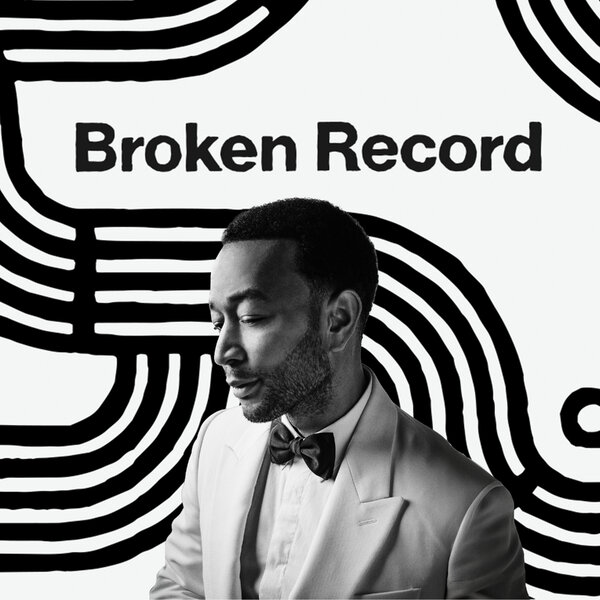
John Legend discusses how he and Pharrell Williams created his album Muse, blending classic orchestration/strings/horns with hip-hop 808 beats, plus his songwriting process, studio setup, and touring/voice care. He also touches on his upcoming musical work (Imitation of Life, Boom For Real).
The guest is John Legend, singer-songwriter and pianist who co-writes most of his albums (he wrote all originals on his children’s album). He’s collaborated with producers including Kanye West (early career), Blake Mills, Sufjan Stevens, and The Roots, and has worked with Pharrell on songs like “It’s Over” and “Aim High.”
He prefers collaboration but can do “heavy lifting.” Writing often starts with producers’ beats and “top line” (melody/lyrics), recorded as phone voice memos or mumbles before full studio work. For Muse, Pharrell pitched a “classic” sound with 808 foundation; disagreements centered on what to add vs. strip back. “Let the music win,” not ego.
“Pray For You” began in an Usher session (Usher backing vocals remain); “Everything Feels Like to Me” uses 808s to dirty up a ballad while adding strings; “Bodies on the Floor” draws on a Mobland war/relationship metaphor. He debuted “Pray For You” at a Louis Vuitton fashion show in Jan 2026.
Written by AI. May contain mistakes.
John Legend discusses his songwriting environment and inspirations.
“The Chase mobile app is available for select mobile devices.”
John Legend shares insights on collaboration and co-writing in music.
Explore John Legend's approach to writing melodies and lyrics.
“So for My Legend album I had some Zoom writing sessions For this album with Pharrell Muse I've had some Zoom writing sessions But before that, we were in a room together and often it would be me and a producer.”
John Legend reflects on his collaboration with Pharrell and their creative process.
“amazing too like it because it it feels like you know just thinking about on the new album a song like Pray For You, which I can't get out of my head, to be honest.”
John explains the balance between classic orchestration and modern beats.
“And my goal for every record is just let the music win.”
Learn how John Legend and Pharrell balanced classic sounds with hip-hop elements in their collaboration.
“So sometimes we will have recorded a bunch of horns and we only use like 20 % of what we recorded on certain songs, a bunch of orchestration and cut it back in certain areas.”
John Legend discusses the themes and timing behind his song, reflecting on personal and communal tragedies.
“But I think what sold me on the song from the beginning was that juxtaposition between sounding like a typical John Legend ballad, but having the 808s, it felt right.”
Discover the backstory of John Legend's album creation process and the timeline involved.
“So take me back to the genesis of the whole thing.”
Explore the dynamics of John Legend's collaboration with Pharrell and their creative synergy.
“So we waited to get everything right before we tried to release it.”
John Legend reflects on his musical evolution and the influences of different producers on his sound.
“AIDS, but never really dug in and worked on a full project together.”
Learn how John Legend conceptualized the first song for his project.
“I don't know if other genres send charts, but we don't send charts.”
John Legend discusses the themes of relationships depicted in his album.
“Is that one that you'll be able to tour and do it in the same manner?”
Understand the significance of the album title 'Muse' and its inspiration.
“too was that something you had to preview for your your wife come in for sure like listen I I told her, don't take this personally.”
John Legend shares insights from recording in Pharrell's Louis Vuitton studio.
“And I felt like that was the way to capture what this album meant and the energy of the album.”
John explains the artistic vision for the album cover and its elements.
“And I knew he was going to play the song, but I didn't know what order he was going to play it in.”
John Legend shares details about his latest song 'Bodies on the Floor.'
“It just represents the vision that we had for the project from the beginning.”
John Legend discusses his musical inspirations and the importance of vocal care.
“I let you leave, I can't let you go Is there someone else I don't want to know?”
John Legend explains the relationship between his skills as a singer and pianist.
“I didn't warm up today, but if I have a show, I'm very conscientious of the physical toll that touring takes on my voice, so I'm very careful I don't drink on tour.”
Discussion on the unique styles of musical icons like Stevie Wonder and their impact.
“I play all the time just because I'm writing in this room a lot and playing in that sense.”
John Legend shares insights on developing a unique musical identity and style.
“the quintessential soul music that that can be made by a male R &B or whatever singer.”
John Legend discusses his upcoming musical projects and their themes.
John Legend discusses his experiences and projects for Broadway, including 'Imitation of Life' and a new show about Jean-Michel Basquiat.
“And his father's kind of efforts to reconcile with taking over his legacy but not really being heavily involved in his career when he was alive.”
John Legend reflects on the differences in songwriting for theater compared to his solo career and his experiences working with theater professionals.
“And the idea of doing something with the blessing of Jean-Michel's sisters who are in charge of his legacy now was exciting.”
The conversation shifts to John Legend's involvement in documentary projects about multiracial identities and parenting in a diverse world.
“And the talent on Broadway is really special because, you know, they're not only really good at singing these songs, but they're actors, they're dancers.”
John Legend and the hosts discuss the challenges of balancing work and parenting.
“As a parent, you think it's, I mean, I think it seemed at that time to really resonate.”

Get the gist, explore an idea or ask about something said.
 Claude
On Broken Record with Rick Rubin, Malcolm Gladwell, Bruce Headlam and Justin Richmond, what are the key points of this episode?
Searching your listeningAutomatic transcript. May contain errors.
0:00This is an iHeart Podcast. Guaranteed Human. This is Jacob Goldstein. When you're a business owner interested in expanding to new markets, there's a lot to consider and countless questions to answer before making the call. The most important one being, are you ready? That's where ChatGPT comes in. Give it a goal, add your files, and ask Chat to help you map out different scenarios for the future of your business. So when growth is on the table, you've got an expansion plan ready to implement. Get started today at chatgpt.com.
0:58This podcast tells the stories that came before it. Listen to Before the Moment, a Lincoln Original Series, on the iHeartRadio app, YouTube, or wherever you get your podcasts. Small businesses are the pulse of every community. They bring people together, create opportunities, and drive growth. Chase for Business helps business owners like you with personalized guidance and convenient digital tools all in one place. With that guidance and your determination, you can take your business farther and help build a brighter future for your community. Learn more at chase.com slash business. Chase for business.
1:35Make more of what's yours. The Chase mobile app is available for select mobile devices. Message and data rates may apply. JPMorgan Chase Bank. N.A. Member FDIC. Copyright 2026. JPMorgan Chase and Company.
1:56Pushkin.
2:25imitation of life right so i first started writing songs in here for that and then i wrote my children's album here and then i've been writing another musical and almost all that songwriting has been happening here in this room wow yeah was this room set up like this pre prior to the pandemic this room was set up well we moved here during the pandemic and this room was always going to be like a piano bar so we have a bar we have uh um behind the cameras my awards here and everything and uh and this was always set up to be this room and a vibe it's like my version of a musical man cave i think you know if you wanted some uh whiskey or listen to some music you come in here uh we've got you know a record player in the room some nice speakers and uh it's a vibe yeah it really is it really is do you feel better writing outside of the studio when i'm writing by myself I like to write here because I like how convenient it is but also I like that anytime inspiration strikes I can just run back in here and and I only record it on my voice memos on my phone so it's not any kind of sophisticated recording but it gets the idea on tape and then we can figure out what to do with it later and then I do the proper recording at my studio.
3:52The difference between writing So much writing happens with other people I don't know if that was exactly the case Around your first album, Get Lifted It always has been I've never made an album where I didn't co-write Except my children's album So I wrote every original song on my children's album But every other album I've made Every album has had lots of co-writing I've had individual songs That I've written by myself completely But there's no album before That didn't include co-writing Until I made the Chojans album But is it usually all in a room together? Often So we didn't start using Zoom until the pandemic But now you will have Zoom writing sessions So for My Legend album I had some Zoom writing sessions For this album with Pharrell Muse I've had some Zoom writing sessions But before that, we were in a room together and often it would be me and a producer.
4:54So the producer is usually responsible for the instrumental, the beat, as we call it in hip hop and R &B parlance. And then myself and maybe another writer would be responsible for the top line. And so the top line is what we call the melody, the thing that's sung by the singer. So the melody and the lyric is the top line. And so I'm often responsible for that Sometimes we'll have another top line writer join me But usually there's a producer making a beat or an instrumental And the top line writers write what I sing And so you're sort of listening as either two beats Or as the beats coming together Yes Thinking of ideas So sometimes producers will have kind of a library of beats That they think are appropriate for you And they'll play them for you And then you'll say Oh, let's work with that one And that sounds good.
5:47And doesn't mean the beat is stuck at that spot. It may evolve. We may add live instrumentation and tweak it a bit, move things around. But those are at least ideas to get the thoughts started. And then we start to write the top line to it. And usually they'll play those beats. Sometimes they'll make them in the room. Like when I was writing with Anderson.Paak, we made the beat there in the room. we were just jamming I was on the keys he was on the drums and I think a couple other instrumentalists were in the room and we were just jamming and you know we came up with what we came up with in the room same thing when I work with the Free Nationals who are part of his crew but other times the the producers will have the beats already ready and you just listen to a bunch and see what inspires you and I'll usually record a mumble track to either my phone or I'll go in the booth or we'll have a little handheld mic and I'll just mumble a bunch of melodies over the instrumentals and see you know what feels right sometimes I'll be like oh that melody really works sometimes I'll say I like this aspect of that melody but I'll use this aspect of the other melody and kind of piece the song together and once i've figured out what the form of the song will be so the melody the structure um and sort of a little bit of the concept then i'll start to finish out the lyric and flesh it out flesh out the storytelling and uh complete the song it's amazing too like it because it it feels like you know just thinking about on the new album a song like Pray For You, which I can't get out of my head, to be honest.
7:35Thank you. Contrasting that with, say, there's a song you did with, I can't remember the name now, but it was a song you did with Sergio Mendez. And it's like both great songs, but one far more sort of complex than the other. And it sort of seems like you're able to write to something really simple like Pray For You or something a little more harmonically maybe complex. Yeah, Pray For You has an interesting progeny because it started out in a session with Usher. So if you listen to the background vocals, the, oh, hey, that's Usher singing those from the original version of the song. And it had basically the same melody that I'm singing now, but it had a different beat back then.
8:26and we changed the lyric to make it feel like it fit me and my point of view a little bit more. But it started as kind of the bones of that song started in an usher session. And that's why you'll still hear some of his backing vocals on it. And then the melody was kind of already established in that session. and then when we rewrote the lyric we adhered to that melody still so I didn't really write any of the melodies but I wrote a lot of the lyrics in the new version of the song and that's what you hear in the completed version is a lot of my lyrical ideas but a lot of Pharrell's melodic ideas that he wrote to a beat that he created.
9:13And is that do you is that you playing on that uh it's me playing at the end of the song the piano um but a lot of the track isn't piano driven it's uh you know the 808 and the bass and uh some keyboards and things and some strings um that i didn't play yeah it's wild because there is you're such an adept sort of uh you sort of self-contained you don't need anyone else on the one hand but on the other hand you are the sort of consummate collaborator oh i love collaborating and i think uh i can do a lot of the heavy lifting when it comes to songwriting playing piano vocals obviously but um i love collaborating i love um seeing the result of two different energies and two different areas of expertise coming in a room together and seeing what we do together.
10:11Yeah. It's exciting and interesting. And it gives you the chance to renew yourself, I think, in ways that you wouldn't always be able to do by yourself. I think having new energy to react to and to bounce off of helps you stay fresh. And you have such a style as you have your own style as a as a player. Pharrell also I mean I don't think he's quite a piano player like you are but he has a style he's a style right he definitely has a style I mean he's been producing massive records for like 30 years and I think people recognize his style when they hear it and that's what you want as a producer you want uh to have an identity as a producer and he certainly has one was it interesting to work with someone like Fro who does have such a signature, almost melodic sort of songwriter?
11:06Well, I think it's fun because, like I said, I think it gives me the chance to do something new. Even though we'd worked together a couple times before, we'd never done anything this thorough and deep as a collaboration. And doing an entire album with him allowed me to create something that felt fresh and different from the rest of my repertoire. But still enough connective tissue and that it didn't sound like foreign to my repertoire, but it still sounded new and fresh and like a really urgent and necessary addition to my repertoire. Yeah. At first, was there any trepidation around, well, maybe I can't mess with this exact melody that Pharrell did?
11:48You know, some people were like, on my label, were like, you got to be careful with Pharrell because it could sound so much like Pharrell that it doesn't sound like you anymore. and some people on my team were saying that but I wasn't worried about that I think I just went in saying we're gonna get in the room and we're gonna figure it out we're gonna make it sound great we're like two really experienced creative people who have a track record of making really great music and how could it not be great we're gonna make something great together and I wasn't really worried about having too much of his influence or whatever.
12:31I just figured I have so much of a point of view that it was going to get expressed musically in the album and I think when you listen to it, it sounds like the two of us came together instead of one or the other taking over creatively. And you really feel that happened without too much consternation or dialogue even about it. And we had dialogue, we had you know, like, does this work for you? Does this work for you? Blah, blah, blah. And sometimes we would disagree about, you know, should this instrument stay there or should we rewrite this lyric? And we figured it out. And my goal for every record is just let the music win.
13:09It's not about anybody's ego. It's not about it's no like pride in owning the best idea. I just want the best idea to win. And so hopefully the evidence is in the record that we let the best ideas win what were some of those conversations i mean was there a common denominator between those conversations where where if you're having a conversation on a given song about maybe stripping back an instrument or adding an instrument or something was there at the end of the day like a mission statement you could go back to and sort of say well this idea is probably best because it serves what we're trying to do well i think from the beginning um pharrell came to me with the concept for the album that it would sound classic with beautiful orchestration and and strings and horns and sound like the classics but with 808 beats and like a hip-hop foundation underneath and um i think the only times we really um had choices and disagreements were around how much of the classic side to keep versus stripping it down a little bit more.
14:22So sometimes we will have recorded a bunch of horns and we only use like 20 % of what we recorded on certain songs, a bunch of orchestration and cut it back in certain areas. So I think a lot of times that's a lot of what producing is and a lot of what arranging is not only knowing what to add, but knowing what to take away. And so a lot of our conversations were, well, does this need to be here? Should we take it away and make it sound a little grittier and not as pretty, maybe, but more effective because it's grittier and in that balance between the hip-hop and the classic, maybe hip-hop needs to win a little more sometimes.
15:14and so these were some of the conversations we were having and I'm so pleased with where we landed on every track I think we we got the balance right on every track in the balance where were you on in the balance were you more it could go either way you know it could go either way but you know Pharrell's a producer and he made the beats so he made the drums and the 808s and and a lot of the foundation for a lot of the tracks. And so sometimes he would want us to not distract from that foundation with all the pretty sounds. And eventually we compromised on some of it. We kept some of the things I wanted and took away some of the things I wanted.
15:55And then we finally landed where we needed to land. I'll say a song like everything feels like to me, after having listened a few times, everything started to symbolize the what i started to imagine was the negotiation that might have happened on the album because it felt like and maybe i'm wrong but it's such a um it's one of the songs that sounds like it could have on you produced differently probably been on any one of your projects sure but then there's this like uh in this basquiat kind of fashion like these 808s that would be like you know i love well i loved that song from the beginning because it sounded different than just a straight ballad i like the 808s kind of um dirtying it up a bit and and not making it sound so pristine um i think that was what attracted it to me um attracted me to it uh from the beginning all we added on that song and there was no really debate about it was was adding the strings.
16:59Pharrell always envisioned that song having an orchestral arrangement too. But I think what sold me on the song from the beginning was that juxtaposition between sounding like a typical John Legend ballad, but having the 808s, it felt right. Yeah, it's really stark, the difference between the two approaches on that song. It's funny because when I played it for Terrace Martin, who was involved in arranging all the horns on the album when i played it for him he said he said this sounds like what the thesis was going into the album of matching the classic with the with the 808s uh he said this sounds like this is what you guys were aiming for amazing so how much how much of that song was done before you you came to it i only rewrote a little bit of the lyric and pharrell wrote most of it and this happened right after the fires here so you listen to the lyric you know I live in Los Angeles but he was living in Paris and still is but he was watching the news and a lot of his friends live here in Los Angeles and he wrote a song where the first verse is really talking about the mountains being on fire and losing one's home and but still having the love of your life and and knowing how important that is beyond any material things um and so he wrote that idea and in in some ways i was hesitant to put it out at that time because he was like man we should just put it out now because it's so timely and i was like you know it feels so raw in la like because i live here and uh everything feels so raw um that i didn't want to feel like we were exploiting on the tragedy here um but um i figured if the song worked it should work at any time and and shouldn't need to come out um right after the fires happen um and i think the song still works and uh it feels timeless yeah it does because in the context of the album now that you say that of course that could eat very of course that's the genesis or you know i can see how that could be the genesis but in the context of the album it it doesn't sound tied to any particular current event you know i love that it feels timeless still even though we were writing it in a moment that it was inspired directly by that moment um you know i had friends who lost their homes um visited communities where the homes were lost visited fire men who were you know in the trenches and so all that was so raw to this whole community.
19:33And what I hoped was that the song didn't need to be tied to that time and that it could feel timeless and classic. And I think we accomplished that. Definitely did. Definitely did. So take me back to the genesis of the whole thing. This is you. I mean, you mentioned it was Pharrell's idea. And I should also say that the album has been done for a while. So you've been, you know, living with it. So most of the album has been done. We mixed it back in the late spring, but the recording all happened basically in 2025. So very little of it happened in 2026. And so we've been sitting on it for a while.
20:13It feels like a secret, you know. It's kind of cool. I mean, it's a luxury in a way to have, you know. Yeah, you know, we just wanted to get everything in order. I changed management during that time. and I just wanted to make sure that the machine that would be responsible for marketing, it was a well-oiled machine and ready to execute. And I didn't want to waste this music and not have everything on the business side in order before we did it. So we waited to get everything right before we tried to release it. it started back in December 2024 Pharrell called me he calls me very early because he lives in Paris and I live nine hours before him earlier than him so you know when it's noon his time it's 3 a.m.
21:04here and he called me probably like 4 or 5 a.m. LA time and I did not pick up but I I called him back when I woke up and he said, what are you working on, man? I'm so inspired by your voice. And he was really reacting to what I had done on Birds Don't Sing, the song we did with Clips. And that song was the opening song on their comeback album. And it was really meaningful to Clips themselves, but also to Pharrell. and he was like, man, I'm just so inspired by your voice. I want to do a whole album with you. What are you doing? What are you working on? When are you coming to Paris? Can you just come here and camp out and we make an album together?
21:51And I was like, you know, I have a home. I have four kids. I can't really like just live in Paris. But I don't know. My wife and kids might not mind so much. But I said I will be coming out there in January of 2025. five and uh only a month later yeah a month later and uh maybe we could spend a few days working together then and then we'll see how it goes and and then decide what we're going to do from there so it started with that I did um and then he sent me uh daylight so our first single he sent me uh a version of that that I rewrote a little bit but it was basically the song that it is now um when he sent it to me and I was like oh wow this is like we're off to a good start before we even started writing together um and I recorded a version of Daylight here in LA and then I went to Paris and we wrote a few new songs together we wrote I think Next Time during that session we did Muse together during that session and a couple other tracks that made the album and then I went back home then I came back to Paris and we did some more writing we did some sessions via zoom um me here in la at my studio and him there in paris him being in paris means at the louis vuitton offices uh they built a studio there in the offices so he's the creative director for the men at louis vuitton and uh you you walk through all the design team they're all creating sketches and all these things and then you go to the end of the hall and uh there's this music studio um where Pharrell creates.
23:31And does he always work? I mean, is he? I think he's always going back and forth between being a musician and being a fashion designer and what a creative space he's created. Beautiful view of the Seine River in front of you and it's an inspiring place to make music or create anything, I think. Wow. So had this been something you guys had even previewed with each other before or talked about? It was a possibility? Well, we had worked together before. We wrote a song together called It's Over for my Evolver album. And we wrote another song together during that time called Aim High. I didn't use it on Evolver.
24:10I ended up using it as a bonus track on Love in the Future. And so we'd written together a little bit before, but never spent a whole lot of time together. And we'd known each other for a couple decades, AIDS, but never really dug in and worked on a full project together. And so this was a new thing to do. I had been signed to Kanye's production company for most of the beginning of my career. So anytime I was working deeply with one producer back then, it was usually with Kanye. And then I'd worked with Blake Mills on Darkness and Light, worked with Sufjan Stevens on my children's album. I worked with Amir and The Roots for Wake Up.
24:55And so I'd done kind of full albums with one producer before, but never with Pharrell. And it was exciting as an idea. It felt like we could do something fresh and exciting together. And I was so into what he was doing with Clips. And I just felt like this was the right time for us to do this together. Yeah, you know, you mentioned your collaborations with Kanye. And when I first was listening to this record, I was like, wow, this really is like a left turn or just a different sort of. It sounds new, yeah. But then I sort of, as I was listening to it more and I started thinking just about all, and I started listening back to all your other projects as well.
25:38In some ways, it's like the inverse of your very first project where that one felt like you are the sort of artist in the mold of like a R &B singer songwriter classic, you know, classic sort of R &B that had this that had like, you know, that was then produced to sound of the time. I think both Get Lifted and this album have some similarities in the sense that there's hip-hop drums and a hip-hop kind of foundation, but soul songwriting and classic songwriting that's meant to be timeless. I just think Kanye's version of what hip-hop drums sound like is different from Pharrell's version. Pharrell's version is a little more 808s and a little more electronic sounding, and Kanye's were more like sample drum loops and things of that nature back then.
26:37So I think there's some similarities, but also Pharrell has such a sonic signature that you can hear that, and that's what makes it different for many other producers. Totally. And because of the difference between them, it sounds much more like these were songs, current modern songs where you're adding classic elements. And Get Lifted felt almost like the inverse of that, the opposite of that, which was like, these are these classic songs and let's add some hip hop. And how much hip hop can we add? or you know yeah and um either way i think it's cool to work with these kinds of producers that have that lean a different way than i would lean personally because it pushes me and and like takes it adds like flavor to what i would do uh in a way that i think makes the record better yeah absolutely so you said this record started with with daylight how did do you remember how it came to you when he sent me a demo of it uh he sent me a demo and it was in sam henshaw's voice um sam henshaw is a singer and songwriter from the uk um afro-british guy and uh he um sang a beautiful version of it so it already set the bar high i'm like let me not fuck this up um and i changed a couple lines uh particularly in the hook um and a couple lines in the verse and uh and then i sang it and uh it felt really good it felt um like it was already like a single i was like man this could be out right now and i'd be excited that this was the first song uh of this project and it ended up being the first song for the project but you know like 18 months later yeah did they send a chart over or did you just sit down with it and start picking it out?
28:25Oh, no one sends charts. I'm not, not in our genre. I don't know if other genres send charts, but we don't send charts. Everything's really basically by ear and, and you hear it and, and they'll send like a lyric sheet over, but that's it. Yeah. Yeah. If you're a music fan, I've got a new podcast you have to check out. It's called Before the Moment, a new series hosted by the legendary Niall Rogers. You know him as the producer, songwriter, guitarist, and co-founder of Chic. But in this series, he's hitting the road to sit down with some of today's most fascinating artists. From hit makers like Miguel to rising stars like Alex Warren, Niall explores the stories behind the careers, the songs, and the moments that changed everything.
29:09Because every artist can point to that turning point. That moment before the breakthrough, before the success, before everything changed. Through candid conversations and personal stories, you'll hear what happened before the moment that made them who they are today. Listen to Before the Moment, a Lincoln original series on the iHeartRadio app, YouTube, or wherever you get your podcasts. This is Jacob Goldstein. With ChatGPT, you can do more than get answers. You can get things done. When you're running a business and looking to expand, you need a clear view of the landscape before making any decisions.
29:43ChatGPT can help you prepare. Connect your Google Drive, point to relevant files and reports, and ask it to research competitors, industry forecasts, and market signals. It can turn the findings into a strategic deck in your team's template that you can review before presenting to your leadership team. Growing a business is ambitious, and ChatGPT can help you do it with confidence. Get started today at chatgpt.com. Running a small business takes everything you've got, But with Chase for Business, you're not alone. They bring together local support and a broad range of resources to more than 7 million customers.
30:18With a deep understanding of your day-to-day needs, they provide products and guidance built to help you thrive. Right now, earn$500 when you open a new Chase Business Complete Checking account for new business checking customers with qualifying activities. Offer expires January 21st, 2027. Chase Business Complete Checking has the flexible tools you need to accept payments, make deposits, and manage your finances with confidence. Learn more at chase.com slash podcast biz offer. Chase, make more of what's yours. Fees may apply to Chase Business Complete Checking Accounts. The$500 offer is available for new business checking accounts with qualifying activities through January 21st, 2027.
30:59Eligibility and qualification requirements must be met. Additional restrictions may apply. Please speak with the business banker for more information. J.P. Morgan, Chase Bank, N.A., member FDIC. You mentioned earlier that a lot of the songs are less piano forward than your other ones. Is that one that you'll be able to tour and do it in the same manner? Oh, sure. I mean, I'll tour with the full band for this album, so we'll be able to represent the full arrangements on the tracks. Will you be playing with them, though? Did you have to learn them? Oh, yeah. I mean...
31:35That's part of the arrangement on the song
31:45So that'll be in the performance of the song And it's on the record too And, you know, it'll be a full arrangement on tour And I play piano on just about every track At least a little bit of piano on every track get back to bodies on the floor is a great stretch of the album yeah it's like a it's like really strong yeah it gets very i think we wanted the whole album to feel cinematic and particularly that part of the album uh when uh pharrell pitched the idea of the album to me he was like i want to make some black james bond shit and i feel like get back is like the quintessential like black James Bond record and then uh a lot of the storytelling in the heart of the album that starts with Get Back is that kind of um intrigue and the ups and downs of a relationship and it feels like the stakes are high and there's a lot of urgency and bodies on the floor kind of culminates that with this war uh metaphor um for a relationship uh and really I was watching uh Mobland, the Paramount Plus show, when I wrote the lyric for Bodies on the Floor.
33:02And I was just envisioning this cycle of retribution and violence and nobody really winning because everybody gets harmed when it comes down to that. And then applying that to this relationship that we're exploring in the whole album. Which is a toxic relationship? It's pretty toxic. Yeah. You know, like, Get Back is like her cheating on another guy to be with you and then going back to him. And then Under the Bridge is about two people betraying each other and kind of one-upping each other with revenge and asking for forgiveness. and then next time is kind of exploring the possibility that in another life you could get back together and then bodies on the floor is like, fuck it.
34:02We probably shouldn't do this. I'm tired of fighting. But then at the end of it, it's like, all is fair in love and war. What am I still jealous for? I let you leave, but I can't let you go. Is there someone else? No, I don't want to know. Can't see those hands on your body. Is it the me or nobody? But is the good worth the bad? Do I miss what we had so much that I need it right back? Late night call. Do you miss me at all? It's like, you know, it's intriguing. You might have to star in your musical. I was going to say that. I don't know how far along you are into that thing, but you might need to be on the top of that.
34:45But yeah, I love the storytelling because it feels like the stakes are high. and there's a lot of like urgency and um i feel like it leaves the audience wondering what happens next yeah and it's such a classic like i mean you brought up usher before like confessions as like a concept i mean it's like you know it holds up to this day you listen to that you're just like oh my god yeah i think people got wrapped up in the story yeah yeah although i guess thankfully for you on on this one it's it's uh you're able to write maybe more just from a uh i don't know if it's probably not about someone else but you're able to write from a detached yeah i feel like us doing it together and both of us having a lot to do with the songwriting allowed us to kind of have a little bit of creative distance from it in a way like I feel like we were kind of writing a movie together and writing the soundtrack to the movie together and both of us are in I'm not going to speak for Pharrell but what I assume are stable relationships we have four kids each of us have four kids and you know we're family man and our my relationship with Chrissy is as nowhere near the level of ups and downs that uh that this couple in in our album has but we wanted to be creative and and and cinematic and uh and I felt like the storytelling needed to feel cinematic too was that something you had to preview for your your wife come in for sure like listen I I told her, don't take this personally.
36:09Listen, we wrote some songs. They're not about, you know. I was like, she'll know. She knows it's not about us because it doesn't sound like anything we're going through. And so she knows that. But it's interesting because obviously I've written songs about us and our relationship. Very famously, all of me, I wrote when we got engaged and we're about to get married. And she has been my muse for a lot of my career. but naming an album Muse and then it not being about her is interesting. I didn't think about that. It's interesting. It's a choice that, you know, I had to explain. Okay, well, when did Muse enter the equation?
36:48Because that sort of becomes the spine, I guess, of the whole thing. And we recorded the song before we knew that that was the album title. We had some other ideas for the album title, But Muse is what we settled on because it did feel like we were following this story of the artist and his muse throughout. And then we looked up, you know, the history of the term muse. And, you know, in Greek mythology, these nine goddesses who inspired everything, art, culture, science, each of them were kind of responsible for a different discipline in Greek mythology. and we just thought about making this album in Paris with fashion design happening down the hall and looking out on the beauty of this city with all this art and architecture and all these amazing things.
37:43Muse just felt like it captured the spirit and the energy of the album really well. And we opened the album with that track Muse and then we follow the artist and his muse throughout the album. And I felt like that was the way to capture what this album meant and the energy of the album. You then sequenced the tracks around that sort of being. We sequenced the tracks before we decided the album was called Muse. But it just all made sense. You know, the sequencing made sense with the storyline. And then the album title made sense as well. Yeah. You were talking about being in Paris and Pharrell's studio in Louis Vuitton office and this design happening.
38:26I mean, you hear about Pharrell being the creative director of Louis Vuitton. But how is it actually like seeing that? I mean, even for you, I imagine who, you know, you've been a creative person most of your adult life. But that has to be a pretty unique space to create in. Well, it's very cool. And, you know, it's not, you know, it's not that foreign because, you know, Kanye was always doing fashion when we were working together. Virgil Abloh was in our orbit a lot. He designed my album cover for Love in the Future. And so we'd always had the fashion world around us while we were making music over the years.
39:08But, you know, this is pretty much the pinnacle of, you know, that collaboration, you know, having someone working for one of the most important fashion houses in the world and making an album literally at the same time in the same place is pretty special. And so even though I touched those worlds before, this was the deepest immersion into that world. It's like the height of both worlds. It's pretty like heavy. And then top it off with the first time anyone heard a song from the album, it was at the fashion show for Louis Vuitton in January of 2026. Right, to pray for you there. I'm at the show.
39:50All these celebrities are there. All these fashion writers are there. And I hear the orchestra warming up. And I hear chords that I recognize. And I knew he was going to play the song, but I didn't know what order he was going to play it in. And the first song played in the show was Pray For You. and so that's like this is this is all the reason you would do an album with Pharrell Williams creative director of Louis Vuitton men you're like this is why you want to do this because you're making amazing music and then you get a chance to debut it in a way that no one else could yeah yeah I mean in the album cover I imagine it's like had to be somewhat the album cover is beautiful this has to be a lot of this was Pharrell's vision you know he uh he said he had this vision of me and and like a brigade of black men playing orchestral instruments behind me um with me on an upright piano like he told me that early in the project and uh when we shot the video for fireflies um that's what we assembled was this brigade of black men playing strings and horns and then an 808 machine.
41:01And then we made that album cover as well. It just represents the vision that we had for the project from the beginning. Is there something from the album that you could play a little bit of? Sure. What do you want to hear? We just made the video for Bodies on the Floor. You did? Heard the sound of the siren Penetrating the silence Are we doing this again? Tell me this is not how it ends Broken glass on the counter Not another encounter We go round for round Pound for pound Over and over and over After all we've lost And all it costs Some things we just Can't afford to say I can't keep repeating So I'm retreating I can't find a reason For me to stay All this blood on the table And bodies on the floor It's a war, it's a war That I don't want to fight no more Only heaven can save us Stretch my hands to the Lord The choice is yours, it's a war That we don't have to fight no more They say all is fair in love and war But what am I still jealous for?
42:54I let you leave, I can't let you go Is there someone else I don't want to know? Can't see those hands on your body It's either me or nobody But is the good worth the bad? Do I miss what we had so much that I need it right back? After all this time Can't get you off my mind Maybe I drank too much And I just need you tonight Late night call Do you miss me at all? We'll get back together No regrets Until the morning light When there's blood on the table and bodies on the floor. It's a war, it's a war that I don't want to fight no more. Only heaven can save us. Stretch my hands to the Lord. The choice is yours, it's a war that we don't have to fight no more.
44:08Sir, we don't have to fight no more. Oh, we don't have to fight no more. Trust is yours, there's a war. We don't have to fight no more.
44:27Oh, man. Oh, you know in your head, like, theoretically, John Legend's talented. You know, John Legend's talented, dude. You see it, you're like, oh, this motherfucker's talented. Thank you. Like, dang, man. Do you have to work on your voice? I work on it all the time. I warm up. I didn't warm up today, but if I have a show, I'm very conscientious of the physical toll that touring takes on my voice, so I'm very careful I don't drink on tour. Wow. Lots of water and tea and warming up, cooling down. You have to treat yourself like an athlete, like a high performance athlete, focus on your voice, but you're relying on your body to perform every night or four or five nights a week.
45:26And so you have to do the things to take care of it, make sure you don't jeopardize your moneymaker. Yeah, yeah, yeah. I mean, framing it like an athlete is probably the right way because, I mean, your voice in person is like... I think of myself as an athlete all the time. And when I'm a big sports fan, I'm not a good athlete. Good singer. But when my favorite players get injured, I'm like, I'm immediately empathizing and thinking about my voice and how I would feel with the same, you know, parallel injury in my field. I'm already like my brain goes exactly to that place. and it's like it's almost like i feel their pain yeah uh when it's their hamstring or their knee or their whatever it is um i connect it to the way i feel when my voice isn't operating the way it should do you think because you have both you have the ability to play as well as you sing basically there's probably about equal do you do do they feel connected like do you could you do one without the other as well in your mind or do you see yourself as both i think of myself more as a singer-songwriter than a pianist.
46:39I think piano is like a little bit below singer-songwriter for me. And there are times when I'm on tour where I let my band play and I just sing and I enjoy those times. And there are times when every song doesn't need a piano part. And so I think of myself a little bit more as a singer-songwriter than a pianist. And I'm also around a lot of people who can really play the piano, like with a higher level of virtuosity than I can. But I do feel good about my piano playing. I think I have a really good feel and my style works really well for the songs that I write. But I know so many better pianists than I am.
47:19Look, I don't know if Elton John would sit here and say that. I feel like my percentile as a singer-songwriter is higher than my percentile as a pianist. I got you. I got you. I got you. Do you work on the piano still? I play all the time just because I'm writing in this room a lot and playing in that sense. But I don't do a lot of, I guess, exercises to practice. But I'm always playing because I'm always using it as a tool to write. Has it ever happened where you hear something that intrigues you, a song, where there's a piano line that intrigues you and you think, like, I want to try to, and it's caused you to stretch a bit?
48:02I mean like anything Nina Simone does I love the way she plays and I am not able to do it like she does she was like a really classically trained pianist I had a little bit of classical training but she spent a lot more time doing it to the point where she was auditioning to get into Curtis and other music conservatories and she was going as a pianist She wasn't trying to be a vocalist at the time, and she was really focused on being a pianist. Whereas with me, I think piano was never my first priority, and I was never training to be at that level of playing piano. I just wanted to be comfortable accompanying myself as a singer-songwriter.
48:49I feel like I've heard you approximate Nina's playing, though. Yeah, I've tried, but I know that I can't do exactly what she did. I'm sure if I spend a lot of time working on it, but I just have never prioritized that aspect of my skill as a performer enough to get as good as she got at it. So some of the guys you're around that you say are, you know, guys and gals. You said you've been around that maybe. Like my musical director, Eugene Manman Roberts. He's like virtuosic pianist and can play anything. He can solo. He can play jazz, soul, hip hop, reggae, whatever. He's incredible. and you know he can do a lot on the keys that i can't do wow yeah what about like a guy like stevie wonder who might also be in the vein you know i mean maybe more on the verge of more singer songwriter than necessarily but you've played i've actually i've seen you play with stevie how stevie as a player what i love about stevie as a player was he was really introducing a lot of chord structures and progressions that were signature to his style to soul music.
49:55And so he was so innovative, I think, as a keyboard player. And he was not just playing piano. Often he was playing electric or kind of early electric keyboards like the Rhodes and the Wurlitzer and those synthesizers in their early iterations. So he was doing a lot of innovation and the chords he was composing were so interesting and different for soul music to the point where when you hear them, you're like, oh, those are Stevie chords. I heard Robert Glasper talking about it, and he was talking about how Stevie has a specific singing style that is so signature to him, has specific songwriting style, specific way of playing that's so specific to him, And that's why he's such a genius and so impactful as an artist, because he innovated and created a signature in multiple areas of making music that all of us are still looking at as like the quintessential soul music that that can be made by a male R &B or whatever singer.
51:01Like he he is the blueprint. Yeah. Yeah. And you know what? And to add to Robert, what Robert said too, it's like you listen to Stevie, he also has like a very unique to him sense of rhythm too. Yeah. And by the way, Robert mentioned he played the drums on a lot of those tracks too. Yeah. And his drum playing is like phenomenal, but it doesn't sound like any other drummer. You know, it's like he was so himself and so influential because a lot of people came after him that tried to sound like him, but nobody sounded like him before him. Yeah. I was thinking about that too, listening to this record, because Pharrell is similar in that way.
51:32Pharrell has a really unique sense of rhythm. It's unique to him. Absolutely. And similar to Stevie in the sense that when you hear Pharrell record, you know it's him. And if you hear someone that sounds like him, you know they're trying to sound like him. And I think it's great for a producer to have that kind of identity as a creator that they have a signature. It doesn't mean everything sounds the same. It just means that they have a real identity and a point of view as a producer. In your view, do you feel like you have a signature or something that? I think people, when they hear my compositions, they hear my voice in those compositions.
52:14Like when I'm writing for Broadway, other people are singing my songs. But my friend who has collaborated with me over the years and produced some of my records, he went to one of our workshops, presentations. He was like, oh, I hear your songwriting voice all over this project. I hear the John Legend-isms throughout. And I think that's because I do have a signature style as a singer and a songwriter. And you can hear those characteristics even when someone else is singing it. And even when you're writing, because writing for Broadway is probably very different. I imagine you're approaching it very different.
52:49But I didn't want it to sound like I was trying to write for Broadway. I wanted it just to sound like great music. and write from my own point of view as a musician. And so you'll hear connective tissue between the songs I've written for pop music and what I wrote for theater. And you'll hear that. You'll hear a lot of my signature as a songwriter, as a stylist. Yeah.
53:25For the Moment, a new series hosted by the legendary Niall Rogers. You know him as the producer, songwriter, guitarist, and co-founder of Chic. But in this series, he's hitting the road to sit down with some of today's most fascinating artists. From hitmakers like Miguel to rising stars like Alex Warren, Niall explores the stories behind the careers, the songs, and the moments that changed everything. Because every artist can point to that turning point. That moment before the breakthrough, before the success, before everything changed. Through candid conversations and personal stories, you'll hear what happened before the moment that made them who they are today.
53:59Listen to Before the Moment, a Lincoln original series on the iHeartRadio app, YouTube, or wherever you get your podcasts. This is Jacob Goldstein. With ChatGPT, you can do more than get answers. You can get things done. When you're running a business and looking to expand, you need a clear view of the landscape before making any decisions. ChatGPT can help you prepare. Connect your Google Drive, point to relevant files and reports, and ask it to research competitors, industry forecasts, and market signals. It can turn the findings into a strategic deck in your team's template that you can review before presenting to your leadership team.
54:36Growing a business is ambitious, and ChatGPT can help you do it with confidence. Get started today at chatgpt.com. Running a small business takes everything you've got. But with Chase for Business, you're not alone. They bring together local support and a broad range of resources to more than 7 million customers. With a deep understanding of your day-to-day needs, they provide products and guidance built to help you thrive. Right now, earn$500 when you open a new Chase Business Complete Checking account for new business checking customers with qualifying activities. Offer expires January 21st, 2027.
55:11Chase Business Complete Checking has the flexible tools you need to accept payments, make deposits, and manage your finances with confidence. Learn more at chase.com slash podcast biz offer. Chase, make more of what's yours. Fees may apply to Chase Business Complete Checking Accounts. The$500 offer is available for new business checking accounts with qualifying activities through January 21st, 2027. Eligibility and qualification requirements must be met. Additional restrictions may apply. Please speak with the business banker for more information. JPMorgan, Chase Bank, N.A., member FDIC. Tell me about writing a musical I mean, I knew of one, The Imitation of Life Which is, like you mentioned, you wrote early on in the pandemic And it's coming soon Yeah, it's about to hit the theater on November 21st At The Shed, it'll be off-Broadway And then hopefully eventually on-Broadway And then we're writing another show called Boom For Real Which is about the life of Jean-Michel Basquiat And his legacy, a major character It was also his father who took over his legacy when he passed away.
56:22And his father's kind of efforts to reconcile with taking over his legacy but not really being heavily involved in his career when he was alive. It's an interesting show. I'm writing it with Marcus Gardley. And I'm really excited for that, too. The music is different because Imitation of Life is based in the 20s and 30s. And then the music for this is based in the time when Jean-Michel was alive. So the 60s, 70s and 80s. Wow. And so do you cover that sort of territory in terms of the sound? Yeah, you'll hear music. I think that will feel like it's from all those different eras and times. So we made, I would call it kind of 80s soulful pop for it.
57:13um we've made um 70s influence stuff um and uh and then we've made some that are a little bit more kind of classic broadway yeah how did so how did both of these come to you what was the um both through different paths um so imitation of life came uh it started with our original director uh lisa tommy um and she had a general meeting with the universals theater department and Imitation of Life is intellectual property that Universal owns because they made the two films and it was all based on a book by a woman named Fanny Hurst. This book was very popular and the films were very popular. My parents' generation, they all have seen at least one of the films.
58:00They were both Oscar nominated and so these were kind of classic films that had pretty huge cultural impact in their day and Liesl met with Universal and was like, I always had this vision of making Imitation of Life into a musical and writing it more from a black perspective where we center the black woman in the story. There's a black woman and a white woman who collaborate on a business together. The black woman is kind of like a version of an Aunt Jemima type character who's a genius in the kitchen and the white woman goes into business with her to sell her genius in the kitchen to the world, package it up and sell it.
58:45And in the films and in the book, the focus is more centered on the white woman, but we decided to make it more focused on Delilah, the black woman in the story. And Liesl, when she pitched the idea to Universal, we hadn't even met or talked about it yet, but she was like, and I really want John Legend to write the music and Lynn Nottage to write the book. and we were her first choices and she got both of us to do it and she had worked I think with Lynn before but we'd never worked together or met before but she reached out to my team and just pitched the idea would John ever want to write for Broadway would he be interested in this particular intellectual property and I read the book and watched one of the films and I was like I could see myself writing this and it was during the pandemic so we had a lot of free time challenge we weren't touring and and uh you know i had time to like dig into it and so we started meeting on zoom um they're both based in new york lisel and lynn and i was based here in this room so i would uh would be doing a lot of zooms from this room and then doing a lot of the writing here and that that was the first project i really wrote in this room um because we had just moved into this place in May of 2021.
1:00:05And, and so I started writing the songs right here in this room and, and, and I was enjoying it. It was fun to write in a different genre and for a different medium. And, and it was fun collaborating with two people who had a lot of experience in the theater world. So they kind of mentored me and helped me apply my understanding of songwriting to a different medium. And then we started doing workshops. And workshops are interesting because there's really no other experience I've had with that level of iteration on a project. When you do workshops, it starts with a table read and you're teaching the song.
1:00:55So you're starting to hear how they'll sound in the actors voices um and then uh you start to see it uh when the choreographer is introduced to the equation um and you're seeing you know how the song plays out in the staging and everything and every time you see a new manifestation of it you're like oh i gotta change that oh i gotta fix that oh this is not working and so the iteration process is constant you're always rewriting uh you're removing songs uh adding new songs we rewritten the opening song as lynn told me we would she told me she was like the the hardest thing is going to be getting the opening song right you're going to rewrite it multiple times i promise you and she was absolutely right it probably sounds different though on the front end of things probably you know when you're in the process like wait are you kidding me yeah like yeah and so you just keep um working on it and seeing it um and hearing it in all the voices of the actors and seeing them dance with it and do all the things you have to do on stage with it and it keeps changing um but i feel like i've learned and grown so much during this process and i feel like i've started a whole new career that i want to do more of you have because you're doing another one and so uh And that's why when the Basquiat musical came to us, I was like, yeah, I want to do some more.
1:02:18And the idea of doing something with the blessing of Jean-Michel's sisters who are in charge of his legacy now was exciting. Obviously, he's such an iconic figure in culture and art. and I looked at it as this amazing opportunity and challenge to try to capture his life in music. He's obviously so iconic and his work is so well known, but obviously you're getting into the story in a different way. Did you learn new things about him? Oh, I'm learning all kinds of new things about him. I never studied him in depth until I had the opportunity to do this. And our book writer, Marcus Gardley, like he, you know, it's his role to study his story and to craft the story of the show.
1:03:09And then it's my role to follow his lead, follow his story and create songs for each scene that help advance the story. You want to make it feel like it works for the time period in which the show is based. But also you want to be influenced by the music he was listening to. He made music, too, during this time. So I listened to, you know, his sisters made kind of like a soundtrack for King Pleasure, which was an exhibit, an exhibition that they did honoring his memory. And so I listened to the soundtrack they made for that exhibition and just tried to study up and then just tried to respond to the storytelling that Marcus was doing with songs that helped advance.
1:04:00that story. Wow. Is there, um, maybe from imitation of life, like a song you could, you could play? Oh my, um, Saturday night in Harlem is my favorite song. Um, when this happens in the show, it's in the second act and Delilah, our main character is dating a guy named Elroy and he's, you know, handsome and romantic with her. And, and, uh, and, uh, he loves being a black man in Harlem and Delilah's daughter's name is Piola and she's mixed and she's light-skinned enough that she can pass for white and and anybody who's watched the film know that that's a big part of the story is that Delilah has this daughter who could pass for white and chooses to do so during a time when that was very transgressive and but it was also done you know a significant amount by folks who have the ability to do so.
1:04:56But he's selling her on the idea that being black is the thing to be and being in Harlem, he'll take that over anything. And I'm singing this one because it's one of the few songs that's in a male voice because most of the lead characters in the show are women. And so I'm going to sing Saturday Night in Harlem, one of my favorite songs from the show. I've seen a lot of faces I've been a lot of places But none of them are quite like mine Let them stroll Park Avenue Sip martinis, taste fondue That's not my idea of a good time I'm old, give me chitlins, collard greens, the lilac fried chicken, black eyed peas, moonshot and whiskey, and a cheap bottle of wine.
1:06:07That fine life is not for me, keep your high society, we can strut down Linux and I'll be satisfied. Oh, I'm uptown in my zone Round one to five, I feel right at home I'll take a Saturday night in Harlem anytime I'll take a Saturday night in Harlem anytime Oh, man. Oh, I gotta go see that thing. That's phenomenal, man. how fun to write from that um perspective just like doing that like fast waller kind of bluesy stuff and then you know just that what a cool and to write from a character the perspective of a character named ellery in harlem that's just a lot you could go with that yeah i love and i love writing for women too and writing from a woman's point of view because it's just different and it allows me to go places in vocal range that i wouldn't be able to do for myself um and perspective that I wouldn't do for myself.
1:07:21And so it's just interesting and cool to write for different characters in the show. Is it strange that, because, you know, usually you sit down and come up with songs for an album and those sort of live on as a part of you. Like if you go on tour, they're your songs now. They're not really going to go on tour if John Legend's on tour. Well, my songs get covered a lot too. Sure. And I love hearing covers. I heard Vincent Boone doing All of Me on his last tour, and it was so beautiful. And on Instagram, I'll just get people sending me their covers all the time. And I love that, too. But yeah, it's different writing for your own career, for your own repertoire, writing with the intent that you're going to be the one singing it, versus writing for a character, for a show that's going to exist beyond your own solo career.
1:08:12Hopefully 100 years. I mean, some shows, you know, some shows go on forever. There's revivals. There's all that. And so these songs can live forever. And and it's different. It's like it's an exciting new branch of my career to have these songs out there in the world and performed by these amazing actors. And the talent on Broadway is really special because, you know, they're not only really good at singing these songs, but they're actors, they're dancers. You know, they talk about the term triple threat. Like these folks are triple threats. They can do all of it. And it's so impressive and exciting to put my songs in their voices.
1:08:50That's amazing. When you're talking about Delilah's Daughter 2, it reminded me, I forgot that you did, you helped produce or you distributed, produced, you can tell me what you did on it, that great Kamau Bell documentary. Yeah, A Thousand Percent Me, which was about what it means to be biracial or multiracial in America. And my kids, you know, are black and Asian. And I think especially in 2026, it's just a modern part of reality that there are so many people who identify as biracial or multiracial. and I thought Kamau went about the storytelling in such a cool way because he talked about his own daughters and his own family and talked about a lot of other kids and families around the San Francisco Bay Area where he lives.
1:09:47And I thought the story had so much heart and so much connection to the way people are living these days and we were proud to help produce that. It was great, man. My kids are black and Mexican, so we showed it to them. Yeah. You know. As a parent, you think it's, I mean, I think it seemed at that time to really resonate. Yeah. You hope it kind of sticks with them. Yeah. But I'm sure it will in some way. It was cool, man. Yeah. You're doing a lot. Yeah. So thanks for taking the time. I'm so happy we got to do this. I don't know how you have the time to do anything else but work. This is work, I guess.
1:10:22But thank you, man. Thank you. I appreciate you. Thank you. Our theme music is by Kenny Beats. I'm Justin Richmond.
1:11:03If you love music and great artist interviews, check out Before the Moment, hosted by Niall Rogers. This new series follows Niall as he travels across the country talking with some of today's most fascinating artists about the moments that shaped their lives and careers. From hitmakers like Miguel to rising stars like Alex Warren, Niall explores the stories behind the careers, the songs, and the moments that changed everything. Because every musician remembers the point where everything changed, and this podcast tells the stories that came before it. Listen to Before the Moment, a Lincoln Original Series, on the iHeartRadio app, YouTube, or wherever you get your podcasts.
1:11:41Wait! I came in for two things! How is this$47? Alright, we're gonna need a plan here. Just start simple with Bank of America Advantage Safe Balance Banking. No overdraft item fees, no monthly maintenance fee if you're under 25. Oh, that's actually really simple. Safe Balance Banking. One less thing to figure out. Learn more at bofa.com slash simple banking. Terms and conditions apply Bank of America and a member FDIC. With ChatGPT, you can do more than get answers. You can get things done. Whether you're leading a big project, planning an elaborate trip, or trying to balance work and life. ChatGPT can help.
1:12:21Give it a goal, plus things like files, notes, or project plans, develop a trip itinerary with daily updates, or create a prioritized schedule so you can spend less energy sorting out the details and more on bringing your biggest ideas to life. Get started at ChatGPT.com. This is an iHeart Podcast. Guaranteed human.
John Legend has a new album out. This is his eleventh but he hasn’t made anything quite like it before. It’s called Muse and it’s a 16-track record produced in full by Pharrell Williams, who also helped co-wrote and appears on six songs. The two have been friends for more than twenty years, but this is their first full-length collaboration. The project took shape after Legend appeared on Clipse’s comeback album, Let God Sort Em Out last year which Pharell also produced. The result trades the straightforward love-song approach for more of a concept album feel: a narrative story driven by dramatic strings, big horns, and cinematic soundscapes layered over contemporary beats. All the while, Legend has also been working on the theater side of his career. He wrote the music for Imitation of Life, a new musical at The Shed in co-production with the National Black Theatre, starring Tony winner Adrienne Warren.
On today’s episode, Justin Richmond talks to John Legend about making Muse with Pharrell, what it meant to make something a little out of his oeuvre and how writing for the stage on Imitation of Life differs from writing for his own repertoire.
You can hear a playlist of some of our favorite songs from John Legend HERE.
See omnystudio.com/listener for privacy information.