Ask ChatGPT


 The Business Leader Podcast with Sir Richard Harpin
6 Oct 2026 · 52m · 26 chapters
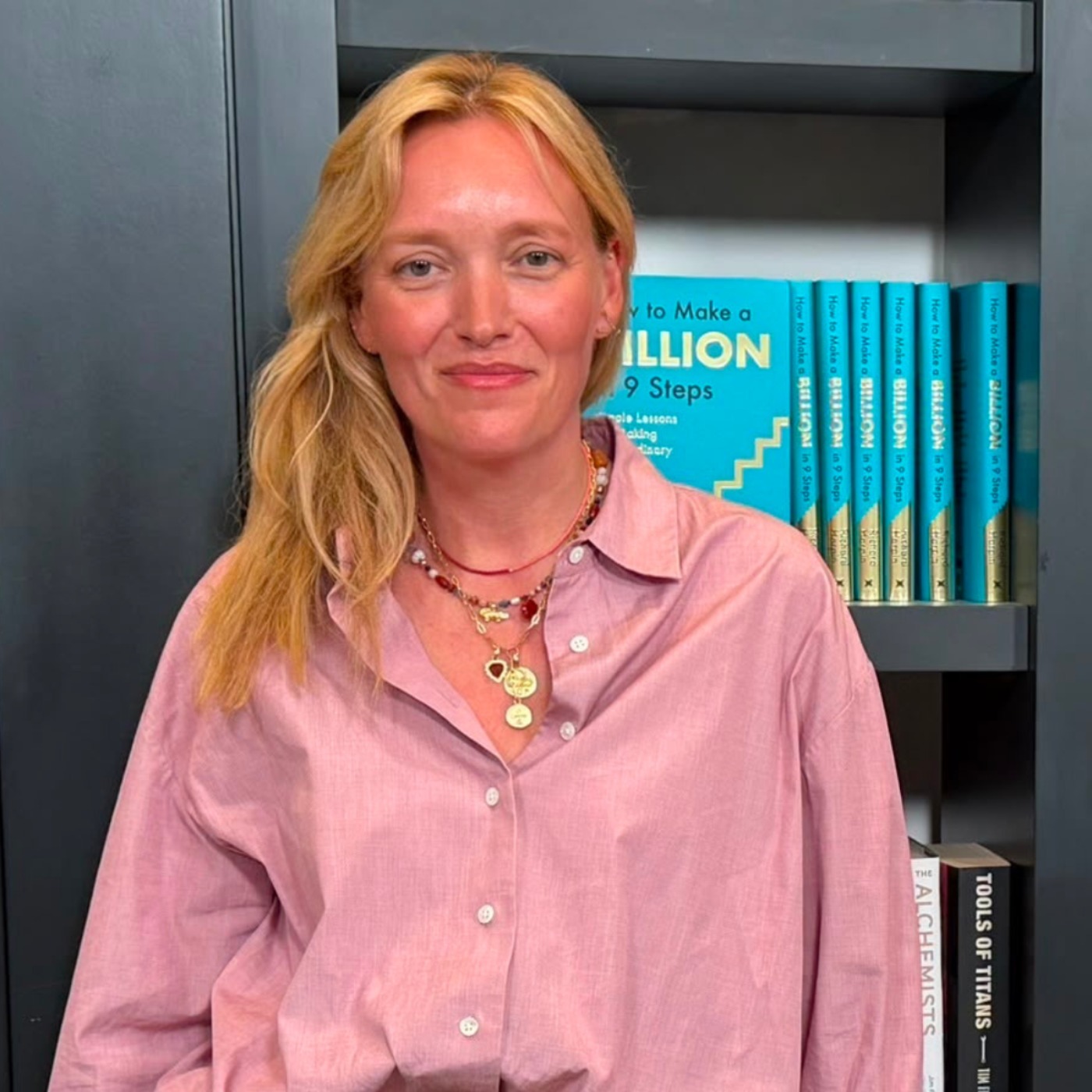
Kate Prince, founder/CEO of Ancient + Brave, explains how her wellness supplement brand scaled 700% in 2023 (from about £1m to £10m revenue), reaching over £54m sales, and aims for £100m in the next two years. She covers bootstrapping, retail expansion, product strategy, operations/process changes during rapid growth, and her push for regulation in an “unregulated” wellness market.
Kate Prince is a former city media lawyer (trainee at a top 10 firm; later in-house at Endemol working on reality TV like Big Brother). She started Ancient + Brave after side hustles, launching from a kitchen-table setup in East Sussex; the brand is now stocked in Selfridges, Harrods, and 20+ countries.
Purpose and profitability can coexist; the brand became a B Corp within two years; growth in 2023 happened with “no HR” and minimal finance/reporting; product decisions are driven by science and customer needs, not trends; she wants evidence-proof marketing and a “wellness charter” to improve compliance.
Trade-show selling to buyers; 2023 team growth from ~10 to ~40; vegan collagen launched in multiple variants then narrowed to one; D2C subscriptions are ~84%; influencer examples include Davina McCall and Jo Marla; international rollout via Germany, Spain, then the US with local nutritionists.
Written by AI. May contain mistakes.
Learn how Ancient + Brave experienced remarkable growth in one year.
“So we went from the kind of 1 million to 10 million in one year.”
Explore Kate’s background as a city lawyer and its impact on her career.
“But I started in the city in a top 10 law firm.”
Kate shares her journey from law to launching her own business.
“So we did Big Brother and that went on and pretty much anything you could get made with Channel 4.”
Learn about Kate's initial business experiences before Ancient + Brave.
“Everyone should kind of bring that flair if they can, because even now in the business, I would encourage every single person working for me to be an entrepreneur.”
Discover how Kate founded Ancient + Brave and the inspiration behind it.
“And Ancient and Brave wasn't your um your first startup business was it?”
Kate discusses the process of launching her first products.
Hear about the challenges Kate faced with early sales and retailer engagement.
“So I think from idea to launching first product was around six months.”
Kate explains her funding strategy and the importance of bootstrapping.
“So to keep them all as natural ingredients as possible and to take those learnings, which is also around holistic health and whole body health.”
Explore how Kate integrates purpose into her business model.
“And so very quickly we got into places like Selfridges and Whole Foods and Planet Organic.”
Learn about Ancient + Brave's commitment to sustainability and quality.
“I went out about two years in and went to some high net worth individuals and they invested in the company.”
Learn about the rapid growth of Ancient + Brave and their B Corp certification.
“We've been in the Times, you know, actually top 11, I have to say, because last year we were at number 11.”
Explore the challenges faced during a year of rapid growth and scaling.
“So the two do go together and you can combine that with massive revenue growth.”
Discover insights on hiring strategies and team dynamics during rapid growth.
Understand the importance of establishing processes in a growing company.
“So that was about saying, let's recruit for the size of business we want to be, the 100 million rather than for somebody that can help run a company turning over 10 or 15 million pounds, was it?”
Learn how Ancient + Brave decides on their product offerings and adjustments.
“because that eyesight and that communication or understanding of what both those two teams need, I think works super well when you have one person with the full oversight of it.”
Examine the subscription model and how it fosters customer loyalty.
“I think there's a need for every business to make a profit and we have a healthy eye on the profit but we never make a decision to launch a product based on price.”
Discover the significance of omni-channel strategies in retail growth.
“bit longer and so the subscription is that kind of encouraging that very healthy routine ritual of every day and works well for everybody.”
Learn how retail distribution affects subscription customer acquisition and brand experience.
“And in the retail distribution, the sort of wholesale channel, does that make it harder to then pick up subscription customers?”
Understand the need for regulation in the wellness industry and how it can foster trust.
“We've talked about subscription, but not prescription.”
Discover how to effectively use brand ambassadors to enhance credibility and storytelling.
“So, you know, I absolutely like take the products every day.”
Learn about the challenges and strategies of expanding a brand into international markets.
“And when I first met Private Equity, I remember very proudly saying I'm in 23 countries.”
Explore the evolving role of leadership and future initiatives within the company.
“which we're lobbying behind the scenes right now in terms of heart health and raising that as an issue for women.”
Learn about the importance of team composition and leadership in business.
“And there is an adjustment I think you start to make and I'm probably starting to make that in terms of when is the time for me to put other people in play.”
Discover the value of mentorship and community for entrepreneurs.
“And have you had a coach or a mentor along the way?”
Understand the role of failure and constraints in driving innovation.
“So I think that for me has been one of my biggest learnings and also something that I want to instill in all the team, which is slightly my aversion to process because sometimes that can slow down that pace.”
Explore the challenges and sacrifices of being a successful entrepreneur.
“party with way more ideas, which I can see is much more enjoyable way to work.”

Get the gist, explore an idea or ask about something said.
 Claude
On The Business Leader Podcast with Sir Richard Harpin, what are the key points of this episode?
Searching your listeningAutomatic transcript. May contain errors.
0:00In 2023, we had 700 % growth. So we went from the kind of 1 million to 10 million in one year. We had no HR, we had no in-house finance. I didn't know what a monthly board report was. I mean, we just didn't have one. Do we have money in the bank? Great, let's go and buy more stock. Last year, we nudged over the 54 mil. And you know, we have our sights on 100. Even standing still is still a choice that we're making. Whilst we are completely a wellness business, what we are is a fast paced scale up. £70 ,000, four products and a kitchen table in East Sussex. This week's guest walked away from a career as a city lawyer to start a wellness supplement business now stocked in Selfridges, Harrods and over 20 countries.
0:43Kate Prince is the founder and CEO of Ancient and Brave. In one year, her business grew from£1 million of revenue to£10 million. In the next two years, she has her sights set on getting the business to£100 million of sales. Her advice to her younger self? Be braver. In the next two years, she has her sights set on£100 million of sales. The Business Leader podcast is sponsored by RBC Wealth Management. You're making decisions that matter to a lot of people. But what about your ideas? Ideas for what you want your money to do. Ideas that need the time and advice they've never been given. At RBC Wealth Management, with over 100 years of expertise, our advisors build plans around your ideas, not just your assets.
1:36Ideas happen here. Talk to us at RBC Wealth Management. Capital and any income from it is at risk. Kate Prince, ancient and brave. Great to have you on the Business Leader podcast. You started as a law trainee. I did. Yes, for my sins. That feels a very long time ago now. But I started in the city in a top 10 law firm. And I have to say it was great grounding. I mean, I continue to work hard, but I think that is a brilliant way to start. And this was as a media lawyer. Yeah. So actually, I just started in you do your kind of four different areas that you do as a trainee. So it was very much kind of corporate law based.
2:15It was city based. I did some employment law, which I really enjoyed. And I decided that I want to go off and be an employment law originally. But quite quickly, I went to a media West End law firm. And I was like, actually, this is where like, I think the more kind of fun side of the law is. So I very quickly went into Endemol, which was in-house, which TV company that at the time I went in was doing some very kind of groundbreaking work in terms of reality TV. So we did Big Brother and that went on and pretty much anything you could get made with Channel 4. So it went on from Big Brother to the games to the farm and we kept going.
2:48And if you gave us a celebrity in a room, we would make a TV series out of it. But I think what it really did was give me a great grounding in being a very kind of commercial and creative lawyer because it was the time where nobody had really done reality television. And And we were honestly making up the rules as we went along, which actually meant that you had to bring everything you kind of had into the party and not just follow what had been written before. But was there then a breakthrough moment where you said, I'm having fun here, even as a lawyer, but I really want to run my own business?
3:21I think I'd always had a side hustle. So even from a very early age, I was that kid who was doing Blue Peter Bring and Buy sales. and you know and I was at work from the age of about 12 I had a job and I was always kind of sort of looking at how I could make some cash and how I could support myself and that became very important for me very early on. And did you know at that age that you were going to be an entrepreneur one day and run your own business or not? I don't think so I don't think it was even considered I didn't know any entrepreneurs everyone had very safe paths and in fact actually I felt like actually the right route would be something like law which felt very steady very progressive quite stable um and i saw that as quite sort of glitzy and glam and heading to the city and so for me that became a very lovely easy choice but is that is that the fault of our education system that shouldn't we have an entrepreneur in every school for 14 year olds to say um entrepreneurship should be a um an official career like law and accountancy Right, like 100%.
4:26I mean, I think that should be all over the government as well and the House of Lords. Everyone should kind of bring that flair if they can, because even now in the business, I would encourage every single person working for me to be an entrepreneur. And whether you're in the finance team or the ops team, you can always come at any problem and find solution with a creative angle. And they're always like, that's the best way to work. It's the most fun way to work. It brings your imprint, I think, into any business. And you didn't waste your time as a lawyer, but this country could have had you as a successful entrepreneur even earlier.
4:59If you'd got that entrepreneurial experience from somebody coming into school and showing you that that's a relevant career. I mean, that's a very nice thing to say. I think I probably needed that grounding and I would probably recommend. I love the fact that I kind of had these side hustles. My brain was always really whirling. but actually I think having that grounding and solid path always kind of stood me in good stead I mean it taught me a lot I was like I'm not afraid of contracts I'm not afraid of negotiation I'm not afraid of debate I'm not afraid to lean into difficult conversations and I think all of those things I definitely learned through my quite short career as it turned out as a lawyer and stood me in good stead when I started my own business so I don't kind of regret those years I think they were great grounding but it did feel like there was nowhere to turn particularly when I started my business it just felt like I was I was quite alone at the kitchen table.
5:54And Ancient and Brave wasn't your um your first startup business was it? No I've had a couple I've had a couple so I think because I'd always had that wanted my own thing and I didn't really know what it was going to be but it was can I use my creative side and I think that's what really didn't come out of school was I couldn't draw, I couldn't really do creative writing, I wasn't particularly a musician or anything like that. And so there just was like, you are just not a creative, so you need to go down a very different route, academic route. And I do think, I do feel very differently about that, and I think that's what schools could teach, that actually, and they do now, they definitely do.
6:30And what was your first proper business? So my first proper business was, my husband and I had a tea company called Prince and Sons Tea, which is a very sweet, lovely British, t brand which is still you can find to this day and things like the pig hotels and it's still going but my husband is very laid back and quite horizontal as a human being which is kind of brilliant for me you're the driving force yeah so we so we balance each other out really nicely but I think what it made was that I was kind of going to bed and literally like have you done that email and how could we do this and could we launch matcher and how quickly could we do that and he was a bit like oh you need to chill out and I was like what you really need to do is start my own business so that's what I did.
7:12I'm Richard Harpin a Yorkshireman who sold my company HomeServe for four billion pounds and this is the Business Leader podcast where we look at the stories and strategies behind modern businesses. Are you a CEO or founder of a British mid-sized business? Are you ambitious and want to scale your business? If so join the Business Leader community. Our members benefit from coaching, peer-to-peer forums and exclusive learning events. For more information, sign up to our free weekly newsletter at businessleader.co.uk slash newsletters. Together we can help British businesses scale and succeed. And so out of that then came Ancient and Brave.
7:54And how did that come about? So very much, I think I was looking to do my own thing and I kind of knew the type of business that I wanted in terms of like purpose driven and giving back and you know I had a lot of kind of thoughts and ambition around that but what the actual product was it took me a while to kind of find but I was doing a wellness course and mostly for myself and for my family and I was realizing that there's a lot of ingredients that are actually brilliant that are out there but actually I was sourcing quite a lot from the states at the time and they weren't in the UK and it was really the combination of the ingredients and how we put them together that really kind of I think powered me forward in terms of I think I can do this but I can take these ingredients that we're sourcing from other places in the world I can put them in very beautiful ritualized kind of packaging that you want to use time and time again it became very important to me that you wouldn't put it in your cupboard and that it would look like a kind of rock star in its own right and you'd have it in your kitchen and so coming up with the idea of a supplement business to kicking it off and getting your first sales.
9:02How long was that? And how did you make that happen? So I think from idea to launching first product was around six months. I mean, I think when I get going, I become quite obsessed as many entrepreneurs do. And so it becomes all consuming and I can't really focus on anything else until I've actually sort of, you know, birthed the product and birthed that idea. And I worked on very small scale with a local designer. In fact, my packaging design has never changed. We've always stayed the same for the last like nine years. So I think, you know, there was something quite magical happening when we kind of put the idea together.
9:36And to this day, it still feels original to us and the ethos. And we really, really overthought every single little thing. How did you come up with the name, which I think is great? Thank you. The ancient is this kind of the ancient old, the rituals, the kind of learnings of hundreds of years of Ayurvedic medicines and medicines from around the world. And naturally implies, I think, that we won't be using or we don't use a kind of any fillers or additives or, you know, preservatives in our products. So to keep them all as natural ingredients as possible and to take those learnings, which is also around holistic health and whole body health.
10:11and to marry that together with kind of brave new science, innovation, the fact that you can now have collagen and have it in a very pretty jar on your shelf as opposed to actually having to go out and slaughter your cattle. How did it feel when those first sales came in? And was there anything that you got wrong in that early startup phase? For me, it was very much me at the kitchen table. And so I was kind of learning as I went along. And I think there's probably a hundred things that I got wrong, but I learnt really quickly. And I think in that first few years where everything felt quite hard fought for, you don't know if it's going to be successful, you get as many no's as you get yes's.
10:53And who were the no's coming from? I think not actually from retailers. We struck a chord with retailers quite quickly. I mean, they were like, oh, this is quite different, quite unusual. And so very quickly we got into places like Selfridges and Whole Foods and Planet Organic. How did you get in there? What was the process? I mean, I think I turned up at a few trade shows and had some very, you know, great conversations with buyers who'd come round. And I would encourage anyone to do that. We haven't done trade shows for a number of years. But you had your own stand there, did you? Yeah, I did.
11:24And I remember I had to unload the whole thing. I had to ask the girl next door on the stand next door to cover me if I went to the loo. Like it was, you know, it was very much just me in the very, very beginning. How much money did the business need to set up and cover the products and the cash flow in the first couple of years? The very first kind of what I call like design, the website, introducing our first run of packaging, which is probably quite small. We launched with four products. We probably did about 2 ,000 of each run. So it was quite small numbers. That whole process, including getting that product ready for market, was about 60 ,000 pounds.
12:03And then later I put in about another 10 ,000. And that has been the whole amount that I've ever put into the brand and launching it. Do you look back and say, great, that I bootstrapped the business from the beginning or that should have taken investment earlier? No. I mean, I think I did take it quite early. I went out about two years in and went to some high net worth individuals and they invested in the company. and then after that in 2023 we went for private equity funding but I think the first few years it was absolutely right that I bootstrapped didn't pay myself any wages which again I think is very normal for the first six months I think I was doing two jobs I was kind of balancing being you know still doing advisory work for various production companies and tv companies I was still slightly working on the tea company and supporting that and then I was launching Ancient and Brave.
12:57And when you went out to those high net worth individuals, what sort of what was the turnover then? Oh, gosh, we were small, probably about a quarter of a million for a second year in. I think we basically did about 124 million first year and then doubled and kept doubling up to the end of 2022. When in 2023, we had quite extraordinary growth that year. And how did you get those shareholders? How did you contact them, identify them and then close the deal? I work with a finance house who actually just introduced me. And many sort of corporate finance boutique that helped you. Who did you use? So at that point, it was Spain Lindsay.
13:35And there was a fantastic person there who I work with, very kind. And she has continued to kind of support me throughout my whole time and check in with me at Ancient and Brave. Can you have a business that is profitable and fast growing and has a purpose? How do the two go together or not? Yeah, I mean, I truly believe that you can. And I think we're testament to that. We have had very fast paced growth. We've been in the Times, you know, actually top 11, I have to say, because last year we were at number 11. But we're back at number seven, I think, this year. Well done. And thank you. In the Times 100.
14:14So we have had this very fast paced growth. But one thing we've baked in has been our kind of mission, purpose and principles and value system, really, from the very, very beginning. We very early on, so within two years, we became a B Corp, which felt really important to have that level of independent verification in terms of everything that we were doing. And along the way, we've always, you know, we have ingredients. We always go to the Soil Association to be certified, the Vegan Society. We have specific ingredients that we order that we get fish ingredients, for example, for our lovely wild collagen, which are MSC certified.
14:49So they're sustainable stock and we can know where they're coming from. So I think all of those things have been very important to the brand and to bake into our value system. And I think by doing that, what we're showing is that we are the brand that you can trust and that we align with your value system. And I think that becomes very important as a communication and a consistent kind of viewpoint with your customer. So the two do go together and you can combine that with massive revenue growth. What sort of growth have you been achieving over the last few years? We did have this, you know, great year, which was brilliant and kind of awful all in the same year because, you know, growth can do that to you.
15:36It's extraordinary and it's terribly exciting. and but you sort of finish the year on your knees a bit because you're like you've been juggling so many things and we were only 10 of us and in 2023 we had 700 growth um so we went from the kind of 1 million to 10 million in one year which took the team from 10 to about 40 and so we were rapidly trying to recruit we had no hr we had no in-house finance we barely had a bookkeeper and i didn't know what a monthly board report was i mean we just didn't have one so it was all slightly flying from the seat of our pants and a lot of gut and do we have money in the bank great let's go and buy more stock and let's keep going and that's how we moved forward that year and it was extraordinary and i think you know many of the people who joined us that year all at a very fast pace um are mostly still with us i can't think of people we've lost so that was great anybody in that 40 because you were hiring a lot of people all at once that didn't work out and that you had to have that difficult conversation with?
16:37I mean post then definitely because I think the individuals that take you from the 1 to the 10 may not be the same that take you from the 10 to the 100 and also similarly they may not want to you know I mean things grow and culture changes and pressures change um we've all we all started as you know in the first 10 we were very much kind of jack of all trades i mean we were doing every job you can imagine and trying to work it out as we went and in fact my first few hires i had the things i really couldn't do which was basically like graphic design and i knew we wanted a certain look and feel and that was so important to the brand but you know as was the innovation the education the science the credibility around that and so you know I hired my director of nutrition and innovation and science and education both of which are still with us today and they were in my first 10 people because that felt like that was the education piece that we really wanted to put back out there you know and and talk about to our customer base and that definitely wasn't coming from me because that wasn't my background and that didn't feel credible.
17:45And where are you today in that the journey from the 10 to 100 million of revenue yeah well we've continued fairly well um so last year we we nudged over the 54 mil and which i'm just delighted to say has taken us into super scalar there's a super scalar group of women and it's taken us into that realm which is very nice to be part of and you know we have our sights on the hundred whether that's this year or next is is to be determined but will happen in the next two years and with how many people in the business today So probably, well, we do our own fulfilment, most of it, about 80 % of our own fulfilment, particularly in the UK.
18:24We obviously farm that out to third parties in the US and now in Europe. So a lot of the workforce, half of the workforce is there in our warehousing. But we have about 190, I think, as of today. We're recruiting quite rapidly for very specific roles and areas that we want to grow in, in terms of building out our creative team right now. And your direct reports, your C-suite team, are they all in place? So we went through one C-suite in the whole of the nine years. We've not always recruited, probably in the very best way. And what I mean by that is they were absolutely brilliant people, but they just probably weren't brilliant for the company in terms of the growth of it.
19:11and in terms of the pace that it was going at or in terms of essentially where we move very, very quickly. So we've kind of churned through a number of years very, very fast. So that was about saying, let's recruit for the size of business we want to be, the 100 million rather than for somebody that can help run a company turning over 10 or 15 million pounds, was it? Yeah, I think that's absolutely right. I think what we brought in were incredible, brilliant, incredible people, very nice people. But what we didn't do is probably really look at the pace of the growth and what type of character or personality or experience that that would need.
19:55And so that is what we're currently doing and looking at kind of building back out. And what sort of characteristics are you looking for in those senior people that you're bringing in? I mean, I think someone who just loves the journey of growth really gets the spirit of the business. And whilst we are completely a wellness business, what we are is a fast paced scale up. And I think it's having that kind of hunger in terms of the international experience is also what we're looking for. That's something that I definitely don't have. and that we need is someone who's kind of seen it, done it, had that experience of working in those kind of brands within America and in Europe.
20:37Have you tried to avoid bringing in people from very large companies where there might not be that cultural fit? I mean, I definitely had a feeling of I don't want it to be corporate. Like, we have a very distinct culture. We want to maintain that. I feel like everyone should be these kind of young entrepreneurs and I want everyone to have that and feel very creative. I want you to have an idea in the morning and it can be, you know, happen by the evening. I think it's that pace and that, you know, excitement of pace and the willingness to fail. And I think that too many processes can kind of slow down your pace.
21:12I think they're very much needed and we very much needed them. And we needed to put quite a few in last year. I mean, your gut takes you a long way, but definitely processes needed when you get to 180 people. What sort of processes? Just talk about a few of those. that other entrepreneurs will be thinking, yeah, we need to put processes in our business as well. Yeah, well, I really don't like processes in our creative team. I think that kind of can hamper creativity, but very much so in probably operations. It becomes very logistics heavy and we've hired people who are very brilliant in their jobs in that they're very specific and have done that before.
21:50And when you're moving the amount of stock that we're ordering and you're moving it from the UK through to Europe, to the US and kind of managing all of that. I think there's definitely process in place. I think we potentially didn't always have our ops team and finance team communicating really effectively. And that can obviously lead to some hairy moments if they're not talking regularly. And we've solved that by bringing in a very brilliant COFO who kind of encompasses both. And that has been one of the best moves that I feel like we've made is to make that role one role instead of having two separate roles.
22:25because that eyesight and that communication or understanding of what both those two teams need, I think works super well when you have one person with the full oversight of it. The products are great. You said that you started with four products. I did. How many do you have today? I think we have many combinations in terms of different languages and many different bundles, but probably at its core around 20. How do you know whether 20 is the right number or whether you should be at 15 or 40? What we always look at is we don't follow the trends. So we always kind of look to what the science is telling us.
23:04We're obviously obsessed about the customer. So we look at what the customer is telling us about. What do they need in their diets? What are they looking at in terms of that they can get from us, but they may then be going elsewhere to other brands for. So we want to kind of be able to become and service all the needs for our customers. So you would look at what the competition are offering and which bits would fit with your product range as well? I think we definitely stay in our lane and we kind of look forward rather than side to side. I mean, I think it's great to have a healthy interest in your competitors.
23:35But essentially, I have a team of like 14 nutritionists and scientists. And so we are going back to what the science is saying. And they're literally going back to, you know, the medical journals, et cetera, and reading what new reports are coming through, what exciting ingredients can be found in the world where and obviously like far out you're kind of you're looking at where you think the benefits could be brought into the UK for our customer base or where people are seeing great results in other countries so we are doing that all of the time so when we have an MPD plan we probably got one which would we had this average of about three products a year and we have one that we could fill for like three or four years so i think what we then need to do is we kind of sit back and we keep reviewing that analyzing that making sure that aligns with our values making sure that we've got a great solid supply chain do you ever withdraw any of your products so you're narrowing the range down a bit or it's always yeah no products we definitely did want so we got very excited by doing a vegan collagen uh in order to kind of we wanted to have something for everybody uh but we did it in three sort of different flavours and actually we still we now just have one and that that was the best one it was it was the nicest one and it feels like absolutely right so you're gonna have the courage to withdraw a few products this is true collagen this is the this is the number one product i think isn't it that's right how much does it sell for so that is 32 pounds and it's a whole month's supply that you get with that but it's a great quality it's a european collagen a lot of the collagens in the market are south american and we will say you don't have to buy from us but really understand what you're buying where you're sourcing it from you know a european collagen is a is great because we've actually always had the legislation in place from like 1998 which is around no hormones antibiotics um to our animals which is slightly different when you go to other territories and how do you how do you know that 32 pounds a month is the the right price well what we're looking at is making sure we always want the absolute best quality of product and we want it to be given to you in the best possible way.
25:47I think there's a need for every business to make a profit and we have a healthy eye on the profit but we never make a decision to launch a product based on price. You know we would never cut the ingredients or go for a lower quality ingredient in order to hit a specific price point and in fact actually if it was just too expensive but it was absolutely the best therapeutic product we probably just wouldn't be able to launch it because we want to bring something to our customer base that we feel is is actually completely fair valuable value and um you know representative to them i like the sound of per month a subscription business which um which i love how much is sold as a subscription product compared to a one-off sale so currently our d2c the subscription is about 84 percent so it's a healthy it's a healthy number of people who want to kind of just dive in straight in and do the subscription it's obviously we've done the you know economics on that and you know it's really important to us that the consumer really feels the benefit of the ingredients and we know for some of our products that can take a few days but for some it takes a bit longer and so the subscription is that kind of encouraging that very healthy routine ritual of every day and works well for everybody.
27:08And then how important is the omni-channel model? I talk about bricks and clicks and paper and that retail is important as well as online. Up to about 2023, we were very much about 50 % B2B in DTC, but we were still very tiny. And then we had this big growth year. We became very kind of focused on DTC. And I think in the last few years, the omni-channel has become more and more important. I mean, we want to show up where our customer is and we want them to be able to access that wherever they want. But we were quite late to the game in terms of going on Amazon. But we have done that very successfully since 2023.
27:47We've brought in a whole new retail team. In fact, we've doubled the size of it in the last year, recognising how important that is and valuable to the business, but also to the customer. And I think it's very important to the business. And in the retail distribution, the sort of wholesale channel, does that make it harder to then pick up subscription customers? There's a compromise to be done. There's an equation to be done. You know, actually, I think if you're with the right retailers, then we want to ensure that every customer is getting the education piece as well with it, which is hard in some of the retailers.
28:24Some are better than others. Some have great relationships with their local consumers. and you know that works really well but I think there's an equation to be done in terms of you know we feel we don't really ever discount as a brand and so a lot of retailers that's their go to is probably a discounting mechanism which means it probably won't work for us to be to be with you and in your store on on that basis but I think it's still a very important channel and it's not one to ignore. And what about pop-up stores of your own or could you one day have a your own retail store or not? I mean we've definitely considered it, we've done a very small pop up quite a few years ago now in London, we've just shown up at a couple of festivals this summer and done a whole Ancient and Brave tent and experience and these are so valuable in terms of the brand moment and also just having that one on one communication with our customer and watching them kind of come and enjoy the products but also enjoy the experience that we put on, we had you know hour after hour activity in terms of cacao ceremonies and gong baths and lots of other lovely things.
29:31I mean, I think it, I would never say never, it hasn't really been on our radar to date, but I often pass the very beautiful Aesop shops and think, oh, it'd be quite nice to see Ancient and Brave in a similar setting. So maybe you need to be brave and open one store at some stage, but I guess it's prioritisation, isn't it? I think so. I think we would only want to do that if we could bring a very specific experience to our customer, you know, which wouldn't be just about the product. We are brand first. We are product and ingredient completely obsessed, but we are absolutely brand first. And it's that experience that we want you to have with us as a brand, whether that's around the communication that we do or the education piece or talking about the brave lifestyle that we live or, you know, the people that show up and represent the brand.
30:24And these things are all very important to us. And I think so if we're going to have a physical space, I think we'd have to make sure it was definitely big enough to be able to kind of house these other ideas and interests that as a brand that we love and promote. And able to make money. Absolutely. Well, unfortunately, that is that is the bottom line. Yeah. We've talked about subscription, but not prescription. What's your views on regulation within this marketplace? Yeah, well, I would completely advocate for it. I mean, I think it's so unregulated. There's such a need for it. Obviously, I come from a legal background.
31:01And for us, the compliance of the products and the compliance of our communication has always been paramount. You know, we want to get that exactly right. And it's very much dictated, if you like, about what you can and can't say in terms of compliance. But what we're seeing are just so many brands that is feeling a little Wild West out there in terms of are they being transparent about the ingredients and the sourcing? the amount of levels of specific ingredients that are in there are they over claiming which i think actually is not a great halo for the whole of the wellness community because i think what we want to do is you know again you want to show up for your customer and you want to give them the absolute best product that they can have and you want them to have that complete trust in you as a brand but as an industry and i think there are a few players out there who are not showing up in in the right way and I think that's terribly unfortunate and I think I would absolutely welcome any regulation in this space around specific products and specific ingredients.
31:59Can you proactively help with that? Have you got a sort of in-house lawyer now that you know the benefits of law that could help change the industry? Well we still don't have our own in-house lawyer but I have got to the point where I'm like I'm not reading another agreement so everyone's getting quite skilled of that but we've considered this quite a lot we've actually started our own um internal thought process which we're calling um the wellness charter um in which we're going to we're setting out like sort of 10 principles that we pledge that we will and won't do as a brand and how and again like the things that we we just won't won't do and that we will always be compliant and that we will always be evidence proof and i think that's probably now the next step for us would be quite a lengthy route in terms of lobbying parliament but ideally also getting other brands and even our competitors you know signing up to that involved in that supporting that because there are some incredible brands out there um who deserve that level of kind of i think they would also welcome regulation there's nobody who wouldn't welcome regulation if you're doing it right the only people who would fear it is someone who is blatantly sort of ignoring it how have you managed to build the brand and how important is it that that brand is associated with you as the founder or not?
33:20I'm a bit old school about it so I've always taken personally quite a back seat about it and I think part of that is because when we're talking about the products and the benefits of the products like I personally feel this isn't the same for every brand in wellness but I definitely feel that the only people should be talking about it are you know the nutritionists and the scientists and basically those individuals that have 10, 20, 30 years experience in this field and have real credibility and real understanding about the benefits on the body. Now, that is not my background. So, you know, I absolutely like take the products every day.
33:57I love taking our products. But, you know, my background is very much kind of commercial and business. And so I'm very clear that I want to stay in that lane and I want to support these products and bring them to the marketplace, but have other people represent them and communicate with them. And that can start with the team. But we have also used, you know, other ambassadors and influencers over the years who tell a very evocative and personal story. Davina McCall, I think, is one of your big customers. Talk about that relationship and how the influencer ambassador model works. Yeah, sure. I mean, she was probably the, I think she was the first one we ever formalised.
34:35And that was only a couple of years ago prior to that two years before that she had been incredibly kind and as she is about many many brands and you know and things that she genuinely loves and had sort of said down the camera that she only takes um at that point showing to collagen and um you know showing to ancient and brave so it was just like a bit of a bit of a you know win but obviously it took us a few years to kind of grow and build that relationship and we wanted to make it feel completely organic and she's an incredibly generous and kind and authentic human being and it became very important to us that we wanted to tell our story and her story as well and so that relationship just kind of has worked really.
35:18And potential to do more of those, find those other famous customers that are using your products and capitalising? The one thing we consider very carefully is that we only want to work with people where they whether it be a celebrity or or just you know a general customer who only uses our products so they're not going to be forced to use the products they've never not heard of us they have always been using them hopefully for a very long time they have very specific products they love there's there's really no way that you could take 20 products a day even I wouldn't do that and and so I think it's very important that people kind of say these are the two or three products that I love of your range and so those are the only ones that I want to talk about credibly and I'm like yeah no that's absolutely perfect so I think what we do is we try and work with very different people on different product lines and for example we're working with the very lovely Jo Marla at the moment for very specific reasons to show well look collagen can also be taken by men and we launched an ancestral protein earlier this year which is a very brilliant delicious gorgeous product and we're very proud of it and And, you know, he was the man to help us launch it.
36:27And it also became a kind of a moment of comedy. Would Davina get jealous about Joe with his protein? Would Joe nick the collagen? You know, how can we kind of make this play out with real personalities telling our story? And so it's become, it's allowed us to have kind of moments of humor and moments of reality and realism and actually just kind of bring a real kind of personality and very different personalities into the brand. So they're just two of the many people that we enjoy working with. And it just, I think, enriches the brand and enriches our experience of working at the brand as well.
37:04Ancient and Brave is not just a UK business. You've expanded internationally. How did that come about? We have. And when I first met Private Equity, I remember very proudly saying I'm in 23 countries. and when I really met was I was probably in about one store in about 23 countries and they were like yeah that's not that's not going to fly that's not what we're after but it hadn't occurred to me till then that that wasn't what they really wanted and so I have had to learn and that has part of been part of being part of a private equity experience the last you know two bit years has been that actually there were things that I just completely didn't know that I and what did they want then for you to be in how many countries so what they want to do is what anyone will want you to do is kind of prove the model so take when you've had a great model that you've proven in for example in the uk the idea would be you'd go to one country um preferably probably in europe or if not the states seems to be kind of the norm um and go out and prove your model again we slightly did it differently and we went okay let's go germany really quickly spain and then very quickly again US so we've probably bitten off quite a lot in the last year but actually again that's also slightly sort of playing the odds like which countries are going to take us where are we going to fly where are we going to resonate more than others you know and we've had very different experiences in all three territories but we're still very very early days and we're learning and growing in all three which territories are most exciting and then what have you have you got any people on the ground in any of those territories yeah in all three we have the first hires in all three countries are nutritionists because if we're going to get out and tell our story again that for us is just so important and we also have hired similarly a Spanish and German speaking nutritionist in the UK so that we have that kind of constant communication so we can be liaising with influencers and press and any of the kind of you know ads or informational marketing that go out we want to make sure that they're completely aligned and compliant again So that became very specific.
39:09And then also we put a marketing person into each country and we're now building out the teams. So we're running kind of hubs within the business. So we'd have the normal kind of business sectors and, you know, different departments. But actually, we now have kind of a Spanish team, obviously, working very tightly together, a German team and a US team. And you've said stop on some of those 23 countries, have you, to say let's get more focus and do them properly in a smaller number of countries? Yeah, I think where we've had, you know, one or two customers that we've had for a very long time, we haven't specifically said we're not going to supply you anymore.
39:42We just we just haven't leaned into it. So we haven't leaned into those conversations more. We haven't wanted to expand in those territories because we we very much want to keep the focus. I mean, there's a lot of noise right now around the Emirates and, you know, what's going on there. And I think there's a big build in the wellness industry. I think it's super interesting location regionally to kind of keep an eye on. But it's just it's absolutely just not our focus. How has your role developed since the business started? And do you think there will become a point in time where you say, well, I'm not stepping out of the business, but I'm stepping up and I'm going to hire a chief exec that can sort of run the day to day.
40:23And you focus your efforts on what you're the very best at. Yeah, I mean, I think there's always that moment you think, well, I know when that moment comes. right and I always had in my head I mean not from the very early days because in the early days you're just trying to get to the next month but probably in the last few years I was like can I get to the hundred million and I think I've just set my you know I said the 10 and then the 50 and the 100 so I'm just pushing out my targets but I definitely want to see it through personally to then I think at that point there is so much that still to be done in terms of we want to keep showing up in a really kind of original way creatively.
41:04There's great new products that we have in our pipeline that I would love to bring to the marketplace. There's lots of other ideas we have around our entrepreneurship and we have lots that we do within ESG and charitable events and things that we're working on. We want to bring a whole campaign to the market, which we're lobbying behind the scenes right now in terms of heart health and raising that as an issue for women. And we're calling that Project Cora and that's coming to the market next year where we're going to be shouting quite a lot about that, particularly if we can change some rules and regulations in Parliament, that would be a fantastic achievement.
41:39So there's just a lot to do. But whether I need to show up each day in terms of trade and the numbers and the finance and the ops, that's not my sweet spot. Because it sounds like there's a whole role for you that doing all that bit that you've just described, over and above somebody running the day-to-day. I think that's probably true. And there is an adjustment I think you start to make and I'm probably starting to make that in terms of when is the time for me to put other people in play. Like we've got, we're building out this fantastic C-suite right now. We've got most of them kind of in place, one or two more, we're just edging in.
42:25How many of those are women? and I think there are about 85 % of your total team are women, which is great to see. Yeah, my chair is a woman. I've got 85 % of the employees, including in the warehouse, are women and of my senior leadership team. We haven't specifically gone out to hire women, but I think women very much are kind of drawn to the wellness industry and to the brand and we're very happy to hire locally and we're not based in London and I've always really loved working with women. Is there any argument to say that there are some key hires that you won't be able to find locally in Sussex and that a small London office might be required at some point or not?
43:10Yeah, we've had a satellite office for about a year and a half now, but less and less people seem to be using it. So we definitely have people, the employees who live in London and are commuting and from elsewhere and they're commuting, reverse commuting back to Sussex, which actually is quite nice because the trains are quiet both ways, you know. And so I think that's sort of working quite well. And it's about ensuring that we're hiring the right team and the very talented team. And I think there has to be a little bit of flex when you're trying to put that team together. But it's still really important to me that people are in the office as much as possible.
43:49I love it when the whole team's in. I love that communication piece. Again, that's probably a little bit old school. Do you leave it up to them or have you set a rule that it's four or five days in the office now? I definitely would like the whole C-suite in three or four days of the week. But I do recognise also there's a balance and sometimes there's a need for quiet, thoughtful working at every level through the business. And, you know, that's been a journey that I've been on in terms of understanding, recognising that and seeing the rewards of that. And so I'm feeling a bit more relaxed, shall we say, about working from home than probably I did even just a year ago.
44:35And I think, you know, there's just so much kind of trust and gains that come with that when you kind of open up that relationship. And obviously you only want to work with people that you that you completely trust and have your back in the back of the company and they want to do an excellent job. In a short space of time, Kate, you've gone from running a business turning over thousands of pounds or tens of thousands of pounds to 50 million pounds plus. How have you learned? And have you had a coach or a mentor along the way? Is there a business book that you've learned from or how have you developed your skills as an entrepreneur?
45:11I haven't had a specific mentor, but I've worked with some very brilliant people along the way. And I would say that, you know, my board have really contributed to that. And I have Leon Hughes, who's from Piper. And I have Emma Woods, who's kind of a serial board member. She's my chair. And actually, I've just learned such a lot from them. And they're always there. They're pretty much a rock when I need advice. It's definitely probable that we benefit from additional advice, particularly internationally now and that's probably what we're what we'd be looking for next but also the community of founders when I feel like when I first started I just wasn't really aware of a community of founders now there's so many great groups particularly specifically female focused I mean there's you know Sahar who launched by women built which is just the most brilliant thoughtful kind of organization and I think has given back so much to so many particularly when you're at kind of the startup stage.
46:10But there's lots of others out there. And I'm part of many communities now of founders at very different levels. Looking back so far, what are the one or two biggest mistakes that you've made? Probably launching three vegan collagens, probably with an overkill, let's say. And I think definitely at moments with people and mistakes with people are costly for them and for you. and sometimes you you know you have to work together to know if that's if that's the right fit for the business and and um for both parties and how quickly should you know whether it's the right fit or not how long do you give it i mean i think that's been a that's been an absolute learning process because i think if my gut is is not happy and shouting a little bit after literally a couple of months it probably isn't going to get any better and we we are probably be learning as a business to look for specific signs or cultural maybe misses that we um which should move on quite quickly actually we so we we don't give it terribly long for founders and ceos that are in the three to ten million revenue range today and saying how do i how am i going to be able to scale my business to 50 million where you've already got to what are your two or three best bits of advice for them so i always have a few mantras one of which is very much like fail fast and it's progress over perfection i think i'm very much was a perfectionist but now i'm like actually let's just keep moving forward because even standing still is still a choice that we're making so let's move forward because i think if you freeze your team freezes and that's not a great thing so i would rather just keep moving forward quite quickly and then fail really fast, get ahead of the problem, sort it out and move on.
48:06So I think that for me has been one of my biggest learnings and also something that I want to instill in all the team, which is slightly my aversion to process because sometimes that can slow down that pace. But again, if it's impactful, it can also support it. So, you know, it's a double edged sword. And then I have another one that I'm currently using quite a lot, which is particularly as we've grown which is constraint is the mother of innovation and I truly truly hold this to heart I think you have to stay as a startup even when you're a scale up I mean you can have bigger aspirations and you have a much bigger team but actually that problem ability to problem solve the keeping the eye on the prize keeping the eye on the bottom line is is so critical you get more creative and you have more fun when you're actually working in a kind of more constrained budget environment.
49:02And I really stand by that because I think it just brings everyone to the party with way more ideas, which I can see is much more enjoyable way to work. And I definitely feel that. You've been recognised as a female entrepreneur of the year and in the Times fastest growing companies how does your um how does your laid-back husband feel about that and where you've got to now with ancient and brave well it's incredibly grounding he sort of raises an eyebrow very good well done you know and then we just get on with the day and how do you feel about it i mean i'm incredibly proud of the brand and the team and what we've built i think just the fact that we we've continued to foster a very kind of tight specific culture within the business and that purpose has always really driven us forward.
49:52And hopefully we'll continue to do that for many, many years, even as we grow further. And yeah, I'm just really, I'm proud of it, but I don't take anything for granted. Unfortunately, slightly in business, you're only quite as good as last month's figures and there's a lot to strive for. And what would you say to every small female founder that's out there and admiring where you've got to? what's your message to them just be really aware of of the sacrifice because business is a sacrifice it can bring many many rewards but there's you know there are there are there are days where you've got to be you know you've got to have the great determination you have a continual lng because there'll be days where your team don't have the energy or you're having a bad week and you've got to kind of bring that um and i think just to be like fully aware of that i mean at no point in the first few years was I at all keeping an eye on any kind of profit it was very much like what are we going to do next day what what you know how can we how can we show up how can we communicate what can we launch and and um and I think if you're just if you're just going to be in it for the money that that is just not the right reason to to launch a business like I mean I think we all know there's there's no such thing as kind of working for yourself which is going to give you better work-life balance.
51:14There's no way. You become completely obsessed. And really, that's how it has to be. Kate, thank you very much. Thank you. The big lesson for me was if you want to be a large company, you need to still think like a startup, be agile and entrepreneurial. Thanks for listening. Please do rate us and subscribe. And make sure to sign up to our weekly newsletter at businessleader.co.uk slash newsletters. With more people on board Business Leader, we can have better conversations and inspire the UK's next wave of business leaders. You're making decisions that matter to a lot of people. But what about your ideas?
51:59Ideas for what you want your money to do. Ideas that need the time and advice they've never been given. At RBC Wealth Management, with over 100 years of expertise, our advisors build plans around your ideas, not just your assets. Ideas happen here. Talk to us at RBC Wealth Management. Capital and any income from it is at risk.
Kate Prince, founder and CEO of Ancient + Brave, walked away from a career as a lawyer, including years spent drafting contracts for Big Brother, to build one of the UK's fastest-growing wellness brands. Her collagen and supplements are now stocked in Selfridges, Harrods, online and in over 20 countries worldwide. In one twelve-month period, the business grew from £1 million to £10 million in revenue, and last year it surpassed £54 million. Now, Prince has her sights set on £100 million within two years. Prince talks to Sir Richard Harpin about building a brand from nothing, bootstrapping before securing outside investment, scaling fast without losing control, finding communities of female founders and never losing sight of the company’s mission, purpose, principles and value system.
Subscribe to the Business Leader Podcast for weekly entrepreneur stories from founders and CEOs who’ve built and scaled great businesses. Join the Business Leader community for coaching, peer to peer forums and exclusive learning events. Sign up to our free weekly newsletter at businessleader.co.uk/newsletters.
Business Leader is a membership community for ambitious CEOs and founders of mid-sized UK companies, designed to help them grow with purpose through strategic support, peer-to-peer learning, expert coaching, and high-impact events. Sign up for our Business Leader newsletter here.
Hosted on Acast. See acast.com/privacy for more information.