Ask ChatGPT


 The Business Leader Podcast with Sir Richard Harpin
20 Oct 2026 · 42m · 19 chapters

Helen Cannon explains how she founded and scaled Ison Travel from a self-funded start in 2013 into a £70M, multi-country travel management business by making bold decisions during crises (especially COVID), building a “people-first” omnichannel model, and expanding via diversification and acquisitions.
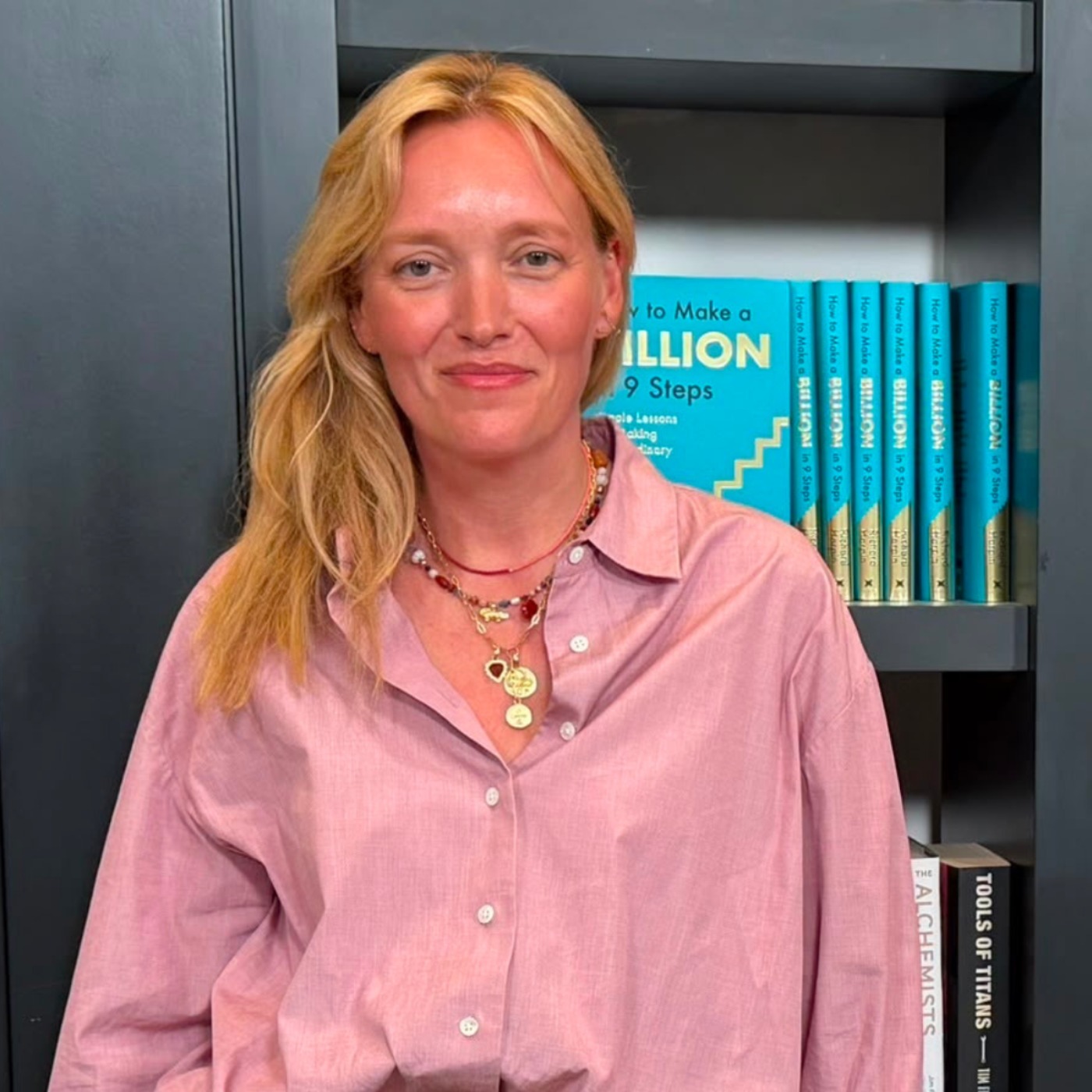
Helen Cannon is the founder and CEO of Ison Travel. She spent nine years out of the workforce raising five children, then returned by starting Ison in 2013. She previously worked in marketing/agency-side brand-to-market roles. She runs a remote-first, values-led company and still does the school run.
“It’s worse to make no decision than a bad decision.” She advocates being “10% braver,” balancing risk, bootstrapping (no external funding), and asking for help. During COVID, she says Ison grew while competitors contracted by hiring and diversifying into private jet travel.
Revenue grew from ~£4M (2020) to £32M (2022), reaching ~40 staff during COVID growth. Ison expanded internationally via local teams in India and the Philippines, set up Dubai for client demand, and entered the US through acquisition of a women-led, customer-centric firm (grown 150% in 12 months). She also cites travel “minefields” like visa/traffic-light rules and vaccinations as areas where human support beat online tools.
Written by AI. May contain mistakes.
Helen shares her early career in marketing and the decision to start her own company after raising children.
“She grew it into a company that now turns over£70 million, spanning five countries and has grown fivefold in four years.”
The story behind the founding of Ison Travel and its unique approach to combining technology with personal service.
“So I then had a fortunate meeting with a friend of mine who had been in travel.”
Helen discusses how she bootstrapped Ison Travel without external funding and the benefits of staying small initially.
“So, you know, it started out myself with my laptop and one member of staff and we went from there.”
Helen describes how Ison Travel adapted to the COVID-19 pandemic, seizing opportunities for growth during a crisis.
“Are you a CEO or founder of a British mid-sized business?”
Helen shares a powerful analogy about the Chinese symbol for crisis representing both danger and opportunity.
“and we weren't carrying the big higher costs that obviously some of our competitors were.”
Helen explains the strategy to grow Ison Travel during the downturn, focusing on hiring and providing expert advice.
“Did that take courage or stupidity or a bold decision to make?”
The philosophy of being 10% braver in business decisions and its impact on Ison Travel's success.
“That's a given, but it's balancing that risk.”
Helen discusses the decision to acquire a company in the US and the prior expansion into India.
“So we went, we didn't, obviously, we didn't start our own company out there, we acquired one that really fitted with our values.”
Learn how leveraging a strong network and strategic client demand can guide international expansion.
“So we operate 24 hours a day, 365 days a year.”
Understand the importance of culture and local hiring in creating a unique business environment.
“And opportunities to go into other countries in due course?”
Explore the challenges and strategies for maintaining company culture in a remote work setting.
“They're not there to have the senior leadership team tell them what to do and micromanage them.”
Discover why apprenticeships are vital for the travel industry and the future workforce.
“And so we have that across sales, IT and marketing and consultants on the travel side as well.”
Learn coping strategies for navigating personal crises while managing a business.
“I mean, I think that's on every person's minds at the moment.”
Hear insights on achieving work-life balance while juggling family and business responsibilities.
“about what might happen but he was very much focused on the here and now the present and I think being able to do that just break things down and then you can get through them.”
Learn how to balance personal and professional responsibilities while being a CEO.
“But I think you have to be kind to yourself as well.”
Discover the importance of setting ambitious goals and how to inspire teams.
“And I think, again, the role as the CEO is to absolutely challenge your team, but also inspire them.”
Explore the different metrics for measuring business success beyond profit.
“How do you measure the success of the business in terms of the regular matrix that you look at?”
Understand when and how to establish a board to support business growth.
“So we run business lines through each area of the business.”
Gain valuable tips for entrepreneurs on building a successful business.
“And you have members of your senior management team also on the board with you?”

Get the gist, explore an idea or ask about something said.
 Claude
On The Business Leader Podcast with Sir Richard Harpin, what are the key points of this episode?
Searching your listeningAutomatic transcript. May contain errors.
0:00It's worse to make no decision at all than to make a bad decision and I really do believe that. So we were turning over about 4 million in 2020. By 2022 we'd hit 32. Whoa. There's nothing wrong with putting your hands up and saying I need some help. You've got to do it and you've got to take that bold risk. I talk a lot about being 10 % braver and there's absolutely nothing wrong with reaching for the stars. My guest today spent nine years out of the workforce raising five children. When she was ready to return, she decided to build her own company. In 2013, from scratch, she founded Ison Travel, a travel management company with a radical idea at its core that brilliant people shouldn't have to choose between their work and their life.
0:47She grew it into a company that now turns over£70 million, spanning five countries and has grown fivefold in four years. and she still does the school run.
1:02The Business Leader podcast is partnering with RBC Wealth Management who share our values in supporting entrepreneurs at every stage of their journey. Your business was the first idea. The rest are still waiting.
1:23Ideas happen here. RBC Wealth Management Helen Cannon from Ice and Travel welcome to the Business Leader podcast and would love to hear about your early career up to the point that you had children Thank you for having me so yes my early career was actually not in the business I'm in currently I was in marketing and predominantly taking brands to market I always was agency side I had my own little agency but I knew what good looked like from that sort of client agency relationship. I then started a family and I continued to work for a couple of years but after my second child was born I actually decided that I couldn't cope with the commute anymore and the travelling I was doing.
2:13So I decided to take a pause, stop and I went on and had a few more children and then when my youngest was about probably six months so this was child number five I decided actually there was two things I decided I either had to get back to work or it was to have another baby I did actually want six children at the time but wow that's a minibus to get them around the place I know so I actually decided right that my next venture the company that I started was going to be my baby. So I then had a fortunate meeting with a friend of mine who had been in travel. I was not in travel at all. That wasn't my background.
2:56But one of those evenings where you're sitting chatting about opportunities and I was talking about how I knew I wanted to get back into the corporate world, knew that I wasn't going to find an employer that would be able to, I'd be able to have that coping with my children and my life and working. I knew I absolutely wanted to get back into that corporate world. So one thing, you know, one conversation led to another. I saw a real opportunity in the travel sector because at the time it felt like everybody was really being pushed down the online booking tool and you're removing that human element of the process.
3:37And I saw this opportunity to actually build a very people first business that sort of was filling that gap of where people didn't, they wanted tech, but they really wanted humans as well. So, ISON was born in 2013. And that is really the sort of the omni-channel model, isn't it? That not just online only and not talking to anybody, but having the best of both. Yes. So, you know, it started out myself with my laptop and one member of staff and we went from there. So it has been the most fantastic journey I've enjoyed every day of it. And it's still going on. But did you require any funding to get the business off the ground in the first place?
4:25No, it was all entirely self-funded. Like I say, it really was just, you know, a couple of laptops, a lot of hard work, a lot of knowledge and off we went. But yeah, no funding to start with. And you look back and say that was great because we bootstrapped it, we kept it small until we'd proved the model or that you should have taken funding? No, absolutely. For me, it was the right thing to do. For me as well, at the beginning, I was balancing working and children. I hadn't worked for a number of years. So it was also just getting my head around, okay, how's this going to work? While also learning a brand new industry I didn't know anything about, but bringing obviously my knowledge of what makes a good brand, what makes a good client agency relationship, how to build that relationship with your clients.
5:16so to start with it I felt was absolutely the right thing to do and actually we have not taken in any funding throughout our whole journey we decided to come to not take that external investment and just to keep bootstrapping the business and keep reinvesting our profits each year I'm Richard Harpin a Yorkshireman who sold my company HomeServe for four billion pounds and this is the Business Leader podcast where we look at the stories and the strategies behind modern businesses. Are you a CEO or founder of a British mid-sized business? Are you ambitious and want to scale your business? If so, join the business leader community.
5:56Our members benefit from coaching, peer-to-peer forums and exclusive learning events. For example, Helen led a fascinating masterclass for business leader members all about culture. To find out more, sign up to our free weekly newsletter at businessleader.co.uk slash newsletters. Together we can help British businesses scale and succeed. What did those first few years look like? What were the sort of milestones and when did you know it was going to work? The early years, I think it was probably, I would say after about year four, I could see we were proving the model we were winning clients we were retaining the clients uh and we the the feedback we were getting obviously from our clients was outstanding service you know you really understand us you've you know we've really got to know the clients we're an extension of their of their business and I thought actually this really has got some legs here there's some fantastic people in our industry um if we can attract them to our business then you know we can grow and then our next milestone actually came in 2020 when COVID hit which obviously COVID and travel don't really go together.
7:17It was you know a very traumatic time for our industry. How many staff did you have in the business at the time? So as we went into COVID we had about 12 people. We'd deliberately run the business very lean. We were already remote working and we didn't have big office spaces and high overheads. So when obviously everyone went, you know, had to leave their offices, we were already set up and ready. Everything was already in place. Our team were already home working and we weren't carrying the big higher costs that obviously some of our competitors were. So we made the bold decision in probably within a few weeks of actually this is our chance to grow.
8:00This is our opportunity. we um there's a chinese symbol uh which is the symbol for um crisis it's made up of two brushstrokes i don't know if you know this no um one symbolizes danger and one symbolizes opportunity so every crisis you've got those two sides and that's how we positioned it to the business that we were obviously very aware of the danger but we also saw there was a massive opportunity here for us. So we decided to grow. Did that take courage or stupidity or a bold decision to make? Who made those decisions with you? So yes, it was a very bold decision. It was, my husband had come into the business at that point and we sat down together, you know, obviously looked at our finances, looked at the company and had worked out pretty much how much we knew we could spend before we could potentially run into trouble.
9:01So we had a very sort of clear plan of what we were going to do. And our first thing was to go off and diversify. So we decided to target the private jet sector because, you know, it was obviously very difficult to travel. but the people who needed to travel and had the finances to travel still wanted to be able to so we were like right we're going to go off into that area so that was our first area of diversification uh we strongly strongly you did that organically did you or yeah yeah absolutely and we strongly believed that travel would come back everyone was saying it wasn't going to or it was going to be different i mean obviously we didn't know when that was the thing we we obviously were all saying, oh, it's going to be in a couple of months.
9:48So obviously it did take a lot longer than we thought, but we knew it would come back and we knew it'd come back with a bang. And I think what was proven was that people during that time, they needed advice, they needed support. You know, there was the, if you cast your mind back, there was the traffic light system, there was the red countries, the amber, the green, there were all the different visa requirements and the vaccinations you needed. It was a minefield and it was a minefield that an online booking tool could not answer. So the people part of the travel business came into its own? It did.
10:20People needed reassurance, they needed confidence, and they needed knowledge. And obviously, there was so much knowledge everywhere that we just brought all that together and we started hiring. So while everybody else was contracting, we were expanding. And from probably June onwards I would say we hired at least one person a month maybe more it just we just continued building with that momentum and then of course traffic the travel opened up again and we were there and then it shut but we were still there and we just kept on with that and we could see it and it by so we were turning over about four million in 2020 by 2022 we'd hit 32 whoa and our team had grown to probably i'm trying to think now probably about 40 staff maybe something like that is this a a lesson in turning every problem into a bigger opportunity absolutely and i think that's that method that that thought process has um stuck with me sort of throughout.
11:30I think you absolutely have to be a risk taker. That's a given, but it's balancing that risk. I think I do have quite a balanced approach to it. I will always look at, okay, well, what are the pitfalls and the downsides? But if the opportunity is far outweights that, you've got to do it. You've got to take that bold risk. I talk a lot about being 10 % braver. whatever shape or form that may be maybe even just getting out of bed that day but just taking that first little step is is what you need to do and so I say it to the staff I've talked about it before but just pushing yourself out that comfort zone and when you do things are possible but just taking that leap any other examples of being 10 braver that you've done that's helped that fantastic growth in Iceland travel?
12:25I think it would be we then started looking at acquisitions so our first venture into the US which is a obviously huge market and we took that brave leap that being 10 % braver believing in our people and finding the right company that we felt was a really good cultural fit for us. So we went, we didn't, obviously, we didn't start our own company out there, we acquired one that really fitted with our values. And we've built upon that. And why did you acquire rather than doing it organically? To be honest, it was the quickest route of market for us. And actually, acquiring out there, you know, we didn't have that local knowledge.
13:11And I wanted local knowledge on the ground who knew the market news the ins and outs the pitfalls so we felt it was the quickest and safest way to enter the US market and how did you find that particular company that you ended up acquiring a lot of searching using you know brokers talking to people and just speaking a lot of conversations lots of backwards and forwards you know it took us a while but we found them and they were actually are all women business uh which fitted quite well with us we're 70 female um and they they were very their their customer uh they were very customer centric very people focused um it was quite a small business but uh already we've grown it 150 uh within within 12 months so and just talk about the broker bit that helped you to find the right business um so yes so that was again it's your network your network is so important you know make sure you surround yourself with that network of people whether it's family friends um you know the bank um and just people that could introduce you because you know you don't know what you don't know and having a network you can pull on is so powerful and us wasn't your first international move what what happened before there so our first one was actually in India.
14:38So we operate 24 hours a day, 365 days a year. So rather than obviously having our UK staff on shifts, we decided to go to India to sort of a bit of a follow the sun approach. So they come on when our UK team go down, but they're also there to, it's an extra of pull of services for us. So if we in the UK, we are struggling due to sickness or holiday, then we've got a team ready and waiting in India who support us. We then went off into the Philippines. We did the same there. We have a team, their own staff. We don't subcontract out with anybody else. And then we went to Dubai and that was more a client need.
15:30So same with the US, we had UK clients who had operations in the Middle East and they wanted a local presence. And we thought, actually, well, this is a good opportunity for us. We've got ready-made clients ready to start trading with us. Same in the US. They were asking us for, you know, can you start working in the US? So it's been very much sort of led by us seeing the opportunity, but also led by the client demand. And opportunities to go into other countries in due course? Yes, I think next on our list is somewhere in the Eurozone. So that is in the pipeline. And how do you make that decision between opening organically and acquiring?
16:15I think, again, it comes back down to that knowledge and speed to market. In India and the Philippines, we've got a fantastic, it's all local staff. We haven't taken staff from the UK because, again, we felt like we needed the local staff to give us that knowledge base there. Actually with Dubai, it was someone from the UK who went over and set that up, but then we've employed local staff there. So it's making sure, I think for us as well, it's that that culture travels too. So it's great to have those different perspectives. And that's what makes us, I think, really quite unique that we draw on with a real people business.
16:55And we draw on all those different perspectives and different cultures in the ISON group. And for those people who haven't yet heard of Iceland travel, it is principally a business to business operation. It is. So we predominantly manage corporate travel programmes for large organisations, small organisations and private individuals if they're travelling a lot. So quite simply, we look after all the flight, hotel, ground arrangements. but obviously it's a lot more than that. The service, we are there to make sure everybody gets to where they need to be and they get home again and we deal with any bumps along the way that might happen.
17:40Obviously with the recent events, the air traffic control going down throws us a curveball every day and so if you're that person who's stuck at Heathrow, you're not at the mercy of waiting to get a hold of the airline to sort you out, you would call us and we would then make sure you get to where you need to be. And how do you deal with that? Presumably that's a big peek in your customers calling you and saying help. And that's where any TMC really proves their worth is how you deal in those situations, how you can flex quickly. And I'm incredibly lucky. I've got the most fantastic team of people who are incredibly agile and flexible and, you know, people will log on early, stay late.
18:27They really do care who, you know, that the people they're looking after get to where they need to be and get home again. So it's having that, I say to the team, we've got four values and that is authority, integrity, bravery, empathy. and we hire really good people because they make really good decisions. And in those sort of scenarios, that's what you need. You need people who do that. They think on their feet. Is that all about the culture of the business that you've developed? It is. It's absolutely that culture that we hire good people because they make good decisions. They're not there to have the senior leadership team tell them what to do and micromanage them.
19:15I think we're quite an entrepreneurial company And so we attract quite entrepreneurial people within the company who come with new ideas, new ways of working. But also it's that trust and that flexibility. Everybody is a home worker. We have hubs around the countries we operate in, but everyone in a sense is a home worker. So it is up to, you know, it's not about how many hours people work. Obviously, we have our core hours. Everyone's got to be in. But we are grown up with about it. If you've got to go off and do the school run, then there's someone else who's not doing the school run. I would, you know, I am a fully working mum, but I try and be there to pick the kids up every day and take them to school every day.
19:59Does that make it harder to embed the culture if everybody's home working? It does bring its challenges. Absolutely. What do you do to overcome those? So I say to the team, you know, if we were all in one building in one place, some things would absolutely be easier, without a doubt. But I wouldn't have the amazing staff we have. So we focus a lot on team building activities. We get the team together, the whole of the company together twice a year. Throughout the year, there'll be different activities running within teams. So the teams physically are with each other in person. And there's always something going happening on teams, whether it's a quiz or for the last few years, we've sent out things like sunflower seeds to everybody in the company.
20:44And there's a competition to grow some, you know, to who's going to grow the tallest sunflower. So there's lots of ways you can connect and still have that connection, even though people are not together. But you have to work at it. It's not easy. Our chief of staff does a phenomenal job at keeping that connection between people. but yeah it's it's it's you've got to work it but when you get it right it's amazing in the early days you used to send a personal birthday card to everybody I think in the business and yeah you don't do that anymore there are some things that obviously as you scale it gets harder um but I am very involved in the business um and whether it's picking up the phone you know if I see a phone ringing I absolutely pick it up and I love to have a chat with whoever's calling um so and I try and make sure that I'm available to everybody knows I have a very open door policy um very happy to chat to anybody about their thoughts ideas feedback um so yeah it's it's it's making sure that that culture scales with you and you do have to work at it because you know when you are a 10 person team and then suddenly you're 100 plus team it is different um but as long as that consistency is there and you're consistent with what you're saying and your actions and it's not just saying it you're living and breathing it every day.
22:06And how do you retain that culture as you've opened in five other countries? Again it's that consistency it's absolutely being respectful of different cultures and different ways of workings but being able to embrace all those different ways of workings under a sort of a common theme we have our sort of our ice on family our one ice on with our values and us we have three core pillars of enable uh empower and engage and that is throughout everything we do so it's and i love the fact we do have that diverse diversity and one of my other big things across all the businesses is um we is the the age i think it's so important to keep everybody working for as long as possible keep them in industry keep them working because once you've lost that knowledge it's gone so we have um actually five percent of our workforce is over 65 20 is over or 25 is over 55 and that's not to say we've got an aging workforce we've actively recruited people who are older and we've done it because um their experience their knowledge and when you put that with our younger apprentices is coming in it's really quite magical what you can what you see the apprentice scheme how important is that do you think not just your business but the future of the country oh hugely i think it's a such a scary place you know when you sit and you're watching social media on the news and you know there's a 10 chance the human race is going to be extinct in 10 years you know most jobs are going to be gone by I don't know by 2032 or something and even plumbers I saw they were saying plumbers aren't going to exist either so but I think encouraging young people to get in at the very beginning is huge and there isn't enough you know we don't have enough young people coming into the travel industry so it's yeah it's a vitally important particularly for us I think for all industries and encouraging that.
24:14And so we have that across sales, IT and marketing and consultants on the travel side as well. And can you foresee a time when AI takes a very high percentage of the roles or not? I mean, I think that's on every person's minds at the moment. What is AI going to do? And I think for us, what is our business going to look like now with AI? and the the artificial intelligence is is amazing and but you've got to put it with that human intelligence as well you've got to marry those two together and I think when you're always able to demonstrate the value and the service you bring but both of them enhancing each other is going to be is is going to be amazing so it's it's a bit of an unknown isn't it you came out of COVID with flying colours, the courage to grow the business and invest.
25:08You had a personal tragedy last year when your husband died. He was a key part of the management team. You got five kids, you're the chief exec. How did you possibly cope with that? A lot of deep breaths and an amazing support network around me. Obviously my family, my children, friends and the business itself. I absolutely threw myself into work. It was, I guess, my safe, normal, happy place. And every part of that community has played a huge role in helping me sort of deal with the everyday and the grief that's obviously, you know, I've been going through. But I definitely couldn't have got through this first year without all of those people working together for me.
26:01And I think as a CEO, that is one of the things is really important that you're not afraid to ask for help. You know, it's you don't need to profess to knowing everything. And I think it's good when you don't know everything, because that's what your team are there around you for to fill in those gaps, to support when you need it. We're a really collaborative bunch. I mean, every day on teams, there'll be someone saying, oh, can I just can someone help with this? And there's always someone within a few seconds saying, oh, have you tried this? How about this? And likewise, for me, that has been huge, being able to sort of say, hey, you know, actually, I'm struggling today.
26:40And there's always someone there who's like, I've got your back. Is there any other message for somebody that's going through a crisis right now in business? And it might be a personal crisis on how you get through it. I think Richard Branson released a video last week saying things are not as bad as you think. and you will get through it just have that courage and it comes back to that being that 10 braver but you know ask for help there are people there who absolutely will support you and you will get through it it's that knowledge you will get through this you know um it's it's things seem insurmountable at the time but actually just taking them step by step breaking them down and I said to my children if you know they're worried about something I'm like okay let's just focus on the here and now let's just focus on today and my late husband was brilliant at that he was very much he didn't he didn't focus on what had happened and he wasn't too worried about what might happen but he was very much focused on the here and now the present and I think being able to do that just break things down and then you can get through them.
27:51Has it made it even harder to get that work life balance and the five children and running the business and doing that more alone now? Yes I often say I personally for me there isn't such thing as balance it's a juggle there's always there's always that push and pull there's always something somebody you feel like you're letting down whether it's yourself or whether I wasn't there that day to pick the children up or whether there's a meeting I've missed because I had to do something else. But I think you have to be kind to yourself as well. You know, we are only all human. There's only so much we can physically do.
28:30So I have had to be quite disciplined with my time to make sure that there is that time for the children who need me. There's obviously the time for the business. And, you know, as a founder CEO, you mustn't forget yourself and all that. You've got to allow that time for yourself too. You've set a big goal for the business, Helen, of£100 million of revenue. Many entrepreneurs do that and they don't get there. You're getting very close to it now. I think you did£68 million of revenue last year. You might be knocking on the door of£80 million this year. Is it important to set those big goals? Absolutely.
29:10We talk about our BHAGs, our big hairy audacious goals and there's absolutely nothing wrong with reaching for the stars but it doesn't matter if you don't get there but you've got to reach you've got to have that push that that stretch so we often have our you know our stretch targets and our what we think are more achievable we haven't failed if we haven't hit them but it's having them there it's having that reach for the stars moment so have a b hag but also have a a budget which is the must deliver and then the aspiration. Exactly. And I think, again, the role as the CEO is to absolutely challenge your team, but also inspire them.
29:47And by having that BHAG goal, that's where that inspiration is coming from. And I think, you know, another role that I really see that I have is getting the very best out of all my staff. If I can get the very best and more, then I feel like I've done my job. And what are the couple of things, that tangible things that you do to get the most out of your staff it's by challenging them and by giving them that belief in themselves that they can do this quite often when you as when i'm interviewing someone and you'll have and it's unfortunately it's normally the women they will focus on the 20 they can't do if you're looking at the job description they'll focus in on that 200 ignoring the 80 % they can absolutely do brilliantly and then sometimes and I'm not meaning to be stereotypical at all but men will tend to maybe focus on the you know the can do it's that having that mindset and unfortunately that imposter syndrome comes in and I know you know both men and women suffer from it but it's it's having that mindset that actually you know what I don't know it but I can learn it and we can help you and it will give you the right environment that actually it doesn't matter because you're going to learn it here and you're going to grow and I think it's for them to see staff on that journey to see them when they started to where they are now and 70 % of your uh your people are women yes yes was that deliberate do you know it wasn't i guess being a female founder i've attracted more women to the business um but uh maybe it's a safer environment that they feel that they can um you know come in and learn and and grow but uh yeah i'm hugely proud of that and we've actually we were as well sort of 70 70 women and about 50 were part-time in the earlier years and actually what's happened is those part-time workers have grown to be full-time because their life circumstances have changed their children have grown up whatever's gone on in their lives and actually they're like I know I was three days a week but actually could I do four actually could I now do five and being able to offer that flexibility I think is huge.
32:10How do you measure the success of the business in terms of the regular matrix that you look at? For us, it's not just about the numbers. Obviously, we're all focused about the EBITDA and you're always wanting to see your EBITDA going that way. For me, it's about building a business as well that is sustainable, that is there for the long run. So, you know, it isn't just about getting bigger and bigger and bigger. It's having a business that people want to work for and they want to stay working for, that clients want to continue trading with and taking those people on that journey with you. So there's lots of metrics I use, not just the profit.
32:57And you look at those weekly or monthly or what's the sort of operating system for the business? So we run business lines through each area of the business. so whether it's in the UK overseas and we'll be running through then numbers but also you know obviously client there'll be the client side there'll be the people side and we'll put all those together and take a view each month and that's helping us to set our short-term and long-term goals. Do you learn at all from the competitors in the travel industry look at what they're doing and how you could sort of copy or improve on certain bits or not of course i think everybody looks to see what others are doing um there's we're in a huge market there's room for all of us um and i think by also you know working together with others and and you know learning oh actually that's a really great idea we could bring that into our business i think is huge and not something to think oh i'm copying them but there's nothing wrong and you go they've got a great idea great we could bring that into our business as well and how do you decide what are the priorities and what should be on your not to-do list for the business either now or in the future that is um that's worked out with it with within the board um and i think the board plays a really big role in you know as you grow um and the the board is there to challenge me as well to keep me accountable, you know, and to push and to pull me, the senior leadership team and our senior management team, collectively all together.
34:40We, you know, we sit down and we look at those. We'll review, obviously, the business lines, see where opportunities are and, yeah, plan together. When should a business establish a board? How long have you had your board for and how do you go about putting it together and finding other people? That's it's a hard question to answer. I think, you know, do you do it at 20 million? Do you do it at 50 million? I don't know. I don't know if I have the answer to that one. I guess each business is different. For me, it was when I realised there were areas of the business I didn't know. And I mean, I'm learning every day and I've never built a business this size.
35:21And I'm very honest with the staff, I might get things wrong, but I will always do my best to correct them. so it was yeah it was when I felt that actually I need some outsider help here there's there's more to this than I can answer myself and I think throughout as throughout the business as well you might need different people and I've been really lucky as I've gone along that I've met certain people along my journey that have helped me in different areas and it's almost sometimes I haven't actually even been looking for them but they just seem to find you and the board's been a bit like that so the board has been in existence for a couple of years and obviously losing my husband even more came into to the four because I needed another sounding board and that's what they're there for for me to sound what does your board look like how many non-execs do you have on and so we currently have one at the moment and she's been extremely helpful in just yeah giving me that sounding board how did you find her what's her background she was actually somebody my late husband knew through um a previous uh company and she's uh she's involved on some big boards and also some much smaller ones so she she she brings um some knowledge that we just did not have at all and brings us you know some cadence and some governance that we needed so it's it's great I'd really recommend to people that you go out and you look and you I interviewed quite a few people as well I went through a lot of people to until we found the right one and I think you need and as the business grows you need different and it's there's nothing more with saying actually we need a different type of net now because we're now at this stage it all comes back to that there's nothing wrong with putting your hands up and saying I need some help.
37:13And you have members of your senior management team also on the board with you? Yes and actually my eldest son who's not in the business but he's 27 and but he gives it's great to have another outside perspective. I mean obviously he's you know my son so he might be slightly biased but it's great to get a fresh perspective and he'll often say things that we collectively haven't thought of. So again another really great dynamic bringing him in. looking back on the journey and it's been tremendous and I've got every belief and confidence that you'll get to that 100 million of revenue. What are the tips for other entrepreneurs on how they get their business to 70 or 80 million of revenue?
37:57Be brave. Don't be scared. Don't worry that you don't know everything. That does not matter. Surround yourself with that network that you can trust. Absolutely. That's key. You know, you can't do this alone. And it comes back to, you know, don't be afraid to ask for help. But just you don't need to know everything at once. You can learn as you go. And I absolutely have done that. And my ambition has grown. When I first started the company, I had no idea. And I didn't start it thinking, oh, I'm going to want this to be 100 million. But it grew as the company grew. And which I think for me has been actually a really lovely way to to realise my potential I didn't know quite what I was capable of likewise my staff and that is yeah it's a really lovely feeling.
38:49And how many years into the business now? We are 13 years in. And when did the 100 million BHAG come about? That was probably a couple of years ago my late husband set it to hit it by 25 which you know I think we had nearly everybody falling off their chairs which we revised but again it was our BHAG and it's great to have it. Finally what's your message to women out there that are juggling and want to be growing their business and have got kids and how did you get through that and manage that um i get a lot of deep breaths it's it comes back to don't be so hard on yourself um you are all we are all more capable than we truly believe and i think just having that inner belief and that idea whatever it is take that first leap take that risk equip yourself with the the right people around you and go for it you know it's it's one of you don't want to look back and go oh if only I'd done that and I think the other thing for me it that is a big part is your gut trust your gut trust your instincts we've all got really good instincts and normally they're right if it feels right and people around you are saying yeah you know this this has got a good you know how much is gut and how much is data that's that's a million dollar question really isn't it you know quite often your gut's telling you one thing and you're the data is saying something else um i think it comes back to that balanced approach you know has this happened before was your gut right then what's the data telling you uh what's everyone else around you saying but ultimately you're going to call the shots.
40:46So it's... Decide and do it. It's worse to make no decision at all than to make a bad decision. And I really do believe that. You know, sometimes I've taken too long to make a decision. Sometimes I've made the decision too quickly. But to have made no decision at all would have been the wrong move. Helen Cannon, thank you. I've really enjoyed that. Thank you. Two big takeouts for me. One is that every entrepreneur should be 10 % braver and take that decision and get on with it. And the other one is that you don't need to run a pure online business, even in travel. It depends upon people and you can have the omnichannel model of both.
41:30Thanks for joining us. Please do rate us and subscribe and make sure to sign up to our weekly newsletter at businessleader.co.uk slash newsletters. With more people on board Business Leader, we can have better conversations and inspire the UK's next wave of business leaders.
41:54Your business was the first idea. The rest are still waiting.
42:03Ideas happen here. RBC Wealth Management.
Helen Cannon had five children and wanted a sixth. Instead, she decided her next baby would be a company. In 2013 she founded ISON Travel and built a corporate travel management company from scratch that now turns over around £70 million. Sir Richard Harpin talks to Cannon about bootstrapping ISON Travel without ever taking on external funding. When Covid grounded the travel industry and competitors cut back, she chose to hire and expand. Revenue grew from around £4 million in 2020 to £32 million by 2022. Cannon explains how she has scaled internationally through India, the Philippines, Dubai and a US acquisition. She covers how she builds culture across a fully remote team, why 70% of her staff are women and a quarter are over 55, how to deal with imposter syndrome and why every entrepreneur should be "10% braver." She also speaks openly about leading the business after the death of her husband, who was also a key member of the management team, and about her push towards a £100 million revenue goal. This episode is for founders, CEOs and female entrepreneurs who want to scale a business, lead while raising a family, and turn a crisis into an opportunity.
Subscribe to the Business Leader Podcast for weekly entrepreneur stories from founders and CEOs who’ve built and scaled great businesses. Join the Business Leader community for coaching, peer to peer forums and exclusive learning events. Sign up to our free weekly newsletter at businessleader.co.uk/newsletters.
Business Leader is a membership community for ambitious CEOs and founders of mid-sized UK companies, designed to help them grow with purpose through strategic support, peer-to-peer learning, expert coaching, and high-impact events. Sign up for our Business Leader newsletter here.
Hosted on Acast. See acast.com/privacy for more information.