Ask ChatGPT
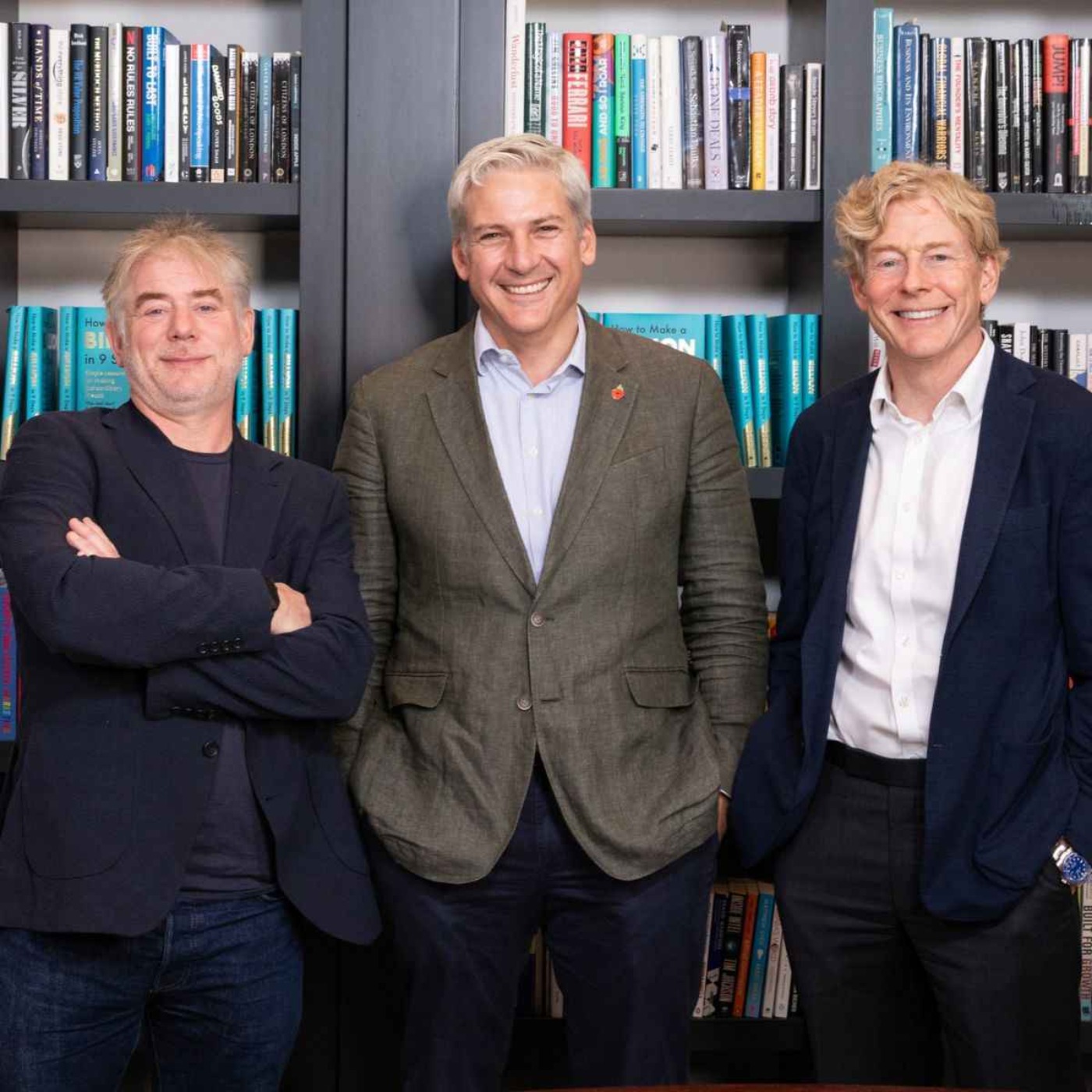
 The Business Leader Podcast with Sir Richard Harpin
22 Sep 2026 · 1h 3m · 27 chapters
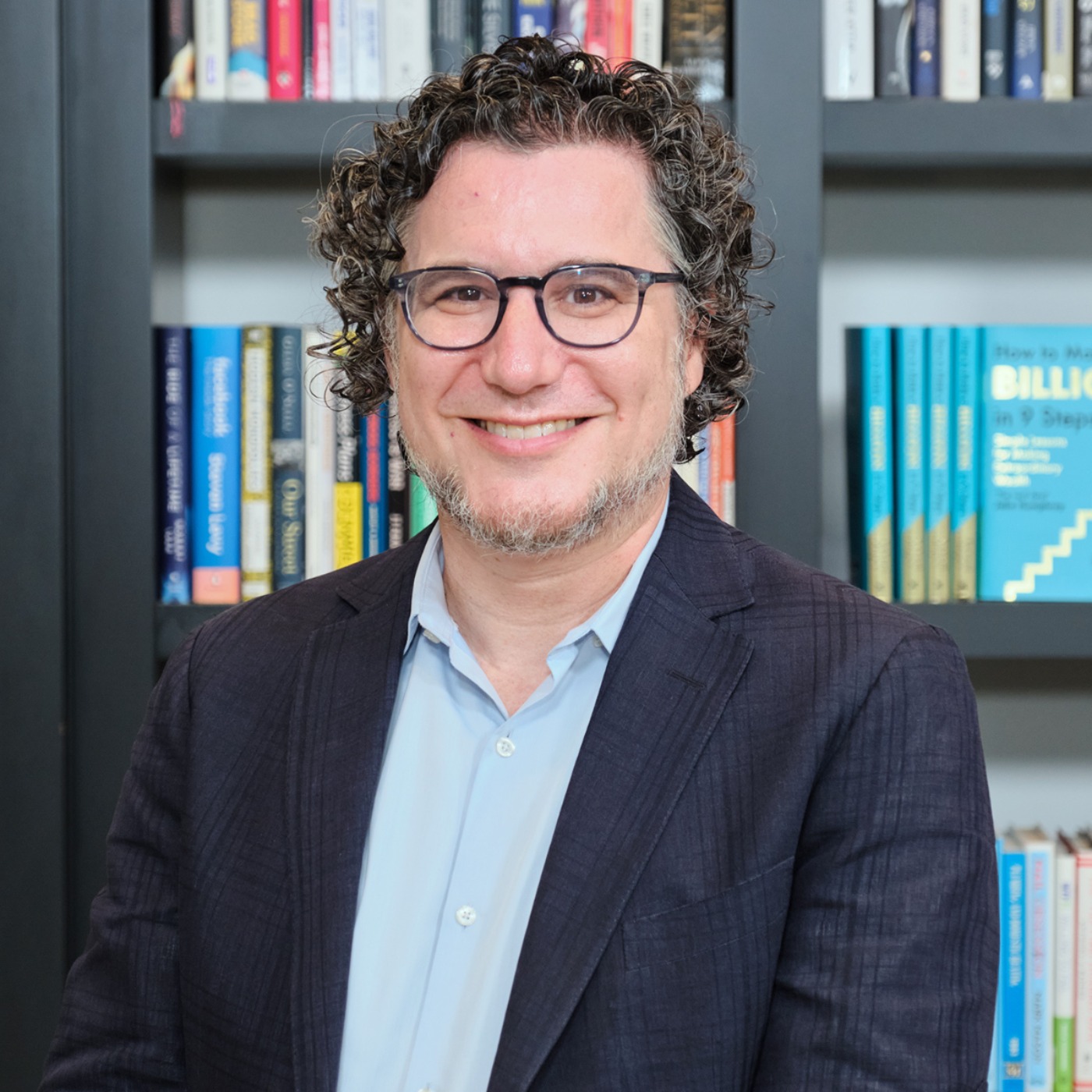
Eric Ries argues that startups and growing companies get “ground down” by financial gravity—pressures from governance norms, regulation, and “best practices” that incentivize cost-cutting and promise-breaking. He reframes this as corruption: making money without creating value, or degrading quality (e.g., raising a hot dog price) to extract profit. He proposes “incorruptible” organizations built on experimentation (Lean Startup), trust, and governance structures that protect a company’s purpose over time.
Eric Ries, author of The Lean Startup (2011; 2M+ copies sold) and Incorruptible. Background: Silicon Valley innovation writer/entrepreneur; developed Lean Startup concepts like minimum viable products, hypothesis-driven experimentation, and pivoting.
Business plans for years are “nonsense”; pivoting is changing strategy without changing vision. Outside investment should be used only when capital is needed to remove an impediment to the growth engine. Trust is the most valuable organizational asset; companies can endure if governance prevents mission drift.
FedMart and Saul Price (fiduciary-to-customer ethos; ousted in 1975; liquidated by 1982); Costco (member model, capped margins, “I will kill you” hot dog price promise; governance fortress); Polaroid/Kodak/Sears as “graveyard of good intentions.”
Written by AI. May contain mistakes.
Explore the idea that making money without value creation undermines the economy.
“Anybody who has found a way to make money without creating value is corrupting the moral logic of our economic system.”
Discuss how perceptions of entrepreneurship have changed over the years.
“Yeah, it's been 15 years, I think, this month that it came out.”
Understand the importance of experimentation and learning from failure.
“So the concept of writing a business plan for five years is absolute nonsense.”
Discover various approaches to entrepreneurship and the role of vision.
“They're like, well, surely everyone already knew this.”
Learn how customer feedback shapes business success and pivots.
“small businesses started out quite grandiose and have nothing but shrinking.”
Explore how famous companies pivoted to achieve success.
“Yeah, pivot is a change in strategy without a change in vision.”
Identify the right circumstances for a startup to seek outside investment.
“So it is kind of a necessary part of the really successful entrepreneur's journey.”
Investigate why successful businesses often lose their innovative edge.
“Should the product be free and be paid for by advertising and therefore require all this venture capital in order to build the servers and the data centers and whatnot?”
Discuss the reasons behind corruption in companies and its implications.
“Anyone in this room have a story for me of a time when thanks to that massive infusion of capital, the product got better.”
Discussing the dangers of bureaucracy and mission drift in organizations.
“It's a sad view of what these things can be.”
Exploring the broader implications of corruption beyond financial fraud.
“I listened to it on Audible this weekend and And some fantastic messages coming out of that.”
Analyzing companies like Sears and Kodak to understand the loss of innovation.
“I have a whole chart in the book called The Graveyard of Good Intentions of companies that are long, long gone.”
Narrating the rise and fall of FedMart and the impact of its founder's values.
“in America employed thousands of scientists.”
Detailing the creation of Costco and how it embodies the ethos of its founder.
“It's fascinating to read these stories because we're so used to this.”
Examining Costco's membership model, pricing strategy, and commitment to value.
“Costco today is a$400 billion public company, one of the largest retailers in the world.”
Discover how Costco's governance structure helps it maintain its promises to customers.
“So big investment in capital to keep the cost down.”
Learn about various governance structures that protect business integrity.
“I was, the great British ad man, Rory Sutherland, was doing a lecture and he was going through, he was saying, listen, he was saying just this point that you're making.”
Discover how profit can align with making the world more valuable.
“In fact, the very origin of the word profit comes from the idea that we should try to make the world more valuable.”
Learn about a new governance model focusing on purpose and coherence.
“this purpose into the company's charter.”
Understand the importance of structural integrity and mission guardianship.
“Her contemporary lady, what are you talking about?”
Explore the vision behind the Long-Term Stock Exchange and its implications.
“It's actually an idea I have had for more than 15 years.”
Examine insights for improving UK stock markets based on US experiences.
“Well, I mean, AIM, I think, we don't have the equivalent of AIM in the US, and it's a perennial source of debate there.”
Learn about the role of AI and its impact on human creativity in business.
“It's like they have a thermostatic equilibrium between them.”
Discover why AI should augment human creativity rather than replace it.
“So Answer.ai is built around the research of one of the real pioneers of the field named Jeremy Howard.”
Explore the discrepancy between perceived and actual productivity when using AI.
“There's a wonderful study that was done by the AI alignment research team at Meter.”
Learn the importance of truth-seeking practices for entrepreneurs looking to scale.
“Listen, we are living in very difficult times.”
Discover how leaders can nurture their teams and apply Lean Startup methods effectively.
“So if they became slow after they came to work for you, look in the mirror, buddy.”

Get the gist, explore an idea or ask about something said.
 Claude
On The Business Leader Podcast with Sir Richard Harpin, what are the key points of this episode?
Searching your listeningAutomatic transcript. May contain errors.
0:00Anybody who has found a way to make money without creating value is corrupting the moral logic of our economic system. If you raise the price of the effing hot dog, I will kill you. Trusted this company, it is by far the most valuable asset that an organization can have. On average, people reported that the AI made them 20 % more efficient. Their actual productivity, the AI made them 20 % less efficient. This is the Business Leader Podcast with me, Sir Richard Harpin. Today's guest, shot to fame as author of The Lean Startup in 2011, is described by the FT as Silicon Valley's innovation bible and has sold more than 2 million copies.
0:43Eric Ries' new book called Incorruptible is in some ways part two. It explains how successful startups can be ground down by corporate governance norms, regulatory standards and best practices. He found that visionary business leaders and founders themselves were not immune from what he describes as financial gravity. His new blueprint aims to help them retain their integrity and find long term growth by becoming incorruptible. The Business Leader podcast is sponsored by RBC Wealth Management. You're making decisions that matter to a lot of people. What about your ideas? Ideas for what you want your money to do.
1:31Ideas that need the time and advice they've never been given. At RBC Wealth Management, with over 100 years of expertise, our advisors build plans around your ideas, not just your assets. Ideas happen here. Talk to us at RBC Wealth Management. Capital and any income from it is at risk. Eric Rees, welcome to the Business Leader Podcast. You're best known as an expert on startups, aren't you? Your best-selling book that's now sold over 2 million copies is The Lean Startup. What were your messages in that book when you wrote it back in 2011? Yeah, it's been 15 years, I think, this month that it came out.
2:16So if you can rewind to how people thought about entrepreneurship 15 years ago, it's very different. First of all, it was much less known. there wasn't nearly the level of information easily available about how to create a company. And people very often had the idea that a startup is just like a shrunken down version of a big company. So a big company has departments. So a startup has departments. A big company has plans and forecasts. So a startup must have plans and forecasts. That's how I was taught entrepreneurship. And the evidence shows that working that way leads to a lot of disaster because you build a company on the basis of what we call leap of faith assumptions, things that you hope are true.
2:55A scientist would call them hypotheses, beliefs about what may be true. And if any of them are even a little bit wrong, as you well know, it leads to disaster. So the idea of the book of Lean Startup was that we should build a minimum viable product and experiment to discover what really works with customers, what really works in the marketplace. And when we discover errors, the whole company should be architected so that we can pivot instead of slamming straight into the wall. So the concept of writing a business plan for five years is absolute nonsense. Rip it up. And this is about experimentation.
3:29Experimentation. Yes, exactly right. And so a pivot, a change in strategy without a change in vision. That kind of very simple idea, which now has entered into the popular culture. You hear it a lot in conversations about entrepreneurship. That was new. And it's really interesting to have been through a transformation like that where we introduced what I call conceptual vocabulary. That is, we gave ourselves words to talk about a business concept that had always existed. People have always been grappling with this problem, but now we could talk about it. We could argue about it. Even people that disagree and hate Lean Startup have to use its language in order to talk about the thing that they don't like.
4:07So that to me felt like a real contribution. And that caused this whole movement of people to spring up around it. So many people want to building their businesses using these principles, gave rise to a whole range of venture capitalists and consultants and all kinds of people who have made the ideas their own, so much so that the newer generations of entrepreneurs, they don't even really think of these ideas as something that had to be invented. They're like, well, surely everyone already knew this. You'd have to be an idiot not to. So I appreciate that. It's the ultimate compliment. I'm Richard Harpin, a Yorkshireman who sold my company, HomeServe, for£4 billion.
4:39And this is the Business Leader podcast, where we look at the stories and strategies behind modern businesses. I'm passionate about helping British businesses scale and succeed. I think it's the key to unlocking Britain's economic growth. Founders and CEOs of mid-sized companies can be members of the business leader community for coaching, peer-to-peer forums and exclusive learning events. So do get involved. Sign up to our weekly newsletter at businessleader.co.uk slash newsletters. It's free and it helps us grow the community. And is business about invention or coming up with a radical new idea or how important is copying?
5:27It's funny. I personally don't care where the idea comes from. I think you see lots of examples of entrepreneurship where people are doing genuine new science and you're on the Nobel Prize track of some kind of breakthrough all the way to I saw something work in a different country. I want to bring it to my country. Or I saw something work over there. I want to make it work over here. Or what if we tried this but with a little tweak? I mean, there's a huge spectrum. And of course, entrepreneurship encompasses the high growth venture backed multi-billion dollar companies and a lot of very humble local businesses.
5:57And to me, my goal is not so much to tell people what kind of business they should try to create. First of all, I don't know how good their ideas are, but neither do they. So the key is whatever you believe. My view is you take entrepreneurs on the basis of whatever they believe. You think you're going to be the next Bill Gates or the next Elon Musk? Okay, so be it. If you really just want to be of service to a small community, what's interesting is that the people who have grandiose vision and the people who are very humble in their vision are both wrong at the same rate. So in fact, many great world-changing businesses started out quite humble, and quite a few small businesses started out quite grandiose and have nothing but shrinking.
6:34Which is the right answer, because you could have a big, hairy, audacious goal, or you could just start humble and very small. Yeah, I've seen it work both ways. What matters is, at the end of the day, entrepreneurship is not up to you, the entrepreneur. You're the leader. You're the CEO. You have all the title and the power on paper. At the end of the day, it's about customers. They are the ones who will vote and they'll decide whether the business is large or small, grows quickly or shrinks. Whatever happens is ultimately up to the customer. And so by accepting that reality, I think some people are like, oh, you're giving up on your vision.
7:07No, we're just saying that we have to live according to the physics, the laws of nature of the market in which we operate. And if that vision is not working or the original idea, then you mentioned it earlier. It's all about pivoting. How do you define pivoting? Yeah, pivot is a change in strategy without a change in vision. And the way I like to analogize it is imagine you get in your car and you say, I want to go on a road trip. And my goal is to go, you know, in the U.S. and say, I want to drive from San Francisco to New York City. You know, I want to drive all the way across the United States.
7:37First of all, if someone said to you, I need a five-year plan. I need to know every turn of the steering wheel you're going to make between here and there. That would be impossible. Absurd. But neither would you just say, okay, I'm going to get in my car, close my eyes and floor it, you know, and just go as fast as I know. No, what matters is you have to make some kind of plan. You have to have some sense of your true north and where you're headed. So imagine you go to make this road trip, and now one of the key roads you were going to take is closed. You can't go on that road anymore. Would you say, I give up?
8:05Oh, no, the road is closed. I turn back? No, of course not. But neither would you plow through the safety barriers. I must go on this road. No, of course. It's like very obvious in regular life. You would say, oh, well, let us find another route to the same destination. This is all Pivot is in business. We accept that we had this vision or sense of true north. Something about the plan that we made is not right. We're not perfect. We didn't foresee the future. No kidding. Let's find a different way to accomplish that goal. Which do you think is a great example of an American business that had to pivot a number of times before they got the magic model?
8:36Every company you've heard of. This is a strange thing. I get this question from entrepreneurs and would-be entrepreneurs all the time. Can you name even one company? Name one that didn't. Every company that you've heard of has been through this cycle of changes. I mean, think about the great tech companies like Google. Google's original idea where they were going to sell you this yellow search appliance that would live behind your firewall in a corporation. I mean, it had nothing to do with advertising, nothing to do with their modern business in any way. Obviously, very famously, PayPal was doing crypto payments for the Palm Pilot and discovered email, sending money by email relatively late in their life and on and on and on and on.
9:10So it is kind of a necessary part of the really successful entrepreneur's journey. And what's funny is when you watch the movies about them or they write their biography or you read that you consume narrative content about business, oftentimes those errors are smoothed out. Because there's like a publicist who gets involved. There's someone who knows marketing. They say, let's make it seem as smooth and linear as we can. People prefer that kind of story. Whereas we know that that's not the case, don't we? If you've lived it, you know it. It's never the case. You're not just a bestselling author.
9:44You're an entrepreneur yourself. We're going to come on and talk about a few of those examples. But by definition, with a minimum viable product and pivoting and testing and learning, you're a believer in bootstrapping. But when should a startup or an early stage business take investment? Yeah, people rush to take investment. And I think part of the reason is you feel the sense of legitimacy out of investment. And that is a very bad reason to do it. There's really only one reason to take outside investment. And that is if what we call the engine of growth, the natural organic mechanism that causes the company to grow in a sustainable way, if there's an impediment to that engine turning, that requires capital.
10:27So obviously, in some cases, you have building a semiconductor and you need to build a fabrication facility. If you build a fab, it costs a lot of money. Sometimes it's very obvious. In other cases, it's not as obvious. If you've seen the movie, The Social Network, about the origin of Facebook, people forget Yet the drama of the movie centers around what is the right business model for Facebook, which now everybody, of course, understands is quite obvious. But at the time, it was so controversial that the founders sued each other over this question. They really couldn't figure it out. Should the product be free and be paid for by advertising and therefore require all this venture capital in order to build the servers and the data centers and whatnot?
11:03Or should they charge money for it? Well, I mean, everybody now knows the right answer, of course. Yet when you're in it, it's often not clear. So in that case, it made sense to raise money because the product was viral. And it could not grow as fast as the product wanted to grow because they literally could not afford to put the servers in the racks to open up the business to the scale that it wanted to be. So that's the stage that you then take investment. That's the best. The best kind of investment is one in which you already understand what the business model is going to be. You already understand what customers want.
11:37And the drive to growth is being caused not by your marketing campaigns and your TV ads and whatever. The customers themselves are the ones who are driving the growth of the business. Why is it that as businesses grow and become large, that they lose their innovative streak, that they're not agile, that they slow down, that the success in innovation is normally diminished? Yeah, this, I think, has been a concern of mine for many years, really trying to understand this, because we treat it like a law of nature, like we're kind of used to this, because we all live it. And as I've been traveling around with this new book, I'll go to audiences and ask them a question, like an audience, hey, does anyone have a story for me about a brand or a product that you really loved?
12:28Everyone's hand goes up. Okay, tell me about a time when it got really successful. It raised money. It got private equity investment. It went public. It was acquired by a public company. Anyone have a story for me like that? Everyone's got a story like that. I say, great. Anyone in this room have a story for me of a time when thanks to that massive infusion of capital, the product got better. The company became more agile and every hand goes down. People are like, no, of course not. So we are very used to this as if it was a law of nature. But I don't think that's true. I think there's a misunderstanding, a really profound misunderstanding about what a company is.
13:03and look we live in an era we call the era of shareholder primacy in the u.s and in the uk the idea that a corporation is fundamentally a financial instrument designed to enrich its shareholders that's so if you ask people why should i raise money it's like well that's what it is and why should i make money for my that's what you do that's your that's your most sacred obligation but to see you talk to most founders most leaders even most board members privately not in the board meeting but you take them out for a drink afterwards you say listen what is this thing that we govern? What is it? Most people will say, well, it's a vital living thing.
13:37It has as its purpose to be agile, to invent things, to make products. And there's so I think it's like these dueling narratives. Well, because we generally, especially formally, officially in our job, we see companies as these financial instruments. We start to see ROI and efficiency as their only goal and purpose. And ironically, this view is a very degraded view of it. It's like seeing human beings as if we're just the material outputs of our hands and minds, like a lot of AI people do these days. It's a sad view of what these things can be. And so because we hold it that way, we don't take the precautions that are needed to prevent this bureaucracy, prevent the lethargy and the malignancy that kind of creeps in as they become larger and larger and more and more disconnected from their original purpose.
14:19And this is one of the key messages in your great new book, Incorruptible. Thank you very much. I listened to it on Audible this weekend and And some fantastic messages coming out of that. What do you mean by corrupted? Yeah, well, believe me, when I wrote the book, when I conceived it, it's taken me several years to write. I couldn't imagine publishing it at a time when the question of public corruption was so much on people's minds. So I wish I wasn't so topical, you know, but it has been. Now, I really struggled with this because, as I said before, we're living with this reality that the products we love eventually go bad, that the companies eventually betray their promises, that that's so common.
14:59We don't even know what to call it. It's like, bureaucracy doesn't quite cover it. Mission drift sounds like a navigation error. Like, what is going on here? And it finally dawned on me that our grandparents had a word for this that we don't use anymore. They would have called it corruption. We, in our modern times, we have this incredibly narrow view of the word corruption, like it applies to embezzlement or fraud, a political figure embroiled in a scandal. We use it very narrowly, and I feel like it's shrinking by the day, sadly. But I think that anybody who has found a way to make money without creating value is corrupting the moral logic of our economic system.
15:40That would have been a very obvious idea in older generations, and it's kind of become confused today. And that was the unlock for me that allowed me to really put this book together, that if you accept that there's this gravitational pressure that companies are under, that we're all being pulled away from our purpose, being tempted to cut costs, to make the food taste a little bit worse, to make things a little bit less healthy in order to squeeze that extra dollar out. By doing that, if you see that as a kind of corruption of that original promise of what the organization was supposed to be, it opens this possibility to say, well, what would it look like to build organizations that were incorruptible?
16:18And that's what the book is about. Which are the best examples from America that have been corrupted? Oh, have been? Take your pick. I have a whole chart in the book called The Graveyard of Good Intentions of companies that are long, long gone. I don't know which ones will be as familiar here. Sears and Kodak, Polaroid, these kind of pillars of 20th century capitalism. You know, when you ask people about them now, you say, whatever, we have a kind of nostalgia for them. Most of us have a certain age, a certain nostalgia. Oh, whatever happened to Sears? I guess they didn't change with the times.
16:51Oh, whatever happened to Kodak or Polaroid? No. The idea that this was like a natural business disruption in so many of these cases, if you go learn what happened, you will discover that it was, that the failure was caused by someone who stripped the organization of its dynamism. So - Its ability to keep evolving and update the business model. You got it exactly right. That something was taken away. It was lost. It was a betrayal. And in so many of these cases, certainly we have a lot of cases of founder-led companies. You know, take Polaroid. Edwin Land very famously, you know, built this camera.
17:29Now today, people think of it as the instant camera company. But it was at its heyday, one of the largest R &D and scientific discovery commercial organizations in America employed thousands of scientists. And when the board stripped him of the company, they felt like they were holding him accountable for mistakes, business mistakes that he had made, which he had made. But what's so common in these cases is you have a founder who's betrayed, who's ejected, who's removed from the company. From the time he was ejected, Polaroid never invented anything ever again. So we have this idea of accountability for innovation mistakes.
18:03But the people who consistently cut costs, who take quality out of products, they're never held accountable for the slow and inevitable decline they put these companies into. Big companies can still keep evolving. And the best example in your book is Costco. Oh, sure. Favorite. Yeah, I hope a favorite here, certainly in the US. Yeah, let me take you back in time. I feel like this one story encapsulates the whole thesis of the book so well. And unlike a lot of these betrayal stories, one of the few stories with a happy ending. So we can at least not dwell only in the misery of it. So let me take you back to the 1950s.
18:41In the United States, in San Diego, California, where I grew up, there was an entrepreneur named Saul Price. He created this company called FedMart, which today is a distant memory, but at the time was a big revolutionary company. It was kind of, he's considered by many to be the father of American discount retail. The way you know how influential he was is that when a guy named Sam Walton in Arkansas was thinking about getting into retail, He named his company Walmart as an intentional tribute to Saul's company, FedMart. And Saul had been a lawyer before he became an entrepreneur. And so he had this very different idea about business from many of our contemporary billionaires.
19:19He thought that when he was a lawyer, he had a fiduciary duty to his client. I mean, that means he put the client's interest before his own. So when he became a retailer, it was very obvious to him. He said, well, the customer is my client. So I'm a fiduciary to the customer. And Saul was a completely uncompromising person, very difficult by all accounts to work with because he believed in doing the right thing to the nth degree. Very famously, if his competitors would try to drive him out of business by selling products less than he could sell them for, he would post their ads in his own store saying, hey, everybody, don't buy this product from me.
19:52Here's where you can get it cheaper. He was fastidious about it. when he would ask suppliers to give him a discount on products so that he could sell them, he would tell them, we're going to sell more volume if you give me a lower price. If the volume didn't materialize, he would give the discount back to the supplier. He didn't have to do that. No one ever expected. He did it anyway, because that was the right thing to do. So the kind of person, the kind of business we all, I think, would like to shop at, and no kidding, in San Diego and in all the cities in America where FedMart expanded to, it grew like Wildfire.
20:23He became a wealthy man. He took the company public and his investors made plenty of money. And I'm sure, as you can guess, they were perfectly satisfied with that level of growth and never gave him a hard time. No, of course not. I knew there was a but coming. But of course not. They were perpetually dissatisfied with Saul. It's fascinating to read these stories because we're so used to this. It's like, well, of course they wanted as much money as possible. But why? Why the engine of this company was creating an asset so valuable. I think it's the most underrated asset in the world today. I call it trustworthiness.
20:59People trusted this company. Customers would drive miles out of their way to shop at this company because they not only were getting a better price, but they knew they were getting a better price. They knew they could trust that any product that they sold would be high quality and would be at the best price. That was their ethos, the character of this company. So anyway, for years, Saul battled his own investors, like Robert Owen at New Lanark, like it's just a perpetual problem we have in our economy. They fought and they fought and they fought. And one day in 1975, Saul comes to work and he literally cannot get into his office because they've changed the locks on his door.
21:36He doesn't work there anymore. He was summarily ousted by the board. The investors were like, finally, we got rid of this guy. Finally, we can convert FedMart to the best practices of business. We can charge the appropriate price for products. We can be more efficient, all this other nonsense. Saul was devastated, but so was FedMart. From 1975 to 1982, the business best practices drove FedMart into liquidation. Today, it is a distant memory. No one remembers it because the investors got what they wanted. They literally reenacted the parable of killing Golden Goose. And what were the two or three things that did kill the business?
22:14It was very straightforward. They looked at Saul and they said, why do you pay higher wages than you have to? And he would say, I don't pay wages because I have to. I pay wages because I want to. To him, supporting his employees was a benefit of the company, not a cost, not a liability. They would say to him, why do you get, why do you charge lower prices than you have to? And he would say, I don't charge low prices because I have to. I pay low, I charge low prices because I'm a fiduciary to the customer because I want to. So all they did was reverse that simple formula. They charged what they could get away with charging.
22:49They paid what they could get away with paying. They did a ton. They got a huge acquisition spree. They tried to grow faster. They were believers in inorganic growth. And you have to understand FedMart was one of thousands of companies murdered in the name of profit. This is the thing we have to grapple with. Why, if this was so unprofitable, was it done by its own investors? It's actually quite wild. In any event, taking Saul's story up again, Saul was devastated. He was very upset. And like many entrepreneurs that you and I both know, he took two weeks off after this devastation, and then he was back.
23:25He leased an office upstairs from FedMart headquarters in the same building and started again because he understood business in a way his investors really didn't. He understood that this company was not an outgrowth of his personality. It wasn't about his charisma or his skill as a leader. It was an engine that could be replicated if you followed its precepts. So he started a new company. He called it the Price Company. When I was a kid growing up in San Diego, we shopped at a company called the Price Club. By the way, I didn't even know it was named after a guy. I thought it was just the low price club, the place you went for low prices.
24:02He just he did the whole thing again. But today, Price Club is also a distant memory because of something else that happened at the same time. In 1975, a bunch of people quit FedMart in protest when Saul was fired because of the injustice of it. And one of those people had worked his way up from stock boy to executive because Saul really believed in promoting and hiring from within. He had become a major executive at FedMart. He quit in protest. And he also understood that this engine could be replicated. And so he created his own company. And a few years later, his company and Saul's company were to merge, forming a combined company that they called Price Costco.
24:38but we just call Costco. So I have indeed answered your question about Costco. Costco today is a$400 billion public company, one of the largest retailers in the world. And yet it still embodies that Saul Price ethos. And for those that aren't familiar with the business model, even though Costco is here in the UK. Yeah, I wonder how big it is here in the UK. It has expanded a lot of international expansion in recent years. The business model of Costco is incredibly simple, the same as FedMart. The first idea is it's by members only. So people pay a membership fee to join. It's a modest fee. Once you become a member, the company carries only a limited number of products, a much smaller number of SKUs compared to a Walmart or a traditional retailer.
25:21Every product is something that they vouch for the quality of. And they negotiate custom deals with all of the suppliers to try and get, you know, in a lot of cases, it's a jumbo size or some kind of bulk thing. They're doing variety to make sure you feel like you're getting an incredible deal. They practice something they call capped margins, meaning that no product can be marked up more than 14%. So even if they enter into a category where routinely margins are 50 % or 100%, they sell a lot of electronics and jewelry and all kinds of high margin items, they will cap their own margins. Again, charging a low price not because they must but because they can.
25:55That's the whole idea. And making some money out of their annual subscription as well. Yeah. And because the loyalty – I can't remember the subscriber renewal rates now. Now it's something like 90 % or higher. It's an incredibly high renewal rate. So that is pure profit because the membership fee allows them to create profit even if they don't make as much profit on the individual sales, but also the low number of SKUs. Saul worked all this out in the 50s, the low number of SKUs and the low margins allowed them to have much faster turnover of their inventory. So they trade margin for these other business attributes that are far more valuable.
26:29And what's funny is if you go to business school, we treat margin like this sacred thing that margin is a source of strength. But Saul saw margin as a source of weakness, as, by the way, does Jeff Bezos. His famous maxim is your margin is my opportunity. If you charge too much for a product, you actually create the conditions for competitors to undercut you. So Costco cannot be undercut because they are consistently the low price leader in every SKU that they sell. And they definitely are on the$1.50 hot dog. Sure. the$5 hot rotisserie chicken. Yes, I've been learning as I've been traveling for the book tour that different Costco, Costco's food court sells different products internationally, as you can imagine.
27:10People in the US are very upset, by the way, that chips are sold in Canada, but not in the US anyway. In the US, their signature product they sell in this food court is this hot dog. They have been selling a hot dog and soda combo for$1.50 since 1986. It just for context, for those that don't know, in 1986 in California, A McDonald's Big Mac would have been about$1.60. Today in California, that same Big Mac is six or even$7. The hot dog soda combo is still$1.50. Now people look at that and they think, gosh, is that a lost leader? They lose money on the hot dog to trick people to coming in the store.
27:45No, Costco doesn't believe in lost leaders. They have gone to outrageous lengths, ludicrous lengths to keep this price point at$1.50. They vertically integrated their supply chain. They run their own hot dog production factor. I mean, the effort that has gone into this is absurd. So big investment in capital to keep the cost down. Keep the cost down. They've done the same with the chickens. Oh, yeah. In every product where they are the first party who produces the product, this is what they do. Now, it's a very funny story. One of my favorite stories in the whole book is a time in 2007 or 2008 when Jim Senegal, the founder of Costco, was still the CEO.
28:22and his COO comes to him and says, boss, we're going to start losing money on this hot dog. We got to raise the price, okay? We got to. And the boss said, that's no problem. Sure, I understand. But just so you know, if you raise the price of the effing hot dog, I will kill you. So figure it out. This is a story so famous, you can buy a t-shirt with this, I will effing kill you. You can get it on the t-shirt. I mean, it's a very, very famous story. But what's really interesting to me about it is what it symbolizes about their commitment to the promises that they make. Most companies view their promises as disposable.
28:57You know, if I can make a dollar by betraying my promise, so be it. That's almost in the era of shareholder primacy, not only what I can do, but what I should do. I must do it. Anytime I can make money at my customer's expense, I must. Here, it's the opposite. It's that we've made this promise and we're gonna be incredibly stubborn in sticking to it. And what's interesting about that story, I've told this story many, many times, people ask me all kinds of things about it. First of all, there's a lot of people who are listening right now like, well, a hot dog is the highest value. I think hot dogs are disgusting.
29:27They're not healthy. It's processed. I have a friend who's a vegetarian activist. He hates this story. My point is not that the hot dog is great. Some people are like, I don't even like the taste of that hot dog. I'm not saying that it's the greatest thing ever. Only that it is an example of this principle that they try to figure it out. When they make a promise, they really try to keep it. I'm not saying that every company should sell a hot dog for$1.50, but every company should find that promise within themselves. What do we truly stand for that we would be willing to do the hard work? But the other thing I think is really interesting about this story.
29:56No one ever asks me, well, why were they trying to raise the price? Why would the COO have said that? We consider it, of course, what else would you do? If you can raise the price, you do. To give you a sense of the scale of how many hot dogs they sell from this cart, because this is not a small thing. Costco sells more than 200 million of these combos in the United States. This is more hot dogs than are sold in every baseball stadium in America combined in a year. I mean, it is an incredibly lucrative item. Every dollar they could add to the price of this hot dog and get away with it would be$200 million of pure profit straight to the bottom line.
30:29If it was priced like a McDonald's Big Mac, it would probably be an extra billion dollars of pure profit. So it's a very significant benefit. Jim Senegal called it the business equivalent of taking heroin. If you can get away with raising prices, you do it. But then the first hit's free. You have to keep doing it again and again. And next thing you know, you're not the low price leader. So therefore, there are some magic ingredients that the founder has created, which is part of the business model. Yes. And then they end up leaving. A professional chief exec comes in. Maybe by now the business is a listed company or private equity owned.
31:10And some of the magic ingredients are thrown out. Yeah, yeah, yeah. Like what happened to Cadbury. It's very, very, very common. So when people hear this story, they assume that Jim Senegal must still be the CEO of Costco. But no, I think they're now on their fourth or fifth CEO since Jim Senegal. So the question we have to grapple with, and I think I wish more leaders would take this seriously. Why was FedMart destroyed and Costco endures? They had the same business model, the same leader, the same culture, the same ethos, the same everything. Why did one survive and one didn't? The difference is they had a different governance structure.
31:51So when Jim Senegal took Costco public, he embedded it in what he called – what I call a governance fortress, a series of governance provisions that today by modern sense would be considered very bad governance that prevent outsiders from pushing Costco to do the things that typical companies do. And I used to think, oh, well, the reason Costco is so successful, it's able to keep its promises, is because it's so big. Oh, I used to think I was so naive. I used to think, oh, a$400 billion company, that's much too big for Wall Street to mess with. Ha, ha, ha. And how many of those were there? And we've talked about a few, making sure that the margin is not too high, keeping the loss leader or the hero products.
32:40Yeah. So those are the operating disciplines that create the ethos of Costco. The governance structure, though, has to do with things like can investors force the board to sell the company? Could investors force the board to do something? So I give examples in the book of times that Wall Street has tried to pressure Costco to lose its distinctive ethos. I quote one of my favorite quotes in the book is from a Wall Street analyst, and he writes, Costco is a company that takes money that rightfully belongs to shareholders and instead invests it in the customer experience. That's meant to be a criticism for those who don't know.
33:17That's a criticism of Costco, right? It's like we have somehow got this idea that sucking the marrow out of the thing is what boards are supposed to do. So why is Costco able to say we don't – we refuse? It has to do with the specific rules that are embedded in its corporate charter. And so how can an entrepreneur in the UK take those and make sure that they're embedded in their business and that it doesn't go wrong? Yeah, yeah, yeah. Well, of course. The business doesn't become corrupted. The vast majority of the book, Book Incorruptible, is a blueprint that walks through how to do this on both the operating discipline side, the ethos side, as well as on the governance side.
33:57I want to acknowledge, of course, that the corporate governance rules in the US and the UK are different. So there are examples from both countries in the book, but many of them are US examples. But the key here is not the specific legal choices. So for example, Costco is protected by poison pills and by corporate anti-takeover rules, I think mostly are not legal in the UK. But on the other hand, you have a company like John Lewis Partnership that's protected by an employee ownership trust. You have companies that are still family owned and the mission guardian is descendants of the family. You have companies like Nova Nordisk where you have a nonprofit or charitable foundation that acts as the mission guardian.
34:38There are many, many mechanisms from B Corps and public benefit corps, employee ownership trust, cooperatives. What's interesting to me is how many of these schemes have been devised in the past 200 years. And yet we don't really have vocabulary or language to talk about why these alternatives might actually be superior. Does it make it easier, do you think, if a business is family owned or in a employee ownership trust? Yeah, yeah, certainly. I guess the best example in the UK today of a big family business would be JCB, the digger company. Oh, sure. Your equivalent of Caterpillar, although JCB is worldwide now.
35:22Yeah. You know, it's funny. I was, the great British ad man, Rory Sutherland, was doing a lecture and he was going through, he was saying, listen, he was saying just this point that you're making. He's like, family-run companies are the only ones that are able to sustain a multi-generational promise because it can be passed down from generation to generation. And he's listing off the great family-run companies in the world, of which there are many, you know, Toyota and Ford and Mars and all these companies. And at the end of the lecture, he's like, oh, and also Costco, for some reason, also seems to be able to do this.
35:52So I don't think it's about it. He just mentioned it and then moves on. And I'm like, excuse me, wait, hold on. I thought that if you go public, you would lose this automatically. No, not necessarily. So what matters is having a mission guardian. In many cases, the family members can do it. Although I could also tell you plenty of horror stories of family businesses where there's not an appropriate heir to take over the business. I mean, how many of us know those stories? And there's whole TV shows and lots of dramas that have been written about that situation. So the key is to find a way to solve the problem of succession.
36:26And to me, the best way to do that is to embed the company's mission into its structure as you do in the case of what they call an industrial foundation or employee ownership trust. The other thing I think people here may not realize, because this is true at home too, most leaders, even who have gone to law school or business school, who are well-educated, most of us have never encountered the data about these so-called alternative governance practices. It's actually very robust, very strong. So start with the data on employee ownership. Not only is employee ownership better for employees, obviously, it's also better for investors and better for customers.
37:03There's a lot of data that shows that employee-owned companies grow faster. They're more likely to survive a downturn. There's a bunch of business metrics that are improved in employee ownership. And in fact, in one meta study, I think that included like 50 ,000 companies who had varying degrees of employee ownership. They found that the benefits of employee ownership exhibit dose response, meaning if you have 10 % employee ownership, you get 10 % of the benefit. If you have 50 % ownership, you get 50 % of it. And of course, if you're 100 % owned, you get like the more employee ownership. So if you look at how many Wall Street investors look at this, they see employee ownership as a cost, a liability.
37:39The data shows the opposite. One more stat. Companies that have the industrial foundation structure, this is where the Mission Guardian is a nonprofit or charitable foundation. We're talking about Nova Nordisk, Ikea, many Nordic companies, but plenty of companies also. Hershey Chocolate in the US and Patagonia and many others. Companies that have this two-tiered structure are five times more likely to live to year 50 compared to conventional best practice structures. But I think there are examples in the UK where there isn't that ownership structure, that these companies are FTSE 100 businesses and have endured.
38:14And I guess Next, which started as a clothing business, Hepworths, back in the 19th century, it became Next in 1982, then listed on the stock market in 1986, and has endured for 40 years. and with the current chief exec who has been there for 25 years as of last month. Wow. And the business keeps evolving, does the right things for the customers, delivers a great return for shareholders and has endured. Yeah. Yeah, this is a matter of probabilities. And in the book, I try to get our attention away from the surface level of business to the underlying physical forces that act on business. So I call this the main force the book is about is about financial gravity.
39:11The set of incentives that drive, especially top executives and directors towards cost cutting and extraction instead of towards promoting human flourishing, often to the detriment of the company in question. So that doesn't mean, just because we live in this hostile environment, it doesn't mean that every company will collapse any more than the fact that we have physical gravity means that every building or every bridge can collapse. Rather, I want us to start to look at company building, company structure as an engineering discipline. What is the way to build a strong company? And I don't know next in particular, but I'm sure anytime you see one of these companies that has solved the succession problem, that has found a way to endure, to keep a promise over multiple generations, you will find these repeated techniques that are in common across many of these companies.
39:56That's, of course, the data set from which the book is drawn. And I just think it's really interesting that many of those techniques are no longer considered best practice. So in fact, many of these companies are kind of quiet about it because they think, gosh, we're not following all the things we're supposed to. We're not doing it right. Like a lot of these companies will say, well, I'm actually not doing it the way I learned in business school. I'm actually not doing it the way my lawyers say that we should. Don't tell anybody. You know, like they're a little bit embarrassed about it. My goal with this book is that you shouldn't be embarrassed about it.
40:23You should be proud. You've actually rediscovered this older wisdom that has been lost in our modern age. The biggest word that I took out of your new book was the word trust. How important is that as an asset of an organization? Yeah, it is by far the most valuable asset that an organization can have. And what's interesting about it, if you look at the data, we have this evidence. Companies that are trusted outperform, just bar none. And it's trust with any stakeholder. So companies that are trusted by their employees, trusted by their investors, trusted by their customers, trusted by their communities, have these incredible almost superpower benefits that we never talk about when we're talking about leadership.
41:06So there's so many examples in the book where a leader has to make a decision, do the right thing or the wrong thing, give something away or keep it proprietary. A bunch of these decisions where by any kind of modern ROI-based logic, the returns are intangible, the costs are tangible. Therefore, you should do the wrong thing. Yet when they do the right thing, they create all this economic value. So I want to make sure people listening understand that this is not a book against making money. In fact, I think it's kind of sad if you look at the younger generations now. How we're entering a time when the very idea of being a for-profit company is starting to seem as inherently dubious or not respectable.
41:46Because we now have a generation of people who've grown up with all these private equity-fueled disasters and these companies betraying their promises. Like, I'm not – people who blame the young people for this have the cause very much in the wrong place. Yet I do think it's important as a society that we reclaim the idea that for-profit business can be a force for good. and that making money and improving the world are not at odds with each other. In fact, the very origin of the word profit comes from the idea that we should try to make the world more valuable. That is, we should create more value in the world for many people.
42:17So I really think it is possible to do this thing. It just requires that we overturn some of these old best practices. So what are the top three things that any British entrepreneur should do to protect their business into the long term. I think the last thing any British entrepreneur wants to hear is from an American telling them what they should do. So I'll be a little bit careful. But I'll give three categories of things that I would recommend everybody explore. And I call this the new governance, a new theory of corporate governance. What does it mean to govern a company? Governance today is very much focused on compliance and a little bit of shareholder primacy, right?
42:56Like if you basically follow the rules and make money for your investors, it's all good. But I think we can do better. So the first dimension I think we have to think about is purpose. What is the purpose of a company? I really think what it means to make a profit is to maximize human flourishing. So entrepreneurs that want to build a company that's going to endure need to commit themselves, not to human flourishing in the abstract. That's too complicated. But rather, what is the aspect of human flourishing you care about? As you well know, so many companies, if you ask them, why did you start this company?
43:26Why is it there? Why does it – they'll name something like quality, beauty, efficiency. They'll say I want to improve the environment. I want to make life better for this – they'll have something in mind. And what I remind people is if you have any extra financial goal whatsoever, you tell me the most humble business. I just want to bring a little beauty in my customers' lives. Well, guess what? You are a business revolutionary whether you admit it or not because you live in the era of shareholder primacy where that's not permissible. It's not permissible to have any extra shareholder enriching goal.
43:56That's absurd. So commit yourself to a specific purpose. Now, in the US, we have mechanisms like we call the public benefit corp, a way to write this purpose into the company's charter. I know in the UK, the rules are slightly different. I know there's, of course, the things called the Better Business Act that's being debated right now, which hopefully will move things in a good direction. But whether you can do this legally or not, the first step is to do it operationally. Think like Saul Price, a fiduciary to the customer. In the book, we call this Fiduciary to Who. Who would you rather die than betray?
44:26That's our goal. And he's got to be the customer, hasn't he? You know, it actually doesn't have to be the customer necessarily. I prefer that, of course. But I know companies where really like the fundamental fiduciary goal is to serve the employees and want to create, especially in a lot of cooperatives, the goal is to create a really glorious work environment. In fact, the great business thinker Peter Drucker said that he thought the fiduciary order of battle should be employees first, customers second, shareholders last. Saul Price would have said customers first, employees second, shareholders last.
44:57The great Johnson & Johnson, our credo, created in the 1940s. That said, doctors, patients, and nurses first, employees second, communities third, shareholders last. Notice in all these examples, shareholders last. Not because shareholders aren't important, but because the most enlightened business leaders understand that shareholder value comes as a consequence. If you get those other things right, then shareholders will get their return. Yeah, yeah, exactly. So that's one. That's purpose. A second dimension is what we call coherence. To what degree are all of the company's resources, human and otherwise, directed towards some common goal?
45:32And in the book, I talk a lot about like a pioneering management theorist from the 1920s named Mary Parker Follett. She's kind of fallen out of the business canon, sadly. But I think her ideas are still revolutionary now, 100 years later. She had this idea she called the invisible leader. She used to talk, actually, originally she was friends with Mr. Roundtree of Roundtree Child. There's a lot of chocolate in this book. I'm not sure why. But anyway, I must have been very hungry while writing it. She would say things like this. She would say, Mr. Roundtree, the leader, the owner of the Roundtree Chocolate Factory, is not the leader of the Roundtree Chocolate Factory.
46:10You can imagine saying this in 1920. Her contemporary lady, what are you talking about? She'd say, no. He is a great leader, but because he is so good at instilling in his employees a sense of shared common purpose, this common purpose rather than he himself is their invisible leader. And if you take nothing else away from this book, if you can just master this one concept to see that in the hearts of all the people an organization touches, if they all agree about what the goal is, that simple accomplishment is worth, you know, so no management consultant can teach you that. It's something far, far deeper.
46:44So we call that coherence. And the book is loaded with techniques for creating that culture. And then the third dimension is integrity. I mean it in the sense of structural integrity. How do we create that mission guardianship? In the book, I call this kind of cast or a collection of techniques ranging from employee ownership to foundation ownership to cooperatives. And there's a lot of these alternatives. I call it the spiritual holding company. The idea that there is somebody who has the responsibility of holding the spirit or essence of the whole enterprise. And many enterprises, especially as they get larger, as you well know, become constellations of entities.
47:25You've got a union and a for-profit and a non-profit of different jurisdictions that have different things. So many companies use that today as a shell game to avoid taxation and stuff like that. How sad. Instead, we should be building what I call mission-locked constellations, where the different entities work together to create one coherent whole that is indivisible, even in the face of financial gravity. But this can still work, even if the business is listed on the London stock market. It can. Or partly or majority owned or fully owned by private equity. And you yourself have founded the long-term stock exchange.
48:02Oh, yes. What's that? Sure, yeah, the Long-Term Stock Exchange or LTSC. It's actually an idea I have had for more than 15 years. If you pull your copy of Lean Startup, whatever it is off this shelf, and you go to the almost the last - It is just, we can see it. Oh, is it right there? It's just over there, one of my favorites. Thank you so much, thank you. It's so nice of you to say. If you pull it off the shelf, if you turn to the last page, I actually, one of the very last ideas I threw out there is that somebody should really do this. Because even 15 years ago, it was obvious to me. The research shows that companies that have a philosophy of long-term thinking and investors that have a philosophy of long-term thinking make more money.
48:38So I thought, oh, what if we brought those two categories of people together for mutual benefit? We ought to be able to make more money as a whole. We should be able to bring long-term thinking back into the public markets themselves. And so I didn't think I should do it. I just said somebody should do it. But in all these years, it was an idea that wouldn't leave me alone. And so I eventually was like, well, let's try to figure out how to do it. And it was quite difficult to get a new stock exchange approved by the US authorities. It took a long time to convince all the different firms that need to buy into this in the financial system that they should be on board with having a new stock exchange be added to the great pantheon in the US.
49:14But it has happened. And so the long-term stock exchange has listing standards that require companies to think in a long-term way as a condition of being listed. So we have the evidence now that shows that companies that do that, they get these counterintuitive benefits, including they attract better and higher quality shareholders. And you've got the first few companies listed. Are those any names that we'd recognize here? Yeah, I'm not sure if ThredUp and Asana are as well known here as they are in the US. Those are certainly the better known of the companies that are listed. But, you know, it's early days.
49:46You know, these things take a really long time. So this is a tectonic kind of project. We understand that it's not going to be an overnight success. But I'm very proud that we were able to get it off the ground. Any lessons that we can take here for the UK stock markets, for the main market, and for our junior market called AIM, the alternative investment market? Yes. Well, I mean, AIM, I think, we don't have the equivalent of AIM in the US, and it's a perennial source of debate there. So kudos for that. And another important thing, we're actually going through this debate right now in the US.
50:15In the UK, you guys are ahead in having abolished mandatory quarterly reporting for public companies, which is still the bane of every CEO's existence in the US. And we actually have a petition before the SEC right now to do the same change. They've reacted favorably to it, but it is not yet a done deal. So we'll see what ultimately they decide to do. That's great. One example of the Americans following the Brits, because it's normally the other way around, isn't it? Well, these days, yeah. We'd be happy to borrow a few ideas, yeah. But certainly that is one. And if you look at our brief that we cited, the UK experience with semi-annual reporting and how positive it's been as part of the basis of evidence.
50:56For those that don't know, I guess not everybody is familiar with this. There's not much of a nerd about these things as I am. There's evidence in the academic literature that quarterly reporting costs companies something like 5 % of their market cap. It's incredibly expensive, not just because the quarterly reports are expensive to produce, But because companies that report quarterly, the evidence seems to suggest, start to just become more myopic in their perspective, just trying to get it quarter to quarter. For whatever reason, that same effect is not nearly as strong in semi-annual reporting.
51:21So I think the evidence is quite strong that it is a superior way. So, yeah, so thank you for that. The other thing that I think people need to learn from this is, you know, you have obviously in most – first of all, we're having a massive exodus of companies from public markets everywhere in the world. Like more companies are choosing to stay private or to go private. Obviously, you have the specific issue of people leaving jurisdictions like London to go to New York or other places. I think the people who organize these markets and think about them do not seem to understand that the public and the private markets are one system.
51:57They're inextricably linked together. It's like they have a thermostatic equilibrium between them. So as we raise the cost and pressure and rules and just kind of like the annoyance of being a public company, while at the same time we decrease the annoyance of being a private company and we increase the benefits of them, we create unlimited private money. As we decrease the thermostatic, of course people go where the incentives dictate that they should go. So I think that the key to getting companies back into public markets in general and into any specific jurisdictions, public markets in general, is to make a deal.
52:33And the deal should be easier to comply with regulation, okay? Like a lot of public market regulation. It's just frankly like it's just fussy and annoying and it doesn't really serve anybody. There's a lot of these mandatory disclosures that nobody even reads anymore. So what are we doing? But combined with, so we make it easier to comply, but we also hold to a higher standard. So to me, that's the key. It's like you say, look, if you're willing to be long-term and disclose your actual long-term strategy, we don't need to have this day-to-day, fussy, minute reporting that is only used to drive hedge fund returns.
53:04It doesn't serve the public in any way. The way people think about accountability for public companies, I think, is all backwards. and in the book I show there's a lot of data and my own lived experience that are kind of current fetish for like companies that are governed by these independent directors. These all wise mandarins with no financial ties to the company, but unfortunately, therefore, no incentive to care about its future has not gone very well. So I think we can find ways to promote the idea that mission-driven companies should have an easier life for themselves if they can create broadly shared prosperity.
53:36We should see that as our grandparents did as companies doing a service to society, not as like, oh, you've come begging to us for something that we're going to punish you in exchange for. I think that in general could help reverse this decline. Of course, obviously we have to bring more transparency and regulation to the private markets also as part of that. We should have one mention for AI and you've co-founded a business called AI R &D Lab. Yeah, Answer AI, yeah. Yeah, what does that do? Oh, sure. Well, it's the current vogue, I guess, to among Silicon Valley people to have an AI research lab.
54:08So Answer.ai is built around the research of one of the real pioneers of the field named Jeremy Howard. He's my longtime friend and co-founder of the company. We have a very contrarian idea about AI. Everyone today seems very excited about the use of AI to replace human beings and imagine a world where nobody works anymore or humans don't really do anything at all. In fact, we're starting to see people getting really like quite excited about the idea of AI replacing artists and writers and every field of human endeavor replaced by robots. I think that's absurd. And not only absurd because I don't think it's likely to happen.
54:42I think absurd because the steps we take to make that more likely to happen are steps backwards from a civilizational perspective. So I'm not anti-AI. I think LLMs are really wonderful in breakthrough technology, but they should only be used to augment human creativity, not to replace it. So at Answer.ai, we have developed technology that takes the same models, like the same basic underlying breakthrough that others are excited about, but harnesses it in a different way that allows the human and the AI to be much closer to collaborators than to delegators. So if anyone listening wants my advice, nobody asks, but in case anybody wants to know, I think one of the biggest mistakes people are making with AI, I see this in my friends, in my kids, in my colleagues.
55:25Everyone's being taught, and these companies are spending billions advertising the idea that you should delegate your task to AI. So you conceive of an idea. I want to write a novel. I want to make a software program. I want to create a website. AI, make it so. And the evidence, preliminary so far because this technology is new, but the preliminary evidence shows that when the AI is used in this way, two things happen. First, the skills of the person doing the delegating atrophy. You get, whatever you delegate, you get worse at yourself. That's actually not good. But second, much more pernicious effect, you start to lose your ability to tell whether you're making progress or not.
56:01There's a wonderful study that was done by the AI alignment research team at Meter. They do this huge data set of computer programmers, and they ask them, next time you're going to do a task on your open source software, just flip a coin, 50-50, do it with AI or do it not, and then report back. And they asked everybody to report how much more efficient did the AI make you? On average, people reported that the AI made them 20 % more efficient. But then they measured their actual productivity and found that on average, the AI made them 20 % less efficient. So it's not just that the AI was harmful in certain ways for these people.
56:36It inhibited their own awareness that that has happened. And if you've watched, like we see so many of these business leaders are like online 24-7 now bragging about all the great stuff they're doing with AI. And a lot of normal people are like, have these people lost their minds? They just seem like they're acting bizarre. If the technology was as good as they say, show us the evidence of it. Show us the product that's so wonderful. Where is it? So there's something really missing from this conversation. So there are some watchouts. And finally, how do we apply that back to a lean startup? Oh, well, so the most important thing, whether you're building a startup or anything else, don't delegate to the AI.
57:16Instead, use the AI as a learning tool. The evidence shows that LLMs are wonderful at teaching. There's almost nothing human beings have ever done that you can't learn from an LLM. So instead of saying, do the task for me, ask it, teach me to do the task. So in the context of Lean Startup, I know a lot of people who have read the book are into the idea of MVP or build, measure, learn, or pivoting, or any of the concepts from Lean Startup. But to be frank, they don't apply it very rigorously. They just vaguely remember like, oh yeah, it sounds good. I'm doing MVP, sure. like LLMs are wonderful.
57:49They have been illegally trained on every author's work in the whole world, including mine, okay? So they know Lean Startup extremely well. You can simply say, here's my plan. Here's what I'm doing. Am I doing it well? Teach me how to do it better. Don't do it for me. Teach me how to do it better. So yes, there's very few entrepreneurs that would not benefit from asking an LLM, hey, use a Lean Startup lens to critique what I myself am doing. And then do that, treat it like a coach or a buddy who's gonna help you think through those questions from time to time. But again, don't ask it to do the thinking for you.
58:18Ask it to ask you the questions and help you evaluate your own answers for rigor. As a bestselling author and an entrepreneur, your top two tips for British entrepreneurs wanting to scale a business here right now? To scale a business. Listen, we are living in very difficult times. You know, the macroeconomic situation, the social media situation. So, gosh, very few things that are generally applicable. But if I had to pick two, the first is remember, especially for the entrepreneurs, at its heart, entrepreneurship is one of the truth-seeking disciplines. It's right up there with being a scientist or an artist.
58:55We're trying to find the truth of what can work. So make sure you're not getting divorced from the truth. Make sure the practices, your daily practice has to be getting to the truth. So, for example, for many leaders in a scale-up situation, we spend far more time looking at the reports or the spreadsheets than at reality itself. So we're no longer talking to customers. We're no longer trying the product ourselves. We become divorced from that reality. So don't let that happen. So remember the true seeking side of it. And the second thing for scale-ups in particular, you have to change your perspective.
59:25And this is very difficult for the founder entrepreneur, especially, but really all leaders suffer from this a little bit. You know, in the psychology literature, they call it hubris syndrome. Like as you start to accumulate power, you become a power. Like as your company grows, you become a powerful person. When you were an entrepreneur, nobody cared. There are two of you and nobody cared. Now people, all of a sudden, people want to respect you. One of the ways people, human beings show respect is through deference. That's another fancy way of saying they hide information from you. So we have to start to realize that when you are scaling up, you're not the entrepreneur anymore.
59:56You are more like an investor backing the entrepreneurs that work for you. So you have to start to see your own teams as like little startups in themselves. And that can be a humbling experience to realize that now I'm not the all-seeing, all-wise oracle, but I have to support and nurture these folks. But I actually think it's very rewarding to do so, especially because many entrepreneurial leaders are frustrated by how slow their teams are and how not creative they are. And they think, oh, what's wrong with these people? But you hired them. You hired them. You chose them. So if they became slow after they came to work for you, look in the mirror, buddy.
1:00:35You're actually the problem. I think it can be very rewarding to realize that you have something to teach them. If you're willing to give them the leeway to go make their own mistakes, to experiment and try things, you can then apply lean startup techniques in the context of those little startups that work for you. Obviously, I wrote a book called The Startup Way about how to do that. Eric Ries, thank you so much. Oh, gosh, it's been a pleasure. Thank you very much. Eric Ries' new book Incorruptible is a great lesson in how businesses make sure they retain their crown jewels the things that made them really great in the first place and that when the inevitable happens and a new chief exec comes in maybe the business lists on the stock market or is bought by private equity that the crown jewels can be protected and that can be the case but it's all around making sure that the right governance structure is in place and that the business relies upon trust to customers and employees and that's what will deliver the return for investors.
1:01:41Thank you for joining us. Please do rate us and subscribe and make sure to sign up to our weekly newsletter at businessleader.co.uk slash newsletters. With more people on board business leader, we can have better conversations and inspire the UK's next wave of business leaders. You're making decisions that matter to a lot of people. But what about your ideas? Ideas for what you want your money to do. Ideas that need the time and advice they've never been given. At RBC Wealth Management, with over 100 years of expertise, our advisors build plans around your ideas, not just your assets. Ideas happen here.
1:02:27Talk to us at RBC Wealth Management. Capital and any income from it is at risk.
Eric Ries, author of the bestselling The Lean Startup which sold over 2 million copies, joins Sir Richard Harpin to discuss his new book Incorruptible. Fifteen years after redefining entrepreneurship with concepts like the MVP and the pivot, Ries turns his attention to a different threat: what he calls "financial gravity" - the corporate governance norms and regulatory standards that can erode a founder's integrity and long-term vision even after early success. They discuss why pivoting is a change in strategy without a change in vision, how founders like Costco's Jim Sinegal built "governance fortresses" to protect long-term thinking, and why Ries founded the Long-Term Stock Exchange to reward companies that resist short-term pressure. Ries shares advice on when startups should take investment, the benefits of employee ownership and explains how trust is the most valuable asset that an organization can have. Also, his tips on how to harness AI in a better way that allows the human and the AI to be much closer to collaborators than to delegators.
Subscribe to the Business Leader Podcast for weekly entrepreneur stories from founders and CEOs who’ve built and scaled great businesses. Join the Business Leader community for coaching, peer to peer forums and exclusive learning events. Sign up to our free weekly newsletter at businessleader.co.uk/newsletters.
Business Leader is a membership community for ambitious CEOs and founders of mid-sized UK companies, designed to help them grow with purpose through strategic support, peer-to-peer learning, expert coaching, and high-impact events. Sign up for our Business Leader newsletter here.
Hosted on Acast. See acast.com/privacy for more information.