Ask ChatGPT
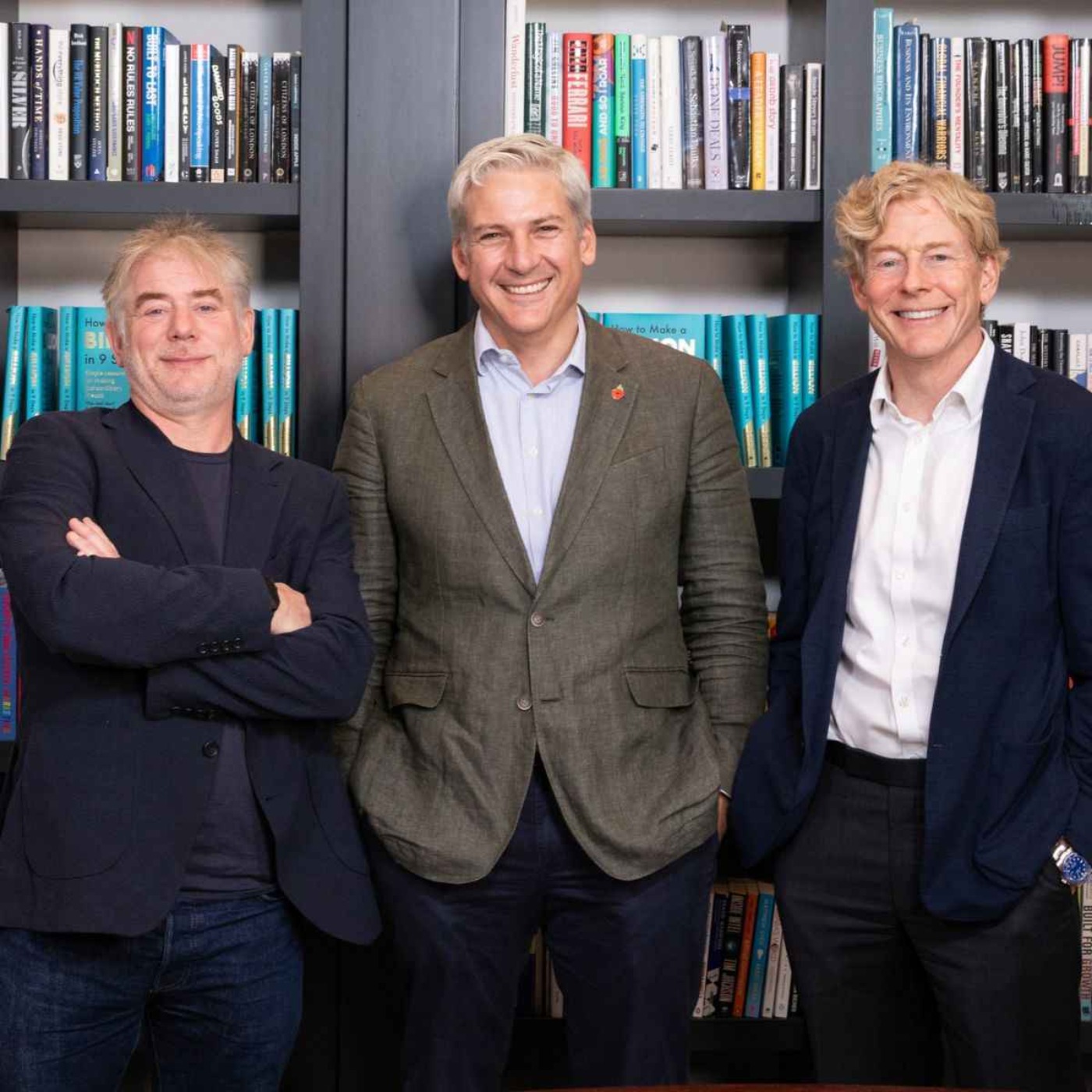
 The Business Leader Podcast with Sir Richard Harpin
13 Oct 2026 · 43m · 25 chapters
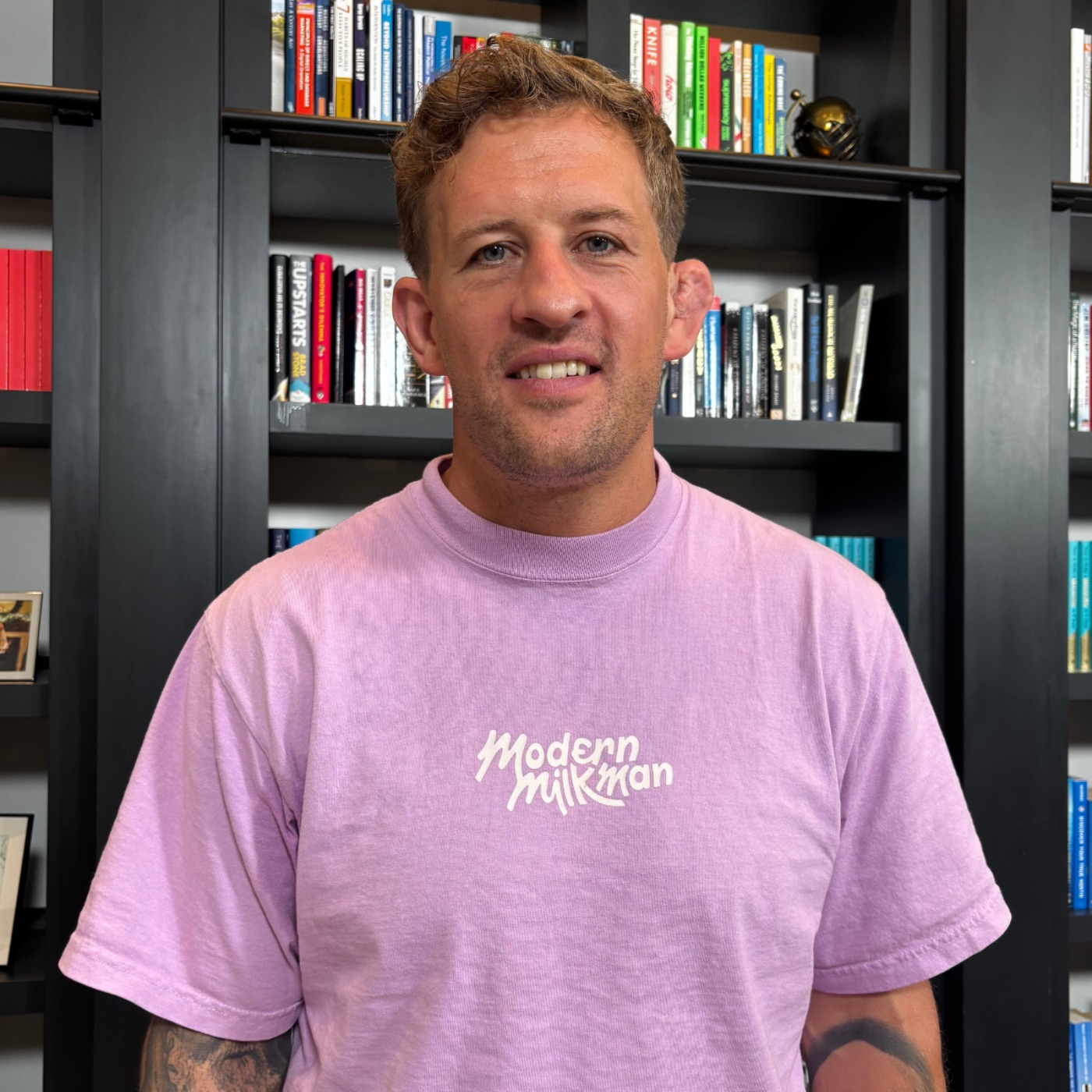
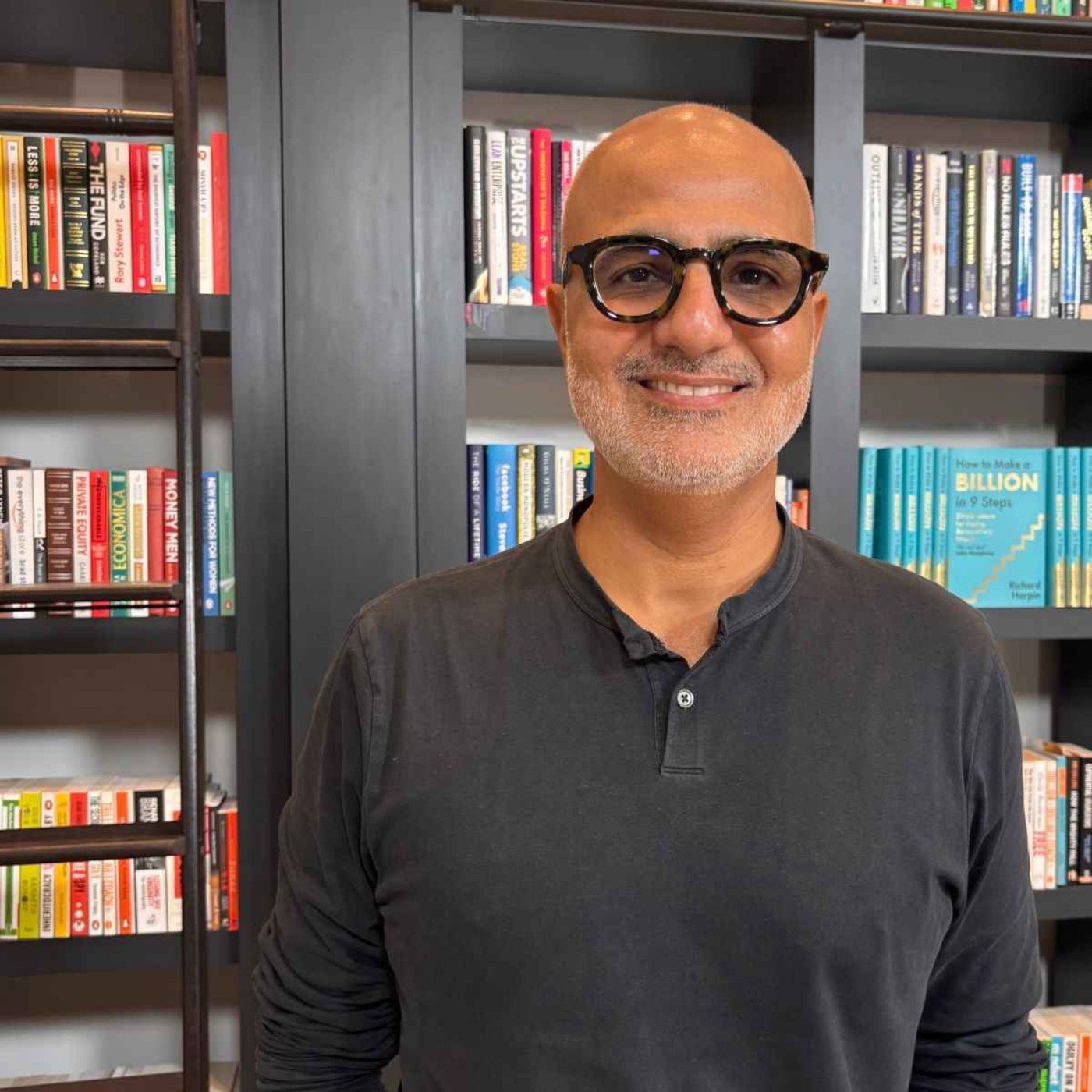
Simon Mellin explains how Modern Milkman reinvented the milk round to cut plastic and supply-chain waste, then scaled from the UK into the US. He covers early lessons from farming/butchery, building an online butcher’s shop, buying an existing milk round, COVID-driven growth, operational pivots to chase profitability, and the company’s doorstep-focused “own the last mile” strategy (milk, bread, eggs; plus recycling collections and parcel-style services).
Simon Mellin is a food-industry entrepreneur. He grew up on a farm and in his father’s butcher shop, later trained as a mechanic and built racing cars. At 23 he built one of the UK’s early online butcher shops, then founded Modern Milkman.
Growth-first nearly caused a cash crisis after markets collapsed (Ukraine war/financial downturn); they raised about £65m and had to halve the team and reset margins/profit culture. Buying the US/UK “Modern Milkman” businesses and immersing in American culture were crucial.
buying a local milk round for ~£2,000; 90 of first 10 customers weren’t in/needed cash; COVID driving 4–5x growth in two weeks; US language/terminology differences (milk round vs “milk route”); weekly P&L reporting; doorstep hardware concept (e.g., “milk keys”/doorstep mini-fridges).
Written by AI. May contain mistakes.
Learn about the importance of profitability and operational restructuring.
“We were burning a lot of cash at that point because everything was about growth.”
Explore how Simon's childhood in farming shaped his career path.
“Capital and any income from it is at risk.”
Understand the key values Simon learned that influenced his business philosophy.
“And what were the couple of bits of learning from farming and from butchery that you sort of took with you in those teenage years?”
Learn about Simon's journey from motorsports to the food industry.
“And that was the sort of moment in time where I realised what I'd learnt as a kid.”
Discover the challenges and innovations involved in starting an online butcher shop.
“When you're trying to build a new industry and create something that's not been done before, you're obviously learning on the job.”
Explore how Simon applied his experiences to create Modern Milkman.
Learn the practical steps Simon took to establish the Modern Milkman service.
“in the 1950s and so then how did you actually go about setting up this business back to pointing things apart, bringing them back together again.”
Understand how COVID-19 spurred unprecedented growth for Modern Milkman.
“to connect people to the service and allow them to use it in a functional way.”
Discover how other delivery models influenced Modern Milkman's strategy.
“You know, I think everybody was wondering how they were going to get products, what they were going to do.”
Explore the range of products Modern Milkman offers and their customer focus.
“I think ultimately we're a logistics business.”
Learn about Simon's experiences and strategies in expanding to the US.
“So I'm really thinking about most grocery items fit into that category, flowers, pharmacy, recycling, parcels and parcel collections.”
Understand the cultural challenges faced while entering the American market.
“Was it a big worry in uprooting and moving to the US or not?”
“What have been the other challenges in conquering America so far Simon?”
Learn about the importance of hiring curious and adaptable individuals over industry veterans.
“at a previous company, but then they come into your company that's different.”
Understand how location affects talent acquisition and team dynamics.
“I mean, you go from literally driving a milk round yourself right through to having a large team and being quite distant from the day-to-day operations.”
Explore Modern Milkman's five to ten-year growth strategy and service expansion.
“And And your team today running the UK business are based here in London?”
Discover the complexities of adapting to different cultural markets in the US.
“Yeah, so we're definitely planning five to ten years out all the time.”
Learn about the challenges faced when merging businesses with different models.
“So the northeast of America operates very differently to the west or the south.”
Reflect on the challenges and lessons from scaling the business quickly.
“and our platform worked quite differently.”
Understand how Modern Milkman adapted to survive economic challenges.
“I think the first part is, as I mentioned, we learnt so much through buying the business and not building from scratch.”
Explore the importance of sustainable practices in business growth strategies.
“We were burning a lot of cash at that point because everything was about growth.”
Discuss the potential for modernizing traditional business models in various sectors.
“Why has there never been a fishmonger in every town across the UK?”
Gain insights on entrepreneurship and determination from a seasoned leader.
“So I think it's very difficult to own the total value chain.”
Examine the difficulties of maintaining work-life balance as an entrepreneur.
“Your kids and your wife in Boston, are you able to get that balance or is that just not possible?”
Learn how meaningful conversations can inspire the next generation of business leaders.
“With more people on board Business Leader, we can have better conversations and inspire the UK's next wave of business leaders.”

Get the gist, explore an idea or ask about something said.
 Claude
On The Business Leader Podcast with Sir Richard Harpin, what are the key points of this episode?
Searching your listeningAutomatic transcript. May contain errors.
0:00We were burning a lot of cash at that point because everything was about growth. Nobody really cared about profitability. And we had to pivot our business very quickly and completely change our outlook and our operational structure. It was hard. You know, we had to halve the team size. We had to change the outlook on growth. We hadn't built a business that cared about margins and profitability. So we've raised quite a lot of money. We've probably raised about£65 million to date. How much of the equity have you needed to give up? Quite a lot. Quite a lot, yeah. If I hadn't gone there, if I hadn't really immersed myself in the culture and understanding America, we would have definitely failed.
0:30This is the Business Leader Podcast with me, Sir Richard Harpin. Today's guest watched David Attenborough's documentary Blue Planet, became angry about plastic waste and decided to do something about it. He bought a milk round doing 1am milk deliveries and tried to work out how to do it better and disrupt a whole industry. Since then he's built of business turning over more than£50 million a year, taken on the US, and he's now chasing his first full year of profit. The Business Leader podcast is sponsored by RBC Wealth Management. You're making decisions that matter to a lot of people. But what about your ideas?
1:14Ideas for what you want your money to do. Ideas that need the time and advice they've never been given. At RBC Wealth Management, with over 100 years of expertise, our advisors build plans around your ideas, not just your assets. Ideas happen here. Talk to us at RBC Wealth Management. Capital and any income from it is at risk. Simon Mellon, welcome to the Business Leader podcast. You sort of grew up with farming on your granddad's farm and then your dad had a butcher's shop. How did that sort of affect your growing up in your early career? Yeah, that's correct, Richard. Thanks for having me. I think for me, growing up in a shop teaches you a lot of life skills you don't realise it's teaching you until you get later in life.
2:01But just things like talking to customers, understanding requirements and serving them well was a big thing for me. But also built my connection to the food industry and built a lot of passion in me towards sort of resetting problems that we've sort of created over time. And what were the couple of bits of learning from farming and from butchery that you sort of took with you in those teenage years? I think the first one was we always got told not to waste anything. So, you know, that created a big passion in me around, you know, how to reduce waste and the consumption habits that we've sort of created over the last 30, 40 years.
2:35And then the other big thing was just work ethic. You know, farms are seven days a week, 365 days a year. So there's no time off. You've got to get stuck in. And you went from butcher's shop to mechanic to motorsport. What was that like? And then how did you sort of pull yourself back to food? Yeah, so, you know, I left school with no qualifications, didn't enjoy school at all, wasn't an academic learner, but always enjoyed pulling things to get, you know, apart and putting them back together again. And so trained as a mechanic, you know, got into the world of motorsport and spent four or five years travelling all over building racing cars.
3:08And that was the sort of moment in time where I realised what I'd learnt as a kid. You know, I think when you're in a, when you're being influenced and surrounded by people that all know the same thing, you don't really see the value in it. But when you get surrounded by people that are totally different, you start to realise that. And I think that was the moment when I realised that food specifically was pretty broken. The connection was being lost and therefore that gave me a passion really to use what I'd learnt as a kid and go back and try and change that and influence it. And what age were you when you built the online butcher's shop for your dad?
3:36I think I was 23 at that point. So, you know, I think it was one of the first online butcher shops in the UK. And I always remember my dad saying to me when we started it, you know, how are you going to keep it cold with a few swear words in the middle? And then we introduced him to ice packs and cool bogs. And that was the start of a big journey, I suppose, for food, going digital. And what were the any mistakes that you made then? Hundreds. When you're trying to build a new industry and create something that's not been done before, you're obviously learning on the job. so you know you're constantly finding problems and correcting those problems and i think curiosity is a really important thing anybody building an online shop today what would be your few bits of guidance for them there's a lot of intrinsic cost in serving a customer in a digital way and it's just really starting to understand that right from the cost to acquiring ensuring that the customer's paying back right through to you know your distribution costs your packaging your all your ice packs all these things how did that online butchery business lead to modern milkman the the business that you're running today i think it drove a lot of the thinking in the early days you know when we were uh spent a lot of time in the meat industry and you know recognizing that as meat flows through the industry it's been packaged and unpackaged and packaged again so many times and therefore the amount of waste that's been created by this long intrinsic supply chain was the starting point of thinking behind modern milkman you know ultimately we created modern milk company could be so an opportunity to one better connect the consumer with products but to remove waste from the supply chain and simplify it and so that was the driving force behind it and i suppose modern milk we came around when we were looking for solutions and we thought hang on a minute this has been fixed before you know the glass milk bottles existed for 60 70 years and and actually you know we were delivering fresh product to doorsteps in returnable packaging in the 1950s and so then how did you actually go about setting up this business back to pointing things apart, bringing them back together again.
5:27You know, we saw the milk round as a vehicle to solve the problem. So we literally went and bought the local milk round. You know, we got a truck, 100 customers, and this little white book, and each page was a customer. I think we paid about£2 ,000 for it,£2 ,000, and I spent three weeks going round with the note man, learning this route. Straight away, I'm realising, you know, our problems in this fact that we were speaking to note men that had worked for 15 years and never had a day off because it was impossible to pass the route on to somebody else because you had to learn all the doorsteps, what a customer wanted and all the rest of it.
5:59So we spent three, four weeks doing that. And I'd been buying this milk to put it on doorsteps myself. And then we got to him for four weeks and I went around to collect the money and then knocked these hundreds of doors and 90 of the people weren't in and five of the 10 that were and didn't have any cash. So therefore there's the next problem. You know, it's impossible to build a business. You're, you know, you're building a consumer business that is giving credit. You know, that doesn't happen in the modern world. All of a sudden we recognized that there was huge demand and want for a service like this, but there was no infrastructure or technology there to connect people to the service and allow them to use it in a functional way.
6:32I'm Richard Harpin, a Yorkshireman who sold my company, HomeServe, for£4 billion. And this is the Business Leader podcast, where we look at the stories and strategies behind modern businesses. I'm passionate about helping British businesses scale and succeed. I think it's the key to unlocking Britain's economic growth. Founders and CEOs of mid-sized companies can become members of the business leader community for coaching, peer-to-peer forums and exclusive learning events. So do get involved. Sign up to our weekly newsletter at businessleader.co.uk slash newsletters. It's free and it helps us grow the community.
7:15What I love, Simon, is that most people would set up a business from scratch and you didn't. you went and bought a small one and you did it for not a lot of money yeah i think uh it's the farmer i suppose i mean you know we're trying to find a pretty tight aren't we so trying to find the right way and what did drive you to do that and how did you how did you find the business to buy of a better look i think in it all you know we just found the local milk round that was up for sale uh the guy that had it was also a roofer so he was doing roofing during the day and a milk round we wanted some you know extra extra cash and i think he'd realized that it was really hard to do both and it was killing and getting up early and then doing a full day's work so he just wanted a way out of it what happened next so we started building this business and obviously we got one round um we started knocking doors and signing up customers and testing div so marketing through through facebook and other other sort of platforms and we'd found a nice rhythm to this growth so we were uh you know growing reasonably well and then you know 12 months later covid happened fortunately we've been expanding and knocking doors and building brand presence and And that brand presence turned into real value for us at that time.
8:20So, you know, through COVID, we grew probably 4 or 5x in about two weeks, which was a very big learning curve in its own right. And that was a trajectory that it put us on to scaling really well. COVID was a big positive driver of your business growth. Yeah, huge. You know, I think everybody was wondering how they were going to get products, what they were going to do. As I said, we'd been knocking on doors and sharing the brand around and growing presence in areas. and it all of a sudden just converted for us at that point. Were there any other businesses that you took inspiration from? There's a business I know in the northeast of England called the Rington's Tea business.
8:58Yeah, I mean, there's tons of these types of old-fashioned businesses where they've built scale through delivery networks, knocking on doors, selling products, Avon, Rington's. And then you've got the modern versions of those, haven't you, where you've got your likes of Deliveroo and Uber that are doing it on a different scale. So we were just trying to learn from all these businesses in different ways and try and bring that information to Modern Milkman to help us improve. And is this a tech company or a food business or both? I think ultimately we're a logistics business. You know, I think whilst we call ourselves the Modern Milkman, for us it's about delivering products to consumers and building routes.
9:37And what we put through that supply chain is pretty irrelevant to us. we just want to improve the customer proposition and grow the business through that way. And what is the customer proposition and what's the range of products that you now offer? So right now it's very much about the core grocery shop, you know, it's milk, bread, orange eggs. When we began with that, we've since then started to broaden that proposition. So we recently launched a recycling collections proposition where we recognise it's very hard to recycle, you know, hard items from the doorstep. so we've launched you know soft plastic collections used toys used textiles waste electrical goods that's been really successful for us and helped us to sort of support the consumer to do the right thing and then from there we're looking to launch much more so we're looking to start partnering with brands and bringing those brands into our platform and then delivering those brands to our consumer so our dream is to sort of integrate the household and own the doorstep of that household and just provide more and more value to the customer through offering more products and services.
10:39And what might those products be? And then where's the limit where you say, no, that's outside of our strategy and plan? We're not about on-demand or impulse purchasing. So anything that you would buy that fits in that category probably isn't for us. What we want to do is help improve the plan purchase of the household and make it really easy to sort of have a bit of a set-and-forget mindset on what those things are. So I'm really thinking about most grocery items fit into that category, flowers, pharmacy, recycling, parcels and parcel collections. So, yeah, we're just trying to remove hassle from the consumer and deal with that on their doorstep.
11:16How's the business transitioned since 2019 and what's it looked like today compared with then? Yeah, so there's a real twist in the tale. you know we're now operating in the UK and the US and there's an interesting backstory to that so when we started Modern Milkman in sort of it was around October 2018 a fifth generation dairy farmer in Ellington Connecticut also started a business called Modern Milkman and you know we went through this 12-month phase where we got a domain name you know he bought the.com domain name we had the Twitter handle he got the Facebook handle and we this made me realize like who is this person and who is this modern milkman we started talking through instagram uh during covid we were sharing stories and helping each other to scale and deal with these you know increasing volumes at this rapid pace and then you know i phoned seth in in uh in 2023 and said look how do you feel about working together we were looking for ways to expand and grow so i went out and met him in august 23 we we said look we've got different views you know he wanted to find a route to market for his for his dairy farm he was running his fifth generation dairy farm and they were getting crushed by commodity pricing in america so he just wanted to build a direct consumer network we'd obviously built like a growth marketing engine and a technology infrastructure to allow scale and we said look if we test our workings in america and it works how do you feel about merging the businesses and so he was up for it we we tested those things it worked really well and in jan 24 we merged uh and i moved there in august 24 to to help scale in there so you know a huge difference from from between those two times we now operate in five states in america and we cover about 45-50 % of the UK.
12:54Was it a big worry in uprooting and moving to the US or not? Being naive at times is bliss, right? You know, I just saw it as an opportunity and a way to grow personally and in business. You know, I have a wife and three daughters. They all obviously had very different views on this, but they were all very supportive and we did it. It's definitely been a rollercoaster. It's definitely been, there's been a lot of learning. There's been a lot of ups and downs in it, but I appreciate the opportunity and I'm grateful we did it. I'm definitely enjoying learning the market. It's so different to the UK and you'll understand this from your experience.
13:29I think the common language gives us a false sense of security that it's culturally and works the same and it couldn't be further from the truth. And in what ways is it culturally different? I think shopping habits are very different. The motivations behind consumers are why they buy things. Sustainability is a big reason in the UK for using this. food security and food providence is a is the big reason in america it's not sustainability words and terms we use you know they don't know what a milk round is in america they call it milk root it's existed for the same amount of time but just that simple nuance is totally different and if you talk about milk round they don't understand what you're talking about and it's that simple and that's a great example of these differences and any other differences in language in terms of the the products that you're you're offering yeah i mean you know volumes you know we talk about millilitres and litres you know they're they're ounces and gallons so uh these yeah these things just all also different the milk bottles the same size or vastly bigger in america unsurprisingly it's vastly bigger so yeah we uh obviously it's the pint in the uk it's uh we deliver in quarts and half gallons in in america and also the order sizes are much larger out there as well so we deliver less frequently but a much larger order and that helps us offset the difference in in population density obviously the UK is about 5x in terms of population density to what to what the US is.
14:47What have been the other challenges in conquering America so far Simon? I think the big one is just learning how to sell the product I think we were very fortunate that we because we bought a business and we got that intrinsic knowledge and Seth the founder of the American business he's still involved and works with us he really helped us fast track our knowledge in understanding the American market I'm pretty sure if we'd have started organically we'd have failed You know, I just think it's so different. So, yeah, terminology on how you sell a product. I think their expectations around technology are vastly bigger and broader than what the UK is.
15:18You know, just little sticking points that you get away with in the UK around, you know, functionality and UI. You don't get away with it in the same way in America. Everything's got to be perfect. And if there hadn't been that coincidence that he was developing modern milkman in the US the same time that you were developing here in the UK, would you have naturally gone to America or would you have gone somewhere else do you think? I think we'd have always looked to America because it is you know it's the biggest economy in the world and obviously if you can nail America you know you're in a really good place from a business perspective so yeah I think we would have probably always looked to it I think we just got a I think that's probably our second part of walking the whole business journey around the fate I suppose that came with Seth doing what he did and picking the name he picked but also being so open to working with us and again and being a curious mind that was that saw opportunity.
16:05Who's running the UK now that you're in America and focused on the big opportunity there? So we have a UK GM, which is currently off a maternity. So now we split it between myself and our CEO, Dom, and we both travel and try and split our travel and come back and get involved. The UK is still predominantly the largest part of our business. It's probably about 70 % of our revenue right now. But the US business is growing much faster. So I think in the next 12 to 18 months, they'll probably level each other out. and then I expect the US business will take over. So yeah, still very much involved, but yeah, just a different setup.
16:38And the mechanics in still growing the UK in terms of customer acquisition and how that's now working and then the economics of the model and profitability? The UK has definitely got harder. You know, I think for most consumer businesses, you know, I think the consumer's quite stretched. You know, there's a lot of inflation and I think inflation's outpacing salaries. So that's put pressure on us from a growth perspective. So that's meant that we've looked to other ways to grow. So we're really now focused on how do you give more value to the customer to offset that inflatory pressure and keep the services relevant as possible.
17:12And that's got us thinking more about how we partner with other consumer brands and how we can deliver their products and services to our customers through our platform. How many customers have you got right now in the UK? There's about 130 ,000 in the UK. So, yeah, it's a big market for us. and there's still a lot of opportunity here, but we're just trying to pace the growth of the business with the market and the macro dynamics that sit within it. And is it a city business or is it a rural business or what does a typical customer look like in a delivery area? Yeah, so it's not a city business.
17:43It's actually more of a suburb business. I think where we're strongest is the housing states, the three-bed semi, the young family. It's obviously very difficult for us to deliver effectively to flats. So if it's an area that's got a high percentage of flats, will generally not go to that area. In terms of the customer, it's young families. Young mums are our target audience. And then with children, people that care about good food, they're proud of what they want to feed the family, proud of how they live, and just want to improve their impact on the world, but in a convenient way. And is this a directly employed model and you own all the delivery vehicles?
18:22It's a really broad mix. So we directly employ everyone currently in the US. in the UK we operate like a sort of pseudo franchise model where we have DSP agreements with people that run areas for us. DSP is? Delivery service partner so that's an Amazon invented system. I think it's another sign as well how we've pulled knowledge from other businesses that have been successful where you know you give young entrepreneurs an opportunity to build a business within your business you give them the volume and the infrastructure so we'll supply them vans we'll supply them the depot we'll put the stock and the sales into the hub and then they're responsible for finding drivers, contracting those drivers and getting those people to operate the service.
19:00So you've copied part of the model from Amazon. I love that. Any other parallel businesses that you've taken a bit of their model and applied it to what you've built? Yeah, so I think for us, it was a mix of Domino's and Amazon in the thinking of developing this model. And I think it worked very well for us when we were scaling because you regionalize your operations, you give power to those people to do it. They care because it's their business. And therefore, ultimately, the delivery service to the consumer is significantly improved because you're breaking down responsibility across the country into smaller pieces.
19:34How do you grow the business here in the UK? It sounds like there's a lot of growth still to come. There is. 130 ,000 customers. What's the way you recruit those customers? So we have a broad mix. We still use traditional channels like door-to-door sales. And that's a very powerful thing for what we do as a business because having a platform that's sat on a delivery network, density and customer centricity is really important. But because we own both the customer relationship and the logistics infrastructure, we've got to acquire customers in a way that drive that density. So that does a lot of the heavy lifting for us in that respect.
20:06And then we overlay that with things like direct mail or your digital channels, referral, and everything you'd expect. Direct mail? Does that still work in a digital marketing world? It does. It's dropped off a little bit, I'd say, in the last 12 months but yeah i think it went through a real uplift i always think that if you're looking for channels you know you want to be doing what everyone else is not doing because that's where the opportunity lies what does your direct mail look like is that personalized or is that just sort of printed leaflet drops the most successful ones in the early days were just letters that looked like they were handwritten letters from the local milkman and they were very very successful for us you still do those we do a mix now so it's evolved and as i say direct mail the channel is probably not as successful as it used to be but yeah we still in new areas if we open new areas yes we would look at we would look at doing something like that and how do you get those customers that are ordering the milk to spend more and order all of your products yeah so that's that's more the product and the platform so within the app you know we have uh trading tools and techniques where we try and drive uh off you know whether it's through offers whether it's through sampling or all these types of ways to try and push more you know onto the doorstep and what about the pricing strategy so you said rising costs uh the oil crisis affects the business uh is a scope to put your prices up i think uh yes is to a point you know is the honest answer i think people don't use a milk round or a service like ours specifically on price although price is important i think they're looking at value and i like to use the term value more than price in this instance you know am i giving a customer value does the customer feel like they're getting value and i think that's wrapped up in the quality of the service you give the convenience that you allow them the quality of the products and then ultimately the price that you charge for that service but you know the last two months have been tough i think i'd go even further than that you know i think since the ukraine war inflation has been difficult to deal with for both businesses and consumers i think a business like ours oil flows into that business in so many ways you know whether it's cost production to produce milk right through to you know the fuel that you put in a vehicle to deliver that product so we're always looking for ways to optimize the business first before we pass on that cost but ultimately there comes a point where you can only swallow so much and you've got to you've got to pass a bit on.
22:20How have you managed to fund the business as you've grown? So we've raised quite a lot of money we've probably raised about 65 million pounds to date of a mix of you know of early stage seed funding, angel funding right through to institutional venture capital and venture debt. So yeah, the business is at a point now where it's, you know, we should be profitable in Q4 and move on in a profitable way. So obviously we get away from that. But yeah, that's funded the growth today. How much of the equity have you needed to give up in order to raise that large amount of money? Quite a lot. Quite a lot.
22:53Yeah. What's your learning for other founders and CEOs that are looking at bringing in investors? I think there's a few ways to think about this so I think the first one is and I think this is changing but for a long time fundraising was seen as a milestone before being profitable or generating your own cash and I think that's something that's changed but that was something that was hard to get your head around you know everyone celebrates it you get tied up in evaluation and all the mechanics to sit around that and I think sometimes it can create like per first incentives where you know you're sort of on a path that's not necessarily best for you as an individual I think that's one side of it I think the other side is you know i've been lucky we've had some amazing investors that have been very supportive and continue to be supportive but you do hear a lot of stories where that's not the case so i think you know investors often do dd on the business but it's not that often that the business does dd on the investors and i think there's a strong argument there for more people to to think in that way who's been your best investor it's hard to pick one because we've had different people at different stages that have been very supportive you know we've had angels in the early days that were amazing and backed an idea with not much there and then we then had some great institutions along the way that have come on and been supportive through both the good and the bad and I think it's always in the bad where you really see what people are about and where they come from and so yeah we've been we've been lucky and fortunate in that.
24:12And where have you got your guidance from in terms of helping you develop the business have you had a coach or mentor or chairman or anybody that's helped you along the way Simon? I've had tons I've been very very blessed and supported in this from you know from in my early 20s right up to where i am today and uh multiple founders of previous businesses that have offered time for free and just want to see you succeed and given that time but they don't just knock on your door and say oh simon can i help you how did you yeah how did you get out there and identify them and then get them to help you yeah so some some of those was people that were local to me in the early days that just took a shine and wanted to help others i've met through uh talking to potential investors you know there's people that we've not necessarily invested but you've got on really well with and therefore they've become a part of that some have come through non-execs you know we've specifically gone and found non-execs that have come on and off the board and they've really helped us that have had you know similar similar experience in a similar business or a very good adjacent business that could add value so it's definitely been a huge part of my development and learning they've helped us with decisions and stopped us making silly mistakes so i you know i'd always I'd always push people to try and find that.
25:24This is very much an operating business. What have been the issues in getting the operating model right? So we deliver a little a lot of times, let's say. So the 0.1 % is very important in our business, never mind the 1%. And I think it's getting that operational efficiency and getting the team to all thinking that way has been important for us. We've got a great team of people now that do that very well. But I think that's what makes us quite different to most companies. in the way we operate. And how have you done that? What would be a good example? I think great reporting and great understanding.
25:57You know, we try and speed up reporting cycles. For example, we'll do a weekly P &L in our business, not a monthly or an annual, and just try and really shorten the lead time on information. And then that allows you to make changes faster and keep on top of the business in a better way. And the importance of data? I mean, we are ultimately driven and run by data, so very important. We've made a lot of mistakes in this area. It's very difficult to understand the data structure that you need to run a business well, and we've pivoted and changed this quite a lot of times. And if I'm honest, continue to do so.
26:29There's always gaps where we want to fill. But yeah, I think you're only as good as the data that you've got beneath you to make decisions or support decisions that you're making. So very, very important to us. And what effect might AI have on the business? It's already having a huge effect for us. I think we're in a very fortunate position where we've got a very curious team of people that want to use it. We've got a scale where we can have a real impact on cost with it. And we're not too old where it's really hard to implement some of the infrastructure. So already, you know, whether it's through design and development or whether it's through customer service and planning, we're using data heavily right across our operation already.
27:09Talk a little bit, Simon, about your management team and how that's developed and any recruitment mistakes and how you're developing that team? Yeah, so at the minute, there's three of us now in the exec team. That's gone up and down in numbers over the time. Recruitment's really hard. I think that's probably the hardest part of building a business. And I think whether people do or don't work, it's not always about the person. I think it can be about the stage of the business, where it's at. It could be about the market they're operating within. So I think there's so many nuances to making somebody successful in your company.
27:47And I think that's an area we've learned a ton about. What are the biggest single lessons that you've learned in hiring people? I think it's really easy to hire based on logos and previous experience. And somebody might have done amazingly well at a previous company, but then they come into your company that's different. You know, it's got a different culture, a different group of people, provides a different type of service. And you sort of believe that you can bring this person in and you pay them a big salary and they're going to come in and make things happen. And that is not always the case.
28:16And I think some of the best success we've had with hiring are hungry people, very curious, approach everything with first principles approach. And I think they sometimes do a lot better than the person that's been there and done it before who could come with preemptive ideas of how it should work. So I'd say that's probably my biggest learning. So these are people that haven't worked in the industry? Potentially, or potentially people that have, you know, the people that are growing in their career and this is a step-up opportunity for them. Rather than big company people that have done it before.
28:47Yeah, you try and side-shuffle them into your business and believe that they can bring that success to you. And back to the point, right, there's so many variables. It's really difficult for that to be the case. How has your role changed over the years? Massively. I mean, you go from literally driving a milk round yourself right through to having a large team and being quite distant from the day-to-day operations. And I think that's something I've really struggled with. You know, I think I like to do. I like to feel that I'm delivering value through things I do. And when you get to being a leader rather than a doer, that obviously changes and you're trying to support people to be able to deliver value, you know, in the right way.
29:29So I'd say that's the biggest challenge I've faced in growing the business. You're from the northwest of England and you're here in London. You're living in Boston. how important is geography in terms of helping a business grow or holding it back again it's a great question and another area that we've learned a lot about so we obviously yes i'm from i'm from uh cone you know from the northeast of england and i always wondered why a lot of people move away and they move to london or manchester other cities and i think so you get this like talent drain from areas and when you're trying to build a team in an area that's got talent drain it's quite difficult and so as we've scaled we've moved to you know the biggest cities you know that was Manchester then it was London it's now also Boston and I think the quality of people changes as you move through those areas obviously salaries reflect that quality as well but I think our learnings of you know putting the right type of people and recruiting them in the right type of areas has really allowed us to scale and improve our team and and the way it works together.
30:32And And your team today running the UK business are based here in London? Predominantly. We have an office in Manchester as well. And, you know, that was our head office. It is slowly shifting down to London. But it's probably about a 70-30 split now between London and Manchester. And with the new Prime Minister being partly now based in number 10 in Manchester, could there be a swing back the other way, do you think? I mean, let's see. I mean, you know, he's the King of the North for a reason, right? So hopefully he can help it. I am intrigued to see how things go with that. I think Manchester is an amazing place.
31:08I think it's a really cool city. There's a lot going on up there. And it often gets overlooked by London. But I hope that we can pull some value back up there. How many years ahead are you looking for the growth and development of Modern Milkman? And how's the business going to look differently in due course? Yeah, so we're definitely planning five to ten years out all the time. For us, as I mentioned before, we really want to own the doorstep. We're now developing infrastructure and hardware that can live on the doorstep, that can connect to the household and can accept more valuable products through our network.
31:44What does that look like? If you think about a ring doorbell that lives on your doorstep, we're thinking along those lines. So how do we give security, confidence, temperature control, all these things there? And how do we really improve the service and the proposition to consumer? I think, you know, we call milk keys to the doorstep in our business because it's the tool that builds the relation with the consumer. But I think there's so much more value we can add to the customer through our network, and we really want to see how we can do that. So how can we integrate the household into more and more products and services and sort of make it easier, make it more convenient, have one platform that people buy those through, and it houses so much more value.
32:23And that could be fridges at everybody's doorstep in America, Could it? It absolutely could. I mean, we were exploring Phoenix in Arizona not that long ago. You know, it's extremely hot there, 35, 40 degrees C, you know, most days. So, obviously, delivering it in the way we do in the northeast of America or in the UK just would not work. So, you know, that gave us the idea around, you know, could we put a mini fridge on a doorstep and could that do more things? Are there differences in America that you've still got to tackle over there? There are. I mean, this is a great topic that we're talking about now.
32:56I just think America's 50, 51 countries in its own right. So the northeast of America operates very differently to the west or the south. So you really are learning a new market every time you enter a new state. Is the culture of the business the same in Boston as it is in the UK or is it a bit different? We try for it to be. I think that it's, I suppose the big difference there is that it's probably more of an early, it feels like more of an earlier stage startup than what the UK does. You know, the UK is a pretty well-structured company now in the way it operates, whereas the US is still quite a small startup-esque, you know, feel for us.
33:37And that comes from the fact that we're still learning. You know, we're still trying to understand the market, understand the team that we need there and how that's going to work and how it's all going to integrate and fall together. We do try and split roles or split functions across two markets to keep everyone talking and working well together and just learning from each other. And do you think at some point that you will hire an American chief exec to run your US business or not? Potentially when the time's right. As I said before, I am enjoying learning the market. It's a personal thing for me to develop and grow there.
34:07And people are very expensive in America, so we need to grow quite a bit before we can afford one of them. Has there been any difficult moments with your partner in America that was developing the same model as you post getting together? We moved their business onto our platform when we bought them and our platform worked quite differently. So, you know, community share boxes are a big thing in America where multiple farmers will create a box of goods and sell it to the consumer. And the original Modern Milkman there was built in that way. We saw opportunity and value in moving to our ways where it was sort of similar to the UK but different.
34:45And when we first moved that, obviously they built a customer base that were very akin to the original service that meant that when we moved that a lot of those customers were a bit frustrated let's say in the early days of that change a lot of that frustration went directly to Seth you know some of those people were his family his uncles so I think there was a you know there was a lot of trust there for him to get us through that but I think he you know he took a lot of telling off let's say through that period. Was there any lesson or anything you'd have done differently with the benefit of hindsight?
35:12site? We did that in a very bullish way and we actually you know we went backwards before we went forwards when we made that change so I think it worked well for us because we ripped the plaster off and straight away you know found the problems and grew it from there but it did hurt us you know it did slow growth for quite a period and we did have to learn very quickly to how to correct that. Will you ever develop the business beyond America or is it just so big that that's going to keep you busy for the next five or ten years? There's definitely opportunity elsewhere I think you know markets like canada could work very well just over the border but yeah i think to your point america is so big and i don't think you realize just how big it is until you go there and try you know and start building a business there that i think the opportunity is endless and i think it'd be naive of us to try and divert focus anywhere else other than than trying to do that for any other entrepreneur that is planning on going to america and building their business over there What are the three bits of learning?
36:07I think the first part is, as I mentioned, we learnt so much through buying the business and not building from scratch. I think if I hadn't gone there, if I hadn't have done that, I hadn't really immersed myself in the culture and understanding America, we would have definitely failed. So I think that's one part. I think second is learning the language differences and the terminology and understanding that because that has a big impact on how you acquire a customer and how you talk the language over there. And then the third part is I just think you've got to take it slow. I think it's really easy to throw yourself across multiple states, across multiple geographies, but I think attacking our state at a time and making that work and understanding that state and then moving forward is really important.
36:46Looking back on your journey, Simon, what were the most scary moments? I'm quite a glass-half-full person, so it's rare that I get scared as such in the moment, but when you look back on times of change and stuff, I think that's, to me, more apparent. I think, you know, the whole Ukraine war situation and when the financial markets collapsed and going through that time period, that was probably one of the toughest times for our business. I think there was a ton of money around before that. And, you know, everybody was throwing money around and investing in our type of business. All of a sudden, that money stopped.
37:20That money dried up. We were burning a lot of cash at that point because everything was about growth. Nobody really cared about profitability. And we had to pivot our business very quickly and completely change our outlook and our operational structure. In order to then get to profitability quicker before you ran out of cash. Exactly. It was hard. We had to halve the team size, we had to change the outlook on growth, but also we had to culturally change what we cared about. We'd built a business that was built around growth. We hadn't built a business that cared about margins and profitability.
37:49So the hardest part of it all wasn't necessarily changing the team and changing the outlook, it was resetting the goals and the culture around what we wanted to be going forward and forget about what we used to be as a business before that. Looking back now, could you have done it differently, bootstrapped the business and got there with burning less money or no regrets? Yeah, I mean, so no regrets to start with. I think you can't change what you've done. But I do think there's definitely different ways to do it. And we're proving that now, right? We're still growing as a business, but we're doing it in a much more, let's say, cash-friendly way.
38:29and we're breeding better habits through doing it in this way it's not as exciting it's not as fun you know we talk about this internally like the 2019 to 2021 days of building this business were insane you know we were growing at crazy speeds and uh and you can do some really cool stuff when you're doing that but it's very expensive to do that as well is there a future beyond the modern milkman so you've reinvented the um the milk round can you reinvent other service models or not yeah I think there's a ton of these things isn't there there's loads of old services where you know they've died away because technology's got left them behind and they've moved forward and you know I think the rounds things like the window cleaning round you know they're a great example of areas where old-fashioned traditional services that consumers really want but they just need an easier way to interact with them.
39:16Why has there never been a fishmonger in every town across the UK? There probably was, weren't there 40, 50 years ago. There was definitely butcher, wasn't there? We remember Dewhurst the master butcher, but was there ever a national chain of fishmongers? I'm honestly not sure, I'm honestly not sure on that, but I think like everything, when the supermarkets became apparent and they started to consolidate multiple categories into one place and made it really convenient to shop in that way, it destroyed most of local industry, didn't it? And I think we are now the evolution from that, How do we bring that back, but in a technologically advanced way?
39:54How important is owning the whole of the value chain from the farm or from the fishing vessel right through to owning the end customer as you do in modern milkman? So I think it's very difficult to own the total value chain. And I think for us, it's about, you know, we want to own that last and first mile. So we want to own the doorstep and connect that into multiple different products and services. We then want to work with specialists who are category specialists that we trust, that have an amazing product and amazing service, where we can give them access to doorsteps through our platform. That's ultimately the dream for what we are.
40:31Two final bits of advice for any entrepreneur, founder, chief exec, that is looking to scale a business in the UK today. From my personal learnings, you can be very bullish as an entrepreneur and sometimes that can go against you a little bit. So I think just like tempering yourself and checking yourself and bringing people in around you that can be that handbrake, let's say, to just help you make good decisions. I think that's been something that's really helped me a lot. And then the other side of it is, you know, I think there's a lot of people with great ideas that never just get there, never just get to doing it.
41:03And I think, you know, if you don't try, you don't know. And just have a bit of confidence, a bit of self-belief and just get on with it. Yeah, exactly. Finally, work-life balance. Your kids and your wife in Boston, are you able to get that balance or is that just not possible? Not at all. No, I think my wife would probably answer this question very differently to me. I love what I do, right? So to me, it's not work. But I'm sure if you asked her that question, she'd say it was completely out of whack. Simon Mellon, thank you very much. Thanks for having me. Here's absolute proof that you can reinvent an old-fashioned business.
41:38This is the modern milkman and to not only do it here in the UK with 130 ,000 customers, but to start conquering America at the same time. Thanks for joining us. Please do rate us and subscribe and make sure to sign up to our weekly newsletter at businessleader.co.uk slash newsletters. With more people on board Business Leader, we can have better conversations and inspire the UK's next wave of business leaders. You're making decisions that matter to a lot of people. But what about your ideas? Ideas for what you want your money to do. Ideas that need the time and advice they've never been given.
42:23At RBC Wealth Management, with over 100 years of expertise, our advisors build plans around your ideas, not just your assets. Ideas happen here. Talk to us at RBC Wealth Management. Capital and any income from it is at risk.
Simon Mellin, founder and CEO of Modern Milkman, grew up working in his dad's butcher's shop in Colne, rural Lancashire. By trying to move the business online, he was shocked to find just how disconnected food supply chains had become across the UK. In 2018, inspired by Blue Planet, he bought a real, working milk round for £2,000 to find out why the dairy industry was dying – and what could be done to save it. From that cart, he has delivered Modern Milkman: a returnable-packaging grocery delivery business that has since raised tens of millions in funding, expanded into five US states, and is aiming for its first full year of profit. In this episode, Mellin tells Sir Richard Harpin about his experience as the modern milkman, as well as the strange coincidence that led him to merge with a US rival – and what he got wrong trying to run it 'the UK way'. Plus, his frank advice for founders: If you don’t try you don’t know, just get on with it!
Subscribe to the Business Leader Podcast for weekly entrepreneur stories from founders and CEOs who’ve built and scaled great businesses. Join the Business Leader community for coaching, peer to peer forums and exclusive learning events. Sign up to our free weekly newsletter at businessleader.co.uk/newsletters.
Business Leader is a membership community for ambitious CEOs and founders of mid-sized UK companies, designed to help them grow with purpose through strategic support, peer-to-peer learning, expert coaching, and high-impact events. Sign up for our Business Leader newsletter here.
Hosted on Acast. See acast.com/privacy for more information.