Ask ChatGPT
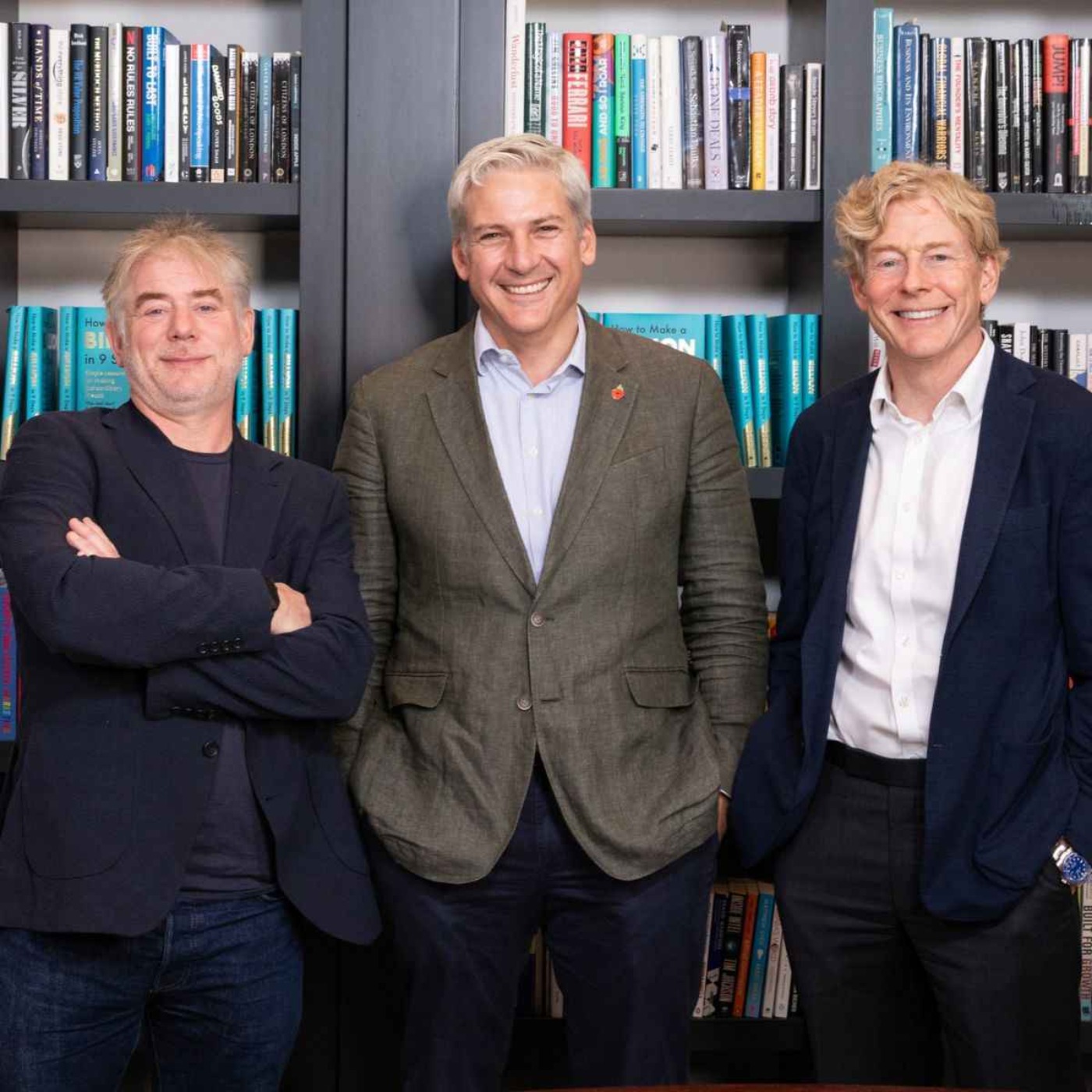
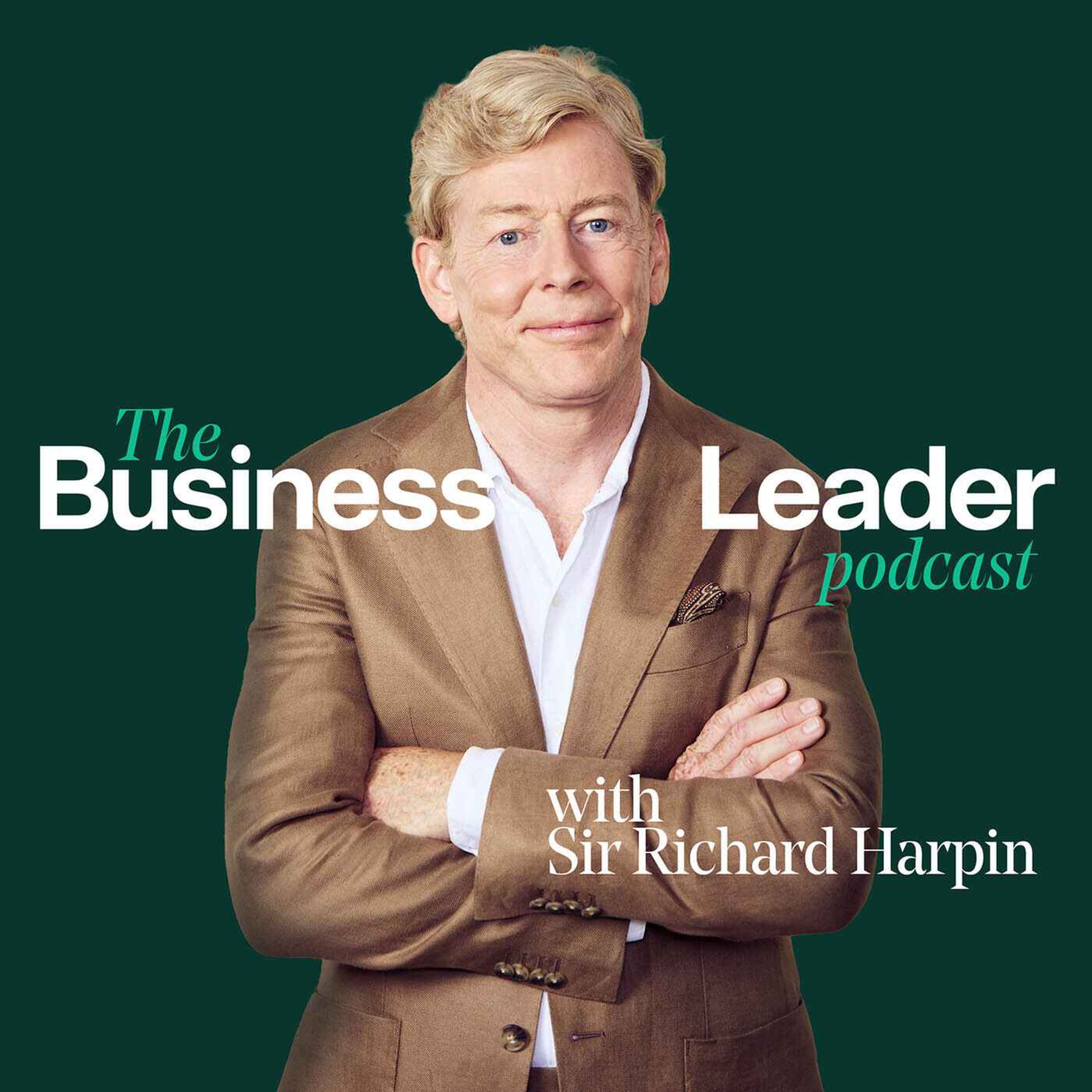
 The Business Leader Podcast with Sir Richard Harpin
5 Jul 2026 · 45m · 25 chapters

Barclays CEO Venkat (Venkatakrishnan) discusses turning around the bank after skepticism, his personal cancer diagnosis during the early CEO period, and how regulation/capital rules and the UK Consumer Credit Act affect lending and growth. He also covers Barclays’ 2024–2028 strategy, shareholder returns, restructuring, and M&A approach.
Venkatakrishnan, Chief Executive of Barclays (took over in Nov 2021). Background: grew up in India; studied at MIT (PhD thesis on air traffic control operations); 22 years at J.P. Morgan starting as a quantitative/derivatives programmer; later ran US fixed income during the financial crisis; joined Barclays as Chief Risk Officer in 2016. Interviewer: Richard Harpin, founder/CEO of HomeServe (sold for £4bn).
Barclays’ shares traded around half book value when he became CEO; turnaround delivered rising profits/returns and a target of £15bn+ back to shareholders by 2028. Ring-fencing protects depositors without limiting UK lending. The Consumer Credit Act makes banks risk-averse; banks should be liable for mis-selling but current “lookback” is unreasonable. Cancer treatment was managed with board support and remote work.
the US securities over-issuance “punch” costing ~$700–800m; exiting motor finance in 2019 after provisions; Northern Rock bank run; weekend work with the Bank of England to support pension funds after bond-yield spikes; employee Barclays share grants of £500/year; acquisitions of Kensington Mortgages, Tesco Bank, GoHenry, and US Bestag; “integrate well” as M&A lesson.
Written by AI. May contain mistakes.
Learn about Venkat's background and his leadership role at Barclays.
“In late October, I discovered I had cancer.”
Discover how growing up in India and studying at MIT shaped Venkat's career.
“The bank was underperforming with a share price under pressure and no shortage of sceptics.”
Understand the challenges and opportunities in India and the importance of resilience.
“Venkat, Chief Executive of Barclays, great to have you on the Business Leader podcast.”
Explore Venkat's experiences and lessons learned during his tenure at J.P. Morgan.
“It's a society that requires some amount of resilience.”
Discuss the lessons learned from the financial crisis and its impact on banking.
“which are slightly more complex financial contracts in the interest rate world, and so what's called fixed income bonds.”
Examine the balance between consumer protection and banking risk management.
“which seem apparently strong but are not so.”
Analyze the importance of lending practices for individual and economic growth.
“or investment banking operations protecting the domestic depositors from the effects of that.”
Hear Venkat's insights on Barclays' future and the role of growth in banking.
“Mortgage lending is one important part of it.”
Learn about the importance of lending to stimulate economic growth.
“I would ask them to examine how we can increase the amount of lending into the UK economy, not just to companies, but to individuals.”
Explore Venkat's rise from chief risk officer to CEO at Barclays.
“but at the same time it had problems with foreign exchange fees with what was called LIBOR among other banks.”
Understand the challenges Venkat faced shortly after becoming CEO.
“And I think this is the message which I try to give to younger people.”
Hear about the changes in the executive team and the importance of renewal.
“and you know, it's a question of both managing the problem.”
Learn how Venkat managed his health while leading Barclays through challenges.
“And how are you going to do this big job and sort out your health?”
Discover the strategies Venkat uses to manage time and efficiency as a CEO.
“Did it change in any way the way that you looked at life?”
Understand the benefits of having a coach in a leadership position.
“They criticize the work of others, but they don't ask whether, in In fact, in spite of all that criticism, it's better to do that.”
Learn about the importance of personal relationships in coaching.
“And a lot of it is a very personal relationship with who that individual is.”
Exploring Barclays' ambitious three-year plan and its challenges.
“We try to talk at least once a month and hope to see each other a few times a year.”
Discussing Barclays' renewed focus on the UK market and its significance.
“So the strategy did actually two very simple things.”
The need to improve equity culture and educate investors in the UK.
“We spoke earlier about you running a half triathlon, Ironman, and it's going to be one of those, right?”
Insights on Barclays' mergers and the importance of integration.
“And, you know, I think banks have a role and we have a role in creating as cheap as possible a way for people to invest their money transparently, cheaply, efficiently.”
Key advice for UK businesses aiming for growth and investment.
“The third thing is the way our colleagues across the bank have both embraced the plan and delivered it and made it better, frankly, through their feedback.”
Discussing the barriers to investment and the venture capital landscape in the UK.
“The great thing about the UK is your world is your oyster.”
How technology can improve the investment process for businesses.
“I also think it's fine to get that money externally and from overseas.”
Explore the advantages of conducting business in the UK compared to the US.
“Where's the better place to run a business from, do you think, here in the UK or the US?”
Discover how lessons from cricket can be applied to business leadership.
“And finally, Venkat, I've really enjoyed the conversation.”

Get the gist, explore an idea or ask about something said.
 Claude
On The Business Leader Podcast with Sir Richard Harpin, what are the key points of this episode?
Searching your listeningAutomatic transcript. May contain errors.
0:02In late October, I discovered I had cancer. The first question I asked, which my wife was not happy with me asking, was, can I work while I get this treatment? Mike Tyson sort of says, you have all these plans and then you walk into the ring and then the first punch hits you. And I had a punch four months in. Two days before I got the top job, I didn't think I was going to get the top job. We were trading at roughly half of the book value. They were worth twice what the people were telling us the bank was, which meant either that they didn't believe we were going to make profits that are there that we thought we would make, or they thought we were going to have higher losses.
0:39We had to disabuse the market of that.
0:44My guest today took over at the helm of Barclays in 2021. The bank was underperforming with a share price under pressure and no shortage of sceptics. skeptics. Venkat, as he's universally known, has spent the last four years proving the critics wrong. Profits up, returns up, a bold restructuring plan that's transformed how the bank operates, and a target of over£15 billion back to shareholders by 2028. And that would have seemed unthinkable not long ago. Venkat is not a typical bank boss. He has a PhD in air traffic control. Let's find out what it takes to turn around a FTSE 100 institution, keep it moving, and what comes next.
1:36Venkat, Chief Executive of Barclays, great to have you on the Business Leader podcast. Richard, thank you so much. It's a great honour to be here with you. You've been an iconic leader in the UK. Thank you. You grew up in India. You then studied at MIT in America. How did that shape your career? Yeah. So I spent my childhood, I grew up in India and you know, it was obviously a place which I still associate deeply with family, with old friends, with relatives and with the foundation of, I would say, my cultural being. And then to go to MIT was an enormous gift. I got a scholarship to go there and I was catapulted into being with some of the very smartest people in the world which was very good because it teaches you humility very, very quickly.
2:34But it also opens your eyes to the fact that talent can come from anywhere that excellence knows no boundaries. and, you know, it was and is one of the most international universities in the world and they find people from all over the world and they give them opportunity. And that part of MIT has struck with me, has stuck with me. And what is it that makes Indians so successful? Well, there are many of us. So I think when you look at it in a percentage terms, perhaps we are not as successful as it might appear. But there are many of us. And I think, especially India, even today, is a place where you've got to sort of fight for opportunity.
3:25It's a society that requires some amount of resilience. and while the country has gotten richer, you know, proportionately still, you read about it even more recently, you know, hundreds of thousands of people, millions of people applying for medical exams for a few spots. So people have to work hard to find a way out. It should be easier. And I think the best thing we can do in India over time is to make it easier and provide greater opportunity. And how can we do that? Well, I think businesses and capital formation and growth, economic growth, is the answer. What the tech and services industries have done for India is really remarkable.
4:10But again, the population has grown. And so it needs to be proportionately having more impact. It can't just be trickled down. It has to be broader. That's why Prime Minister Modi is trying to focus so much on manufacturing growth in India. that has been the thing that has helped China very broadly and needs to help India. He's also focusing on infrastructure improvement, which I think is the right thing. You did your doctoral thesis on air traffic control operations. Could you apply any of that to your business career? I guess I could apply a little bit of the mathematics when I was in finance or more in the trading side of finance occasionally now.
4:55but it's more the analytical thinking, which is how do you take a complex problem? How do you try to figure out what your objectives are? How do you understand what aspects of it you can and should influence and what you should leave alone? And then linking that to the 22 years that you were at J.P. Morgan, what were your learnings coming out of the bank there? Yeah. Well, J.P. Morgan's a fantastic institution. and towards the later stage of my career I had the opportunity to get exposure and work a little with the chairman and CEO Jamie Dimon who I think is the great financial leader of our generation and so that was a wonderful place to be and he's still going strong and he's still going strong and they're lucky the bank is lucky and the world of banking is lucky that he continues to contribute to us in such a way and provides the leadership that he does.
5:52I began in J.P. Morgan as a computer programmer, and I began as a quantitative programmer valuing what are called derivatives, which are slightly more complex financial contracts in the interest rate world, and so what's called fixed income bonds. And so I began there, and then I sort of went into a research role, and I found that I had a liking for management, and I think my bosses thought that I might have shown some aptitude for it. So I went into management jobs and at the time of the financial crisis, I was running our US fixed income business in the asset management side of JP Morgan, which of course was a great educational experience because fixed income in the US was the heart of the financial crisis.
6:39So you learned quickly what you didn't know. I'm Richard Harpin, a Yorkshireman who sold my company HomeServe for£4 billion and this is the Business Leader podcast where we look at the stories and strategies behind modern businesses. I'm passionate about helping British businesses scale and succeed. I think it's the key to unlocking Britain's economic growth. Founders and CEOs of mid-sized companies can be members of the business leader community for coaching, peer-to-peer forums and exclusive learning events. So do get involved. Sign up to our weekly newsletter at businessleader.co.uk slash newsletters.
7:21It's free and it helps us grow the community.
7:27And what were your thoughts looking back now on that financial crisis? Lots of assumptions were made by lots of people. I think the most important lesson that has stayed with me is a real humility to understand that there are things that are unknowable, that there are things that even if you think are knowable are not fully knowable, and to have a very, very healthy respect for uncertainty and unpredictability, and the fragility of systems, which seem apparently strong but are not so. I remember the queues at Northern Rock in the north of England and people worried about the savings. But how do you sort of reconcile consumer protection with banks today taking enough risk?
8:23Yeah, well, that is a very deep and a very, very broad question. We can spend 10 podcasts on this. I remember those queues outside Northern Rock. It was the first financial failure in the UK, or the first bank run in the UK since the 1840s, which tells you something, right? The second thing is that why did it happen and what did it show us? It shows us that the most fundamental part of banking regulation is the protection of depositors, right? Banks exist as a way where people can deposit their savings, and those can then be used to invest in the economy. Banks actually just do a few fundamental things.
9:06We store your money, we lend you money, we move your money, and we help you invest your money. That's what we do. At the core foundation of it is trust. Trust that we can do these things well and that the most important thing is that this money you store with us is protected. That is called depositor protection. And what Northern Rock did, and then the subsequent government bailouts here in the UK of both the Royal Bank of Scotland and of HBOS, and then subsequently the impact of the Icelandic banks and ISAVE and people saving in Icelandic banks showed that consumer protection was really important.
9:54And so that led to what was called ring fencing in the UK, which is protecting domestic depositors and by having banks of a certain size that accept a certain size of deposits and have international or investment banking operations protecting the domestic depositors from the effects of that. So if you're a foreign bank here in the UK, or you're a UK bank with international or investment banking operations, you've got to make sure that the money you collect from UK depositors is largely invested in the UK, and that there are services provided to it can continue if you have trouble outside of the domestic bank.
10:34I think that's a very good thing. You know, before I ever came to Barclays, I came here 2016, I was watching this progress in the UK. my friend Bill Winters was a member of the Vickers Commission and with the work the Vickers Commission did to come to do this and the current head of the PRA leaving in a few days, Sam Woods was an instrumental part of that. I always thought what they did was correct and I still think so. Now there's a thing on the other side that says if you are too restrictive are you limiting the amount of capital and lending that you can provide to the UK economy? I frankly don't think that's true.
11:12I think there's nothing about ring fencing that restricts the major UK banks from lending into the UK economy. Because sometimes we forget that it's not just about commercial lending to scale up businesses in the UK to help them to grow, but banks' role in lending to consumers that are then buying the products from those companies that we want to see growing here in the UK. That's exactly right. I mean, you've hit the nail on the head. We have to look at both sides. On the one hand, we have to lend to companies. And to talk about Barclays for a second, we've increased by what we call risk-weighted assets, £30 billion of that lending into the UK.
11:53The second side is how do we lend to consumers to buy the goods and services that are provided by these companies? Mortgage lending is one important part of it. Credit cards is another part of it. But consumer loans, whether it's motor loans or other finance loans, are really important. And there is something in the UK called the Consumer Credit Act of 1973, which has severely, in my opinion, and unreasonably restricted the ability of banks to lend to consumers. So, for instance, if you wanted to put in a heat pump in your house or a solar panel in your house and it didn't work as advertised, then the bank is on the hook.
12:35If they lent you money to buy the heat pump or install the solar panel. Which is then making the banks risk averse. And by the way, anybody that does want to put in a heat pump or solar panel should go and get them installed by HomeServe, my old company. But, you know, that's exactly right. If the problem was a plumber or an electrician or the panel itself, it's not really the bank's fault. Right. Of course, we want it all to work and we want companies like HomeServe to thrive. But the same applies to motor finance, doesn't it? that the banks are on the hook for issues around car dealership salespeople in selling those loans?
13:12Yes, we are. Now, I'd like to say that it's not like the banks did everything perfectly. We did not. And for what we did wrong, we should be liable and we should pay. But I think both in terms of the amount of look back and the way that some of these calculations have been done, it's unreasonable. But for instance, in Barclays, we got out of motor finance in 2019, simply because of what you're saying, when I was then the chief risk officer, and it didn't seem to make sense in the consumer environment in which we were to be in that business. And even though we got out in 2019, we've still taken hundreds of millions of pounds of provisions for things between 2014 and 2019.
13:51And we were a small part of the market. So what should a potential new chancellor be doing about this lending issue? I would ask them to look closely at the Consumer Credit Act. I would ask them to examine how we can increase the amount of lending into the UK economy, not just to companies, but to individuals. More broadly, growth is the cure that lifts all boats. It's the thing that lifts all boats. And that's what any chancellor should focus on. We've been talking here a bit about risk management, and that was the role that you took when you joined Barclays in 2016. Yes. Talk a bit more about your Barclays career from there.
14:37So I came in as the chief risk officer in 2016. Barclays was then coming out of a series of incidents related to the financial crisis. Barclays never got financial assistance from the government. It remained independent. That was a good thing. but at the same time it had problems with foreign exchange fees with what was called LIBOR among other banks. We weren't the only ones. But, you know, it needed a cultural change coming out of it and there were questions about its business. When I was chief risk officer, my job for the four years I held it and since then my job still in other roles has to make sure that we manage the risks of the bank well and prudently, that for our shareholders, for our employees, and frankly, for our broader reputation, it's a business in which we take risk.
15:31We lend money to people. And so things will go wrong. But I always say that the most important thing in risk management, two important things. One, you will lose money, but you should never lose more money than you thought you could in a situation. And you shouldn't lose money in a way you had not anticipated. If either of those two things happen, it's a risk management failure. We get them from time to time. I hope they're small and I hope they're infrequent. And therefore be proactive as an organization against those risks, like getting out of motor finance lending. Exactly. And that's what we did.
16:10Sometimes we get them right. Sometimes we don't. But we are always learning. but it's important to run an organisation cleanly and well. And risk management is the most important thing in a bank. Did you think 10 years ago in joining Barclays that you would one day get the top job? Absolutely not. In fact, two days before I got the top job, I didn't think I was going to get the top job. But how did you develop your managerial skills over that period so that you were rising and being promoted within the bank? Well, I wouldn't call it conscious. I have, as I said to you, I had an affinity for management.
16:54I like working at big companies. I've worked at only two very large companies. And I like working with people. And I like the complex problem of trying to set out a longer-term target, achieving it, and working through all the human and organizational limitations that come in your way to try to achieve it. I've tried to learn about banking, and it's a vast subject. not the most interesting subject for many, I understand that, but for me it is, and tried to put the company first. And I think that's what's enabled me to transition more easily into the senior job. So put the company first, not your own career, and if you do, then your career will develop through that.
17:41Exactly. And I think this is the message which I try to give to younger people. if you put the company first and do a good job without thinking about what's in it for me, actually what's in it for you will be the best for you. You got the top job in November 2021. Yes. How did you feel? Oof. Well, look, it happened to me over a weekend. I got a call on a Saturday and then on Sunday it was announced. I had not anticipated that.
18:19and actually for the first two or three days I was in a bit of a daze just sort of going through everything and then sort of on day four one day I was standing at my desk and I said oh my god but I got over that quickly because you've got a job to do and I'd been trained over many many years and I had the privilege of watching other CEOs and so that helped me get into the job. What did you do in those first few months when you took over?
18:50Well, my first focus was on familiarizing myself with parts of the bank that I didn't know as well. Although as chief risk officer, I'd seen it all. Second was starting to build my management team and to build a relationship with the board. You know, the board is a very important governing part of any bank. in the UK context, they have an even bigger role than they do in American companies. And it is to establish that human relationship with them. It was also to start looking at the strategy of the bank. But then, you know, Mike Tyson sort of says, you have all these plans, and then you walk into the ring, and then the first punch hits you.
19:28And I had a punch four months in, which was that we discovered that we'd had made a mistake in issuing securities in the U.S., overissued beyond a limit that we had been given. And that suddenly, you know, both we had a regulatory problem. We self-disclosed it immediately. We told the authorities and we had to fix it. And it ended up costing us$700,$800 million to fix it. So managing that, and you know, it's a question of both managing the problem. You're a new CEO. The board's looking at you and saying, well, I wonder if this guy can do this. You've got to prove that you can manage it. and then get over it.
20:07So you've got to have a plan and priorities, but you've got to do that urgent, important, the crisis management when it happens. How many direct reports did you have when you became chief exec? How many of those did you end up changing? So I think I had about 13 or 14 at that time. We've broadened, that's what we call the executive committee. That's a lot, isn't it? It's a lot, but you've got four or five businesses. Some of them have multiple heads and then you've got things like finance and risk and so on. Some people were coming naturally towards a turning point in their career. So we changed, I would say, 30 % of it, 40 % of it.
20:46We've had a few more changes more recently. But, you know, teams need renewal. And so that process started then. And then we've cleaned up this thing in around September of 2022. It began in March, this issuance thing, cleaned it up in September 22. And then in late October, I discovered I had cancer. I was going to ask you about that. How did that make you feel? And how are you going to do this big job and sort out your health? Yeah. I'll tell you a funny story. So we had worked, this was just after the Liz Trust government had come in and UK bond yields had risen dramatically. And you might remember pension funds were having to sell securities because they had a complicated issue, but they had to raise cash to meet their obligations on certain derivatives because interest rates had written so much so quickly.
21:47We worked an entire weekend with the Bank of England to help put in a facility so that banks could stand in the way and lend pension funds money. and I was very proud and happy with what we did. And on a Monday morning, I went for a run and I came back home and I was wiping my face from the sweat and I felt a lump on my neck. And luckily, I had a doctor who saw me and immediately said, this is serious. And one thing went to the other. The first question I asked, which my wife was not happy with me asking, was, can I work while I get this treatment? And the doctor said, not only can you, you should.
22:27He encouraged me. And I sort of said, okay. And my chairman and the board were extremely supportive. My colleagues in the management team took a lot off me so that I could be focused on the things that only I felt I could do on strategy and management. and for four or five, six months actually, while getting treatment, I basically was doing my job remotely on Zoom, which I could do because of my colleagues and I could do because I was lucky with the treatment I got. Now, one of the mistakes I made early on is when I said I was doing this, I underestimated the impact on my colleagues, many of whom thought, well does he expect each one of us to do this can we do it in any job obviously you can't if you're a teller in a branch you can't be there physically in front of people and then the third thing is well is he able to do it because he's the CEO and has you know perquisites of life that allow him to do it and the answer of course was yes I was blessed with some you know ability to do it but we've made it very clear to our people that if they want to work we support them and through any illness, but it's not a requirement.
23:48But this is, you know, cancer is not as bad as it used to be. Treatments are better, but still they're no walk in the park. And thankfully you got through it. Did it change in any way the way that you looked at life? Yeah. It changed the way I wanted to lead my life. I'm not sure I've actually led it the way I want to lead it. I said to myself that, you know, I have to pace myself better, look after my health more. So I actually work fewer hours in the day. I may stretch them out, spend more time on meditation, on yoga, on physical exercise, diet, try to be more careful. It certainly did that.
24:34And I try to say that I'll do the things I want to do and I won't do the things I don't want to do. I've not been as good about that. How do you organize yourself and what are the lessons for any other busy chief exec in the team that help you and how you manage your diary and you're running a really big organization and efficiency is really important? Yeah. Well, you've done that remarkably well yourself, Richard. And I think there are some principles which we try to hear to. It's not, I mean, I certainly am not perfect in the way I do it. Number one is I do try to plan my life. I try to plan my week, my month, my quarter, my year.
25:16second is I try not to do too much back and forth travel between locations to spend time in places third is to focus my time on the things only I can do and should do where do I have what people what economists call comparative advantage what is it that I can do better than others for you because all the rest you can then happily delegate exactly and then you have to find good people and trust them. And you have to delegate and accept, you know, that not everybody will do everything exactly the way you would, but it's fine. The principle of comparative advantage I have found is the one thing, the one thing most people, even very senior people, don't seem to understand and accept, right?
26:03They criticize the work of others, but they don't ask whether, in In fact, in spite of all that criticism, it's better to do that. It's to give people that job. I think it is. Great. And looking back so far, have you had a coach or a mentor along the way? Who's helped you? Yeah, well, there are people who have been mentors and coaches to me without knowing because I read what they do and study the lessons from them. I mean, I told you about Jamie Dimon. He's a remarkable leader. and there are other business leaders. I've also had a formal coach who is a former CEO, a former board member, teaches a lot of senior executives at Harvard and he's been very helpful to me.
26:52And had that relationship with the coach for how long? A few years now, almost my entire period as CEO. What stops many business people having a coach, do you think, and then also making the decision to change a coach and move on to a new one? Yeah. So I think, first of all, what's the value of a coach? The value of a coach is in a somewhat lonely job where everybody is looking for a motive or trying to assess you, who is it that you can talk to perfectly freely besides a partner or a spouse? That doesn't have any hidden agenda. That doesn't have any hidden agenda. Exactly right. And there are very few people.
27:33Then they take two forms. One can be a psychological coach, somebody who understands aspects of your character or your attitude that for whatever reason are limiting you and affects them. And then that's one side. And the other part of it is somebody who has experience in the kinds of situations in which you find yourself and can give you objective advice. I have a little more of the latter. And a lot of it is a very personal relationship with who that individual is. And my coach is somebody with whom I've had an excellent relationship. I hope he has it with me. And people have to decide whether they want the first or the second.
28:17Sometimes it's a combination of the two and what they're getting out of it. And I think at different stages in your life, you need different things. At an earlier stage, I might have needed more of the psychological coach. How often do you see your coach? We try to talk at least once a month and hope to see each other a few times a year. In 2024, then, Kat, you announced an ambitious three-year plan. Yes. You know, I had joined Barclays in 2016. The stock price was 168 pence the day I joined. and in 2024 it was just around that. The highest it had been in the eight years was something like 230 pence.
29:06And that was a market capitalization of? 30-ish billion pounds, 25 to 30 billion pounds, which was unacceptable. And in bank stocks there's a particularly important measure. It's called the price to book, which is the market value of the company divided by the book value of the company. and we were trading at roughly half of the book value. A 50 % discount. 50 % discount to the book value, which means if you take all the assets in the bank and you value them and you discount the cash flows from them, they were worth twice what the people were telling us the bank was, which meant either that they didn't believe we were going to make profits that are there that we thought we would make or they thought we were going to have higher losses.
29:52We had to disabuse the market of that. And they questioned, I think, both what our business plan was and they questioned our ability to execute it. And the part of the business plan they questioned most was whether the Barclays should have an investment bank. And if we had an investment bank, would we be any good at it? For years, and even now continuing, we are the largest European investment bank, just outside the big American ones. and in some businesses like bond markets and bond market trading, you know, in the top three or four of the American ones. There was also a question within the UK because of the volatility of the investment bank during the crisis, even though we never took a penny of government money.
30:37And Bob Diamond had put that investment bank together quite cheaply, hadn't he, historically? He had, and he had. And the acquisition of Lehman was a great credit to Bob Diamond and his team because it gave us a real American investment bank. So that was one big question. And I think the second, if I have to be blunt about it, is we were insufficiently committed to
31:05and insufficiently valuing our home market, which is the UK. We've been here for 335 years. This bank is older than the Bank of England. We started in 1690. This is our home. and by becoming a big international consumer and investment bank, we had forgotten our home. So the strategy did actually two very simple things. It renewed our vows to the UK. We said we were going to put, as I said, £30 billion in risk-weighted assets into the UK. It also said that relatively speaking, we're going to make the investment bank a smaller part of the bank, but we're going to make it more profitable and we are going to make it more efficient in terms of revenues per unit of cost.
31:53And in the process, we were going to increase the overall returns to our shareholders, the bank's returns and how much we gave to our shareholders. Touch wood, you've got a wooden table here. We've done all three so far. It's working. It's working. And part of that was reorganizing into five distinct divisions and that's really worked, hasn't it? It has. and that actually did three things. It made our organization easier. It also made our commitment to the UK more transparent through creating a separate division, which is our UK corporate bank, in addition to the big UK retail bank, which is the ring-fenced bank, and then creating a separate private banking and wealth organization.
32:40I believe very, very strongly that the equity culture in the UK has to improve, that from that point of individual investors, there runs a golden thread to capital formation, to business growth, for small companies to become large companies. And how do we do that in the UK, get more equity into businesses, make the UK stock markets properly work? It's a very long project, and we have to pace ourselves. We spoke earlier about you running a half triathlon, Ironman, and it's going to be one of those, right? And you have to train and you have to run it. So through a combination of structural features of the UK pension fund, individuals either directly or indirectly own a much smaller percentage of their wealth in equities today in stocks than they did 35, 40 years ago.
33:40Then it was on par with the US. Now it's much less. That is one reason why the London stock market has become less important. And even today when people invest, they tend to buy American stocks, which is fine. First of all, we have to educate people on the long-term returns to the share market. And we have put out studies about the hundreds of billions of pounds that are sitting in cash when they could be invested in the stock market. People are understandably nervous. doesn't mean take all your money out of cash and put into stock markets, but put some of it. We thought we should begin at home and take our own medicine.
34:18For the last two years, we've given every employee at Barclays, other than a few senior ones,£500 each year in Barclays shares. Touch wood, it's been a good experience for them so far, but it is to teach them the value of equity ownership. And here again is the role of the consumer, isn't it, in getting some consumers to put a part of their savings into the UK stock market, back to some of those campaigns of tell Sid and encouraging small shareholders to invest? Absolutely. It starts with the consumer. And, you know, I think banks have a role and we have a role in creating as cheap as possible a way for people to invest their money transparently, cheaply, efficiently.
35:05That's what we are trying to do in our business. What's been the role for mergers and acquisitions? You've acquired Kensington Mortgages, Tesco Bank, and more recently, GoHenry. Yeah, we did those three, and we did something in the US called Bestag, which is a direct-to-consumer lending internet platform. Look, we've been filling in capabilities, and these are all capabilities in a specialist way. GoHenry was to get a little more to the child market. and you know I look at mergers as something that can give us either capability or scale all of these have given us capability and we've got to do it if we can do something at the right price so so far it's been capabilities there's a role for this so messages on anybody doing acquisitions is bring capability don't overpay is a one other one other lesson on successful acquisitions?
36:05Yes, the one other lesson is make sure you can integrate it well. Right. So you've both culturally and operationally. And how do you do that? You have to meet the management teams, you have to know that you can work with them. And you have to do the due diligence on technology first, especially these days when everything is technology. Looking back so far, and the job is not yet finished at Barclays, and you've set some ambitious targets for 2028. But you've added about 40 billion of shareholder value in your term as chief exec. What have been the most important two or three things that have achieved that?
36:44That's a very good question. You're asking me to look back when I mostly look forward in life. I think the work we did towards that strategy was very important. I think the management team has been very important. and I count the board and the guidance of the board as part of the overall management. But I'll say four things. The third thing is the way our colleagues across the bank have both embraced the plan and delivered it and made it better, frankly, through their feedback. And the last thing I will say is the understanding and the support of both the government and our regulators over time.
37:27You know, it's very easy to bash your regulators in your government. But actually, in the questions they ask, in the demands they make of you, they make you better. And we have to acknowledge that. What advice would you give to UK businesses, typically businesses turning over between 10 and 100 million? So these are scale ups that want to become the next billion pound businesses in the UK. And we dearly need more to help the UK economy. What's your advice on how they can get investment into their businesses? Yeah. First of all, be ambitious. The great thing about the UK is your world is your oyster.
38:06We've had things that have buffeted us. Brexit was a problem in international trade. But look beyond that. I've met many, many small businesses, which we have the honor to work with across the country, who deal with the whole world. You know, they sell things to China, they buy things from all over the world. So be ambitious, one. Two, work with your banks to create good business plans and get them financed. Third, pressure the government where governmental rules, such as this Consumer Credit Act, are restricting the ability of your customers to finance the purchases of your goods and services.
38:50That's the most important thing, right? And then fourth, hire good people and manage yourselves well. Any other things that are holding back, getting more investment, do you think, into British businesses? I think ultimately, especially if you look at technology and bio tech and some of the real sort of cutting edge businesses, we need a healthier venture capital system in the country and a better understanding of and tolerance for failure, which means greater risk-taking. Which there is that culture in America, isn't there? Yes. And less so here. Yeah. I mean, Richard, we'd love to see 100 more companies like Homeserve and what you did.
39:45But as you know better than anybody, it is not always a primrose path on your way to success. Yeah, absolutely. And do you think we can do more in terms of communication of the different financing options that British businesses have to get capital and grow? I think we can. I also think it's fine to get that money externally and from overseas. And there's a role that Barclays and banks like us can play in doing that. we should do more and we should be pushed to do more. There is a bank referral scheme that people would talk about being a good idea but badly executed. Any thoughts on that? Yes, I think, by the way, I think bank relationships are very important and banks have a really important role at that point of the economy.
40:39I think separately, capital rules can be relaxed a little. These are the capital adequacy requirements. Exactly right. And to help serve that part of the market. As I also said to you earlier, I don't think ring fencing is a restriction on that. But I think the referral scheme and the ability for banks themselves to serve their customers is really important. And I would say the challenge for us now is we need to get better at using technology and applications as a convenient execution and service method, but people still for idea generation. And can that be about screening out there are 380 ,000 businesses that are looking for investment and say that they can't get it?
41:32And that was from a recent British Business Bank survey. Clearly, some of those will be uninvestable. But can we use technology to help with that process, do you think? We can from the bank side. And I think one of the things we also have to do better is to give feedback to businesses about what it is in their business plan that makes it harder for them to get capital so that they can actually fix it. There's a growth guarantee scheme and thoughts that maybe we should be doubling that and increasing the maximum loan size from two million to perhaps five million pounds. Yes, except I personally think that what we should do is make it easier for the private sector to continue to lend rather than to look for the government.
42:19Where's the better place to run a business from, do you think, here in the UK or the US? Look, there are different things on different sides. The US is an enormously dynamic economy with a huge market. London has its own advantages. There's a reason London has been the center of global finance, either number one or number two, for 300 years. It is an ecosystem with all the skills. It is a location geographically, and it is a history of serving the entire world. That is our great advantage, and we have to use it. And if you look in finance and banking, there's a reason why all the big American banks and global banks and hedge funds and so on all have huge offices here, right?
43:07So London is as good a place as any to serve the world. And finally, Venkat, I've really enjoyed the conversation. Cricket, India versus England. Who's going to win the next one-day international? Well, there's a lot of young talent coming out of India, which is good to watch. There's this young kid, 15 years old, who scored 15, 11 balls the other day. It's quite shocking. The English team needs to steady itself after these first two tests against New Zealand. I'm looking forward to the third test. It's a very strong team. They've got to get in a little more younger talent and to settle behind their captaincy.
43:51I think it will be a closely fought match. India always struggles in moving aside some of its older people and bringing in its younger talent. England struggles in keeping a steady commitment to its team. They both should get it right. And one lesson that we can take from cricket to apply to business. Business is a test match. It's not a T20 match. On that note, Venkat, thank you so much. Thank you, Richard. My pleasure. Venkat, lots of lessons here in leadership and how medium-sized businesses raise investment from banks. Thank you for listening. Please do rate us and subscribe and make sure to sign up to our weekly newsletter at businessleader.co.uk slash newsletters.
44:42With more people on board Business Leader, we can have better conversations and inspire the UK's next wave of business leaders.
44:56you
C.S. Venkatakrishnan — known as Venkat — took over as Barclays CEO in 2021, inheriting a bank with a share price under pressure and no shortage of sceptics. Four years on, profits are up, returns are up, and Barclays has committed to returning over £15 billion to shareholders by 2028. In this episode of the Business Leader Podcast, host Sir Richard Harpin asks the Barclays chief executive to unpack the strategy behind one of the UK's most closely-watched banking turnarounds. Venkat shares his lessons from 22 years at JP Morgan and working with Jamie Dimon, the inside story of Barclays' 2024 restructuring, why he believes the UK's Consumer Credit Act of 1973 is holding back consumer lending, and what banks should — and shouldn't — be liable for when it comes to motor finance, heat pumps and solar panels.
He also opens up about being diagnosed with cancer four months into the top job, working through treatment, and the leadership lessons that got him — and Barclays — through it.
Subscribe to the Business Leader Podcast and sign up to our free weekly newsletter at businessleader.co.uk/newsletters.
Business Leader is a membership community for ambitious CEOs and founders of mid-sized UK companies, designed to help them grow with purpose through strategic support, peer-to-peer learning, expert coaching, and high-impact events. Sign up for our Business Leader newsletter here.
Hosted on Acast. See acast.com/privacy for more information.