Ask ChatGPT
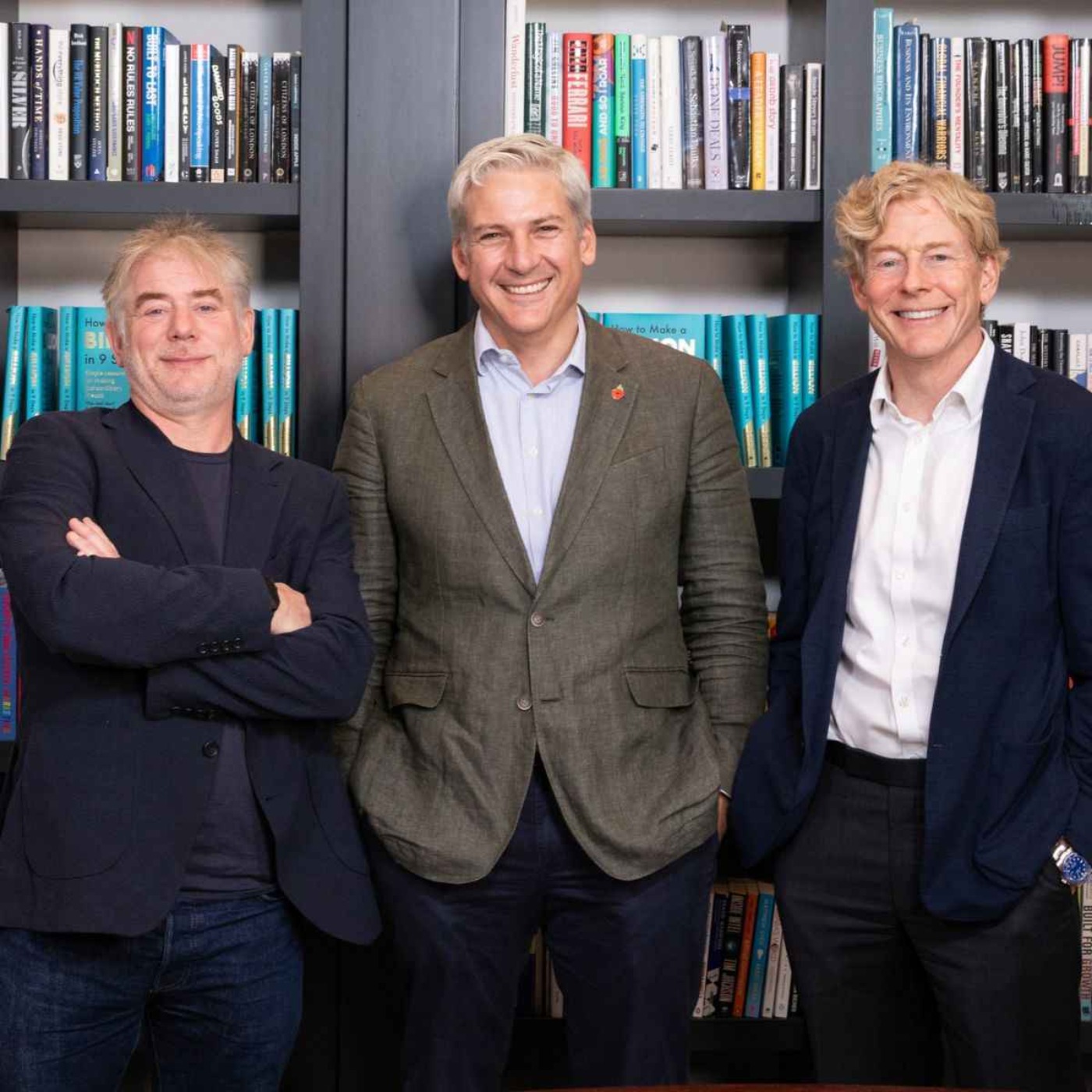
 The Business Leader Podcast with Sir Richard Harpin
24 Feb 2026 · 51m · 21 chapters

Written by AI. May contain mistakes.
Ben Askins shares his early career and the accidental path to entrepreneurship.
“I would always describe myself as an accidental entrepreneur.”
Ben discusses the beginnings of his first business and the importance of partnerships.
“Thank you so much for having me on the show.”
Ben reflects on the difficulties and learning curves faced as a young entrepreneur.
“to take you back to verb brands and um did you did you know before that that you wanted to be an entrepreneur what was your first sort of stimulus no i i would always describe myself as an accidental entrepreneur.”
Ben explains the benefits of innovating within existing markets rather than creating new ones.
“It proves the model and therefore it proves there's a market.”
Strategies for successfully marketing luxury brands and working in the sector.
“And you were very clear about going for the luxury sector and hospitality and some of those lifestyle brands.”
Ben shares how his agency built its client base and the importance of KPIs.
“But hard to win some of those luxury brands?”
Discussion on the transition to digital marketing post-pandemic and the role of customer experience.
“And how far in were you when you had that sort of dashboard and measured those KPIs?”
The importance of partnerships and collaborations for effective marketing and growth.
Ben discusses how mentorship has influenced his journey and the accountability it brings.
“effective and most ROI efficient ways to market that there is out there.”
Learn how mentorship can help prioritize important tasks and foster business growth.
“and one of the something I still use today, even though I'm a little bit more experienced, though.”
Discover the transition from creative roles to leadership and the focus on revenue generation.
“Find someone else to do it or just don't do it at all.”
Understand effective hiring strategies and the importance of context in interviews.
“How have you gone about recruiting them?”
Learn about the challenges of terminating effective but culturally misaligned leaders.
“And I much prefer giving them a heads-up of what we're going to be talking about in the interview rather than just...”
Explore the nuances of different leadership styles and the importance of self-awareness.
“And the honest truth is chemistry and fit and cultural balance is a key part of the recruitment process.”
Gain insights from Ben's new book on employee dissatisfaction and leadership failures.
“take things personally but what am I you know what can I do to help you do your job better And so I like all those tests to an extent.”
“I think you should be more in-depth chat at least once a quarter, and then some sort of big sort of annual review, I think is the rough breakdown of what I would operate on.”
Learn about the growth of carbon accounting and emerging nature finance markets.
“And we built that up to a£1.2 billion asset of assets on the marketplace.”
Understand the evolution of an entrepreneur's mindset and business approach over time.
“And how does it feel in your second business and what you learned first time round and does it become so much easier?”
Gain insight into SEIS and EIS funding mechanisms for startups in the UK.
“And weirdly enough, like the first product we had our next finance, there's not many people doing that.”
Explore how political changes and uncertainties can impact business investment.
“I'm all for, and I think SEIS and EIS is definitely, you know, the UK government quite rightly gets a lot of criticism sometimes.”
Discover the value of listening to team feedback and avoiding ego in decision-making.
“What haven't we covered that in terms of your learning between your first and second business that you could offer advice to scale-ups?”

Get the gist, explore an idea or ask about something said.
 Claude
On The Business Leader Podcast with Sir Richard Harpin, what are the key points of this episode?
Searching your listeningAutomatic transcript. May contain errors.
0:00Richard Harpin: This is Britain's growth moment. Do you want to be part of it? On 26th of March, 750 of the UK's most ambitious founders, CEOs and investors will gather in London to shape the future of mid-sized business. The companies driving our nation's success. The Business Leader Summit 2026 isn't just another conference. It's a day built around the three forces that define growth, ambition, policy and capital. And as one of our valued podcast listeners, you can be there in person. To secure a discounted ticket, visit the events section of our Business Leader website and use this code. BL podcast, all one word, all uppercase.
0:41Richard Harpin: We look forward to seeing you there.
0:46Ben Askins: I would always describe myself as an accidental entrepreneur. Growing up, I was heading down very traditional career routes. When you're 22, 23, you got laughed out of the room because we were two kids in oversized suits trying to get people to take us seriously. It is by far and away the most important part of the business, right? If you can nail your recruitment and your hiring, it's amazing how much else just falls into place really easy. But my word, it's hard. I don't think I've come up with anything new once. I think all my process and my approach has always been, right what's working at the moment and is there a way I can try and tweak it or make it slightly better.
1:26Richard Harpin: I'm Richard Harpin and this is a Business Leader podcast where we look at the stories and strategies behind modern businesses. Today my guest is Ben Askins the co-founder of Gaya, a green technology company that builds online tools for companies within the environmental space. We explore what lessons he's learned as a serial entrepreneur building companies in a digital age.
1:56Richard Harpin: Welcome, Ben. Thank you so much for having me on the show. Love to hear about the start of your journey.
2:02Ben Askins: Yeah, of course. So my first business, I kind of started up when I was 22. I had a co-founder, which is a strategy when it comes to starting a company I'm a huge advocate for. I don't think I will ever start a business without a business partner. I think a lot of admiration for those people who do that. And essentially we started off just by building small websites for companies. We're a digital agency. We're kind of at that age where everyone was sort of customising their website for the first time. And we decided to go after the kind of luxury sector for no other reason than we thought it was quite cool.
2:34Ben Askins: Being 22, 23, we didn't know much else at that point. And essentially we sort of got a little bit lucky. we sort of caught a bit of a wave. We expanded it into a sort of full service digital marketing agency and we acquired another smaller company. We opened it up in the US and eventually we were bought in a private equity deal at the end of 2021. I did a two-year earn out which is part of the process which happens when you sell a company and then the following year I launched my green tech company which is a company called Gaia which is much more in the environmental technology space which is very popular very almost quite controversial sector at the moment um but it's fascinating the way you know sort of commercial meets politics meets science so i'm enjoying it
3:17Richard Harpin: immensely that's a whistle stop tour of your whole journey cliff notes version for sure i would like to take you back to verb brands and um did you did you know before that that you wanted to be an entrepreneur what was your first sort of stimulus no i i would always describe myself
3:33Ben Askins: as an accidental entrepreneur. I think growing up, I was heading down very traditional career routes. I was getting my internships at university. Interesting, I was going into shipping underwriting. So I had my internship and then I got an offer at the end of uni, which I accepted. And then literally the month I moved into London, the company I was joining got acquired and the offer fell through. I ended up doing something else for a few months. Then I met my business partner, Chris who absolutely knew he wanted to be an entrepreneur probably since the since the day he learned to walk and he sort of mentioned that he was looking to do this and it sounded amazing
4:10Richard Harpin: and and that's how I came aboard so it's probably quite a good mix then between the two of you and where you took a problem and turned it into a bigger opportunity when you missed out on that
4:20Ben Askins: job opportunity that didn't happen yeah I think so I think um business partners is like a really tough relationship in a lot of ways and I think Chris and I were very lucky in the sense that We're very similar and very different in kind of equal measures. And so I think that kind of relationship played key. But the honest truth is, I think when you're young, there's a fearlessness to the way you kind of conduct business. And you have to be fearless because no one thinks you're going to make it. And if no one else thinks you're going to make it, then the only person who can think it is you. And so I think there's a fearlessness with which we went after opportunities, which ironically, sitting here now sort of 15 years later, I would probably not go about it in the same way at all, despite it working.
4:58Ben Askins: because we didn't know the subject matter we had to you know hire a team to kind of do that part of it we were frantically looking for everyone who looked like they knew what they were doing and seeing if we could you know pivot or come up with our own version of it i think yeah my entrepreneurial journey although you know it's been quite long now is i don't think i've come up with anything new once i think all my process and my approach has always been right what's working at the moment and is there a way i can try and tweak it or make it slightly better don't we
5:24Richard Harpin: I hear all these prospective entrepreneurs saying, well, I had a great idea, but somebody done it when actually that's really good, isn't it? It proves the model and therefore it proves there's a market.
5:34Ben Askins: I think one of the challenges you have is if you come up with a brand new idea, that's all well and good and could potentially be a hugely profitable and commercial opportunity. But if you have to not only build a business, but also create the market with which the business has to operate, that's incredibly difficult. much better to find an industry that's already established with products that people genuinely need and see if there's a way you can innovate within an existing space it's much easier to convert that way so i always say like you know i get pitched a lot and people ask me advice and i do really enjoy sort of consulting on things like that but i've got an idea that no one else has ever done before is actually a little bit more of a red flag for me than look i've been in this industry for a little while here's all the things that are going wrong and here's how i would improve it and my business model around that.
6:17Richard Harpin: And you were very clear about going for the luxury sector and hospitality and some of those lifestyle brands.
6:25Ben Askins: Yeah, the luxury side of things. So when digital agencies is one of those popular businesses, because you're selling time, which means there's no upfront costs, which means anyone with a laptop can start a digital agency. And so you have to differentiate in some way. And for us, we went sector specific, and we went after the luxury space so basically that high net worth ultra high net worth value the kind of pros of that very sexy brands that people would have heard of the cons actually luxury brands don't have as much of a budget as say more established brands I'll never forget sort of you know sitting with like the CMO of you know like a Bentley and them saying our global budget doesn't cover Hollands for Volvo you know it's one of those things where people expect them to have enormous budgets but it was very cool we got to work with some truly iconic brands and yeah look back very fondly at that business.
7:10Richard Harpin: But hard to win some of those luxury brands? What was your sales pitch?
7:14Ben Askins: Well, the sales pitch, luxury likes to work with luxury. So our pitch was, from a marketing perspective, to try and create inbound rather than outbound. Luxury is a slightly snobby sector by nature. Obviously, not everyone involved is snobby, but there is a sort of pretentiousness to some of the brands for sure. And because of that, they don't like outbound marketing. So they don't like people going towards them because it feels a bit needy, it feels a bit desperate. And so we had to create a way that brands would kind have come to us and so we focused almost entirely on inbound marketing so looking at our own SEO looking at our own like marketing strategies looking at our own event strategies that basically got people in the room that they could approach us and say right we're interested in this is this something you can help for rather than us be constantly knocking at the door saying please please work for us which definitely works in some sectors but for luxury we we never found much success with that.
8:00Richard Harpin: How far in were you when you felt you got critical mass and that you got some great clients and then it became a sort of self-fulfilling prophecy? I think we were very
8:11Ben Askins: good at leveraging the existing clients we had to move to the next level because when you're young you know we started off by working just for bloggers for basically for free and off the back of those bloggers we did we got some paying bloggers and then we got a couple of bloggers started to do quite well and then we got small businesses then we used those to start and we started sort of building up and ratcheting up in that way. I think for us it was I would say we won a couple of like really iconic hotels and restaurants here in London where everyone had heard of and it was at that point where we got to see I know we're doing that we're working with them that was the first time I think we felt actually this is this is has legs and seems to be turning into something quite big from our side we worked out quite quickly because we start off just web design and build and we worked out very quickly that you can't just offer that you know we need to be full service we need to offer paid advertising we need to offer seo we need to offer social media because the core reason for is our pitch was no matter what you are as a luxury brand we have the services that we can kind of create for you so in that sense I think it was really key from our side I think I mean one of my favorite quotes is always um 50 % on marketing works 50 % of it doesn't I just don't know which half and I just think that's so true I think what I've learned more than anything else is it's not about the big things you do it's about the lots of little things when it comes to marketing and actually it's not about next month it's about what's going to happen in six to eight months time.
9:31Ben Askins: And whenever we had a bad sales month, it was amazing how much we could equate it to a slower new business month four or five months ago rather than what happened last week because things do take time. And so it's just about building that discipline and making sure you're doing all those sort of multiple KPI touch points and making sure you have a plan rather than just sort of panicking, just throwing everything around and seeing what we'll do.
9:49Richard Harpin: And how far in were you when you had that sort of dashboard and measured those KPIs?
9:54Ben Askins: I would say we hired our first marketing manager probably about three to four years into the journey. And I would say that's when we got a lot more disciplined in regards to reporting, tracking KPIs. And I would say off the back of that, we then started to scale much quicker and probably something we should have done 18 to two years before that.
10:15Richard Harpin: Did you see some of those clients doing direct mail and to what extent did they have retail premises?
10:21Ben Askins: and um yeah so i mean luxury was the brick and mortar store was always the hero definitely before the pandemic um ironically um post-pandemic we started to see budgets shift from brick and mortar into the more digital space but luxury is such an experience you could not have a physical store or showroom of some sort because there's only so much online can get across and that was always the big challenge for us right how do you take these iconic brands that are so amazing in the person and get them across to you and just like a small Facebook ad or something like that. And so a lot of when you're dealing with huge price points, which are like the Bugattis of the world and some of the most expensive hotels in the world, people don't want to just purchase straight through online, they want to go.
11:02Ben Askins: So it's actually a lot of our marketing was saying, look, you're not going to want to buy now, but go check it out, go experience this, go to the showroom, go to this pop up, see what it's like in person, talk to the staff, hear their expertise. And so actually understanding how attribution models work is key because too often people think I'll do a couple of LinkedIn posts and that'll generate all my sales and you say oh no that's that's that's a long way to go before you get there
11:23Richard Harpin: and then what about putting products into other people's stores because that can be a showcase can't it not just the wholesale channel but if a product's in a John Lewis or another department store it's showcasing the brand and that could lead to B2C sales in their own right yeah I mean
11:42Ben Askins: partnerships and collaborations is what probably one of the most effective when it comes to conversion rate one of the most effective channels and the reason it is is because essentially what's happening is someone you trust is recommending something else right and we see this in every day right oh i need a new shirt who do you use or i need a plumber who would you recommend or i need a builder or you know oh this store you know collaborating with this i quite like them therefore it must be good quality like we really do put a lot of faith in these kind of trust signals and so as a business if you can start to partner you know that's if you're selling a physical product, if you're selling a service, if you're selling a piece of software, if you can start to collaborate and partner up with brands that other people trust, that's one of the most effective and most ROI efficient ways to market that there is out there.
12:24Ben Askins: And so it's something you really need to think about, especially when it comes to growing your early revenue base.
12:33Richard Harpin: How did you and Chris sort of learn how to run a business, find a business coach or a mentor? Or did you do any of that?
12:41Ben Askins: Absolutely. I'd say we've always had a mentor. And we went through like different, like we had a few over the years. And it was kind of a combination of, you know, you outgrow some of them or they, you know, people only have a certain amount of advice before perhaps you're kind of worthwhile. But I think the best thing you can have is just someone, because when you're in charge, when you're an entrepreneur, if you've not got someone holding your feet to account, I always split my job up into A and B lists. So A list is kind of your core list. It's your clients. It's your staff. It's everything that comes into your inbox in a day.
13:10Ben Askins: But your B-list is what moves the needle. It's what grows the business. It's looking at the broader strategies around it. And it's amazing how much the B-list just gets neglected. Not totally, but I'll do it next week. I'll do it next month. I'll do it in three months' time. We had a mentor and every month they'd sit in a room and they'd say, right, Ben, you said you were going to get this done by next week. Where is it? Walk me through it. And just having someone who you knew you'd have to sit in a room with, look in the eye and say, where is it? Meant that basically things got done at a much sort of quicker rate.
13:38Ben Askins: So I'd say like moving things quicker, mentors keep up.
13:40Richard Harpin: They're holding you to account, aren't they?
13:42Ben Askins: Holding to account, yeah, because otherwise no one does. And, you know, you have each other, so you can kind of, you know, give each other a pep talk. But you don't want to be necessarily managing each other. It's not a great way to kind of, I think, I don't think that's too helpful as a business model. Whereas having a third party who just sits there and says, right, my job is to make sure that you two Muppets, who promised you're going to get this done, get it done, enormously helpful. and one of the something I still use today, even though I'm a little bit more experienced, though.
14:10Richard Harpin: And I think we'd describe that as urgent or important, but not urgent.
14:16Ben Askins: Exactly. And it's amazing how much urgent isn't even that important. It's just urgent. And therefore, by default, it takes up a lot of your energy. You've got to do that stuff. You've got to do that stuff. But it's also very rare. You know, often you're dealing with the problems or like, you know, everyone knows that if you have customers, There's often just because they're high maintenance customers doesn't make them the most valuable customers and all of that. But your time gets sucked up in many, many different ways. And often, you know, busy fool is a very legitimate term when it comes to entrepreneur.
14:45Ben Askins: And I think one of the biggest barriers of a business growing from a small business to a medium and medium top is the fact that senior time isn't being prioritized in the right way. And I think a mentor, because when you're stuck in the weeds, when you're sitting there going, oh, my inbox is heaving, I'm going to be here for all night and all that sort of stuff. It really helps sometimes for someone to come in and say, that bit's just not important. Get rid of it. Get it off your plate. Find someone else to do it or just don't do it at all. It really helps to have someone who's slightly outside perspective just to say, no, come on, you know that's not important.
15:18Ben Askins: Stop doing that.
15:19Richard Harpin: So you need a mentor. You need a mentor. When do you know that it's time to change them and find the next one? I mean, it's not a sort of, it's not like an audition process or anything like that.
15:30Ben Askins: I think just circumstances change. I think the business might pivot. I think your revenue might grow to a point where the mentor perhaps is experienced. The small startups isn't so experienced. The medium-sized startups and things like that. So I think you just get an inkling. I think you just start to feel like, you know, you should feel challenged in those meetings. you should go away thinking, OK, I'm really quite up for this. I'm excited. I'm ready to go for another month. And if you're not feeling that, then maybe I would say it's time to look for it. You only have so much advice. I mentor other companies now, right?
16:02Ben Askins: I only have so much advice I can give. At some point, that well will be dry, probably sooner than I would like. And so from my side, I just say, unless you're getting the value, it's worth then looking for a new one.
16:16Richard Harpin: let's move on and talk about leadership which i know that you're um you're passionate about there's a lot about that in your um your book which we'll also come on and talk a bit about but i think your journey with verb brands was moving from uh being the creative person in that founding team to taking on and becoming the chief exec yeah it was it was weird i think um
16:42Ben Askins: because I never could do the work which sounds really silly um because I've never I couldn't do the SEO itself I couldn't do the paid I couldn't my only role really could be revenue generation um and I think that should always be the role for a founder early on in a business I think your job is to create revenue I think where companies get stuck is where perhaps the founder is more creative like the creative director or more financial based or more operational based I I think businesses can get stuck. But ultimately, your job as a business and as a founder is to essentially hire people underneath you to remove the jobs that aren't revenue generating or business growth, basically, is kind of the way to think about it.
17:20Ben Askins: And as the business grows, where that, you know, you start, you know, as the business gets an enormous level, right? As a chief executive, you start, you know, your focus almost comes a little bit more internal because actually your value of business growth is ensuring your different business leaders are doing their right jobs. Whereas actually when it's early on, it's all about sales and taking as many biz dev calls as possible. So it really does change as the business gets bigger. But fundamentally, your job is to create revenue and to drive growth. And your job is to basically ensure that your time doesn't get sucked on the non-activity based of those.
17:50Ben Askins: And so I have a system where every six months I just have three different colored pens and I write down everything I'm doing at the moment. And then I just market whether I think it is something I should be doing, whether it's something I probably shouldn't be or should be thinking about getting rid of. And then I should absolutely not be getting rid. I should be absolutely getting rid of that straight away. And I find that when it's in different colours, looking you in the face, it's much easier for me to acknowledge and say, right, I need to come up with a plan. I'm spending too much time on this part of the business.
18:16Ben Askins: Do we need to hire? Do I need to bring someone on board to take some of this stuff? And I find that's a much better way to do it.
18:22Richard Harpin: Talk about how that shaped your leadership team and the prioritisation of hiring those roles.
18:28Ben Askins: Yeah, I'm a big believer in having different personalities in a leadership team. I think a lot of people, and I do understand why they say this, but a lot of people say, oh, you know, I want people to think like me and have my attitude to work and all of that. And I get that, right, because working with people who have similar values around certain stuff makes a lot of sense, makes it easier to kind of work together. I don't love that as much. I find a variety a much more appealing setup simply because I don't need someone who thinks like me to tell me what I'm already thinking. Whereas actually I think it's a lot more beneficial for people to come up with new ideas that I would never have thought of or look in certain ways I would never even have considered.
19:05Ben Askins: And I find that being challenged with new ideas a lot better because it does make you think. And I think thinking is an incredibly important part because nothing's more dangerous than a founder who thinks he's always right. And so I think for me, having a leadership team with a real range of skills, I think, is the best way to kind of run a business. Because that way, as long as you have a forum where people can voice their concerns and their ideas and feel safe in that sense, then I think it's easily the best way to kind of drive business forward.
19:34Richard Harpin: And how have you found some of those people? How have you gone about recruiting them? And then talk about where you've had to have that difficult conversation about letting somebody go because they weren't right.
19:47Ben Askins: Hiring is something you get better at, but I don't think anyone's ever that good at. I think for a couple of years, I thought I was really good at it. But with honest truth, I probably wasn't. I just got a little bit lucky with the hires that we made. It's something I kind of change my mind on all the time in regards to the best way to do it. because it's such, it is by far and away the most important part of the business, right? If you can know your recruitment and your hiring, it's amazing how much else just falls into place really easy. But my word, it's hard. And it's hard in the sense of if you're really desperate for the role, I've always been someone who's like quite optimistic.
20:16Ben Askins: So I'm really keen for the next person to interview to be that person. And so I've definitely hired people by probably in my hearts of hearts, knew probably wasn't quite the right decision, but I really wanted them. I quite liked them in the interview. I was really keen to get this role sorted and on to the next thing. And so I think there's an optimism you can approach to hiring, which doesn't help. I think I'm a big believer in setting a task for an interview. I don't like the how many windows are there in the world or what's the total mass of insects or some of the other ridiculous interview questions people found there.
20:51Ben Askins: I've never really got that. I'm sure there is some. I'm sure someone smarter than me can explain the logic behind those at some point. But for me, I'd much rather test them with, give them a bit of time to prepare and say, this is what I'd like you to do for the task. And I'm quite a big fan of, you know, if you get to the final few to actually pay them to do that task to make sure they do their best job.
21:09Richard Harpin: I'll just give an example of what that task would look like. Yeah, of course.
21:12Ben Askins: So if it's, you know, if you are a head of a team, for example, I would share a sort of guarded P &L for them to look at. I would walk them through the clients that we had and I would say, right, here's the clients. I would like you to put a strategy together based around this client. And I'd also like you to look at the structure of the team and come up with suggestions of how you would grow the team by 30 % over the next year or so or something like that. Something that would take a few hours for them to do, but I would compensate them for that. And I just find if you start asking questions in the context of the role that you're actually interviewing for, you just find out so much more about it.
21:45Ben Askins: You can really find out, A, who are the bullshit artists, and B, who are the people who legitimately really understand what they're talking about. And I much prefer giving them a heads-up of what we're going to be talking about in the interview rather than just... Because sometimes I feel like if you just throw questions out randomly, all you hire are people who are just quite good on their feet, which is a skill, for sure. But actually, a lot of work that you're looking to be delivered is something that requires a bit of thought and due process and something you kind of spend some time on.
22:13Richard Harpin: No, I think it's absolutely right. I would always give somebody at final interview a case study to do. If they're a chief exec, then it would be, what's your plan for the business? Yeah. What are you going to achieve in 90 days through to three years? And if I haven't got really excited by and I've learned something from that presentation, then I keep looking.
22:37Ben Askins: Yeah, I think that's a bit. And you sound like you've had a little bit more discipline than I had over the years, because I've definitely hired people who I thought were, you know, probably knew weren't exactly spot on, but I was just too keen to make the hire, basically.
22:49Richard Harpin: But I still made loads and loads of mistakes and didn't always get it right. I think I learned over time. How do you, how often have you got it wrong on senior leadership roles and how did you go about exiting those people and did you do it quickly enough?
23:04Ben Askins: At every level, I've got it wrong at some point. I think senior is obviously always more significant because the damage they can do to the business is much more substantial in the sense that obviously if you've got more people reporting into you, it kind of feeds down basically. I think one of the common things I've noticed when you actually fire someone is inevitably it gets put off more than it should. And what I mean by that is when you do kind of go down that process, which is always horrible, and I hope it is always horrible because it's a rubbish thing to have to do. Even if it's the right decision, it always feels rough.
23:34Ben Askins: But I think it's amazing often people will then say, yeah no I think that should have been done six months ago I think that could have been done last year and stuff like that like most people kind of recognize what it is I think the harder parts actually the harder ones are people who are really good at the job but really bad for the company I think those are the hardest ones to fire because I mean if they're rubbish at the job and they're rubbish with the people and they annoy everyone and they're upsetting everyone in the business that becomes a much easier decision right because it's a no-brainer it's actually the kind of the more sort of judgment calls around okay look they're really good at the core job but everyone seems to really dislike working with them or they seem to be causing a lot of issues with the team
24:07Richard Harpin: Because they're not the right cultural fit or the right behaviours.
24:11Ben Askins: Exactly. And one of the biggest lessons I've learned is someone could be exceptional for one company and that doesn't mean they're going to be exceptional for the next company. And that works both ways. There'll be people out there who think I'm a pretty good leader and there'll be people out there who think I'm a rubbish one. And the honest truth is chemistry and fit and cultural balance is a key part of the recruitment process. And understanding both what you are looking for in the people you're hiring and equally as someone who's joining a business, thinking about what you're looking for in an organisation is a key part of it that I think is often overlooked.
24:45Ben Askins: So I talk a lot about management on my channels and leadership. And I think the thing I always say, and I really do mean this, is there's no good and bad type of leadership. I think every natural leadership style has its pros and cons. So, for example, if you're a very charismatic person, you know, the pros are people really get quite inspired by you. People would be willing to follow you, you know, into battle, all that sort of stuff. But the cons are that person's often got a little bit of a temper. They're often not great at receiving bad news, you know, and so on and so forth. And so I think when it comes to leadership, I think it's just knowing your type of leadership.
25:18Ben Askins: Because if you know your type of leadership, there'll be some stuff you do very naturally that you don't think about. and there'll be some areas which are just in your natural predisposition to be slightly poorer at. So, for example, if you're a slightly bad organisation, you know you probably need to be a little bit more disciplined about making sure you have your one-on-ones with your team and have regular reports and things like that. So I think it's just understanding yourself and where your natural weaknesses are because those are the areas you should double down on. And if you do that, it's amazing how quickly you can catch those types of problems.
25:46Richard Harpin: And is it about necessarily focusing on weaknesses? is some of it about hiring other people to do the things that we're not good at.
25:57Ben Askins: Absolutely. And it goes back to what I said about the leadership team and having a sort of diverse skill set in that sense. I think if you are not the most efficient operator, hiring an MD who is a little bit more efficient at that sort of stuff is a no-brainer, right? Hiring someone who's exactly like you is not that helpful because you already have the pros in there for them and the cons you're just going to double down on. So I think that's kind of a no-brainer, but it really does start with what am I actually good at and what am I bad at? Because there's a shocking lack of self-awareness sometimes with founders.
26:27Ben Askins: And you need that, right? You need that ego to an extent to kind of get to the position you are because you spend the first few years with everyone telling you it's a bad idea and it's never going to happen and then you actually make it and everyone turns around and says, oh, it was obvious and you just got lucky, right? That's kind of the nature of a founder. So you need that ego for sure and that's part of it. That's what's driven you so far. But at some point to kind of grow to the next level as a business, you have to introduce an element of self-awareness because if you don't have that, it's one of the quickest ways to really sort of trash your business.
26:54Richard Harpin: And do you think any of these tools on self-awareness work? Clifton's Strengths or Insights or Myers-Briggs? There's a lot of different...
27:04Ben Askins: There's a lot out there. I'll be really honest. I'm slightly more cynical towards some of those. And not that they're not valuable in its own sense. I just think people are ignoring the obvious one, which is just asking for feedback. Just ask your team. You know, create a safe space and say, look what and look and people get really sort of paranoid about um surveys and stuff because they think it's just going to be used to work out exactly who did what and all that sort of thing and if that's the issue that's a whole other issue you have with your business right yeah but just ask people your friends it's amazing how much your friends and family know you really well for example ask your team ask the people who report directly into you ask the broader business say look what can I be doing better like full safe space open conversation here I'm not going to take things personally but what am I you know what can I do to help you do your job better And so I like all those tests to an extent.
27:46Ben Askins: I do find them useful, but I do think people just miss the obvious point of just asking for feedback.
27:51Richard Harpin: 360 degree feedback. 360 degree feedback, yeah.
27:53Ben Askins: How often? So I would say you should be having a one-on-one with the people reporting to you once every two weeks. I think you should be more in-depth chat at least once a quarter, and then some sort of big sort of annual review, I think is the rough breakdown of what I would operate on.
28:07Richard Harpin: Let's come on and talk about your new book, Ben. Let's do it. My Bosses Amoron. My Bosses Amoron, yeah. And when I flicked through it, I thought, But, oh, I hope there's nobody from HomeServe in there that's talking about that terrible ex-founder of the business. And a bit of a relief when I wasn't mentioned. What are the big bits of learning in there, Ben?
28:27Ben Askins: There's two pieces of learning I would sort of flag. The first is how unhappy people are with work at the moment in general. And there's a real sort of, you know, one of the stats I quote in the book is 24 % of people think they're working for their worst ever boss right now and things like that. So there's a general feeling at the moment, and it's amazing how much this isn't like a country-specific problem or a sector-specific problem or a demographic-specific problem. This is something that seems to be genuinely one of the few things that unites the world, which is a little sad when you say that out loud.
28:55Ben Askins: But I think there's a real moment at the moment where people are just not enjoying work in the way they should be. And for me, I get – the reason why I like this topic so much is for me it's the definition of a win-win because I'm a huge believer in giving people the best work experience possible. I want people to like their careers. I've been very fortunate enough to like love my career. And I really want people to kind of have that same experience. I know that there's no such thing as a perfect job, but I think we can get a lot closer than we are. The second thing is it kind of bugs me from an entrepreneurial perspective as well, because if you've got that many people frustrated or unincentivized or not enjoying it or feeling, you know, real, you know, strong feelings of this is absolutely shocking, we are not going to be doing our best work at the moment, which which means productivity is going to be down enormously.
29:37Ben Askins: And, you know, one of the hot topics in the moment is economically inactive. And obviously that's something I'm a huge believer in encouraging as many people back to work as possible and trying to help people out there as much as we can. But we've got to look after the existing workforce as well. And if you think about one of the things, you know, stalling economies and things like that, for me, the best way, you know, one of my favorite stats is if you make a team engaged and incentivized and motivated, you get 45 % more output, which basically means for every 10 employees, you get an extra four for free.
30:05Ben Askins: Those are mad numbers, right? Think how much we spend on marketing and sales, and yet we're not investing in this very simple part. And so the book came across through my social channels where I've been shared so many stories about people's working life and what they find annoying and frustrating. And essentially, I've kind of knitted it all together into kind of the core chapters of what I view are the biggest problems at the moment and essentially shared it in a sort of... It's meant... I mean, I always say this is the biggest... I'm setting myself up for the biggest failure here. It's meant to be quite funny.
30:35Ben Askins: It's meant to be an enjoyable read. It's not meant to be a stuffy here at the eight weeks. I think that's part of the problem, right? I think it is a stuffy topic a lot of the time. But for me, it's the definition of a win-win because if you get people enjoying their work, that's a brilliant indicator of a successful business.
30:49Richard Harpin: And so what two or three tips should people take away from this in terms of getting that 40 % extra productivity out of their existing teams?
30:58Ben Askins: Yeah, the first is make sure communication is on point. It's amazing because very few founders want them. In fact, I would say even like the sociopathic ones don't want an unengaged, unmotivated, financially de-incentivized team, right? That's not going to benefit them at all, right? But it's amazing how many have those teams. And so there is something going on between what the founder wants and what the team are feeling, right? And so it has to come down to communication. So the first thing I say is make sure your communication structure is in place in regards to what you think the business is doing is being translated and communicated down towards the team.
31:29Ben Askins: because either you don't know what you're doing and therefore your team are never going to know or you know exactly what you want to do but the team have no idea in which point you kind of need to correct that. So I think getting the communication structure is key and that means both what you are telling them and also listening to them in regards to what they think is happening. The second thing I would say is just get the basics right because when people leave a job, it's very rarely a big thing. What actually happens is it's over six to eight months of lots of little things building up and then they become big things.
31:56Ben Askins: And so if you can get in a position where your businesses are catching those small things sooner, it's amazing how much it saves you because recruitment is expensive. And recruitment is expensive in recruitment fees. It's expensive, but it's also expensive in, you know, loss of revenue because you've not got either a big enough team or you've got a new team that's slowly onboarding. Or, you know, if people are leaving, then other people are leaving as well. It becomes an incredibly expensive endeavour.
32:19Richard Harpin: And these are small housekeeping things quite often, aren't they? Exactly.
32:23Ben Askins: And these are not like someone punched me at the Christmas party. These are basic stuff like you promised me a pay rise eight months ago and you've not even mentioned why it's not come through. Right. Or it's every time I book a holiday off, someone messaged me on WhatsApp asking for, you know, it's just basic stuff which you can easily put a stop to that would save you so much money as a company and gain you so much more revenue. But all it takes is just a little bit of TLC towards basic management. And the problem is no one gets trained anymore how to be a manager. well and this is amazing stats but 80 % of people are now accidental managers which means they've not asked for it but what happens is you join a company you're good at it you work for two or three years and then just by default you become senior enough to say actually we've hired two new
33:04Richard Harpin: juniors they're now reporting into you and you go yeah okay great but like just because I'm good at
33:08Ben Askins: the core job doesn't mean I know how to be a manager and so what people then do is they start looking around to say okay well I don't know how to do this um the manager I had was terrible so I'm not going to look at him so you start like looking around and sometimes you get lucky and You can have a good mentor, you know, like we've spoken about, and you can have a really good mentor who can walk you through it. But a lot of people don't have that. And then you have this weird thing where you've got incredibly inconsistent management styles within the same organization because there's no sort of basic attention to how people are being managed.
33:35Ben Askins: And it's amazing how often it's in that middle leadership, right? The founder, you've got the senior team, they're fairly on mission. And then it kind of gets to that kind of middle management layer. And it's not their fault. They're just not being told the right things from them. they're kind of trapped between a rock and a hard place and things start to fall apart.
33:52Richard Harpin: In my very first job at Procter & Gamble in brand management, as soon as I was promoted to brand manager, there was a new manager's course. Yeah. And that's what every business should be doing, isn't it? Or finding an external training provider to say, if you're about to become a manager, then here's how you do it.
34:13Ben Askins: Honestly, you'd be amazed how much that's not done anymore. It's really weird. It's such a basic thing and it just gives you the basics of here are the things you'd be asking in a one-on-one. Just, you know, these are the questions you should ask to make sure, you know, all this sort of stuff. And just companies just don't do it anymore. And it's very odd because I've never quite worked out why because there's no financial benefit to not doing that, right? Because it's costing you so much more in recruitment and people leaving. So, yeah, it's a strange one, but it's one I'm quite passionate about.
34:42Richard Harpin: And I think we've got one final tip.
34:45Ben Askins: I think people are more self-aware. I think the rise of social, the internet and things like that just means information is so much more accessible. And so basically it comes down to talk is incredibly cheap, right? So when it comes to leadership, you have to back up what you're saying with actions. You can't be the person who posts very glamorous stuff on LinkedIn and then quite clearly do the opposite when it comes to actually leading your business. Because people will make that connection and you will get found out. and so I just say like if you are going to be one of the ones you know actions speak a lot louder than words these days because words become increasingly cheap in this sort of AI age and so I would just say really think about the type of leadership you want to be and just make sure you know what that actually means when it comes to implementing because it's all very well saying we have a hard-working culture but if you don't have that in practice it's never going to work and don't lie about the culture of the business because that's just a waste of everyone's time.
35:35Richard Harpin: For brands you sold in 2021 to Crowd.
35:40Ben Askins: Correct.
35:40Richard Harpin: You stayed on for a couple of years.
35:42Ben Askins: Yes.
35:42Richard Harpin: But just talk about many entrepreneurs out there thinking about when's the right time to exit my business? How do I go about it? Should I appoint an advisor?
35:53Ben Askins: Definitely appoint an advisor. It's an incredibly complicated process, M &A. I was surprised even like a relatively small company like Verb how much paperwork and different teams need to be involved. I think the other thing I would say is when it comes to selling a business, the value is what people are going to pay for it. So everyone has these valuations in their head and that's great. It's good to have a goal. But really think about what you actually want out of this and think about how the deal is structured and things like that. Because, for example, earn out is a basic part of it. How long do you want to do as an earn out?
36:24Ben Askins: What sort of value do you want to put against how much work gets done in the earn out? All these different things play a part. So really have a think about what you want. In regards to appointing an advisor, absolutely, I think that's a no-brainer because it is just complicated.
36:39Richard Harpin: Who did you use as the advisor?
36:42Ben Askins: We had a really good guy who kind of helped structure it. It was almost like an advisor who kind of strung everything together. And then we had our lawyering and accounting teams all set up as well. And I said I was amazed by how much infrastructure needed just for this one deal. So like, you know, some of these bigger ones must just be reams of paper, just terrifying amounts, which I'm sure you're probably very, very aware of. And so I think, yeah, when it comes to it, it all depends. And when it comes to when you want to sell, I think for me, it's when the passion goes a little bit. I think when it starts to get to the point where you're not because the successful business is so tied towards the leadership team.
37:20Ben Askins: Like it really is that you really do set the course and drive it. And whether it succeeds or not is so dependent on that team. I think if they're not completely loving it, I think that's a big problem. So I think that's a really good indicator that maybe you do need to sell. The other thing is always trying to sell on the outlet. It's a cliche for a reason, but always sell when you're not looking to sell is actually really good advice because you never quite know what's going to happen. There's no such thing as a secure industry these days. And if you're in a moment where people are interested in buying it, I would always, you know, bird in hand is always worth it in that sense as well.
37:52Richard Harpin: And did you plant any of those early seeds? Because in some of my growth partner investments, a couple of businesses have said, well, we really want to exit in two years time. We're going to appoint an advisor now and start indirectly sort of marketing of the business.
38:10Ben Askins: Yeah. So we did in some ways we did very well in the sense of we really went out to market and found a couple of potential buyers and, you know, spoke quite clearly of that. What we didn't do so well is getting like our ducks in a row internally. So for example, you know, and bear in mind, we started when we were so young, they were saying, so where are the board minutes for, you know, 2016? And you go, we had none, you know, like there was a lot of the sort of basic documentation stuff of, you know, clearly audited, you know, finance based bits that you just have to do as part of FDD. And, you know, people quite rarely expect, we just didn't have as much of that in the row that we should have.
38:47Ben Askins: So keeping things in order is a very healthy recommendation, which I very much do now, but sadly didn't back then. So it's just all about pressure. You just don't know, right? When you're doing something for the first time, assume you know nothing because you know nothing and just listen to as many experts as you can.
39:02Richard Harpin: And when the business was sold and you got that first money in your bank account, what was your sort of feeling? You were going to stay on for a couple of years as part of the air now.
39:12Ben Askins: And the main reason for it as an agency is often clients are tied towards the leadership team and things like that. It was weird, right? It was weird. It was one of those moments where you sort of, you reflect a little bit more on what you're trying to do. I know it sounds very odd, but it's built towards this moment for so long. I almost didn't quite know what it was. And it was such a weird year because you're trying to run the business and do all this FDD and do diligent stuff. And it's an exhausting, exhausting year because ironically, the business has to keep going to kind of, you know, make it worth it and all that sort of stuff.
39:42Ben Askins: So it was one of those moments that felt, it was obviously an amazing moment, but there was definitely an anticlimax to it that I wasn't quite expecting and almost like a sort of, okay, I'm not sure how I feel quite at this moment. But obviously it was definitely the right decision for us. And, you know, it will always, I will always look back at that first business as one of my all time favorites for sure, because I loved it. You know, it was my whole life for so long and it sort of dominated my 20s in that sense. But yeah, it was one of those moments where you do, it definitely taught me to really think about what I want to achieve and what I want to do and what motivates me because it wasn't quite what I was expecting in regards to what I thought I wanted, if that makes sense.
40:23Richard Harpin: And in your case, you weren't going to the beach for an extended period. You were staying on and making sure that the urn out happened.
40:31Ben Askins: Yes. So that was part of the deal was I would stay on for the two years, which is totally fair enough. And sort of did that. And then I did promise myself I'd take six months off and promise my wife that. It just didn't happen. It just by that point, it was a weird because the earn out, the earn out was strange for me because I became very much like just another staff member, which is obviously the deal. And the first year was very, very busy. But actually, as the second year went into it, the business was obviously quite rightly setting itself up to be without me at the end of the two years. And so actually kind of by the time the earn out finished, I almost felt quite ready to go again.
41:02Ben Askins: And I felt like I'd actually not been pushing myself as much as I perhaps I was used to because I just had less to do, especially in those final few months. And so I ended up starting a new green tech company with a new business partner and been enjoying it immensely. And that's Gaia. Gaia, yes.
41:20Richard Harpin: When did you start coming up with that new business idea?
41:25Ben Askins: So I knew I wanted to do. There were two sectors that held a lot of interest to me. One was health tech and one was green tech. I felt those are the two that just held particular interest with me. And we landed on Green Tech. And basically, we knew we wanted to do a software company. And we wanted to do like multiple products within the space. And I was experienced enough to know that actually, because we're a brand new company, the best thing we could do was establish ourself in a very new, very niche sector. And then we can move into kind of some of the bigger hitters. So we established a natural finance marketplace, which sold things like B &G units, which are brand new scheme and carbon credits and things like that.
42:02Ben Askins: And we built that up to a£1.2 billion asset of assets on the marketplace. Did really well in that space and it's still doing really well. And then off the back of that, we moved into carbon accounting, which is a much more established market. But because we had our marketplace, we could enter that market as more of an established brand rather than a complete startup. And that proved to be quite a good move. And yeah, we've been growing it for about two years now.
42:22Richard Harpin: And just for those that are not familiar with those two aspects of the business, just talk in a little bit more detail about the carbon accounting software and then the Nature Credit marketplace.
42:34Ben Askins: Yeah, of course. So carbon accounting is very simple in the sense of more and more now countries and regions basically have rules in regards to carbon emissions, not just in regards to how much you can emit, but also need to include it as part of your audits and reporting as a sort of large company. So essentially, we have a software and technology that allows you to very easily hook up your different sort of data feeds, push it into the software, and it'll kind of give you that report, basically. We also have our marketplace, which essentially nature finance is becoming one of the fastest growing sectors in the world.
43:05Ben Askins: And we're seeing more and more of these new asset classes around things like B &G units. Carbon credits is kind of the OG of that. We've got things like urban cooling tokens, which is around having trees in cities. And we've got, you know, things like waste credits, blue carbon, all these new asset classes. And what's quite interesting now is we're starting to see bigger, you know, climates moving from philanthropic, which is how the sector has been for the last 15, 20 years, into that more commercial area, which is quite controversial for some. I'm quite a big believer in that because I think in order for the environment to thrive, you need that return to encourage that investment.
43:41Ben Askins: and so we're seeing more and more of these asset classes develop and so we've built a marketplace which people are allowed to kind of list and purchase and buy and trade through our platform. So it's a really interesting space for sure.
43:51Richard Harpin: And how does it feel in your second business and what you learned first time round and does it become so much easier?
43:58Ben Askins: Certainly bits of it becomes easier. I think, like I said, I think there was a fearlessness from knowing so little. I just didn't even know enough to be afraid. But yes, obviously like the core skills around marketing and sales and things like that absolutely makes a huge difference. Also, the fact that I'm a successful entrepreneur from my first company gives me that authority to kind of have those conversations with people, whereas actually when you're 22, 23, you got laughed out of the room because we were two kids in oversized suits trying to get people to take us seriously. So I think that definitely helps as well.
44:30Ben Askins: I think my content channels have helped me enormously in regards to understanding leadership and what it takes to motivate a team. Like way more, I would do things so differently from my first company. I look back at some things I did with the best of intentions and really sort of wince at how clumsy and poorly judged it was. And I'm sure in 10 years' time, I'll look back at what I'm doing now and think the same. And I think that's part of it, just recognising that there's always growth there. So, so much easier in so many ways, but can be harder because you've lost that sort of fearlessness, which I think is key part to being an entrepreneur.
45:03Richard Harpin: And the copy and pivot, looking at other businesses in this space when you...
45:09Ben Askins: Definitely. We basically, you know, when it came to planning out our carbon accounting software, it was right, who does it well, let's take the best bits of everything and try and create a better product that's more price effective, you know, it's that's the game, right. And weirdly enough, like the first product we had our next finance, there's not many people doing that. Now it's actually much harder because not only do we need to get people to buy into us, we need to get people to buy into the market. Whereas now, we're dealing with people who absolutely need what we're offering. And so that's kind of half the battle so um it's copy and pivot is the best like people have so much time trying to come up with a unique idea and all you need to do is just do what everyone was already doing just slightly better that that's the best piece of advice i can give when it comes to being an
45:47Richard Harpin: entrepreneur and then my step number two getting an investor did you need an investor for this
45:51Ben Askins: business so we did uh so we're fortunate because my business partner similar um background to me had his own company we did a small scis um round um which i think is one of the great things we have in this country when it comes to supporting young British companies. SEIS and EIS, I think, is incredibly underrated.
46:09Richard Harpin: And just explain to people how that works and how much you raised initially, Ben.
46:14Ben Askins: So for SEIS, we raised£250 ,000. And basically how SEIS works is if you're a certain size and a British company, you basically, and people invest their own money into it. So this isn't coming from a company, it's coming from your own personal finances. You essentially get access to a tax rebate. And how it works is you get 50 % off what you invest as a tax rebate. So if you invested, you know, as a basic mass 20 ,000 pounds, you get 10 ,000 off your tax. And equally, if that business then failed, you get an additional 50 % off that's an additional 5000 off it. So what that basically means is 20 ,000 pounds is being put into a young British business.
46:51Ben Askins: And it's very, you can't be, you know, you can't be successful, you can't be an established one, this has to be very young, so you're taking a chance but you invest 20 000 but you're only risking 5 000 and i just love that it makes so much sense because it encourages people to put money into a uk company um and also it's in a way that kind of people are much more willing to take that little bit of a risk on a young and also
47:11Richard Harpin: benefits when um hopefully you are successful exactly and then you know obviously and as you
47:17Ben Askins: the business grows and we pay out dividends and things like that then people start to directly benefit and it pays off in the long run as well um but it's all about you know anything that helps people take a chance on British companies, which is a cause I know you're incredibly passionate about as well. I'm all for, and I think SEIS and EIS is definitely, you know, the UK government quite rightly gets a lot of criticism sometimes. This is one of the good ones for sure.
47:36Richard Harpin: And what about any headwinds in terms of the Trump effect, or environmental policies no longer relevant? Is that making it a touch harder or not?
47:47Ben Askins: Yes and no. I think it's more the uncertainty, as always. I think the big challenge with climate is when it comes to, because different countries have different rules when it comes to trading internationally it becomes a little bit more interesting because unlike if you're just selling like some shoes or you know clothing or something like that which very much you can ship internationally when you've got different rules and regulations you need to factor that all in I think as always uncertainty is kind of the biggest killer to business you know no matter who's in charge no matter what the government is the second people are worried that you know rules that have come in might be reversed and things like that.
48:21Ben Askins: It just creates uncertainty. And what happens when it becomes uncertain? Investment gets put on hold. And the second investment puts on hold, the whole economy starts to struggle. So I think for me, it's less about who's in charge and more about how it comes about in regards to essentially just being that consistency with government. I get frustrated when things that make financial sense get changed simply for political reasons. I find cultural wars incredibly tedious. By and large, I just think they distinctly are unhelpful in most areas. And so for me, I like consistency. And I tend to sort of look for that.
48:55Ben Askins: I think when it comes to like the idea of climate being irrelevant, I just think that's just not true. If I'm being honest, like I just, I get people and some people are making political points around that. But the fact is, it's incredibly, the investment in the commercial opportunity is too large for it not to be of interest to people. And because it's of interest, it's going to remain. And so in that sense, I'm not worried at all. But consistency for sure is a big factor in determining how easy the next few years are going to be.
49:21Richard Harpin: What haven't we covered that in terms of your learning between your first and second business that you could offer advice to scale-ups?
49:32Ben Askins: Just listening to people in your circle. And what I mean by that is listen to your team is the key one for me. I think it's amazing how much, you know, one of the teams that like last week just said something and it just changed our whole product overnight because it was so obvious, but I just hadn't thought of it and yeah I felt guilty because if I hadn't you know I probably if I'd taken a bit more time and thought about a little bit sooner I had that conversation sooner I would have got there but it's amazing how much like good ideas are just there and ready for you and people people are doing the work know the problems and if you listen to them it's amazing how much you can kind of grow the business and help support it and the other thing is just always just always always assume you don't know what you're doing like it's just it never hurts to listen to experts or listen to external advice don't be don't let your ego get in the way and I think the problem with social these days is entrepreneurs take them even more seriously than they once did and that's fine but like and I get it you have you know your channels and you've got your and you feel important I guess all of that but like it will damage your business if you don't if you think you know everything so just don't let your ego get in the way of running a company because it's one of the biggest company killers I've seen and it's back to that uh getting
50:35Richard Harpin: feedback isn't it learning from others and I see people who have like I I there was a company the
50:40Ben Askins: the day and they they had like consultants in their board meeting telling what their team was thinking and they had like a marketing team in there and they had like a PR I don't even know what they were doing and no one had thought I don't know well they're all just guessing of what the team were thinking and where the problems were and I said just just ask just ask them like just just ask it's not that hard like we're all humans we all know how to have conversations I think like this work persona we all put on can kind of get in the way of that sometimes so yeah just ask for feedback and just listen to it and you'd have to agree with it you'd have to implement everything it's not like a contract in the sense of if someone raises an idea you must implement it and a lot of the ideas they'll raise you'll say okay that's a good idea but we can't because of these reasons and some of them might just be bad ideas and that's fine as well you know you don't have to be about it but you can acknowledge it and say no this is why that probably won't work but there'll be some absolute gems in there um and if you're open enough to kind of take that on board I think you'll get quite far.
52:05Richard Harpin: The Business Leader Summit 2026 is set to be bigger, bolder and more ambitious than ever. Don't just watch Britain's growth story unfold, be part of it. Secure your ticket today by visiting the events section of the Business Leader website and using the code BLPODCAST, all uppercase. It's your chance to join the leaders who are shaping the future of business.
Hosted on Acast. See acast.com/privacy for more information.