Ask ChatGPT
 The Business Leader Podcast with Sir Richard Harpin
26 Jun 2025 · 26m

Host: Josh Dornbrack
Graham Ruddick, Sarah Vizard
Exploring impactful business literature and recommendations from leading entrepreneurs and CEOs.
Written by AI. May contain mistakes.

Get the gist, explore an idea or ask about something said.
 Claude
On The Business Leader Podcast with Sir Richard Harpin, what are the key points of this episode?
Searching your listeningAutomatic transcript. May contain errors.
0:00This is Britain's growth moment. Do you want to be part of it? On 26th of March, 750 of the UK's most ambitious founders, CEOs and investors will gather in London to shape the future of mid-sized business. The company's driving our nation's success. The Business Leader Summit 2026 isn't just another conference. It's a day built around the three forces that define growth, ambition, policy and capital. And as one of our valued podcast listeners, you can be there in person. To secure a discounted ticket, visit the events section of our Business Leader website and use this code. BLpodcast, all one word, all uppercase.
0:41We look forward to seeing you there.
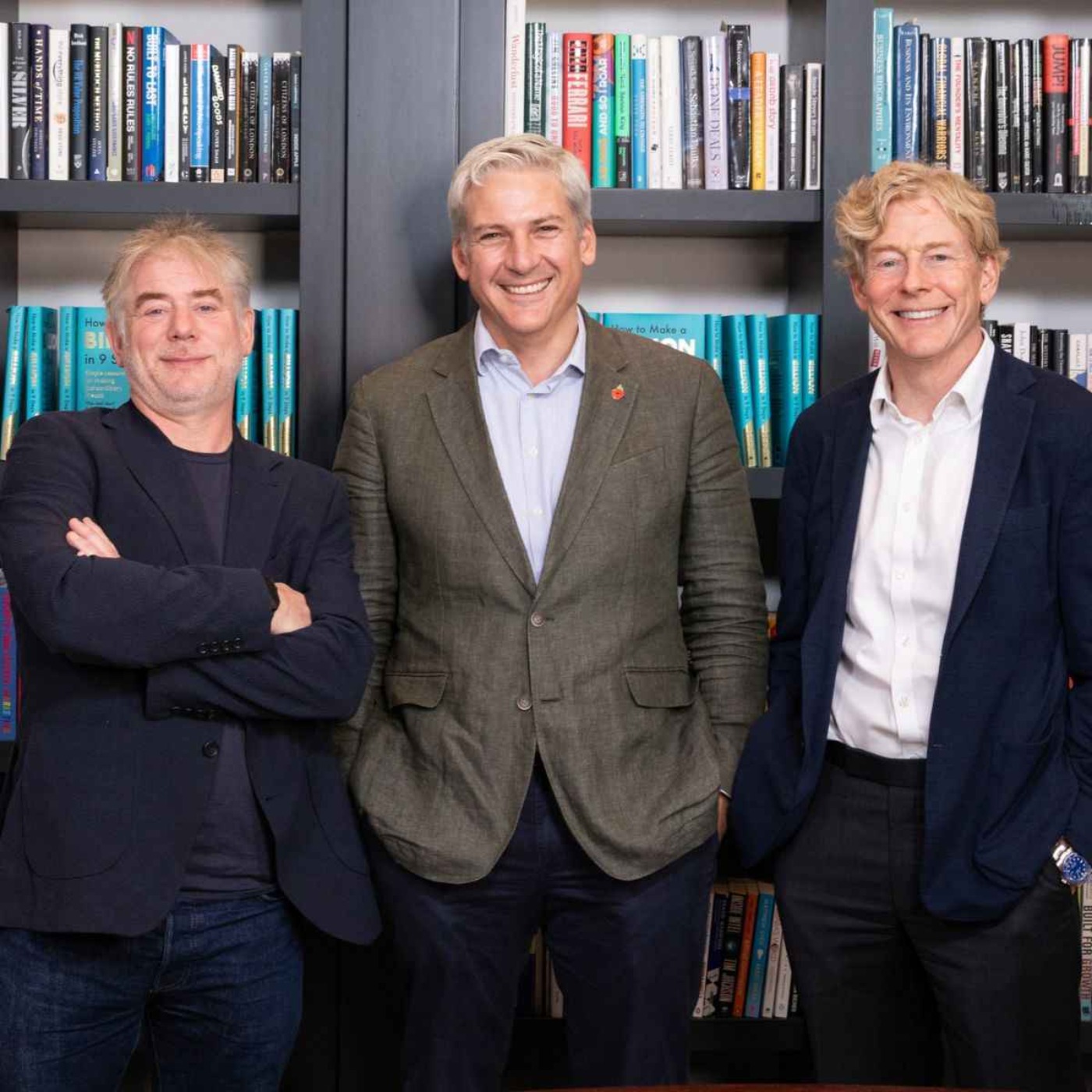
0:52Hello and welcome to the Business Leader Podcast. I'm Josh Dornbrack and today I'm joined by... I'm Graeme Ruddick. And I'm Sarah Vizod. We're going to do something a little bit different on the episode today. We all spend our days deep in business trends, leadership stories and big ideas. But one thing that always strikes us when we talk to various leaders from various sized companies is their hunger for knowledge. And I think one really stuck out to you recently, Graham, it was when you chatted with John Roberts of AO. Is that correct? It is. And I think it's worth saying that a lot of the people we speak to in an interview are naturally curious.
1:25It's one of the traits that really shines through with business leaders. Very, very curious people. are constantly looking to learn. John Roberts was one striking example. I ended up having a long conversation with him about podcasts and books. And he reads, he listens to audiobooks, and it's very clear he consumes as much as he can. He's not alone. The book I'll talk about in this episode was actually recommended to me by a chief executive. And I think it's also worth saying that our very own Richard Harpin is also obsessed with business books as well and has read an awful lot. I've had plenty of recommendations from him.
1:58It is a trait that really stands out, curiosity, and that comes through as a desire to learn and to read. And books are a great way to do that. So this is going to be the Business Leader Podcast Bookshelf. So whether you're looking for your next read, a fresh insight or something to challenge your thinking, you're in the right place. Sarah, I want to start with you. What's a book that you've read recently that you'd like to recommend that people get stuck into? Thanks, Josh. Yeah, so I do a lot of reading. I have to admit, a lot of it is not business books, but I thought here I'd be best off picking out a business book for people to read.
2:34I'm sure not the latest fantasy series is not everyone's cup of tea. So I picked this out in the magazine as well, actually. But it's a book called Is This Working? The Jobs We Do Told by the People Who Do Them, which is by a guy called Charlie Colnutt. It's very unlikely you've heard of Charlie Colnutt unless you have read this book because he's not particularly, he doesn't run a big business. He hasn't written lots of other books. He actually used to be a trainee barrister. And basically in 2021, he gave it all up and decided to travel around the UK, meeting people and finding out more about their jobs.
3:11It's not a totally original idea. In fact, it's not an original idea at all. It's actually based on an idea that a guy called Studs Turkle, which is an excellent name, published 50 years ago. he was an American broadcaster and he published a book called Working which was basically interviews with 100 people around America trying to sort of provide a snapshot of what it was like to work in America in the 1970s. Highly recommend that book as well but this is almost I suppose it's a follow-on but it's sort of a different take on it. It's obviously traveling around the UK so you're getting a slightly different perspective than you would the US but I think it's a really interesting time for him to have done this obviously 2021 2022 we were still kind of mid-pandemic so that's probably sort of clouding impacting how people think about their jobs but also this like interesting crux in um in employment and how people do work obviously ai and automation and and technology is really impacting the types of jobs people do how they feel about their job so this is a really fascinating snapshot.
4:14I say it won't make you a better leader from the sense of giving you lots of advice on how to run businesses or giving you lots of tips on how to manage people or build companies, but what it will do, I think, and I think this is quite important for leaders as well, is really ground you in what people think about their jobs, how they are experiencing their day-to-day lives, and what comes through is a bunch of things that lots of people talk about that are kind of things that people can take away. When he's talking to people, are they kind of a variety of different industries and business sizes?
4:49So many different things. One person is a sex worker. That's a slightly different type of a job. But we've also got people who work in ad agencies. We've got nurses. It's not just sort of corporate jobs. One of the ones I quite like to pull out is, this is a bit more of a corporate job, I suppose, but it's someone who is an advertising copywriter. It's obviously not quite the same as being a journalist but it's quite an interesting insight into sort of the relationships that people can build at work so he is talking about how he works in advertising he works very closely with an art director and how the two of them have to work together to get the best work out of each other that's a really interesting he sort of there's a little part where he talks about how in any sort of creative team there's a chukarupa and a siver and he describes himself as a chukarupa So he is the one that kind of comes up with loads of ideas, which he then chucks up to the art director, who then goes, no, no, yes, no, no, yes.
5:45I think quite an interesting kind of point about how people work together in businesses that I quite liked as an idea. As I say, it's full, honestly, full of different types of work. We've got a call centre worker. She talks about someone who rang up, threatening to kill themselves because they couldn't return at all. We're hoping that he was joking. But this is the sort of thing that you don't think about the people having to deal with on a day to day basis. You've also got someone who's a gardener who just likes, you know, the outdoors and being in nature and helping people. So there's just a huge array of really, really interesting jobs and people that they're speaking to.
6:25And within that, I think there's a little bit of, as I said, a couple of trends coming in here, which is actually that people do love their work, but that they're increasingly finding it frustrating. They're increasingly feeling like they have to spend a lot of time on admin, a lot of time not doing the job that they love, not doing the copywriting or the garden, maybe not so much with the gardening, not doing the copywriting, not doing the course under work, but actually having to sort of do the admin of their work, spending hours signing off pieces of paper or triple checking things. And I think that's something for companies to bear in mind that actually, how do you make sure that you free up people's time so they do the thing that they love and they're passionate about and they don't end up spending all their time doing the boring paperwork, ticking the boxes, sitting in meetings, that side of things, I think is an interesting takeaway from it.
7:10The one thing that I love about it, and by the sounds of it, correct me if I'm wrong, but sometimes the best inspiration you have is from an unexpected source. You know, you could be reading an interview with someone about MMA or boxing and suddenly there's a little thing that just a light bulb that kind of goes off and you build off that idea and suddenly you've got a process that you can apply to your own business. That's something that a lot of the people that we speak to and a lot of members have said exactly the same thing where you get inspiration from sometimes the strangest of places. And it sounds like it's a pretty good resource for something like that where, you know, it may trigger a thought or an idea in someone's head.
7:49Yeah, I think you're right. I think there's an idea that you have to speak to similar people or people in similar sorts of roles to really be able to get the insight that you need to become a better leader or to grow. I think that's one of the things I was saying earlier. This book doesn't do that. There isn't explicit advice, explicit experience for people who've done that. But I think if you read it, people will pick out different things. The things that I picked out, the ad copywriter and the chukarupa and the sieve, is probably very, very different to something that someone else will pick out because I felt like that sort of brought into my role a little bit more.
8:20Someone else will pick out another role. Someone else will pick out the guy who's the dentist, the person who's the nurse, the person who's been a matron, and there'll be something in their story that will really resonate. And they'll be like, oh, yes, I actually I know someone like that or I've had that experience in my job and I hadn't thought about it in that way. And I think because it's so many people from such a diverse range all across the UK, there is sort of something for everyone in there. And just to, I guess, get back to what is it that drives people is really important. There's a real feeling through this of like, there's a little bit of despair, like where work is going and what people are being asked to do, but an awful lot of pride in what people do, whatever it is.
8:56And I think that's important to remember as well. Yeah, that's really interesting, Sarah. Thank you for that. So your choice again, just to reiterate, is this working? The Jobs We Do, Told by People Who Do Them by Charlie Colnutt. Graham, what about you? so um as i mentioned at the start the book i was going to talk about was recommended to me by a ceo was recommended to me by richard davis uh the boss of alica bank and the reason why the recommendation stood out is that this is a company that's been one of the fastest growing in the uk for the last five years or so since he became chief executive really and is also one of the companies on our growth 500 list and he said to me during the podcast interview that we did where recommended the book that he thinks a lot of traditional management theory is wrong and that's the key to building a model business is to understand that and to understand what best practice really looks like so that sentence alone pricked at my ears and then he went on to say if you want to find out to really run a business read the geek way so i took him up on that and read the book in about four days and then have recommended it to basically everyone i speak to including pretty much everyone in the office and all family and friends.
10:08Yeah I've listened to it on Spotify so yeah you've convinced me to give it a listen. It is a fascinating book because for a few reasons first of all it's a great read because it's a mixture of stories and insights so it's not like what you may think is a traditional business book where it's full of point by point theory it's largely a collection of stories strung together with the insights and the context that gives them the meaning. But this book is really all about how there's been a slight misunderstanding of the technology giants in the 21st century, and that the key to their success is not just that they've created fantastic technology and that they're technology geeks, but actually that they're business geeks.
10:51And they're obsessed with business and obsessed with how to run a business. And they are obsessed with improving on what's gone before. and they have thought very deeply and carefully about how to build and grow and lead a business and that has led them to turn 20th century theory on its head and look at a new way to build a business so I'll quickly summarize the key parts of that but the book basically and the people we're talking about here by the way are Mark Zuckerberg, Jeff Bezos, Reed Hastings and Netflix they're the people that come up um consistently throughout the book as well as a few other examples but it talks about the pillars of building a modern business as being around speed science openness and ownership so speed in terms of how quickly you move and execute science in terms of your decision making it doesn't say that gut instincts are an intuition are completely redundant but it says that science and data should make up effectively about 70 percent of every decision openness in that candor within a business is incredibly important and ownership in terms of everyone within the business feeling like they've not only got a stake but they're responsible for something and underlying those four pillars is sort of the reason for it and one of the reasons I particularly enjoyed the book is that it there's a lot of thinking in psychology about human flaws and our inherent biases and why they're so troublesome and people like Daniel Carman have done a lot of work on this in in in his books and his works over the last 30 or 40 years what this book says is actually yes we have individual flaws but the reason for those flaws is that when you put everyone together it makes people collectively smart and our inherent biases and flaws as individuals actually when you put together a team make us really strong and that the geek way is all about how you harness and utilize that and get the most out of teams so to give you just one little example it makes the point in the book that silos may not actually be bad we all think of silos within the business as being something that divides a company can cause a lack of communication and is problematic the book says actually a lot of the technology giants have realized that you can use silos to your advantage in the sense of it gives people ownership of something and if you can create a silo where people are building on something and working something it means that that silo knows very clearly what they're responsible for and can make quick decisions and move quickly and build quickly absolute key on top of that though is that all the silos are working towards a common goal and are working and pulling in the same direction which is where the openness thing comes in um another another thing that comes out the book is this idea of a rather derogatory term hippo which is highest paid person's opinion and the book suggests that most of these companies have come to conclusion that that it ultimately is something that leads to bad decision-making process this is the idea that if you're in a room thinking about decision the idea that the highest paid person's opinion in the room is better or more valid than anyone else's is inherently wrong and flawed and therefore what you see with a lot of these these CEOs and leaders is that when they're in a meeting room they're trying to cultivate the discussion and playing devil's advocate a little bit and making sure that every opinion is heard and every angle is covered rather than it being a collection of different opinions and picking which opinion you use so it's all about decision making process and how you make that better but it's a fascinating book there's also stories in there about how businesses have gone wrong and what's been learned from that but it's the closest thing I've ever read to a handbook to how to run a business in the 21st century yeah no it sounds really interesting and I've got it on my bookshelf currently I haven't read it yet I'm getting to it I promise you because you have I've recommended it a lot.
14:37And I think what some of the best authors do, you're thinking the Gladwell's, the Lewis's and the like, is give real world examples to kind of color in these situations and these really drive their point home. Was there like one particular real life example that kind of stuck with you that you can share? One example that comes to mind is, give an example of a failure. So one of the big case studies it talks about is uh the failure of queeby which was a streaming business that was launched by um jeffrey ratzenberger and meg whitman so jeffrey katzenberger was the brains behind many disney's hits in the early 1990s animation then he went on to found dreamworks which had some huge hits with things like shrek Meg Whitman was the boss of HP and they got together to launch Queeby which was a streaming service had billions of dollars behind it and it launched early 2020 and by 2021 it was gone finished and the book talks about why that was the case and what went wrong and inherently and I'm summarizing here those two people at the top of the business thought they knew best the people at the bottom were saying this isn't going to work the feedback never got up it was a very top-down led business and it quickly unraveled and burnt through a lot of money in a short period of time despite there being a great deal of talent within the business yeah no that's really interesting Sarah was there one story or example that kind of stuck out to you there are so many and it is really worth it is really worth reading i was listening to it when i was in the gym uh on spotify um i think the one i'll pull out is um it's actually a feature we had ended up doing in the in the magazine actually i we did that before i listened to the podcast so the two aren't related but it just happens that that's the case um and that's the example of new coke so it's 40 years since coca-cola basically got rid of its got rid of coke as it was and tried to launch a whole new product um went so badly wrong it's sort of held up now as one of the most disastrous product launches and marketing blunders in history been written about hundreds of times even coke is like yeah we really messed up here and what mcafee sort of talks about is that really this was based on sort of a hunch from the ceo and a blind taste test and really wasn't based on following any sort of science or evidence or really doing anything that was particularly sort of based in any rigor as we've said like gut instinct can be good but actually more often than not you need to follow what the science and the data and the analysis tells you and I mean as we say New Coke has been held up as a total disaster and he pulls it back to this idea one of you know not following the science not doing what you can to make sure that you're getting the evidence your product testing you're talking to partners customers anyone who might be buying it but also again it comes back to the idea that the CEO decided that this was something they should do and off they went and did it without really thinking about the consequence of it so there's a little bit of hippo going on there as well and the book is by as sarah mentioned that andrew mcafee who is harvard and mit has spent his life thinking and teaching about business and he wrote the book because he came to conclusion that this was the amazing thing going on that he felt hadn't been told and that it needed to be shared what was going on behind the scenes of these businesses and how it was different to how people thought businesses should be led and it prompted me to go on to read almost a natural successor to the book which is um no rules rules which is um the book by reed hastings about the culture at netflix which is also an extraordinary read so very quickly summarize netflix does some really really unusual things it's like an extreme culture there so there is no holiday policy there is no expenses policy you are it's assumed that you will may use your best judgment on those things and decision making is free you're encouraged to just do things and pay is also really high so they believe very strongly in paying top of the market to get the best people and they even encourage staff to take calls from headhunters so they can understand what the going rate is for their job in the market so they can come back and make sure that they're as well paid as they can and all this threads together to create a high performing environment where you have the best people who are free to make decisions and are trusted to do so and all those things sort of come together to create this really really it's an extreme culture and it doesn't work for everyone but it's a it's a really fascinating example of how one of these businesses that's mentioned in the geek way netflix has been run one little thing to add to that um very recently reid hastings joined the anthropic board of directors um anthropic obviously being a a big player in the ai game so if they if reed hastings brings that really unique thinking to a giant like them i think watch the space is is the thing to take away from that uh thank you graham again your choice was the geek way the radical mindset that drives extraordinary results by andrew mcafee uh the book that i want to i want to highlight is uh 50 Ideas That Changed the World of Work by Jeremy Cordy and Jonathan Besser.
19:59I recently highlighted in a masterclass on building a culture of innovation for the website. But it's a book that's really, really stuck with me. And effectively, what Besser and Cordy do is they summarize and highlight 50 ideas that have really, really shaped the world of work and the thinking around it. So this ranges from psychological safety, the growth share matrix, Haslow's hierarchy of needs, Sun Tzu's art of war to the blue ocean strategy, the Eisenhower matrix, SWOT and pest analysis. So it kind of covers a wide gambit of ideas there. And each chapter is dedicated to a specific idea. It's no more than five or six pages.
20:40And it's broken down into big picture, which effectively is an overview of the idea, about the idea, which goes into a little bit more detail in practice, which is essentially how to apply the ideas to your organization. and Thought Starters, which are questions that you can ask yourself or your teams to see whether this idea would benefit your business. And then What Next, which is effectively further information about the idea where you can either watch a TED Talk or a video or read the book or maybe even listen to a podcast. It's super, super interesting. And what I love is that Besser and Cordy really have effectively created a menu that you can pick and choose from to create your own super strategy, I guess.
21:26I was looking at it strictly through the lens of building a culture of innovation, but you can very easily look at it in your hiring strategy, in your own personal development, in developing your senior leadership team. There's many, many applications that you can have. And I thought it was really, really interesting. And kind of going through it, you kind of realize how many of these ideas have just become part of our lexicon. So just a few examples is Black Swan, Blue Ocean, growth mindset, psychological safety, smart goals, all these kind of things that we just use now. It's just regular kind of verbiage that we use, but have all stemmed from really interesting ideas that have shaped the world of work.
22:07Again, the book is 50 Ideas That Changed the World of Work by Jeremy Cordy and Jonathan Besser. Right. I'm going to do something a little bit different now and this is something that you both don't know anything about i'm just going to try and keep you on your toes so we are going to do blind rankings for those who don't know what blind ranking is i will show graham and sarah one book at a time and they must assign it a ranking between one and five without knowing what books are still to come so sarah my first book i'm going to give you is alchemy by rory sutherland oh that's a good book i'm really pleasing i really like that sort of area uh i'm gonna i'm gonna so five is top and one is bottom or one is which way am i going one is best okay one is best in which case two so i'm about two fantastic the next one i'm going to give you is amy edmondson's fantastic book about psychological safety, the fearless organization?
23:12Three. Okay. The other one I'm going to give you is Shoe Dog, the classic by Phil Knight on effectively the story of Nike. I'm going to have to give that one. Interesting. Okay. the other book I'm going to give you is Risk Roulette by one Graham Ruddock well that's five obviously unfortunately I've already got four and five left um no I'm gonna go four okay and the final book I'm gonna give you is Good to Great by Jim Collins I can't believe I'm about to put Jim Collins Good to Great at five but here we are it's going at five well there we go here's here's where we are so again just to summarize sarah number one is shoe dog by phil knight number two is alchemy by rory sutherland number three is the fearless organization uh by amy edmondson number four risk roulette by graham ruddock and number five interesting choice is good to great by jim collins uh out of context you'd look a little bit crazy but you know each each to their own Graham I'm going to start giving you your choices now if you're ready I'm ready great the first one I'm going to give you is Atomic Habits by James Clear I'm going to put that number two because um not just because of the book but because of the impact it had I still I think it's one of the best-selling books in history so number two for Atomic Habits okay the next one I'm going to you is one that you have read I know this um Elon Musk by Walter Isaacson uh interesting so I'm going to put that four because um I think Walter Isaacson himself would now say that that book reads a lot differently now and he probably wishes he was doing that but now rather than two years ago when it was published okay the next one I'll give you is grit by Angela Duckworth five.
25:15Okay. The next one I give you is Liar's Poker by Michael Lewis. This is hard because I've only got one left and so I've got number one. So I will put that as number one because Michael Lewis is probably my favorite writer and that is his original piece of work. And it is a fascinating book that, a bit like Atomic Habits was not only a best-selling book but actually changed the world in the sense of it gave people insight into Wall Street that previously hadn't been there and made people realize what was really going on behind the scenes at all these fancy new investment banks. So the last one I'm going to give you is The Art of the Deal by Donald J.
25:59Trump. Well that sits at three so that's all right. It's fair you only had one choice left anyway so just to reiterate your list is number one Liars Poker by Michael Lewis. Number two Atomic Habits by James Clear. Number three The Art of the Deal by Donald J. Trump. Number four Elon Musk by Walter Isaacson and number five is Grit by Angela Duckworth. And that's it from us. You've been listening to the Business Leader Podcast with me Josh Dornbrack, Sarah Vizard and Graham Ruddock. You'll find more of our suggestions in the latest edition of Business Leader magazine. For more business masterclasses and case studies, please check out businessleader.co.uk.
26:55The Business Leader Summit 2026 is set to be bigger, bolder and more ambitious than ever. Don't just watch Britain's growth story unfold Be part of it Secure your ticket today by visiting the events section Of the Business Leader website And using the code BLPODCAST All uppercase It's your chance to join the leaders Who are shaping the future of business
Hosted on Acast. See acast.com/privacy for more information.