Ask ChatGPT
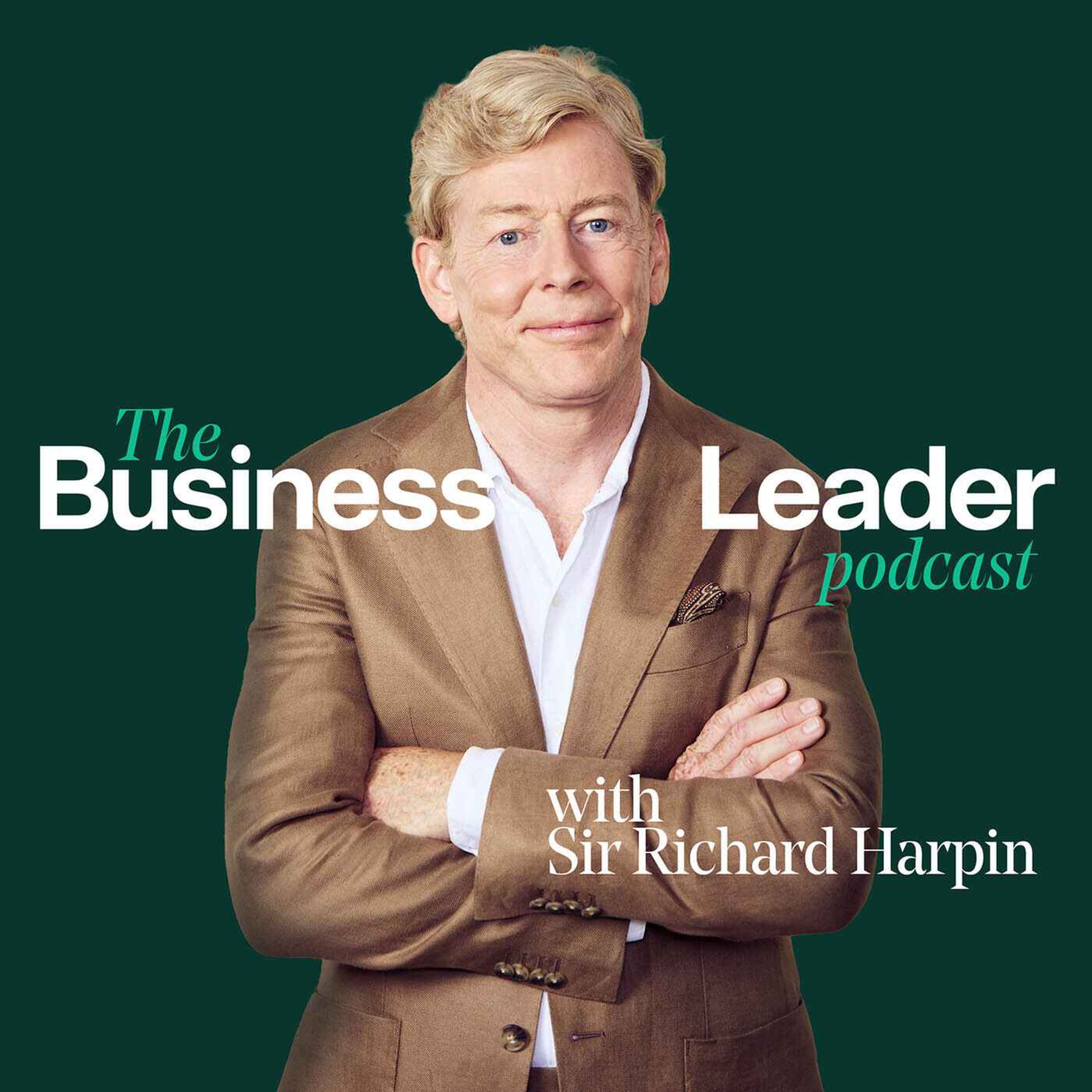
 The Business Leader Podcast with Sir Richard Harpin
28 Apr 2026 · 47m · 29 chapters

BT’s transformation and how CEO Alison Kirkby plans to turn £40bn digital infrastructure investment into growth amid intensifying competition, price-sensitive customers, and investor pressure.
Alison Kirkby grew up working-class in Glasgow (parents factory workers), started working at 12 (door-to-door fresh cream), became an apprentice trainee accountant in 1984 in the Scottish whiskey industry, then spent 20 years at Procter & Gamble (finance leadership; worked in Eastern Europe; part of the team for the £50bn Gillette acquisition; first female homegrown Western European CFO in the UK; later ran Wella). She later led turnaround roles at Telia/Tele2 (CEO after CFO; overextended markets in Kazakhstan/Croatia; returned focus to Sweden/Baltics).
leadership is a “muscle”; don’t say no to discomfort; acquisitions/divestments must consider culture; “you cannot transform a company without transforming its culture.” At BT: refocus on UK core connectivity, pivot to free-cash-flow growth sooner, deliver radical cost transformation, and relaunch BT to leverage brand trust (EE tech-first; Plusnet price/value).
P&G Eastern Europe expansion (e.g., Tide/Pampers adapted for local affordability and manufacturing in Timisoara); Gillette acquisition as “complementary” in model and culture; Wella acquisition as a culture mismatch lesson; Telia/Tele2 cash-draining exits via consolidation; BT workforce transparency and union reskilling.
Written by AI. May contain mistakes.
Discussion about the challenges and investments BT is facing under CEO Alison Kirkby.
“You cannot transform a company without transforming its culture.”
Alison Kirkby shares her upbringing and the influence it had on her career path.
“Alison Kirkby is the CEO of BT, a company that has spent billions rebuilding the UK's digital infrastructure and is now facing the hard question.”
Alison discusses her early jobs and how they shaped her work ethic and leadership style.
“You know, I grew up in a very working class environment in Glasgow.”
Alison reflects on her time at P&G and the foundational leadership lessons learned.
“regrets on not going to university because of that family tragedy or actually it helped you to not go to university?”
Alison recounts significant roles and acquisitions during her tenure at P&G.
“We met in Newcastle at Procter & Gamble.”
Discussion on the importance of cultural compatibility in business acquisitions.
“And I think you moved outside the UK as well.”
Alison shares thoughts on focusing business strategies and making divestment decisions.
“So it's a learning don't go and buy a business that's got a completely different culture or can you can you do more to change a culture of an acquisition?”
Alison provides insights on key factors for British entrepreneurs looking to expand internationally.
“And I think you have to be looking all the time at what are your core capabilities and what are your unique assets that are sustainable and endurable?”
Learn the importance of local partnerships and building a strong team for market success.
“You have to have local partners that have similar values to yourselves and that you can trust.”
Alison provides insights on key factors for British entrepreneurs looking to expand internationally.
“So it's very much the people, whether it be the partners or your people, is so fundamental to that success beyond the core product and brand itself.”
Discover how to adapt global brands to fit local consumer needs and preferences.
“And the brand and the products were, say, more similar to UK?”
Explore the challenges and motivations behind transitioning from FMCG to the telecom sector.
“you decided to leave and join the telecom sector.”
Understand the factors that prepared the speaker for the CEO role in a new industry.
“That doesn't always work out, does it, for not only finance people, but it doesn't always work out for marketing people or operations to move into that top role.”
Learn about the initial challenges faced during the first year as a CEO and strategies to handle them.
“You didn't only become the CEO, you had to go and do it in Sweden, a foreign country and different language.”
Examine the importance of team alignment with business strategy and culture.
“Or was that the right sort of time period?”
Discover how transformative leadership impacts business strategy in the telecom sector.
“I focus on being a great leader to drive a transformative change agenda in a positive way for customers, colleagues and owners.”
Gain insight into the complexities of leading BT and the significance of prior board experience.
“And did it help the fact that you were already a non-exec on the board of BT before you were made chief exec?”
Learn about the strategies implemented to achieve significant shareholder value in a short time.
“A board I was on before BT was the board of Greggs.”
Learn about BT's strategic pivot towards core connectivity and cash flow growth amidst investment skepticism.
“You know, telcos have a history of investing, but never delivering a return for their investors.”
Explore how BT is managing costs and employee engagement during its transformation phase.
“And then a big focus also on cost savings, headcount reduction.”
Understand BT's branding strategy and how they plan to leverage their various brands in the market.
“And so our employee engagement, it hit all time lows during 2023.”
Discuss BT's goals for customer growth and the importance of safe and reliable connectivity.
“But what we will be doing is bringing BT back into the consumer space.”
Examine the public responsibility of BT as a major telecom provider and its impact on stakeholders.
“We will have put 40 billion into the country in the last 10 years.”
Learn about the challenges facing the UK stock market and how to attract retail investors.
“And I think that sense of responsibility is almost easier in the public eye than it does in the private eye.”
Discover the significance of mentorship in leadership and its benefits for personal growth.
“And you've got Sunil Bharti Mittal on your board.”
Gain insights on the importance of seizing opportunities that challenge you as a leader.
“And why do you think most mid-sized founders, entrepreneurs don't have a mentor?”
Learn essential advice on taking risks and valuing team culture in business.
“What would be the sort of two or three bits of advice that you would give British entrepreneurs and chief execs from your experience?”
Discover how to manage family responsibilities alongside a demanding career.
“And as a mum as well as a highly successful chief exec how have you managed to juggle those two priorities?”
Understand the strategic vision for BT's growth and its societal impact.
“that all started out in Glasgow in the 1960s and 70s.”

Get the gist, explore an idea or ask about something said.
 Claude
On The Business Leader Podcast with Sir Richard Harpin, what are the key points of this episode?
Searching your listeningAutomatic transcript. May contain errors.
0:02My father took terminally ill the week I was leaving school. I decided that was not a good time to be going to university. I started working at the age of 12 doing door-to-door selling of fresh cream. What I've had that maybe I wouldn't have had if I'd gone to university is that deep understanding of how to work your way through a company from the very bottom to the very top. Leadership is a muscle that you need to keep building. Over this decade, we will have invested£40 billion into the UK. Never say no to an opportunity that's going to push you out of your comfort zone. You cannot transform a company without transforming its culture.
0:53I'm Richard Harpin, a Yorkshireman who sold my company, HomeServe, for£4 billion. and this is the Business Leader podcast where we look at the stories and strategies behind modern businesses. I'm passionate about helping British businesses scale and succeed. I think it's the key to unlocking Britain's economic growth. Founders and CEOs of mid-sized companies can be members of the Business Leader community for coaching, peer-to-peer forums and exclusive learning events. So do get involved. In the meantime, please click on the follow button It's just one click, it's free and it helps us grow the community.
1:33With more people on board Business Leader, we can have better conversations and inspire the UK's next wave of business leaders. My guest today is running one of the biggest and most complex transformations in British business. Alison Kirkby is the CEO of BT, a company that has spent billions rebuilding the UK's digital infrastructure and is now facing the hard question. How do you turn that investment into real growth? For BT right now, competition is intensifying. Customers are more price sensitive than ever and investors are demanding results. Alison built her reputation as a straight talking turnaround leader.
2:18And since taking the top job at BT over two years ago, she's been cutting costs, reshaping the leadership team and bringing clarity to the business. She is BT's first female CEO. Can she take a 180-year-old incumbent and turn it into a faster, more competitive, growth-driven company? Alison, it's great to have you on the Business Leader podcast. Just start by talking about what role your upbringing had in shaping your career as a leader. Well, it had a massive role. You know, I grew up in a very working class environment in Glasgow. Both parents were factory workers. I was very much encouraged to become financially independent and get an education so that I could go on and do bigger and better things than they could have.
3:10So I started working at the age of 12, doing door to door selling of fresh cream. I was an Avon lady at 14. I worked very hard at school. And, you know, my plan was to go to university, get a degree and a profession. I was intrigued by business. I was intrigued by travelling to get away from rainy Glasgow. but all of that instilled in me this massive sense of work ethic and aspiration and ambition. Sadly then, my father took terminally ill the week I was leaving school. He was only going to live for six months and he was going to be at home. I decided that was not a good time to be going to university and so I got myself a job, delayed going to university for a year But during that year, discovered that the Scottish whiskey industry used to take on two school leavers a year and train you to be an accountant in the business and while studying.
4:14So in 1984, I became the apprentice trainee accountant in the Scottish whiskey industry. And that just gave me great foundations on learning to be a great finance leader, but deeply understanding a business. because I was rotated around the business. And do you look back and say, regrets on not going to university because of that family tragedy or actually it helped you to not go to university? You know, there have been times where I have thought wouldn't it have been great to have had that freedom to think and learn and make lots of new friends. But I think what I've had that maybe I wouldn't have had if I'd gone to university, is that deep understanding of how to work your way through a company from the very bottom to the very top.
5:12And a lot of my learning has been done through doing and through engaging with people and learning from people in real life experiences. And I think it built deep resilience and grit to achieve within me. So, yes, I think sometimes regrets, but now no regrets based on what I'm now doing. I look back with fondness. We met in Newcastle at Procter & Gamble. And I remember driving you round to find your first accommodation when you arrived at Procter & Gamble. How important was that, the P &G training in your success today? It was fundamental for me, Richard, because I hadn't been to university. P &G was almost like a university of creating brilliant business leaders.
6:04It taught me everything I know today on leadership. Leadership is a muscle that you need to keep building. The five E's of leadership are still very much embedded in how I lead. It taught me how to grow businesses, but also grow the capabilities of the organisations so that the businesses can be sustainably successful. And I was exposed to many amazing leaders who I learned from and who now today still mentor me and give me advice around the edges. Leaders like who and a roll call of who's who? Yeah, well, exactly. Jeremy Darroch, who went on to become the CEO of Sky. He was the guy that hired me into Procter & Gamble.
6:49Paul Pullman, who went on to run Unilever. Crystal Apuente, who was the number two in Louis Vuitton, Moet Hennessy, running all of Arno's retail businesses. Austin Lally, who runs Verisure. My two predecessors at BT. Do you think P &G is still the training school today for people starting out on their career or somewhere else? I think it is still a very good training ground, but I don't think it is possible for it to be what it was then. Because if you recall, Richard, we all ran our businesses like many businesses. You know, you felt as though you were the CEO of that very successful bleach brand called Vortex.
7:31The brand management model. Yeah, the brand management model. You know, I felt as though I was the CFO of those household cleaning products. So I think because it's a much more global business, it doesn't have those local brand manager where you can really feel as though you're running a business in a tight team with all of the key functional leaders around the table at any point in time. But I'm sure it's still a great place to learn and grow. Unlike me, you stayed for 20 years. I was kicked out after four years. Talk a little bit about some of those follow on roles that you had at P &G. And I think you moved outside the UK as well.
8:06You know, one of the big learning experiences for me was when we went to the Balkans in the mid-90s, when we were rapidly growing across Romania, Bulgaria, Moldova, Albania, Slovenia, Croatia, getting ready for the end of the Bosnian and Kosovan wars. And we were going in there to hire local people, to build local distribution arrangements and to take P &G's products to the populations of Central and Eastern Europe. So that was the mid 90s. Then around 2004, I had the opportunity to do a unique M &A and investor relations role, working alongside the top of the company, AG Lafley, taking the P &G story to investors.
8:56I was part of the team that did the 50 billion Gillette acquisition. I was the first female homegrown Western European female CFO in the UK. And then finally, I went on to run the Wella hairdressing business. And maybe just pick up on the Gillette acquisition, because history says that most large acquisitions don't deliver the returns expected for the buyer. But I think Gillette did, didn't it? Gillette was one of those very successful acquisitions because the business models were very complementary and the cultures were actually very complementary as well. and been part of the team that was getting ready to announce that to the market.
9:41There was a lot of how do we create more than the sum of the parts when we bring these two companies together. So the best of both was really, and better together, was really a big mantra in how we looked at the synergies and the value creation of that acquisition. Weller was less of a successful acquisition because actually P &G got the culture, you know the Wella culture was very very different it was why I was put in to run it it was managing local hairdressers and there's not many very clever P &G people can really connect like the way Wella did with the local hairdressers throughout the world.
10:22So it's a learning don't go and buy a business that's got a completely different culture or can you can you do more to change a culture of an acquisition? You've got to really study the cultural aspects and whether it'll be a dis-synergy or not and then you you absolutely have to look at where the complementary capabilities and I think acquisition decisions are just as important to look at complementary natures as divestments you know in my career since then I've done a lot of divestments trying to take companies that had overextended themselves beyond their core markets or their or beyond their core services and take them back to their core and make them stronger at their core.
11:05And so it's just as important in the divestment process as it is in the acquisition process. And do you think it takes courage as a leader to sell things off because then you're ending up running a smaller organisation? Absolutely. You know, I moved to Scandinavia in 2014. I was initially the CFO after 15 months became the CEO of Teletu. That was at a point where Teletu had been very expansionary. It had gone into Kazakhstan. It had gone into Croatia. It really overextended itself. But my predecessor really believed in wanting to be this global business. And he believed that growth would be constrained if it wasn't going global.
11:46And I had to reposition what Teletu was going to be. And that was back to its core Scandinavian and Baltic challenger. And so I had to reignite the challenger spirit for the organisation in the context of we'll be smaller, but we'll be a much better business as a result. How often should a business do that, do you think, to look at what they've got and say, well, we've now become too complex, we're doing too many things and we need to get that focus back again and close some stuff or sell other stuff off? You know, one of the biggest things we need to do as leaders is look at are we allocating our financial capital and our human capital in the best possible way to create value for our owners and do a better job for our customers?
12:34And I think you have to be looking all the time at what are your core capabilities and what are your unique assets that are sustainable and endurable? And what are the core capabilities that you have to exploit those assets over the short, medium and long term? And if at any point in time you've got loss making businesses or businesses that are a drain financially or human wise, you absolutely have to look at that. I fundamentally believe companies that really understand what they're great at and what their core capabilities are and really focus around that makes them better businesses. So a strategy has to start with that honest assessment.
13:16And then as you keep renewing your strategy, you need to keep looking at how do you focus better and smarter, particularly in these worlds where we do have limited resources and sometimes overstretched balance sheets. Yes. Let's just go back and talk a little bit more about that expansion of the Procter & Gamble business in Eastern Europe. What do you think the lessons are for British entrepreneurs running mid-sized businesses that want to expand internationally that came out of that? Well, first of all, you really need to have good people and partners on the ground that you can trust, particularly in those markets that might have different laws and values.
13:59You can't just send Brits there and expect it to work. No, you can't. You have to have local partners that have similar values to yourselves and that you can trust. Second, you need to know that you've got a product and a brand or a brand potential that really solves a problem or there is an opportunity for growth in that market. There's not competing products that are better. And third is then all about building a strong local team that you can rely on and can take it forward when you might be going off to do other things. So it's very much the people, whether it be the partners or your people, is so fundamental to that success beyond the core product and brand itself.
14:48And the brand and the products were, say, more similar to UK? 80 % of them were similar. They were global brands. We were taking tide into the Romanian market, but it was in a sachet, not a box, because it was for the local Romanians to be able to do their hand washing in the sink or in the stream. it was Pampers but it was a more value oriented version of Pampers so it was affordable for the local consumer but it was still Pampers but there then were some local brands, we actually bought a local detergent and the factory that produced that detergent while we were there in the northern part of Romania called Timisoara and so then we had a local value brand but that was then the factory that produced Tide for the Romanians.
15:41And Tide is the equivalent of Ariel in America. And so we could manufacture the premium global product, but we could also scale up the local product that every Romanian knew. So make the products pretty similar. Some adaptation would be the learning. Yes, yeah, absolutely. But, you know, you have to make sure you're buying a good quality brand and you're not buying something that then risks the reputation of the more premium product that you're trying to take to market at the same time. But having that local manufacturing capability made it more economical for us to be able to price our product price tight at a lower price in the Romanian market and made it more accessible for the Romanians than if we'd been shipping it in from Western Europe.
16:33After 20 years at Procter & Gamble, you decided to leave and join the telecom sector. Was that a big wrench or how did that career move come about? It was a massive wrench to leave the place that I'd met my husband, I'd had my kids and I had had amazing leaders and an amazing experience. But I was inspired by what other leaders had gone on to do and being that little girl from Glasgow that had high aspirations and ambitions, my view was always well if Jeremy Darroch can go and run Sky you know what can I learn from him and why can't I and and so and not just Jeremy other leaders had gone on to do great things and we didn't want to live in Cincinnati as a family nor Geneva and you know bizarrely I ended up in Virgin Media there was a great CFO there at the time who was looking to recruit his successor he wanted non-telecoms people he had come from he'd come from another great training ground Pepsi and he wanted people with FMCG experience he wanted more diversity in his team and he was training the next he was grooming the next CFO for Virgin Media or beyond and so I was very attracted to that development opportunity and it was a great brand so that's how I ended up at telecoms and then the move from CFO to chief exec.
18:03Yeah. That doesn't always work out, does it, for not only finance people, but it doesn't always work out for marketing people or operations to move into that top role. How did you know that you were going to be a successful chief exec? I think because my final four years at Procter & Gamble had been the managing director of Wella, I'd had that general management experience. And as you know, whilst in P &G, you joined a function, you were groomed to be a great business leader that, you know, that was multifunctional in their thinking and their impact. So I'd had that training, I'd had the experience and I was a very commercially minded CFO.
18:47So the chairman that hired me to be the CFO at Teletu in Sweden, he himself had come from finance to general management in the turnaround and taking Marconi out of chapter 11. His name was Mike Parton. So he saw how a CFO trained individual can actually do turnarounds of businesses, which is what Teletoon needed at the time, because it was very overextended in markets like Kazakhstan and Croatia. And so when he was hiring me, he was looking at potential succession planning for the CEO. And, you know, lucky for me, the CEO decided to move on and do other things after 15 months. And then I became the CEO over the course of a weekend.
19:30You didn't only become the CEO, you had to go and do it in Sweden, a foreign country and different language. Luckily, the Swedes are very good at English because I'm not a great linguist. So no, it was, Listen, Scandinavia is a phenomenal part of the world. They're very digitally advanced. It was working for a challenger telco that had a great purpose and it put customers first. It was a cool, edgy brand. And so whilst there was a fantastic turnaround opportunity for me as a leader, I felt very aligned to what the brand stood for and the purpose of the company. And what did the first year look like in terms of that turnaround and how did you prioritise stuff and what were the things that made the big difference, Alison?
20:21Well, I was immediately thrown into a situation where, you know, we were bleeding cash in Kazakhstan, the Netherlands and Croatia. So I had to very quickly think about how do we get out of these cash draining opportunities through market consolidation. So there was a lot of focus on the M &A side of things so that I could exit in a good way to focus the business back on Sweden and the Baltics. I had to rebuild my team. You know, some of my peers were surprised that it was me that got the top job. How many direct reports did you have when you joined and how many of those did you end up changing?
21:04I had about 10 and they all changed within about 18 months. And then the other thing I did was really work on the culture of the company. We had lost our challenger spirit. So I'd say the big things was getting the capital allocation right, building my team around the new strategy that was taking it back to Sweden and the Baltics and really working on the culture and bringing back the best of the challenger culture that was the best of its history. Do you look back and say, maybe I should have changed my team even quicker than 18 months? Or was that the right sort of time period? I think that was the right pace.
21:46As I go into all, I've now done a few CEO roles. And I go into all of them with a very open mind to get to know the team I inherit. But as you work on the strategy and you start to learn how the team either complements the strategy or complements me as a leader, there is a natural evolution of that team. And a lot of the team at Tilla 2 had been there in this expansionary mode. I was taking it back to its core Swedish and Baltic businesses and core connectivity. So I had to have a team around me that believed in that strategy and wanted to realise the full potential of that strategy. And that's what I do everywhere.
22:29So I think, you know, most of my roles and, you know, in Telia, I probably only changed half the team. In BT, I've been in role for just over two years now and 10 of the 11 have changed. And you've become a telecoms expert. I'll never be a telecoms expert. How important is that rather than being a general chief exec and moving from one marketplace to another, do you think? I focus on being a great leader to drive a transformative change agenda in a positive way for customers, colleagues and owners. having telecoms expertise has clearly helped me along the way it didn't help me in the beginning I didn't have that really when I became the CEO of Tela2 and so but I believe that I'm a strong leader that goes in to create a great compelling strategy to make a business better and over time the telecoms piece.
23:38And I've got, you know, it's been helpful at BT because having done, you know, three turnarounds already in other markets, some of them more advanced than BT and in a challenger environment where we have less resources, that's been super helpful for my transition to BT. But driving change and transformative change at the scale BT is doing is more about a total system transformation than about just telecoms expertise. And did it help the fact that you were already a non-exec on the board of BT before you were made chief exec? Absolutely. You know, BT is a complex business. We were the first telco in the world.
24:27We've been around for 180 years. 180th anniversary this year, I think. Exactly. 180 years. And you're the first female chief exec. I am, yes. But that's kind of irrelevant. I am, you know, it is a privilege, a massive privilege, also a massive responsibility to be leading BT at this time. And it helped joining the board because I was on the board when we took the decision to do a once-in-a-generation upgrade of Britain's digital infrastructure. by putting fibre into everybody's home. And so being on the board when we made that massive decision, when we became, you know, we have over this decade, we will have invested£40 billion into the UK.
25:17We're the single biggest investor into capital investment into the country. And so that was helpful. And it was helpful because I could be a little bit on the outside for five years. before I became the CEO. I didn't know I was going to become the CEO. Let's just be very clear. There might have been a hidden agenda, mightn't there? Maybe a chairman had some succession planning in place. We want Alison as our chief exec, but we'll give her five years as non-exec and then we'll tap her on the shoulder. If Jan de Plessy did that, then that was very clever because I hope in time it will be seen as a very successful transition.
25:58And I think it's a model that's worked in other businesses where non-exec to chief exec. Yes, it has. You know, you've seen Amanda Blank at Aviva do a fantastic job. A board I was on before BT was the board of Greggs. I love a Greggs cheese pasty. Yeah, and Roger Whiteside was on the board before he became the CEO. I think, you know, it's another form of promote from within, which, as we know, was one of the foundational strengths of Procter & Gamble. And it is a great way of making a slightly lower risk transition because the individual knows the business. The business knows the individual. The board have had experience of seeing that individual around the board table.
26:43And so, you know, it was it so far it was a very easy transition for me. But also there were two, the two previous chief execs of BT both also came out of the Procter & Gamble training school. Yes, but we're all different. Did that make it harder or easier, do you think, when you were the third in that line? No, I think, you know, we've got over 100 ,000 people at BT. People are aware of Procter & Gamble's products, but not necessarily the scale of Procter & Gamble globally and the training ground that there was. But, you know, I think what it proves is that P &G is a great training ground for great leaders.
27:23But, you know, Gavin joined in marketing. He was great at brand and many other things. Philip joined in sales. He was a great sales guy at many other things. I joined in finance. And so I probably bring a different perspective to operations, strategy and capital allocation. And what you have brought Alison is£9 billion of extra shareholder value in the two years and two months since you joined. Just talk us through how you achieved that. What was your starting point when you arrived? Yeah, well, my starting point was we, as I said, we're in the midst of this once in a generation investment and upgrade of the country's digital infrastructure.
28:08You know, telcos have a history of investing, but never delivering a return for their investors. And so any telco that goes into a major investment cycle, the markets usually start very sceptically about, are we ever going to see a return here? And particularly for BT that's heavily regulated, there was always concerns, will the regulator even allow those returns? So I joined at a moment when we were still in the early days of that investment. It was still to be proven out whether it would deliver. And it was also soon after COVID, soon after the energy crisis, you know, balance sheet stretched, consumer, you know, the economic environment in the UK not great.
29:02So a lot of uncertainty on investments in the UK and a lot of uncertainty from shareholders as to whether BT really would get a return on this investment. And then we also were looking to do things beyond our core of connectivity. The first thing I did when I came in was say, we're going to focus back on the UK. We're going to focus back on core connectivity. And we will now be pivoting to free cash flow growth sooner rather than later. And I also mapped out for our owners how we would get to the end of the decade, both in terms of growth, revenue growth, EBITDA growth. but most importantly cash flow growth so that we could you know get back to a growing dividend again because you know we should be annuity light for our investors so really focusing back on the UK focusing back on our core staying true to the strategy that that we'd already committed to the market in terms of rolling out fibre to up to 25 million homes by the end of 26 but then just giving owners a glide path to get there and then just consistently delivering on what I promised.
30:23And then a big focus also on cost savings, headcount reduction. Was that really hard to achieve? As we embarked on this phase of transformation, you know, we were only ever going to get investors to believe in the future if we mapped out a radical cost transformation programme as well. Because we had a long term vision for what was possible, we were, you know, my Philip before me and then I, when I came in, mapped out very transparently what does this mean for the workforce over the coming years. And I think being very transparent with them over the medium to long term and then working with the unions and with our organisation on the reskilling implications, on the restructuring implications and how we were going to be creating a much better BT for everybody by the end of it.
31:18We've been able to take the organisation with us on that journey. And so our employee engagement, it hit all time lows during 2023. We're now up at best in class, top tertile again because we've just been very transparent with people on the journey we're on. And we'll be very fair on how we treat our people because we're such a big employer and we have so many retail investors. We need to treat our people fairly. You know, I have 600 ,000 retail investors out there. I have 250 ,000 pensioners out there. So I have to treat people in a fair way to ensure that the brand remains a trusted brand that the country believes in and wants to engage with.
32:04And what is your branding strategy? You have BT, EE, Plusnet. What's your thinking there? We want to be the most trusted connector and we want to leverage all of our brands to play to the strengths of those brands to service the needs of as many individuals, households and businesses that we can in the UK. So BT is about trust. Trust first with BT. Safe, secure. EE is tech first. It's for those tech savvy, busy homes that want to have all of the technology in them. And Plusnet is about price and value and just simplicity. And then clearly we have our infrastructure business, Openreach, which is the digital backbone of the country, is, you know, is the network that makes the country work.
32:56And so we've got all four of those brands and they each play to their strengths. But what we will be doing is bringing BT back into the consumer space. I have decided that we need to be able to offer our services and our products that attract all potential customers in the UK. We need to leverage all three of those brands. And so BT will be getting relaunched. That's a big relief. I think too many businesses that get rid of great brands that they've had historically. And so to me, that's a fantastic decision. It's an amazing brand. It has trust at its core. It has an amazing heritage. And it is behind so many brilliant things that we do in this country.
33:48And that's why we'll be bringing it back. Great to hear. Procter & Gamble have a much bigger portfolio of brands. Could one day you end up with more than four brands, do you think? I think in telecoms, probably three is enough. And I think, you know, playing to the value segment is important. And then there is a real differentiation between the households that want BT and the households that want EE. And that's something that we'll play to. I doubt we'll go further than that. Is there a time when we can see BT growing again by customer numbers? I think you're losing less customers than anticipated, which is good to hear.
34:26But can we see a period of growth? Absolutely. We need to get back to growth. We will have put 40 billion into the country in the last 10 years. We absolutely have to get back to growth. But we have to go through this phase of getting out of some of those legacy products and services like landline telephony before we can get back to growth again. But yes, we have an absolute ambition to get back to growth. In the last 12 months, we've actually got, we have now more, we've grown our customer base in our consumer segment in the last 12 months for the first time in eight years. And our B2B business is now stabilising.
35:11And as we relaunch BT and we really play to our customers' needs of they want safe, secure and reliable connectivity in a modern day world that's becoming scarier and more complex and they want to be upgraded to the best so that they can take advantage of all of the digital opportunities that are out there, we will be able to be that trusted connector to all of the growth potential that is out there and that will be coming. Does it make it harder being chief exec of a highly prominent FTSE 100 business versus if BT was in a private environment? I have to spend probably a lot more time with governments and regulators than I ever, you know, have in the past because of how important we are to the country.
36:08I don't think running a business like BT would be any different if it was public or private. You know, it's a great privilege. is a great responsibility. I think by being public, it instills that greater sense of purpose and responsibility because I've got those 600 ,000 retail investors that are Mr and Mrs Smith down the road that invested when BT was privatised many years ago. I think it is right that a business like BT is owned by a wide range of shareholders and not in the private, because I think it gives us that sense of public responsibility. And we are the nation's network. You know, Britain stops without BT.
36:59As BT becomes better, so does Britain. And I think that sense of responsibility is almost easier in the public eye than it does in the private eye. Many medium-sized business entrepreneurs would dearly love to list their business on the UK stock market. How do we make sure it's an attractive thing to do? AIM is the junior market, and you've talked about the hundreds of thousands of retail investors that you've got. What's your messages on how we can reform the stock market here in the UK? Well, clearly, we need to relook at the regulation and the governance that just makes it one, too expensive to list and govern.
37:47And two, we're not very much encouraged to invest in the UK stock market. I look at, you know, Sweden was a much more active retail investor environment. Everybody wanted to own stocks and shares that are listed. And I think stamp duty needs to be removed. Just that general encouragement to get people to invest in our public markets in great British companies, as well as a relook at what gets in the way of listing in the UK from a governance and regulation and cost point of view. There's been a big focus, hasn't there, on trying to get institutions to put more money into the stock market. But I agree that getting retail investors to put a little bit of money into backing future large companies.
38:37And British pension funds. You know, my single biggest investors in Scandinavia were the Scandinavian pension funds. And you've got Sunil Bharti Mittal on your board. Yes, I do. How does that feel? Listen, you know, for I do believe that telcos of the scale and size of BT benefits from having a strong strategic anchor owner that understands the sector, that is in it for the long term and can bring sector experience to my management team. and so it's been very beneficial for us to have a strong anchor, long-term owner like Sunil and Bharti Enterprises. Almost a sort of advisor, mentor that sits on the board.
39:28Very much, very much. So I've got Sunil and I've also got his CEO from Airtel India, Gopal Vital, who's one of the best executives in the industry. It means I've got a more knowledgeable operational board. But they really understand, they bring real added value from the experiences that they have in other parts of the world. They're one of the biggest telcos in the world now, so that's been super beneficial. Have you had other mentors over the years that have helped you in your career? Yes, you know, my previous bosses, whether it be, you know, unofficial mentors. You know, I would regularly turn to Jeremy in the past.
40:09We mentioned Chris LaPointe earlier. you know all my chairmen i view as mentors whether that be mike parton um from my scandinavian days now adam crozier um here at bt and then my external mentor is sir roger carr uh who's very well known and those mentors they keep you grounded and they also put things in perspective uh when things are tougher and give you that safe harbor uh to really go and be a sounding board to in the good times and the bad times. And why do you think most mid-sized founders, entrepreneurs don't have a mentor? Well, entrepreneurs naturally probably are just getting on with things themselves.
40:52They're not like myself that's always relied on great leaders to go to for advice and learn from. But absolutely, I would highly recommend the role of great mentors. But you have to work out why do you need a mentor? You know, one thing I discovered in a more difficult phase of my career when I'd made the wrong career choice, I went into media for a couple of years. And when I came out of that, you know, my coach really tried to help me understand why did it not work out for me in that sector or in that business I was in. And it was very much because the role I had was not playing to my broader, more CFO skills.
41:35and there was a misalignment between kind of my values and the values of the company I was working in. So I think having those coaches and mentors that know you and can try and weed out what gets the best out of you as a leader, what environment, what kind of board, what kind of team around you is super helpful from people that have been there, done that and have that experience. And looking back on your career so far, What would be the sort of two or three bits of advice that you would give British entrepreneurs and chief execs from your experience? Never say no to an opportunity that's going to push you out of your comfort zone.
42:17I've been encouraged and was bold and brave enough to go and do things that probably sounded a bit bonkers at the time, like go to Romania in the mid 90s or go and do a weekly commute to Scandinavia when my kids were nine and 15. And so my advice is never say no to those opportunities that will stretch you as a leader, push you out your comfort zone, because you can only learn from failure, but you can also learn from being stretched beyond what you ever imagined was possible. And a learning point around people. You cannot transform a company without transforming its culture. And you have to ensure that people are at the heart of any business change or any business transformation.
43:12And no one individual makes a company better. It's the team you surround yourself with. so people are fundamental to everything as we you know people are our most important asset was a mantra that we learned many many years ago and it's everywhere you know BT has the best networks it is the digital backbone of the country but it's our people that are at the beating heart of BT and so any change agenda and if you want to achieve anything in life you've got to surround yourself by great people and take people on the journey with you. And as a mum as well as a highly successful chief exec how have you managed to juggle those two priorities?
43:57Having a great husband having a great support network and always ensuring that my weekends and holidays were for the family. And how do you manage? And now I'm a great role model for a 27 year old daughter and a 21-year-old son who complained to me when I didn't show up at the side of the rugby pitch or the netball court on a regular basis. But now they're super proud of me. And, you know, I can be a coach and mentor and role model to them and their friends. Because they've seen you work hard. They see the work hard, play hard ethic that all started out in Glasgow in the 1960s and 70s. So you don't look back with any regrets?
44:40Not at all. Not at all. You know, you always have to look forward. I've had the most amazing life that I could never have imagined. You know, I have a motto in life, have a dream, make it come true. And thanks to amazing businesses, amazing leaders, and me being a little bit brave, bold and fearless, I've been able to have a massive impact. and it's a great privilege and, you know, what I do today. And finally, any idea what the future might look like? You're still early days in your BT career. We're on a mission to make BT truly the most trusted connector to the country. And my mantra is this era is all about creating a better BT for all of us, whether it be customers, colleagues or the country or our owners.
45:38And so, you know, I've got a very clear roadmap that in future years we will look back with pride at what BT has done to help get the country back to growth, to help digitalise the country, to help reskill the country and to be at the heart of the growth agenda of the country as well. But for BT to be a truly iconic business that everybody really can trust in this more complex world. I can tell that you're loving it. Alison, thank you very much. And it really doesn't feel like 40 years since we first met. It doesn't, Richard, and you don't look any older. I was going to say the same thing to you.
46:23I said it first. The hair looks better, though. Thank you. Thank you. You've been listening to me, Richard Harpin, in conversation with BT CEO Alison Kirkby. on the Business Leader podcast. Please do rate us and subscribe and make sure to visit our Business Leader website, businessleader.co.uk to sign up to our weekly newsletter and find out insights and opportunities for your business.
BT's chief executive, Allison Kirkby, talks to Sir Richard Harpin about how her working class upbringing and training at Procter & Gamble set her up for becoming CEO. Kirkby built her reputation as a straight-talking turnaround leader and since taking the top job at BT, over two year’s ago, she’s been cutting costs, reshaping the leadership team, and trying to bring clarity to the business. As it’s first female CEO in 180 years, she is bringing back BT as a brand and is determined to return the company to growth. Kirkby says more needs to be done to encourage British investment in the UK stock market and reveals what it is like having Sunil Bharti Mittal, the Indian 'telecoms tiger', as the company's biggest shareholder and board member.
Business Leader is a membership community for ambitious CEOs and founders of mid-sized UK companies, designed to help them grow with purpose through strategic support, peer-to-peer learning, expert coaching, and high-impact events. Join the Business Leader community here and sign up for our newsletter here.
Hosted on Acast. See acast.com/privacy for more information.