Ask ChatGPT
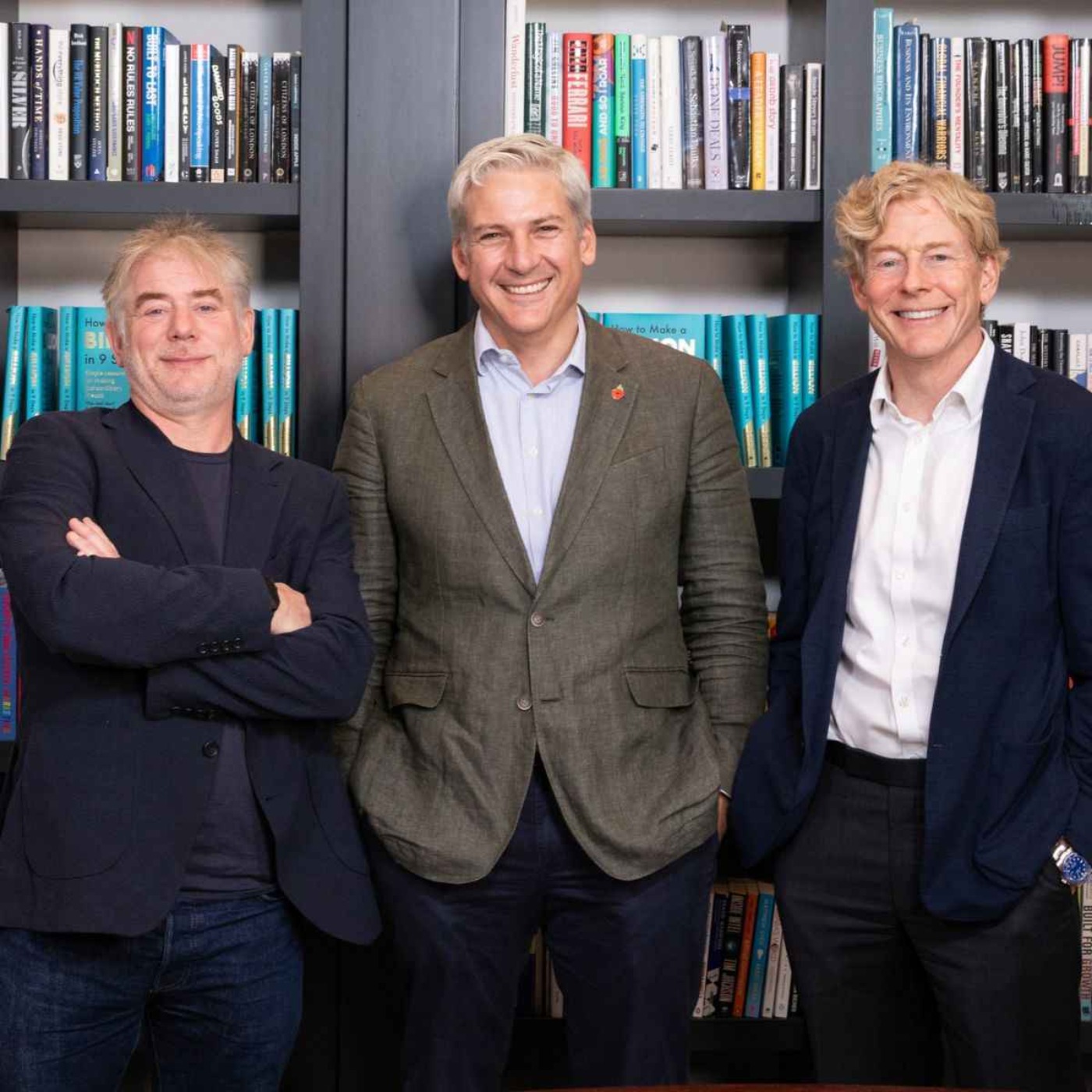

In this classic episode of the Business Leader Podcast, host Graham Ruddick interviews T.S. Anil, the CEO of Monzo, a digital bank that has grown from a startup to a major player valued at over £6 billion. This discussion delves into Monzo's transformation, the challenges faced during scaling, and insights into building a sustainable business model within the competitive fintech landscape.
Written by AI. May contain mistakes.

Get the gist, explore an idea or ask about something said.
 Claude
On The Business Leader Podcast with Sir Richard Harpin, what are the key points of this episode?
Searching your listeningAutomatic transcript. May contain errors.
0:00This is Britain's growth moment. Do you want to be part of it? On 26th of March, 750 of the UK's most ambitious founders, CEOs and investors will gather in London to shape the future of mid-sized business. The company's driving our nation's success. The Business Leader Summit 2026 isn't just another conference. It's a day built around the three forces that define growth, ambition, policy and capital. And as one of our valued podcast listeners, you can be there in person. To secure a discounted ticket, visit the events section of our business leader website and use this code. BLpodcast, all one word, all uppercase.
0:41We look forward to seeing you there. Because we're growing so quickly and the way that senior hiring works, by the time you realize you've got a gap, it's 12 to 18 months before you can actually fill that gap. And, you know, Muggins here ends up doing, to be fair, all of my senior team were doing more than one job, trying to fill the gaps but um that was the biggest problem for me that we didn't have the right senior leadership in place so i was working several jobs uh and so the conversation was always okay well we'll fill these roles we'll fill these roles but by the time you filled that role this other role of there the person who's doing really well at 200 you're now 2 000 people and the person's burnt out or you know not doing well and you have to replace them and so it was like whack-a-mole.
1:26That was Tom Blomfield, the founder of Monzo, talking about the challenges of scaling up the digital bank. He was speaking on the Diary of a CEO podcast. Blomfield stepped down as chief executive of Monzo in 2020. At the time, Monzo had millions of customers. It had grown rapidly since it was founded in 2015 and was one of a collection of exciting new fintech businesses in the UK alongside Starling and Revolut. But it had some problems. Monzo had lost£113 million in the last financial year, and according to an analysis in the Financial Times, it was yet to find a real business model.
2:19I'm Graham Ruddick and this is Business Leader, a podcast that takes a second look at big business stories. In this episode, we look at the story behind Monzo, in particular, how it has matured from being one of the most promising new ventures in the UK to a big business, one that now has 10 million customers, is valued at more than£4 billion and is profitable. T.S. Anil replaced Tom Blomfield as chief executive in 2020 after initially joining Monzo as the US chief executive. He takes up the story.
3:01So my first impressions about Monzo actually predate my starting in the company and really cut to the heart of why I was excited about joining Monzo in the first instance, which were that I had seen from the outside and in conversations with the Monzo team even before I joined an extraordinary culture which you couldn't make up. It was authentically driven by this incredibly big mission. It was customer centricity, building everything around the customer, was a very deeply felt belief in the company. and the tech stack, the initial tech stack, tech platform had been built and there was a version of magical sort of product market fit.
3:45The current account that Monzo had launched had captured the imagination of the country. Those were all things I knew before I joined Monzo and were part of why I joined Monzo. But to answer your question about what it felt like after joining Monzo, that whole set of things just got reinforced for me in a very deep way. My ability to actually talk with anybody in the company and really get a sense of the passion for building great products for customers, this deep belief in the fact that the mission we were pursuing was really what the company was about. The quality of product managers, engineers, designers, everybody that was building products was extraordinary.
4:29So all of those beliefs that I had before I joined just got reinforced significantly more in the first few weeks after I started. But of course, I also started at a time which was an unusual time for the world. This is 2020, right? Yeah, so I started at the end of February in 2020. So three weeks before lockdowns eventually hit. And it became an extraordinary time for the whole world, of course. And all of us, I'm sure, Graham, you have all sorts of early COVID stories about your life during those months as well. But it became a very challenging time for us as a company. And right in the middle of those first few weeks and the challenges, we also decided to do the big transition from Tom to me.
5:11And Tom left the company and I was flying solo after that. So the impressions of that time and the challenges we faced made me feel a couple of things. One, that the size of the opportunity was even bigger than I was expecting. So many more muscles we needed to build, so much more we needed to do that would make us be even more successful. That belief was only reaffirmed, but also the belief that we needed to get a lot done. A lot had been done up until that point. We were building on the shoulders of giants, but a lot more needed to happen. We needed to ship more products. We needed to build up the team in lots of different ways.
5:50We had scaled really fast. We were already at about 3 million customers when I started. And we needed to make sure that the controls and all of that stuff kept pace with it as well. We needed to raise capital. In a startup, capital is existential, as you know. And for a bank, it's that much more existential. So we needed to raise capital. So it was a challenging time. And in the context of that challenging time, it was this belief that, gosh, this opportunity is massive. Look at the impact we're making in our customers' lives. And we have the right DNA to go after it. and this belief that, okay, time to pull up our socks and get lots more done as a team and as a company as well.
6:30Was it always an idea that you may become the CEO? Was that something that emerged unexpectedly? If it was, it certainly wasn't in my head. I was joining because I wanted to be a part of building something and building it in the US was incredibly attractive to me because it was the opportunity to do something incredibly early stage and yet be able to start this two or three years into the journey of already having a tech stack and an initial product that had worked in the UK. So I didn't come in with that intent at all. But Tom is public about his decision and all of that, which unfolded just in days and weeks after I started.
7:09Yeah, it certainly wasn't the thing in my mind when I joined. So when it then became clear that there may be the opportunity to become CEO, was that something that you were instantly interested in or was it something, because obviously it wasn't just about becoming CEO. It's meant clearly that you're now here and not in the US as well. Well, so the context is important, right, for me to answer that question for you because this is the world in lockdown. I'm sitting in California because we've put the US business already on pause just days or weeks after I've started. I'm effectively helping in whatever way I can the UK business at Monzo.
7:42So it's all hands on deck. And because I have a set of experiences in some parts of this, right, I'm helping in whatever way I can. I start my day at 2 or 3 in the morning, every single morning, because I'm working UK hours. And that's the only unusual part of my schedule because everybody's working from their living rooms or kitchens or studies because the whole world is locked down. They've been talking March and April of 2020. So it's this whole surreal context. And, you know, when Tom and the board called me about this, so my first thought is, oh, but the business is in the UK. hey, this is not a job I can do from California.
8:18So I knew instinctively that this was the sort of thing I wanted to do. I understood the company enough and the opportunities ahead of us as well as the challenges that we had deeply already. I'd spent weeks in the trenches with the team. But I was a continent away. So there was a massive instinctive draw about the fact that, gosh, I'd love to be able to take this opportunity and really bring it to fruition. There was all sorts of personal things about, okay, so I need to move here. It's a family decision. It's not, it's my decision to, you know, up and get on a plane. But yeah, we made it work and I've never looked back.
8:56I was massively excited then about the opportunity and still feel that way every single morning. Before joining Monzo, TS Anil had spent 25 years working in the finance industry around the world for Citi, Capital One, Standard Chartered and Visa. but Monzo was a different business and a different challenge to these established companies. After joining Monzo, the first thing he sought to do was learn as much as he could about his new business. So we were all working crazy hours. As I said, it was a challenging time for the world and certainly for Monzo as well. So there was this thing about all of your muscles being used every single day.
9:39I needed to learn a lot, right? The context of the company, the people. Remember, I'm sitting in California. I haven't been in the same room as people in the company even, let alone, you know, having deep relationships with them. It's one thing where you go into lockdown, having worked with the same team for a few years, and the relationships exist, and then it's very easy to do it virtually. I was leading with a virtual relationship before having any version of a deeper relationship than anyone. So I had to learn people, learn the business, learn our story, learn what had worked for us, and learn the domain.
10:13I hadn't worked in a small tech company that was growing so fast. So I was learning every day from junior engineers in the company to senior colleagues on the XCO. So learning was a huge part of it. But it would have been easier in the context of saying, gosh, yes, just take the next two or three months to learn, and then we'll start worrying about the business and what we need to do. But that was not that luxury. I was raising capital the morning I started. I was required to make decisions on like a million different aspects of the business real time. So there was this need to sort of learn, change the wheels of the car and keep driving it really fast all at the same time, which is why it was exhilarating, challenging, fun, memorable in every which way.
10:56What did you learn? The reaffirmation about what Monzo truly is and reaffirmation of what Monzo can be was the big, big piece. by which I mean the opportunity, by which I mean how far we'd already gotten, what aspects of our culture, our technology, our product set we needed to build on and scale for the future. Also learned what new muscles we needed to build as a company. And as much as it sounds like a Monzo story, it's true for any small startup that becomes a scale-up and then becomes a truly big and successful company. that journey requires new muscles at every stage. So learning that, learning what's needed, that's new.
11:42Learning what to keep was a big part of it. And everything else, I'll just put in the category of domain, specific products, how are we doing things, what was delighting customers, what was not, what are the communities saying, what aspects in our technology need to be invested in more, all of that, I'll just put that in the domain category. You also learn a lot about yourself. in a journey like that. You learn about what you're doing, but you also learn about yourself. And any CEO's journey is about a mirror being held up to you every single day. Everything that you think of as a weak muscle or think that you need to develop and learn and grow more is visible to you every single day.
12:21And on the upside, muscles that you've built, things that you've learned to get better and better at also show up every day. So the personal journey is a big part of the whole trip. What did you consider at that time to be your strengths and weaknesses? So one thing I know I needed every single day was the power of conviction. Because the thing with any leader's role, and specifically in the context of a company that's growing as fast as we were and we are, is the need for conviction because everybody else is feeding off of your energy. Whether it is your team, whether it's external stakeholders like investors or regulators or the board, whether it is journalists that anybody that you talk to is effectively trying to tap into your energy try to test drive your conviction right so that that need is it is just something that you have to embody and fight so i know i needed that and through the best times and the hardest times that's kept me going so that was clearly you know i don't know whether i think of bit of the strength or not but I know that it was needed and and it was there.
13:32T.S. Anil has spoken about the opportunities he saw for Monzo but what about the challenges? At the start of this episode we heard Tom Blomfield speak about the challenges of scaling up Monzo and we've also heard that Monzo was being criticized for not having a business model. Unquestionably and but that's part of the journey of any company that's growing right I mean think about it this way to achieve big things and build great companies you need many things to be true at the same time you need this culture and this DNA and this deep thing that defines the company in our case that's the mission you need a business model you need to be able to operate effectively in the context of the competitive environment, the regulatory environment, and everything else, the setting that you're in.
14:27And you need many, many more things, right? I'm happy we were where we were, where the deep things about the mission, the technology, the way we built a connection with our customers, all of those things were very real. And building out the business model alongside was a better problem to have than legacy players who for sure have a business model, but don't have any of those other things. And we're standing at the cusp of the transformation of that industry because of that. Because legacy players have a legacy business model, but they don't have the technology to succeed. They don't have the connection with their customers to succeed.
15:00They don't have the mission or the will or the DNA or the culture that makes them want to solve those problems for customers. So yeah, I mean, I don't disagree with the coverage. We were a company that needed to build out its business model, but that's a better place to start than the alternate, I think, which is where the legacy industry is at. How important, just going back to your point about conviction was that central conviction that you could do all this and build out the business model at the same time to actually stand by that great question you know i said early on in the company i remember it was at an all hands or some other meeting i said a mission without a business plan is a bumper sticker it's a strapline anybody can write one but those two things need to come together.
15:41And so we've put a lot of thought and rigor behind that, which is building a business model that is consistent with the mission. And it's not an unsolvable problem. It's a difficult problem. It's not an unsolvable one. But if you get it right, the mission and the business plan reinforce each other. And here's an example of that. I mean, we knew that for us to really fulfill our mission, we needed to be sustainably profitable, because otherwise you're a flash in the pan that goes away right to really build something at scale the business plan was crucial to that and the more successful we are from a business plan perspective the more customers we can service and you know 10 million customers and you know hundreds of thousands of small businesses we can serve them because we are sustainably profitable but if you flip that on the other side of this as well how does the mission help the business plan is because the mission makes us focus on building products that actually solve customer needs.
16:38Our mission makes us solve them in a way that is fair and transparent. Our mission makes us price it in a way that we're not embarrassed about how we price. I can defend our pricing. Our mission makes us communicate to customers in a way that they understand the product and we'll make good choices for them. And therefore, we win when they win, right? And all of that, as warm and fuzzy as it sounds, is core to the business model. It results in what I'm describing as this disproportionate user growth that comes through word of mouth. It has enormous monetary value, as you can tell. In an industry where people pay 100 and 200 quid for every new account opened, that you can imagine what that value is to us.
17:17That's a massive commercial value as well. But it also makes customers engage deeper with us because that relationship is one where more products create greater deepening. And guess what? That's also good for the business model. So these two things I've always thought of as being symbiotic and reinforcing each other. So it's not an unsolvable problem. It's a difficult problem. There's lots of fast bucks to be made doing things that don't need a mission. There's also lots of things to say from a mission perspective that have no bearing on a business model as well. You have to sort them together.
17:48Two thirds of the new customers that Monzo signs up every month come from recommendations from friends and family, which is a striking statistic. Monzo has no physical branches, but this has not stopped it being ranked as the best current account provider per customer service in the UK every year since 2020. So how does Monzo think about customers and customer service? The tracking and measuring it is easy. There's all sorts of numbers which track it. Metrics like net promoter score, but also how customers use the product. How many customers are transacting weekly? How they're responding to the features in the product?
18:29Which features are they using? Which are they not using? So there's a whole number of quantitative, metric-oriented ways in which we understand that. But this is about more than that. It's about the soul of what we're trying to do. Our customer connection is one of intimacy. We build our products close to customers. Every product meeting builds on the customer insight, which could be because we did a piece of research with customers, we interviewed customers, we saw how they're using the app, or on a community blog post, which, by the way, is a treat to read, right? It's an engaged community that doesn't hesitate to comment on a product roadmap, give us critical feedback about how features in the app are working and what else they want.
19:12All of this contributes to this connection with our customers, which feels very, very deep and very, very real, in addition to the metrics and everything else that we can do. So these things come together at the soul of what this company is about and the metrics and the sort of more technical ways in which we track it and measure our progress and continue to get better and better at it every day. And the proof points for us of that customer connection show up as, as I said, the net promoter score, which is close to 7-0. The incumbent industry is sometimes negative. And if lucky, they get as high as the teens.
19:44right so that's the against that backdrop monzo's net promoter score at 70 means that it's not just an abstract metric it means customers are actually promoting us most of our user growth in any single month comes from users recommending us to their friends and family and that word of mouth growth is an extraordinary proof point for that customer connection it also shows up in how customers use our product, how engaged they are with our existing product, but how every new feature we launch, how every new product we launch has customers adopting it quickly. That trust is very, very real as well.
20:23You know, it's an interesting stat. Well before we launched our investments product last year, well, well before that, when we researched with customers in the UK about who they would like to buy an investment product from, Monzo made it into the top five and we didn't even have a product. So that trust, that idea that they believe that Monzo is going to do the right thing, creates a level of trust which is unparalleled across industries, let alone the world of financial services and banking. Monzo now has more than 10 million customers, as we have heard. But the traditional high street banks in the UK still hold 85 % of the consumer market.
21:06That shows how difficult and slow change has been, but it also shows the size of the opportunity that Monzo has ahead. I feel like we're just getting started. We're at the starting end of the spectrum, way, way far from the ending of this. 85 % of the market being with the incumbent banks tells you how much opportunity there is. With all of the success that we've had, one in five customers in the UK bank with Monzo now, there should be one in four, one in three. There's so many, many more customers to serve and many, many more financial needs to be met. And this is only in retail. Now you look at it in a small business context for SMEs, they are even more underserved than individual customers are.
21:52So the opportunity is enormous. The runway is enormous just in the UK. But our ambitions don't stop at the borders of the UK. We've been public about the fact that we're building out a strategy to enter Europe. We have a small team in the US building product for the American customer. And if you look at it globally, fintech, neobanking, digital banking, whatever moniker you want to put in this, is tiny. It's just getting started. So that's the exciting thing, right? For all that we can celebrate about the milestones we've hit, the journey ahead and the road ahead and the opportunity ahead just feels like insanely exciting.
22:25Why do incumbents struggle to stop innovation? I've heard you touch on this before, but the constant question that Monzo got in the early days was, well, the traditional banks will respond in the end. and they haven't been able to respond. They've tried and failed. And I've heard you touch on things like the tech stack that you've got, the connected customers that you've got. But inherently, why do incumbents find it difficult to respond to this sort of innovation? So it is that confluence of legacy tech, legacy business model, legacy mindset. Let me double-click each of those quickly. Legacy tech.
22:59So our technology spend is a fraction, and I really mean a fraction of what a typical large incumbent bank will spend in the UK. It's a fraction of that. And yet we get 10x the value of that spend. And that's because as technology has evolved, the new tech stacks give you the ability to do a lot more in very, very transparent ways. A stack like ours that is entirely microservices architected, that lives on the cloud, gives you so much better product flexibility product velocity that it's impossible for a legacy player that is sort of crushed under the weight of tech stacks that are mainframe oriented hard-coded software for over decades in some cases comes some cases longer than that mna where things just got cobbled together right the amount you spend just maintaining the current stack can kill you then you're on top of that you spend money just maintaining the stack for new changes that you're required to comply with, like a new regulatory change.
24:07And by the time you're done with that, the actual ability to invest in building new product and testing it on this old stack to make sure it's fit for purpose is near impossible. You take a stack like ours, and here's an example of a product we've built recently, which launched a few months ago, responding to a market need where impersonation fraud is becoming a bigger and bigger deal. Someone calling you and saying, hey, I'm calling from your bank and just give us this little piece of information and so on and so forth. Then accounts getting taken over and large amounts of fraud. So we built a tool which came out of a hackathon, by the way.
24:44And we launched this in weeks where it's a tool that if someone calls you and says it's Monzo calling, you can open your Monzo app and you will know whether it is Monzo calling you or not. And if it's not in the app, you can report it. and we block thousands of calls like that now using that feature that's for for another bank to be able to connect the dots between you know what someone calling on behalf of the bank all the way into the tech stack all the way into the app that the customer is actually holding in their hands near impossible how big a part of your job is saying no given all the opportunities and directions that Monser are going right now?
25:25It's a massive part of it. And, you know, balancing those things is not easy. But it's a massive part of my job. We've chosen, as an example, for the last few years, we chose to focus on the UK and not spread ourselves thin globally because we said what we're building here is a UK bank that can serve customers. We need to build this out to scale and earn the right to sort of dream bigger because our business model requires us to go deep with customers. It's not a thing, money transfer, sort of an app only. So we made that choice, difficult choice, right? In the context of players scaling across multiple markets in the tech world.
26:02So a big part of my job is saying no. But I also think that ambition and discipline get used often as opposite words, and they aren't. But I think it's possible to be incredibly ambitious and be incredibly disciplined at the same time. because being ambitious means knowing that you want to take on the large opportunity that you see in the market take on millions and millions of customers discipline means doing it in a way that roadmaps is effectively that sequences this right that makes sure that you don't burn cash because because capital is cheap it means that you build a real pnl it means that you invest in the real things that matter i.e build a great product before you just sort of fuel a mediocre of product with marketing and so on and so forth.
26:48So, you know, I think it's possible to be terribly ambitious and terribly disciplined at the same time. How big is the challenge still to get people to make Monzo their main bank account? Is that something you're still having to do a lot of work on and what are the latest numbers on that? Sure. So, I mean, the main bank percentage, right, has doubled in the last few years and is continuing to grow. So I think we're on an enormous trajectory there. And it's just one of the many metrics in industry track engagement. I told you about weekly transacting users, network models. There's lots of ways for us to track that.
27:21Main bank matters in that what we're looking to build is a financial control centigram, a single place where people can meet all of the money needs in a single place. And main bank gives you more license to meeting more of a customer's needs. And that's the reason we obsessed that metric and are continuing to grow it. It's interesting though that the legacy industry doesn't necessarily care about it for the same reason. for a legacy bank because the cost to serve is so extraordinarily high. And I say cost to serve, even though recognizing that they don't serve at the same standards that we like to serve our customers.
27:55But the cost to serve is so high that you need to make sure that you have a primary bank relationship to actually be able to pay for that. When you're a tech company like us, the cost to serve because it's so technology driven is so much smaller than that, that even customers that start out their relationship with Monzo, with a single need, right? We're their second account, right? They use us for travel and for pub spend on Thursdays. Fine, bring it on, right? Let us earn your trust. Let us, you know, come start with that. Let us help you see the magic of Monzo and let us meet more and more of your needs after that.
28:29And it works for us. You kind of answered my next question was, does it matter to you? Does it matter to you if someone gets their salary paid into one bank account, but then moves all of their spending to a Monzo account and that's what they used to spend? And yeah, I mean, I welcome that custom every day of the week, right? That believes that they already have an account and want to start by trying us out and then deepening it with time, for sure. Absolutely, bring it on. And sometimes, you know, people have a relationship where their salary has been going into a particular account for a long time.
29:00That's fine. T.S. Anil grew up in India. He actually wanted to be a doctor when he was growing up. And he also loved writing. But after university, he joined the graduate scheme of Citi, the US bank, and that set him on his career in finance. When he was appointed the chief executive of Monzo, he was the only boss of a UK bank who wasn't white. Yeah, that's exactly right. It's interesting. You know, when you grow up in a country where everybody's some shade of your colour, you define yourself in lots of ways. but thinking of yourself as a person of color isn't one of them right because everybody looks around you looks like some shit approximating you um so it was never it was never part of my identity growing up um when i moved overseas outside of india and lived and worked in different parts of the world those other more visible aspects of my identity right were things that would stump me from time to time when i took the monzo role that was not in my thinking at all that oh, so, you know, I'm a brown person now getting the privilege of doing this job until someone pointed it out to me.
30:12And what that left me with was the sense that, you know, whether it's an important part or not of my identity, the fact that it is a representation to someone and that comes with the responsibility of recognizing that and appreciate that, you know, for someone else, they're seeing this as a non-white person getting to do a role like this and it's a first or whatever else it means to them. And that's not something for me to take lightly. Their lived experience is different. It has more meaning to them. And it comes with the responsibility of therefore living up to that, and it's great. Having traveled around the world, when you came to the UK, what did you think of the diversity of both the senior levels of business, but further below?
30:53Were you struck by a lack of diversity, impressed by the diversity? What were your thoughts? at Monzo I was struck by the extraordinary amount of diversity in visible and non-visible ways it's also not something we take for granted there's some places where we feel we need to do a lot more some places where we feel like we're doing doing well so at Monzo I was I think I was struck by how diverse we we already were and how much we cared about continuing to move that ball forward across the industry I remain struck by the lack of diversity at senior levels I mean, it'd be impossible to answer that question any differently if you just looked at a room full of CEOs.
31:36It is striking that in 2024, it is still shockingly not very diverse and not representative of the broader population, not representative of the profiles of people in the company. So, I mean, all of that is not my sort of unique aha impression. It's just a fact. It's a fact. Yeah. UK is a place to do business. It's coming for a lot of criticism. How have you found it? I mean, the fact that we're here at the scale we are at and the way we're growing and the value we're creating is a proof point that the UK is a great place. This was a regulator that approved tech companies like us to become banks.
32:15This was a context where we've been able to build a business of this much scale and profitability. So I don't agree with that overall assessment. Now, is there more that needs to be done? Absolutely. We've been public about the fact that we think there needs to be much more proportionate regulation. There needs to be much more, you know, to help companies continue to scale, not just get started. We need to make the capital markets more efficient and so on and so forth. So lots needs to be done. But I think the trajectory is great. How important has this industry been as an ecosystem that pushed you all on and helped you all to grow?
32:49I mean, I think we've both been products of the ecosystem and creators of the ecosystem. if you look around at the impact that monzo has had on the tech ecosystem in the uk and the number of companies that have been birthed by ex monzo employees and so on you get a sense of how important we are in the ecosystem and how much we're actually contributing to it which is kind of you know what you'd expect i mean silicon valley is a story of ecosystems being created out of companies that scaled and succeeded and then sort of spawned many many more around it spawned the rise of venture capital and so on.
33:27So I think the UK lags where Silicon Valley is today, where the US is today, but it's on that trajectory. And you get asked this question a lot, but I'm going to ask it as well. When and will you float? I'm going to answer it the way I answer it, which is that we will make a great public company one day. There's going to be a time for us to do it. I think it's too early to speculate on that. We want to make sure we can scale the business and take a great story to the public markets. We'd be excited about doing that. Yeah, if you haven't decided the when, deciding the where is way, way too premature.
34:03You've been listening to Business Leader with me, Graham Ruddick. Our producer is Anushka Tate. If you enjoy the Business Leader podcast and find it insightful and useful, please visit businessleader.co.uk for much more content and for information about how you can become a Business Leader member.
34:29The Business Leader Summit 2026 is set to be bigger, bolder and more ambitious than ever. Don't just watch Britain's growth story unfold, be part of it. Secure your ticket today by visiting the events section of the Business Leader website and using the code BLPODCAST, all uppercase. It's your chance to join the leaders who are shaping the future of business.
You asked, we delivered. Our fantastic Business Leader audience is growing fast and you have been asking us to share our favourite episodes from the back catalogue. So throughout August we will be doing just that and re-publishing some of our best founder and scale-up stories.
This episode on Monzo is a classic scale-up story. How do you turn a popular consumer brand into a business that actually makes money? Graham Ruddick met TS Anil, the chief executive of Monzo to find out. Under his watch, Monzo has gone from a loss-making business into one reportedly working on a stock market floatation that could value the digital bank at more than £6bn. As TS Anil says: "A mission without a business plan is a bumper sticker. Anybody can write one."
Hosted on Acast. See acast.com/privacy for more information.