
 Ask ChatGPT


 The Business Leader Podcast with Sir Richard Harpin
28 Jul 2026 · 51m · 18 chapters
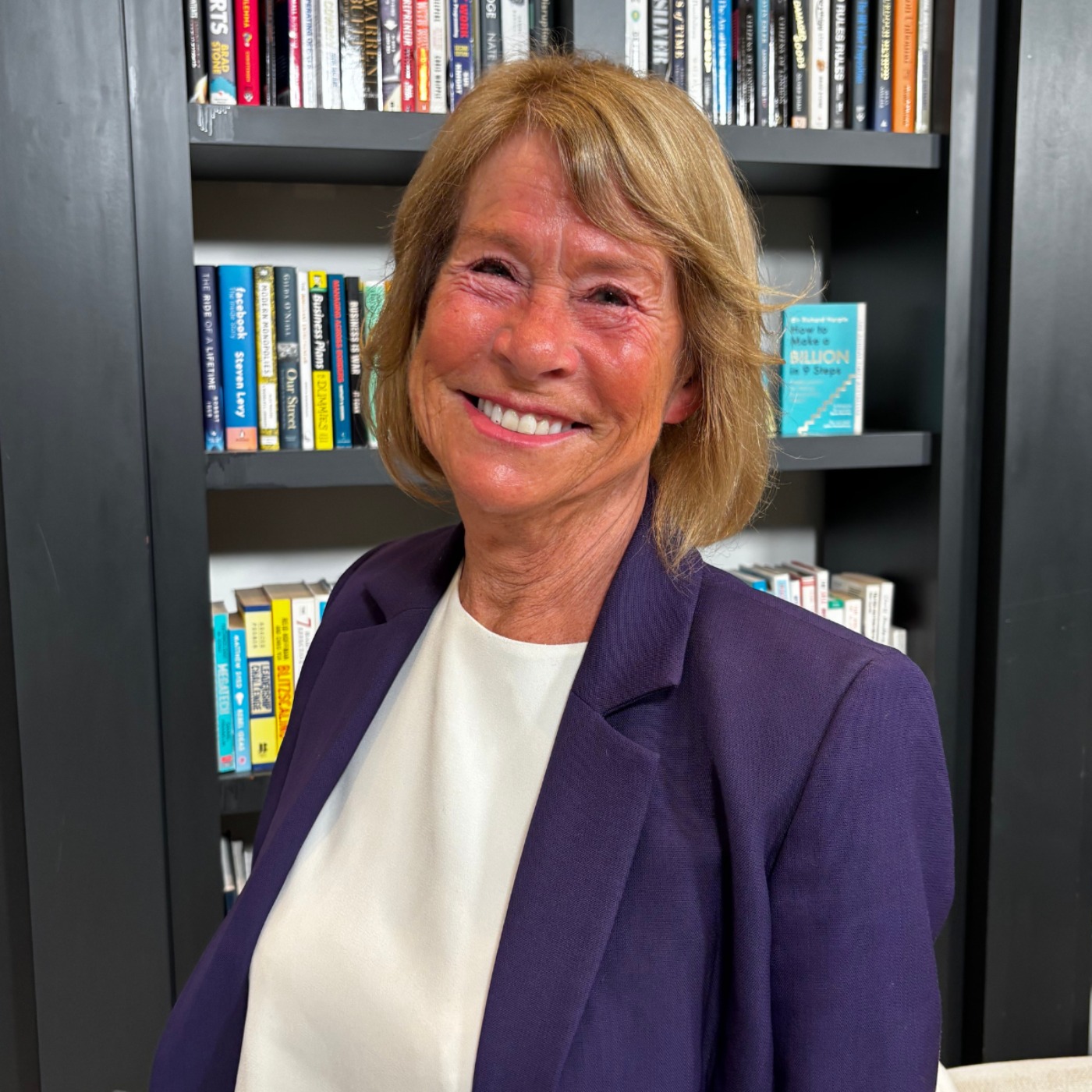
How Dame Irene Hays built Hays Travel into a UK-leading independent agency (over £3bn annual turnover) without taking on debt, and how she navigated two shocks in 2020: Thomas Cook’s collapse (Sept 2019) and her husband’s sudden death during COVID (Nov 2020). She explains her “golden thread” culture (SMILE values), fairness in targets during crises, and growth via acquisitions plus an “Independence Group” back-office model for smaller travel businesses.
Dame Irene Hays, CEO of the UK’s largest independent travel agency, formerly a senior public servant (chief executive of two councils, Permanent Secretary in Whitehall). Richard Harpin is the interviewer; he previously sold HomeServe for £4bn.
Hays Travel has “never one penny of debt” in 46 years; objectives are short-term (36 months) while values/culture stay constant; acquisitions are debt-free and avoid “trophy” unprofitable locations; AI plus human/emotional intelligence will drive future service.
Thomas Cook retail estate acquisition (555 stores) via KPMG process; offering jobs to nearly 3,000 staff; giving all employees £100 per year of service after turnover hit £3bn; printed “Best of Touring” catalogues measured by response rates.
Written by AI. May contain mistakes.
Dame Irene discusses the challenges faced during the pandemic and her husband's passing.
“But in November 2020, in the middle of a global pandemic that had brought her entire industry to its knees, her husband died, her business partner of 40 years, suddenly with no warning and no transition plan.”
Irene shares her journey from public service to building Hays Travel.
“And because we had no money, he wanted something where his dad, who was a joiner, could help him fit out whatever the business was.”
Discussion on the importance of values and culture in business success.
“business we came across was the fact that we needed to be licensed by ABDA, the Association of British Travel Agents.”
Irene explains how to adjust business objectives based on market conditions.
“And was a people bit a key part of your role as well as the database decision making?”
The story behind Hays Travel's acquisition of Thomas Cook's retail estate.
“Because if you take the recent past, for example, thinking about the Middle East, the expectations of our people cannot be the same when they're cancelling out.”
Learn how Hays Travel managed to acquire Thomas Cook without incurring debt.
“I had no personal experience of it but KPMG obviously had.”
Discover how Hays Travel instilled its culture in the newly acquired workforce.
“there's some benefit in branding but in this day and age, the best way to enhance your branding is social media or digital and increasingly AI.”
Understand the importance of employee appreciation and retention in business.
“where did you buy a holiday from but that is transforming isn't it three thousand pounds for some of those people that had worked in the business for a long time and that can make a big difference.”
Examine the balance between retail presence and online services in the travel industry.
“We take it personally when they're successful.”
Learn how Hays Travel managed customer care and staffing during the pandemic.
“During COVID, we looked after our customers really, really well at significant cost to the company.”
Discover how personal tragedy and business challenges shaped Irene's leadership.
“So John died in the November, the 13th of November of 2020.”
Understand how mentorship and feedback contribute to personal and business growth.
“But the added benefit of all of those non-executives, I've talked about most around artificial intelligence, they all don't just mentor me.”
Explore the role of acquisitions in enhancing Hays Travel's growth.
“and it would have been better if you'd sharpened your answer on this.”
Learn about the impact of apprenticeships on young people and business success.
“So for me, it's not a breathless thing to do.”
Discover how Hays Travel impacts the North East and the importance of local hiring.
“I know that the success of his travel over the last 15 years in the social, digital, YouTube, media, now, Instagram, TikTok, is down to the fact that we have hundreds of young people who just get it.”
Explore the challenges and strategies for hiring top talent outside major cities.
“Absolutely don't need a presence in London or the South East.”
Learn key leadership insights and financial management advice from Dame Irene Hays.
“how do I become as big as Hayes Travel one day in my sector?”
Dame Irene discusses the significance of having passions outside of work, especially football.
“If you have those four pillars, you can lead a happy and fulfilled life, I think.”

Get the gist, explore an idea or ask about something said.
 Claude
On The Business Leader Podcast with Sir Richard Harpin, what are the key points of this episode?
Searching your listeningAutomatic transcript. May contain errors.
0:00We have never had one penny of debt in 46 years. Every business needs to be crystal clear about what they stand for and what they're trying to achieve. It isn't just what you've delivered in terms of what your role is. It's about how you've delivered that. Have you been innovative? Have you suggested ways in which Hays Travel can get better and better? And I believe that the successful companies in the future will harness the power of both artificial and human intelligence. I know exactly when I'm going to stop learning and it'll be the day that I die. My guest this week is the chief executive of the UK's largest independent travel agency.
0:40She turns over more than£3 billion a year and has never taken on a penny of debt and has made multiple acquisitions in the last five years alone. But in November 2020, in the middle of a global pandemic that had brought her entire industry to its knees, her husband died, her business partner of 40 years, suddenly with no warning and no transition plan. She woke up the next morning as the sole leader of a company with thousands of people depending upon her. An industry in freefall and a balance sheet hemorrhaging£11 million a month in losses. Dame Irene Hayes didn't just survive it, she built Hayes Travel into something even bigger.
1:28Dame Irene Hayes, welcome to the Business Leader podcast. you spent decades at the top of public service chief exec of two councils in the at the north of England permanent secretary in Whitehall what made you leave all of that and join a travel agency business well I didn't really join it I grew up with it and my husband John was looking at what sort of business he would like to start up in Seeham in County Durham. And because we had no money, he wanted something where his dad, who was a joiner, could help him fit out whatever the business was. And we had a real dilemma about the business either being an undertaker's or a travel agency.
2:17And thankfully, we went the travel agency route. I think the conferences would be significantly different and um but it was only one shop and in the first instance it was in the back of john's mum's babyware shop and um he started selling butlands and pontons and exotic trips to york and edinburgh and um and then we wanted to branch out to to sell foreign holidays but it was very, very small business. It turned over£812 in the first year, but it was a part year. And what year was this? It was in 1980. When we tried to start selling foreign holidays, the first big barrier as a business we came across was the fact that we needed to be licensed by ABDA, the Association of British Travel Agents.
3:07And at the time, 46 years ago, they had to come and inspect the premises. Inspect it, they did, and wrote us a letter and said, no, you can't have a license because you're not a proper travel agency. You haven't even got your own front door. And we typed a letter back and said, is that the only reason? Because it's come to our attention that there is a shop in London called Harrods, and in the back is a travel shop called Thomas Cook. Could you please explain the difference? And they said, okay, all right, then you can have a license. and the rest is history. But because it was a small business, I had a parallel career and I was working my way up the structures within local government whilst having my children, but have always been involved in the business, particularly around the employment of young people and other areas of the business.
4:03But John ran the business for a significant period of time And then obviously when I retired from quite tall, I worked in the business full time. And that was 2012. That's right. How important was it to have been successful at a high level in public service in terms of, was that really your business school training that could mean that you could help step change the growth of the business with John? I think we brought different things to the business. And in terms of travel in general, it's the biggest industry in the world. And it's really important to be current. And I was accustomed to providing evidence-based decisions in Whitehall and doing a lot of research.
4:54John was accustomed to going with his guts and making decisions. And I think we were a pretty good combination of the two. Working at a senior level, I think many of the issues which are really important to running a good local authority or a good government department are exactly the same as running a good business. So if you were to do a Venn diagram, the commonality would be much bigger than any of the differences at the margins. For example, people. People are crucial and fundamental, whatever you're trying to operate. And the more attention we pay to people and give them the tools and skills to be the best that they can be, the better the outcome will be for the customers or the residents.
5:44And was a people bit a key part of your role as well as the database decision making? Definitely. In terms of the culture of the organisation, I talk a lot about a golden thread of every business, no matter how small, really needs to be crystal clear about what they stand for and what they're trying to achieve. I call it the golden thread. So we started, we changed the language a bit, but not the spirit of our vision. And the vision is to be the most profitable independent travel agency in the UK through valuing our people, our customers, and the communities where we operate. And then flowing through from that, we have a set of values.
6:33And the values are a mnemonic of smile. We use the language smile a lot in Hayes Truffle, and we do a lot of it. And it's supportive, motivational, innovative, loyal, and excellent. So it's really around having a clear purpose and some objectives, and then values that everybody buys into. How do you make sure that in such a large business by number of people that you're employing today, that they know those values and the purpose? It's really important that everybody, and I mean everybody, whether they're coming in as FD, my FD worked with Duncan Bannatyne at Bannatyne's Gyms and Mike Ashley at Sports Direct, and now he's got me.
7:17and he as well as every young person who starts in the company goes through an induction so people are crystal clear about what the expectation is and what the your language is what the purpose of the organization is so um and that that you don't just say that once but every time we do a performance appraisal once a quarter. It isn't just what you've delivered in terms of what your role is. It's about how you've delivered that. Have you helped others to achieve? Have you been part of a team? Have you been innovative? Have you suggested ways in which Hayes travel can get better and better? So yeah, I believe that that's true whether you're making jam or running a butcher's or running a small business or a big business being clear about what you're trying to achieve and in my view how to touch on your point about objectives objectives are more short term so i would say the the values and culture are at the heart of the business the objectives might change depending upon you know when i worked in housing you would have a 30 year investment time scale in his travel and we never look further than 36 months because it's so volatile but so the objectives to take the um the golden thread people are clear that for the next two three years we're going to focus on long haul we're going to focus on touring we're going to focus on this demographic and these half a dozen things are what we're going to do in the short term and those financial objectives will be updated annually as part of that three-year plan or how does that work?
9:06Well, more than annually, yes. Because if you take the recent past, for example, thinking about the Middle East, the expectations of our people cannot be the same when they're cancelling out. We're up to nearly our 20 ,000th amendment or cancellation. It's not fair to expect people to achieve the same financial objectives. Therefore, whatever is timely, in a perfect world, it would be once a year. We generally revisit our numbers and our financial objectives every six months. But if you have a crisis, you need to understand the implications of giving targets to people when it's not possible for them to achieve in the interests of fairness.
9:53I'm Richard Harpin, a Yorkshireman who sold my company, HomeServe, for£4 billion. and this is the Business Leader podcast where we look at the stories and the strategies behind modern businesses. I'm passionate about helping British businesses scale and succeed. I think it's the key to unlocking Britain's economic growth. Founders and CEOs at mid-sized companies can be members of the business leader community for coaching, peer-to-peer forums and exclusive learning events. So do get involved. sign up to our weekly newsletter at businessleader.co.uk slash newsletters it's free and it helps us grow the community so then together you grew the business for seven years together and then something big happened I think in 2019 didn't it oh yes yeah I mean we we we've grown the business through um organically opening a new shop where it was a hairdresser's or whatever beforehand or acquisitively up to a sizable business, about 1.1 billion.
11:05And then in 2019, unfortunately, on the 23rd of September, Thomas Cook failed. Now, Thomas Cook was a fantastic brand and it had great people and the failure was not their failure. They were well-trained and very good at what they did. And we saw an opportunity in the first instance, probably to, we were predominantly the Northeast leads and a little bit of Scotland. And then we saw the opportunity to perhaps colour in the edges. And then every night we'd sit around the kitchen table and we heard from the cabinet office, there was a process which was being run by KPMG, where we would have to put a bid in and submit what we would like to do with those parts of the business that we wanted.
11:55So this was the retail estate only and it was 555 stores. And how many did you have at the time compared to those? 190. So this was a big, big deal. It was a big deal. And as the days went on, and it was literally days, You couldn't do full due diligence the way that we would do. You know, whenever we acquire businesses, we go through a process. It was just not possible. So we had the information which was available from KPMG. And as the days went on, we kept thinking, perhaps strategically, it might be better for KPMG, the government, and definitely for the people who we were concerned about in Thomas Cook.
12:39if we took all of them under a license to operate, which they had to give us because we couldn't do the due diligence and we didn't know which ones would be successful. We didn't know which ones were in the wrong part of town. So on the 8th of October, we'd put our bid in and I received a phone call from the guys at KPMG at 6 o 'clock on the 8th of October to say, we're going to announce at 9.30 in the morning that Hayes Travel have just acquired the retail estate of Thomas Cook. How did he feel? Excited, worried, responsible, a mixture of emotions really. But it had been a very newsworthy, the collapse of Thomas Cook had been newsworthy.
13:30One funny thing was that I had a friend who worked in PR and she was called Susan Weir. and I said to John, you know, I think there might be a bit of newspaper interest about this. And he said, do you think so? I said, yeah. I said, I'm going to give Susan a ring and see what she's doing tomorrow. So I rang and she said, I said, we're going to make a newsworthy announcement. We think it will be. And she said, what will that be? And I said, that we've just acquired the license to operate Thomas Cook. And she went, yes, Irene, I think that might just be newsworthy but it was it it was a responsibility and and we then went on to offer um just short of 3 000 people jobs and and that was joyous and joyful that would have otherwise have lost their jobs and had anybody else done that license to occupy model previously and how did you how did come up with that structure?
14:30I had no personal experience of it but KPMG obviously had. I don't know which industry they had, I just don't know the answer to that. But it was a fair model giving us the opportunity to look at which were profitable and which were not. But in the meantime we needed people to be able to get those stalls open as quickly as possible to take care of those customers who had already booked their holiday with Thomas Cook. And unfortunately, many of the Thomas Cook employees had gone on to get other jobs as well, because they weren't certain that someone was going to step in. What had Thomas Cook done wrong that you were doing right that got them into that terrible position that the UK travel agency business needed to be rescued?
15:22Debt was the answer to that. Too much debt. And it was necessary for them to pretty much ensure that they sold more holidays than we thought was actually achievable in order to pay down the debt. in haste travel. We have never had one penny of debt in 46 years. And we did the Thomas Cook acquisition without taking on any debt. But it's not my specialist subject, but I guess you would call it overgearing. And there were some locations, I think, that just were inherently unprofitable that you needed to walk away from. Oh, yes, especially the trophy locations. Bond Street, you wouldn't like to pay the rates.
16:18And we were a Northeastern company who looked carefully at what the costs would be before we embarked on that. And we don't do vanity projects. We're a very simple, straightforward company and are to this day. And some of the rents that were being charged. and this is a I don't know about the mentality of other companies but the way we look at it is to say how many holidays with what profit would it take us to pay the staff and clear the charges that was not possible, they would have had to sell probably a hundred times the holidays but I suppose there's some benefit in branding but in this day and age, the best way to enhance your branding is social media or digital and increasingly AI.
17:12You've got a very clear culture and values that we've talked about. How did you manage to instill that in the 3 ,000 employees that you'd suddenly inherited? Well, again, we went back to talking about who we were and what we believed in. And in the very first videos to all of our people, we talked about how important the values were to the organisation and how we would look after them. You know, they didn't know us. So the first thing to do was to make them feel safe. If you think about Maslow's hierarchy of needs, the base hygiene factor is, you know, making sure that they've got a contract of employment.
17:54They know how much they're going to be paid and when they're going to be paid. They know who their boss is, what they look like. And in November, we have an overseas conference. And you know, because you were kind enough to come and speak to my entrepreneurs and others. The conference is held in November every year, and we've done it for 35 years. And I had the opportunity to take as many managers of the Thomas Cook stores as I could. Now, it was only a month later and many of them had family commitments and couldn't go. But in terms of understanding our culture, there is nothing like standing up with a group of people and telling them where we're off to for the next 12 months, what their role will be, and then having a few drinks and a dance in the evening and then repeating that.
18:49And they get a sense of whether or not they believe you're authentic or not and um so the first thing culturally was to go back to explaining what his travel was all about and not just the what but the how we do things around here and how we do things is that we are agnostic about how senior you are in the company um the the most the most important thing is that everybody in the company whether or not they're um helping us keep our officers clean or they're the chief operating officer they are valued because the work that they do is really important otherwise they shouldn't be paid a salary so for example last year we turned over 3 billion and we gave everyone in the company 100 pounds for every year they had spent working for Hayes Travel irrespective of how senior they were in the organisation and we have a lot of people who've worked for us for 30 years who were just overcome with emotion and one lady when I was getting in my car at the end of the day when I'd done the announcement she said you cannot believe she said I have never had that amount of money in my hands and in one go it's just going to transform my ability to take my kids on holiday but it just I think where did you buy a holiday from but that is transforming isn't it three thousand pounds for some of those people that had worked in the business for a long time and that can make a big difference.
20:38Well, it did in practical things and it might be, you know, paying off a bit of debt, might be taking the kids on holiday. The biggest thing it did though was to make them, I hope, feel valued. And I talked about SMILE and the L stands for loyalty. And, you know, We spend a lot of money, I think whatever industry, in recruiting the right people. So caring for them and nurturing them and making sure that they stay in the business has a financial value. This isn't soft, fluffy, cultural. This is making people want to stay and work with an organization because it values what they do in terms of their output and the contribution to the aims of the business.
21:26but also who they are as an individual. I spend as much time talking to the people who clean our offices on the stairs, talking about football. We talk about whatever it is we've done at the weekend, as I do with the senior team, categorically. And I really do think as a senior leader. It isn't just about keeping your eye on the bottom line, because if you don't keep your eye on how happy your people are, it will impact your bottom line. This is also about having a very clever business model, isn't it? Because it's not just an employed model. You have a business called the Independence Group. We started the independence group 27 years ago when a chap who was selling walking holidays found that as a small business, he couldn't cope with all of the statutory requirements and financial requirements and be successful at what he was doing.
22:35and he came to our home and had a cup of coffee and chatted about the pressure. And first of all, we were going to get some of our people to go and work for him part-time. And when we were talking about it, we thought, well, why don't we sort of bring him into the family, let him do what he's good at, and we will provide the back office. So today, the independence group comprises 124 businesses run by sometimes an entrepreneur, sometimes a family. They range from about£1 million turnover to about£200 million turnover. And they do what they do really, really well. And here's trouble, then gives them the economies of scale of supplier purchasing.
23:26It will help them with the regulation, the legislation. It will help them with advertising, social media, with websites. And as companies grow, they need different levels of help and support. But I think what every small business needs is someone who has their back, who just will look after them in the tough times. And fortunately, and fortunately, our balance sheet is very, very strong. And we are able to help people if they want to grow. The whole point is that we want them to retain what made them successful in the first place. Bad entrepreneurial spirit, but with the backing of a much bigger company.
24:15Yeah, who cares about them? Yeah. And that's basically what we do. We care. We take it personally when they're successful. I'm a big believer, Irene, in bricks and clicks. You can have an online business and retail stores. Yeah. Do you believe the same? Is there still a role for retail stores in a digital world? Yeah, I think we've been asked that every year for the last 30 years. Why are you still investing in the high street? And I believe that it's definitely changed. If it's a straightforward transaction now, if somebody knows which hotel they want to go to, and they know that it's in Mallorca, and they know they want to go for seven days, and they know they want to fly from Manchester Airport, that's transactional.
25:07and not everybody but most people can manage to do that on their own. Increasingly our focus is on long haul, on cruise, on experiential travel or more expensive travel where people have an emotional connection. If you are going out for a silver wedding and you are spending a lot of money and I don't believe I know that people want to know who they've given their money to they also want to know that if anything goes wrong with that holiday then that person will look after them and and and probably be already trying to resolve their holiday by the time they're making a call to say i'm stuck in dubai i'm supposed to be going on to mauritius or the maldives and my flight's been cancelled and we would generally say we know if you can go to gate 14 you're going to go via a different route um is that okay with you and generally people are just so relieved if you were booking online the likelihood of you getting the same person on the phone on a chat room or you'll be speaking to a chatbot via artificial intelligence and there's a role for that you know i'm not naive um and last year one of the businesses i bought was the second biggest online cruise, totally online.
26:34So I'm not breathless about the high street. I just do believe with the emergence of artificial intelligence, increasingly human potential and emotional intelligence is what we need to marry the two. So I believe, I'm an enthusiast about artificial intelligence, just appointed to my main board, Wilson Gusenpour, who is main board director for the Kingfisher Group, responsible for artificial intelligence, because I didn't think we had enough challenge around that. And he too sees that to have that marriage of the two is incredibly powerful and that artificial intelligence will actually enable the human being to do the job better.
27:24And roughly what's the split between the online business today and the store-based business? If you take it all together, all of the businesses that we have, that's not the only online business, and I've got investments in a few as well to see how they develop. But I would say, I don't know precisely, but it's still dominated by retail. So if we were to say 40, 60, and it fluctuates. So at times, such as the Middle East crisis, more people were coming to travel agents because they'd had difficulty getting responses online. During COVID, we looked after our customers really, really well at significant cost to the company.
28:12We lost money during COVID. If you bear in mind, we'd just taken on nearly 3 ,000 extra people. And 12 weeks later, you couldn't sell a holiday anywhere in the world. And so I think I clearly believe in the high street. And I believe that the successful companies in the future, in the service industry, not every industry, will harness the power of both artificial and human intelligence. And what about the role for paper, printed catalogues, direct mail? Does that still play a part or not? It absolutely does. And it's so costly relative to social media. And our marketing people keep saying, you know, the cost of doing this.
28:56But we measure the return. So if you take touring, for example, we have a product team who put together a product around touring. So if you want to walk in Peru or, you know, you want to do something different, experiential, bringing that to life in printed media is really really powerful so the publication is called best of touring and we measure how many copies obviously we have delivered to households and we measure what the response rate is on the offers and sometimes we look at it and say well I don't really want that one can you do me another one so it doesn't capture everything but yes the return from printed media for his travel is huge hugely important and a really important part of the mix but it is more costly than social and digital but we know that it works in summary a lot of people who go through either a business crisis or a personal crisis can come out the other end stronger and those businesses can grow and you experienced both of those Irene when Covid and then a personal tragedy all in the same year it was it was all in the same year and it was a very difficult knowing that you're losing million pounds a day every day when you wake up in the middle of the night and you make a cup of tea, but you've got somebody next to you and you make them a cup of tea and then you chat about it and try and go to sleep again.
30:44It's a whole other thing. So John died in the November, the 13th of November of 2020. And we were still, obviously, the world wasn't open then. So then I was waking up still thinking with a cup of tea, but not being able to have the challenge and dialogue that you have. But do you know, Haste Travel is populated by fantastic people, many of whom started with us as apprentices. And it is those people who got Haste Travel through that. And when we acquired Thomas Cook, I had one particularly poignant letter from someone who offered a job and she said, thank you so, so much. You haven't just given me my dignity back or my pride back.
31:37You have given my children their mother back and I will repay you. I will repay you. and boy repay his travel they have the people um who joined us from thomas cook the people who joined us from all of the other companies because we kept them in employment we had to let our foreign exchange people go which was probably the worst day during covid but that was a relatively small number and we kept those people who were able to help our customers change the holidays and so but but serially that you know we're only i think in the travel industry two or three weeks away from whatever the next disaster is so we've lived through ash clouds volcanoes tsunamis um covid um you know political insurgencies in certain parts of the country and i'm just waiting for the swarm of locusts so it became more lonely without john but you've got lots of people in the business and um over the years have you ever had a a mentor or a business coach or you talked a little bit about the non-execs on your board the answer is over the years i've had many mentors for different reasons particularly if there was someone i i admired and they were better at doing something than I was um and and generally when the thing about a good mentor is that you go in wanting one thing and you come out with six of it because whilst we all try and be self-aware um and think that we know which bits were really good at which bits were not so good at you'd go in and think I thought I was really good at that and maybe it turns out I could could have been at on site better um so all all of my non-executives so i have ex retail director for marks and spencers main board director on my board i have um joris musker who was vice president of celebrity cruises who launched the biggest cruise ship in the world because uh cruise is a core objective for the next three years because it's absolutely exploded and now cruises for everyone families all the people having uh more time on their hands but cruises now for younger people very much families and and joe so as one should when you when you populate aboard um whether you're a small business or a big business it's i think it's really important to make sure that you get the skill set for where you want to go to next, not people who are going to make you feel comfortable.
34:31But the added benefit of all of those non-executives, I've talked about most around artificial intelligence, they all don't just mentor me. And the mentoring situation is perfect in a board situation because you can ask for feedback and say, how did I do? I found that really uncomfortable and you asked really challenging questions. And they say, well, it would have been better if you'd had these numbers with you and it would have been better if you'd sharpened your answer on this. And I think anybody who wants to get better all the time and I know exactly when I'm going to stop learning and it'll be the day that I die.
35:18Even if you've been quite good at something, it's so easy to slip back. And if you haven't got those checks and balances, how do you know that you're consistently being the best you can for the people in that organisation? So the answer is yes, with bells on. I would take feedback. I would take feedback. what's the role for acquisitions to enhance growth and you've done some other acquisitions after the big thomas cook one why do you need those as well as organic growth i suppose if you take everything should follow the objectives of the business and the objectives of the business I've talked about cruise and longhorn touring there are other people in the sector who are better at that than we are were we've caught up quickly and we're generally number one in the UK around many of the mainstream cruises but take luxury cruising for example four of the 11 acquisitions I've made recently are absolutely in accordance with the priorities of the business because people were doing it better than us and i don't know whether that answers the questions but the acquisition strategy has to be based on clarity about what you're going to do next and what sort of businesses you require to help you to get there so the cruise online business i bought cruise.co.uk OK, second biggest online agent will support crews and in a place where they are more knowledgeable and more successful than we are.
37:08We have online, they're better than us. So for me, it's not a breathless thing to do. It's a really clear, just be clear why you're doing this. Yeah, and you need to do both. You're a big believer in apprenticeships. Hayes Travel has a lot of apprentices. And is that the future for the UK that we just need to get more apprentice vacancies to help overcome all the young people that are unemployed right now? Yes, absolutely. And as any employer, I believe we have a duty to help to do that. We have a million young people not in education, employment or training. Prior to coming to you today, I was with Michael Govan, Alan Milburn, who were talking about strategies for young people for the future.
38:06I sincerely hope Andy Burnham is as enthusiastic about that as they were. But it's something that we've done. I don't know whether you remember YTS. You're probably not old enough, are you? No, I do remember it. Youth training scheme. Yeah. So we started with YTS and it's evolved. And as you know, had lots of different iterations over the years. and it's great bringing people in when they're very young because I haven't learned any bad habits. But even though we've always done it, I would say it has never been as important as it has been over the last 15 years with the emergence of social media and digital because my young people, and I employed 600 young people, apprentices last year, plus some graduates, they know more about social media than I ever will because they'll have played with social media since they were a baby sitting on the rug with an iPad they are they do it intuitively they know the tone of voice I don't like it always they don't follow the style guide and they burst out laughing in the middle and I mean I gave some apprentices a commission to do the apprenticeship video.
39:29So the apprenticeship video needs to talk about what the benefits are to the young person, what the benefits are to the business, and so on and so forth. And we do really, really well because our outcomes for young people are outstanding, as measured by Ofsted. The way that they did the video broke every rule in the book. It was very funny. They focused a lot on how many parties, and we do fancy, we dress up in Hayes Travel at the drop of a hat. And any excuse, Halloween, you come in, I'll be looking like some sort of goth, whatever. They talk about why Hayes Travel is a good place, but they forget all of the outcomes and you'll be given this qualification.
40:17Didn't even feature. They got 10 times as many applications from their video because it was funny, it was engaging. They were speaking in a voice which was relatable. I know that the success of his travel over the last 15 years in the social, digital, YouTube, media, now, Instagram, TikTok, is down to the fact that we have hundreds of young people who just get it. They just get it. And it is a joy and it is a big passion of mine. but from a what would I call it benevolent capitalism point of view if you believe in the communities where you operate I think it's vital that if you're able to do so at whatever level and we took on our first YTS when we were two years old so in 1982-83 I want to say about then I think it's a responsibility that we should just say this country, and I love our country, has an issue.
41:36I am part of the economy of this country. Therefore, I should be helping the country out with this issue by employing young people. But very definitely, they contribute significantly to the bottom line and increasingly so. You're also a big contributor to the north of England. You grew up in Ashington. Hayes Travel Head Office is based in Sunderland and passionate about the northeast. Is it always possible to hire the very best people in the northeast or do you need a presence in London, the southeast as well to get the best of both, do you think? Absolutely don't need a presence in London or the South East.
42:21It is difficult because in places like Manchester and London, clearly there are more jobs and there are not many jobs in travel in the North East, which is why we employ apprentices and graduates and train them into the roles. Prior to Thomas Cook, 47 % of our leaders started their career as an apprentice or a graduate. 47 %! That is fantastic. So therefore, we can make that happen. However, clearly at times you need to bring in talent. And I really dislike work from home. We have a policy. you cannot have so many young people in a company and expect them to understand how to behave with others how to be a good team player with somebody sitting 150 miles away in bedroom stroke office they cannot learn so i'm a big believer in people being back at work but but because it's important to get the right people in the right job occasionally we have to have remote working.
43:32And I suppose it's a good thing in many ways, but not in all ways. Looking back so far, Irene, what are the three big leadership tips that you would give any of the scale-up businesses that are listening and thinking, how do I become as big as Hayes Travel one day in my sector? I suppose the first is to be relentlessly curious about what's happening in your sector, and who was doing it better than you are. It is so, so easy to look down inside the lighthouse when you should be up at the top, horizon scanning about what emerging trends there are. And it's just difficult sometimes not to get bogged down.
44:24So I would say we could have moved faster, more quickly had we spotted some trends coming over the horizon. Because you're so busy sometimes on the hamster wheel, you don't pay enough attention to that. So look out externally, grab an idea, copy somebody else's emerging trend and improve on it. Read. I mean, we never, ever would go for a walk in a different town without walking into the competitor's travel agency. Wouldn't dream of it. you go in and you go oh that's better than us that's better than us and that's not maybe as good as us but constantly i'm curious i would say one you asked for three which i say um two is never get above yourself never ever and always always um value everybody i i have known some you know entrepreneurs who suddenly make a few hundred thousand and then they're buying the big car, they are buying the big house and obviously not having any debt.
45:35I believe that you should always keep a cushion, always make sure, like when I was taught, you should always be able to pay at least six months of your salary bill and your other outgoings and you should have that money in the bank for a rainy day and boy do we have rainy days um and we have had to call upon it not least during the middle east crisis you know i mean when they um the ayatollah was assassinated on the 28th of february in in march uh people were really worried in the world and they stopped traveling in March and we're a really, really successful company. We lost money. Who knows what's around the corner?
46:15So the second would be, don't get carried away with the big car and the big house and lavish lifestyle. You really don't need it. There's only a few things people need. Sleep, nutrition, exercise, and love. Love is the fourth one. If you have those four pillars, you can lead a happy and fulfilled life, I think. You don't need the fripperies. You really don't. I think we're animals, really. And your tip on health and diet and exercise? Yeah, OK. I have a big problem in that I love food and I love wine. But I exercise for 22 minutes every morning. and I am really well behaved on the food front Monday to Friday tea time and then I'm utterly disgraceful on Friday night, Saturday and Sunday.
47:13But being kind, be kind to yourself. If you're working as hard as we, we have worked hard. I know how hard you have worked in your life. And I think not taking your eye off the ball, not getting distracted by the parties and the events and being invited to do this and invited to do that be selective and and and don't get distracted um from from the business and and be careful that you are clear how well how well your team are doing um so for me when i which um which team do you mean because you've got your team in Hayes Travel and then you have your football team that you used to be a co-owner of and now still a supporter.
48:04We're divided only by the River Tyne because I'm a Newcastle supporter as you know you're a Sunderland supporter. How important is that to the leisure and having a passion outside of Hayes Trouble? It's really important. But the first thing I would say is that I'm really sorry that you're a Newcastle supporter. In all other aspects, I think your judgment has been excellent. However, with regard to football, I think it's so engrossing. And I think I love football. I absolutely love, love, love football. and had the privilege of obviously owning the club. Niall Quinn was putting together a consortium and we became part of that consortium.
48:51And we took Sunderland and we had a three-year business plan and the plan was that we would take Sunderland into Premier League in year three. We did it in year one. So if you're a football supporter, and I was involved in football in Ashington, Bobby Charlton, Jackie Charlton, Jackie Milburn, since I was a little girl, making the footballers' teas and being sent to Woolworths to buy broken biscuits to bring back for the footballers to eat. And I adore football, had the privilege of being on the main board of Sport England and Trevor Brookings, West Ham fame, asked if I would go on to the Football Foundation.
49:33So for nine years I worked with the Premier League, the FA, Sport England and the Department for Culture, Media and Sport. So yeah, I like football. And one of the few co-owners of a team that actually made some money on their investment. Yes, I did. But I know you didn't do it for that purpose. Well, no, no. In fact, Ernst & Young, who were our accountants at the time, they said, please don't tell anybody else that you've invested in a football club. Otherwise, you think you've got really bad advisors. But we didn't make a lot of money, but we came out and made a little money. But it was like for my husband, it was a kid in a sweet shop.
50:12Walking into the Emirates boardroom or going to talk to Bobby Charlton about your co-op dividend number in the Manchester United boardroom. It's just joyful and a privilege. And sport in general is joyful and a really important part of our young people's lives as well, I think. On that note, Dame Irene Hayes, thank you so much for the conversation. And thank you very much for inviting me. Dame Irene Hayes of Hayes Travel. What an amazing journey. Overcoming a personal and a business crisis during COVID. Growing the business through mergers and acquisitions. And now focusing on long haul and the cruise market.
50:55Thank you for listening. Please do rate us and subscribe. and make sure to sign up to our weekly newsletter at businessleader.co.uk slash newsletters. With more people on board Business Leader, we can have better conversations and inspire the UK's next wave of business leaders.
In 1980, a young couple opened a travel agency in the back of a baby-wear shop in County Durham. Forty-six years later, Hays Travel is the UK’s largest independent travel agency with over 500 branches and more than £3 billion in annual turnover. It has never taken on a penny of debt. Dame Irene Hays talks to Sir Richard Harpin, the host of the Business Leader Podcast, about acquiring the entire retail estate of collapsed travel giant Thomas Cook in a matter of days, saving nearly 3,000 jobs with little due diligence and no safety net. Then the covid pandemic hit and her husband died suddenly — leaving Dame Irene as sole leader of a company haemorrhaging £1million a day. She didn't just hold it together. She built it into something bigger.
Dame Irene explains what the golden thread of the business looks like — putting her staff at the heart and how nearly half of Hays Travel's senior managers started as apprentices. Also, she reflects on her success as part owner of Sunderland FC and the importance of sport for young people.
Subscribe to the Business Leader Podcast and sign up to our free weekly newsletter at businessleader.co.uk/newsletters.
Business Leader is a membership community for ambitious CEOs and founders of mid-sized UK companies, designed to help them grow with purpose through strategic support, peer-to-peer learning, expert coaching, and high-impact events. Sign up for our Business Leader newsletter here.
Hosted on Acast. See acast.com/privacy for more information.


