
 Ask ChatGPT


 The Business Leader Podcast with Sir Richard Harpin
18 Aug 2026 · 46m · 21 chapters
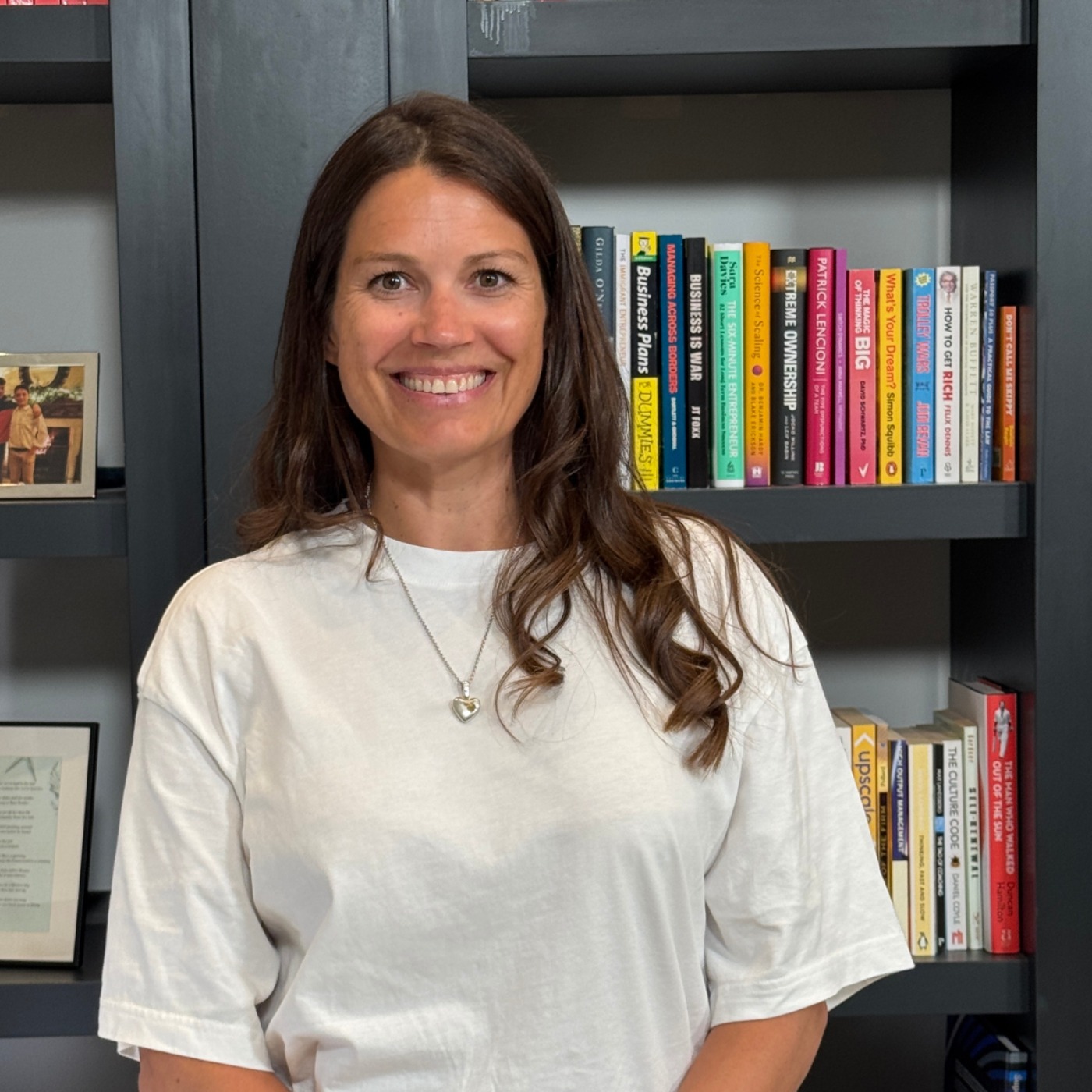
Emmy Faust discusses bootstrapping vs investment, her Dragon’s Den experience, and how she built Female Founders Rise to help women reach profitable businesses and raise funding.
Bootstrapping clarifies market demand and reduces risk; investors can encourage spending too fast; founders must understand what they delegate; don’t rely on one marketing channel (she says SEO-only led to a Google penalty and “everything overnight”); personal branding and warm introductions drive angel investment.
Her first business was an “accidental entrepreneur” venture; she pitched a gaming-related product on Dragon’s Den in ~2005 and received £200k from Theo Paphitis for 10% equity (business never made money). Female Founders Rise grew from LinkedIn posts to monthly events, then partnerships with Google, London Business School, LinkedIn, British Business Bank, Barclays, and became a B Corp.
Emmy Faust, founder of Female Founders Rise; she’s founded 11 businesses and has invested small amounts (often £1,111–£11,111) in early-stage women-led startups. Mentioned investments/companies include Docket, Launch Lemonade (AI), Vic Pepia (fashion “Shazam”), and Rooker Hair.
Written by AI. May contain mistakes.
Learn how bootstrapping helps in understanding market viability and securing investment.
“I think bootstrapping gives you a really good understanding of what works, what doesn't work, whether there's a market for your business.”
Discover Emmy's journey from aspiring sweet shop owner to accidental entrepreneur.
“And a job while you're at university or not while you were studying?”
Explore how Emmy started a small mobile phone business during university.
“I basically started working pretty young.”
Emmy shares her various jobs and experiences leading to her tech career.
“And then we'd buy all the accessories and sell those.”
Introduction to the Business Leader Podcast and its mission to help businesses.
“who sold my company HomeServe for four billion pounds and this is the Business Leader podcast where we look at the stories and strategies behind modern businesses.”
Emmy reflects on her experience with Dragon's Den and its impact on her business.
“So I think if you've got a product, then it's great because you're getting free PR and free advertising.”
Emmy discusses the importance of passion in business and lessons learned in SEO.
“And that feels like a much better option.”
Discover the pitfalls of relying solely on SEO for business growth.
“But yes, it's a good point actually because, you know, he was this guy running this very successful business And I think he probably saw the opportunities.”
Understand the importance of personal branding in business success.
“So we lost our rankings, we lost everything overnight.”
Learn about managing and selling multiple business ventures effectively.
“own name to build the brand of the business?”
Explore the challenges of managing multiple ideas and ventures.
“And we were incubating little ideas, I suppose like what an accelerator is like today, but we didn't have accelerators then.”
Hear the inspiring story behind the creation of Female Founders Rise.
“and many of them say they have ADHD or neurodiverse and I have got so many ideas and my husband's constantly saying you can't do any more of your ideas, like literally just stick with something.”
Discover how to grow a community while creating a sustainable business model.
Explore how sponsorship and funding impact female entrepreneurs and their growth.
“We have 250 people who are paying something and we're probably going to move to...”
Discuss the importance of community and resources for women entrepreneurs.
“But I'd say they're probably not consuming the content and the support.”
Unpack the challenges women face in entrepreneurship and funding gaps.
“Which is when we accept business leader members.”
Highlight the achievements and role models within the female entrepreneurship space.
“up a family and have to juggle multiple priorities and easier for us men I think.”
Learn about investment strategies for early-stage female founders.
“Shall I tell you about some of the businesses I invested in?”
Understand the significance of mentorship and different coaching styles.
“And then a lot of it is just through connections and through women I've met.”
Learn about the value of peer coaching and connections among entrepreneurs.
“And I think that that person does need to have an understanding of where I'm at and probably have been there as well.”
Discover Emmie's vision for the future of Female Founders Rise and her commitment to impacting women's entrepreneurship.

Get the gist, explore an idea or ask about something said.
 Claude
On The Business Leader Podcast with Sir Richard Harpin, what are the key points of this episode?
Searching your listeningAutomatic transcript. May contain errors.
0:00Emmie Faust: I think bootstrapping gives you a really good understanding of what works, what doesn't work, whether there's a market for your business. And I think if you do that work up front, you are then in a much better position to get investment if that's what you want. I always have two businesses on the go. When I'm selling one, the other one's coming up and generating revenue. And then when I sold that one, I've got another one going. And I was like, oh, I love this idea. So we were just relying on SEO. We hadn't thought about other channels. therefore when we got penalised in Google we lost everything.
0:31Emmie Faust: We lost all of our rankings so we lost our rankings, we lost everything overnight. We're very much helping women get off the ground, get started and get to a point that they have got a profitable business. A question that's often top of mind for me, especially at business conferences, is how we get more female founders and CEOs into the room. My guest today, Emmy Faust set up Female Founders Rise with exactly that ambition. Having survived the jaws of Dragon's Den and come out the other side with an investment, she knows firsthand what it takes to pitch for funding and what it takes to pick yourself back up when the business fails.
1:12She's founded 11 businesses and I can't wait to hear her learnings. Emmy Faust, welcome to the business leader podcast did you always know that you're going to be an entrepreneur well that is a
1:23Emmie Faust: great question I didn't always I want to be a sweetie shop lady when I was about four because I love sweeties um so actually maybe that I was going to be an entrepreneur if I was going to be a sweetie shop lady but I wasn't ever thinking you know I wanted to run a business I feel like all my businesses that not all of them but a lot of them and definitely my first business I was an accidental entrepreneur but I think I always liked the freedom that came with making money making my own money and being financially independent and I realised that's actually something that's a thread that's been going through everything I've ever done from working at 14 in a cafe to now having more financial freedom than I used to have and being able to help other women to do that.
2:13And a job while you're at university or not while you were studying?
2:17Emmie Faust: Yeah, I had a job all through uni. I basically started working pretty young. I took a gap year, so I worked in my gap year to fund that. And I was working for sort of like a promotional company. And I carried on working throughout uni to help fund that. And, you know, my parents paid for my rent and I think they gave me pocket money. but obviously I needed more. So I worked throughout uni and in fact even at university I had a little business where we used to sell phones to all of our friends. So it was kind of like at the start of mobile phones. So I was at uni I don't know like 25 years, no more than that, 28 years ago or something and we would get mobile phones from this lady and we would basically sign up all our friends to get a mobile and they would get, you basically, you know, you're paying for the contract and we would be able to get them free phones and we made money off the back of it.
3:19Emmie Faust: And then we'd buy all the accessories and sell those. And we was a few of you that were doing that. No, it was just me and my boyfriend at the time. But you were the boss. Actually, I can't even remember if it was his idea or my idea, but I just remembered we did that. And it was just like, I never even thought about it. it as a business it was just a little way of making money and actually it was brilliant for our friends because they were getting free phones so we sort of managed to it was a win-win for everyone and then post-university you got into a tech business so post-university I've I did lots of different things so um god it's such a long time ago I can't remember exactly in what order but I did I did lots of different things which I went back to work for the promotional company um and I was making good money but I wasn't really enjoying the job it wasn't really challenging me I then went to work for a tech company called skinkers which was a kind of a desktop app I knew nothing about tech I basically was just desperate for a job um and while I was there um my friend Will was working for an online poker company and traveling the world and going to these amazing parties and living you know his best life and I was like I want to come and work with you I was bored out of my brain doing this other job and somehow I managed to get a job working there um and then that took me off to Gibraltar for a while and I was working for a online gambling company out there which I didn't love but I loved being in Gibraltar and I loved doing lots of traveling and having lots of fun and then I came home and I met a guy who ran an agency that we worked with and we were 25 and we sat next to each other at dinner and awards thing and we decided to set up a company that night and that company is actually jack media so i have had 11 businesses and they're 11 businesses yeah yeah they're all intertwined that's more than me well a lot of them haven't been successful a lot of them might have just been an idea that we incubated and we decided not to go ahead with and jack media was a media agency and because our experience was working in online poker and online besting that's who we were serving initially as our clients we had this other little little project we were working on called gaming alerts from um the company that I'd work with skinkers this desktop sort of app and that was the one we went on um dragon's den with and the company had never made that company had never made any money it was just a little thing on the side um and i thought i didn't know if dragon 7 was kind of like real oh this was back in 2005 i think yeah this was ages ago i mean this was like before online poker was even a thing this was like right at the start of bingo going you know from bingo halls going online and it was a you know everything was very different back then i mean i even remember running my agency and I don't think Facebook existed you know none of the social media existed we used to work in the office and then leave our computers there and go home at night we didn't have our mobile phones so it was like a totally different world.
6:35I'm Richard Harpin a Yorkshireman who sold my company HomeServe for four billion pounds and this is the Business Leader podcast where we look at the stories and strategies behind modern businesses. I'm passionate about helping British businesses scale and succeed. I think it's the key to unlocking Britain's economic growth. Founders and CEOs of mid-sized companies can become members of the business leader community for coaching, peer-to-peer forums and exclusive learning events. So do get involved. Sign up to our weekly newsletter at businessleader.co.uk slash newsletters. It's free and it helps us grow the community and how important was being on dragon's den it was actually a disaster if i'm totally
7:23Emmie Faust: honest um i would recommend it to some people i think if you've got a product business and you want to get pr and coverage is amazing and i've invested in a business that went on dragon's den um which one was that seep they do amazing um cleaning products so like you know your scrubbers and your cloths and things like that. So I think if you've got a product, then it's great because you're getting free PR and free advertising. Because then the audience can visualise it. I mean, imagine paying for an advertising spot on, you know, BBC, which you can't even do. It's like you're getting this amazing opportunity.
8:05Emmie Faust: I do think as well that Dragon's Den has changed a lot. So we were on Dragon's Den 20 years ago. So it's very different to how it is now. nowhere near as many people watching it but also if it feels like sometimes that i don't know if they're doing it for the show like not the not the um founders but you know they can sometimes be quite mean or they want to have a show whereas it felt like when we were doing it it was less about sort of catching people out or anything like that it was just like have you got a good business idea but they do film you for a long long time peter jones was there even then and And he's still in the den 21 years later.
8:40Emmie Faust: Peter Jones, Deborah Meadham. But it was Theopathetus that backed you, I think, wasn't it? Yeah, it was Theopathetus that backed us. We got 200K. I think I valued the business at a million. It never made any money. But anyway, I sort of worked it all backwards. It was like literally just applied on BBC. And they said, how much money do you want? And that was it. And I said, I want 200 grand. And they said, how much do you want to give away? And I said 10%. So then in my head, I was like, well, that's probably about 2 million quid. So I'm like, whatever. we never made any money um never made any profit I don't think because it was all a bit of a lot not a laugh I was just doing it because I wanted to see if I could get on it um and anyway we somehow managed to get investment I think Theo's wife played online bingo or something like that and loved it um and I yeah we took the money and then I kind of I think there were lots of things that business didn't go to plan and that's fine I think a big part of it was three things actually I think one of the things is I'm not really interested in online poker or online bingo my heart wasn't in it so that you know was part of it I think another thing was when you have money and we got you know 200k and we were used to running such lean businesses with everything else we did that you've kind of got this money and you have to spend it and I think you don't then necessarily spend it in the most effective way.
10:05So you'd be an advocate of bootstrapping a business and keeping it small?
10:10Emmie Faust: Well not necessarily keeping it small because you can bootstrap and and you know build a really successful business but all of the 11 businesses I've had of the two that I took investment for they both well one of them failed and the other one I gave the investor his money back because I realized that I wasn't gonna be able to deliver on his you know what what he would want um and actually the businesses that have been successful ones that I bootstrapped so I do believe you know if you've got a business if you're creating revenue and profit you do have a business you know you know someone is wanting to buy your product or service and I think what can happen often with funding is you can get all this money in and sometimes you don't even know if if there is a market for it.
10:55Emmie Faust: So the bootstrapping route takes you down that way. There's obviously lots of businesses that do need investment, like if you're building a tech business or, you know, there are examples when you do need funding, but we were building service-based businesses most of the time. So we always used to get our clients to prepay us. And that feels like a much better option. And then is there an argument that says prove the business and get it to profit? And then when you want to accelerate and hire a big team and you've proven the model, then you take investment. Yeah, and I think that's a great way to do it.
11:28And I always say to the founders that we work with,
11:32Emmie Faust: you know, if you have some kind of traction and you've shown that there's a market for your product and you have clients and customers and people are wanting to buy it and you've got reviews and your business is doing well, you're much more investable because it's less of a risk for people. And also, I think you then, you know, are parting with less equity, probably. so you're keeping more equity you're keeping more control so I am a big fan of bootstrapping um because I have had success from that and I've kept you know decent shareholding in my business so when I exited I could make the decisions about when to exit how to exit I also had money from my exit um and I think it just helps you create a really lean business um and actually I wouldn't want to take investment like I've often thought should I take investment for female founders rise because obviously it'd be amazing to have loads of money because I could go and then do all the things I want to do but actually I don't want someone else having that hold on me and I don't want people wanting an exit or you know it's the other thing is this if you take investment your investors probably going to want you to exit at some point and I I don't know how I might not want to do that.
12:46What are the other learnings coming out of gaming?
12:49Emmie Faust: Oh, yeah, there's a few big ones. So I think, well, I would say the one about taking investment, you do, you know, you've got all this money. You need to spend it wisely. Sometimes you're kind of being encouraged to spend it fast and scale fast. And it might that might not be right. The second thing I think was if you're building a business that you're not interested in and you don't have a passion in. I mean quite frankly that's a waste of time so obviously that's what I was doing and I see now like compare it to like what I'm doing now and I love it so much and it's just a totally different thing and then the last thing which was a really big one was um we used this was at the time when SEO search engine optimization was a big thing and it was kind of like the wild wild west you know people were just doing whatever they wanted no one understood SEO it was this big dark art and I found this guy who'd spoken at one of the top SEO conferences in the world and he was like the, you know, the keynote speaker.
13:47Emmie Faust: So I was like, well, he must be good. I got him to do our SEO and I kind of sort of understood what was going on but I didn't really, I didn't know what was allowed and what wasn't allowed and also when you say allowed, it's like, you know, who's deciding what's allowed. How did you manage to persuade him to help you? Were you paying him? But yes, it's a good point actually because, you know, he was this guy running this very successful business And I think he probably saw the opportunities. Now, to start with, we did rank really well in search engines and we were, you know, making good money.
14:18Emmie Faust: But what happened is some of the things that the agency were doing were not 100 percent. Let's say they were gray in Google's eyes and we got penalized and we lost all of our traffic overnight. So my big learning from that, the two things was, first of all, you have even though you can delegate in business, you have to understand what you're delegating and you have to understand, you know, what you're giving someone else responsibility to do something which could change significant, you know, could create significant impact to your business. And with us it did because we went under. And secondly, the other one is don't just rely on one channel.
14:56Emmie Faust: So we were just relying on SEO. We hadn't thought about other channels, marketing channels. And therefore when we got penalizing Google... It's going to have a massive effect. We lost everything. We lost all of our rankings. So we lost our rankings, we lost everything overnight. So it's the same way that people say, you know, you can't just rely on Facebook or Meta or whatever, like you don't own your data and all of those things. It's about making sure that you have more than one marketing channel and that you know what your suppliers are doing. And you know that, because actually, if I'd had a better understanding of what they were doing, which I should have done, I would have been more aware of the risks.
15:31so you're a big believer in uh omni channel and a range of different ways of doing sales and
15:38Emmie Faust: marketing i am to a point but also not scattering to and obviously okay it depends what you're talking about in terms of brand like a startup they have very small amounts of money um so i would say you don't you're not going to be able to be on every single platform and channel because you don't have that much money but it's about being strategic so for example with female founders rise word of mouth is huge we get a huge number of referrals my linkedin brings in a huge amount then we've got a newsletter and we do events so you know we're very focused and only recently have we started doing other social media channels like instagram because we just don't have the budget to put ourselves across multiple platforms but is that then about a founder or chief exec using their own name to build the brand of the business?
16:28Emmie Faust: I mean, I'm a big fan of personal branding. I've seen the power of, you know, how it's helped me. With Be My Founders Rise in particular, I think, you know, when I was building all the other businesses, I mean, we had Jack Media, Gaming Alerts, Mercer Media, GDM Digital. We had all these different things. And actually, in that time, LinkedIn wasn't a thing. it was much more about relationship building good old relationship building people buy from people they know like and trust um and I think what LinkedIn has allowed you to do is to sort of scale that like people can get to know like like and trust you from the content that you're sharing and that does open doors and from doing that I've you know built a community of 12 ,000 women I've partnered with Google, London Business School, LinkedIn, British Business Bank, Barclays you know that it all continues and I think a lot of that is from being visible and showing people what I'm doing and also asking.
17:26And Jack Media came after your gaming business and that was successful.
17:32Emmie Faust: Jack Media was successful so they were all intertwined so at any one time we were often running two businesses sometimes three so what we were doing is testing little things out on the side. Jack Media was mainly like the sort of spine that went through it all and we had that for 10 years and that was a media agency and we were buying media for clients mainly digital we were at the forefront of digital um towards the end we did start doing you know various other things like cinema and tv and stuff like that um but a lot of what we're doing with digital and what happened is uh and we ended up selling that after 10 years we were sort of bored of that we went to other things but what would happen is we would see something that was happening up that up here and think, oh, that looks like a good idea.
18:16Emmie Faust: And we were incubating little ideas, I suppose like what an accelerator is like today, but we didn't have accelerators then. And we obviously had our salary and the infrastructure and everything, and it made it very easy to test out these little ideas to see if they would come to life. And which were the ones that turned into bigger ideas that became businesses? So our most successful exit was GDM Digital, and that was the idea that we saw that programmatic advertising was becoming popular and we were one of the first three agencies probably in the UK to actually take that on and because we were nimble and agile and we were very digitally savvy it was and we could literally set something up you know like that we were able to do that very fast and it was an area that not everyone understood initially so we got really good at that and we set it up as a separate business so that we could sell to other agencies our services to other agencies and they wouldn't you know think that we were competing um just explain how it works so gdm digital was basically a company that helped companies buy and sell media across advertising exchanges so an advertising exchange allows you to go and buy media so while um media for example you could say i want to target men aged 20 to 30 who like x y and z so rather than calling up the sun and then the times and then whatever like we used to do in the olden days and buy individual media you could target audiences um and we were just at the forefront of that set it up as a separate company and you know we were generating significant amounts of money very fast um and we were actually often working with other agencies because it would take them a while to cotton on to the fact that oh hang on this is a thing and then eventually they got their own trading desk within the agencies but that took them a while um and that business we grew to about 40 people I think in the end I basically left that to um we we because we had two businesses in fact we had three I think at one point and it was getting quite confusing because we were all me and Ed my business partner were running all three we decided to both take control of you know one so I had Jack Media sold that I then went to work Google for a while and whilst I was at Google he sold um GDM Do you look back at that point and think, did we try and do too much and maybe we should have been a bit more focused?
20:39Emmie Faust: I always say to people, well, I was just saying to you before this podcast, one of my favourite books is The One Thing, where you just focus on one thing. And I see that when we had multiple businesses, we were taking our eye off the ball with some of them. But the thing is, is we were really bored with Jack Media. We never, we were like, that was just not exciting us at all. But it was employing people and we weren't just going to shut it down. We were like, we've got these people and we're employing them and we're giving them jobs. And actually, that was the spine, the sort of thing that was the constant that enabled us to spot these ideas and things.
21:12Emmie Faust: So we sort of wanted to get rid of Jack Media from pretty much day one. So I think it was, and I do remember this other guy that we met, one of Ed's friends took us out for lunch. He was like a successful businessman. And he said, I always have two businesses on the go. When I'm selling one, the other one's coming up and, you know, generating revenue. And then when I sold that one, I've got another one going. And I was like, oh, I love this idea. the sort of constant ideas and so maybe you can have two but not three or four exactly at one point we definitely did you know at one point when gaming and that's i think one of the reasons that gaming alerts didn't ever succeed it was like we had definitely two maybe three businesses when we had gaming alerts it wasn't really going to plan we weren't really very passionate about it um and we didn't put you know all of our love into it and i think that's often why investors only want to invest in businesses when there's one.
22:05Is it impossible for entrepreneurs to only focus on one thing and that's just asking too much?
22:11Emmie Faust: I believe there's a lot of entrepreneurs who have a lot of ideas and many of them say they have ADHD or neurodiverse and I have got so many ideas and my husband's constantly saying you can't do any more of your ideas, like literally just stick with something. I think that might be a problem. It's like I don't know about you but I've just constantly got these ideas and I'm like I just really want to try them all and they all sound so fun um so maybe that's the problem but obviously you know that's just me and that's how I've always been I think there's a most probably people are doing well they're focusing on one thing how did um female founders rise come about female founders rise came about because I had been ill I'd had a breakdown and I'd also had long COVID um and I've got four kids and I'd moved my whole family to Wales after COVID and that hadn't worked out and I'd moved them all back to London and basically everything just was too much um and I'd been consulting and I'd been trying to do that throughout COVID whilst having four kids at home and a lot of my clients were sort of obviously struggling and it had been a massive weight I think on my shoulders and I basically had to stop everything I you know was told I have to I started meds therapy and I had to change my life um and I did know that I wouldn't be able to literally do nothing I have to I had to have a little something to keep me going and I'd had this idea that had been tapping me on the shoulder for so long like for so long I which this idea but I could never do it because I was so busy doing all the other things and then suddenly when I couldn't do any of those other of things I was like I could actually do this little idea um and it was really a passion project to help me get better and it's I literally set up a google form and a linkedin company page and I said I don't know where the name came from I think I just it came to me um and I said I'd also done all this work with um entrepreneurs and I could see in my consultancy work off setting my businesses and I could see that so many people were wasting so much time and energy and money on things that weren't ever going to work you know spreading themselves too thinly I mean you're just seeing it in business we get you know big shiny object let's do that um and I thought there's so much great stuff out there on the internet there's also so much stuff which is absolute nonsense and is just wasting your time and energy so I wanted to curate everything that I'd kind of learned and I wanted to share what I'd learned and I also believed in the power of connection and I wanted to connect women so I just started doing a few posts on LinkedIn saying this is what I'm doing want to help people hosted a couple of master classes on marketing and media which is obviously my background so i knew that really well um and you know i think there was like 100 people and then 200 people and when it got to about 200 people i think everyone started saying when are we going to meet up in person and i was just like i mean i hadn't been able to even go to a dinner party i'd been so poorly so i i was i can't do that and this was back in this was four years ago now nearly four so I think this time four years ago was when I went to the doctor and finally we worked out what everything was and right start your new life kind of thing and so September I set up the the the shell of you know that it wasn't even a company it was just a LinkedIn form but by December we had our first event with 10 people and I was absolutely petrified and I wanted to cancel it about the whole time but I did it and it was in the snow and then January we had 20 people and then February it was 30 or 40 and then March it was International Women's Day and I think we had about 80.
25:51And this was an event every month.
25:53Emmie Faust: Well this yeah and and actually I was as I was slowly getting better I could cope you know the first one was 10 people now I could cope with that and then 20 people and that was that was fine I coped with that and then 30 people and then 60 people and then I think you know by this point I was feeling much better than I had I put a post on LinkedIn saying um you know this year I want to partner with Google I want to partner with LinkedIn I want to get into the financial times I said and I want to become a b-core and pretty much by the end of the year most of that happened because if you tell people you're going to do stuff then you're committed and it happens doesn't it yeah and basically someone from Google saw the post so he got in touch and said I think we can make this happen that happened in May two months later we had a hundred and something people at google hq then not i think probably a year later we got a big feature in the times because we did some stuff with london business school and we're a b corp as well now so i started that process as well of becoming and this is a for profit business we're an impact led business and we're b corp so we believe in making profit but people plan it and profit so it's the triple bottom line so we're more about creating impact but we do create profit but to be honest we don't make very much profit.
27:06And how does the business model work?
27:08Emmie Faust: So the business model works at the moment and that's been the challenging bit. The problem with community is often you set them up, often people set them up as a passion project. You know you're setting up because there's a need or you felt a need or there was something missing and you were like this I need to bring people together. And then what's happened with Female Founders Rise is it's grown so fast. is not you know it's not just a little thing on the side it's is a business and we're employing people we're employing freelancers um and the problem with a lot of these things is monetizing it or making money because often you didn't set out to make like I didn't set out for it to be a business I didn't set out to ever charge people and then it feels like at odds to charge people um but you kind of need people to pay or you can't continue so today it's all being funded mainly by sponsors which is really hard to find sponsors um really hard who have you got that's been backing you as sponsors um we have had um so we've worked with people like london business school british business bank barclays lloyd's bank um we're just about to announce a really exciting sponsor any day now and then people like google have um you know supported us so that's been a big part of delivering the work that we do and because everything's kind of either subsidized or free and I think we're going to move away from it always being free because people don't necessarily value it but everything's subsidized so events would be like 25 quid or we run a fundraising accelerator that was is 2 000 pounds of value and that's 100 pounds and we don't take any equity so again we've got sponsors for that as well founder catalyst shoesmith so these amazing brands who believe in the work we're doing but also they get value they get leads and they get you know how many members have you got today we've got um 12 000 now yeah but they're not currently paying anything but some of them are some of them a few of them are so there might be people we've got we're testing out lots of different things so most of those people don't pay anything they might pay if they come to an event they might pay if they do an accelerator or program.
29:18Emmie Faust: We have 250 people who are paying something and we're probably going to move to... It's really tricky because I don't want to put any barriers in place, but also the company needs to be funded so that it can continue. We've also just hired two amazing women, so obviously they will need to be paid as well. And is there a limit that when you get to X turnover, you say goodbye to them? or what's the average profile of some of those? Well, this is really interesting. So we say that we're there to help women who've got a business idea get to their first million. So that'd be a million in revenue, a million in funding.
29:55Emmie Faust: Obviously, we do have people in the community who've done more than that. So we've got women who've done a lot more than that. But I'd say they're probably not consuming the content and the support. They're more there as mentors or advisors or not necessarily in a formal way, but, you know, they come to events and they're there and they just love connecting with people, but they're not doing the accelerators or probably getting, you know, value from the masterclasses and things like that. So we're very much helping women get off the ground, get started and get to a point that they have got a profitable business and it's off to the races.
30:37And is it important to have a rule that says, these are our members and it's start up zero revenue up to a million and keep to that rule
30:45Emmie Faust: do you think i don't i mean we don't have a rule so there's no rules in female founders there's no rules about who's allowed in and who's not allowed in anyone can join um i think in our heads it's important to know who we serve because it's important to make sure that we're creating content resources opportunities for those women um and actually there's insane value if we can help more women get to whatever their goal is their target whether that's 100k 250 500 or million there's huge value to the economy and to them and that's all we want to do basically our purposes financial freedom for women through entrepreneurship so i feel that i have some form of financial freedom i i can invest i've done 120k of investment in other women-led businesses and i can make decisions about what i do um of course i need to continue working but we want to facilitate that for other women and that looks like different to everyone doesn't it so as long as we're helping women to to get where they want to be and to achieve their goals in terms of where they are with their business that's kind of our because we'd love to hear from those that have um smashed through the million pounds of revenue that they're knocking on the door of three million.
32:03Emmie Faust: Yeah. Which is when we accept business leader members. Yeah. And one of our few issues in business leader is we haven't got enough women as members. I know. And I look around my dining table when I run a free growth workshop every Tuesday afternoon. And it's a whole load of men and only a few women. so we'd love to make an invite to um any of your members that are turning over more than three million to come to one of my free growth workshops amazing well i think one of the things that um we've seen is there's a lot of people that want to target you know whenever i speak to sponsors they're always like oh we want your series a founders and that kind of thing and actually we need to get more women to that point and that's what we're trying to do at female founders right so we're trying to get more women in the pipeline and get them through the pipeline and get them to a million and then obviously get them you know further on but I think there's so much work to be done in the earlier stages to actually support women to you know get to get there so that we can there can be more of a balance after that point because at the moment it's not what more can we do because it is much much harder for women that are bringing up a family and have to juggle multiple priorities and easier for us men I think.
33:24Emmie Faust: Yeah I think there's lots of things I think obviously there's inequality in funding so such a tiny percentage of VC funding and general funding goes to women so there's a huge amount of work. Although we've just established that the learning is don't get any funding and bootstrap and yeah exactly I think it depends on business but um i i love bootstrapping but obviously there are lots of businesses that do need funding so i think there's lots of inequality in funding i think we've time and time again and a lot of the reports that we've seen and including we did a big report on female entrepreneurship the rise report we've seen child care and child care costs come up time and time again and it's just so expensive in the uk and um just the way it is but just the way that society is a lot of the work comes to us as women even if we're both working I know I'm always the one that gets called by school um so yeah I think lots to be done I think there's you know supporting women there's heroing women there's showing you know there's there's not enough women in media or you know being showcased in media so I think there's we did this lovely campaign called you've got what it takes which is all about celebrating female entrepreneurships we need uh 80 percent of young people can't name a female entrepreneur so we need more people to be showcasing and interviewing and celebrating female who are your biggest role models of um amongst your 12 000 members that oh my god so so i would say like one of my biggest role models in terms of a role model was actually my first boss she was amazing she was called anna and she was very successful she i i'd learned so much from her she taught her and she looked after her staff incredibly well she literally would have her baby on the floor juggling you know baby and entrepreneurship so she's amazing um and within our community there's just such a diverse range of women and and i'm inspired by so many of them and it's not always about building the biggest business it's the impact they're making the the you know there's mums with children with you know severe needs um And they're still managing to juggle it all.
35:35Name a couple.
35:36Emmie Faust: So we've got Catherine Anne Reid. She's amazing. What's her business? Her business is called Docket. I actually just invested in that. Shall I tell you about some of the businesses I invested in? Because I've invested in loads. I think, so let me have a think who else I've invested in. There's a lady called Jude. She's disrupting the bladder care market. She's insane. She's a solo founder. how do you how do you decide how to invest in those um female entrepreneurs well that's a good question so um i only make very small investments so between 1 111 pounds and 11 111 is my largest that's my lucky numbers and actually the founders now come to me and say can you make they don't care that it's small they just so these are really early stage these are really early stage this is like really early stage um they just often for me it's just saying to that founder like i believe in you and i believe in what you're doing there's an amazing woman called shen um who's got a company called launch lemonade which is in ai um and she's doing really cool stuff there's another um lady that i've just invested in called vic pepia and she's building the shazam of fashion so literally she you can i can you know take a picture of your suit and it will tell me exactly where I can buy it.
36:53Emmie Faust: There's so many there's Rooker Hair, I invest in them. So I think sometimes I'm invested, sometimes I know them. And sometimes I don't know them. For quite a long time, when I, I had a chunk of money, which I wanted to invest in female founders, and I'd never invested. So I didn't know what to look for. And I didn't, you know, female founders rise wasn't a thing, you know, always very, very early stage. So I joined some angel collectives, and they had deal flow and they had basically what they do an angel collective or syndicate is often they they get really amazing deals in through their network and they sort of will look through them and say we think these are good deals so at the beginning if there was a female founder in that deal I would just say I'm in because I wasn't seeing very many female founders come through these collectors and unfortunately there are some amazing collectors who only focus on female underrepresented founders and I'm now members of those.
37:47Emmie Faust: So I get quite a lot through that. And then a lot of it is just through connections and through women I've met. What's your advice for anybody with an early stage business that's looking for investment on how they need to make the pitch or present themselves? Well, I think a lot of it is about human connection. So I think I believe human connection is a huge part of it. People need to know, like and trust you before they buy from you or before they invest in you. so for starters a lot of the businesses I've invested in I have seen the founders on LinkedIn and I've seen them talking about what they're building I've seen their passion I've seen their drive I've seen their domain expertise so when they reach out to me or sometimes I've reached out to them it's like it's a no-brainer so I think building your personal brand is a big one I think putting yourselves in rooms with other founders is huge we actually know that investors love warm intro some other founders so actually that's one of the best things you can do and that's one of the things we see at Female Founders Rise and we're trying to do is put women in rooms with investors but also with other women and we run a massive conference called Female Founders Raise and at that conference you're with 200 other women who are raising so they're all connecting and they're all sharing stories so I think building relationships early early doors I was talking to another founder and she was telling me you know first time around she spoke to all these investors and then she massively pivoted and they all said no then she massively pivoted her business and she went back to those investors two years later and one of them made a massive you know really significant investment so it's building relationships keeping relationships telling people what you're up to and a couple of a couple of no-nos that um they need to not do well i would say don't spray and pray you know on LinkedIn don't just I get I don't invest in men and because I've made the decision to invest in female founders and I'll get a huge number of people sending me decks and stuff like that and it's like you haven't even done your due diligence so I think it's just if you want someone to invest you know and you're getting in touch with them why do you want them why would it be relevant to them what are you doing that's different you know actually getting to know that person because Well, it's different.
40:02Emmie Faust: An angel investor is investing their own money and they probably will want to have, you know, a personal relationship or to understand, you know, what you're building. And it's different to say like a VC where they have a fund and they have to invest. So I was specifically talking about angel investing. For me, it's always been about the relationship and always been about the founder. How many of your members do you think have a coach or a mentor? And did you have a coach or mentor over your career so far, Emmy? Well, that's a great question because we know from the Rise report that the biggest support is other founders and peer networks.
40:38Emmie Faust: But coaches and mentors come very close as being really key. In our first business, we had a non-exec director who was amazing, who kind of acted. you know he was like a wise older man and he'd been there and done it in business so he kind of mentored us and that was so that's sort of a paid mentor too for the price of one isn't it that they're on the board and they're providing help and advice yeah so he got a share and then towards the end we also paid him when we're making you know more money but initially like when we're 25 we just gave him a share in the business um and then i have had coaches and i so i've had you know informal mentors like there's an amazing guy Dan who basically is like it's so involved in female founders rise and I have a call with him every week and he's a big big part of what I do and he is an investor so he helps us all off all of helps our members with all their fundraising um so something like that has been I mean I wouldn't be able to do female founders rise without it so that's been huge in terms of like and I've had other women amazing women who are opening doors to me all the time in terms of paid coaches i've had some who are good and some who aren't good what makes a good coach someone who can challenge you someone who can understand you and your business and can help get you to the next level i think that's it what i found really helpful is peer coaching so i've got an amazing peer coach with me but with i have an amazing peer coach now and explain peer coaching peer coaching so it was actually a business i invested in called run yourself which is all about peer coaching and they've now been acquired by someone else but through that i met another lady called vic and vic is a very successful exit founder she exited her first business for huge amounts of money she's absolutely lovely she's an amazing person she's just set up her second business which is already off to the races she's got children so like we have a lot in common you know we've both scaled and exited businesses hers has been much more successful than mine but you know we've had those similar challenges we've both got children we're both building new businesses we're both passionate about female entrepreneurs and we can really challenge each other and I think and we understand it so my thought would be is and maybe I'm wrong here but for me where I find value is from someone who can deeply understand what I'm going through and can help me see another side or show it back to me.
43:11Emmie Faust: And I think that that person does need to have an understanding of where I'm at and probably have been there as well. But then I'm thinking a good coach probably doesn't need to do that. They probably are just mirroring back to you. And finally, what does the future look like, Emmy? The future for Female Founders Rise. or anything beyond that or how do you have you made sure this time that you're only working on one thing oh or maybe you're not yeah well i think i'd never know what the future is going to hold because the future is the world is a wonderful place and what i've noticed is i've done so many different things over the last 25 years and that's brought me to what i'm doing now which i deeply love and I hope I'll be doing for you know a long long time um I I just hope to create I hope to continue creating impacts for women and making entrepreneurship more accessible and continuing to bring people together um because we know that human connection and connection in business is so important and I honestly don't know like one of the reasons I didn't want to set up a fund is because I didn't want to commit apart from the fact that it would be a nightmare to set up a fund but at one point I thought I wanted to is I don't want to have to commit to anything for a huge amount of time because I just realized like for me it's important that I've got that kind of freedom that I'm not feeling tied down to anything and I've got my four kids so yeah I want to carry on investing I want to make more money so I can invest in more women and support more women and I want to just continue the great work of female founders rise and hopefully make more impact on that note emmy thank you so much no worries thank you great advice and not just limited to female founders thanks for watching and listening please do rate us and subscribe and make sure to sign up to our weekly newsletter at businessleader.co.uk slash newsletters with more people on board Business Leader, we can have better conversations and inspire the UK's next wave of business leaders.
Emmie Faust founded 11 businesses - some of them failed and some of them succeeded - one sold for £7 million. She now runs Female Founders Rise, a 12,000-strong community helping women build, grow and scale their businesses. Faust talks to Sir Richard Harpin, host of the Business Leader Podcast, about the advantages of bootstrapping and scaling a business without outside investment, the real story behind her Dragons' Den investment from Theo Paphitis and why it ultimately failed, and how a personal health crisis during the pandemic led her to build a community for female founders - backed by Google, Shoosmiths, and the British Business Bank. Faust explains how she is supporting women in business at the early stages, through 127 angel investments in women-led businesses, and gives advice for founders preparing to pitch for investment.
Subscribe to the Business Leader Podcast for weekly entrepreneur stories from founders and CEOs who’ve built and scaled great businesses. Join the Business Leader community for coaching, peer to peer forums and exclusive learning events. Sign up to our free weekly newsletter at businessleader.co.uk/newsletters.
Business Leader is a membership community for ambitious CEOs and founders of mid-sized UK companies, designed to help them grow with purpose through strategic support, peer-to-peer learning, expert coaching, and high-impact events. Sign up for our Business Leader newsletter here.
Hosted on Acast. See acast.com/privacy for more information.


