Ask ChatGPT
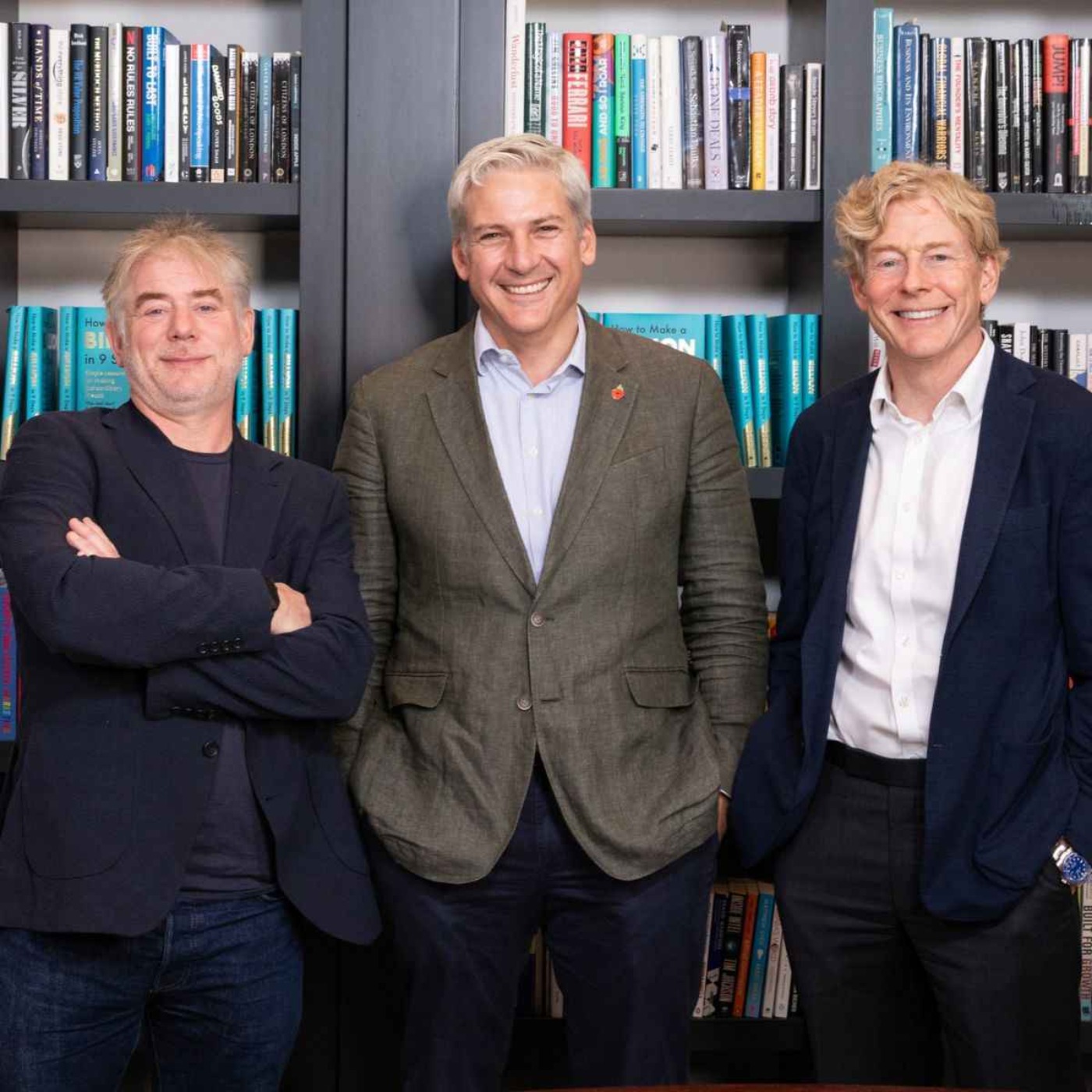
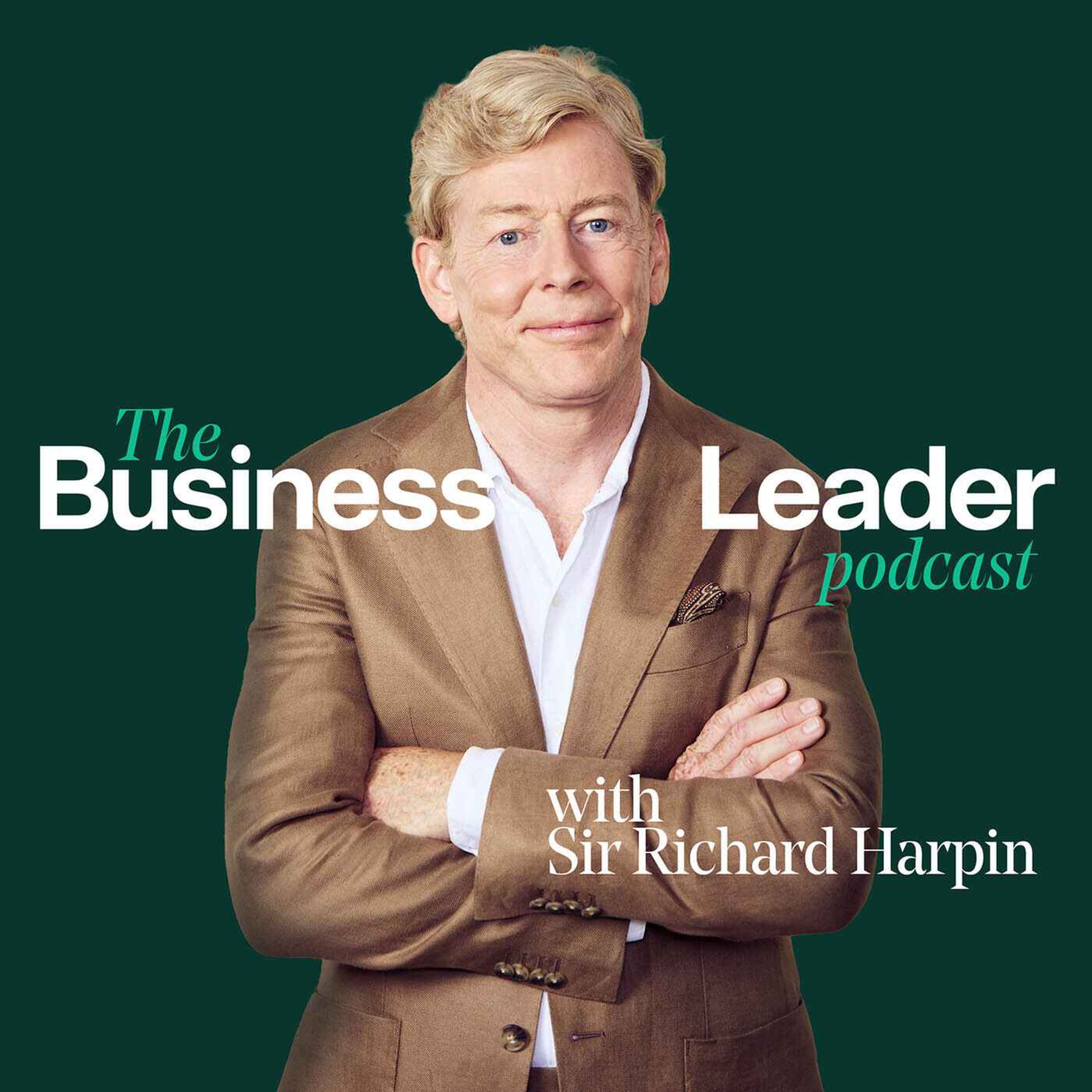
 The Business Leader Podcast with Sir Richard Harpin
19 May 2026 · 51m · 30 chapters

Episode topic: How Chris De La Puente helped turn Sephora into a global beauty retailer, including leadership lessons from Procter & Gamble and specific “pivot” decisions that scaled revenue from about €2.5bn to €16bn.
Chris De La Puente spent nearly 30 years at Procter & Gamble (brand management to GM), including a high-stakes Turkey turnaround during an economic crisis (interest rates reportedly to 600). He later joined LVMH as CEO of Sephora in early 2011, after Sephora’s earlier US expansion issues.
Leadership requires adaptability (“agility, agility, agility”), performance, and building followers (“choose a boss, not necessarily a company”). Sephora’s growth depended on local/regional merchandising rather than copying France, and on omnichannel convenience (“anytime, anywhere, any device”). Sephora scaled by focusing on a healthy core and choosing where not to play.
Sephora’s disruptive origin (open perfume testing “supermarket for beauty”); US failure from cookie-cutter French, perfume-led stores (e.g., Rockefeller Center) and oversized/expensive locations; turnaround via indie brand partnerships (David Solitiano) and makeup-driven assortment; UK failure due to high rents and undifferentiated assortment, later revived via acquisition and flagship-led expansion.
Written by AI. May contain mistakes.
Chris shares how his upbringing in Portugal shaped his leadership style.
“Chances are that my guest today has had a hand in what's sitting in your bathroom cabinet.”
Chris discusses the impact of his multicultural background on his worldview.
“And I had a fantastic childhood, extremely happy.”
Insights on the importance of early career experiences at Procter & Gamble.
“to all the various cultures around the world, and I enjoy it.”
Chris reflects on the key lessons learned during his 28 years at P&G.
“in sales and we're talking about the mid-80s.”
Chris shares his experiences and strategies during the turnaround of the P&G business in Turkey.
“You're at Procter & Gamble for 28 years in total and a very successful career and could have made it to the top of P &G and been the global chief exec.”
Discussion on what it takes to thrive in a large multinational corporation.
“We were already manufacturing local, but local formula cards for products, local negotiations.”
Chris highlights why many CEOs started their careers at P&G, emphasizing their recruiting philosophy.
“And it was a business, the second profit centre P &G worldwide.”
Chris reflects on his decision to leave P&G after nearly three decades.
“And I think today there's probably over 100 CEOs in the world that started their careers at Procter.”
Learn about the competitive environment and meritocracy that drives success in companies.
“So they take young people and they give them a lot of responsibility.”
Discover the significant factors influencing a long-term employee's decision to leave a company.
“And so many people like you and others, they're there for three, four, five years, and they're hungry to move to the next level.”
Explore the speaker's aspirations post-P&G, including personal adventures and professional ambitions.
“But I'd been there for a long, long time and I'd been running the hair care business, the number two business for six years.”
Understand how rigorous training and discipline can enhance performance in both personal and professional life.
“I did a Concago in South America and I was training to go to the South Pole.”
Learn about setting personal and professional goals and the importance of maintaining focus.
“to have a richer fuller life means you spend more hours in in the business world so be it but that adventure was a transition between jobs.”
Discover the origins and evolution of Sephora from a single perfumery to an international brand.
“You print it out and carry a copy around with you?”
Explore the challenges LVMH faced in expanding Sephora into new markets, particularly the US.
“perfumery, but very, very small and quite ordinary.”
Learn how Sephora adapted its strategy to succeed in the US market by focusing on indie brands.
“And what did he get wrong in the US originally?”
Learn about the initial challenges and structure of Sephora before changes were implemented.
“To answer your question, I said it was going to be a long answer.”
Discover the cultural adjustments and leadership challenges faced in Sephora's global integration.
“and then I had one finance manager to pull all the numbers together.”
Understand the importance of regional adaptations in Sephora's business strategy.
“I thought I could take it from 17 countries to 100 plus countries because I thought the beauty needs were universal.”
Explore how Sephora developed its omni-channel approach to enhance customer experience.
“Like I ran Global Haircare with a 10 billion business with a fantastic global organization.”
Learn about Sephora's efforts in creating a loyal beauty community and customer engagement strategies.
“assortment and experience a very important number is customers that shop omni online and in store tend to spend three times more than people that just vote three times three and so that's quite compelling.”
Gain insights into Sephora's challenges and successful re-entry into the UK market.
“It's back and doing great, great guns now.”
Hear essential tips for beauty brands looking to succeed in Sephora's ecosystem.
“Don't go crazy and try to open 15, 20 stores straight away.”
Learn why a great idea and genuine storytelling are crucial for new founders.
“So what you need is a great, great idea and you need to surprise people.”
Discover how strategic choices shaped Sephora's growth trajectory and market focus.
“What was, what's the one thing that was on your not to do list in developing Sephora over the years?”
Understand the significance of building a top global brand like Sephora.
“What was the biggest mistake that you made and what did you learn from that?”
Explore the leadership style of Bernard Arnault and the culture of LVMH.
“we decided it would be quite an extraordinary challenge to create the world's number one beauty company.”
Learn about the challenges of succession planning and the importance of readiness.
Hear about the speaker's transition to a new phase of life after Sephora.
“I went external and unfortunately the external option did not work.”
Get essential tips for entrepreneurs aiming to scale their businesses effectively.
“and all the various experiences I had in my life, I think I could help people.”

Get the gist, explore an idea or ask about something said.
 Claude
On The Business Leader Podcast with Sir Richard Harpin, what are the key points of this episode?
Searching your listeningAutomatic transcript. May contain errors.
0:02I learned adaptability from my father. He was a successful businessman in Portugal and there was a revolution in 1974. He was on the wrong side and he got wiped out. So at the age of 40, he lost all his money. In my first 100 days in Sephora, I thought I'd made the biggest mistake in my world going there. I thought, you know, this is not what I thought it was going to be. What were the keys to turning around the Turkish business? Agility, agility, agility. At the end of the day, you know, there is an expression is, you know, choose a boss, not necessarily a company. So if you're going to lead people, you need followers and you can't force people to follow you.
0:39I'm Richard Harpin, a Yorkshireman who sold my company HomeServe for£4 billion. And this is a business leader podcast where we look at the stories and strategies behind modern businesses. Chances are that my guest today has had a hand in what's sitting in your bathroom cabinet. Chris De La Puente is one of the most influential figures in global retail, spending nearly three decades at Procter & Gamble before transforming Sephora into a worldwide powerhouse at LVMH. Chris didn't just grow Sephora, he scaled it from€2.5 billion to€15 billion in revenue. In our conversation, we explore the experiences that shaped him, the lessons learnt, along with the decisions, trade-offs and mistakes that define that journey.
1:31Chris, welcome to the Business Leader Podcast. How did your childhood shape you as a leader? Well, I grew up in Portugal. My dad is Spanish, hence my De La Puente Sernay. My mum was English and they went to Portugal together to start their lives. And I grew in a fishing village at a time called Cascais, about 40 minutes outside Lisbon. Today it's quite a touristy place. And I had a fantastic childhood, extremely happy. But I lived a sort of parallel life. I came from a privileged background family. So I went to an international school, a British school. And so I grew up with people from many parts of the world.
2:11But also after school, my life on the beach, on the street, was with Portuguese kids, many of them from very, very underprivileged. background so I had this sort of parallel life which was fascinating but it was fantastic fun. And did your schooling help in terms of that sort of multi-country multicultural multilingual sort of upbringing? Because I come from a let's call it a Spanish English family I grew up in Portugal and Brazil so I've always had a curiosity and a fascination for the wider world and I probably value diversity more than others. In the whole of my life, I've lived in nine countries, 15 cities.
2:53I've traveled to over 50 countries in the world. So I've always been quite open-minded to all the various cultures around the world, and I enjoy it. And then we both turned up at Procter & Gamble in Newcastle. You were the year ahead of me in brand management and great that we became friends what do you think you what you learned in those early days of brand management i think procter and gamble is an extraordinary school to learn about fundamentals of business and like we were both very lucky to go into the graduate program and fundamentally you learn about the consumer is boss you were on vortex i was on ferry liquid and then washing powders and you learn the obsession the importance that if you want to compete and win in life you have to delight customers better than anyone else and so the fundamentals of analyzing a business what works what doesn't work leading at a very young age we both had the opportunity to lead groups of people from different functions and different ages quite often we were leading groups where most of the people in the room were much older than us.
4:01So you learn about marketing, you learn about operations, you learn about brand building, and you get a lot of responsibility at a very young age. So in the P &G system of brand management, you can be running a brand in your mid-twenties and you're acting like a young general manager. Because it is a mini company, isn't it? A lot of them quite big companies, the individual brands. Yeah, you can have, Fairy Liquid at the time I think was about 100 million in sales and we're talking about the mid-80s. And so also the marketing budgets are big. So you're learning how to do advertising, promotions.
4:35But the important thing is you're learning to take responsibility. You're learning to run a business at a very young age. And you know, the buck stops with you. And if you do a great job, you move on to bigger brands. Because the culture was promoted from within, there was a huge onus on recruiting and developing talent. And so So I think we were both fortunate to go through that school. My career at Procter & Gamble, and subsequently I think you'd describe as from the toilet bowl to down the drain with Vortex and then plumbing insurance, you went on and became really, really successful at P &G, Chris.
5:13Was a part of that what you learned from your father, who was highly successful and very senior in PepsiCo? I never thought of that one. What did I learn from my father? My father was a hard worker. I learned adaptability from my father in that my dad, he was a successful businessman in Portugal and there was a revolution in 1974. He was on the wrong side and he got wiped out. So at the age of 40, he lost all his money and had to start from scratch all over again. And so that was quite a big lesson to learn about when you go through adversity, how you pick yourself up. I think grit is quite important in life.
5:51I learned grit from my dad. I learned focus. He got on extremely well with people. He could talk to the wealthiest of the wealthy and also to the average person in the street. He was humble and highly respectful, but he worked hard.
6:11I'm passionate about helping British businesses scale and succeed. I think it's the key to unlocking Britain's economic growth. Founders and CEOs of mid-sized companies can be members of the business leader community for coaching, peer-to-peer forums and exclusive learning events. For example, Crystal Apuente talked to business leader members about leading a global brand like Sephora and the lessons learned along the way. If you want to join our future events or become a member, click the link in the description. You're at Procter & Gamble for 28 years in total and a very successful career and could have made it to the top of P &G and been the global chief exec.
7:00Don't know about that, Richard. personal sacrifice and relocated yourself and your family to Cincinnati. What was the key to being successful in that career journey in such a global and successful company? I loved what I did. I loved my time at P &G. I didn't plan to join for 28 years. I thought I'd be there to, like many others, a brand manager, learn and move on to something faster and more exciting. And I got to be a marketing manager, then a director, then a GM. And I had a lot of interesting assignments so i went we started together in newcastle i was there for six years i then went to spain which was important to me being half spanish i wanted to live in spain i wanted to do business in spanish i wanted to go through that experience out of the blue they offered me to go to turkey which was a business that lost 400 million and it was a do or die fix it or we close it down so it was an amazing learning experience and what was the learning there what were the keys to turning around the turkish business uh agility agility agility it's uh and i was there at the time of an economic crisis when in 96 94 interest rates went to 600 and i was young i was in my late 20s and we had to understand the market i didn't speak turkish so again adaptability moving into a complete different world an emerging market really running the business by the seat of your pants having to decide you know you don't have all the consumer research to make decisions, leading people that you don't speak their language.
8:31But it was about making very, very fast decisions, courage, fast decisions, collaboration, putting together a game plan, aligning everyone right to the CFPNG that the mission was to make $1 profit within three years after all the losses and all the choices that come with that, and making sure that everyone was aligned, because otherwise it's just not going to happen. And was it hard to get P &G aligned in such a big company to enable you to make those decisions so quickly? Yeah, the time was very tough because P &G was going through a scaling focus and trying to run everything on a regional basis.
9:08And what we had to do in Turkey is go very, very local. We were already manufacturing local, but local formula cards for products, local negotiations. And we couldn't, you know, we couldn't go back to the European headquarters in Brussels. We couldn't be going to Brussels for decisions every five minutes. And what works for the UK and Germany and France doesn't necessarily work in Turkey at that time. So we needed the flexibility to go local. We still had the international brands, but we had to operate very local. And we had to make very, very fast decisions. And so looking back on your 28 years at P &G, the advice that you give to anybody else that is joining a big company and wants to make it to the very top, what would that be?
9:53Look, I'll tell you what worked for me. At the end of the day, there's no substitute for performance, P for performance. Every assignment I had in Procter, I think I probably had about 16 assignments, 15 assignments in 20 years, I delivered. Otherwise, I wouldn't have been taking on additional responsibility. So whatever you're doing, you have to deliver. And you want to deliver unusual results, because in a highly competitive world, you're trying to stand out from the crowd. So I think that's pretty important. I think image is important. You're a brand as a person. And what do you stand for? What are your values?
10:25What are your principles? What do people say about you? Character, that's something that you talk in your book. And that part of building your image is what's your character, what's your personality, what you stand for? How authentic are you? How humble are you? Do people want to work for you? At the end of the day, you know, there is an expression is, you know, choose a boss, not necessarily a company. So if you're going to lead people, you need followers. You can't force people to follow you. and I think exposure is very important I had from the day I was a brand manager running aerial it was the biggest brand in the UK I always had exposure to pretty senior people and with that comes the pressure imports you get known and so if you deliver people consider you for other opportunities so I sometimes use the acronym with younger people I coach of pie performance image and exposure and that's what worked for me and I loved what I did and I was constantly learning so I've done local jobs, I've done regional jobs, I've worked in emerging markets, I ran the UK, I ran regional businesses for Europe, and then eventually I ran the global hair care business, which was over 10 billion.
11:29And it was a business, the second profit centre P &G worldwide. And so I've constantly been learning. I didn't stop learning. And was that all internal learning? Or did you did you have a paid business coach at any point in your P &G career or external mentors? No, I didn't. Most of my learning would have been on-the-job learning. And by going to very different, working in different types of assignments, be it local, regional, global, on different countries, you learn to adapt. You learn, there's the core that you keep, but you're constantly learning how things work differently. And so, yes, I work within P &G, but I was in very different markets, different brands, different situations.
12:12Working on washing powder, working on baby care, working on hair care, working on Pringles. They are different categories, but fundamentally, the fundamentals of being consumer-centric are critical. P &G has generated some very successful people. The current and then previous two chief execs of BT were all Procter & Gamble. a few entrepreneurs me plus Greg Jackson Octopus Energy how's it been able to generate those success stories it's a great question and many years ago someone asked me how many P &G people had made it to CEO and I just started to think about ones that I knew and I think about probably about 10 years ago there was an article in Fortune magazine in America which something like 20 % of all the top 500 CEOs in America had started their careers at Procter.
13:04And I think today there's probably over 100 CEOs in the world that started their careers at Procter. And fundamentally, why? Because at the end of the day, many of us started selling washing powder. Why should washing powder be a recipe to get to such positions? I think it starts off with recruiting. What Procter does, it has a great culture of, it goes looking for rough diamonds. It doesn't go looking necessarily for the brightest people, but it's people that obviously have a certain amount of smarts, but then they're people that are very driven, they're hungry, they're achievers. They had the philosophy which is has done, can do, will do.
13:39So you start off with that whole concept of looking for the rough diamonds. And then because it's a company that promotes from within for 190 years, there's a huge onus on developing talent. So the focus is all about people, people, people, people, because the future CEOs, the future presidents, the future general managers come from the people you've recruited. You don't go if you need a new general manager for Turkey, you don't call a headhunter and they come with a list of candidates. You got to look within your bench. So they take young people and they give them a lot of responsibility. And there's huge on trading development.
14:12The talent is very high. So you're competing with a lot of brilliant people. So to get to the very top, you've got to have been proving yourself and delivering. It's a meritocracy. And so you've got to consistently deliver, I call it, unusual results to keep rising to the top of the company. And so many people like you and others, they're there for three, four, five years, and they're hungry to move to the next level. And they decide to do something different. And so I think a lot of the people that are CEOs, they got their values and principles and fundamentals of leading people and business acumen from their early P &G days.
14:53Was it a big wrench to then leave P &G after 28 years? Yes and no. I loved the place. I had a tremendous time there. I made great friends. I met my wife through P &G because she worked for one of the agencies. I met people like you. I've made some some of my closest friends in life came from Procter and I really love the people I work with. But I'd been there for a long, long time and I'd been running the hair care business, the number two business for six years. I was 48 and I couldn't carry on doing the same thing. And I was not going to go to Cincinnati. I did not have an ambition to go and live the rest of my life in America, which was an important decision.
15:34And so new CEO arrived. new CO's picking their team. He wants to know who's in for the long term. What are people's aspirations? And it sort of came to the point of, well, I don't really fit in the long term. I'm not going to be here doing the same job for the next 10, 15 years. I left on great terms. I think at the time I was the youngest retiree in P &G history. I was allowed to retire after 20. Yeah, I call it my second chapter in life. So the first chapter was growing up as a kid in Portugal, Brazil, and then schooling in England. Second chapter was 28 years at Procter & Gamble. And it was a fabulous chapter.
16:13And so your third chapter joining LVMH, talk about how that happened. It actually happened by accident because the dream after my time at P &G was to do something very different in life. And about a year before I left Procter, someone introduced me to a book called The Seven Summits. These two business guys that decided they were going to climb the highest summit in every continent. and I was completely taken by it. I think I read the book three times and that was the dream that I was going to take two to three years out and I was going to do the Seven Summits. Then in my early 50s, I might come back to some corporate or business life, but that's what I set out to do.
16:51So I focused on getting extremely fit. I was training quite a few hours every day. And at the same time, I met a guy called Richard Weber, who is one of the greatest polar explorers. No one knows about him because he's so humble. and he called me up to say, Chris, how do you fancy joining me with a team of people to ski to the South Pole and back, 1 ,900 miles or kilometers? And that blew my mind. So that's what I set out to do. So I was going to trek up Kilimanjaro, which I did with my wife. I did a Concago in South America and I was training to go to the South Pole. Whilst all that was going on, I met a few people in London I was in discussions to potentially become a CEO of two UK FTSE 100 companies.
17:40I was in discussion to probably join PE opportunities. And I met Tony Belloni, who was a previous boss at P &G, who was the number two LVMH. So I started talking to people because I had spare time. And to cut a very long story short, I met Bernard Arnault. and I was seduced by his dream, his vision of what he wanted to do in luxury. And so looking at all the opportunity, I love Challenge. The idea of going to join a family French company, I had schoolboy French, but to go and become a CEO of a maison, as they call them, in France was... As a non-French local is pretty unknown, isn't it? Not unknown.
18:24I think Lindsay Owen Jones did a great job at L 'Oreal for many years, but it's quite rare. I mean, Brits and French don't always see eye to eye. But yeah, I love challenge. I'm a sucker for challenge. So that was quite high up there. So then the big, big question was, well, what about going to Antarctica, South Pole, and at the same time join LVMH? So I did both. I joined LVMH, leading Sephora in early 2011, with a deal that I'd go on sabbatical for three months from November to mid-November to February to do the Antarctic adventure and then come back. And so quite important to get that work-life balance then that you wanted to go and do that expedition and to take a new career.
19:08Yeah, to be brutally honest, I am not a great role model on work-life balance. I have been someone that I loved what I did I was a bit fanatical about what I did I had a reputation of being someone that probably worked longer hours than most but I did it because I enjoyed it so there's a lot of debate about work-life balance to me I call it a richer fuller life and if to be to have a richer fuller life means you spend more hours in in the business world so be it but that adventure was a transition between jobs. But what it did force me to do, I had to train. So I'd get up at five in the morning, six, I train in the gym for two hours.
19:47And then I go into and did the CEO job till late at night, weekends, Saturdays and Sundays, I pulled tires up hills for six hours. So I was a CEO. And at the same time, I was training. And I have to say that I was the fittest and sharpest I've been in my life, because the discipline of getting up early and training it fills you with tremendous energy. But then it says you, to be a really successful chief exec you've got to be all in, you've got to work really hard and therefore you've got to sacrifice that work-life balance. Yeah, there's an element of that. My wife would also say that at times I was a bit of a selfish bastard in that my priorities were the job and my training to Antarctica and so family took a lower priority and so that wasn't great.
20:33But you make your choices in life and you can move it around. There'll be times where you'll be 100 % focused on the job. Other times you will put a little bit more energy onto your other priorities. One of the things I do is every year I do my top 10 dream goals and only four of those are related to the job that I'm in. So the rest have got to be things that will be family, expeditions or learning something new. And at the end of the year, when I evaluate how great my year has been, it's not just about the business numbers. It's what other things have I done. I got it from Stephen Covey. I have not read many business books in life.
21:12That's seven habits of highly effective people. Yeah, I love that. That worked for me. And I did that, gosh, I did that in late 80s, early 90s. And there was a few concepts in there, one called sharpening the saw. And I didn't do much of that. And that helped me. And so every year since, I don't know, since the late 80s or 90s, I do my list of 10 things. I've never got all 10 done. But you do write it down. You print it out and carry a copy around with you? Or how often do you look at it? I'll tell you, I put it in my iPhone and I look at it when I'm on long flights. And I look at it. So if I'm on a long flight, I look at it and think, what progress am I making versus what I said I was going to do?
21:54And it just forces me to make time for the things that I've put on my list, because the world that we live in, it's so easy to be distracted by 100 emails a day and meetings and firefighting that, you know, I remember talking to people that you always talk about. I had such a busy week. You sort of say, well, what did you do? And I used to sort of say, you've been busy being busy and being busy being busy doesn't exactly help you achieve your what are the biggest goals for you. So you joined LVMH as the chief exec of Sephora. What did you find when you got there? I'd love to hear the origins of Sephora and then what it was like when you took over as chief exec.
22:36Okay, that's a long question, so you have to interrupt me if I ramble on, okay? So, look, where did Sephora start? It started with a guy like you, an entrepreneur. His name was Dominique Mondonand, and in 1969-ish, he opened his first perfumery. His parents had had perfumeries, but that's how he started, in Limoges in France. So like you, an entrepreneur wanted to take on the world, do something different. And in those days, when people went in France to buy their perfumes or cosmetics, you had to buy over the counter. And he decided to be disruptive and to do something no one had ever done before, and he was going to make it open.
23:11So you walked into his perfumery and you could squirt yourself, you could try all different perfumes, and he'd be there to assist on the purchase. A supermarket for beauty. But you have the freedom to choose, and it was disruptive, and so it was a fun place to learn. So those are quite important elements that actually have become part of the global DNA. Then in the 1979 order, he bought, he expanded his concept from one perfumery to more, and his shop was actually called Shop Wheat. It wasn't called Sephora. So it was only in the late 80s or early 90s that he bought the, Sephora was a shop in France, perfumery, but very, very small and quite ordinary.
23:51So he took the Sephora name and he rebranded his stores into Sephora. And that's how it started. Then the big breakthrough came in the late 90s. Bernard Arnault bought the business. Bought it lock, stock and barrel 100 % of the shares. Yeah. And when I met Dominic Mondonand, when I took over, he always regrets that decision of having sold everything. How much did Arnault pay? Not too much, but I'll tell you, at the time, the business was about 100 million, it was in French francs, but 100 million, equivalent to 100 million euros. And that was what I call chapter two. So Dominique founded Sephora.
24:26The stripes, the black and white stripes, it was Dominique that came up with that. And his inspiration was the pillars of the Cathedral of Siena. The red carpet was from the red carpet in the movies. And so he was the founder of the brand DNA of today, which has been kept. So many things may have changed but that's how it started arnaud then started the the expansion and uh going to the us um getting more into international markets and it was straight to the us was it not expanding into other countries in continental it had already been in uh dominique had started to explore spain and italy and arnaud pushed some of those and there was a plan to gradually expand europe and expand France, etc.
25:12But US was a big play and it was a big bet. And it was a bet that actually in the early days didn't go well. And there were also bets to get into the UK, a different story, Japan, etc. And in the early 2000s, mid 2000s, a lot of people told Arnaud that he'd made a terrible mistake. The business was losing a few hundred million euros of profit at the time. And everyone was telling him to sell, to sell, to sell, that it was a mistake. Sephora was not luxury. We should, this LVMH should stick to luxury businesses, which was really the core. And he hung on. And that's part of, you know, why he's such a genius.
25:47He hung on. He believed in it. He believed it would get right. He just needed to put the right leaders in. Pivot is something that's important that you talk a lot about. So don't just take the French model and copycat, cut and paste it. You know, how do you pivot? What should the assortment look like in the US? And a lot of work was done on that. And then business started to turn around. And what did he get wrong in the US originally? Simplistically, it was taking the French model, which was very perfume-led, and people would serve customers with white gloves, and they opened fantastic stores in the Rockefeller Center, in New York, prime, prime locations, which were far too big, far too expensive.
26:24And doing it, the cookie-cutter approach, just replicating France, was a disaster. There was a guy who then, a brilliant leader, a guy called David Solitiano, who's a rebel. And he said, no, we're going to do something very American. We'll still keep the core of what's the four is, focus on prestige, not getting into mass. Focus on, yes, it's about fragrances, makeup, skincare. But the breakthrough was we are going to be a partner to indie brands. So we're not necessarily going to work with the big blockbuster brands that were very focused on department stores. So the disruptive spirit was to go out looking for brand founders, young people, entrepreneurs, creative, and do something that was truly breakthrough.
27:08And giving them their big break. Yeah. Every beauty entrepreneur's dream to get into Sephora. Yeah. And at the time, if you were a prestige beauty entrepreneur, most people were going into department stores. And department stores are much harder to do. I knew the capex that goes into the stands and the people, etc. So Sephora would work with brand founders, someone like yourself, and there was a great partnership. Sephora would be in the kitchen cooking with the brand founder and taking the idea and helping them make it a winning proposition. Then Sephora would look after the whole in-store selling, distribution, the planning, and helping the brand founder do the brand building.
27:50And so that's the start of the American turnaround, was being very makeup-driven, very indie brand-focused. And there were a huge number of extremely successful brand founders that started off at Sephora. Then I joined in 2000. To answer your question, I said it was going to be a long answer. I joined 2011. The business was in good shape. It wasn't broken. How many countries and how many people and how many stores by that point? between 500 and 1 ,000 stores. The business was about 2.5 billion. I bought it for 100 million. By 2005, it had grown to about a billion, whatever. I picked it up at 2.5 billion.
28:34Profitable, low single digits, in about 17 countries, I think it was, 17 to 20 countries. But it was two separate companies. So there was a CEO for North America and there was a CEO for rest of the world, Europe slash rest of the world. and there was tremendous competition between these two. I mean, the name of the game was not to beat competition, it was the French wanted to beat the Americans, the Americans wanted to beat the French, and there was no global team. So both CEOs reported to the managing director of LVMH Group, Tony Belloni. And so I became the first global CEO, putting it all together, and at the time the global team was myself, my secretary, and then I had one finance manager to pull all the numbers together.
29:15and we had to work pretty hard on building a global culture but also changing the way we operated and that was the biggest shock for me coming out of png which was a highly collaborative the systems the processes it'd been in business for so many years you know my first 100 days in at sephora i thought i'd made the biggest mistake in my world going there i thought you know this is not what i thought it was going to be and how many um how many direct reports did you inherit three, four, the head of North America, the president of Europe, retired. So my job was to run Europe and do the world. And to help me learn the business faster, because I had no retail experience, I decided to take Europe hands on, so that I would learn much, much faster.
29:59And I'd say, I'll do this for a couple of years, and then I'll have a president for Europe. So I had Europe hands on, I had China, I only had a handful of people, I didn't have any global officers. So then I had to hire a global HR officer, global CFO, but I built it very gradually. One of my big aha moments after 100 days is with my P &G experience, one of the things to say is my dream of going to Sephora was I thought I could globalise this business like P &G. I thought I could take it from 17 countries to 100 plus countries because I thought the beauty needs were universal. And I thought there was nothing else like Sephora around.
30:35In most countries, the competition was department stores and I thought Sephora could beat them. So having gone around the world in my first hundred days I slept faster than ever and I wanted to really learn everything. I went virtually every country and I realized gosh this business is very very different. It's Sephora, it's black and white stripes, it's prestige beauty but the rate of development is so different and in Asia the lead category is skincare, in Europe it's fragrances, in America it's makeup So you can't have one size fits all. So you've got to be able to adapt to the various customer practices.
31:09And then did you end up then with three or four different models, depending upon which part of the world it was? Or how did the playbook look? I pivoted using one of your phrases. I went in with a mindset that I'm going to globalize this business. I'm going to build a global team. Like I ran Global Haircare with a 10 billion business with a fantastic global organization. I managed Matrix. So I had global offices. I had regional leaders and I also had franchise leaders, which is a bit of a zoo, but the art was to manage that altogether. And it worked in a crazy way. That was my instinct, that that's what I had to create on Sephora to be able to take this business, to double it, triple it, whatever.
31:47Having gone around the world, I thought, whoa, whoa, whoa, that's not what we're going to do. So we're going to, I need to adapt. I can't proctify Sephora. And so I chose to run this business in a very regional, local way. And I went very slowly on building a global team. So within my first year, I had an HR office. I had a finance person. That was it. A marketing officer only came later, supply chain, e-commerce. So resources in the individual countries. Regions. Adapting the retail offer to the environment. Yeah. I mean, what makes Sephora magic, one of the magic recipes, is having an amazing beauty selection.
32:26Going to be the best. So the merchandising department are absolutely critical. The merchants' decisions were made on a local, regional basis. They were not made globally. Today, it's different. We're trying to leverage a bit more scale. But at the time, and I made that choice, so the Chinese merchants were going to figure out what would be the winning assortment. US would do the same, Europe. Then you've got to get the sweet spot right. If you look at Europe, you don't want every single country in Europe because the needs are far more homogeneous. So that's the art is to decide what is going to be decided local, what's going to be decided regional and global.
33:01But I did pivot from being coming within a global mindset to being, no, we're going to run this business local, regional. And that was that was a real change. And it worked brilliantly. How important was the online business combined with the stores? Critical, I would say. We started off as a store business. It was the Americans that really led the whole drive to be omni-channel. And it became a big priority. And part of my regime from 2011 was to really create a total, in every country in the world, an omni-channel offering. and it's very much driven by you put the consumer as the decision maker and so you want the consumer to decide what do they want and and it's not black or white in the sense of they want it there'll be times they want to go install and they want to browse and they want to play and they want to discover if you want if you're in the world of discovery in in prestige beauty you need to touch feel smell play and there's nothing better than going to the stores to do that but at times you want convenience so you've got your favorite perfume and you need to replenish so you don't you haven't got time to go to the store and so you just go online and choose there isn't a sephora store in every town or every city so e-commerce is a way of also getting some of the sephora assortment and experience a very important number is customers that shop omni online and in store tend to spend three times more than people that just vote three times three and so that's quite compelling.
34:34So we became, I drove in a culture which was channel agnostic. Yes, you might make in some countries more money in store than you might do online, but we're going to let the customer decide. And I use an expression at a wide, anytime, anywhere, any device. So that's for the customer to decide. They can go to Sephora at any time of the day. They can shop with any device. They can go walk in or they can shop online. They can shop on their iPhones or their laptops and what was unique about the online experience and i think there was elements of customers birthdays and sampling boxes we aspired to be the best uh global retailer in online shopping and there was uh scott galloway created a company called l2 in the states and they would benchmark all the e-commerce companies and on all the touch points of the consumer?
35:29What does it take to delight the best? And we track that. And the great news is for many years, we were rated in the top, it's called genius rating was the top and Sephora in the US. And we were constantly pushing, how can we make things more convenient? How can we make it faster? How can we make, you know, how can we make the shopping experience less complex, less friction, you know frictional shopping um how do we how do we deliver faster uh you know amazon was setting the benchmark on speed of delivery okay well how can we deliver within 24 hours across you know all the big cities in america to start off with and then within districts etc etc the dream you know now in in many big cities in the world you can get your sephora delivery within a few hours delivered by bike or whatever and so omni is critical it's part of the sephora magic was a role for paper and printed catalogues or not?
36:22No, we never did that. Part of the success of Sephora is we set out to create the world's most loved beauty community. The power of community is so important. And at the last count before I left, we had like 80 million customers in the world that are active customers. And they are very engaged. And active means shopped in the last 12 months. If you actually look at how many people are on the database, it'd be well over 100 million. And typically, how many times a year would they buy? I mean, you've got your loyal customers are buying four, five, six times a year. There are people that go in there every month.
36:59There are some people that will only go there for holiday season, Christmas. But we only track active last 12 months because it's creating a dialogue with them. Ideally, you want people to be shopping every three months because then you're top of mind. But building the world's most loved beauty community was part of the dream of where we want to take Sephora. Sephora failed originally in the UK. It's back and doing great, great guns now. I think I went to the Westfield store and I think that is smashing its budget versus expectation. What's been the key? What went wrong first time round in the UK?
37:42and why is it doing so well now? Look, the first time it didn't work because the model was too expensive. And we had some good locations in some of the big shopping malls, but the rents were too high. The cost of doing business was too high. The assortment wasn't differentiated enough. And if you remember at the time I told you that in the early 2000s, Sephora was losing quite a lot of money globally. So there was a good decision made, which is we need to focus on the core. A lot of people talk about scaling up, scaling up. I frankly believe you only scale up when you've got a very healthy core.
38:17And so the decision was made that the business was losing too much money. They couldn't see this business turning profitable within an acceptable time frame. So the UK was closed down. Japan was closed down. There were a few markets that looked and the strategic choices were, let's focus on the core. France, parts of Europe, US, and then obviously opportunities like China were brewing up. What's happened in the last few years was it was my decision to get into the UK. I'd been wanting, I had my daughter and all her friends giving me crap about why isn't Sephora here. Dad, I want Sephora in the UK.
38:57I thought you were supposed to be the boss and why can't you make it happen and all her school friends. So that kept on going on for years and years and years. But every time I looked at the UK, I felt I had easier opportunities. You know, one of the things when you look at scaling up, I always looked at three things, which was what's the size of the prize, what's the right to win, and what's the difficulty of the dive, as I called it. And it was, there were opportunities that were just better and easier, more attractive. Eventually, an opportunity presented itself, which was to get in through an acquisition so that we could get scale on the ground.
39:33and we went for it. And it would feel unique, but the idea was then transform it to Sephora and then start building flagships slowly. Don't go crazy and try to open 15, 20 stores straight away. So we started off with a flagship that you visited and it's done brilliantly. It's doing double, triple what we expected. What's your advice for any entrepreneur running a beauty brand in the UK that wants to get into Sephora? I think, look, the beauty industry is extremely attractive. It's 500 billion worldwide. Prestige is well over 100 billion. Growing really strongly as well. Growing mid-single digits around the world, some regions faster than others.
40:18And the barriers to entry are relatively low compared to other industries. And so it's very, and the customer's always wanting to know about what's new, new, new, new, new. People are always wanting to discover the latest mascara. You'll be amazed how many hundreds of mascaras get launched every year, and the science can't change that much. But the customer is always women, men. Women love the world of beauty, how they can be their better selves. And so opportunities for newness. I think something like 25 % of all SKUs in Sephora are new every year, 20 to 25. So there's a churn that's extraordinary.
40:55So anyone wanting to get into this industry, the barriers are not too high. But to win, you need to have a great product. You don't, and certainly an iconic product. You don't need to have a whole range of iconic, but you need to have a great product. At the end of the day, people might try you once, but if your product does not deliver, they're not going to buy you a second time. And since there's so many choices, you walk into a Sephora store and there can be 20 ,000. And otherwise you're going to be in for a year and then you're going to be out because you're not delivering enough sales volume.
41:25And then the second thing is storytelling. what's the story why should people try you and so it's the artist great product great storytelling and then the third thing is you need to have good operations you know you can have a great product and you can be telling amazing stories but people do fall apart because they're not great operators and the cost you know they're not watching how the business gets run and they can get into big trouble the great news is that in the world we live in today that's quite social media driven compared to what you and I started off with. Today, if you've got a great idea, you can get your idea onto social media.
42:00And a story and social media, then it's much cheaper. Much cheaper. So what you need is a great, great idea and you need to surprise people. You need to make people, excite people. And so that's what new founders need. A product story, twist, that's got to be genuine. It can't be just selling snake oil in a flask or box or whatever. and you need some amazing storytelling. You also need to have good operations advice. A few rapid fire questions before we finish, Chris. What was, what's the one thing that was on your not to do list in developing Sephora over the years? We had to be very, very clear on our game plan.
42:40We couldn't be everywhere. So I told you when I started, I thought I'd be in 100 countries. So part of strategy is making choices. And I quite like the monitor approach that I learned at P &G. where to play, how to win. So being absolutely crystal clear on where you're going to play, what countries, what categories and where you're not going to go. And that's really important because opening markets is extremely seductive and fun, but it can be extremely painful, difficult, can absorb too much time and cost. And it can take your focus off winning on the core. You need to have a healthy core. So we were pretty disciplined on where we were not going to go.
43:21And we took the business from$2.5 billion to$5 billion to$10 billion. Then we got hit by COVID and then we got it back to$10 billion. Before I left, it was at$16 billion. And so that was driven by choices. And so part of choices is what you're not going to do. What was the biggest mistake that you made and what did you learn from that? Probably the biggest mistake was a personal decision that I made. that when I was running Sephora, things were going very well. We doubled the business, doubled it again. And we had created a fantastic beauty community and we created a brand. Sephora, a few years ago, entered the top 100 brands in the world.
43:59That's quite extraordinary to build a brand that enters that hall of fame. And it's still there. And with my LVMH leadership, we decided it would be quite an extraordinary challenge to create the world's number one beauty company. So the combination of Sephora and then all the beauty brands. And so I would continue to be the CEO of Sephora, my left hand and with my right hand, to be the chairman of LVMH's beauty portfolio, which was about a dozen brands, five billion in sales. And my life ended up being crazy. And I'd start at seven and finish at midnight. I'd work six days a week. No work-life balance?
44:40It became even less than before. And so I'm spending a little bit more time with Bernard Arnault. And what made him Europe's richest person? He is an extraordinary visionary leader. He dreams big. He has an extraordinary eye for acquisitions. A lot of the 75 Maisons in LVMH, many of them have come through acquisitions. And he is absolutely focused, relentless on having a company that has amazing products. He wants excellence is one of the criteria he drives. So he wants whatever maisons or whatever brands are in the group, he wants them to be the best of the best. He talks a lot about creating desirability.
45:25A lot of the products in LVMH are not necessities. They're items, they're luxuries. So he drives the passion of desirability. That's one of the biggest things. Entrepreneurial spirit is critical. He runs a highly decentralized company. So it's 80 billion in sales, but it works like speedboats. Those individual houses are pretty autonomous within the group. And then on people, you mentioned it earlier, finding great people to work for him, seducing them, and then never taking no for an answer. Well, he will listen. He does listen. And when someone makes a case that is different from where he is, he'll accept that.
46:09but he's an entrepreneur he's into excellence and he's into agility those he's fast and he wants he wants lvmh to be like a startup that's a startup culture rather than uh an 80 billion a company it's there was a point in time a few years ago where lvmh was the 10th most valuable company in the world uh and png actually was the 15th so i had the privilege of working for serving on two of the top 15 companies in the world how did you handle succession as you stepped up into that bigger role in LVMH and what was the what was the learning there? I knew that eventually I wanted to move on to the next chapter of my life and I was not prepared after having given so much to Sephora I was not going to leave without having my successor clearly in place so I set out identifying candidates that could potentially take over from me so I ended up feeling that I haven't got the person to take over from me now and I actually wanted to leave initially before COVID, but then I had to stay.
47:10I was nowhere. I was leaving Sephora with COVID. I went external and unfortunately the external option did not work. So there was an issue of fit. So I had to step back in, which is not what I expected to do. And then the individual who was not quite ready then had had a broadening assignment and he took over. His name's Guillaume Mott and he's doing brilliantly. He's been the CEO now for three years because I was chairman for 18 months and then I left 18 months ago. And since I left Sephora, the business continues to go from record to record to record and that gives me tremendous satisfaction.
47:47What's your fourth chapter going to be, Chris? I don't know, Richard. I'm still thinking about it. So I'm not rushing. I deliberately wanted to go for a blank sheet of paper. So I was asked, would I go on boards of companies? Did I want to invest PEs? I've decided to have a blank sheet of paper. So literally, I left LVMH on a Friday, on a Monday. I basically was traveling to French Polynesia with my wife. And then I love to ski, like you. So I spent a whole season skiing. So I spend my life these days. I'm fitter than I've been in years. I have more time for my family. I sleep better than ever.
48:27I have more time to think. I'm managing my own money. And I'm thinking. I know I will do something because I love to learn. I'm curious. And with the experience of having served, worked for two of the world's largest companies and all the various experiences I had in my life, I think I could help people. I just got to be clear on what does that look like. I do love my new freedom. I didn't know what it was. Looking back at the whole of your career, what would be the three tips that you'd have for any medium-sized entrepreneur that's listening to this podcast on how they scale their business? Look, I think the first thing, you've got to love what you do.
49:08At the end of the day, being a CEO is a lonely job. It's a damn tough job. And you've got to love it. You've got to build. You've got to have a dream. You've got to focus on building a legacy. That's what you get out of bed every day for. You need to build a fantastic team that's going to help you get there. There's a line from Jeff Immelt that I love, which was, great team makes brutal opponents. I think before you scale up, be 100 % sure that your core is healthy. I've seen so many people, and I made that mistake of trying to expand globally too fast. You need to have a very, very healthy core.
49:45And that means that the brand resonates, it's strong, it's successful, you're financially good, and your organization is on top of the job before they take on more. and then when you're going to scale up from millions to the next level be clear on why you're doing it i see too many people just scaling up because it's you know they want more sales just be clear why are you doing it why will scaling up give you more competitive advantage that will allow you to win on your core or drive the business to the next level so that's really important and as you look to scale make sure that you're scaling into adjacencies that are close to your core.
50:25One of the things I scaled up was hair care. So there wasn't much hair care and so forth. I drove it to over a billion in sales. It wasn't that far away from learning how to win in makeup or fragrances or skincare. But you've got to have your adjacencies mapped out or if you're scaling into new markets. This is evolution, not revolution. Yeah. I mean, you can look to innovate fast on whatever you're doing, but just be clear on what you're doing and why you're doing. Don't scale up just for the sake of scaling up. Chris, I really enjoyed that. Thank you so much. My pleasure, Richard. Thank you.
50:57You've been listening to me, Richard Harpin, in conversation with Chris De La Puente, former CEO of Sephora on the Business Leader podcast. Please do rate us and subscribe and make sure to visit our Business Leader website, businessleader.co.uk to join exclusive events.
51:22Thank you.
Chris de Lapuente, former Executive at LVMH and CEO of Sephora, played a pivotal role in scaling the business from €2.5bn to €16bn during his 13 years at the helm of the beauty retailer. He first met host Sir Richard Harpin at Procter and Gamble and shares reflections on their training which led to many successful business leaders. Chris describes how he grew Sephora, expanded globally and learned to be adaptable, as well as the mistakes that define his journey. Also, what is it like to work with Europe’s richest man and CEO of LVMH, Bernard Arnault?
Topics covered:
Procter and Gamble
Work-Life balance
Transformation
Expansion
Retail brands and experience
High-performing teams
LVMH and Bernard Arnault
Tips for Scaling businesses
Business Leader is a membership community for ambitious CEOs and founders of mid-sized UK companies, designed to help them grow with purpose through strategic support, peer-to-peer learning, expert coaching, and high-impact events. Join the Business Leader community here and sign up for our newsletter here.
Hosted on Acast. See acast.com/privacy for more information.