
 Ask ChatGPT


 The Business Leader Podcast with Sir Richard Harpin
8 Sep 2026 · 41m · 19 chapters
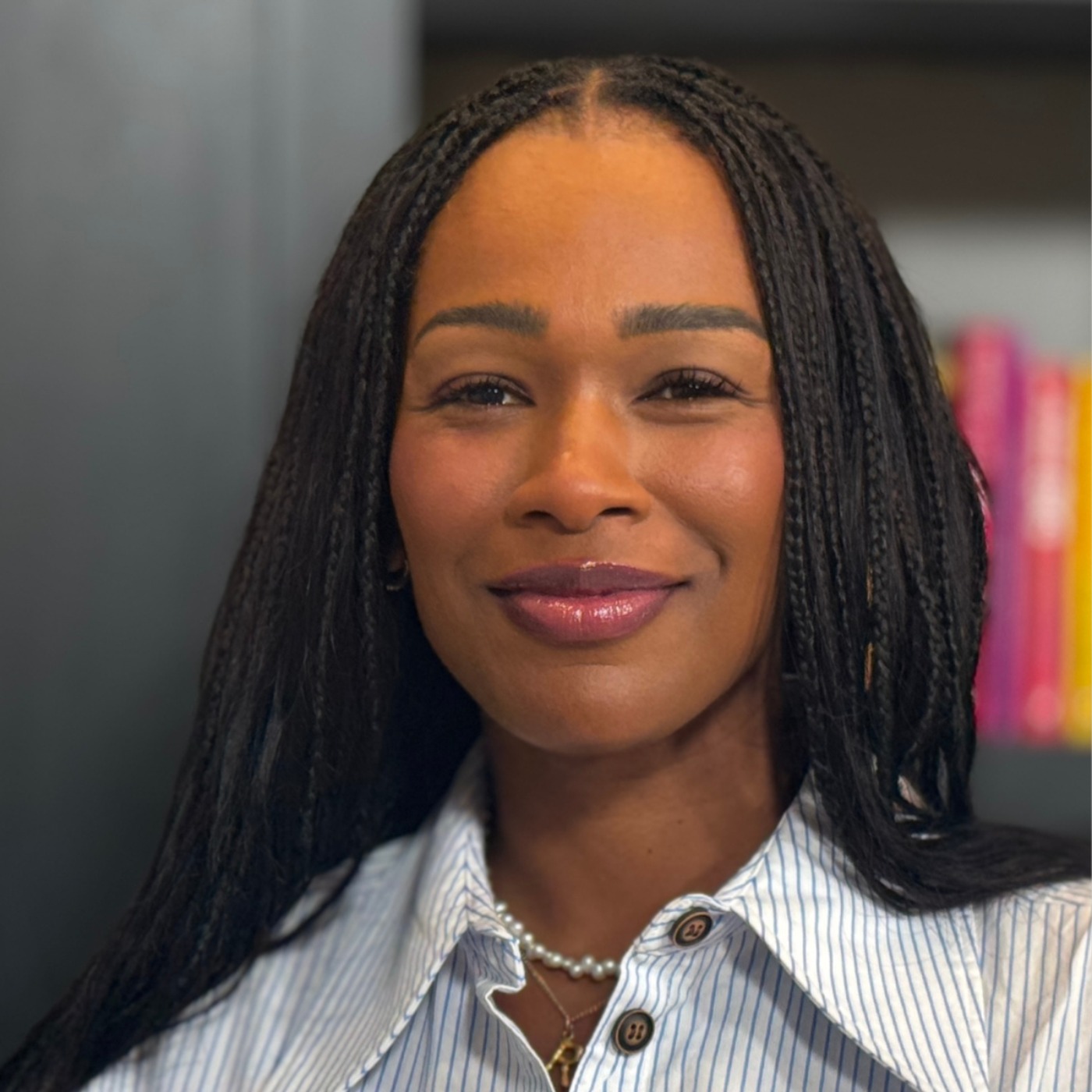
Sharmadean Reid MBE’s career-building journey from early jobs in Wolverhampton to founding and scaling nail and beauty businesses, then moving into tech/venture capital. Episode focuses on her motivations (outsider drive, fear of rejection), storytelling and negotiation, and how she spotted trends (e.g., nail art) and built businesses around early adopters.
Sharma “Sharmadean” Reid MBE grew up on a council estate in Wolverhampton with a single parent and a tight-knit Jamaican family. She studied fashion communication at Central Saint Martins, interned for Nicola Formichetti and Kim Jones, and worked with Nike for over 10 years as a creative director/stylist and trend reporter. She later founded nail salon brands including “Wire Nails,” then built “Beauty Stack” (software for booking/visual discovery).
UK creative education lacks commercial/business training; entrepreneurs must master storytelling and learn to ask/negotiation (“fear of no”); women’s pay gap widens after having children due to compounding experience loss and domestic mental load.
starting a nail salon in 2008 with ~£7k; “anything you want on your nails” (dentist-themed nails, grandchild photo nails); getting Topshop (Oxford Circus) after emailing the beauty buyer; using Tumblr for Wire Nails’ website to amplify content globally; later building a computer-vision “visual booking system” for Beauty Stack.
Written by AI. May contain mistakes.
Learn about Sharmadean Reid's entrepreneurial spirit and early struggles.
“I had my first existential crisis burnout when I was 28, 29.”
Sharmadean discusses her upbringing and how it shaped her business mindset.
“Capital and any income from it is at risk.”
Explore how feeling like an outsider fueled Sharmadean's determination.
“Can that feeling of being an outsider actually help drive you make you more determined?”
Sharmadean explains the balance between her creative and business sides.
“And that thing was always there were two there are two wolves within me, the artistic wolf and the business wolf.”
Discussing the shortcomings of the education system in nurturing business skills.
“Yeah, well, it's actually quite interesting because when I reflect on my university experience, I feel like there was not remotely enough input on how to make a living out of your art.”
Sharmadean shares insights from her early career and influential mentors.
“You know, like I said, I didn't have family support.”
The evolution of nail art and how Sharmadean identified it as a trend.
“It's actually crazy to think about now because I was just so young, 23, 24, flying by myself, you know, and doing jobs and just having to figure stuff out.”
Sharmadean emphasizes learning through personal experiences and observations.
Learn why the current education system fails to prepare creatives for business challenges.
“Other people might be getting that creative training and fashion training, but they're failing because there's no business training to go with it.”
Discover how Sharmadean's frustration led her to open her own nail salon.
“Have it as part of the careers service we should be getting a entrepreneur into every school in the country.”
Understand the importance of storytelling and a manifesto for entrepreneurs.
“So I just, you know, Christmas is such a great time to ruminate on ideas.”
Explore the practical steps and lessons learned from launching a nail salon.
“You're telling the consumer, you're telling an investor, you're telling your team.”
Learn about Sharmadean's staffing challenges and rapid business growth.
“What was the toughest challenge and was there anything that you discovered that wasn't in the e-book that told you how to open the salon?”
Discover why asking for what you want is crucial in entrepreneurship.
“Who's going to win the Formula One Silverstone British Grand Prix, do you think?”
Understand the complex reasons behind the gender pay gap in business.
“The way I look at it is that it's a numbers game.”
Explore how family life impacts women's career trajectories and the pay gap.
“And then they've got to juggle that managing family life and the average age to start a business is actually 42 therefore most women will then have kids and trying to run a business makes it much harder.”
Learn how Sharmadean Reid transformed her nail salon through innovative tech solutions.
“looking after parents it's the mental load because instead of thinking about my business strategy I'm thinking has my son's pee kit been washed?”
Discover the process of creating a tailored software system for beauty freelancers.
“I had my first existential crisis burnout when I was 28, 29, and I moved back to Wolverhampton for the first time.”
Understand how Sharmadean educated herself about venture capital to succeed.

Get the gist, explore an idea or ask about something said.
 Claude
On The Business Leader Podcast with Sir Richard Harpin, what are the key points of this episode?
Searching your listeningAutomatic transcript. May contain errors.
0:00Sharmadean Reid MBE: I had my first existential crisis burnout when I was 28, 29. The business was booming in a way that I just felt like it was going out of control. You have to get over the fear of no's. If I send 100 emails, I only need two yeses or one yes. I think storytelling is one of the most important skills an entrepreneur can have. I think a big driving force for me has always been feeling like an outsider. If I want to be accepted within a world, what do I have to do? Once I was in the room, I knew what to say to become invited back. My guest today grew up in Wolverhampton. She conquered London, then approached venture capital.
0:40She stopped some of her businesses and started again, each time rethinking how to scale. Sharma Reid MBE has spent 20 years building things and learning about how to succeed in business. And now something from our sponsor, RBC Wealth Management. You're making decisions that matter to a lot of people. But what about your ideas? Ideas for what you want your money to do. Ideas that need the time and advice they've never been given. At RBC Wealth Management, with over 100 years of expertise, our advisors build plans around your ideas, not just your assets. Ideas happen here. Talk to us at RBC Wealth Management.
1:25Capital and any income from it is at risk. Sharma, it's great to have you here on the Business Leader Podcast. You grew up on a council estate in Wolverhampton with a single parent that brought you up. You ended up going to Buckingham Palace to get an MBE. You've run several very successful businesses. Tell us about the journey.
1:50Sharmadean Reid MBE: Oh, well, as you said, I grew up in Wolverhampton. And I now live there 42 years later, which is wonderful. I love it. I do think that small town mentality really made me hungry. I think growing up in Wolverhampton also gave me lots of opportunity to brush up against different types of people. so like my first ever job when I was 14 years old was chambermaiding in a small hotel run by a couple parents of a friend at school and it was the first time I saw entrepreneurship I saw this couple running their business and I was good at what I did so I got promoted really quickly and that's because there wasn't enough family income you needed to earn some money yeah absolutely well you know it was more that so when I was growing up I never ever felt poor what you know come from a very um big Jamaican family like really tight knit so I never ever felt like I went without but there are things I wanted and things I wanted to do namely buy magazines and buy clothes that I was like if I want this I need to earn my own money so I did start working at 14.
3:03Sharmadean Reid MBE: I got promoted to be in a waitress which for the Sunday lunch which then put me in contact with the men's business Rotary Club and it was the first time can you imagine I'm 15 years old just a young black girl from Wolverhampton I saw this room full of like 50 men having a lunch every month and I had no idea what it was but I knew that this was where like deals were making power was forging and I used to take the Sunday papers home with me from the Sunday lunch so I'd read the Times on the floor of my council house and you know my family did think I was a bit weird to be like why are you reading the business pages of the Sunday Times I just found it fascinating you sort of wanted to be part of that club yeah I think a big driving force for me has always been feeling like an outsider and feeling like if I want to be accepted within a world what do I have to do and I wouldn't say this is necessarily healthy and with coaches and the work that I've on myself I've realised that is not always the best motivation but for sure from a teenager to age 40 it was the driving motivation that got me to everywhere I needed to go.
4:12Can that feeling of being an outsider actually help drive you make you more determined?
4:17Sharmadean Reid MBE: Absolutely it made me completely determined because I was almost like an anthropologist looking at the codes I was like okay So what is the language of business? What is the way that you dress for business? What is the type of questions you might ask if you were meeting a business leader? Because, you know, I was very lucky to be in rooms of certain people. But then once I was in the room, I knew what to say to become invited back. And I think that was key. So, yeah, being an outsider, it kind of made me hungry to be part of something. And that thing was always there were two there are two wolves within me, the artistic wolf and the business wolf.
4:59Sharmadean Reid MBE: And I love them both. But the artistic wolf was fairly easy for me to satisfy the business wolf. I felt like I had to break through. I'm Richard Harpin, a Yorkshireman who sold my company HomeServe for four billion pounds. and this is a Business Leader podcast where we look at the stories and strategies behind modern businesses. I'm passionate about helping British businesses scale and succeed. I think it's the key to unlocking Britain's economic growth. Founders and CEOs of mid-sized companies can be members of the Business Leader community for coaching, peer-to-peer forums and exclusive learning events.
5:37So do get involved. Sign up to our weekly newsletter at businessleader.co.uk slash newsletters. It's free and it helps us grow the community. The artistic wolf, the creative side of you, Sharma, that took you to Central St. Martins.
5:55Sharmadean Reid MBE: Yeah, so when I was 12 years old, my cousin was preparing to go to university. She had a lot of prospectuses around her and one of them was for London College of Fashion. It was this, I can picture it now, That was this beautiful green linen embossed prospectus. And I couldn't believe you could go to university to do fashion. I was like, that's crazy because I've always loved. I grew up with cable TV. So I was different to other little British children who just had four channels of grey EastEnders Coronation Street. I had Dynasty, Bold and the Beautiful, MTV. So I was like very visually rich from a young age.
6:33Sharmadean Reid MBE: And I was like, I want to do fashion. so then I realized that actually Central Saint Martins was more suited to what I wanted to do and I called up the university every single year from age 12 to 18 to order a prospectus to my grandmother's house and to make sure that the course I wanted to do was still there it was fashion communication and promotion so then when I interviewed for the course they told me in the room that I'd got a place because I was just I was very over prepared you know And then I packed up my life in Wolverhampton in a little bag and then moved to London to study fashion communication at Central St.
7:13Sharmadean Reid MBE: Martins and graduated with the first four years later. And that then set you up for your business career. Yeah, well, it's actually quite interesting because when I reflect on my university experience, I feel like there was not remotely enough input on how to make a living out of your art. There was no business advice for anyone who was not purely doing fashion. So just to be clear, all the degrees at Central Saint Martins were either fine art, fashion design. They were very, very, very artistic. It was like your Alexander McQueen's and your Stella McCartney's. My degree was this strange offshoot, which was everything to do with fashion, apart from making clothes.
7:59Sharmadean Reid MBE: So graphic design, journalism, publishing and commercials. You know, a lot of people graduate and end up working as brand managers, but you weren't taught the commercials of fashion and creativity. And I think there's a huge gap in, you know, UK education between everything that is seen as like a STEM or business or series and then everything else when I think there's a future for them to be merged together. So when I graduated, the only reason why I had any sort of commercial knowledge is because I'd been working the whole way through my degree. You know, like I said, I didn't have family support.
8:34Sharmadean Reid MBE: I had to have a job. And I interned for a stylist, Nicola Formichetti, who's quite famous now. He's the creative director of MAC Cosmetics. And also Kim Jones, who was a fashion designer, you know, who's at Dior, at Fendi. And those two, my two mentor first bosses, were super commercial. I remember they were never poor when everyone else in Dalston was poor. They negotiated rates. I just heard the language of like negotiation through what they were doing. And, you know, they were doing big jobs for H &M, huge campaigns and being paid appropriately for it. Whereas if you imagine everyone else in that world was not being paid very well.
9:20Sharmadean Reid MBE: From there, I ended up working at Nike and consulted with them for well over 10 years. and they would fly me all over the world to either do styling, events, merch, a bit of everything really, just like be a creative eye on the ground and it was through, you've got to remember Richard, I'd never been on a plane before, I'd never taken a plane until I was 23 years old when I went to LA for the first time to do a shoot. How did that feel? I was actually excited because yeah I felt like America was this place that I'd seen so much that when I went there it was like I was just in a movie you know any trepidation or worry no you know when I was young when I look back at my journey I didn't really have a lot of worry until I got older it's that youthful naivety that I think is essential when starting anything you kind of need to not know the dangers you know so no I I I flew around the world for Nike.
10:25Sharmadean Reid MBE: It's actually crazy to think about now because I was just so young, 23, 24, flying by myself, you know, and doing jobs and just having to figure stuff out. And I remember going to Shanghai and Hong Kong and I went to Tokyo and I saw this trend. Well, one of the things I used to do for Nike was write trend reports. I would go, it's my dream job, really. I went all over the world, taking the anthropologist in me again and observing the way that different people lived and worked and the way they dress, the way they interacted. And I would write these trend reports for Nike. And I was always really good at trend forecasting.
11:04Sharmadean Reid MBE: One of the trends I saw was nail art. And it was like, you know, if you cast your mind back to 2006, seven, people would just have very neat, plain manicures. You would never have like crazy nail art because that would be seen as like low class you know oh only girls in brixton or hackney you know it's also quite racialized as well globally like to have nail art so i was like i'm seeing more and more cool young girl nail artists i think this is going to be a huge trend i put it in the trend report this was happening in the u.s or was over here as well so not over here at all it was there was an amazing artist in chicago called astro wifey there was one in new york valley nails and there were a lot in la but it was this it was this evolution of nail art which had been happening underground for a long time it was like coming into the forefront of not yet mainstream but early adopters and that's where i get the trends so this was going to america doing it paid by nike yeah and finding an idea that was big over there and then bringing it back over here totally but i never even strategically thought about it like that sort of happened it just sort of happened because i was earning an incredibly good living as a creative director and stylist like i was making a lot of money doing not that much how much how much are you making at the time so when i was so funny when i think i was making like a grand a day i could charge a grand a day and I wouldn't work all month I would work like four or five days a month how does that compare with your chambermaid cleaning job age 14 well actually on a on a um relative basis I was earning five pounds an hour as a 14 year old which is actually quite a lot I was getting 20 pound a week and I would fold that note up in my tiny little purse you know and I was on free school meals so I was rich as far as I'm concerned but I used that the way that I lived back then was I would work a week or two of the year because obviously it's freelance work of the month sorry it's freelance work so I'd only work four three four five days of the month the rest of the time I'd be researching I'd be in the library I'd go to a club if I heard I remember once um you know I was dating a guy and I saw in a magazine that I all girl punk band were playing in Holloway that night so i was like i'm going and he was so confused that i would just get up and go and i was like but i have to see with my own eyes what the girl band is like who's in the room what they're wearing what the energy is i need to touch it i can see it because that is going to inform my work and take a look at the nails as well exactly take a look at their nails because all of this information is then synthesized in my subconscious to help me make the best products ever you know and I still do that practice today.
14:08So you were learning by working for big companies, you'd got your fashion and creative gene within you and thinking about how you're going to bring those together but let's just go back to that point that you made Sharma about our education system is failing in the UK because most people are not like you and that you were getting experience and working in different jobs. Other people might be getting that creative training and fashion training, but they're failing because there's no business training to go with it.
14:48Sharmadean Reid MBE: Absolutely. And I think, you know, when you look at young people today, they aspire to be YouTubers and content creators and these are you know I've got a son who's 15 and when he first said he wanted to be a YouTuber when he was seven I was like are you crazy and now I'm like oh that's a really viable career actually but most of those people who become creatives creators don't know how to manage their money scale their services they are effectively running small businesses there are YouTubers today that are making more money than many of the businesses in the UK that are not supported by anything to do with the government or education so I think there needs to be an understanding that we're entering a new era of work of media of ambition of what determines what a business is and building an infrastructure to support that you know you could be a content creator a youtuber today and you're running a small team in the same way that a production company that's in Soho are running a small team but you're not taking us seriously you know and I do think that that needs to change.
15:54So we should recognise entrepreneurship as a career shouldn't we? Yeah absolutely. Have it as part of the careers service we should be getting a entrepreneur into every school in the country.
16:05Sharmadean Reid MBE: Absolutely and you know I have done so much mentoring and talking to schools and I especially love talking to girls schools because they need to see that someone who looks like me has been able to do the things that I've done. So how did your first business come about? Yeah so with my nails as I said I was flying all over the world saw this trend there was a nail design that I really wanted it was a Dior double French so you have a French tip that's white and you have a half moon that's white and I took it to my local nail salon and they wouldn't do it they were like oh it's too complicated it's going to take too long it's going to cost too much And I remember my partner at the time, who's my son's father, picked me up and I remember getting in the car, slamming the door and being like, I'm just going to open my own nail salon.
16:55Sharmadean Reid MBE: And it was like two weeks before Christmas in 2008. So I just, you know, Christmas is such a great time to ruminate on ideas. I love the time between Christmas and New Year's for just thinking about stuff, business, future life. Do you write the stuff down and put it into a plan or not or it stays in your head? Well, the first thing I write, because I write a lot, is a sort of thesis or a manifesto. So it's more like a personal message or I imagine that there's an audience that I want to get on board the journey and I write them a statement. I write them what I call a rousing speech. I'm like come on comrades we need to change xyz and build a new world and the new world's going to come be this and are you with me so I tend to do that with all my businesses which is right almost like a philosophical manifesto this is the power of storytelling isn't it and writing it down and how entrepreneurs need to communicate I think storytelling is one of the most important skills an entrepreneur can have because you're telling that story over and over and over again to different stakeholders.
18:06Sharmadean Reid MBE: You're telling the consumer, you're telling an investor, you're telling your team. So I like to start with the blueprint story first. So I would have written something in my notes about I'm going to build a salon and it's going to be like this and you know you can get anything you want. The core statement was anything you want on your nails we will do it. One of our clients was going to meet her partner's parents for the first time and they were dentists. So she came and asked for dentist themed nails. We did a mouthwash. We did a tooth. We did a floss. Anything anyone wanted on nails. And if we didn't know how to do it, we would figure it out.
18:42Sharmadean Reid MBE: So someone wanted a photograph of their grandchild encapsulated within a nail. OK, so what is the best paper to print on to do that? We just figure it out. And it felt like an artist studio, not a nail salon. So you'd walk past and it would pique your interest because you'd be like, what is this? It's sort of a tattoo parlour for nails, isn't it? Totally. I would say that we looked more like a gallery, nightclub, tattoo parlour than we did a kind of sterile sanitary nail salon. And that's what attracted the core group that I'm always obsessed with, which is the early adopter group. You know, in like Crossing the Chasm, you have the early adopters and then the laggards and, you know, the mainstream.
19:27Sharmadean Reid MBE: So the early adopters were obsessed with the brand. I started it with no money. Well, I won't say no money because I probably had whatever was in my bank account from working at Nike. I started it with. How much was that? I must have had maybe 7k and spent all of that on the six months rent up front on deposit on the property. The first six months. So basically a year's worth of rent and buying the furniture for the salon, which I just got from Ikea. Because salon tables, custom was super, they're in the thousands. And then hiring and training the first staff. and a lot of it was legal and licensing as well because you know you need different licenses from different councils it was actually like it was crazy you know that whole Christmas I was on my phone you got to remember we didn't have iPhones then it was I was still on a Blackberry so I was accessing the internet on a Blackberry where there were no nail blogs there was no Instagram tumblr was a thing um reading how to open an hour salon and i'll tell you one thing that was absolutely key this incredible woman who'd opened a salon in selfridges like years before she had written an ebook in comic sans font for 4.99 that i downloaded called how to open a salon and that ebook that I read on my phone became the blueprint and and you know there's still lessons in that ebook that I remember today one of them was focus on your money making stations so every single station in the salon needs to be making money and the second thing I remember is never take from your employees rice bowl so never like you know penalize them for like breaks or things like that make sure that they are well funded in their salary.
21:26Sharmadean Reid MBE: I'll never forget that. What was the toughest challenge and was there anything that you discovered that wasn't in the e-book that told you how to open the salon? I knew very early on that staffing was going to be the main challenge because I was looking for a very unique type of nail artist that actually didn't exist yet. It was someone who had gone through formal beauty training but also was very artistic mostly if you'd done beauty training it was more medical and more clean you know a perfect nail polish or if you're an artist you didn't know the you didn't have the qualifications to do nails so what I did is I actually look for a bit of both you've got to remember the whole time I'm doing this I'm still thinking that I'm a stylist not an entrepreneur i'm juggling that and then i got pregnant within one year of opening the business so i had no plan and the other thing to remember and this happens with everything i launched because i'm very good at a launch everyone wanted to partner with us so i said yes to absolutely everything we flew all over the we did a partnership with ferrari painting the ferrari logo in the vip lounge at the Abu Dhabi Grand Prix.
22:42That's why you've got red nails today. Who's going to win the Formula One Silverstone British Grand Prix, do you think?
22:52Sharmadean Reid MBE: I have no idea. I don't follow any of that now. It's really funny, like how tunnel vision I get when I'm in a world, you know, like you could ask me about the nail world now and I know nothing about it because I'm tunnel vision on the business that I'm doing now. But it was like, I guess when I look back at that period of my life right i think that i was like a floating dinghy in a sea saying yes to everything juggling 10 different things being exhausted and actually having the um challenge of too much success like everyone loved this brand and everyone wanted it and we're in top shop in oxford circus for four years you know we it was that happened within six months of opening your first salon didn't well i knew that in order to scale up the business i needed a really high footfall location and top shop at the time had a nail salon um that was more not geared towards younger customers and i knew that we were the future so i actually wrote an email to the beauty buyer right now i'm looking at my nails they're gold tipped with a soroski crystal on top and the chanel logo it's called nail art and it's the future and your customers are going to wonder why you don't have it and then we got in and you got an immediate response to that email did you yeah i did got an immediate response and they were like let's do a trial and then the trial turned into four years so this was finding the right person to email and then a very provocative statement yeah you know one thing that i realized and i just actually still um did this yesterday which is you just have to ask.
24:33You just never know. What stops other people from just asking like you do?
24:37Sharmadean Reid MBE: I think there's a fear of rejection is a huge one, which I think you need to get over pretty quickly if you want to be successful in business. You have to get over the fear of no's. The way I look at it is that it's a numbers game. I'm like, if I send 100 emails, I only need two yeses or one yes. and I treat everything like that from fundraising to like partnerships it's like you only need one yes so it's just a numbers game and then the no's don't become personal so I think there's a huge fear of rejection and then also in fact if I go back one step further I don't think people realize you can ask they think that whatever's been given to you or offered to you you have to say yes to and that's just not true.
25:26Sharmadean Reid MBE: One of the most formative books I've ever read is Never Split the Difference. That book, I devoured it in four hours flat because I felt like I was getting this secret information that no one had told me before. And what was the biggest bit of learning in that book? That you can ask for anything. You know, it's all about, if anyone's not read it, it's an FBI negotiator just teaching you how to negotiate. But you've got to have the confidence to ask. you know you could be writing an email with shaking hands but you write that email and you say this is what I would like in this negotiation and what what's going to happen the worst that can say is no you go back again you go back again so that book really taught me that there are multiple ways to do a deal and it doesn't have to be the first thing that is given to you have to say yes and now I treat my entire life like that like especially with leases because when I was opening salons regularly i didn't realize that i could negotiate a lease i just i thought oh that's the price i have to say that in the e-book that you bought for 4.99 then that's the bit that needs updating they need to update it i mean it's 20 years old but it was it was brilliant it's definitely helped me at the time but like when we had a salon in soho with shaftesbury estates so you know it's very competitive to have a shop in soho so i had to do this whole pitch in front of the team to say we are going to create a retail experience this is not just a nail salon not only is this a retail experience it's going to put soho on the map because visitors are going to come to the shop from all over the world therefore put you know four peter street will be on the map and we're going to do this tech and this and the events you know got them very excited about it and i negotiated a much better rent and a lower deposit is this fear of rejection and fear of no why we don't have more female successful entrepreneurs do you think i think the reason why we don't have more female successful entrepreneurs is a incredibly complex one there is no silver bullet answer there's no one size fits all because it starts from birth it starts in the way that girls are treated and the type of activities that they are pushed towards versus men and there have been multiple studies like I've did a lot of work with UN Women UK on this as well kind of understanding the gender imbalance within business and fundraising in particular so there is no short answer we could do you know eight hours of a podcast but what I will say is there's one stat that always stands out to me which is that men and women roughly earn the same amount from like you know graduation to age 30 ish as soon as women start having children that is when the pay gap widens and widens and widens and because of compounding interest and because of compounding experience not many women can basically catch up to where they should have been prior to having children.
28:35And then they've got to juggle that managing family life and the average age to start a business is actually 42 therefore most women will then have kids and trying to run a business makes it much harder.
28:51Sharmadean Reid MBE: Absolutely and I think one of the most interesting things to me is that I had my son at 26 years old in my hometown and in my Jamaican culture that's perfectly normal but in London that was really strange because most women you know working women within my circle anecdotally weren't thinking about having children till 35 36. I now am in a position where I am relatively free I'm 42 years old my son's 15 he's about to finish his GCSEs and I can kind of do what I want whereas all my other friends who had babies later are in the thick of it and I feel like when I was younger I used to look at my friends and think have I made a mistake have I done things wrong you know I did all these businesses I was working a lot I was you know very busy working mum but actually I wouldn't change anything because right now I've still got energy just about I can feel that energy still got energy still passionate still excited about what I'm doing but I have a lot more freedom than I did when I was 26 and it you know we don't talk about what I call in my book the domestic cognitive load it's not just the physicality of looking after a family or you know you might be looking after parents it's the mental load because instead of thinking about my business strategy I'm thinking has my son's pee kit been washed?
30:22Sharmadean Reid MBE: Is his school shirt ironed? Is he getting enough fibre? Is he okay at school? Is he being bullied? And then it goes on and on and on and that is my share that is being taken away from business. When I start a business I get obsessed like absolutely obsessed. So the fact that my brain is vying for all this different information is mentally exhausting and that is what I think leads to burnout in women a lot. it's the mental exhaustion not simply just the physical what happened to wire nails in the end and then what did you do after that so one of the biggest things about wire nails and this was really a huge innovation in the way that we grew our business is that we had a website that was built with tumblr as the back end so tumblr was a web publishing tool you know at its height it was being used by hundreds of millions of people and instead of building a website we like go daddy or Weebly, I built it on Tumblr.
31:20Sharmadean Reid MBE: I used basic HTML, Googled it, built this website. What it meant that is that our pictures of nail art were being shared across the globe, like in the millions. So imagine we are a tiny little salon in Dalston and there could have been other tiny little salons all over the world, but we amplified our message in the millions because of the way that I structured the technology within which we use to promote our business. One thing from that, it was a visual situation. I felt like customers were screenshot. I didn't feel I knew. Customers were screenshotting pictures of nails from our website and then our Instagram and saying, how much is this?
32:03Sharmadean Reid MBE: How long did it take? Who did it? I was like, there needs to be a booking system because the booking system we've got right now, which was built 20 years ago, cannot sufficiently organise that level of information. And also I was doing a very rudimentary tagging system. So pre-AI, you know, and pre-computer vision, I was manually tagging. So like red, long, pointy, sexy nails or leopard print, big leopard, green, christening, wedding. I was just manually writing these tags on the images. It was very time consuming. So I had this idea. I was like, what if the customer could click a picture and book the picture?
32:49Sharmadean Reid MBE: They'd know exactly who did it, how much it cost, what it was. When I say what it was, is this acrylic? Is it nail polish? Is it gel? so I was like how can I take this creative strange beauty world and apply computer vision like a visual booking system you know all of these different tech things to it so that's what I did and I launched beauty stack and how many how many different pictures were there how many different thousands thousands you know what's really funny and again the thing about war is we made lots and lots of incremental innovations in the way a salon ran that is now normal today but they weren't normal a lot of people um emulated what we did one of them was when you went to a nail salon in 2008 they wouldn't take a picture of your nails because they'd be plain you just have hundreds of pictures as a plain nails because every nail we did was an artwork if you imagine we might have had 50 customers there's 50 pieces of artwork every day that's 50 pieces of content what we'd call now social media and inventory and inventory and 50 pieces of data so i was like every single image of our nails is data is insights is a marketing tool what we did was flip the hand around we'd have a cool background you know it would be a book or a magazine and you could really see the nails because I would always say to my team if they ever took bad pictures I'd be like we're not selling fingers we're not selling background we're selling nails zoom in on those nails and get every detail so yeah there were just lots and lots of little things so from all of these photos and I'm talking thousands of photos I then did a proposal I've been thinking about this for 10 years I was to build a software system.
34:44Sharmadean Reid MBE: I had my first existential crisis burnout when I was 28, 29, and I moved back to Wolverhampton for the first time. I just needed a rest. It was crazy. You know, I had a three, four year old. I was separating from my son's father. The business was booming in a way that I just felt like it was going out of control. So I remember we did a job in Moscow and I was like, I can't go, I'm too tired. And I sent the girls to Moscow to do nails for a client there. So I moved back to my hometown for two years. And during that time, I meditated, ate vegan, walked every day, listened to Eckhart Tolle. It was very much the beginning of my sort of self-development journey.
35:31The next stage of your career.
35:33Sharmadean Reid MBE: The next stage of my career. from there and with a quiet mind i thought i can do this i'm going to build this software system did you start by writing another manifesto what i started with was really thinking about how our customers were already hacking together a solution and why they were being underserved by the current incumbent and there's this big thing this through line with my work right which is there is a community you know typically I'm talking to women not so much now in my current business it's definitely gender equal but my first three businesses there is an area of women a community of women that are not being served by the big guys because they're either seen as not wealthy enough, you know, not cool enough, whatever it is, how do I serve them?
36:30Sharmadean Reid MBE: So I felt like the incumbent beauty booking systems were really geared towards an old school classic beauty salon. And there was this a bit like what I said with the YouTubers and content creators, there was this growing community of beauty professionals who were just cool girls who wanted to do nails or do lashes. I was like there is a whole economy growing here and no one's talking to them they're using Instagram they're hacking together a solution whereby people are DMing them on Instagram on WhatsApp and these are mainly sort of freelancers running their own business some of it would be going into people's homes rather than having a salon totally very independent they're the equivalent of the freelance art director but freelance the sort of the gig economy totally it was all about the gig economy and I was like how do I serve them how do I build something for them so then I did what I always do which was go really obsessive and deep and learn about venture capital I didn't know anything about it it was what year are we now so we're talking 2013 um you know we just heard things of Silicon Roundabout like you know the the entrepreneur was becoming a rock star but not quite in the UK yet and I was like I need to learn this world so I read there was only two books at the time believe it or not about venture capital one hopefully I've got them both here somewhere in my in my library well I read I've read a lot of books from this library I read zero I don't think zero to one was out the first book was called startup CEO that was brilliant then I also read a very detailed book called venture deals it was more like a textbook and then I listened to every podcast and the only podcast at the time was Harry Stebbings 20 Minute VC and Harry was at the beginning of the podcast and doing these interviews like the 20 minutes and as I would drop my son off at school I'd walk back home and listen to the podcast so I started to understand the vernacular of what it means to speak to an investor and I think that a lot of people who want to enter tech or enter the world of venture don't do that so they're not using necessarily the right language the right terms or the right tools to communicate so I learned everything about VC so a big skill here is curiosity and learning and being prepared I'm an infinite learner I'm obsessed I think being a student forever is what gives me a competitive edge because no one will outread me I will just like I I did a video for my latest brand launch which was every book I read to build this brand there was about 20 books and I was just like you have to see this because you have to see the level of depth it takes if you want to build something really cool so anyway I read everything and learned everything about VC I figured out how to do a pitch deck from very early websites and I was like okay I think I'm ready now and then I moved back to London in 2015 with this completely clear plan.
39:43And next week on the Business Leader podcast we'll find out how Sharma Dean's plan succeeded. Thanks for listening please do rate us and subscribe and make sure to sign up to our weekly newsletter at businessleader.co.uk slash newsletters. With more people on board Business Leader, we can have better conversations and inspire the UK's next wave of business leaders. You're making decisions that matter to a lot of people. But what about your ideas? Ideas for what you want your money to do. Ideas that need the time and advice they've never been given. At RBC Wealth Management, with over 100 years of expertise, our advisors build plans around your ideas not just your assets ideas happen here talk to us at rbc wealth management capital and any income from it is at risk
Sharmadean Reid MBE started working as a hotel chambermaid in Wolverhampton when she was 14 years old, before learning the lingo of business while waiting tables at the business Rotary Club of the hotel. Her career has been driven by the 'two wolves' inside of her – artistic and business. Reid has spent twenty years at the intersection of beauty, technology and women's empowerment. With a real talent for spotting trends, she founded a cult nail salon in Dalston called WAH Nails, before creating the tech platform Beautystack, a women's business community The Stack World, and most recently the luxury bathing brand 39BC.
In the first part of the interview with Sir Richard Harpin, she talks about what it takes to build a business from scratch, learning to ask for anything and overcoming fear of “no” as well as learning to “never split the difference”. She also shares her views on why aren’t there more successful female entrepreneurs in the UK and how domestic cognitive load can lead to burnout.
Stay tuned for part two, next week.
Subscribe to the Business Leader Podcast for weekly entrepreneur stories from founders and CEOs who’ve built and scaled great businesses. Join the Business Leader community for coaching, peer to peer forums and exclusive learning events. Sign up to our free weekly newsletter at businessleader.co.uk/newsletters.
Business Leader is a membership community for ambitious CEOs and founders of mid-sized UK companies, designed to help them grow with purpose through strategic support, peer-to-peer learning, expert coaching, and high-impact events. Sign up for our Business Leader newsletter here.
Hosted on Acast. See acast.com/privacy for more information.


