
 Ask ChatGPT


 The Business Leader Podcast with Sir Richard Harpin
7 Apr 2026 · 40m · 22 chapters
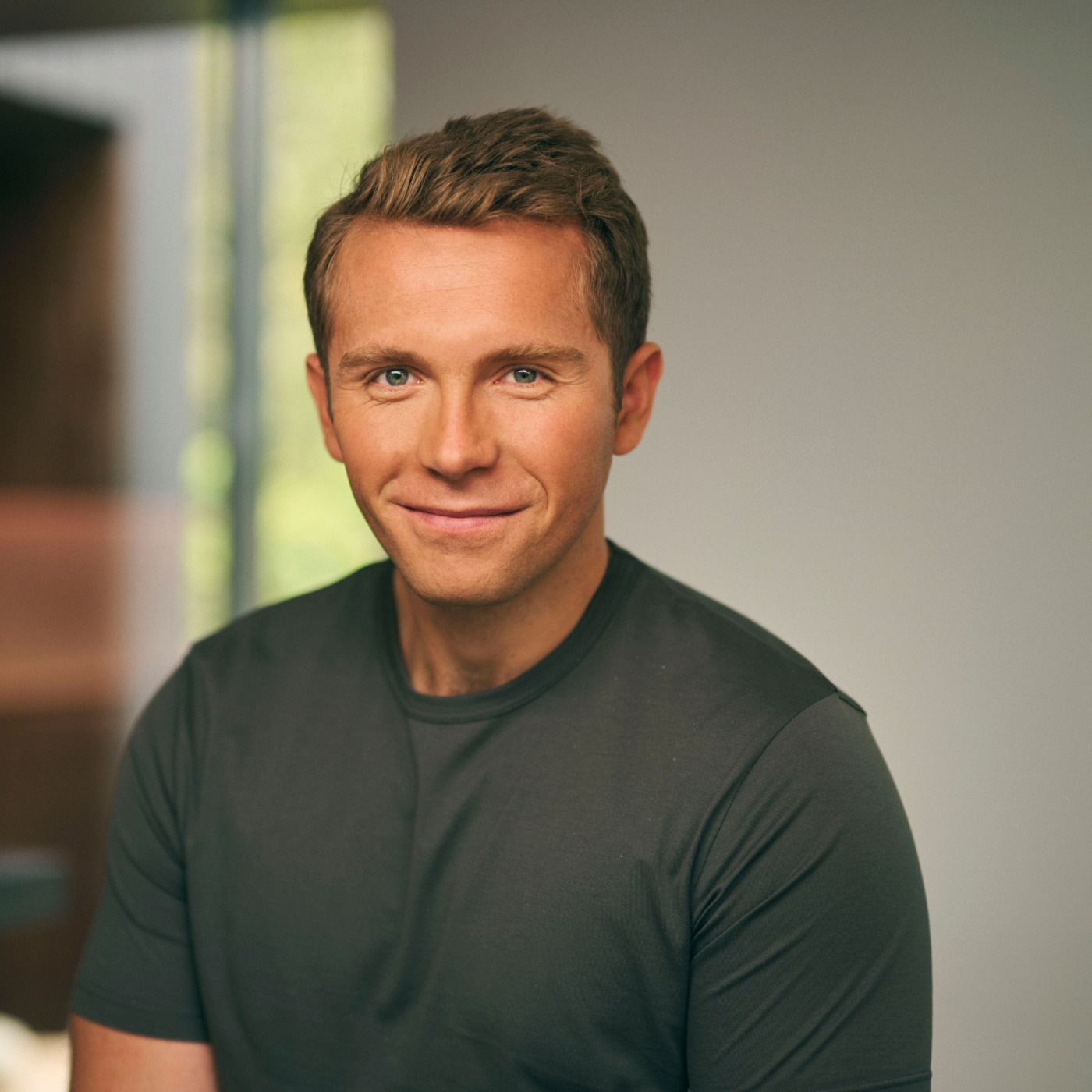
Episode topic: Harry Stebbings (20VC) explains how he built a podcast into a venture capital platform, and shares his framework for entrepreneurship and VC investing: start young, be “all in,” lead with openness, and win through storytelling, discipline, and high-volume effort (e.g., 100 clips/show). He argues fundraising is about packaging the upside for the right investor audience, and that VC is “steroids” for businesses needing very large exits.
Harry Stebbings is a former schoolboy entrepreneur (trading commodities via a stockbroker father; gaming studio; eBay phone arbitrage; Kindle Direct Publishing study notes). He dropped out of university early, became a top podcaster in his teens/20s, then launched 20VC, investing from an initial fund (first $1M offer via Shaq/Daniel X from Spotify; then raised to an $8M fund; claims portfolio value in the hundreds of millions, later “$9B companies in it”).
Most founders fail by not starting; great founders often have painful parental relationships and start early; “no plan B” mindset; WhatsApp relationships beat email for deep ties; investors should build with AI tools; VC is not for everyone; culture mistakes can be over-rigidity; public markets are “casinoization” and irrational.
Peter Thiel investing in Facebook (Clarion Capital) inspired his VC path; first podcast breakthrough was a £25,000 advertising deal; he cites Sam Altman, Klarna execs, and Sam Altman/“OpenAI” as podcast guests; he references Nick (Revolut) product incubation and “sleepy incumbent” strategy (e.g., HSBC serving students/migrants as a side dish).
Written by AI. May contain mistakes.
Learn about the traits that define successful entrepreneurs.
“There are three things that make the most successful entrepreneurs.”
Discover Harry's childhood ventures in trading and gaming.
“One of those is we were both schoolboy entrepreneurs.”
Explore how Harry's early experiences shaped his venture capital career.
“And showing that you can get through that.”
Understand the importance of relationships and personal connections in business.
“And therefore it's best not to have a plan B.”
Learn how hard work correlates with success and opportunities.
“I want to make a friend and build relationships and build relationships.”
Discuss the transition from email to messaging apps in building relationships.
“People are not willing to put in the hours today.”
Explore how storytelling impacts fundraising efforts in venture capital.
“And so I'm always pushing people off email and onto WhatsApp if I want a relationship.”
Explore how current economic conditions and AI are influencing venture capital investments.
“So when Trump was doing a lot of his tariffs or taxes on universities, it's probably going to be harder to raise from endowment funds.”
Learn the critical misconceptions founders have about raising venture capital.
“My biggest mistakes where I've lost literally a billion dollars is when I thought I was smarter than the market and actually I should have just got behind a great founder and invested in them.”
Discover the key traits and backgrounds that define successful entrepreneurs.
“And so it does inherently advantage you.”
Understand how flexibility in company culture can lead to better employee motivation and overall performance.
“But I speak to so many awful UK investors who do like milestone-based investing, which means that they can't plan accordingly.”
Examine why the UK remains a favorable environment for business growth despite economic challenges.
Learn how focusing on financial growth and personal development can enhance company culture.
“make money and they want to grow and if they do those two things then they will be happy and culture will be good.”
Discover why the UK is a promising location for starting and growing businesses despite economic challenges.
“And talk about the UK and it's a difficult economy and is it still a good place to set up a business and grow a business?”
Explore the competitive advantages European startups have over their US counterparts.
“And when you look across the board, 11 Labs beat OpenAI at voice.”
Understand the challenges facing growth capital in the UK and the investment landscape.
“As awful as it sounds, it's just not my business.”
Learn the importance of specializing in business types for better market targeting and success.
“to help them to become the next large companies.”
Discover strategies to identify and exploit market opportunities overlooked by established companies.
“And so you do have real durability there, which is very nice.”
Learn how young entrepreneurs can utilize AI tools effectively in their ventures.
“And so there are so many benefits that come from being very focused and specialized.”
Understand the emotional challenges of entrepreneurship and the importance of mentorship.
“Many entrepreneurs say that it's lonely.”
Explore how discipline and consistency contribute to achieving extraordinary results in business.
“I think I was very very overweight when I was young and I lost 50 kilos in six months which is dramatic and very unhealthy.”
Gain valuable insights and actionable advice for starting and sustaining a successful business.
“I don't want to be listening to you talk about, oh, I had that idea first.”

Get the gist, explore an idea or ask about something said.
 Claude
On The Business Leader Podcast with Sir Richard Harpin, what are the key points of this episode?
Searching your listeningAutomatic transcript. May contain errors.
0:02Harry Stebbings: There are three things that make the most successful entrepreneurs. Number one is you need a broken relationship with a parent. We look for pain in parental relationships, as awful as it sounds. I don't mean it arrogantly. There was no way that it wasn't going to be successful. Like, I just couldn't see that. I think people like to tell themselves things because it makes their own mediocrity feel less painful. Like, I am an alcoholic bulimic. She's seen me in my worst days. She's been there for me. It's not a difficult time to get investors. People just suck at telling stories. The biggest reason why people fail is they don't start.
0:45I'm Richard Harpin, and this is the Business Leader Podcast, where we look at the stories and strategies behind modern businesses. Today, my guest is Harry Stebbings, who is a very modern kind of entrepreneur. He's a superstar podcaster who became a venture capitalist with a portfolio valued in the hundreds of millions, all while still in his 20s. Not bad for somebody who dropped out of his university in his first year. So what lessons has he learnt along the way?
1:22Harry, great to have you on the Business Leader podcast. We've got a lot in common. One of those is we were both schoolboy entrepreneurs. This is totally true. How did you start?
1:35Harry Stebbings: Very good question. I actually started trading when I was younger. My dad was a stockbroker. And so I started trading commodities when I was like eight or nine years old. And I just fell in love with it. And then when I was 11, I fell in love with gaming. And I started building my own games. And so I had a game studio. And so I had two passions. I had technology and I had finance. and then I saw the social network and I saw Peter Thiel invest in Facebook with Clarion Capital and I was like, wow, you can blend technology and finance into this love child called venture capital and as a 13-year-old, I fell in love with venture capital through this movie.
2:09And didn't you also buy mobile phones on eBay and resell them at school?
2:14Harry Stebbings: Yeah, I did. That was 13, 14 in the boarding school years. It's very helpful when you have rich friends, I think is the answer. But I did. There's a great arbitrage opportunity when you could buy on eBay from Eastern Europe and then sell them in Western Europe. And so I made a good amount of money doing that. And so how many businesses did you run by the time you left school? Oh, my God, like seven or eight. I also did Kindle Direct Publishing of my notes. I made about$2 ,000 or$3 ,000 a month from publishing my notes on Kindle Direct Publishing, which is a 14, 15-year-old. It was quite a lot.
2:45These were your study notes.
2:47Harry Stebbings: Yeah, these were my study notes. And people paid for them in the thousands. And so I had quite a few different businesses early on. And so how important was that, do you think, in shaping the success that you've had today, those schoolboy ventures? I think when I look at great entrepreneurs that I've backed, I've backed$13 billion founders. There are three things that make the most successful entrepreneurs. Number one is you need a broken relationship with a parent. We look for pain in parental relationships, as awful as it sounds. And that's about overcoming adversity, isn't it? And showing that you can get through that.
3:23Harry Stebbings: Yeah, it's also about a chip on the shoulder and wanting to prove someone wrong. Most often with boys, it's about wanting to prove to their father that they were worthy of something. Number two is the age with which you started. Great entrepreneurs, just I think like you, do not start when they're 27 for the first time ever thinking about an entrepreneurial activity. You start very young. and then actually a third thing that is very important is where you actually came from in terms of the gaming clan that you originated from you can tell much more about the success of an entrepreneur from the clan that they came from rather than the university and so great entrepreneurs most often the gamers and how important is it to be all in rather than a side hustle and thinking back to that decision to leave law school early on and go all in in podcasting in kind of enterprise sales you say that you never want your farmer against someone else's hunter which is your customer success person against someone else's sales rep if you're doing it part-time and someone else is doing it full-time you're inherently at a disadvantage in an incredibly competitive world unless you're all in it's going to be very hard now are there ways to de-risk your business and do it on the side so you don't have to give up your full paying job when you have a family yes it's inherently easier and you're better advantage if you're doing it full time.
4:40And the podcast originally had no income and then I think there was a breakthrough moment when you got your first£25 ,000 advertising deal. What did that feel like?
4:52Harry Stebbings: It was amazing and I've never felt richer in my life, Richard. I remember showing my brother my bank account and I went from like£500 to£25 ,500 and I honestly thought that I was the richest man in the world. And did you have a plan B if your podcast wasn't successful and it's highly successful today? What would you have done if it hadn't worked out? No. I did not have a plan B. There was no way that it was. I didn't mean it arrogantly. There was no way that it wasn't going to be successful. I just couldn't see that. And therefore it's best not to have a plan B. You've got to be all in and go for it and say it's got to work.
5:30Harry Stebbings: Yeah, honestly. For me, I think positive visualizations everything now I was lucky in the way that I had the time to not have to make money for the first year or so because I was so young but yeah like burning the boats and giving everything to it really enabled me to be successful in the early days with it how far in were you when you what you started to get some amazing guests and you've had Sam Altman open AI on on your show you've had the chief exec of Klarna they they didn't come from the beginning did they no I think probably it took about a year or two before we got great people but every great business has a flywheel you've had many great businesses for your businesses it might be deliver a great customer experience and then they'll recommend you to more people at the end of each show I'd say Richard this was a fantastic show can you give me three other people that you think would be fantastic for me to have on and so the guest flywheel led to more and more great guests and that was always very important in driving the next show and so probably about a year but social validity drives most things in this world and we got pretty known pretty quickly for having great guests yeah also like this was 10 years ago people weren't doing podcasts having a 19 year old reach chat to you and ask for a podcast was quite unique.
6:49Does it feel like you're 10 years into your 20 VC, your podcast business? Yeah, I feel old.
6:56Harry Stebbings: No, I love it more than I've ever loved it. How can you feel old? It makes me feel old and I'm double your age. I love it more than I've ever loved it. And I always laugh at all the people who said to me that you can't keep up seven days a week for 10 years because after 10 years, I've never had more energy and I'm still ready to go and they were like you'll never make it you'll never make it I think people like to tell themselves things because it makes their own mediocrity feel less painful um don't listen to them how big an influence was your um was your mum to you my mum was hugely impactful and like I got asked the other day that I did an interview with the times and they were really digging into like money and how much money I have and you've had this I'm sure countless times and I really hate it when they start doing this and they said what do you spend money on and I was like actually genuinely the only thing I spend money on and I spend a lot of money on is my mother Chanel Christmas and birthday Richard this is expensive but I do it because I literally wouldn't be here without her like I am an alcoholic bulimic and she's seen me in my worst days and she's been there for me um and been there when no one else was and believed in me when no one else did and you said like oh you know what did you have a plan b no because she always told me that i could do anything that i set my mind to and she always said you know only you set the limits of your own achievements and even then i think you underestimate yourself i always remember that she also taught me it's not what you say it's not what you do it's how you make people feel and i i really think a lot about how i make people feel do i inspire the people around me i go into every meeting and i want it to be the best meeting of that person and so what's your advice to everybody out there on how they can make other people feel better what's that what's the magic ingredient that they can take away harry you have to lead with openness most people are afraid to be open and that prevents you from creating meaningful relationships i'm happy to talk to you about struggles with eating disorders and through that vulnerability you and i actually build a real relationship most people are not willing to go to those depths which means they don't actually build a relationship.
9:06Harry Stebbings: They're too transactional. You know what I hate as a word? Networking. I don't want to network with anyone. I want to make a friend and build relationships and build relationships. And by the way, you're not going to build relationships with everyone. Some people are just not your type of people. That's fine. But I hate this transactional thing of networking. There are most of my day is spent doing things that will yield no return and 1 % will yield 50 ,000 times. I'm happy with that. How do you work out how you put the time into the stuff that's going to deliver the best results? Because I think we all waste time, don't we?
9:43Harry Stebbings: Always time. You can't. You just have to do more and more things. And that's why hard work is so important because volume drives fortune and luck. The harder I work, the luckier I get. A hundred percent. It's beautiful. It's about the number of at-bats. The more hours you put in, the luckier you'll get. And, you know, with clips, we're talking about clips before, we do an outrageous number of clips, 100 clips per show, 100. I mean, it's insane. Why? Because we have a much higher likelihood of getting a viral hit if we do 100 versus six. People are not willing to put in the hours today. And it's so easy to be great today because most people are so mediocre.
10:22Harry Stebbings: It's the honest truth. Talk a little bit about how your venture capital fund and becoming a highly successful venture capital investor came out of your podcast? I always wanted to be an investor, not a podcaster. I only did... From what sort of age? 13. And what prompted that realization? Watching the social network and seeing Peter Thiel invest in Facebook and realizing that I could work with the greatest founders and invest in their amazing businesses. And for me, it was just a very obvious moment of this is how I want to spend the rest of my life. But essentially, I thought that everyone has a fund.
11:00Harry Stebbings: That's not very different. I will build the biggest media platform in the business and then offer distribution, brand and network in a way that no one else will do. That took three years before someone would give me money. And I had no money. I'm not a trust fund baby who had my family's money to invest. and then one specific person called Shaq, who's Daniel X, right-hand man from Spotify, said, hey, I'll give you a million bucks. Why don't you go and invest? You have an amazing source of deal flow. And I then went and raised$7 million more from other amazing people. And I started investing from an$8 million fund.
11:36Harry Stebbings: And that fund has$9 billion companies in it. And did you have to knock that door down to get that first million or did that just sort of come into you? It was offered to me over a dinner and then I went and raised it by WhatsAppping the other people. Remember, relationships. I'd had them all on the show and so I had WhatsApp relationships with all of these founders. And honestly, I got 40 founders to give me 250K and I invested their money in this$8 million fund. People consistently underappreciate the value of moving a relationship to WhatsApp. Email is the death of deep relationships. Email is a new junk mail, isn't it?
12:17Harry Stebbings: Sure, but it's just like you don't build a friendship on email. You build it on WhatsApp. And so I'm always pushing people off email and onto WhatsApp if I want a relationship. You share the moments in life that you wouldn't share otherwise. The game at Stamford Bridge, the child's christening, whatever it is. and so for me being able to raise money on whatsapp's always been quite a superpower is there a 70 million dollars for our new fund on whatsapp what will come after whatsapp do you think what's the if that's the evolution from email to whatsapp and where do we go next in terms of messaging i i'm i'm really not sure i think people consistently underestimate that instagram is a messaging platform more than anything these days um but i would never bet against Zuck.
13:05Harry Stebbings: Zuck is the best in terms of acquiring the latest properties. And I think WhatsApp has got a lot of room to run. You've been really successful, Harry, in building your venture capital fund in terms of the amount of money that's coming in. We all know it's a really difficult time to get investors. What's been the... It's not a difficult time to get investors. People just suck at telling stories. You know as well as I do, fundraising is a game of telling a story and making it compelling for an investor to see the upside. People, I'm not saying they're bad investors, a lot of them are very good, which is challenging, but they just don't know how to package their product.
13:42Harry Stebbings: Life is a game of packaging. HomeServe needed to be packaged and marketed and distributed well. Most managers just are not very good at marketing and that's why they're not very good at fundraising and fundraising is about isolating audiences and understanding what audience it's good to raise from at what times. So when Trump was doing a lot of his tariffs or taxes on universities, it's probably going to be harder to raise from endowment funds. But there's a lot of European family offices that are realizing venture is a great way to get heightened alpha right now. And they're massively open in a time when they weren't before.
14:16Harry Stebbings: So you need to know what audience is open at what time. And the effect of AI having on other tech investments, what's your view there? I mean like it's a rather fascinating world when you see the Citrini report which is this report released the other day and it wiped tens of billions of dollars off the stock market anthropic releasing a legal release that wiped tens of billions of dollars that security release we are in the casinoization of the public markets we are completely memed as a society calcium poly markets which is obviously prediction marketplaces have made us all dopamine chasing monkeys.
14:55Harry Stebbings: I like to stay out of irrational markets. I'm a rational investor and public markets today are thoroughly irrational and most of the products that we see in the dumps are massively oversold. Because at one point I think you were investing in public markets and that's, you've completely stopped now, have you? Well, when I was eight or nine, it was commodities in the publics. And so it was not equities, It was commodities and I was eight or nine. So it was kind of very early starting out. But yeah, the volatility that we see today in Publix on also the thing is the dissemination of information and the distribution of information is so obviously different from 2008.
15:36Harry Stebbings: Reports like the Citrini report can have such a damaging effect that we haven't quite seen the real time volatility from a tweet that we have today. A lot of the founders and chief execs entrepreneurs listening to this podcast will be thinking, should I be taking venture capital or private equity investment? What do you think some of the misconceptions that those founders have of VC? I mean, I think the most important thing is that venture capital is not for everyone. Venture capital is steroids for a business that put you on a very different trajectory than you would otherwise have. we don't need a billion dollar business.
16:17Harry Stebbings: We need a billion dollar revenue. I need a 10 billion dollar business. That's fundamentally not many companies at all. And so I think most founders think they should raise money from day one. You shouldn't. I'm sure you agree with me on that. You should find a problem, create a solution and find customers. Absolutely. I think it's about bootstrapping, isn't it? And friends and family money, keeping the burn rate low testing pivoting proving and it totally depends on what your business is like if you're building a next generation frontier model you simply can't do that if you rely on friends and family money unless bill gates is your friends and family so no um if you're doing that but if you're doing a consumer brand probably so so i think it just fundamentally depends on what business you're doing but I think most founders do not quite understand how big an exit you need to have for it to be a venture business.
17:18And for those companies that are successful in raising VC funding what's their magic formula do you think?
17:25Harry Stebbings: They are able to tell a great story. Again back to storytelling. You're one of two things when you're fundraising you're either Jerry Maguire or you are Walt Disney. Walt Disney is tell me a great story make it really come alive for me show me the upside and jerry maguire is show me the money really like prove with numbers how this is a rocket ship you need to be one of the two which is why it's often easier to raise money pre-revenue because you're still telling a story if you've got some revenue a million in revenue suddenly you have to do the show me the money story and that's much harder to do and so it's much easier to raise often pre-revenue how much you're looking at the entrepreneur themselves versus the the market and the business versus the the numbers how are you how are you weighting those i do not care about the market or the product or anything other than the entrepreneur the entrepreneur will 100 guide the outcome um we're also you know venture investors so we're minority shareholders and so i fundamentally am at the will or whim of the great founders that we work with i have to wholeheartedly get behind and believe in them.
18:36Harry Stebbings: My biggest mistakes where I've lost literally a billion dollars is when I thought I was smarter than the market and actually I should have just got behind a great founder and invested in them. And that's the big mistake that all investors make. They think that they're smarter than the market. I'm not smart enough to predict the future of the payroll market. I am smart enough to detect that that founder is truly great. What are the sort of things that you do and ask in order to find out whether that is the right entrepreneurial founder or not? I fundamentally start with childhood and I look for pain and trauma.
19:09Harry Stebbings: I look for how they describe their relationship with their sibling. How someone describes their relationship with their sibling will say a lot about how they think about themselves. How they discuss school and their relationship to authority and institutions will tell me a lot when they started their first business. Whether they were technical and into gaming early on. How they thought about the decision to go to university versus not go to university. all of these things will tell me everything that I need to know I always joke that if I get to the business in the meeting with the entrepreneur I've not done my job properly I could spend an hour just on the pre-18 era and I'll know everything that I need to know and these are the questions that you're finding out in advance or when you meet the entrepreneur what about yeah when you're meeting the entrepreneur yeah what about any sort of mystery shopping or due diligence behind the scenes of that character uh you you don't do them that that will fundamentally mislead you like the biggest mistakes that people make is they do reference schools and they say what was it what was harry like when he worked for you at home surf and you say harry was terrible he didn't take orders he was just completely a will unto his own isn't that what the greatest entrepreneurs are like yeah well that's a terrible it might be some negative answers to some of those questions incredibly negative he wore shorts and it was just so unprofessional yeah and that's what makes a great entrepreneur and so more often than not um it can be incredibly misleading when you have someone referencing from a past background so honestly no obviously we don't have a waiver on morals but for us i think that's a very dangerous thing we'll spend a huge amount of time with them i'll often go for three four hour walks with an entrepreneur because what you want to get to is the stage where you run out of conversation and then you actually have the freedom to say whatever you think and whatever's on their mind that's a very special moment and some phenotype as well as genotype what's the sort of the balance if somebody's had a highly successful entrepreneurial parent or grandparent is and it's in the genes is is that important or is it is it just the things that they've done in life?
21:21Harry Stebbings: Most often it's more helpful because it creates a chip on their shoulder that they want to be more successful than their parent. And so it does often lead to success and also it encourages them to start earlier. Often when you're a parent successful or an entrepreneur, you're just around entrepreneurship in a way that others may not be. And so it's more engendered in you. So I think it creates the chip on the shoulder. It exposes you earlier. And so it does inherently advantage you. but great entrepreneurs come from everywhere. And then if you're sort of encapsulating that in characteristics of the entrepreneur, Jim Collins in his sort of level five leadership characteristics would talk about sort of curiosity, low ego.
22:04What are those sorts of characteristics that are common in the entrepreneurs that you've backed, Harry?
22:08Harry Stebbings: I mean, curiosity, yes. Low ego is completely wrong and Jim would miss out on the greatest founders of today. I think if you look at the most successful entrepreneurs today that they're not low ego um but i think for me it's a case of dominance like they want to win in a way that no one else does that they're incredibly disciplined as well like they show up when no one else shows up um i think a product obsession as well you know when you look at nick at revolute nick runs 26 new product ideas alongside each other and then every year allocates more or less money to each of them and that's how they do new product and incubation that's a pretty impressive way to do product development um and so i would say discipline i'd say obsession i'd say product obsession and then resource allocation a ceo is fundamentally a resource allocator they starve or they supply cash to different parts of the business and the best fundamentally are able to do that better than anyone else and the first time entrepreneurs naturally know how to do that or are they trying to have too many ideas and fund too many things all at the same time?
23:16Harry Stebbings: I think the big mistake that venture capital makes is we foie gras startups. We give companies too much money too soon and that is very, very dangerous because it allows for a lack of focus with entrepreneurs where otherwise they would be more constrained. If I give you 30 million bucks, you can do the 10 things you wanted to do and you don't just do the one thing. Or drip feed it in, so do it in stages with clear hurdles. Oh, terrible. We should shoot the people that do that. I hate European investors because they do exactly that, which is drip feed. You need to give them enough money so they can plan their next 24 months accordingly.
23:52Harry Stebbings: But I speak to so many awful UK investors who do like milestone-based investing, which means that they can't plan accordingly. They're not able to allocate with a 12 to 24 month timeline and it just constrains the founder it's really painful it's like these i don't know if you see these angel networks like cambridge angel network please piss off you are damaging entrepreneurship in this country to what extent running your podcast business has it helped in terms of um uh being a good investor not just from the the contacts point of view but because you're running a business you're an entrepreneur yourself i think not just an investor?
24:33Harry Stebbings: I think number one, no one should be investing today unless they're building with AI tools. You should not be allowed to invest other people's money if you're not building with AI tools. We are building our own AI tools for clip selection, clip creation, research, finding companies. Being a business builder and an entrepreneur today, building with AI, makes you a better investor fundamentally. So I think that's number one. I think number two, there is a similarity between journalists or interviewers and investors which is the first five minutes of your meeting with a subject or founder you have five minutes to make them feel comfortable feel safe so they can open up to you in a way that they might not otherwise and that's really important to get the best out of them you learn how to do that from interviewing being a better interviewer made me a better founder and it made me a better investor because I learned that I think it's really important and then Harry what about the future of podcasting there are a lot of podcasts out there what are they going to look like in five years time I mean podcasts are a bit like websites where like everyone has one and most people fundamentally concentrate towards a few of the best ones I think you're going to see an increase in the supply side because it's much easier to create them.
25:57Harry Stebbings: It's much easier to distribute them. But I actually think you're going to see a concentration in terms of where the demand goes. And you're going to see more and more people focus on the established brands. When supply expands, I think you get more and more people focus on the brands that they know well. And I think those brands, and that's why I'm glad we are where we are 10 years in, will benefit from that. And can you predict what comes after the podcast? No. I mean, what comes after the podcast is TikTok and shorts. What comes after shorts is, I have no idea. It terrifies me. But I am worried that we are all dopamine chasing monkeys and shorts are the embodiment of that.
26:36Harry Stebbings: When you watch kids on TikTok, it's terrifying. It's the less than second attention span. Really scary. Yeah, I certainly made loads of mistakes in business and learned a lot more from my mistakes than my successes. What mistakes did you make and what have you learned and how can they help other entrepreneurs? I think the biggest mistake that I made was on culture, actually. On the culture, I thought that we needed to have this homogenous culture. We are this. And actually what I learned is that the way that we think about culture is too rigid. actually some people are carrot people and some people are stick people and some people are both depending on the time of year or day or whatever that is my job as an entrepreneur and ceo is to incentivize and motivate people in the way that works for them at the time that it does and i need to be plastic to that to get the best out of them that's a very difficult thing to do but it's definitely not a we are this homogenous culture i think for too long i tried to force a culture that was uniform and actually cultures are much more fluid than that yeah that was probably a big mistake that i made and i think people do underestimate the importance of culture don't they they do but they also get it wrong they think culture is an input culture to me is not an input we are unwaveringly focused on winning um and nick taught me this but fundamentally people want to make money and they want to grow and if they do those two things then they will be happy and culture will be good.
28:07Harry Stebbings: So we focus on making money and we focus on personal development and culture comes from that. We do not focus on table tennis tables or kombucha or team event bullshit. We focus on winning and personal development and then people are happy. Great, great tips. And talk about the UK and it's a difficult economy and is it still a good place to set up a business and grow a business? The UK is one of the best places to set up a business. When you look at what it takes to build a business in San Francisco today, average tenure for an employee is 13 months. Average tenure in the UK is 34 months. The cost to hire someone in San Francisco is enormous, and they churn.
28:49Harry Stebbings: And the cost to hire someone here is much, much less, and they stay longer. It's a great place to live. You have access to the European market. Honestly, I think we dramatically underappreciate how good it is to build a business in Europe and in London. And when you look across the board, 11 Labs beat OpenAI at voice. Synthesia beat HeyGen at video. Fixer, an email client for AI providers, beat all the other US email providers. We have time and time again beaten our US counterparts in some of the most competitive industries. I think we just lack the bluntly confidence to say that we actually can do this and that our good times are ahead.
29:32Harry Stebbings: And you know Europeans. We're self-deprecating. Yeah, it's the stuff that Americans are great at, aren't they? Sure. They're fantastic sellers. I said this the other day to an audience of students, but the 50 million revenue business that's profitable in Europe, the founders say, yeah, it's okay. And the pre-revenue business in America, they say we're absolutely crushing. This is the best business ever. It's a very different approach to how to sell your business. And we're really good at startups in the UK. I think the numbers are 350 ,000 a year, be it that 325 ,000 close the doors. What's your view on scale-ups and how good we are at those?
30:11Harry Stebbings: Scale-ups being high-growth companies. High-growth companies, mid-market companies, so typically sort of turning over 10 to 100 million in revenue. As awful as it sounds, it's just not my business. Venture is a business of$10 billion companies, so you really need those businesses, and they hire an employee, you know, a huge amount of the population. It's just not my business. And do you think there's a gap then between venture capital investing and then large private equity firms? I think we dramatically lack growth capital in the UK. No prizes for saying that. But it also doesn't matter. The best US firms come here and invest here aggressively.
30:50Harry Stebbings: I think the LSE is an unimportant and dead financial market. and so I think we just need to appreciate that. You need a unified European exchange. We're not going to get that but it also doesn't matter as well. You know Spotify goes public on NASDAQ. Klarna goes public on NASDAQ. It's fine. Eleven Labs and Revolut will go public on NASDAQ. Fundamentally it's okay. But I think it was certainly the reason why I set up growth partner in my investment business was to say sits between what you're doing and big private equity and that gap I perceived was around minority investing and helping those businesses that are profitable, maybe the tune of one to five million pounds of EBITDA, particularly consumer, retail, leisure service businesses are not sort of popular and high priority for investing in the UK right now.
31:46But those are the businesses that need some investment to help them to become the next large companies.
31:53Harry Stebbings: Yeah, no, I mean, I totally agree with that. I think actually I don't delineate us by stage. I delineate us by type of company. The companies that you invest in are what I would call like complex coordination businesses, where they are physical, a lot of real world stuff. It could be like garden maintenance or travel and logistics planning. I would never do that business. It's not my business. Also, you will not see the upside that we do. We're shooting, as I said, for$10 billion businesses. It's pretty hard to see. Because you're very focused on tech and these would be online only and not omni or multi-channel.
32:32Harry Stebbings: Yeah, and we need to do 5 to 8x funds. And when we're shooting for the numbers that we're shooting for, we have to go bigger in that respect. But I think actually your businesses are really well protected in this time. Because in a time of AI, you fundamentally question durability of revenue and durability of business model. And when you are dealing with garden maintenance businesses or travel and logistics for coaches, Anthropic and OpenAI are not coming for that. And so you do have real durability there, which is very nice. And talking more generally about any form of startup, I think you talked about find a sleepy giant in a big market where there's an incumbent and get in there and eat their breakfast.
33:17Harry Stebbings: Yeah, I mean, you always want to focus on someone else's side dish. If it's not the focus for them, and you can exclusively focus on that customer and serve their needs better than the other person, because it's not their core business, you will build a very good and meaningful business. if you look at let's say HSBC and you find that for the student population or for the migrant population it's not a very good business for HSBC they're not focused around building products for them and they don't cater to them very well but they just adopt them because they're in the market if you build a product exclusively focused on them where that is your main course and it's HSBC's side dish you will likely build a much better product suited to that market and have greater success.
34:00Harry Stebbings: You also have much more accurate channel targeting. You can be much more focused around your product messaging and marketing. And so there are so many benefits that come from being very focused and specialized. So there's one tip from Harry. If you want to set up your own business, then set up a new type of bank. What would be your other two tips on more traditional businesses that you'd look at with a sleepy incumbent that if you were starting again today you might look at? I think the most important thing actually just for young people today is that you use AI tools for everything that you do.
34:35Harry Stebbings: I think Sam Altman said it very wisely which is he said you know middle-aged people use AI and OpenAI and ChatGPT as a replacement for Google. Young people use it as a companion for life. You need to figure out how do I replace myself in everything that I do with AI and if I was a young person today I would most importantly be figuring out agent creation maintenance and implementation because if you can build agent orchestration layers for businesses and then do implementation and maintenance you will probably sell a huge amount very quickly and you will have an ongoing revenue stream through the maintenance requirements I think the largest businesses in the world and just many businesses need help really understanding how to leverage agents effectively in their business.
35:29Many entrepreneurs say that it's lonely. How have you managed to cope with that? Was that a feeling that you've had over the years, Harry? And have you had a coach or a mentor or joined a peer group at any stage in your business career so far?
35:47Harry Stebbings: It's incredibly lonely. And, you know, one of my dear friends is the founder of UiPath, which is a six or eight billion dollar public company. And he said, you know, many people think they want to be me, but it's very lonely alone in my head at night. And I really resonated with that. It's very lonely. I have a great mentor called Mark Evans, who's one of the most successful investors, I think, in the business. and I go for walks with him around High Park and I seek comfort and security in his knowledge and I find that very reassuring. But it is lonely and it should be lonely and that's why you get paid more than people elsewhere.
36:26And how do you know when it's the right time to change your mentor and find the next one?
36:31Harry Stebbings: I think when your problems change and they no longer serve the purpose um people are destined for different stages of your career in some respects and one of my oldest mentors i'm very lucky my mentors have kind of been overarching throughout my career but one of my mentors shaq he was the first one to give me the first million and he said what got you to the first chapter won't get you to the second chapter and so you need to constantly evolve the people around you to cater to the next set of problems that you have um and like take advice from people whose life you'd want to have is another one yeah i don't read the comment section of my videos i don't care what people think about me i care what the people i love think about me but i don't care what other people think about me you've talked about a lot of stuff very openly and what's the question that you've um never been asked that you'd like to talk about?
37:23Harry Stebbings: I think I was very very overweight when I was young and I lost 50 kilos in six months which is dramatic and very unhealthy. It led to an eating disorder but it taught me that there's nothing that I can't achieve. And this was pre being able to take an injection oh yeah this was 10 13 years ago um but it taught me that discipline is everything consistency is everything showing up in the gym at 5 a.m before school is everything and doing what others won't to achieve extraordinary results is very very important discipline and pain discipline pain but also just consistency like showing up every day um and actually being willing to sacrifice as I said birthdays week I haven't had a weekend off in 10 years you know I don't go on holiday other than to Frinton on sea in Essex for four days with my family I you have to sacrifice if you want to have exceptional results just um three bits of advice that you give UK entrepreneurs today um the biggest reason why people fail is they don't start number one like everyone has that idea.
38:38Harry Stebbings: I don't want to be listening to you talk about, oh, I had that idea first. Most important thing is start. Number two, focus on finding your thousand true fans. Most people are not specialized in terms of the customer base that they're selling to. Oh, we sell to everyone. No, I sell to students in the Bristol area who have a budget of less than 20 pounds for food. Great. And then I'd say number three, this is a game of who can survive the longest you have to just stick at it people give up too early and duration is often what will inspire winning and you have to stay in the game long enough for luck to hit you persistence pays 100 thanks harry really enjoyed it appreciate your time really good to be on the show richard thank you
39:30you've been listening to me richard harpin speaking to harry stebbings of 20vc for the Business Leader podcast. Please do rate and subscribe to us wherever you get your podcasts. And if you visit our Business Leader website, you can sign up to our weekly newsletter to get more content like this and find out opportunities for your business.
Harry Stebbings gave up on his law degree in 2015 to take a chance on podcasting – a novel idea back then. He was an early mover in the world of entrepreneurship podcasting and built up a large, loyal following. But just as important, he explains to Sir Richard Harpin, were the guests he was meeting from the worlds of business and investment. He used his contacts to start the 20VC fund, named after his podcast. It raised $400m in 2024, becoming one of Europe’s largest VC funds. Stebbings explains how podcasting sharpened his skills as an investor, and what he looks for when scouting for entrepreneurial talent.
Join the Business Leader community at Business Leader
Hosted on Acast. See acast.com/privacy for more information.


