Ask ChatGPT
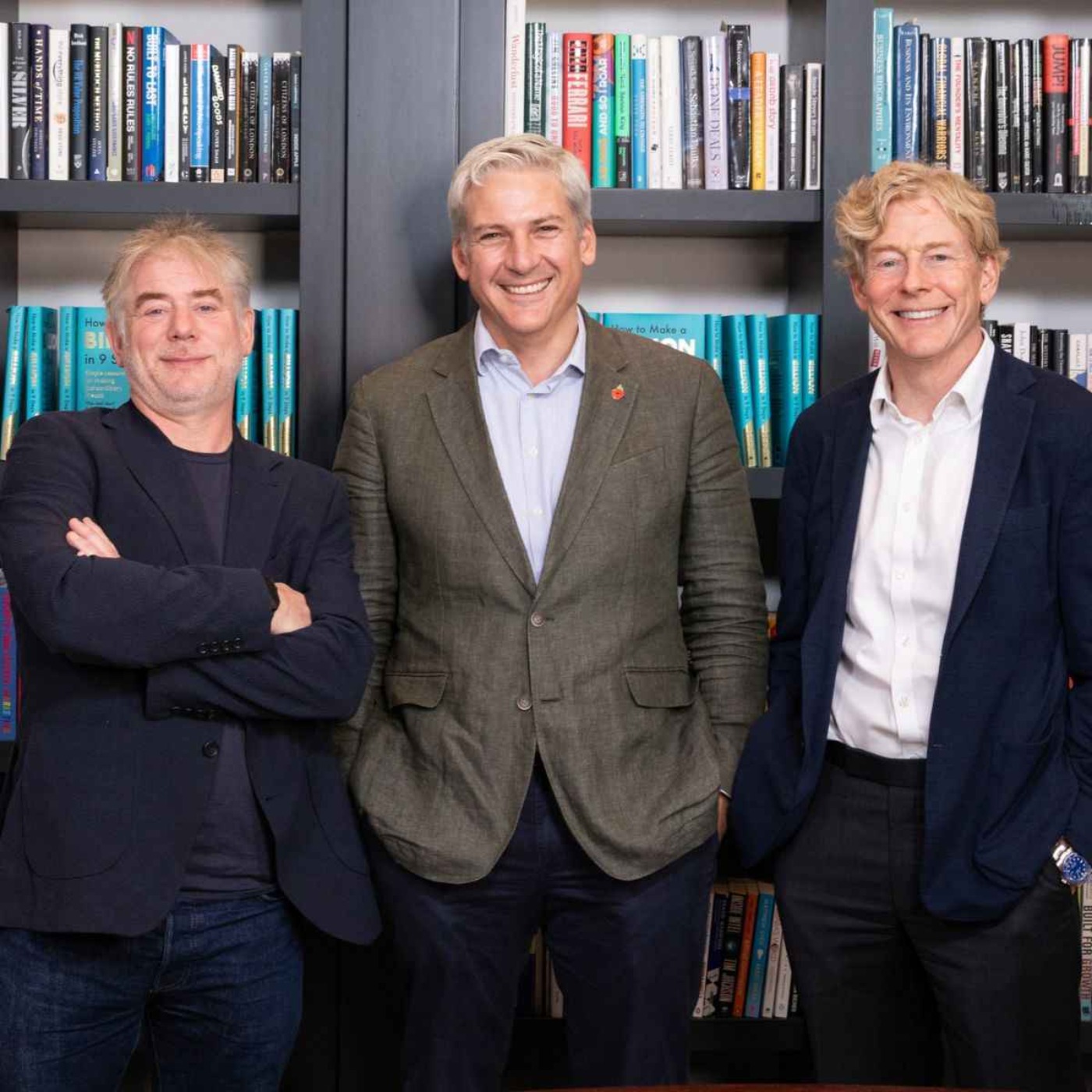
 The Business Leader Podcast with Sir Richard Harpin
11 Mar 2025 · 25m

Host: Dougal Shaw
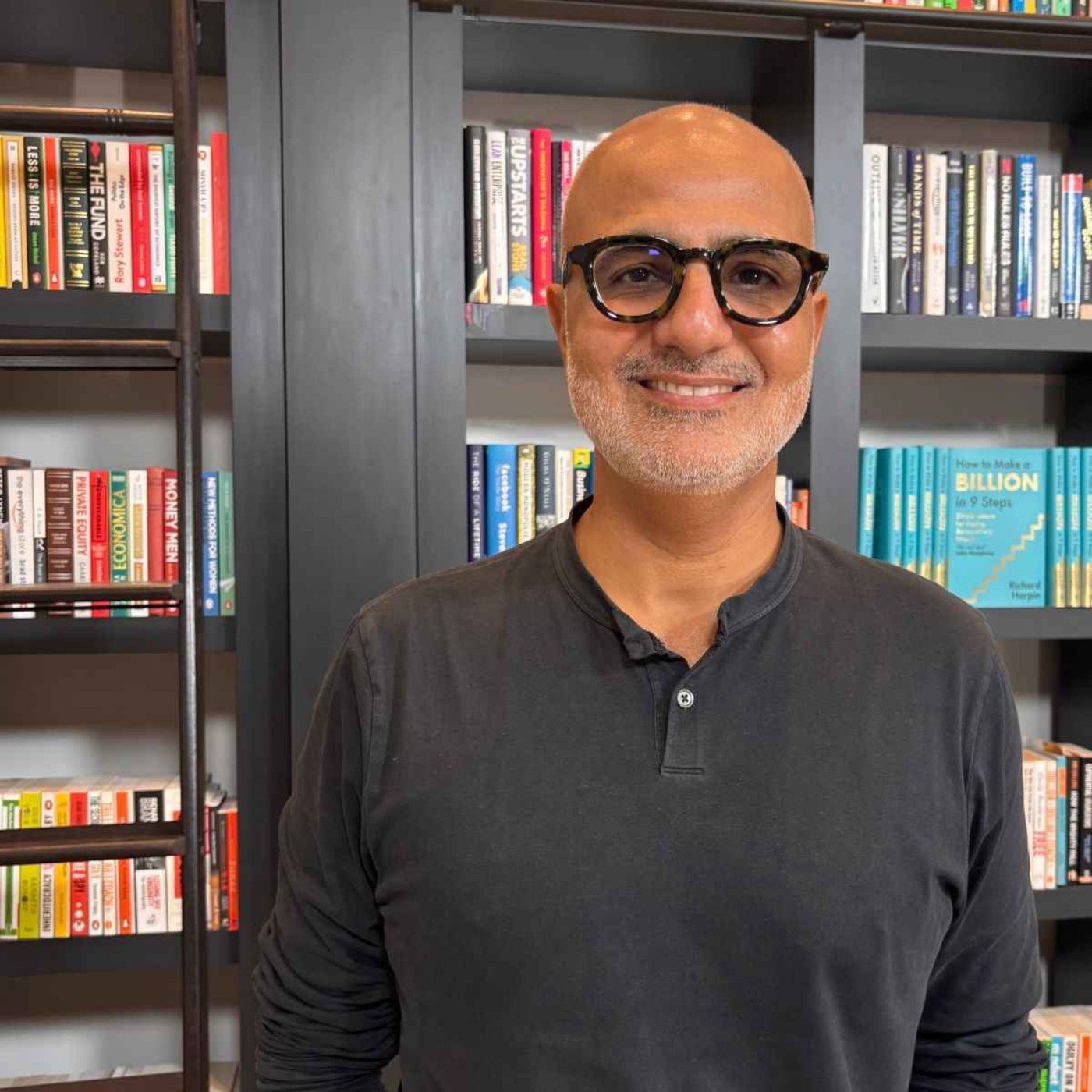
David Abrahamovitch, Founder and CEO of Grind
This episode features David Abrahamovitch, who founded the Grind coffee brand in 2011, discussing the journey of building his coffee empire and insights into entrepreneurship.
In this episode, David Abrahamovitch shares the story behind Grind, a coffee brand known for its distinctive pink branding and commitment to quality. From a single location in Shoreditch, Grind has grown into a multi-faceted business with over 14 physical locations, a substantial roastery, and a direct-to-consumer online offering. The conversation delves into David's background, the challenges of scaling a business, and the strategies employed to adapt and thrive in a competitive market.
Written by AI. May contain mistakes.

Get the gist, explore an idea or ask about something said.
 Claude
On The Business Leader Podcast with Sir Richard Harpin, what are the key points of this episode?
Searching your listeningAutomatic transcript. May contain errors.
0:00This is Britain's growth moment. Do you want to be part of it? On 26th of March, 750 of the UK's most ambitious founders, CEOs and investors will gather in London to shape the future of mid-sized business. The company's driving our nation's success. The Business Leader Summit 2026 isn't just another conference. It's a day built around the three forces that define growth, ambition, policy and capital. And as one of our valued podcast listeners, you can be there in person. To secure a discounted ticket, visit the events section of our Business Leader website and use this code. BLPODCAST, all one word, all uppercase.
0:41We look forward to seeing you there. So this is your HQ. We're in Shoreditch near Old Street, very near the first shop. Looks like there's about 50 people here or something like that? Yeah, I think it goes between 50 and 70 during the week. And yeah, this is kind of this is the base of operations for most things, except roasting the coffee itself. So that happens in a big kind of 20 ,000 square foot facility in Bermondsey. And there's another 50 people down there kind of roasting coffee, packing boxes, working on supply chain, etc. This is kind of the, I guess, the digital brand HQ team, support team for the high street.
1:20I saw a woman on her phone filming a coffee being made, I think, for some kind of social media advert. It all happens here. Yeah, exactly. We're trying to do as much of that stuff as we can in-house because you have to do it so frequently and you have to keep it so fresh that we're always doing that. If you stand around for too long, someone from the social media team will probably run up to you and start asking you questions, so you better hide. And let me just see you, no pressure, but make one coffee with a grind. I'm with David Abrahamovic, the founder and CEO of the coffee brand Grind. It's famous for its pink tins of coffee pods designed for coffee machines.
1:56Though as Empire extends to 14 physical locations like cafes as well. So this is a Lamazocco machine which are kind of the best manual coffee machines you can buy or semi-automated. This is the same machine we use in all our stores, the same machine in our house use in all of their stores. And it's amazing because it's a traditional kind of Italian made espresso machine but it's got lots of cool tech in it. So, you know, this thing here on the right is a grinder. So this automatically grinds and doses the exact amount of coffee we need into the group head. So this, you know, in this case, it's 17 grams.
2:30This thing under here, it's called a puck press, and it tamps down with exactly the right amount of force and pressure and evenness. And that's also great for stopping baristas getting injuries from kind of constantly doing that all day. I'm guessing you used to make the coffees in the original. No, absolutely not. I've never been allowed to do that. No, no, no. I was always very clear that we're going to hire people to do that stuff that know what they're doing. That's not me. I'm going to be running the business. So you just watch them doing it then? Yeah, I've actually never for one second worked fully in the business in that way.
3:01Like I never had a role in the cafes. I've always been super clear that I don't know what I'm doing in that and we're not going to do that. So you then place the cup here and these are actually scaled. So that automatically tears the cups there now. So it's going to weigh out the amount of coffee. we press a button and it will extract the coffee and it will if we're lucky in about 30 seconds it will give us about 32 grams of espresso which is well not if we're lucky it will because that's what it does so why that's going on we'll take a milk jug and this is where i'm thankful that this is an audio not a video because my latte art still leaves a lot to be desired but you know we'll dose into this jug roughly the amount of milk we need there we are look that was perfect 30 seconds 32 grand smells good as well and then we'll uh steam the milk now the familiar kind of by the way this is the house blend from your bermondsey roaster yeah that's right so this will be um this will have been roasted in bermondsey in the last few days this is coffee mainly from brazil and some other origins i'm not sure exactly what's in this one that will that you know from farms that we've visited that we've negotiated directly with the farmers with and then and then bought in so the coffee takes you know six to eight weeks to reach us in bermondsey and then it'll be roasted, packed immediately so that it's preserved for freshness and then it'll be here or in our stores or in people's homes a few days later.
4:20And this house blend is designed so that it works with milk, which is how most people will have it. Absolutely, yeah. I think there was often a bit of a trend to where speciality coffee stores would end up designing their coffee for espressos and stuff like that, whereas actually in reality 90 % of people take a latte or a flat white or a cappuccino. So we want kind of chocolatey, nutty and coffee flavours to come through the milk and not get lost. And it end up taking like a cup of milk. It wasn't too bad, that latte. I've done worse. Do you know how to make the little heart shape that goes on top?
4:52That was my attempt at making the little heart shape that goes on top. I'm Dougal Shaw and this is the Business Leader Podcast, where we discuss and dissect the business stories and trends that really matter. In this episode, we're meeting David Abrahamovich of Grind. I've come to his offices in Shoreditch, London, which as you've heard, is his kind of digital HQ. Grind was founded in 2011 and hit annual revenues last year of£30 million. In this episode, we're going to find out how David's interest in coffee began, and how he scaled his business to turn it into what is now an omnichannel empire, with a mix of physical locations like cafes, retail products stocked in places like supermarkets, and also a booming direct-to-consumer offer.
5:36yeah so we're a few hundred meters now from where it all began so the story of of shortage grind actually begins in 1993 when i was eight because my dad took the lease on the store that is now shortage grind so it's a little yeah for those of those who might have come across it's a little circular building on old street roundabout right in kind of the heart of what is now silicon roundabout and next to shortage um so growing up that was kind of the base of the family business which was a mobile phone business um so selling business customers you know nokia phones and stuff like that so um that was a building that was always super important to me i used to work there in the summer i learned a lot about life working there i learned how to fix phones i learned how to sell to customers on the phone i learned how just how business works you I learned how to add VAT to an invoice and so many little things like that.
6:32I went to uni, I studied economics at UCL, and then I joined as a co-founder of a startup, which ended up raising a lot of money in venture capital. That was a tech-based thing, it was completely different. As I went full-time into that in my first few years out of uni, unfortunately, my dad got ill and passed away when I was 25 from prostate cancer. so I was you know obviously kind of reeling from that for a bit and then realized that at some point I had to do something about this business that was had now been kind of left to me and my mom and wasn't necessarily the business that it had used to be when he was running it so but I knew I wanted to keep the building um and it felt like a really good use for that would be as a meeting point and that was actually you know as a coffee shop or maybe a wine bar or something like that and that was something that he and I had discussed so I decided to basically close the phone business but keep the lease on the building and turn it into a coffee shop and you know it ended up being called Shoreditch Grind and the initial kind of founding principle if you like although I'm not sure we ever actually called it that was you know let's do great flat whites like independent cafes do but let's do it in a way that is visible in a prime location and in a fun and accessible and easy way.
7:50You know, we were next door to a Starbucks. So let's be great at the same things as Starbucks are great at, but let's be much better at design and product quality and the whole thing just being fun. At what point does it become an idea where you think we can repeat this, this can become a chain? Yeah. So, you know, year one, first 18 months was really just about getting it off the ground. And, but, you know, we were really lucky that it It was kind of cash positive from day one. And this allowed me to start iterating. And we rebuilt the counter. And we changed upstairs. And we did this and we did that.
8:22But I think the key thing to allow it to then move forward was when we decided that it was kind of crazy to be kicking everyone out at 5 p.m. And actually, why don't we serve cocktails? And again, you know, super naive. What do we need? Well, okay, we need an alcohol license. Let's just get one of those. You know, we did actually manage to get one of those. But it turns out they're incredibly difficult to get in London. but we managed to get one on that first store and you know let's tweak the store a little bit let's find a way to turn the lights down improve how it looks you know change the music and let's launch cocktails you know and we just just kind of did it and launched it and and for whatever reason we managed to make that work and then suddenly we were coffee by day cocktails by night we had you know double the revenue coming through the store on essentially the same fixed overhead base and that became then something that was more than just coffee it was starting to become a very very small kind of lifestyle brand and it was much more interesting to external investors so really adding cocktails was a thing that allowed me to start raising money to then scale the business that has then allowed us to do all the other things we've done.
9:27By chance I went to the grind in Liverpool Street for the first time yesterday and I was surprised because I thought I was meeting someone at a coffee shop but it's more like you're going to a busy kind of brasserie restaurant. Yeah so that's kind of the next evolution is okay well we've done one coffee and cocktails then we did one in soho one in holborn one somewhere else and then we took a i went to view a site on london bridge um and it was a much bigger space i was like wow this this space and this location is unbelievable we have to take this then kind of realized this is a much bigger space okay i think we should add a kitchen because we've got quite good at coffee and cocktails but we've never really done food and that kind of leads to the what we call the cafe model which is you know breakfast lunch dinner weekend brunch seven days a week plus coffee plus cocktails like at liverpool street in those early days if we're still thinking about the pre-covid periods the first kind of 10 years of the business roughly while you're expanding mainly in london how are you funding that so the very first um investment came from a group of kind of high net worths led by um a guy called john ayton who's now our chairman he founded links of london and the jewelry brand has done lots of other stuff so that was kind of high net worth eis style investors and then over the years we did three rounds of crowdfunding so we did a we did a one million pound bond and then a 2.2 million pound I think it was equity raise and then another three and a half million equity raise in 2017 so the crowd was the majority of our kind of pre-covid funding and also a huge part of what's helped us to be successful in terms of our ability to kind of build that audience then get them to invest and turn your customers into your investors and your biggest advocates.
11:05I suppose that partly answers the question but I was going to ask you've got that interesting mixture of funding in those days what kind of different experiences do they bring or different expectations? Yeah I've kind of between the last business and this one I've kind of done you know private individuals, venture capital, ultra high net worth, high net worth and crowd I've kind of done it all now and no one is perfect and no combination of them are perfect they just bring different things so the crowd brings a very large number of people who have a very small financial interest but can be amazing brand advocates and then kind of at the other end of the spectrum you've got VC who will want to be on your private equity or venture capital who will want to be very very involved in the business very involved in setting the strategy and then you've got you know we have an ultra high net worth investor now an individual who is very who wants to be very involved strategically but not remotely operationally doesn't want to be anywhere near that just wants to be about where are we going how are we getting there so look I think as the founder and CEO you have to kind of balance that with the team you have to be the filter kind of between the board and what's going on there and the team and how you translate the kind of the will of the board and what you decide to do into kind of day-to-day action
12:27before covid you started to investigate this idea of creating compostable pods which people could have sent to their homes and make the coffee at home and that turned out to be obviously you know a master stroke because because of the lockdowns but you weren't to know that so why had you started to investigate that yeah so you know i think i mentioned in 2017 we did a third kind of crowd cube raise and it was you know it felt huge at the time three and a half million and the plan was to spend that on you know three more big format stores or you know a couple of big ones and small ones whatever you know all on the physical high street and I just really started to feel like you know this is you know at that time you've got the collapse of casual dining right like all of these big chain pizza and burger places all going into administration I'm like looking forward it didn't feel like it was getting easier to open more and more stores on the high It felt like it was getting harder.
13:20And what we did have was a brand that people loved. And people would say to me, I just love Grind. It's such an amazing brand. They didn't like it. They loved it. And we had this big digital following, this big email database. And we need to start leveraging this outside of our stores. What can we do? Well, it doesn't make sense for our brand to do really complicated coffee equipment or really geeky stuff. Because that's not our brand. We're all about, we're going to give you the best flat white you've ever had. but we're going to make it easy and simple and not you're not some inaccessible experience so what's a great format for for doing that at home well you know capsules but problem with capsules is they have some real environmental issues you know and you know people will say that 30 000 go into landfill every minute you know whether that number is perfect or not it's a colossal amount going into landfill and very few aluminium pods actually get recycled so and then we discovered a way that they could be compostable and i was like okay this is amazing because this removes the kind of eco guilt from the pod but still gives you the really fast really easy really predictable product how did you discover that um through lots of work and talking to people and digging around and looking at different packaging companies and different suppliers and you know that's the kind of i guess that was the big that was the big unlock moment but we then made a very strategic decision to go okay we're going to take one store's worth of money let's call it a million pounds and instead of just doing a store we're going to move our roastery we had a very small coffee roastery then we're going to upscale it we're going to buy this big piece of equipment we need to buy that's you know hundreds of thousands of pounds we're going to invest in shopify website put a big budget aside for some facebook ads and blah you know like let's go for this thing and look a great strategic decision we've made some good ones and we made some bad ones over the years that was a good one but it was obviously made to look much better by kind of pure dumb luck of well clearly the pandemic was not lucky the pandemic was terrible but the timing of what happened allowed that business to grow much faster than it otherwise would have so the luck really was not that a pandemic occurred the luck was that we pushed the button on it all when we did which meant we were operational in kind of February and March just before the lockdowns.
15:33It then presents you a problem because you've got to deal with the unprecedented demand which you weren't anticipating so how did you sort of ramp things up at that time? um yeah it was it was truly insane it was one of the the experience of going around to all of our stores and talking to a few hundred people and telling them that it was all going to be okay you're going on furlough but don't worry we'll be back in a few weeks this is not a big deal you know clearly was wrong about that um the experience of closing down this thing that you've put 10 years into and been to virtually every day and the kind of you know how bad that is but then to see the Shopify go from a few hundred pounds a day to a few thousand to tens of thousands of pounds a day in a very short period of time was astonishing.
16:17And it was like, you know, I think that's when it's time to be an entrepreneur, right? That's when you go, okay, we now, we're betting the house on this. So we ended up taking all of the money that we'd set aside for several sites and throwing that all at D2C, at advertising, at stock, at freight, at logistics, at whatever we needed, at people, at whatever we needed to do just to keep going. Because I really saw very early on, and I think we all did, that this was an opportunity to kind of recast the business as a multi-channel coffee business, not just a high street chain. And tell me now, what's the revenue mix of the business?
16:55Yeah, it's changed a lot. So, you know, the eve of the pandemic, it was 99 % high street. I think today it's more like a third from the high street, a third from our website and then a third from kind of grocery and b2b partnerships so you'll find our coffee in places like soo house you'll find us on board british airways and we're in all of the major major supermarkets so you know it's the mix has changed an astonishing amount and we're really a very bit different business today than we were kind of on the eve of that first lockdown and you're it to explain the reason you're in the supermarkets is because of an acquisition in part yes so we um we acquired a ready-to-drink coffee company that made you know cans of coffee so that's one of the three things you can find in in supermarkets so grind coffee cans which contain the same speciality coffee we use in our stores but it's just roasted and put into a can with some milk we also sell our compostable pods and then we sell our whole bean and ground products as well so you can find us in three different places of of the supermarket you mentioned British Airways I was on a British Airways flight and I noticed that grind was offered and I remember thinking at the time this this is a bit of a risk for them because it puts your brand out there I mean Starbucks did the same thing I think with United Airlines it puts your brand out there but with the best will in the world nobody expects an amazing coffee experience during an in-flight you know meal so did you have to weigh that up yeah I think you've hit the nail on the head no one expects an amazing experience so if you give them something that's much better than the coffee normally is on an airline they're happy right and i think this is you know i think a lot of kind of ultra speciality brands they stop themselves going forward because it can't be perfect and to me it needs to be perfect in that channel so like a flat white in our stores should be better than a flat white in the store next door but a coffee pod at home is not going to be the same as a flat white made by a barista using 20 000 pounds worth of coffee machines but it should be better than an espresso pot and a pot the coffee on the plane should be the best coffee on a plane you've ever had i don't think people people are like customers are really smart they don't they know that you're on a plane and you know that it's not going to be the single best coffee you've ever had in your life but it's just really nice to be able to have one that's good as opposed to not very good and is that presumably that makes you revenue but it's also about building the brand to all their customers yeah absolutely you know they've been amazing partners you know i think they're doing a really great job of refreshing and kind of revitalizing British Airways.
19:22And they're looking across the business at how can they make the customer experience better. And coffee is a really important part of that. So, you know, it's amazing for us to be introduced to, you know, I think they have 20 million passengers a year or something. So it's a huge audience seeing our product, which is amazing for us. When you look at this, what we might call the gourmet coffee industry, I mean, look at something like Black Sheep, really growing very fast, opening lots of stores. do you sort of think well we could have spent more time expanding that part of the business that you know you can't do can't do everything but do you see lost opportunities from being multi-channel or not no I see the opposite I see the fact that we've been able to successfully find ways to generate significant amounts of revenue not from our stores is a huge differentiator for us and most others who have tried to shift away from the model of just we raise more money we open more stores, we get more revenue, haven't been as successful as we have in that.
20:15So we're actually slightly unique in that we've managed to kind of break free from just being reliant on the high street into all of these channels. And, you know, if you look at the US, there's some amazing examples of businesses that have been able to do that, you know, La Cologne would be a great one, started with a few cafes, recently sold for a billion dollars to Keurig, Dr. Pepper, who own the capsule format that's dominant in the US. But in the UK and Europe, not many of the kind of speciality coffee chains have been able to have been able to or mini chains have been able to break out of that and become multi-channel so we we see that as a real strength
20:54and now that the business has evolved into this multi-channel operation how do you approach being a leader as ceo do you kind of manage the different streams separately or can you centralize it or how do you go about it yeah it's a great question and i wouldn't pretend to have all of the answers or the perfect answer you know the way we're approaching it is is we're dividing the business by channel so high street online grocery b2b and then we've got great people running each of those as a director of that channel and then we have other functions so we have brand which effectively is like acts like it's an outside agency but it's actually inside we have the roastery which is making products and then we have obviously you know finance hr those kind of things kind of supporting but but we all kind of rally behind the people who are running the channels that generate revenue because growth kind of solves everything like if you as long as you can keep growing and keep building the business you can solve most other things as you go in my experience so they all report to you and you you can play a bit of a central role making sure it's a kind of coordinated action exactly yeah they all they all report to me which is a lot sometimes but i get a lot of support in helping me do that from our people director and our cfo who give me great information and great materials in advance of all of those meetings.
22:09And we also get together really regularly as a leadership team to just talk about what's going on and where we're succeeding and where we're failing. And in terms of wanting to scale your business to be as big as it can, what are the challenges of doing that in the UK? How long have we got? Look, coffee is a saturated, busy, competitive market, right? So gaining market share and trying to get to 10 % of the UK coffee market is a big challenge and requires lots to go right and and lots of work I think if we look at like the framework like do we create the best environment for growing businesses I'm not sure we do I'm not sure we create the worst environment like I don't think it's terrible but I'm not sure it's the best environment in the world for for growing businesses and I think there's definitely more that can be done to make this a better place in order to do that you know I think if you have some examples you look at things like just the the treatment of employee share options would be one that is just so out of whack with somewhere like the US where entrepreneurialism is just much more encouraged and staff are compensated much more heavily with options for future growth but here the way that that's set up and the fact that they end up being income taxable and that can create tax at the moment of grant is something that I think is really needs looking at.
23:30And And looking back to yourself in your mid-20s, what would be the business advice you'd pass on to yourself with all the wisdom you've accrued now? I'm not sure I've accrued that much wisdom. I've accrued experience. Who knows if there's any of its wisdom.
23:48It's all going to be okay. You're going to get there. It's going to be fine. I'm not sure I am there yet, but I think we've made some progress. I think it's really important to say, am I the kind of person who wants to set up a business? Like, can I find a way to switch off and go to sleep at night without worrying? Can I just get up in the morning and keep it moving forward? And can I take the kind of the burden of responsibility, which is that I have to will this thing into existence relentlessly? And it's going to be really hard. So, you know, if I look at myself in the mirror at 20 and go, yeah, I can do that, which I did, then fine.
24:30But if you can't answer that question as yes, I'm not sure I'm answering exactly the question you asked me here. But anyway, you know, if you can't look at yourself in the mirror and say, yeah, that feels like me, then I don't think being a founder is right for everyone. Because it's, you know, it has some amazing things about it, but it's not easy either. you've been listening to business leader with me Dougal Shaw speaking to David Abrahamovich founder and CEO of Grind for more business case studies and masterclasses please check out businessleader.co.uk if you've liked this podcast don't forget to follow us wherever you listen so you don't miss future episodes and if you lead a medium-sized business in the UK and are ambitious to grow into a large company then you can check out our business leader website to learn more about our membership offer.
25:27The Business Leader Summit 2026 is set to be bigger, bolder, and more ambitious than ever. Don't just watch Britain's growth story unfold, be part of it. Secure your ticket today by visiting the events section of the Business Leader website and using the code BLPODCAST, all uppercase. It's your chance to join the leaders who are shaping the future of business.
Hosted on Acast. See acast.com/privacy for more information.