Ask ChatGPT
 The Business Leader Podcast with Sir Richard Harpin
17 Jun 2025 · 38m · 18 chapters

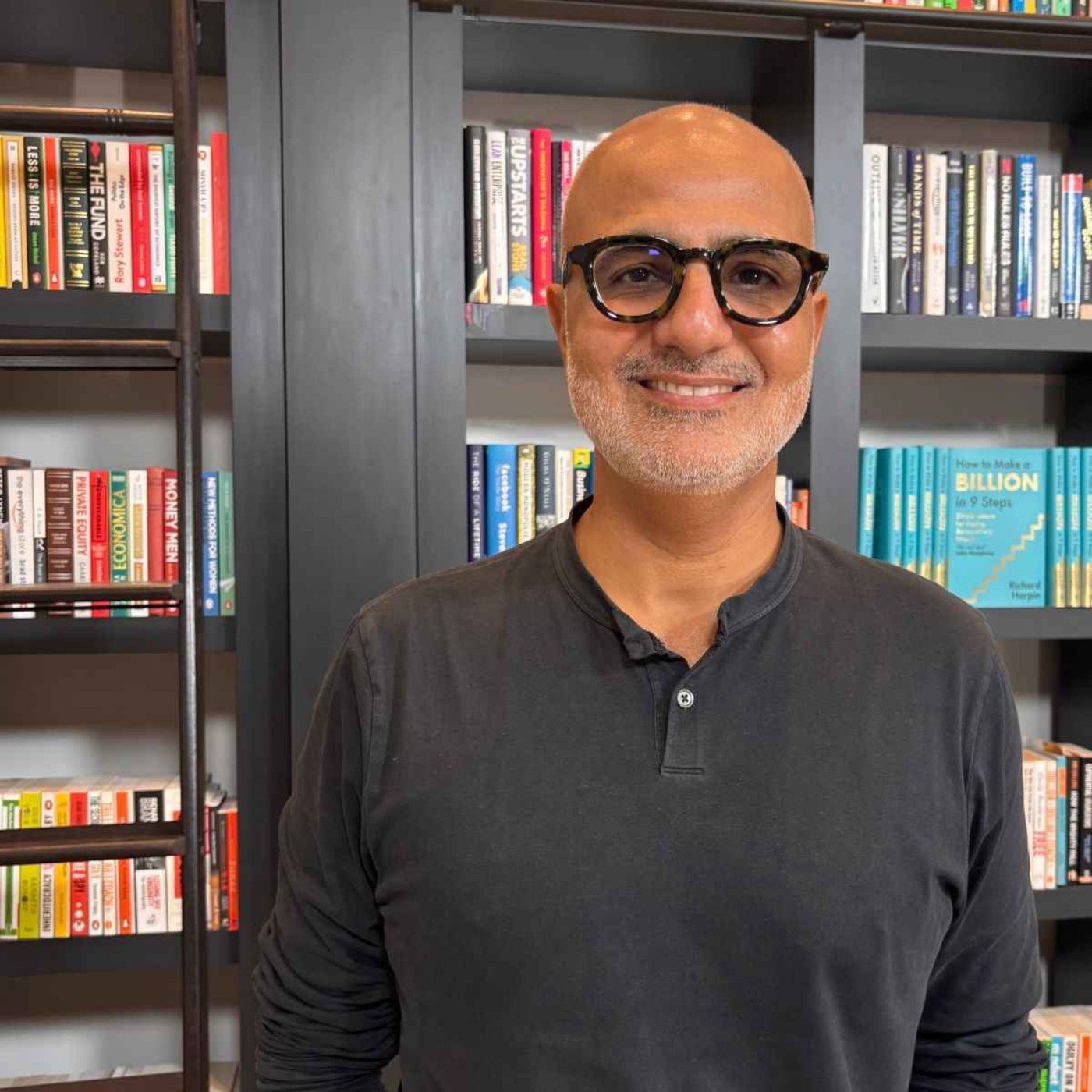
Nick Gray, founder/owner of G-Tech (cordless household appliances), explains how he went from scaffolder/lab technician to inventor and scaled G-Tech without taking investment, plus how G-Tech’s Air Ram vacuum and brand strategy evolved (including DTC and social media).
Nick Gray, British entrepreneur and inventor; previously a scaffolder and Vax laboratory technician/design engineer (helped develop the Vax Power 4000).
Brentford’s “on it” analytics-driven approach mirrors Gray’s belief in planning and delivery; cordless can match mains performance by collecting dirt close to the floor (Air Ram uses ~100 watts); startups must fully debug prototypes before market; avoid capital to keep control; installed customer base builds brand trust.
Air Ram disputes with established rivals who said it was impossible; Vax Power 4000 prototype reaching production; John Lewis in-store “blocking” by competitors’ reps; Science Museum launch and Daily Mail “10 out of 10” coverage; G-Tech’s 2022 10-year Brentford sponsorship and stadium branding.
Written by AI. May contain mistakes.
Discover how Nick's childhood experiences shaped his inventive nature.
“a British entrepreneur who has built a multi-million pound business thanks to his innovative consumer products in the household appliance space.”
Explore the impact of Nick's father's business on his entrepreneurial aspirations.
“And like a lot of entrepreneurs one of your parents was an entrepreneur and yet we know how tough it is it didn't put you off so what did your father do?”
Understand Nick's educational struggles and initial work as a double glazing fitter.
Learn about Nick's growth and success as a designer at Vax.
Hear how Nick learned CAD and proactively took on projects at Vax.
Find out about Nick's transition from Vax to starting his own business, G-Tech.
“So when you were lab tech were you sort of very carefully watching what the other people were doing in order to learn or were you tinkering at home or how did you get the knowledge to take that opportunity?”
Discuss the revolutionary design of the G-Tech Air Ram vacuum cleaner.
Learn about the speaker's transition from Vax and the amicable competition with them.
“So it was by no means acrimonious, but inevitably you are competitors.”
Discover the innovative design of the G-Tech Air Ram and its market impact.
“So to make a cordless vacuum cleaner, there was just, people had tried it, but they'd made huge battery packs and the products just didn't work.”
Understand the importance of rigorous testing in product development for startups.
“The wattages were going up and up and up.”
Hear about the importance of relationships and marketing strategies in the vacuum industry.
Learn about the shifts in sales strategy and market dynamics over time.
“And then there was an important stage where we went to the Science Museum, launched the Air Ram to the world, and the Daily Mail said, fantastic, 10 out of 10, is this the best vacuum cleaner ever?”
Explore how advertising strategies have changed with new media and consumer behavior.
Gain insights into the struggles of managing growth and costs in a small business.
“Overheads are too small, there's no such thing.”
Learn about the difficulties faced by small businesses in managing budgets and scaling operations.
“and it became very difficult to make money.”
Understand the importance of brand awareness and strategies for targeting new customer demographics.
“i've made enough money that i could have stopped doing it probably after five or six years but i I love working for GTEC and I love trying to do things right.”
Explore how to deal with failures in product innovation and the mindset required for success.
“The customers that we first sold to who were more mature, they're not getting any younger and the media that they consume is getting smaller.”
Discover the importance of maintaining financial control and the risks of raising capital.
“I've never paid for advice or things that weren't tangible.”

Get the gist, explore an idea or ask about something said.
 Claude
On The Business Leader Podcast with Sir Richard Harpin, what are the key points of this episode?
Searching your listeningAutomatic transcript. May contain errors.
0:00Sancho.
0:04Really nicely dealt with by Brentford who hit the front with Ivan Toni. Now he looks for Mbomo and Mbomo is full. It's brilliant for Brentford.
0:19They are demolishing Manchester United. Absolutely demolishing them. My kids, when I said we've sponsored Brentford, it's a GTAC stadium, they booked a festival in Newquay, Boardmasters, and that was coinciding with the first game. They just said, oh, can we go to Boardmasters, Daddy? So I ended up watching the first game at the GTAC in Newquay with the kids, and they were like, it's Man United, yeah. Well, yeah, sure, Brentford are going to beat Man United, it's going to be about 10-0. I was like, well, we'll see, and then Brentford went 1-0 up, and they're like, oh, 2-0 up, oh, and they put four past United in the very first game and that was like a sign of things to come, that it's just a fantastic stadium, fantastic club and absolutely thrilled to be part of it.
1:07Dougal Shaw: That's Nick Gray, the founder and owner of G-Tech, which specialises in cordless household appliances like the Air Ram vacuum cleaner. Though it also now makes things like hedge trimmers, power tools and hair care products. He founded the company in 2001 and it now has annual revenues of around£50 million. In 2022, G-Tech began a 10-year sponsorship deal with Brentford Football Club, recently promoted to the English Premiership, attaching its name to its new stadium. I went to meet Nick Gray at the stadium in a room that looked like it was used for commentary with an amazing view of the pitch.
1:43Dougal Shaw: So it's a visit to a stadium with your company's name on it. How does that make you feel coming to a place like this now? It's incredible. I mean, we used to get a lot of companies saying, oh, sponsor us for this, sponsor us for that. And it was just like, no way, it's just charity, basically. But Brentford are different. So as soon as we start to look at Brentford and we saw their track record and we heard about how they do things, they're just different. They're very, very on it. There's no coincidence that the last two seasons, the three clubs that have come up, have bounced back down again.
2:16And Brentford didn't. They finished between sort of 14th and 10th most of the time. And you can almost see their transition that now they're playing really attacking football. There's only really Liverpool that scored more goals than was scored at the GTEC last year. And we're incredibly proud of that. So one of the most successful stadiums in the world, really. It's quite incredible. And still, when I hear it on the news or whatever, the GTEC stadium, yeah, it feels surreal and fantastic. So you weren't exactly one of these, you know, boyhood fans of the clubs. So how did it come about? Yeah, well, I'm a West Brom supporter in earlier days, but now I'm very much a Brentford fan.
2:53And they had just gone up. And at first, when they were around the top of the championship, I thought, oh, Brentford missed their chance. You know, they had a chance to go in the Premiership. Imagine that. They'll probably never make it now. Nonsense, you know. They were on a trajectory and they had a plan. And the guy that runs the place here, Matt Benham, he owns the place. He's very, very clear. He's a genius. He doesn't like the limelight and stuff. and he's got a very strong staff at the club. But, you know, he's a genius and he knows all about numbers and stats and probabilities and things.
3:26Dougal Shaw: I'm Dougal Shaw and this is the Business Leader Podcast. In this episode, we're going to hear from Nick Gray, a British entrepreneur who has built a multi-million pound business thanks to his innovative consumer products in the household appliance space. How did the former scaffolder and lab technician scale such a big company without taking any investment. What advice can he share based on his journey? We'll find out about developing new products, dealing with rivals and finding the best route to market. But let's start at the beginning. I know you're one of seven siblings. I am. I'm thinking as someone who's invented things, does that help because you're constantly getting hand-me-downs and things like that?
4:07At home we didn't get lots of new toys but there was a garage full of bits and pieces that I was fascinated with and I would sift through it and I remember also pulling all sorts of junk and rubbish out and some things were usable and some things needed mending I used to love it I'd spend hours just playing around in the garage it was sort of dark and dingy and pulling things out seeing what I could make of them yeah thoroughly enjoyed it.
4:31Dougal Shaw: Did you would you do that in collaboration with your other siblings or was it very much a solo activity? No I was quite solo I had my my youngest sister is six years younger and my older sister's four years older so there's quite a gap and I was my mum was busy obviously with seven kids so I just got on with things on my own really I'd either play outside or just find things to do really. And like a lot of entrepreneurs one of your parents was an entrepreneur and yet we know how tough it is it didn't put you off so what did your father do? So my dad he started an investment casting company in Ireland so making like horse stirrups and little metal things where it was a lost wax process you made a little wax model and then dunked it in some stuff and then melted the wax out and filled it with metal and polished it all up but I could see the stress on both my parents actually I could I knew what they were like when we when we went over to Ireland and I could see the kind of even though I was only seven years old I could see that the stress it was causing and how difficult it was but I'd always wanted a business of my own I don't know why I just always wanted to run a business and I suppose I wanted to try and do it without the stress that my uh my dad had obviously failed and my mum as well so it was yeah it was almost something I had to prove to myself.
5:46Dougal Shaw: You moved to Ireland with your father's business opportunity but I don't think you stayed there so what happened next? So we came back to a little country town in Tembury Wells went to school there it was a very small school barely enough boys to have a rugby team or a football team so sport was the only thing I really enjoyed at school if I'm honest I didn't like the academic environment i think i was always very creative and i was always trying to take part but i think when a when a teacher's got 30 kids and they need to get through a curriculum creative they say they want creativity but really they don't they only want their kind of creativity so if you've got a pen and a paper and you're willing to show up and draw something they call that creativity for me creativity was exploring different concepts and not just sitting on the curriculum and going through reading the book that they wanted you to do and make notes that was really boring for me so I always wanted to explore concepts and do other things and I don't think school liked me very much and I didn't like school to be honest so yeah I didn't really enjoy the academic environment other than design and sports.
6:49Dougal Shaw: But was it in your mind that you wanted to do something maybe a qualification or something that would get you into the world of engineering so you could start inventing and trying out designs to some degree so i did engineering drawing and physics at a level but again i found a levels really difficult it seemed very far removed engineering drawing was okay but physics seemed very far removed i'd really done things from first principles at school i didn't listen much but i was interested in subjects and i could usually pick them up as i went along kind of thing and i found a level seemed to have moved further away from an everyday thing into more of theoretical cool um but i stuck it out i didn't want to go to university i just thought i'll get a job and earn some money so i ended up fitting double glazing on building sites which the money was pretty good and and i enjoyed that life i enjoyed having a laugh and hanging out but yeah i did want to do something i was saving up really so i could i had a bit of kind of time to find something so i was busy saving up at that stage i saw an advert at vax for laboratory technician i didn't really know what that was but the guys interviewed said it was you know you're basically working in a design team but you set up tests you sweep the floors you keep everywhere clean stop the workshop up and although it wasn't really a design role it was a design environment which appealed to me the technical manager a guy called alex laird who sadly passed away a few years ago kind of took me under his wing a little bit he let me do design work and he was encouraging he'd be like yeah that's pretty good well done yeah we'll give you the next thing so i started to get confidence i was very confident as a child but school kind of made me think am i really any good at anything you know didn't didn't bounce out of school with any of the kind of confidence i'd have took into it in a way but then it started rebuilding at vax and i thought yeah i can do this and then a fateful day about four years into my vax career the uh the owner came in wanting a project done and there was nobody to do it and i was like i'll do it and like uh you know even a design engineer well i'll do it i'll just make it and see how it goes there's no one else to do it can i do it can i do it so they let me loose on this project and uh it went well the the prototype worked really well and they decided it was going to go through to production because in design most things don't go to production most things are make this test it does it work okay modify it change it and the projects often don't ever reach the actual manufacturing line so to have one of my products a whole product going straight into production i was like okay i like this but what product was that this was the vax power 4000 it became britain's best-selling vacuum cleaner so i was very uh very proud of it but the first thing they did was they said well obviously you can't run the projects we're bringing this senior engineer onto it and i was like it's my project i mean you don't know what you're doing mate but we worked together on it and we launched the project and yeah it did really well so that was kind of set me up as then they promoted me to a design engineer and then I became a senior design engineer and eventually the design manager and the manager of the engineering team so once once I'd got into design things went well you know I felt wanted at Vax and I didn't ever really feel wanted at school I felt like I was a pain in the neck so but at Vax they wanted my ideas and they wanted design work and they wanted you know creativity so yeah I really felt I thrived in that and that design found me and was something that I clearly knew what I wanted to do from then on.
10:11Dougal Shaw: So when you were lab tech were you sort of very carefully watching what the other people were doing in order to learn or were you tinkering at home or how did you get the knowledge to take that opportunity? All of it really so at that time CAD computer aided design was just coming out and I wasn't put on any training courses but it came with a manual that was like an inch thick so I just sat at lunch times I took it home and read it and made sure i could i could use cad and did it i just did it for fun in my own time uh and then i started using it because also i'm not very tidy so when it comes to handwriting and and pencil drawings the content's fine people know what i want but it some uh designers make drawings that just look beautiful with like scripts and all the rest of it beautifully dimensioned and laid out mine the content was fine but it didn't always look very pretty so computer-aided design was like a gift for me that was fantastic so I set about learning that and just picking up everything really as I went and I would start doing design work like if you if you've got to test with someone and it fails then I'd always be looking for how can I make it pass so what can I do to actually tweak it if the design didn't work as I tested it what'll get it through the test so I'd often say well I've done this and now it works kind of thing and hand it back and I just took on as much work as I could so they had meetings and things and they'd be like oh we need to do this but I'll do that we need to do this i'll do that and i just sponged in as much as i could really especially with design work and fair play to the manager for letting you have a shot at it as well yeah he did he he always encouraged me um and uh praised when it was uh worth but he'd pull me off as well if it wasn't good enough um it wasn't usually that it wasn't good enough he'd just like i there'd be a stack of drawings to copy and i'd be doing some design work like nick come on the drawings have to be done first and then you can do design work you're the lab technician okay alex in that period as well you see you're learning about the design process did you get to pick up a bit as well about how you manage teams in a large organization because obviously you would need that you would need that later on yeah and that's tricky so when you start to run a team i always tried to just do it by example so i would do uh as much of the work as i could myself and lead that way and say right come on we're going to do this try and build a kind of urgency because with projects if you can get a flyer onto something you're okay if a project starts slowly it's really difficult to get it back online so i would always try and get a flyer into projects get everyone motivated tell them how important it was i i prided myself on that my teams within the department always had the most important projects because we delivered so that's that's how it was i'd sort of be right we've got to do this it's important it's got to be done by then and I'd always try and be ahead of the schedule because schedules are very difficult to keep too often you can get a 12-month project run for three years in companies and that's not what I like so I always wanted to be the one that delivered on time and everything.
13:15Dougal Shaw: I mean it sounds like you had a very good relationship with Vax and you owe them a lot but obviously you're going to start your own company so was that awkward to make a break with them and when you're working in the same kind of rough space to some degree and i did thoroughly enjoy my time at vax but they were bought out by a hong kong manufacturing company and so it was all change and although i got on very well with the guy patrick austin who was the managing director at the time was bought out i was quite clear with them i'm going to start my own thing and he actually came around to my house had a look at the early designs gave me advise and they asked me to stay on for six months appoint my successor and just basically stay on for two two days a week just handing things over which was really hard so once you've started a business that's all you want to do going back to your old job for two days a week is really hard I did three months and said that's enough the guy's in place you know call me if you need me I'm off now but yeah so it was very amicable and Vax were a customer for years and years So in Australia, Vax supported us and bought products off GTEC.
14:21So it was by no means acrimonious, but inevitably you are competitors. And after a few years, you're purely competitors. Nearly everyone's moved on from Vax now that I knew. So, you know, but I still have very fond memories of my time there. My big challenge as a vacuum designer was generating enough suction to get the dirt through long tubes. But suppose you change the game. I've designed a vacuum with no tube, no bag, no cylinder and no mains lid. The G-Tech Air Ram only moves the dirt this far, so you enjoy the cleaning performance of a mains vacuum with the convenience of a cordless.
15:05Dougal Shaw: That's a TV advert starring Nick Gray himself, showing off the product he is probably best known for. and your kind of hero product that helped you to launch and get get an identity was the air ram so tell me about how that came about well there was two so the very first project the sweeper really gave us the money and the foundation for air ram and they're not dissimilar so when when gtech started in 2001 there were no cordless products that did a proper job cordless was little dustbusters which was just little six volt handhelds that cleaned a few crumbs from a toaster but they couldn't really do anything else.
15:42So to make a cordless vacuum cleaner, there was just, people had tried it, but they'd made huge battery packs and the products just didn't work. There was no, none of them had been a commercial success at that stage. So the sweeper basically moved towards a cordless vacuum cleaner that could run for an hour. And one of the ways we did it was we took the vacuum out of it. So it was basically an electric dustpan and brush with a wide, powerful brush that swept the floor very efficiently. and that was the first product that sold and sold and sold but then that principle of using more agitation and collecting the dirt close to the floor was what actually gave us the air concept so when you do add suction and collect the dirt very close to the floor and use a powerful brush you can suddenly match the performance of mains vacuum cleaners and all the competitors said no it's impossible you know you've got an 80 watt product there we don't believe it matches our mains ones and i had disputes legal disputes with them saying no it can't match the product the mains performance was like it's independently tested and that started a saga of basically the vacuum cleaner industry moving from corded to cordless first of all they said it it wasn't possible it couldn't be done and then they copied us so it was like okay that's fair enough it's that's that's development that's how it happens and we're very proud to lead that kind of change because the air-ram still only uses 100 watts and everyone was using even 2 ,000 watt products around that time.
17:08The wattages were going up and up and up. So that makes a huge difference to the environment for people to start using cordless products instead of those power-hungry devils we used to use.
17:18Dougal Shaw: The really big established companies have massive R &D facilities and I visited, for example, Shark Ninja's one in Battersea Power Station and you can see the amazing amount of testing that goes on before you dare go to market. When you're a startup with a very technical product, are you sort of just taking a big risk or how much testing could you do? Yeah, so you have to be very close to your project. So you have to know it inside and out. And when you build a prototype and test it, there's always a temptation to think, oh, it's only a prototype, it'll be all right later. You have to get your prototype to the level where it properly works.
17:54so debug everything even though it is glued together bits of plastic or these days 3d printed and it's not strong materials it still has to perform properly the buttons have to work people have to be able to use it without reams of explanation you know you want them just to get it there and look at it and understand how it works and how do i get the dirt out how do i turn it on if it's a hedge trimmer how do i adjust it how do i cut with it so it's important the product speaks to you and is fit for purpose and if it needs instructions or it falls to bits it's not ready yet so you need to keep working on it so it's really that if i bought this product or if i sold this product to my grandmother or whatever would would they have spent good money and had a good good value if it's properly ready it's properly ready if it's not you still need to
18:41Dougal Shaw: test and develop it and when you're trying to scale it which obviously you were able to do but you had the technical skills obviously the design skills you had some experience from Vax but did you have to hire in specialists in in marketing and and any kind of role to help with growth I probably should have done um no I mean these days yes we have specialists uh and and things like that but in the early days I just got out and talked to people often because the industry is fairly small you know most of the people most of the significant companies you've met somewhere along the line especially at Vax where they were owned by one of the big sort of manufacturers they at the time owned Dirt Devil Vax in Australia and Hoover in America and things like that so you've already got people that you've met that you can call and say oh remember me I met you when we did such and such so the first thing is you you call on those and I talked to them and said I'm designing a product my own are you interested if I if I bring it over and show you we'll have a look at it and so they knew I was sort of I knew what to do I could get a product manufactured because I'd done it for the group so the marketing was kind of just me either picking up with people who are a friend of a friend or I could get some way into and Shark were actually one of the first biggest customers who a guy in Germany at Dirt Devil said oh shark are emerging and they weren't a sizable brand at that stage but we sold something like 20 million products under the shark brand in america over six or seven years so and that helped really build shark as well and obviously they're a very strong competitor of ours but yeah there's history there as well which is fondly remembered and what about your route to market because i suppose when you were starting out it's more about building relationships with retailers the big retailers but as time's gone on and your business has grown you've also had the rise of amazon d to c have you sort of changed tactics a bit over time yeah you literally have to reimagine it every seems like every three years now first of all we licensed to shark and the uk was an expensive hobby so i made money overseas and i spent it trying to get the gtap brand off the off the mark here but gradually it switched as as the product aged the license arrangements kind of came to an end and then we were focused on gtech and we launched the air ram as a solely as a gtech product which was a first because we'd always licensed our products till then so yeah internationally was was where we made some money in the uk was an expensive hobby to start with but then it started to work we did the deal with qvc who can sell lots of products in a single day of if if they try and And then there was an important stage where we went to the Science Museum, launched the Air Ram to the world, and the Daily Mail said, fantastic, 10 out of 10, is this the best vacuum cleaner ever?
21:41Which was massively helpful at the time. We sold out everywhere. John Lewis sold out all their stock and pre-ordered God knows how many months stock.
21:51Dougal Shaw: G-Tech started to be stocked in major high street retailers like John Lewis, but according to Nick Gray, that also brought new problems for the aspiring brand. So basically they loved our products, they were selling very well, but they had manufacturers' representatives in there. And we started hearing strange stories about our products. And we're like, well, that's not true, and that's not true, and that's not true. and we realized that uh i i stood in john lewis and watched sort of 10 or 11 people come into the floor care area and sort of eight or nine of them asked for gtech but they were getting met by other people's uh representatives and i was like okay so a lot of people have come in to buy a gtech product i've only seen one of them buy one and i started realizing that the actual in-store experience was was critical and was very much owned by the existing incumbents who would they would have staff in the stores they'd kind of train stroke brainwash if you ask me the staff and it was almost impossible to get even if they came in wanting a gtech product they'd be told a story that that wasn't very complimentary and even if they didn't sell one of their own products they just make sure they didn't leave with the gtech and that was a shock i was like well that's not cricket or whatever you know not fond of that did this tv advert people didn't really buy there was loads of demand for people coming into stores but they just weren't buying them they were all getting turned away and retrained by the uh competitors representatives so then we started going direct so we basically put an advert in the daily mail said here's the uh gtech air ram this is what it is this is what it does p.s this paper said 10 out of 10 is this the best vacuum cleaner ever invented and then the air am start to gather pace again so there was initial shoot up defense from our competitors stopped it again and then we started going direct and then we saw a long-term growth in the uk and we still do probably 60 of our sales are direct to consumers so we've stuck with that but it is a changing market and you have to change because the media has changed whereas we would advertise on tv and then we'd send out some direct mail to customers and we'd also advertise in newspapers so people would say oh i've seen gtech two or three times they must be a proper company i'll trust them those medias are dying away now and we're in a world of podcasts social media and digital medias that we really have to mastering and get the hang of yeah because if you have say an issue like now a diy issue or something like that you might well go on YouTube and just search something up to solve the problem so is that where you're starting to go instead of the TV adverts and the newspaper ads so it's a it's a double well maybe a triple whammy so first of all as a brand on social media I see it as GTEC's job to entertain people so we're not if you just put here's a GTEC product and a brochure read of specification that's not social people are on social media because they want to be they want to be entertained so we might have a laugh and play the fool and everything put in products occasionally but we try not to overdo it so we're trying to figure out the best way to entertain are we just the idiots in the corner because i don't mind laughing at myself but i don't want to be the only one i want some people to sort of appreciate the humor of it if it's going to work is your garden overgrown get the g-tag out are your hedges in a mess get the g-tag out want neat edges but no stress leave your house is in a state get your carpets looking great well i haven't seen your ads but i know you appeared in the tv one so do you make an appearance in these social media yeah so i'll make an appearance now and again and have a laugh i don't take myself very seriously but it's got to be entertaining so we try to entertain and then like if you're using an influence or a third party if you go to someone that's very busy and famous if you're not careful and this is not all of them but if you're not careful they'll do an out of box it's formulaic oh here's a g tech it's this that and the other it does this run time and they take it out the box put it together and it but it's not from their heart and people can tell and you know if an advert's got ad on it and someone just gets it out the box puts it together that's that's not really social either but we find sometimes people will really get our product they'll do it they say nick i've been vacuuming all day i can't put it down i've been around my mum's i'm doing this like i'm fighting my boyfriend over who uses this then that's really valuable when when they've actually tried the product and used it themselves and they get it and they talk about it that is fantastic so we try to do that with other people so yeah we'd love you to do a post but please don't just do it out of box try it if you don't like it don't post but if you like it talk about how you felt about it and your honest emotions about it in 2018 you had a bit of a kind of pivot point for the business where you had to really simplify things rethink how you structure the business and I think as part of that you double down on the DTC route was that because of Brexit and everything that was going on at the time or what caused that it was really growing pains for the business so I remember needing some extra people in the finance team and a consultant came in temporarily to tide us over because we were late with accounts and business was booming and we just weren't getting all the numbers done in time and she said oh your your overheads are too small.
27:21I was like, what do you mean? Overheads are too small, there's no such thing. They're either too much or just right, surely. But it's now to grow, you need structure, you need this and you need that. And I think she was from like a, probably a consultancy background and had lots of technical training and theoretical training and that's what they thought you should do. But GTech's an owner-run business and like we don't spend money unless we can see what it's going for and when it's coming home. And I did expand the team and brought in professional executives from other areas that were perhaps used to just kind of buying whatever they want.
27:58And our overheads kind of tripled in a short period of time and it became very difficult to make money. And I was like, I can't do this. You know, we're not that big a company because you think you employ some from whatever, 60 or 80 grand. I think it's going to cost you 60 or 80 grand. Then they're spending 300 grand a month and you're like, whoa, Hang on a minute. That's not what I wanted. It's like, you know, I can't have five or six people spending two or three hundred thousand pounds a month in their budget on different things. And it's not necessarily adding to the product or adding to the overall things.
28:34G-Tech aren't that big a business. There's still a hundred of us. That's it, you know. And we're a small owner run company. So we have to make sure everything's paying its way and everything's adding to either a better product, to better service or building our awareness otherwise you know i don't want to spend it
28:52Dougal Shaw: the times are hard you say you're a small owner run company do you want to be a large global company yeah very much so gtech was always a labor of love so i want i've been fortunate enough that i've made enough money that i could have stopped doing it probably after five or six years but i I love working for GTEC and I love trying to do things right. I've kind of been trying to focus more on products because I'm a designer at the end of the day. But I do need to focus more on brand building. In terms of reaching a massive global audience, obviously you can do that with this stadium where we are today because the stadium will be televised around the world, the games, they'll see the GTEC logo in the background.
29:35Dougal Shaw: So it's great for your kind of brand awareness. but how do you convert that into sales in america in china especially with all the stuff you know going on at the moment with tariffs and all the rest of it it is really tough so and it's exactly like you say there's you you build brand awareness but there needs to be an emotional path all the way back to when you buy something so you've heard of the company the qualities of that company have to be understood and um the the kind of mental availability they have to trust that we care about our customers, that the products will work well, that it's fairly priced.
30:10And you just have to fill in all those gaps, really. One sort of concept we've taken for a number of years is that the best way to build your brand is an installed product base. So if someone's bought one of your products and said, oh, you need a new vacuum, try a GTEC, won't let you down. That's very solid. And we really take that very seriously, that our installed customer base means we've got a brand even if you even if people that haven't talked to someone that's got a vacuum haven't heard of us we still think we're a strong brand because of all the people that care about our products and things but you need you need to do more because once someone's owned a product for a year or so they stop talking about it and things so and our products last a long time so we do also need to reach this generation that's kind of just first making their homes in their late 20s and through to the 40s we don't really advertise to that age group uh and we need to tell that story they know lots of them have heard of us through this stadium and other things but we need to fill in the gaps and we need to explain what who are gtech what are you about why are we sponsoring a stadium and you've never heard of us because that is what we are to that age group at some degree is well you know you've got a stadium but who are you so you've got to pump up your marketing spend maybe yeah so and dr so direct response marketing is good in that you can get paid straight away for your products when you sell a product to a retailer they often want 60 or 90 days before they'll give you the money for it and obviously when you import things the shipping's four weeks so you've bought your stock you've shipped it for four weeks it's been in your warehouse even when you sold it it's still another 60 days so there's this huge gap where you have to lend everybody money essentially or at least invest money in in that long period of time whereas with direct response you sell the product and they pay you for it straight away um they get the product you get the money and and so your advertising you can see if you have a code or whatever did that advert pay back yeah i made some money on that but great let's do another one so direct response is helpful in that way but you also have to put a percentage of your spend not just in selling things at people but reminding them it's great quality and it's this and it's that and that's a different kind of media type and a different kind of message to make them feel confident that they're dealing with a brand that's responsible and a brand that's from a larger company that won't necessarily sell you products off that advert whereas direct response will if you say 40 minute runtime and mrs jones from here says it's the best thing since sliced bread So we have to balance those two media types and aim at that emerging age group because I've been running GTEC 25 years now.
32:53The customers that we first sold to who were more mature, they're not getting any younger and the media that they consume is getting smaller. So GTEC needs to change.
33:09Dougal Shaw: You've obviously come from an inventor background that you design the products you're hands on. and one thing when you're innovating is that you've got to deal with failures all the time you're testing things that don't work to find the stuff that does work so have you have you had to develop a kind of mindset that can deal with all the setbacks and failures yeah so if you're going to start a business you're taking a risk and the rewards can be fantastic but failure is very easy it'll stumble across so what you want to do is you want to constantly work with the odds so for me for instance before i started a business i wanted to know exactly what i was doing how do you design a product do i know anyone that will buy it so you start to move the pieces more in your favor so it is about taking risks but it's about maneuvering those risks to be more likely to succeed than fail then you also want to take the pain out of the failure so if this doesn't work it's not going to be that bad I'm not going to take something on and on and on and let it fail way down the line and make a huge um cock up out of it if it's going to fail it's going to fail on my terms early I'm going to test it and I'm going to know if that project isn't going to work it's I'm not going to tool it and and distribute it because a failed product in people's homes is horrendous a failed product in the workshop is just learning and so we try and make our failures as small as possible and as you do have failures with design by nature you're you're off into the unknown some things work and some things don't and you've just got to make sure that when it fails you learn from it and it doesn't cost you too much and when it succeeds yeah you do your best to uh to make some money out of it because things aren't getting any easier that's for sure and the last question if you could look back on yourself starting out you know more than two decades ago now what would be the bit of advice you would give yourself your young self it was kind of my mindset then and it is now is that when you start a business everybody wants your money everybody will take your money to give you advice or this that and the other or sell you something you have to keep every penny close until it's needed until you can see right i'm spending that because I need this to happen and then I can make some money out of that.
35:33I've never paid for advice or things that weren't tangible. I've been fortunate enough, touch wood, never to take capital into the business because if someone invests in your business, you're basically losing, you're selling it. So they've then got rights to a percentage of your profit. And before you know it, they can be dictating to you, no, you promised me you'd launch this product then, so it's got to launch. even if the product wasn't ready or we need to do this to earn money now well i don't really think that's the best way i'd rather do a long-term thing well you can't if you've taken on capital it's as much their decision as yours because it's their company now so i would say be very careful with your finances keep as much control as you can don't don't i hear lots of people saying oh i've got this much i raised this much i raised that much and i'm like but that means you've lost your business like why would you raise it did you need it you know the less you raise the more of your company you still own um so that would be my thing is there's times for for raising capital for instance pharmaceuticals they they're very good at it and it's it's it's good for a product designer i'm not sure it's a very good thing to do get your product on sale as soon as possible with as little as investment as you can and try and make some money out of good product design so in other words keep control of your business yeah i very fiercely defended the you know not giving selling shares or giving out shares because it's an owner-run business and i take a long-term view i'm not in a mad rush i want things done right my way um and everybody's got their own personality if you own your business your business can reflect your personality but if you've got shareholders and other things you can't it's it's a group decision all of a sudden
37:24Dougal Shaw: You've been listening to me, Dougal Shaw, on the Business Leader Podcast, speaking to Nick Gray of G-Tech at the G-Tech Community Stadium, home of Brentford Football Club, also known as the Bees. Please do rate and subscribe to the Business Leader Podcast wherever you get your podcasts. We do two episodes like this every week.
Nick Grey is the founder and owner of Gtech, which he has built into a multi-million-pound technology business. Gtech started out with vacuum cleaners, but has since expanded into power tools, hair dryers and much more. Grey is the inventor behind many of its original designs, initially working from his home in Worcestershire. He founded Gtech in 2001 having previously worked as a window-fitter on building sites and a lab technician at Vax.
Dougal Shaw went to meet Nick Grey at Gtech Community Stadium, where football club Brentford play, to hear the story behind this innovative UK success story...
Hosted on Acast. See acast.com/privacy for more information.