Ask ChatGPT
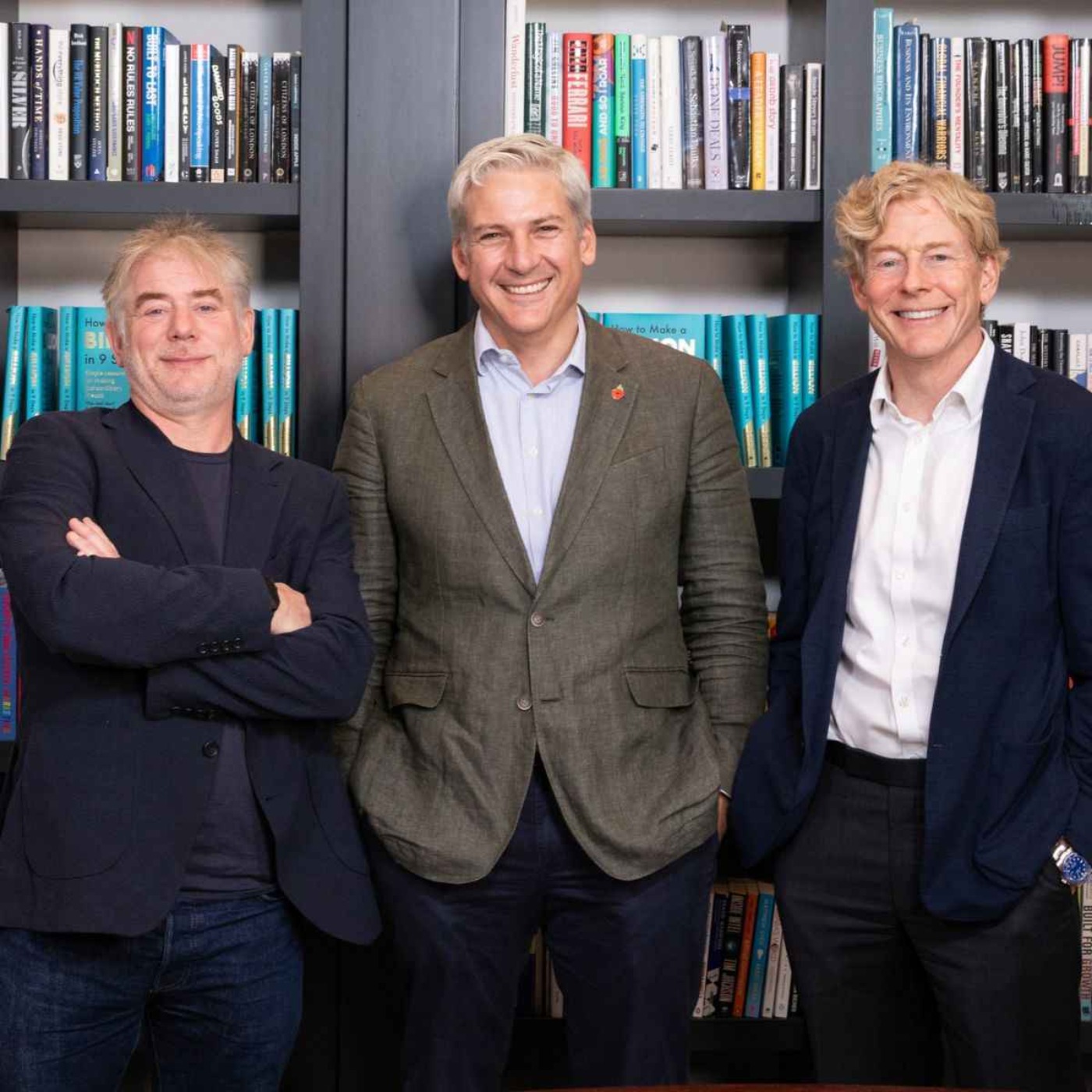
 The Business Leader Podcast with Sir Richard Harpin
6 May 2025 · 51m

In this episode of the Business Leader Podcast, host Graham Ruddick interviews John Roberts, founder of AO.com, discussing his journey in establishing the online electricals retailer from a £1 bet to a business generating over £1 billion in revenue. The conversation focuses on key moments of success, challenges faced, and the core values that shaped AO's culture and operations.
Written by AI. May contain mistakes.

Get the gist, explore an idea or ask about something said.
 Claude
On The Business Leader Podcast with Sir Richard Harpin, what are the key points of this episode?
Searching your listeningAutomatic transcript. May contain errors.
0:00This is Britain's growth moment. Do you want to be part of it? On 26th of March, 750 of the UK's most ambitious founders, CEOs and investors will gather in London to shape the future of mid-sized business. The company's driving our nation's success. The Business Leader Summit 2026 isn't just another conference. It's a day built around the three forces that define growth, ambition, policy and capital. And as one of our valued podcast listeners, you can be there in person. To secure a discounted ticket, visit the events section of our Business Leader website and use this code. BLPODCAST, all one word, all uppercase.
0:41We look forward to seeing you there. A business park on the outskirts of Bolton in Lancashire is not the place you expect to find one of the UK's leading online retailers. But here, in the shadow of Bolton Wanderers Football Stadium, is where AO.com was founded and built. AO sells household appliances online and now makes well over£1 billion in annual revenue. Over the course of its 25-year history, it's served more than 12 million customers. This story all began with a£1 bet.
1:24I'm Graeme Ruddick and this is the Business Leader Podcast, where we look at the stories behind how businesses were built. In this episode, we speak to John Roberts about the story behind AO.com. On Christmas Eve 1999, John Roberts was having a drink with his friend, Alan Latchford. They were talking about the potential of the internet, and John Roberts was particularly excited about the opportunity to launch a business selling products online. Alan bet him one pound that John wouldn't quit his job and start a business. But that's exactly what he did. John proposed selling household appliances online and asked Alan to build the website.
2:04Appliance Online was born. John Roberts has told this story about the bet before you may have heard it. So I was fascinated to know, what came next? How do you turn an idea from a bet into a business?
2:23we had the idea of doing it and then it was right well if we're going to do a it means we need to do b and if we're going to do b that we're going to have to do c and so on and so on and so the first thing was raise some money i didn't have any money like alan didn't have any money he was a van driver so we have no money and so it was right okay how are we going to raise money and this was in sort of dot-com one if you like but I didn't have the network of contacts that I have today and so in those days raising money we we used an accountants in Manchester that I got introduced to by somebody called Levy G and basically I got assigned somebody from Levy G they went out to their customer base if in effect and I pitched the idea of the business for me it was like direct selling kitchens which is what I'd been doing beforehand and it was it was just a proper pitch if I roll forward 15 years from there it was a bit like doing the IPO so it was telling a story of what we were going to do and how you raise that money but you didn't have any of the credibility that we have today and so I must have done I would guess 60 or 70 meetings and I only got two people to say yes and I was pretty good at selling stuff and so so that's the sort of brings to life just quite how hard that is I think that most people would have given up and it because of my direct sell background I was used to getting lots of no's we were trying to raise 350 grand which was we were trying to get 10 people to put 35 grand in we didn't we got three and so we had a decision on do we go do we just have a go and get on with it and so we launched with 105 000 pounds of investment and which is i mean like properly in you know in electrical retail in terms of fart in the wind you know it's 105 grand but actually it what it meant was we never had any money and so we had to be incredibly creative and we had to be incredibly careful with all the money that we did have and we couldn't afford to go you know when you go back to dot com one you know there was boo.com was one of the sort of spectacular failures at the time people were raising tens and tens of millions and blowing it on culture and fancy offices and all these things we never had any of that so we had to be really really really creative so raising money would be the number one and then piecing together how to do it everything was manual so you know you forget you know in today's technological world this was squawky dial-up there was no smartphones there was no online payment platforms you know you put your credit card details in we printed that off on an a4 page punched it into a pdq machine and then filed it in a lever arch file that was the system then we had to go and buy the product so we didn't carry any stock and so I had relationships with a number of different distributors and some of the manufacturers and so basically we had to go and do the same pitch that we did to investors to distributors and to manufacturers to get them to sell stuff to us and to get them to extend credit to us to be able to buy the product to then be able to buy it to deliver it to the customer that had bought it from us it was all complete make it up as you go along you know absolute sea to your pants but with a grit spit and determination to actually make it happen obviously the dot-com crash happened almost straight away after you founded the business at that stage were there doubts again about whether to carry on so i've never i've never had doubts about whether to carry on so we're i'm all in I've always been all in.
6:22So I think that if I look at the different crisis situations that we've been through over the last 25 years, everyone's been galvanizing. So no, no, not at all. I've always seen it as loads of opportunity. If you look at the direction of travel, a macro picture, will people shop online and will people move from buying in store to shopping online? Yes. I believe deeply that businesses don't invent their own failure and and we have seen that you know the amount of big box retailers that there were in the electrical space that no longer exist Comet being probably one of the biggest you know and so no I didn't I didn't see it in that way at all we just saw everything as an opportunity.
7:10When did you know that you were on something I mean did that moment even happen? Yeah the website went live at the beginning of August and we did just over 80 grand of transactions in our first month. We couldn't believe it. We just couldn't believe it. It was obvious to me from the very beginning, this can work. And then it was about, okay, so go and make it work. How did you go and make it work from there? We made it work by piecing it all together, obsessing about all the details and living it 24 hours a day. you know it was my life I mean literally it was my life uh you know we always joke about I've got five kids who call them the A team and the B team I didn't see the three older kids grow up so um you know I was always at work and that was just the way it was and so you know it was the key elements to it were how do you generate the sales in the first place so drive people to a website put adverts in things like you know the way we drove sales to start with was put the sort of you know like the tile adverts in the back of things like ideal home and homes and gardens and the advert basically said 50 off appliances and then they would ring us we would then send them a brochure that would drag traffic to the website but more often than not most of the orders would be placed over the phone so it was as the online listings were more of a catalog for a telephone order and so then it was how do you buy it then it was the logistics element of how do you get the thing delivered and and so you know we didn't have any scale in terms of logistics so we were using parcel carriers and two-man home delivery companies and you know and that you know the graveyard is full of two-man home delivery companies so you know over time basically we took more and more and more control on being vertically integrated and you sort of if you look at you know the idea at the beginning was there were going to be a few of us sat in an office and we'd outsource everything and and all we would do is the buying and the selling and the marketing and we'll look at where we are today you know we've got absolutely everything in-house you know all it in the house all our retail in the house we run everything ourselves we do all our own warehousing we do all our own logistics all our own last mile we own the recycling business we now also own the trading business as well and so you know over the years you know we've done that for structural advantage, but as much as anything for control of the customer journey.
9:56AO has now grown into a business with more than 3 ,000 employees, and John Roberts is really focused on protecting what he sees as the vital parts of its culture, such as speed and dynamism. That's gone pretty well, but during the COVID-19 crisis and lockdowns, it started to unravel. so we look for people that care just fundamentally people that care and we have guiding principles of treat every single customer as if they were your own grand and make decisions that make your mum proud everybody has a slightly different interpretation of those things but broadly the spirit of it everybody knows what they mean and if everybody lives to those two principles it means we can go at ao speed because we can empower people to do things and what underpins all that is you have to care and so I don't tolerate people that don't care and the business has an immune system that rejects people that don't care but we've been on a journey of that over the years so right at the beginning you know you know it's a really small team you know you're working you know shoulder to shoulder with all these people as you grow we try to sort of systemize that we try to formalize that into the dna of what did it mean you've got to be able to write it down to be able to explain it to new people that are coming into the business the truth is that the best way to for people to get the culture is by osmosis we've done all sorts of different things like psychometric testing to you know can we codify this thing and we've made some pretty chunky mistakes through that journey we talk about high performance culture one of the big departures we did uh that was a mistake was to lean too much into fun and and fun actually became a toxic word because if you know we operate in a world where we're selling electrical products where nobody's really made you know the market leader makes one percent uh we sell it online and there's not a vast amount of highly profitable online businesses we've got two-man home delivery in the graveyard's full of two-man home delivery businesses we've got to step over a customer's threshold and into a house which is an enormous challenge doing what we do is incredibly hard and it's the most price transparent marketplace that's ever existed with everybody trying to undercut you every day on everything so it's hard and so when you are trying to drive that hard commercial entity if you've got an HR team over here that are sort of dancing around trying and I have fun, it creates a confused message that over here I want you to be high performing and then over here I'm happy to waste money, as they would see it, on fun things.
12:41And actually where we got to in truth at the end is the most fun thing to do is be really successful. And don't almost try and conjure fun. There was a pinnacle moment when I turned up to the office one day we had a director of fun would you believe but anyway the fun team whatever they were celebrating i can't remember what it was but they had a barbecue outside in the middle of winter with fire eaters that were juggling fire sticks to welcome people into the building and and that was the moment that i remember that this is all out of control how did you communicate that with the rest of the business because you're you you literally telling the business no more fun well so I didn't say no more fun.
13:22So I do state of the nation every month. And so we explain to people in the business every month where we're up to. And as much as anything, it's how we're thinking about the business. We still do it today. And so we deal with topics and I share quite openly my thinking of, and the leadership team's thinking of how we're thinking about the business. and so at the next stage of the nation i said to the team on you know i think we've lost the plot i've got to be honest with you i think we need a whole reset on all this stuff and we've got to get back to the fundamental basics of it and so when you do that every month actually it gives you a platform and an ability to do that you mentioned about psychometric testing and moving away from that and trying different things how have you come to understand how whether people care or not and whether they to the right fit our recruitment teams are very stable and we do the vast majority of recruitment in-house so our recruitment teams are the gatekeepers of the culture at the end of the day but we then go through a process of how we onboard people into the business i try very hard i don't get to everybody but i run welcome to ao sessions so i go and have that's normally about two hours as a group so that once a month with the sort of latest intake across the different sites across the business to explain the rules of the business and if anybody is unhappy with that rules explanation then we're very generous in their ability to leave the business they also get the opportunity to have a Q &A session for about an hour in that as well and ask any questions that they want we're pretty open and pretty candid on all that stuff and so you get it by osmosis probably a good way to actually answer that is has it ever gone very wrong and and actually it went very wrong in covid so obviously all stores were closed we were classed as an essential service and retailer for essential products for people but what that meant was that demand went absolutely so demand went sky high when capacity to deliver the demand went as low as it's ever been and so it was how do you deal with that we made a strategic decision to say we want to use this opportunity to impress as many new customers as possible not we want to try and make as much money as possible and so that was a very big decision what we then had was i think we had to recruit something like 2 000 people in six months but they were all working from home or lots of them were working from home and so you get culture by osmosis and you learn how things work and we empower people we devolve an incredible amount of decision making into our teams you know in our call center they're empowered to do whatever they want what you know mums and grands is something we live by deeply well you can't just change that just because this situation's happened so i was saying to people across the business i feel like we've got culture sort of cancer that we're dying from the inside out and the external world just sees great sales and the whole world's going to move online and the share price got way ahead of itself and we were trying to calm people down and then we had to face into the problem that actually the drivers a lot of the drivers were actually taxi drivers you go into the outbases there were black cabs on the car park you know not renowned for the two-man home delivery expertise and so our service to customers wasn't as good as it normally would be we actually got away with it is the truth because the customer expectation was that they couldn't believe that they were going to be able to get this even delivered to them in one or two days and because of the covid restrictions we couldn't take it into the house and so we were asking them to do less but they didn't care they didn't care in the way that our core fleet of uh of people would our call center people you know there were of waiters and waitresses from restaurants that had been furloughed that came along and got a job as a call center operative they knew at the end of it they knew they were only doing this for a period whatever that period was and at the end of it they wanted to go back to being a chef or a waiter or a waitress in the job that was being furloughed so they didn't have they weren't mentally long-term invested in their future with AO and so it was horrible genuinely horrible And so I always say 2022 was our darkest year as we sort of came out of that and we made all the decisions to get the business back to what it was.
18:20Things like work from the office, as an example, you know, we were one of the first to call, you know, work from work, as I call it. And, you know, and over probably about six to nine months, we got our mojo back. How different has that period been since 2022? Because this is a business that's basically been in growth mode for 20 years. you said in the last trading update that it was back to being a growth machine but that period between then and 2022 how different was that for the business uh yeah it was huge uh i mean you know we closed our business in germany we took about 500 million of retail sales out of the business we refocused everyone onto being a profitable business but you know the core of our business when i look at our leadership team i think there's 16 people on our leadership team We have an average length of service of 11 years.
19:08There's a real depth of trust and knowledge and commitment across that team. So we're great with a plan. And so it was more a case of, right, what's the plan? We build the plan together and then we go and execute the plan. We live very much by the agree and commit or disagree and commit, but we all commit. And so once we had a plan and we knew what we were doing, we just go and execute it. And we're brilliant when we're in execution mode. how important do you still consider speed as part of the culture i've read that you you you can often be found walking around saying chop chopped people yeah chop chop is one of our favorite phrases so yeah i think you can judge the productivity of a business by how fast people walk around and uh you know ever see anyone with a clipboard broadly get rid of them it's everything you know we're a dynamic business and the best people want to work in dynamic businesses and we want the best people in our business we don't want to be the civil service obviously you know we've got i don't know what the exact number is now but you know directly and indirectly over probably over 5 000 people now across the group and all the different disciplines you know there's got to be structure and rules that go with it but broadly i want to be getting rid of rules not putting them in and getting rid of structure and empowering people and that's what drives speed and that's where that's where people get their fulfillment you know success is about doing something and seeing the output that comes from it winning as a business winning as a team you know whether that is you know down to the individual somebody you might have just you know sold something to somebody in the call center or a driver you have so many great stories there was one i got sent a couple of weeks go about and this was somebody on LinkedIn that put this message didn't send it to me but it was put on LinkedIn about this guy was just walking down the road and a little boy that was going to school fell over cut his knee and an AO van was going past the AO van turned around as this boy apparently was swailing on the pavement stopped and handed the little boy a green AO teddy bear and the little boy was fine and dead happy that's that's a moment of success you know we talk about magic in the moments that matter for the driver that's a yes moment and and so we try and create thousands of every week of those little moments of success if you're in the commercial team you know have you done something as a deal with a manufacturer where you know when we always want it to be win-win we we just want all those moments of success and achievement as a drumbeat right across the business and that drives pace it drives it has an energy all of its own in 2014 AO listed on the stock market in London with a valuation of 1.2 billion pounds since then it's been a roller coaster ride for the share price during COVID-19 the market value of AO hit£2 billion.
22:19But by early 2025, it's back at around£600 million. So what advice would John Roberts have for other founders and chief executives looking to float their business? The advice to somebody who was looking to float would be, do your homework. So the other way of asking that question is, if you were sat there in 2014, would you do it again? And the answer is, I do it every day. It's been great for our business and in lots of different ways. And there's downsides that come with it as well. So with anything, whether it's a private equity deal or whether it's an IPO, if you want to release some value from the business, then you pay the piper that goes with it.
23:04And we have to have respect for the investors that are investing in the business. But we have a great relationship with our investors, but we've learned over the last 10, 11 years how to operate better as a listed business. The challenge is that a lot of what we're trying to do as an organization is to keep disrupting ourselves and keep innovating and keep doing new things. And when you're doing new things, they're fundamentally uncertain and the city doesn't like uncertainty. So that's just a sort of a conundrum that we deal with and we just try now more to be more under-promise, over-deliver and we've switched our focus to be, we'll tell you when we've done it rather than we'll tell you what we're doing.
23:54Is it correct that ahead of the flow, you wrote to every CEO who had flirted a business between then and the financial crisis to get some advice from them? Yeah, yeah. so I wrote a handwritten letter basically to say I had a in the float process I had a realization we joked about it as I was Mr Green in a green suit with a green hat and a green tie and I realized that I was playing a game that I didn't know the rules of and I was only going to play it once with my sort of commercial life's work if you like and I was playing it with a load of people who made the rules and played them every day and what my realization was that you know they're very good at making you feel incredibly smart and and important and in the center of the deal and all the rest of it but the minute the deal's done there's somebody else they'll move on to the next one and i just wanted to make sure that i would get that right so i wrote a hand letter to there weren't that many from 2008 uh gfc to 2014 and pretty much everybody came back and said yes and made the time and i would just went and asked them a list of questions of would you do this again what did you do right what did you do wrong uh what advice would you give to me who did you trust who shafted you and you know what were the key lessons and i just literally very quickly went and educated myself what was the best advice you got from that Uh, you're not their client.
25:23So, um, so people make you feel like, you know, so the brokers and so on, they make you feel like their clients, but actually their clients are the people really that are buying the stock. And so we had to think differently. And the other, the other piece of advice was you get the investors that you deserve. So if you just do the normal treadmill, of the Black Rocks of this world and the Avivas and all the rest of it. Those are the investors. There's nothing wrong with them as an investor, but we were a specific type of business with a specific plan. And so we wanted to, we want investors that believed more in a business like Ocado, for example, or ASOS or Amazon.
26:12So we put a lot of effort into going to find the right investors for our business. And so that's something that I wouldn't have done had I just taken advice. The story of AO.com took a big twist in 2017. John Roberts stood down as chief executive. He remained on the board as a director, but chief operating officer Steve Korns was promoted to chief executive. roberts soon realized though that this was a mistake by early 2019 john roberts was back as ceo and steve corns left so i did it for a multitude of reasons so there was one definite element in it that i was exhausted physically exhausted you know and i'd spent 17 years working at 300 miles an hour emotionally with everything on red and so you know i've stared over a lot of business precipices you know this in in the first 15 years of this business this business nearly went bust reasonably regularly and that takes its toll and so so that was definitely a contributing factor but also post IPO there were some questions on whether I was the best person and whether I could gel with investors.
27:35And so there was a common sort of thought train around, well, the next stage of the business is, I think they called it professionalization, as if we were unprofessional. And so there was a guy called Steve Corns who was my COO, and we'd worked together hand in glove for many, many years. Steve understood the business deeply. he wanted to be chief exec and so it felt like a natural progression it wasn't like bringing somebody new in that wouldn't understand the business wouldn't understand the culture and so on and so you know that the board supported it I was tired Steve wanted to do it it all seemed to make sense and the plan was not for me to completely leave the business I was going to stick around and still do lots of the things in terms of disruption and innovation that I'd done and still culturally be around.
28:31And, you know, still, you know, at the time, I was still the biggest single shareholder in the business. So it seemed to make sense. It didn't work. So we moved to correct that and it took us, I think, about 18 months to correct it. When did you realise it wasn't going to work? Probably after about nine months. And I realized because too many of the leadership team at the time were sort of back channeling to me to say that they were thinking of leaving or they weren't happy. The organization was becoming too political. The way that we ran the business previously. And I had stepped back to give Steve some space.
29:13And so Steve was doing it in his style. So and that wasn't working. him so you know it was right okay and in the end Steve and I agreed that I would come back and that Steve would leave and and go and pursue other opportunities but how did you feel about coming back as CEO was were you were you ready for that or is it something you felt you just had to do at the time it was something I felt I had to do for a number of reasons economically I had a lot of my wealth tied up in the business still do but actually the truth is from a human perspective you know this is sort of i talk about the business as my sixth child you know it was like having your kid getting punched in the morning and you know i feel a deep responsibility to the people in the business and i ask a lot of them and it it didn't feel right so you know i i felt very morally driven to to come back and sort it out how much have you changed as a chief executive because you we talked beforehand about you very very thoughtful about personal development trying to learn as much as you can so how much have you tried to learn as a as a ceo and evolve that is a great question so definitely i have uh i would say mellowed my style over the years but i would also say that the business has matured as well so you know i talk about you know the the the 11 years of average length of service we have on the senior team you know go back 11 years ago and there was a there was a lot of us who didn't know what we were doing and that were learning on the job now there's a lot of us who really know what we're doing there's a lot of us that deeply trust each other that deeply know each other's strengths and weaknesses and so you're naturally able to devolve more responsibility to those people from an expectation management perspective as I said before we we focus more now on telling people what we've done than telling people what we're going to do and I think that my enthusiasm still burns brightly inside me I just don't release that as much as I used to and I used to really enthusiastically want to go and tell the market and investors what we're going to be doing and to get people excited about it but what i found was that from there you can only fail so actually it's better to under promise and over deliver but also the business has become more predictable as well you know the business has matured we're the most profitable electrical retailer now you look at our numbers we've done nine consecutive upgrades from a cash perspective the business is a in a balance sheet perspective is in the strongest position currently that it's ever been in it enables you to take better decisions you know you can you can make better decisions for the medium and long term you're not just having to trade your way through what's happening this week this month this quarter and that gives the business a certain level of confidence as well but yeah definitely i would say i've mellowed my plc style well what do you think people here would say is you like to work for consistent probably I would like to think I like to think that I am very supportive trusting and empowering with people I don't like to leave a meeting with an action you know I very much firmly see that as the team's job to do my questions that I tend to ask is how can I help or I like to challenge how they think about things.
33:04So I would like to think that they would feel disrupted and feel a level of pressure, pace and intensity. But equally as a balance to that, they then get left to get on with it. They really do genuinely get empowered. But if they ever need anything, we're completely accessible and one phone call away. Why is being consistent important? consistency builds trust consistency builds trust and inconsistency destroys trust so if if you behave in a certain you know even if you're a bit of a dick if you're always a dick people can be consistent and trust that you'll be a dick and that's really important and so But if you are always empowering and, you know, the consistency of people knowing what to expect from you, I think is really important.
34:05Can you be consistent in different ways with people? As in consistent in one way with one department and one way with another? Or is it consistent at all times? Well, so I think, you know, when I say consistency, what I mean is I don't shout and scream, as an example. So, you know, I get lots of bad news. I think I'm the most pragmatic person in the world, but all our team would feel confident to come and knock on the door. The consistency element of that that we live by is, if there is bad news, deliver it extremely quickly to somebody. So tell someone. So if somebody came and delivered bad news to me and they got a really bad reaction that was unsupportive, even if they've totally cocked up, that would be really bad because next time they wouldn't trust that they could come and do that.
34:55They wouldn't want to do that. So that would be a very good example of where you want to be consistent. They would always expect me to be really challenging. And so there's a, you know, I could argue there's a consistency to inconsistency as well, which is, you know, they would expect me to always take the devil's advocate position on something that we're looking to do but at the end of the debate and we'll have a really challenging debate on whatever the topic might be we were having a conversation yesterday about what we mail out millions of brochures how many pages should be in it what cohort should it go to what size of brochure should it be in what should the pagination be my opinion is not actually more valuable than anybody else that sat around that table i'm not a brochure expert but because it's me and because you're the founder and because you're the chief exec sometimes your voice can be too loud in those sessions so i tend to poke and prod more in those but i don't necessarily actually agree with the position necessarily that i'm taking i'll be just doing it to stress test their thinking and then at the end And, right, well, we all agree and commit and we disagree and commit.
36:09So you come back to the consistency, which is agree and commit or disagree and commit, but we make a decision and we get on with it. Who have you looked to learn from and where some of the most valuable advice come from? So I love listening to other people tell their stories. And I take a bit from everyone. I think the most important thing for me is to learn as much what not to do from people as what to do. But be yourself. Don't try and be, you know, sort of poor imitation of somebody else. But take what you see and hear and learn from other people and adapt that into what you do. So, you know, I love audiobooks.
36:52I can't read very well. and uh and so so audiobooks for me are an absolute godsend so whether it's you know famous ones i've got a list but you know jack welsh you know back in the day with general electric you know was very formative somebody like richard branson if you look at you know a more recent one the the acquired podcast on episode on spacex it's just mind-blowing i mean elon musk the um the walter isaacson book on on elon musk i wouldn't want to be elon musk for the avoidance of any doubt and you can kind of go through that i mean what a fruitcake but equally what a genius at the same time so he's probably the pinnacle of you know what you can learn from both ways so i'm always listening to a podcast or a book or something on a topic to learn stuff i love learning is you're right you're always looking to seek people out face to face as well i've read that you'd met michael moritz for example in san francisco of sequoia and then just these you just contact them out of the blue and say have you got time and they'll take the meeting yeah i think it's normally how you ask and so you can't be interesting until you're interested type principle and again you've got to put the shoe leather in so i find that the vast majority of people are open welcoming and nice so if you you know if I get a cold email from someone that is well thought out well written and asked for some time then I might respond to it if I get a handwritten letter from somebody that's done some research I'm much more inclined to respond to it and and so I just apply those same principles I decided that uh so this would be in probably more like about 2010 I set out the objective to try and get to be one degree of separation from anyone in the world that I wanted to contact which was a very lofty goal and I and I haven't achieved it but I've got incredibly close and and along that journey I have met and had the privilege and pleasure to meet some fascinating people but i've had to go on some epic journeys uh you know so a great example is the ao membership scheme so i wanted to build a membership scheme so i wrote to richard galanti and craig who were the ceo and cfo of costco in the u.s and and wrote them you know one of my normal sort of cheeky i'm a lad from bolton doesn't really know what he's doing i'm thinking of building a membership scheme you are handwritten letter was this handwritten letter you are one of the global examples of how to do this would you spare me an hour if i'm willing to fly from manchester to seattle to come and see you and so they said yes i did the same thing for dave clark who at the time was running he'd taken over from jeff wilkie running retail at amazon so they were in Seattle as well so I saw them both across two days and Richard Galante and Craig ended up giving me about four hours I missed my flight back to LA and so what I took away from that was the absolute foundations and the blueprint for what is now the AO membership scheme and you know I'm sure if I reached out they've both retired now but I'm sure if I reached out to either of them and said you would you meet me for a coffee?
40:30They would. Mike Moritz is a nicer man you could not wish to meet. And it is worth getting on a plane to go to San Francisco if Mike will give you an hour. But you've got to be bothered. Most people are just not bothered. Most people just don't do what is required to go and do those things. And also, there's a whole pay it forward mentality on these things as well, which is people think far too transactionally on what am I getting out of doing this rather than this could just be very interesting and I tend to start from a I don't necessarily have something to come and talk to you about when I went to see Mike Moritz it wasn't to pitch him for being an investor in AO it was more can you advise me on how I should think about things as I build this business and he was incredibly generous with his time.
41:28In the 25 years since AO.com was founded this business has been through highs and lows but it is undoubtedly one of very few online success stories in the UK. It's also based outside London and listed on the stock market. To be frank the UK needs many more AOs right now. So having recounted the story of how AO.com was built and now keen to hear from John Roberts what he thinks the key to its success has been. Refusal to fail. Just refusal to fail. It matters. You know, you find a way. I've had some very, very dark times. You know, I always use the example of I think about the business in terms of dining room tables.
42:12So, you know, we have 5 ,000 dining room tables tonight that will have food put on them and kids that go to school with school uniform on their backs because of the money that they earn working for us as a business. And I think that's a responsibility that people should take very seriously. I think it's more, you know, it matters more. And, you know, we've got responsibilities to our suppliers. We've got responsibilities to our investors. You know, the three investors that we started with at the beginning with the 105 ,000, you know, you never want to let them down. You just don't want to let people down.
42:45And that burden is one that I take incredibly seriously. and so you find a way if you're flippant about that and you're just in it for the money i'm just not in it for the money you know the economic you know the business has been economically kind to me but it hasn't been about that's an output of it the inputs are that you fundamentally care about it what do you think the uk needs to do to create more large businesses so i think there's a number of different things uh you know that some you can do quicker than others i think that access to capital is incredibly difficult. So I can access capital.
43:27So the older bank gives you an umbrella on a sunny day. Banks don't lend money to high risk. Banks are not in the business of risk, right? And we need to face into that. If you look how vibrant the Series A, Series B, Series C fundraising rounds are, you look at businesses like Sequoia in america you know just access to capital in america is just fundamentally easier and it's because in the uk we have a culture of you know it's not for you that lad you know you're getting big for your boots type thing we don't celebrate success we look at people that build things and and get wealthy you know i look at the current government all we want actually the last two governments so whether it's labor or conservative in the last one we had the highest tax burden in the last government and it's just got higher with this one why don't we want to incentivize these people if you look at um you know a great example is let's put vat on private schools why would we not want to encourage people to invest for their kids to have a better future and if they're willing to pay whatever the number is 10 000 pounds in their after-tax income to release the state from paying the eight and a half thousand pounds a year that it costs to send someone to state school why is that not a good thing why can we not try and get all boats to rise rather than be dragging everybody down and you know the if you look at you know things like the non-dom status, right?
45:12Look at how much money all those non-dom people spend in the UK. You know, you get chased out. Something like capital gains, you shouldn't start a business based on the tax regime, right? You shouldn't let the tail wag the dog. And I'm a great believer in paying tax. I'm a great believer in giving back. I'm a great believer in donating to charity. I'm a great believer in reinvesting back into society that we take a lot from. However, you reach a point where you go, it's not fair anymore. The balance is no longer fair. And when you start to reach that point, then what you do is you get brain drain and you get financial drain out of the country.
45:53And then correcting that is going to be incredibly difficult once they've gone. So it's how do you create the environment for success where people want to start a business? They want to take a risk. They want to be creative and then they don't get their heads kicked in societally on the other side. And how do we make it easier? And so I think, you know, if you think about it as a government question, if you like, I think the private equity industry is very smart. There's a lot of smart people in that industry, but they tend to do later stage business transactions. How do we incentivize that capital base to move into earlier stage businesses?
46:42And I think the government has an incredible role to play in that on whether it's tax breaks or whether it is match funded investment. So, you know, the British Business Bank or whatever it's currently called. And the government can provide a lot of capital on the tail of other people that are deploying their capital. So almost the government doesn't have to make the decision. If you're writing the cheque with your own money, then the government can come in behind. And there are certain things like, you know, the enterprise investment schemes and those kind of things. they tend to end up getting so complicated and then we also have to accept some of it will go wrong you know the majority of businesses fail because it's hard well let's embrace that let's not worry about that and so when we look at you know go back to your background uh whatever it is 11 years ago at the guardian you know the guardian would enjoy celebrating that you know some rich person has failed and we shouldn't celebrate that we should celebrate the fact they tried in the first place and if we can take that pivot then you know i think a lot of a lot of good can flow from it do you think entrepreneurs uh like a natural do you think they learn it's like take your background your dad was an entrepreneur um but but you've you've been on the record to say wasn't a very good business so how how how much was growing up in an entrepreneurial family important and how much was it not important at all and actually you you learn so i believe in both nature and nurture and in that context so when i look at some of the people i think about as you know some of the best entrepreneurs the majority of them it was baked into their DNA you know they came from trading families in one form or another within some form of entrepreneurial work ethic and it's the work ethic point I think that that really drives it so from my point of view you know it was the work ethic element I enjoy work but I enjoy it because it was drilled into me when I was really young but then you know you are making it up as you go along so you know there isn't there isn't a book on how to start a business and in any specific sort of field or way or whatever it is you've got to follow a niche and follow a passion and then you're making it up every day as you go along.
49:30And so the better you can keep investing in your own knowledge, I think the more you help your own odds of success. And there's elements where you can do it just on the seat of your pants and gut instinct. But then there's other stuff that I've learned a lot. you know amazon is a is an amazing case study as a business that i've spent a lot of time studying on structural advantage how they think about that things like the jim collins books on good to great and you know how the mighty fall and all those things i think they inform your thinking of then how you make those decisions i always say that starting a business is like doing the 110 meter of hurdles with a blindfold on so you set off and you just start running and you hit the first hurdle and obviously you fall over and somebody's shouting jump but you don't know where the next hurdle is and so but then you jump over or you just clip it and then you fall differently and then then they might let you have one eye and so the journey gets more and more transparent as you're going along and probably for the last three hurdles you've got no blindfold on and you've got a bit of pace up and you've learned more of what you're doing well guess what you're going to jump the hurdles better the more you can do on that to lift the blindfold off be able to run better jump better but again it's are you willing to do what it takes in your own time to listen to those audiobooks to go and meet those interesting people to do things a bit differently to think creatively and most people aren't you've been listening to the business leader podcast with me graham ruddick our producer is anushka tate if you enjoyed this episode then please subscribe or follow the business leader podcast on apple podcasts spotify or wherever you get your podcasts to make sure you get updates when new episodes go live.
52:08It's your chance to join the leaders who are shaping the future of business.
Graham Ruddick travels to Bolton, Lancashire, to hear how John Roberts built AO.com into a leading online electricals retailer with more than £1bn of revenue and 12 million customers. AO is one of few online success stories in the UK and it all started with a £1 bet. Since it was founded in 2000, AO's story has included a high-profile stock market flotation, a U-turn on the chief executive position and, as Roberts explains, a rethink on fun. In this episode of the Business Leader Podcast, learn the story behind how a cutting-edge online retailer was built.
John Roberts is a supporter of OnSide, a charity that is building and opening youth centres across the UK. You can find out more via the link below:
https://www.onsideyouthzones.org/
Hosted on Acast. See acast.com/privacy for more information.