Ask ChatGPT
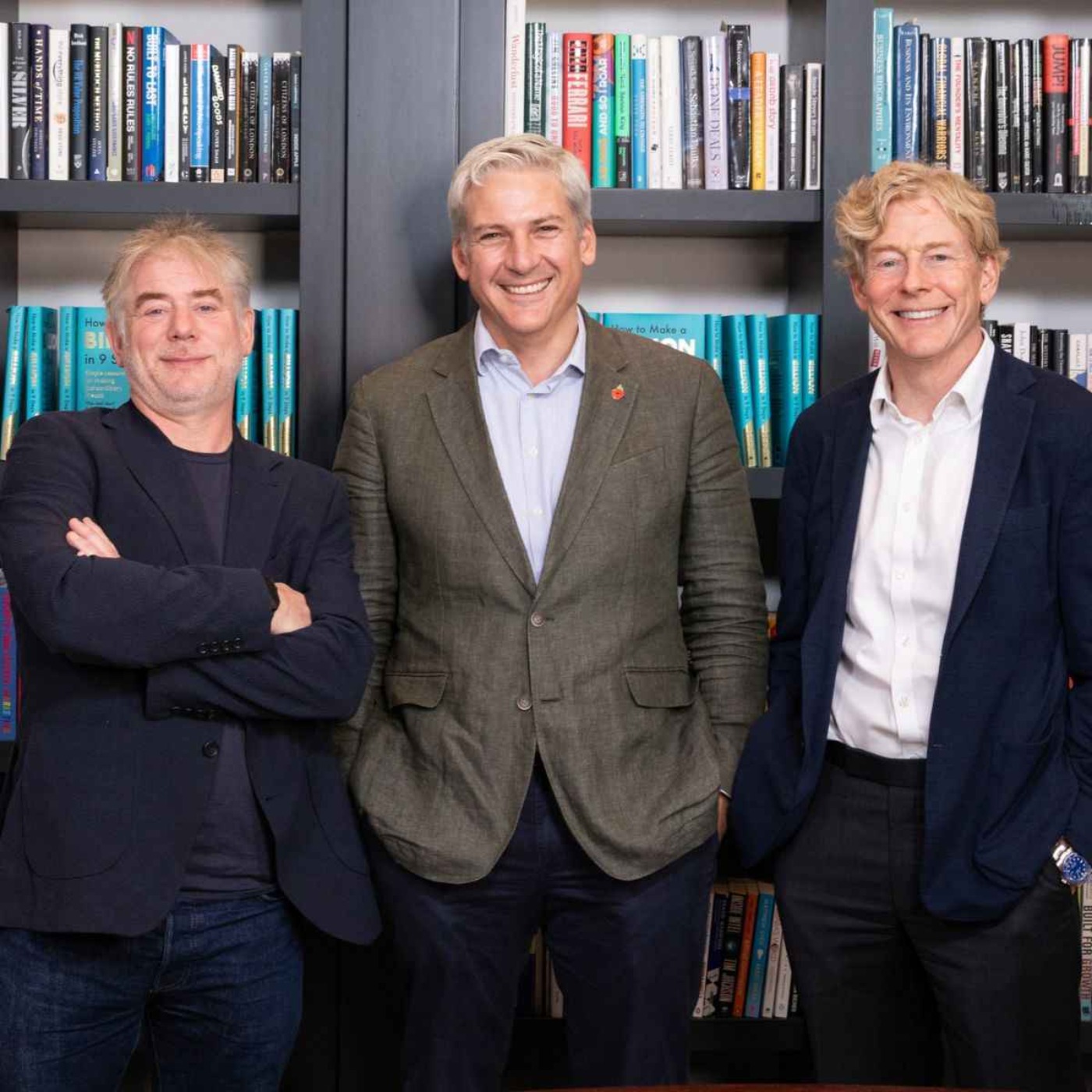

In this episode of the Business Leader Podcast, hosted by Graham Ruddick, Kenny Wilson shares his journey from aspiring footballer to Chief Executive of Dr Martens. Under his leadership from 2018 to 2025, the footwear giant tripled its annual revenue to £1 billion. Wilson discusses the challenges and strategies that contributed to this impressive growth.
Written by AI. May contain mistakes.

Get the gist, explore an idea or ask about something said.
 Claude
On The Business Leader Podcast with Sir Richard Harpin, what are the key points of this episode?
Searching your listeningAutomatic transcript. May contain errors.
0:00This is Britain's growth moment. Do you want to be part of it? On 26th of March, 750 of the UK's most ambitious founders, CEOs and investors will gather in London to shape the future of mid-sized business. The company's driving our nation's success. The Business Leader Summit 2026 isn't just another conference. It's a day built around the three forces that define growth, ambition, policy and capital. And as one of our valued podcast listeners, you can be there in person. To secure a discounted ticket, visit the events section of our Business Leader website and use this code. BLPODCAST, all one word, all uppercase.
0:41We look forward to seeing you there. And they've done so. Weir. That's a good ball from Peter Weir. And now Aberdeen with McGee making the break. And Hewitt waiting in the middle! Hewitt! That's the goal that won Aberdeen, the European Cup Winners' Cup, against Real Madrid in 1983. The manager of that Aberdeen side was Alex Ferguson, who three years later would leave to become manager of Manchester United and go on, of course, to become Sir Alex Ferguson. There was a promising young footballer at Aberdeen during this period called Kenny Wilson. He wouldn't make it as a professional footballer, but he would make it in the business world.
1:38I'm Graham Ruddick, and this is the Business Leader Podcast, where we look at the stories and strategies behind modern businesses. In this episode, we speak to Kenny Wilson about Dr. Martins. Kenny Wilson became chief executive of Dr. Martins in 2018 and stood down in 2025. During that time, he nearly trebled annual revenues to a billion pounds. He also grew sales of boots, shoes and sandals from 7 million to a peak of 14 million and grew the number of Dr Martin's shops from 90 to more than 300. This is a story of how that happened and the challenges he faced too. The story starts in Aberdeen.
2:23When I was a kid, all I wanted to be was a professional footballer. I spent all my time playing football, practicing football, and then I got selected to be part of Aberdeen's youth set-up, which wasn't anywhere near as professional as the academy is today. But you'd go and train three nights a week with the youth team coaches and the professionals. And I thought, yeah, I've got a chance here, but it didn't transpire that way for me. And in the end, I didn't quite make it. What was it like when you found out you weren't going to make it? Yeah, I think I was between 16 and 17 when I found out that I wasn't going to make it at the level I wanted to.
3:03I got the chance to leave Aberdeen and go to Dundee, but I was devastated. I remember going home afterwards and you didn't cry in my family. And I remember crying because it was kind of felt like the end of what was my dream at that point. And I thought, I've got to think about something different. Why did you decide not to carry on? because you mentioned that you had this opportunity to go from Aberdeen to Dundee. You're still young, clearly, and clearly had talent. Why did you decide that you didn't want to do it anymore? Yeah, there was probably a number of reasons. One, my dad had been a failed professional footballer and his advice was you need to get an education and if you want to go back to football, you can go back to football.
3:42And then the other reason was I was a lot more black and white when I was younger than I am today. And I thought at that time, Aberdeen were one of the best teams in Europe and I thought if I can't make it here and I'm not good enough to play for Aberdeen then I don't really want to go and play for Dundee. So I stopped playing basically which is probably the only part that I regret now is to stop something that I love doing but I don't regret going and pursuing an education. How much looking back did that moment drive you forward? How much did it give you determination to succeed or how much did having that setback free you up to take bold decisions in life?
4:18I think I was always determined and pretty driven in terms of my family and my background and my upbringing. So I don't think getting rejected to be a professional footballer was what gave me drive and determination. I think what that experience gave me was it gave me discipline. It gave me high standards. It gave me the fact that you've got to work for things if you want to be successful. So that I think there's a lot of parallels between sport and work and life. So it gave me a lot of things. But I think my drive was there to start with. You mentioned Aberdeen and sort of being at the centre of the footballing world.
4:52The reason that was at the time was that Sir Alex Ferguson was at the club. What was it like being there during that time? And what could you see and learn from him as a leader? Yeah, I mean, he was all pervasive at Aberdeen Football Club at that time. I mean, being in the youth set up, there was specific coaches for the youth team. Ferguson would come and watch some evenings, which was amazing if you were a kid. But his drive, his determination, his standards, you could feel that everywhere you were. And I remember one night we were playing, Aberdeen used to train on the car park opposite the stadium, even the first team.
5:28And that's where the youth team trained. And he was watching. And I remember I came off at the end and he came over and he ruffled my hair and went, you know, well done, son. You played really well tonight. You gave it everything. And, you know, you didn't have many interactions with him in the youth set up. But that was an amazing interaction because, you know, it's something I took forward in my work life that, you know, if you appreciate something and get really specific about what people's done, that power of well done is not something people talk about with Alex Fergus and they talk about the hairdryer.
5:56But my experience was the guy made me feel 10 feet tall. He became known for sort of having control or interest in every single part of how the football club worked from sort of top to bottom. Was that something you could see then at Aberdeen? I think as a kid, what you see, you know, because you don't, you probably don't have the perspective I would have today if I, you know, the knowledge that I've got today, but you could feel him everywhere. I mean, as a kid, the drive, the standards, the professionalism, obviously he was a lot younger as well then and probably quite hungry for success and you could feel that.
6:28And as I said earlier, that was something I took on in my work in life that, you know, if you want to be good, a culture of effort and a culture of discipline is really important. How relentless was he in terms of the standards? I remember there was, after every success he seemed then determined to drive forward and there was one of the cup finals where Aberdeen won and he said the performance was a disgrace after How relentless did it feel as an environment? I mean, I was a long way from that, you know I went to that game actually, but I was a long way from that first team set up, you know so I don't feel that I could really say, or I knew it, what I could feel was, you know, you could feel that anybody who was associated with Aberdeen Football Club at that time.
7:07It was all about, we want to be the best, we want to have the best standards, we want to beat the people from Glasgow. So there was a competitive spirit there that drove everyone on. And again, that was so beneficial in my working life, because if you want to be good at something, you learn you've got to put the effort in. Instead of becoming a footballer, Kenny Wilson went to university. After that, he joined the graduate scheme at Kay Shoes, then went on to Burton's. In 1990, he joins Levi's, the denim brand. He would work there for 19 years. I think it was what formed my leadership style and formed a lot of my knowledge about brands.
7:48I mean, I think I've gone on to learn a lot since Levi's, but if I look at some of the things that I learned there, I learned so much about how to manage a brand for the long term. You know, I've been around for 150 years plus when I was there. I learned about the importance of people. So both high caliber talent and developing and investing in talent. I learned about what it takes to grow a global business as opposed to a single country business. I could go on, but I mean, they're just some of the big things I learned. And then probably the other thing I learned in terms of really forming my career was the importance of role modeling.
8:23At Levi's, they would talk about everyone's got a to-do list, but have you got to be list? And getting yourself prepared in the morning to go in and say, how do I want to be today? because as a leader, that's how I'm going to impact the other people. So, yeah, it's a phenomenal company. When you talk about role modeling, was that something about trying to make people become future leaders or is it about trying to make the best of yourself? I think there's probably two parts to that for me. I mean, at Levi's, they would say the role of leaders is to create future leaders. So, you know, when I was president of a Levi's brand for Europe, you know, I was measured on results, but I was also measured on my ability to bring other people through the business and create future leaders.
9:00but I think there's also an expectation on you know leaders cast a long shadow and people will follow your behavioral exhibit so if you show up in a certain way people will follow that and and therefore behavior was super important what did you learn about brand while you were there it's also obviously one of the great brands in the world how do they think about it and how is it developed and protected yeah I mean I think with Levi's that there was a very clear focus on the proposition of the brand so when I was there it was all about Levi's as the original and definitive jeans and therefore to be the original you need to continue to originate and bring new things and to define you have to have a clear point of view and that taught me a lot about consistent brand positioning doing the same things over and over the importance of the product because at the end of the day people go away and they buy the product and they buy the brand so to have a senior job at Levi's you had to be steeped in product and that was one thing I had to do across my career was really get to understand both the product and the brand.
9:58How central is it to every decision and all the thinking? I mean, is it something that everyone's really wary about protecting or is it something that people feel is led by product ultimately? No, there was real focus at Levi's on protecting the brand and the intellectual property of the brand. So, you know, they had a phenomenal IP team. You know, we've got many great trademarks, the Red Tab, the Arcuit, the Two Horse Patch, And you're steeped every day in thinking about what are the iconic elements that make up the brand and therefore protecting those is one of the most important things you're going to do.
10:32You've touched on there about leadership and talent. Why was Levi so good at developing talent? Yeah, I was probably quite fortunate in that, you know, early in my career, I was put on the Levi's High Potential program. And I think they were good at developing talent because they were very deliberate about it. so you got given different experiences I got moved between different functions within the business so that I would learn about different facets and become a true general manager I had the privilege of having different mentors so you know general manager of the UK was my mentor at one point then the general manager of Italy was my mentor so Levi's were very good at structured development which I got and then as I said earlier the you know the it was then expected that you would do the same thing so in my last three years at Levi's I taught the global high potential program which brought through a new generation of leaders what were you teaching on that it was mostly behavioral um so it was it was a combination of things it was modules where the 30 top young leaders from around the world would come to San Francisco and we would teach them about strategic thinking we would teach them about presentation skills we would teach them about impact and influence and then between the events that we exposed them to in San Francisco which had a lot of external speakers and external coaches my job was to mentor a group of those individuals and help them with the daily problems that they faced in their jobs whether they were working in Japan or Taiwan or France.
11:59Having gone through that how much do you believe that management and leadership can be taught rather than come naturally to you? I think most things can be taught I'm a real believer in you hire for attitude and then you can teach people to do most things so I think the hardest thing to teach someone is driving determination i think that is fairly innate i think it's very hard to teach somebody to be driven but in terms of helping somebody to improve their judgment or their influencing skills i think all of those things can be taught if you're willing to work hard enough at them in the high potential scheme what was i don't want to try and sort of condense the whole thing into one simple thing but what what was sort of the main message that you wanted to get across to people but also that when you in the early days it was tried to put across to you i think one of the big themes of the leadership scheme at levi's was anyone can be the boss but to be a leader you have to have followers and what i mean by that is how do you behave in a way that creates followership that people want to do what is the course that's been charted and sometimes you can be a leader even though you don't have hierarchical power because people want to follow you and that's where we really tried to focus we tried to create you know giving people the skills knowledge and behavior that would get people to follow them talking to you it's it's it's obvious how curious you are and how keen you are to learn you've touched on coaches and mentors why are they so important and what have you learned from them over time i mean i've had a coach got my first coach in 1998 again that was something levi's was brilliant at if you were if you wanted a coach and you want it to develop they gave you that opportunity and probably goes back to my sporting background but I you know the best sports people in the world if you're a great tennis player you've got a fantastic team of people around you it's not done on your own it's done with the help of others and and I felt that to be a really good leader or at least the leader that I wanted to be I needed constant challenge constant learning constant self-reflection because I think by reflecting on what you've done then you've got the opportunity to do better next time.
14:04how much do you read and what have you currently been reading yeah obviously my degree was in english and psychology so i'm quite a voracious reader i love to read but i love to read fiction and i also love to to read business books um probably the most two two business books i've read most recently i read tony blair's new book on leadership which was very interesting to me just to to hear his journey and and how he went through that and i read a book called time to think by Nancy Klein which is all about the power of listening and I'm a real believer that that you know the the top leaders have an ability to listen intently.
14:38Do you have a favourite business book? Oh gosh I've got many business books that I love and I've read over the years and one that I've read many times is that every time I change jobs I read a book called The First 90 Days by Michael Watkins which I believe is is probably the seminal book on on leadership transition. What was this key takeaway from that? I think for me, the key takeaway is there's a quote in the book, which people at Dr. Martins heard me say many times, which is you don't rip down a fence if you don't know why it was built. And, you know, having spent 19 years at Levi's, I think I saw a lot of leaders arrive and they wanted to make a big impact by changing things immediately.
15:19But I think the right thing to do is to go in and to understand why the fences were built. And you might need to rip them down. But if you've shown the organisation, you've taken the time to understand, then people will go with you and they'll follow you because they saw that you take the time to respect the past before you create a new future. This brings us nicely to Dr Martens. Kenny Wilson was appointed chief executive of the famous footwear brand in 2018 after spells with Cath Kidson and Claire's accessories. Dr Martens was founded in 1945, but the brand was bigger than the business. Yeah, when I arrived at Dr Martens, I mean, And, you know, Dr.
15:59Martens is a brilliant brand. As a British person, you know, everybody knows Dr. Martens. It's an iconic brand. It'd been around for 60 years. And I thought, God, this, you know, great product, great iconic brand. I was quite surprised how small the company was. You know, at the time it was doing about 340 million. And I thought that was relatively small. It was growing. So it was growing mid-single digit when I got there. And it had a great culture and some passionate people. And I thought, God, there's loads of potential here. That's what I thought before I joined. one of the things I noticed when I first got to Dr.
16:30Martin's was that the the company was very regionalized and people were very interested in their own ideas and I learned something in my Levi's career which was adopt adapt invent in that order and it says if if you see something that someone's doing in Japan and you can just adopt it into your market just do it or if you can take that brilliant idea and you can adapt it take it and only invent something if you can't adopt or adapt and that gives us the ability to be better than the local competition because the local competition are only working eight hours a day but we're working 24 hours a day because we're working in japan we're working america and we're working in europe and we try to create a culture which i hope i've left behind which is the best leaders are the best thieves go in steal the best idea copy shamelessly and adopt and adapt before you invent and I think that was really instrumental in unleashing the power of the organization to start to think about the collective rather than thinking about oh my ideas are the best ideas what did you do when you first arrived what was the how did you try and find out more about the business you know when I got there um I remember I had a presentation to do my first week and I and I stood up and I put up a slide and I said, I'm not actually going to do anything for the first three months.
17:50And people laughed. And I said, I know that sounds weird, but what I'm going to do, and it talks to what we've just discussed on the first 90-day book, I put up a slide and it just said, listen, learn, lead. And I said, I'm going to travel around the world for 60 days and I'm going to meet the top 90 people in the business one-on-one and I'm just going to listen to them and I'm going to learn. And I prepared a structured battery of questions, You know, things like what are the biggest challenges the business is facing? What are the biggest opportunities? What are you hoping I'll change? What are you hoping I won't change?
18:21And generally what you find is if you get the same answer from multiple people in multiple territories, the people in the business know the answer. So what I did was I really just listened to people. I learned from that. And then, you know, at the end of the three months, I sat down the global leadership team and I played back what I heard and said, here's a hypothesis and what I think we might need to do. How do we build on that? How consistent was the feedback you were getting? Was it the same things coming up all the time? Yeah, there were certain things that were incredibly consistent. And I found that throughout my career.
18:51If you actually go and ask people what's going on, most people do know the answer. And, you know, if you hear something from one person, you go, that's an outlier thought. Is it just their personal opinion or is it true? But if you hear something from 25 people, then, you know, you just you just need to listen properly. And if you listen properly, people will tell you the answer. One of the things that I've read that you said in other interviews was that you had taken aback as to how much the business was trying to do and and the list of its priorities i mean how long was it and and why was it so important to get that down yeah i think one of the most important things i've learned in my career that i learned from somebody i worked for at levi's is you can do anything but you can't do everything and that basically says if you focus your mind you can achieve but human beings can't remember too many things so when i joined the strategy was was called docs and i didn't change it um you know it was the colloquial name for the product and people could remember it but under the strategy of docs was 44 action items that the team had listed that they wanted to get after and one of the things i learned early on was people said we like docs but we can't remember it so we simplified docs down to 11 things 11 still too many in my opinion but that was as far as i could bring the organization as far as people were willing to go and we went from 44 down to 11 and then we got the whole organization focused around those 11 things and when we were clear on that we were able to make momentum and make progress could you just remind people about what the size the business was at this point because it was a you've touched on it already there was much smaller than you thought it was this big brand but small business how much potential did you think there was yeah i mean the when i joined the company was doing 345 million in revenue which i thought was small for for a brand name as big as dr martin's we always used to say you know the the brand is bigger than the business and and we trebled the business over four years um so we took it to a peak of of one billion that was more than i probably thought we were going to do when i received the strategic plan but i think it only really scratched the surface of what the long-term potential of the company is so i think the fact that we trebled it in in in such a short period of time demonstrated that when you get focused on something you can drive it forward so without wishing to distill the whole strategy into one line i mean how how did you do that because that is a remarkable achievement troubling the revenues in such a short period of time what was the key drivers of that i think it was two things i think it was number one uh the dock strategy which was about simplicity and clarity as we've just talked about you know get everybody clear across the company about how they help to deliver the d was about direct consumer acceleration the o was about operational excellence the c was about consumer obsession and the s was about sustainable growth and we put that succinctly into a sentence which was about selling more pairs of boots shoes and sandals to more people in seven countries through our own channels and i think people can remember that and then they can think okay how can i contribute to that so that was one big facet of improvement the second thing was about what i called the custodian mindset and that was about So, you know, when you look after a heritage brand like Dr.
21:59Warren's or Levi's, it's about how do I look after this and hand it over to the next generation in better shape? So everything we did was focused on think long term, take decisions for the long term. If we build the brand, the numbers will follow. And then the third component was people. Really get a focus on hiring the best people we can afford and developing those people. They were probably the three biggest components that led to the growth and the transformation of the business. On international, you mentioned there's seven. It had been a lot more than that. How difficult was that decision to sort of say, OK, we're going to grow, but we're going to focus on fewer markets.
22:34We're going to do those markets better. Yeah, that was a tough call because the company was in 60 markets. 60? Yeah. And everybody was proud of the fact that we were in 60 markets. But the reality is we were in there, but we weren't really in there. And what I mean by that is, you know, we had high per capita consumption in the UK, but much lower consumption in Western Europe, for example. and we were spreading our resources too thinly and back to you can do anything but you can't do everything we said right we're going to make an impact on Germany that's going to be the next country in Europe we're going to make an impact and we're going to focus resources we're going to take it away from other countries we're going to focus on Germany now that's an unpopular decision because if you're working in the Benelux all of a sudden I've just taken your marketing money and I've taken your resources and I've put them into Germany but we tried to get a feeling across the company of if you think organization first team second self third you'll make the right decisions and what I mean by that is you know if you're in Benelux and you give money to Germany and the organization does better it creates more cash then in over time we can invest in you so we really drummed in a spirit to everyone of always think organization first and you know if you were the CEO how would you think you wouldn't think about your own country or your own team you think what's the right thing to do for the company and we created forums across the business that enabled people to share ideas and think organization first was that shrinking of markets also reflected by shrinking of products as well and did you put resources into the the top products and sort of get rid of ones that just weren't part of the core of the brand i think one of the the really great decisions that we made early on in my tenure there was myself and the chief product officer got really aligned around what's most important for this brand and we focused on boots as the number one category then shoes then sandals in that order and we focused on the most iconic products and that was for two reasons one the brand reason is if people see those on feet they're like oh that's a dr martin and it makes the brand more top of mind um for people makes them think about the brand and they were the most profitable products as well so we actually cut the size of the product range very significantly over my time there but actually in consumer surveys people said oh wow you know dr martin's got a much bigger range of products and the reason for that is it's edit to amplify.
24:47If you cut things down, there's less things for people to look at, and therefore they shine brighter. It's exactly the same in a Michelin star restaurant where it's got a very tight menu and you remember what you've eaten. How did you do direct to consumer so well? I mean, direct to consumer for Dr. Martin's was our own Dr. Martin's stores and our own Dr. Martin's websites. And we had incredible alignment with the investors around the fact that we wanted to focus on our own channels. We still wanted to have a wholesale business and we felt it was important for acquisition but we felt that our own channels could give customers the best possible experience when they bought boots shoes and sandals so number one we focused on it we hired a lot of people into e-commerce and a lot of people into retail that brought direct consumer skills to the company obviously one of the things that I'd been brought in to do was I had a direct consumer background so I was brought in to champion the development of the company from being a predominantly wholesale driven company to direct to consumer so I think it was alignment and focus on strategy that direct to consumer was going to become more important support of the board to make that happen and then you know get the best people in with the relevant skill sets to make it happen what one of the reasons why we we chose to focus on direct to consumer was first and foremost because it was going to help the brand and then secondarily we made significantly more gross margin if we sold a pair of boots through our own channels versus the wholesale channel.
26:15And that helped us over a period of time to, you know, multiply the profit of the company 10 times, even though we trebled the revenue of the company because we sold more of those pairs through our own direct-to-consumer channels. One of the reasons that people struggle with direct-to-consumer is the expertise of selling online or selling through shops is just not naturally a part of a brand. How did you get that expertise in the business and get those parts to work? Yeah, I think for me, one of the things when I got there was, as I said earlier, I didn't come up with a strategy. The direct-to-consumer strategy was a stated goal.
26:50But if I take e-commerce, for example, you know, we said we wanted to be good in e-commerce, but we had two people focused on it. And in the first year I was there, we hired 19 people in e-commerce. We put a more senior chief digital officer in place. we invested in technology and it's back to you can do anything but you can't do everything you know if you believe that direct consumer is important therefore it becomes one of the most important areas for investment whether that's the e-commerce people i've just described or the retail professionals that we we brought in we just basically made sure that we had people with the right skills and if you've done something before in life it's easier to do it again we touched on the brand with Levi's the Dr.
27:29Martin's brand how did you protect that even amplify it as you said as the business grew because you managed to travel revenues but I think it's fair to say during that period as well that the Dr. Martin's brand became as as cool as ever really how were you able to do that? And I think first and foremost we had a we had a great brand team at Dr. Martin's the people that you know I had around me during that period they really nurtured the brand they they drove innovation in new product they built fantastic collaborations which partnered with the right brands in the marketplace to create cool kudos whatever you want to call it they made sure that we were constantly talking about the company's most iconic and original products so the 1460 boot the 8i boot that we'd all agreed was the most important you know on its birthday we did 12 brilliant collaborations to talk about that product and keep it top of mind so you know i'm a real believer that if you've got a great brand and you've got great talent and we had really really good product people um you know they take a lot of credit for that positioning despite all you've talked about and all you've achieved you said your proudest moment at dot martin's was the period during covid uh why is that um well first of all covid was something that none of us had ever experienced i mean i remember the the day that you know i got the call from the president of europe and he said i'm shutting these doors in the netherlands and then the next day he called and and I'm shutting the stores in the UK.
28:50And, you know, we all sat there and we didn't know what we were dealing with. And John, the CFO, and I sat down and we were like, right, we're going to run a scenario here that says, you know, when will we run out of money? If everything shuts, when will we run out of money? And we realised the importance of the website. But I think the reason why I'm proud more than anything is people were afraid. You know, we had a very young workforce. You know, the average age at Dr. Martin's was 28. People were sitting in small flats. They were worried about what's going to happen to them. And we came up with a plan which we called Survive Now, Grow Later.
29:21And, you know, we did what we call the global town hall, which was basically get every person in the business on Zoom. And we said to them, right, one of our values is show we care. So whilst we've got money in the company, we're going to make sure that we pay you in full. We're not going to furlough anybody. We're going to pay you in full. And, you know, for those people who work on the website, work on the distribution center, you've got to keep that cash coming in. and for the rest of you you've got to get yourselves ready because when we've survived this and we will then you know we got to grow again and and I spent a lot of my time during that period as did all of my leadership team I did we did twice weekly town halls globally to keep everybody informed and provide as much certainty as we could I did weekly Kenny comms videos where I would record little videos from different rooms in my house so that people felt that you know we we could empathize with them and we knew where they were and I think it's very easy for companies to espouse values when times are easy but we said we want to show we care because that's our value and we did it in probably the most difficult time I've ever experienced in my working life.
30:25You've touched on culture but how much did that period teach you even more about culture and what was important within a business? I mean Dr Martins had an incredibly strong culture when I joined and there was an excellent team who'd built on that culture and they'd defined three values of be yourself, show you care and act courageously. And I think that the COVID period taught me that, you know, you've got to show up and you've got to demonstrate your values to people when times are tough, because then they'll believe that you really believe in them. And, you know, I think we acted courageously, we were brave, we moved quickly, we showed we cared because we looked after our employees and didn't furlough people and you know be yourself was was more about having the confidence to be the brand that we want to be so I'm a real believer that you know fundamentally the way the leaders behave shapes the cultures of the company if me and my leadership team behaved in a certain way then people would know that was the true culture of the business and that's really what we tried to do and I think we got we got so much payback for that after the world started to open up because I was getting notes from all across the company, people saying, thanks, I was able to pay my mortgage.
31:38Thanks, I was able to feed my dog. You looked after us and that gave us followership. People then said, we'll die in a ditch for this business and we got massive benefit off the back of it. In January 2021, Dr Martins floated on the stock market in London with a valuation of£3.7 billion. But it's had a challenging time as a public company. By early 2025, shares in the company had fallen by about 80 % compared to the IPO price. Dr. Martins is now valued at less than a billion. One of the challenges for the business was supply chain issues in the US. Yeah, I look back on the IPO and I think it was absolutely the right thing to do for the development of the business.
32:25You know, we were private equity owned. You always know as a private equity CEO that, you know, you need to have an exit. And as I said earlier, we were long-term thinkers and we wanted permanent capital. And the right way to get that permanent capital was to take the company public. Looking back now, obviously, the world's a very different place. You know, we were coming out of COVID, people were euphoric. You know, since then we've had a war in Ukraine. We've had, you know, different trade policy in America. Things are very different. But I look at it and say it gave the company permanent capital, gave the company long-term stability.
32:59How different was it for you being a public CEO compared to a private CEO? I think they're different jobs, being a public company CEO and being a private equity CEO. And also, I think probably I had a different experience in that we took a company from being private to public. I think that's another level of experience because everything, you know, the environment changes completely. In a private equity company, you're working with a single investor. You're meeting them regularly, whereas in a public company, you're meeting a lot of investors across a lot of different countries. And you're probably in private equity, in my experience, again, I'm sure other people have got different experiences.
33:38You're probably more operationally involved in the company day to day. How much did you learn from being a public chief executive? I learned an enormous amount because it's very different in the public markets versus private equity. In private equity, you're trying to execute things at high speed. You shoot for a high number and if you miss it slightly, then that's OK because you've delivered a high number. And I learned that that's not what the public markets expect. They're looking for steady growth over time and they're looking for reliability and predictability. During this period, you had the challenge with the supply chain and the distribution in the US.
34:14How big a challenge was that? From an operational standpoint, it actually wasn't that big a challenge in the end. I mean, we obviously had to go out and say that we were going to miss numbers because a brand new distribution centre had effectively got too much product in it and it had ground to a halt. The operational problem was fixed within about six weeks. And we did it just by basically hiring temporary space and moving product to that temporary space. So the operational problem was fixed in six weeks. But obviously, because of the nature of being a public company, you end up talking about it a lot longer.
34:44So that was the interesting part for me was how long I had to communicate about that as opposed to how long it actually took to fix the problem. Kenny Wilson stood down as chief executive of Dr Martens in January 2025. This has given him the chance to reflect on his work and start to build a collection of non-executive and advisory roles. the reason that I stepped back after seven years was we went through an enormous amount of challenges in growing the business COVID taking it public and and you know we'd achieved a lot as a team you know we'd we'd trebled the revenue we'd you know we'd doubled the payers we'd you know grown stores from 90 to 300 and it's not to say that we couldn't do more but I felt it was time to hand on to somebody else after you know a high amount of achievement and then also the other reason was personal I mean having been a CEO for a very long period of time you know that's a six to seven day a week job if you're you know the way that I did it's not to say it was right but the way I did it I was really involved in the business and my wife had been quite quite ill and I felt it was time to to step back and spend more time with her.
35:51How different are you as a CEO now compared to not only when you started at Dot Martins when you started at Kath Kidston? Yeah I've I've been CEO for 14 years and I think I'm a much more seasoned CEO than I was when I first started. If I read a book I read recently, Tony Bear's book on leadership, he talked about as prime minister, he started as his most popular, but least competent. And when he stood back, he was his most capable, but least popular. And I think that's true for most people in business that, you know, you learn through doing, you learn through experience. So I think by the time I stood down, I was probably the most competent I've ever been as a CEO.
36:32But you've driven a bunch of change. You know, you're probably ready to do something new. What advice do you give now to CEOs? Because obviously in your new role, you've got a portfolio career, you're taking on non-executive roles and you're working with younger CEOs. What advice do you give to them? I think the first thing I give to anybody, CEOs or not, is do something you love. because I think if you love it, then that will come across to the people that you work with. And I think that's so infectious for people. If you as the CEO, love it, you know, but you as the product manager, love it.
37:04The people around you are going to love it. I always say to people, listen, learn, lead, because it's what I really believe in. I believe that if you listen to people and you really learn from everybody that you work with, you'll help the organization and make better decisions. so if I think about you know some advice that that I try to give to other leaders um one I learned from a mentoring relationship I had and it was from a much more senior CEO than me who said nothing good comes of being perceived as a threat and I was like well what do you mean by that and and he said look Kenny the higher up you get the the more threatening you are just because of your job and if you really want to understand what's going on in a business you want to you want to learn as much as you possibly can.
37:50And you want to be as non-threatening as you can be, because if you're non-threatening, people will tell you the truth. And that's what you want as the CEO. And I really tried to apply that when I was at Dr. Martins to be as constantly non-threatening as I could be and as relaxed as I could be, because what I found was people then told me the truth. And by learning the truth really quickly, it enabled us as a leadership team to make a huge amount of change in a very short period of time. Your chairman at Dr. Martins was Paul Mason. How important has Paul been to you in your career? Yeah, Paul was extremely important to me in my career.
38:25I mean, I'm going to probably get the dates wrong, but we met early 2000. So we've known each other for more than 20 years. I could tell lots of stories about what I've learned from Paul. Probably two things that spring to mind. One was when he first joined as my boss, I remember he called me and it was Friday afternoon. and we sat down and he said, look, you know, I really want you to be part of the next chapter of Levi's. And he said, but there's, you know, there's three or four things that I really want to do while I'm here. And these are the four things I want to do. And he said, there's two doors.
38:58There's a red door and a green door. And I really hope you walk through the green door. And that's for people who want to be with me on the journey. And then there's also a red door and that's okay too. And, you know, we'll help people leave if they want to go through the red door. and I remember going home at the weekend and thinking oh god I'm seething and then I thought no I really respect this guy he's come and he's laid out what he wants to do um so I went back in on the Monday and I said to him okay I've thought about what you said I want to come through the green door and I want to do A, B and C but I think you're wrong on D because I know more about the Levi's brand and know more about international businesses than you and we chatted it through and he said no I think you're right and that was quite a pivotal meeting because it was it was us getting aligned and us starting to build a relationship that now has lasted 20 years and he was one of the best bosses I've ever had in giving me observer feedback I remember vividly being with him in a shopping center in Poland and we were in a Levi's store and I was really getting involved in some of the detail and he walked me out of the shop and he said get your business card out and I was like why does he want to see my business card so I'll get it out and he goes what does it say and it says Levi's brand president and he went that means you preside over and you know one of the things I learned from Paul in those early days he you know he'd run Asda it was a much bigger company and he helped me elevate which then when we went on to work together later with him as a chairman and me as a CEO and then subsequently the same roles again I respected the fact that the relationship constantly evolved and you know what I got from him in the early days was very different to what I got from him by the end so it was yeah it's one of those relationships that's endured over 20 years because it's probably been a success.
40:34You've been listening to the Business Leader Podcast with me, Graham Ruddick. Our producer is Anushka Tate. If you enjoy the Business Leader Podcast, then please sign up for our newsletters at businessleader.co.uk forward slash newsletters.
40:58The Business Leader Summit 2026 is set to be bigger, bolder and more ambitious than ever. Don't just watch Britain's growth story unfold Be part of it Secure your ticket today by visiting the events section Of the Business Leader website And using the code BLPODCAST All uppercase It's your chance to join the leaders Who are shaping the future of business
Kenny Wilson speaks to Graham Ruddick about the story behind how Dr Martens, the famous footwear brand, trebled its annual revenues to £1 billion while he was chief executive. It is a story that begins with Kenny Wilson as a promising footballer at Aberdeen while Sir Alex Ferguson was manager, involves learning about brand and leadership at Levi's, and has some challenges along the way...
Hosted on Acast. See acast.com/privacy for more information.