
 Ask ChatGPT


 The Business Leader Podcast with Sir Richard Harpin
16 Jun 2026 · 37m · 26 chapters
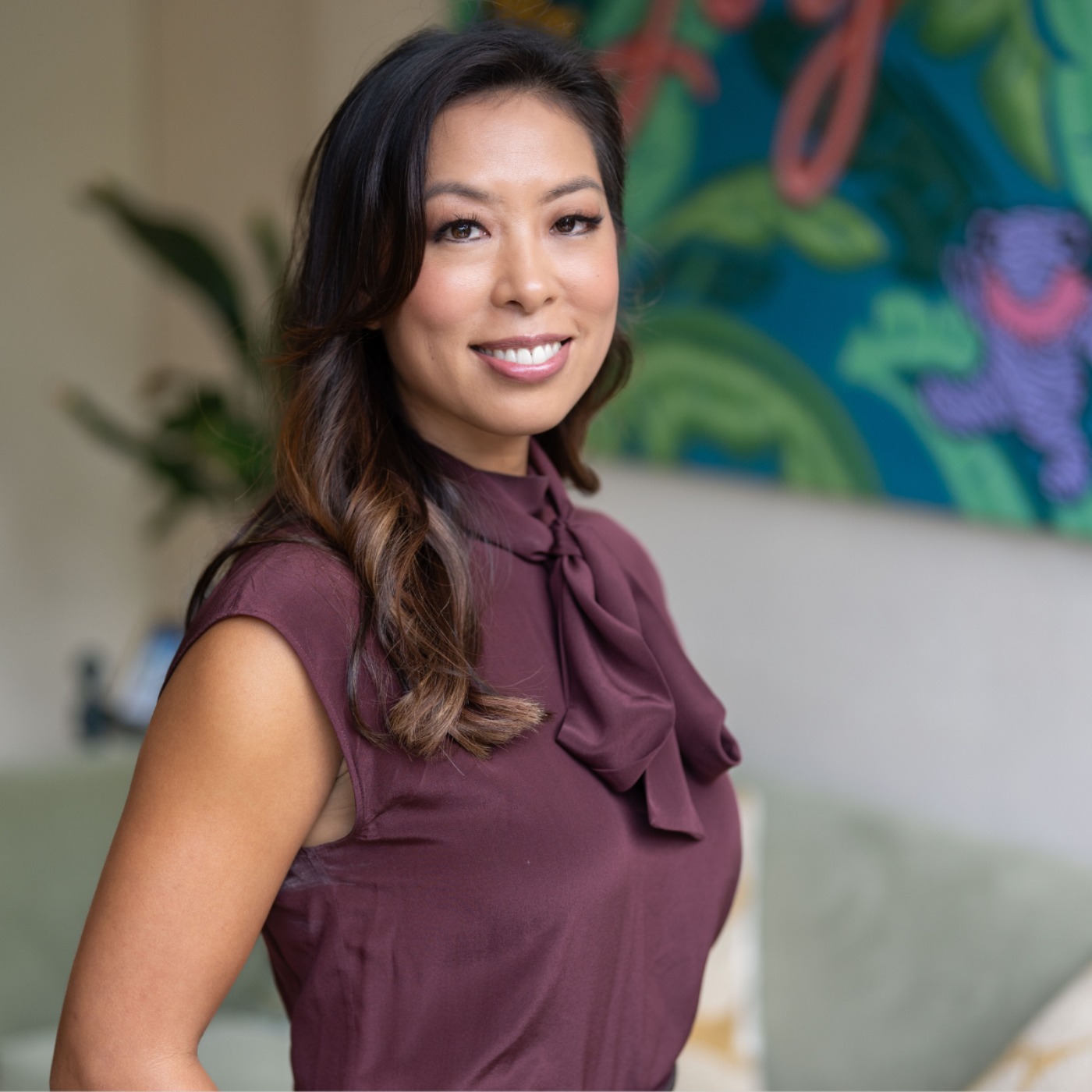
Vivian Wong explains how Little Moons (mochi ice cream) scaled from her family bakery into a UK retail and international brand, including the COVID factory expansion, viral TikTok demand spike, and later private equity/investment decisions.
Vivian Wong is co-founder of Little Moons; she grew up working in her parents’ bakery making traditional mochi. She trained as a chartered accountant and previously worked in investment banking. Her brother is co-founder (finance/operations led by Vivian; marketing/sales led by him). They later brought in a non-exec director/mentor and CEO Joanna Allen.
Own the value chain (manufacture in-house). Quality must be the “north star” during rapid scaling. Viral social demand still requires systems (SOPs, HR, supply chain). Self-fund for ~12 years; then partner with private equity to accelerate.
Tesco queues at 7am; shoppers hiding Little Moons under fish fingers/peas; “You had me at Mochi” email from Whole Foods; Whole Foods sampling in-store; Ocado launch; run rate jumping to £27m overnight; Kettering second factory closed after overruns; mini moons launched into Sainsbury’s.
Written by AI. May contain mistakes.
Learn how COVID-19 unexpectedly boosted Little Moons' popularity.
“We just moved from a 5 ,000 square foot factory to a 30 ,000 square foot factory.”
Discover Vivian's background and the inception of Little Moons.
“racing around supermarkets in the UK in search of little moons, turning her mochi ice cream business into an overnight sensation.”
Understand the unique idea of mochi ice cream and its potential.
“Where did the idea for Little Moons come from?”
Explore the technical difficulties and marketing strategies in launching the product.
“And we thought, why don't we offer mochi ice cream?”
Learn how Vivian's accounting background aided her entrepreneurial journey.
“But it's quite unusual that you trained and qualified as a chartered accountant.”
Discover how clearly defined roles helped Vivian and her brother succeed.
“And was that an easy split of the responsibilities then it was pretty clear who was going to do what?”
Understand how mentorship contributed to the development of Little Moons.
“So he was very much a coach and a mentor, but probably more of a mentor now.”
Learn about the process of finding suitable advisors and team members for growth.
“And I guess some people wouldn't know the difference between a coach and a mentor and they I think I probably didn't until I trained as a coach myself at INSEAD three years ago.”
Discover how Little Moons expanded their distribution in Europe.
“the choices that he'd made when he was facing the same issues that we had.”
Explore the journey of getting Little Moons into Whole Foods and its success.
“We need to do this in Europe as well, because it's not growing fast enough, we could go faster.”
Learn how strategic partnerships with retailers enhanced Little Moons' growth.
“Their buying team are just inundated with new products all the time.”
Examine the difficulties faced in selling ice cream online during COVID.
“And so on the last time, the last buyer that we had, she emailed us in the morning we were supposed to launch and she emailed us to say she's moving on to a new role.”
Learn about the challenges of scaling a business and the importance of self-funding.
“We're maybe on a run rate to 10, but we were seeing traction, which is why.”
Discover how the pandemic forced major operational changes and decisions.
“We self-funded the business for the first 12 years.”
Understand the unexpected virality of Little Moons and its impact on sales.
“I think we just moved into our large factory, 30 ,000 square foot, January 2020.”
Learn about the chaos of scaling operations and maintaining quality during rapid growth.
“And for some reason, this just captured the imagination of a nation of people who are locked up at home, nothing else to do.”
Explore the decision-making process behind seeking private equity investment.
“So we sat down, we had a dinner and we decided that this is what we were going to do.”
Hear about the challenges faced when building a new factory and the decision to close it.
“Not all plans come to fruition, but I don't think...”
Learn about the importance of bringing in a CEO and transitioning responsibilities.
“And that was closing the Kettering factory.”
Understand what to look for in a CEO and the importance of shared values.
“And any tips looking back so far to what other founders that are trying to recruit a chief exec what are the characteristics that they should look for?”
Learn the importance of shared values between entrepreneurs and their leaders.
Discover how Little Moons approaches new product development and innovation.
“And we'll be rolling that out to other retailers.”
Understand how engaging content on social media drives customer interaction for brands.
“Which is then promoting the product as well.”
Explore the personal journey of the founder and the motivations behind starting Little Moons.
“We get to spend a lot of time with my nephew, my mom.”
Learn how to implement effective problem-solving strategies within a business.
“Like I just don't want to have any regrets in my life.”
Hear about the founder's thoughts on starting new ventures in the future.
“You're still really young and do you ever get tempted to start up another business from scratch?”

Get the gist, explore an idea or ask about something said.
 Claude
On The Business Leader Podcast with Sir Richard Harpin, what are the key points of this episode?
Searching your listeningAutomatic transcript. May contain errors.
0:02We just moved from a 5 ,000 square foot factory to a 30 ,000 square foot factory. And then two months later, we had to shut it down because of COVID. Just captured the imagination of a nation of people who are locked up at home. And so we had queues outside of Tesco's at 7am, shoppersisters hiding it under fish fingers and under peas. When Tesco calls and says we need another 50 pallets tomorrow, I have to go into action. and we just didn't have the systems for a business. Our run rate was 27 million at that point overnight. We had the systems of a seven million pound company. Vivian Wong has experienced what most founders secretly dream about and fear at the same time.
0:41During the COVID pandemic, a viral TikTok sent shoppers racing around supermarkets in the UK in search of little moons, turning her mochi ice cream business into an overnight sensation. But while millions of Brits discovered the brand in a matter of weeks, Wong had already spent a decade building her business. She built the company from her family's bakery and educated consumers on what mochi even was, quietly laying the foundations that meant when demand exploded, she could seize the opportunity, not be consumed by it. Vivian, great to have you on the Business Leader podcast. Where did the idea for Little Moons come from?
1:22So I had always worked in my parents' bakery growing up and they made traditional mochi, which is bread, bean wrapped in mochi. And when I was working in the city, we saw that Japanese food was absolutely exploding across the UK. So my brother and I, who would travel to Japan and America, we had tried mochi but wrapped around ice cream. And we thought it was such a brilliant product. Love the flavour. We love the texture of it. We love the idea of it. But we thought that we could execute the ice cream better and have different flavours, because I think the ones that we tried in Japan were only with vanilla ice cream.
1:58And that's really where the idea came from. So when we saw Japanese restaurants growing, we just put two and two together and thought their dessert offering wasn't as great as it could potentially be. And we thought, why don't we offer mochi ice cream? And was it really difficult technically to put the mochi together? Yeah, it's quite a difficult process. you're wrapping hot dough around ice cream but also we had to manufacture it ourselves because there were no other manufacturers of this product in the whole of Europe and I think there was this industry titan when we asked for advice he said you should take all the money that you have for manufacturing and put it into marketing but of course we couldn't do that and though that might have been great advice for someone else it didn't work for us.
2:40I'm a great believer that you should own as much of the value chain as you possibly can and therefore doing your own manufacturing as well as owning some of the end customers a really good thing to do but presumably it really helped that you got your family bakery yeah so we had a it was a small family bakery but it was a brilliant place for us to start and we had a bit of space for us to practice the manufacturing process we had one of their machines we had to get new parts for it but you're absolutely right I think owning our own factories have been one of our superpowers and absolute competitive advantage of being able to own that market.
3:15But it's quite unusual that you trained and qualified as a chartered accountant. You're in investment banking and then became an entrepreneur. I always knew I wanted to start my own business, but my parents thought it was very good grounding for me to train as a chartered accountant. And it has been incredibly helpful on my journey. if nothing else it just meant that I could do the accounts from the beginning when we didn't have investment we bootstrapped the business ourselves which meant that I was able to prepare our accounts I did all the payments I did all the supplier invoices and so no it's held me in good stead and as the business has grown it's also meant that I understand financial statements.
3:53And your co-founder was your brother? Yes so my brother also worked for an investment bank but yes we started it together well I started it two years before because there was no point I was both ruining our careers and so after two years once we'd got the recipe correct and we felt like there was a business he came and joined us and so he's he's great at the marketing side of the business and sales and I and I looked after the finance operations and all the other bits like that. And was that an easy split of the responsibilities then it was pretty clear who was going to do what? No when we first started we tried to do everything together and it was a disaster because things obviously slipped through the cracks we'd argue with each other there was no one you could hold account.
4:33When we brought on a Ned to help us with the business, he said it was absolutely imperative that we split our roles. And so that's when we decided to split between sales and marketing and everything else for me. And so it was just clear lines of responsibility. And the non-exec director, to what extent was he or she a coach or mentor? So he was very much a coach and a mentor, but probably more of a mentor now. So we've been working with him for I want to say more than eight years he's been with us for a long time a long long time and to begin with he was very much sort of helping us just set up different systems like telling us that we probably needed to bring on a financial team or he said I think it's about time now that you bring on heads of departments so it was very much guiding how the business grew but he was absolutely a mentor as well in terms of how you conduct yourself all the you know all the different skills that you would need as the business grew but apart from that I also had a separate coach as well to help me on the journey.
5:30And how did you how did you recruit the net was and whose idea was it was it yours or your brother's? Truthfully I think it was mine I think we needed a third person to help us with discussions and so when there's just the two of us I think we needed someone who had done this before to help guide us with decision making and we met quite a few people we worked with them for a while it was almost like an interview you have to work together for a couple of months just to see how you get on but we landed with Mark and And we've just gotten so well with him. He's super knowledgeable. He's got great energy about him.
6:03And we've really enjoyed working with him. So talk to a few people and then find the right one that's the right fit. That's right. We had a few Neds and they hadn't necessarily worked in our industry, sort of desserts and things. Whereas Mark was the ex-CEO of Goo. So he'd taken that business to, I think it was 100 million before it sold. So he really understood the journey that a dessert category business would have to go on. And so that was really helpful. What was the biggest thing you think that he brought in terms of the thinking and experience? I think it's all those small practical steps that I found really helpful.
6:36So, for example, he would come in and help us interview for a head of marketing because I'd never hired a head of marketing before. I wasn't sure what level to hire at. Do you hire someone at 60 ,000 a year or 80 ,000 or 100? And so he helped guide that. And he said you should hire for the most expensive person you can afford. but don't go too high because those people will be overqualified and they would find our business too small and a bit boring so it was just finding that right level and that was invaluable advice for us and helping us find the right people just little practical steps like that I found really helpful but also you've had a business coach yes so I think as Little Moons has grown I've had to coach myself to become a different leader to different people as the caliber of our team has grown but also the number of people that we've had to manage so I very much had to pivot and grow myself as a leader to to make sure that I was still relevant in the business.
7:30And I guess some people wouldn't know the difference between a coach and a mentor and they I think I probably didn't until I trained as a coach myself at INSEAD three years ago. I think it is the magic model isn't it having both the coaches about helping you with issues or opportunities but will never tell you what to do or which is the right option and the mentor is the one with the grey hair and the experience and ideally within your industry so you've got both of those yes that I found that really helpful and although Mark didn't tell us what to do I think it was helpful where he would start a sentence with in my experience so his storytelling what he what he'd experienced in the past it didn't necessarily mean that I had to copy what he'd done but it was very helpful to understand the choices that he'd made when he was facing the same issues that we had.
8:21I'm Richard Harpin, a Yorkshireman who sold my company, HomeServe, for£4 billion. And this is the Business Leader podcast, where we look at the stories and strategies behind modern businesses. I'm passionate about helping British businesses scale and succeed. I think it's the key to unlocking Britain's economic growth. Founders and CEOs of mid-sized businesses can become members of the business leader community for coaching, peer-to-peer forums and exclusive learning events. So do get involved. Sign up to our weekly newsletter at businessleader.co.uk slash newsletters. It's free and it helps us grow the community.
9:03So let's go back to the story. You've managed to manufacture the product in your own facility. Your brothers joined the business. You split the roles in the right way. what happened from there? I think a lot of business is many many boring steps over and over again like the day-to-day can be very boring just finding new customers following up with emails making sure the factory's running properly and so we we did do that every day but I think something that was useful for the both of us was we'd step out of the business sometimes and try and work on the business as well as in the business and so that's where we sort of looked up and thought we're doing really well in the restaurant sector.
9:41We need to do this in Europe as well, because it's not growing fast enough, we could go faster. And that's where we looked at different geographies. So we thought we'd follow the same model that we'd done in the UK. And we would replicate that in France and Germany and all the other European countries where Japanese food was growing as well. This was also big in the Middle East. So we then supplied a lot of a lot of the Japanese restaurants across all of those geographies. And we did that for the first five years. And that sort of helped us save up to then brand the product when we were finally ready to launch a consumer product.
10:14And how many countries was that in the five years? And then talk through how you handled the logistics of that. So the logistics, it's not as hard as it sounds because it's a frozen product. That means it's got an extended shelf life of 18 months to two years. So it was easy to pack it onto a frozen pallet, if you guys know, the trucks that are frozen, and they would get shipped across to the Middle East or driven across to Europe. And it was just about finding a distributor. We used a distributor model in all of the markets and then just went to find the, you know, the restaurants that would want to take it on.
10:46And they sort of demanded the products from the distributors in each country. And that's exactly how we did it in the UK. We went through distributors, but then we found the restaurants to then order from the distributors. And then after we did that, we decided that the business was ready to go into retail. That's when we started branding the product we went to agencies we then started approaching the grocery stores so this is the start of developing the little moons brand exactly and we did that five years into the business so we started in 2010 and we launched into whole foods in 2015 how did you manage to get into whole foods and how did that make you feel when you got that deal so i have a few industry friends who all said Whole Foods is almost impossible to get into.
11:31Their buying team are just inundated with new products all the time. So we sent them an email hoping to hear back, but we weren't sure we would. But their buyer emailed us back 20 minutes later and said, you had me at Mochi. And so it was fantastic to get that email. And so we went to meet with him and they launched us almost immediately. And we became their best selling ice cream for many years. they really supported us we had a little pick and mix freezer there that allowed us to sample the product which I think when you have a food brand it's very important for people to try it to begin with so that's kind of how we we launched onto the retail market and so were the demonstrators in store that were handing out the product from the freezer yeah and we wanted to make sure that the demonstrators were happy effervescent joyful instead of just being like here's a product here's product they were they were like come and try a green tea come and try a raspberry and I think it was very important for us that our samplers represented our brand that way and we start and we always talked about how many samples we'd handed out each week and we had a target to sample as much product as we possibly can experiential retailing at its best absolutely and I loved doing it because it meant that I could meet our consumer I could speak to them I could see which flavors they liked I could see what they loved I spoke to them about when they buy the product, how they served it, who they're eating it with.
12:48And I think staying really close to the consumer really helped us understand them better, therefore helped us grow. So it worked in Whole Foods. What came next? So then we emailed Ocado. We thought that would be the next place to launch. And so it was a little bit of a protracted process. Like we had three buyers that were going to list us, but they all moved on to different roles. And so on the last time, the last buyer that we had, she emailed us in the morning we were supposed to launch and she emailed us to say she's moving on to a new role. And we thought, God, is this happening again? But we found ourselves on their website.
13:21We'd launched with Ocado, which was brilliant. And then the next person, you know, we're always on to the next. And so then we were also emailing Waitrose and all the other grocery stores, but Waitrose launched us next. And how many staff had you got by this time? And was it still you and your brother that were doing this? I think by this time, we'd just hired all of our heads of departments. So we had a head of sales, a head of marketing, an operations director. And so our team had gotten a little bit bigger. Our factory team were probably about 50 people at this point. And turnover had got to what sort of level by that time, by the time you'd hired your sort of C-suite team?
13:59I think we were between five and seven million on the way. We're maybe on a run rate to 10, but we were seeing traction, which is why. it's a difficult time because you just don't know at that level how fast are we going to grow are we going to continue growing it's a huge investment for us to hire all these heads of and we actually paid them more than we paid ourselves so at that point it's quite a are we going for this or are we not so yeah it was it was a big step for us what happened next in terms of the the brand building and did you did you try and get some direct business online or not so ice cream is quite difficult to sell online we did try doing it at the beginning of of covid lockdown but we'd find that the product would get lost missed people didn't pick it up in time if you're not receiving the product and the quality at the state that you want it to it's just really bad for brand image so we stopped doing that quite early and we just we just um you know i think through ocado and all the grocery stores everyone knows how to handle frozen products so that's that That was where we focused.
14:58And talk a little bit about the financing of the business. We self-funded the business for the first 12 years. Great to hear. Bootstrapping and not needing to bring an investor and give away equity in the early stages. The reason why we did it was we had the luxury of growing slowly. It was a product that no one else was coming into the market. And so we were able to grow it at our own pace through the restaurants. We could learn about our supply chain. We could learn about scaling production ourselves. and so we we were able to sort of you know find our market our route market save up some money to then go into branding because agencies cost a lot of money for branding like a hundred thousand or something so that's where we slowly built that business up for five years before launching a brand and so because we were manufacturing ourselves our margins were better than if you contract manufacture and we were just able to just reinvest absolutely everything back into the business but in the early days it did mean that we had to do absolutely everything like I mentioned I'm a chartered accountant so I did all of our accounts every Sunday it was just all about accounts and it was just manually entering invoices onto Sage like every night and every Sunday night and all those small jobs like I was head of engineering emptying bins all of this sort of stuff I think you've talked about this as well you've got to do it haven't you you've got to roll your sleeves up and do every job as the the founder entrepreneur but it also means that if you understand every single process in the factory.
16:22No one can pull the wool over your eyes. If someone says, I can't do it faster, you can go and show them how you can do it faster because you've been there. I've actually worked on the production line. And that's how I think, you know, being able to run, like you said, your whole supply chain is a really healthy way of growing. What happened to the business during COVID? I think we just moved into our large factory, 30 ,000 square foot, January 2020. and it was a huge step for us. I think our rent had increased by six times and we just moved from a 5 ,000 square foot factory to a 30 ,000 square foot factory.
16:57And then two months later, we had to shut it down because of COVID, which was an absolute disaster for us because it was such a risk moving into such a big site. So we had to quickly gather ourselves as a team and just looked at cashflow and we thought, well, we can afford to keep the factory open for 10 months. And so it was just a bit of a moment of panic, of chaos, like what's going to happen no one knew what was going on are all the supermarkets going to close are they allowed to be open but we knew that we'd lost the restaurant business which was half of our business overnight what do you do with that like how do you conserve cash and then like new news came out you could furlough people then you found out that supermarkets would remain open then we had to staff the factory to only produce enough for the supermarkets and not the restaurant business there were so many decisions that had to be made and then brexit happened i don't know i think December 2020 was like the final deadline.
17:46So we'd moved all of our stock over to Europe so that it was easier for us to distribute from there. And we thought we'll start manufacturing products again in January, February of 2021. And that's when we went viral on TikTok. So that was when I think January was when the first video came out of someone going into a big Tesco's to look for little moons. And she would buy the product, she would take it back to her car, she would eat it, and she rated it 10 out of 10. And for some reason, this just captured the imagination of a nation of people who are locked up at home, nothing else to do. And they all thought, you know, let's all get in the car and look for this mystical little moons.
18:22And so we had queues outside of Tesco's at 7am. We had like Tesco, you know, shop assistants hiding it under fish fingers and under peas. And that was really where we went viral and that was the start of that journey. Every marketeer's dream. How did you, how did you feel? I didn't have time to feel elated. I'm always on to the next problem. And so when Tesco calls and says, we need another 50 pallets tomorrow, I have to go into action. We gather the team together. How are we going to do this in the middle of COVID? And so without teamwork, we wouldn't be here because we couldn't buy more machinery.
18:57No one was making it. We couldn't actually put a ton more people into our factory because of social distancing. It was just, you know, problem solving as best we could. And so how did you come out of that? And what did it look like after that? Every day was quite chaotic because we didn't have the systems in place for supply chain, for example. And so I was reading the book Atomic Habits by James Clear. And one of the lines that he said in there is, you don't rise to the level of your ambition, you fall to the level of your systems or something. And we just didn't have the systems for a business.
19:29Our run rate was 27 million at that point overnight. We had the systems of a seven million pound company. We didn't have standard operating procedures in the factory. we didn't have the HR sort of systems bring on employing as many people as we did so we started with 100 and we ended up with 400 bringing on that many people in that small amount of time was just so difficult and that this was over a space of how long this was over a couple of months you know and then we had to work 24 hours as well because we couldn't fit that many people in the factory so we had to spread them out and so production had to be over over 24 hours it was frantic it was absolutely I would say chaotic but the one thing that we said we cannot let the product slip it's always got to be really good quality and so that was our north star and that's what all of the team just focused on making enough good quality product and I think that's kind of what got us through the madness and then you did decide that you would take on investment or sell a proportion of the the business yes what was the what was the thinking behind that?
20:34Well we never built Little Moons to sell I mean we'd been going for almost 12 years at this point so it was never our plan to build a big brand for three years and then sell it but then with our growth trajectory our Ned said to us Mark said guys if there's an opportunity for you to realise some gains from all of your hard work now is the time so would you be open to going to private equity to take some money off the table but also have a partner to help you grow the business even further because we never dreamed that Little Moons could be as big as it is. So we sat down, we had a dinner and we decided that this is what we were going to do.
21:11So that's when we started a process to look for some investors. What did that process look like and did you have an advisor and how many private equity houses did you talk to? We used an advisor. We had Houlihan Loki advise us and they ran a great process for us. There was a lot of interest. I think we had 12 bids come in and you just slowly whittled that down on who's bidding how much, you know, and also choosing which partners to go for. So I think there were a couple of rounds where people could rebid if they wanted to. And in the end, we chose El Caterton because they were a specialist PE house that specializes in brands.
21:50And that was what we wanted to build. We wanted to continue building quality products. We wanted to build a brand and we thought they would be the best partner for us to do that. And what was their investment thesis for how the business was going to grow next? I think the trajectory didn't take account for Russia invading Ukraine. I think it was just really hard to calculate what our rate of sale was going to fall to after it was unlimited at that point. I mean, it was an ambitious plan. Not all plans come to fruition, but I don't think... Or they take longer, don't they? Because that's the reality of business.
22:22And this is the same as budget. Like your budget is only right until the day that you've signed it off. The next day it's probably off. And so it's just, you know, I think it's finding a partner that you can work with through all these issues and who understand it. And Elcat definitely did understand it. And I think we're going to go on to my factory because this is the reason why we got investment from Elcatatum was I had committed to building a second factory, which was much larger outside of London and Kettering. And they were willing to go on that journey with us. But we spent a year building it and then we decided that it wasn't right for our business.
22:50And so we ended up closing it. That's a courageous decision and you'd invested all that time and money and why did you decide that? Reflecting on it, I had picked the site before Elcat had come on board. I didn't feel that we could increase the capacity of our current factory whilst we were producing at the level that we were producing. I didn't necessarily have the expertise of it, but that was a decision that I made. You can't bring builders in when you're producing. And so I started looking outside of London because I thought rent was cheaper out there. but I'm not sure that you know Kettering was the right place for us to have picked I think the workforce is slightly different to the workforce that you find in Park Royal these are things you should consider if I if it wasn't in the middle of lockdown I probably should have done more surveys so I think the location was probably something that was that was the wrong place to pick a factory besides like the specifics like that I think generally the theme of that factory was we didn't budget it as well as we should have and I think we underestimated how expensive it would be to open that factory.
23:52And so when Joanna Allen, our current CEO came in, she had a look at the numbers. She's quite experienced running factories. She used to run the Graves factories. And she said, we're able to increase the capacity of our current factory. I know how to do it. And it makes more sense for us to do that. And I'll never forget, she said, it's never too late to do the right thing. And that was closing the Kettering factory. And we were also committed, we'd spent so much money on it and I think it's a sunk cost fallacy principle that yeah which is that everybody keeps going it's a software system that it doesn't yet quite work but will keep going and eventually it will even though the cost is overrun and that's what we kept doing I think we kept throwing more money over it thinking we're going to get there we're going to get there and she came in and said guys you don't need to do this we should stop it right away and so we did I'm so glad we did because it honestly would have it would have sunk the business and so we then went back to our current factory which is what we've done now and we've increased the capacity so we've got the capacity to grow for the next couple of years in our current factory so I wish Joanna had joined earlier.
24:57The two of you decided that you would bring in a chief exec and stand back a bit from the business yeah what's your what's your advice to any other founder about when's the right time to bring in a proven chief exec and is it um is it right to do that you need to have people around you that you trust i think you've got to have um self-awareness of what your limitations are so what you're good at and what your shadow sides are and that's why we decided to bring in a chief exec because i and my brother we didn't feel that we had the skills to grow a business from wherever our ambitions were that like you know 50 million to 100 million i just don't have the skills to do so however we're very good at other areas such a product development which is where we focused our energies on and so it was quite an easy decision you know I think running a business at that size is very different it's it's much more about the numbers the data leading people giving them direction you know and that wasn't necessarily where my strength lay and so I think it was quite an easy decision to to make that decision.
26:01And what does it look like today in terms of how you liaise and interact with Joanna and how your brother does as well? So we don't have executive roles in the business anymore, but we have weekly meetings. Besides these weekly fixed meetings that we have that we can talk about anything, I'll happily call her up whenever she, you know, anytime I have a question, I'll call her up or she'll call me up or send text messages. So it's not super fixed. It's very, it's very fluid. I'm in the office every Thursday. It's just, it's really nice to have that, that sort of relationship where it's just, it's just very casual but it's also can be quite structured as well and then obviously we've got monthly board meetings where we all get together and formally review the numbers and we've got a great relationship with El Caterton as well so I think it's a good way of working.
26:45And any tips looking back so far to what other founders that are trying to recruit a chief exec what are the characteristics that they should look for? So I think if you're like I said before about having some self-awareness you've got to know how you work. And then I think you've got to make sure that your chief exec understands how you how you work. So from observation of other businesses, I think a lot of founder led businesses, CEOs end up acting more like COOs. And and founders kind of call the shots on big, big issues. And their CEO is very happy to sort of follow in that direction. However, for us, Joanna is a true CEO, and she makes a lot of the decisions.
27:26And of course, she discusses it with us, But she ultimately makes the decision and we've all agreed that she's leading the business. So I think for a founder, you have to understand how much you're willing to let go. And if you're not willing to let go, you either have to bring on a CEO that understands that and is happy to work like that or it's not going to work. Or a COO. Or a COO. And so you stay in kind of a CEO and you do the bits that you like doing and make sure that your COO understands that. So it's definitely like any relationship, any working relationship, you've just got to understand each other's ways of working, but also understand where your business is going, what you need to achieve in the next couple of years and ensure that your chief exec has the skills to do that.
28:07if B Corp and if sustainability is something that's called to your values, you should make sure that that's again reflected in your chief exec because if they don't, if they, if that's not something that's important to them, they're not going to focus on it. So just make sure that you make a list of things that are very important to you in your business, like your values, do they share the same values, like the way that you run the business, the values of your business as well as sustainability issues. Are you very strong in marketing? Do they need to be as strong in marketing are you strong you know so just make sure that all of your skills are aligned and complement each other and where a chief exec is turns out to be wrong in a business uh that an entrepreneur is hired what do you think of this sort of the watch outs or why doesn't it work in those cases if your if your gut feels that it's just not working and it's it's it's too difficult right now i think you should trust in your gut but you should also use your mentors and you should speak to them because they would have seen it before why is it not working is it something that you can work on yourself or is this just a relationship that it just grates it doesn't get on and you just have to be you know mindful and just be aware of it and just assess it all the time is there a big product growth plan for for little moons so we've just launched mini moons into sainsbury's which is flying and it's our first innovation for a really long time because we were so focused on this new factory.
29:29So I'm really excited about that. And we'll be rolling that out to other retailers. And then we have lots of other NPD in our pipeline, because I just think that's so important. It's something that I feel like we've fallen behind on, but it's definitely at the centre of Little Moons being now. We're very into NPD again. Where would be the limit to new product development? Where would you say that's not close enough to the core of little moons? That's definitely a question we ask ourselves all the time. Like in your book, you know, you have a list of what not to do. I think we have to stay realistic about what we can achieve and focus.
30:04Like we can't go into ambient right now, but could we do it in the future? Absolutely. I believe so. But it just takes time. So right now we're still growing our sort of frozen category. We are in the fridge with our sushi kiosk mochi, our chilled cheesecakes and chocolate ganache. I think your consumers will tell you when you're ready and you just see how your brand grows. And I think you've got to stay quite focused on certain areas and not sort of like throw too much out there. But it's to be discussed. I think you've got to discuss it with your consumers. You've got to see where it's going and you've got to speak to your team and see where your brand is going and see where you have a right to play.
30:42How are you going to get the next viral moment from one of your customers? We have followed up with certain videos that have gone viral. I just really think it's about putting out engaging content that people want to share with their friends, that people want to like, that people want to comment on. For example, recently we did a video of a challenge of voting for the next flavour that we're going to launch. And we had millions of views, millions of comments, and we launched the product that everyone voted for. And so I think it's about engaging your consumer, listening to them and just giving them what they want.
31:13And doing it big scale on social media. Absolutely. Which is then promoting the product as well. Absolutely and we use social media widely I think we use it more than say TV it works better for us we use it more than out of home it's definitely where our target audience live and so that's why that's why we're on there. What would you say Vivian looking back at the business so far have been the most important things in achieving the enormous scale that you have done? I think it's it's the 10 years that we worked on the products before in the 10 years that we built the business So we had a strong foundation to grow from because when you grow that quickly and you don't have the basis, you know, strong foundations of a real business, it can be really hard.
31:55And the number one reason why we've been successful is the quality of our products. I truly believe that. And we've never we've never changed the recipes as we've scaled. We've continued to use really great quality ingredients. And I think to have a successful business, you must have a genuinely great product. How do you day after day ensure the quality and what quality checking can you do and should others do? Well firstly we're very careful with who we source from. From a B Corp point of view we do go and audit all of our suppliers. But we also once we've manufactured the products we taste it every day.
32:26That's the only way. It's not just following the processes. You have to eat it and check that the texture is right and the ice cream tastes correct. and then you know once it goes through every single person on the production line has a role to play on quality even the guys in the packing room in the warehouse make sure that our packaging isn't crushed make sure that the you know that's glued properly every single person has a part to play. What does life look like for you now and in the future and doing things outside of Little Moons? I think bringing on a chief exec has given me a lot of time I don't have to be in the office every day.
33:03I do think about little moons every day, but it has meant that I have a bit more freedom to look at other businesses. I invest as an angel in some of the other businesses. I've had to, you know, I'm looking at a little side hustle that I'm building. I also get to spend more time with my family. So I now see my brother as a brother and not as a work colleague. And that's really lovely. He's just had a baby. We get to spend a lot of time with my nephew, my mom. So my father passed in 2018 so my mum's alone so it's really nice that we're able to spend more time with her and it's just it's great to have a bit more balance in your life again because there was a time where I was just 24 7 you know I'm surprised I have any friends left and like my husband's still with but you know when you're working you're so focused on something you can't everything else can sort of fall away at the side so it's really nice to get a bit of balance back the reason why I started Little Moon is one of the reasons I don't think I mentioned it to you but my father was diagnosed with cancer in in 2004 and that's what made me realize how short life is and that's when I decided that I really need if I wanted to start a business I really need to speed that up I needed to really seize the seize the day and so since then I've always lived my life thinking I I want to live my life with no regrets so every day I decide do I want if I die tomorrow would I regret doing this and truthfully all of that work I have no regrets over it because it's given me such a sense of achievement.
34:24I've worked with purpose every single day. And there've definitely been moments where I've been broken by the process. But if I look back, it's really built my resilience. It's really built myself up as a person, my own personal confidence. So I don't, I have no regrets about working as hard as I have. And I continue to live by that ethos. Like I just don't want to have any regrets in my life. And so I just live a life that's true to myself every day. And what about the tips to other founders in terms of your personal efficiency and being able to sort of step out of the business and think a bit more broadly?
35:00I think every time you find yourself doing the same thing over and over again you've got to stop and think I'm solving this problem every day how can I solve it once and for all? So I always use this example of coming into the car park one day and it was frozen over and so I went and put salt on the on the floor because it's not above it's not below me and then I walked in and I told my ops director oh god it's so cold outside our whole car park was frozen and so I said I've salted it and he said you know we should really make that someone's job because if you don't are you going to be the person that does it all the time if you're not here it doesn't get done and so I think that's a really great analogy of problems across your business like it's not up to you to fix it as such like you've got to fix it so that it's not your job to fix it again next time.
35:46Allocate responsibility for all those things to somebody. Every single problem that you, so you really solve it properly, not just for that one day. And I think people should do that for every single element of their business that they find that a problem comes up. Make sure you fix it one last time so it doesn't come up again. And I think that just means that it does give you more time to move on to another problem so you're not constantly fixing the same problem. You're still really young and do you ever get tempted to start up another business from scratch? I'm playing with an idea. It's a side hustle, but I'm never going to build another business the way that I built Little Moons.
36:25I think it will be much better funded. I definitely don't have the energy to build it the way that I built it with myself so involved. So I'm thinking about it. Never say never. Maybe when you get it to a million plus of profit, then I'd love to invest, Vivian. Thank you. I'll come and see you. Really enjoyed that. Thank you so much. Thank you for having me. Vivian Wong, co-founder of Little Moons. What a fantastic guide to how to truly scale a British business. Thanks for listening. Please do rate us and subscribe and make sure to sign up to our weekly newsletter at businessleader.co.uk slash newsletters.
37:07With more people on board Business Leader, we can have better conversations and inspire the UK's next wave of business leaders.
Vivian Wong, co-founder of Little Moons, shares the unfiltered story of building the UK's most talked-about mochi ice cream brand — from a small family bakery to a £27mn pound run rate overnight.
Vivian talks to Sir Richard Harpin, founder of Homeserve, about how a single TikTok video sent shoppers queuing outside Tesco at 7am, and why ten years of groundwork meant Little Moons was ready to seize the moment rather than be consumed by it. She reveals her learnings from a costly factory mistake — and the sunk cost fallacy that nearly upended the business. Vivian also shares the personal catalyst that made her start the business, the reality of co-founding with a sibling, and how she now lives by a simple rule: no regrets.
Themes covered:
Business Leader is a membership community for ambitious CEOs and founders of mid-sized UK companies, designed to help them grow with purpose through strategic support, peer-to-peer learning, expert coaching, and high-impact events. Sign up for our Business Leader newsletter here.
Hosted on Acast. See acast.com/privacy for more information.


