
 Ask ChatGPT


 The Business Leader Podcast with Sir Richard Harpin
25 Aug 2026 · 44m · 23 chapters
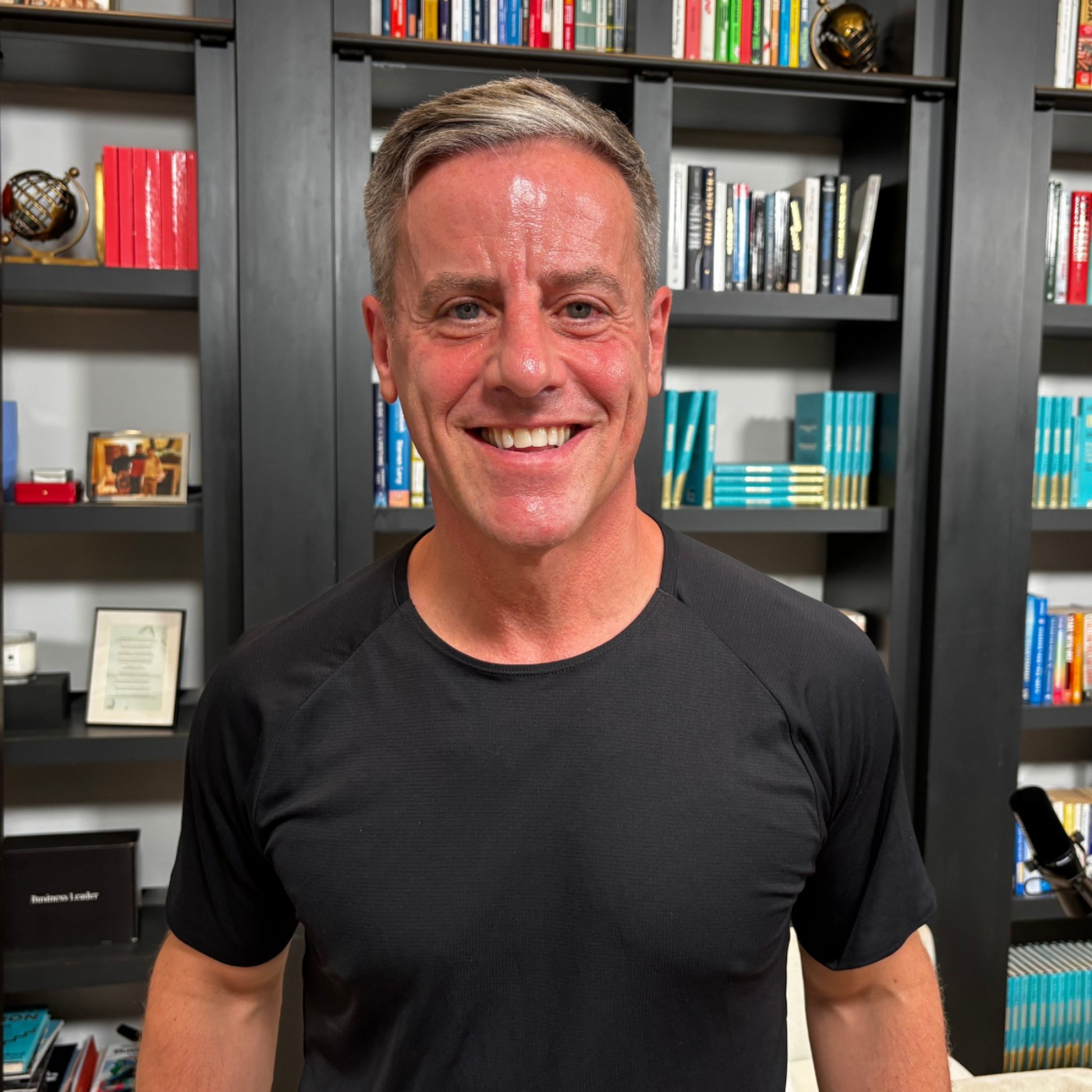
Stephen Johnson (KUKA UK) explains how he built KUKA hot-water tap sales into a ~£100m UK business by replicating a Netherlands dealer model, creating direct-to-consumer demand, and scaling installation/service with 120 in-house engineers. He also covers culture, performance coaching, psychologist support, cash discipline, and COVID-era pivots (video sales).
Stephen Johnson, founder of KUKA’s UK business (grew up in Neville Johnson fitted kitchens/furniture; worked 21 years in the family business; later led KUKA UK from a desk/home office to ~£100m revenue). Richard Harpin is mentioned as a host/intro voice (sold HomeServe for £4bn), but the main guest is Stephen Johnson.
“Cash is king” and managing debtor books enabled fair customer treatment during COVID; service/repairs and fast response drive trust (4.9 Trustpilot); psychologists and performance coaching improved staff wellbeing and retention.
first-year results opening 333 dealers and selling 999 taps; “three per successful visit” dealer strategy; video TV advert during lockdown; first installer hired directly; 200-degree vacuum-flask boiling water tap; 750,000 UK customers and 750+ engineers nationwide.
Written by AI. May contain mistakes.
Stephen discusses his upbringing in a family business and the lessons learned.
“You grew up with a family business because your late dad was the Neville Johnson of fitted kitchens and fitted furniture fame.”
Stephen reflects on the challenges of transitioning from a family business to establishing his own identity.
“And what was the evolution of the model from kitchens into fitted furniture across the whole of the house, really?”
Stephen shares his experience of looking for a job after leaving the family business.
“I think it was at the stage where I wanted to prove my own skill sets.”
Stephen explains the invention and history of Kuka boiling water taps.
“that is not working and looking for a job in a pretty difficult labour market?”
Stephen describes his strategy for launching Kuka in the UK market.
“90s and developed a tap that delivers at 200 degrees from a vacuum flask and launched it in 1992 in the Netherlands.”
Stephen discusses the importance of installation services in growing the business.
“Alongside that, I wanted to grow the direct-to-consumer, and I also recognised that if the dealers didn't feel a demand, they weren't necessarily going to push the product.”
Stephen details the product offerings and the benefits they provide to customers.
“So our engineers are not just about doing the installs they will go and do servicing and repairs as well?”
Learn about the range of Quooker products and their pricing structures.
Discover the energy and water-saving advantages of Quooker taps and their ROI.
“And saves waiting for the kettle to boil at four or six minutes.”
Explore Quooker's strategy to expand in the direct-to-consumer market and new sectors.
“and on Friday nights in London having to go to a penthouse to repair a cube, I want him there, happy, smiling, present with the customer, giving a service.”
Understand Quooker's approach to retail partnerships and distribution channels.
“We wouldn't seek to compete with the dealer.”
Learn about the challenges Quooker faces in expanding their business model.
“Wider distribution and are they learning from you?”
Hear insights on the importance of delegation and leadership transition.
“People often think it's just for tea and coffee, but you blanch vegetables, you fill a pan with it.”
Discover the impact of sports psychology on business leadership and team performance.
“I think the owners had aspirations to move it to London.”
Learn about the initiatives Quooker implements for employee mental health and well-being.
“And I see that more in sports than I do in business coaches.”
Learn how creating a strong, supportive culture can enhance employee loyalty and business resilience.
“And that psychologist was employee number?”
Discover how effective cash management and adaptability led to business growth during the pandemic.
“And immediately all the businesses closed.”
Explore how past business experiences shaped better customer service and employee engagement in the current business.
“horrendous to the most unbelievable growth that i'd ever experienced but put a pressure on the business as well because I wasn't ready for it.”
Learn strategies for preserving company culture and values while scaling a business.
“And I apply that to every aspect of my life.”
Understand how personal challenges and charity work can drive motivation and business strategies.
“So trying to get the team to understand that the byproducts of success is this, is the biggest challenge.”
Discover the importance of continuous improvement and goal-setting in business growth.
“But for me, it's focus on the journey now.”
Explore the importance of maintaining culture and setting strategic goals in business.
“I want to go back five years after I've left and see the same culture and same behaviours running through that business.”
Learn about Stephen Johnson's journey and contributions to Quooker UK.
“A fascinating story about how you use learning from your family business to apply to a new start-up.”

Get the gist, explore an idea or ask about something said.
 Claude
On The Business Leader Podcast with Sir Richard Harpin, what are the key points of this episode?
Searching your listeningAutomatic transcript. May contain errors.
0:01I sent off thousands of CVs, just wanted to get a job somewhere and was met a lot of the time with silence. Yeah, you've got no skill sets, you've just worked for your father for 26 years. I thought if you knew my father and what I had to do in that business for 26 years, you'd give me a job. So that was exceptionally difficult. Had about eight interviews and ultimately persuaded them to give me a chance. It was a six-month contract. They sent me home with 40 taps. In my first year, I opened 333 dealers and sold 999 taps. For 21 years, he worked in his father's business. Every job he applied for, he says, he was just the boss's son.
0:40Then he took an idea, a kitchen tap that poured boiling water and built it into a business worth tens of millions of pounds a year, growing from a desk in his kitchen to a purpose-built headquarters in the heart of Manchester. Along the way, he's put a psychologist and a performance coach on his payroll and turned a product most people didn't know they needed into one they can't imagine a kitchen without. Stephen Johnson, welcome to the Business Leader podcast. You grew up with a family business because your late dad was the Neville Johnson of fitted kitchens and fitted furniture fame. What did it feel like growing up with a family business?
1:19I call it my university education. I got to learn every single aspect of the business but living in that home from being a small child the talk was always about kitchens bedrooms and bathrooms and sales so I'd always wanted to go into that business and it provided me with a incredible opportunity to learn and educate myself. And I think that the original business was called Kitchen Queen was this? Yeah my father was recognised for bringing one of the very first fitted kitchens into the UK in the 1970s. Shouldn't he have been called the kitchen king? Kitchen king, yes. He should have been. And he floated that business in 79 on the stock exchange at the time.
2:00And kitchens has always been in my DNA. And do you think that growing up with a family business, you're learning at the kitchen table and that really helps you to become a chief exec, a business leader? I think it helps you determine where you see yourself in life. So I think I decided that I wanted to be in business and not professional. So it helped with that. It gave me an amazing opportunity to develop skills and learn. Does it turn you into a business leader? I'm not so sure. I think you have to find whether you're skilled enough to do that throughout the process. Were there any conflicts when you work in the family business?
2:40Arguments between you and your dad? My father was an extremely tough 1980s entrepreneur, so he was the figurehead of the business. In those days, there was only one view, and that was his view. Always respectful of him. I think one of my frustrations whilst being in that business is possibly seeing he could do things a different way. But it was very difficult to persuade him to look at doing things differently because he was very driven. but ultimately very successful. And what was the evolution of the model from kitchens into fitted furniture across the whole of the house, really? Yeah, so fitted kitchens came first, and then we had a very first recession, I think it was in the late 80s, and companies were looking to cut office space, and there was only freestanding office furniture around.
3:33And my father came up with the idea, if we did fitted office space, you could save some rental square footage because we could fit more desks. into tighter spaces. And he launched a range of fitted office furniture in the late 80s. Bespoke, so built to size, and we went and sold it in the same way that we did kitchens. So you'd book an appointment with us, we'd come to your office, we'd design it for you there and then and look to sell it for you. And he created a niche. And how big did the business become before you chose to sell it or your father chose to sell it? Yeah, the business was sold in 2005.
4:14It was a£60 million business. Decided to sell it. And that was the time for me to think, right, what am I going to do? And how did you feel about that? I think it was a good time to sell it. I think I was 34, 35 at the time. I think it was at the stage where I wanted to prove my own skill sets. see if what I'd learned in that business was truly valuable, was Stephen capable, could he do it himself. I think family businesses are, they're notoriously difficult because if you do well, you do well because you're the boss's son. And if you don't do well, you're there because you're the boss's son. So I found it really difficult to carve out my own personality within that business for people to see Stephen who he was and to have my own ideas valued.
5:07and therefore I thought that opportunity would come if I went into the job market and that was good timing for me. And was that scary having worked for one business the family business and suddenly you're looking for a job? That was the most difficult experience of my life I'd spent 26 years in a family business really difficult environment learned a huge amount my father had me in every single department so I was in accounts stock warehouse factory I knew every single job in the business and I went into the job market and thought this will be relatively straightforward and sent off thousands of CVs just wanted to get a job somewhere and was met a lot of the time with silence and on other occasions yeah you've got no skill sets you've just worked for your father for for 26 years so you're not good for us I didn't have any qualifications and I used to think when I got these letters back I thought if you knew my father and what I had to do in that business for 26 years you'd give me a job so that was exceptionally difficult and to this day that sat with me and I will now always ensure we reply to any candidate that writes to us and always seek to give anybody an opportunity.
6:25And that I found, it was exceptionally difficult. I'm Richard Harpin, a Yorkshireman who sold my company, HomeServe, for£4 billion. And this is the Business Leader podcast, where we look at the stories and strategies behind modern businesses. I'm passionate about helping British businesses scale and succeed. I think it's the key to unlocking Britain's economic growth. Founders and CEOs of mid-sized companies can be members of the Business Leader community for coaching, peer-to-peer forums and exclusive learning events. So do get involved. Sign up to our weekly newsletter at businessleader.co.uk slash newsletters.
7:07It's free and it helps us grow the community. And what's the message for anybody out there today that is not working and looking for a job in a pretty difficult labour market? persevere be forward thinking be different make sure your approach is different and try and make sure you stand out but perseverance for me and who did give you a job kuka what is kuka kuka is the world's first 100 degree boiling water tap so it was invented in the netherlands in the 1970s by the family that still own the business today owner omri petri was working at unilever they invented instant soup and he thought okay well the soup's instant but i'm now waiting for my kettle to boil and that's that's part of the kooka dna not settling for the soup most people would have done how long do you have to wait for your kettle to boil to for your instant soup or your tea or coffee three to six minutes um you have to wait so he embarks on a project to deliver instant boiling water and it was a 20-year journey and they ultimately patented it in the 90s and developed a tap that delivers at 200 degrees from a vacuum flask and launched it in 1992 in the Netherlands.
8:22In the Netherlands they sell directly to kitchen dealers so just to kitchen shops very successful and then I was at home saw an advert in the paper in 2006 applied for the role and met the owners in London. Because they weren't in the UK, they're looking for the first employee. Just in the Netherlands. So small business, 40 employees. They're looking to expand into Europe. Somebody that had worked for them had said to them that there's some high value kitchens in the UK, you should go to the UK. So I think they put an advert on Monster in the Times and I replied to it. And I met with them and the product captured me immediately.
8:58I thought it's a really fascinating product. Had about eight interviews and ultimately persuaded them to give me a chance, but I had to persuade them. They wouldn't buy me a car, they gave me a hire car. It was a six-month contract. Go and prove yourself. Six-month contract on the car or on you? No, just on me. Three-month hire car, I think, and six months on me. And they went for a week's training in the Netherlands and then they sent me home. I used to drive my stock to and from the Netherlands, so they sent me home with 40 taps. And the job was to build a brand in the UK and Ireland. How quickly did you sell the first 40 taps?
9:34Yeah, I had a really interesting strategy. I devised the strategy, quite straightforward for me. What did I need to do? I needed to find kitchen dealers in the UK that would sell it. So the business model in the Netherlands was selling direct to kitchen dealers. So they wanted to replicate that. Alongside that, I'd always sold direct to consumer as well. So my plan from day one was to sell direct to kitchen dealer and direct to consumer. So my first mission was to get some stockists. So 40 taps in a car. And for the first year on my own, I wasn't allowed to employ people. They were pretty frugal business people.
10:11We had to operate within our own cash resources. The only benefit they gave me was extended payment on invoices of stock. And I drove up and down the country trying to persuade kitchen shop owners to stock the tap. And I devised a method of three per successful visit. So what would I try and do? I would try and sell the owner one for home, so he's using it every day, one for the showroom, so he's using it every day, and I would leave one on the shop floor that he could sell to his next customer. In my first year, I opened 333 dealers and sold 999 taps, and the business is built from there. Alongside that, I wanted to grow the direct-to-consumer, and I also recognised that if the dealers didn't feel a demand, they weren't necessarily going to push the product.
10:57They had one at home, possibly, had one in the office, possibly, one on the shop floor, possibly. But I wanted to create a demand, so I managed to persuade the owners to let me put an advert in the paper to promote. So where I got a propensity of dealers, I put an advert in the paper, come and see a cooker at this shop. And I drove customers into the dealer's shops to ask for the product. And that started to work. And an amazing byproduct from that was I started to receive calls from customers that said, I don't want a kitchen, but I want a tap. And I thought, wow, okay, this is my direct-to-consumer business.
11:34So I would be driving up and down the country all day, all night, selling to the dealers. And then the advert number was connected to my car mobile. And I would take the private client calls on my mobile and look to sell them a tap. The biggest challenge for me in selling them tap was who's going to fit it because it was quite difficult to close the sale if I wasn't installing the product because the customer would say to me, right, well, I need to go and find a plumber. So the second thing I did was persuade the owners to let me take on an installer. So the first person I installed was an installer.
12:10Directly employed rather than a subcontractor? Directly employed. Why? Because I wanted, we want control over that individual. for me that I wanted to develop a business where we gave an amazing service and the challenge for me was geographically these calls were coming in from anywhere so I could get a call in Edinburgh call in London and they want a tap and I've got to find somebody that's going to be willing to drive 300 miles to fit the tap so I employed an engineer agreed that I pay mileage and and on some of the taps I lost money if I had to fit a tap in Scotland I was losing money but the whole idea of offering the installation enabled me to close the deals while I was in my car driving so I could sell a tap and say and by the way we're going to come and fit it for you and and the business grew from there in year one and that that that remains my strategy to to the day and today you have how many engineers we have 120 engineers nationally directly employed and no no subcontractors no subcontractors we employ all our own engineers for me two ambitions in the business one is to have a tap in every single house in the uk and ireland and the other is to have a 5.1 trust score those two ambitions clearly not achievable but they constantly push us to drive for being better how many homes in the uk today have a crooker 750 000 in the uk and we have a 4.9 trust pilot and yeah service for me is essential if you invest in one of our products you use it every single day if it breaks if it fails you want it fixing and you want to fix it quickly because you've got rid of your kettle.
13:52So our engineers are not just about doing the installs they will go and do servicing and repairs as well? Yeah servicing repairs and installs but listen as the install base grows the water quality in parts of England is not amazing so we constantly have to service the taps what are the different products that you offer and what's the what's the installed price so kooka is known for hot cold and true 100 degree boiling water on tap so every single tap in the range will deliver that starting point 999 at retail we then latterly have brought in ambient cold drinking water and chilled and sparkling drinking water so the benefits of the boiling your energy and water saving and efficiency and speed over a kettle and the chilled and sparkling is rid yourself of plastics and how much is that one the all singing all singing all dancing is 2300 but it's a product that it's one of very few products in your household that will give you some return on investment so it will save you water it will save you energy it will save you plastic so over its lifetime there is a payback.
15:02And saves waiting for the kettle to boil at four or six minutes. Yes, which is four years of your life. So we're the gift that keeps giving. But what about the capital cost? Is this a potential rental or subscription model in the making? Yes, for me we sell 100 ,000 pieces a year. When I came into the market it was premium. very much associated with high-end high-value kitchens as the products become more understood people see it we've penetrated the mid-market ambitions to double the business one of the challenges is for some people the a thousand pound initial payment is a step too far so we will be in september launching a finance plan where they'll be accessible over 12 or 24 months so hoping to get the headline price into monthly payments which I think will have huge benefit.
15:59And the importance of repair and servicing? The product's amazing. Having built the product in the UK it's when people search for a boiling tap whether it's ours or someone else's the category they search for is KUKA so every brand name bit like Hoover. We generate more searches for KUKA than hot or boiling tap and therefore For me, with 750 clients, I want to give a service and we don't haggle. If you've got a tap and there's something wrong with it, I want it fixed, I want it repaired. And that for me is how we built the business. The challenge is as you grow, have more engineers. We do 2 ,000 visits a week.
16:36Keeping that ethos in the business and making sure the engineers that's done 30 visits a week and on Friday nights in London having to go to a penthouse to repair a cube, I want him there, happy, smiling, present with the customer, giving a service. And that, for me, is the most important part of my business. What's the split today between direct-to-consumer and via the dealer? Yeah, so the dealer business is 70%. So 70 ,000 pieces to dealer, 30 ,000 pieces D to C. Aspirations, kitchen markets struggling in the UK at the moment. The economic climate is not favourable to that. So our ambition is to grow the direct-to-consumer where we're in control of the sell.
17:24And I think there's a great opportunity to do that. It's expensive. Marketing's expensive. So to reach the customers is difficult. And we're also going to launch into offices in September. So we will have a cooker for an office, which is significant. What's the opportunity there in that commercial market? Commercial market, there's 30 million offices. So for me, it will enable us to double the size of our business relatively quickly. But also I think there could be a magic model there that if I'm using the cooker tap in the office, then maybe I want one at home. Yeah, one of my frustrations is it's not being transferable.
18:05You see some individuals that take it from home to office, but I think some people feel it's too premium for office. so that the people that have them at home think not going to put this into the office so it's not been as transferable as i thought it would be but i think with us now actively marketing to an office we'll see more of that and be able to encourage our existing customer base to invest in it can you think more broadly about how you get the product out there into other retail locations that are not kitchens back to that point about i don't want a new kitchen but i do want to cook a tap yeah so we we're about to launch in harrods later this year um we operate in some appliance wholesalers and where will it be in harrods in terms of the in the appliance section alongside a washing machine alongside a washing machine and then then the the thing with the cougar is to offer the install with it as well so for the customer buying it it becomes an easy journey so into appliance outlets for people to understand that this is a product that actually can save you time curries yeah we're on ao we've just launched with ao um just gone into john lewis so that should help grow the reach can you see any correlation between getting into john lewis and people seeing the tap there but then going to you and buying it direct or not?
19:30We wouldn't seek to compete with the dealer. So what we do is we have two platforms. If you want to buy it with a kitchen, we'd encourage you to buy it through the kitchen dealer. It just makes sense because the kitchen dealer is going to look after it. Our offer is for a retrofit. So if you want a tap at home, we'll come and install it for you. And we've segmented the market very well so they don't cross over. So the people that come to us are looking for an install at home and the people that go to the dealers are wanting it as part of a bigger, wider kitchen project. Sounds like you've got a better business here in the UK than the business that's run in other countries.
20:06Wider distribution and are they learning from you? Different business model. I'd always grown up in multi-channel operations where we sold direct to dealer and direct to consumer. The view in Europe and the view of the business was that they see those two as competing entities. Best part of my 20 years there, I'm the only country that's done direct to consumer. They're now looking at it, but there's a nervousness. They misunderstand the fact that actually the two sectors don't compete. And so hopefully they will develop that over the coming period. How else are you going to grow the business here in the UK?
20:48So for me, the proposition of a boiling tap is, forgive the pun, but it's under tapped. So we've got 750 ,000 customers. If you look at behaviours, there's a suggestion by 2050, nobody will have kettles. So for me, I have to educate more customers simply, help people understand the benefits of having it, diversify into the office market, which will enable me to double the business. but I think by concentrating on those two things by by growing the direct to consumer by my moving into offices I can see we work in pieces at Cougar so we don't talk about turnover each sale is a unit so at the moment we're a hundred thousand piece business I see over the next five or ten years the opportunity to grow that into a 300 400 thousand piece business are there any other product development opportunities to widen the product range or not yeah I'd like them to introduce an entry point tap for me we've got one of the fascinating elements of kooka is once you have one you're never going to be without it we've got hundreds of thousands of brand ambassadors they all have children those children are going to come into a market for a tap so for me i want to widen the portfolio so that we can operate across a family trajectory so the children leaving home at 21 22 can invest in their first kooka and then we can own them through their family journey so I think we need to widen the portfolio but beyond that there's so much scope and capacity in the market to just convince other people to have them just focus and stick on doing what you're doing just absolutely focus on that and deliver that message there's still people that don't understand it one of the biggest challenges we have is having people understand the benefits of it before they get it and we do a lot of consumer research and people say they would never be without it I use mine seven times a day in the morning before I leave home.
22:42Hot, cold, boiling, chilled, sparkling. People often think it's just for tea and coffee, but you blanch vegetables, you fill a pan with it. It becomes the most used appliance. I know because I've got one here in my London home and in my Yorkshire home. We already talked about my need servicing. Yes, we're going to take care of that. I should really sign up to an annual service plan and that will help the business. So the business is based in Manchester, not London. Yes, that was a decision of mine. I'm Manchester born and bred. I think the owners had aspirations to move it to London. But interestingly, I ran it from my home office till 2018.
23:22I got the business to 40 million turnover, but I'd run it from home office. And I really enjoyed working from home. And it wasn't till 2018 the owner said, I think it's time you need an office. So I moved into an office and I found an amazing spot in Manchester. And yeah, propensity of our business is in London. Our biggest D2C consumer business is southwest London. But actually my engineering base is national. Northern overheads may be a marginal saving and a really great spot. Are you looking forward to having Andy Burnham as you're in the office next door, the other half of 10 Downing Street that he's moving to Manchester?
24:03Yes, that would be really positive for us. hopefully persuading to have a tap in there. Looking back Stephen and it sort of feels like you're the founder because you did set up the UK business and I think the rest of the world can learn from your success here. What mistakes have you made? I don't think mistakes in terms of commercials. I think you make lots of mistakes every single day. I think the biggest mistake is as a lead is in a small business you're doing everything yourself and then you suddenly grow this business and then you realise you can't do everything yourself so I think it's transitioning from being the person that's doing everything to being the person that enables everybody else to do everything and I think for longer than I should have done I was focused too much on doing everything which has its benefits but I think it holds you back and I've now managed to transition away from that to empower other people to do those things and was there any turning point that you look back on and say that was the point that I then was happy delegating and taking on.
25:06I employed the services of professional sports psychiatrists. I did a tap for a guy called Dr. Martin Littlewood and he works Premier League football between coach and players looking to get best performance. I said to him, would you come and help me in the business? I said, football for me is very visual. You watch a game and you can see who's performing and not. in my office, I sit and look out on 60 people. And do I know how they're performing, how they're feeling? So I engaged his services and he really helped me develop strategies that enabled me to step away from it. And what did that mean?
25:44I had to get everything out of my head, how I'd run the business, have other people understand how I did it. But I also wanted them to develop their own unique styles I don't want 170 Stevens in Kuka I want 170 individuals but working to a strategy and a philosophy that I thought worked so he was invaluable he still works for me today he really helped me separate me from the minutiae of the business empower other people to do it and he often sits in meetings with me and them and and helps us come up with what what is best performance And why a sports coach rather than just a business coach? Sport fascinates me.
26:23I think it's very visual. You've got to be at the best of your abilities. And what do I want? I want everybody to come into work. I want them driven, motivated, hungry, and with a positive mental attitude. And I see that more in sports than I do in business coaches. If I speak to business coaches, for me, it becomes very corporate and less about the drive and the enthusiasm. and I just felt that that sporting element will give me that and it has done. And are there any other lessons you think that business people can learn from sports? Performance and being healthy and fit and well. I think for me, what I've learned as I reach the age of 57, 15 years ago when I started the business, I became overweight, bad diet.
27:07For me, I think you need to approach this. You need to be fit, healthy and well and that gives you the energy to face the day and face the challenges. So health and fitness for me is a key driver in our business and also the mental health of the staff. I also employ psychologists full-time in the business. So every member of staff has access to a psychologist. Why do I do that? I want my staff to present for work happy, healthy, well, without any problems. How do you prove whether that's working or not and whether that's money well spent on that employee? A good example I use, and people could question it, I see the worth and the value, but a really good example, I had a colleague working for me whose father was diagnosed with cancer.
27:54Terminal, but a six-month period. He accesses the service of the psychologist, and she helps him come to terms with the sadness of that. father then passes away but we ended up with that with an employee that was ready to deal with what would come and afterwards was back to work in a month feeling good and positive so that that's a work example that the other benefit is he is absolutely kooker through and through he he feels that the business has absolutely supported him a critical period in his life and therefore you you get value back from that but equally as an employee i didn't lose a member of staff for longer than I needed to.
28:36And that psychologist was employee number? Had to have the, yeah, so for me, I'm very careful when I say this, without growth, margin and profit, these were things I wanted to do. A nice to have. Nice to have. Immediately I was able to afford it. I brought them in both in 20 and 21. So I was 14 years into my journey. With how many employees at the time? 70, 80 employees at the time. And do things like that help the culture of the business? Culture and people. I've got the most amazing product and you know in time people are going to copy the product so what's the real difference? The real difference I have is my people and therefore the culture I'm looking to create is one of absolute care for those individuals.
29:20I'm going to look after you both mentally, physically, in the workplace and that helps breed a family feeling across 170 employees. And how do you do that? The culture is lived and breathed every single day. I work with Martin all the time on it. The biggest challenge is I grew the business employing people that I knew or I worked very closely with. So in the first five or six years, I'm working with these people six or seven hours a day. I can feel them. I can see them. They know me. They learn behaviours. They learn standards. One of the biggest challenges for me is we've grown this business to 170 people, maintaining that culture that ethos of work ethic drive behaviors clean up after yourself appreciate what you've got is the greatest challenge I face and I've I've yet to prove to myself that I can achieve it as we scale but it's it's a huge focus how difficult was COVID for um for cooker and for you one of the best lessons my father ever taught me came home to roosting COVID he always told me cash is king and he always used to manage his debtor book and he always just sit and wonder why and I challenged him he said I manage my debtor book some because somebody who doesn't pay has got a problem so by managing my debtor book I can see every problem in the business he said the other thing is you don't know what's around the corner and the two pieces he gave me is always manage your debtor book and always have enough cash in the business to survive for a year if everything stops and along came COVID and we were a fantastic business March the 24th, 2020, I remember watching the TV and Boris saying, we're closed.
31:01And immediately all the businesses closed. And they closed all their accounts departments. And I would have had five or six million owing. All the kitchen shops. All the kitchen shops shut for an indefinite period. But because I had worked to the philosophy of having enough cash to survive, I could take an approach with my customers where I could be fair to them and say, you know what you don't need to pay me you can wait until you reopen and and therefore we leveraged brand equity in that period massively because we could treat our customers well but I could only treat them well because I'd managed the business in a certain way that I'd learned from my father and I look back on that as one of the greatest lessons.
31:42Was there any other way that Covid actually helped the business? Yeah wow so March the 24th to June the 14th I went from I think it was maybe a thousand taps a week at the time to nothing and I was thinking wow what what's happening sitting in the office and I thought I need to sell taps and I always had the idea that we'd sell them over video and I thought this is this is the opportunity so we stuck a camera in the showroom I got the agency to make me a very quick tv advert thought we'll give it a go put an advert on tv and said you can now buy a cuckoo tap from the comfort of your own home and wow from june the 14th 2020 to i think mid 2022 we doubled the business every year we couldn't cope it was i'd gone from famine 14 weeks of famine where i'm thinking this is horrendous to the most unbelievable growth that i'd ever experienced but put a pressure on the business as well because I wasn't ready for it.
32:44And you don't have any face-to-face salesmen, but the video sales still works today. Yeah, so fast forward to today, video remains a key part of my business. We use it not only in sales now, we use it in service. So if you phone and got a problem with your tap, we do a video call on it and we're looking to migrate the whole business over to video. It's a friendlier form of communication. Were there any other useful learnings that you took from the neville johnson days that you've used to apply to the cooker business absolutely everything um that business was all about performance that that was the key metric of success and if you didn't perform you're out the door it's not wasn't like today you perform or you're gone i took huge amounts from that about performing about work ethic making customers satisfied when they're going to buy valuing your customers valuing the opportunity so So I learned so much from it.
33:39What have I changed? I've become more customer-centric than we were in that business. In that business, if you phoned and had a problem, you had to prove you had a problem. In my business, I just, if customer's got a problem, I'm going to fix it. I'm not going to have a fight with you. And I'm more people-centric. It's funny, in the latter days, my father used to come into the office. And if you work for me, it's a family business. I give you lunch. So if you work for Kuka in the UK, we feed you. We give you lunch, and that's on us. And my father used to come in every day and challenge me. He said, son, he said, I don't understand why you're giving them all lunch.
34:14You're spending too much money on it. And I used to say to him, I'm in the centre of town. I've got 60 people working for me, all that could leave for an hour. The fact that I buy them lunch, they all stay in the office for an hour. They socialise. So for me, it has a huge benefit. it so i've softened the people element more work on culture and being true not just a poster on the wall i live and breathe culture i want to know my people personally i want to know when they've got problems i want to know when it's their birthday i want to know when they're getting married and that that's becoming that that's becoming more difficult as we grow as a number of people it's really hard yeah how do you um so how do you maintain that with with great difficulty we we have two events a year we have a summer function and a christmas function so we bring everybody to those functions, got a head of people and I bother myself to be notified when it's somebody's birthday, whether it's a work anniversary and I'll take an hour in my day to wish them happy birthday or congratulate them on the work anniversary.
35:11Another thing I do when I go in the office, I will go around and say good morning to every single member of staff, have a minute interaction with them. But as we scale that, that's going to become more difficult. So I have to rely on that culture being taken on by the future managers and leaders of the business. So we have to educate them in culture and behaviour. And for me, it's a skill I've learnt through growing up. I've worked in a business where I've seen the opposite. Lots of these people have just worked for me, so they think lunches is normal, offices like this are normal. So it's a behaviour we try and teach, but it's very difficult.
35:45Do you still follow the old family business, Neville Johnson, because it's been through different ownerships and been a bit of a rocky road since your father sold it? Yeah, I follow them. And we supply them. So they've got a kitchen business called Tom Howley. So we supply them. And I often go in and I'm now sitting at the other side of the table and they're negotiating. And I follow it. And I think they're finding their feet. I think it's always a difficult transition from a family business to when venture capitalists buy it. They misunderstand the way these businesses work. And why does it sometimes go wrong, do you think?
36:20I think they don't understand the DNA. And it becomes too corporate. And whilst, for me, KPIs are important. running the business properly so understanding your turnover your profit your metrics I understand all of that but they become very corporate and it becomes people looking at pieces of paper and they lose the family values and the entrepreneurship and I think they then lose the heart and soul and and that for me I see lots of them that fail in that way how do you keep the cooker business focused and is there anything that's on your not to-do list focused I have a very simple slogan that I will do better today than I did yesterday.
36:59And I apply that to every aspect of my life. So for me, the mantra at Cooke is we're going to do better than yesterday. And that continues us driving in the right direction. It's a challenge I can place on every member of the staff. Look at yourself. How can you improve? And make sure you do improve. And then if you have a bad day, it also gives you the opportunity to have a better day. So that's a very simple philosophy that I run. but I mention it every single day. I want people to be grateful of what we've built and the challenge for me is we now have a hugely successful business that can afford things that it never could.
37:36So I look at a psychologist, a sports performance coach, lunches, summer parties, Christmas parties. When I buy my lunch, I don't take it for granted. So I want a business that's humble, where people really appreciate what they've got but underpinned by we have to grow. If we don't sell more taps this week than last week, and if we don't give a better service this week than last week, and we don't grow, then all of this strategy of mine, culture, psychologist, lunches, Christmas, they go. That's what's at risk. So trying to get the team to understand that the byproducts of success is this, is the biggest challenge.
38:18And gratitude, gratefulness, being humble. I want them to be humble. that's tough and how do you apply that mantra outside of work in your um your home life exactly the same way so if i i reflect on every conversation i have i'll reflect on this interview could i have done better in in in health and well-being i have a gym session today that's that's my metric i will do better than yesterday probably best example by two charity walks in 2024 I lost my mum as an 18 month year old child so in 2024 I did a charity walk for her and the idea was to do 2 million steps in a month did 2 ,000 steps 1 ,500 kilometres and we raised £60 ,000 for charity and it was amazing and sadly I came back from that walk and suffered the loss of my father in the September and I thought I need to do something for him talk about reflecting on things when I reflected on the first charity walk I did I thought I could have executed it better in what way i approached it on the basis i did it myself keep the cost down thought it would be relatively easy to raise funds didn't really strategize that properly didn't have a corporate body behind me so it was steven doing a walk and it was i leveraged a lot of friends to raise the 50 000 so when i reflected on that walk i thought i could do better here i need to associate it with some business entity so sadly i lost my father and i'm thinking i need to do something i was sitting at home and i thought kook have got offices in europe i'm gonna walk between every single kook office in europe next year and i put it into um google and how many steps was it was 2.6 million steps 2 000 kilometers which meant 65 kilometers a day and i thought i'm gonna do it didn't give it much other thought that i'm just whether it's possible or not i don't know i'm gonna do it i linked it to kooka so we raffled kooka taps linked it to the european offices by walking through the offices so we raised 150 000 for charity ended up doing 2 000 kilometers in 30 days um 64 kilometers a day and it was an incredible experience but that's me i'd done the war the year before and i thought i could do better i like pushing myself and you you have done with cooker because you've taken it from a startup in the uk to a business turning over about 100 million pounds of revenue yes and many entrepreneurs would say well how did you how did you do that that's a fantastic scaling job that you've done over 20 years and what are your top three tips to any founder chief exec or entrepreneur that wants to achieve that level of scaling i've never looked at the scaling so that for me is something i will will visit latterly not once have i thought this is really good for me I've focused every single day on 20 years improving every single day that's been my metric of success so small improvements small steps and sticking to that strategy all the way through and ensuring that I grow each day so so for me that served me exceptionally well and there'll be a time when I reflect on it.
41:40But for me, it's focus on the journey now. I'm at a stage now where the exciting bit for me is proving whether I can scale and double this by maintaining the culture and behaviours that I currently have. So I'm really excited by that. And the time for me to reflect is I often say to people that when I've left the business, I want to go back five years after I've left and see the same culture and same behaviours running through that business. So those are the challenges I've set myself and I'm yet to see whether I can achieve those. Just yourself or does everybody else in the business know those and how important is it to set big, hairy, audacious goals along the way or not?
42:24Yeah, everybody fully understands my goals. Everybody's different. Not everybody's come up and grown up in the way I have. I think the new generation, our quick fix generation, that they don't want to stay in the department for two years like I had to do and learn. So it comes with huge challenges. But that ethos is run through the business. And I set very clear strategic objectives with the team and they fully are aligned with the ambition. We meet quarterly to align on that ambition and we're achieving it and purposely take sales metrics out of those reviews. So it's work in progress. and I think I've learned that having the people understand it and being able to implement it will help me achieve those objectives.
43:11On that note, Stephen, thank you very much. Thank you very much. A fascinating story about how you use learning from your family business to apply to a new start-up. Stephen Johnson wasn't the founder of Cookr, but he was the founder of the business in the UK. He took it from zero to£100 million of revenue. Thanks everyone for watching and listening. please do rate us and subscribe and make sure to sign up to our weekly newsletter at businessleader.co.uk slash newsletters with more people on board business leader we can have better conversations and inspire the uk's next wave of business leaders
Sir Richard Harpin talks to Stephen Johnson, Managing Director of Quooker UK & Ireland, about how to scale a business to a £100m turnover without sacrificing culture. Stephen Johnson spent 26 years in his father's fitted furniture and kitchen business, Neville Johnson, then couldn't get hired anywhere else. Rejected by employer after employer who saw no value in "just working for your father," he eventually talked Quooker's Dutch owners into a six-month trial. With a hire car and 40 taps, he sold 999 hot water taps in his first year and that was the start of Quooker in the UK. Now he’s running a business with 750,000 customers, Johnson tells Sir Richard how he grew the business from his home office to £100m turnover, and why he's employed a full-time psychologist and a Premier League performance coach along the way. Also, the rationale behind his mantra of doing better than yesterday.
Subscribe to the Business Leader Podcast for weekly entrepreneur stories from founders and CEOs who’ve built and scaled great businesses. Join the Business Leader community for coaching, peer to peer forums and exclusive learning events. Sign up to our free weekly newsletter at businessleader.co.uk/newsletters.
Business Leader is a membership community for ambitious CEOs and founders of mid-sized UK companies, designed to help them grow with purpose through strategic support, peer-to-peer learning, expert coaching, and high-impact events. Sign up for our Business Leader newsletter here.
Hosted on Acast. See acast.com/privacy for more information.


