
 Ask ChatGPT


 The Business Leader Podcast with Sir Richard Harpin
21 Apr 2026 · 40m · 21 chapters
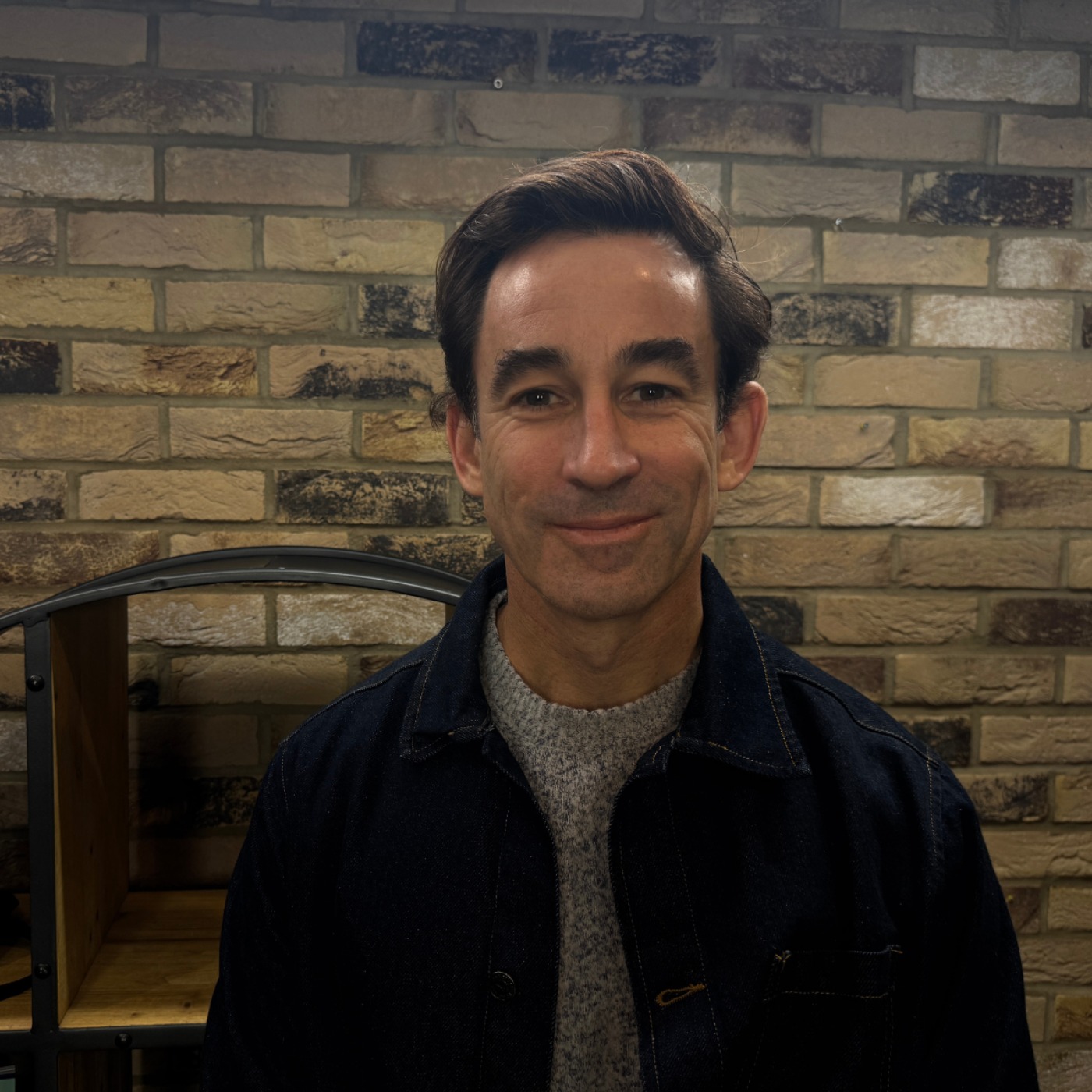
Matt Polson, founder/CEO of Omaze, explains how storytelling and a near-death experience drove Omaze’s shift from celebrity prize draws to data-driven prize homes, scaling charity fundraising in the UK and expanding internationally.
Matt Polson is an ex-Hollywood filmmaker/director (e.g., Live Earth in 2007 with Rolling Stones and Beyoncé; Girl Rising; Fox projects). He later founded Omaze, now turning over $400M+ annually.
“All change starts with a story.” Nobody knows what they’re doing. Fear constricts thinking; post-traumatic growth can reshape strategy. CEOs must step back to see the bigger picture. Hiring and storytelling are core competitive advantages.
Magic Johnson charity auction (bidding $15,000) inspired $10 global entry. Prize pivots: Daniel Craig Aston Martin raised $2.1M; a $250k McLaren bet raised $1.9M. Alyssa’s gene-editing leukemia treatment funded via Blood Cancer UK/Great Ormond Street Hospital (cost £2M). Omaze raised £120M+ in the UK; offers £10 tickets and now sells £5M houses monthly; launched in Germany after obtaining a charity lottery license.
Written by AI. May contain mistakes.
Discover how a near-death experience shaped Matt's life and career.
“I was born with my stomach twisted in a knot, which led to basically me flatlining for four and a half minutes.”
Meet Matt Polson, founder of Omaze, and learn about his journey.
“I'm Richard Harpin, and this is the Business Leader Podcast, where we look at the stories and strategies behind modern businesses.”
Learn the importance of storytelling in entrepreneurship from Matt's experiences.
“but before that you're actually a filmmaker in Hollywood.”
Explore the inception of Omaze and its democratic approach to fundraising.
“Short storytelling or long storytelling?”
Matt shares his second near-death experience and its impact on his perspective.
“you could raise so much more money, so much more awareness.”
Understand how fear can shape decision-making and entrepreneurial strategies.
“I was born with my stomach twisted in a knot.”
Learn how a health crisis led to a major pivot in Omaze's business model.
“actually a lot of, you can make the same really hard decision from a place, this sounds like very Californian of me, but love versus fear, right?”
Matt discusses how Omaze evolved to offer houses and the data-driven approach taken.
“We started doing holidays and cars and then eventually houses.”
Explore the powerful emotions tied to winning a house through Omaze.
“And so a Victoria Park house is not really going to appeal to someone in Chelsea.”
Explore how social media captures moments of transformation, including charitable stories.
“Again, all stories are about transformation, right?”
Listen to a powerful story of a young girl's battle with leukemia and the role of charity.
“So if we did something we did last year, we did the London Air Ambulance, which if people are not familiar, they're all over the country, but these red ambulances that come pick people up in really dire situations.”
Understand the strategic decisions behind moving operations from the US to the UK market.
“And I think now you're operating in Germany.”
Hear insights on mentorship and learning from successful business peers in a competitive environment.
“But then you wanted to make sure that you got there quickly and made sure you beat them.”
Discover the potential global markets for the business and future growth strategies.
“And so when we saw that they could do, it was kind of like the four-minute mile.”
Learn about the importance of storytelling in attracting investment and scaling a business.
“I think we get to spread light and love.”
Learn how framing your business vision as a story can inspire and motivate others.
“And so you can't underestimate that, right?”
Discover the importance of empowering a strong team and the role of intuition in hiring.
“We have amazing new chief legal officer from who was at Coinbase before, hired a new CTO who, you know, sold his last company, Unity and was the number two engineer.”
Understand how businesses can remain resilient during economic downturns and the importance of affordability.
“It's pretty tough in the UK right now with costs increasing and a bit of a cost of living crisis, cost of fuel going up at the petrol stations.”
Explore the contrasts between American and UK entrepreneurial cultures, especially around failure.
“As Brits, I think we're often not as forward as Americans in terms of being upbeat about growth and how we can build businesses in the UK and take them international.”
Gain insights on essential entrepreneurial principles including people, storytelling, and growth mindset.
“And so rapid fire question, UK or America, where's your heart?”
Learn why storytelling is a crucial skill for entrepreneurs from the guest's perspective.
“Because it explains you how to articulate your business in a way that shows customers it's helping them survive and thrive as quickly as possible.”

Get the gist, explore an idea or ask about something said.
 Claude
On The Business Leader Podcast with Sir Richard Harpin, what are the key points of this episode?
Searching your listeningAutomatic transcript. May contain errors.
0:02I was supposed to die when I was born. I was born with my stomach twisted in a knot, which led to basically me flatlining for four and a half minutes. When you're scared, you take in less information, so you're actually dumber. Like, they've mapped the brain. You're not as smart. As we decided we were going to take a big bet, we were going to go buy a$250 ,000 McLaren, offer it with just Omaze distribution. It was a big bet because we only had$900 ,000 in the bank. And then that car coincidentally launched the day that I went into the hospital. So when I came back all those months later and I was sitting down with our CFO, Nina, I said, you know, whatever happened, by the way, with the McLaren data raised the$500 ,000.
0:40And she said it raised$1.9 million. My first tip is that nobody knows what they're doing. I'm Richard Harpin, and this is the Business Leader Podcast, where we look at the stories and strategies behind modern businesses. Today, my guest is Matt Polson, the founder and chief executive of Omaze. If you've seen an online advert for a prize draw where the winner gets a dream home, then you've probably come across his business. But it had to go through lots of twists and turns before arriving at the winning formula. And it's also a rare example of a business that started life in the US, but found success here in the UK.
1:22so what secrets can Matt share about his winning ticket for success? Matt, you've built a business turning over now over$400 million a year but before that you're actually a filmmaker in Hollywood. Sounds glamorous but was it? Well first of all thank you for having me. I had been really passionate about using storytelling to inspire action and so I did a bunch of different projects along those lines. I was the first director on this thing called Live Earth, which was the biggest concert ever thrown. It was Seven Continents in one night. We had everybody from the Rolling Stones to Beyonce. And what year was that?
2:01This was 2007. So it was early in the whole, hey, climate change is a real thing. The Inconvenient Truth had just come out. And so we were helping try to make that more accessible to people. Did a documentary series called Girl Rising about girls' education in the developing world. Created a show for Fox. And so I was doing a bunch of storytelling and working with like big, you know, pretty well-known people. And what were the sort of skills that you developed there that perhaps have helped you when we come on and talk about Omaze? I think storytelling is the most underrated and most important skill in entrepreneurship.
2:33Short storytelling or long storytelling? There's principles that apply no matter what the length are that I think a lot of companies don't follow. And if you do follow, it unlocks a lot of value. but it helps you with, obviously, with marketing. It helps you with product development, but it also helps you with fundraising, hiring, setting a strategy. So it's a very powerful tool. So we'd love to hear the storytelling around how the idea for Omaze came out of a charity auction. Yeah, I was at this event that Magic Johnson, the basketball player, was hosting where he was offering the chance to play basketball with him and go to a Lakers game to benefit the Boys and Girls Club.
3:14but it was one of those things was only available to the high net worth individuals sitting in the room and i was in the room but not a high net worth individual me and my buddy um it was it was one of those rubber chicken dinners i'm sure you've been a lot of these events and so there's sort of four or five hundred people in the room were there exactly exactly and the bidding started and and went up and we were very quickly no couldn't no longer afford to participate um and it went for 15 000 and when we were driving home we said that makes no sense Magic was like our childhood hero. There's nothing.
3:45This wasn't real money. This was dollars, not pounds. Was it$15 ,000 in the US at the time? Yes, exactly. Yeah, exactly. So yeah, not huge for people in the room, but for people like us, we couldn't afford. And so when we were driving home, we said that makes no sense. You know, he has fans around the world, not just in that room. If we made it so anybody could donate$10 for the chance to win, you could raise so much more money, so much more awareness. So it was almost sort of democratizing, wasn't it, and opening it up to an enormous audience. Exactly. Potentially anybody in the US, I guess. Well, yeah, we admitted actually it was anyone in the world could enter at that point.
4:23What we had seen was that, you know, this is 2011, so celebrities were not really on social media yet. There's very few, but we said they're going to be, and they're going to be able to reach their fans in a whole new way. So if we make it so anybody can enter that way, we're just at this good moment in history of where you can reach a lot more people. And so that was a foundation and the idea behind Omaze. So take us, what happened next? So for the next seven years, we just did celebrity experiences. We did everything from riding a tank with Arnold Schwarzenegger and crush things to win a Lamborghini where Pope Francis hands you the keys.
5:01That was probably the craziest one we ever did. I had to go to the Vatican and pitch Pope Francis. I saw the picture of you and the Pope amazing. Yeah, it was crazy. It was crazy. And then, yes, we did that for seven years. And then, you know, I had a personal health experience. And after that, we changed the business from doing celebrities to prizes. Tell us a bit about that near-death experience, because there is a theory out there that says if you've had a personal or business crisis and you go through that, you can come out the other end even more determined. I would agree with that. I think we're all familiar with the term post-traumatic stress disorder.
5:40That's a real thing, and people have it. But there's also such a thing called post-traumatic growth. I'm sure in your journey you've had lots of traumatic points that you had to work through. Too many to mention. Exactly. But your capacity for wisdom, I think your capacity for gratitude, your resilience is directly proportional to the adversity that you faced. So, you know, we spent a lot of our life trying to avoid it and for good reason, but it can really shape you. And so that experience shaped me. And so how did you nearly die? So I was born, I was supposed to die when I was born. I was born with my stomach twisted in a knot.
6:19And the scar tissue from that surgery that they did when I was born broke off freakishly all those years later and created a bowel obstruction. and which led to basically me flatlining in for four and a half minutes. Wow. And so that was that was a second time that you nearly died. Yes, it was my second year. Yeah. Yeah. My poor parents. I mean, I almost I nearly died right when I was born. And then, yeah. And then my the way, you know, during the flatline, my mom was there and burst into the operating room and helped coach me back to life. And so how much of this success do you accredit to your mum?
6:58I mean, everything. I wouldn't be here if it wasn't for her. And a huge attribution to my dad. But that experience really shaped me as a leader, really shaped me the way I think about fear, really shaped, fundamentally changed the strategy of Omaze. If that had not happened, I don't know. I don't think we'd be sitting here. And what is your feeling about fear? So the opposite of love is not hate. It's fear. and fear can be a motivating force for many parts of my life of fear of failure a fear of not being enough all that motivated me to work i think we all have that don't we yeah we all have that and that and that's not a that's not a bad thing and i don't i don't think i'll ever lose some of that but i think i allowed it to to drive my decision making more than it should have because fear actually a lot of, you can make the same really hard decision from a place, this sounds like very Californian of me, but love versus fear, right?
7:58You can decide to let go of 80 % of your team out of love versus fear. And I think it's important to try to be in, whether you want to call it love or expansion or relaxation. When you're scared, your mind actually constricts, right? Your prefrontal cortex takes in, like becomes more reticulary focused. You take in less information. So you're actually dumber. Like they've, they've mapped the brain. You're, you're not as smart. And so, um, and so you kind of, what I learned from that experience is all these things that I had imagined would go wrong. You know, you probably, as an entrepreneur at the beginning, you thought if you failed and you would, you'd go broke and you dial up, like I had all those thoughts, you know.
8:41But you realize after, you know, I kind of died and death is most people's biggest fear. And I went through a version of it and it really wasn't, it was pretty great, actually. So I then says, well, business must be pretty straightforward and easy then. So talk us through, Matt, how you came out of nearly dying for a second time and how you then change the Omaze business? Before I had gone into the hospital, we had done this experience with Daniel Craig, where you got to go to New York, you got to go to the Aston Martin track, you got to ride around in a one of a kind Aston Martin. And then you got to keep the Aston Martin.
9:18And it was supposed to raise 300 ,000 for the United Nations, and it raised 2.1 million. And it was the first time we'd done a prize. And so then after that, I went to our CFO, Nina, and said, hey, I think we should see what happens if we do a prize on our own with no celebrity because then we would be able to control our own destiny and so we decided we were going to take a big bet we're going to go buy a 250 000 mclaren um offer it with just omaze distribution it was a big bet because we only had 900 000 in the bank so it was a it was definitely maybe not fully bet the company but pretty close and and then that car coincidentally launched the day that i went into the hospital So when I came back all those months later and I was sitting down with our CFO, Nina, I said, you know, whatever happened, by the way, with the McLaren did, it raised the$500 ,000.
10:07And she said it raised$1.9 million. And then because I had been out and because I had perspective, like I was able to step back and say, OK, we got to change everything. Like we should go all into prizes. We moved from celebrities to prizes. We started doing holidays and cars and then eventually houses. But it was because of that moment that switched us into prizes. And isn't that a key point that many entrepreneurs struggle with? They're too busy running the day-to-day that they don't step out of the business and see the bigger picture. Absolutely. It's really hard to do.
10:40It's really hard to see incremental change. If a ship is sinking just a millimeter by a millimeter, you don't really see it. But if you come back and look, then you're like, whoa. And so that can happen. everyone's business and so it's really the CEO's job and I've done a terrible job of this is to try to get step back as much as you can and I used to just be so in the weeds that I couldn't do it so now you're offering physical cars and it's working you're no longer dependent upon Arnold Schwarzenegger not turning up for one of the events and how did the the products that you're offering evolve and change?
11:21Yeah, so now we do houses. We launched test houses here in the UK, and we were offering a£1 million house that went for seven months. Now we do a£5 million house every month. We have built a bunch of models, basically algorithms driven by our data science team to predict what houses people will want and how to select them and locations and how to design them. We build them now, a lot of them. And just talk about location and house selection and how you've perfected that model. I can't say we've perfected yet. We're in the process, but we're better than we used to be. So we try to find a wide portfolio of houses.
12:05There are certain areas in the country that are nationally appealing. And it's really just so far that we found it. It's really only Cornwall and Lake District that are nationally appealing. And then you have obviously London, which has a big blast radius. But we've also found that actually more appealing than London itself is things that are within an hour of London that people from London could move to. Because people within London are pretty married to their neighborhoods. And so a Victoria Park house is not really going to appeal to someone in Chelsea. But a house in Surrey might appeal to anybody in London.
12:42And so we've kind of learned that kind of stuff. And then it's about finding new locations that are not obvious and that have like maybe a trend towards like there's we look at migration data and stuff like that and saying, OK, it may not be the Cotswolds, but we can get an even nicer house in Wiltshire for this amount. What is it, do you think, about winning a house that makes it so powerful, the model? And what are the emotions of some of those winners and how it's changed their lives? Every human being is really looking for reasons to survive and thrive. And what they expect from your brand is to show them how to do that.
13:23That can come in many different ways, right? You can save them money. You can save them time. You can protect things. You can give them better food, whatever it is. For us, the transformation is really clear. A house represents almost all of Maslow's hierarchy of needs. It's safety, it's security, it's status, it's relationships, it's self-actualization. So you can instantly picture how your life will be transformed, how your survival and your potential to thrive will be better as a result of having that house. I'm presumably using those testimonials from people who have won a house to promote somebody else winning a house.
14:02Talk about that social media model, Matt, and then how you now use those celebrities. Again, all stories are about transformation, right? Social media, even though it's a much shorter form, you still want to see transformation, right? If you remember, this is kind of dated now, but they used to have this ice bucket challenge. You remember that? Where everyone was getting dumped on their head. I remember getting some really cold water poured over my head by my PA. Yeah, there you go. But the reason we liked that, the reason that spread so wide is because it was transformation, instantaneous. Someone was dry and then they were wet with frozen water.
14:39And no matter whether you're an ultra successful businessman or just someone on the street, like cold water on your head makes you transform, right? So you look for moments of joy. You look for moments of laughter. Sometimes moments of people transforming in a bad way. So that's why what we do works on social media. We try to capture those moments of emotion. and because like the vision of our company is we're fighting for a world where everyone has a chance right everyone has a chance to transform their lives and i think we think it's harder and harder for people to do that now and so by showing that and showing that light on social media it'll attract people and this is not just about transforming lives by somebody winning a dream home this is also about giving a lot of money to charity and since the business began you've raised over a hundred million pounds for good causes yeah we've now raised in the UK over 120 million pounds for charities and we have some amazing stories of how that has changed people's lives I can tell one of them if it's helpful yes please yeah so there was this there's this young girl named Alyssa 11 years old at the time who was told that she had an incurable leukemia incurable blood cancer.
15:56And they did two bone marrow transplants. They did two rounds of chemo. And they said to her parents, sorry, we don't have anything else. Her parents said, do you have anything experimental, like anything that you've never done before? And they said, well, we do have this one base editing treatment that we've been working on, but we've never done it. I'm not a human being yet. And they said, look, we don't have really an alternative. We'll do it. But they didn't have the funding. And so this is Blood Cancer UK and Great Ormond Street Hospital. So we helped fund the last part of that. And I will do a bad job explaining the science, but basically what they figured out is a new way of editing genes where instead of just cutting the DNA sequence, they kind of erased it and they could reconfigure it.
16:40And what they could do there is they could take healthy T cells from someone like you and a healthy adult. they could transfuse those into ELISA, modify them, and turn them into like leukemia super killers, right? Then they got them in there, but then they realized they couldn't find the leukemia cells. So then what they figured out is if they put a little HIV in, which is really good at finding weak cells, that could almost shoot up like a genetic flare so that super killers could come get it. Anyway, they did that. ELISA is totally... And it works, and she survived and would otherwise have died.
17:14Yes. And she's totally healthy. So now we're building a new pediatric cancer center with Great Ormond Street Hospital that can enable that to do that 200 times a year. Fantastic. And how much did it cost for that individual saving of life? Two million pounds. Yeah. Yeah. Because it was the first time, but they're bringing the cost down now. Great story. And then just link that back to then how you get celebrities to endorse the business through that charity giving. Yeah. So if we did something we did last year, we did the London Air Ambulance, which if people are not familiar, they're all over the country, but these red ambulances that come pick people up in really dire situations.
17:54So we so Prince William is a patron of London Air Ambulance and David Beckham is a is a talent to help support them. So when we did a house in London, it was to benefit London Air Ambulance. And David Beckham was in the commercials and Prince William was there to meet the winner and all that kind of stuff. Great. Now, this is an example of a business that started in America and has been successful in scaling in the UK. I've never come across that before. Normally, it's British entrepreneurs that prove out a model, develop it in the UK, and then say, I want to go and conquer America. Many fail.
18:38Some succeed. I nearly failed in America with HomeServe. It took me seven years to prove out the model there. But yours is the other way around. It's a very weird story for sure. it's a little bit less that it didn't work in American market and we came to the UK it was just we were doing the celebrities and the cars in the US and we launched the homes in the UK and the homes we always thought the homes would be the thing because of the reasons we talked about earlier Maslow's hierarchy of needs and it took off so fast in the UK it was growing similar to like Netflix or Amazon or Spotify in its first five years that we decided we needed to focus on the market where we could do it because we couldn't afford to do the homes in both markets because we have to buy eight houses out in front in order to do the house every month.
19:30And so that's why we decided to the UK. We will go back to the U.S., but that's why. It was a really hard decision because we had an amazing team in the U.S. We had a good business in the U.S. It just was a great business here. And so, you know, shutting that down and moving here was a really, really hard decision. I gave you the focus to concentrate on one country, get the model perfected. And I think now you're operating in Germany. Correct. Why Germany? And then how many countries could this model ultimately work in, do you think? We chose Germany because it's very similar from a population density to the UK.
20:09It is the biggest market in Europe. It's an hour away. and so we really thought we could do it. Obviously, language and cultural differences, but we believe that this is a universally appealing product and Germany's proving that. We think we can do this all around the world. There's 30 countries we can do it in without any kind of law change, but potentially more. And so we see doing it around Western Europe or in North America. So we want to go back to the States and we'll do Canada and Mexico and Spain, Italy, France and um and asia so we think we think everybody wants a better house right what were the steps to setting up in germany in terms of separate company hiring locals or sending them from the uk and those stepping stones yeah we had to get a license in germany because there's a like a charity lottery license essentially there so that was very that took us a long time um we had to buy a company there to get some of like the entities set up and comply with that license.
21:16And then, yeah, we had to hire an MD and build a team and we launched really fast. The MD was a local German? Local German. Yeah. Yeah. We really believe like we want people making decisions for the customers that are as close as possible to the customer. And so, yeah, so we have a local German MD. We were, you know, we're running, we moved really fast. It should probably take like 18 months to launch a market. And we did it in seven. And so we did a lot of it out of the UK, which was a challenge. And I think you went fast because there was somebody that had copied your model, which I'm a great believer in copying.
21:52But then you wanted to make sure that you got there quickly and made sure you beat them. Yeah, we think it's a really big market. There's enough room for both of us, but we just didn't want them to be so far ahead that we, you know, by the time we got there, it was kind of a little too late. So you've had amazing success, Matt, so far. And if you look back and say, what were the enablers of that in terms of, did you have a coach or a mentor? Who did you learn from over time? Yeah, I had all those things. I happened to be in a class in business school that we have, there was a small group of friends.
22:31And out of that group came, how many unicorns? Like six unicorn companies out of like a group of like eight friends. Amazing. So that was like a sort of a peer group of who's going to come up with the best idea and then prove out that idea. Yeah, yeah. So my friends, there's four of them that started a company called Warby Parker, which is an eyeglass company, which is a public company and been a huge success and kind of reinvented D2C. And, you know, at a time when people were like, people are never going to buy glasses online. And importantly, they went from online only to then proving out pop-up store in Manhattan and proving that the omnichannel model works.
23:09Exactly. Yeah. And they've got maybe 200 stores now in the U.S., something like that. So, yeah, they've been a massive success. They have a big integration they're doing with Google around AI glasses. But they were the first of this group. And, you know, we're all friends. We all know what idiots we all are. And so when we saw that they could do, it was kind of like the four-minute mile. We're like, if these jokers can make it, then so can I. And then there was another company called Allbirds that came out of that, which became a shoe company, which had done very well. A company called Beyond Meat.
23:45Yep. A company called Cotopaxi, which is kind of a North Face competitor. Omaze. And then a company called Harry's, which is a razor company, which is also. So that was one year. And this was all coming out of your peer group. Yeah. Which business school was it? Wharton Business School. Yeah. So that was super helpful. I learned a lot from my friends, you know. And we had another good friend in that group also who came in a little bit later who started a company called Scopely, which was really – so I've learned a lot from them. And you keep in touch with them and you meet up and share learnings?
24:18Yeah, exactly. Yeah, we're all really good friends. What's the biggest thing that you've learned from any of those others, do you think? There's an Einstein quote that says, I wouldn't give a fig for simplicity on this side of complexity, but I'd give my life for simplicity on the other side of complexity. They were really good at knowing how to make a complicated new idea really simply presented and make it really clear value proposition to the customer. And then they're super creative guys and build a really magnetic brand, but they never overdid it. And so they're really disciplined in kind of carving away to the essence of what matters.
24:52Overdid it in terms of keeping that model simple and just executing against that rather than as many entrepreneurs distracted by having too many ideas. Yeah, exactly. Exactly. What's the international potential for the business? You talked about 30 markets. Could it be even more? And how long are you going to keep doing this business format? I think it can be global. And there's a couple of countries that were pretty difficult to operate in. but again i think the demand will be there you know we're in this category called entertainment with impact which is any game of chance that has a social impact and in that you have bingo you have lottery you have charity raffles you have sweepstakes you have prize draws um that market if you count all of that is 475 billion globally so it's the biggest form of entertainment uh let's say 50 countries and um uh 25 years time if you're still doing it then um how many people are going to win their dream home how many lives are you going to transform we'll have given away over 5 000 dream homes and are you going to keep doing this forever i hope so i hope so as long as i'm the best person for the job i will do it i you know it feels it's more than a job for me it feels like a calling.
26:06It's not just my business, but it's also my art. I think we get to spread light and love. I've had a really traumatic experience where I almost lost all those things. So I want to put as much of that out in the world as I can. And I have to continually evolve to be the best person to run the business. And that's not easy to do. Every day, it's the biggest company I've ever worked at. But I hope to. And can you evolve the product going from celebrity experiences to cars to homes is there anything even bigger than that we have a bunch of other ideas yeah we think there's a lot in this space there's a lot we can do on new products um from you know a wide range of things um and but then also like a lot more content shows and other stuff that comes off out of it um so it's a huge space like it's a massive market and so we think there's a lot of opportunity and people are looking for reasons to be entertained, to have hope, to dream and then find an interesting way to give back.
27:09And did you need to get an investor in order to get to where you are today? Yeah, we've had several investors along the way. Our biggest investor is First Mark Capital and a guy named Rick Heitzman, who's been an incredible partner to us along the way. But we've had multiple others. And for any entrepreneur that's thinking about getting investment, what are your top couple of tips? Every investment starts with a story. Your company is just a story. Back to storytelling. It's really true. If you think about it, even at the public market level, if you think about it, what is a valuation? What is a market cap?
27:48It's metrics plus storytelling. That's really where it comes. And there's some, you see certain entrepreneurs in the world that have massive PE ratios, like way higher than others. And a lot of times it's because they're better storytellers or they're bigger brands or they're bigger, whatever. And so you can't underestimate that, right? You need to be able to like, think about your, your pitch as a story. You need to think about the vision of your company as a story. Like all change in the world starts with a story. HomeServe was just a story at one point, right? It was just a story. Like I'm going to go to the U S and I'm going to take over the U S and I'm going to make it scale in the US.
28:23And you're getting people to believe that and you're getting people to work with you on that. But that was just a story at one point, right? It was a story combined with then my big breakthrough was realizing that unlike you, I was a rubbish chief exec and that I could hire people that would run each country and do it much better than me. That then meant I could work on the international development, new ideas and have really good people running the individual countries yeah is that talk a little bit about your um leadership and um how you see your role and whether that will change at all yeah it is changing i'm learning a lot um you know we have a really strong team at omaze um a combination of people that have been here for seven years and are experts in this really weird space we're in a top team of how many direct reports do you have including the the md that you got in germany now i have eight direct reports which is probably too many uh but yeah we have an amazing new cfo who was the was number 100 at amazon was there when it joined when it was like 110 million in revenue left there's no pun there oh amazing or amazing yeah Yeah, exactly.
29:41Yeah, exactly. Yeah. Yeah. So, so, you know, he's amazing. We have amazing new chief legal officer from who was at Coinbase before, hired a new CTO who, you know, sold his last company, Unity and was the number two engineer. So we've seen like a lot of, we've seen like incredible amount of people come in. And so by being surrounded by these people, I realized my job is just to empower them to do their job well and to set the vision and uphold the culture is really like where my biggest leverage points are. If you get those things right and you have great people over time, like you'll figure it out.
30:15Did you get any of those hiring decisions wrong? You've had to let people go. Oh, yeah. Yes. Many, many times. And what's the what's the learning on that? If there's any doubt, there's no doubt when it comes to hiring. You know, there's when I've gotten and I haven't gotten any wrong recently, but like in the past, you know, I always had like a little niggle, but I didn't trust myself enough or like their resume was amazing, you know, or I let someone talk me into that. they would be great but like i just you know i something i knew but i i'd only like amazing only company i've ever worked at so i didn't really like feel like i had the pattern recognition i just had my intuition and now i've learned that intuition is more powerful than you realize and is actually it's there we have a lot of neurons in our gut we have a lot of neurons in our heart they're actually taking in information that is very valuable and if you found somebody that is amazing at final interview how does that how do you recognize that or how does that make you feel in your heart if they're amazing in the final interview yeah i mean it's obviously great i've seen people that are amazing at interviews that are not amazing at the job um and i've seen people that are not amazing in interviews that are amazing in the job and so you got to learn to navigate that so you you break it down like the things that really matter we what we really look for is someone like do they take their work seriously then but not themselves right so we believe laughter is the shortest distance between two people if your high ego just doesn't work at omaze and because laughter breeds resilience it breeds creativity it makes it more fun we look for people that are really hungry like you can see it in their eyes you know you have those eyes you have the hunger eyes thank you yeah yeah you know but you can see it like are they like would they run through walls for this like do they really like do they they do they really have that in them and then are they a great teammate they don't have to be like necessarily even like friendly you know but as long as they really care about like building up others and they have a track record for doing that and have a real resilience and grit to do it, then that's a big thing.
32:20It's pretty tough in the UK right now with costs increasing and a bit of a cost of living crisis, cost of fuel going up at the petrol stations. Any worry that will affect your business? I think everybody's susceptible to these kind of price shocks. We've seen a lot of them over the years in the UK. You know, our offering has proven resilient throughout recessions. It's the only form of entertainment that has not suffered any sales loss during every recession since 1957. Because it's affordable. The cost of a ticket to win a house is... 10 pounds. Yeah. And it's a reason to dream, right? And so that's...
33:01And people like that they're giving back. So I think that's why it continues to work. As Brits, I think we're often not as forward as Americans in terms of being upbeat about growth and how we can build businesses in the UK and take them international. What's your view on that being an American that's now successful here? I think there's a lot of amazing entrepreneurs here and a lot of really brilliant people coming out of amazing schools. there is i think there is something to that in that um they're not commercialized as well like you think about deep mind right like like you have like in dentists you have like the top ai mind probably maybe in the world right but like let that go to an american company um you know there's a lot of examples coming out of oxbridge with like biotech and other stuff that like those companies ended up in boston they should be in the uk um and you know i think there is a cultural thing in the U.S.
33:59where when you're, you know, it's a very much like a rugged individualist life, liberty, the pursuit of happiness. That's all about individual values. It's all about creating your own thing, which has its benefits, but also has its downsides, which, you know, you can, you can see. And so I think there's a little bit less, there's a little bit more based off the history and the class system and stuff in the UK where there's a little bit less of a, you're taught, it seems a little bit less like go get it, you know, rise above, like be your own person. So maybe there's a little in the culture there, but there's brilliant entrepreneurs here, really brilliant entrepreneurs here.
34:37But a business failure is frowned upon here, whereas it's, I think, a stepping stone to success in America. We really look for growth mindset in all of our hires. That's a very common term. But I think countries have growth or fixed mindsets, and the difference, a growth mindset believes that you You can learn from failure. You can evolve. That's like tuition. And, you know, and a fixed mindset is more zero-sum game. And if that, like, if something goes wrong, that's like a reflection on you as a person, not the process. And there's a little, I think the UK on the scale around the world is pretty good.
35:15But maybe the US is kind of on the extreme on that. And so rapid fire question, UK or America, where's your heart? Both. It really is. I love, I mean, I'm American. I love the US. my best friends are there but i really love the uk i think it's an amazing country it's the only you know london is the only city in the world where it has globally relevant centers of power in government in finance in media like within a mile of each other those would be in three different states in the u.s you know that's really beautiful it's the most international city in the world and then the uk just is a beautiful country like and with beautiful people, great sense of humor.
35:56So I love both. Nice to hear. So finally, and I've really enjoyed this. What are your top three tips looking back so far on the success of Amaze that you would pass on to medium-sized entrepreneurs, founders, CEOs that are scaling their businesses in the UK right now? My first tip is that nobody knows what they're doing. You know, I described that group of friends that I had, they've all been really successful. They had no idea what they're doing. I had no idea what I was doing at the beginning. And I remember being scared that because I didn't know what I was doing, I would never reach it to the places of people I'd see celebrated in articles or whatever.
36:34Now I've seen those articles happen about Omaze and me, and I think maybe a young entrepreneur is looking at that and saying, oh, well, he must have had it always figured out. So I want to be clear that I didn't and no one does. And so that should be freeing for people, like just to kind of move forward it's like it's okay just like if you can get there without knowing how to yeah exactly exactly you know you just got to get one percent better every day that really compounds over time so that's one is no one knows what they're doing two is it's all about the people it's like and i know that sounds obvious but like i didn't fully realize that um i spent more time doing than like hiring i spent you know i it's all about like how do you yourself up with great people to give them leverage and you know and that and that's huge and and so you've got to be really really really really discreet like tough about who you let into your business um being very selective as you've talked about but also was there ever a fear of these really good people are too expensive and can i afford to spend that money on them or not yeah i mean there's realities where you would run it but i would i would spend more on one really great person and cut a second person especially at the beginning like the the like the leverage and like that one amazing person could do you know so you want as few amazing people as possible um and because each each additional hire creates complexity so i would i would really like less amazing you know less people more amazing people and a final tip the final one is storytelling storytelling is the most underrated skill in entrepreneurship you should learn that like you do product design or or modeling or anything else like really understand the power of storytelling because that will unlock a ton and if you've got a new business how many seconds should it take to be able to explain what your business is and why there's a need for and it's going to be successful do you think very fast um the customer does not like they're burning calories every they don't their brain doesn't like having to learn like be explained So you want to be like instantaneously be able to say, there's a book called Building a Story Brand.
38:39I recommend everyone read that book. And who was that? By Donald Miller. Because it explains you how to articulate your business in a way that shows customers it's helping them survive and thrive as quickly as possible. And that's everything. Because if you confuse, you lose. Matt, thank you very much. I've learned some stuff today and really enjoyed it. Thank you, Richard. I really appreciate it. you've been listening to me Richard Harpin speaking to Matt Paulson of Omaze for the business leader podcast please do rate and subscribe to us wherever you get your podcasts and if you visit our business leader website you can sign up to our weekly newsletter to get more content like this and find out opportunities for your business
39:30Thank you.
Omaze's co-founder and CEO Matt Pohlson learnt the art of storytelling in Hollywood and used it to build a £200m revenue, for-profit, prize-draw business. He tells Sir Richard Harpin how two near-death experiences made him more determined to grow the company and how intuition is more powerful than he realised. The sweepstake specialist is a rare example of a business idea born in the US that found success when it moved to the UK, but why does the UK not match the US's growth-mindset? Also, Pohlson gives his top three tips for founders.
Join the Business Leader community at Business Leader
Hosted on Acast. See acast.com/privacy for more information.


