Ask ChatGPT
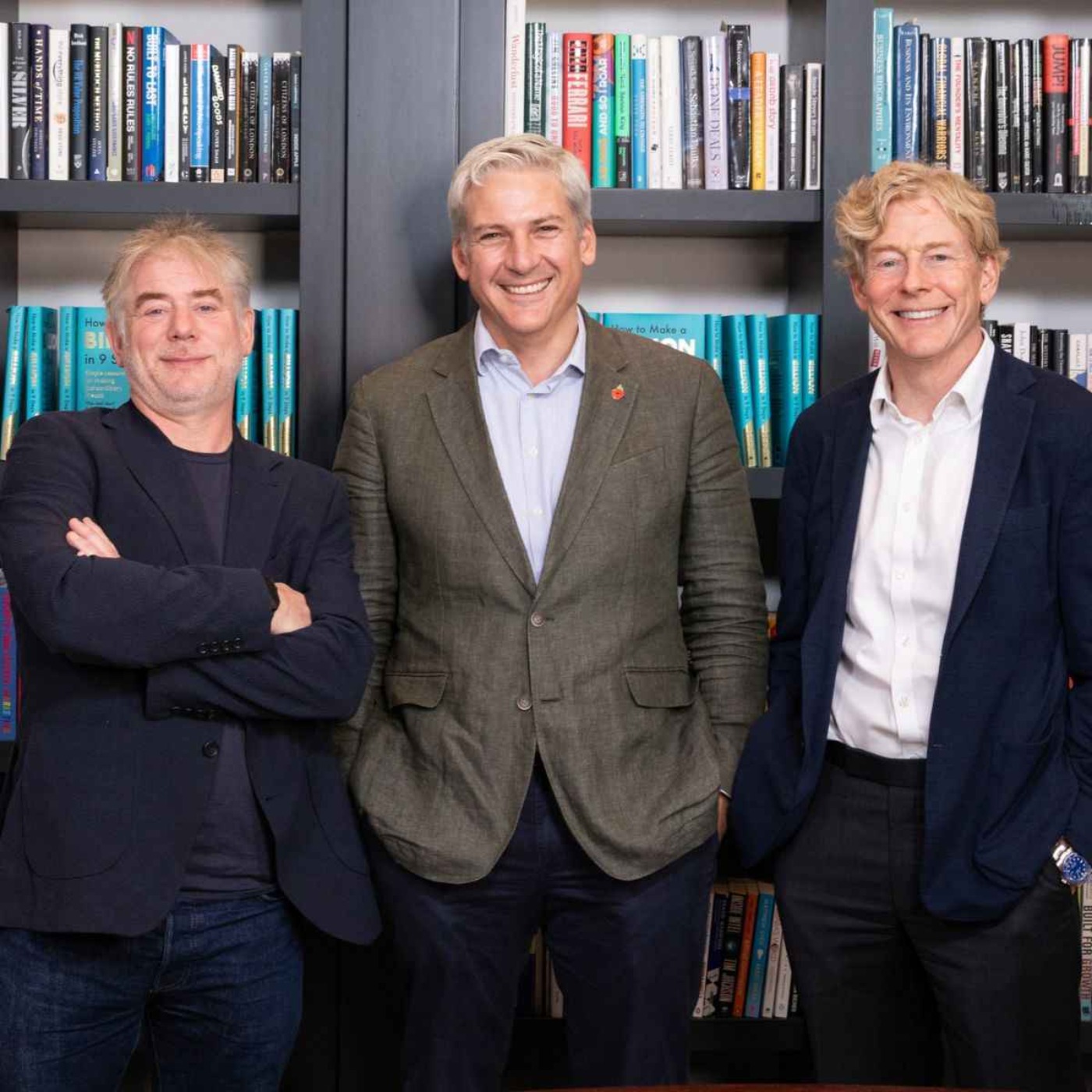
 The Business Leader Podcast with Sir Richard Harpin
26 May 2026 · 46m · 25 chapters

How Nnamdi Emily Fonwu built Definely, an AI legal-tech startup in the UK, from a disability-driven problem to a global B2B SaaS used by major enterprises, including lessons on funding, product focus, Word integration, and US expansion.
Nnamdi Emily Fonwu, founder of Definely; co-founder Fergus McDiard, a visually impaired (registered blind) solicitor at Freshfields-era; referenced investor/advisor and Definely leadership (CTO, CPO, head of AI) and VP of People Shannon.
Definely’s success came from solving contract review for visually impaired lawyers first, then expanding to all lawyers; pilots should be paid early; “critical quality” means the tool must match the original document exactly; Americans buy from Americans, so Definely built US commercial leadership; AI increases demand for separate review tools because lawyers use AI to draft.
Definely suite in Microsoft Word—Vault (precedent/knowledge links), Draft (stay on one clause while navigating), Proof (sanitizes before sending). Customers include American Express, JP Morgan, IKEA, KPMG, Barclays, ADB, A&O Sherman, Slaughter and May, Dentons. Funding: £150k angel, £1m seed; ~$40m total raised; 150+ customers; ~80 employees. Partnership: integrated with Anthropic Claude for Legal via an MCP connector.
Written by AI. May contain mistakes.
Discover Nnamdi's upbringing and the influences that shaped his entrepreneurial spirit.
“In this episode, we'll talk about the early struggles of being an entrepreneur and how addressing the initial pain point turned into a multi-million dollar legal tech business.”
Explore Nnamdi's shift from a law career to pursuing a business in Nigeria.
“So I trained there and qualified there and stayed there for a few years.”
Learn how Nnamdi co-founded Definely to solve a significant problem for visually impaired lawyers.
“or how low the price was, there was always somebody who could do it lower.”
Understand the journey of building the Definely prototype while maintaining a full-time job.
“So I spoke to a lot of lawyers whilst I was building this prototype.”
Dive into the importance of market research and user feedback in developing Definely's solution.
“after we'd finished our call on the transaction we're working in, I'd say, I'd sort of call him up.”
Discover how Nnamdi funded Definely through bootstrapping and angel investment.
“And so the business launched for proper in 2020?”
Learn about the various products offered by Definely to aid lawyers in contract review.
“Talk a little bit about the product range.”
Learn how to identify the right range of products for your business.
“And proof is a proofreading product that sort of sanitizes the contracts when you're just before you send it out to either the other side or to your clients.”
Discover the importance of technical expertise and decision-making in startups.
“And how have you handled the technical side of the business?”
Understand the challenges and strategies in securing enterprise clients.
“That was one of the small number of critical decisions that really helped the business.”
Gain insights into effective recruitment and the importance of team dynamics.
“And the number of customers that you have and just name some of the big names that use your software.”
Learn about the monetization model and strategies for scaling a startup.
“What was the learning coming out of that?”
Explore the lessons learned from expanding a business internationally.
“So by its very nature, it was always going to be global, and the US was always going to be a big part of that.”
Discover how AI is transforming the legal industry and its implications for startups.
“Isn't Definely really an AI business that happened before AI really took off?”
Learn about how AI is transforming the legal sector and the growing need for contract review tools.
“You know, I started with helping my co-founder, as I mentioned, but actually expanded into, OK, lawyers are responsible for drafting these contracts.”
Discover the significance of the partnership with Anthropic and its implications for legal tech.
“I think I read somewhere there's been more investment in legal tech in the last sort of six months than probably over the last 10 years, which is really, really exciting.”
Gain insights into the process and strategies behind securing a major contract with Anthropic.
“what did it take to win that contract how long did it take and how did you make that happen yeah So we were introduced to the Anthropic team via one of our advisors.”
Understand how AI can enhance productivity and efficiency in mid-sized businesses.
“Start internally first, you know, see where there are areas within the business where, you know, you can optimize our productivity by leveraging technology.”
Explore the co-founding dynamic and the importance of mentorship in building a startup.
“And being an international business, you know, a U.K.”
Learn about the key values and culture that drive a successful startup environment.
“There are two types of mentors I try to, you know, look for.”
Discover the benefits and support available for startups in the UK legal tech industry.
“Is the UK a good place still to start a business, do you think?”
Examine the challenges faced by UK startups when scaling and the need for bold investment strategies.
“Is there one ask of government of something else that could be done to encourage more startups in the UK and more scale ups?”
Learn about the unique challenges faced by startups in the UK compared to the US.
“I think more could be done as you scale your business.”
Discover the importance of focusing on growth and innovation amidst the AI boom.
“I think right now we are very focused on leveraging the opportunity at hand.”
Understand essential strategies for scaling a business effectively without overspending.
“And if there are a couple of bits of advice to other businesses that are scaling right now, what would they be?”

Get the gist, explore an idea or ask about something said.
 Claude
On The Business Leader Podcast with Sir Richard Harpin, what are the key points of this episode?
Searching your listeningAutomatic transcript. May contain errors.
0:02I've been having individuals at the time who had a much stronger technical expertise than me and they told me no this wasn't possible. And I said no it must be possible I'm going to find a solution and there's no way we're going to build this without it. We have over 150 customers now, American Express, JP Morgan, Ikea. We've raised about$40 million altogether. Never would I in my wildest dreams think that this idea which started with trying to help a blind lawyer would be launching with probably the most relevant scale-up company in the world at the moment. What would make a top city lawyer walk away from a budding career to build a startup?
0:41Today's guest did exactly that. Nnamdi Emily Fonwu was working at Freshfields, one of London's top law firms, when he spotted his visually impaired colleague struggling to navigate complex contracts. So he teamed up with his colleague and built Definely, a platform to access definitions and terms without having to leave the original document. The AI-powered tools are now used by some of the biggest law firms and companies in the world. In this episode, we'll talk about the early struggles of being an entrepreneur and how addressing the initial pain point turned into a multi-million dollar legal tech business.
1:22Namdi, great to have you on the show. Just talk about your upbringing and were there any signs that you were going to be an entrepreneur? Well, thank you very much for having me on the show, Richard. So I was born in Nigeria. I had three siblings and grew up in, I guess, maybe typical for a lot of Nigerians in the UK who've migrated over. You know, there wasn't as much economic opportunities in Nigeria. So actually my, you know, my mom, she's a nurse. And so she moved over to the UK when I was still very young. I think I was about three years old. And, you know, I was essentially raised by my grandma because my dad was sort of working, trying to make ends meet.
2:02But he was also doing a degree, a PhD degree. Did that help in terms of sort of self-reliance? I think so. I think from a very young age, I remember, you know, it would be me and my siblings. We'll be, you know, very, very young, but we would be sort of getting up to mischief because, you know, my parents weren't around to sort of, you know, keep an eye on us. And, you know, my grandma, she was older. So, you know, we could sort of we had a lot more sort of energy. So it really sort of, I guess, helped me to be quite independent minded from an early age. And so when we got the opportunity to move over to the UK when I was about seven years old, and actually between the ages of three and seven, you know, I saw my mum, I would see her once a year when she would come over to Nigeria for Christmas.
2:43That must have been really hard. It was, it was particularly hard for my younger brother because she didn't come over very regularly and she left when he was about six months old. So I remember one Christmas she came over and, you know, she wanted to sort of give him a hug and pick him up and he wouldn't let her do that because he didn't recognise her, he didn't know who she was and I remember she then went to the bathroom and I sort of followed her to the bathroom when she was just seated on the toilet crying. Now being sort of older, I imagine it must have been a distraught experience for her as well.
3:13But yeah, it was very nice when we were able to reunite when we came over to the UK. The reason we actually came over was because my dad wanted to come over also to find work because there wasn't as much opportunity, but they wouldn't let him come without us. So I would say my upbringing sort of taught me, I guess in terms of linking it to entrepreneurship, taught me about resilience very early on, Although I didn't really appreciate that, you know, not growing up with your with your mom and seeing your mom regularly. It teaches you to be a little bit tougher. But then decided to train as a lawyer.
3:44Yes. So as I said, I'm Nigeria. And, you know, if you're from a Nigerian household, you're either a doctor, an engineer, a lawyer or you're lost. I wasn't very good at math. So engineering didn't work. I didn't like the sight of blood. The only reasonable alternative was law because I did not want to be lost. So I decided to study law at university. So I did my undergraduate, did my master's, and then I was lucky enough to actually get a training contract at a Magic Circle law firm here in the UK. So Freshfield's where I was for about five years. So I trained there and qualified there and stayed there for a few years.
4:15But then you thought, I'm going to go back to Nigeria and try and come up with a business idea. I guess I had the entrepreneurial bug pretty early on. I remember actually, even within a few months of my training contract at Freshfields, I remember my supervisor at the time, she said to me, you know, you're really sort of hardworking. You're really, you know, energetic. I can tell you want something more. I don't actually think you're going to stay in law very long. Actually, when I qualified during my qualification leave, a lot of my peers, they went on holiday. But I decided actually I wanted to see if I could go and start a business in Nigeria.
4:50At the time, I was really excited and inspired by the Poundland story and the business model. And I thought, hey, that's a great concept. I wonder if that would work in Africa. So I wanted to see if I could set up the equivalent of Poundland in Africa. So I went back to Lagos. I set up a shop in the hot sun in the marketplace. I had meetings with retailers and bought products. And I think the problem I ran into pretty quickly was, first, the exchange rate just was not sustainable. and I also realised that because there's a black market, there's no formalised retail market, I was always being undercut no matter what price I, or how low the price was, there was always somebody who could do it lower.
5:27And so how then did the Definely business come about? I started Definely with a colleague of mine who I met at Freshfield. He was a few years ahead of me. He came over from another law firm, A &O Sherman. So we were both lawyers, but he was a particularly unique lawyer because he was actually visually impaired. So Fergus McDiard, his name, He was one of the few registered blind solicitors in the UK at the time. And so I was just really shocked by how somebody with his disability could do the sort of work I was trying to do. Life is hard already, but to be able to be a great lawyer. Right, right.
5:59I remember I used to make this joke to people. There's a reason, you know, I don't know if you watch the Marvel comics, you know, there's a reason Daredevil, who's this blind lawyer, you know, he's a superhero. Because it's such a rare sort of profession to go into with that sort of disability. So I was really inspired by Fergus and I realized very quickly that he couldn't really navigate through these complex contracts, the sort of contracts we worked on at Freshfields, which were, you know, multi-jurisdictional, really lengthy, you know, quite complex. And he didn't have the tools to allow him to, you know, review these contracts in an efficient way.
6:33And so he was losing a lot of productivity when simply trying to just do his job and earn a living. So I wanted to help him. So he and I put our minds together to come up with an idea to help him review these contracts much, much easier. I went away to go and get somebody to build a prototype of that idea. And when I got it back and started playing around with it, I realized very quickly that actually, even though I wasn't visually impaired, I could also utilize the solution to help me review these contracts. And how did you get the prototype built? Who did you use? So, you know, I don't have a tech background.
7:03I was a lawyer. But like I said, I had this entrepreneurial bug in me. So I just did my research. I used one of these marketplaces where you could find contractors to build something for you, pay them a price. And so I just did that, explained to them because law is a very particular type of field. And if you don't understand the industry, it's hard to understand what the problem is. So I had to spend a lot of time explaining the problem to him. But yeah, after about three months, he eventually gave me the first prototype. And had you started this on the side or had you both left Freshfields by then?
7:34No, it was very important to me that I validated this whilst I was still working because I needed to make sure that it was a viable idea. I think also the experience of going to Nigeria and that whole experience and realizing, okay, man, I'm so glad I didn't quit my job to do this. Yeah, so this is a side hustle and you want to test it out and prove it and keep earning in your day job. Absolutely. I think, you know, until you have something that has been validated by end users. So I spoke to a lot of lawyers whilst I was building this prototype. I told them the idea, told them the solution and got buy-in from them.
8:07But it was very important that I did that first and before making the big jump to leave my job. And was there an element of pivoting in terms of the broadening the demand for the products? Yes, because when we started, it was very much focused on helping Fergus and the problems he had. And then when I realized that actually it had a wider use case with a wider user base, it was definitely about now extending you know what it is we were trying to do and the problems that you know a broad set of end users had so i spoke to a lot of users and potential users because one thing i didn't want to do is just you know build this this idea this solution just based on you know myself and fergus's problems and the problems we're trying to solve i wanted to make sure that it really solved the problems of a of a wider user group i'm richard harpin a yorkshireman who sold my company, HomeServe, for£4 billion.
9:00And this is the Business Leader podcast, where we look at the stories and strategies behind modern businesses. I'm passionate about helping British businesses scale and succeed. I think it's key to unlocking Britain's economic growth. Founders and CEOs of mid-sized companies can be members of the business leader community for coaching, peer-to-peer forums, and exclusive learning events. So do get involved. In the meantime, please click on the follow button. It's just one click. It's free and it helps us grow the community. With more people on board Business Leader, we can have better conversations and inspire the UK's next wave of business leaders.
9:47Can you remember the moment when you thought, yes, we've got enough market research here, it's going to work and we're taking the plunge and leaving and going for it? Yeah, I wouldn't say it was a moment. It was a culmination of different discussions I had with people. As I said, I spoke to probably about 100 people. I remember I would be on a deal and, you know, the associate on the other side of the transaction, you know, after we'd finished our call on the transaction we're working in, I'd say, I'd sort of call him up. I'd be like, hey, there's this idea I'm working on. What do you think? So it was really important to me to get as many user feedback as I could really early on.
10:24And I think it was after, you know, maybe the hundredth sort of person said, yes, this is a good idea. I was finally sort of convinced that, OK, there is. How many weren't convinced? Very few. I think pretty much everybody. You know, I was quite lucky because I think also I kind of knew that this was a real need for this because I was the user as well. I was a lawyer. I knew that this was a problem. I knew that this was a viable solution. so when I explained it to people I think it was more just getting that reassurance that actually I am right I'm onto something. And was there anybody else doing this any competitors in the market at the time or not?
10:55No so because of the problem we're trying to solve for Fergus you don't get many there aren't many blind lawyers right so there aren't many solutions trying to cater for somebody who is blind right so whilst there might be people doing various bits of what you we were trying to do they weren't doing the full solution because if you think about it the problem that Fergus had was so heightened that they never really got to that sort of you know that place in terms of solving it and I guess so niche as well so niche exactly exactly and what one of the things I learned you know in hindsight is just how big an opportunity is um for trying to serve people who are underserved right you know you had this situation of somebody who's visually impaired You know, disabled people are probably the most underserved, you know, in terms of entrepreneurship.
11:44They get the least funding. But being able to solve a problem for somebody who was marginalised like that, and when we were able to meet his needs, it was much easier solving the problem for everybody else because their needs were not as demanding as his. And so the business launched for proper in 2020? September 2020, yes. How did you fund it? Initially, I used my own personal finance. Great to hear bootstrapping. Right, right. So when I did the first prototype once, that proved viable. It was very slow. It was very buggy. So I had to spend more money on that. And actually, even when I left Thresholds, I saved money up, which I thought would last me about nine months.
12:26It lasted probably about a month because I spent all of it on development work. So all of the money initially was proving that this product could be done and the solution would be viable. And then after doing that, then I was lucky enough to get an angel investment from my former boss, actually, as it happened. So he invested the initial angel investment. And then after that, after we built a product that was ready to be piloted with a real customer, we were then able to do a seed round at the time. And how much did you raise in total by that stage? And what percentage of the business did you need to give up?
13:02The angel investment was about£150 ,000. And then the feed on was£1 million. And altogether, I still had, I think at a time, around 70 % of the company. And then the products that you're offering, there were some names, Vault, Draft, Proof. Yeah. Talk a little bit about the product range. So what the Finley does is that we help lawyers review complex contracts. We, you know, have built a product suite that meets lawyers where they are. So it's embedded within where lawyers do most of their work, which is Word. And our product allows you to read, understand and comprehend contracts. And so our drafting tool allows you to actually just, you know, when you're reviewing a 500 page contract, you can stay on one provision, Clause 10.
13:47From Clause 10, you can interact with the entirety of the contract from where you are. Volt allows you to actually link into your organization's knowledge repository to access precedent, you know, wording or precedent contracts to help you with the review of your contracts. And proof is a proofreading product that sort of sanitizes the contracts when you're just before you send it out to either the other side or to your clients. And how do you know what range of products you should develop? And there's more opportunity today to expand the product range or where do you say stop? That's too broad.
14:20You know, as you build, you want to make sure that you're not building too wide. And so losing focus of, you know, the USP, the thing that really got you and got your users loving your products. And I think it's an issue that every entrepreneur probably has to sort of come and face. So for us, it was a combination of, you know, our own internal, you know, there's a lot of people in my team who are former lawyers. So we, you know, we know the problem we're trying to solve. We know what a good solution looks like, but also just speaking to our customers, you know, speaking to the end users. so you know we speak speak regularly to our our customer base to get sort of feedback asking them what they what they want asking them you know what they love about what we do and and how we can expand on what we do um tailored um you know for for what for their needs um so yeah you know asking them and you know the thing you also have to be delicate about is that you know if you ask somebody what they want they will tell you you know 20 different things and not everything will be relevant so you have to also just use your judgment uh to decide the biggest priorities And how have you handled the technical side of the business?
15:19Yeah, so I'm not a technical person. So, you know, I'm a lawyer. I've got a legal background. But I've been able to hire people who have incredible technical expertise and experience. You know, so my CTO, my CPO, you know, my head of AI, they have incredibly strong technical backgrounds, you know, both in engineering or computer science, but also in their experience as well. And how important was the decision to have to finally live inside Microsoft Word? It's everything. And I think this is also why being end user myself really helped, because I was a lawyer for five years and I knew that, you know, I spent all of my time pretty much, you know, in Microsoft Word when working on documents, you know, and that's the interface where lawyers live and breathe.
16:06And so anything that purports to take them out of that interface was just going to meet a very strong barrier in terms of adoption very early on. So for us, and actually it was even harder to build within Word because of the way the Word product is. But we knew it was a challenge we had to solve and something we had to do if there was any chance for us to really make sure that this product gets adopted. That was one of the small number of critical decisions that really helped the business. Were there any others in that early stage that defined the success? Not compromising what I call critical quality.
16:44So I think there's a difference between, you know, you don't want to spend too much time and too much money making things perfect because there's no such thing as perfection. But you also want to make sure that you identify what the critical things that are needed for this thing to be viable are. And so for us, there was one sort of thing, you know, I remember very early on, though, you know, it was very important that when the end user, the lawyer reviewed and looked at the information, because it was a review tool, that the information that they saw matched exactly what was in the document. Right.
17:11And the formatting was not changed and it was exactly sort of replicable. And I remember it was very challenging to achieve that early on, though, you know, the technology wasn't available and it took a long, long time for us to find a solution. But you persevered and you knew that you that's got to be the route forward. Absolutely. And actually, I persevered. At that time, I didn't really have a team. I was very much myself. And the people I was using, I used various companies and individuals at the time and who had a much stronger technical expertise than me. And they told me, no, this wasn't possible.
17:40And I said, no, it must be possible. I'm going to find a solution. And there's no way we're going to build this without it because it was that critical, in my opinion. One of the key characteristics of an entrepreneur, find a way through. Yeah. And it's a lesson I learned very, very early on. How did you go about signing up some of these big customers? Yeah, so we work with large enterprises, law firms and corporate legal departments globally. And, you know, enterprise sales is, you know, it's challenging because it takes a long time. You know, you have to make sure that, you know, what you're purporting to sell to the enterprise, it's fit for purpose because of the way they're structured.
18:17So, you know, a lot of it is, you know, having those conversations and, you know, those relationships, building those relationships. Who was your first customer? So our first customer, I believe, was either Deloitte or A &O Sherman. So they were pretty big names, one of the biggest law firms in the world, one of the biggest consultancy practices in the world. So it was quite cool to have such big names as first customers, because I think what I always read was people tend to start small and then sort of go big. But we sort of did it the other way around. But working with these enterprises, you need to really build a relationship with them.
18:49There's so many hurdles and you have to go through InfoSec. That can take a long time. You have to go through pilots or proof of concepts. You have to make sure that you know who the right people within the organization are. It's a large, large company. So all of these things take time and the sell cycle can be many, many months. So you have to be really patient whilst building those relationships. And the number of customers that you have and just name some of the big names that use your software. Sure. We have over 150 customers now. Some of the names like American Express, JP Morgan, IKEA, KPMG, Barclays, Asian Development Bank, law firms like A &O Sherman, Slaughter & May, Dentons.
19:34So quite a few big names that people probably recognize. And the learning in terms of developing that B2B sales model would be what? What are the top sort of three or four things that you'd advise somebody else listening to this? Yeah, I would say very much process, you know, making sure you have the right process, because it is a process, you know, it's not selling, you know, I think B2C probably slightly different, you have a product, you can sell it to the sort of public at large, and, you know, consumers go and buy it, whereas B2B is very much about relationships and knowing the processes and, you know, within the organizations that you're working with.
20:08I would say the second is just having a great team around you. You know, I know we were speaking earlier on and one of the things you said you did was find people who are really, really smart. You know, I tried to make sure that people around me are much smarter than I am. I found it particularly easy because so many people are much smarter than me. I agree. I always say to people in my team, you know, I'm the least smart person in this room. But I'm very, very lucky that I've been able to attract really high quality and high caliber and just entrepreneurial minded. What was the key to doing that?
20:40Finding great people? I think you have to be vulnerable to a certain extent, but also, you know, you have to show your ambition, your vision, right? As a founder, you are responsible for leading the sales to the destination and you have to show people what you believe is possible, which no one else may see. right and everyone else may be telling you this is not possible and this is not viable but you're like i don't i don't care i'm gonna do it and i think it's that belief people people buy into that and i think the second thing is also people like joining things that they think is successful right i remember my first um hires they actually you know were consulting for me early on and i would go you know face a roadblock and i would go to them and say oh i've you know i've got this roadblock you know what do you guys think and then i would go away and i would solve it and i'll come back to them and say okay i've solved that i've got this other roadblock and through sort of seeing that process and seeing me you know jump through hurdles they sort of bought in to what I was trying to do and I think that helped as well.
21:31Have you made any recruitment mistakes? Absolutely absolutely I think we've made many. What was the learning coming out of that? Biggest learnings I've had so far is you can't be too personal if you've got something wrong you have to try and fix it as quickly as possible it's easy as a as an entrepreneur as a founder as somebody who has a team to you know get personal these are people you know these people you've worked with who've helped you on your journey. And so you develop sort of personal relationships with them and you then make decisions that are not necessarily objective. And I think you've got to try and separate and do it in as humanly a way as you can.
22:09But if somebody is not right for the role, you have to be really, you have to sort of lead with the business side. And is there anything that you built into the recruitment process to help you become more objective? Absolutely. I think one of the best decisions I made was hire a VP of people. So prior to that, I was myself doing sort of all of the recruitments. But now having Shannon, who's our VP of people in place, she has put together a process. It's a lot more structured. I think generally people, everyone in the company is just happier and better for it. How does the monetization model work?
22:44So we are a B2B SaaS model. So we'll typically do a pilot with a firm or company we work with. that tends to be typically anything from four to six weeks and then after the pilot once we've got confirmation that we're going to go ahead we'll sign a contract we'll send you an invoice and invoice will usually have payment requirements 30 to 90 days at most and so we get paid up front in advance for for the year but the pilot is free is this initially when we started it wasn't just because i wanted to make sure that somebody was actually willing to pay for this and that was a viable idea and they weren't just doing it because they were trying to do me a favor um so initially it wasn't but as we got more customers and we knew that we had found um you know a market and we knew we had a product that people wanted we wanted to remove a blocker because you also you know if you do a pilot and you pay for it sometimes you have to negotiate that as well and that can take extra time you know i always advise people and recommend to people you know when you first start out definitely charge for a pilot and that they're willing to pay right that they're willing to pay but also that when they do pay they take things more seriously in my opinion right because now they've you know they're going to commit to it exactly and you have to agree with them what good looks like you know and you know make it really sort of uh process driven but once you've proven that out and you've got a few customers you can then remove that and then you charge annually or monthly we charge annually yeah so um we will do um usually multi-year contracts but build you know annual in advance and what would be a uh a typical annual contract how much would a firm be paying it will depend um our acvs have have you know increased um you know we've got customers who pay us you know you know six figures amounts you know typical uh and annual contract values have increased uh year over year so it will depend on the products they take and also the customer as well and how big is the business today we've got about 80 people now in the business um we have um an international team uh mainly in london but we've got people around the world over 150 customers now and we've done some you know rounds of funding so we've raised about 40 million dollars altogether including a 30 million dollar series b which we raised last year and when was the decision made to become a global business that this is going to work outside the uk i think from day one i think by the very nature of law law is a global uh industry um you know it's a trillion dollar industry uh and actually the biggest legal market is actually in the us right The US market is about 10 times the size of the UK market.
25:11So I think by its very nature, I knew that if I was going to do this, and because of the very nature of what lawyers do and the types of lawyers that we service, these are corporate lawyers who are working on multi-jurisdictional, multi-global transactions. So by its very nature, it was always going to be global, and the US was always going to be a big part of that. And you went straight from the UK to the US or elsewhere first? No. So I thought, and again, a lot of this is just me learning, because I hadn't done this before. But, you know, what I thought initially was actually I wanted to prove that there was a need for my product from the UK first.
25:45I didn't want to go to the US and spend a lot of money and time and commit to something without knowing that there was actually a market there. You know, we have about 30 % of our revenue coming from the US, but a lot of that has sold from the UK. So oftentimes I'm traveling to the US. So I'm going back and forth and my team are going back and forth. And that's how we were able to develop those relationships. And now that we've proven that there is a market now there, we've now invested more in the US. So now we have a few people there in the US. I've got now a US visa and I'll be moving over to the US and I still regularly travel back and forth.
26:15You've got a small shared office in New York? In New York, exactly. Yeah, in the East Coast because that's where a lot of the law firms and the financial institutions that we work with are based. And are all your team that are based in New York, are they Americans? Yes, all our team. We've just moved one of our customer success individuals to the US from a cultural perspective because he knows the culture here and he can help facilitate the culture there in the US. But it was important that he had people who are from the US who know the market. The US is a different sort of market to the UK. There are different states and each state has its own legal system.
26:49Each state has its own way of doing business. So it's very important that you find people within the US who understand that market. And a big bit of learning is Americans buy from Americans. Absolutely. And you won't be taken seriously unless you've got an American team. Yes, exactly. Exactly. And I think that's a lesson that we learned by osmosis, I would say. But I think the other thing is that, you know, once you have proven that there is a market, the other thing that Americans respect is, you know, having senior leadership in the US. So, you know, be it a founder, be it one of your senior executive team, you know, because they want to know that you're taking that market seriously and that you're committing to the market.
27:25And it's not, you know, it's a strategic investment for you and not just a byproduct. What I think is a smart move is having one Brit that is a conduit between the US team and all of the technology and the team sitting here in London. Yes, that's exactly what we've done. Because we realise that actually you can have the tech and the product team here in London, but the commercial side of things, and especially is that, you know, that's the biggest market we're looking to sell into, having the commercial side there. Isn't Definely really an AI business that happened before AI really took off? Yes.
28:00And even more so now, you know, when we started, it was very much starting with the concept of trying to help lawyers review contracts drafted by other lawyers. You know, I started with helping my co-founder, as I mentioned, but actually expanded into, OK, lawyers are responsible for drafting these contracts. And they whilst they had the tools to help them create these contracts, they didn't have the tools needed to review that contract. And that was the problem we sought to solve when we started. And we built out a set of products utilizing different techniques, rules-based machine learning and the likes.
28:39What we found is that since generative AI exploded and has really had a huge impact in the legal sector, the need for a distinct review tool has actually grown. because prior to Gen AI, where you had lawyers, you know, holding the pen on the contracts that they were drafting and understanding what was in that contract because they are the ones who created it. Now lawyers are more than ever leveraging AI to help them create first drafts of contracts. And so they're no longer necessarily responsible for what's created in that contract because they're using AI to do that. So now more than ever, you need a separate distinct tool to help them review the outputs of that contract that's created by AI.
29:21And any threat or worry that that's brought new competitors into the market and that could cause some problems, or is this an even bigger opportunity? I think the latter. I think, you know, I remember when I started defining that, you know, legal tech or legal was not taken very seriously. I remember I would go to investors and they would say, you know, they don't think it's a big enough market. And I'm like, you know, every business transaction globally requires a legal document, right, by its very nature. How can you not think this is a big enough market? So it's been really exciting to see the explosion of interest in the sector over the last few years and the amount of investment.
29:59I think I read somewhere there's been more investment in legal tech in the last sort of six months than probably over the last 10 years, which is really, really exciting. And that creates a big opportunity for anyone involved. And so for us, certainly, we're really excited by the opportunity. But of course, there's also going to be competition. And I think competition is a good thing because I think it leads to innovation and also leads to choice for the end user, which is ultimately what the most important thing is. You've just announced a big deal, a partnership with Anthropic. Yes. Well done on that.
30:33Thank you very much. Incorporating your product into Clawed AI. Yes. Talk about that. Really excited to be one of the launch partners with Anthropic. They're Claude for Legal. So they have earmarked legal as a big industry that they think there's a lot of use case and application leveraging their models. And they wanted to launch into the legal market with various MCP connectors doing different things to make sure that Claude is tailored for the legal industry specifically. And we were lucky enough to be one of those launch partners. And what we do, the review side of things, is what our MCP connector will allow them to do.
31:14in terms of just general feeling i never would i in my wildest dreams think that this idea which started with trying to help a you know blind lawyer disabled lawyer would you know be launching with probably the most relevant you know scale up or you know company in the world at the moment right so really really excited to have the opportunity to to be working with anthropic what did it take to win that contract how long did it take and how did you make that happen yeah So we were introduced to the Anthropic team via one of our advisors. We actually got the first introduction. And I recall, I think it was end of last year, around October.
31:51But then it was just continuous dialogue and communication. And then it was sort of probably around February this year. They gave us, you know, under an NDA, an indication of what they were trying to do within the legal sector. And we were really, really excited. And of course, we wanted to see if we could be a part of that. So it was a lot of dialogue. And, you know, we had to present, you know, what it is we were doing and why what we were doing would work with their system and their ecosystem. And we were lucky enough to be chosen. What's your view on how AI generally can help mid-sized businesses to become more efficient?
32:26I think AI, you know, is the great leveller. I think it can really help with efficiencies and just, you know, help in cost reduction and help in all types of ways. But I think you've got to be really ready to embrace it. I think that, you know, businesses who are ready to leverage AI to allow them to be more productive are probably going to do really well than those who don't. So I think it's going to be a massive opportunity for midsize businesses to just be more efficient. You know, the amount of efficiencies that we've achieved in our business, you know, with people using AI to do various things, it's just the level of productivity is indescribable.
33:11It's incredible. So I think there's a really, really big opportunity now for businesses to embrace AI. And they should be because, you know, this is, you know, this is not going anywhere. How should they go about doing that? What's your what's your advice? Start internally first, you know, see where there are areas within the business where, you know, you can optimize our productivity by leveraging technology. That's what we've done. Anything that can be done using technology to make it more efficient. We do that because it means that you increase your productivity and, you know, you increase what you can do and the output you can achieve during a day, you know, many, many times over.
33:46So I think start internally and also just creates that mindset of, you know, if people are used to doing it internally, then they're naturally going to want to do them in the work that they do as well and use it in the work that they do, which will then pass on hopefully to the customer, to the client at the end of the day. Is this a big worry for professional services firms and the law industry that lots of lawyers should be worrying they're going to lose their jobs or not? I think not necessarily worried. I think lawyers should definitely take note of, you know, the efficiencies that AI is creating.
34:16But I think that that can be an advantage. You know, if you look at it as an advantage, if you leverage it, I think the lawyers of the future are those who are going to run their business and run their practices, leveraging technology to make their practices more efficient than those who don't embrace technology. So I think it's, you know, like anything, you can either look at it as an opportunity or you can look at it as a threat. You can either be proactive or you can be reactive. And I think if you're proactive and you look at it as an opportunity, there's a really exciting dynamic that you can achieve with your business and with your practice.
34:50And you can do things in a very different way that makes you stand out from your competitors, just like any business. Looking forward, what's the growth opportunity now for Definely? For us, it's two things. I think we've touched on each. The U.S. is a huge opportunity for us. It's the world's biggest legal market. And being an international business, you know, a U.K. business trying to go into the U.S., you know, I always read about, you know, horror stories of companies that have gone to the U.S. and they've spent a lot of money either on making the wrong hires or just overinvesting or going too early before they're ready and just, you know, wasting a lot of money and actually going out of business because of their investing wrongly in the US.
35:33So for us, we want to make sure we get that right. And then secondly, leveraging this new world we're in. I think AI has really changed the way of doing business. It's changed a lot of companies that probably had very viable business models five years ago and were en route to IPO. And that business model has probably been sort of altered now because of AI. So how do you make sure you remain relevant and actually you thrive in this new AI dynamic? You founded the business with Fergus as co-founders. How do you split the role between you? First and foremost, we're friends first. You know, when I started, I saw Fergus very much as a mentor because, you know, he was a few years ahead of me and he really helped me as a trainee.
36:18You know, I remember the first time I actually interacted with Fergus. I, you know, first and foremost, I was just curious about this blind lawyer at the firm. and so I went to go and ask because we were actually working on the same transaction together the very first transaction you know I ever did as a lawyer and his first transaction on the firm and I went to go and ask him a question how to put together board resolutions for a board meeting that was coming up and it was meant to be something that would take you know 10 minutes I was there for about four hours so you know we became really really close friends you know and he's you know given his background and what he's achieved in life he's always been an inspiration to me so I think first and foremost is that there's a friendship there before anything else but in terms of our relationship on the business i would explain ours dynamic because he's very much the the thinker uh you know the sort of brains behind like you know the concepts and the theories of what we're trying to do i'm very much the practical the doer you know like we need to get this done this is the strategy you know let's yeah these are these are the the goals we want to try and achieve so i think that dynamic works really really well and you've talked about fergus being your mentor have you had any other mentors or a business coach along the way so far yes i've been very lucky to try to, you know, surround myself with incredible people who have been on this journey.
37:27There are two types of mentors I try to, you know, look for. I look for people who are a few stages ahead of me. The things that they've done a little bit more, you know, I can understand it a little bit more. It's more sort of relatable to me and sort of the problems I'm facing at the current time. And I look for people who have just hit home runs because that's an aspiration. That is, you know, grand vision. I want to be you and I grow up, you know, when I'm at where you are. So I've been very lucky enough to have through my investor network or my advisor network to have some really, really incredible people around me.
38:01Just talk a little bit about the culture of the business today. I think culture is a really important thing in any business. You know, we are still very much a, you know, say an early scale up or a startup, however you want to describe us and you know we are a small team you know yes we have 80 people but in the grand scheme of things 80 is not that many um so culture is very very important and we've actually just moved into a new office uh you know our london office is our third office in three years uh which is pretty cool and you know we really are investing in making sure that we have the culture that works for our company you know and you have to figure out what works for your particular yeah what does that what does that culture look like so our values um are first and foremost just being human and that's you know one of our starting principles you know um given the way this business started it was very much from a human first perspective it was me trying to help my disabled colleague so we instilled that in the people we look for when we when we hire um people who are proactive um entrepreneurship by his very nature you can't just wait for things to be done for you or given to you you have to go out you have to go and seek that so we look for people who have that you know entrepreneurial mindset people who are can explain things simply um so they're really really really intelligent and really really clever but sometimes i find that genius can get in the way of productivity you know so yes you have to be super super intelligent um but you know can you get things done practically um because you know that's what's needed to drive things forward those are sort of the things we look for and people who are just nice, nice people and can, you know, you can get along with.
39:39You could have presumably started this business in Nigeria. You chose London and the UK. Is the UK a good place still to start a business, do you think? I think it's an incredible place to start a business. You know, there are so many things that the UK offers to entrepreneurs when you get started that I think is unmatched anywhere else in the world right so when I think about firstly when I first started you know I got an angel investment and you know he invested 150 ,000 pounds and the reason he was able to benefit from that investment is because the UK has the SEIS and the EIS schemes which allows angel investors invested in I guess risky enterprises to offset some of their investment via tax you know through various tax schemes so that was very beneficial to him so he actually wrote off half of his investment um you know through tax you know so that 150k was actually in theory a 75k investment you know he's been we've done you know various secondaries and altogether he's made you know about 30 times what he invested so you know he's really um done well from that the other thing that the uk offers is the r &d you know scheme whereby you can actually claim back some of your r &d uh expenses uh so you know when we first started.
40:56Offsetable against tax. Exactly, exactly. So we were, you could claim it, I think it was up to 30%. And that was really, really helpful when we first started, because we didn't have any money. And so anything we were spending, we were able to get back 30%, you know, via tax. So that was really, really helpful. And then the third thing is Innovate UK. There are various, you know, schemes you can apply for through Innovate UK, which is you can get a grant from the government and, you know, various projects you can invest in, and they will support you and match a percentage of your expense for what you spend.
41:23So those schemes, you know, So, accumulatively are just incredible things that, you know, as an entrepreneur starting your journey, they really, really help you in terms of what you can do. And also just for our sector, you know, London is still, you know, most transactions, most corporate transactions. You know, London is still the place where those businesses are done. You know, English law is still the biggest or the most used legal regime in the world. So for us, for certainly for law, for, you know, a legal tech startup, you know, the UK was a very, very important place to start. Is there one ask of government of something else that could be done to encourage more startups in the UK and more scale ups?
42:02I mean, when I think about this, I think the UK is incredible to start a business. I think more could be done as you scale your business. So I think one of the things that, you know, I've always thought about in the UK is that, you know, investors, especially investors that probably series A and beyond, they need to be a little bit more bold in terms of how they come to their decision making. You know, if you're in the US, you hear stories of, you know, 19 year old sort of graduates or university students go to an investor, you know, with a handkerchief, an idea and a handkerchief, and they come up with a 10 million, you know, 50 million investment, right?
42:41Whereas in the UK, it's a lot more rigorous, like it's very, very difficult there. You know, they tend to look for focus more metrics as opposed to big vision in what it is you're trying to sort of do and how you're looking to change the world. And as a result, they tend to be a little bit more restrictive in how they sort of invest and how they choose which investments they're going to make and the amount they invest in you. So it means that you are less, you're not as competitive as your US counterpart because they just have a lot more treasure chest than you do. And shorter term thinking in the UK versus the US.
43:15Absolutely. Yes, exactly. What does the next chapter look like? Potential exit at some stage or? I think right now we are very focused on leveraging the opportunity at hand. You know, we are in a really exciting time with everything that's going on with AI. You know, legal has really been, you know, basking under the sun over the last few years. I think rightly so. And this is one of the most important times in history for the legal sector. And I think that we are so privileged to be part of that conversation. And it will be a massive, you know, undercutting of myself and the business and what we're trying to do if we're not focused on, you know, achieving as much as we can at the moment.
44:05So, of course, in the future, I'm sure we'll think about what makes sense. But right now, that's not our focus. Our focus is about how do we grow this business? How do we expand into the US? How do we be more innovative? How do we service our customers more? And that's really what it is we're trying to do. And if there are a couple of bits of advice to other businesses that are scaling right now, what would they be? I think first and foremost, for me, the biggest thing in scaling a business is just making sure you are in business. You know, I think it's very easy to scale for the sake of growth and scaling without necessarily having the right fundamentals and focusing on metrics.
44:47you know ultimately you want to make sure that you know you conserve cash cash is king you want to make sure that you give yourself enough you know room and enough headway to actually implement what it is you're trying to do and you don't know how you know have a good idea of how long that's going to take and make sure that you have enough cash to preserve to for that what you don't want to do is run out of cash so definitely make sure that you know the investments you're making you're thinking about them you're thinking about capital preservation and making sure you're scaling in in the right way and not just investing money without necessarily knowing what outcomes it is you're trying to achieve.
45:19So I think you just have to be careful not to blow too much money or spend too much money. You really got to make sure that you're making revenue, you're leveraging revenue, you're watching your metrics and you're giving yourself as much opportunity and as much time as you can to achieve the goals you're setting out to. Nandi, thank you so much. I've learned a lot and really enjoyed the conversation. Thank you so much, Richard, for the time. Really appreciate it. You've been listening to me, Richard Harpin, in conversation with Nnamdi Emily Fonwu of Definely on the Business Leader podcast. Please do rate us and subscribe and make sure to visit our business leader website, businessleader.co.uk to sign up to our weekly newsletter and find out opportunities for your business.
Nnamdi Emelifeonwu left a top London law firm to set up one of the UK’s fastest-growing legal tech companies. He talks to host, Sir Richard Harpin, about how building a tool to help his visually impaired colleague to navigate complex legal documents led to co-founding Definely. It is an AI-powered legal tech platform designed to help lawyers access definitions, clauses and key information instantly without leaving the Word document they’re working on. It is used by some of the world’s leading law firms and global businesses and is now integrated into Anthropic’s Claude. Nnamdi shares the reality of becoming a founder, the challenges of raising investment, and how solving one deeply personal problem evolved into a multi-million-dollar AI business.
Themes include:
Business Leader is a membership community for ambitious CEOs and founders of mid-sized UK companies, designed to help them grow with purpose through strategic support, peer-to-peer learning, expert coaching, and high-impact events. Join the Business Leader community here and sign up for our newsletter here.
Hosted on Acast. See acast.com/privacy for more information.