Ask ChatGPT
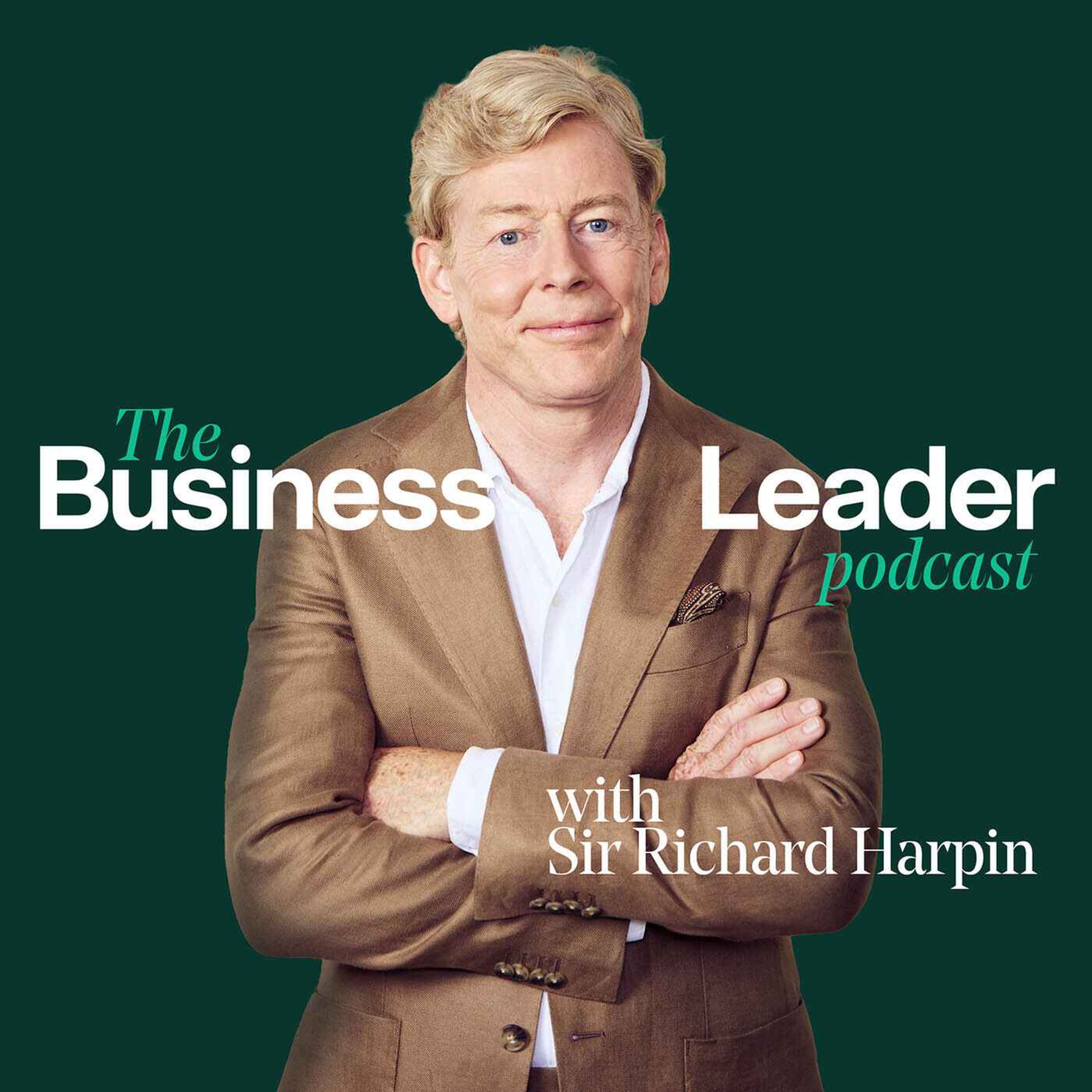
 The Business Leader Podcast with Sir Richard Harpin
10 Jul 2025 · 47m

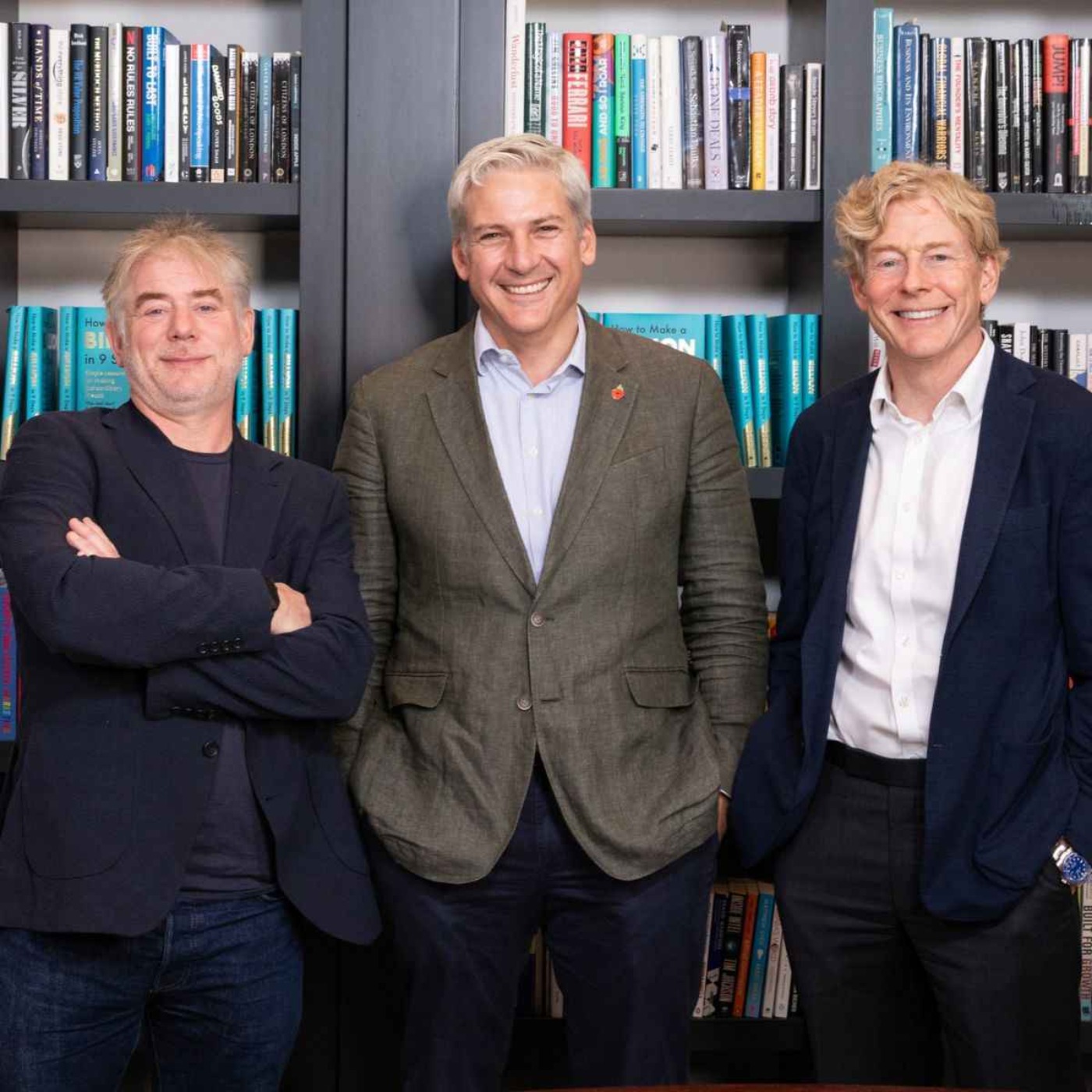
The Business Leader Podcast is hosted by Richard Harpin, who grew HomeServe into a £4.1 billion business. The podcast explores key moments that shape success and failure in the world of entrepreneurship. In this episode, Richard Harpin discusses his nine steps to building a billion-pound business with entrepreneur Touker Suleyman, focusing on the first three steps.
Written by AI. May contain mistakes.

Get the gist, explore an idea or ask about something said.
 Claude
On The Business Leader Podcast with Sir Richard Harpin, what are the key points of this episode?
Searching your listeningAutomatic transcript. May contain errors.
0:00This is Britain's growth moment. Do you want to be part of it? On 26th of March, 750 of the UK's most ambitious founders, CEOs and investors will gather in London to shape the future of mid-sized business. The company's driving our nation's success. The Business Leader Summit 2026 isn't just another conference. It's a day built around the three forces that define growth, ambition, policy and capital. And as one of our valued podcast listeners, you can be there in person. To secure a discounted ticket, visit the events section of our business leader website and use this code. BL podcast, all one word, all uppercase.
0:41We look forward to seeing you there. I just happen to own the trademark for lipstick. The bailiffs arrive from Customs and Excise to take away our office furniture. You have to make those difficult decisions if you want to survive. Hello and welcome to How to Make a Billion in Nine Steps with Richard Harpin, in which we look at how to build a successful business. I'm Graeme Ruddick and I'm absolutely thrilled to be joined by Richard and also by Tuca, who is one of the leading entrepreneurs in the UK. I'm the owner of Hawes & Curtis, Ghost, an investor in, we reckon, more than 30 businesses and since 2015, a dragon on Dragon's Den.
1:22So, Richard, Tuca, it's an absolute pleasure to have you both here. Thank you for having us. Today, we're going to look at three of the steps to building a billion pound business. We're looking at copy and pivot. We're looking at get an investor and we're looking at get some coachment. So, Richard, I guess the first place to start will be copy and pivot. So for the audience, could you give a quick summary of what you mean by copy and pivot? We're taught at school, aren't we, that copying homework is bad, but actually in business, I think it's really good. and have you heard people talk about uh oh uh i would have launched x business but somebody'd already done it and i would say to them well that's great it proves that it works and there's room for two or three businesses in in any market so i think that's a a really good thing in the book you talk about multiple examples where you and home serve copy and pivoted is there one of those stories that particularly stands out in your mind?
2:19Yeah, it's got to be around fast fix to home serve. So I'd set up an emergency plumbing business generating work through Yellow Pages. In fact, I called it A1 fast fix to be at the front of the section for plumbing and heating. Put my life savings into it with a business partner,£50 ,000. And literally, we saw our money go down the drain in a space of six months. The business model wasn't right. And it took a pivot to then copy from somebody else which is a water company in Sutton in Surrey and they developed a plumbing insurance model. I remember going down there looking at their model interviewing some of the customers and saying that's the one we need to copy.
3:04It covered the underground water pipe in people's gardens and we added in plumbing cover and drainage cover and literally with the last£10 ,000 in the business, we proved out the model through direct mail. So it was not me that invented plumbing insurance cover. It was copied. But then when you've copied, go for it in a big way. Tuka, I want to quote yourself at you at this point. This is a quote from you. It was, all you've got to do is take a product, look at it and make it better. Change it, take an off the shelf product and adapt it. It's as simple as that. Is that the key to building a business?
3:40If you'd asked me that question 20 years ago, I would have said, you could still do it, but we didn't have the internet then. Today, you can go on the internet, you can cross-check all products, services, look at where they come from, what they sell for, how many they sell, and say, what is it about that product that sells it and how can I make it better, more sustainable, more adaptable? So one of my sayings is you don't have to be a genius or a scientist. You've just got to be practical. And I think copying, as Richard has just said, is not a bad word. It's, what's the word? I would call it disrupting.
4:31because I think if you want to be successful, a lot of the big sleeping giants, the big corporations, for them to change something takes years. And if you're starting a new business that you can be agile, you can change things much quicker. You can copy things much quicker. And you look back now and say, I wish you and I had both been setting up businesses in a digital age because you can put up a Shopify website within 24 hours and test stuff really quickly. Yeah, I remember the days when, you know, when mobile first came out in the car and you had to ring up an operator to be put through with a big, chunky phone.
5:13But I think we live in a different age now. I think there are, I wouldn't say easy ways to make money, but I think we're allowed to disrupt. We're allowed to copy. We're allowed to innovate. And using new technology as it comes to the market and adapting that to existing products that's the future and you use the example to occur of the um the big chunky car phone yeah and um i think a good analogy of um of copying and second mover advantage which i'm a big believer in is um steve jobs he didn't invent the mobile phone did he but he um he pivoted from the ipod to produce the the best phone ever yeah it was motorola and nokia and ericsson it was a scandinavian companies that really were the front runners in the mobile world in the early stages.
6:05Do you think this idea actually holds budding entrepreneurs back, that they think they've got to invent something new and they're wary of copying? Look, there are different types of entrepreneurs. There are entrepreneurs who are what I call tech geniuses. and that world is solving a problem with tech and that is a separate type of business that is a risk, however, very rewarding if you get it right and there's that, there is products, there's services and in a way, if you say one of my businesses, Hawes and Curtis, I mean, we've grown that business in suits on the basis of our service. How do you walk into one of our stores and get a suit fitted to fit you like a tailor-made suit and to give the service to your customer where they feel that they've got a custom-made suit?
7:11That's a service. Whereas if you go into other retailers, they'll sell you a suit off the rail. there'll be no customer service and no backup and that's the difference this copy and pivot bid is it's sort of the where the entrepreneur is at their best don't you think the founder and copy pivot test learn prove out the model and i think what i um what i didn't do was stay small until i proved out the magic model home surf and grew a loss making emergency plumbing service too big before I got that magic model. Well, I think what you're going to be careful of when you want to grow a business is over-trading.
7:52You know, you can have an amazing business and you're expanding, but if you're out of cash and you haven't got your working capital sorted, you can go bust. You know, there are successful businesses that go bust because they run out of money. I'll give you an example. in my archives of brands and businesses I just happened to own the trademark for lipstick and I've had it for 30 odd years never thought of doing anything with it now I'm about to disrupt the lipstick market but on retail so we're opening the first store probably before Christmas where one store only catering for lipstick products which will disrupt the big brands.
8:41And the brand's called Lipstick. So we'll have lip balm, lipstick, lip gloss, lip liners, all to do with lipstick, lip care. And there'll be 500 square feet approximately and high margin and will disrupt the market. So you'll buy one lipstick for£12, two for£15. And are you copying anybody there? My great admirer of the Charlotte Tilbury business. I am copying everybody. I won't mention any names, but I'm starting, not down here, but I'm starting up there with the ingredients. And there, what I'm doing is starting up there, best ingredients, branding, packaging, shop design. And by the way, shop design, you put something to chap GPT about what sort of design you want, and they'll design a shop for you.
9:36So that's a disruptor. So I intend to disrupt the lipstick market, open the first store. If it works, we'll open 10 more, 20 more. I've already had approaches for two businesses for 100 units in the Middle East franchise on it, if it works. The second one that I'm launching again with my 50 years of experience is I'm going to disrupt the jewellery business, the costume jewellery, you know, for little girls,£6. Similar project, 500 square feet. it's called Tashola because my daughter's called Tasha. And again, it's learning what I've learned for 50 years and saying, right, product, it's off the shelf, doesn't need a lot of designing, it doesn't go out of fashion, it's one size, it's 500 square feet, rent's pretty predictable, two and a half staff, margins are 80, 90%.
10:34Net margins about 30%. Well, I've just had a flashback to, I ran a, I've just remembered a high fashion earring business. And that was another pivot. I was selling colourful fishing flies for fly fishermen at the National Game Fair. Along came all the wives and girlfriends and sisters of all these fishermen and said, those flies would make really nice earrings. So off with the end of the hook, on with kidney wires. and I was going to call these earrings danglers and somebody said, you can't call them danglers, Richard. That infers something unseemly and organic and I suggest that you call them hookers.
11:15I had a£100 marketing budget. This was age 16. Hookers set to hit UK high streets and big craze. It lasted nine months selling these earrings to teenage girls and then the business died. So hopefully you'll have more luck with your costume jewellery business than I did. Well, I did the costume jewellery. It's proven. Can I fit the question on copy and pivot slightly? You've both been involved in established businesses. How do you stop someone copying and pivoting you and disrupting you? A lot of the American water utilities copied the home serve model from the UK. And people said, did that really upset you?
11:56I said, no, actually quite the reverse, because they never did it quite as well as us. And we'd let them grow their home services business. And when it got to a certain size, we'd go and make them an offer. So they were growing our future acquisitions. And then we could show that we could run it better, better customer service. And we probably bought about 50 home assistance policy businesses. Every one of those worked. We got a good return. we wouldn't have been able to do that if they hadn't copied our model. But I also think competition is good because it keeps you on your toes. And we are in a society, if you think about it, look at supplements.
12:42My dear, I have a good friend who is the number one supplement company in the UK, and they're under pressure. A lot of small startups are going to supplements, and there's a lot of competition. and unless they realise how can they move forward, how can they generate new ideas, new products, new innovation, and that's what it does. Competition just keeps you on your toes. Where's the balance then between we want to see a few companies to prove that there is a market there versus the market's saturated and there's not an opportunity, do you think? There's always an opportunity because within a saturated market, there is the market leader.
13:24And if you look at what the market leader is doing, and it could be that their product has been around longer, they're well-known. It could be that their product is superior, whatever. But whatever it is, you cannot go and try and build a brand. What you've got to say to yourself is, how can I disrupt that market? Or I guess go and buy those small supplement companies. Yes. A buy and build type model. Well, I think the problem today is, I think some of the valuation is just crazy. on some of these smaller businesses. But I think a lot of businesses that started up after COVID, which was the mothers, the daughters, the sisters, the grandmas, all started these businesses.
14:05The guy are all in the position now where it's not sustainable anymore because they started it with being an online business. Doing business online has become much more expensive and they're all selling up. And now is a good time if you decide that you want to grow a certain sector, then I think you can buy lots of small businesses. One of my businesses, Matchstick Monkey, which is a baby business, we've had two approaches in the last two weeks for people who are only growing companies within the baby world. The second thing we want to talk about is investment and getting an investor. What's interesting about this step to building a billion pound business is how it's not just about getting investment it's about getting it at the right time and getting it with the right personal investor what are your thoughts Richard I did it all wrong so don't uh nobody that's listening um follow me because um uh I look for an investor when we'd run out of money so we're growing this emergency plumbing business uh the 50 000 pounds of life savings had run out and the bailiffs arrived from Customs and Excise to take away our office furniture and realised that, got to find a way through, borrowed money from friends and family and did get through that.
15:30But we then went out to every water company in the country to say, we've got this great plumbing business in Newcastle, do you want to invest? They all said no. with one small exception, a little water company north of Birmingham, South Staffs. And they said, oh, we've been looking at a plumbing service. We'll put in half a million pounds, but we want 52 % of the business. Wow. And did we have a choice? No. We grabbed the half a million pounds, but then use that to eventually find the right business model. But you need to be raising money at the right time where you've got a position of strength and not when you've got the wrong business model or run out of money.
16:16And I think too many entrepreneurs will go out and raise money. And the more money they raise, the more risks they'll take, the bigger the business will become. But if they haven't proved the model, then ideally just use your own money. Keep it really, really small. And I think when you prove the model, you know it's going to work. and then you want to go big, you want to hire some great people in to help you to grow the business, that's the time to get an investment. And then the key is who, because then it's not just about the money, it's finding the right cultural fit. Who can help you? Ideally, that's somebody that's done it before, but it's got to be the right cultural fit, somebody that you could be working with for four or five years.
17:04and if they're not a good match, then don't take the money. Going back to how to build a billion-pound business, in my view, I always said this, if you play with pennies, you make pennies. You play with pounds, you make pounds. You play with hundreds of pounds, you make. So I think if you want to make a billion, ask yourself or look at all the billionaires and say how have they made their money? What industries have really made their money? We know that tech has played a very big part in the last 10, 15 years. We know property has played a big part. Transport, whether it's ship owners, whether it's technology, whether it's big conglomerates in pharmaceuticals, new inventions.
18:05So if you want to be in what I call the unicorn billion, you've got to decide which industry and say, will that industry allow me to be a billionaire? If you're going to be a market storeholder, you're not going to be a billionaire. And if you get there, then it's pretty rare, isn't it, to own 100 % of the shares. So worth giving something away in order to get there quicker. So first of all, you need to really think and say, is my first venture just a stepping stone in my business career? If that's the case, and you're in your late teens, early 20s, and you sort of say, right, I'm going to start this business.
18:46I don't want to give too much equity away. Family and friends is my first choice. Of course, proving the concept, showing that there's a demand, showing that you can do it better, showing that you're disrupting, all those things, then I think investors will come to you and you can dictate. The problem is when you've got a great idea and you've got no money and you've got no threat and you start giving away large chunks of your equity, you end up having a small proportion of a business that you probably lose interest eventually and then investors won't want to be there. Yeah, because then you're working for somebody else and that defeats the objective.
19:26And I would never want a founder to be, if they're running the business, to have more than me. Because then what's the point? Equal to me, yes, I'll accept that. Because I'm not a passive investor. I always invest in where I can add value. But you don't want to end up with a 15%, 20 % stake in a business, a small business especially, when you're starting up. 20 % of a billion pound business, great. So I think planning your journey at the very beginning is very vital. And I think that's where one needs a bit of advice. One needs a little bit of help. And I think we're going to get to mentorship a bit later.
20:13But that's what it needs. Billion pound businesses are rare. Richard is a very rare component. He talks like everyone's going to do it. Not so easy. You know, what you've done, you know, is 0.01 % of the people in the UK who've done it on their own. I think there are 56 of us that are still involved in businesses that built them from scratch to more than a billion in value. So 56 in the whole of the UK? In the UK. In the UK. So that tells you something, you know, that tells you something. It's a rare breed, right? And I think the fact is that, and again, I'm not hoping I'm out of line, but probably Richard saw that the business he was in had growth potential, not only in the UK, in the States and worldwide, and took advantage of it.
21:05That's what it's about. You've got to have a product or a service or something that is transportable. And other businesses that, entrepreneurs that are running sort of mid-sized businesses, how do they, what's your advice on how they go about getting investment? look investment is a funny thing first of all you're going to say to yourself why do you want investment so in some cases tweaking your customer your terms your suppliers can give you investment without even going for it and i've got one of my small businesses and they said oh we need another 100 grand investment which is not a lot of money in investment terms say and i said what do you want it for oh we need to buy this we need to buy that we need to buy it's easy who are your suppliers guys you're giving the guys 30 days give them 90 days well okay so overnight i changed their terms their suppliers did you need investment great so that's saying um challenge whether you need investment yep tweak your model yep find a way where your suppliers will fund your business or somebody else or you can get your cash in quicker yep and you're not giving away equity Yep.
22:17Then you've got the banks. The banks are like what I call pawnbrokers. They don't give any. I mean, this country is terrible. The banks don't give small businesses a chance to survive. And any one of my businesses that I'm involved in, if they tell me that they put their house on as a guarantee, I say, take it off right away. Never put your house on the line. I did it. At a young age, I lost my house. And never give a personal guarantee. Lesson number two. So going back to investment, if you believe that you've got a proven concept, you can show that the growth is coming. I don't mean textbook growth where you say, oh, take a spreadsheet, let's add 20%, add 20%.
23:04You know, you've seen many of those before. So be wary of taking too much debt or better to take some equity and get somebody that can help as well. But also, when you talk about equity, you want smart equity. You want somebody that can add value to your business. What is smart equity? What makes a good investor? Well, a good investor is somebody who can open doors for you, who can give you advice, who may be able to help you with your financing even further, who could guide you, who has an interest that the business grows. and you want somebody who you can call upon at any time. You don't want a passive investor who just lends you the money and goes, I'm not a passive investor.
23:50And I guess that's been your key to success in the Dragon's Den investments that you've made over the last 10 years. Look, Dragon's Den investments, you take a long-term view, unfortunately. But the good thing about Dragon's Den, so when I first went on Dragon's Den, I didn't know about gluten-free. I didn't know about snacks. I didn't know about organic. All those things were all new to me. Dragons Den for me has been education. It's been the best schooling that I've ever had to learn about the variety of businesses that I would never have got involved with previously. What's been your biggest learning as an investor on the Den?
24:38You're only investing in your entrepreneur. Even if it's a lousy idea, sometimes... It's the person and the product or service is number two. Number two. Sometimes you get a great business with a lousy entrepreneur and you say, can't work with this guy. Sometimes you get a great entrepreneur who is just... You've got it wrong. You say, don't worry. There's this you can do, that you can do. It's back to step number one, isn't it? they back to copy and pivot that if they've got the wrong model they'll keep going or find a way through you keep on changing i always say this you never give up you never give up because at the end of the day life is a journey you keep on tweaking that journey until you get it right you know especially if you're young i mean i'm 71 i don't feel 71 but i'd give you all the way to be 21 again that's for sure this brings us nicely onto the third point which is getting some coachments coaching and mentoring.
25:37Just listening to you both speak then, it's very apparent that you're looking for founders and entrepreneurs who are curious, who want to learn. So Richard, coaching and mentoring, why do you think it's so important? I wish I'd had a coach or mentor earlier. I think the first mentor I got was a guy called Nigel Morris, a Brit, co-founder of Capital One, big in America before it came to the UK. And this was back in 2010. HomeServe was doing OK in America, but we'd been there seven years. We're still only making$10 million profit. And I thought, I really need some help. And so I thought, Nigel Morris is a Brit that's made it successful in America.
26:24So I emailed him and I wrote to him and pestered him. No response. One evening, I think it was 11 o 'clock UK time, 6pm East Coast, Washington, DC time, I'd got his office number, called him, and lo and behold, he answered the phone. And he said, persistence pays. I do remember you now. Next time you're over in the US, I'll give you an hour of my time. I said, it just so happens, Nigel, I'm there tomorrow. And of course I wasn't. I got on the next flight out of Heathrow, sitting in his office at 2pm the following afternoon. He gave me three hours of his time. And a great mentor will ask some really, really searching questions.
27:10And he said, so where are you based over here? I said, over in Miami, because the claims handler and insurer of our products was Matt Frey. They were Latin American. They were based there. I'm a Yorkshireman. I'm a bit tight with my money. So I rented an office in their call centre and he shook his head violently and said, to be a serious business, you need to be Boston, New York, Washington, D.C. and not Miami. And he was right. We hired a load of people that either wanted to go to the beach at 4pm or smoke dope. and you need to hire serious Americans. And he asked one other question, which is, so who have you got running your business over here?
27:56He said, oh, fantastic guy, Jonathan King. He ran the UK, did an amazing job. He's doing a good job over here. He's a local. And shook his head again and said, Americans buy from Americans. You've got to have an American chief exec if you want to be taken seriously in America. So we listened. I hired a guy called Tom Rooson after we'd moved from Miami to Norwalk, Connecticut, an hour north of New York. Tom is still with the business today, 15 years later. And HomeServe North America has gone from$10 million profit to$250 million annual profit. So the answer is get a mentor or coach early on. Don't leave it as long as me.
28:41And then make sure you listen to their advice. Tiki, you've also talked about the value of experience and your own experiences. Look, I could write a book. At the age of 27, 28, I was chairman of two public companies. I didn't know anything about public, but one of them was, let's just say, it was fraudulent. Luckily enough, in those days, I appointed Coopers and Libran, who are now PwC, who did a check on them. When I acquired 30%, 29 % of the business at the time, it was valued at 15 million. This was in 1980. When they did the report, there were minus 20. Everything was overvalued. There's a big story behind it.
29:29I'm still with PwC after 40-odd years. Still with a bank that I was always banking with, Lloyds Bank, 50 years. And, you know, I'm somebody very consistent with somebody. If somebody looks after me, I look after them. So you were getting that advice from some of your advisers like the bank? I think what happened, I didn't do my due diligence properly. That's one of the key things. When you're acquiring a business or when you're doing anything today, due diligence. Due diligence today is much easier. Chap GPT, Companies House. There's loads of ways you can do it today. In those days, it wasn't so.
30:12And I was very young, very ambitious, went with my gut feeling more than anything else. But I learned the hard way. I learned that you can fail and come back. And I was lucky that I had my family around me at that point. and I still got family partners in the business. It's fine. In our main businesses, we've got no outside shareholders. And in a way, I'm comfortable with that. But do you look back and say if you'd had a mentor or coach that you could have avoided some of those problems? I had a mentor, however it was too late. my mentor was a senior partner at Cooper's and Lybron, David Caddy.
31:05He was my mentor at the beginning and is retired now, of course. And I remember we went to look at this building near Shoreditch for Fortune today. And we looked at the warehouse. It was a retail business called Bamba Stores. and we said well net assets 16 million let's say 10.
31:34We said we'll write this off write that off very conservatively we didn't know that the building was he had a friend who was a valuer had doubled the price and all the stock was doubled I mean it was just a disaster and in those days you couldn't sue an auditor it wasn't like today but I paid a very hefty price. I've got no regrets. Learned a lot. When should you change your mentor or do you keep them forever? Look, you pick up new mentors along the way. I remember while I was looking at Bamba stores, I was also very friendly with Ralph Halpin. Ralph Halpin started Burton Group. Quite a character.
32:19He was very shrewd, and he was going to come and be the chairman of that group until he found out what was going on. And he went out. He died recently, unfortunately, Ralph. Then after Ralph, in the same group was David Horner, who was an American. He insisted at the time that every supplier to the brand, to their brands, had to be on the internet. It was very new. and after of course my dear friend mentor friendship very dear friend is Stuart Rose Stuart and I still friends today we sort of mentor each other if that makes sense and we go back 40 years 35 years old and I have a go back and I've got a lot of people like that you pick up along the way and they become mentors friends, advisors and even today if I invest in something and I have somebody who's involved I will go to them and ask for their help and it's almost just back to that sort of circle of helpers um sort of a peer group and I look back and think um it was a bit lonely as the um uh chief exec and founder at home serve and I look back to my Procter & Gamble short career in marketing I remember 13 of us new to newcastle all graduates and we got a ready-made peer group and we used to sort of each worked on a different brand i was on fairy liquid that's why my hands are still so soft and um we would learn on the job during the day we go out socializing in the evening but inevitably we talk about business and it was sort of ready-made peer group do you think peer groups are important look I think socialising, peer groups, contacts, going to events, going to your business events, going to exhibitions.
34:23The more people you meet, the more you suck information. And then you can then target the people you want to spend time with. It's a merry-go-round. Everybody wants to do the same thing. Everybody wants to learn from somebody else. And what's holding people back? Because I would say that a lot of entrepreneurs that I meet haven't got a mentor. And why, do you think, and what can we do to persuade them that it's really important and we both should have done it earlier? Do you know, I mentor quite a few people. On the weekends, I meet a lot of people for an hour, help them. it's um it's what i give back you know we all when you get to our age and i'm older than you richard so you give back and that's what i give back i like to give back what i disappointed in myself is i haven't got enough time you know i'd like to create something that i can give back one of the ideas I was thinking I'd do my own podcast where I would where entrepreneurs could interview me for advice straight ask two good times or whatever you want to call it you know where an entrepreneur comes on from half an hour to an hour and says this is my business this is my this is where I'm having problems can you advise me yeah couldn't we get the message out there that lots of business people at the latter stage of their career should give more time back.
35:58I think so. And actually, the magic model, I think, is coachment. And if I was brutally honest, I would say that a couple of years ago, I didn't know the difference between a coach and a mentor until I went and trained as a business coach at INSEAD for 12 days in 2023 and worked out that the, I guess the business coach is a bit like the x-ray machine putting your hand in to see whether you've got a broken bone or a sprain and then the mentor is the experience and that's the doctoral consultant that is analyzing the facts and then giving that advice look in a way i've always imagined um you throw semi-conference for people and you have a competition where 50 people or 30 people are allowed you have a panel of entrepreneurs they're allowed to come up and ask questions to the entrepreneurs about their business you know and other people would be fascinated by the fact that yeah my problem is marketing but i haven't got the money and what do i do my business well my business is doing this my business how do i it's things that you and i would sometimes take 30 seconds to solve but it might save somebody's business what's the most common bit of advice do you find yourself giving people who you're mentoring?
37:27Look, I think a lot of the time, they're up against a wall.
37:36Marketing seems to play a big part, unfortunately. The likes of your Meta, your Instagrams, your Facebooks, and even Amazon, they make it impossible for people to make any money. and I think that there's other ways you've got TikTok now where they don't charge as much so most people who've got products it's marketing most people who are in business it's all about marketing it takes too much of a company's budget away in my view what are the other ways to do it without paying all that money on SEM to Google? Yeah. Well, there's somebody sent me a book today. I forget his name called, I forget his name, but Seven, Seven Ways to Improve Your Marketing Spend.
38:30And it just tells you emails, influencers, referrals, you know, all those things are free, you know. but then you've got people you know who have come to a crossroads in their business and say i've got to take the next leap how do i do that how do i fund it you know do i go for a bank loan or do i go for investors you know what sort of investor do i go for um or um we were doing fantastic until we're now dropped off a cliff however our overheads are still high what are we've got to do cut the overhead you know so there's all these little things and sometimes people keep on kicking the can down the road without taking difficult decisions difficult decisions have got to be made sometimes that involves family sometimes that involves friends sometimes that involves colleagues unfortunately but you have to make those difficult decisions if you want to survive i think a lot of people will give away their time and do a bit of coaching or mentoring if the asker is persistent enough.
39:37Yes, yeah. I've got people who message me like crazy, oh, okay, fine. But also, I think one of the things I remember, Sir Harvey Jones, who did Troubleshoot, I thought that was an amazing program. That to me, I was a kid. john harvey jones wasn't john harvey jones now that to me was i mean i would love to do that you know go into a business i don't know and look at the fundamentals and see what i would do i'm not saying i'll get it right but he was a sort of coach or mentor wasn't he i remember he went to morgan cars yeah and he said oh we've got a demand that exceeds supply we've got this little factory we can't produce enough of them.
40:28He said, well, stick your price up. Yep. And suddenly they were losing money and they became profitable just from that one bit of advice, that golden nugget. But that's the sort of thing that I think, you know, probably when I get to a stage where I take a step back, I do offer for free. I wouldn't charge for my services. I'd be willing to go into businesses that I believe in that are on that difficult period that need some guidance. And some of it is just basic, basic, basic knowledge decisions, which management are just afraid to make those difficult decisions. Is this conversation an example of one of the ways that the UK is different to the US?
41:19Is the US better at this? Are US entrepreneurs better at asking for help than UK entrepreneurs? I'd say they definitely are. They're more bullish, more likely to be persistent in tracking down the person they want advice from and getting it. And I think us Brits are a bit sort of reluctant to do that. There's more money in America to invest. There's a lot of money in the States. And the Americans will take a risk. And you've got all different funds and angels and rich entrepreneurs. and they're all willing to invest in the next unicorn or whatever you want to call it. I mean, if you look at Shark Tank alone, I mean, the numbers are much bigger over there because the country's much bigger, but they're willing to invest.
42:05And you can see the growth that they can do. America's a massive country. You get it right there. If you said to me, where would I start a business today? Unfortunately, I wouldn't say the UK. I'd say the US has got much more potential, unfortunately. You might prove a point here, but you've got to go into the States if you really, really want to make a billion. You won't make a billion in a small idea in the UK unless you take something, whether it's tech or something very unique, you're disrupting the world. You're not disrupting the UK. And then British businesses going into America, it's a minefield, isn't it?
42:52A lot of them fail. So that means you need to get an American coach or mentor. Localise. Localise your business. Do not think that you can transport your business as it is in the UK. You've got to go there. You've got to look at your competition. You've got to say, why are they successful? Why can't I do it? They may have had a huge investment. They may be burning money. You don't know. But you've got to go. You've got to spend time on the ground. And then eventually, as Richard already said, find yourself a local guy who can run that business for you, who knows the market, who knows the climate and knows how to handle people.
43:34And how much of your investment, Tuka, is about providing advice, the coaching, mentoring compared to providing the cash? all of it i don't have any i do have some businesses where the entrepreneur is so good i've got two or three of those where i ring them up say chris how are you doing fine chris if you need me i'm here or he'll ring me up and say i'm going to so and so but i want you in that meeting i said fine i'll come with you you know um because me going to that meeting adds kudos or as respectability and that's when they know how to use me you know it for instance one of our guys was trying to get a buyer some retailer and I said to her tell her I'm in the building tomorrow I'd like to see her she said I'd love to see you we'll work as you said we're there the next day so it's playing that game it's not a game actually it's persistency and in a way I think that some of the big retailers are they have got schemes where smaller brands can come on um but but at the end of the day if we're talking about building a billion pound business then it comes back down to you know you've got you you've got to say i need to be in an industry or a business that's got a billion pound potential i wanted to give you both the last chance to have a final word if you wanted to add anything on top of what we've spoken about.
45:08Look, entrepreneurship, in my view, is a passion. You either got it or you haven't got it. There are no free lunches in this world. Nobody gives you anything for free. You have to have the passion inside of you. You have to have that willpower. You have to work hard. And if you don't work hard, you don't get what you want. But sometimes it's not as complicated as you think. it's a question of stepping backwards looking at the industry you want to be in looking at the winners and asking why are they winners can I do it better can I give a better service can I disrupt it all those things so it's never too late to start whatever the age and I look back with frustration thinking I wish I'd known about some of these steps that somebody could have told me about early in my entrepreneurial career.
46:06And if I had, maybe I could have got there twice as quickly. That just really understanding the copy, pivot, test and learn. When is the right time to take investment? Not when you've run out of money. And why didn't I get that coach or mentor earlier in my career? So I think I would urge anybody to go and do it better and quicker than me. I just want to add to that. When I look at my failures, and I was chairman of two public companies, I made one serious mistake. I did not do my due diligence properly. So if you're, whatever you're doing, whether you're raising money, you're selling the business, you're buying something, you're selling, whatever, do your due diligence.
46:52Do your homework. It's so important. Homework today is so much easier with the internet, or CHEP, GBTAI, whatever. That is a must if you want to know. Knowledge is power. Richard, Tuka, perfect way to finish. Thank you. You've been listening to How to Make a Billion in Nine Steps with Richard Harpin. Our producer is Lucy McPhee. To find out more about Richard's nine steps and how to build a successful business, you can find his book, How to Make a Billion in Nine Steps, online at Amazon or any good bookshop now. The Business Leader Summit 2026 is set to be bigger, bolder and more ambitious than ever.
47:32Don't just watch Britain's growth story unfold, be part of it. Secure your ticket today by visiting the events section of the Business Leader website and using the code BLPODCAST, all uppercase. It's your chance to join the leaders who are shaping the future of business.
In this new podcast series, Richard Harpin, who built Homeserve into a £4.1bn business, explores his nine steps to building a billion-pound business. In episode one, Richard speaks with Touker Suleyman, the Dragons' Den star, about the first three of his steps. These steps are:
-Copy and pivot
-Get an investor
-Get some coachment
To find out more about Richard’s nine steps and how to build a successful business you can buy the book How to Make a Billion in 9 Steps at Amazon here:
https://www.amazon.co.uk/How-Make-Billion-Nine-Steps/dp/0349445389
You can subscribe to this new series via the links below:
Apple:
https://podcasts.apple.com/gb/podcast/how-to-make-a-billion-in-9-steps-with-richard-harpin/id1825363917
Spotify:
https://open.spotify.com/show/5aPBAfRKnqW8A2kN44X37w
This is a Business Leader podcast hosted by Graham Ruddick and produced by Lucy McPhee. Filmed at Spiritland studios in London
Hosted on Acast. See acast.com/privacy for more information.