Ask ChatGPT
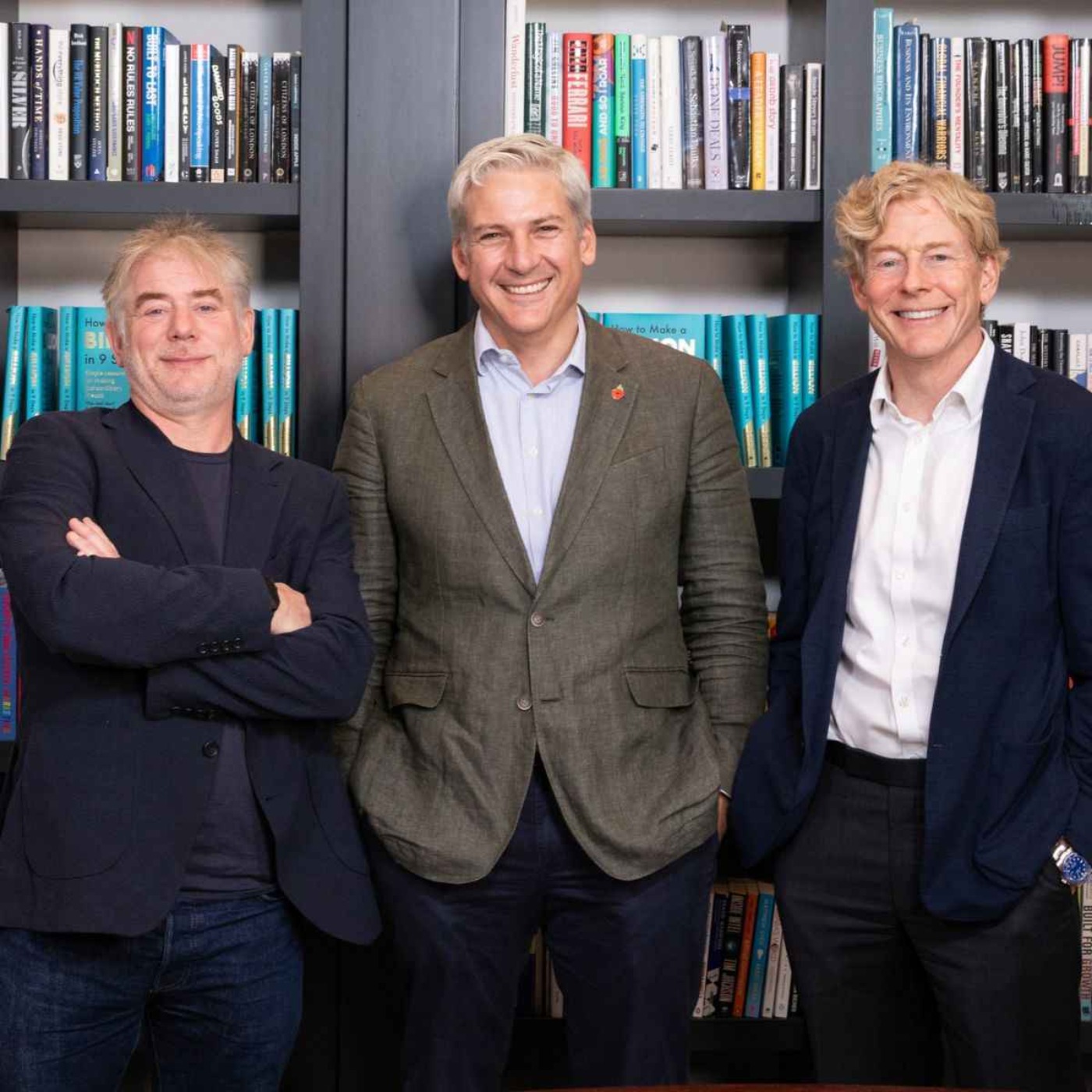
 The Business Leader Podcast with Sir Richard Harpin
31 Mar 2026 · 45m · 19 chapters

Olivia Jenkins, founder of D-Louise (named after her mother Deborah Louise, died 2017 from colon cancer), explains how grief became motivation to build a jewellery brand and scale it from her spare bedroom to rapid growth, including wholesale expansion.
Olivia is not a “born entrepreneur”; she wanted a nine-to-five. She previously worked at Pandora (learned customer experience). Her co-founder/fiancé Jack handled paid advertising and e-commerce. She also took investment/advisory support from Steve Hewitt (ex-CEO of Gymshark).
Entrepreneurship can be learned; resilience is a skill; focus on the “circle of control”; co-founders reduce loneliness and speed execution; margins and de-risking paid ads matter; “maths have to work”; marketing must align with acquisition.
waterproof/sweatproof stainless-steel niche; first sales came from friends/family after launching; Jack spent ~£1,000 to get the first stranger sale; compass necklace (launched 2023, £75) and luxe tennis bracelet (£75); wholesale hires Matt (ex-Swarovski, 17 years) and retailers Next/Flannels/Frasers, rolling into Beaverbrooks.
Written by AI. May contain mistakes.
Olivia shares her inspiration behind starting D-Louise and the impact of her mother's memory.
“And this is the Business Leader podcast, where we look at the stories and strategies behind modern businesses.”
Olivia discusses overcoming grief and using personal challenges to fuel her business success.
“Like I knew from the get-go, like I can't quit, I have to make this work.”
Olivia explains how she learned entrepreneurship from scratch and the importance of focusing on what one can control.
“whether it's a personal one or a business one?”
Olivia details her experience setting up D-Louise with her fiancé, emphasizing the importance of partnership.
“I was a girl who wanted a nine to five and I wanted to close my laptop at the end of the day and forget about my job.”
Olivia describes D-Louise's product uniqueness and how it caters to a modern wellness-focused audience.
“So the product is made from stainless steel.”
Learn about Olivia's top-selling jewelry items and their unique features.
Explore Olivia's strategy for moving from a DTC model to wholesale distribution.
“or is the potential for pop-up stands in gyms or on marathons and having a wholesale business selling into other retailers?”
Understand why Olivia believes in the need for a physical retail presence.
“So we are currently on Next Flannels and Frasers and we're about to roll out into Beaverbrooks, which I'm very excited about.”
Discover how Olivia sets priorities for her business and plans for the future.
“I would say that would be a 2027 priority.”
Gain insights into Olivia's approach to leadership and team development.
“where it's working, what's not working, and then really make decisions from there.”
Understand the impact of mentorship on Olivia's leadership and business decisions.
“uncomfortable and leading by example and showing people in the team that they do have the skill set within them it's just about unleashing it and being able to lead in in their roles.”
Learn about the importance of timing and relationships in seeking investment.
Discover how product strategy and market needs drive successful product development.
“I think it can be a bit of a misconception with money these days and fundraising and people find it quite like sexy and cool to talk about raising loads of money.”
Understand how political changes can impact business and strategies to adapt.
“from elsewhere and then made them yours?”
Gain insights on resilience and how to overcome business crises.
“And then opportunities in other international countries?”
Learn effective strategies for maintaining work-life balance as an entrepreneur.
“and listened to and yeah it's all about pushing through and coming back from it.”
Explore common entrepreneurial pitfalls and the importance of mindset.
“So with my London marathon training, it might mean that if I have to do a long run on the weekend, I might have to sacrifice having some fun that weekend or might have to sacrifice seeing a friend.”
Learn about the importance of self-belief and mindset in growing a business.
Discover practical strategies for focus and seeking help in business.
“And finally, two more tips that you'd give to fellow founders that are scaling their business right now.”

Get the gist, explore an idea or ask about something said.
 Claude
On The Business Leader Podcast with Sir Richard Harpin, what are the key points of this episode?
Searching your listeningAutomatic transcript. May contain errors.
0:02I had lost my mum, I had no purpose in my life and I truly was unfulfilled every single day. I wanted it to be so much more than just a jewellery brand. I knew from the get-go that I can't quit, I have to make this work. So I was not a born entrepreneur. I started from absolutely nothing. I had no money in the bank. I think for me, the biggest mistake that I made was believing that I couldn't do it.
0:42I'm Richard Harpin, a Yorkshireman who sold my company for£4 billion. And this is the Business Leader podcast, where we look at the stories and strategies behind modern businesses. I'm passionate about helping British businesses scale and succeed. I think it's the key to unlocking Britain's economic growth. Founders and CEOs of mid-sized companies can be members of the business leader community for coaching, peer-to-peer forums and exclusive learning events. So please get involved. With more people on board, business leader can have better conversations and inspire the UK's next wave of business leaders.
1:20In the meantime, please click on the follow button. It's just one click, it's free and it helps us grow the community. With more people on board, Business Leader can have better conversations and inspire the UK's next wave of business leaders. Today my guest is Olivia Jenkins, the founder of the jewellery brand D-Louise, named after her mother who passed away in 2017 from colon cancer. How did Olivia deal with this tragedy and set up a business in her memory? How did she teach herself to run her business and attract investors? And what is her best piece of advice? Olivia, great to have you on the Business Leader podcast.
2:00Who was Dee Louise? So Dee Louise is a jewellery rand and we specialise in waterproof, sweatproof jewellery that you never have to take off. And where did the name originate from? Yeah, so in 2021, which is when we started, I was in a place in my life that I like to describe as a perfect storm. So everything was sort of going around me and I was in the middle and I had lost my mum. I had no purpose in my life and I truly was unfulfilled every single day. so when the idea came around to start a business I wanted it to be so much more than just a jewellery brand and I wanted it to almost be like my guiding light in life and I decided to name it after my mum who I did lose in 2017 so her name was Deborah Louise and the decision early on made such a transformative impact on me.
3:05Like I knew from the get-go, like I can't quit, I have to make this work. And it has allowed me to show up in a way which has been so impactful on my own story, but also on the DWS customer. Feels like every day with that name, you're doing it in memory of your mum. Yeah, and honestly, grief is such a weird thing. and people really struggle to talk about grief because it is like a very it's a difficult topic but what the company has allowed me to do is that I'm able to talk about her every single day and it was almost like a way of me healing my own grief and my own my own journey so that's just one way that I have dealt with that and been able to come through the other side.
3:53There's a business school theory that anybody that's been through a crucible a personal or business crisis can come out the other end and go on and take over the world and achieve much more feels like you what you believe that yeah no definitely and what I like to say is um I'm not necessarily a religious person but I am quite spiritual and Buddha has this thing where he says in life you have two arrows. So the first arrow that hits you, you cannot control and it's going to hurt and it's going to feel messy and it's probably going to set you back. But the second arrow is what you do next. You can decide if that second arrow hurts you.
4:37You can decide if you want it to have a negative impact on your life. And lots of people suffer from that second arrow, but I genuinely chose to just not let it define me and to not let myself be a victim of my own story. And so what would your advice be to anybody that's listening to this that's grappling with a crisis at the moment, whether it's a personal one or a business one? I think for me it's about knowing that everything is temporary and that is positive and negative. So things in life when you're really happy is only for a short amount of time. and things in life when it's negative not saying it's going to be a short amount of time but it is temporary and one thing that I find really really helps me is that there is this thing called the circle of control and the wider circle are things that you can't cannot control and this will be like economy politics the weather and then within that circle you have a little circle which you can control and this is where I found great fuel and great power and that is how you show up every single day it is how you talk to yourself it's how you treat other people it's about making steps every single day that are having a positive impact on your life and when you have that little circle of control it makes you stronger to deal with the bigger circle of things that you can't control so the message is focus on the things you can't you can control yeah and forget about whatever the world crisis is you've just got to keep growing your business yeah definitely and so I'd love to hear how it um it was set up in 2021 yeah how did you go about setting up the business and talk us through that story yeah so I am probably different to uh most entrepreneurs so I was not a born entrepreneur.
6:32I was a girl who wanted a nine to five and I wanted to close my laptop at the end of the day and forget about my job. And I quickly realised when we started building the brand that entrepreneurship can be learnt and every single day I was teaching myself from scratch and in itself that is entrepreneurship but I didn't label it as that in the very beginning. So I started from absolutely nothing. I had no money in the bank. I had no idea how to do international sourcing, no idea how to sell a product, marketing, accounting. And when you have that like great resilience and that great like belief system, you take steps every single day in order to build the business.
7:17So it very much in the beginning was from my spare bedroom, me shipping out orders, um my co-founder and fiancee Jack was uh spending a lot of money on paid advertising to get us our sales um he famously tells the story that um so when we were setting it all up um he had spent lockdown uh working out Facebook ads and this was like they say it's like in the good old days when it was a lot easier to acquire customers and he said to me um he was like if you set if you set up the business you decide the brand you decide on all the jewelry and the products and all the all the fun stuff I will make sure that you get sales and so we went live on like the Thursday and then by the Friday all of all of the sales had been people I knew like family friends and then it on the 24 hours later I was like there's no sales and there's no uh there's no every name I know has bought um and I said to him like what's going on like why are we not getting any sales from these like strangers that you're going to find um and he was like no this is so normal like don't worry about it it's like it's it's all going to be okay and um we eventually got a sale maybe like on the sunday but he now tells me that he spent nearly like a thousand pound to get that first sale a thousand pounds and he was basically saying to me don't worry about it but in his head he was like oh my god what's going to happen if we don't get this he's admitted that he was panicking then.
8:46Yeah, exactly. But it was so good that we just persevered and kept going, even though we didn't have it all figured out in the beginning. How important do you think it is to have a co-founder? Oh, so important. That would probably be like one of the biggest tips for me, for anyone going into business, because I think entrepreneurship can be so lonely. And when you are a solo founder, you have no one to bounce off. You have all of the responsibility. And I think when you have a co-founder there is just someone else to lean on and they love the business just as much as you do and they have almost like they are a part of it as you are and I think like for me you are who you surround yourself with and you need you need resource so you need yings and yang so me and Jack are totally opposite so he is someone who is so commercially driven so a big visionary and then we describe me as an operator so I'm able to make his dreams come true and I think when you're starting out as a small business or you need resource and if you have two co-founders you don't have to pay anyone so yeah is it easy then to separate the roles and work out who does what between the two of you yeah definitely I feel like our natural skill sets do send us on different directions and that would probably be my second piece of advice is that if you are going and find a co-founder make sure they have different skills to you because there is absolutely no point you both having the same skills and does it make it more difficult when to separate the personal and the business given that jack's your fiance and you're getting married this year yeah so i think for me one of the biggest shifts that i had is that business our relationship is business and personal and I think because we have put our heart and soul into the business it would be quite strange if it didn't seep into our relationship and the other thing is that there's such a story and a narrative that when you come home you have to leave work at home but for us because we both love it so much that when we go home we want to talk about it and we want to talk about our goals and we want to talk about our dreams and like don't get me wrong if If I'm on holiday and I'm on a sunbed and he's asking me a question about the P &L, I'm going to say, you can stop now.
11:04But I think for the most part, I think it's a huge competitive advantage because we're both together 24-7 and we're able to then work on the business and our dreams 24-7.
11:18Jewelry is a very competitive market. Lots of businesses out there. What was your niche? So the product is made from stainless steel. And five years ago, it was very, very new to the market. And all of the big players were kind of like, oh, shut up this little stainless steel brand over here. Like, we're going to keep it very traditional. And jewellery has always been a very traditional industry. You have your silvers and your golds and your diamonds. then there was a shift into gold plated jewelry and then now the most current shift is stainless steel which is where we are and what we're able to do with stainless steel is the biggest USP is that you can wear it all the time so if you're in the gym if you're swimming if you're on holiday you can wear it and it will stay gold and what I love so much about it is that I want everyone in the world feel to experience DeLuise so we keep our prices very very accessible and competitive because I never want price to be a reason why someone can't experience a really good product and that also seeps into our quality so like our customers come back time and time again because the quality of our product we're constantly testing and see we I was just in Hong Kong and there's a new test that they can do with they basically put fake sweat into the jewelry into like an incubator and test it for three days and we're constantly evolving and expanding the lifespan of our jewellery and so yeah the biggest usp is definitely the the longevity the quality and the accessibility and a lot of your customers that are gym goers and don't want to take off the jewellery what's your what is your target customer what's incredible is that like the the world has shifted from being in nightclubs and going out and getting drunk to a real wellness era and the biggest impact for us is that we're allowed we're able to show up in places where traditional jewelry brands can't so for example I'm running the London Marathon this year and we're going to do an activation around how you can wear our jewelry doing the marathon which no one else can do.
13:33So we like to show up in areas for our customer and our target customer in places where they would not normally see jewelry. So this is the gym, this is in on holiday. What we also have as well is like we have a huge gifting side of the business. So people are very emotionally connected to the story. And they love giving people that they know and love DeLuise. So I would say our target customer is very broad and we the older demographic is definitely the the gifting and then the younger it would definitely be the active lifestyle and what are your two best-selling products right now and how much do they sell for so our best best-selling product is our compass necklace so we developed that and it's we trademarked it and that was we launched it in 2023 and it has remained our bestseller since we launched it so it's basically a compass necklace it's got four quadrants on it so you can get four initials engraved in it so it's great for like mums can get their kids on it or you could get a date that is really important to you so again it's like touching on that like sentimental piece of the brand and people's stories and that one retails for 75 pound then the second best is a luxe tennis bracelet so i'm actually wearing it i love anything sparkly let's have a look yeah so i love anything sparkly um and what i love is i love surprise and delight in a customer so i love giving people really good value for money and when this is also 75 pound so when someone comes on our website they see this bracelet like if you look at any of our competitors it will be two three four times the price of what we sell it at and our quality is probably better than theirs and it survives the gym and the swim exactly yeah so um i love a surprise and delight so um but this is just been such a classic piece for us has been again a bestseller for for multiple years and i think it's because it's so good and we see people come back time and time again and they keep buying the tennis racer or the compass necklace and it's obviously because they bought it for themselves and then they want to buy it for someone else because they love it so much.
15:49Is this a single channel business where it's online only or is the potential for pop-up stands in gyms or on marathons and having a wholesale business selling into other retailers? So traditionally we have been 100 % DTC and we've just made an incredible hire for a wholesale role. So Matt has come over from Swarovski and he was there for 17 years as their head of wholesale. And he is now part of our team. Was that a big decision? Was that an expensive hire? Yeah, definitely. And I think as well, it was an expensive hire. And do you know what, when you're like a small player and you're trying to compete with the names of like the Pandoras, the Swarovskis, it's really funny because you would never even think that someone from that company would want to work for you.
16:43but what was really refreshing is they saw such potential in our wholesale business and expansion so this year is we're saying it's the year of distribution and we want to get everywhere in front of our customers jewelry is traditionally bought in person people want to look and feel it and touch it and sizing's a big thing you don't know your ring size so there's a huge demand for the dealer's customer to have it in person and so we're really really excited about the opportunity in retail because again talking about traditional jewellery it's always been about silver and gold and what we're really doing is coming in and disrupting that market with our stainless steel and our good prices and our good quality and I think it's um it's kind of dangerous territory because we're kind of being looked at by the big players um but yeah it's a really exciting opportunity for us to expand into wholesale.
17:43And which retailers have you signed up so far? So we are currently on Next Flannels and Frasers and we're about to roll out into Beaverbrooks, which I'm very excited about. And is this about a omni-channel model where the different distributions can help each other? So getting into a branch of Next, can you track your own be to see business around that branch and show that it's gone up or gone down? Yeah definitely I think one thing we were talking about it before but DeLuise is definitely the brand of the people and I think one of the best things that you can do as a business owner is make sure that where you're located isn't a stunt of your growth so we could definitely just become a London jewellery brand but what we're seeing is a real demand for D-Louise all over the UK so we have been really selective with the partners that we work with to serve our customers where they are so when we go live with Beaverbrooks we'll be able to see what stores we're in and then we'll be able to track that on our Shopify account to see if we see an uplift in those areas but I'm really really confident in the fact that we will see that because the customer wants to see de louise and if we can put it in a place which is really easy for them to get to then we'll definitely see a positive impact opportunity for pop-up stands and um uh when you're running your marathon uh could could there be a pop-up stand there saying um runner-proof jewelry yeah no definitely I think um where it the the world is obviously works in like cycles and shifts and like five years ago if you told a DTC brand that you need to show up in person they literally would have laughed you out the door but where the world is shifting like acquisition costs are getting higher is getting uh so hard to acquire a customer now through like traditional channels you have to be disruptive within the market and you have to do I always say like work to your strengths what are your superpowers so for us like I mentioned our superpower is being able to show up at a London marathon and say you can wear this jewelry so it's figuring out what is your niche and what is your superpower and then really leaning into that and trying to be different to other players and could you ever envisage opening your own store yeah I would absolutely love to have uh our own store so I'm originally from Cardiff and I used to actually work at Pandora and it was such an incredible time for me because I learned so much about customer experience and I felt like Pandora was such a strong part of everyone's like journey about their life and their chapters and birthdays and Christmases and I would love to have a store I probably would love to have a flagship store in Cardiff because I feel like it would be such a strong representative of like my journey where i started um and people in wales love anything from wales so um i think they would love uh love a store there and i think it would really wouldn't have to be very large would it no exactly that's the great thing about jewelry is that you can cover a huge amount of um product in a really small surface area so yeah you can have a little small small store and so when might we see the store opening in cardiff do you think where does that sit on your list of priorities?
21:12I would say that would be a 2027 priority. I think this year is all about wholesale, getting into all of those key, key retailers. And then we can get an appetite for where it's working, what's not working, and then really make decisions from there.
21:32How do you set out your priorities and how important is that in a business that you're not trying to do too much i think um have you ever read the book traction yes yes so i um i absolutely love that book and before that book i would say that d louise was a bit of a mess um so if anyone hasn't read it it has a few core principles that we live and breathe by so you set quarterly rocks, annually rocks and three year rocks and effectively you choose three things to focus on each quarter and then that seeps down into the team. So the company goals we always try to focus on three main things and then everything else is noise.
22:21I think where you are a business you can really get caught up in what you should be doing, what you shouldn't be doing. You can get caught up in small things that take a lot of time and have minimal impact. I think one thing that we're learning is that marketing and acquisition has to align. You can't just keep spending money on marketing for it to not acquire sales or just to look cool. The ultimate goal of any businesses to make money so marketing marketing decisions have to be in line with that but definitely implementing like an EOS system which is what is in traction has helped us like stay disciplined to what the three goals we're going to do and that has allowed us to stay focused but also get things done without being busy fools because I think everyone is a I could definitely be a busy fool sometimes.
23:15And have you now got the the right leadership team to cope with growth because you've been achieving exponential growth and I think we'll be doing sort of 11 or 12 million a million turnover a million pounds of turnover a month currently which is rapid growth yeah are there any gaps in the team you've talked about the guy that's come in to do the wholesale business sign more retailers where else do you need to develop the team do you think I think for us what we're finding with AI is that you can do more with less resource but making sure that the people who are within the team are using AI and leveraging it to the full potential.
24:00For me I think that the best thing that you need to focus on for businesses foundations because you can have the best marketing, you can have the best Instagram, you can have the best product in the world but ultimately if you can't get that product to your customer you're not going to have a business so for us we have a really strong team in marketing we have a really strong team in operations and now obviously with wholesale I think for us where we are looking to hire is our e-com side of it Jack very much focuses on e-com but I feel like if we took that off his plate he could then be a real visionary for the business because that's his superpower um but yeah we we've got a strong leadership team and I think I'm I love developing people in the team to be able to become a leader because for me I always thought that like I could never be a leader I didn't feel like I had the skills I didn't feel like I was someone that people would want to look up to but it's just practice and it's just it's just making sure that you're doing things every day that feel uncomfortable and leading by example and showing people in the team that they do have the skill set within them it's just about unleashing it and being able to lead in in their roles.
25:19How else do you get help in developing your leadership skills Olivia? Do you have a coach or a mentor? Yeah so I have I love mentors I have a few mentors I have a public speaking coach because you wouldn't believe it but five years ago I could not talk in front of a camera I had a private Instagram I was a girl at university where you'd have to stand in front of literally 10 people and I would be sweating shaking I wouldn't know what to say I was never taught it at school um so that was a real skill that I wanted to develop and I think with mentors is you I could have developed that skill on my own but what you can do is you can get there so much faster if you've if you're mentored by someone who's already done it um so I have a public speaking coach um we took investment from a guy called Steve Hewitt and he has been a huge uh business mentor for Jack and myself um and again Steve has taught us so much and I believe that the business would have got to where we are today without Steve but what it has allowed us is to learn from his mistakes you you grow a lot faster you're able to um ask people who have been there done that if we should go down this angle or if it's a waste of time and Steve was the chief exec at Jim Shark yeah what are the sort of can you pick out a couple of examples of things that he helped with that you might otherwise have made a mistake?
26:54I think for us it was that it comes down to the numbers like Steve always says the maths have to work and I think when this isn't my strong point but I'm learning more and more every day but what I think people get caught up in business is you need to have a healthy margin in order to run your business. Margins help you hire they help you acquire customers and we was when before steve we were spending way too much money on paid advertising and a thousand pounds a customer yeah exactly um and i think what um he made us realize early on was that we do need to de-risk from paid advertising and have a more sustainable idea for growth rather than just keep paying uh into facebook so that's one real practical thing like when we started it was probably around 55 to 60 percent of our p &l and now it's it sits between like 30 and 40 percent so that was a huge huge win for us um and it really changed the game for us uh steve brought some investment with him when did you um you talked about bootstrapping the business and doing it with very little money yeah when did you know that it was right to try and find an investor we didn't really look for investments it was kind of do you know what I think things in life are about good timing um and a little bit of magic and I think that Steve and the for now team came to us when we were we didn't really need it and we weren't expecting it so we had just had an incredible black friday um and in e-commerce that is the biggest day of the year um can you remember what your sales were on that day i think we had done in that day we did more sales on that day than we did the whole entire first year of trading wow so we were like oh my goodness this business is like getting somewhere and going back to like the foundations is we knew that we'd never done this before so we were like we want to speak to people and surround ourselves with people who can guide us in the right direction and I think at that moment it would have been really easy to just take all the money out of the business spend it on a crazy car and like just be a bit reckless and have a load of fun but we knew that we wanted to build something that we were really proud of and we wanted it to be a legacy and really turn it into a brand so we started speaking to for now we were just um my friend used to work at uh Gymshark and he basically introduced us and said uh they've just left Gymshark and they've set up an advisory company and we in the beginning we were just starting on with advisory and we were just honestly just getting them with help and advice and then the relationship developed really positively and then Steve actually said would you be looking for investment and originally we said no and that is probably why we got the investment because I think it's always good to get money when you're not playing hard to get yes exactly and you obviously know Steve he's very a hard man to say no to so yeah it was it was a the right timing right place and a little bit of magic and helped in terms of funding some of the growth but it wasn't just about the money it was getting Steve and his team and the help and advice.
30:29Yeah, exactly. I think it can be a bit of a misconception with money these days and fundraising and people find it quite like sexy and cool to talk about raising loads of money. But I honestly think that it's about working with the right people. And I don't think you should take cash or capital from someone who's not going to have a positive impact on your business more than just financially. Talk a little bit more about the product development and how many SKUs you're going to end up with and where's the limit and what might that look like in five years time? I think what's really interesting about my story is that when I first started we invested maybe a thousand pound into stock and I had no idea what a SKU was, I had no idea what a barcode was, I had no idea what a range was meant to look like and I genuinely just chose product that I liked off the shelf from the supplier because I didn't even know how to design or had no design skills and what's incredible is that some of the pieces that I bought five years ago are still some of our best selling pieces today, like the pay-per-click necklace, the essentials necklace.
31:50So I think for us, our product strategy has never really deviated from that too much because I think it's all about that gut feel of what you think is going to work. And what I would say that I'm really good at is identifying gaps of like what I want and what our customers want. So we were just in Hong Kong um we went to a jewellery show um and that for me is like number one tip if you're going into a consumer product get yourself to a show um that they do them in Vegas they do them in China um and I know that is a financial cost but the the way your business would benefit from being in person where the product gets made is absolutely phenomenal like cannot recommend it enough um so we just did three days at the jewelry show in hong kong met um we did nine factory tours um so we're constantly looking to develop our product in our supply chain um i always think with product it's way easier if you sell something that someone actually wants to buy rather than trying to force them and to what extent have you copied other ideas in jewelry from elsewhere and then made them yours?
33:00I think with jewellery, the hardest part about jewellery is that you can't really reinvent the wheel. A chain that I could wear today, like a luxe tennis bracelet, has probably been around for like 50 years, 60 years. So what we try and do is not reinvent the wheel, but make sure that we are able to offer timeless pieces to our customers, but with a DeLuise twist or a D. Louise modernisation. I would say like a hoop earring, you can't really make a hoop earring in too many different ways. But it's making sure that you're able to stand out with your pricing and your quality and your branding because that's what makes people want to buy from you versus other people.
33:46Is there an international opportunity for D. Louise? If you'd asked me this last year, I would say that it was all about the US. So obviously Trump had other ideas with the tariffs. And I think what has happened, it was a crazy time for us because 40 % of our business was in the US and pretty much overnight that got totally shut down as he put the tariffs up to 200, 300%. I can't remember the exact figure, which fortunately apparently we're going to get a refund for now. So that would be great on the P &L. So yeah, in that time, We were doing really, really well in the US and it was growing month on month.
34:29But with so much political changes and consumer confidence that has sort of flatlined this year. But what I think is so important to reframe that is we are not looking to pull out of the US because we think that if we stand tall and literally stay there, that if we weather the storm, we're going to come out on top once it's all over. And so how did you cope with that and what changes did you make so that you still had a US business? It was very challenging, to be really honest. I know that there's lots of horror stories of people where their stock was literally on a boat ready to land in the US and their business has gone bust because they can't afford the tariffs.
35:16For us, fortunately, we had stock there, which was amazing. so we didn't have to bring anything in for maybe two or three months but for me I think the most the most challenging thing was like the uncertainty so where you're looking for growth of your top line and you see it in one market it can be a real weird situation where you you have to pivot so quickly and I think that is one skill that I have learned is about being resilient and being so able to be flexible and agile and pivot when when the business needs you to like I think you can get really emotional about it you could say why me why is this happening but the end of the day it's like okay you have to dig deep now like what can I control in this situation how can we get through this US situation how can we weather the storm and it's always about moving forward and getting through it versus having that victim.
36:23And then opportunities in other international countries? Yes. So because of all the uncertainty in the US, we have pivoted into different countries. The UAE was booming prior to this new political change, but it's still doing well there. So I think lots of people are at home, a bit like during lockdown when people are at home when they were buying things. So we've seen a strong demand in the UAE, which we're going to definitely expand on. And Europe is always been something that we want to tackle. And it naturally has a pull there. So I think it's just about leaning into that more. I think as well, we could do really well in the wholesale market in the EU, because obviously, it's a lot sunnier there, people are on holiday more.
37:09So it's figuring out our core markets, hopefully after all of the political changes. And your message and advice to any other founder or entrepreneur facing a business crisis like tariffs or a war zone, what would it be? I would say that you have a choice in that moment whether you want the story to define you or if you want to come back from it and I think most people think that resilient people are just resilient from birth and I have done a lot of research on resilience and some people are dandelions and if you think about a dandelion it shows up everywhere on the in the UK like it is on every grass it is on every patch and they never die they get stood on all day every day and then if you think about an orchid an orchid is a lot harder to look after I can never personally keep one alive but if you give the orchid the right conditions it does survive and I think that is so true about people so lots of people you can learn to be resilient it's a skill you're not just born with it yes you have the dandelions and the orchids but it's about learning okay how can I be a bit more of a dandelion how can I make sure that my environment is allowing me to be resilient and I think that comes from the people that you surround yourself with and making sure that you are being supported and listened to and yeah it's all about pushing through and coming back from it.
38:52Do you have a vision of what D. Louise will look like in the future in five or ten years time? For me D. Louise has always been way more than just a jewellery brand. I think we have incredible product, incredible customer service and incredible quality and that is something that I want to hold on to for the next 10-20 years but for me it's the bigger picture. It's what impact am I having on people. I want to inspire people that no matter what happens to you in life, you do have a choice on what happens next. And I think that the message is so powerful of the brand that people are buying into that.
39:32And I think for me, if I could just make one person's life more positive, or they can look at me and think, well, she did that so I can do that too. That is for me what successes. Many entrepreneurs struggle with work-life balance, staying healthy, doing some sports. What are your tips there? I think that it is hard. I think as well, acknowledging that it is hard and acknowledging as well that the pendulum sometimes does have to swing in the other direction. And sometimes your business requires more of you. And sometimes you can also then step back a little bit I think creating systems in your life every single day that allow you to be disciplined and don't go off feeling so I think if you if I only went to the gym when I felt like it I would never go to the gym but I think it's allowing yourself systems in place to never fail so for example this is just a really small thing so if I know that I want to go to the gym the next day I will put out my clothes the night before so when I wake up in the morning I see my gym clothes I'm like, I need to put them on and go to the gym.
40:39You have to go. Yeah, exactly. So I think it's like small little things, systems, and you can do every single day that helps you maintain that momentum because I think momentum is so important in life and business. Any other system that you use? I always say don't let two things happen simultaneously. So say if I miss one gym day, you have to go the next day. Or if you have one bad meal, you have to have a salad the next meal. So I think it's making sure with that momentum is that it doesn't have a negative momentum as well. Because it's so easy when you're like, if you miss one day, I know for myself, I'm like, oh, I can easily miss another day.
41:18So making sure back to back, don't miss. And you're doing a marathon this year? I am, yes. Does that help? Setting a goal and then setting out a training plan? Yeah, I would say that I am someone who loves routine. I'm a very type A personality. So every single Sunday, I set out my week and what I'm going to do. And it's about making sure that when things are important to you that you carve out time to do them. So with my London marathon training, it might mean that if I have to do a long run on the weekend, I might have to sacrifice having some fun that weekend or might have to sacrifice seeing a friend.
41:59But I know that it's just for a season and it's not forever and I think with the business and the marathon I know that if I have a really long run on the weekend maybe I can't go to every meeting or photo shoot the following week so I think it's about it's a give and a take and it's a push and a pull and business ebbs and flows and it's all about seasons. And looking back over the five so far what's been the um the biggest mistake you've made that other entrepreneurs should avoid i think for me the biggest mistake that i made was believing that i couldn't do it so i very much thought that i was never going to be someone who had a business was an entrepreneur and what i've learned over the last five years is that you can do anything that you set your mind to and your brain is so powerful and you can choose to use that power in a negative way or a positive way and self-belief is so important and if you think that your business can do 10 million double it triple it i think shoot for the stars because we can always try and contain ourselves to this box but honestly if you just believe in yourself you can achieve anything great advice And finally, two more tips that you'd give to fellow founders that are scaling their business right now.
43:27I would say the biggest tip for me to remain focused is focus on my input. So every day I write down three things that will mean that I have a successful day. And no matter what hits me throughout the day, if I've done those three things, I can go and sleep easy at night is just a practical tip. and the second one I would be ask for help I would ask people who you come across in life to help you that could be on Instagram that can be on LinkedIn because you'll be so surprised about how many people actually want to help your journey and help your success and it's just your one conversation away from a big big opportunity Olivia thank you so much really enjoyed that I've learnt a lot.
44:16Good, thank you. Thank you for listening to me, Richard Harpin, talking to Olivia Jenkins from D. Louise on the Business Leader podcast. Please subscribe on your podcast app and visit our Business Leader website, www.businessleader.co.uk, where you can sign up to our weekly newsletter and find out about how Business Leader can help your business.
44:45you
At the height of Covid in 2021, Olivia Jenkins felt her life was in "the perfect storm". Foremost in her mind was the loss of her mother, to cancer. It was at this moment that she decided with her partner (and now fiancé) Jack, that they would start a jewellery business, named after her mother. Jewellery was an area she was passionate about and had some retail experience in. She developed stylish and hard-wearing stainless steel products designed to work well with activewear. She was able to tap into the wellness industry boom and by 2026 her annual revenues would be close to £12m. Olivia explains to Sir Richard Harpin how she overcame imposter syndrome to build the business and reveals the lessons she has learnt along the way, covering everything from product development, to trade shows, external investment and marketing spend.
Join the Business Leader community at Business Leader
Hosted on Acast. See acast.com/privacy for more information.