
 Ask ChatGPT


 The Business Leader Podcast with Sir Richard Harpin
26 Mar 2026 · 26m · 12 chapters
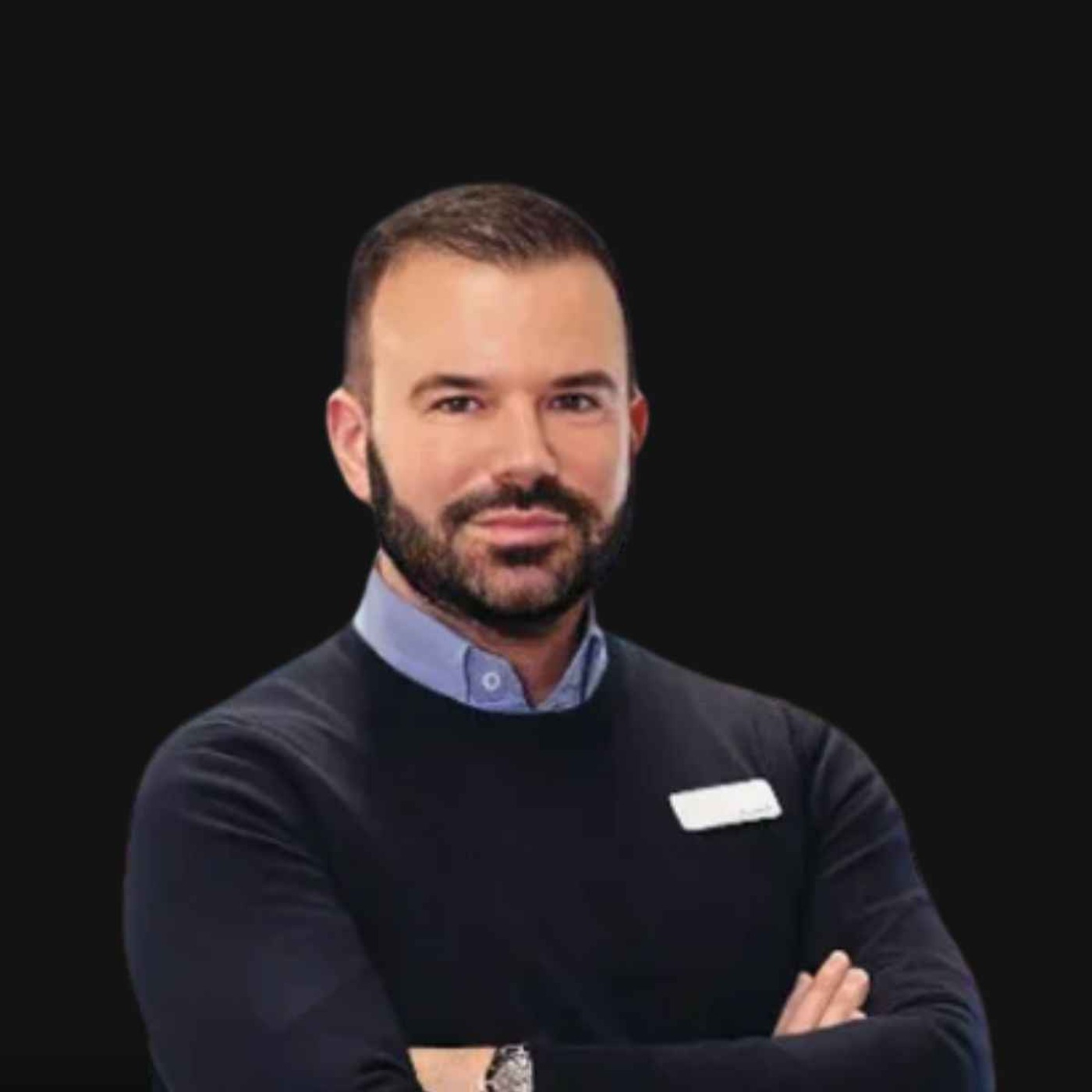
Stuart Machin (CEO of Marks & Spencer) explains his leadership approach for transforming M&S while “protecting the magic” of the brand—product quality, innovation, and service—then modernizing legacy stores, supply chains, and technology.
Sir Richard Harpin is the interviewer at the Business Leader Summit 2026. The episode’s main guest is Stuart Machin, CEO of M&S.
M&S’s “magic” is product at the heart of the brand; leadership must practice “positive dissatisfaction” and tell “unvarnished truths.” Bad news travels faster than good news, so colleagues and customers must be heard via direct feedback channels. Transformation is prioritized across stores, a new 1.3m sq ft food distribution DC, and a digital/data overhaul with tech debt.
developing “best chocolate malt balls” (launched the day before); “Straight to Stuart” feedback (20,000 messages in three years); store-support-center staff doing 7 days in stores; competitor results analyzed at 7am; cyber incident in the last 12 months.
Written by AI. May contain mistakes.
Stuart Machin shares his busy morning routine and responsibilities as CEO.
“I thought there was going to be like 300 people but so it's a big turnout and this is one of our new food lines.”
Discussion on how to identify and preserve the brand's core values while modernizing.
“So practically speaking, how do you know which is the magic and which is the stuff that you've got to ruthlessly change?”
Stuart discusses the significant challenges of transforming M&S while maintaining service quality.
“So today, even a CEO, that's at the heart of our strategy.”
Insights on the importance of leadership style and creating a culture of honesty.
“Everybody can judge you're a hands-on leader, that you've set a great vision.”
Stuart discusses the qualities he looks for in potential team members at M&S.
“to all three customers before walking on stage.”
Stuart shares insights on leadership transitions and team compositions at M&S.
“Everyone has to work out what's right for their organization.”
Stuart emphasizes the importance of open communication with colleagues and customers.
“Anyone that used to work for MNS will tell you that.”
Stuart discusses the necessity of hands-on leadership and improving customer experience.
“And by the way, sometimes the reply isn't what they want.”
Stuart shares his perspective on work-life balance and staying connected as a leader.
“I'm to see a friend for their birthday just for two and a half days.”
Stuart reflects on the challenges he faces as a leader, including external pressures.
“The external factors are more pressurizing on business than they have ever been.”
Stuart highlights the significance of having an omnichannel approach in retail.
“I don't like to use the C word, but it It was cyber.”
Stuart emphasizes the value of facing the truth in leadership for continuous improvement.
“Yes, because the crossover, I mean, most of our sales online go into stores for click and collect, by the way, and therefore we drive an extra purchase.”

Get the gist, explore an idea or ask about something said.
 Claude
On The Business Leader Podcast with Sir Richard Harpin, what are the key points of this episode?
Searching your listeningAutomatic transcript. May contain errors.
0:04At the Business Leader Summit 2026, Sir Richard Harpin spoke with Stuart Machin, CEO of Marks & Spencer. Stuart, great to have you here and thanks for sparing a bit of time. This conference is very much about ambition, growth, long-term strategy, how leaders transform businesses. many in the audience that will be going through a transformation. Let's just start though by what's the day like for a busy chief exec of a major retail business? What have you been up to this morning? Well that's a good question. Good morning everyone. I never expected such a big audience. I thought there was going to be like 300 people but so it's a big turnout and this is one of our new food lines.
0:55You've heard about all this shrinkflation and about chocolate not being chocolate. Well in M &S we're making our chocolate even better and if you like, I won't name the brand, if you like chocolate malt balls I gave the team a challenge a year ago to develop the best chocolate malt ball and these went live yesterday so I thought I'll bring some on stage. But if I think about this morning it's approaching half past 10 and Andrew's just been on and I was watching Andrew on GB news because this morning I woke up I had my first coffee about 5 a.m. and my M &S pan of chocolate I am anticipating some results for a big competitor a fashion competitor so I'm literally thinking 7am those results are coming out and I need to get ready because I want to analyze every page of those numbers and comments from a competitor.
1:57I'm literally at 6am writing a blog for my corporate affairs team who wrote to me late the night before and said we need a blog around apprenticeship levy, how we can get 16 year olds from school into work. I'm very passionate about that. So I wrote a thousand words this morning on what I think government and business should do around apprenticeships. At the same time, I wrote or I dictated in my iPad a note this morning to the Home Secretary saying, actually, I think there's some good work going on, but all I keep hearing about is crime going down. And that's not what we're seeing in the real world.
2:40crime is going up and I brought out seven stories in the last two weeks of significant crime in stores. So I wrote to the Home Secretary this morning. By the time I finished that at 7.05, the results of a competitor came out. So I put them through co-pilot and said, give me seven things I need to know about these results. By half past seven, I'd written to my investor relations team. By eight o 'clock, I had a rerun of the competitor results compared to ours. And then I went into a store and interviewed someone and then came here. Wow. And it's still only half 10. The big thing that you talk about, Stuart, is protecting the magic of M &S and modernizing the rest.
3:26So practically speaking, how do you know which is the magic and which is the stuff that you've got to ruthlessly change? I mean that's a very good question. I joined Marks & Spencers seven and a half years ago. I've been Chief Executive for three and a half years. It's gone very quick. I always round it down and say I'm just really in year one because in year one as CEO you're shaping everything, you're looking at your team and the strategy. Year two you're implementing some of it and year three we had a bit of a challenge in the last 12 months. So in a way, I think I'm in the first phase. But when I joined, I read everything about Marks & Spencer, 140-year-old brand.
4:14And I read all the books. I've been out to the stores. I was buying the clothes. The clothes are better now than they were seven years ago. This is an M &S suit, isn't it? Well, it's an M &S. Well, I think M &S is mix and match. I get grief from my team because I'm in an M &S jacket, M &S trousers and shirt and probably underwear. I can't remember. But my trainers are polo. Because I think in M &S you can wear, you know, a Gucci jacket with a cashmere M &S jumper or whatever. So M &S fashion should be mix and match. And we're doing a lot of work on fashion, a lot of work on food. But Protect the Magic stood out to me because when I got offered the role seven years ago to run our food business, and I thought I was going to run the fashion business, but they decided food at the time.
5:06I thought there is so much magic in this brand. There is so much heritage. There is so much love and trust. And therefore, what made M &S so fantastic for 140 years? and I realized from reading everything and eating or buying product, it was the product because we're a product company. We put product at the very heart of the brand. There's not one product in our business I don't see. It doesn't mean I approve it and have to sign it off, but I look at our women's wear, our lingerie, our men's wear, our kids' wear, our homewares. I eat every food line before it goes and gets approved. and we take our products seriously.
5:54And I realized in the magic of M &S that was always at the forefront. The other thing I realized, we were famous for innovation. We very much led the way. The first prepared sandwich, the first whole chicken, hosiery, a hundred years ago being famous for hosiery. So I realized that product and quality and innovation and service was something that was magical about M &S. But then when I got into the business, I realized that there was just so much modernization to do. We have legacy stores with a lack of investment over many, many years, legacy supply chains that aren't fit for the future real legacy technology not fit for the future a very high cost base overall because of those three things and therefore I was about eight months into the organization and we have our town hall meetings and I wasn't sure how many in the town hall and just talk about this?
7:10Probably in the room a thousand people with a few thousand people dialing in watching and I wasn't sure what I was really going to talk about because eight months in you haven't got all of the answers and I said I think my job is to protect the magic of M &S but modernize the rest and that internally I didn't realize but one of our brilliant marketing directors, Shari, came up to me and said, I wrote that down, keep hold of it. So today, even a CEO, that's at the heart of our strategy. And you've repeated it ever since, haven't you? And people know that and are focused on doing that. Yes, because even colleagues, if you're talking to colleagues in store, people in distribution, people internationally, people in our stores or our offices people get what the magic is but they know we've got a huge transformation program to modernize the business which has been the hardest bit of that transformation probably well nothing's ever easy and if it's easy you probably don't get as much enjoyment out of it so what makes everything worthwhile is the challenge and how you prioritize so I would think the hardest is so much to do because it's interesting I was with some shareholders every four weeks I invite partners they could be suppliers IT partners shareholders to come and have an informal dinner it's basically it could be an M &S prepared meal it's not posh I have a rule that dinner never goes beyond half past eight at night because I don't like late night dinners and I think people have got enough to do when they go home.
8:58So it's from six till half eight. But one shareholder did say to me last week, how do you prioritise? Because when you look at the amount you've got to do, what you've done and what you're still doing and what you have to do in the future, how do you do all that when some companies just have one of those things and that's for 10 years? So I think our biggest challenge is there is so much to do. If you look at store rotation, a thousand shops, a previous CEO said to me recently, who was a very fantastic chief executive of M &S, said to me, I can't believe you're spending this much money on stores.
9:43you're knocking down Marble Arch, you're rebuilding your other store in Oxford Street at the bottom end of Oxford Street and you're spending quite a lot of capital. I said yes because you didn't. Yeah it was a focus on the bottom line profit and under investment in the business wasn't it? It was an under investment. You have to remember the year we did a billion pound of profit it hit the headlines the following year it dropped 400 million so that's a huge program supply chain you saw on the video we're building a 1.3 million square foot food distribution dc because actually our food business has been in growth every year and is doing very well but if we don't build that we will not keep ahead of the curve in five years from now or 10 years and on our dnt you know our digital data technology transformation you know some companies are just doing that one thing for the next 10 years that's just one of ours and we've got a huge amount of tech debt and a massive opportunity but how I would summarize all of that modernize the rest is if I'm honest I can't ignore any one of those three things and at the same time I think that The summary of the challenge is how do you run the company day to day and serve your customers and deliver great service and product and value, quality and value, and at the same time, transform the business for the future?
11:18Talk a bit about the people. Everybody can judge you're a hands-on leader, that you've set a great vision. But how many people did you need to change in the leadership team when you came in and got the top job? and how do you allocate those responsibilities and how do you manage that would be a great lesson for us all I mean I think that the first thing is I laid out a plan because as I was looking at the leadership team I do believe leadership is so important because you set the tone you set the culture. And, you know, to be honest, my style is a style that's very open, very challenging. I talk a lot about positive dissatisfaction.
12:05In fact, our new chief people officer, when anyone joins M &S in any leadership role, we give them a challenge. Three months in, you come to the board and you talk about the unvarnished truth that means you come with very clear eyes open-eyed open-eyed give us the challenges give us what you witness and what you've seen and the brief is you can bring a couple of good things but actually bring the big issues being bring the problems and the opportunities and our new chief people officer wrote her paper and she gave me the draft and I read it and it said Stuart's hands-on leadership is really good and we and the positive dissatisfaction as a culture is starting to seep through the organization however there is a feeling that he needs to be a bit more of the positive and less of the dissatisfaction and I said to her keep it in but the answer is no because I think you can get very carried away that I love our new chocolate malt balls but don't forget we're still upgrading lots of product or I might have bought something where I think the quality wasn't as right or whatever it might be and being positively dissatisfied you need a leadership team who talk the unvarnished truth every day and I think it becomes harder the longer you are.
13:38Because say for me as chief executive, and I'll touch on the team, three years in, you'd love to talk about all the good things because you think if you don't, it's a failure on you. I don't think that. I think we should acknowledge progress, but very much focus on the things we've got to do to improve the business every day. And realize that this morning I had three customers who wrote to me directly, and it was not a good experience, and I've replied to all three customers before walking on stage. And our team, you have to recruit people that you want the company to be. So when I look at people, I look at people who are challenging on themselves.
14:22I look for people who hold themselves accountable. I look for people who are good at strategy, but very good at going down into the detail. So I call it sleeves rolled up. So I met someone this morning. This person was a fantastic individual. But the truth was this person was in the store an hour before me. But they weren't curious. They never walked the store. They didn't look at our product and look at our service or talk to colleagues. They waited for me to meet them. and then we walked to the store and I was talking to this person about opportunities at M &S and at the end I said you're not going to be right for us and we are not right for you because I think in this individual case the person probably wasn't as hands-on as I like our leadership retail is detail detail and how many of the team did you need to say goodbye to of that senior team and was that difficult and to be honest all our top team have changed but I have to also every single one that they have over how long my three years but let me explain should you let me should you have got rid of them quicker quicker I think time and place is very important if anything some of the moves happened a bit quicker but I do think this is an important part of the story because it doesn't mean I'm right in this approach.
15:53Everyone has to work out what's right for their organization. We've got someone in my top team, he's the only person who really hasn't changed. He's been with us 35 years. He is tremendous and before I became chief executive, we never quite agreed on everything in my early few years. He came to me and said, please tell me you're going to be CEO and if you are I'm not going to leave for a few years but afterwards I do want to move on so he's still with us but in truth I've got a new food managing director that's been with me three years I've just recruited in the last 12 months a new managing director for our fashion business we've got some good people that run our business areas that have been with us a few years but a new leader there I do have a new chief people officer that doesn't mean the person we had was not good she was fantastic but also that person had been with us a long time and her and I had already agreed and this is the other thing with leadership people who have moved on it's never been by surprise it's been planned and they know about it it's been very open and therefore when I sit with my team we always talk about what's right for you what's right for M &S and what does that look like in terms of timing and I had my team together the other day and I said we've now got the team for the next five years great you talked a little bit longer but you never know you talked a little bit about closeness to customers and I think that's really really important how do you make sure that your team get out in the front line and how do you make sure that happens I think I mean we serve 32 and a half million people a year and I think the the good thing about our culture and what I love is the bad news is starting to travel faster than good news and therefore to me it's just news and internally our colleagues now I have to be honest with you when I joined nobody would really talk much you'd walk a store and no one would tell you the problems and that is really true.
18:13Anyone that used to work for MNS will tell you that. Now I'm inundated with feedback so our colleagues are very challenging. I have a straight to Stuart program and this is why it starts with colleagues first then customer because if you don't get people in the business to speak up then I don't think we'll encourage customers or listen to customers either and I had a straight to Stuart program and I thought I'd have a few hundred people. I've had 20 ,000 people write to me in three years. I can't quite. And you have to reply to all of those. I do reply. It's not easy. And by the way, sometimes the reply isn't what they want.
18:53But it is testament in the culture that it's a challenging but open culture. I say to everyone, we're all equal and we can all have a say. However, we have different decision-making responsibilities and when we make a decision we all get on with it and we're not going to debate it once it's decided if it's wrong we'll come back to it so if you start with colleagues I think that is important and then that translates to customers by the way I think we've got a lot to do to improve our customer experience and get consistency and we put a program in place two years ago where I asked everyone in the store support center to work in a store for seven days a year and it's on everyone's objectives you actually can't pass your appraisal for the year if you haven't done your annual bonus you don't do any of that you have to do your seven days but importantly you have to demonstrate you've also changed something so you've done seven days but you've also improved something and by the way this morning in the store I was in a customer asked me why it was so cold in the store and it was freezing cold and by the way I'm in the store and the chicken ovens had broken down and I'm straight on the phone saying why have they broken down but by the way they've been broken down three days so all of this by being hands-on in stores online I'm one of these people on social media all night long scrolling through comments reading what everyone is saying you don't like it it cuts sometimes keeps you up at night it's not great to do it just before bed because you get too consumed but I think reading keeping in touch and not being defensive it feels like a 24-7 job and um uh do you manage to get any work-life balance what's your what's your tip and lesson for other chief my team have told you to ask that I think work-life balance to me I don't like all this talk about work-life balance um what I like is to talk about life and what's important to you as a person.
21:02So I am going away this weekend. I'm to see a friend for their birthday just for two and a half days. I'll keep in touch with work. The clocks go forward. I know at one o 'clock Sunday morning, I'll be thinking about my tech because actually clocks going forward on technology is quite complex. And I'll be worried about opening our business for trade online and in stores so I think in leadership what I don't like is leaders going away and being completely switched off this audience might not agree there'd be some and some my leadership like it to be but what I do think is I could not tell you today where my leadership team were I couldn't tell you when their holidays are I know that they're going to be on top of the business because you trust them and you've got the right team we're rapidly running out of time I want a few rapid fire questions Stuart one of them is you inherited an oil tanker didn't you slow moving how have you managed to get speed and agility into the business what's the one tip for everybody I would just say quicker decision makings even if it's sometimes you've got the data but sometimes it's intuition and gut feel you get on with it otherwise you'll be debating forever make those decisions what's the one thing that you've got wrong because we learn more from our mistakes and I have many mistakes what was your mistake so far I don't think it's about one thing I think every time through your journey you shouldn't be scared of making mistakes you might make a decision on technology I would I would rephrase it the hardest time I've had is the last 12 months.
22:47And there's a couple of factors. The external factors are more pressurizing on business than they have ever been. By the way, I wrote to the Home Secretary this morning, as I said. I also wrote to Rachel Reeves three days ago with very clear views, again, on some things around business. But internally, we also had a significant incident. I don't like to use the C word, but it It was cyber. And let me tell you, I would say that was one of the hardest things as a company and as a leader and for our people that we've ever gone through. And I never want to go through it again. Two final questions.
23:32How important is Omnichannel? Your online, big store presence. Anybody here that's running an online-only business, is that the right thing to do? I mean I think omni-channel is important it doesn't mean you can't be online only or stores only but our plan is to be truly omni I don't think we are today I think we're multi-channel today and that's very different to omni-channel we've got to get better at one view of the customer shopping whenever however wherever they want to shop we need to be much closer data wise and digitally to our customers can you see if they're all working together that you get exponential your benefits of that.
24:13Yes, because the crossover, I mean, most of our sales online go into stores for click and collect, by the way, and therefore we drive an extra purchase. So Omni for us is critical. Final question for all of the mid-size chief execs and founders running medium-sized businesses here in the audience. What's your one tip? I think the tip would be keep the unvarnished truth don't be defensive keep clear eyed it's very easy to get rose tinted spectacles because for you to admit failure is hard but every day we're failing at something and every day we're winning at something so keep clear eyed and focus more on the opportunity because then I think and also one last thing if I'm chief exec for 10 years or 25 I think we're always going to be transforming mean.
25:08Stuart, thank you very much. Lots of learning.
Stuart Machin, CEO of Marks and Spencer, talks to Sir Richard Harpin at the Business Leader Summit about leadership and encouraging "positive dissatisfaction". He also says he doesn't like to use the c word - cyber - as that was one of the hardest things he and the company have ever gone through. He gives a run through of his typical morning as a CEO, how he walks the floors of stores and the secret of protecting the magic of M&S whilst modernising the rest.
Join the Business Leader community at Business Leader
Hosted on Acast. See acast.com/privacy for more information.


