Ask ChatGPT
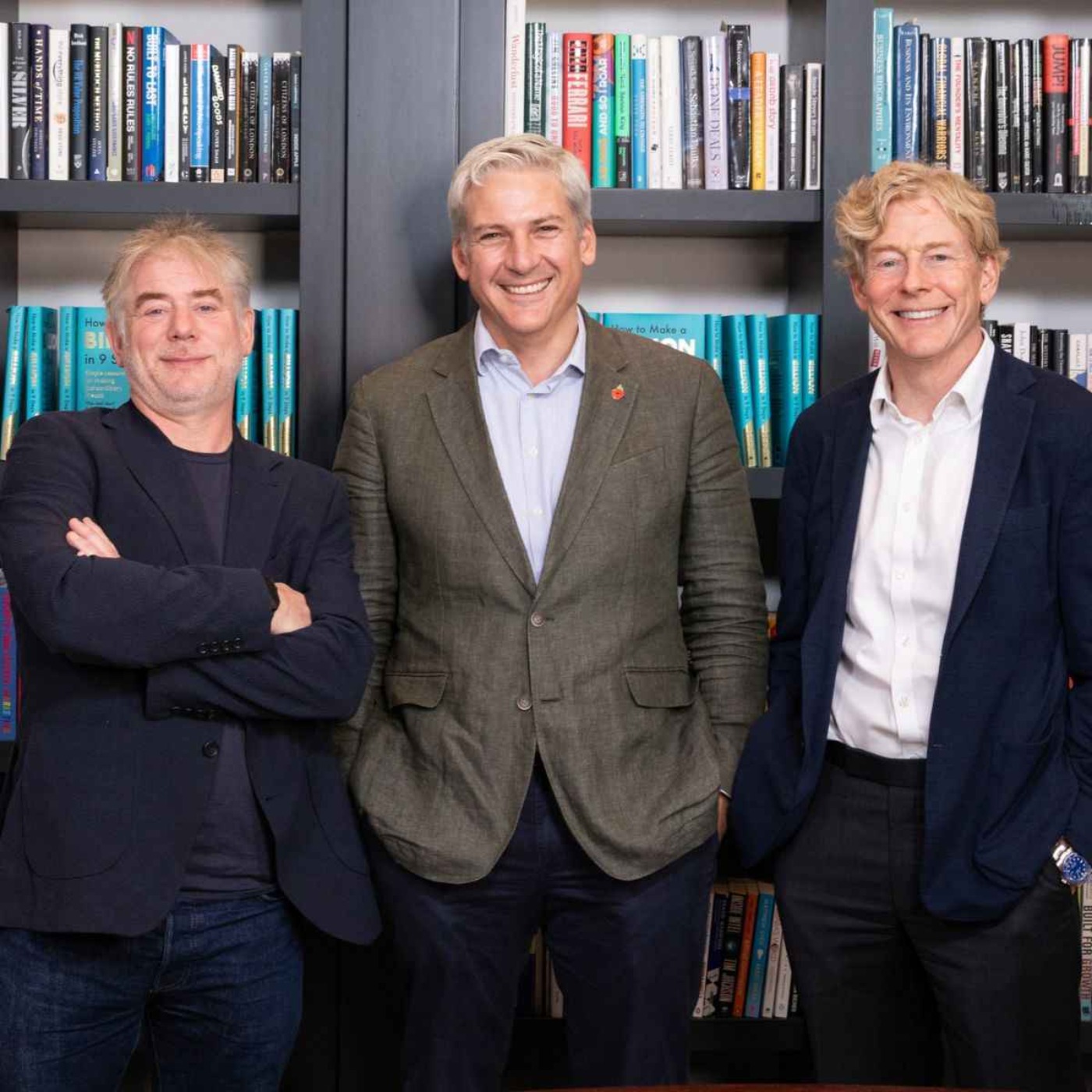
 The Business Leader Podcast with Sir Richard Harpin
11 Nov 2025 · 51m

Written by AI. May contain mistakes.

Get the gist, explore an idea or ask about something said.
 Claude
On The Business Leader Podcast with Sir Richard Harpin, what are the key points of this episode?
Searching your listeningAutomatic transcript. May contain errors.
0:00This is Britain's growth moment. Do you want to be part of it? On 26th of March, 750 of the UK's most ambitious founders, CEOs and investors will gather in London to shape the future of mid-sized business. The company's driving our nation's success. The Business Leader Summit 2026 isn't just another conference. It's a day built around the three forces that define growth, ambition, policy and capital. And as one of our valued podcast listeners, you can be there in person. To secure a discounted ticket, visit the events section of our Business Leader website and use this code. BLPODCAST, all one word, all uppercase.
0:41We look forward to seeing you there.
0:48Hello and welcome to the Business Leader Podcast, where we look at the stories and strategies behind modern businesses. I'm Graeme Ruddick. In this episode, I'm going to speak to James Reid, the Chairman and Chief Executive of Reid, the recruitment business. Reed was founded by James' father, Sir Alec Reed, in 1960, and today it's the largest family-owned recruitment business in the world, with annual revenues of over a billion pounds. James Reed has also written a new book called Karma Capitalism, in which he calls for the business world to change for the better by creating more Philco's, which he describes as a business where at least 10 % of the shares are owned by a charitable foundation.
1:28In this podcast episode, we'll speak to James Reid about his book, The Idea, and how Reid was built.
1:38I was asked a question by a Harvard Business School professor, you know, what's the defining moment of your career so far? Not that long ago, and it got my mind whirring, and lots of things came up. But then one thing came up, and once that came up, nothing else was going to replace it. And it was something that happened to me when I was a little bit younger, 50 years old, when I went climbing in the Alps with my son, Harry. And our plan had been to climb the Matterhorn, you know, the beautiful Toblerone-looking mountain, which borders Switzerland and Italy. And on that trip, it's fair to say it didn't go very well.
2:20I think that's a sort of English understatement. Because I nearly killed myself and ended up in hospital. But it was that trip that really got me thinking because I was rescued by an Italian mountain rescue crew in a helicopter. And I could see them flying up from the Val d 'Iosta, right up high up on the mattoon where I was with my, at that point, broken leg. And they lowered, I could see a lowered member of the crew down on a cable to land on this ledge. I'm incredibly skilled on this ledge next to where I was sitting with my broken leg. And when she landed on the ledge, she said, My name is Roberta.
3:06Do you want to speak Italian, French, German or English? I mean, that alone just amazed me. And I was convinced and I still am that Roberta was an angel. She certainly saved me. but this was the beginning of a journey back home where it took me quite a long time to repair after this accident this climbing accident and it was while I was convalescing I suppose or getting better that I really had time to think and I suppose I was at a stage of my life so heading into the second half of life and I really sort of settled on the fact that you know I began by thinking this was a double fail this climbing expedition because my son and I he was 18 at the time I was 50, we'd failed to get to the top of the mountain, and actually failed to get to the bottom as well.
3:52So what began as double fail ended up being what I call my wake up full. And that's the introduction to the book. And talk about my wake up full. Because, you know, I didn't have one near death experience, I actually had two within 24 hour period survived them both. And it made me really think about how I wanted to spend the rest of my life and what was important to me. And it really made me think about how I wanted to be purposeful about my work and what I did. And that was part of the motivation for writing this book. But it's also how I've approached our business in the period since. We developed in Read over the last decade or so, a really strong sense of purpose, which is improving lives through work, just four words, but everyone in the organisation knows that.
4:37And we're all about that. And every day we go to work, we try and do something positive in that respect might just be making someone laugh but it's you know you can do a small thing or a big thing you could transform someone's life and career so that purpose is something that's particularly important to us and also we have um 18 of our company owned by a charitable foundation the reed foundation so we're we call ourselves a philanthropy company a filco and that's a big part of the message in the book because we want other companies to become or consider becoming Philco's. And because we're a philanthropy company, we all work one day a week for charity.
5:14And 18 % of the dividends we pay out shareholders go to that charity. And we've used that through our foundation to raise lots and lots of money for 1000s of charities through charity platform called Big Give. And we're at 360 million, I think raised so far, and rising, we've got a big Christmas appeal coming up imminently, and we hope to hit 50 million in a week this year, which will be our biggest yet. If we can do that, I'd be delighted. It's a big ask of everybody, but I think it's possible. So we've sort of galvanized our engagement, I think it's fair to say. And Reed is, as far as I'm concerned, a values-led, purpose-driven philanthropy company.
5:54And that really works for me. And I think it works for us as an organization because it gives us real impetus. and a sort of constant that we all understand at a time when the world's changing so fast. Nothing around us is constant. So having those things that we can hold on to and hold dear and believe in, I think are really important. And that's our sort of North Star. As you've touched on, you say in the book, this idea of a Philco is a business where at least 10 % of the shares are owned by a charitable foundation. What's fascinating, I think, is there's all these successful businesses like yourselves are already in that position.
6:32I think you not only read, but you mentioned Lego, Novo Nordisk, and many others. Yeah, there are quite a number, but not enough. Not enough. It's interesting, but they have some several things in common. Really good reputations, longevity. A lot of these businesses are really quite old, long-lasting, and they're leaders in their categories. Rolex, I mean, that's the leading premium watch brand. If you say Lego, It's a leading children's play brand. Carlsberg, probably the best lager in the world. I don't know. So, you know, there are all these really important, successful businesses that have this structure.
7:10So what the message of this book is that a change in a company's DNA can have a transformational change in its performance as a business. I mean, it's a really good thing for the business itself. It makes the business better, but also for the business's impact on the society and world around it. So the business is better and the society is better off, which is why I'm arguing for this Philco movement. Why does it make the business better and how does it change decision making? Because, you know, high returns, higher loyalty among staff, longevity has improved. I don't want to pretend that this is something, you know, that I've sort of dreamed up.
7:48We came across this by accident, really, when we became a Philco back in the 1980s. And we didn't really think much of it to begin with. But it was over time we realized that, in a sense, this had become our superpower, because having a large, i.e. more than 10 % charity shareholding really fundamentally changed the nature of the business. And in several important ways, it made us think more long term, and it made us more purposeful about what we were doing. But it also made us much more attractive as a place to work. people you know when they came and interviewed for our business often said oh we really like the fact that you have this charity aspect or that you do these other things for the community or that you help you know raise funds at christmas all these things and a lot of people said that and i've observed that people tend to stay longer in our business and and perhaps you're more committed to it than they might be if it wasn't like that but the other key the other key is customers like it.
8:48So we do a lot of business with local authorities, with government, with big companies, small companies, all sorts of companies. And they like the fact that if we're successful, we make a profit. A significant proportion of that goes to charity and goes back into the community in which we all work and live. So customers like it. So that's interesting. And I think it also gives the business a type of defense against certain types of takeover opportunities, shall we say. So, you know, a lot of the more aggressive hostile takeovers or private equity takeovers would be more difficult to achieve if a business is a Philco, because the charity's not going to immediately say, oh, that looks like a good idea.
9:30You know, I'm going to get a fast buck out of this. I'm going to sell. So I think it makes the business perhaps better defended as well. Listening to you now, it's so clear and reading the book, which is a great book, it's so clear as well. So why have we allowed short-term pressures to overtake some of the things that you've spoken about here? Well, I think things evolved, don't they? I mean, there were businesses that had that sort of Philco spirit, even if they weren't necessarily structured in that way, a long time ago that were founded by Quakers. Cadbury, for example. Yeah, the Cadbury is an example.
10:06The Unilever business or Lever Brothers, I mentioned in the book. And capitalism has evolved. And I think, like so many things, it's become sort of more remote, you know, people aren't dealing personally in the same way that they used to, much more is remote. And I think, you know, it's a correction that will be good for capitalism. I think capitalism is in trouble. Because more and more people are alienated from the process, it's taking fewer people with it. And capitalism needs to change if it's going to continue to survive and thrive, I believe. But similarly, the public realm is in trouble.
10:44Governments are struggling to deliver public services and manage countries in the way that their citizens feel is successful and acceptable. So governments are in trouble, capitalism. And what strikes me about this is karma capitalism, as I call it, it's a philosophy, is supportive of both. It makes for a better business and it makes for a better society because it creates a whole cohort of independent charitable organizations that are working in society to help citizens. And, you know, what could be better than that? Instead of saying government needs to do more and more and more when it clearly cannot, to unleash the power of lots of small battalions that will do amazing work for all sorts of different people in all sorts of different situations that we sitting here could not possibly envisage.
11:33You've touched on this a little bit already, but for you as a business leader, how did you change after the incident on the Maton? What things did you start to do differently? Well, I think I started thinking differently. I mean, I suppose in my early career, I suspect this is true of quite a lot of young men. I felt that I could get on with it and do it myself. I could climb the mountain. I didn't need anyone else. But when I broke my leg, I realised I didn't need some other people and I needed them pretty damn quick. And luckily for me, they came to my rescue. And it became very clear to me, and it should have been clear from the start, but it's easy how, I mean, I found it easy to sort of maybe miss this point, is how interdependent we all are.
12:17You know, whether it's just whatever it is we're doing, we're totally interdependent with other people. Whether we're eating, traveling, enjoying the lights and warmth of a building, you know, we're totally interdependent. And that really became very clear to me. And it was sort of seeking to do what I could to make those linkages as fruitful and successful as possible for everyone involved. So we have a sort of family purpose at Reed, which is we want to build businesses that are of benefit to society, and we enjoy connecting people for good. So bringing people together for all sorts of initiatives, whether it's philanthropy or having a good evening, or whether it's building a business, we're sort of very aware of the power of connection.
13:07And I became super aware of that, so hyper aware of that. James Reid didn't actually join the family business until he was 30 years old so did he initially plan not to join at all I'm interested to know also is it true that his first job was working in a graveyard because that's what I found in my research yeah it really was yeah people are curious about and and it may be quite keen to get another job and so I worked as as I'm 17 i left school at 17 my first job was working in a cemetery in a town called old windsor which is on the banks of the river thames a bit downstream from windsor castle in the winter and i was leveling graves so that they would be able to mow them in the spring because the ground was all lumpy and and i would work on my own and it was freezing cold foggy it was a really tough job but it was quite well paid you might laugh but you know it's two pounds fifty an hour which was a lot back then and it was quite well paid and I remember one morning I was digging away and and I could see this figure coming through the mist towards me through the fog and it was a an elderly woman and she came up and she said oh good morning and I said good morning and she said do you like working here and I said yeah I do it's fine and then she said well at least you're not lonely and sort of wandered off into the tombstones leaving me all by myself in the fog And I still don't know whether this was a real person or a ghost.
14:31But anyway, she certainly had a sense of humor either way. And I still remember that. And it was a good experience in many ways because it made me realize that, you know, I wanted to learn skills so that I wasn't going to be doing that for the next 40 years because it was tough physical work. And, you know, I was out in the cold. You didn't join the business until you were 30. did you set off and at that age when you're 17 were you determined not to join the business no no i've always been interested in the business because i used to so this business was founded by my dad in 1960 in hounslow and i often would you know go and visit offices or shops with him as a boy so i felt the business was very much part of the family but i also was acutely aware he was very good at what he did and um i didn't want to get involved and mess it up so i thought i better learn some things and do some things in my right first which is what i set out to do i suppose in my 20s that period up until 30 and i was lucky i worked with some really great people i worked with anita and gordon roddick at the body shop the founders of body shop brilliant entrepreneurs i learned so much from them i worked at saatchi and saatchi the advertising agency in his heyday that was really quite entertaining and interesting and learned a lot about marketing and advertising from them and um you know i worked in charities as well so i got quite a rich background of experience before i went to business school in america what um did you learn from gordon and is it right that you knew at that stage that you wanted to learn from entrepreneurs so you wrote to them to try and work directly with yeah no i've always i've always been fascinated by business and particularly by entrepreneurs and when I graduated I wrote handwritten letters to probably I mean probably about 10 entrepreneurs that I admired at the time this is in the early 1980s one of whom was Anita Roddick and I think I ended up seeing three or four of them three or four of them took the trouble to see me but I remember Anita Roddick she rang me at home on as it was a Saturday morning and this is long before mobile phones my mother answered the phone said it's Anita Roddick on the I really couldn't believe it.
16:47So I took the call and she said, would you be available to come in for an interview on Monday? And I said, yes, of course. And so I went down and had an interview with her and her husband in a place called Rustington in Sussex, where they had a little warehouse at the time. And she basically said, well, we need someone to do this, this and this, or a series of tasks they wanted to be fulfilled. And when can you start? And that was the interview. And I said, well, now. And that's how I started. and what i learned from them a lot of things what i particularly learned is anita roddick had an incredible enthusiasm for what she did an incredible energy around what she did and she really really emphasized treating people and indeed animals fairly so she was very big on fair trade so she imported a lot of products from around the world from the developing world and she was very keen that the people who produced and grew those products had a fair deal you know they weren't being ribs off so she was very keen on fair trade and she would not test any of these cosmetic products on animals which at the time was sort of unheard of but i mean i've always loved animals and that sort of actually strangely attracted me to her business in the first place but this goes back to what i was just talking about with karma capitalism didn't just attract me it attracted a lot of customers and her business um really grew and and became very successful it was a sort of activist business she was an activist she had really strong campaigning views and she ran that side of things i thought brilliantly and then gordon her husband did all the sort of operations and logistics also i think brilliantly so they made a really strong team which i mean it's quite unusual a husband and wife team working that successfully together but you know they did it brilliantly i think the the nba at harvard that you went on to do that'll be really fascinating to our audience we have a collection of audience members who either done an MBA or were debating whether they should they should do on how how valuable did you find it and how much did you learn well I feel really lucky I did that and I'm for a number of reasons but if you get the chance to do an MBA at a good school take it would be my advice because partly it's the people you meet when you go it's so enriching people from all sorts of backgrounds have done all sorts of amazing things and then the at the good schools the quality of the teaching it's very high so you know you get exposed harvard i would have done hundreds and hundreds of case studies and it's like a sort of intensive learned experience where you you're put in the situation in the shoes of a ceo or a marketing manager or an individual in a case study what would you do now graham you know you're the decision maker and you have to come up with a with a response and then the rest of the class will sort of attack you and say why your response isn't what they would do and it's really makes you quite robust and it makes you quite um thoughtful but it's also in real life terms pain-free i mean you're not going to lose a fortune people aren't going to get killed if you get it wrong in the classroom so you accumulate quite a lot of experience without necessarily doing damage to yourself or others in the process which i think is good but when i finished at harvard our best best um professor said 50 of what you've learned here will be wrong and we don't know what 50 % it is.
20:01I just spent a lot of money on that, of course. But, you know, that was the best lesson of all because it's spot on, because it keeps us curious. What did he mean by that? Literally that. 50 % of what you've learned here will be wrong and we don't know what 50 % it is because it goes back to this point about the world's changing so quickly. You think something's right, you give it your best analysis, but actually it's not. And I think that's the best lesson of all because if we're not continuously curious, if we think we know it all that's when we're finished actually because that's when complacency kicks in and complacency is the real killer not being wrong it's stopping being curious that's the real why did you um you did the cost off your own back i think didn't you and why did you decide to to do it well i really believe that if you want to do something you should do it well and i think business is a profession so if you want to be a business leader you need to learn about business You need to learn how to do it.
20:57If you want to be a good surgeon, you go to medical school. If you want to be a good lawyer, you go to law school. If you want to be good at business, you should go to business school. Or alternatively, I'd say learn accounting, which shows you how businesses are put together. And I think that's really important. I think in the UK especially, there's a longstanding sort of cult of the amateur. You know, if you're good at cricket and got a degree in history or something, you can then go and turn it on in some bank. I'm not sure that that really rubs through anymore. Well, I'm sure it does not, actually.
21:29I think it's really important to learn your trade. And it's shocking. You know, 40 % of people in business in the UK today receive no training. And something like 82 % of managers or accidental managers have had no training in management and leadership. So for me, that's an open goal. so much more could be done to support business and help people progress by giving people more education and training in that area. It's funny really because people study all sorts of things but most of us end up working in businesses. When James Reid eventually joined the family business in 1994 it was as operations director.
22:09Three years later in 1997 he became chief executive with his father stepping up to the role of chairman. One of his key moves in the 1990s was launching Reid online, which proved to be transformational for the business. Well, the joke was that I'd passed a 30-year interview at this point, age 30. Well, my father made me an offer I couldn't refuse. I think that's something, that's a quote from a film, I think. Not that kind of offer, but he was, I guess, at a point of some personal transition because he'd turned 60 around the time I turned 30. And he sort of said, well, there's no point having a family business if there aren't people in the family coming into it.
22:50Do you want to join me or not? And then he said that there was a job that he was particularly keen for someone to do and he thought I might be able to do, which I was sort of umming and ahhing about. And then he said a few weeks later, well, that job I've been talking about is going to be in the Sunday Times appointment section, which was the main job next weekend so you better let me know whether you want it or not and that sort of got me off the fence and I said yeah I'd love to do that and it was quite funny for years for years he would ask me are you enjoying it and I would refuse to tell him I was and he would never tell me I was doing a good job either so we had this funny relationship but now I'm very pleased to say to him I am enjoying it and I think he might even concede occasionally I've done okay so we worked together for 10 years.
23:39My father was a chairman. And at the end of that period, I was the CEO. But that was really good experience. What did you learn from him? Oh, so much. I learned more from him than I learned at Harvard Business School. And I mean, I learned what I suppose the key thing I learned from him is the power and importance of ideas. And he's always emphasized the importance of having new ideas and trying to surface ideas from everywhere and everyone in the business. And that's how the business can grow and improve. So our business, Reid, we've only grown this business organically since he opened the first shop in Hounslow in 1960.
24:19We haven't done big takeovers. We did one, it didn't work, and we haven't done another one since. We've grown it organically. And the only way you can do that is either through really good service. So people come back or recommend you to others or through new innovations coming up with new services so ideas are the currency that is most prized in our business how are you different to him as a leader oh that's a good question um i think my father is uh he's a sort of visionary i would say and i'm a get things done person we complement each other quite well you know he had some ideas and I'm thinking, how the hell am I going to do that?
25:01Or how are we going to do that? And sometimes we manage to do it and sometimes we don't. Whereas I like to see things through to their sort of conclusion. So, you know, I guess it's not a coincidence that I wrote the book, but a lot of the ideas that are in the book would have been his. One of these ideas that I think transformed the business was the internet in 1995, I think it was. And tell the story to everyone. It's all linked to a clown from what I understand. Yeah, this is really pertinent now because I think we're in another phase of this sort of emerging technology that's really exciting and quite unclear how to deploy it and use it.
25:38So back in the spring of 1995, we had an IT department in Reed of three people. And it was the other side of a glass wall from my office. And I can still see the scene of the three people. And one of them, he's called Sean, he still works in the business, stood up and walked around, tapped on my door, which was always open anyway, and said, can I come in? I've got an idea. And that was always a good way to get my attention. Yeah, I'd like to hear it. So Sean sat down in my office and said, what's the idea? And he said, I think we should have a website. Do you know what my answer to that was? What's a website?
26:13Yeah, what's that? Literally, what's that? I had not heard of a website. I didn't know what a website was. So yeah, you're right. What's that? And Sean tried to explain to me what a website was. And there is an interview question, a mean one. And you tell a person from the 14th century what a television set is. Well, it's a bit like that. You try to tell someone from the 20th century what a website is before they've been invented. So he did well because he made me sufficiently interested to think, yeah, maybe we should have a website. So I said, why don't we try this? And Sean had been approached himself by one of our IT contractors who, when he wasn't sort of doing IT contracting for us, did children's parties as Pancake the Clown.
26:54And that was his other job. and literally this is true we got pancake to build our first prototype of read.co.uk and interesting my my contribution at the time which was modest was to say apart from saying yeah let's give this a go was to say to sean what what's the address for this website and he said oh we've got read online.co.uk read online sounds good i said to him see if you can get read.co.uk and he went back and says that's and 20 minutes later he came back said yeah i've got it so it shows how early that was in the internet you could get your own name with a.co.uk on it and that's how we began and i remember our receptionist who was called kay used to type the jobs into the website when she wasn't taking calls or greeting people we began with about 40 jobs on there but one day the first um successful candidate got a job you know and they were someone i think they lived in Basingstoke and they got a job in Bournemouth or something like that which was which was more difficult back in the day than it would be now because you'd have to go to Bournemouth register with all the agencies get the local papers all that sort of thing and it worked beautifully on the internet and that was the beginning but the other thing that happened it goes back to Harvard Business School and in a way I learned my most second most valuable lesson apart from 50 % and here we'll be wrong, at our first reunion, which was after five years after graduating, which was in 1995, in the summer of 1995.
28:23And I went back there, and I'd say 20 % of my classmates who I graduated with were doing jobs that did not exist when we graduated in 1990, and they all involved the internet. And this was in America. And this made me realise that this is going to be a big thing in the UK too, and it made me come back and really double down on our website and grow it and invest in it and put a lot of time and money and effort into it. And that gave us a head start. And it's interesting now because with AI, there's a lot of similarities really. It's very unclear how this is going to settle down and how it's ultimately going to work and how much it's going to change.
29:03But I think it will change a lot just like the web did. It might ultimately totally replace the web. But we've started a new initiative, a new business, an AI, business called read.ai rather like read.co.uk it's this time it's an agent it will fill your jobs for you it will find you people it will give you a short list it will enable you to connect with those people and fix up the interviews it will do all of those things it's doing them to a degree now we've got a beta that's released it's got a long way to go to really be slick and effective but i believe it will be does it feel a similar sort of moment now to 95 yes it does and interestingly so several people who were around in 95 doing startups and things have said the same thing to me it feels like this is a pioneering moment that you know the we're seeing the first ai company start in 2025 and that's what we saw in 1995 the first web businesses start then and um you know google didn't start i think till 1998 so you know there were a lot of other search engines around before google appeared so it's not to say that the best will be at the beginning the first some of the first ones will grow into very successful businesses but there'll be others that follow that see what they've done or learn from it so there's a huge there's a huge um process of learning going on.
30:27I mean, it's much more difficult to build an AI business than people might first think. I mean, it's technically difficult. It's legally difficult with data and privacy. And it's difficult. It's really challenging. But that's what makes it interesting. Just on your point earlier about ideas and getting ideas from a business, it's one thing to get them, but then another thing to execute them and make them a reality. What would be your advice for the business leaders on that point? How do you see an idea through and how do you know when to stop on one? Yeah, it's a really good question. I mean, we've been in a continual process of doing that for 65 years, and we've tried plenty of ideas that have failed.
31:13I mean, I can think of lots and lots. And we've lost a lot of money with ideas that have failed. but you only need to make a few land and via success and and you're you're up and running in a way you only need to make one land via success and you're up and running so how do you curate ideas well i think you can test them quite a bit you know in in a small way start small you know other customers who are showing an interest in this proposition do they look like they might pay for it other stuff can you bootstrap this idea and deliver this service in a modest way that doesn't involve spending hundreds of thousands of pounds on building an app first up you know because as soon as you you know want to build an app you're probably 100k in these days so these are big investments can you use ai to create your little website or service in a simple way to start with so i think it's a continual process of trial and error and if you can keep the the trial sort of in in a small manageable way you're going to learn more more quickly i think reed was actually listed on the stock market until james and his father delisted it in 2003 but this is very much a family business and that brings some unique benefits and challenges well that seems a long time ago now and i don't regret it but we we were a family and still are a family company and we didn't have any need to be on the stock market because we weren't we weren't seeking to raise money or take over other companies or really it was like being a member of a club we didn't go to so they didn't see any point and it was becoming more and more expensive to be listed on the stock market so we arrived on the stock market at a point in 1972 when my father floated the company I suppose he was taking some money off the table and it was a partial sale when we went private in 2003 we weren't using it anymore i know more and more companies have pursued the same route since i mean the london stock market isn't the place it used to be i don't think which should i mean regulators should be looking at that and thinking how do we make this more attractive again because it's become it seems fewer and fewer companies are ipoing there now have you that's attractive have you ever felt as a family business and as a non-listed business that that your growth was slowed because of the less access to capital since then no i mean no access to capital hasn't been our problem so i mean we we tended to finance our own investments from cash flow from growing our business but there are plenty of people who lend you money if you ask them so you know there are all sorts of ways you can go and get financing i'm not sure i mean how expensive they are is you know if you're going to go and get venture capital private equity that can be very expensive financing.
34:07But there are other ways of raising money that are less expensive. So I think probably a feature of the business landscape of the last quarter of a century is that the range of options has grown for people looking to raise money. I think the more precious thing is the idea. Weirdly, I think it's easier to get the money than it is to land on a really good idea. What are the challenges of running a family business? well an obvious one i mean you say family business i mean i think running any business is full of challenges um yeah every day brings a new challenge but a family business suggests that it goes from one generation to the next i mean by definition that there is more than one generation in it um and so our business is i call it a multi-generational effort because you know we have co-members as we call our colleagues from the age of 91 that's Alec Reed still working to 19 so we've got a huge age range of people in the business and some of my my children are involved in in different ways but they're not full-time or they're not sort of fully engaged and they might become more engaged but I don't know yet whether you know it will continue as a family business from my generation to the next so i suppose is that a challenge well it doesn't feel like one right now but it might might become an issue in the future we might have to do something else i was gonna ask i was gonna that was my last question about success because you're a similar age now to when your father was when yeah that's right ceo so how are you thinking about succession now and will it pass down to the next generation well i'd like to think it continues as a family business i wouldn't want it to be sort of carved up or or consumed in some multinational because Because I think that we as a family would lose a lot.
35:56But also the business would change in its character in a way that I think would be unwelcome. So I'd like to think that we can continue. But some family businesses are controlled by family members directly. Some are not. You know, they're owned. So there might be a situation where the next CEO is not a member of the family. I mean, up until now, we've only had two chairmen, my father and myself, in 65 years. So that's a long period of fairly stable family control. I mean, I can't imagine that's going to last forever. So I'll carry on for as long as I can. Why do you think the transition from your father to you worked well?
36:34I mean, maybe it didn't work well. Well, no, I think it did. And I would credit him for that. I think it was, I mean, if anyone's listening from a family business, I'd credit him for. It took a 10-year period, so it wasn't overnight. But at the beginning of that 10-year period, he would ask me my opinion about something, and he would make the decision. And weirdly, somehow, by the end of the 10-year period, he would tell me his opinion, but I would make the decision. And it was about the sort of transition of decision-making power over that period. And there might be, you know, he might make his opinion very well-known, but ultimately he would say, but it's your decision.
37:17and and um you know i wouldn't go against his opinion particularly frequently but i have on occasion so i think it's um i think it's about decision making authority and and trying to develop the next generation to be good decision makers to you know we all make decisions in with limited information but trying to help them become good decision makers and and above all decision makers not sitting on the fence and procrastinating because something he said to me um a long time ago which i've always remembered one of the valuable lessons i got from him was the good thing about a decision is you can always make another decision you know people think oh what am i going to do it's like the end of the world but if you get it wrong you can make another decision although i learned subsequently you know there are type a and type b decisions and the difference between a type A decision is you can't necessarily go back and do it again.
38:13So if you decide to miss your best friend's wedding, you can't rectify that in the future. But if you decide to go out that door, you can always come back through it again. So it's always a good idea to just keep in mind, is this a type A or a type B decision? As well as writing books, James Reid hosts his own podcast called All About Business, in which he speaks to interesting people from across the business world. So what has he learned about leadership and management from his books, podcasts, and running read for nearly three decades? It's around not quitting. I think someone once told me that too many people give up just before they're about to succeed.
38:52And I don't know if it's true or not, but it's made me determine not to quit. So I think, you know, we go through life and it feels to me like there are different, And each stage might be considered a different chapter. And some chapters are more fun than others or easier than others. But the important thing is to keep going. And if you believe in something or you have an idea that you want to bring to life, really stick at it because it won't happen. That old saying, every overnight success takes about 20 years. Is it really true? And I suppose I've been going at it for quite a long time now and looking around me, a lot of the things that we've accomplished took a while.
39:36But, you know, that was time well spent. What's the biggest mistake you've ever made? I've made so many. I mean, we invested in a business which we tried to build up for freelance technologists, which we called Freezy. And it was in this very room that we ran it or set it up as a startup just before the pandemic. and the timing was wrong, the technology was wrong, it didn't work, and we lost a seven-figure sum on that. Whether it's the biggest mistake I've ever made, perhaps not, but it's one of the most recent, and I can still feel it. Why don't you think it worked? Why didn't it work? Because the customers didn't value it.
40:23They didn't really want it enough. I mean, there are other people offering these services or related services at the moment. I wonder how well they do. I mean, they're still going. But we have a very successful temporary work business where we supply temporary workers. This was a bit more do-it-yourself. And I don't think people wanted to do it themselves. They're happy to pick up the phone and say, send me 15 people on Tuesday, please. How did you know when to stop? That's my job. I think it's important. So I wasn't the person who was tasked with running it. I mean, they had to really believe in it 110%.
41:00But at some point, as a sort of curator of ideas, you have to say that one's not going to fly. We're going to close it down. I think that's a CEO's job. That's a difficult job, but no one really disagreed with me when I made the decision. The deal that you did, the takeover that you did that didn't work, why didn't that work? Well, we bought another recruitment business quite a long time ago, and I think we overpaid for it. it's when we had a separate health company. We overpaid for it, so that was one reason it didn't work. The market moved away from what we were providing. So it was a good business.
41:40I mean, there was nothing wrong with it, but the market moved in another direction. So it was a good business looking backwards. It wasn't such a good business looking forwards. And it's very difficult to integrate a culture into an existing culture. When you grow a business organically, you're building from the ground up. you create your own culture when you bolt on another business you it doesn't really fuse very easily and i think some people are very good i mean 80 of acquisitions i'm told destroy value so it's not a good business strategy per se unless you're really good at it some people are i'm not and i learned that lesson i don't know how to do it but those that are can do it very successfully but you know you can see these businesses that grow by acquisition they look marvelous for a bit.
42:28And then suddenly, there's a lot of write offs and write down exceptionals, and suddenly it crashes. So you can have a sort of magic period where it looks wonderful. But as a business strategy, I wouldn't advance it for our business. And the other thing with a recruitment business, if you buy a recruitment business, all the people, and it is a people business, can walk out the door the next day, they don't like your company or your culture or your strategy, they can go and get a job somewhere else and what actually have you bought so it's not like buying an oil rig you know it's a different thing what are you most proud of well my family yeah i love my family to bits and you know this is a family company and you know i'm lucky i have six children got some grandsons now they're only little but it's good fun i love having grandsons so yeah i'm a very much a family oriented person you know and i think i don't really know where family ends and business begins and i don't want to find out really i love the fact that they overlap you've mentioned curiosity and learning quite a few times during discussions with sort of loads of books behind us yeah you do your own podcast as well so still today i'm presuming that you are still one of the things i really love about doing a podcast is every single guest i've had who sat in that chair where you're sitting, I've learned something from.
43:50And if people listen to the podcast, I'm sure they'll have the same experience. So I think it's been a bit of a revelation to me doing the podcast because I get to sit down with someone for an hour and talk to them, ask them whatever I like about what their story is, their business is, their ideas are, and I'll always learn something. And it's so interesting. So I found that a really good device for continuing my own learning. I used to think, you know, late in my career, I'd quite like to teach at a business school or something like that, you know, share my experience. But this is better because if you do a podcast, you can get other people to share their experiences.
44:28And it becomes like a repository of sort of entrepreneurial experience and know-how that anyone anywhere in the world can ever listen to. I really like that. I think, you know, we've already had some really brilliant people on our podcast. And, you know, anyone who's interested in setting up a business or building a business would do well to listen to some of them because I've certainly learned a lot. And I'm applying some of those lessons in our business here right now. So if you're not listening to our podcast, please do. And I commend people for listening to yours. Thank you. Give me an example of a recent lesson or something that you've learned that you've looked to implement.
45:08Well, I recently interviewed a woman who I have huge admiration for called Dame Irene Hayes. She runs Hayes Travel. and Hayes Travel started in the back of a babyware shop in a town called Seam in County Durham in I think 1980 when her husband started it, John. And they've built it from there into a business that now has turnover of three billion a year. They saved Thomas Cook. They've really built. And then tragically, John died during the pandemic. So Irene has carried on leading it on her own and continued to do amazing things. and what really struck me about my conversation with her is she talked about what she called soft infrastructure now i've never heard this phrase but soft infrastructure is is what you put around people to make sure that the business looks after people cherishes people gives a good service and i thought that was a really interesting idea and she really focused on apprenticeships and bringing in young people who, I love the phrase she described as unencumbered by qualifications.
46:16So she actively looked for people who are unencumbered by qualifications, who they could teach and develop and learn, who would be really good at looking after their customers, which is what she cared about. So what I took away from that was it was so people-focused. And she had some interesting ways of thinking about and approaching it. you know we have a graduate scheme in reed but that doesn't bring in people unencumbered by qualifications i think how can we do that as well and that's something i'm looking at if we were to shadow you for the day what might we be surprised by well how fast i go on my vespa you wouldn't be able to keep up this is i've read this through the train so if you don't know you you commute still today commute in your vespa i love my vespa i rode it here today so i have a blue vespa that I ride to work on.
47:04And you know what? I live in London. It's the best way of going around London because you don't get stuck in traffic and you don't get crammed in a tube train, although I do go on the tube as well. So, yeah, I use that. So you'd have to have some wheels if you were going to shadow me. How long does your journey take? Not very long. I live in West London, 25 minutes. But then, you know, I'm going around on it. If I go to meetings and things, I use it too. Vespas are good. I mean, this isn't an ad for Vespas, Vespers are good because they have a thing in the seat where you can put your helmet in the seat or attach it to the seat or your waterproof coat or whatever so you can arrive looking like you've come in a chauffeur-driven car, Graham but you've come on a Vesper so that serves all purposes You are a recruitment business and you've actually already touched on an interview question before which I love this idea about explaining a television to someone in the world's 1400s but what interview questions do you always ask in an interview?
47:59How do you interview candidates? I don't have a single structure to interview because it depends on the job or what I'm trying to find out. But I'm always interested in trying to surface, just to get to know the person. The surface there is sort of character ultimately. Character is all sort of thing. And the first question in my interview about why you, which we collected questions from our clients, is simply tell me about yourself. And that's a really good question because it's the most common one. But if someone's prepared that, they can really lay out a good account of themselves. If they haven't, they don't.
48:42They fail on that question. So it's quite a good way of finding out whether someone's actually taken the trouble to prepare for an interview or not just by asking them that question. And the other question, And someone, this was a lesson I got on the podcast. One of my guests said he always starts by asking them, so what are your questions for me? That's the first question. And that's quite interesting as well, because they're always expecting that at the end. And if they haven't got any, they're not that engaged in the process. So I think that's quite interesting. But really, you want to find out what makes someone tick.
49:21You know, are they going to be engaged? and they get, I think it's a conversation and interview. I think for me, it's as important that it's the right job for the person as that the person is right for the company. You know, if you were sitting here now and I was interviewing you, it would be really important to me that you were happy in the job that you might come into. So I'd want to work that out and make sure that was the case. And I like asking at the end, is there anything I should have asked you that I haven't? That's going to be my next question. I think that's a good question. Yeah, I don't know what your goal is here, but I think in an interview, and I think the converse question from the candidate can be, is there anything about this interview that you have any concerns with?
50:12Because it gives the candidate a chance to address those concerns. So I might say, well, you don't seem to have had enough work experience in this area, or you've changed jobs three times, and they might have a perfectly good explanation for that and say well it doesn't matter because or I moved home or whatever it is so what was your next question for me I can't remember who's interviewing you what should I have asked you that I haven't what should you have asked me that you haven't I think you've covered it pretty well why should someone buy karma capitalism well listen I hope people will look at karma capitalism it's a small orange book that contains a big idea And it doesn't take long to read, but it's got a message that for me is really important, because I think it can make change very positively, both in business and more widely through the Philco movement.
51:06So the karma capitalism is the philosophy, if you like, of being a good business is good business. But the vehicle for delivering it is the philanthropy company and I'm really really keen that more companies consider becoming philanthropy companies for everyone's sake because I think they're a really good thing Is there anything else you'd like to add? No apart from thanking you for taking the time to talk to me Thank you very much. It's been a pleasure It really has. It's absolutely flown by James. Thank you so much for your time. I really appreciate it Thank you Graham. I've enjoyed it very much
51:43You've been listening to the Business Leader Podcast with me, Rayan Ruddick. Our producer is Anushka Tate. If you enjoyed this podcast and want to get all of Business Leader's content, including more stories about why businesses succeed and fail, sign up for our regular newsletters at businessleader.co.uk board slash newsletters.
52:09The Business Leader Summit 2026 is set to be bigger, bolder, and more ambitious than ever. Don't just watch Britain's growth story unfold, be part of it. Secure your ticket today by visiting the events section of the Business Leader website and using the code BLPODCAST, all uppercase. It's your chance to join the leaders who are shaping the future of business.
Hosted on Acast. See acast.com/privacy for more information.