Ask ChatGPT
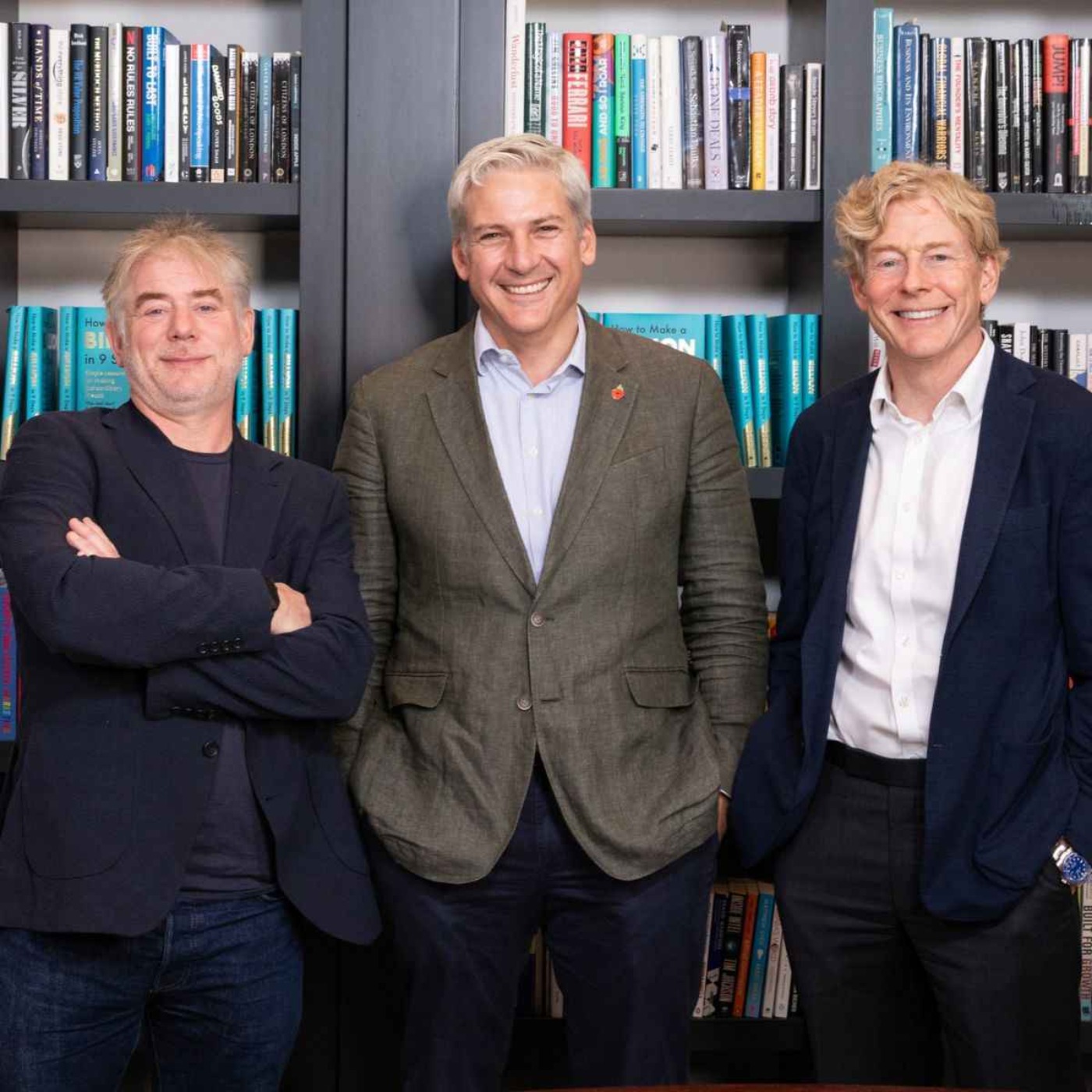
 The Business Leader Podcast with Sir Richard Harpin
9 Dec 2025 · 35m

In this episode, Dougal Shaw interviews Katharine Viner, the first female editor-in-chief of The Guardian, who has been leading the publication for over a decade. The conversation delves into her journey, the changes she implemented, the financial strategies employed to keep the publication viable, and her vision for engaging younger audiences in the digital age.
Written by AI. May contain mistakes.

Get the gist, explore an idea or ask about something said.
 Claude
On The Business Leader Podcast with Sir Richard Harpin, what are the key points of this episode?
Searching your listeningAutomatic transcript. May contain errors.
0:00This is Britain's growth moment. Do you want to be part of it? On 26th of March, 750 of the UK's most ambitious founders, CEOs and investors will gather in London to shape the future of mid-sized business. The company's driving our nation's success. The Business Leader Summit 2026 isn't just another conference. It's a day built around the three forces that define growth, ambition, policy and capital. And as one of our valued podcast listeners, you can be there in person. To secure a discounted ticket, visit the events section of our Business Leader website and use this code. BLPODCAST, all one word, all uppercase.
0:41We look forward to seeing you there. What took me by surprise to start with, interestingly, was the sort of ferocious attacks. We're quite committed to being progressive, and that is dwindlingly rare in world media. there's things that really knocked me for six at the beginning that wouldn't touch the sides now the best size of a team is slightly too small not a lot too small because you just all collapse but if it's slightly too small you go okay we're not going to do that but we're going to do that
1:23I'm Dougal Shaw and this is the Business Leader podcast where we look at the stories and strategies behind modern businesses. Today I've come to the head offices of The Guardian newspaper in King's Cross London to meet Catherine Viner. She's just completed a decade as editor-in-chief of the newspaper. The Guardian is known as a left-leaning progressive title, a British institution that has been going for more than two centuries. In our modern digital age it's also a global brand, and it stands out for not putting up a paywall. Anyone can read its content and share it. Viner has played a crucial role in devising a business strategy that has allowed The Guardian to pursue that route.
2:03The Guardian is owned by the Scott Trust, which exists to give the publication financial and editorial independence. As its most recent report explains, Viner has helped make The Guardian financially viable again. I wanted to learn more about that 10-year journey from her, but I began by asking her about the open conference call which is held at the newspaper each day at 10am since I was meeting her just after that. We have an open meeting, it's actually in person only, and anyone can join across the editorial team. And the idea is that we will just discuss the issues of the day and we'll interrogate, we'll get experts to speak.
2:43We might have guests once a week, politicians and writers, thinkers, leaders business leaders um people it's getting a bit of reputation this now so i'm actually being inundated with people who want to come and speak to conference especially politicians but yes on that but the rest of the time we you know we'll talk about an issue we're open then to challenge from colleagues or suggestions and i think it's a really good way of sort of interrogating our thinking and our processes and sort of coming together actually just once a day anyone can join together and talk about the coverage. So it is a quite an unusual thing, I think, in journalism.
3:20You've been 10 years as editor, that's partly why we're doing this interview. No one takes up a big leadership role like this, kind of fully formed, you have to sort of, I suppose, work on your strengths. So what, when you started the role, what things did you kind of think, this is what I need to improve on? And did you, you know, get mentoring or anything like that? Yeah, I mean, when I look back on what it was like when I started in 2015, I do sort of feel quite protective of that person from 10 years ago. You know, I thought it was like there's so much to come that they didn't know. And what took me by surprise to start with, interestingly, was the sort of ferocious attacks from outside.
4:00I think, you know, The Guardian is always a flashpoint. Love it or hate it, you can't ignore it. You know, it's that sort of brand. I think people often use the Guardian as a proxy for how they feel about a political situation or, you know, they're cross with it or cross with a politician and then use the Guardian as a way to critique that person and so on. So I was taken aback how personalised that those attacks were right from the word go. And I've obviously found a way to deal with that. I don't think you can do this job without that. and then I think there's so many sort of big issues that you only really know how to deal with when you deal with them you know there's no amount of preparation really other than experience and I think that's the main difference I feel 10 years on I feel a much more experienced editor and there's things that much more experienced leader as well there's things that really knocked me for six at the beginning that wouldn't touch the sides now you know like what what kind thing as i said i think this sort of this sort of public um the public stuff i think it was the hardest thing for me it might not be the hardest for another person i mean um you i mean i have had um i've got the have the same coach from before i was editor i've still got that same coach now and it really is a very helpful check-in on how i'm dealing with internal and external issues another journalist is it uh no it's somebody who used to work at the guardian a very long time ago in the sort of HR area, professional development area.
5:37So she's just fantastic. And as I say, it's such a partnership. She'll often remind me of things that I've forgotten about, about, you know, things I found difficult or easy in the past. So, but I think it is constant learning in a job like this. You know, I don't think you're ever fully formed really. And another intriguing thing about the way the Guardian appoints its leaders is that it's almost like electing a sort of head boy or girl at school, that you have a vote in hustings and things, whereas in a lot of companies the CEO comes and it's fait accompli, but as an employee you've had nothing to do with it.
6:08It means you come in with a sort of mandate, but also does it mean there were some people that you weren't the first choice because you weren't the bookie's favourite, and so for a period of time you have to kind of persuade some of the doubters. So it is an absolutely crazy process in the modern world When I tell people from different kinds of business about it, they're absolutely bewildered or indeed other news organisations. But no, so what it is, it isn't actually an official part of the process. It's the MUJ has a vote and a hustings. And it is like a sort of political campaign that is separate from the Scott Trust process to hire the editor in chief.
6:47however um the a videotape as was um a recording of the hustings is sent to the scott trust committee so you can't say one thing to the staff and another thing to the owner you know you have to think so i think what it what it does it brings a real discipline i mean it as i say it's a self any company could organize it themselves i don't think it'd go down very well with the bosses but they can and i think it means you have to think very clearly about what you want the guardian to be. Not sort of saying one thing to one audience and one to another. Do you see what I mean? And obviously, I mean, the way it's worked, there's actually only been this vote for the last two editors, I think.
7:28So, and in both cases, Alan Rusbridger and I, the Scott Trust came to the same conclusion as the staff. And you might say that would always be the way it should be. And I think it would be quite a problem if it was otherwise. And one other thing on leadership, another notable thing about your editorship is that you're the first female editor. Did you find anything in the culture that was a relic of the fact that it was male-dominated over 10 years, which is, you've been in power, as it were, longer than many prime ministers. Have you been able to make changes to benefit women? it's it's really interesting because um i think it obviously as you'd expect i think the guardian was always a better place for a woman journalist to work than other rival organizations um but it is it is also at the same time completely different now than it was 10 years ago i mean our gender we we did gender pay gap reporting before you had to um we brought that in um our gender a pay gap across the company is 2.6 % and it's even lower in editorial.
8:37Currently got a female chief, a woman chief exec and a woman editor in chief. And, you know, I think it is, it's an important area for me. A lot of the reporting we've done, we've become quite famous for about sexual behaviour, whether that's Noel Clarke or David Copperfield, Tim Westwood, and so on. I don't think it's a coincidence that, you know, that that's under me. We did this series called Killed Women Count, where we registered the death of, we did a story on the death of every woman at the hands of a man in one calendar year. We even had a project early in my editorship called The Web We Want to try and sort of make the web a sort of friendlier place for women.
9:17So I think, you know, how we cover women's lives and how we make women less invisible is an important thread of our coverage. And that is important to me as editor as well. Yeah. And I guess the other aspect is that I really care about diversity in all of its manifestations. So we've really shifted on racial diversity, particularly as sort of staff as a whole. I think we've still got some way to go at senior levels, but as staff as a whole, it's really positive now. And I think, you know, we really care about social diversity as well. We're looking at disability. I think for journalists, you really need a staff that represents the country you're reporting on.
9:59Otherwise, there's stories you miss. And so I think there's a really good journalistic reason to be more diverse. One of the things that undoubtedly helped Viner to land the editor's job is that in 2013, she had launched The Guardian Australia, overseeing the creation of a digital newsroom and a digital audience proposition from scratch. Yeah, that was fantastic. Yes, I lived there for two years. Yes, it was a proper launch. I mean, what was, I thought what was interesting is I was trying to, how, what I realised very quickly is that Australian audiences quite rightly would not want, would not respond well to sort of Brits turning up and saying, here you are, this is what you should have.
10:44I want it to feel thoroughly Australian as well as thoroughly Guardian. So we have this idea of I took a small number of colleagues out from the UK, sort of editors and behind the scenes people to make it feel like The Guardian. But then almost all the voices, the reporters we hired, we had a famous political team, political editor and deputy political editor. I got quite a lot of famous Australian writers writing and we hired some great Australian reporters. So all the voices were Australian. So it felt both Australian and Guardian. And I think I took a lot of care about that. I learned so much there, I have to say.
11:23I mean, it was a really formative experience for me. It sort of showed me how if you've got a very small number of resources, I think we had 12 people at the beginning. It really forces you to make really tough decisions about who you want to be. um i always it's really made me believe that the best size of a team is slightly too small not a lot too small because you just all collapse but if it's slightly too small you go okay we're not going to do that but we're going to do that so we focused on politics the environment and indigenous affairs um and immigration and they were the four things we focused on and we just had to be ruthless about everything else we also brought in a bit few threads of culture and sport because I think that's a really important part of the Guardians package.
12:06But yeah, it was a big success from the start. Audiences really loved it. I think we were also very digitally forward, which at the time the Australian media was not. I think it definitely is now, but it wasn't at the time. So we were really aggressive and, you know, real insurgents. And even it was almost like a startup mentality, but, you know, obviously backed by the Guardians. So it was fantastic. It was so much fun. So have you tried to bring some of that startup mentality to The Guardian in the UK? I think it's much harder to do. I mean, we are a classic legacy brand here, which has lots of advantages and lots of disadvantages.
12:46So, yes, I think one of the things we're trying to do with some investment we're doing this year is to try and get people thinking really aggressively, again, about new audiences and new ways of doing journalism, really. The Scott Trust Ltd is the ultimate parent company of Guardian Media Group, which is responsible for the publication of the Guardian newspaper. The trust has an endowment fund worth more than a billion pounds, which generates money. The Scott Trust functions as a kind of insurance policy, because ideally the Guardian is a commercial operation that sustains itself. Last year, the Guardian made just over£275 million in revenues.
13:30Reader revenue accounted for£107 million. so around 40%. The Guardian now has what it calls a recurring supporter base of 1.3 million donors. That's people who donate to The Guardian voluntarily. The financial aspect of modern journalism is obviously critical. And another achievement, I suppose, of your 10 years is that The Guardian's loss-making when you arrive, you turn to profit, I think, a couple of years ago, and that's gone now because you're reinvesting, but you've shown what can be done. The revenue is coming from different places, but a big one is the reader revenue model. Readers themselves volunteering money to The Guardian.
14:10I have to admit, I thought that wouldn't work, but it's now, I think, something like 40 % of your revenues. I suppose you had to work on the psychology of the sales. Tell me about the thought that went into that. Yeah, it was so controversial, internally and externally, of this idea that we're not going to put up a paywall. and we're going to keep the journalism freely available, but we'll ask you to pay for it. And I think that is quite a disruptive idea. It was ridiculed everywhere. But at the same time, I do think people value the journalism and genuinely they will pay for something they value, particularly if you persuade them the right ways.
14:48And there was some interesting stuff. So at the beginning, when I took over, the cash outflow that year was due to be 110 million and we had 600 million in the bank. So you can, I mean, you can do the maths, it's not hard. And we realised that the only, I mean, we did a lot of cost saving, we took 450 heads out of the business, we switched to from the Binaner presses to the tabloid presses and were printed by a third party and so on. So we did a lot of cost savings, but we also needed to drive revenue. And we put a small team onto thinking, how can we do this? And in fact, it was editorial colleagues who were really pushing for this idea of voluntary contributions, is what we called them.
15:31And interestingly, the commercial team at the time really loathed the idea. They really loathed it because, you know, I can get, I see why I think it sort of undermines the whole idea of a commercial organisation, which we are. I think, you know, we are a business. So we actually put the ask for voluntary contributions in an editorial slot, slightly subversively. And it was so successful from the word go that then my commercial colleagues were very excited and very much on board. But the messaging at the beginning, back to your point of question about messaging, the messaging at the beginning was, the Guardian's in lots of trouble.
16:09We've got less than six years left unless we do something imagine a world without the guardian in it give us some money and that was pretty successful what was interesting to me and has really made us think about how we've done it since is that after a few months of this we switched it to this plan is working come and be part of this and that was much more successful so I think the positive messaging of saying this is a great thing come and be part of it has been very very effective and personalized as well so why I get emails now from reporters asking for contributions. Yes, I mean, we pull on all sorts of different levers.
16:46We've now got this tier system. You can get the Feast app, which we introduced a year or so ago. You can get the paper as part of your package. We've introduced a paywall for the app, well, an app meter, not a paywall. And that's been very successful in the UK in particular, so that people will pay for the app. You can still get it for free on the web, but you can pay for the app. So it's all different ways to help you give us money. But because we've stayed free on the web, it means we still have massive impact for our journalism. So I'm very excited. I'm not sure this model would work for everybody, but it's definitely working for The Guardian.
17:23And to explain the Feast app, that's basically monetising your archive because it's a paid for app with different food recipes. So that's, you know, it sounds like that's a very good idea. As a leader, how do you make that happen? So yeah, and it's got lots of functionality and searchable quality and, you know, we'll do 10 best cauliflower recipes or lots of different packaging of the archive and some fresh material as well. And it's also when you're actually using the recipe, it's very functional. You know, it doesn't close. You don't have to keep touching the screen and so on. It's just very user-friendly.
17:57Good when you're cooking. Exactly. It's targeted at when you're cooking or just reading it for pleasure, as I do. But it's, yeah, I think we saw an opportunity. You know, I think we've got a big reputation for our food journalism. We've got a great team. We've got a beautiful stack of recipes. So we thought, what can we do with these? We also have this Feast brand that we introduced actually originally as a print brand on a Saturday, a separate print magazine. And it's such a lovely word, Feast. Let's turn that into the Guardian Feast. And so I'm really, really happy with that, how that's gone as well.
18:37Your other money-making initiative is The Filter. Yes. Basically, it's a bit like which magazine, I suppose, in that you're reviewing products and you've got your journalists to do that. First of all, how did the journalists find it when they were being asked to become product reviewers? So we have specialists, journalists to do that. I think you need people who really know about the area. So I was just reading the other day, for personal reasons, I wanted a new electric toothbrush. So I read our guide to the best electric toothbrushes. And the guy really has got very much into brushing his teeth.
19:13But he is also an expert in consumer testing of electrical products. So, you know, this is an expert area. We don't just grab somebody out of the newsroom. It's something we take it very, very seriously. I think, you know, to build trust with audiences, I think it has to be something that's done very responsibly. we talk about what we do with the products afterwards we talk a lot about sustainability and waste and whether something's a b corp or not you know we really do do it in a guardian way we do it in a very distinctively guardian way so it should feel different different from that you know we'll sometimes say just don't buy anything here you know we'll just get it secondhand i read the toothbrush one i also yeah i read the cordless vacuum cleaner one and i suppose of those it's quite you think okay there's some big brands that you'd expect to be reviewed here but there's other ones like you know 10 snuggly things to do for autumn to feel nice where it's a bit more diffuse about what you could choose so are you being inundated of people saying you might want to review my product because we'll give you a nice cut because that's why this is money making because the guardian will get some money from the links if people click on only from the links not ever from a um the company producing it no no they're really it's a really experienced team who know what they're doing we got we hired people to do this specifically um you know we um they they will judge it on the basis of the item they won't know where how much of uh from the affiliate link is coming back to the garden they're small amounts anyway no it has to be independent that otherwise it doesn't work and i think i know lots of organizations have done things similar to this and um we know the practices they follow and they're not as responsible as this and i think you lose audience credibility.
21:00So we're very, very open with audiences about that. We signify on every article, reassuring people and telling them how it works. So what's interesting actually is audiences have told us how much they enjoy this coverage. Like you said, some of it's a lot of fun, as well as being really useful. I did the Coldwater Swimming Outfits one. It is so comprehensive. She is so expert, the woman who wrote it. you know, I found it extremely helpful. So it's about sort of serving audiences as much as anything else. Does the filter create significant revenue? Obviously, it makes revenues in a kind of new initiative.
21:40Yeah, I mean, it's a long term plan, I'd say, for the filter, it definitely makes revenue. But as I say, what I'm most excited about is how audiences are loving it. And I think it particularly in the kind of times that we're dealing with, and when we talked about my last 10 years. What a period of political instability and chaos and challenge and really quite disturbing times for people. And I think this gives a bit of light relief.
22:08One of the things the recent Scott report said is that it's freeing up some money that you can invest in video and audio journalism. So what kind of things might you be doing and how could that help your bottom line as well? Yeah, so this is a very exciting project we've got going, which we've named after John Berger, who wrote Ways of Seeing, which might be a bit pretentious. But the idea is, is that audience behaviour is dramatically changing. At The Guardian, we publish, believe it or not, two novels worth of text every 24 hours. but actually that isn't how audiences take in information anymore it is still, text is still important but I think the exciting place to expand for The Guardian is in off-platform social media video, audio and everything in between really so we've seconded two senior colleagues to run this project for the next two years we are hiring extensively in the sort of area of visuals and video and audio and I think it's going to be I think it's a very exciting opportunity to reach new audiences I mean I always say what journalists I think want most from their stories is impact and we get loads of impact to the Guardian partly because we're free partly because of our reputation partly ultimately because we do so much fantastic journalism but this is an opportunity to get those stories out to different audiences in different ways in different places.
23:45So editorially, I think that impact is crucial. You ask commercially, I think, you know, some ways we'll be monetizing it as we go, but this is a long-term game. The good thing about the Guardian's ownership, the Scott Trust ownership, means that they are investing now for the long term. They don't demand immediate returns year by year we've shown we can make the guardian um like you said basically at break even making a small profit a couple of times so now we can let's invest and really um uh look at the future so that will be um building relationships off platform with audiences who then come back to the the guardian because i think ultimately the game is to come to the Guardian, that the direct traffic is what we mostly want.
24:36But it may take some years, say, with younger audiences to build a relationship, to build a sense of the brand. But then they might come to us eventually. So it's a sort of long-term strategic aim. That brings me on nicely to a question I was going to ask. But Basra was going to mention a long read that you did, a very well-received one, How Technology Disrupted the Truth. And you said in that when a fact begins to resemble whatever you feel is true, it becomes very difficult for anyone to tell the difference between facts that are true and facts that are not um so obviously that's something you care about the problem is i suppose if you're trying to reach more people especially young people they're on these social media platforms so especially if you're doing video does that mean you have to go on to these places where the battle of fact and fiction and feeling is kind of the front lines basically i mean i wrote that in 2016 how much worse has it got my god I mean yes I mean well I think I think it is about yes I do think it is going to those platforms but I think it's doing it with Guardian values and Guardian editorial judgment and perspective so if you say I think influencers rather than just sort of sneering at them I think they do some things really well they're very good at understanding the platforms they're on they're very good at building communities with their audiences.
25:50So if we can take those things from influencers and pair them with, yes, facts, deeply reported information. You know, for example, we do this already on TikTok. We have a fantastic, it's worth a look, Matilda Bosley from Guardian Australia. She's been on TikTok for years, speaking extremely fast, like people do on TikTok, and explaining. I met the one that went viral was explaining the fall of Kabul. Afghanistan has fallen to the Taliban. This is huge international news. So here's a crash course with all the basics that you need to know. The Taliban is an ultra fundamentalist Islamist militant group that controlled most of Afghanistan during the 90s.
26:28Although Afghanistan used to be relatively well off and progressive, this country has known nothing but war for the past four decades. It's all checked by the international team. Everything works in a very, everything is It's fact-based, but it is absolutely in the idiom of TikTok. And it's really successful. And I think that feels exciting to me, that we can go and find new audiences with our journalism just in a slightly different way. Do you mind if your journalists are kind of social media influencers to a certain extent in their own right? Because speaking as a journalist myself, it's almost an employed one of a publication.
27:02You almost have this sort of side hustle in the current world where you've got your own profile to think about. You're trying to raise that. And that also benefits your employer because you're talking about the stories that you do together. But I guess that's a whole new thing to be managed from your point of view. Yeah, it's complicated, isn't it? And it's different for different individuals, I think. But ultimately, the brand is The Guardian. But I think, yes, we're quite happy to have people speaking on behalf of it. I think a lot of younger people relate to individuals more than institutions.
27:31But I think without the institutional backup and the institutional values and standards, then it isn't the Guardian anymore. So it's a careful thing to work through.
27:46I suppose one thing about keeping your material free and not behind a paywall is that it can be global and of course it can be shared more easily. So are you taking a bit of a, are you kind of staking your vision on a global vision for the Guardian? Definitely, yes. So we're much bigger outside our home country than other news-organized, comparable news organizations, possibly excluding the BBC. But certainly the New York Times, for example, is much smaller outside the US than we are outside the UK. And I think we've really put a lot into this. So when I started 10 years ago, I think Guardian Australia and Guardian America, they both existed, but I think it was slightly unclear how we were going to pay for them.
28:36we were losing a lot of money in the States at the time. We're now extremely profitable in the US because of digital reader revenue and actually advertising. So I think there is a much greater clarity about this global perspective. We've also launched Guardian Europe, which is our second most loyal audience after the UK and is really flying. We only launched it a couple of years ago. And also being big in the UK is important. We're bigger than ever in the UK and making a lot of revenue here as well. So it is the global perspective. I think because, as you say, we are free on the web and that makes it a really easy access point for global audiences.
29:19I think the way our perspective, the feedback we get from audiences is that we so clearly take an internationalist perspective. We don't feel like it's safe with the prism of the Foreign Office or the White House. We are quite internationalist. We employ lots of people on the ground. We don't just send foreign correspondents and so on. And the subjects we cover, like the environment, like global politics, identity and so on, they're very global subjects and not many people cover them in as the depth as we do. We're quite committed to being progressive and that is dwindlingly rare in world media, especially English language media you know because back to this important point that we don't have a billionaire owner and we don't have shareholders we just run for the sake of the for the journalism so all of that I think is why we're successful globally and we've really tried to lean into that and it's been really successful in the last few years and it's a great diversification commercially as well of course
30:27as a leader you've had to make changes at the guardian and that means pushing a kind of innovative culture so how easy is it to do that with journalists and has that been a challenge do you get some pushback so um when we're talking about this um this program of change we're doing at this moment this transformation program we had some ideas sessions um as part of the project and 500 colleagues came to these idea sessions. We had to keep putting on new sessions. And actually they were all suggesting things that have ended up in the programme. So I think there is a lot of enthusiasm for it. I think people are aware that audience behaviour is changing.
31:09How could you not be? They're aware that AI could really change what we do. How could you not be? And so they want to be part of how we solve that. I mean, it's very interesting. The video team has been completely overwhelmed with people who sending ideas and stuff like that. So actually, I think it's a team of journalists who are really up for this and quite excited about it and want to be part of it. And lastly, because Business Leader is a business podcast, and there'll be lots of business owners listening. You're a leader who's obviously a journalist, but you've had to be business minded as well.
31:40So can you think of anything you've learned or any advice based on your particular journey that just might be useful for business leaders in general? Yes, it's interesting because obviously, yes, I'm a journalist first and foremost, but what I've always believed when I was editing the magazine when I was a lot younger in the 90s. And I learned very, very quickly that if the advertising team got more adverts, then I got more pages and I got more money to spend on journalism. So it seemed to me a no brainer. We want the advertising team to get more pages. Now, obviously, how you do that and where you draw the line is really, really important.
32:20But I've always been commercially minded because I think the two things are linked. And obviously, it used to be that there was advertising over there and editorial over here. But now the business model, as I've described, is digital reader revenue, revenue from our audiences for the journalism. It's much more linked. So I do think you need to be very joined up. and the way I think about it is if you have editorial success without commercial success you go bust if you have commercial success without editorial success there's just no point you're just sort of it's even no product so you need the two to be working together and I just think that's absolutely crucial in this day and age and I guess you have to communicate that to the team to have the buy-in so they understand that they might not have that insight to begin with yes i mean i think quite rightly um people come from an age of of um of total separation and that was definitely right for that era um but about understanding where we draw the line and where we don't because there's this interesting um situation at the at the guardian which will be a surprise to your listeners which uh so the um editor-in-chief is technically an inch or two ahead of the business leader that and that's actually written in my contract project believe it or not um um and but i always think is that that what that means is we can say you know what we're not going to take that advert for example or we're not going to do that thing but i always think if you have a properly coordinated relationship with the commercial team you should never have to be pulling rank in that way you know it should be a joined up project and that's how it works at the moment so so that means an inch ahead of anna bates a new ceo of the guardian media group has a more sort of business focused role i suppose in the organization Yes, it means technically that ultimately the editorial team is sort of sovereign.
34:07But as I say, you just don't want to be pulling rank on that. And the fact that I've got such a great relationship with the CEO, that's what that means, I think, in practice. As a final question, since the latest edition of our Business Leader magazine is all about productivity, I asked Catherine Viner if she could share any personal productivity hacks. Her answer surprised me. As a 54-year-old woman is HRT. That's it. There aren't many women doing jobs like mine at my age and I think oestrogen is important in that. So you actually felt it kick in like a fuel that before you're a bit tired, couldn't get so much done and the concentration levels as well.
34:56It's like rocket fuel. Highly recommended.
35:02you've been listening to me Dougal Shaw speaking to Catherine Viner editor-in-chief of The Guardian the business leader podcast please do rate and subscribe to us wherever you get your podcasts we do two episodes every week and if you visit our business leader website you can sign up to our weekly newsletter to get more content like this and find out opportunities for your business
35:29The Business Leader Summit 2026 is set to be bigger, bolder and more ambitious than ever. Don't just watch Britain's growth story unfold, be part of it. Secure your ticket today by visiting the events section of the Business Leader website and using the code BLPODCAST, all uppercase. It's your chance to join the leaders who are shaping the future of business.
Hosted on Acast. See acast.com/privacy for more information.