Ask ChatGPT
 The Business Leader Podcast with Sir Richard Harpin
15 Apr 2025 · 44m

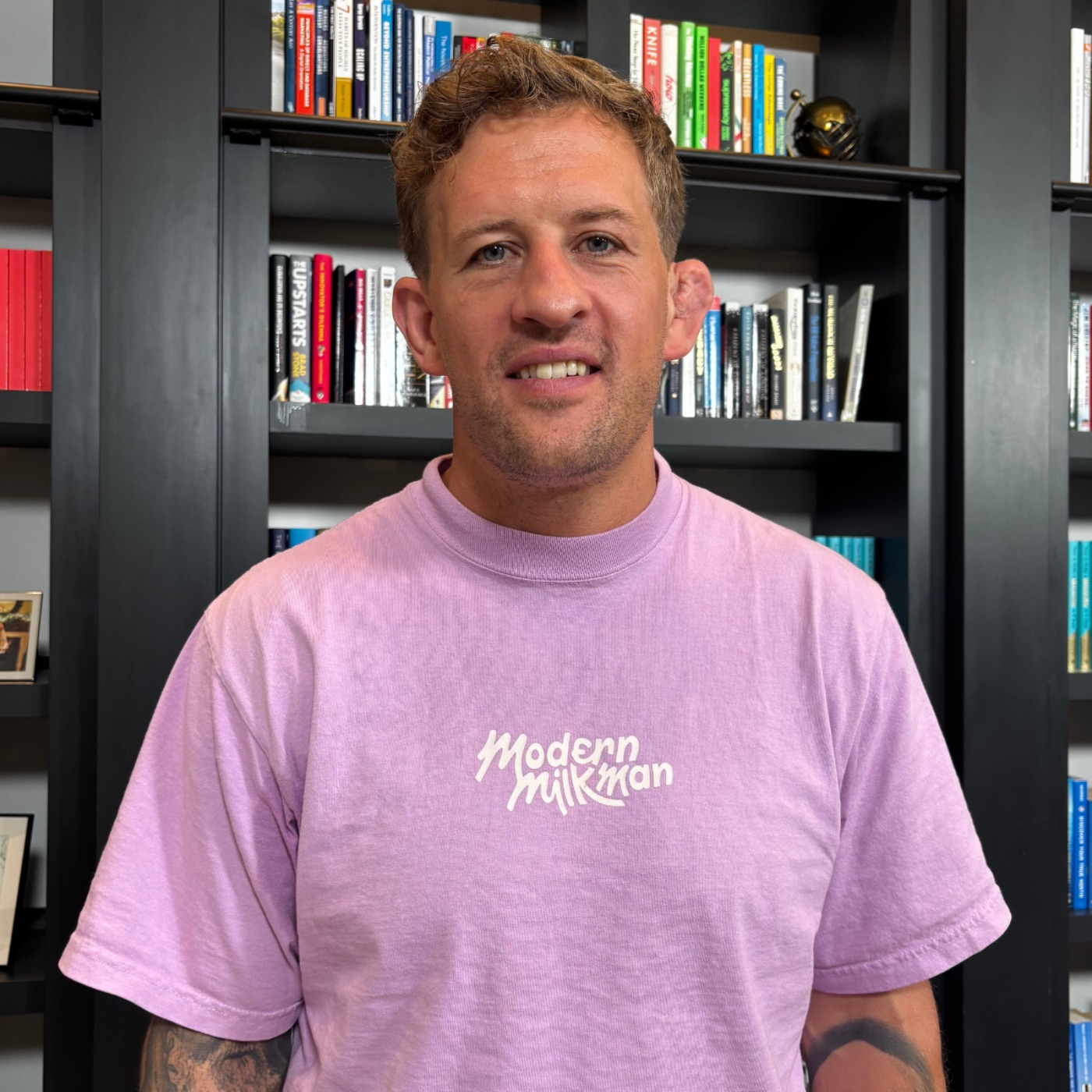
In this episode of the Business Leader Podcast, host Victoria Price interviews Tom Ryder, the founder and CEO of Applied Nutrition. This episode marks the beginning of a limited series focusing on the personal stories of entrepreneurs across the UK, highlighting their journeys of success and the lessons learned along the way.
Written by AI. May contain mistakes.

Get the gist, explore an idea or ask about something said.
 Claude
On The Business Leader Podcast with Sir Richard Harpin, what are the key points of this episode?
Searching your listeningAutomatic transcript. May contain errors.
0:00This is Britain's growth moment. Do you want to be part of it? On 26th of March, 750 of the UK's most ambitious founders, CEOs and investors will gather in London to shape the future of mid-sized business. The company's driving our nation's success. The Business Leader Summit 2026 isn't just another conference. It's a day built around the three forces that define growth, ambition, policy and capital. And as one of our valued podcast listeners, you can be there in person. To secure a discounted ticket, visit the events section of our Business Leader website and use this code. BLPODCAST, all one word, all uppercase.
0:41We look forward to seeing you there.
0:48Hello and welcome to the Business Leader Podcast. I'm Graeme Ruddick, the Editor-in-Chief of Business Leader and the regular host of the Business Leader Podcast. I'm delighted to introduce you to the first episode of a special series of interviews with entrepreneurs around the UK by Victoria Price. Victoria is head of private capital at Alvarez and Marsal, the consultancy firm, and she spent over 20 years in professional services in a collection of senior roles. She's the mother of three and a vocal advocate for working parents, and she's also an investor in promising businesses and involved in various charities.
1:23In this first episode, Victoria speaks to Tom Ryder, the founder and chief executive of Applied Nutrition, which in 2024 floated on the London Stock Exchange with a valuation of£350 million. pounds.
1:42So I have to start by congratulating you, Tom. 2024 has been quite the year for you. Not only did you IPO Applied Nutrition, but you also welcomed into the world Twin Girls. So a big milestone from a personal perspective as well. There is an absolutely fantastic picture of you with your arms thrown up in the air, the confetti kind of like coming down. You're there, you're ringing that bell. Did you ever think, growing up in Kirby, that you would be there on that platform one day in the future? Absolutely not, Victoria. Growing up in Kirby, we didn't even know what the stock market was. It's funny because when I speak to some of my family now as well, when I'm IPOing on, and people say, my family's like, congratulations, I'm friends, congratulations.
2:27I'm like, what is it? They don't actually know what it is. Growing up in Kirby, where I grew up in pensioners blocks and masonettes, never in a million years would it be a dream that we'd be standing on the MUNS stock exchange? That's the same as me, nobody knows what I do for a job, I try and explain it but I just give up in the end. So Applied Nutrition is a premium nutrition brand and it's really broadened out in terms of who it's serving, so you've obviously got the stuff from a fitness perspective but also now for people that are really interested about beauty and longevity and wellness and so on, so just tell me a little bit about the range So yeah, you are right.
3:04I mean, if you go back to when we started the company back in 2014, it was predominantly gym goers, stroke bodybuilders. 10 years prior to that, when I was in the industry but didn't have the company, it was just really bodybuilders and extreme gym goers. But it has evolved over time. And one thing that I always said when I started the company back in 2014 was I don't want to be pigeonholed into one demographic. I don't want to be pigeonholed to a bodybuilder or someone that just wants to go in and lift weights. I think health and wellness has grown it's evolving, it's evolved since I've been involved since leaving school at the age of 16 all the way to 2014 when we started the brand to where it is now whereas it's very much a health and wellness brand so it doesn't matter whether you are a bodybuilder or whether you're somebody that is just looking for some extra vitality within the diet or you're someone that's looking for some collagen we cater for a wide spectrum so we appeal to a lot of consumers not just one demographic Yeah.
3:56And you can just see the diversity now in your customer group. It's not all those kind of men that look a certain way physically. You're kind of appealing to everybody, which I think is part of why you've been able to create so much value. But before we get into all the detail of the IPO itself, I was just going to start by taking you back to the beginning. So as we've already alluded to, you grew up in Liverpool. You were raised by your grandparents, Alan and Sheila, with your brother. And I think at different points, you also had your uncles living in the household. So it sounds like a busy household.
4:30I'm sure very, very vibrant. But just tell me about your upbringing. What was it like growing up? Yeah, so I was always one of those kids that always stayed with me nan and granddad anyway from being a baby. And my brother always stayed with me mum and dad. but then me father died when I think I was 11 maybe or 12 and then I went to live with my grandparents full time yeah I was in a house with my two uncles lived there as well so it was a crowded house for the first few years I was sharing so me two uncles shared a room they both had a single bed in the room and I used to go top and tail with those each night and they had the girlfriends in the beds oh god so but it was great times you know the love that that I had from my nan and grandad and my uncles was just, it was amazing.
5:17So it was a real good time. When you think back and you think, wow, I'll did a share of a single bed. But back then it was just, I loved it. It was great. And it was just normal. It was what all your mates were doing as well, wasn't it? So it didn't seem anything out of the ordinary. So your grandad, Alan, he worked in security. And I think your grandma was really just the embodiment of a stay-at-home mum or grandma in your case. But I believe she was a bit of a force to be reckoned with. She shouldn't take any messing. so just bring that to life a bit for me so you are right she was the force to be reckoned with but she was also the glue that kept the family together so any event it was always at my nan's and my nan loved the family coming together my granddad was working 12 hours a day 7 days a week on security and did that for so many years nights she used to work it was just programmed to do it and like I said my nan kept the family together and yeah she'd have no messing around from the minute I was leaving school I remember leaving school Victoria and there was no sixth form in our school or college.
6:15So I remember I was doing my GCSEs and my nan kept saying to me, don't you think you're sitting around this house unless you go and get a job? I was like, okay, okay. So in Kirby Town Centre, there used to be a thing called the Careers Office. It's going back years. And there'd be postal notes on the wall. This, like, maybe prior to the internet, maybe it was a big thing. And you'd read the postal notes and say, apprenticeship here, a job here, so I was applying for apprenticeships as I was doing my GCSEs. Thankfully, the first one I applied for, I got. And that was it. That was it. My nan would not let me sit in that house.
6:49It was always, make sure I do my homework, make sure I go and do... I used to do drama class as well after school. I know. She'd send me to drama class. Listen, there's so much that we've got to unpack. And I actually feel like your nan's been a bit harsh kind of giving you that word warning at 15 because you actually got your first job at 11, didn't you? And by the time you were 13, you were already doing two jobs. So I think your granddad's work ethic was just kind of something that you inherited. So tell me about your kind of working history from 11 through until when you were just about to leave school before you took that apprenticeship on.
7:21So, you know, you know what I did? I had a milk rant from the age of 11. And the guy used to come and pick me up on the float at like, let's say, 4.30. But my nan, every single morning, would get up at 4am, make me my breakfast and send me to work on the milk float. every single month. She'd done that for years. And then obviously I'd come home from doing the milk, go to school, come home, go and get my paper out, which was relatively easy. It took an hour, one hour to do the papers around the States. Did you chuck them in or were you kind of really diligent going and putting them through the letterbox?
7:50We had to put them through the letterbox. So when you look at the, within the US, you just throw them into the garden, don't you? No, we had to go and post them. But you had to. It's a bit more rainy in Liverpool, isn't it? Exactly. And if you want your tips on a Thursday night when you used to go collect them, you'd make sure that you got the paper right. So you touched on drama and I'm not going to let you get away with that because, as you know, I grew up in the North West as well and I just want to sort of bring to life, how did it go down on the estate when you were kind of toddling off for your drama lessons, Tom?
8:19You know what, I don't know, but I imagine I was a laughingstock to all my friends. Thankfully, they never really give me a hard time. It's me face up behind my back probably. Yeah, yeah, yeah. It's all that bodybuilding you were doing. Yeah, probably. But you know what, I was... I loved the gym. I loved football. I was always active cross-country when I was in schools. Very, very active, but I just loved drama as well. Besides PE in school, it was my favourite lesson. And I wanted to do it after school because I really, really enjoyed it. So I did that for years. And Little Birdie tells me that you were actually quite successful and you took yourself off for various auditions.
8:58Is there any truth in that? I did, yeah. Yeah, you did. Yeah, I did. I'd done an audition for an adverse aquafresh power brush, like an electric toothbrush, which I was successful with. You've got nice teeth, Tom. And that was on the TV for quite a few years, quite a couple of years, yeah, that was on the TV. I'd done like a Shaw film that went to the Cannes Film Festival. I'd done things like, do you remember Brookside? Yeah, I remember Brookside, Jimmy Corkill. Exactly, yeah. Well, do you remember, who was the other Cork Hill before him? Oh, you're pushing me now. So he's the one that wrote the Shaw film anyway.
9:38But as for Brookside, I auditioned for a new family that was going into there. It was called the Clough family. And my character was called Kevin Clough. I was successful on that as well. But unfortunately, before we'd even started the film, they'd said this family now is only going to be in Brookside for like 12 weeks, as opposed to like a two-year contract. so that was a bit disappointing but I enjoyed it, it was great I've done quite a bit of wax, haven't you? No, I'll be honest with you, so I did try and find that advert because I was going to have a little laugh at your expense with your kind of like young smile but I couldn't find it so the internet doesn't keep everything but just bring it back to your nan, so you lost your nan six years ago I understand that you've honoured her with what is quite an impressive picture that you've had to remember her by So when you walk past that image, what does that conjure up for you?
10:29What does it make you think of? It's like I do take moments every now and then just to look at the picture. And just because you do it. The picture is amazing, by the way. I got a Russian painter to do it for me. And it's absolutely special. And I feel like when I do take that moment, I feel like she is in the room with me looking at me. So it does mean a lot to me. She sounds like an incredible woman. And I love what you just said about making that cup of tea, because they're the kind of really small gestures that growing up, that just kind of tells you you're loved, doesn't it? Tells you that you're important and I think that's really, really powerful.
11:02But before we go any further, it should be obvious to everybody that's listening that you are a proud Liverpudlian. And as you know, I'm a Northern girl myself and I thought that I always like to make these interviews a little bit light-hearted, have a bit of fun with the guests that are coming on. And so what I thought we'd do is just a little test to test just how liverpudlian you are and to try and sort of debunk and explain some of the phrases that we're all going to know what means but if you're listening from anywhere else in the UK you might think what on earth does that mean obviously if you kind of get any of these questions wrong then it's clear that you've left your roots behind and that you can no longer count yourself as a liverpudlian so I'm going to use my best liverpudlian accent and the first one is what What does it mean if I say, why have you got a cob on?
11:52Why are you annoyed? Yeah, why are you annoyed? Well done. That's tick number one. I'm made up. I am. I'm happy. Yeah, you're very happy. Not done in makeup. I'm buzzing off your traps. I like your trainers. I like your trainers. And finally, where am I going if I'm going over the water? Birkenhead. You're going to Birkenhead. Well done. You've passed the test. You know when you say it like that, Victoria, and you think, Like, nobody would understand what that is unless you're from Liverpool. It's going to be interesting to see how you get on when you go to the US because we're already talking a different language before you throw all of that in.
12:26So well done. You've passed the test. You can count yourself as a true Liverpudlian. But let's get back to the journey. So you've now left school. As you said, you went into that careers office. You got the first apprenticeship that you applied for and that was to join Liverpool Council as a scaffolder. you are committed Tom because I believe that you are fully qualified in whatever the scaffolding qualification is is that right yeah I've done it for many many years yeah and what was that like what did you learn from doing a job that was I guess quite physical so I think yeah it was physical but it was something that I really enjoyed because I was into my fitness back then and so kept you fit kept you kept you healthy I think the main thing that you learn I think from an early age going to a building site where a load of scaffolders is, nobody's going to give you anything.
13:15You literally need to, you know, you've got to show your worth. If you want to be, if you want to go and sit around and try and scythe, then, you know, you're going to get no respect from the guys. So if you want to respect from the older guys on the building site, you need to graft. Yeah. And I would imagine it's quite, you grow up quickly because you're in that environment, as you say, with lots of men who are all older than you. and basically there's a hierarchy in that environment isn't there based on experience and and effort as well um but you're doing that and you've already developed the lifelong passion that you've mentioned a couple of times which is going to the gym and i think you sort of did that with your uncles and and you basically start a little side hustle so where did that come from so again the supplements was just a passion of mine um i was really interested in them reading up on them not just taking them just understanding why you would take them and what are the benefits and and etc and there was a small store that that would come available on the estate where i grew up and it was um i think i've mentioned it before it was like a 50 pen store or a 20 pen store it was just like people would go in and just buy like out-of-date stuff and whatever else it shut down and i rang the landlord and said i'd like to do a supplement store there and the landlord was like what on earth is a supplement store i said well it's something that i've got a passion for so i think it's growing people in the gyms where i where i go to they're interested in it so i think it could be good.
14:35So we did that. I opened a small supplement store, started importing some of the US brands, which predominantly ruled the market then because the US was way before us. And how old are you? So when you're putting in that phone call to the shopkeeper, how old are you at that point? Maybe 18. And you're not concerned about taking a lease and having commitments that you then can't meet. You just kind of go with your gut. I think I just went with it, Victoria, if I'm honest. I don't think I give that a thought. I'm an accountant. If you'd have talked to me, I would have been like, Tom, have you thought this through carefully?
15:03but you just went and did it. I think the rent was about, I don't know, I think it was less than£100 a week. It might have even been about£70 a week to start with. And then I stepped up, but it was just, I just thought, this is something that I love and I'll give it a go and try it. And for a long time, it was, nobody could get their head around it. What is it? A load of people coming. Don't get me wrong, your gym goers were coming in and saying, yeah, I want to try this. But 95 % of people didn't have a clue what it was. But you could see over the years, it's still open today, the store. It was like the first supplement store in Liverpool.
15:35And over the years, you see more and more people of different ages, different genders just coming in and wanting to buy products because the category, the industry was just evolving to where it is now, where it's absolutely everywhere, isn't it? Has it got a bit of a cult following now? I bet there's like a real sense of pride for what you've gone off and done. Yeah, to a degree, yeah. They never say in Liverpool if they're proud of you, do they? No, but to be honest with you, Liverpool, Liverpool, it is one of those cities that people really get behind their own. So if you're an athlete, if you're a boxer or if you're a footballer, they really get behind you.
16:09And I've noticed that as a business owner, as a brand owner, people of Liverpool really get behind the brands. Yeah, no, I see that. So at 24, you decide to pursue nutrition full time and the kind of side hustle that was Body Fuel becomes the main event. And at that point, as you already said, you're working with a number of existing brands already. you're kind of importing them and predominantly kind of selling off from a wholesale perspective so what shifted to go from that model to applied nutrition so yeah you are right i think i was about 24 and i was um i'd scaled it up a little bit and started supplying other independent stores because more had opened around the city and further afield gyms etc and it was growing applied nutrition was one of the brands that i stocked at the time it had one product of real note and that was a product called critical mass it was a weight gainer still within the portfolio today but i've amended and reformulated it quite a few times i noticed it was in decline um the owner of the actual brand was was looking to wrap it up he didn't have the energy to try and grow it or evolve it or understand why it was why it was in decline i felt i understood why it was in decline felt i could make those fundamental changes of i thought it was the wrong size thought it needed to reformulate it take the sugars out change the flavor slightly the packaging needed a revamp so i thought i'll give it a go Part of the taking the brand on was I was on the hook for two or three production runs in Canada where it was being produced at the time.
17:36So I took that obligation on. And whilst I was going through that stock, I was working with a more local manufacturer in Belgium about making those changes. By the time the stock had gone, the new stock was in and we started to gain traction pretty, pretty quickly. And it's quite an interesting evolution, isn't it? because you're not afraid of the unknown, but I'm interested to understand how you do it in a way that manages the risk because you went from importing and reselling products to taking on responsibility for manufacturing, changing the manufacturer, but still ultimately outsourcing the manufacturing.
18:12And then all of a sudden you start doing the manufacturing yourself, which feels like quite a daunting leap. So just talk me through how you decided that you were capable of doing that and how you got help. Do you know when you put it like that? You're right. And I think back and it was the unknown. So it's not, I'm making a sound like, I mean, now I could pick a manufacturer up anywhere, could reformulate a product easy. But back then, I didn't have a clue. I was just making it up as I was going along. And that's genuinely what I was doing. I thought, okay, I need to get a more local manufacturer.
18:42You start, you're asking your network, you're asking your people, you go out and meet them. I met one that I really liked. The fundamental changes of the product, I knew myself what needs to be done. but it is it's it's risky it is big risk but back then again i never thought if this doesn't work it's just this is what i need to do yeah and this is what i'm going to do so i was literally just turning up at companies like like the manufacturer in belgium i'd just turn up at the door and say this is this is a product that i've got this is what i want to do this is and i just felt like by just jumping in the deep end yeah was actually making progress just working through it with them and that kind of like iterative partnership for the way that you you worked with them um so i think I'm right in saying that the first formula that you reformulated was a pre-workout mix that you did.
19:27Did I get that right? So the pre-workout was ABE, All Black Everything. It's our most popular product today. It's one of the most popular pre-workouts in the UK, Europe, Middle East, Australia. It's on the shelves of Walmart. So that particular product was the first product we formulated in-house when we started manufacturing. Yeah. So that's your baby. Yeah. So I think, you know, I'm an avid gym goer. I'm there every single day. So tell me, what should I be taking to keep myself in prime condition, Tom? You know what, Victoria? I think protein is absolutely vital. And there's that conception of, especially amongst women as well, they think protein is going to build muscle.
20:02Yeah, because I don't want to beef up. I'm any little. And it's not. Absolutely not. But you need it to, just even if it's only for recovery of your muscles, protein is absolutely vital. I think intra-workouts are important or just general hydration. You can have your hydration during your workout or you can have your hydration at any time during the day. I've also started branching out more into health and wellness products now so I have greens every day I have collagens every day and I think these I don't get enough in my diet so these products for me are absolutely vital and I would I would also propose them to you to say do you get enough greens in your diet if not these are these are the type of products that you do need to take a pre-workout is always great if you're struggling in the gym or you just need that extra boost for me pre-workouts are they're really good perfect thing to get you raring to go well I'll try it and see if my Peloton rating goes through the roof.
20:50I'm going to just dive back into the journey because one of the things that absolutely blows my mind is how much you achieved with no employees whatsoever. So for quite a long period in the journey, it was just you kind of flying off and talking to the manufacturers and going around and selling the product and almost like doing absolutely everything. So, you know, well, I'm just fascinated by that because I think one of the big risks for businesses is the cost of of employing people so what was your kind of thought process of i'm just going to keep working harder and when did you feel it was the right time to start recruiting people so you are right um up until we opened the manufacturing facility or the small room um everything was done by me i we couldn't i couldn't afford um any employees and it's something that i felt i just wanted to do myself i'm a bit of a control freak yeah and i felt that I had to do everything myself and understand everything myself so yeah you are right I would liaise with the the manufacturer I would work with a designer to design the products I would work with a formulator to make sure that with the at the time I was using the manufacturer's formulator to make sure it was compliant and it was it was hitting the points that we needed to hit I'd do the taste testing the fly open do the taste testing then obviously when the product had lands I'd go out to the to the stores a lot of these stores I already had relationships with because previously I was selling other brands.
22:14I'd be knocking at the doors and saying, please take this off us. We'll give you credit. We'll give you a product assignment. If it doesn't sell, return it. I'd then come back to the warehouse, build the pallets, load them onto the wagons. They go out to the customers. And then 30 days later, I'd be knocking at the customers' door saying, can you pay me, please? How's it gone? You again. Up until, I think it was early 2016, when we made the decision that I was going to manufacture it in-house. And the consultant said, you do know you're gonna have to bring some people in to help you you can't do everything on the line so I was one of the people on the line but that's when I brought in the first four employees then yeah so 2016 you start bringing in the first employees yeah we're now early stages 2025 you've got 200 employees I think there will not be a single person in the business whose job that you haven't done previously which I think is a very kind of human thing to be able to kind of empathise and understand the challenges that people have in different roles but how did you take to being a boss because you've said you're a control freak you've had to let go you've got 200 people what are you like to work for i'd like to think i'm a supportive boss or leader i've had to learn a lot of lessons as the company's grown i've had to release the reins on a lot of things I've had to realise that there's some things that I'm no good at up until our CFO now Joe, up until he joined us I was doing a lot of the invoicing I was doing a lot of the reconciliation I'm going to try not to grimace honestly Joe must have been like what have I walked into what on earth is going on here and I think just realising what you're good at and what you're not and letting the people who understand that that sector a little bit better or them jobs and tasks just releasing releasing it to them but for me i think as a leader i think just being supportive um letting everybody voice an opinion listening to people's opinions because a lot of our ideas a lot of our great successes have come from people within the office people with on on the factory floor people from from production just just voicing their opinions i love to hear people's perspectives yeah they're your customers aren't they and um so you kind of start i guess maturing your leadership team and bringing talent in and obviously joe who you've already mentioned your cfo he was one of those individuals quite an important hire especially with the things that were yet to come in terms of taking investment and the ipo and so just talk me through how did you prepare for joe coming in for his interview so so well prior to that i i we brought it i brought in steve and granny yeah who's our coo now and obviously a shareholder and he's i realized that i i was growing a brand but i just didn't know how to grow the organization and scale up steered was coming from um another live for business great business he was ceo uh started off as an apprenticeship ended up a ceo of a private equity back company uh logistics company so i brought steen and he then started to show me how to scale things up so he was absolutely vital for me personally and and helped develop me as a person then at the time like I said I was doing a lot of the accounts and Steve was like we need to bring in an FD here and we'd just done a JD deal so we'd done a deal with JD Sports and Joe was working for the advisor at the time Grant Thornton honestly Victoria when I say I've never nobody's ever understood our business so quickly so all I mean these legal packs that was coming through and when we were doing all the DD it was new to me I didn't understand any of it and a Friday night you'd have probably 150 pages come through and say some light reading can you have it done by Monday morning and this Joe was just ploughing through it and come Monday morning he'd done my work for me and I was like, so we nicknamed him the machine so we were like we need Joe, let's bring Joe over so we asked at the time the guy that was heading up the team for GT Pete Teddy, I don't know whether you know him he's like Joe would like to move, he wants to come into industry and we're like oh we'd love to have him so we brings him in for his interview anyway and I forgot about the interview didn't I so we'd had a wagon turn up and it was a wagon full of caffeine for a trailer and you thought I need that because I'm not high energy enough as it is so I was like and the guys would come up and said listen we're short staffed we need to unload this trailer it wasn't on pallets it was hand packed so we were like okay no problem so we ran down I'm off loan and I had like a shirt and jumper on like this by the way and I'm off loan caffeine with the guys and next to me someone said, there's someone in for an interview and I was like, oh no, it's Joe and I'm absolutely sweating, I'm stinking.
26:54So I goes into the meeting room, Joe's sitting there and I go, Joe, I'm sorry, I've been on loan, I've been on loan, no wagon. We're in two weeks, Joe's on loan, no wagon. That's what you need, isn't it? People that have got the same attitude and it's just like, let's get the job done. Let's just get it done, yeah. So you just mentioned JD and I'd love to just talk to you about that a little bit because any business that is trying to scale, there is absolutely that need to have the right investors supporting you and often that capital injection, which is really important to take you to your ultimate goal.
27:29There's a whole host of ways to do that. Obviously, private equity being one of them, but you did something a little bit different and you decided to take investment from JD Sport. I can sort of see all the positives from the outside in terms of similar customer demographic and so on and so forth. But just talk to me about how that opportunity came about and how it worked out for you. So initially, it was a conversation that I was having with Steve Granite. At the time, he was saying, Tom, why don't you de-risk a little bit? You put a lot of hard work in here, taking a little bit off the table and bringing maybe some private equity.
28:03So we started engaging with some private equity houses. Again, it was a new world to me. I didn't understand it. And I'll be honest with you, Victoria, I didn't like the private equity model the way they operate, which is the way they do it. But it just didn't sit right with me. So we engaged with it. We never ran a process, but we spoke with a couple. And we were humbled the fact that the two or three that we spoke with all made offers. So we continued for a few months. And I was getting negative feelings on it because it didn't like the way. And at the same time, we were running a process with JD because JD Gyms wanted to bring out a product range for the gyms, the CEO at the time of the JD Gyms, Alan Peacock.
28:41and it would have been JD Fuel powered by Applied Nutrition. So we were quite advanced in the product development, the tasting. And Alan rang me and said, Peter Cowgirl's going to come to site. I think it was like final sign-off. At the time, Peter Cowgirl was the CEO of JD, the group. So we're like, brilliant, yeah? So they come down, we're having a meeting, we show them around the factory. And Peter's just basically, he spent, I don't know, a couple of hours on site. We had a real good connection. And he just said, well, why are we doing a JD Fuel powered by Applied Nutrition collaboration? why don't we just buy into a plat and when i said like well funny enough we're actually speaking with pa at the moment i said we're we're quite advanced and he says okay well have a think about it so soon after the meeting we're like i thought jd's i had a great connection with peter i had a great connection with alan anyway the the jd consumer is far more aligned to us than than maybe a private equity um and i just felt so we sent him over the um some of the information i We're in about a week.
29:40The guy there, it was a guy called Pete Fox, I don't know whether you know. I do. He is one of the smartest guys I've ever met in my life. He dissected the whole of our data room within a week. What took months for other people to look at. And within a week, they were like, yeah, we're comfortable and this is what we'll do. And we're like, I thought these guys move so fast. They're aligned with us. They're great people. I'd love to have JD on board with us. And the credibility of having JD on board with your brand is just, again, it was just taking us to the next level. Yeah. So it's just a great fit, isn't it, from a cultural perspective as well and getting the job done.
30:14And Peter, obviously, you know, it goes without saying the massive accomplishment that he had in terms of what he did with JD and all the other brands and so on. So did he become a bit of a mentor and a sounding board for you? Was that kind of an extra upside to having him as the investor? For sure. And he sat on our board. He doesn't pull any punches, does he? And I love that about him, you know. And not only that, Victoria, he puts everything into layman's terms for me. so a lot of the meetings that we were having with some of the lawyers it was going over my head and Peter just stopped people put it in the layman's terms and just let me understand things it's nice when somebody else does that for you isn't it yeah yeah he was a great sounding board he was a great figurehead for just to run things past they were not pushy whatsoever let us run the company as we wish never wanted to push their agenda it was always just let us know if you need anything from us so it was a really good relationship and it still is today.
31:09And so at what point are you kind of all sat around the table and you say, do you know what? I think it's a really good idea to IPO this business. So when we done the JD deal, that was huge for me, absolutely huge. And I think at the time, Peter was saying, okay, well, what's next? And we're like, we couldn't visualize it at the time, but we're like, we'd love to IPO. I think IPO would be like... Did you really know what that meant at the time? Victor, I didn't. I just said it. I just said, I'd like to IPO. I'd like to ring that bell. I'd like to be a, I didn't have a clue what it was. I personally didn't.
31:47And then obviously we just went back to work. We're just grafting, you know, grafting away, trying to grow the brand, doing what we do. And then I think it was, when was it? 23, late 23, I think it was. We started looking at other options. You know, is IPO our reality? So we're like, let's go and try and speak to a few people. People who are running PLCs. and that's where we started speaking with the likes of Andy Bell. Again, Peter Cowgill, who was no longer the JD CEO at the time, but was running a successful PLC for many years. We spoke to a couple of other people who run PLCs who were very negative against IPO-ing.
32:21And we just weighed it up. We just said, there's the pros, there's the cons. Is this something that we like to do? And I think by the time I did everybody else, I'd made my decision, my decision was, if this is possible and we can do this, we know that the London Stock Exchange at the moment is suffering. It has not many IPOs, but let's go out, speak to some of the investors. If they have an appetite for it, let's try and pursue it. We were all aligned with that, and that's what we embarked on. Yeah, fantastic. And now, so I've supported lots of businesses through IPOs as part of what I do, and one of the most exciting bits for the people on your side of the table is that you get to go off and do those roadshows, and you get to meet the potential investors, and you really get to bring to life that story.
33:04so was that an enjoyable part for you was it like giving the drama performance of your life or was that actually quite a daunting thing to do and a bit out of your comfort zone it was all of that yeah it was all of that and I think it was daunting more so when we're speaking with your advisors and they're trying to prepare you and they're preparing you like bankers prepare themselves and they come across great they sound really slick they're like they're using a lot of great words but then when i try and do that it just sounded terrible prior to going into the early looks and prior to going into the actual road show you don't really know what to expect and you're just hoping that you come across good and you can explain yourself and i think every single meet we went into with every single institution and every single investor they were very appreciative of you being there and telling them your story but they were very complimentary as well they were just really weird there was not i never come out of one meeting i thought oh they didn't like us there or they were a bit rude so it was a bit disrespectful they were so respectful at every point and I just absolutely enjoyed it because you get to tell your story.
34:03IPOs go in and out of fashion and you obviously took soundings from lots of different people about the pros and the cons. One of the things that people often say about going through an IPO is that then everything becomes really corporate and it's all like a bit laborious to make decisions and you kind of stop actually doing the running of the business and it all becomes about managing your investors and so on. So I'm just really interested. You've gone from being a really entrepreneurial business to all of a sudden now you're kind of on the stock exchange. What are the differences and how does it feel?
34:37You know, Victoria, this was a question I kept getting asked by the investors. They were saying, why do you want to become a listed company? You've got to report to us. You've got to do this. You've got to do that. And I think what I said to them as well, which I think was quite reassuring, is no, the team will do that. For me, I'm going to continue to do, I'm going to continue to just drive the brand exactly as I've always done with the same passion. Okay, yeah, we're now a listed company, but it doesn't mean that we're going to slow down. It doesn't mean that we've got to be very corporatized and take 12 months to launch a new product.
35:05I'm going to have that product that I want launching within a week, two weeks. I'm still going to do it. So I'm leaving that side of the world to the guys, to the team that we've got. We've assembled a great board and we're leaving it to them. If they need me for anything, then yeah, I'll be there. But for me, I live and breathe, I wake up and go to bed with the brand. Yeah. And I think that's a great blend, isn't it? So you stick at what you're good at, but you have taken time to mature and put all the right people into those key positions so that you can do all the things that you need to do for the investors.
35:37Is there anything else that kind of feels different? Because it's that you're a PLC and when you're going and talking to maybe, you know, suppliers or when you're going into new markets, does that carry any weight, any credibility? Is it different or is it just a meh? I knew it. We knew it gave us credibility. We knew because if you look at some of our competitor brands, some of the global leading brands, the PLCs, and they are seen within a different league. So we knew that it gave us credibility and we wanted to be within that league. We're going to be the world's most trusted and innovative sports, nutrition, health and wellness brand.
36:11I felt we had to be in that league. I didn't realise how much credibility it would actually give us. when we rang the bell we rang the bell on the 24th of October at 8am 8am at 4pm I'm in the airport getting a flight to Dubai for the Dubai Muscle Show which is an expo that we go to every year because it's important for me to meet all of our partners it's like a meeting point that's when I realised the credibility that it's actually given us it just put us on it put us in a different league people were seeing us then now as a as a globally dominating brand and we hadn't done nothing different except for floats except for IPO.
36:47So yeah, for sure, it's elevated the brand massively. And that's quite an important thing for people to talk about because one of the big challenges in the UK more generally is that there aren't enough businesses that are choosing the UK market as their home when they decide to list. So we've got lots of businesses where they kind of leak off to the US and they go and do something over there. But hearing what you're saying about that credibility and about your feeling that it puts you in a different league, I think is quite a strong message and something that you and others should shout about a bit more.
37:20Yeah, and we heard that, Victoria. When we were, you know, before we made our decision to actually list, we spoke with a lot of people and there were some people saying, don't go into the London Stock Exchange. It's, you know, you're undervalued, you're this, you're that. But then we spoke with other people and they were like, no, you respect the market, respect your investors. Don't be greedy, work hard and, you know, it'll be worth it to you. So then when we went out and spoke to some of the institutions, they were like, there has been a lack of good companies coming to IPO. We love what you're doing.
37:50And for us, it would never be anything other than a London Stock Exchange. If it wasn't a London Stock Exchange, we wouldn't have IPO'd because we're a UK brand. We're a UK brand selling in over 80 countries, but we're proud to be a UK brand. So it had to be the UK stock market if we were just going to do it. And what I said is I said, okay, there hasn't been a successful float. I don't think for two years prior I know they had the Raspberry Pi one about two months before us which has been very successful as well but the way I was thinking of it was if okay I understand a lot of people were saying don't do it because there hasn't been a successful float I was like I want to be the first successful float we want to kick the doors in we want to show people that you can make a success out of it and that was my mentality you're not afraid of a challenge are you doing something a bit different and it's obviously worked out for you it was the right thing for you And hopefully it will be a positive thing more generally because others will follow where you've shown them that it can work.
38:47I've heard you say respect the market before. And I think it's such a simple but such an important thing. It's a relationship. It works both ways. You show respect to the market. You kind of provide them with the right information. You do the things that you're going to do. And it should be a sort of positive experience for investors and for you. yeah and that's it and I think that's one of the things that was drummed home and to us from from the get-go it was if you're going to front end and you just have the money then and that was the absolute opposite of what we wanted we wanted we're building a brand here we want to be the most as I said the most trusted sports nutrition health and wellness brand and in order to do that we know that you have to make a success on the market so you have to respect it and we're in I'm still the biggest shareholder.
39:32I'm in it for the long call. This brand is my life. So we're not going to jeopardise it by disrespecting the market. So you've talked publicly about your ambition to crack the US. So why is that kind of such a goal for you and what else does the future hold for the business? So the US is massive for us, Victoria. I think there's a stat there that 50 % of global spend in supplements is done in the US. so the rest of the world split the other 50 yeah you know that that's the the size of the prize over there it's very important for us it's the only country that we've actually put boots on the ground there so we put an office in dallas in a little town called plano got about 15 people there now it's like a sales and marketing team that the team that we've assembled are the best i think you could assemble they've come from other brands that uh billion dollar brands and it's just it's just massively important to us they are trendsetters they are they do lead the way they do have some of the bigger stores you've got your Walmart you've got your vitamin shops you have your your Giant Eagles your Myers all of which we've got listings right now um well it is the I say to the guys we're going to keep growing no matter what we do we're going to keep growing in every country keep growing in every category keep appealing to more consumers but we get get it right in the US and it's game over it's literally is game over yeah and I think touch words you know god willing we are on our journey there yeah so look the one thing that strikes me we've been talking for quite a while now and the energy the enthusiasm the passion you're going to keep going you're going to crack it you're kind of pushing on um what is it that drives you in that way you know you've been in this business for a really long time you took something off the table a long time ago you don't have to show up to work every single day and jump on the back of that lorry and shift palettes and do all the things that you're doing so so where does that drive come from tom it's i think work ethic for sure comes from me grandparents um but i think it's that just desire to win it's all right i just love it you love winning i absolutely love it and and listen you don't always win but you learn a lesson and then i love sometimes when you do have a bit of a setback and something doesn't work for you learning from it and then when you do actually get something over the line and you've learned a lesson that's even more like uh for me it's more rewarding yeah but i see competitive tension is something that it sometimes keeps me awake at night you know when i see someone entering a category or someone that could be challenging us for something it's like i'm absolutely hell bent on on trying to wipe the floor with it yeah so it keeps you on your toes it keeps you up a little bit at night um but probably the other thing that keeps you up a bit at night is the fact you've obviously got these new twins who've arrived so your father to four um your older daughters i believe at eight and ten um so what do they make of daddy's success so it's it's interesting because they're at that age now where they're starting to see things so i brought them to the ipo and they absolutely loved it me older one hallie more so she was like a little bit more understanding of it i take them to trade shows so do you know what's going on to a degree Hallie actually she was funny when I was driving the other week and she was in the car I said daddy I said yes she said do you know the IPO the day that we done with the IPO in London I said yeah and she said when's our next one of them I said hopefully it'll be the New York one Hallie but I don't think many people do more than one in a lifetime I think I'm going to finish by asking you you've got four daughters but there's also a whole host of other people out there who'll be listening to this who may be budding entrepreneurs themselves, what would be the advice that you would give to your girls or anybody else for that matter?
43:13So the best advice I can give to anybody, including my own daughters, is don't let anybody deter you from trying to fulfil your passion. Pursue your passion and your dreams relentlessly. Do not be deterred. It doesn't matter where you've come from, what you've got, how much money you've got, how much money your family's got, how many disadvantages you had growing up, what school you went to. that's absolutely irrelevant if you've got a dream and a passion absolutely pursue it with everything live and breathe it and you will succeed yeah i think that's a really nice note to finish it on and really what you're saying is don't let anybody else tell you what your dreams should be um tom it has been an absolute pleasure having you on the podcast i wish you every success with applied nutrition and i've just got no doubt at all that all four of your girls and your nan for for that matter, we'll be incredibly proud of what you've achieved.
44:06Thank you. Thank you, Victoria.
44:11You've been listening to the Business Leader Podcast. Our thanks to Tom Ryder and Victoria Price for that fascinating interview. I'm Graeme Ruddick. Our producer is Anushka Tate. If you enjoyed this episode, then please follow the Business Leader Podcast on Apple Podcasts, Spotify, or wherever you get your podcasts to ensure you get updates when new episodes go live.
44:42The Business Leader Summit 2026 is set to be bigger, bolder and more ambitious than ever. Don't just watch Britain's growth story unfold, be part of it. Secure your ticket today by visiting the events section of the Business Leader website and using the code BLPODCAST, all uppercase. It's your chance to join the leaders who are shaping the future of business.
In a new limited series for the Business Leader Podcast, Victoria Price meets entrepreneurs from around the UK to hear the personal stories behind their success. Victoria Price is head of private capital at Alvarez & Marsal, the consultancy firm, and has spent over 20 years in professional services in a collection of senior roles.
In this first episode, she speaks to Tom Ryder, the founder and chief executive of Applied Nutrition, who has gone from a scaffolder in Liverpool to the man behind one of the biggest stock market flotations in the UK over the last year. Applied Nutrition listed on the stock market in 2024 with a valuation of £350m. We hear the story behind him growing up in Liverpool, his love of drama, nutrition tips and the one piece of advice he would give to budding entrepreneurs...
Hosted on Acast. See acast.com/privacy for more information.