Ask ChatGPT

Written by AI. May contain mistakes.

Get the gist, explore an idea or ask about something said.
 Claude
On The Business Leader Podcast with Sir Richard Harpin, what are the key points of this episode?
Searching your listeningAutomatic transcript. May contain errors.
0:00This is Britain's growth moment. Do you want to be part of it? On 26th of March, 750 of the UK's most ambitious founders, CEOs and investors will gather in London to shape the future of mid-sized business. The company's driving our nation's success. The Business Leader Summit 2026 isn't just another conference. It's a day built around the three forces that define growth, ambition, policy and capital. And as one of our valued podcast listeners, you can be there in person. To secure a discounted ticket, visit the events section of our Business Leader website and use this code. BLPODCAST, all one word, all uppercase.
0:41We look forward to seeing you there.
0:48Hello and welcome to the Business Leader Podcast, where we look at the stories and strategies behind modern businesses. I'm Graeme Ruddick. This week, I'm in Soho, in the West End of London. I'm just next to the buzzing shops and restaurants of Carnaby Street, but I'm actually here to visit one of the UK's biggest tech success stories of recent years. I'm in an office where there are balloons everywhere to celebrate a 10th anniversary. That anniversary is for Oak North. In 2015, Rishi Kozler and Joel Perlman founded Oak North to try to revolutionise banking and lending for small and medium-sized businesses.
1:22Both the co-founders are still working in the business today, and I'm here to speak to Rishi Kozla, who's still the chief executive, about how Oak North was built. Rishi Kozla wanted to be an entrepreneur from a young age. His father ran his own business, and a young Rishi Kozla watched him and learned lessons that are still with him today.
1:47I think what left a very strong mark was just his work ethic and just like the total single-mindedness right I think that then you put that single-mindedness with sort of just stuff you see and stuff you sort of say like one day we're going to be on the other side of that one day you know And there's sort of like there are always some memorable scenarios which kick you into gear in a different way, which sort of make you say, I'm going to prove to the world. So there were some of those early on in my life. I've read that you learn a lot about resilience from him. Yeah. Why do you still think today, like reading a lot of interviews with you, resilience is something you talk about all the time.
2:36Why is it so important? It's very funny. I was just speaking to this one team member who has been working with us, with Joel and I for 21 years, in our previous business and this business. And literally, we were just talking about this because he said that so many people ask him, how are you still going? right like we all got burnt out after like x amount of time and that's why resilience is so important because you don't burn out right you can continue you can just like you know every day is like let's go right and and you look forward to everything so it's it's sort of like you've you've changed your wiring in a way where that's what that's that's what normal is right and i think if you lose that it's super easy to say like you know whatever i haven't slept for two days i've done this i've done that i've been to like multiple time zones i've had 30 meetings like i can't do anymore that's really easy right but like it's totally different to say okay like what do i need to achieve today let's go how do you manage that have you built it so that it's something that you can protect and and nurture i guess the reality is is that i think to build in that resilience you need to you fundamentally need to make sure you've got a healthy body and mind right and you need to i mean it's very interesting someone said to me so i used to i used to sleep three or four hours a night okay and it was like a really small comment by someone which made me flip right on this which was okay if you're sleeping three or four hours a night and you're performing where you are.
4:16If someone could tell you that actually, if you extended that to six or seven hours a night, you'd be able to improve. At the moment, you're running at 40 % or 50 % of your capability. And if you could get that extra one or two hours a night, you can probably run at 60 or 70 or 80 % of your capacity, right? Or capability. Like, would that change things for you? And I was like, okay, and sleep more right and so sleep more like exercise eat well have incredible discipline around those things yeah and and you know i think my reality is my wife brings a lot of balance for me and in that to many other regards um but it's like just having having that discipline that was me keep the resilience when did you make this change and how quickly did you feel the benefits in terms of sleep um i made the change now probably it's interesting because both my both joel my business partner and my wife had been trying for probably the last 12 years to make me make that change together right um and i probably made it in ernst 2018 or something like that 2018 2019 do you think looking back you could have had that routine in the early days of vote north or when you're setting up a business it's three four hours just of sleep just what it takes i think like let's be clear there are still days i'll do no no sleep today right so when needed like yeah it's like it's fine um i just think that you just own your the clarity of mind your the speed of which you know the clarity of thought the the ability to get through stuff you just you degrade right you're just not optimized right i think i could have i could have had that approach right yeah but i didn't on the discipline side of things what does what does that mean day to day like how how how what does that mean how planned is your day what does it mean that you will just not not give up that means waking up at 5 38 train three days a week run one day a week and do yoga meditation seven days a week right so i'll start one of those at 6 a.m on the dot every single day like the days where i do two things i'll go from 6 a.m to 8 a.m right and then you know make sure you do you well yeah go and healthy breakfast and then you know but so there's like that's that's like a self-routine and i protect that so even if i even if i'm crossing time zones or you know i'm sort of I've landed somewhere I'm not checking into a hotel I'll still find somewhere to go and do my yoga and it also means like again just being disciplined like I don't drink coffee but I'll drink you know one cup of tea a day but that's at a certain time and if I miss that time I won't drink it right so it's just like I drink a lot of water every single day so they're just like rituals which like in a way have to happen as I say irrespective of what where when why 538?
7:22figured out it works well. Those 22 minutes to get ready before 6am. Yeah. I was going to say, is it for coffee, but it's not for coffee. It's not for coffee at all. I don't, again, I don't, I don't have a sip of water or anything until after I finish. How much do you take that discipline into your average day? Do you, do you block out time? No meetings? Are you blocking out time? So thinking. So what I would say is that I'm, my continuous struggle is getting good deep thinking time and on a good week yes i'll have a few slots like that many weeks like that those just get eaten up right the weekends is when i will protect some time for for that i think like we all know if you have more deep thinking time you can figure out more ways to move the needle rather than what i call turning the wheel though i'd say i'm on a journey there As I said at the start of this episode, Rishi Kozla knew he wanted to run his own business from a young age.
8:21However, when he left university, he took a job so that he could learn more about the business world before launching his own venture. At university, he had met Joel Polman, and this relationship would be crucial to Oat North. When Rishi Kozla was ready to launch his own business, he got together with Joel Polman to build Copal Partners, a financial research business. They sold that to Moody's, but Kozla and Perlman wanted to go again and build another business. Nearly 25 years after the pair founded Copal, they're still working together and thriving at Oak North.
8:56I was very clear from the beginning that actually you need to learn, right? So, I mean, I remember saying in like the last proper job I had, someone, he didn't overly appreciate her, which was like me working here. I feel like it's an alternative for me versus doing an MBA because I'm learning and like all I want to do is learn. So that was my attitude that actually I was there to learn. And, you know, I put in, again, first person in, last person out every single day, grind through things. Um, they do multiples of what other people are trying to do, but you just want to learn. Right. I wasn't there to make the salary as such.
9:41When did you meet Joel and how you, you obviously built two businesses together. How quickly did it become apparent that he was someone that you wanted to work with? So John and I met at, uh, at the LSE, London School of Economics, right? So we did our masters together. So, you know, we were whatever, 20, 2021. and to be honest, we spent a lot of time together at the LSE, right? So I would say that he's my closest friend of the LSE, and we worked together all the time. And I think we may have joked about working together at that time, may have, but it wasn't like we never sort of said, you know, we're going to do something together one day, right?
10:28Nowhere near. And then went our separate ways, kept in touch and just like, you know, serendipity brought us back together. What was the serendipity? It was sort of both of us coming, coming sort of like in a way out of whatever we were doing at a similar time. and having the idea of setting up the first business at the same time that he was free. I literally asked him to fly over and spend a few weeks with me just helping me figure this out. That was the beginning of first business. You've said in the past that the two of you are polar opposites, or at least you used to be. How's he different to you?
11:14He's a smart one. he's much more how can i put it he's probably less structured much more sort of free form all over the place which is phenomenal for uh sort of big thinking and he enjoys being more internally orientated it's an it's incredibly good compliment why do you work so well together i mean fundamentally because we we sort of know where to how can i put it defer to each other right um and ultimately that's evolved over the years right and you know so it's it's an incredibly healthy balance and fundamentally underlying it's a very strong friendship is that why the two of you been able to build two businesses together i mean because what's fascinating about the story of the business is obviously you didn't just co-found o-north but you've literally been there every step of the way now together doing it yeah those reasons you just said because of that because it's a friendship and because underlying that's the most important thing right and and it's 23 years 20 yeah 23 years since we started working together like that's as we always say longer than most marriages you've spoken as well about the hunger as well as resilience being absolutely key for businesses after the success of the first business where did you find the hunger to go again because because many people don't um where where did yours come from so look i think that i was fortunate enough through my career to to sort of come across incredibly successful people so at g sort of Jack Welsh, leaving that to join LuxuryMittal whilst there, investing behind Elon Musk at PayPal or X.com as it was before, merged with PayPal and others right, so even when we exited we exited Copal which was a phenomenal exit, it was still, you're still the underdog and And sort of even today, have we been fortunate?
13:15Have we been able to build something? Absolutely. But do I feel like, you know, do I feel like we've made it? No, not at all. Not at all. Do you still have an underdog mentality within the business? Because, I mean, you have now gone from promising tech company to hugely profitable business. It's been a hundred percent. You have to keep that underdog mentality. Is that what keeps you going? Is that why you're still hungry now? Yeah, I think it's just inbuilt. After the success of Copal, Rishi Kozla and Joel Perman could have enjoyed an early retirement. So I'm keen to understand, what was the inspiration for Out North?
13:49Where did the idea come from and how has it evolved? If I very clearly, the experience we had were off banks when we were building Copal. Like banks just didn't all work for companies in this low middle market, in the missing middle. It's sort of, they just did not support companies in that space. And our view was actually if you build a company which is focused on doing that, you'd unlock an immense amount of growth for entrepreneurs and you'd build a pretty good business on the back of it. And if you look at where we are now, 10 years in, having helped create something like 58 ,000 new jobs in this country by the lending we've done, by helping entrepreneurs scale their businesses, that's phenomenal.
14:35But we'll have a mixture of listeners, some who know you very well. Some of our listeners are very much customers. Some will know you less well. How did you transform the offer for small and medium-sized businesses in the UK? It's really about the fact that our whole hypothesis from day one was that if you're a large company and they're turning over hundreds of millions, you want to borrow 100 million, 200 million, etc. You get like an A-team who come in, swarm around the business, understand everything about business, create a customized loan package, and fundamentally you'll have multiple banks like falling over themselves to do that.
15:17As soon as you then put that to a business, which is turning over$30 million or$40 million and wants to borrow$5 million or$10 million, you're in this position where your requirements are probably like if you're a high growth business and everything, you probably have some pretty bespoke requirements. But the way you get serviced is almost the same as if you were a business which was looking to borrow a few hundred thousand and much more for a smaller micro business. Right. And our view was if you could take the approach of larger company lending and apply it down to those sort of growth companies, scaling up companies or scale ups, then you could really change the way that those businesses get served.
16:04you can give them a solution which actually works for their business rather than saying you have to work for our product solution as a bank, which is what all banks do. And that's the fundamental difference, right, of what we do. And clearly the magic, if I can call it that, is how do you do that in a way which economically makes sense? Because you can't spend the amount of human time you do on those large deals, on a small deal, because it just doesn't make sense. Can't pay for it. Did the model work straight away? How much has it evolved since the start? I would actually say, surprisingly, the model literally has not been a pivot in the business.
16:48right the like we were clear this was lane this is this how we'll execute it has there been learnings there's learnings every single day right but have we have we made sort of material changes really not and i think a lot of that's driven by the function of the way we think about solving for our clients has really been learned now over 23 years but it was really the learning began at the beginning of our data and analytics business rather than the beginning of folk north because in the previous business, which scaled to 3 ,000 people, I mean, more than half of them were focused on analyzing credit.
17:26So we had a pretty good sense on how to analyze credit at scale. What can your algorithms do that other people just can't do? I think it is exactly that. It's sort of like there's been an incredible amount of innovation around consumer lending and therefore micro-business lending, right? Because that generally takes the same pattern as consumer lending. But over there, you lend on the base of curves. You sort of accept that you're going to have an X amount of loss rate and you're going to price it at Y and you have a large enough dispersion. At OpenOff, our average loan size is in the teens' millions, right?
18:04You can't take a statistical approach, right? You can't sort of say, I'm going to have a decisioning model. And, you know, so you're underwriting each individual deal. And the question is, how do you underwrite each individual deal at scale, efficiently using technology when there is so much bespoke? That's really where the magic is. You kind of answered my next question, which is about that, but also about the business in general. When you look back at the 10 years, I mean, we're here in the office and you are clearly in the middle of celebrating the 10 years. What would you say has been the key for this business from going from that promising startup with a model that worked into scaling it up to where you are today?
18:44I mean, ultimately, it always comes down to a phenomenal team, right? I think that we've had a team where we've been able to build a strong ownership culture where people, rightly so, sort of like have Oak North imprinted as their own business. And therefore, like they're just like they've got their resilience, they've got their hunger, they drive, they, you know, and there's incredible alignment in terms of mission. So I think that that ultimately is what, you know, if I point to one thing, it's that. Oak North has gone from an upstart and a challenger bank to a big business. It's lent more than£12 billion since it launched.
19:27And in 2025, Oak North reported annual pre-tax profits of£215 million. One of its investors is SoftBank, the giant Japanese investment fund, and it's working on AI technology with OpenAI. A stock market flotation has long been rumoured to be on the cards at some point. But Rishi Kozla is keen to keep this business thinking as if it's a challenger and an upstart. One of his key principles is zero base. The idea that you shouldn't be afraid to totally unwind something in order to build something better. This is a business that is still evolving. It all depends on the size of risk, right? I mean, I always love this quote from Satya Nadella.
20:08who's at a particular event and he said the same thing probably three times right which was microsoft has no franchise value so unless they effectively reinvent themselves they don't have any right to stay in business right and and they clearly left a very strong imprint on me because the size and scale of that business that's how they think about it so the price of not taking risk and evolving is almost a decision that you're fundamentally going to go the wrong way what's next for the business in terms of uh financing investment i mean you've long been on a list of businesses that potentially floats what's your thinking about it and what the options are in the future look i always like there's there's always a lot of fascination about like are you going to float where are you going to ipo when are you going to ipo etc and i get it like some some entrepreneurs sort of have some entrepreneurs and investors have the perspective that ipo is like a a massively important milestone right i think that if you look at the reasons to be public you sort of have the reasons that you want to raise capital on a continuous basis and therefore the most efficient way to do that is in the capital markets.
21:31You want to use your equity as acquisition currency and therefore if you're publicly listed it's much easier to value yourself, right, because you're valued intraday. And then number three obviously to give liquidity to shareholders, right? And the only one of those three which really applies to us is liquidity to shareholders and there are different ways to give liquidity to shareholders. You don't have to be public for that. So given that the business is highly profitable we're generating cash we've got very strong equity a really strong capital base we're growing well it's like like we may go public but we have no need to be public um and frankly i mean we could have gone public years ago right for the size and scale that the business is but again we have no burning desire or need to be public yeah who knows how much is the because the evolution of the venture capital market in in the us and the uk how much has that sort of changed the the context of floating because 10 20 years ago a business like yours would have been inevitable you floated at some stage because private markets just weren't as evolved as they are now how much is that how much has the landscape changed so so i think the landscape has changed massively in that regard and again i you actually look at it i think soft bank were massively sort of in a way um massively drove that change because if you think about it when they came in with the Vision Fund.
22:52I mean, it was like the largest sort of fiscal easing, right, of the venture markets, right, because of the amount of capital they pumped in. But what that did is that that just drove everyone else to raise much larger vehicle sizes, and therefore there was just much more capital to go into, sort of privates, right? And therefore did that crowd out the public markets? Of course it did. So you have that on one side. You have the other fact that the capital markets haven't been functioning. like you know post 23 probably right um anywhere like you know yes the u.s there'll be some ipos but it's not like a you know bull market for ipos so so there has been a structural change there and and therefore i mean even if you look at outside of venture and you look at growth private equity or even just standard private equity the fact now you have so many continuation vehicles and the like right just shows that like the dynamics are changing i want to ask you some quick questions about leadership and management if that's all right um what is zero base and why does it matter zero base is the concept that if you if you're looking at something don't always build from where you are right because sometimes actually taking a blank sheet of paper gets you to a non-incremental solution right whereas if you always build from where you are you're always you're always fundamentally thinking incrementally and that can apply to how you think about the cost base for something how you think about the process how you think about how you're servicing a customer how you design a product how you design a service it's like you know just allow yourself to sort of have a first principles thinking basis rather than be biased by what's already on the table does that mean that you constantly encouraging people to sort of be willing to unwind something to go forward to rip it up and start again and change it yeah how many direct reports do you have ha ha ha this is an interesting question i have a reasonable number of direct reports and they went through a a recent period in the last 12 months of saying maybe i should maybe i need less direct reports and i'm probably now on the other side of that thinking i don't know if less direct reports is actually a good thing or not when you say reasonable number i can give a context like how many how many roughly it's a double digit number it's a good double digit number how how do you manage that number of people i mean it are you doing weekly one-to-ones is it low maintenance how yeah i mean look again i think my my management style isn't too it's like people need to stand for themselves and operate themselves right so i i don't do weekly one-on-one, isn't it?
25:40What's been your proudest moment building out North? You know what? It's sort of the job creation number. Like the fact that, you know, that's all too many missions to help entrepreneurs grow their businesses. And if we've done that to the extent of helping 58 ,000 new jobs being made in this country, that's pretty cool. What's been the biggest challenge? Oh, there's a challenge every day. um i mean day one getting the banking license um having your first loss on your loan book how how do you ensure that you learn from the mistakes and that you learn the right lessons so look some of that's very programmatic right in certain areas in the business we we we have like very structured feedback loops right to make sure that you you learn from what's gone well and or hasn't and then you incorporate and you improve right so so some of that's incredibly structural others are fundamentally surrounding yourself with good people right and not just good people within the business but also outside of the business so i've always been lucky enough to have incredible mentors and that continues and the the great thing even and some of those mentors are investors some of them aren't but it's sort of like actually probably most of them are now um but uh when when we have the conversations it's normally all around the subject a topic an area or something but it's like there's no there's no judgment right so it's it enables you to self-reflect pretty well right and force you into that mode um which which is really good how do you balance resilience and your conviction in the vision of the business whilst also being open to learning when things haven't been quite right and therefore being able to adapt to that vision.
27:30You have to. It's like you have to have really strong views loosely held, right? Because if you have strong views tightly held, then ultimately you're just not listening. You're not listening to the market. You're not listening to the customer. You're not listening to the teams. You're not listening to... You have to have incredibly high conviction, but you need to be willing to move as, as sort of with facts change. As you've done this twice now, have you become a mentor yourself to, to building entrepreneurs? I, look, I've been seeded in sort of early stage investing since 99. So 20, 26 years.
28:15And I continue to do that. And yeah. What's the main bit of advice you would give to a young entrepreneur? I mean, haha, What I often say is that if you're going to build a business, you have to build it on the basis that there is no plan B. You have to take getting success of that business as like a life or death matter. Like if you don't make it successful, you don't survive. Because that kicks the animal spirits in play in a totally different way. Rather than someone saying, okay, you know what, I'm going to start a business. I need to go raise some seed funding so I can pay myself a salary.
28:53It's like, you don't do that. You just like go all in, you build and you just say to yourself, the only thing which matters is getting this to success.
29:08You've been listening to the Business Leader Podcast with me, Graham Ruddick. Our producer is Anushka Tate. To get more of Business Leader's content, you can sign up for our weekly newsletter at businessleader.co.uk forward slash newsletters.
29:30The Business Leader Summit 2026 is set to be bigger, bolder and more ambitious than ever. Don't just watch Britain's growth story unfold, be part of it. Secure your ticket today by visiting the events section of the Business Leader website and using the code BLPODCAST, all uppercase. It's your chance to join the leaders who are shaping the future of business.
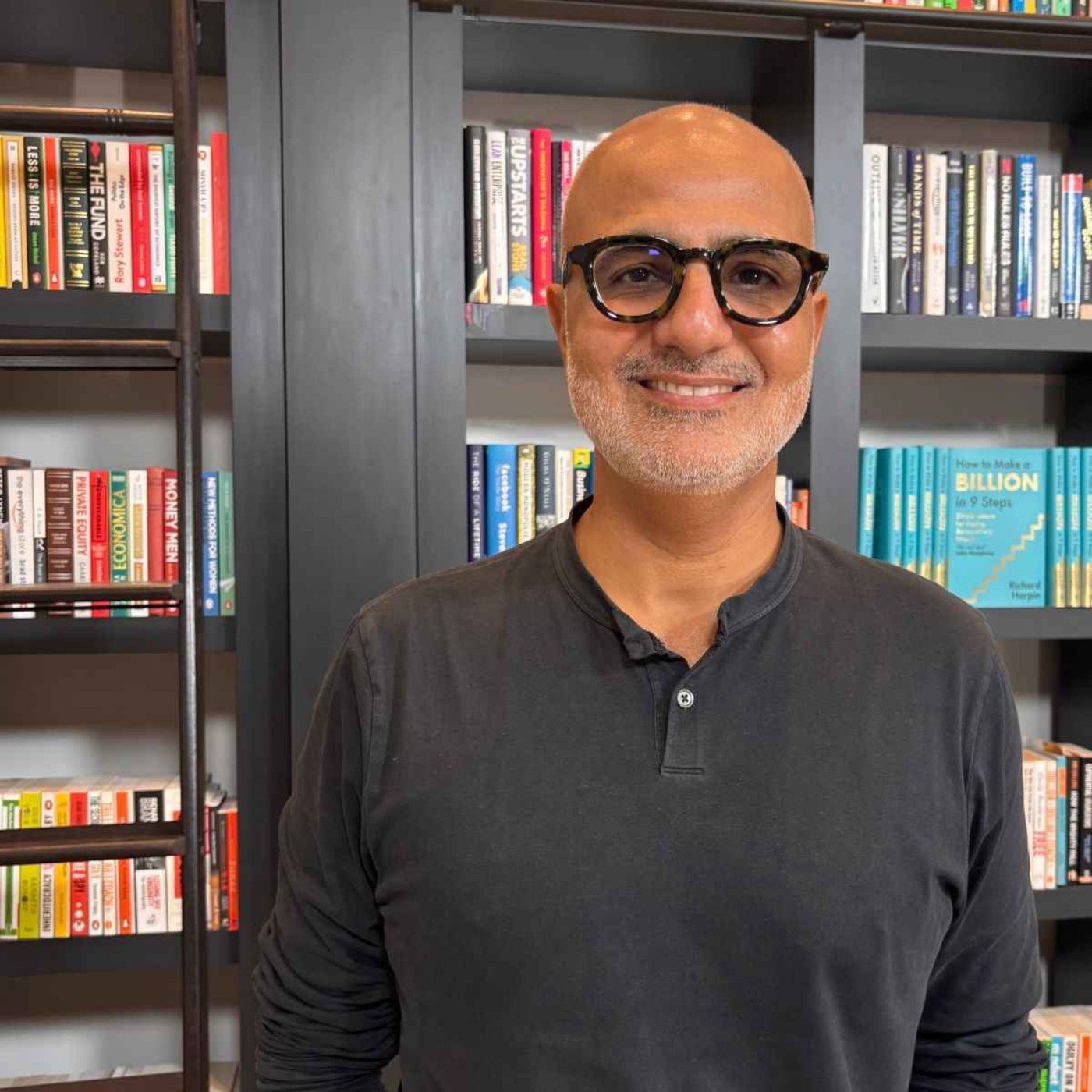
Rishi Khosla, the co-founder and chief executive of OakNorth, joins Graham Ruddick to tell the story of how OakNorth was built. Founded in 2015, OakNorth was valued at $2.8bn (£2.1bn) in its last funding round and is generating annual profits of more than £200m. Khosla and co-founder Joel Perlman set-out to revolutionise banking for small and medium-sized businesses. Despite some ups and downs, they are doing just that...
Hosted on Acast. See acast.com/privacy for more information.