
 Ask ChatGPT


 The Business Leader Podcast with Sir Richard Harpin
1 Sep 2026 · 50m · 29 chapters
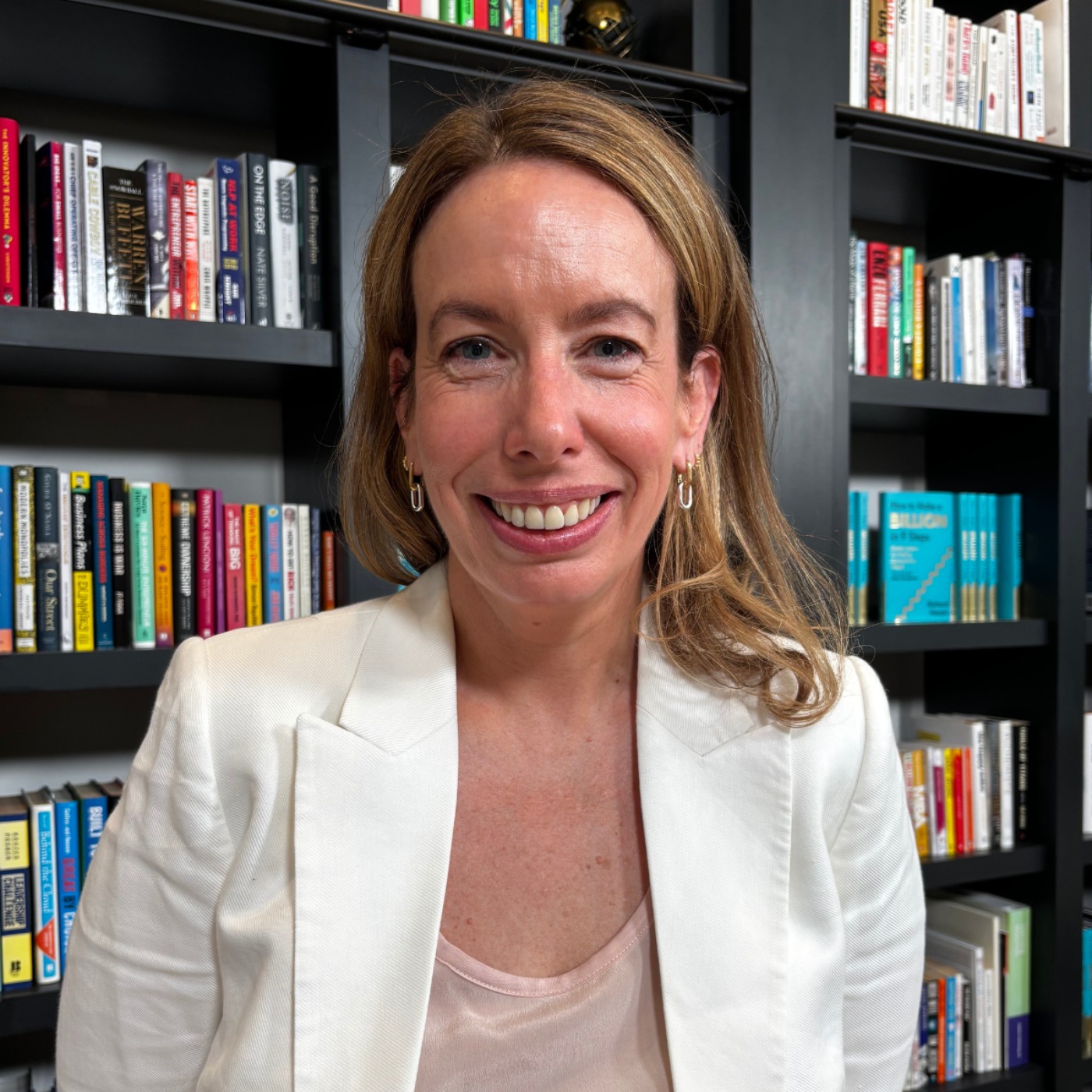
Paula McKenzie, CEO of Pizza Express (since 2022), discusses turning around the 60+ year brand after debt restructuring, Covid, and frequent CEO changes. She emphasizes CEO “overview,” creating “your own luck” by becoming the obvious choice, and obsessing over the product and customer experience. She outlines early-100-days priorities (arrive, assimilate, articulate, accelerate), the role of coaching, and practical growth levers: refurbishing restaurants, loyalty, omnichannel (dine-in, delivery, retail dough/pizzas), and selective menu innovation (relaunching mac and wings).
Paula McKenzie is a chartered accountant (EY), with senior roles across drinks and food companies (including Diageo, Innocent Drinks, and KFC). She held cross-functional leadership at Yum (supply chain, development, finance, CMO) and became managing director in 2017.
variety of experience builds CEO capability; cross-functional moves and early P&L responsibility matter; CEO transitions benefit from a transition coach (Dr Ty Wiggins); loyalty and tech investment drove engagement; refurbished sites lift profits (5–10% uplift cited).
360 restaurants; owns bakery in Whitney/Oxfordshire supplying all restaurant dough; loyalty over 4 million members; refurbished ~3/4 of restaurants; quarter of UK adults eat at Pizza Express yearly; mac and wings reintroduced; “party and fun” as a value; BHAG goal of 1,000 restaurants worldwide by 2030.
Written by AI. May contain mistakes.
Discussion of Paula's early career and her journey to becoming CEO of Pizza Express.
“Paula McKenzie took over as CEO of Pizza Express in 2022.”
Paula emphasizes the value of varied experiences in shaping effective leaders.
“It's funny how looking backwards, it all makes sense.”
Insights on adapting to different corporate cultures from large companies to startups.
“then into food companies, then running a food company, and guess what?”
Exploration of Paula's experiences as a female in a male-dominated environment.
“But at least it was, you know, that banter both ways.”
Paula shares her experiences transitioning from hospitality to leading Pizza Express.
“I know that's so true I think it was 39 plus me.”
Paula discusses the realities of becoming a CEO and the importance of being the obvious choice.
“So I just try and be as inclusive as I can be.”
Paula talks about her initial strategies and vision for revitalizing Pizza Express.
“Of all the choices there are open to them, are you unequivocally the choice?”
Learn why hospitality businesses need to focus on fun and the long-term nature of transformations.
“Day one, it's not, hey, Paula, what are we going to do?”
Discover the significance of understanding an organization's needs before implementing changes.
“Well, you have to, you know this too, get super sharp on the diagnosis.”
Explore how a transition coach can enhance a CEO's performance and decision-making process.
“Did you change many of the team that you inherited?”
Understand the impact of coaching on teams and how it contributes to a company's success.
“Have you had business coaches in your prior roles?”
Learn about the benefits of having mentors and the influence they can have on leadership.
“I don't have almost an official mentor right now, but there's, again, you're so well read with all these books, Brené's Brown of Brain Train.”
Hear about essential lessons from influential business books that can enhance leadership effectiveness.
“But atomic habits, I think one of my favourite ones in that is habit stacking.”
Examine how Pizza Express has adjusted its customer base and marketing strategies over the years.
“We've just been the unofficial balls of the summer for Wimbledon and for the World Cup.”
Discover how Pizza Express integrates their online and in-restaurant sales models to enhance customer experience.
“A quarter of all UK adults eat at a Pizza Express once a year.”
Learn how refurbishing restaurants has led to improved performance and customer satisfaction.
“You've refurbished about three quarters, I think, of the restaurant estate so far.”
Understand the value of setting big, hairy, audacious goals and their potential impact on a business.
Learn about the importance of setting ambitious goals in business.
“You've set some big, hairy, audacious goals in 1 ,000 restaurants by 2030.”
Explore the intricacies of PizzaExpress's franchise model and its success.
“And I remember many years ago that all of the franchise restaurants in the UK were repurchased and turned into directly run.”
Discuss the potential of joint ventures in international market expansion.
“And so we have a master franchisee by country.”
Understand the significance of menu simplification and product focus.
“Do you ever do the sort of range reduction or how do you keep it simple?”
Learn how to effectively evaluate and reintegrate product lines.
“And also it keeps, if you've been in it for 60 years like you have, it keeps you really honest about what you bring to the category and makes you double down on your towering strengths.”
Discover how to define and adjust pricing models based on market positioning.
“Well, establishing a partnership is a really important thing.”
Examine the potential for PizzaExpress's expansion into the American market.
“okay, where am I in the market for pricing?”
Learn how to assess organizational capacity and manage debt effectively.
“It's just a question of what comes on through.”
Discover the changes in company culture and employee engagement at Pizza Express.
“I hope my fingerprints are all over the business.”
Explore essential leadership lessons on communication and engagement.
“And the reason I know that it's high engagement and culture is better than it was, and that's not to knock the past at all.”
Gain insights about the value of having a non-executive position alongside a CEO role.
“What about if the CEO just turns up at your restaurant and spends all day there?”
Learn strategies for achieving work-life balance while leading a company.
“essentially, what was it, 20 supermarkets, 21, and turning it into the case study that was, is a phenomenal British entrepreneur story of which there aren't many the likes of that scale, if at all.”

Get the gist, explore an idea or ask about something said.
 Claude
On The Business Leader Podcast with Sir Richard Harpin, what are the key points of this episode?
Searching your listeningAutomatic transcript. May contain errors.
0:00Get as many variety of experiences as you can because honestly you get so much out of big companies as you do from entrepreneurial startups. 360 restaurants, we own our bakery in Whitney and Oxfordshire and all the dough for all pizza expresses come from that bakery. I think the job of a CEO is a bit like, not air traffic control, but you've got to take that overview about what your capacity of your organisation is. You create your own luck. Honestly, you have to just make yourself the most obvious candidate. Of all the choices there are open to them, are you unequivocally the choice? Genuinely, would you choose you?
0:30My guest this week runs a business that serves a quarter of the British adult population, an iconic brand that's still going after more than 60 years, despite many challenges over its history, not least a debt restructuring, Covid and a revolving door of chief executives. Paula McKenzie took over as CEO of Pizza Express in 2022. And since then, she's refurbished three quarters of the restaurants, grown their loyalty programme to over 4 million members and aims to have 1 ,000 restaurants worldwide by 2030. The question is, is her plan working? Paula McKenzie, Chief Executive of Pizza Express. Great to have you on the Business Leader podcast.
1:15When did you know that you wanted to be a CEO rather than your early career track, which was around finance and CFO? It's a pleasure to be here, Richard. thank you so much for having me um if you asked my sister that question she would say age five um that I was that and I don't like to use the word bossy especially for as a female so let's just say I was that strident and determined and driven that she would say that my family our family was was my first team the the time I can remember first articulating it I think would have been into my 20s however that I wanted to be a general manager or an MD or a generalist not just a functional specialist so and were you the um you were the older sister then were you as the bossy one i was and i am um and it's so funny when all the cliches come out which is something isn't it um there's nothing as formidable as an eldest daughter or something like that um and if you had to ask one of your children to break the law with you um most parents choose their youngest so i love all these fun facts but yes i'm probably a very typical eldest daughter who went to a girl school and is that person.
2:22And your connection with Pizza Express started early in life didn't it? I think you were at boarding school when you had your first Pizza Express. You are so well researched. It was absolutely that. I think I was thinking in preparation for this about the best leaders and is there a sense of conviction or inner purpose or something that drives you. And I have always loved the Pizza Express brand. You're right I went to boarding school between 16-18 and candidly long story short was really miserable and it was in the posh word for leave ex-yats that my parents I would ask my parents to take me pizza express and from that grew this huge love and I just loved pizza express it was like my my safe space so roll forward what I know 30 40 years uh when the brand and the business came knocking for a new chief exec there's an inner sense it taps into something yeah but our listeners and viewers would like to hear how you were prepared for that role and so you um were at EY and qualified as a chartered accountant and then then work for some other big companies first?
3:23Yes, all of that good serious stuff. It's funny how looking backwards, it all makes sense. At the time, you just take the next best step, right? I never had a predetermined, oh, this is how you get to be a CEO. And fun fact for you, you know, the choice between taking a kind of like chartered accountant's apprenticeship, for want of a better word, or a marketing job, this is how my decision taking went. One's in Surrey. There's only dull stuff in Surrey. I live in Surrey now. And one's in London. and that sounds way more fun. So, you know, it's just interesting, but I think one step in front of you, you know, another role forward many years, yes, chief exec, but it builds on itself, as you know, Richard.
4:02So it was chartered accountancy, inter-branded products, always in drinks, many years at different drinks companies, then into food companies, then running a food company, and guess what? So that's how it works. What about the different culture between Diageo and then turning up But Innocent Drinks, massive company and small startup feel. Yes. And I would give that piece of advice to anyone listening who's at a kind of earlier stage of their career, which is get as many variety of experiences as you can, because honestly, you get so much out of big companies, and you'll know this from your background, as you do from entrepreneurial startups.
4:38And I think that's an invaluable experience as well. And one without tether doesn't make you as compelling maybe as you could be. but Diageo is a phenomenal company always will be I'm sure but when I turned up at Innocent and I was so big company actually I remember one of the guys saying to me you're very corporate but I remember just looking at the whole thing and thinking is this a bit of a joke so it worked both ways was it sort of corporate speak or the way that you dressed probably all of that I absolutely think so the way I spoke you're the product of your upbringing that's what I would say to them The words you use, the way you dressed, the things I talked about, makes me smile.
5:19But at least it was, you know, that banter both ways. I'm Richard Harpin, a Yorkshireman who sold my company, HomeServe, for£4 billion. And this is the Business Leader podcast, where we look at the stories and strategies behind modern businesses. I'm passionate about helping British businesses scale and succeed. I think it's the key to unlocking Britain's economic growth. founders and ceos of mid-sized companies can be members of the business leader community for coaching peer-to-peer forums and exclusive learning events so do get involved sign up to our weekly newsletter at businessleader.co.uk slash newsletters it's free and it helps us grow the community and sometimes the big company people don't fit into a small company culture how did you make sure that you did and you were successful there?
6:15Gosh, yeah, it's a great question. I think I've always liked two things, people, and one would hope, therefore, I'm reasonably decent with people. And that doesn't matter what kind of company you're in, you know, just curiosity in people and being interested in them. And then I like brands and how they tick and what makes them grow and business. And that's true, whether you're a startup or a massive company. And actually, the more massive companies can think like a startup, all the better, right? So those two things meant they didn't organ reject me but I also didn't say oh what's this this is a joke I'm off.
6:45Didn't it make it doubly difficult that you're a woman as well and I think when you turned up at Diageo it was a all-male finance team of 40 people and no other women. I know that's so true I think it was 39 plus me. Did it help that you were bossy? I definitely didn't say much I think so there's a there's a classic story I tell which was what you know just just put you cast your mind back I would have been about 24 at this point straight out of practice as in sorry charter accountants practice and I just remember all these wonderful guys but all they spoke about was football and I just had no football knowledge or banter or nothing and so I just couldn't really join in and it was as simple as that they didn't weren't malintended I just couldn't join in but it just did get me down after months of course lots of nice guys then reached out and were like my maiden name was Paula Cox so Coxie Coxie she's all right you know but I remember just getting quite upset to my mother sometimes just telling her I can't join in the chat and when you experience stuff like that does that make you sort of feel more determined to um to get there and beat the men and not at all in that respect just absolutely not just you know what I mean it makes me I hope a more inclusive leader than I would be otherwise.
7:58Even now, I will slow down meetings to just explain acronyms or give the context on something because I know that somebody in the room who maybe has just joined us that week and doesn't have any of that. So I just try and be as inclusive as I can be. We're all human. We all make mistakes. I definitely will overstep things or forget or whatever. But it's not about men, women for me in that one. That was just about pure inclusion. How could you make the person feel more included? And then your apprenticeship in sort of fast food and hospitality was KFC, I think. It was. And you can imagine I'm there at Innocent Smoothies, you know, a 27 year old plus.
8:32We think we're saving the world. And then after four years said, well, I'm going to go and work for KFC. And it was literally seen as the devil. You know, people like what on earth are you doing? And I really like that if they were mad enough to take a punt on me at that point, I was mad enough to say yes. and it's such a phenomenal company, a great brand and then I had an inordinate amount of opportunity over the period of about 10 years. Doing different roles and talk about some of those. Yes, and I think that's what separates great companies from not, honestly. If I look back and people will say to me now, Paula, why aren't there more people like you as you were, you know, all those different experiences?
9:10We can all pay it forward by doing that, especially for our women folk and our men folk for sure. But if I look at what Yum is incredibly talented at doing and into some respect it's a talent machine that just happens to sell chicken in this instance it will take pick an age but you know 27 upwards and give people cross-functional critical experiences by moving them and so I had the pleasure of being supply chain director development chief development officer chief finance officer even CMO for a year and then off the back of all of that in 2017 I was made managing director but not many companies now would move people cross-functional.
9:47So my kind of plea to anyone listening is give people P &L responsibility really early and move people cross-functionally. And if they won't do that, then you need to move company in order to get that different experience. You do. Yeah, you do. You need to find a leader that can do it for you. And I really like, you know, where you come from in that respect of entrepreneurial businesses can do it really naturally because chances are maybe there's like five people and you're all doing everything. And I used to joke at Innocent, I did everything from right strategy to fix the coffee machine kind of thing.
10:16But if you're in a more of a bigger matrix and you're very much in your functional silo and you're on the younger side of your career, try and get cross-functional move or move somewhere else to get it. 2022 you what you made it to chief exec role looking back from there what would have been the sort of three or four tips to anybody starting in a business and thinking like you one day I want to be a chief exec what's that your advice to them on how they get there I think on how they get there you create your own luck yeah I mean honestly you have to just make yourself the most obvious candidate.
10:53People often forget that for someone to be a CEO, someone needs to offer you the job as CEO. Somebody needs to want to make you their CEO. So why? It's an open question. Unequivocally, should you be the CEO? Of all the choices there are open to them, are you unequivocally the choice? It's a good rhetorical question to just keep you honest about genuinely, would you choose you? So that's a good one. We can talk about the trials and tribulations of being a CEO, especially of being the CEO of a company you haven't grown up in, that's like nothing on earth until you experience it for yourself the first time.
11:31From literally things like, Richard, like, you know, day one, do you even know where the office is? Chances are there's several offices and you need to kind of visit them all, or you don't know where the bathroom is, you don't know how to get a glass of water. Everyone knows who you are, you've got no idea who anyone is. I maybe discover things that you didn't quite know at interview and you accept the job as chief exec. 100%. Did it take courage? Because you joined Pizza Express where I think six months after there'd been a debt restructuring, 73 restaurant closures come through the pandemic.
12:06Other CEOs there that had sort of gone through a revolving door and you got that role. How did you feel? Looking back, it's incredibly naive. I'm being harsh. Seven CEOs in 11 years. However, I think in life, you're either cut from the cloth of fearless or a bold person, or you're not. And so just roll back to where we were 10 minutes or so ago about that 16 year old that she chose to leave a girl's school and go to a boarding school that she had no experience of, you know, a boy's school as it was. That same 16 year old is the same 46 year old. Yeah, we are we are all those people. I think of us like trees, like actually, the person is like, you know, still inside us we're just putting on extra rings it's the same mindset i needed a fresh challenge i wanted a fresh challenge i wanted to do it um and so i'm bold enough to do it and one of the reasons i'm here today is actually i got shortlisted for the verve bold woman of the year award which is a huge honor to be in now a huge alumni of bold women but again i i often phoned my sister at first and i phoned her and said oh i've been nominated and now i'm shortlisted for this bold woman and she just said paula we're like the least surprised you know um and so does bold go with bossy?
13:16I think it absolutely does and I need a new piece of artwork at home that says bold I think because I have one that says fearless and they're just words that I really resonate with. How did you find the Pizza Express business when you arrived and what was a team like what was your thinking in those first sort of critical hundred days on what you were going to do? I totally felt like it was a business that needed leadership that was going to be there for a while you could really feel that and at the same time because it had been through the mill for many years don't forget covid was ruthless for casual dining and for restaurant businesses it needed to win again it needed to be a winner and then here's a fun one it needed to have some fun back in as well you know I remember saying to Alan our chair they just really need a party and fun is actually one of our values and no shit Sherlock you know in a way when you're in a hospitality business it should be fun your job is about making things fun for other for others so those are three thoughts that just stood out at me um and then i think you start to realize that it's going to take you longer than you ever think i'm sure some of this resonates yeah that the turnarounds and transformations are not quick quick fixes you're not doing it right if it's it's really short um and then i remember it was useful to try and articulate um that i'm not here to give you the answers, right?
14:38Day one, it's not, hey, Paula, what are we going to do? And so I'm not going to remember it now, I think. But I came up with four A's or someone helped me with, I need to arrive, I need to assimilate. I am going to remember it. Then I'll articulate and then we'll accelerate. But it was useful because otherwise, and I'm sure you've had this experience, literally day one, people are expecting you to say, we'll go and do X, Y, and Z. And it doesn't work like that. You're trying to assimilate. Well, you have to, you know this too, get super sharp on the diagnosis. Otherwise, any answer will do. So in those first weeks and months, I'm listening, listening, listening.
15:11I'm trying to ask great questions to get super tight on the diagnosis. And how long until you did come up with your plan through that listening and presumably going out and talking to customers and staff? Yeah, not long when you think about it, but you probably need three or four months, if I'm just being brutally honest, yeah? Because even doing think tanks, strategy away days, all of those good things that assimilate that information, still take 12, 16 weeks to kind of stand up. So, and then I've learned from, I think, many great leaders that sometimes good enough is good enough for the organisation to get going with.
15:44But if you, you know, roll forward, I've been in the role four years, all those things, those really important thought leadership pieces are so much more in place now than they were even four months in, but you're not going to have it all locked down four months in, you just need enough to get going and then you get going. Did you change many of the team that you inherited? Yes, lots. So I think some of these things are useful to understand. I was fortunate enough to have a CEO transition coach. Who even knew there was such a thing? What I've learned is where there's a niche, there's often an expert.
16:19And Dr. Ty Wiggins, he has PhDs in CEO transitions. So when I met him, and I'm a geek. And was this your idea or Peter Express saying that we'll bring this person in to advise you? It's a great question. No, neither of those. It was actually the recruitment consultant that said, we have access to this guy. He works with us, for us. We think you would really enjoy it and we think you would really benefit. And what it does, Richard, I think is, you know, you're spending a lot of money on a CEO, candidly. You're going to get, I'd say, a decent, if not stellar performance out of them. Let's just give it a 7.5 or an 8 out of 10.
16:54But what having a coach, and it's like true of our athletes or anything else, you're more likely to get a 9 or a 9.5 result out of them. and Dr Ty Wiggins is an expert in CEO transitions and before I'd even started the job he says Paula all the research says that people I'll bring it full circle for you don't they regret 12 months in that they didn't make people decisions fast enough and I'm a bit of a geek so if that's what the research says and this is hundreds and hundreds of CEOs after their first year or two like all right we're going to do it quicker. So the learning is every new CEO should have a a coach that helps them with the transition?
17:29I would say if you can stomach it and I think that's you should be open and minded enough to do it why not yeah you will be more I think even happy with yourself that you gave your best performance that you could. Have you had business coaches in your prior roles? I have and so this is credit to Innocent where I met my first coach and then KFC lots of coaches and then of course self-imposed because I'm the CEO at Pizza Express But I have signed off, I would say now, hundreds of coaching stints for people who work for me. And I mean that whole organisations. I hope it's a legacy that I leave in that respect, which is investing in people.
18:05And how do you measure the results of that? And can you say that when somebody was teamed up with a coach, one of your team, that you can see a marked difference? It is really hard to put it into qual and quant, isn't it? It really is. But you see it. You can see it holistically, I think, in terms of results that you deliver. high-performing teams, more engaged teams lead to better results. I know you can kick holes in any of those data sets, but at the same time, those of us who kind of feel it too, there's some element of truth in that. The coachee has got to want to receive the coaching. And then having a mentor as well over the years, or would you sort of put your chairman, Alan Layton, into the sort of mentor category that he's got the grey hair or no hair?
18:50No comment, Alan, no comment. got the experience and can help you with some of your thinking. Yeah, I love that. I've definitely had mentors too. I remember the first one was given to me at KFC and it was the CEO actually. And I was like, do I need a mentor? So funny that I looked at it as a negative. The first thing I thought was, what's wrong with me? Why do I need a mentor? Okay, so, but, and then I love the expression that you're the average of the five people you hang out with the most. So I will take that. And Alan would be in one of the five people I probably talk to the most. So in a form, he's a mentor.
19:23I don't have almost an official mentor right now, but there's, again, you're so well read with all these books, Brené's Brown of Brain Train. You know, what is your metaphorical brain train? The carriages represent different people that you can call on, dead or alive, you know, for advice. What advice? And Alan's advice, as some of my Pizza Express board members, it's constantly in my ear, on my shoulders. When they're not there, I can hear it. And I am the better for it, 100%. What about learning from books? What's your favourite book, Paula? My favourite business book is Atomic Habits, definitely.
19:57A book that I always mention because it's very special to me, it's the lady that was my first coach at Innocent, is The Shed Method. That's just so memorable in and of itself. Are you looking after your shed? Sleep, hydration, exercise, diet, nutrition. Because you and I know that if you want to get Usain Bolt's record in the 100 metre sprint, you need to be on your A game in the moment that matters. So an average one-to-one with a member of my team might not matter that much, but in the moments that unbelievably matter, me being the best version of me that I can be matters. And sleep, hydration, exercise and diet definitely contribute to that.
20:33But atomic habits, I think one of my favourite ones in that is habit stacking. Because again, it's the whole, we only have so many hours in a day, we're all human. What can you combine so that you're just super effective? And give an example of that. my favourite funny example is I used to be very bad at balance on the left side of my body it's a silly one but of course we all train we all work out and I could just notably see I couldn't balance standing with the kettlebell on my left leg so I now brush my teeth standing on my left leg because you can do both you're going to brush your teeth for two minutes probably anyway why not stand on your left leg and improve your balance revenue went up strongly in your first year profits went down but I think that was a deliberate investment in the business.
21:14What investments did you need to make at this stage? Yes, and we have actually over the last three years, it's been four years in totality now. There's big investment in people. Rachel Reeves has, you know, forced some of that, you could say, but our labour bill and our people investment is a lot more. There's been a lot of investment in tech infrastructure. We're famous for having a loyalty platform. Those things don't come cheap, if that makes sense, the development of that. We have over 4 million people on it, just to give a sense of scale. So there's GDPR requirements. There's user... We want people to love using this thing, which they do.
21:50And how does the loyalty app work? And is that a key part of the turnaround of Pizza Express? It has been. And to be credit before my time, our private equity board obviously brought in experts and the loyalty journey has been a huge part of it. And it will continue to be. And watch this space. I can't give away anything that's coming later in the year. but so has other things. We didn't spend as much in a kind of marketing dollar way, and I go back to four Ps or five Ps of marketing. I don't just literally mean sexy TV ads. We don't have the budgets for those kind of things, but talking to customers and consumers in ways that they might not have noticed Pizza Express turn up before.
22:29We're on radio. We're in social media. We've just been the unofficial balls of the summer for Wimbledon and for the World Cup. So investing more in the brand, the brand, as you know, has so many, again, using the corporate phrase, distinctive assets. It has stripy shirts. It has marble tables. It has a spot, you know, has spotlights. The reason people have so much high warmth and affection for Pizza Express is it's built these things over the years. So it's a marketer's dream, honestly, to be able to bring them to life in relevant ways. How has the customer base changed? I used to go to Pizza Express a lot when my kids were growing up.
23:06Apollo Ad Astra was my favourite pizza. There you go. Well, firstly, it's funny how the world, I think, bifurcates into people who love chicken on pizza and people who don't. So you're obviously in the I love chicken on pizza camp. Families with kids, all types of families from any background is our mainstay customer. But it's the empty nesters. And as you get older and I hope we all have grandchildren, it's also we call them upmarket seniors, also a mainstay of our business. and then we're super popular with youngsters too. We probably lose people a bit around the kind of 18 to 24-ish kind of age group.
23:44But as I always like to say to my board, I'd rather have, you know, 2 to 92, getting that people, of course, have a repertoire and will go try other things. So it is mainstream Britain. Here's a fun fact. A quarter of all UK adults eat at a Pizza Express once a year. A quarter. Eating in the restaurants. and I'm a big believer in the omni-channel model and you do have that takeaway and delivery as well. Exactly. So it would be even more if you include that. What's the sort of split between the online business and the in-restaurant business roughly? Well, it's actually, yes. So delivery is about 15 % of our sales.
24:19But don't forget, because we have the grocery or we call it retail pizzas as well, an enormous number of people are also buying retail pizzas from us as well. That's a very clever part of the business, isn't it? It really is. got the brand in major supermarkets. Yes. I mean, I like the phrase, we all stand on the shoulders of giants. And credit to the team of, it was literally the late 90s that stood that up. We've grown it immeasurably. It's really powerful. Of course, we get the comparison of, it's never going to be the same as what you eat in a restaurant. But that's because a pizziola is hand stretching a base, probably less than 10 metres away from you.
24:55And lower margins by selling through the supermarkets. But can you track the getting the brand into some of those major grocery outlets and then having a knock on effect of saying, actually, we must go on eating a Pizza Express restaurant next? It's funny. There's less crossover than you would think. But we do all sorts of things deliberately to make sure that people because we're all omnichannel beasts. Essentially, we all eat in different places. The brand relevance is there for you in a grocery purchasing occasion, just like it is in a dine in. But there's less overlap than you would think.
25:29But if you're scanning your retail pizzas, your grocery pizzas, you will see that the loyalty scheme is giving you credit for those retail purchases, just like it is for your dining purchases. So that is Omnichannel, the two bits coming together. It is. It really is. And again, I like it from the geeky business side. You know, Omnichannel having shifting profit pools if you needed to is a really sensible business thing. You've refurbished about three quarters, I think, of the restaurant estate so far. I should have mentioned that on the investment, shouldn't I? That's an only feat. What do the economics look like of that?
26:01How do the refurbished restaurants perform? They do perform really well. You learn by doing, don't you? You kind of over-spec it and under-spec it and you find the pendulum centre of gravity. Lots of our restaurants actually hadn't been up until that point invested in for a good 10 years or so. So you could say, okay, well, if it's slightly under-invested in, then you're going to get the balance. We get, I don't know, and again, I'll just give ranges, 5 % to 10 % uplift. That's really quite decent. from remodelling a restaurant. And you're right, probably I hope we'd end this year, maybe even 80 % done now.
26:32But they look immeasurably better and glorious in that, you know, if you're in central London, check out Dean Street, check out St. Martin's Lane, check out Royal Festival Hall. And that's not just to say it's been London-centric from like Jersey, Edinburgh. I even went to Inverness, our restaurant. It's the most northerly one. Inverness is a long way north of Edinburgh as well. they have all been remodelled so we're just picking up the final few. York was my local one. Well there's several in York. I think it must have been refurbished back in about 2005 and new modern artwork and I was in there and said oh what's happened to those lovely portraits of York people going back 200 years repro artwork but nice frames and portraits and they said oh they're they're in the cellar oh really i managed to persuade somebody to take me down into the cellar and said um can i buy them so managed to connect with head office yes and ended up buying these old portraits that are in pizza express york and they're still in my home today oh my goodness richard that is some story so i think well we have 62 listed properties there is fantastic pizza express art um the original founder of pizza express peter boizzo was a huge art aficionado collector he was famous this is in his memoirs and his books for sponsoring uh art graduates or you know studying undergraduates straight out ofst martin's buying their artwork it was there he would pepper it across the estate you you did well if that was in my time i wouldn't have let you and i would have got them straight back on the wall i'm glad I think I paid about£300.
28:19That's outrageous. Don't tell me. This makes me sad. You've set some big, hairy, audacious goals in 1 ,000 restaurants by 2030. Is that deliverable, do you think? Well, we actually use that term, BHAG, big, hairy, audacious goal, internally. It's really important to have BHAGs. Do I think we'll get there? Maybe. But unless you put it out into the world, shoot for the moon and you hit the stars or whatever. I think it's the other way around, isn't it? But yeah, if you shoot for the stars and you only get to the moon, then that is great anyway. But if you don't have a BHAG, then you'll never get there, will you?
28:53That's right. And you know, like I do, some of that's in the hands of our franchisees as well. But we're growing the rest of the world immeasurably. I can only talk to the four years or so that I've been in the role. But had we done that in many four years before, we'd be even further on. So yeah, BHAG, bringing proper pizza to the planet, as we say. and we've got some brilliant franchisees and lots of new ones in the last few years. I was going to ask you about the franchise model. How does it work? And I remember many years ago that all of the franchise restaurants in the UK were repurchased and turned into directly run.
29:30That's right. But you've got a very successful international franchise business. That's right. So you're like this, that Alan would always refer to me as the queen of franchising because I came with that. that's that's called 11 years at young we'll do that to you you've become very skilled at the world of franchising in the uk all of our restaurants are equity owned to the point you just made apart from the welcome breaks which are the ones on the motorways or motorways they're all owned um because you're right pizza express over the decades has you know franchise bits bought back bits franchise bits right now all equity owned that is a full-on place to be just so you're you know you get it it's your own business and every single week that for 360 360 restaurants, you are running it yourself.
30:11But if you're good at running your business, then I'm a big believer in directly employed, certainly in your home country. That's right. So all seven and a half thousand people, they all work directly for all of us. Yes, it is a mission. But what I would say is a towering strength of Pizza Express is its operating capability tick. And, you know, try and give me another equity operator of that scale. There just isn't. So especially in the food and drink and restaurant space. Internationally, yes, we have relied. So we actually own our restaurants in Hong Kong, 22 in Hong Kong, 11 in Dubai. And then, for example, our franchisee in India, we're about 39 restaurants or he is.
30:51But at 39, we're the largest casual dining chain in India with 39. And just think of all the population in India. So some of our franchisees have done immeasurable things in their markets. Three in Cyprus, recently just opened Turkey, et cetera, et cetera. And you have a master franchisee. So there's somebody that's taking the license for a country or individual restaurant franchising. Yeah, no, that's a good point. No, they're taking the license for the country and then opening up many restaurants in that country. It's interesting. I don't refer to them as master franchisees, but technically you're correct.
31:21Yeah. And so they're doing what you're doing in the UK, which is employing all the staff in the restaurants and running it. Correct. And so we have a master franchisee by country. Exactly that. Would you ever do the joint venture model? so when five guys said we want to get into the uk they came and found an entrepreneur that knew how to open stores and said let's do a joint venture so that there's a local with skin in the game that knows the country and the culture but you're getting more than just a master franchise fee yes completely i was i'm open-minded i think those of us as leaders should stay i'm open to that never say never uh there's all sorts of parts of the world i'd like to be in and if the solve is to do it as a jv we'll do it as a jv but you haven't done a jv anywhere in the world not today correct i think it's a clever model right it's a bit it's a hybrid isn't it um so let's see isn't there something exciting in uh the travel business so greggs get very excited about their outlets on stations and at airports and WH Smiths as we know have kept that part of the business and sold off the high street business.
32:33Yes. Are you focused on travel as well? So we are live this week on Aer Lingus so actually on the aircraft you can buy a Pizza Express pizza okay that's a first because now if we bring it into the business jargon that's a food service pizza a bit like proudly serving pick your brand you will be able to proudly serve Pizza Express Your point is subtly different, which I know, which is in travel hubs, for sure. You need to be able to operate in a small square footage. Our welcome break units aren't quite that, but they're in motorway service areas. And what we've just proven with our recent QSR models, so it's open in Brixton, it's open in Finsbury Park.
33:09There'll be a fast one following in August in Earl's Court. We can get into small footprints and operate really effectively. So that model could be lifted or shifted to train concourses, etc. etc. When do you look at the business and think we need to just sort of refocus and scale back? And I think many entrepreneurs would overdevelop the product range or the number of items that are on the menu. Do you ever do the sort of range reduction or how do you keep it simple? Constantly. I learned this at Innocent. I think entrepreneurs are maniacal at it in a good way. It's the Japanese word of kaizen.
33:46It keeps me honest. I say kaizen and people don't know what I'm talking about constant reinvention um it's just so important you have to do it to menu you have to do it to business you have to do it to projects you have to do it to everything keep trimming keep cutting back isn't farming or gardening or something is just the best analogy you have to prune sometimes that prune has to be seriously hard yeah I was just talking to politicians last night I don't have a habit of hanging out with politicians but it was super interesting to think about budgeting or how budgets work in maybe the reason we're so much debt as a country because nothing ever goes backwards you never get your budget really cut in the same way to then move forward from but there is something really healthy about cutting things to force you to reappraise what's really important to get more efficient at it and to spend smarter I always use that phrase so spend smarter.
34:33And is there a message for the new chancellor that says this is what you need to cut or this is what you need to do for our poor old businesses here in the UK today? I think you need to put more disposable income back into the everyday pocket because that means they'll spend more and then that's a healthy, vibrant, thriving businesses, goods and services. And how does a chancellor do that? All sorts of things. I think they have to question what they're spending money on because they'll say we need the tax receipts. And then I think they have to take, just back to our pruning point, a long, hard look at what they're spending on.
35:04Back to pizzas. You're not going to comment, are you, Richard? I love it. No. Back to pizzas. And the market is quite competitive now, isn't it? It really is. Pizza Pilgrims and Alley Cats, Pizza Union. yeah rudy's how are you staving off those small competitors i like competition so you maybe you can see that in me already i always think if you have a healthy vibrant thriving independence sector like you know one shop two shops etc it really helps the category when especially when you're the category lead so it doesn't worry me or bother me that there's lots of competition in fact i think it's a good thing it shows it's popular category if people want to be in it And also it keeps, if you've been in it for 60 years like you have, it keeps you really honest about what you bring to the category and makes you double down on your towering strengths.
35:51So that's how I see it. I like competition. You know, that's the nature of the beast, isn't it? And was any of that the push for Mac and Wings? And how do you decide what's a great product development opportunity and where's a step too far, do you think? It's one I mull over constantly because Pizza Express developed mac and wings during COVID. Before my time, the CEO before me killed it off. You know, he pulled it. That's also the right call, you know. And I'm the incumbent CEO and I've just reignited it. That could arguably also be the right call. These things have their moment in time. And I guess at the moment in time that he made that call, it was a simplification.
36:31And he was trying to get Pizza Express, you know, back open after COVID. And it was just a step too far of complexity. Once you've got your 360 restaurants needed, guess what you need? More opportunities to sell your great food that you can bring to the public. And then you see, you know, the chicken market in growth and go, well, we have this thing we just turned off. Why don't we just bring it back to life? So that's the reason. What you've got to do as a CEO is help people see what is really important. And we use internally, just like we use BHAG, we use rocks, pebbles and sand. What's really important, what's really going to shift the dial is some of the rock projects.
37:06but for sure there's a role for pebbles and there's a role for sand and mac and wings just seemed an obvious thing to be able to make more sales when will you know whether that's working well and whether you're going to roll it out more go with that we'll have to have a proper review six months in and then 12 months in and i think that will give us a sense but you can you can course correct too quickly um things take a lot of time to nurture um i like the analogy as well baby tiger could be a tiger it's quite easy to kill a baby tiger however so let's just give it a fair start and then let's see if we're on to something we both have a like of pizza express pizzas yes the other interest i should declare is that i'm an investor in gosney pizza ovens yes you said i remember now and so that business is sort of mulling how the how we get the next stage of growth and it's a really exciting business run by Tom Gosney and his team and thinking about could we be supplying the dough balls to send to the proud owners of the Gosney pizza ovens that are firing them up every weekend or sending out the toppings.
38:18What would your advice to Tom be? Well, establishing a partnership is a really important thing. So we have other partnerships that I won't mention. This is your podcast. But, you know, people love to express. I love that people are scratch cooking and that they've invested in pizza ovens for their gardens, etc. Like, that's just amazing. It's harder than you think, isn't it? You probably give it a regular go. But I think actually getting the slip factor on the paddle, making sure that pizza is going to be perfectly cooked, not overcooked, as you've got hungry mouths to feed and it's burning or anything else.
38:46It is hard. We've done really well with our dough pucks in retail for sale for this reason. Because that is fresh dough that's produced, I think, in one place nationally and then shipped out to... Well, yes, actually, our retail dough is coming from a different place. But fun fact for you, yes, 360 restaurants. We own our bakery in Whitney and Oxfordshire. And all the dough for all Pizza Expresses come from that bakery. We obviously have a different partner that makes our retail products. But that dough puck in retail, you can buy our dough either in a puck or in already pre-rolled. And that has just been the gift that keeps on giving.
39:21That is an incredibly popular skew. yeah what's your advice to entrepreneurs that are thinking about what should their pricing model should be and how do you decide whether you've got to put your prices up and do you do it selectively across the range what's your thinking I go one back from that first I think you've got to be really clear on what's your good or your services that you're bringing to the market where you play in that marketplace you know are you in the kind of value quadrant are you doubling down on service um you know kind of what are you doing um i'm going to forget the quadrant that there is almost to map what you bring to market against but once you've established that and here's the killer question and someone taught me this if you didn't exist in the world what wouldn't be true type thing you know um and i apply that to every business and brand i work on it helps you get sharper on what you bring to the world based on where you are on that you can then work out okay, where am I in the market for pricing?
40:20A luxury handbag is very different to a value-end handbag. That helps me first and foremost. Where are we playing? Mainstream, value, premium. Just some basics. And then there's all sorts of art and science around behavioural economics, nudge, pricing ladders. I obsess about this topic. I mean, everyone at work knows that if we're going to talk pricing, Paula wants to be involved. There's some passion projects and pricing is one of them. But I'd start with the advice I gave. That's the accountants and the finance still within you, is it? I think so. Don't you think it's art and science? Like, I love the blend of things that are logical and then have some art around them too.
40:57And pricing is one of those, art and science. And I was, I won't say the brand, I was just ordering a drink yesterday and their pricing architecture and their choice was small or large. And I was like, oh, interesting. Because of course my brain, business brain, just goes into overdrive. And what would they do if they introduced a medium? and then where would the volume shift? And what should they be doing? They should probably introduce a medium. It's the truth. And you know that like I do. But that's a high street brand right now. We've talked about franchising and international and what are your thoughts on America?
41:30I love America. I might not always like its leadership, but I love America. Sometimes people describe me as American for what it's worth. I think that's because I like the net glass half full, growth, orientation, positivity, all of that good stuff. I would love to bring Pizza Express to America. It will take the right franchise partner or JV partner. And when might that be? I don't know, Richard, have you got an in for us? We did have a very live conversation. It fell away for many a good reason on both parties' side. You know, iron's in fire. It's just a question of what comes on through. I definitely think that America is exciting and big, but that it took a long time to get it right in Home Serve.
42:13We did eventually. And it's about having the right people on the ground in America, isn't it? That's right. Proving out the model state by state. We've also got our hands full. You know, again, I think the job of a CEO is a bit like not air traffic control, but you've got to take that overview about what your capacity of your organisation is. We are bringing Houston Hot Chicken, that brand, over to the UK. So I know it's an import, not an export. but again it's just bandwidth of the organisation bringing that to life which we hope to do in the next few months is taking considerable bandwidth already The business is still carrying a lot of debt it did have a restructuring is that holding it back at all or can you see light at the end of the tunnel there?
42:57I can only talk to my period of tenure it's the lightest it's ever felt and that's borne out by the numbers too that's the lowest amount of debt Pizza Express has had don't quote me on this I want to say decades yeah probably 20 years so in the way it's the fittest it's ever been the business financially um in consumers hearts and minds it was sales profit and debts leverage is all part of that so it's in rude to use that expression rude financial health um you know having the business refied we refinanced that debt in and I think it's May last year that's just a it's just like a weight off your shoulders like remortgaging your house would I personally have wished there was no debt?
43:38For sure but it's a fact of life and actually there's all sorts of thesis that says if you don't have any debt that also doesn't make any sense so we're definitely getting there it's definitely in the best house I don't have to talk about it half as much until people like you ask me and it's no longer headline worthy so that's all good And if you look back today four years into the role and look at the business and particularly around the culture today compared to what you inherited. How different does it look? And how did you achieve that? Gosh, we've all worked hard. I hope my fingerprints are all over the business.
44:11I think they are. But ask so many people, it's taken a lot of blood, sweat and tears and care from everyone in the business to pull together to say we want to be Team Pizza Express and on the winning team. And the reason I know that it's high engagement and culture is better than it was, and that's not to knock the past at all. But just in measure, we've moved our total engagement score. We get over 5 ,500 people out of our 7 ,500 tell us what they think. And the total score for the business was an 8.5. And if you know your measures, that's really, really high. And I'm super proud of that because that tells me that people love working for Pizza Express.
44:47They're really engaged by what we're doing. They understand the strategy and they're on board. I don't take that as red. It will go up and down. But that number tells me that we're doing something right. And a couple of lessons over those four years, looking back that you would impart to other chief execs, other founders that are running a scale-up business or particularly a hospitality business? Unfortunately, you can't over-communicate. So just when you think you've bored yourself of your own communications, you have to keep going. And you might even be bored of something you've said, but you have to keep saying it.
45:20You literally cannot over-communicate. So that's my probably number one rule. What else? Things take longer than you think they will.
45:32you know have your radar out your eq on max so that you're watching out for stuff because the moment you're chief exec people won't always tell you you have to be you know know that consciously know that and therefore listening extra hard is there a way that you can encourage people to come and tell you the brutal facts the unvarnished truth you definitely have all your sounding boards that you can talk to but you can also change up your behaviors and patterns and do things unexpected, because that will give you a fresh take. What about if the CEO just turns up at your restaurant and spends all day there?
46:06That will do it to an extent. Customers probably hate it, but I introduce myself and just want to chat to them. Sometimes I won't say who I am in the first part of that conversation, but then will latterly so they don't just think I'm some weirdo. But the power of mystery shopping. That's right, 100%. You've got to obsess about your product and service. I'm at Weekend ordering Pizza Express. I'm eating supermarket pizzas. I'm ordering mac and wings obsessively. probably annoyingly so it's okay I'm absolutely totally fine with that if someone doesn't you know really I think the CEO should care I would say this to your family more than anyone and if they're if they don't maybe they shouldn't be doing the job as well as being chief exec of pizza express you're non-exec on the board of B &M I am yes and I think you had about a year's overlap with that with Simon Aurora I did who bought the business for half a million pounds and turned it into over£5 billion, I think, at pounds value at its peak.
46:59Correct. Yeah. What's gone wrong? Or why has the business lost its direction since Simon left? Firstly, I think for all the right reasons, that's a bit of an unfair characterisation. Also, it's a phenomenal business. Yeah. And actually, that entrepreneur story of the brothers buying, essentially, what was it, 20 supermarkets, 21, and turning it into the case study that was, is a phenomenal British entrepreneur story of which there aren't many the likes of that scale, if at all. So, yeah, I will always put them on a pedestal in that respect. And what they've created and what they've built still stands.
47:36And Churd is the latest CEO and we are in phenomenally great hands with him. And for all the right reasons, it's not fair or right for me to comment as a member of the board. But the business is doing well and I'm really proud of the leadership team that Churd is at the helm of driving and the change that B &M is going through. So I love it, right, because also B &M is in the value sector, which ostensibly, you know, Pizza Express is not a value pizza. And so it's really good to just for a moment every month or so put yourself into a completely different business. And should every senior leader have a non-exec role?
48:09I think so. I would say why not? Now, I think if you're a serving exec, you know, you've got a big CFO, CEO, pick your C-suite role. There's only so much you can take on. but one is doable and I'm actually glad that I started it while I was at KFC because it meant there was some consistency and I didn't have to kind of onboard while I was also onboarding at Pizza Express but it's been really useful and just getting other talented colleagues I mean that on the board just perspective or hearing things is really good so that's my that's my experience. And how do you then Paula get your work-life balance?
48:44Are you able to do that? a coach helped me so we'll bring it full circle of I definitely do have work-life balance the one unlock that really helped me was putting your work down at the end of the day you could pick your time you know it could be as late as 10 o 'clock or whatever but just when you decided to stop stop and so most evenings I don't work late you know I have I have my own guardrails around this stuff I do personal training in the mornings and I see my family at weekends I rarely work weekends. When B &M send me hundreds, taking note of pages of board prep to read, that doesn't help.
49:21But, you know, that might be once a month, once every two months, etc. But I think we all work out how to make it work. I think it's a blend, which is why hence your point balance. It's not like, but I take holidays, I don't work weekends, I make it work. Paula, thank you very much. Oh, it's been a pleasure. Thank you, Richard. What great learning on how to make it from an accountant to chief executive of an iconic British brand and the journey to turn that brand around. Thanks for listening. Please do rate us and subscribe and make sure to sign up to our weekly newsletter at businessleader.co.uk slash newsletters.
50:03with more people on board business leader we can have better conversations and inspire the UK's next wave of business leaders
When Paula MacKenzie took over as CEO in 2022, PizzaExpress had been through seven CEOs in eleven years, a billion-pound debt restructuring, 73 restaurant closures, and a pandemic that decimated the casual dining sector. Four years on, she has refurbished three quarters of the estate, grown a loyalty app to four million members, and is targeting 1,000 restaurants worldwide by 2030. In this episode, Sir Richard Harpin, the host of the Business Leader podcast, delves into the numbers, the decisions, and the leadership thinking behind the business turnaround — including why profits fell even as revenue rose, what a refurbishment actually does to a restaurant's economics, and how MacKenzie is expanding PizzaExpress into new formats and new markets.They also cover her career journey — from Ernst & Young auditor to Diageo, GSK, Innocent Drinks and eleven years at KFC — what it takes to go cross-functional and make yourself the obvious CEO candidate, and the leadership lessons she has taken from four years running one of Britain's most scrutinised businesses. And, her advice to the new Chancellor of the Exchequer.
In this episode:
Subscribe to the Business Leader Podcast for weekly entrepreneur stories from founders and CEOs who’ve built and scaled great businesses. Join the Business Leader community for coaching, peer to peer forums and exclusive learning events. Sign up to our free weekly newsletter at businessleader.co.uk/newsletters.
Business Leader is a membership community for ambitious CEOs and founders of mid-sized UK companies, designed to help them grow with purpose through strategic support, peer-to-peer learning, expert coaching, and high-impact events. Sign up for our Business Leader newsletter here.
Hosted on Acast. See acast.com/privacy for more information.


