Ask ChatGPT
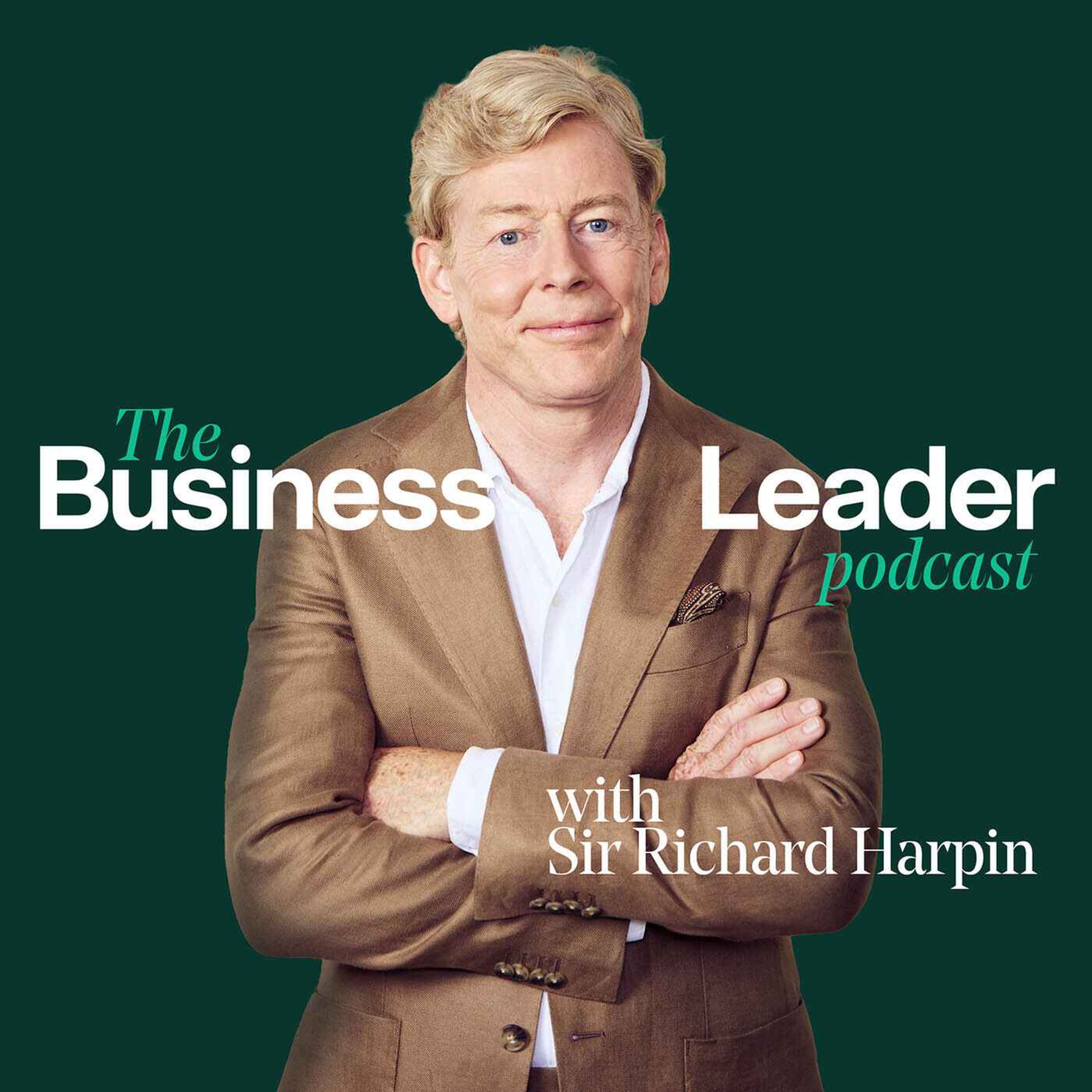
 The Business Leader Podcast with Sir Richard Harpin
27 Jan 2026 · 43m · 21 chapters

Host: Richard Harpin
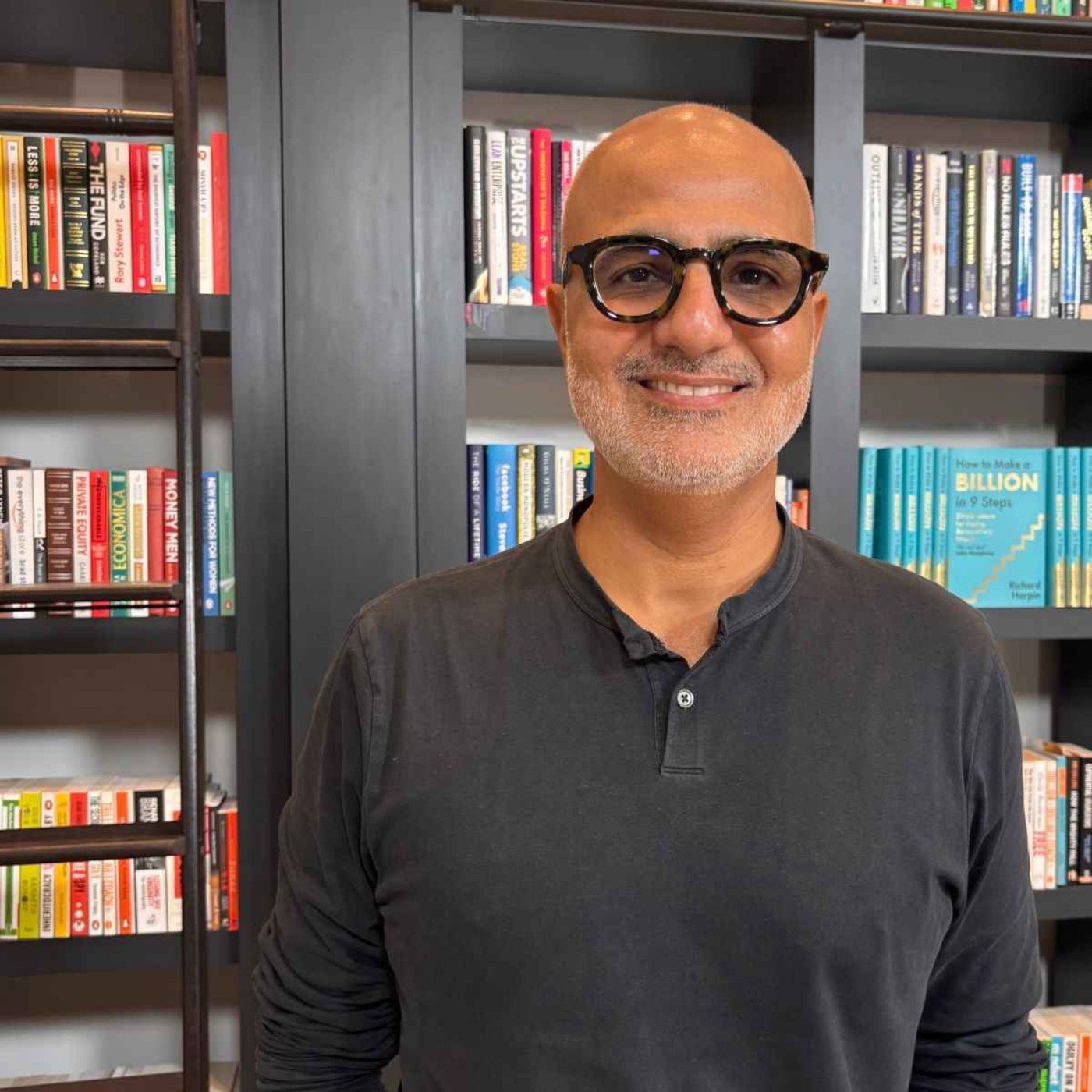
Rory Sutherland, Vice Chairman of Ogilvy UK
In this episode of the Business Leader Podcast, Richard Harpin interviews advertising expert Rory Sutherland, who shares insights from his extensive career in marketing and behavioral science. Sutherland discusses the dangers of a cost-cutting mindset in business, the importance of understanding consumer behavior, and innovative strategies for sustainable growth.
Written by AI. May contain mistakes.
Meet Rory Sutherland and learn about his background in advertising.
“He's an expert in the psychology of consumer behaviour and his insights on this have made him something of a social media star in recent years.”
Hear about Rory's early influences and his path to becoming an advertising expert.
“Yeah, probably no better training, in fact.”
Understand how behavioral science plays a crucial role in advertising.
“It's always struck me as slightly weird that, if you went back to the 1950s and 60s, certainly American advertising agencies and many British ones would employ kind of in-house psychologists and so on.”
Learn how advertising strategies can be adapted to B2B businesses.
“for the simple reason that agencies haven't been paid on commission since sort of 1992.”
Explore how innovative pricing models can transform service offerings.
“So it's applying that magical membership model to B2B.”
Discover the importance of customer choice in delivery logistics.
“the customer one choice, which is whether to buy the product or service or not?”
Learn why some customers prefer in-store shopping over online purchases.
“And let's pretend that this will result in no loss in volume of sales.”
Discover the conflict between cost reduction and opportunity in business.
“And at some level, those come into conflict.”
Explore how a well-defined business strategy influences cost management.
“I think you need to leave room for, well, first of all, cost reduction isn't a strategy.”
Understand the impact of customer delight on brand perception.
“Yeah, you talked about call centres, Rory.”
Learn the importance of staff autonomy in enhancing customer experience.
“And that's about giving those staff the decision-making ability, isn't it, to delight the customer?”
Examine how call centers can serve as valuable assets for businesses.
“Also true, by the way, just to do a little callback, that's also true of call centres.”
Discuss the risks and opportunities AI presents in business efficiency.
“And is there anything in marketing and business operations that should be done without testing?”
Learn about the importance of an opportunistic mindset in advertising and the role of AI in reducing bureaucracy.
“And have the big advertising agencies, so Ogilvy, WPP, have they done enough in this area, do you think?”
Discover the significance of the marketing process and how it shapes business strategy.
“but the HR headcount seems to have grown inexorably in the last 10 years and more in the UK than anywhere else for some fascinating reason.”
Explore the effectiveness of direct mail and traditional advertising in a digital age.
“It would be highly unlikely unless you're some sort of genius talent.”
Understand how advertising influences consumer confidence and technology adoption.
“because you see it when you're trying to pay a parking ticket or you're trying to pay a parking fine or you're trying to check your bank balance or whatever it may be.”
Learn from Rory about the importance of personal branding and audience engagement through content.
“One of the things advertising does is it says, this is no longer in the realm of weirdness.”
Gain insights on economic challenges and strategies for businesses to thrive.
“Let's finish on one final bit of advice that you would give to British businesses wanting to grow in the current economic climate.”
Discover strategies for businesses to create unique selling propositions and maintain customer focus.
“My micro suggestion is probably to find a single thing you do that your competitors don't do that creates disproportionate delight in your customers.”
Learn about the value of being distinctive in marketing and the challenges small businesses face.
“You can put a marketing person on the board, but if they're the only marketing person on the board, they're going to feel massively lonely and they're also going to stay really quiet.”

Get the gist, explore an idea or ask about something said.
 Claude
On The Business Leader Podcast with Sir Richard Harpin, what are the key points of this episode?
Searching your listeningAutomatic transcript. May contain errors.
0:00This is Britain's growth moment. Do you want to be part of it? On 26th of March, 750 of the UK's most ambitious founders, CEOs and investors will gather in London to shape the future of mid-sized business. The company's driving our nation's success. The Business Leader Summit 2026 isn't just another conference. It's a day built around the three forces that define growth, ambition, policy and capital. And as one of our valued podcast listeners, you can be there in person. To secure a discounted ticket, visit the events section of our business leader website and use this code. BL podcast, all one word, all uppercase.
0:41We look forward to seeing you there.
0:47Marketing has an opportunity mindset and finance has an efficiency and cost reduction mindset. You would be absolutely insane if you lived your entire life only with an opportunistic mindset. fascinating fact okay that called me back button on amazon customer service nobody's copied that the essays you wrote at university are completely worthless as essays what was valuable was the work you had to do in order to write them
1:18i'm richard harpin and this is a business leader podcast where we look at the stories and strategies behind modern businesses today my guest is rory sutherland the vice chairman of advertising group Ogilvy UK. He's an expert in the psychology of consumer behaviour and his insights on this have made him something of a social media star in recent years. I wanted to find out from him how he got into the world of advertising, what he makes of our new social media economy and how he's finding his newfound online fame.
1:58Rory Sutherland, thank you very much for being on the Business Leader podcast great to have you here we do have a few things in common, one of which is that you did the creative on Dove Soap I was peripherally involved I was the brand assistant on Fairy Liquid, which is why my hands are still so soft Of course. But you're far more creative than me. You were at P &G at the time, were you? I started off in Procter & Gamble. Yeah, probably no better training, in fact. Because if I'm right also, the brand managers there actually have kind of P &L responsibility. It's quite an unusual structure, if I'm right.
2:39So as a business training, David Ogle, he always believed this sort of 50 years ago, that it is the best place to start in work. And it's a sort of free MBA, effectively, working there. Yeah, but equally in advertising. And I think your father was in property. I think you've got one of your twin daughters in property. Absolutely right. Why did you choose advertising? Some part of it was that when I was sort of, I mean, I wouldn't say that at 11 I was absolutely convinced I wanted to work in advertising and was uninterested in anything else. But bear in mind, when I was sort of 11, 12, the early to mid-70s, it was kind of golden age, particularly of British press advertising.
3:22And my brother and I, my brother was 18 months older than me, we'd fight over the Sunday Times colour supplement or whatever, largely to read the ads. Many of them were from an agency called Collet Dickinson Pierce. And when people said that back then the ads were better than the programmes, that was quite often true. And so I was always fascinated by it, fascinated by psychology, human behaviour and so forth. And if I'm being also, let's give a fairly sort of blunt answer, it wasn't a bad place back in the day. If you had your Venn diagram where you said reasonably well paid or at least had the potential to be, overlapping with quite interesting to do, it definitely sat in the overlap between those two job requirements for me.
4:11And what you've done is you've turned advertising into a science as much as you can, behavioural science. Talk a little bit about that. It's always struck me as slightly weird that, if you went back to the 1950s and 60s, certainly American advertising agencies and many British ones would employ kind of in-house psychologists and so on. It's always struck me as slightly odd that advertising and psychology, and particularly sort of behavioural science haven't been closer bedfellows. And to some extent, what I was doing was restoring a connection. I think there was a fundamental problem with advertising, actually, in the sort of late part of the Mad Men era, which is it was so lucrative, you almost didn't feel the urge to expand your remit because the simple business of buying large TV campaigns and getting 15 % commission back, even on a long-running campaign where you hadn't had to do much work in the intervening couple of years.
5:07It was simply so well rewarded that it focused on what made money, not necessarily what added value. And that's, by the way, always a problem with a B2B business, that generally in a B2B business, you quite commonly, you make money in one way and you add value in another. And let's talk a little bit about B2B businesses because advertising, everybody thinks, is very much about building big consumer brands, large TV advertising budgets, Super Bowl. But how do you take some of that and apply it to B2B businesses? First of all, you stop obsessing about the media component or indeed the bought communications component.
5:51for the simple reason that agencies haven't been paid on commission since sort of 1992. And I spend quite a lot of my time trying to sort of prevent this muscle memory that ad agencies have, which is that obviously we can add the most value to those clients which have large media budgets. And they go, no, no, no, you can add the most value where you can add the most value. And that may mean bought media. It could mean a whole host of other ideas, all the more possible in the digital age, which don't involve giving any money to a media owner or indeed to a tech social media platform at all. You know, you can have, I mean, marketing, this is the interesting thing, marketing and advertising are defined as disciplines, as something you do.
6:39But what they do, I think, is relatively unimportant. What's really important is how they think. So one of the things I always argue is that the value of marketing to an organisation isn't necessarily in what it does. You can have no media budget, you can do no advertising. What's really valuable in terms of marketing's contribution to a wider business is that it thinks about problems in an entirely different complementary way by looking at the business through the lens of the customer, the client or the consumer. And what would be a good tangible example of that? I mean, marketing goes back thousands of years.
7:15That's the first point. I mean, Greenland is called Greenland because I think probably Eric the Red or whoever it was wanted settlers to go there. So he thought it would be a good idea to give it an attractive name. Another example would be simply questions like pricing, assuming that falls in the remit of patently it's consumer or customer facing. And that does sit with behavioral stuff, doesn't it? Emphatically, whether something seems expensive or cheap is only partially a function of how much it costs. It's also a function of what you compare it to. And consequently, one of the things I think in B2B, which I think can add a lot of value from a marketing standpoint, is finding innovative ways to charge for what you do.
8:02There's a wonderful example, a company called Backhouse Jones, which effectively provides legal services to transport operators, coach operators, haulage operators. And they charge, I think it's probably gone up a bit since I last met, but it's 30 pence per vehicle per day. Now, in return, effectively, you know, if you end up involved in some kind of legal dispute, they then provide you with legal services for free. So it's applying that magical membership model to B2B. It's a fundamentally different... I mean, I always say this about Klarna, that everybody says, you know, if you're a boring sort of finance person, you go, Klarna's just an interest-free loan for three months.
8:43No, it's not, actually, because three times£150 feels like a completely different price to one times£450. So, in a sense, if you offer Klarna, if you offer alternative ways to pay, you are actually appealing simply to more customers. And how does a business know whether they are undervaluing their products or service and they could be charging more money? They almost certainly are. I know that various sort of consulting firms and various academics as well have done research into pricing and found that in cases where a business had mispriced something it had nearly always underpriced it rather than overpricing it.
9:23It was much, much more common. and obviously, you know, one thing I have an issue with is the excessive dominance and power of procurement in modern business because sometimes, not always, it all depends how you do it. Procurement can be a deeply intellectual, almost philosophical discipline where you look for ways of maximising the value exchange. However, however good you are, if you are bonused on cost reduction, you've created a situation where you can get rewarded for any reduction in cost without being held responsible for any subsequent destruction in value. And I think it's problematic the extent to which companies now separate out into silos, all of which are given very, very narrow, in some ways, very narrow definitions of success, which at some level will start to conflict with each other, Unless you are very, very clever with how you define success, it's very, very easy for different parts of an organization to work at cross purposes.
10:31And the classic example I always give is, for instance, I'm absolutely convinced that nearly all online retailers, particularly if the consumer is paying for delivery, should allow the consumer to choose who delivers. now you may have to charge a premium if they want you know overnight UPS they're going to have to pay a little bit more than if they want every or whatever but nonetheless I think you should give them that choice one because it's actually a very strong preference factor for many consumers some consumers have a massive aversion to one or other of the distribution companies but it also has the advantage if something goes wrong they'll blame themselves something goes wrong with the delivery, they'll blame themselves, they won't blame you.
11:16But is there any element of only give the customer one choice, which is whether to buy the product or service or not? Otherwise, if there are too many choices, they might not be able to decide. No, I think with delivery, that comes as a secondary choice, because at the moment you have no choice at all. The company selling you the item decides who delivers it. And that's almost certainly, effectively, that's probably mandated by procurement, who want to secure the largest possible rebate and discount by putting everything through one provider. Now, the downside there is procurement can lay credit to the reduction in cost per order that they've negotiated by negotiating exclusivity.
11:57However, they're not held responsible for any sales that don't result as a consequence of the consumer not being given the choice. and personally I think it should be if you want e-commerce to flourish I would almost legally mandate it that people should if you ask the customer to pay for delivery you should give them some say over who delivers and how important is omni-channel and multi-channel rather than online only this I think is really really important because it's undoubtedly an area where marketers are basically right and a lot of people in business are instinctively wrong. And by which I mean, let me give you an example again.
12:40Apologies that it's from a consumer example. What is very, very common, and Nike made this mistake, if you think about it, Nike endured this absolutely massive loss in its value because it tried to cut out the wholesalers and build more of a DTC model. Now, the DTC model is undoubtedly more efficient in terms of margin capture. However, business is not about defining your customers by those people who are very, very inexpensive to do business with. Because the problem of making that definition is you end up with rather fewer customers than you would otherwise. A marketer would say, we are happy engaging with anybody in any channel that they prefer or which is timely or contextually relevant or useful to them in the pursuit of a valuable long-term relationship.
13:35In fact, it might even make sense to use loss-making channels if it helps you acquire customers who can subsequently be profitable. And what does it say about customers that will buy a product multi-channel, both online and in-store? This is the interesting thing, which is that if you do the Nike thing, which is let's pretend we can make all our transactions as efficient as our most efficient transaction. And let's pretend that this will result in no loss in volume of sales. Now, that applies at the level of different customers. There are some customers, I would argue, a rather large number of people who are never going to order shoes directly, for example, and who probably or another group of people who will only buy shoes at a retailer who gets supply from a wholesale.
14:23Because they physically want to see them. They want to try them on. Well, it's not only that at the level of the individual, there are always going to be some holdouts. And I think that will be always the case. OK. OK, secondly, even within. So that's at the level of different customers. There will be. However, at the level of the individual customer, there will always be moments and contexts where you will buy something physically, which you wouldn't buy online simply because it's more convenient to do so. You weren't aware that the product existed because, you know, until you saw it on a shelf, for example.
14:59And so that question where fundamentally, I think, the difference between marketing and finance is marketing has an opportunity mindset and finance has an efficiency and cost reduction mindset. And at some level, those come into conflict. Now, you would be absolutely insane if you lived your entire life only with an opportunistic mindset. You know, some part of life is doing what you know works and doing more of it. I'm not disputing that for a second. But there is a danger that you fetishise cost reduction and efficiency. And, of course, a balance sheet will cause you to do that. A balance sheet view of the world will cause you to say the fastest way to increase our margin and impress our stockholders will be to reduce costs.
15:44Now, if those costs come at the expense of missed opportunities, you haven't really reduced a cost. What you might have done is destroy an opportunity. But it doesn't appear like that because costs are quick to cut, whereas opportunities take time to exploit. And should a business be focused on cost all the time? Or do you think once or twice in a period that businesses should be saying, we're now going to cut our costs, but we'll do it sort of every five years, not continuously? I think you need to leave room for, well, first of all, cost reduction isn't a strategy. That's the first point. Your business should have a strategy, which is probably distinct from its competitor's strategies.
16:30And if you are pursuing that particular strategy, everything you do will have an appropriate level of cost. That's the first point. and you know for example if if you are pursuing a strategy of premiumization skimping on customer service is almost certainly a mistake because that creates an immediate dissonance in any customer where they go i'm paying more for this because it's supposed to be better but every time i phone up they treat me like crap okay therefore what you've done is you've allowed you know effectively you've treated cost reduction as if it's an end in itself, whereas what you spend, you know, it would be absurd, for example, for a premium car manufacturer to attempt to skimp on door handles, right?
17:19OK, because, you know, essentially you've decided your where to play, how to win, and you'll need to spend in a way that's appropriate to that strategy. So that's the first point, which is that the idea that by simply making things cheaper, And quite often, by the way, that story is made all the easier because you use technology as the magic ingredient which is going to make this reduction in cost possible. And I think that's dangerous. Yeah, you talked about call centres, Rory. And I think historically and in your role at Ogilvy, you talked about low cost interventions and how they can make a big difference to the buying.
18:02One of the important things is one thing I would do is I would leave a certain amount of money, which is almost there. You should almost spend it to annoy your finance director. And the purpose of that is it's very well targeted customer delight, surprise and delight. The Doubletree cookie is the example I always give. Apologies to people who've heard that before. But occasionally, and there's a wonderful book actually called Unreasonable Hospitality by Will Godara, which is the amazing power of giving your customer more than they expect. Because fundamentally in any relationship, these things needn't be massively expensive, by the way.
18:45but the very surprising nature of someone actually being, in a sense, I suppose, how would I describe it, kind in a discretionary way, generous in a discretionary way, giving you the benefit of the doubt, whatever it may be. I'll give you an example of that, which, I mean, the finance people will go crazy at this, but someone who allows you in a pre-booked train ticket where you've just missed the previous train to travel on the subsequent train, at least without charging you the full fare for the subsequent train, if the subsequent train isn't all that busy, is one of those little moments of civility which disproportionately, I think, affect our perception of and relationship with a brand.
19:31And that's about giving those staff the decision-making ability, isn't it, to delight the customer? Yes, allowing staff the discretion to use contextual intelligence. How do you do that without losing control of the costs? You have to, to some extent, surrender, I think, control of... Or at least you shouldn't... OK. The slightly mischievous analogy I used here is, in many cases, the consumer, particularly your regular customers, think they're in a marriage with you, and the finance department behave as though they're running an escort agency. In other words, it's so much for this thing, we charge this much.
20:10Now, within the scope of a relationship, there is all kinds of tacit give and take. Benefit of the doubt, quid pro quo, tell you what, if you do this, I'll do that. That's what a relationship is about. It's about a mutually beneficial value exchange. And trying to separate it out one transaction at a time is bad psychology, I would argue. So that one point I'd make is that the ability for staff to have a certain degree of discretion at their disposal to make a customer happy. Amazon and Octopus Energy pretty much only reward and bonus their customer-facing staff on the basis of customer satisfaction.
20:49They don't have that kind of obsessive idea that a telephone call centre should be treated as if it's a piece of machinery, which is, you know, work to death, effectively. I'd also argue that generally all businesses underinvest in customer service for the simple reason that it's hard to quantify the value, not necessarily because it's impossible to quantify, but because it's slow. Because obviously customer loyalty is slower to measure than customer acquisition. And omni-channel marketing, we haven't mentioned paper, direct mail. No, fascinating thing. Fundamentally, when we moved to digital, Digital advertising was massively attractive to people who had an efficiency mindset, which includes the whole of the finance department, who see marketing as a cost to be reduced rather than an opportunity to be explored.
21:44Also true, by the way, just to do a little callback, that's also true of call centres. Now, I spoke to someone who worked in – and by the way, the call centre might be your best advertising in certain industries. And I spoke to someone who worked with James Dyson, and he was sitting there and being given a presentation on the kind of operational performance of the call centre. And he interrupted it midway through and said, I'm not interested in any of these metrics. As far as I'm concerned, if one of our customers chooses to telephone us, we should treat it as an honour and respond accordingly.
22:14And by the way, I would argue that a good call centre is a massive value driver. And if we could properly measure the value of the very best call centre staff, I could envisage a world in which call centre operatives earn six figures. I don't think it would be ridiculous for the very best people who just have the mix of psychological and other skills just to take someone who's angry and make them very happy. And with AI and voice bots, aren't 80 % of call centre staff going to be redundant in the next couple of years? So this is a really important and actually very pressing problem. There's a company I talk to which effectively sells its B2B business, and it sells AI call centre and reception.
23:04It's called VoiceStack. It sells call centre and reception AI to dental practices and hopefully to other medical practices as well. And the way that works, actually, is it's like a co-pilot or an assistant in that it listens in on the call, gives feedback to the call centre operative on the emotional state of the caller, proposes next approaches. That kind of thing, which is a side-by-side hybrid approach, strikes me as potentially amazing, by the way. And it will literally say, look, this is a potential£20 ,000 sale. the next call shouldn't come from the receptionist, it should come from the dentist herself.
23:45But the next stage beyond that has got to be that they can take away a lot of those manual calls that are very routine, and so we keep the very best call centre staff for those sort of high-level conversations. Depends who you are. I mean, there will, I think, be entities where... I mean, by the way, it raises important questions for what the hell the default interface is between a customer and a company. in the sense that we've kind of assumed in the rush to digitalisation that it's going to be a screen. But the reason we don't phone companies is very largely because we think it's going to take 90 seconds before they pick up.
24:22Then I'll have a whole IVR experience of navigating the thing. Then I'll have to repeat my name. Then I'll have to repeat my address, probably give my email address and get to a couple of security questions. Now, if you can bypass that, and I assume if I've got a problem on my Amex bill, I simply ring Amex and half a second later someone says, hello, Rory, how can I help you? Or even better, on the screen you press a button and someone calls you back, which Amazon does. Fascinating fact, OK, that call me back button on Amazon customer service. Nobody's copied that. Literally nobody. Why? My argument is they go, well, we can't really prove the business case, to which I go, Amazon tests everything, right?
25:03Amazon would not have that button if they couldn't make the business case. Amazon is a fast feedback business which can learn very quickly from investment in customer service. Therefore, to be honest, don't demand perfect proof. If Amazon does it, at the very least, test copying it. And is there anything in marketing and business operations that should be done without testing? Or can everything be tested? Right. I think this is where sometimes finance and other people are acting as a – and the Treasury and government, by the way, in the same way, are acting as a massive break on innovation. I also say the same with procurement.
25:42Procurement can be a huge break on innovation because their fetish is perfect side-by-side comparison. So if you come along with a better idea which says, no, it doesn't meet those three metrics, but it's way better on the fourth, Procurement will reject you because you're not a like-for-like comparison. And therefore, they can't just beat you down. And I know of many, many cases where someone comes along and says, we can keep our hourly fees the same, but we can actually do what you need to do with half the number of hours. And the procurement people go, we're not interested. We want you to quote for the previous rate of hours because we need to compare you with all the four bidders.
26:18And doesn't that then say that AI should take over from those procurement professionals? The problem is it won't, because the way that business works at the moment is people in procurement and HR and finance often end up policing the people who do the real work. And so my concern is the standard efficiency approach will be a bunch of people in finance. By the way, how do we measure the productivity of a finance department? We don't really, do we? We haven't got a clue. What are their key performances? I don't know. So weirdly, the people who are imposing key performance indicators on the staff of yours who go around fixing boilers and being really matey and nice, who's actually measuring them?
27:01Because we seem to have created this sort of, you know, who will guard the guards themselves kind of problem. and they will see efficiency not as improving the efficiency of their own department, heaven forfend, because that might lead to job losses among their mates and it might lead to them controlling a slightly smaller department. No, no, no. What they will do is they will try and actually effectively increase even further the efficiency of frontline staff, people who do the real job. I will also say with AI that, so this is one of my concerns, which is that these companies have invested literally a trillion dollars in the stuff.
27:39At some point, it's going to be payback time. They will then need their customers to buy AI solutions. And the fastest way to sell those solutions, accompanied by their buddies in the consulting industry, is by selling it through the cost reduction of frontline real workers, rather than people sitting at a desk somewhere. And that worries the hell out of me. The proper way to sell AI is through an opportunistic mindset, not an efficiency mindset, which is we can actually turbocharge your consumer perception and consequently lead to growth, really meaningful, sustainable growth, rather than just staying the same size and spending a bit less.
28:25And have the big advertising agencies, so Ogilvy, WPP, have they done enough in this area, do you think? They have done quite a lot in this area in terms of turbocharging the efficiency of copywriters, art directors and so forth. Not inappropriately, I would like to see even more attention paid to how we can use this technology to massively reduce bureaucratic overhead. because the proportion of businesses, the proportion of a large business's payroll that goes towards people who are effectively a kind of bureaucracy, you know, self-sustaining, slightly cancerous bureaucracy, continually alarms me.
29:06You know, if you look at the growth of HR, I'm not saying it's unimportant, but the HR headcount seems to have grown inexorably in the last 10 years and more in the UK than anywhere else for some fascinating reason. And what's the advice, Rory, to medium-sized businesses that don't spend a lot of money on marketing? Quite a few of them will be B2B businesses. Where should they be focusing? I think we have to be careful here because the value of marketing is sometimes in the process, not in the outcome. So Jeremy Bulmore, brilliant advertising man, you probably remember, he always said more or less that even if you have no intention of running any advertising, it's quite valuable to produce an ad campaign for your company because of the questions it forces you to ask.
29:59Like, why are we here? Why do we exist? Why do we deserve to exist? What makes us different from our competitors? What is it that people are willing to pay for that we perhaps have provided too little of? So that's sort of a marketing strategy driving your overall strategy. So fundamentally, if you leap straight from here I am, produce an ad campaign, the analogy I use is that the essays you wrote at university are completely worthless as essays. What was valuable was the work you had to do in order to write them. And I think that's true of quite a lot of things in business, that the byproduct of it may be more valuable than the product, as it is with a university essay.
30:41The by-product is you spend 15 hours researching it and immersing yourself in it and constructing an argument. The final essay is undoubtedly not the best thing you can read out there on the subject. It would be highly unlikely unless you're some sort of genius talent. And so we've got to be very careful about what we shortcut here. We're in danger if we're not really careful of actually losing our understanding of what business we're in.
31:10looking back at your amazing 37 year career at ogilvy what's the one other magic golden nugget that you would impart here uh one of them is we mentioned it earlier um uh physical direct mail is very very effective um it's even more effective because most of your competitors won't copy it because they think it makes them look old-fashioned. And we ought to be absolutely conscious of the fact that digital transformation is partly the product of a Gadarene kind of herd effect amongst marketers desperately wanting to look contemporary. One of the things I think we did, which I think happens very frequently, is when something new comes along, we look at what the new thing can do that the old thing couldn't.
31:56And we overemphasise the importance of the new thing. And we forget to ask the question, what could the old thing do that the new thing comes from? So everybody runs off at the shiny new thing and forgets about that direct mail. With digital, the obsession with micro-targeting, performance marketing, efficiency, minimisation of wastage is completely ridiculous because there are many, many products which you can never sell directly at the point of exposure. So what you're measuring is wrong in the first place because you're failing to measure delayed effects, you're only measuring immediate effects.
32:29and that makes it very difficult for Unilever or P &G to measure, very easy for, say, ASOS to measure if they show an item of clothing and you click on the ad and buy it. One very interesting, by the way, solution to this problem is a company called Tickle in the UK, jointickle.com, where the call to action on a banner ad is not click here, it's save to wallet. Now, what was good about direct mail was that you consumed it at a time of your own choosing. What was good about press advertising was you saw a press advertisement while you were reading a newspaper. So you were in the right frame of mind to read an ad.
33:05What was good about TV advertising is you saw a TV advertisement when you were sitting on the sofa watching telly. And so you were already in the right physical position and the right mindset to be receptive to a message in that format. An awful lot of supposedly brilliantly targeted digital advertising is wonderfully targeted at the level of the individual, hopelessly targeted at the level of the moment because you see it when you're trying to pay a parking ticket or you're trying to pay a parking fine or you're trying to check your bank balance or whatever it may be. And so direct mail has this magical property which, of course, on average it's kept for about seven days and looked at for about, bizarrely, it's like 120-something seconds.
33:45It's also much rarer than it was before so that to my kids, if they receive a physical letter, it's eventful in a way that a banner ad isn't. So we didn't really, effectively, when we compared digital media to conventional media, we weren't really making a fair comparison. It was a deeply biased comparison, I think amplified by the fact that people like Google and Meta made money if we were obsessed with micro-targeting, but didn't make money if we pursued other metrics like fame or trust. So your message is do both digital marketing and marketing. And there is for any business... Now, don't get me wrong, you've got to get the bottom of the funnel right because if you've got a crap bottom of the funnel, if you're not converting, then anything you do further upstream is going to be working at half-cock.
34:37So I'm very much in favour of focusing on this first, but not to the exclusion of other forms of contact. And there may be huge strengths to other forms of contact. For instance, advertising, by dint of not being micro-targeted, creates the impression, accurately or not, that this is a thing. Now, I've often said that you will not get major purchases of solar panels in the UK until I walk into a branch of John Lewis and they're selling solar panels. I need some evidence that this isn't some weird, particularly if you think about one of our heuristic technology. Now, one of our heuristics we use with all technology is don't be first with the worst.
35:24The people who bought a flat screen TV first bought a plasma screen TV with a bloody enormous bezel and it cost seven grand. So take second move or advantage. So a lot of people have been perfectly reasonably trained with any new technology to go, basically, I'm going to let a load of geeks or show offs take the hit in being the first to adopt this technology. and then when it reaches that sweet spot of mass adoption, that's where I'm prepared to jump in. One of the things advertising does is it says, this is no longer in the realm of weirdness. This is now mainstream. And because we're a herd species, we're confident doing things other people do.
36:04Advertising in mass media creates an impression. You might argue it's a costly signal that we wouldn't be doing this advertisement if the product we were advertising was not relevant to a large number of people. Now, talk, Rory, about a founder or a chief exec building their own brand because you've done a tremendous job of that. Yeah, I'm obviously clear. How important is that? Just to differentiate myself from my more distinguished fellow guests on this podcast, I don't regard myself as a manager and I don't regard myself as a leader in anything other than the sense of I'm really a sort of resident mischief maker or jester who simply sits around.
36:43Do not put me in a position of major authority. I'd suck, OK? You know, my suspicion is if you gave me a large company to take over, there'd be a 1 % chance it made a fortune and a 99 % chance it wouldn't bust. So you've done a tremendous job of building your brand and presentations that you give. And then was it a little bit of luck on what happened on TikTok? Yeah, no, I mean, the whole thing's luck, really, in the sense that during COVID, I appeared on a lot of podcasts. I've always believed that we get under-excited by an audience of 5 ,000 people for two reasons. So when we, for example, streamed the Nudgestock Festival live during COVID, we had an audience of 120 ,000, and a few people said, ooh, I think that could be a bit more, you know, da-da-da.
37:30And I said, hold on, that's one and a half Wembleys. If we'd presented, you know, if you were giving a presentation to the whole of Wembley Stadium, you'd regard it as the biggest event of your life, and yet here you are going to an online audience. But secondly, it's a self-selecting audience. Now, if you think about it, if you do a behavioural science festival, my audience may be relatively small for this podcast, but it's self-selecting. And therefore, actually, the extent to which content is the best form of targeting, in a way, creative and content, effectively, if you can get your audience to recognise themselves in what you say, it's a beautifully targeted ad.
38:11And it's doing double the work because it's getting the attention of the people who matter, but it's also creating a bond between them because you've already created that kind of empathic leap where you've made a connection, an emotional connection, not just a, you've been on the screen that I was looking at, but you understand where I'm coming from. And so creative targeting is the best targeting of all. And so I appear in a lot of podcasts, some of them with probably a very small audience, But my argument was, look, you know, even if the audience is 600 people, reaching 600 people in an hour is a much better network effect than reaching one.
38:45And then this wonderful guy called Hugo just started. He was a film student. I just started taking clips of me from podcasts and tick tockizing them. And it's it's absolutely bizarre. So I probably wouldn't be able to walk to St Pancras Station from here without one person asking for a selfie and three people recognizing me.
39:07Let's finish on one final bit of advice that you would give to British businesses wanting to grow in the current economic climate. Obviously, most of my advice is sort of category and sector specific. I would argue, however, that the real economic problem, if I can go macro for a second, is that housing is too expensive. We're already rich. which if you had maintained expenditure on housing as a proportion of discretionary income at the level in which it was in the 1980s, right, your postman would have a jet ski. And so my biggest problem with the economy is that just as I think many digital businesses, many businesses effectively are in a position where Google and Meta can soak up most of their margin by enjoying a stranglehold over customer acquisition.
40:03I would also argue that we now have a position where landlords buy to let landlords and so forth will effectively, even if we have productivity gains, my fear is they just get effectively mopped up by rises in the property market, which is a totally inequitable way to distribute wealth. It's not really enrichment. It's just asset class inflation. So that's my macro point, which is read the works of Henry George and discover, you know, the benefits of a land value tax rather than taxing income. That's one problem I have. We are taxing income, you know, productive work and consumption far too heavily, whereas completely unproductive parts of the economy, including sort of asset gains in property prices, are effectively treated as if they're tax free.
40:53And it's absurd. OK. So that's my macro suggestion. My micro suggestion is probably to find a single thing you do that your competitors don't do that creates disproportionate delight in your customers. And that is about having a USP, unique selling proposition that is a bit better. It can be surprisingly cheesy and gratuitous. Someone contacted me with a case study of someone who is the most successful car dealer in, I think it's Quebec probably. And their whole shtick is that basically the dealerships are full of cuddly toys and the strapline is the car dealer you want to hug. And when you buy a car, they give you a cuddly toy.
41:34And this is, I mean, imagine trying to present that idea to a board. So one of the things I would recommend is that I think companies of any size need to create a customer board alongside. They probably should create an employee board, but that's not my absolute realm. But they need to create a customer board alongside the main board, because the main board now is so focused on financial matters that we're losing sight of the customer. You can put a marketing person on the board, but if they're the only marketing person on the board, they're going to feel massively lonely and they're also going to stay really quiet.
42:09Because if you mention soft toys in a board meeting, you look like a total idiot. One of the arguments I would make is that finding a way to be charmingly distinctive simply in terms of value generated per pound spent is magically effective, which is partly why my book was called Alchemy. That psychological solutions often cost remarkably little but can be extraordinarily motivating simply because they garner the thing that's really valuable about a customer, which may not be their wallet. It may be their attention. So those two final messages, be distinctive and don't ever lose focus on the customer.
42:47A third one, my father ran a small business, actually a series of small business. I grew up in an SME household. And I'm really, really sympathetic with small businesses that don't do enough marketing. And the reason I'm sympathetic is because when you run a small business, you're always fighting fires. The thing about marketing is it's something you can always postpone till tomorrow. so either reserving a time to think about it or finding a family member and just say you're responsible for this and nothing else but this is probably really valuable we i always look back on my time when my father ran a variety of businesses and i always noticed that every time we did some marketing it worked really really well i look back and i thought why did we do so little and the answer is there was always something else to do which wasn't necessarily more important, but it was more urgent.
43:40You've been listening to me, Richard Harpin, speaking to Rory Sutherland of Ogilvy UK for the Business Leader podcast. Please do rate and subscribe to us wherever you get your podcasts. We do two episodes every week. And if you visit our Business Leader website, you can sign up to our weekly newsletter to get more content like this and find out opportunities for your business.
44:31Thank you.
Hosted on Acast. See acast.com/privacy for more information.