
 Ask ChatGPT


 The Business Leader Podcast with Sir Richard Harpin
21 Jul 2026 · 46m · 21 chapters
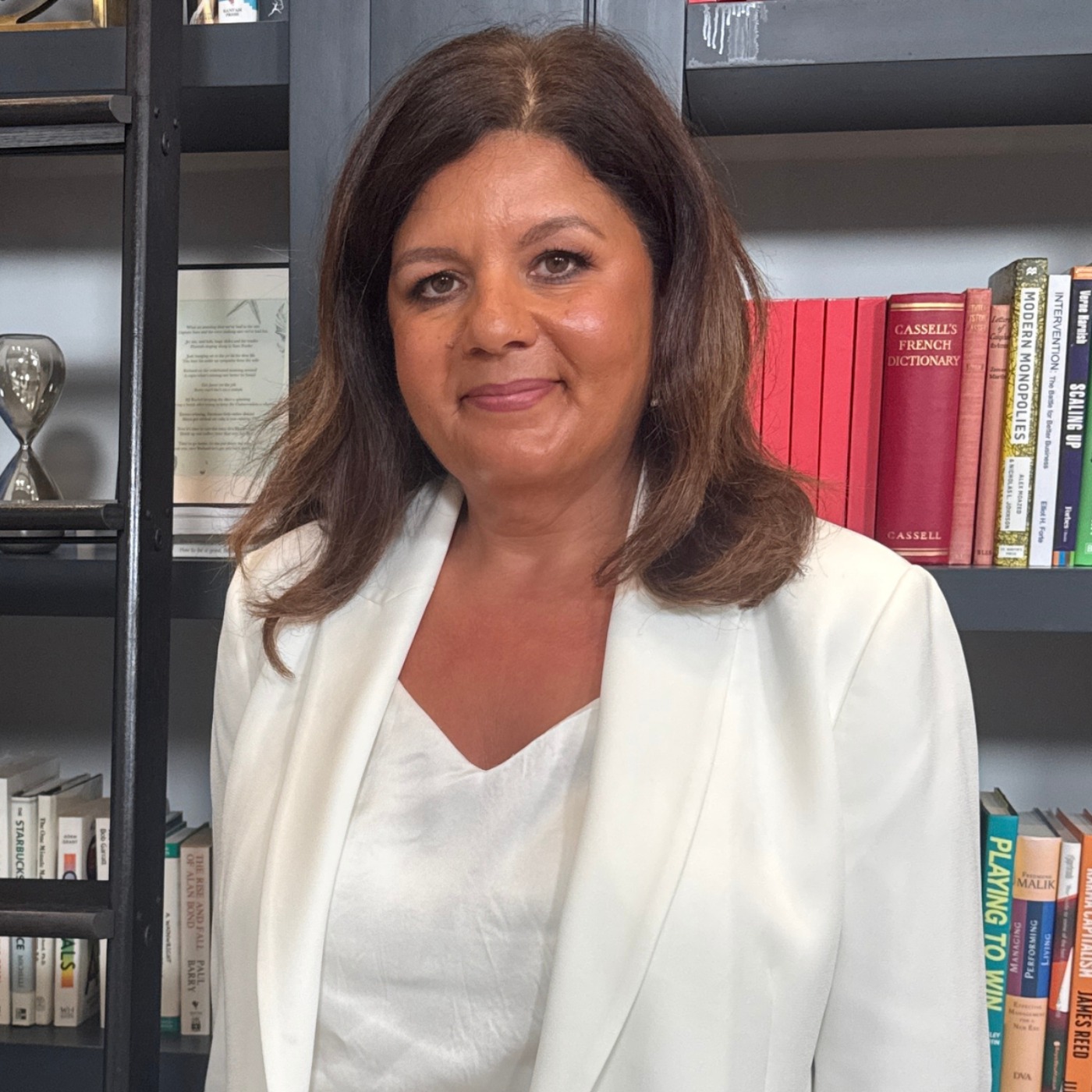
Mia Drennan explains how she built Glass from £6,000 capital in 2011 into a £1bn+ global platform servicing institutional debt, after spotting a post-2009 crisis opportunity where banks were unresponsive to broken loans. She details early bootstrapping, winning mandates, scaling internationally, product/service expansion, and raising growth equity (50% sold to Enlightenment Capital in 2022; later Oakley Capital investment; valuation in excess of £1bn).
Mia Drennan is founder of Glass. She previously worked in banking (American bank; European role) and started earlier businesses: a London market-representation venture (2005) and later headhunting (after pivoting post-2006 “Big Bang” era).
Glass created a new category; grew ~40% CAGR; “didn’t have a system” early—had an office and resilience; followed clients geographically; culture (low ego, humility, collaboration) drives hiring; became “tech co” via digitization and AI.
First deal in June 2012 (Olympics year); 2013 “Yellow Pages” mandate (Goldman Sachs leverage finance introduced; CFO quoted “David and Goliath”); opened New York early 2016, Australia success, France before Brexit, Germany during COVID, later Italy acquisition, plus Dubai, Spain, Hong Kong, Singapore.
Written by AI. May contain mistakes.
Discover how Mia identified an opportunity in the financial crisis to start Glass.
“Yeah, Glass is a global platform for servicing institutional debt.”
Explore Mia's early career and what led her to become an entrepreneur.
“and the need for some sort of change, it all kind of came together at that particular moment in time.”
Mia shares her experience of bootstrapping Glass with £6k.
“So, you know, and then in 2005, I took my first leap of faith.”
Learn about the persistence and strategies Mia used to land her first client.
“And, you know, the glass business when it started was sort of£6 ,000 a capital, 400 meetings around the city to get that first deal.”
Mia details the growth trajectory of Glass and key milestones.
“It was a bit like David and Goliath, and the CFO of Yellow Pages actually said that in his selection of us.”
An insight into Glass's international growth and the challenges faced.
“So, I mean, obviously, by the time we got the yellow pages, we probably had about 50 mandates that we were working on.”
Mia discusses her cautious approach towards M&A and its implications.
“How did you go from UK, Australia, America?”
Learn about the strategic approach to M&A and integrating new businesses.
“and I've seen so many failed M &A deals in my industry.”
Discover how to grow and adapt service offerings in a competitive market.
“So obviously, you know, looking to reinvest in the new business, but obviously, you know, get some liquidity at the same time.”
Understand the importance of team culture and collaboration in business success.
“And we're really focused on making sure that culture fit is something that we really focus on when we bring people into the business.”
Explore the journey of securing investment and the challenges involved.
“So a couple of things that remind me of being quite funny around that.”
Learn how to evaluate potential investors and ensure a good fit.
“and how did you know it was going to be that sort of good fit?”
Discussion on reaching a billion-pound valuation and reflections on early capital investment.
“That was sort of 18 months to two years.”
Insights on scaling a business and leveraging networks for success.
“And I think also coming to terms with the fact that if you ended up somewhere that you didn't really like, quite a few of those two, what would happen?”
Exploring the transition to a tech-focused company and the role of AI.
“So we spend a lot of time talking about, you know, that customer interface and whoever's dealing with the customer internally or externally.”
Importance of team development, coaching, and creating a supportive culture.
“So we've just hired a very heavy hitting, and I call him a chief product AI technical officer because he ticks all boxes.”
Discussion on the significance of mentorship and coaching in business success.
“How can you see the benefits of everybody having a coach?”
Addressing the challenges women face in entrepreneurship and strategies for success.
“So we reinvested our profits into the business and kept hold of that equity.”
Learn how entrepreneurs can approach growth capital and risk management effectively.
“how much actually they should truly give up because there hasn't been much advice at that end when people are starting out.”
Explore the common mistakes entrepreneurs make and how to learn from them.
“and this current valuation gave me the confidence to think that we could deliver that.”
Discover strategies to start a business with a small amount of capital.
“So I think, you know, I'd probably look at that.”

Get the gist, explore an idea or ask about something said.
 Claude
On The Business Leader Podcast with Sir Richard Harpin, what are the key points of this episode?
Searching your listeningAutomatic transcript. May contain errors.
0:02When I look back at those early days of£6 ,000 of capital, I think we would have sold at£40 million and to get to this is just crazy. And that was at a valuation in excess of a billion pounds. Yes. All we had was a good idea. I didn't have a system, I didn't have procedures, I had an office. It was a bit like David and Goliath, but he wanted somebody that was really hungry and was prepared to do a great job. We've been growing 40 % CAGA year on year. We've sort of smashed it.
0:37Most billion-pound founders don't start the careers of city temps with few qualifications. Mia Drennan did. My guest today took£6 ,000 in 2011, spotted an opportunity in the wreckage of the financial crisis and turned a niche idea into a global financial powerhouse. She disrupted bank-led loan administration and built Glass into a billion pound plus business and has ambitions to scale even further. So what does it take to build something from nothing to that scale?
1:16Mia Dredden, founder of Glass, welcome to the Business Leader podcast. What is Glass and how did you come up with the idea? Yeah, Glass is a global platform for servicing institutional debt. We manage over 850 billion assets under management across 11 countries and 15 offices with over 500 people around the world. The idea came to me at the sort of 2011 when having been in the banking industry for a number of years, I sort of wanted to create my own franchise and I realised that there was on the back of the crash in 2009 all these broken company loans with creditors sort of hammering to get their money out and banks sort of being very unhelpful, unresponsive, not proactive or commercial.
2:08And so it all came together in this idea that I could create this kind of high touch service providing agency and trustee services to help creditors get their money back. So it's sort of banks could have offered that service, but it's better to have it run independently. Yeah, I mean, it was very much part of the banking back office infrastructure. So really not something that the banks really cared about. But it kind of all kind of culminated in that inflection point in the financial services industry. You know, banks were retreating, you know, these new emergence of the credit funds that were coming up and starting to become, you know, get involved in the credit markets.
2:44and the need for some sort of change, it all kind of came together at that particular moment in time. And was this a new concept or did you copy and look at other businesses and then try and do something a bit better? Totally new, unique concept. Didn't exist before. And so not only did we create a company, we also created a category. And did you always know from a young age in those when you were sort of an employee and working in the city, thinking one day I will set up my own business or not? No to be frank but I do think when I look back on that you know the time from being sort of a teenager or late teens just to work in the city until now I've probably always been a bit of an entrepreneur entrepreneur within all the jobs I had and always try to create something for others and create a business and that was a real theme So, you know, and then in 2005, I took my first leap of faith.
3:43Talk a bit more about that leap of faith. And I think it started with you and a founding partner and£6 ,000, didn't it? That was 2005 was actually my first business. So just a little bit of background. So I was working for a large American bank who, you know, I really enjoyed my role. I had a very big European role and running a big team. And I was up for a big promotion. And I was very excited about this. And at the 11th hour, I didn't get the promotion. They decided to fly somebody over from America instead. I decided to quit. And I was looking to go work for a competitor. And anyway, long and short of it was a client said to me, we want to open an office in London.
4:22How could you help us? Because you know everybody in the market. And that led me down a path where I created my first business, which is still going today, that really was representing this company to help them build a market in London. Long and short of it is the people that hired me quit. But at the same token, the clients I was marketing to were my old friends in the industry. And they were looking for people. We're talking 2006, big bang in financial services. So I pivoted to be a headhunter until it took me on this journey, you know, seven years down the line where I'd had enough of headhunting.
4:58And I wanted to get back into the financial services market. And that's really where Glass was born. Did you sell that business or did you keep the shares? I did sell the business to one of the ladies that worked for me and it's still going to get today, 20 odd years later. And that provided you with some seed capital to then start up Glass. Yes. But it was a bootstrap business or did you think about getting a bigger investor at that time? So, I mean, both businesses totally bootstrapped. And, you know, the glass business when it started was sort of£6 ,000 a capital, 400 meetings around the city to get that first deal.
5:34And because we were trying to get into broken loans, we were sort of allergic to getting into any debt. So literally, when we got the first transaction mandate, which we cleared a six figure fee, we reinvested it into the business and then everything went from there. But you had 399 meetings where they said no. What kept you going? Well, they didn't say no. I can be quite persuasive. But there was lots of green shoots along that time. And I just think it was really about, you know, people having confidence. I mean, you know, one particular story always makes me laugh is we went to see Goldman Sachs.
6:16And we went to see the Leverage Finance team there. and they were very excited about what we were doing. This was in the 400 meeting times. And they said, you know, we'd like to, they were just investing in F1, which again is another passion of mine. They said, we'd like to help you, we'd like you to bring you in on the F1 to be the agent on that deal. We're very excited. I said, but I just want to let you know that we're going to send the man, the agency man around to kick the tires. Well, at that moment, all we had was a good idea and the resilience to kind of knock on doors. I didn't have a system.
6:48I didn't have procedures, had an office. So ran back to the office and started working on that. And that was probably the best advice that we could have had at that moment. And literally the first deal came not long after that. So we were ready to go. But yeah, I knew that there was going to be an opportunity down the line. And how did it feel winning that first client? Fantastic. It was June 2012 and we were coming up for the Olympics in London, which was a fabulous year. So literally we got the first deal. I did a little tombstone on a slip sheet and sort of emailed it to everybody, ran around the markets, told everybody I got a deal.
7:25And then literally went, we're not the first. And then the phone started ringing and we started to get mandate after mandate after mandate, which led me to the yellow pages. And the other pages was all the debt that they had going and buying lots of directory businesses at the wrong time. Yeah, that was like£2.4 billion worth of debt. had 600 lenders record on the deal and the lenders were from Australia all around the world to you know the west coast and America so it was a moment and I remember the man that actually gave me that deal or certainly brought me into the deal he goes I've got the you know the yellow pages we're going to get you on the yellow pages I was like yeah okay and yeah we we were selected and you It was a bit like David and Goliath, and the CFO of Yellow Pages actually said that in his selection of us.
8:20But he wanted somebody that was really hungry and was prepared to do a great job, and we smashed it, really, and that was when I knew that we had something. And what year was that? That was in 2013. I'm Richard Harpin, a Yorkshireman who sold my company, HomeServe, for£4 billion, and this is the Business Leader podcast where we look at the stories and strategies behind modern businesses. I'm passionate about helping British businesses scale and succeed. I think it's the key to unlocking Britain's economic growth. Founders and CEOs of mid-sized companies can be members of the Business Leader community for coaching, peer-to-peer forums and exclusive learning events.
9:03So do get involved. Sign up to our weekly newsletter at businessleader.co.uk slash newsletters. It's free and it helps us grow the community. And how did the business then develop from there? So, I mean, obviously, by the time we got the yellow pages, we probably had about 50 mandates that we were working on. So, you know, across the marketplace in Europe and predominantly have been a lot of restructuring work and bankruptcy work that have continued. There's new debt issued and we carry on on that. but really the yellow pages gave us a platform and then we really started to target the different sectors the private credit market the syndicated loan market and the capital markets and then in 2015 our first client said to one of our first clients said to us we need you in America and at the same time another client said just we need you in Australia so quite a long way apart So we opened in New York in early 2016 and we opened in Australia.
10:05And what did opening mean? Was that hiring some locals in those places? That was opening organically rather than doing an acquisition at this stage. So both of those were hiring locally. I think with the Australian one, we did actually send somebody down there. And actually that Australia was a roaring success from the get go. And in fact, on that first marketing trip, I actually came back with a deal, which is kind of quite rare as opposed to the US was a very slow burn and took us a long time to get that off the ground also because of you know needing to get regulated very hard lots of red tape we had a lot of lessons learned from from that particular growth but it's a roaring success today and what were the lessons on how you set up international that others should follow I think one of the lessons is you know I mean we kind of went we followed our clients so we didn't have a plan to go into America or Australia, but we had, you know, we could see the business opportunities.
11:00But if I did it again, I think it's about the culture and the DNA. So Australia much nearer to the way the Brits operate, I think, in a lot of ways. And so we were very lucky with how that business grew and developed. Whereas the US, you know, I was speaking to a lot of British entrepreneurs who have done a similar thing, has been very difficult to find the right people, the right culture very much we don't want to silo within our business we really want to have you know one one team so we had some challenges around getting that right um and i think you really need to figure out whether you know somebody from head office can go and start building and train retain create a team and keep that culture until such time as you've got the right people in place so send a brit that knows the business but they then hire a team of locals in country to really make it work yes yeah because they know the local regulations yeah you imagine america i mean obviously times now are even different to what they were then being very open to do business and i you know still thinking financial services that is still the case but i do think there is americans like buy from americans i'm sure you've probably found that in your career as well you know so you have to kind of respect that and you want people that really know their markets and their networks because every state's like a different country You're in 11 countries today.
12:23How did you go from UK, Australia, America? Where did you go next? And then how did you get that international model really working? We decided to go into France. That was our next bit near shore. And that was before Brexit, which was, you know, a godsend. And that was because the law around making payments in Europe was changing. So we wanted to be first mover there. And we hired people there to build that Parisian business out in France. That became quite successful. Again, had to be regulated. And in fact, all the other countries are regulated across the globe. So from France, we went into Germany, which we opened the office in COVID, which is all done virtually.
13:04And that business was thriving. And then more laterally, we've opened in Dubai and recently have a rep office in Dubai, which we're expanding Spain. We did an acquisition in Italy this year, which has given us Milan and Rome, 30 odd people on the ground. And we're also in Hong Kong and Singapore. so we really want to be a global business um and so we're still there are still holes in the map but we've been led through geos through our client you know where the markets are and providing that on the ground service follow your clients and then how do you decide whether in italy you did an acquisition other countries you opened organically how do you decide which you do so i mean i've always said and when I took my first investment in 2022 that I didn't want to do M &A.
13:55We had been very successful in growing our business organically. We knew what the recipe was, what the playbook was and I've seen so many failed M &A deals in my industry. So I was very concerned that we would end up with having those failures on our hands. So the first opportunity came to add on to our French business um which was a new service offering we were going to buy it build it ourselves and we weren't getting around to it because we're busy doing other things so it was a bit of a no-brainer for us and then that really allowed other founders to kind of knock on the door and say look I want to go um I've built my business to here I've been going for x many years but I feel the next level is hard that sort of point where you get to 30 people or something and you're in one geo.
14:42And so we were nice founders, shared the culture, shared the vision, had something to bring to the table. And it's sort of gone from there. So we've been handpicking and selecting the right acquisition opportunity and then really integrating fast. And typically what sort of capital did these deals require in France and Italy? I mean, not particularly large. These are fairly small, a bit to our businesses, which we were able to give, reasonable multiples too, but relatively, we had that within our financing. And you're buying 100 % of these businesses, but successfully keeping the entrepreneurial owners on board.
15:21Yes. How do you do that? Well, as I said, bringing them into the community of glass. So we have a very flat structure here. It's very culture heavy, which always comes from me down around entrepreneurial mindset. and the fact that we can, you know, we can innovate and create. And so there's a home for people to come and be there, you know, be operating in that space, but be part of a bigger team. So I took them all off to Cliveden earlier this year to sort of launch our new 3.0 model and to sort of, you know, sort of say what got us here won't get us there. So really get them on the roadmap for the next part of our journey.
16:03And they had a shareholding in the whole business, did they? Yes. So obviously, you know, looking to reinvest in the new business, but obviously, you know, get some liquidity at the same time. How have you managed to grow the products and service range from where you started and the services that you now offer? And where's the limit between evolution or revolution? And how do you say no to some of those product development opportunities? Yeah, absolutely. Well, I'd say one of the secrets of Glass's success has been its ability to be opportunistic and spontaneous where there have been a need. And I think because when we started in this complex financial transaction marketplace, and a lot of these deals are structured through the lawyers and the bankers and so on, there were always, can you just do this?
16:54Can you just do that? Or wouldn't it be good if you did this? and so we kind of were trusted partners with all of these people to be able to create solutions to you know to support their deals and so that evolved and then it sort of moved into a bit more of a structured way in the sense that we were like well look where what else can we do you know I come from I always always say I used to be a bond girl in a former life um when I was in the bank um but capital markets, bonds, traded bonds. So we really wanted to get involved in that. It took me nine years to persuade the clearing systems to allow an independent in.
17:32But that has opened the door for us to do lots of structured finance and other things through all of the exchanges. But we also sort of looking at, you know, doing a lot of work in sort of data centre, project finance, real estate and so on and so on, really being more structured around different asset classes, different levels of debt and being able to really provide specific curated services from a global team to support those markets. So almost anything that is a service to a lender, you're not a lender yourself, but they're better outsourcing that, it's then independent and you're doing it better.
18:10Correct. Where was the limit on stuff that you said, no, this is two steps removed? The only things that we don't do at the moment, and it's purely because we want to give the best service, some of the biggest. So CLOs, which is another thing that broke the world or will break the world, is a very bank heavy marketplace. And we could do that today through our regulation and our experience, but we don't have anything to really kind of revolutionize that. so there are some situations along those lines where um we want to develop something which will be market breaking rather than or not breaking but innovative and provide a much better product than what you could get today how important has your team been to the success of glass well i wouldn't be here without my team and i think the bottom line is it's around you know I really value, I'm very, very lucky.
19:10I mean, it is like a family, you know, that I've built and created. Some of them have been with me for quite a long time and have been very much like almost like founders in the business as well because, you know, they've been either, you know, alongside me in head office or they've been in, they've gone out and been building business organically for me and still here today. So, I mean, having the right people, we have got a great group of people who, you know, really get on well and collaborate and want to do make a difference. And we're really focused on making sure that culture fit is something that we really focus on when we bring people into the business.
19:47And what does that culture fit mean and what skills are you looking for in your senior leadership team? So humility, low ego, the ability to collaborate, you know, and solutionise. Although with AI, I think it's about what problem are we trying to solutionise for? Slightly different thinking. but you know really being able to be a team player and I mean whether it's the top level or all the way down the line you know the company works really well because they are teams working either you know across the business. How many direct reports do you have and then how do you sort of how do you liaise with them?
20:22So I think I've probably got about six now because we've you know we've just kind of created a new target operating model as we're moving into a slightly a different structure a much bigger company so my team are you know I mean we have you know weekly touch points um but I mean I'm talking to them you know pretty much daily I have a like my revolutionized moment was having the most amazing chief of staff um to sit alongside my C-suite team and you know that's massively that provided me with a huge opportunity to actually focus on the strategic plan.
21:00Let's talk about investments. So you originally brought in investors in 2022 and then there's been a more recent exciting event, hasn't there? Yes, yeah, absolutely. So I think after COVID, it was taking a moment and I think, you know, we were all a bit sort of well questioning what was happening what happened down the road in sort of covid times and having been doing the business for nearly 10 years it was sort of like take a moment to actually you know should we get some liquidity in the business everything was tied up in the business so it kind of led us down the road of actually looking for a professional investor and so rather than just you know we had a lot of strategic knocks on the door a few years before that and And then obviously we'd started to be on radars of private equity.
21:48So a couple of things that remind me of being quite funny around that. We hired a corporate finance advisor. Who did he use? Lincoln Financial on that first one. Again, didn't really know anything. And nobody, this is something I definitely want to change. But, you know, the founder's journey is quite a lonely one around doing that kind of investment if you've never done anything like that before. But we did a beauty parade with the potential investors. and it was that you know i could sit there and say you know don't call me i'll call you which was actually quite entertaining um but we narrowed it down to literally a handful of people that we actually thought we could work with because we still wanted to carry on and um the v enlightenment capital um were you know the eventual choice um for us and sold you know 50 of the equity to them as a growth partner um and really you know they've been a great partner they were set up by founders in LA in 1985 and they wanted to create something which they would have wanted as entrepreneurs so that was kind of the hook for me and Josh Kaufman who will be a lifelong friend of mine was our partner and you know we've had a great time working with them so the only the only um so it's worked out how did you know it was going to work and what level of sort of due diligence did you do on them and how did you know it was going to be that sort of good fit?
23:10So you don't get a huge amount of time to do due diligence, but I would suggest to anyone listening to this that makes sure you do. But I think what really happened in the management presentations we had, they were on the last day and we were sat in Lincoln's offices in the West End and we had the meet. We were also, now we're in day four of these kind of presentations, so we're actually very well versed. and we had this amazing meeting and it must have gone on for about four or five hours I don't even know but it just clicked and I think actually if this is how a board meeting or working these people is going to be this is what I want to do and I think they were all pretty authentic actually when some people aren't always like that so it was that started that process and then in the course of the you know we kicked two people out and then we carried on with another two and we got to know these folks really well and just felt good about it and so took a chance.
24:08So hire an advisor, do some due diligence, but ultimately then trust your gut when it feels good. Yeah, I think you've got to, I mean, I would have, I don't know, maybe I spoke to a couple of references as well of other portfolio companies of LLCP as they were known. And actually, this was only their second fund in Europe. So they were still relatively unknown in Europe, actually even amongst the community although they're not now but I think I had some some some other CEOs and what have you to speak to but I do think it's about you know really getting behind and trying to find people that actually and they didn't have anyone in this example but there's a lot of other funds out there where maybe some CEOs or founders particularly founders haven't worked out you need to find out why.
24:56Did you need the capital at that stage or was this sort of de-risking just in case that entrepreneurial worry of it all going wrong yeah i mean it was we didn't need any capital and we were you know very well um you know we had a huge amount of cash in the bank um and we hadn't you know our our capital needs were quite low actually to be honest with you um so it was purely for two things so one yes you know we wanted to sort of secure families and i think that's really important not because we didn't think the business might continue but i think covid made us think about and also was a big birthday that year and i was like i now need to you know who knows what's going to happen now um so that was those kind of things joined themselves up i mean in terms of not really needing the capital i think the other thing was about we wanted to go quick so we wanted to really try and focus on becoming you know a household name in the us um but also to expedite our tech development and so we thought having a professional investor would give us a bit more oversight maybe make us a little bit more professional in terms of how we can push those things forward and actually help us in the US.
26:04In what way did they help you in the US and with that tech development? Yeah I mean in the US obviously we spent a lot of time trying to work out size the market and do that kind of work so really through you know networking introductions and that was probably the way that we we moved forward there wasn't and again because M &A wasn't part of that initial value creation plan we weren't really looking at M &A in the US but yeah tech you know again we went down you know they helped us find you know consultants and what have you to help us build out a tech project and a tech plan and then sort of keep our feet to the fire to move that along.
26:42And then the the recent investor? Oakley Capital you know whom I'm absolutely you know thrilled to have ended up with them in the end had met with me about 18 months before so there was a lot of buzz around glass you know well before we even started looking for a new investor and I walked into their room in um just off uh Chelsea Square and I met this wonderful lady called Christina and Laura and Fatima and then Sam came in who's the partner and we sat there for an hour and a half and just had a really nice conversation and I was like this is impressive um really great people and they explained the story of why you know Peter Dubin's at Oakley Arc to really focus on backing founders and teams because when he had a business before there was nothing like that so that's what they're all about and then obviously you know we went down that road current investors said when we decided to go forward you know there's so many people knocking on the door to i've got a duty to my current investors and shareholders to make sure that we get the best exit investment you know so it wasn't like i could get these guys to preempt because that's what they wanted to do um so we had to go through this big process of meeting the world's private equity funds both on both sides of the pond um but i was hoping that oakley would come through with the goods and they did so that That was sort of 18 months to two years.
28:13Yes, from the original conversation, yes. And that was at a valuation in excess of a billion pounds. Yes. Congratulations, Mir, in joining the Billion Pound Entrepreneurs Club. There are very few of us in the UK. We need many more people like you and particularly more women. How did it feel when that money came into your bank account and you knew that you'd achieved that valuation? Yeah, I mean, obviously, I'm reinvesting. So, you know, and also we haven't closed yet because we've got a regulatory change of control. So I'll let you know. But I mean, I think it's not so much about that, really.
28:54I think it's almost amazing. It's somewhat overwhelming to think that you can achieve that kind of valuation. because I think, you know, when I look back at this, you know, those early days of£6 ,000 of capital, I think in my head, I thought that we would have sold at£40 million and we'd sold it more than that the first time around. And to get to this is just crazy. It wasn't even on the view. And in fact, the current investor said to me probably two years ago, oh, you know, I think you're going to go for a billion dollars. And I was like, no, I signed up for 500 million quid. You know, that's as much as we're going to.
29:28So it's ridiculous that we were in this situation. But why not? You know, we've been growing 40 % CAGA year on year. You know, we've sort of smashed it. We've sort of trebled revenue, certainly in terms of profitability, EBITDA, you know, for valuation. We were able to get a fantastic valuation. Unbelief. But we had also good coverage on our revenue for 2026. um so i was just pleased i mean being focused on the business uh in getting a new investor for you know probably nine months last year and a good six months of that from the summer towards the end of the year so and it's incredibly time consuming overwhelming exhausting traveling to the u.s traveling to you know all around the place to meet investors being on the whole time every time you're presenting to people really hard.
30:20And I think also coming to terms with the fact that if you ended up somewhere that you didn't really like, quite a few of those two, what would happen? Because, you know, this was investor wanted to get liquidity for the investment because of the growth of glass. Looking back so far, what are the two or three things that you did to get it to that unicorn status that other entrepreneurs might not be doing today in scaling their businesses? I mean, I think one of the success factors has been around really understanding where the business comes from. And so really looking at how your networks of referral and business come in and looking to really maximise those institutions.
31:08And I mean, again, this business and being in finance, servicing the financial market, means that many of our clients are global. So, you know, looking at how we can leverage relationships from one country to the next and having a strategy. So I think that absolutely helped. And certainly from opening up in different locations, we were able just to pick up the phone to somebody in the UK or wherever and say, we're now here and who should we meet? So getting lots of warm introductions and then getting that, you know, you're hitting the ground running pretty quickly. We were also able to sort of transfer, you know, deals that were being serviced in one country to the country that we opened into again creating that local market very quickly but being opportunistic I mean I always see my way around hurdles if I can't get over them straight away listening to what clients are saying and I think where a lot of people go wrong is that they think they know what the client wants and they don't but also just trying to stick to that DNA just trying to make sure that you know we're always delivering the best service we can but also when things go wrong picking up the phone apologizing you know it's your name over the door making sure that the resolution is sorted out people really appreciate that and that came through on the due diligence actually how many of your 500 people are sales people and how does the sales process work probably about 10 i mean i'll say that officially for everybody in the company is a salesperson i think that's a really important difference um because if you're in finance and you send out a choppy email to a client that can kill what that experience is about.
32:43So we spend a lot of time talking about, you know, that customer interface and whoever's dealing with the customer internally or externally. So, you know, that's the kind of culture that we have. And, you know, let's face it, people know people. Just because you work in a non-revenue generating role or a non-sales role, you know, you'll have friends in the industry who can bring you opportunity and that gets rewarded. Looking to the future, you've talked about going from a billion pound plus value business to five billion. What do you need to do to get there? So it's really going to be about moving into becoming a tech co.
33:22And I mean, everyone's talking about that. What does that actually mean? And I think, look, the AI, the pace of AI is, you know, scary in some respects. And I think people don't really know how to harness it properly. There's a lot of discussions around it. Fortunately, we're not a SaaS business. But I'm also an optimist. So I think even if you are a SaaS business, you've got opportunity to grow quicker with AI. What we're looking at, because we are already considered to be a mission critical industry, certainly a company that serves the industry, looking to digitize that from top to bottom and to provide end-to-end solutions and to provide something innovative.
34:02to something that doesn't exist today, which will really facilitate, you know, the origination, servicing and execution of all sorts of institutional debt. That tech development is hiring more people internally or could be more acquisitions? I think there's going to be a range of things. So we've just hired a very heavy hitting, and I call him a chief product AI technical officer because he ticks all boxes. and very excited to see what we're going to do with that and how we're going to bring our own engineering team in-house and all of those great things because we want to retain that IP. The tech will definitely create more innovation, efficiency and better solutions for our clients, but I actually think it will actually improve people's jobs because when you go back to the beginnings of Glass, Glass was effectively a back-office service with a front-office approach.
34:57So back-office being spreadsheets, manual processing. that's not exciting that job so we've come a long way since then um but i sort of see people spending more time doing more intellectual work going to conferences meeting clients you know learning actually and thinking about innovating and i think that's going to be far more interesting so i've still still had people and we'll definitely look at m &a but we're looking at different sorts of m &a now um but i think you know there will also be moments where we start thinking of innovating with agents as well. So AI is going to improve the job descriptions and roles of the people that you've got, not to challenge them or make them redundant.
35:41Yes. And you talked about bringing tech development in-house. It's currently outsourced, is it? Yeah, with a partner. Yes, who've been fantastic. And I guess we still want to work with a partner. But I think at some point to be able to own the IP and also I think one of the challenges around building and this is also hopefully a lesson for other folks because everybody's going to be looking at this right one challenge I found is that when you have consultants working in the company or working with sometimes with partners it's hard for to hold people accountable because they're not actually employed by you and sometimes that's challenging if you want to go quick or you want to do something different or what have you so you know we want to have control over what we do how we do it when we do it and who does it and I think that's naturally evoluted into having that to any house.
36:32How will people change in terms of your senior roles as you grow to that five billion valuation? You haven't hired your replacement yet. Yeah I'm not sure I'm replaceable I mean I mean in a sense of that's that easy but no I mean I think look the bottom line is great opportunities for you know for folks internally and we'll see at the time down the line when that makes sense to do that I think you know this is really this year is consolidation and stability for the company and really getting on top of that strategic journey that we're going on next so I think you know what I've invested in I'm a big believer in executive coaching and development and leadership development so we've really you know invested in that and we're working on that So everybody benefits from that opportunity.
37:21And did that start with you hiring a business coach and then expanding that across your senior team? Yes, absolutely. How did you find the right coach or coaching company? How can you see the benefits of everybody having a coach? So I think there's two things. I've had coaching forever since I left working in a bank. And I think it's really important to keep working on yourself and working on your challenges and your issues and all that good stuff. So I really believe in it. But I change my coach every so often because I think you get to a point where that coach, you know, you've done your thing and you want some new perspective on life.
37:59So for me, that's how I've operated. And really with this particular set we've got now, we're rolling out a program. So we've worked with somebody that's done some psychological behavioral analysis. And as an executive team, we've kind of got a number of values, which we're quite strong at. And so we're working on other values in the team. And then, you know, we really want the company to be more entrepreneurial, more innovative, you know, those kind of values which we then push down. And so it's, you know, we're just on the start of that journey. How many coaches have you had in the founding journey so far?
38:37I've lost count, but it's probably at least more than six, less than 10. And what are the two, one or two standouts of what they said that made a big difference? I think a lot of it's been about confidence. And I think part of the challenges are that whether you're the founder, founder, CEO, or that of all the role is that you're doing and you're trying to build a company, there are lots of moments of loneliness you go through. And actually, really, what's been helpful is to have and also self not believing in yourself, thinking you can't do it. And people don't. That's the version of you that you take to the office and the version that you deal with yourself are very different at times.
39:15So the confidence was a thing to build. But help me actually realize that there is something else outside of glass, because I love this company and I love everything about it. But I also have a life and a purpose outside. And I think, you know, it's it's last like, you know, doing the podcast, etc. I've been working on actually, what do I want? Because I've given so long to the company. I've probably not done a lot outside of it and I think that's something that I'm now thinking about for my next future. What about mentors that are not trained business coaches but they've got some level of experience within your industry have you ever had mentors or not?
39:59I've never had a mentor actually and I always you know I probably should have done but I've never ever had one the only one that I had was my granddad when I was a lot younger. And what did he tell you or teach you? so he was very supportive to me um when i was i was a child well teenager i was doing all these part-time jobs to get my pocket money as we do and he always used to say to me um every job you do will be a great experience for the future and he couldn't have been more right so massive supporter um but yeah i never had a mentor other than him would you take one now do you think looking forward to um how are you going to get to that five billion i think so i i think it's really important to have a coach meant there are different things um in terms of someone that's been there and done it before um and actually one of the things it's about nobody how do you know you know to scale to this kind of level of business is one thing and particularly from a founder perspective but then you need help to figure out what you do next um and it's about what that business should be looking like to support that kind of investment so i think a mentor would be very helpful you talked about coaching bringing you confidence why have we got so few women as billion pound founders and successful in business and how do we get more like you mir well i think you probably will um because i can i know that the through this the various um super scalers and so on there's a lot of ladies coming up now to an over 50 million revenue so i think there's a there's a runway of folks coming along behind so fingers crossed um but i think one of the challenges is And again, I never took any money until 2022.
41:37So we reinvested our profits into the business and kept hold of that equity. A lot of female entrepreneurs and male entrepreneurs I've met recently, fellow founders, they've taken Angel, Venture Cap, et cetera, early on and given up. And we talked specifically about females, given up a lot of equity because they've almost been really thrilled that someone actually wants to invest in them. and then they've maybe not understood in the right way about what that means, how much actually they should truly give up because there hasn't been much advice at that end when people are starting out. So I think, you know, when you need growth capital, what have you got left?
42:15You know, do you, if you don't make it, do you end up losing your company because you can't raise the cash? Or, you know, they decide to, they just haven't got the ability to scale it because they don't take enough risk. But there are a lot of organisations out there now And I think that, you know, it's really about if female entrepreneurs are in that position, they should really take the opportunity to embrace those organisations. And follow your lead and your golden rules on investment would be bootstrap initially. Yeah. Don't give up equity. Do have a de-risk event that takes some money off the table and then ultimately bring in a big investor that can help you to scale.
42:53Absolutely. But you also, I think you need to be honest about what your journey is. This is a bit like a calling for me now and probably always has been. It was never done for any other reason. But I think you should write down what the big dream is, because, you know, I think if you have a big dream, I'm a big person that believes in manifestation. I have manifested quite a few things since, you know, in my life. I do think that, you know, maybe sounds a bit hippie talk, whatever. But if you have a vision, whatever it is, I mean, why not? And I always think why not? And have you got yours written down your vision or dream on a page?
43:28I have, yes. How often do you remind yourself of that and look at it? It's always there. But yeah, I mean, every day. And, you know, that's really where the focus is. You know, and so that's really just about how do we, you know, and this current valuation gave me the confidence to think that we could deliver that. We all learn more from our mistakes. And I made so many mistakes in growing HomeServe. did you make any mistakes absolutely mistakes more around the one thing that's a consistent one and it's um is people and i think part of it is you know at the beginning of time when you're as i feel a bit like you know we're now in 3.0 but in 1.0 you're persuading people to come and join you so you're trying to sell them an idea to give up a job and come and join you um can be challenging and also the skills that you need back then are different to what they are later down the line and you don't necessarily know that when you're starting a business.
44:25So either not acting quickly enough with the wrong people, hiring the wrong people, then having to exit the wrong people, just not really understanding some of those challenges with what the difference is when you get the right people. But, I mean, in the scheme of things, it's not like a huge percentage. It's a percent of something, but we've got it right most of the time. So I'm very lucky. If you were starting again today with£6 ,000, how would you do it? I wouldn't change much, actually. I think having the ability to go out and sell a product or a service and a market that needs it, spotting a gap, is the way to build a business.
45:04And there are many that now it's more about what is the digital gap. So I think, you know, I'd probably look at that. Mia Drennan, thank you so much. Thank you very much.
45:17you've been listening to me Richard Harpin in conversation with Mia Drennan of Glass on the Business Leader podcast thanks for listening please do rate us and subscribe and make sure to sign up to our weekly newsletter at businessleader.co.uk slash newsletters with more people on board Business Leader we can have better conversations and inspire the UK's next wave of business leaders.
£6,000, 399 meetings and one idea. Mia Drennan, founder and CEO of GLAS, turned a gap in bank-led loan administration into a global platform for servicing institutional debt that manages over $850 billion assets under management. GLAS, Global Loan Agency Services Limited, is now valued at over £1 billion. On this episode of the Business Leader Podcast, host Sir Richard Harpin unpacks how she bootstrapped her way to a successful business without giving up a single share until 2022, how she scaled it internationally and how to encourage more female-founded unicorns.
Subscribe to the Business Leader Podcast and sign up to our free weekly newsletter at businessleader.co.uk/newsletters.
Business Leader is a membership community for ambitious CEOs and founders of mid-sized UK companies, designed to help them grow with purpose through strategic support, peer-to-peer learning, expert coaching, and high-impact events. Sign up for our Business Leader newsletter here.
Hosted on Acast. See acast.com/privacy for more information.


