
 Ask ChatGPT


 The Business Leader Podcast with Sir Richard Harpin
5 May 2026 · 39m · 27 chapters
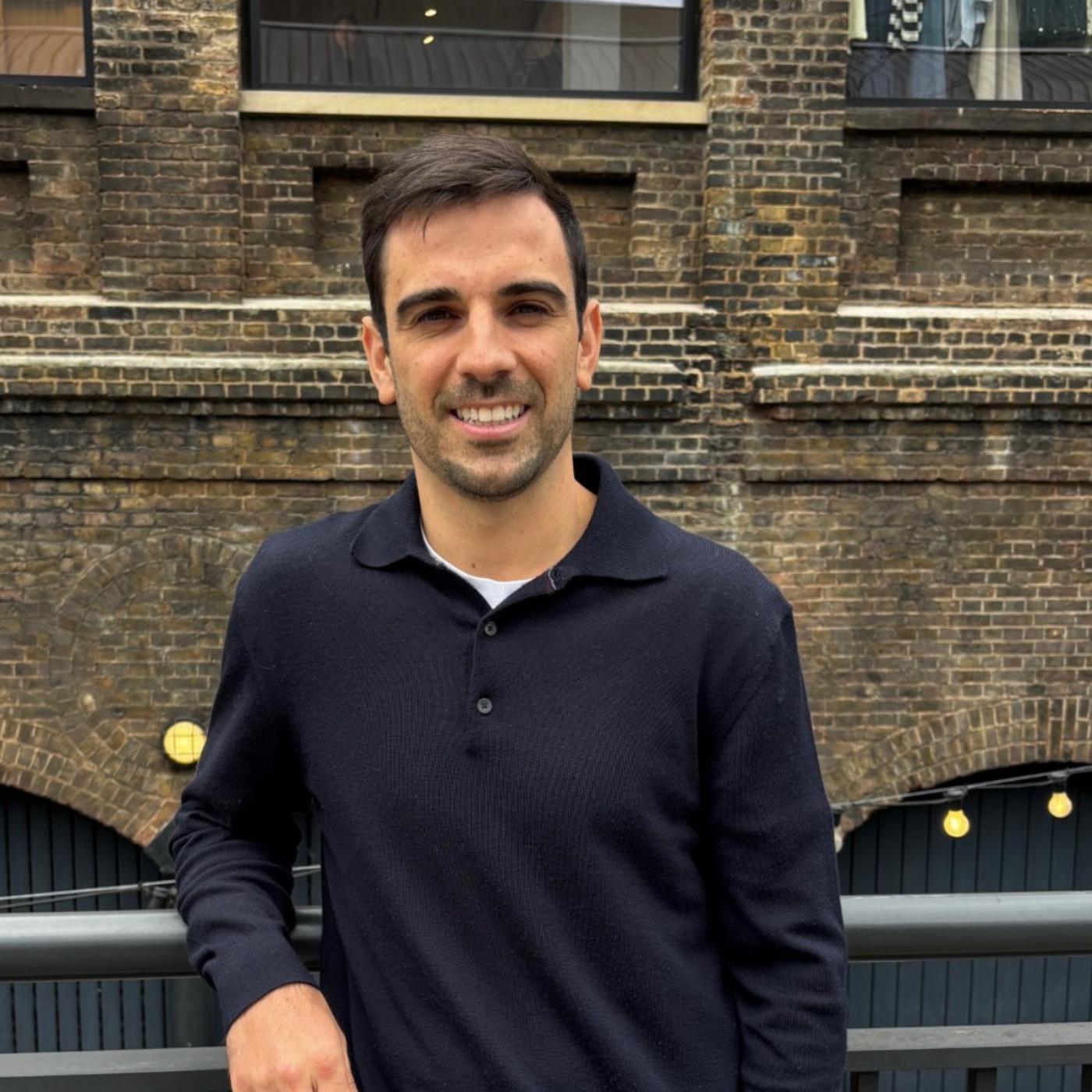
Kai Feller (Bark.com) explains how to scale a services marketplace to £240M without investor funding, focusing on pivots in unit economics, automation, and later using AI to automate small-business admin via his new venture Cyberstaff.
Kai Feller is co-founder of Bark.com, a services marketplace he started in January 2015 (while young, technical, and bootstrapping). Richard Harpin is host; he sold HomeServe for £4B.
Bark grew 200% year-on-year for three years, reached cash-flow positive in 1–2 years and profitability after ~3 years, and scaled internationally (about nine countries) with identical operations and no US office/people on the ground. A major “bet the business” pivot changed pricing from subscriptions to pay-per-introduction to fix unit economics. Automation (pre-AI) enabled scalable onboarding and demand generation.
Launching in the US after two years without cash investment; using technology to run countries centrally; selling Bark to EMK Capital for £240M; later building Cyberstaff to use AI for small-business customer follow-up, paperwork, and admin.
Written by AI. May contain mistakes.
Richard Harpin shares insights on entrepreneurship and the importance of flexibility.
“I think it's the key to unlocking Britain's economic growth.”
Kai Feller discusses his early entrepreneurial ventures and motivation.
“How did he pivot so successfully and how important is harnessing AI for the future of businesses.”
Kai shares his journey from university startups to founding Bark.com.
Discussion on the concept behind Bark.com and how they came up with the name.
“So we started an app and yeah, it was called Socialite.”
Kai explains the services marketplace model of Bark.com.
“Well, we were in the pub when we came up with the name.”
The importance of bootstrapping and the challenges faced in the early days.
“It actually came from the consumer side, so it's really hard to find someone to provide a service.”
Kai discusses the significance of having a co-founder in business.
“Yeah, well, it was all credit card based, let's say.”
Insights on the benefits and drawbacks of starting a business young.
“You know, Andrew had had big success before and I was learning every day.”
Discussion on how Bark's business model evolved over time.
“There was lots of vertical specialized ones, which you'd know about.”
Kai shares how they scaled Bark.com using automation and technology.
Learn how automation enabled a successful expansion into the US market.
“Did that feel scary going into such a big country when you were still bootstrapping and not putting anybody on the ground?”
Discover the approach to running a business in multiple countries without local offices.
“and it could have not played out like we expected.”
Understand how to maintain a consistent business model internationally.
“And the core model looks what percent the same in each country, would you say?”
Explore strategies for managing organizational growth during rapid scaling.
“There were some years when the business was growing revenue at 200 % a year.”
Learn about adapting leadership approaches as a business scales.
“Does that differ on where in the organisation you need to do?”
Hear about the challenges faced during rapid growth and how to overcome them.
“The book I'd recommend that changed my approach the most was...”
Discover the emotional journey of selling a business for £240 million.
“If you want to sell your business, make sure you get on some of those league tables.”
Reflect on personal changes and new ventures after selling the business.
“Did you buy anything big with some of the money?”
Examine the learning experiences during the transition period after the sale.
“Yep, stayed on for a year and a half, which was a really interesting period.”
Understand the importance of setting high ambitions and learning from past decisions.
“And, yeah, so it was like leaving that, but then obviously starting something new.”
Learn about the new venture focusing on AI solutions for small businesses.
“It depends on the ambition and what you're aiming for.”
Learn how small businesses can benefit from streamlined processes and automation.
“And small businesses, they're probably the ones that will benefit the most from this.”
Discover the importance of profitability and sustainable business practices.
“So that's one of the big building blocks.”
Get key tips on leveraging technology and maintaining a commercial focus.
“I mean, I'm still really close to Andrew and we talk about the business a lot.”
Examine the balance between work and life when building a successful business.
“You were quoted as, my life was my business.”
Explore the effects of AI on employment and the skills needed for the future.
“The AI tip that you would give every small and medium-sized business owner would be what?”
Learn about various tools and platforms that can enhance business productivity.

Get the gist, explore an idea or ask about something said.
 Claude
On The Business Leader Podcast with Sir Richard Harpin, what are the key points of this episode?
Searching your listeningAutomatic transcript. May contain errors.
0:02We bet the business and we were like, well, this isn't scalable. We kind of discussed it for a day, had a dinner as a team, decided it and just did it the next day. And it was exciting. Two or three years in a row, we were 100 percent a year. We launched in the US after two years without any cash investment because we used our technology. We'd never set foot there. We never had an office. We never had anyone there. Can't be lonely, can't it, as an entrepreneur? It's really lonely. It's really lonely. I'm Richard Harpin, a Yorkshireman who sold my company, HomeServe, for£4 billion. And this is the Business Leader podcast, where we look at the stories and strategies behind modern businesses.
0:43I'm passionate about helping British businesses scale and succeed. I think it's the key to unlocking Britain's economic growth. Founders and CEOs of mid-sized companies can be members of the business leader community for coaching, peer-to-peer forums and exclusive learning events so get involved in the meantime please click on the follow button it's just one click it's free and it helps us grow the community with more people on board business leader we can have better conversations and inspire the UK's next wave of business leaders if something isn't working in your business at what point do you say let's be flexible and change course.
1:27Today my guest is Kai Feller, the co-founder of Bark.com, the online marketplace that connects you to a local gardener or event planner. He had a make or break moment and changed his business model in response. After that, the company grew by 200 % a year over three years and Kai then sold it for£240 million. How did he pivot so successfully and how important is harnessing AI for the future of businesses. Guy, great to have you here. And would you say that you're a born entrepreneur or did you fall into it later? Definitely a born entrepreneur. I've always wanted to or always have been doing a bit of hustling and being like in control of my own destiny.
2:16So, you know, the usual story is selling sweets at schools, trying new businesses at uni and then, you know, actually doing a business after uni so I think I think it was always something I wanted to do but yeah it wasn't like none of my family members were entrepreneurs no so where did the motivation come from yeah I still don't know the answer to that question uh I think I just I was naturally like really just driven at a young age and um just wanted to like have some kind of impact and uh I thought you know if I started my own business uh there's no ceiling on it and um I don't know I had interviews at various companies like investment banks and it kind of put me off um being in a big corporate and I just wanted a bit more I don't know freedom to do what I thought was right and just talk a little bit about the business that you did in your last year at university I think you're at Cardiff doing mechanical engineering yeah that's right so um I mean there was a few I actually did at uni I mean some of the ones before I tried to hang over drink called Altox which is my cure hangovers I think a lot of people do that at uni that didn't work out um I tried a uh a kind of vapor patch so I used to play a lot of football and we had vapor rub and you put it on there and you get your full shirt messy and I just thought if you put it on a plaster it'd be much easier I got a little bit further um but again didn't go anywhere and then um yeah me and my housemate uh Will uh had I think we watched the film called The Social Network which is like the story of how Facebook started and stuff.
3:49And then we were like, that's so cool. We want to get into tech. We want to do a startup. So we started an app and yeah, it was called Socialite. This was in the last year at uni. And it was a way to kind of keep up to date with things you're interested in. So you subscribe to your football team or a band or anything you kind of followed and you'd get a feed of dates relating to those interests. So when the football team was playing or when the band had a gig and you could buy tickets through there. And yeah, that was pretty fun. And that made us move to London, raise a little bit of money. That's where I learned to code as well.
4:30And yeah, but it fizzled out pretty quick. And so how did that then lead on to Bach? Before I moved to London, after UD actually, I was coming to London quite a lot. And, yeah, I just started meeting people on the tech scene and met this guy called Andrew Michael, who ended up becoming a very good friend of mine. And I was doing socialite, but, you know, we were talking about tech and ideas quite a lot. And then, yeah, we decided to, we started talking about Bark and I guess the timing worked out and we decided to start Bark together. And the name? Who came up with that? Well, we were in the pub when we came up with the name.
5:08So it was probably, I'm trying to think, I don't think it was either of us. I think it was one of our other friends who came up with the name. But the whole concept was how Twitter, you do a tweet and, you know, Bark. We wanted people to, you know, place a Bark and it was a dog barks to tell the world what it wants. And just describe the business model behind Bark.com. The business itself, it was a services marketplace. So we connected people looking for a service with people who provided the service. And it was a completely horizontal play. So in every different kind of vertical from trades to health and well-being to professional business to pets.
5:52We basically people would come to the website and that would be a free service. And they'd say, I want a dog walker. and we would then connect them with dog walkers and the dog walkers would pay us to be connected to the customers. I think you describe it as the Amazon for services. Amazon for services, yeah, it's a good way to think about it, yeah. That's often how I described it in an elevator pitch, yeah. And so talk about that journey and I think you bootstrapped the business rather than going out like many entrepreneurs do and raising tens of millions of pounds. We founded it in January 2015.
6:29It actually came from the consumer side, so it's really hard to find someone to provide a service. It's really hard to find a personal trainer, a house cleaner, a PR agency, like anything. And, you know, the only way people do that at the moment is word of mouth or going on Google, crawling through all the list of search results, leaving messages, calling them up, completely disjointed experience. So we came at it from that angle. We decided to bootstrap it. I mean, it was more it kind of just happened. We didn't say we're not raising money. We wanted to build an MVP ourselves because we're both technical.
7:05A minimum viable product. Yeah, minimum viable product. We just wanted to kind of get something out there, get in front of customers as soon as possible and just see if it's something that they would click around on and use. So that's what we did. And then we just kept on that path of releasing new things, getting customers to use it, getting feedback, kind of knowing what we wanted to change next. And, yeah, I mean, it led to a lot. And how much money did you have to put in and how many years until you got to that magic break even or into profitability? Yeah, well, it was all credit card based, let's say.
7:41And we designed the whole business model around trying to optimise for cash flow and making sure the cash flow was right. It probably took us, I mean, cash flow positive happened reasonably quickly between one or two years. Profitability under the hood, I mean, because we were growing so much. It was probably like after three years or something. But whenever we released in a new market or did a new thing, we didn't have to invest money in it because of how we designed the business model and because the cash flow was positive. How important was it to have a co-founder? And then how did you split the roles between you?
8:15I mean, very important. Can't be lonely, can't it, as an entrepreneur? It's really lonely. It's really lonely. and you know when you've got someone else next to you um in it with you in the thick of it it's kind of I don't even know how you do it without that um and and especially so you know when it's like a really good friend and you're in it together I mean it made it it made us like be able to accomplish anything let's say the split of who did what was a bit blended with how Andrew and I work were you sort of different personalities with different skills yeah yeah definitely you You know, Andrew had had big success before and I was learning every day.
8:54I'm certainly more like operational and Andrew's more strategic, probably heavier on the technology side, but then I am probably heavier on the marketing side. And you went straight into this business, Kai, without going and working for anybody else first? No. At a very young age? You know, I'd had jobs. I'd been a pot washer and been a waiter and stuff, but, yeah, not in the commercial world. I think I was, how old was I, 22 or something when we started Bark? And was that a help or a hindrance, do you think? Both, but I would say it's definitely a good thing to start a business when you're younger.
9:28So I had the benefit of basically unlimited time, no dependencies. You know, I didn't have to risk anything. No family, no big mortgage. No family, no mortgage, didn't have to give up a big salary. Like, the opportunity cost was a lot lower. So, you know, that enabled me to basically throw absolutely everything at it every day and you know completely focus on it um that you know there are sacrifices like you lose your social life you do all that but if you want it hard enough that's what you've got to do the message is go for it don't uh don't wait until you've got too many commitments yeah yeah i would say like if you want to start a business uh the sooner the better uh when you've when the opportunity cost is less to what extent were you copying anybody else in terms of coming up with that consumer model and how did the model change over time were there any pivots that you needed to do i mean the business model in this in itself was an evolving beast and you know part of the changes we did there is part of what basically unlocked the scalability but um in terms of competitors and yeah i think everyone was learning at the same time with lots of people in this space We were probably the only one of the few who were doing it across every vertical.
10:43There was lots of vertical specialized ones, which you'd know about. And then there was probably a couple of big competitors in the US. So we'd keep an eye on what other people were doing, but we wouldn't try and get too distracted from it. But then our evolution, we started with a subscription service for small business. So this was charging the professionals a monthly fee for being on the platform? Yeah, so we charged them a monthly fee and they could have access to as many customers as they'd like. And that worked pretty well when people were subscribing, but it wasn't scalable because the more customers and leads we put into the marketplace, I mean, they would still be paying the same.
11:23So like the unit economics didn't quite work out. um so like one of our earliest bet the business moments was um we we probably had three quarters of mil of run rate um and it was growing and you know after a year and a half or so that wasn't too bad um but we bet the business and we were like well this isn't scalable so we changed it to a they they'd pay per introduction so every time a business wanted to talk to a customer um they would basically pay a fee to us um and so every time they talked to someone we would we would make money um and how did that feel to be betting the business on that pivot yeah it's do you know what it's it's crazy because on reflection i think that took real guts to do but in the moment we kind of discussed it for a day had a dinner as a team decided it and just did it the next day and it was exciting i guess you're still quite small at the time but that was a critical decision quite small but you know to date there's my i mean life's work i hadn't worked on it long but it was it was still like i was investing a lot into it so yeah it is weird on reflection it's a huge thing but in the moment it was it didn't feel like it felt really exciting if anything so i think we had quite a lot of not conviction but i don't know we definitely felt it's the right thing to do let's talk about how you scaled the platform and got more and more professionals on there and I think not long before you got a hundred thousand in terms of how we scaled and and this is where like bootstrapping isn't just how you know the cat table looks and everything I'm I'm a huge fan because I think it forces the right mindset and the mindset is that we're not going to go and spend a million quid on people to call a load of businesses and get them on board or we're not going to invest the load like the usual playbook um on marketing campaign so because you know we don't have the money and we don't want to put our money in so it forced us to think outside the box so how can we do that without investing that money how can we use technology and automation to do that so so that forced us to basically build automation for both sides of the marketplace number one to onboard all the suppliers and number two to get the customers in the areas where we had the most suppliers so and because it forced that mindset and because it forced that automation again i didn't we didn't realize it at the time but on reflection this was the key thing yeah and i guess this is automation pre-ai yeah yeah i mean if if i was if i had the business now I'd be calling it AI um so it was really so powerful and it enabled us to scale in a you know we could quite we could plan our scaling really quite easily so we we launched in the US after two years without any cash investment because we used our technology we'd never set foot there we never had an office there we never had anyone there and um yeah by the time we sold it it was like I think it was the largest part of the business and we still had no office there and it was just from the automation.
14:30Did that feel scary going into such a big country when you were still bootstrapping and not putting anybody on the ground? At the time, it felt exciting. It was working well in the UK and me and my business partner, Andrew, we had a big debate about this and it was like, should we stay in the UK? Should we go to the US? And yeah, I think one way or the other, we decided to just launch it in the US and yeah, it was just exciting. But at the time, that could have gone horribly wrong and it could have not played out like we expected. Thinking back, it definitely wasn't smooth sailing, but you just have to tweak it and keep working until you get it right.
15:09But it didn't, yeah, the core automation really helped. Testing, learning, evolving all the time. And this is a model then that you're operating in a number of countries without any people on the ground. It's all run from the UK. Yes, yeah. Very different to my model of going global with locals and putting people on the ground, but you've proved that in certain cases you don't need to do that. Yeah, definitely. It depends on the business and depends on the approach and where the value is. But yeah, it worked well for us. And how many countries is Bark in today? God, you're testing my knowledge now.
15:42It's probably still the same, which is about nine. And how different does a business look in each of those nine countries? It's interesting because you'd think when you're horizontal that actually you say you're horizontal, but there's one vertical driving the whole thing. I mean, that's genuinely not the case with Bark. It is so evenly spread and evenly spread across geographies as well. So, yeah, there's not like one winner driving it in any area. It's really evenly distributed. And the core model looks what percent the same in each country, would you say? Yeah, it's all identical. It's all the same in each country.
16:21It's like just the same blueprint. And was there ever a temptation to say, oh, well, this country's different. We've got to change the model. Or you were saying, absolutely not. We're sticking to 100 % the same model in each country. Well, so we, you know, this was an ongoing debate. Do we tweak things to the market? The main debate was, do we put people on the ground there? Do we have country managers? I mean, we did play with that. The other thing I was always trying was like, do you have like a centralised, specialised team, I don't know, for marketing or who service all the countries? Or do you have on the ground marketing expertise about their market?
16:59I still don't know the right answer to that. But, you know, where I left it was centralised team. Yep. And it seemed to work quite well. But then we were only in English speaking countries. So that, I guess, limited it in some way. There were some years when the business was growing revenue at 200 % a year. Yeah. How did you cope with that? And talk a bit about the team. Yeah, I mean, 200 % a year. I think, like, and then two or three years in a row, we were at 100 % a year. And the, you know, the profit and the cash flows follows. Like, we kept the same margin. I think it actually grew each time.
17:38So it wasn't like we were reinvesting profits to grow the top line quicker. We just carried on the model. And those years, my focus was on the team and scaling the org. Yeah, and that was a real, you know, that was quite the journey and a real learning. To be honest, I didn't really know what I was doing. You figure it out along the way. But, you know, when you're in that kind of environment and things are growing quickly and I don't know, it just I think it naturally got the best out of a lot of people. You know, everyone started operating at 110 percent. It was exciting. Things were moving fast.
18:16There were big decisions to make every day. You know, we had good trust in the team. Like we knew each other really well. Nobody was afraid to say anything or bring things up or make debates. Yeah, it was it was good. It worked really well. And again, like some of the debates I had to some of the things I had to consider was do you bring in a new layer of people to manage things whilst it grow? Do you promote people internally? Does that differ on where in the organisation you need to do? What was the biggest learning on some of that people's stuff? One of the ones, I mean, certainly when it was a smaller team, I was managing people very differently and I was micromanaging basically and do it like this, do it like this, do it like this.
19:00And I think that's obviously not scalable and also you don't get the best out of people. so I changed the approach to being more focusing on like the objective and the outcome and this is what needs to happen like this is and and you know you both need to agree that and you all need to agree it so it's a shared objective and then you can be a bit more flexible on how you know you get there and how did you learn to change your style did you have a coach or mentor along the journey or not? No, I didn't actually. That definitely would have helped. The main... Probably books. Like, the main thing...
19:37I read quite a few books which changed my approach. Which was the book you'd recommend? The book I'd recommend that changed my approach the most was... It's a book... I can't remember the author, but it's called The Seven Habits of Highly Effective People. Stephen Covey. That's the one. That's the one, yeah. That was really great, particularly the last three chapters. And it changed the way I approach dealing with people and I definitely got better outcomes from it yeah that that that was a really good one and then I also read quite a few like autobiographies and stuff which didn't help so much on that but it was just it was nice to know other people have experienced similar pain you went right the way through on the bark journey which was seven years yeah without getting an investor yeah until you sold the business yeah talk about how that came about uh it was around covid time actually um We were growing like 100 % year on year, you know, when COVID happened.
20:32I think every business was really scared. And business did drop off overnight pretty quickly. But then it recovered really quickly. We did a few things. But like most digital business, it ended up being a really good thing. So then we continued growing. And just as part of all that, we were then featured on the TechTrack 100 at number five or six, like the fastest growing companies in the UK. And just from that, I got so much inbound. like from investors, people wanted to buy us, like people wanted to advise, stuff like that. And, you know, I told everyone, like, I'm busy, we're focusing on this.
21:09If you want to sell your business, make sure you get on some of those league tables. Yeah, get on the league tables, but if you want to sell, just also focus on the business and the fundamentals. And in the end, you sold to EMK Capital? Yeah, a private equity firm, yeah. And EMK Capital paid£240 million for the business? Yeah, that's right. How did that feel? You know, when it happened, I don't know, it was a bit of an anticlimax. But, I mean, regardless, like, you look back and really proud of what we did and what happened and the process and, you know, how much I learned. Yeah, I mean, it felt good.
21:45Did you celebrate? Yeah, we... I mean, I got some rest. Did you buy anything big with some of the money? Well, I bought a few things I shouldn't have bought, like a pub, but... You didn't buy your village pub, did you? Yeah.
22:03Bought my village pub, yeah. That's definitely one thing we've got in common. I did the same against everybody else's better advice. Yeah, yeah. No, everyone was advising me not to. Why did you buy your village pub? This was in Devon. Yeah, it's in Devon, yeah. It's just a sentimental pub. I knew the previous owners. They had it 35 years. They were looking to retire. My parents had their wedding reception there. There's pictures of me there when I was one year old. I don't know. I still don't know why I bought it. I just probably was looking for something to do. Is that the way we can save every great British bud in the country, get entrepreneurs who've made a bit of money to buy them and then run them better?
22:46I wouldn't even say that we've run it better. But it's on the right path. It's a long-term project and a bit of fun. And I've learned a lot again, which is really cool. So work in progress, but we're making progress. So that's good. And then you decided to stay on for a bit after EMK had bought the business. Yep, stayed on for a year and a half, which was a really interesting period. And again, I learned a lot. I'd never been in an environment like that before. You know, we'd never even had board meetings before. or it was quite like make a decision, get on with it, or then when there's more structure and you're speaking with people who have had experience across lots of other companies and have got learnings from there and input, learning how that world works, what's important, what's not, how to consider things like different decision-making processes.
23:41Really interesting. I know you hired your replacement as a chief exec, and how did it feel to hand over the reins? Yeah, so I hired my chief exec and then I also we had to put in a bit of a team like a C-suite team as well because we didn't have anyone before. And Ian Coay had quite big ambitions what they wanted to do. So that was difficult. But I would say the difficulty had already happened in terms of, you know, I find it quite difficult when I the next day when I was still running the business. But then, you know, didn't own it. and, you know, lots of change. So I think that was more difficult than hiring my chief exec.
24:23That was actually, that was probably easier. That was quite enjoyable meeting people like that. But still, yeah, learning. And the day that you sort of left the business in a executive capacity, I think you're still on the board of Bark. Yeah, I'm an advisor. Yeah, yeah, I still advise. The day I left, it was October 2023. So I stepped down and then the next day I had my daughter, so it was kind of time to perfection. And, yeah, so it was like leaving that, but then obviously starting something new. So that was amazing. I know you thought at the time of what you're going to do next, or did that come after you'd walked out the door?
25:00I didn't know what I was going to do next, no. And I think, if anything, I was trying to think too much about what I was going to do next. I just started doing what I enjoy, obviously spending time with my new family and stuff, but then playing around with tech. And the thing is, towards the end of 22, it was when the first proper version of like ChatGPT was released. And, you know, I was fascinated by AI and what's possible. And I spent a lot of my time just playing with new tools and there's a new tool released every week. So I spent a lot of time back behind my computer, which was fun. Yeah.
25:33But then I was trying to force different things and I should have relaxed a bit more. And we'll come on and talk about your new business, but just sort of reflecting on what were the mistakes that you made and what were the learnings in that BART journey? So the first thing which always comes to mind, and it's not necessarily a mistake, like it's probably, you know, it depends on your ambition level. And, you know, I think it's so important to set your ambition basically as high as you possibly can, because you don't realise how much of the daily decisions it ends up driving. You know, the Bark outcome for me was kind of way at the top of what my original expectations were.
26:13And it was an outcome that, you know, obviously I was confident I wanted to achieve, but it was still a bit of a shock, but I wasn't expecting it. It depends on the ambition and what you're aiming for. But I was definitely too short term focused on like my prioritization. And I prioritized shorter term wins over longer term wins. And what that meant was when Bart was growing quite a lot, like we focused a lot on iterating and whether it was product and just adding something that people are requesting and happy with, like a feature. But we weren't like innovating and thinking long term about how we can create a step change.
26:50So you did a great job. And talk now about your new business. What's that all about? And where can that get to? So the new business is called Cyberstaff, cyberstaff.com. And it's actually like in my mind, I see it a little bit as a, you know, I'm still working on the same mission in a way. And I'm still focusing kind of on small businesses. So, you know, Bark, we helped small businesses get new customers. And, you know, in my mind now, I'm helping small businesses, you know, now they've got once they got the new customers, you know, run their business. And for the first time ever, I think that's possible with AI.
27:35And yeah, so like the way I talk about it is, you know, using AI to automate small businesses admin. And that means, you know, speaking to their customers, dealing with the follow up admin, dealing with any paperwork like digital stuff, connected to their tools, being the ultimate assistant. Giving small businesses access to AI that find it hard to access it themselves. Yeah, well, a lot of AI is just completely focused on enterprise at the moment. And small businesses, they're probably the ones that will benefit the most from this. And, you know, you'll give them the time back to actually focus on their business and providing the service instead of all the, you know, the stuff that comes with starting a business.
28:17And a lot of the focus is making it as easy as possible for them to get up and running and automate as much as they can. Because, you know, they don't have like a big team like an enterprise would. And so just describe your key target customers. How many people are they employing and what sort of activities are they doing that will become big customers? I mean, just naturally, like I gravitate towards service based businesses and service based small businesses. and it can literally be anything from like a one-man band all the way up to it's like a larger team in the small world but even like 50 100 people like who are operating really well and you you have to give quite a lot of different solutions for that but a lot of the underlying technology and product is still the same so it's like small businesses who provide a service and uh who i guess you know have a lot of admin to deal with and where's the business got to in terms of number of people and customers and so on so it's so you know we're so early on like i've kind of just started this about six months ago and yeah we're about five six people now got a couple more people on the way there's a couple of my old colleagues from bark who have joined which is great they're on the journey again i think definitely want to keep the team lean i think you can obviously achieve and do a lot more now and use ai as leverage uh you probably like output 100 times what you used to so you're going to bootstrap again even though you've got all that money from the bark sale yeah bootstrap again uh this time it's going to be bigger so i'm going to beat our old record of the largest uk bootstrap business and this time it's going to be a billion plus like 10 billion whatever we're going to aim for a lot um but i think again in this day and age it's more possible than ever music to my ears that you're going to make this a billion pound business in the future what are the what are the two or three building blocks that will mean that you get there i'm definitely going to take some of the things which obviously work really well for us at bark and um when people think about technology it's often only around the product and how it how it enables really innovative or like create some efficiency and some kind of product but i think where it adds even more value and what actually builds a really good business good business to me is one which makes money not like one that is burning every month after raising loads music to my ears as a yorkshireman where i'm a bit tight without my money and i don't believe in all these loss making businesses forever yeah no 100 and people people always forget that like when you're building a business don't forget it's actually a business and it needs to um it needs to make commercial sense so technology using it product like the other place which you have to use it and adds more value is actually in the rest of the business, in the ops, in the go-to-market, everywhere there.
31:12So that's one of the big building blocks. You've got a bit more comfort on not having to grow the profitability. You can, important to get to profit. Yeah. But then you can reinvest and not have to grow in the way that you did previously. Yeah, it's really important to get to profit. It's almost a positive indication of product market fit. It's the ultimate proof of concept, isn't it? Yeah, exactly. like it proves the unit economics work um proves there's a market for it it proves that you know you are providing some kind of value at whatever cost to you that is worth more to someone else and therefore you'll get more out of it when you say like yeah more comfortable i mean you know that was one of my concerns before starting this like would i be too comfortable now i mean that's most definitely not the case i'm back into ultra competitive mode and i just want to win so I can see that you absolutely just from the way that you're talking about the business guy yeah yeah no really exciting and it's a like now is the best time to build as well like genuinely there's been like a new piece of technology invented for the first time I mean in my lifetime certainly um where it makes sense um and everything is going to be disrupted and it's so exciting You don't have a co-founder this time round?
32:29No. I mean, I'm still really close to Andrew and we talk about the business a lot. And so he provides support in that way. But it is something else which has crossed my mind, like in the day to day. I guess I don't have a co-founder this time round. But, you know, on the flip side, I've learned a lot of the lessons. What about a coach or mentor? Yeah, that's something I need. and I need to work on, I guess that needs to be someone where I aspire to be. Looking back on your journey so far, and maybe this is the second business and there might be more to come, but what are the two or three quick tips that you'd give to anybody else scaling a business today?
33:11Absolute number one, leverage technology. And, you know, obviously AI is incorporated into that. But I would say the blueprint of how you do things is the same in terms of, you know, you need to focus on your economics and your marketing and your funnel and look at the same things. But the way you do them and the way you can use technology now to, I don't know, do things that just weren't financially feasible before, you know, that's changed. So 100 % leverage technology. It also just depends on what their goals are. I'd be saying to everyone, be as ambitious as possible. You know, set your sights high.
33:42Yeah, and then, you know, a business is still a business. It needs to be commercially viable. Focus on your unit economics. And everything should be centred around that. Don't get caught up in the hype and the game that you find online quite a lot. Try and shut it out and focus on your business and focus on the commercials. You were quoted as, my life was my business. Do you believe in work-life balance or not? It depends. I think people interpret that in a different way. And I think if you're going to build a successful business, you have to love what you do and you have to want to be there. and you have to want to do it.
34:23And if you want to be there and you want to do it, I mean, you'd be doing it in your spare time anyway and it's your life. So I think one of the most important things is to choose something you just love doing. And actually, it might just be the game, you know, of starting a business, growing it, overcoming the hurdles, being in a competitive environment, watching the numbers grow, watching people use your product, building cool, innovative things, learning how technology... I think that's what it is for me. Yeah, you have a family now. You've got some interests outside of work, boxing and gaming.
34:57I don't get to game anymore, unfortunately. But boxing is my form of meditation, basically. Exercise is super important, keeps the mind fit. But to be successful, if you're starting a business, your work has to be your life because you enjoy it so much. And if you're working so hard and you're not enjoying it and you're thinking, where's my work-life balance? You're not working on the right thing. so don't do it. Is AI going to take everybody's job? No I mean it's not going to take everyone's job I think there's going to be just a lot more stuff done or a lot more stuff produced and then probably a lot more things consumed I think the only thing I'd be nervous of I think there's probably going to be some kind of skills gap or kind of shortage where there's a period of time where it's going to be a little bit hard because, you know, people aren't using AI and getting trained up and therefore they can't be effective in their jobs.
35:54I think that's the number one thing. The AI tip that you would give every small and medium-sized business owner would be what? The number one tip I'd give is just use it as much as possible. Like, you will start to realise how powerful this technology is and what's going to change and you can, you know, apply it in it your everyday business. And I just think the more knowledgeable, you know, you don't have to be an expert in the tech, but the more they've just got hands-on experience playing with this stuff. Which tools specifically should they start trying and using? And obviously in due course, they all need to sign up and buy Cyberstaff.
36:32Yeah, exactly. They can use Cyberstaff now, yeah. But also, I mean, I would just use them all. I mean, there's all the chat ones. There's obviously ChatGPT, there's Claude. you'll be fascinated about what they can do they don't just like reply to messages now they can generate images they can be a strategic sparring partner they can analyze data they can give you wireframes they can come up with ad creatives yeah I mean just you have to play around with it to understand what's possible and then you know if you want to go a bit further there's there's lots of like website prototyping tools there's things like lovable and replet and things like that where you can just talk to it and it builds you a website and it's an easy way to I guess help with coming up with like demos or seeing if a concept might fly I just play with as many tools as possible because it will really open up your eyes about like everything's about to change I now I work with six at the same time so I'm working on six different features or six different new things at the same time and I'm not even that doesn't mean you have to have six screens on your enormous desk it doesn't mean that but i do have six screens i literally have six screens i remember going into some of these investment banks and uh the really cool traders would have three screens yeah yeah you've got six i've got six and i think i'm going to upgrade to eight soon wow and i'm not the thing i'm not even just typing now i'm now talking i think you need to be more ambitious why can't you have 10 screens on your desk get it into double figures that's the trajectory it's on that's the trajectory it's on so um yeah just play around with the tools and i think you'll just start to realize like the art of the possible and how everything's going to change on that note kai thank you very much really enjoyed cheers richard that was fun yeah thanks very much you've been listening to me richard harpin in conversation with kai feller of bart.com on the business leader podcast please do rate us and subscribe and make sure to visit our business leader website businessleader.co.uk to sign up to our weekly newsletter and find out opportunities for your business.
If something isn’t working in your business – at what point do you say – let’s adapt and change course? Sir Richard Harpin talks to Kai Feller, the co-founder of Bark.com, the online marketplace that connects you to a local gardener or event planner. Kai Feller had a make-or-break moment and changed his business model in response. After that the company grew by 200 percent over three years and Kai sold it for £240 million. How did he pivot so successfully and how important is harnessing AI for the future of businesses? Also Kai Feller recommends reading Stephen Covey's book "The 7 habits of highly effective people" and he compares notes with Richard about buying the local village pub
Topics covered:
Leadership
Building and scaling a business
Artificial Intelligence
International expansion
Managing people
Work/Life balance
Local pub
Business Leader is a membership community for ambitious CEOs and founders of mid-sized UK companies, designed to help them grow with purpose through strategic support, peer-to-peer learning, expert coaching, and high-impact events. Join the Business Leader community here and sign up for our newsletter here.
Hosted on Acast. See acast.com/privacy for more information.


