Ask ChatGPT
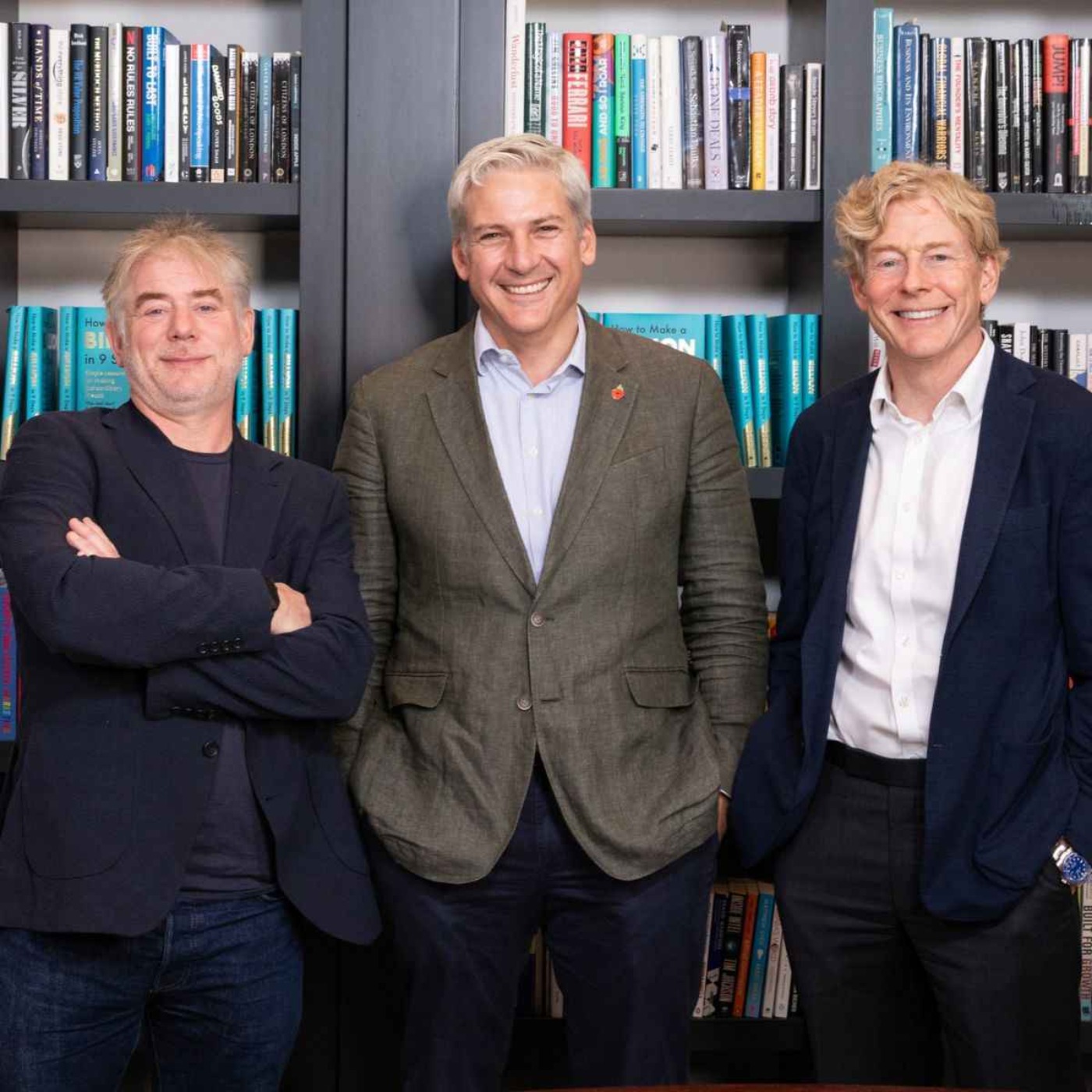
 The Business Leader Podcast with Sir Richard Harpin
8 Jan 2026 · 31m · 14 chapters

Dougal Shaw
Sue Hayes, CEO of Nottingham Building Society
In this episode, Sue Hayes discusses her transformative leadership at Nottingham Building Society, a 175-year-old institution, focusing on modernizing its operations and strategy to assist underserved borrowers, particularly Gen Z and side hustlers. She emphasizes the use of AI and fintech partnerships to modernize mortgage offerings while maintaining a purpose-driven approach.
Written by AI. May contain mistakes.
Discussion on mutual banks and the unique challenges they face.
“She cut her teeth in the world of commercial banking at places like Barclays and Santander, but now she's striving to make mutuals fighting fit in the digital age.”
Sue shares insights from her listening exercise with staff and board members.
“So your background is very much in commercial banking.”
How Sue plans to revitalize the organization and its brand.
“the people aren't there, as I say, for large amounts of money typically and actually really wanting to do something interesting in the industry.”
Discussion about the challenges faced by younger borrowers and strategies to support them.
“And the staff actually said, the thing we'd really like is to have a strategy that sticks, because we've had a different strategy every year.”
Exploring how to mitigate risks associated with non-traditional income profiles.
“But I think their ethics, their intentions when they buy a home are not that, you know, it's not that they can't manage their money, it's just they earn it in different ways.”
Discussion on how to attract younger clients amid competition from fintech.
“I think to your point that first of all, you kind of try to get to know the person.”
Explore how understanding skills and branding can attract younger borrowers.
“seem, even though it's a regular income, that they are more likely to pay things than somebody who just finds it really hard to manage their money or just doesn't earn enough.”
Learn how AI is transforming mortgage applications and improving efficiency.
“So we responded quite hard and said, actually, you know, there's a real place for this and you're thinking about profit and we're thinking about giving people mortgages.”
Discover the challenges of integrating new technologies in traditional banking.
“So that worked really well with our purpose.”
Understand the strategy behind branch closures and renovations in building societies.
“And you talked about the underlying technology when you're a bank that's, you know, more than 170 years old, I think.”
Examine the importance of physical branches for customer trust and engagement.
“Another conundrum you've got which I guess the fintechs don't is what your strategy is when it comes to bricks and mortar buildings, branches.”
Learn about the future of mortgage lending and how new products are catering to unique borrower needs.
“So I think if they are local, they do pop in, but it's only a small proportion that are local.”
Discover the importance of borrower experience and how it impacts lending success.
“And obviously you want them to own a home and there's a kind of there's a laudable side to it.”
Explore the personal fulfillment that comes from leading a mutual organization and serving customers.
“being of a mutual is there a different satisfaction that you're getting that you wanted?”

Get the gist, explore an idea or ask about something said.
 Claude
On The Business Leader Podcast with Sir Richard Harpin, what are the key points of this episode?
Searching your listeningAutomatic transcript. May contain errors.
0:00This is Britain's growth moment. Do you want to be part of it? On 26th of March, 750 of the UK's most ambitious founders, CEOs and investors will gather in London to shape the future of mid-sized business. The company's driving our nation's success. The Business Leader Summit 2026 isn't just another conference. It's a day built around the three forces that define growth, ambition, policy and capital. And as one of our valued podcast listeners, you can be there in person. To secure a discounted ticket, visit the events section of our business leader website and use this code. BLpodcast, all one word, all uppercase.
0:41We look forward to seeing you there.
0:47That's how I've approached the building society sector is, you know, it needs to get more edge. It needs to kind of reinvent itself in order to be relevant for the next 170 years. the staff actually said the thing we'd really like is to have a strategy that sticks because we've had a different strategy every year what we came up with was the strap line which is actually together we fight for the extraordinary to own their own home and the board like anybody else was saying well this sounds much riskier and I said it might be might not be being called a building society even to millennials and Gen Zs is actually a really good thing.
1:29They like it because they're purposeful, their value is driven and they know that building societies are purpose-driven.
1:42I'm Dougal Shaw and this is the Business Leader Podcast where we look at the stories and strategies behind modern businesses. Today my guest, who you just heard there, is Sue Hayes, the CEO of Nottingham Building Society. She cut her teeth in the world of commercial banking at places like Barclays and Santander, but now she's striving to make mutuals fighting fit in the digital age. A mutual is a bank owned by its customers rather than shareholders, and many date back to the Industrial Revolution. Nottingham Building Society was founded in 1849. Sue Hayes became CEO in 2022 with a mission to turn around Nottingham Building Society's fortunes.
2:20It hadn't grown in the three years before she arrived. These days it has just over 30 branches across the UK and 500 employees. In 2025 the specialist lender's accounts showed it held more than£5 billion in assets, just over£4 billion of which is in people's savings, with profits before tax just short of£14 million. We discuss how established legacy banks can work with AI startups, her strategy for helping Gen Z get on the housing ladder, and the role of high street branches in a world of smartphones and apps. We also discuss the leadership strategies she has adopted to run a mutual on new terms.
3:04So your background is very much in commercial banking. And then in 2022, you joined Nottingham Building Society, a mutual. Was there something in that that being of a mutual represented something that you wanted to be part of? Absolutely. And as you've highlighted, I've worked in some of the largest banks in the UK, in fact, most of them. And I think I've done that for a substantial period of time. And I've been lucky to work with people who actually really did care about customers, despite the fact that the organizations may not be known for that. And actually, when I left large commercial banks, I went to a challenger bank and I liked the essence of what challenger banks were trying to do.
3:50The bank called Aldermore. And then I went to get the banking license for GB Bank. And that was my first CEO role. And I got approached about Nottingham Building Society. and I just like the people who run the building societies generally. I think it's a very friendly community. People aren't generally there for large amounts of money. They're there because they want to do good. And so, yes, the mutual ethos of having an organisation where the politics was not a key thing, the people aren't there, as I say, for large amounts of money typically and actually really wanting to do something interesting in the industry.
4:33So that's how I've approached the building society sector is, you know, it needs to get more edge. It needs to kind of reinvent itself in order to be relevant for the next 170 years. So the modern mutual, I think, is what we're all trying to create. So one of the first things you did, which, you know, leaders often do, is you start with a kind of listening exercise when you arrive. So what did you find out from that? Yeah, so I listened to lots of people. So during the process of joining, I obviously understood what the board's perspective was. Their main worry was the fact that it hadn't been growing.
5:09It was stagnating as an organization. The culture wasn't great. And they weren't famous for anything other than potentially Robin Hood. And so the board had a really high appetite to change, which is great. Then I spoke to lots of colleagues. There were quite a few people leaving at the time. And so I talked to people who were leaving about why they were leaving. And I talked to people who were there and just asked them the questions, what's great about this and what's not. And then I also spoke to a number of other building society CEOs. And I said, can you tell me what you think about Nottingham building society, you know, how you see it.
5:45So getting those multiple different perspectives, brokers as well, was really helpful. And I think the consistent theme was, well, it's not very well known. Don't really understand what it's there for. It's got some branches. Robin Hood again appeared in terms of how people thought about it. But it clearly needed a revitalisation. And the staff actually said, the thing we'd really like is to have a strategy that sticks, because we've had a different strategy every year. Just on that, were the levers actually some of the most candid people? Yes, they were. I do like to think I'm very open though.
6:22And so I just said to people, just tell me as it is. I've got no axe to grind here. I just need to know what's good and what's not. So one of the most candid people is actually one of the other building society CEOs who gave me some interesting perspectives about, well, you seem to be leading on a savings strategy where most people lead on a lending strategy. You know, you've got more branches than anybody else, but smaller amounts. So he said, I'm just not sure how that all makes sense. And that was very much the sort of incoming view I had, which couldn't quite tell what the whole organisation was about.
6:58So it was a really great opportunity to kick off a strategy process on the back of that listening. That's interesting. Is that something that might happen really only in the world of Mutuals where a rival actually wants to help you? Yeah, I think so, to be honest with you. I think people are friendly in financial services and everyone tends to get to know everyone. But to be so open and collaborative, and it's one of the things that happened where we did have an issue and there were four building societies involved in an issue that happened in the past. And, you know, we got together to do right by our membership.
7:38And though that's always quite tricky because different people were in different places around it to begin with. But we made that happen. and actually supported by the regulators as well. So I just feel like it is a great ethos in terms of, you know, we're not rivals. We might work in the same markets, but we're not really rivals.
8:00And often when you do these listening exercises, you come away and you come up with a strategy that you can kind of sum up in a sentence. It's easy to understand. So I got a company in to help me to work through a strategy process. and what we wanted to do is design a very simple blueprint so that everyone would know what we're about and we went through a process with them where you just looked at where you were in the market you looked at who's doing well we looked at the strategic options that we could have and then we looked at a recommendation but during that process what we came up with was the strap line which is actually together we fight for the extraordinary to own their own home and the reason why we came up with that and every word is very purposeful is together because we're mutual um I particularly um pushed for the words we fight because I said if we're going to do this if we're going to really transform um the society we're going to have to fight for this together it's not fight each other but fight together to make this happen um and the extraordinary were that we through research we found that lots of people were finding it really hard to own their own home And that's what a mutual is all about.
9:12And so it resonated with what a mutual should be about. But these people who were finding it hard were people who had multiple incomes, people who had irregular income profiles, you know, an increasing number of zero hour contracts, where because their incomes, etc, or their personal circumstances were not the traditional norm of getting a same salary every single month, that that was a segment that was increasing and had an opportunity. to do great things with brokers who were finding it really hard to place that type of business at reasonable price. So there's a few multiple sort of segments underneath.
9:49Foreign nationals was one of them, you know, using alternative data sources and that sort of thing. So that's where it all came from. So I suppose using the word extraordinary is an example of using positive language, because these are also obviously riskier people to learn to as well. Well, it's an interesting point that because I think everyone thinks they're going to be riskier. I think the thing that I've found throughout my career and especially meeting a lot of these people is that, you know, owning their own home is so important. And so they'll do everything they can to stay in that home.
10:24And so if it was a different type of lending, I think people, you know, don't mind the odd missed payments. With homes, people really desperately don't want to do that. And these people typically are sort of millennials, Gen Z, really highly educated, really hardworking, and they're prepared to have multiple different incomes in order to make sure. So it's yet to be proven whether they are risky or not. But I think their ethics, their intentions when they buy a home are not that, you know, it's not that they can't manage their money, it's just they earn it in different ways. And you say millennial and Gen Z, does that mean, I mean, that's a younger profile.
11:04And I think I'm right in saying that for mutuals, it tends to be a much older profile normally. Is that right? Yeah. So the savers are certainly older. You know, they value the mutual status. They still value passbooks and they value the branches. And so that's an important element. And without the savers, we couldn't do the lending. But the strategy which I came into, which was unusual, was that we would actually send everyone for independent advice, as that was the best thing for them in terms of mortgages. And so the branches, even if somebody came in, they would still send them to a broker.
11:40So we're 100 % broker driven. And for me, this is all about working with brokers to really make sure that we understand the dynamics of the market, what they're struggling to place, and how we can actually create propositions and products and great customer experiences that help us to help them. And I think another thing you did was, again, as part of this strategy, is you actually brought in some of these, this new demographic of potential borrower and the brokers to meet the board. Yes. What did that reveal? Um, it's one of the things that I'm quite passionate about, which is I think everyone in the company has got to be lined up in the same direction and people have perceptions until they meet people.
12:22And the board, like anybody else was saying, well, this sounds much riskier. And I said, it might be, might not be. And the reason why I say that is because I believe the people that I've met and seen in the research, you know, will do anything they can to stay in their home. So when we did this particular meeting, we had all sorts of people with all sorts of background. So we had a teacher who had regular income, but actually his income was doubled because he was also a blogger. And that was obviously really sporadic. We had a guy who was self-employed painter and decorator. So there's certain times in the year when he was earning a huge amount, there's certain times when he wasn't.
12:58We had other people who had set up a business and they were also doing side hustles. And so what it helped everyone to appreciate was all of these circumstances are really different. And, you know, we're going to have to be really flexible and adaptable in order to make sure that we understand the person and, you know, the person's character and background more than we do a credit score. With people having these extra incomes like side hustles, it is a bit more of a sporadic kind of income. So how can you, you don't want anybody to default, that's bad for everyone. So what kind of things can you do to mitigate the risk?
13:36I think to your point that first of all, you kind of try to get to know the person. Is this person always worked? And if they haven't always worked, did they not work because there was a circumstance that was beyond their control? And so using different data sources, including, you know, we're moving into the open banking side of things this year, helps you to understand that person and whether, you know, they generally seem, seem, even though it's a regular income, that they are more likely to pay things than somebody who just finds it really hard to manage their money or just doesn't earn enough.
14:14So it's that type of discovery. And there's some really interesting data sources that you can use. And so there's things like the skills matrix, which skills index rather, which actually tells you about how valuable certain skills are in the marketplace and how rare. And so if you've got somebody who's got valuable, rare skills, you know they're always likely to be in a job. So it's thinking about it really innovatively and creatively and working with the brokers to do that. We might come on later to how AI affects that. But one other question first. With a lot of these younger people, Gen Z and the millennials, they might be more attracted often to the new fintech banks, the Monzos, the Revoluts and things like that.
14:58Do you have to repackage the branding of what a mutual means to make it appealing to them? Is that something you have to do as well? Yeah, again, a really interesting question. So when I joined, they'd actually got two brands. So they had The Nottingham, and then they had Beehive, which was an app, which was for lices. So the Lifetime Isis. And the Beehive had apparently been on a website as well previously. And again, we researched both brands and the Beehive brand didn't do very well because it wasn't very well known and it couldn't really afford to promote that brand. And then the Nottingham didn't really mean anything to anybody either.
15:39And so, again, research showed that being called a building society, even to millennials and Gen Zs, is actually a really good thing. They like it because they're purposeful, their value is driven, and they know that building societies are purpose driven. But what we did need was to refresh the brand and then to drive it into different areas. And we're on a journey with that at the moment. So much to a number of locals upset, we did drop the Robin Hood logo. Robin Hood's absolutely vital in Nottingham itself. It didn't mean anything to the building society. And we created a new brand image and a new brand promise in terms of inviting differences.
16:23which worked well with both colleagues and it also works really well with extraordinary borrowers. So we started to really try and promote that brand. And then we've also tried to have an opinion on things, which may not be quite the usual mutual opinion on some things. Sometimes it is, sometimes it's not. And so we've got work to do on that. We did retire the Beehive brand. But the reason why they did that was actually because the younger people, to your point didn't resonate with a brand called the nottingham with robin hood's image on it so they tried beehive what we said is no let's bring the best of and really emphasize the building society aspect but make it look a whole lot cooler what when you say you had to show you had an opinion on things i take it you mean sort of social media on these kind of platforms can you give me an example yeah so we've tried to have some uh good opinions in terms of the potential isa changes and you know the fact that cash ises and investment ises have both got good places and if you're quite young an investment isa is a great thing to do if you're you know in your 70s starting to put investment into investments themselves which are risky isn't what people want so that was one of the opinions and then very recently a company called IG who an investment group went for the building society sector actually and started saying you you know, shouldn't listen to the building societies because everyone should be in investment ISIS.
17:53So we responded quite hard and said, actually, you know, there's a real place for this and you're thinking about profit and we're thinking about giving people mortgages. So there was a nice piece on LinkedIn, which has actually had one of the best pickups we've seen with 130 ,000 impressions in about three days. So that's the type of thing that we mean about having an opinion on behalf of our members.
18:18You talked a bit before about using AI in the process now. Can you just explain a bit how you might do that, how it can improve your systems? Yeah, so I would say from our point of view, you know, we're a 175-year-old organisation and therefore we're not cutting edge ourselves. What we're trying to do is just, you know, in a lot of cases actually just bring things up to speed. So what we decided to do is try and partner with fintechs who, you know, they needed established organizations with capital. We needed innovative, really customer driven thinking. So we did two partnerships. One of them, we've done a number of others, but the two to call out here are Generation Home.
19:03And that's where we did something called a Forward Flow. So they basically do some really specialist products on where people, parents and friends want to help to get somebody on the property ladder. So that worked really well with our purpose. And we really like their passion for customer as well. And then the other one we wanted to do is because we want to do our own brilliant lending. And so we went out to the marketplace, looked for what we thought was the best in class and did a first time deal. First time for us, first time for them. So always brings some challenges. And this is a mortgage application system, which basically works with brokers so that they can upload all the information from the customer.
19:45And then it uses AI to read that documentation to then say whether we've got all the information that we need and if we haven't, what we're likely to still need. And it can also help to do things like understand what our policies are and our criteria. So they were doing this really innovative stuff using AI. We are still on a journey with our data. And so you can't really use AI until you've got your data into exactly the right place. So MQB are the company that we've partnered with. They've done a couple of deals since, but we just went live with them. So is that a kind of venture partnership for the purpose of this task?
20:25Depends what you mean by venture partnership. So we haven't invested in them. We have invested in Gen Home. but what we have done is then obviously giving references to other lenders so that they can build their capabilities because it's in all of our interests that they succeed and you know when I talk to brokers and when I talk to tech advisors they all talk about what brilliant technology is this is built on. And with the latter one so it's not helping you as it were quantitatively assess the the person who wants to borrow it's more about making this the flow of paperwork and the and the kind of the array of documentation they might need?
21:00It would be unfair to say it's just that. But I would say, again, they're on a journey in terms of exactly how we can fit our criteria. And it will get to the point. There's still a little bit of work that we need to do on it during 2026. It will get to the point where we hope to get, you know, 70, 80 % of the offers automated. MQube have a mortgage company themselves called Empowered. they get 70 % through in one day. That's what we want to do. So it's really hard to lend to people, give them an automated decision wherever we possibly can, but actually have that underwriting skill overlaid over the top.
21:39So they're definitely much more than just reading the documentation, but because of the complexity of the criteria that we have with these types of borrowers, there's still a bit more of a build in order for us to get it straight through. And you talked about the underlying technology when you're a bank that's, you know, more than 170 years old, I think. I was speaking to the founder of a fintech company who'd built up the company from scratch, and he's quite a kind of coder himself. But he was saying a lot of the problems he thinks the traditional banks have are that they're still catching up with migrating to the cloud, but never mind getting ready for AI.
22:12They're still catching up. Can you relate to that? So we went on a journey, and there is a book written on this called Dual Transformation. And what we said is we're going to do a dual transformation. We can't wait to have all these antiquated systems upgraded. We need to do in parallel that and we need to innovate. And so it's tough trying to do the two things at once when you're a relatively small organization. But I still believe it's absolutely the right thing to do. So we are still upgrading it. I'm smiling about the cloud comment because we formally went onto the cloud yesterday. And now we need to start populating that.
22:50We're just signing into a data lake now as well. And having worked in other organizations at least 10 years out of date, but it's not stopped us from partnering with these fintechs. So the customer experience we can provide through MQ, the broker experience is absolutely cutting edge, not bleeding edge as one of my colleagues says, it's cutting edge. And so, yeah, we're still on a journey with things like cloud. So partnering with the fintech startups is actually quite a good way to do it, to become part of their world and get some advantages. Yeah, it is. And actually, you know, apart from the purpose piece that you saw, we actually have four strategic drivers.
23:32And one of them is Mighty Foundations. So that is, are we operationally resilient? Do we have systems in support or that type of thing? The second one is extraordinary depth and purposeful innovation. And that's where things like MQ have come in and Generation Home. It's purposeful, as in it's doing something that people actually want to have done, not just innovation for innovation's sake. but there is another one called 10x allies and what that was about was working with other organizations because we can't have all the skills and capabilities and creating really strategically aligned partnerships and that's what we've tried to do with these and others of saying how do we get a win-win and again I like to think that's part of a mutual status whereas when you work in a lot of banks you know it's you win I lose is how bankers tend to feel whereas in mutuals if we can get a win-win if we can help those people to succeed and get this cutting-edge technology at a reasonable cost because we're the first ones out there you know that feels like a great place to be.
24:41Another conundrum you've got which I guess the fintechs don't is what your strategy is when it comes to bricks and mortar buildings, branches. And I know you have renovated a fancy headquarters right in the middle of Nottingham, which I guess must be important to your older customers, the savers. But what did you have to do in terms of your property footprint? So in the first year, whilst we were going through the strategy process, there were certain things that I observed. One of them was we needed time to get our own lending engine going. And hence the Generation Home Agreement. The second one was we were one of the least efficient branch networks of any building society.
25:25And so when I joined, we had 51 branches and we closed 17 in the first year. And that was, we tried to do it in the right way. So we deployed staff wherever we could, et cetera. But we did that because literally since COVID, some of those branches did less than 10 transactions a day. And so you've got a manor branch with three staff in order for it to be secure. You just, you know, they were bored. And so we took them on that journey and then we said, we're not going to touch you again for another couple of years. And what we want you to do is just focus on being brilliant for communities and growing savings.
26:04And they've done that brilliantly. What we also looked at was, are you in high potential areas? So, you know, you're in areas where you can really get a lot more efficient and most of them weren't. So, you know, it's one of those things where they've really outperformed what you should expect. But part of that is because other people have closed. So I think we've got an increased halo effect and we're just gradually. So we've just rebranded our third branch now. So we're just gradually going through that and we'll get to as many as we can next year. But the Flash, if you like, it's not a headquarters.
26:40So we've got an office, an office. It's actually, if you like, the main branch in Nottingham. And yeah, it is more of a sort of, we invested a lot in it to try and make it a prototype of what we'd really like to do. Not all the branches can we afford at the moment to sort of bring up to that standard, but we can rebrand them all. and we've been modernizing them with things like digital screens and things. The Trustpilot score that we've got for me is entirely down to the branches. You know, we had a 4.9 out of 5, we've now got a 4.8, but it is leading in terms of the culture of just be brilliant to customers, take your time with them, help them make the right savings decisions.
27:24And again, the branch staff are really happy and engaged as a result of the fact they can focus on that and they're not focusing on trying to flog stuff, if you like. Do the Gen Z and millennial customers go into the branch as much? Yeah, not much, but they do go in. And the reason why I'm smiling about this is I went to China about eight years ago with Barclays when I was running an international part of it. And one of the things they've done there is even in places like Alibaba, you know, the really big internet companies, they'd found that in some of the major cities they needed bricks and mortar to prove that it was there and that it was safe and so I think there's a place for bricks and mortar particularly for older people who don't want to or aren't able to do as much online they are the people with savings and therefore you know it was really needed and then there are some people who happen to be close to a branch, but our branch footprint is mainly sort of Nottinghamshire, Leicestershire, Rutland, that sort of area, whereas the mortgage customers come from all over the UK.
28:33So I think if they are local, they do pop in, but it's only a small proportion that are local. Just two last questions. And with your shift to more into mortgage lending and these extraordinary borrowers, what kind of timeframe can you think of where you'll start to see the results that you want? What's the horizon you've set yourself? I'd have liked to have done it this year, but it took a bit longer than we wanted to land on the technology solutions and the integrations that we need. We have done lots of work. As I say, there's quite big chunks of that type of borrower that come in through Generation Home.
29:09They've got products called Income Booster and Deposit Booster. And then on top of that, we've developed and delivered our foreign nationals, which is up towards£100 million of lending, not massive, but when you start in new segments, then it takes quite a bit of getting recognition. I would like to think during this year, we'll have at least five or six propositions. When I say this year, 26, and that we'll have all the capability in place in the second half of the year to then really, you know, continuously develop different propositions, different types of products for the different needs that we've got.
29:45So you think you found a kind of underserved audience that other people aren't tapping into. And obviously you want them to own a home and there's a kind of there's a laudable side to it. But it's also there's a business case as well. A hundred percent. And, you know, we are playing in some markets or going to play in some markets that other people already play in. And so for me, it's then about the experience we give the borrower. It's the experience we give the broker is how easy we make it. and you know if we can't lend are we really great at explaining why we can't and what they would need to do differently but you know we want to be seen as the people who will try hardest to make it work.
30:22I guess you're three years plus into the role now how have you found it on a personal level being of a mutual is there a different satisfaction that you're getting that you wanted? There is and the only reason I'm smiling is it's going to sound really trite I absolutely love my job um and i tried to create an environment where everybody absolutely loves it um you know you don't love it every day you've got to do some things that aren't so good um but on balance i love it um i love the fact that we do great things for customers we've built a fabulous team you know and with all the people who've been driven by i love the purpose i love the clarity of what you're trying to do and they love and i love the fact that if we get brilliant at this then we can look at doing other things, but let's just get brilliant to doing one thing and be really known for it.
31:09So it's still a journey to go on. It's exciting. It's interesting. You know, my days, I'm very lucky. I do everything from, you know, the financials with the finance team through to the regulatory stuff, which can actually be quite interesting as well, all the way through to meeting people like yourself, you know, the marketing, the brokers. So it's just never boring.
31:32never boring that's what we like to hear you've been listening to me Dougal Shaw speaking to Sue Hayes of Nottingham Building Society for the Business Leader podcast please do rate and subscribe to us wherever you get your podcasts we do two episodes every week and if you visit our Business Leader website you can sign up to our weekly newsletter to get more content like this and find out opportunities for your business
31:59The Business Leader Summit 2026 is set to be bigger, bolder and more ambitious than ever. Don't just watch Britain's growth story unfold, be part of it. Secure your ticket today by visiting the events section of the Business Leader website and using the code BLPODCAST, all uppercase. It's your chance to join the leaders who are shaping the future of business.
Hosted on Acast. See acast.com/privacy for more information.