Ask ChatGPT
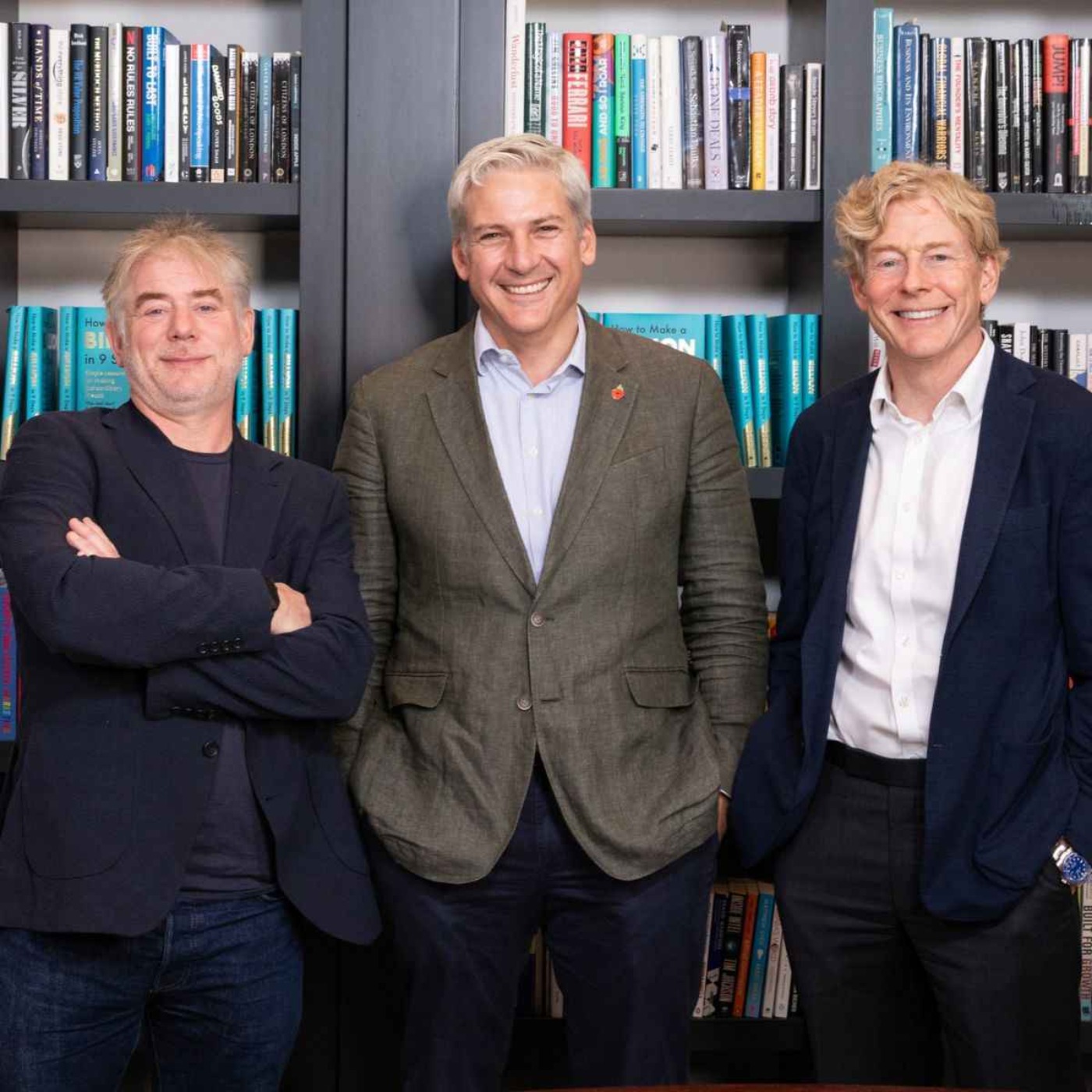

In this episode of the Business Leader Podcast, host Graham Ruddick interviews Christoph Rieche, co-founder of Iwoca, a prominent UK fintech company focused on providing funding to small and medium-sized enterprises (SMEs). The conversation explores the challenges SMEs face in accessing credit, the evolution of Iwoca since its founding in 2011, and the broader landscape of business funding in the UK.
Written by AI. May contain mistakes.

Get the gist, explore an idea or ask about something said.
 Claude
On The Business Leader Podcast with Sir Richard Harpin, what are the key points of this episode?
Searching your listeningAutomatic transcript. May contain errors.
0:00This is Britain's growth moment. Do you want to be part of it? On 26th of March, 750 of the UK's most ambitious founders, CEOs and investors will gather in London to shape the future of mid-sized business. The company's driving our nation's success. The Business Leader Summit 2026 isn't just another conference. It's a day built around the three forces that define growth, ambition, policy and capital. And as one of our valued podcast listeners, you can be there in person. To secure a discounted ticket, visit the events section of our business leader website and use this code. BLpodcast, all one word, all uppercase.
0:41We look forward to seeing you there.
0:52Can a new business solve one of the biggest problems facing the UK economy? how to get more funding to small and medium-sized businesses to help them grow. That's what Christophe Reich and James Deere set out to do when they founded IWOCA in 2011. I'm Graeme Ruddick, and this is the Business Leader Podcast, where we look at the stories and strategies behind modern businesses. In this episode, I speak to Christophe Reich about the story behind IWOCA, which is now one of the UK's leading fintech businesses.
1:29Our mission is to finance one million small businesses. That's representing our commitment to the long tail of micro and small businesses all the way up to medium sized. But it really helped us to design our systems and processes to be scalable and consistent, to process hundreds of thousands of businesses rather than tens or hundreds in a year. And it also represents our commitment to never stop innovating, never stand still, and always try to push the boundaries to become more relevant to more of our customers. And that's how we started now 13 years ago. So we've been in this for quite a while.
2:16the reason why we're in this is that I found it very exciting to solve the challenge for small business owners to access capital which you know after the financial crisis was a big topic you could read about this in the press very much and I really like the idea to provide the the funding a business owner needs to really run the business more smoothly or take advantage of growth opportunity. So I like the direct impact that I could have on giving someone the funds they need and then do with those funds whatever they see fit. That's really the most important reason why we're doing this. There was a real problem, still is, but certainly that's the challenge and problem that I wanted to solve.
3:07I also really like that there are millions of small businesses so that doing this a million times over, you really start having a real impact on the economy. You've just heard what IWOCA is all about. So now let's hear about how it came to be. Before founding the business, Christoph Reich was rising up the ranks of Goldman Sachs and James Deere was at Deutsche Bank. But they wanted to launch their own business. I was quite keen to set up a business for several years and it had grown on me, the idea to take my fate in my own hands. And there came just a point towards the end of 2010 where I said, that's it.
3:56I just want to do something different. I needed a change. I got a bit bored in my role and I just wanted to do something different. And that really had triggered that interest to say, I'm done. I need a shift. And then I decided to resign and spend a number of months researching and then came across this problem and felt really excited by it. And then that's how things started. So the timeline was you resigned and then did the research before deciding what you wanted to do. What sort of things were you looking at when you were doing your research? I started very broad and then quite quickly, within weeks really, realized that I really liked finance.
4:42I really liked how finance creates opportunity for people. And so realized also that in 2011, there wasn't that much innovation in more consumer, retail, you know, SME related finance. You know, there was a lot of innovation on the trading side, you know, always because it's a very fast paced, real time industry. But you've seen sort of industries like e-commerce obviously had changed very much by then. You had streaming through music and then also film had really evolved. But there was not very much in finance. You know, there was no Revolut. There was no Monzo. There was no Starling. wise just had started funding circle only had started at that point so there's really very very early stages of seeing any sort of innovation in consumer finance and so i thought that yes i really do like finance and i felt there's not much that had been done yet so it's pretty much a green field you've touched on the problem this business is trying to solve in 2011 what what was that problem what sort of things did you see very simple um businesses um were not able to access financing many of them had their worse even you know not access being able to access loans but also their existing credit lines were cut which causes them a big problem if um you know you had a bank overdraft of 20 000 pounds and it gets cut to five that causes a huge cash flow struggles And it was a very acute problem after the financial crisis that hit small businesses very hard and let a lot of them not fulfill their potential or even go out of business.
6:29That was something that was quite well, you know, if you read the news, there was quite a bit written about this. Why did you think you could offer something different? The starting focus was on e-commerce. The beauty of e-commerce was that a lot of the trading happened to platforms like eBay. And at the time, Amazon was actually a lot smaller than eBay, which is unbelievable from today's perspective. But eBay was a big platform having tens, low hundreds of thousands of professional sellers selling to this platform. And e-commerce was growing very fast. But people who were selling on platforms like eBay weren't quite seen as real businesses when they went to the bank branch and said, you know, my business is selling on eBay.
7:20That was a difficult customer to serve from the banks. So the thesis was e-commerce was growing very fast, lots of opportunities for businesses who are opting to train in e-commerce, really poor access to credit, but unbelievable data about their businesses through APIs that we could access when a customer signed up with us. and thereby enabling us to make real-time decisions, including very innovative data like customer feedbacks that you can obviously get through eBay as a signal on how good the delivery and services of that e-commerce seller. That was really the starting point of IWALKER to serve, specifically that fast-growing large segment of e-commerce sellers that were very underserved with financing to help them fulfill their potential with data that hadn't been accessible to the banks at the time or generally in the past.
8:22And that was the first problem we started to solve. IWOCA has already provided funding to more than 100 ,000 businesses since it launched, and it's lending more than£1 billion a year. Other new businesses have also emerged aimed at providing funding to SMEs, such as Oak North. So how much has the landscape changed for SMEs and funding? How much better are things today? Everything changed and still everything is the same. And I explain to you why I'm saying that. Everything changed because if you look at the lending today in the UK specifically, you'd see that more than 60 % of the lending is coming from challengers, including ourselves.
9:10That was probably 20 % or so, 20 % to 30 % when I started, while 70 % to 80 % would have come from the main banks. And that's why I'm saying everything changed. So you have a completely different set of lenders now that is providing the majority of the lending to SMEs than you had more than a decade ago. And the reason why I said everything is the same is if you look at the last decade, the actual stock of loans outstanding to SMEs is the same in nominal terms than it was in 2015. That's a concern because while the economy hasn't grown that much, which is a problem, it still has grown and inflation obviously was quite high.
9:55So in real terms, lending has really fallen behind to what it should be to get the most out of the SMEs. in terms of economic output. And so I believe, well, that's obviously came from because the main banks were retrenching a lot. You know, if the stock is the same, but they kind of in relative terms have dropped a lot, that just means that the absolute level of loans that they provide is much smaller today than it was 10 years ago. Now that sounds all quite negative. The really kind of positive thing around this is you now have this broad base of challenges that have been filling the void and then have gotten much more brand awareness now, obviously, than 10 years ago.
10:43And I think we as a firm, but also as an industry, I think will now really contribute to net loan growth in the coming years so that I would expect SMEs to be able to contribute more to economic growth than they were over the last few years due to kind of the lack of growth in liquidity provided to them. So that's quite exciting. So yeah, everything has changed, but currently it still feels the same to them. But I think then, you know, next decade, they'll be in a much better position funding-wise than they are now about 10 years ago. You've just done a new report on the landscape and what a difference funding can make to SMEs.
11:30Broadly, just describe what that shows and what takeaways we should take, right? Yeah, that is very, very exciting. If I go back kind of to why we founded IWOCA and what really kind of I was excited about and still am, the impact on a business owner, doing it a million times over and having economic impact using tech and data. So that second point, the doing it a million times over. For the first time, we have analyzed through a independent third party research firm, capsule economics what the impact of our lending is on the economy and in the 12 months to um october of this year we have um provided 1.3 billion in funding to smes in the uk alone and that has generated 2.8 billion in economic value to the uk and um yeah we're very proud of of that That's one of the bits that, you know, all of us at Alwaka are quite excited by and also driven by that we can have a real impact, you know, on business owners individually, but also the UK as a whole.
12:42How key is access to finance and improving access to finance as a driver of economic growth and productivity in the UK? As the numbers show, it's very, very key. If you can generate such a sort of outsized impact, providing them with funding, then I think we can see that, you know, for the economic economy as a whole, it makes a real difference. And if you look at the impact on an individual business, the analysis has shown that if we provide funding to a business versus not providing funding to business, the impact is 19 % in revenue growth over a year. So if every business had the right access to funding, we could see a 20 % uplift in the economic output.
13:35which I think is really game-changing. As I said, our mission is to finance a million businesses. We've got 200 ,000, so we still have a lot of scope ahead of us. What is next? You've touched on this a little bit already, but rather than just being a lender, you're gradually evolving into this one-stop shop for SMEs. What sort of things could you do? I'm not sure whether we'll be evolving into what you call a one-stop shop. We are problem solvers. I really like to identify a problem and solve it for businesses. So the first and most important problem that we're solving is the access to finance.
14:15So there are a few other problems that we have identified that we're also excited about, which we have started to work on. One is related to the business owner's current inability to really understand their credit score as a company. It's very common for consumers to track their credit score in great services that are offered to them through Xperia and Equifax, ClearScore, and in other sense, the majority of adults actually tracking their credit score to understand whether there were changes and what they can do to improve them. But that problem has not been solved for small businesses. Many of them really don't quite know what the credit worthiness of their business is.
15:06And that's one of the problems that we want to address and that I think also as a company, we're really well positioned to address. And so my vision is that, you know, in the years to come, the majority of businesses will use iWalker to monitor and understand their credit score and, you know, are given the tools to improve it if necessary. So that's a challenge that we have set and a product that we have recently launched and that is now in testing on a relatively small scale. Another problem that I have identified as a business owner is that insurance is accessible, but also quite an opaque industry.
15:50And I feel that we can do a better job in helping businesses understand what their real insurance needs are, which insurance is to have, and maybe also which insurance they don't absolutely need. And given the scale and footprint we have in the SME ecosystem, I also think that we can be better at distributing insurance products at a lower cost. So insurance is really an interesting segment and a problem for us to solve. We also want to go further in solving more of the credit needs of our customers and are working on launching a credit card, which is very complementary to the cash flow lending that we already do.
16:37A credit card brings us a bit closer to their payment needs and combining payments with credit. And we're quite excited about that. And the credit card is quite a complex product from an infrastructure perspective. So the team has currently a lot of joy at working through those complexities. Yeah, and I hope there'll be, there's some other problems that were currently in exploration mode, but I'm quite keen to start setting up a number of squads that will be focused on solving these problems. And while you might call it a one-stop shop, I don't quite see it as a one-stop shop. I just see it as a collection of really big unsolved problems for SMEs that we're serving already quite well now on the funding side.
17:23But I think there are more problems that we can take on. Christophe Rich has already touched on how Iwaka thinks about problem solving and that it has squads within the business that work on new ideas. This gives us an insight into how the business has grown, but it's also had to overcome some big challenges too. So we run an ideation and then through those ideation processes, we identify problems. Those problems are sourced by speaking, of course, to customers. A lot of the problems that we see come from the customers that we're serving, that they tell us about or that we identify. And then we scope them and then allocate funding and teams that we build separately just for that problem.
18:11And we'll find out in the next two years how successful that approach will be. essentially it's a very independent team relative to the rest of iWalker benefiting from some of our shared services from recruitment. Funding obviously is very valuable. Some of the tech that we have built might be useful. But broadly speaking, we're trying to keep them as autonomous as possible and as little dependent as possible on other services that we have within the company. Since 2011, you've scaled this business up from the two of you into a business with nearly 700 people, I think. During COVID, how difficult was that period and how close, frankly, did you come to giving up?
18:59Yeah, it was a really difficult time for us. And it was difficult for quite a while. So, you know, most businesses had a really difficult time during the first lockdown. And then, you know, some were absolutely flying, you know, as things kind of fell into place, e-commerce in particular, most kind of digital services were really fueled by, you know, the need kind of for more digitization. And then we didn't have that at all because of the support schemes that were provided across Germany and the UK, the regions we're operating in. The government, quite rightly so, provided this emergency liquidity to SMEs.
19:43But also, as the government provided that liquidity, a kind of for nearly two years and in vast amounts, it really rendered us largely useless to businesses with the core lending that we've done pre-COVID. You know, it's much easier to get a government guaranteed loan pretty much at zero cost than to access commercial funding during that time. So that was hard. If your core business basically declines by more than 80%, then that sort of hits you quite hard over a two-year period. We weren't standing still, though. We got accredited for one of the government schemes, the CBILT scheme in the UK, and then built and really became one of the largest providers under these schemes.
20:32but the group of customers that we were serving was quite different to the group of customers we were serving before during the pandemic through the scheme our average loan size was somewhere around 250 to 300 000 pounds while our average loan size before the pandemic was somewhere around 20 to 25 000 pounds so it's a very very different type of of lending that we did during this time You know, in hindsight, it's been very useful for us as a company because we built that muscle to also serve larger businesses. And today we're going, our maximum amount is a million pounds, while, you know, pre-pandemic, the maximum might have been 200 ,000 pounds.
21:16And so we, you know, out of the necessity to survive, we were able to build a part of the business that is quite important now to us, but was completely new at that point in time. Now we do a lot of our lending again is to the smallest micro and small businesses in amounts from the thousand to 50 ,000 pounds. Again, you know, median sizes around sort of the 25K mark. But we also do a lot of lending to these larger businesses. So in hindsight, you know, it helped us to make the business bigger, but it was very, very challenging during that period. what has been when you look back at scaling for this business what has been the biggest challenge for you as the ceo and leader how have you been able to adapt to the growth of the business personally the biggest challenge is to uh constantly adjust to different requirements to my own role i've gone through a company of two together with my co-founder james as you alluded to to more than 600 people and i've done most of the roles myself at some point in time and so you you constantly kind of travel through kind of like new roles that you need to perform from you know doing account management some credit analysis marketing paid search you know at some point i've done all of these things myself and then you know then very tightly with teams and so every year your requirements slightly slightly change and um you know now my my role continues to evolve in in helping us build new muscles that otherwise wouldn't be built you know some of that's really new initiatives that i was alluding to but also still overseeing in a slightly less operational role the larger teams across the uk and germany and our walker pay or by now pay later proposition alongside you know our financing activities shareholder activities media so it's a constant sort of change and role and in you know new muscles that you build to add more value to the company than we had before it's a bit like legos so you know you have a set of legos my role is to create legos from nothing and then give them to other people to build you know better castles that i could do on my own and then you end up having sort of lots of people building lots of castles and i constantly have to find sort of new legos that i can build up and give to someone else that's kind of how i mostly see my role trying to find new legos that add more value while also kind of working with all the people that are building kind of ever bigger castles which is quite exciting but also quite uh exhausting at times What advice would you give to other CEOs and founders who are trying to scale up their business?
24:11Well, when I started, I never expected when I started that I'd still be running the company 14 years later. And I think there's a mantra that you build and leave and then build and leave. And that's right for some people who are just really builders to do things early stage and then quite quickly kind of phase out. and then do something new. But I think, for me at least, it's been hugely rewarding to just stick to it, all of the ups and downs, and just continue to learn in ever new situations around the same problem that we are solving. And I think beyond the skills and capabilities that you build up that way, also from a more shareholder value perspective, I think people generally leave companies or sell companies too early.
25:08And I think there's a huge amount of value that you create over, in our case, more than a decade. But also if you think of companies that live for like two, three, four, five decades, there are huge amounts of value that you can create once a company is a little bit bigger just because it has much more leverage and much more ability to flex muscles and build muscles than very small companies do. So my advice would be stick around for a bit longer and be as intensive as a founder is at a very early stage, but try kind of to keep that intensity for a much longer period. And I still kind of get and dig into, while I'm not operationally that active on a day-to-day basis, maybe I'm still kind of quite deep in some projects that are operational and really enjoy that.
25:59So that's the other bit. I think that founders are different to other CEOs, is we do really like to be also very close to the ground, but also able to operate on a much higher level. And that's obviously more fun if the company gets bigger. It's an exciting challenge. At the heart of iWalker is the partnership between the co-founders, Christophe Reich and James Deer. They are still building the business together 14 years after they launched it. You know, great partners in crime, very different skill sets and been operating very well in a very complementary way. So we overlap actually very little.
26:38You know, each of us is able to live out whatever we think is best for our respective areas and the areas are kind of quite separate to each other. And I think that has been very successful. What does he bring and what do you bring? He's unique in our, I think sort of for the problem that we are solving, his skill set is very unique. Being both a pure data scientist and very pure in his first principles thinking, coming more from a data science coding numerical perspective. But also being very commercial and very commercially savvy is a very unique, unique skill set that I haven't seen very often in people over sort of the last 15 years.
27:30And I think he's absolutely incredible outlier in this. And then, you know, I'm slightly probably more forward thinking, coming up with new ideas and building out these muscles. and he's just incredibly good at building systems and processes that are hugely scalable and break through problems that other people can't. Also in a way that break norms that some people feel uncomfortable to break and then he kind of does break them and it sort of unlocks a lot of value. So I'm not sure if I'm quite cryptic, but yeah, our skillset are very complementary and we've been very good at sort of living side by side and living out our individual skill sets.
28:19There's a fantastic team around us. So it's really not just about him and me. We have people that have been with us for many, many, many years now. They all bring very specific skill sets and somehow kind of it all fits together. But a lot of the value that we have created has been not created by James or me. We're always part of it because we're really kind of hands-on. But the true value kind of is far beyond the two of us but the team that has been with us in some cases for a decade or pre-COVID times that have really been through us for a lot of the journey and the scaling that we've done.
29:09what do you look for when you're hiring people to the team i've read in previous interviews you're talking about people be looking for smart people but but but what does that mean because as you said as well smart can mean different sort of things so how would you sort of summarize that yeah well i mean here in mind sort of roles have very different requirements to them so for every role we have a specific requirement to be you know the best possible fit for that role and then And there's a sort of generic, in a way, to describe how we would like to be seen as a company in our culture. And, you know, we like people who are generally smart.
29:53That can be street smartness, you know, thoughtful people, less impulsive people, I guess, more kind of considerate. People who can think on their feet. we like people that have a high degree of motivation and self-motivation you know make it make a difference and they're quite ambitious as people we are looking for humility in in people as a as a company that is providing lending I think humility is very important you can quite quickly if you're too overconfident then you can quite quickly make very poor decisions in the lending company. So humility has something that's probably more standing out relative to many other companies.
30:40Yeah, we don't like people who are looking for too much spotlight, but rather, you know, quite humble. And then we like people who have a growth mindset, who, you know, are curious, are trying new things, you know, generally learn from failures and are okay to fail in a safe, somewhat structured way. So these are things that we look for in general kind of in people and across sort of our community. And then the community that we have, that's I think one of the bits that I'm most proud of. In the end, we don't really have a lot of machines. There's no differentiator in our laptops versus other companies' laptops.
31:22It's all about the people who are using those. And so we were able to craft a community of people who are really quite driven by being together in the company and solve a problem together and enjoy working together and being quite open and transparent with each other. We have a high degree of transparency of data and all sorts of metrics. So we're trying to be as little siloed with information as possible. And we foster a degree of diversity of thought. So we want people to voice their concerns and voice ideas and try to make the community better. better. So every person that we hire, I'm telling them, you're now a part of that community.
32:14You're not a tourist. It's your job as much as mine to make that community stronger rather than eating into a substance and keep it vibrant. So that element is very, very important to me. I think the moment where the people start stopping to care much about the problem we're solving and the community and respect and you know joy of working together then i think you are you're risking sort of to become stale and eat into your substance and once you are sort of eating into your substance rather than growing it then i think um you know your growth story sort of is coming to an end what's next for the for the business and for you you you've said previously you'd like to float the business is that still the case it's always an option um to float and i think i'm more excited about the business opportunity and continuing to grow our muscle to lend and provide financing to many many more hundreds of thousands of businesses that's really what is driving me and and most of us as well as proving that we can solve more problems and you know finding a way how we can make all of those problem solving things come together how we kind of deal with our capital structure, whether it's floated or, you know, whether some shareholders will receive liquidity in other ways, that is one piece of the puzzle of many, many, many different pieces.
33:42But I'm not really driven by that side. Both, you know, James and I, and, you know, I hope many, many of the team that are here are really keen to just see, you know, how much more we can do over the next five to ten years not necessarily how quickly we can exit in the best possible way is it something that you as a as a founder and ceo would consider like a a success a badge of honor to to take the company to public markets and floater i probably felt that more in the past than i do feel that now it's um you know also coming with a lot of um additional processes that you need to follow that are not necessarily adding huge amounts of value to the company.
34:26If you can find other ways to provide liquidity to shareholders as and when they would like to sell their shares or access liquidity. So I think it has a bit shifted towards it's the biggest sort of bach to bring a company public. But yeah, I mean, no doubt it's still an achievement. and you know maybe it is a good way to have permanent capital and from that perspective to have achieved that and being able to focus on the development of the underlying operations but then on the other hand you know people generally say you're then sort of much more short-term focused you know investors kind of punish you if you're slightly kind of missing on some of maybe more ambitious goals that you have.
35:17So it's coming also with strings, which kind of makes the batch kind of a little bit less kind of honorable to where if, you know, the focus are the customers and solving problems for the customers. If your capital kind of structure that limits you in actually doing that, then it doesn't feel as good anymore. So we'll see. Jury's out.
35:43you've been listening to the business leader podcast with me rain ruddick our producer is if you enjoyed this podcast and want to get all of business leaders content including more stories about why businesses succeed and fail sign up for our regular newsletters at businessleader.co.uk board slash newsletters
36:09The Business Leader Summit 2026 is set to be bigger, bolder and more ambitious than ever. Don't just watch Britain's growth story unfold, be part of it. Secure your ticket today by visiting the events section of the Business Leader website and using the code BLPODCAST, all uppercase. It's your chance to join the leaders who are shaping the future of business.
Hosted on Acast. See acast.com/privacy for more information.