
 Ask ChatGPT


 The Business Leader Podcast with Sir Richard Harpin
23 Jun 2026 · 42m · 28 chapters
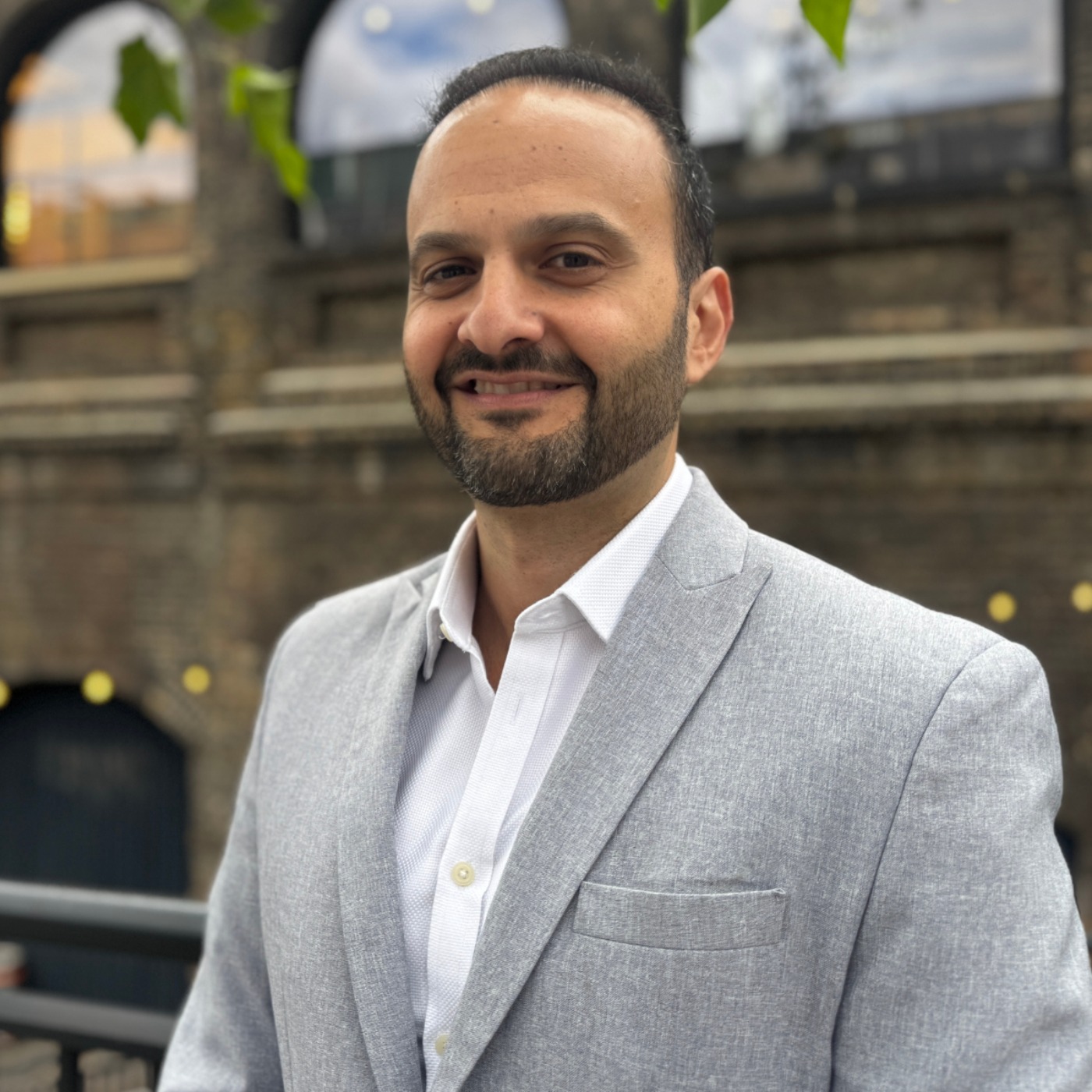
Alidad Mohadam, CEO of Blue Light Card, explains how the frontline-worker discount platform scaled from 3 million to 6+ million members in just over three years, doubling membership, and how to grow purpose-driven businesses sustainably. He also shares leadership lessons from prior roles at American Express, Bain, and Trainline, including private equity value creation, IPO storytelling, and avoiding overextension as a new CEO.
Alidad Mohadam is a former Bain consultant and angel investor. He previously helped grow Trainline by 400% in six years after KKR’s private equity acquisition, and he worked in American Express’s Strategic Planning Group. He later became CEO of Blue Light Card.
Blue Light Card’s “North Star” is meaningful savings; trust and word-of-mouth drive the flywheel. Founders should step back to board roles to avoid co-managing dynamics. Scale requires an evolving operating system and culture anchored in mission.
£540 million saved for members in the last 12 months; 15,000+ partner brands; £4.99 fee every two years; Australia growth over 200% and a “cold start” partner issue; independent merchants accepting cards via handwritten signs; Wagamama and Pizza Express partnerships; Morrison’s supermarket promotions.
Written by AI. May contain mistakes.
Learn about the impressive growth of Blue Light Card and its CEO's vision.
“And in the last 12 months alone, we've helped our members save 540 million pounds.”
Discover Alidad's diverse career path and foundational experiences.
“You made it from Brown University to American Express and then to become a really successful chief exec three years ago.”
Understand the factors that drove Alidad towards consumer technology.
“I graduated from business school in 2008 when the world economy took a turn for the worse.”
Learn how KKR's involvement influenced Trainline's strategy and operations.
“the Business Leader podcast, where we look at the stories and strategies behind modern businesses.”
Explore the complexities and considerations in mergers and acquisitions.
“What were the biggest things that you learned to Trainline?”
Gain insights into the process and challenges of preparing for an IPO.
“And some of the challenges are on the softer side of things, understanding culture fit, different ways of working, particularly if you're making an international acquisition.”
Learn how Trainline managed its operations and culture during the pandemic.
“and we were also able to tap into advisors and also the network that KKR brought in who'd done this several times who helped us really streamline the process.”
Learn about the transition from Trainline and the importance of advisory work.
“So we continued to invest in our product and our technology.”
Discover how a CEO's experience with private equity influences board interactions.
“And I started working with various VC and PE funds as an advisor.”
Explore key strategies for entrepreneurs seeking private equity investment.
“For any entrepreneur that's looking to raise investment from private equity, what would be your top two or three tips?”
Get insights into Blue Light Card's membership and benefits for frontline workers.
“And we partner with over 15 ,000 brands and retailers, ranging from global brands to small local retailers, who provide exclusive discounts and benefits to the members of our community and help them save money.”
Learn how Blue Light Card scales its operations while maintaining its mission.
“That trust is very hard to earn, but it comes from the consistency in driving decisions through mission and purpose.”
Understand the monetization model and affordability of Blue Light Card.
“Our members pay a small fee of$4.99 every two years and then our partners, which are the brands and retailers that work with us, pay a small commission for being on our platform and providing offers to our members.”
Discover how the transition from founders to a new CEO was managed effectively.
“What were the people like that you inherited when you joined and how many of your direct reports did you change?”
Learn about the importance of trust and communication during leadership changes.
“So you didn't directly take over from the founders in running the business, but you've sort of had interaction with them.”
Explore characteristics to look for when hiring a successor to a founder.
“over the keys and is trying to co-manage the business.”
Learn about Blue Light Card's potential for global expansion and market opportunities.
“but also has some of the characteristics from the values and cultural perspective that will drive continuity.”
Understand the challenges faced during international expansion and lessons learned.
“the first step for us, but I think there are many more markets where this can exist.”
Discover how lessons from Trainline are applied to improve Blue Light Card's operations.
“What are the things that haven't worked in Australia that will go into your international playbook?”
Learn how Blue Light Card successfully doubled its membership in three years.
“When you joined the business, Ali Dad, there were three million members and you're now over six million.”
Learn how Blue Light Card focuses on member trust and service quality to drive growth.
“And that was really around continuing to build member trust and word of mouth dynamics.”
Explore the importance of omnichannel strategies and local business partnerships.
“I'm a big believer in bricks and clicks and paper.”
Discover the plan for a self-serve platform to benefit local merchants and members.
“So what we want to do over the next few months is build a self-serve platform, which allows small businesses to register and offer discounts to the Blue Light community.”
Understand how company culture impacts hiring and business success during growth.
“And what is the culture of blue light card?”
Learn strategies for managing hiring mistakes and the importance of feedback.
“I think it's unavoidable, realistically.”
Discover plans to expand savings and personalize member experiences.
“Otherwise, you're going to have people who will eventually struggle and not be able to keep up.”
Explore how mentorship and coaching can influence leadership success.
“You come across as a very experienced and knowledgeable Alidad.”
Learn insights on navigating the role of CEO and maintaining cultural fit.
“The best advice I recently got was to think about what makes a CEO successful and how that is different from what made me successful until I became a CEO, because those are two very different things.”

Get the gist, explore an idea or ask about something said.
 Claude
On The Business Leader Podcast with Sir Richard Harpin, what are the key points of this episode?
Searching your listeningAutomatic transcript. May contain errors.
0:02And in the last 12 months alone, we've helped our members save 540 million pounds. One of the mistakes I made was going too broad too early and overextending the team. When someone comes into the chief exec role, a founder is not really ready to hand over the keys and is trying to co-manage the business and creates a really tough dynamic for everyone involved. There is a tendency for a new CEO to come in and try to fix everything. And actually, that's a very fast way to overextend yourself and get burnt out. From a police officer's spare room in Leicestershire to a private equity-backed platform serving more than 6 million frontline workers, Blue Light Card has quietly become one of Britain's most successful consumer membership businesses.
0:51Now its CEO, Alidad Mohadam, a former Bain consultant and angel investor, is leading the next phase of growth. And he's got the track record to match, having helped grow Trainline by 400 % in six years. So how do you scale fast and sustainably without losing the mission? Alidad, welcome to the Business Leader podcast. You made it from Brown University to American Express and then to become a really successful chief exec three years ago. What was the secret to that success? What's the advice for anybody that wants to become a chief exec? Thanks for having me, Richard. Great question. My career progression has actually been quite nonlinear.
1:42and the choices I made, some of them were very intentional. And as with many people, I've also had a little bit of luck along the way. But when I graduated university, the popular jobs were investment banking and consulting. And I had a couple of offers from good investment banks and consultancies. And I'd done internships at that point, which helped me get a bit of a feel for what those jobs entailed, which I highly recommend. And when I thought about what I wanted to do for the first four or five years of my career, I realized that I really wanted to learn what it takes to run a business at scale.
2:19I'd been surrounded in my family and my parents' social circle by people who are entrepreneurs who had built businesses. And I really wanted to observe firsthand what it takes to be a business leader of an organization that scales and grows. And the reason I took American Express as my first job was I was able to join a group called the Strategic Planning Group, which worked directly with the office of the CEO and the senior vice presidents in the company and helped them shape the company's strategy, looked at M &A opportunities, looked at new product launches and things that were commercially incredibly sensitive for the business.
2:57And it was really valuable to be able to fly on the wall in these board meetings where these strategic discussions were happening. But it wasn't just strategy. It was also seeing how they then turn these strategies into operational realities. But I wanted to be able to widen the aperture through which I viewed the business world. And I thought an MBA was a great opportunity to not only learn in the classroom, but also learn from classmates who had developed skill sets and experiences in very different environments. So that prompted me to do my MBA. And then Bain Consulting. That's right. So that was a combination of factors.
3:34I graduated from business school in 2008 when the world economy took a turn for the worse. At that time, I'd already had some exposure to the world of tech through my MBA. And I really was keen to switch career tracks and join the tech world. But it was very difficult for an MBA with lots of student debt and very little practical experience in the tech world to find a job that paid enough. I thought to myself, how can I continue to build skill sets that are transferable in any context? And consulting was a great way to continue to develop structured problem solving and analytical skill sets in a variety of industries that I could then take with me elsewhere.
4:17So I did a couple of years at Bain, great training ground, great culture. Which marketplace or industry were you most attracted to? I loved consumer tech. And the reason for that was around the time when I started to explore careers in technology was when the first iPhone came out and then the app ecosystem developed. And I could already start seeing how much it was influencing day-to-day lives and the way consumers purchased things, did research, obtained information. And I thought the speed at which innovation was taking place and was impacting people's daily lives at scale was just fascinating.
4:55So I really wanted to be a part of that. And so a way to then deliver that in your career was combining consumer and tech and joining Trainline. Trainline was a very exciting opportunity for me. Prior to that, I'd done a couple of shorter stints in various consumer tech companies to just build foundational skill sets in understanding how product development works, how digital marketing works. But Trainline at the time was acquired by KKR Private Equity, and they were looking to rebuild the management team under Claire Gilmartin. And I was given the opportunity to join as her first hire to help with the strategy and value creation plan under private equity ownership and how to grow the business in the lead up to the IPO, which happened in 2019.
5:43And it was a really, really great training ground for truly understanding what operating in a private equity environment looks like. I'm Richard Harpin, a Yorkshireman who sold my company, HomeServe, for£4 billion. And this is the Business Leader podcast, where we look at the stories and strategies behind modern businesses. I'm passionate about helping British businesses scale and succeed. I think it's the key to unlocking Britain's economic growth. Founders and CEOs of mid-sized companies can be members of the business leader community for coaching, peer-to-peer forums and exclusive learning events.
6:22So get involved. In the meantime, please click on the follow button. It's just one click. It's free and it helps us grow the community. With more people on board Business Leader, we can have better conversations and inspire the UK's next wave of business leaders. What specifically did KKR bring to the business? KKR, a large global fund with a very diverse portfolio, the team that invested in Trainline specifically opened up access to their network of experts and portfolio companies who had seen the growth trajectory that we were looking to embark on. And it ranged from things like product resource, performance marketing, know-how, and a number of other things that allowed us to really quickly diagnose where there were opportunities to build operating leverage and accelerate the business trajectory.
7:22and their Rolodex, their network of advisors, the portfolio companies that we could speak to and learn from was incredibly valuable in helping us accelerate our value creation plan. But it was show and help rather than telling you what to do or trying to run the company for you. That's exactly right. And I think now having had the benefit of working with several private equity funds, I think the model that when it really works well is a true partnership model where you are with a fund that truly backs the management team and the business plan the management team has come together but then helps you really identify ways in which you can accelerate your learning curve and deliver against that.
8:08So they're bringing more than just the money. That's right. What were the biggest things that you learned to Trainline? One of the most important things which I carry with me to this day is the importance of a CEO being able to really clearly articulate the vision and mission behind the business. So the why and articulating that in the way that from the investors to the most junior employee are able to draw the line between how they can impact and influence that. And I think that if you have a brilliant strategy, but you're not able to communicate the why in an effective way, I think you're missing a trick.
8:46So I've really been trying to hone my ability to do that. What was the why at train line? So train travel is actually one of the most environmentally sustainable ways to travel. Carbon emissions from taking long distance train, especially now with the heavy investments in high speed rail infrastructure, is significantly better for the environment than traveling by air. So the mission for us was actually to make train travel more accessible to millions of people around Europe. And we really tried to understand the pain points of train travel and address them through a better app experience and all the products and services that were built into it.
9:28The business did an acquisition. Yes, that's right. So when we wanted to expand outside of the UK, like most businesses, we thought buyer build. And there was an opportunity to acquire a business in France that was owned by Index Ventures that had built a lot of the tech infrastructure that allowed us to connect to rail operators across Europe. And building that on our own would have taken significantly longer. So we made that acquisition and integrated their technology into Trainline's platform. And that paved the way for us to be active in all European markets. So any founder running a mid-sized business here in the UK that's thinking about going international, would you recommend trying to buy something rather than opening organically?
10:14I think it is context dependent because M &A isn't without its challenges, right? And some of the challenges are on the softer side of things, understanding culture fit, different ways of working, particularly if you're making an international acquisition. And being able to combine two businesses in an effective way has all sorts of hidden tacks, I would say, that goes above and beyond the synergies that you might have on a spreadsheet. So you really need to understand what those are and have a clear plan for post-merger integration. Now, in instances where it works well, which was the case for us, that's great.
10:55But there are plenty of M &A stories that have gone wrong because people underestimated the heavy lifting. And what was the big tip on the people bit of M &A? For us, it was really investing a lot of time in understanding how the business operated, the culture of the local team, spending a lot of time with the founders, understanding where there was convergence, where there was divergence, and then having a clear plan for how to bring the teams together in a way that was sustainable. You were around for the successful stock market listing of Trainline. What are your reflections on that? That was a fantastic learning experience.
11:34I think one of the big things was understanding how to be disciplined about the narrative by understanding what investors in public markets really care about and being able to craft the IPO story in a way that resonated with the markets in a clear, transparent, but also simple way. We were a relatively complex business and just the skill that is required to turn that into a digestible story that hits on the things that matter for the investment community was a huge learning. I think the second thing was also being able to have a very focused small team that is working on the IPO while protecting the rest of the business from distractions so they can continue to deliver against a company.
12:25What were the key skills in that team that you kept separate from running the day-to-day business? Our CEO and CFO carried a huge amount of the burden, as most management teams do in these contexts. But then they tapped on various members of the C-suite, including myself, where we had expertise in specific areas that were key to the story and made sure they engaged us in crafting the narrative, but also in telling the story to investors. and we were also able to tap into advisors and also the network that KKR brought in who'd done this several times who helped us really streamline the process.
13:03And what was the effect of train line going through the COVID pandemic? So being in the travel sector our revenue took a significant hit overnight I think it dropped by 95 percent in 24 hours. Cool how scary was that? It was definitely not something we had planned for. But I think how a team responds to these crises says a lot about the culture of the business. And I was really impressed at how calm and composed and pragmatic the leadership team under Claire were in tackling this. We looked at what are the things that we could do to reduce burn rate while protecting the colleague base and minimizing any sort of need for restructuring redundancies and taking advantage of furlough and other schemes to protect our colleagues.
13:51And then we looked at how, thankfully, we had a healthy balance sheet, we could continue to invest in the things that would still deliver positive outcomes for us when we came out on the other side of COVID. So we continued to invest in our product and our technology. And that was actually a really beneficial call, because when travel started to recover, we had made some significant progress on some of the things we'd wanted to deliver to our customers. And then you decided to move on? Yes. So about 18 months after our listing and six years into my time with Trainline, I felt like I'd learned a huge amount, but it was time for me to do something different.
14:30I wasn't quite sure what, so I decided to spend a little bit of time doing more advisory work and portfolio work. And I started working with various VC and PE funds as an advisor. And then eventually I spent quite a few months working with Hellman and Friedman, which is a large US fund on their European consumer tech portfolio companies. It was a great learning experience because it gave me a unique vantage point to now as a former PE operator beyond the investor side. Moving to the other camp and therefore seeing it from the investor side rather than the operational and management side. How important do you think that experience is to being a chief executive?
15:13It's been invaluable. I think going into board meetings, I can understand the perspective with which the board is coming to the discussions, why they're asking the questions they're asking. And it helps me try to be more effective in the way I synthesize what's happening in the business and communicate information and tie it back to the outcomes that the investors are trying to drive. For any entrepreneur that's looking to raise investment from private equity, what would be your top two or three tips? I think with private equity, the thing that I like is that it's all about the fundamentals. So every private equity investment has a very clear investment thesis and a clear value creation plan behind it.
15:57And when you get backing from private equity, it's because they are underwriting the plan that you have developed. So having a very clear strategy and a path to building a business that can grow sustainably, as opposed to growing at all costs, and being able to show operating discipline in how you're going to report against the strategy and the value creation plan, and being able to articulate the things that matter the most in a crisp way is critical. And for others who don't yet know Blue Light Card, just talk a bit about the business, how it works. Sure. So Blue Light Card is the largest discount and savings platform for frontline workers, which includes NHS workers, emergency services, social care teachers and armed forces.
16:45We have 6 million members, so one in five UK households have a Blue Light Card membership. And we partner with over 15 ,000 brands and retailers, ranging from global brands to small local retailers, who provide exclusive discounts and benefits to the members of our community and help them save money. And in the last 12 months alone, we've helped our members save£540 million. And so how do you scale a purpose-driven business? One of the key things is being incredibly clear on what is the North Star for the business. And in our case, we look at how we can deliver meaningful savings to our members to help manage the cost of living.
17:25And every decision we make commercially or otherwise is done through that lens. And that means that we've over the years by doing that built a very high trust community with incredibly high brand affinity towards us. That trust is very hard to earn, but it comes from the consistency in driving decisions through mission and purpose. The other thing that it allows us to do is the success on the scale that the business has achieved combined with the purpose allows us to actually be very differentiated when recruiting talent. And there are more and more people out there who are looking to join businesses that are not just high growth, exciting businesses, but that also have a clear mission and purpose at its heart.
18:09and that's allowed us to bring in some incredibly talented people. So you can combine a real purpose with profit? Absolutely, yes. How does the monetization model work? Our members pay a small fee of$4.99 every two years and then our partners, which are the brands and retailers that work with us, pay a small commission for being on our platform and providing offers to our members. And why only£4.99 for two years? That sounds like an absolute bargain. It goes back to our North Star principle, which is what we want to do is make sure that we give our members the opportunity to save as much as possible.
18:52So if we can do that in a very cost effective way, we will continue to do that. And the beauty of it is that it pays for itself very quickly. So our members, the most engaged ones, can save thousands of pounds over the course of their membership. And that's what we're here to do, to help them really manage the cost of living and to say a thank you to them for the service that they give to the community. We talked about the importance of people in a mergers and acquisitions plan. What were the people like that you inherited when you joined and how many of your direct reports did you change? We were a smaller business at that time.
19:28We were about 150 people. And now we, by the end of this year, we'll probably be close to 300 people. So the team has changed quite a bit. The business has also gone through an evolution in terms of operating model. And I think one of the important things to do early on as a CEO is look at what are the things that we have? What are the things that we need for the next chapter of scale? And then making sure we bring in the right talent and capabilities to fill the gaps. So we've gone on a journey of doing that. There are still many employees who've been with the business for over five years. But as a result of the big recruiting drive we've had also, there are in the last 12 months alone, 100 people who are brand new.
20:08You're the paid chief exec rather than the one of the two founders. Are they still around? The founders were involved until last year directly as board members, which was great for me because in my first two years, I had weekly calls with them. They were my sounding board to make sure we didn't lose all the institutional knowledge and the really strong intuition they had for what made Blue Light Cart special. They've stepped back from the board, but they are now actively involved in the Blue Light Card Foundation, which is a sister organization which we partner with, which helps champion different causes that are focused on the physical and mental well-being of frontline workers.
20:55So you didn't directly take over from the founders in running the business, but you've sort of had interaction with them. What would be your tips if you had been the chief exec that directly took over from the founder chief exec? So the way we managed that transition was the founders themselves had made the decision that they wanted to step back into a board role rather than an executive role. They'd done an amazing job for 15 years scaling the business and taking it to where it was. combined with the board, they reached to the conclusion that for the next chapter, they wanted to bring in someone who had the experience of doing the next stage of the journey.
21:39And that was how the search came about and how I came across the role. But from the beginning, we were very clear on how we would manage that handover, both in terms of the communication to the organization and how we made the boundaries and decision making very clear between the board, the founders and myself, but I didn't want to lose the knowledge that they had. And I also valued their perspective because they had built the engine that drove the business this far. And so what we did was we had weekly calls for two years. Many other chief execs would have tried to push the founders out and not get their help and advice weekly?
22:23I think the great thing about it was the founders stepped aside and were ready to hand over the keys. And I think when it really doesn't go well is when that is only on the surface a decision that's made. But when someone comes into the chief exec role, a founder is not really ready to hand over the keys and is trying to co-manage the business. I think that blurs the lines for the team around ownership, accountability, and creates a really tough dynamic for everyone involved. In this case, that wasn't an issue at all. And I think that set us up for success. And for a founder that is ready to step aside, but not necessarily out of their business, and hire somebody like you as a proven chief exec, what sort of characteristics should they be looking for?
23:11I think one of the important things is not to hire for a like-for-like replacement, which can be some people's tendency. It's actually understanding what were the things that made you successful as a founder, but what were the things that perhaps were gaps in helping take the business to the next chapter and deliberately looking for someone who compliments you by bringing those gaps to the table, but also has some of the characteristics from the values and cultural perspective that will drive continuity. So the pattern recognition and relevant experiences were there if the title wasn't there. Obviously, there were a number of things that I needed to learn as a first-time chief exec.
23:53But in some ways, a lot of the things that helped me hit the ground running had been put in place through my past experience. Can Blue Light Card become a global business? You're also in Australia today. I think it can. We launched in Australia relatively recently and it's growing nicely, albeit off a small base. But last year alone, it grew over 200%. And I think the reason for that is there are many markets around the world that have similar characteristics in terms of people wanting to recognize the service and the contributions of frontline workers and the ecosystem around e-commerce, online retail, affiliate marketing being in place to be able to sustain a similar model.
24:40So I think Australia is the first step for us, but I think there are many more markets where this can exist. It's a long way away, and you've made a success of it where I failed. Australia didn't work for HomeServe, but we moved some of the team into America and eventually made it work there. America is big on their military. Is that an opportunity at some stage for Blue Light Card? It's certainly something we're thinking about. It's not necessarily something we'll do straight away, but for the reasons you mentioned, it's worth exploring. Our focus right now is on making Australia successful and developing a bit of a playbook for then how we go to new markets by not just leveraging the successes in Australia, but also learning from the things that caused a false start.
25:28Having done international expansion previously in my career, one of the mistakes I made was going too broad too early and overextending the team. And I think I'm trying really hard to avoid repeating that mistake. Very disciplined, planned, doing it, prioritised one step at a time. Exactly. What are the things that haven't worked in Australia that will go into your international playbook? So one of the things we did was a cold start problem for a marketplace, which was we set up the team, we then launched the product, and then we went about starting to build the partner base and the member base from the ground up.
26:02And that's challenging, right? Because if you want to build the flywheel effects in a marketplace, you need supply density and you need also customer density. And there's always that chicken and egg problem. I think we could have probably in hindsight done a bit more of the legwork around lining up launch partners before going live with the product so that the first members that joined us would have immediately seen value from the experience. So you just speeded up the time to launch. Exactly. Is there anything that's come out of the train line playbook that you've applied at Blue Light Card? Quite a lot, actually.
26:43But the most important things I would say go back to first principles about how to operate a business, particularly in a private equity environment. The first one goes back to the point I made about being able to really clearly articulate the why and how the work that every team does connects to that. So that was the first thing. The second one is around setting up the operating system and discipline that allows us to achieve our goals and revisiting that quite frequently. I think redesigning the operating system of a business that is going through hyper growth is a continuous thing. You can't set it and forget it.
27:24And that was an incredibly valuable lesson from Trainline where every six to 12 months we'd go, OK, we've grown significantly. Is our current structure, our current ways of working fit for purpose? And we would make tweaks where needed. And that helped us stay really agile and adapt to the next chapter of growth. When you joined the business, Ali Dad, there were three million members and you're now over six million. doubled the business in not much more than three years. How have you done it? It was really about going back to first principles. One of the things that we looked at was, what are the things that have allowed us to get to that three million mark that we can continue to double down on and leverage?
28:04And that was really around continuing to build member trust and word of mouth dynamics. And that came from continuing to onboard new partners and increasing both the breadth and the depth of savings that we provided to our members. So we really continued to double down on that. And that allowed us to continue to increase the flywheel effect. So the greater the savings, the more our members talked about it. And that allowed us to acquire more and more members at pace because of the value we deliver to them. The second thing was looking at where there were opportunities to improve the quality of the service that we delivered.
28:45So we've invested heavily in technology replatforming and in building product capabilities so that the experience is smoother and more personalized. And that has also allowed us to drive more engagement, more savings, and therefore drive more member growth. What's the role of Omnichannel? I'm a big believer in bricks and clicks and paper. Completely agree. So historically, a significant portion of our business has been online. But now one of the fastest growing parts of our business is in offline physical retail environments. So, for example, food and beverage. We partner with amazing restaurant chains and groups.
29:27Name some of your partners out there. Sure. Wagamama's, Pizza Express. There are so many great brands that we've partnered with, Mitchell & Butler's and so on. The list is very long. I want to join the police force so I can get one of your cards. You would definitely get a lot of savings out of it. So we are seeing that a lot of our members obviously appreciate the savings that they get online, but they want to be able to use their card every single day. And that means going to the local coffee shop, going to their favorite pub, going to their favorite bakery. And over the last few years, we've seen an interesting trend where about 10 ,000 local small independent merchants have started accepting Blue Light Card without actually having any official commercial relationship with us.
30:18So my local coffee shop has a sign handwritten on a piece of cardboard that says Blue Light Card Welcome. And I show my card on my app and I get 10 % off. And there are 10 ,000 of these merchants. So what we want to do over the next few months is build a self-serve platform, which allows small businesses to register and offer discounts to the Blue Light community. And that helps us not only deliver more savings in everyday life to our members, but also support small bricks and mortar businesses that will benefit from the foot traffic that we can drive. And put an official Blue Light sticker in the independent retailers window.
30:57That's coming soon as well. And a role for paper or people on the ground to go around and sign up those local retailers? We're exploring what's the best way to do that at scale. We're looking at whether or not we need a field sales team. Obviously, there's ways to do automated outreach these days at scale. So the team is actually right in the middle of exploring all the different ways that we can do this. I'll tell you all I recommend, and that is sending a direct mail letter. to the owner of each of those businesses using one of the databases like Bowhurst and inviting them to then go online and register.
31:37That's a great idea. And that's an example of paper to clicks. That's a great idea. Amex does that really well, actually. So yeah, I agree. That's definitely something we should consider. How important is culture? And what is the culture of blue light card? Culture is fundamental to the success of the business, particularly a business like ours. It's interesting because culture, when you're a smaller business and, you know, 50, 60 people is felt. But when you get to 200 plus people, it's much more difficult to scale that. So it's about what are the behaviors that you demonstrate and role model as leaders and that you encourage at a company-wide level.
32:18So how do you hire people? How do you drive performance? How do you act in moments of crisis? All those things are what makes culture. And how do you do that to maintain that culture as you've doubled the headcount? So as we've hired, one of the things we've been really intentional about is hiring people who are not just brilliant operators and subject matter experts, but people who have a true connection with the mission and the purpose. We actively screen for that because if people are joining because they believe in what we're doing, it builds a completely different connection with their day-to-day work.
32:55And it allows us to preserve all the things that are important for us. The other thing that we've done is we've tried to really simplify the way in which we articulate what our culture and our values and our principles are. So one of our core tenets is making heroes happy. It's really easy to remember. It's really specific to Blue Light Guard. Everyone who comes in sees it all over the office and understands what we're about. How important is that to hiring great people? I think it's absolutely critical. I think otherwise you run the risk of hiring people who are really great at the task but don't fit into the broader picture.
33:33And I think the connection to the why is absolutely instrumental. But have you made any people mistakes? I think it's unavoidable, realistically. I heard a stat somewhere that typically 50 % hiring mistake rate is not uncommon in high growth businesses, which terrified me when I first. I think the way we've looked at it is actually what are the different skills that are required for different chapters of the journey? And so that doesn't necessarily mean looking at things as a hiring mistake. It just means saying, okay, if someone was the right profile for the previous chapter, do they have the skill sets and the learning agility to stay with us for the chapter beyond that?
34:17and if the answer is yes then fantastic and if the answer is no then we always try to have an open and respectful dialogue and try to figure out what the right next step is and how do you get somebody that's not right out of the business i think the important thing in managing those types of conversations is being transparent being honest and being respectful and i think one of the common pitfalls is when people don't provide regular open and constructive feedback. I think there's a book about radical candor that I really like. I don't know if you've read it. Would that be your recommended book?
34:57Absolutely. And this is really about providing candid feedback and doing what's right. It doesn't mean being abrasive or aggressive. It means that sometimes you might say things that are not popular, but that are important for the benefit of the person receiving the feedback and for the benefit of the team and the business. And you need to have the courage to do that. And you have to have the skills and the training to do that in the right way. And that will help people develop in the absence of that. Otherwise, you're going to have people who will eventually struggle and not be able to keep up.
35:34How else can the blue light card business evolve? You've talked about international opportunity, talked about independent retailers. Any other thoughts? So one of the big things for us is expanding the range of savings that we provide to our members. So today, a significant portion of the savings we deliver are on things like travel, fashion, apparel. There's a range of events and experiences that members can access for free. But what we want to do more of is all the non-discretionary things that actually make up a significant portion of the cost of living. So more partnerships with supermarkets.
36:17We've recently had some promotions with Morrison's, which have been hugely popular. Things like household bills, utilities. Those are all things that people have to pay for day in and day out that make up a significant portion of the monthly expenses. And we're trying to go deeper into that and add more value to our members that way. The second part is now we have so many offers, we don't want to be just a catalogue of offers that is the same for everyone. What we want to be able to do is offer a much more personalized experience where we will know, for example, what your favorite brands are, Richard, or where you live and where you like to shop, and we're able to service the things that are relevant to you so you're able to immediately discover the ways in which you can get the most out of your membership.
37:02You come across as a very experienced and knowledgeable Alidad. Have you had a coach or mentor on the way? I have. I've had a CEO coach who has been really helpful, someone who spent over 15 years in the CEO chair and has had all the battle wounds and can help me navigate through the tricky corners that come with it and has given me some and valuable advice in how to think about my role within the business and how to manage different challenging situations. But I've also throughout my career benefited from a lot of informal mentorship. I've tried to keep in touch with people throughout my career who I've learned a lot from, who I respect.
37:42And from time to time, I make sure to reach out. They're my informal advisory board. We grab coffee. They always have incredible insights that help me make better decisions. What was the best bit of mentoring advice you ever got? The best advice I recently got was to think about what makes a CEO successful and how that is different from what made me successful until I became a CEO, because those are two very different things. The way it was framed, which I found incredibly helpful, is there is a tendency for a new CEO to come in and try to fix everything. And actually, that's a very fast way to overextend yourself and get burnt out.
38:22I think the more helpful way to think about it for me was what are the things that I absolutely have to do as CEO that I cannot delegate or defer? And those will be the highest leverage areas for me to focus my attention on. Everything else is really about building the right team around me and delegating to them and giving them the ownership to solve those problems, even if it means having to wait a little bit. Many chief execs, founders, entrepreneurs are reluctant to get a mentor because they don't think somebody will help them for free. How did you know that mentors would be helpful and how did you go about signing yours up?
39:02I think it's just about being able to have a conversation. Once you come across people who have really had a positive influence on your career, Chances are, if you ask them, they'll be more than happy to grab coffee with you every once in a while. And then there's a conversation about whether or not this is a more formal thing or an informal thing. So, you know, there are CEOs I've worked with in the past that I grab coffee or dinner with once every six months. And it's a nice way to just stay connected and have a nice social chat with them. But also they always, if I have any questions or if I need a recommendation, are happy to help.
39:41And I try to return the favor in any way I can. So that's easy. And then if there's something more formal to be done, for example, when I looked for a more formal coaching arrangement, I met several coaches that were recommended to me through my network. I had a 30-minute chat with all of them and then tried to get a sense for who I connected with better because a lot of this is about personal relationships and then once I found someone who I thought I could work with because communication styles were compatible their frame of reference and pattern recognition was highly relevant to what I wanted to build experience in then we did a couple of trial sessions and it was great and then we formalized it you are you were born in Iran, grew up in France, lived in Canada, the US, then moved to the UK.
40:32Where's the best place to do business? I mean, I've decided to double down on the UK. I love working here. Not that the US wasn't a great place to build a career. But for me, the UK provides the best combination of a lot of things that I was looking for, not just career opportunity, but alignment with the type of place that I want to set roots in, international community, deep talent pool, opportunity to have an impact in a different way. For me... Music to my ears that we can beat the Americans. We love the Americans, but we need to build more big businesses here like Blue Light Cards. So that's fantastic.
41:16Thank you. Alidad, thank you so much. Thanks for having me. Alidad Mahadam, that was inspirational. I learned a lot how you build a business with purpose and profit. Thanks everyone for listening. I hope you enjoyed the conversation. Please do rate us and subscribe. And make sure to visit our business leader website, businessleader.co.uk to sign up for our weekly newsletter and become part of the business leader community. Thank you.
Alidad Moghaddam, CEO of Blue Light Card the UK's leading discount platform for frontline and emergency service workers, talks to Sir Richard Harpin about what he's learned on his journey as a first-time chief executive and from his experiences in a private equity environment. Blue Light Card has grown from a small startup founded by a serving police officer into a platform supporting more than six million frontline workers. From expanding into Australia, to building a high-performance culture rooted in radical candour and mission-driven hiring, Alidad offers tips for any business leader scaling a business. He shares the lessons he learned helping grow Trainline and taking it to a successful IPO, what the perspective of an angel investor taught him, and why culture matters most during periods of mergers and acquisitions. He explains why being clear about the strategy and vision, defining the operating model and making the difficult calls early are key to success.
Subscribe to the Business Leader Podcast and sign up to our free weekly newsletter at businessleader.co.uk/newsletters
Business Leader is a membership community for ambitious CEOs and founders of mid-sized UK companies, designed to help them grow with purpose through strategic support, peer-to-peer learning, expert coaching, and high-impact events. Sign up for our Business Leader newsletter here.
Hosted on Acast. See acast.com/privacy for more information.


