Ask ChatGPT
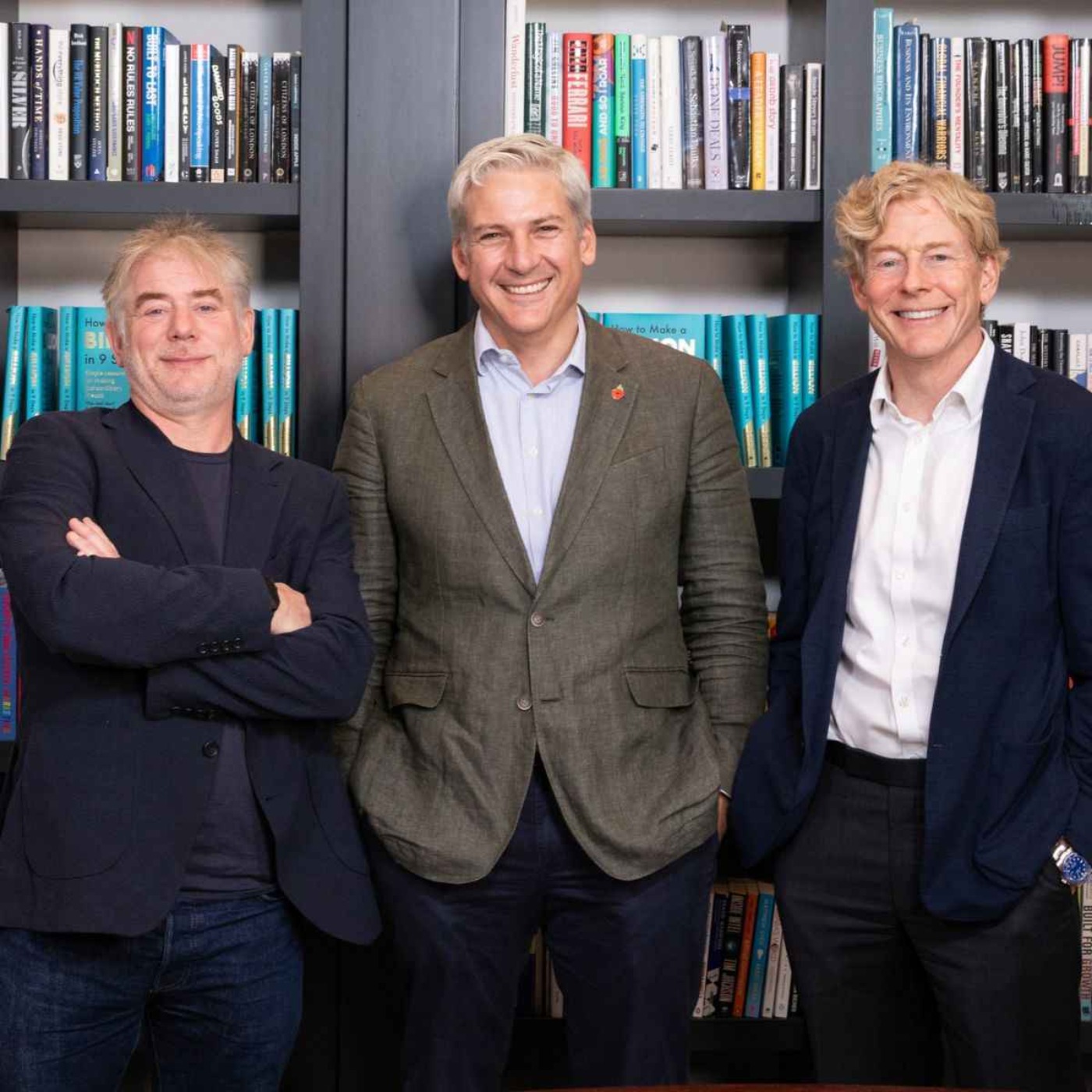
 The Business Leader Podcast with Sir Richard Harpin
4 Mar 2025 · 24m

The story behind Gousto recipe boxes: "Al Gore mentored me, Tony Blair hasn’t replied yet"
Dougal Shaw
Timo Boldt - Founder and CEO of Gousto
In this episode, Timo Boldt discusses the journey of Gousto, a recipe box delivery service founded in 2012, which has grown to achieve annual revenues of over £300 million. Timo shares insights on the use of AI in the business, his evolution as a leader, and the importance of mentorship in his career.
Written by AI. May contain mistakes.

Get the gist, explore an idea or ask about something said.
 Claude
On The Business Leader Podcast with Sir Richard Harpin, what are the key points of this episode?
Searching your listeningAutomatic transcript. May contain errors.
0:00This is Britain's growth moment. Do you want to be part of it? On 26th of March, 750 of the UK's most ambitious founders, CEOs and investors will gather in London to shape the future of mid-sized business. The company's driving our nation's success. The Business Leader Summit 2026 isn't just another conference. It's a day built around the three forces that define growth, ambition, policy and capital. And as one of our valued podcast listeners, you can be there in person. To secure a discounted ticket, visit the events section of our business leader website and use this code. BLpodcast, all one word, all uppercase.
0:41We look forward to seeing you there. So we're in the kitchens here in the basement and I can see about five or six people busy working away preparing food. What's going on here? All day long, these amazing product developers are churning out new creations, improving existing recipes. and whenever they cook one, we put it on Slack and whoever is hungry gets free food. And so all day we're feeding the office, making people more productive and happy. That's Timo Bolt, founder and CEO of Gusto, the company that makes recipe boxes which are delivered straight to your home. I've come to meet him at his company's headquarters in West London, where I'm being given a tour of the kitchens where food experiments take place.
1:25And then do you listen to the feedback from people once they've eaten it? Yes, yeah, they have to fill in a form. And then they also, we also create test bags. And so you can, like, take a test bag, get all the ingredients, cook it home, fill in a long form, what worked well, the timings, the flavor, everything. It's quite fun. Have they really got free reign to try and create any dish, or do you give them any guidelines? There are a few guidelines. A hundred plus. So, I mean, what makes them so special and so creative is the ability to, you know, draw by numbers and create insanely creative things while operating under huge constraints.
2:04Funnily enough, as we were on the stairs heading to another level, we bumped into someone carrying a new food creation to sample. So what have we got here? This is a plate straight from the testing kitchens. Yeah, it's a basse with a bonnet sauce, crispy potatoes and garlicky greens. So they've just started testing with tarragon today, so they're doing a lot of bonnet sauces and herby fish dishes. Seems to be the dish of the day.
2:30I'm Dougal Shaw and this is the Business Leader podcast where we discuss and dissect the business stories and trends that really matter. In this episode we look at Gusto, as I meet its founder and CEO Timo Bolt. He started the company in 2012. It's grown steadily and now has annual revenues of more than 300 million pounds, having raised more than 285 million pounds in venture capital to scale the business. In this episode we'll learn about how Timo grew the business, how the company uses AI in different aspects of the operation and we'll also learn how Timo had to evolve on a personal level to remain the best person to lead his own company.
3:08We'll hear how earning a coaching qualification transformed his approach to leadership. But he began by telling me about how the idea for Gusto originally came about.
3:20I love food. I love cooking. I have no time. I'm competitively busy. And so I wanted to find a better way to serve my own needs, you know, and at the same time, get rid of the 40 % food waste that's happening. And so I really wanted to, you know, pursue a purpose of having a positive impact on people and the planet while solving my own issue, really. And at the time when you first had the idea, you were in your early 20s, we were working in finance in London. But I think the idea was that of these boxes actually comes from Sweden. Is that right? Yeah, I mean, I was fairly naive back then I was looking into leasing some space, creating these beautiful tables where you could walk and touch and smell the produce and assemble your own meal and then I did find these Swedish guys who did it since I don't know 2007 so like way before I started and they delivered bags so not boxes not not in store but bags and I did a good job but I mean in all honesty I worked 100 hours in finance and I was fairly naive about the concept I didn't have a launch plan or you know a spreadsheet I just had huge passion for food and kind of the belief that there has to be a better way to feed families across the UK.
4:39And I think your story is a little bit like Will Shue of Deliveroo because he was working hard in finance and he struggled to get food to his desk when he was working. So you had a sort of similar problem but a completely different solution. Yeah very similar. I mean my emphasis is on healthy food, clean food, you know convenient catering to the masses not the classes and so price point affordability health hugely important components of the vision we have to be the most loved way to eat dinner in the uk um but at a very kind of purpose purpose focus level quite early on because you started the business in 2012 the following year 2013 you went on dragon's den which you know a lot of entrepreneurs have done that but i looked back at that interview the other day and it was you did a very slick presentation it was great but But the dragons then were quite brutal in their rejection.
5:31They talked about you. You said you were going to hemorrhage money. I don't think you'll ever make any profit. Were you quite bruised by that? Did it take time to recover or did you take it in your stride? In all honesty, I didn't care back then. I had huge conviction and I had huge belief. And I just felt like, what's the risk? No mortgage, no kids. You know, if I ever fail, I'll get a job, you know, in finance again. that pays okay. And so like, I didn't, I didn't think this is huge rejection. And I think early on, I learned you have to get rejected 99 times, and then you got to ask one more time.
6:09And then somebody says yes. And that's been kind of my experience doing fundraising, seeking out mentors, I mean, all this stuff, like you have to build resilience early on, you just got to be okay with rejection. So there was a kind of a bit of a bit of humiliation, but then that kind of makes you stronger because you've been through that horrible thing yeah i mean look we actually got two term sheets offered on the show just the pricing was ridiculous and we had a term sheet from fantastic angels which we pulled out on the show and we said look if you can match these people and the dragons looked at it and they kind of concluded wow you've done really well the valuation is great these people are great there'll be value add and so like it didn't make any sense um they filmed for two hours we had two hours of conversations i enjoyed the process but it just didn't make sense to kind of partner at this point.
6:56That was more than a decade ago and the business has obviously gone on to do really well. It's huge now but obviously you still have to concentrate on how you grow the subscription base, how you get more people to use the service. So what kind of tricks do you use? I was wondering because just the other day I was working from home and some people knocked on my door and they were from Arrival and they were trying to persuade me to sign up to Foodbox. Do you do that kind of thing or what's your main way to drive membership? it? No, we find it annoying. We don't do that. We think it's brand damaging.
7:27So we chose chose not to look at the end of the day, it really comes down to the customer. Like, we just launched, you know, 500 recipes on the menu every single month, biggest menu by far anyone in the UK has healthy choice is up 150 % versus last year, no one is offering more healthy choice. and so we're just trialing next day delivery no one else is doing that and so as long as we make the proposition better and better and better you know every single time you eat gusto 23 percent of co2 emissions are taken out of the system that percentage is probably higher since we've done the study but you know as long as we have positive impact on people and the planet and as long as we make it better every single time and we reinvent gusto every single year we'll win and will become bigger and bigger and bigger.
8:16And so, yeah, it all starts with the customer, really. I think you said once that you're a data company that happens to deal in the food and tech's very important to what you do. But keeping with the theme of membership, you've actually developed your own in-house system that kind of monitors the membership and uptake. Is that called Bento, I think? We've built so much subscription and membership technology over, you know, almost 13 years that we kind of have taken that out, called it Bento. It's a separate business, Bento because of food and modular technology, modular technology stack. And so if you are a subscription business in the UK or anywhere in the world, you will build the exact same technology that Gusto has successfully built.
9:01And so by putting it into Bento, we're making it accessible to any subscription business in the UK, thereby giving you unfair advantage. And you can then use your finite technology resources where it really matters to your customer but you don't have to build generic subscription technology because bento has you covered and so that was kind of the the premise of bento so give me an idea of how it works what's it measuring what kind of data is it giving you on a dashboard it's not just data but it's um you know for example if you want to do any type of deal or gifting it allows you to kind of personalize customize the subscription so just in the physical space where you have a box and you want to put shaving stuff in there or you know whiskey or beer subscription we just make it so easy for you to focus on running your business rather than running the subscription so the pricing the gifting the analytics the cohort data how many people are churning at what stage why are they churning all this stuff that just is the bread and butter but it is really generic technology like you really shouldn't build this stuff.
10:02You should use your finite resource elsewhere. So if you are, you know, between, I don't know, 3 million and 500 million, you are building the same technology as everyone else in the subscription market. And it just doesn't make sense. We've got the best people. We hired the chief customer officer from Salesforce. We hired an amazing Palantir pioneer out of California. We hired, we brought back our first chief operating officer. So we've got the best people. We've proven the technology. We know it's ROI positive. If you don't make 3x return on your fees, we're not going to partner. And we've demonstrated this through Gusto, which no one else has done.
10:42The other technology providers in the world, our technology providers, we've actually proven it. And so it's a fun proposition. I've got total conviction this will be massive in 10 years. Overnight success takes 10 years. And so we're playing the long game. It's been really rewarding so far. And it's interesting that I looked back at some of your older interviews, and you're definitely a company that's been talking about AI for quite a long time, not since, you know, just when it wasn't sexy. Yeah, before chat GPT and everything else. And you said at one point that your eighth hire was someone with a PhD in machine learning.
11:13Yeah, I mean, the only way to have 500 recipes on the menu is to put AI everywhere in the factory. Otherwise, the complexity kills, you know, your cost base is insane. And at the same time, you don't want to see 500 recipes, you want to see what's relevant to you. And I want to see a different menu to you. And so, you know, really making sure we personalize and customize the experience, so that everyone, whether you're vegan, or you want to feed your family, or you want to eat Joe Wicks recipes, or whatever it is, you should only see what really matters to you and your family. And so we pushed the boundary and early on we kind of figured out like the only way to make this happen the dream is big is technology and so yeah it's employee dian shout out to him he's a he's a machine learning phd super super smart guy and he made sure that we're building kind of data engineering data warehousing all kind of the the bricks and mortar stuff you need to build the foundation for data science um into the business model early on and it's massively paid off so very grateful to him
12:20Gusteau has two main distribution centres in the UK, packing boxes with recipes that have been designed by chefs here at their London HQ, but selected on a monthly basis by the company's own AI algorithms, based on issues like ingredient supply. Its Warrington plant sorts more than 80 ,000 unique boxes each week. So tell me how the AI works in your business model. You've got, if I'm right, you've got thousands of potential recipes, and the AI is selecting about 100 from which people can choose from. Is it basing those decisions on things like the supply of food that's available, the cost, or what data is it looking at?
13:00Yeah, so you're mentioning one of 17 data products. So we have AI integrated across everything we do from forecasting to how the boxes are routed, which factory fulfills an order, churn prediction, and then you mentioned personalization. that's a really really important one we have a library of now 8 000 recipes and per week we have 200 recipes live per month 500 plus and so the ai is kind of taking into account 186 factors from weather to cost to how many liquid ingredients are there to you know shelf life of the ingredients taste, flavor, you know, your likely customer satisfaction based on this.
13:45And so it's quite complex. And then there's a second algorithm that tells the chefs what people most likely want to eat next. And so it says, oh, we're missing a burger, but it should be an Asian burger. So South Korean burger, and it should be chicken, design me one. And then the chefs kind of create one, it goes into the 8000 recipe library. And then we see how it performs. And if it performs poorly, we take it off immediately. If it does amazingly, great, we'll do more of it. And so there's a constant kind of immediate feedback loop. So it's the humans, it's the chefs who are developing the actual recipes which they taste.
14:20And then it's the AI that can look at the ingredients and the availability and logistics of it. Yes, totally. So we still like, we absolutely need humans. They are magicians. They're the best product people we've ever I've ever seen. You know, from a nutritionist perspective, diet perspective, it's crucial to have these like super super super creative people however kind of what exactly they need to develop we need to take into account the ai because the data feed is too big the other way obviously to grow the business is by looking at markets other than the uk and because you've got your penetration is still relatively small there's more a lot more that you could read more people you could reach in the uk so how do you decide about whether to kind of focus on the uk or go abroad i know we have gone into Northern Ireland, but kind of beyond that?
15:06Yeah, it's, you know, it's definitely one for the future. We are winning this market in the UK. And so at some point, the obvious point is we got to take this into the next market. I'm excited about this. But equally, we're scratching the surface, our share of stomach is, you know, less than 1 % of dinner in the UK market. And therefore, there's so much growth opportunity. And the only question for us always is, what does it take to double this business here in the UK? What do we have to do better for customers? How do we have to show up differently to double this business again? And so I'm super optimistic on the UK market.
15:43I love the UK market. It has massive potential. But equally, if we're winning in the UK, the obvious point is you got to take this abroad at some point. And if it's, you know, like you say, only 1 % and you're working hard to persuade people, what are the mental blocks? Why aren't more people taking it up? What do you have to fight against? I mean, look, we've grown at 100 % for, I mean, I think the FT ranked us the third fastest company in the last decade across all of Europe. And so we've grown massively, massively fast. I think it's just systematically removing all the blockers from lead time to more choice, to more personalization, customization, and really force ranking kind of the blockers and working through these systematically.
16:25But every single time you make the product better, the market jumps. And so, So, yeah, I mean, there's no reason why this can't be 10x bigger in the next whatever years. I think in the beginning you thought of it in terms of, you know, this is going to be like Spotify and music or Amazon and books or commerce in general. This is what we're going to give food the tech makeover. But I don't know, is there something a bit more sticky about food? Because it's so primal, you want to go out and choose the things you're eating? um yeah i mean i think the the comparison still works but um food is extremely emotional and a song is the same song exactly whereas we can customize the meals right if you don't like the level of chili in this dish you leave out the chili um similarly we let you upgrade to brown rice or change the fish to chicken if you prefer that and so there's a level of customization that amazon or Spotify can't do, whereas we can do that.
17:25And so if you fast forward, we live in a world of ultra-processed food. 60 % of diet is ultra-processed food. 11 % of Gusto's ingredients are ultra-processed food. And so we're enormously proud of the health impact we're having on the nation. Gusto should be the practical solution to this health crisis we have from a cost and longevity perspective. But, yeah, I mean, we're scratching the surface. This is literally day one.
17:53One thing I know about you is that you're a big believer in mentoring. And am I right that you're actually a certified mentor yourself? I am. I became a qualified, accredited coach and mentor. I took like a one-year diploma course. It's been really rewarding. Why did you do that? Because I think increasingly as a CEO, which by the way is a different job than a founder to some extent, But I think as a CEO, my job is to create conditions for people to be their best and to really make the winning behaviors as repeatable as possible. And so coaching is one of the most powerful mechanisms to get people to live the winning behaviors every single day.
18:36And so we have nine ownership principles here at Gusto that codified. Tomorrow we have Super Day where the entire company presents and we give ownership principle awards. so we recognize people for living these behaviors and so to me coaching was just yeah like a massive unlock to make the flywheel the talent flywheel go faster and in terms of mentoring what you think of that as a bit more of a kind of one-on-one ongoing relationship did you benefit from mentors as well i did yeah i mean to me the big difference is mentoring is kind of oh i did this you should do this too because it worked for me whereas coaching is much more indirective so have you thought have you considered what are your underlying beliefs when you make the statement and so much less direct in mentoring.
19:19Huge credit to probably 50 people that have mentored me across the last 10 years. Very different people, CEOs of large FMCG companies. I met the chair of one of the biggest UK supermarkets yesterday. All these people are massively, massively kind and caring that they invest into me for which I'm enormously grateful. And so mentoring has been like a huge unlock for me. 50, that is quite a lot considering you've been, I don't know, an entrepreneur and leader for what, 15 years or something. How do you find them all? I need a lot of mentoring. I mean, randomly, right? It kind of snowballs. You meet one great person and you finish the conversation.
19:58You say, hey, who's the next person I should meet to learn in this and this area? And they connect you. And so a lot of serendipity. But equally, like, you know, every year I send out 50 to 100 cold emails still to people I want to connect with and learn from. and today I maybe in the UK I probably get like half positive responses if I go to the US I get like far less because I'm not not known Augusto's not known but I still do that and it's really powerful and I'm always overwhelmed by how generous people are everyone says yeah sure I'll grab a coffee with you fine but do you call that mentoring but do you mean you just might meet them once for a long chat where they really share their knowledge or is it more of an ongoing relationship With the people I call mentors, it's an ongoing relationship.
20:43But I would say it's at least meet once a year, kind of. It's not every week, every month. It's more like every year. And would you now not just send out a LinkedIn connection request or do you prefer the more personal email? I prefer the more personal letter or maybe email. But the more personal, the better, I think. Got to cut through the noise. And did you send a Christmas card to Al Gore then? And that's actually how he became a mentor? I did, yes. handwritten. How did you know how to contact him? Did you have a friend in common? No, I didn't. I mean, I sent it to various offices. I did Angela Merkel, I did Tony Blair, but no one ever focuses on the failures, right?
21:22These people have never responded. Some clerk opened it. Actually, Angela Merkel, her office did reply, just like, you know, thank you. We're so busy, all the best. But no one ever focuses on these failures. People always focus on the success story it just taught me like you've got to take risks you've got to be out there you've got to be a bit crazy you've got to ask for some silly stuff and then you might get lucky and as long as the ratio is three percent amazing tony blair if you're listening it's not too late you could still mentor tony it's not too late i need to learn a lot and talking about learning a lot if you look back at your career is there a piece of advice you wish you could given yourself when starting out now with your with your wisdom um i mean greatness is in the agency of others i think as you build a big company um it all comes down to people and the conditions you create for people to be their best do they live the winning behaviors yes no and and it is a team sport all i do is is i don't know if you want to call me the coach or the visionary or whatever but i do very few things most great stuff at gusto is done by amazing amazing amazing people and so i could not do anything by myself so extremely grateful to all these people when you work in finance and you're very kind of task oriented and you know you have to build a model you have to sell that model you're a service person effectively i just never appreciated the importance of culture and people as much as i do now being where i am today that's the biggest unlock and one last thing just on that got me thinking when you said that you did that course learning how to coach did you actually find that your leadership style changed after that could you feel it within yourself yes because the main thing you learn is you learn about yourself you learn where your biases and your experiences play in so like to give you one example i was offered a scholarship for playing american football when i was quite young and so So at heart, despite not looking like it, I'm still an athlete.
23:28And obviously stuff like that influences how you coach people. You're goal oriented. You're very performance oriented. And so I think as you go through this diploma course, you learn how to unpick kind of these biases, these experiences you have. And you learn how to flex the style beyond your go-to style and you become a lot more self-aware. So you might be doing something like a one-on-one with an employee and you might sort of reflect for a second and say, I wanted to say this, but actually, no, I think actually what I need to do is this. Massively. And I think in coaching, in an ideal world, you always operate in a high challenge, high support way.
24:03But obviously, as we go through COVID, as people go through divorce, pregnancy, whatever life event, you have to dial back the challenge, you have to dial up the support. And so for you as a leader or as a coach, it's constantly recalibrating what does that person need? Do they need to be re-energized? Are they at the energy trough or do they need to really be challenged because they're cocky and arrogant? And so it's your job kind of to constantly calibrate and then look beyond your own biases. You've been listening to Business Leader with me, Dougal Shaw, speaking to Timo Bolt, CEO of Gusto.
24:36For more business case studies and masterclasses, please check out businessleader.co.uk. And if you lead a medium-sized business in the UK and are ambitious to grow into a large company, then you can also check out our Business Leader website to learn more about our membership offer.
24:59The Business Leader Summit 2026 is set to be bigger, bolder and more ambitious than ever. Don't just watch Britain's growth story unfold, be part of it. Secure your ticket today by visiting the events section of the Business Leader website and using the code BLPODCAST, all uppercase. It's your chance to join the leaders who are shaping the future of business.
Hosted on Acast. See acast.com/privacy for more information.